- Outside the legendary Gatian, Lidoire first bishop of Tours
- Many dates are unclear, especially for Brice and Armence
- Except for Armence, all of these bishops are
 canonized
- Armence had Justinian / Justinianus as his predecessor, who held office only briefly
- Luce Pietri did not perform a numbering, the one attributed to him here is also intended to be quickly linked to Gregory's numbering, hence the disregard of Justinian
- In his first presentation, Gregory takes into account Justinian and Armentius
- Armentius is translated as Armence, not Armand / Armantius
- Two years after his thesis, in 1982, Luce Pietri published a
 study of 70 pages titled "The succession of the first Touraine bishops : essay on the chronology of Gregory of Tours". One may refer to it to understand the two numberings used by Gregory
- + extracted from this study, a
 table of Gregory's two lists, with this data for the Brice period:

-
Martin, the soldier who shares his coat
334, the sharing of the cloak: no horse and no red cloak! This is Martin's iconic, still world-famous scene of the sharing of the cloak, also known as Martin's Charity or Saint Martin's Charity or Amiens Charity. Martin was 18 years old when, in Amiens /Samarobriva, in 334, he shared his cloak with a miserable man. Almost all representations, and they are countless, show Martin on horseback, or next to a horse, with a red cloak. Now the very young recruit Martin could only be an infantryman and he wore a chlamydia, usually white and not the red cloak of an officer. Moreover, Sulpice Severus, his first biographer, is silent on these two points (Paulinus of Perigueux, Venantius Fortunat, Gregory of Tours too). His short text talks a bit about the attitude of his fellow soldiers, who seem to be of the same level without rank. Some laugh, which is very poorly illustrated, this image anonymous Flemish is an exception (link). The context does not appear to be exceptional, as Sulpice would have mentioned it as the scene was already so important. Martin was a cavalryman only later, according to Sulpice under Constantius II, who reigned from 353. Between the infantryman of Amiens in 334 and the cavalryman of Constantius around 354, about twenty years passed which we know nothing about. A little later, under Julian, he is considered an officer of the imperial guard. If he was a legionary (not all soldiers were...), it was at the beginning of his career.
Faced with the "poor almost naked", the value of Martin's gesture does not depend on whether he is on foot or on horseback, nor on the color of his coat, white for a soldier or red for an officer. So why do we always use this symbolism of an officer dominating his interlocutor? Most historians agree, Jacques Fontaine, at the 1997 colloquium, calling the representation of Martin as a cavalryman an error. Olivier Guillot, in his book "Saint Martin apostle of the poor" (2008) : "It is very precisely around 1100 that we find the oldest figuration of the scene where Martin is on horseback, facing the poor. [...]The modification is not without some importance : it tends to make Martin a knight, a valiant. By this, one necessarily distorts the image of the soldier Martin such as the Vita represented, that of the young guard of the emperor kneaded of modesty and humility, inclined more to serve the slave who is attached to him than to be served by him. [... ]We tend to attenuate what, according to the Vita, made the characteristic of this saint, the concern that he had always had to be on the same level with the poor." Jacques Verrière, quoting Sulpice Severus, also marvels in adouble-page spread illustrated with stained glass windows from Tours Cathedral [ Verrière 2018]. Esther Dehoux in the Collective 2019 shows in a tableau that Martin does not really become a horseman until the 13th century (+ map of France of the first representations) and that this evolution from pedestrian to cavalier is also found in the representations of Maurice and George / Georges.


"historically correct" illustrations. 1) At theabbey of Saint Benoît sur Loire, circa 1000 [flickr Odile Cognard, link].
2) Late 11th century, Hilaire le Grand church, Poitiers [flickr Philippe 28, link].
3) Image taken from the Arte TV movie (see box below).
Let's point to the special case of thisMinimalist expression. 4) On the right, stained glass by John Piper and Patrick Reyntiens 1974 in the church of Sandford St Martin in England [flickr Aidan McRae Thomson] that could diagram each of these three stained glass windows:
1 Church of St. Remi in Maisons-Alfort in the Ile de France [workshop Mauméjean]
2 church in Grayshott in England [flickr johnevigar]
3 church of Herzogenbuchsee in Switzerland [flickr Hurni Christoph].
This minimalist three-handed foreshortening can also be expressed on two faces, as in this image by American artist Julie Lonneman
or on a coat cut in half like this symbol of the 1700th anniversary of Martin's birth (link). Conversely, the composition can be more complex, such as this stained-glass window made by Claude Barre, a master glass artist from Amiens, and by Alain Mongrenier, a painter in the church of Blérancourt, in the Aisne [LM 2006-1].
The Arte TV movie from November 5, 2016 (here in Youtube video, 52 minutes) traces the life and worship of Saint Martin by focusing on historical reality. Martin is presented as a young infantryman during the sharing of the cloak, with this remark "In this encounter the eyes meet at equal height, the beggar thus feels grown and invigorated". Andreas Pichler, author of this documentary, was able to portray Martinus without a red cloak, miter or crosier, in his simplicity as a hermit who became a bishop and remained a hermit ( image).
Martin Infantryman Twenty three illustrations without a horse : 1 12th, [Barcelona Museum of Art, provenance St. Martin's Church of Burg Madame, Guingueta d'Ix in Catalan, Maupoix 2018]
2 (Martin Schongauer, Budapest, ca. 1475, flickr Assaf Kintzer)
3 (late 15th century)
4 (late 15th)
5 [Ampleforth Abbey in Britain, flickr Lawrence OP]
6 [Fribourg Cathedral in Switzerland, Jösef Mehoffer 1896-1936), flickr Lawrence OP]
7 [Church of Gospel Oak in London, flickr trailerfullofpix]
8 [Edward Burne-Jones 1894, church in Hatfield in England, flickr Robin Croft]
9 [church in Grimsby in England, flickr Budby]
10 [1910, St. Martin's Church in Fivehead in England, flickr David Cronin]
11 [Cathedral of Baltimore in the US, flickr Lawrence OP]
12 [19th century illustration]
13 [John and Willis 1931, church of Earls Barton in England, flickr Rex Harris]
14 [church in Roye in the Somme, Jean-Hébert Stevens]
15 [church in Mitry-Mory in Ile de France]
16 [church of Saint Olave in London, England]
17 [Collegiate Church of Colmar, link]
18 [R. M. Driffield 1890, Nymet Tracey in Devon, England]
19 [1909, church in Bidborough in England, flickr johnevigar]
20 [St. Martin's Church in Milford Salisbury in England, flickr Alwyn Ladell]
21 [St Martin in the fields church in London, flickr Patrick]
22 [St. Paul's Church in Oakland in the US, flickr St. Paul's]
23 [14th century Italian, Master of the Rebel Angels, possibly Lipo Memmi disciple and brother-in-law of Simone Martini, Musée du Louvre, Wikipedia]
Single-handed cutting. A lone soldier cutting his coat in half may be enough, although it may look like he is cutting a curtain. Here are nine examples, all in England : 1 church in the Kingsbury district of London [flickr Rex Harris
2 [James Powell and Sons 1945, church in Lexden, flickr david.robarts]
3 church in Privett [flickr johnevigar]
4 church in Lewes, flickr Charlie Verrall]
5 Blackburn Cathedral [John Hayward, flickr, Glass Angel]
6 church in Baslow [flickr Oxfordshire churches]
7 Pecs Cathedral in Hungary (link)
8 St. Stephen's Church in Montreal, Quebec [Nguyen DoDuc]
9 [Edward Burne-Jones 1880, Church of Dorchester, flickr Rex Harris].
Like a detail... Sometimes the sharing of the coat can be just another detail, small on this tableau by Pietro Montanini [17th century, Museum of Art of Romania, flickr Michael Martin], tiny (look it up...) on this table by Pieter Snayers 1592 [MBAT, Catalog 2016, gros-plan].
A tableau from St. Martin's Church in Kophaza in Hungary shows elderly Martin, alone, riding a donkey in the background [LM 2017-2].
miniature from the Hungtingfield psalter of Oxford in England circa 1220 where it is Bishop Martin, not the soldier, who shares his mantle [The Pierpont Morgan Library in New York (link].
The initial narrative of Sulpice Severus: "One day, in the middle of a winter whose extraordinary rigors had caused many people to perish, Martin, having only his arms and his soldier's cloak and his soldier's cloak, met at the gate of Amiens a poor man who was almost naked. The man of God God, seeing this unfortunate man begging in vain for the charity of the passers-by who without pity, understood that it was for him that God had reserved it. But what could he do? But what could he do? He had only the cloak he was wearing, for he had given away all the he drew his sword, cut it in two, gave half of it to the poor and put on the rest. the rest. Some of the spectators laughed when they saw this shapeless and mutilated garment mutilated garment; others, more sensible, groaned deeply for not having done anything when they could have done more, and clothed this poor man without stripping themselves. without stripping themselves. The next night, Martin fell asleep and saw Jesus Christ clothed with half the cloak with which he had covered the nakedness of the poor man and he heard a voice commanding him to look carefully at the Lord and to recognize the garment he had given him. Then Jesus turned to the angels around him and said to them in a loud voice: "Martin, while still a catechumen catechumen has clothed me with this robe. When the Lord said that by the poor man, Martin had clothed him himself, and that, to confirm the to such a good deed, he deigned to show himself clothed in the garment the garment given to the poor man, he remembered what he had once said: "All that you have done for the least of the poor you have done to the least of the poor you have done to me.""


The invention of militaristic images. Already in the thirteenth century, in the stained glass windows of cathedrals, it is as a horseman that Martin tears his cloak (which is not yet always red). The monk-bishop became a "military hero", for example on thisillustration from a breviary of Tours in 1635 [Collective 2019].
This image is imposed and, in France, it takes an official look in the nineteenth century.
The Arte TV movie echoes this by presenting the above picture on the left as a reference.
On the right, Martin is even shown as the leader of a cavalry squad [engraving byThis painting made by Jean-Victor Schnetz in 1824 is displayed in the Saint Martin Chapel of St Gatien Cathedral in Tours + three photos : 1
2
3 (reliquary) [Wikimedia]
+ analysis by Véronique Moreau, Catalog 2016.
It may have been inspired by a tableau from 1737 by Louis Galloche [Los Angeles Museum] or by the tableau by Jean II Restout 1735 [church of Saint Hymer in Calvados].
Financed by the ministry for half, the city of Tours and the department for a quarter each, is in some ways the official French portrait of Martin and it has indeed become so by the number of variants created.
The beggars with bundles. Some of these variations are easily recognizable by the presence of a wooden bundle. Thus these eight stained glass : 1 [Saint Martin des Champs, Paris]
2 [church of Mosnes in Touraine, Fournier workshop] (variant 1886 in Sorigny)
3 (church in Anjouin in Indre)
4 (church of Druye in Touraine)
5 [church of Berthenay in Touraine, stained glass by Amand Clément]
6 repeat of the previous one (Julien Fournier 1882, church of Hommes in Touraine, link) (the churches of Continvoir, Saint Nicolas de Bourgueil in Touraine, Mareuil sur Cher and Le Tranger in Indre also have a nearly similar stained glass window by the Fournier workshop).
7 [St Mathieu de Quimper church in Brittany]
8 [in Poland, link).
Ange-Louis Janet].
+ fresco 1630 [St. Martin's Chapel in Richelieu in Touraine, link]
+ eight stained glass windows of the same type :
1 [Saint Martin de Vez church in Oise, link]
2 [Guérithault de Poitiers workshop, church of Grand Pressigny in Touraine, Verrière 2018]
3 [Duclos du Mans workshop, church of Truyes in Touraine, link]
4 [undetermined origin, link]
5 [by René Houille, of Beauvais, 1929, Church of Saint Denys d'Estrées]
6 church in Valanjou in Anjou (link)
7 church in Metz, Lorraine [Maréchal's workshop and Champigneulle, Nguyen DoDuc].
8 [St Martin de Chaumont le Bois church in Côte d'Or].
It's suggested more than shown in other scenes, like on this stained-glass window [ Charles Kempe 1868, church of Saundby in England, flickr Budby].
And on this panel from the church in Lyndhurst in England or on this bas-relief of undetermined origin, Trooper Martin is at the head of a troop of foot soldiers [flickr Sic Itur As Astra].
In the 20th and 21st centuries, the scene becomes more intimate as on this vitrail by Veronica Whall 1930 in the church of
Ledbury in England [flickr Glass Angel],
this sculpture [Rottenburg am Neckar in Germany, flickr dierk schaefer],
this drawing from 2018 (link)
or this vitrail from St. Martin's Church in Orly.
Martin even dismounts his mount, as in this tableau of the Saint Martin in the fields church in London [link],
this ex-libris 1922 by "the Welsh lay Dominican David Jones" [flickr Lawrence OP],
this basic-relief by Eric Gill (England, flickr Lawrence OP]
or this one on a door of the St. Martin's Cathedral in Utrecht in the Netherlands [Theo van de Vathorst, flickr Jim Forest],
this painting by Damien Lejeune 2011 for the St Esprit church in Amiens (link)
or this one by Gionani Canova (link)
And on these nine stained glass windows:
1 Shrigley and Hunt 1921 [WW1 Memorial in Skipton England, flickr Lawrence OP]
2 [Saint Martin's Church in Amiens, link]
3 [church of Juigné sur Sarthe]
4 [chapel of Fort George in Scotland, flickr beechgarave]
5 [church in Acklam in England, flickr Bolckow]
6 [church of St Martin de Vernusse, in Auvergne, flickr Martine Sodaigui]
7 [Lawrence Lee 1962, Coventry Cathedral, in England, flickr Simon Knott]
8 [Krista Steiner-Jörg 1941, St. Severus Church in Boppard in England, flickr Hen-Magonza]
9 Paul Woodroffe 1935 [Church of Edith Weston in England, flickr Peter Jones].
In the opposite direction, and this is exceptional, the horse can become the star, as on this vitrail by Emma Blount 2015 in the church in Bladon in England or the vitrail in the church of St. Basle in Dombasle in Lorraine, as if he had invited his master to share the mantle.
The classical scene from the 13th century could be this vitrail preserved at the Musée de Cluny, National du Moyen-âge, in Paris, from an abbey in Varennes-Jarcy in the Ile de France or from Gercy in Picardy [flickr Michaël Martin].
Quite similar, though further back in England, and a bit later around 1320, is this vitrail from the Oxford Cathedral [flickr Lawrence OP].
+ Four classic 16th and 17th century illustrations of Lecoy 1881 :
1 [Liberale da Verona]
2 ["The Golden Legend", Nicolas Couteau]
3 ["The Painting of the Cross", François Mazot]
4 [Daniel van Papenbroeck].
+ the scene in two comic strips by Maric - Frisano 1994:  1 2 (Martin is on horseback, with a white coat)
+ the Wikipedia page titled "The Charity of Saint Martin".
1 2 (Martin is on horseback, with a white coat)
+ the Wikipedia page titled "The Charity of Saint Martin".
Some scenes have surprising looks. For example, in this sculpture and this one, both in Mainz, Germany, one wonders if Martin should cut his coat into three [flickr hen-Magonza] (or into four on this fresco of the Marienkirche church in Oldendorf in Germany, flickr Oldendorf),
on this sculpture in St. Martin's Square in Cochem in Germany, Martin and his horse trample on a poor miser [flickr Wayne Hopkins],
on this fresco in Treviso in Italy, sharing is done to music [LM 2008-1]
And on these five stained glass windows:
1, Christ is positioned between Martin and the beggar [Arthur Schouler circa 1982, St. Martin's Church in Pierrevillers in Moselle, link]
2, the Virgin Mary stands before Martin and the beggar in the basilica of San Lorenzo in Milan [LM 2007-2]
3, the sharing is done downtown [St Martin de Linxe church in Landes]
4, the setting appears fluffy and theatrical [Hanbury Church in England, flickr jacquemart]
5 the poor man is dressed in a rich, tattered and patched garment [Sturminster Newton church in England, flickr johnevigar].
Also on these five paintings :
1 the donor bishop Gottfried Werner of Zimmern pulls the cape to his advantage [Messkirch Master circa 1540, church in Karlsruhe, Germany, flickr jeanlouis mezieres]
2 another bishop pulls even more of the wool over his eyes [Lucas Cranach the Elder, Wikipedia]
3 the two protagonists are naked [Giocomo Vittone, Tenno in Italy, flickr Luc&Ca]
4 Martin gives away his entire coat [19th century, school of Jacques-Louis David, Musée du service des Armées, flickr Michel & Carole Alcamo]
5 the scene takes place in the spring with a clothed beggar [church in Villebourg in Touraine, link].
Sharing in the crowd. In contrast to the militaristic scenes, some artists have evacuated the military aspect by multiplying the beggars or by posing Martin in the middle of inhabitants. Here are three examples : 1 painting by the Dutchman Cornelis Droochsloot, 17th century
2 painting by Jan de Coninck 1630 [St Martin's Church in Courtrai in Belgium, flickr hroenlig].
(excerpt below)
3 painting by Jan Brueghel the Elder, circa 1600 [Nelahozeves Castle, Czech Republic, Lobkowicz Collections, link], excerpt below.

Style Borrowing The coat split in version Mesopotamian [origin undetermined, flickr Logan Isaac],
Egyptian [St. Martin's Church in Oosterend in the Netherlands, flickr Jan van den Berg],
perse [undetermined origin, flickr Logan Isaac],
Chinese shadow [St. Georg's Church in Tübingen in Germany, flickr eagle1effi],
Polish ("polish folk") [undetermined origin, flickr Aloutka Kazawa],
disco (link),
heroic fantasy (link).
The acrobatic cutting of a coat on horseback. It is not easy with a sword to cut a cloak into two roughly equal parts, especially when one is perched on a horse that is not standing still. A reconstruction would show that this is not plausible, which, by the way, shows that the real Martin was an infantryman. It's especially obvious with a galloping horse as in this sculpture from the church of St. Martin in Erice in Italy [flickr Anne L] or a horse rearing up like on this sculpture of a tympanum in the church of St. Martin in Bologna in Italy [flickr Jacqueline Poggi].
Leprosy can be magical as it cuts through fabric with ease, as in this fresco [20th century, Tommaso Della Volpe, Church of St. Martin of Croara in Italy, link].
And, again in this church in Bologna, this other sculpture can only lead to leaving the poor a meager portion of the coat, just a scarf [flickr Paolo Venturi] or this sculpture from Crouy sur Cosson in Orléans where Martin dislocates his vertebrae [1997 colloquium SAT].
The proper method of cutting a coat in half. There is, however, a method of cutting while straddling. Admittedly it is not widely used, perhaps because it requires the help of the poor transi and requires time to think beforehand, but it appears to be effective. Here she is on a sculpture perched on a portico on the island of Palma in Mallorca, Spain [flickr Josep Pons i Busquet, link],
on a vitrail from the church of Church Westcote in England [flickr Martin Beek],
on a bas-relief of the church of St Martin de Bénesse-Maremne in the Landes [flickr Marie-Hélène Cingal]
and on a chart of Bicci di Lorenzo in the Propositura di Santa Croce, commune of Greve in Chianti near Florence, Italy [flickr Jindrich Shejbal].
This is only in a preliminary position on this tableau at the Galleria dell'Accademia in Florence, Italy [flickr Valery Hugotte].
And even on foot, the method is effective, as shown in a third sculpture of the church in Bologna [flickr Paolo Venturi].
Or else... Taking the preparatory thinking a step further, we can find it simpler on this vitrail of the Saint Honoré d'Eylau church in the 16th arrondissement of Paris [Félix Gaudin 1901, flickr Patrick Berthou].
Finally, it is better to bias, lengthen the mantle with a long train as on this statue of the church of Boulay in Touraine [" Saint Martin de Tours, XVI Centenary" 1996] or on this statue modern resin (link).
Even better and so simple : show the scene once the coat is cut !
For example on this image posted in the Church of St. Martin de Vitré in Brittany, 2019, flickr Marie-Hélène Cingal + zoom back.
Throughout this page, we look back at the sharing of the mantle, particularly according to the eras : late medieval and classical timeshereafter,
in the nineteenth century hereafter,
in the twentieth century hereafter and again hereafter.


Theabbey of Saint Martin aux Jumeaux in Amiens on the site of the mantle sharing. Built in 1073, with a church of Saint Martin du Bourg where Thomas Becket celebrated mass in 1165, its buildings were used as a court house after the Revolution. They proved unsuitable and were demolished in 1860 to make way for a brand new courthouse. On the left the abbey, in the center the superimposed plans of the abbey and the new courthouse. On the right is the sculpture by Justin-Chrysostome Sanson, 1880, on one of the walls, at the presumed spot where Martin shared his mantle. It is captioned by two plaques (photo). + link with additional information.
Add image anachronistically of Martin in front of Amiens Cathedral (origin undetermined, link).


Sharing the mantle is the Martinian stamp. As these few examples, reproductions ofLecoy 1881, illustrate, the shared cloak scene is one of the key factors in Martin's popularity throughout the centuries. It can only point to Martin as a signature, a stamp.
1) Pawn for a game of tables carved from a walrus tusk [12th century, Ashmolean Museum, Oxford].
2) Painted earthenware plate [18th century].
3) Cider broc [Abbé Guiot's collection, 1761].
This stamp can be unobtrusive, a detail to recognize Martin, as on thisThe seals. 4) Seal of Jacques d'Arfeuille, provost of Saint Martin de Rodera [15th century]. + three other seals presented in Lecoy 1881 :
1 priory of St. Martin des Champs in Paris, late 12th century
2 1233 Aubri, dean of St Martin de Tours
3 archbishops of Mainz 13th century
+ three seals featured in the book Maupoix 2018 :
1 1273 dean of Saint Martin de Tours
2 1278 dean of Saint Martin de Tours
3 1406 chamberlain of Saint Martin des Champs, Paris.
+ page of Saint Martin seals in Europe [LM 2006-3].
Miscellaneous items in addition to the above. Here are eleven : 1 fer to hosties, to get a better sense of Martin's charity
2 gravestone : [15th century, St. Martin's Basilica in Liege, link]
3 repository in Chinon, where Martin would have rested (link)
4 late 18th-century snuffbox.
5 cardinal's crosier [Bishop Meignan, Tours, 19th century, "Saint Martin de Tours, XVI Centenary" 1996]
6 abbot's staff
7 bellows top
8 embroidered chaplain
9 marble stoup from the basilica of St. Martin of Martina Franca [Maupoix 2018]
10 flag
11 camembert box [flickr Michael Studt].
And two sundials (link) :
1
2.
A dial (link) and a other from the Basilica of Tours or a candle. From the incense.
A cense (link).
+ A article from La NR 2016 on Saint Martin's marketing.
tableau by Jean-Hubert Tahan [1838, St. Martin's Church of  Fressines], link]. Or in the background, as on a image from the 19th century by Louis-Joseph Hallez.
In July 2020, on the search engine "startpage", the search "Martin of Tours" delivers 19 out of 20 images with the mantle split (screen shot) (17/20 for "Martin of Tours").
Fressines], link]. Or in the background, as on a image from the 19th century by Louis-Joseph Hallez.
In July 2020, on the search engine "startpage", the search "Martin of Tours" delivers 19 out of 20 images with the mantle split (screen shot) (17/20 for "Martin of Tours").
The earliest known illustration of the shared cloak scene. Bruno Judic : "In the sixth century, Boniface, an Anglo-Saxon missionary, founded theabbey of Fulda, in Hesse. At the end of that same century, this abbey had close ties with Tours. The young Raban [Raban Maur], a monk from Fulda, came to study in Tours under Alcuin. The images of the Tours basilica were known in Fulda and certainly inspired the decoration of the sacramentary of Fulda. Some manuscripts of this sacramentary, made at the end of the tenth century, bear the first known representation today of the Charity of Amiens undoubtedly from the very decoration of the Touraine basilica. This image is exceptional: on the left side, in front of the city gate, Martin, on foot, without a horse, is sharing his cloak with the beggar opposite, but on the right side, Martin is shown asleep on a bed, and above, in the center of the image, Christ, whom Martin is contemplating in his nocturnal vision, is wearing the half cloak given to the beggar. The image here is closely linked to the text of Sulpice Severus itself and manifests the profoundly Christ-like significance of the famous scene. It is again this inspiration that can be found on a capital of Saint-Benoît sur Loire around the year one thousand [sculpture already presented at the beginning of this chapter]".
Reproductions of a scene from the Basilica of Perpet ! Already, in 1956, at the conclusion of aarticle titled "The Miracles of Saint-Martin. [Research on the wall paintings of Tours in the 5th and 6th centuries]", Tony Sauvel had stated the seductive and probable hypothesis taken up by Bruno Judic : "I do not know if I am venturing too far down the always slippery path of hypotheses... But I think it is permissible to see, in our late tenth-century miniature [that of Fulda, below], the replica of a much older monumental painting, to see in it the Ottonian version of a pre-Carolingian work. Recall that the paintings of Gregory of Tours were in odd numbers, and this tends to place one of them at the center of the other six; the Amiens scene was, from that time, infinitely more famous than any of the other miracles, and it was only it that Fortunat evoked when he wanted to say in a few words who Saint Martin was. Conceived as at Fulda, that is, with its two episodes and with a Christ in majesty in its midst, this scene may well have found a place in the cathedral of Gregory of Tours, behind an altar, the other miracles being distributed three by three at its sides." Eric Palazzo also takes up this hypothesis in a article in the Catalog 2016.


So here is the famous Fulda miniature, the earliest known illustration of Martin's Charity, in which a young soldier dresses a shivering wretch with half his cloak and sees him again in a dream the next night as his God. Dated about 975, it comes from a sacramentary of Fulda Abbey in Germany [Göttingen Library, link). The mantle is not red and there is no horse. Three variations are known, the two shown above andthis one.
[Maupoix 2018, Catalog 2016].

Permanence of the double scene. The two scenes from the Fulda miniatures are found in this monumental (7 m long) 1941 painting by Basque painter Isaak Diez De Ibarrondo, a refugee in France after the Spanish War, in the church of St. Martin d'Oydes in Ariège (link). The double title is inscribed on the border "Martin still a catechumen shares his officer's cloak with a poor man" and "That same evening Martin sees Christ who says "You have clothed me with this cloak". The second scene features two rows of angels, as in the Fulda miniatures. This double scene can be found on these three miniatures :1 psautier de Saint Alban circa 1130 [Maupoix 2018]
2 "Martinellus" 1110 [BmT]
3 Richer of Metz manuscript of the same period [after 1102, Trier Library].
On three frescoes :
1 cathedral of Bayonne [flickr Marie-Hélène Cingal]
2 church of St Martin de Brull in Catalonia [flickr 11299883]
3 Church of St. Martin of Wangen im Allgäu in Germany [Gebhard Fugel, 1900, flickr János Korom].
And on three double paintings :
1 [Félix Villé circa 1895, St Martin des Champs church in Paris]
2 [Fidelis Schabet 1846, St Martin's Church in Unteressendorf (Hochdorf), Germany, Wikimedia]
3 [Francesco d'Antonio del Chierico, Saint Martin's Oratory of Florence, Italy, link].
And five performances with both scenes in the same moment :And there are, of course, many stained glass windows of the double stage, Like these thirteen there : 1 [Saint Martin's Church of Baume les Dames, in the Doubs, link]
2 [Saint Martin's Church in Sarralbe, in Moselle, with a third level, goose and coat of arms of Tours link + documentation with two songs].
3 [Basilica of Saint Martin of Tours, with a preliminary scene, Lobin workshop]
4 [Cathedral of San Francisco in the USA, flickr Lawrence OP]
5 [St. Martin's Church in Chelsfield in England, flickr Glen]
6 [Christopher Whall 1907, Cathedral of Leicester in England, flickr Simon Wilkinson]
7 [Margaret Rope 1920, Cathedral of Shrewsbury in England, flickr Ernest Denim]
8 [church of Fornham St Martin in England, flickr window (17)]
9 [St Martin's Church in Gilocourt in OIse]
10 [Le Mans Cathedral, Wikimedia]
11 [Bourges Cathedral, flickr Paco Barranco]
12 [church of Saint Martin de Boscherville, flicke Images de Normandie]
13 [Christopher Whall 1905, St. Martin's Cathedral, Leicester England, flickr Aidan McRae Thomson]
1 [church of San Martín de las Pirámides in Mexico, flickr Tacho Juarez Herrera]
2 [Church of St Martin des Champs in Paris, flickr P.K.]
3 Church of St. Martin of Aosta in Italy [Semur 2015]
4 St. Martin's Palace of Luvigliano in Italy [XVI century, Girolamo da Santa Croce, link]
5 [Father Silouan, school Our Lady of Mercy of New York, USA, flickr Jim Forest].


Scene 2 of the cloak sharing: the dream of Martin. The poor man's given half-cape reappears in a dream covering God/Christ. Two illustrations from the bookMaupoix 2018 : stained glass window from the collegiate church of Candes, by Félix Gaudin 1900, and painting from the Basilica of Saint Saviour in Pavia, Italy (+ view of the ensemble, Semur 2015).
+ from the same book : a vitrail of Chartres Cathedral
and an anonymous tableau from the church of Saint Julien in Tours, 1687
+ seventeen other illustrations :
1 [stained glass window from Tours Cathedral, bay #4]
2 [altarpiece panel, Francisco de Osona, early 16th century, Goya Museum of Castres Catalog 2016]
3 (Hungary)
4 wooden bas-relief from Figeac in the Lot, in the presence of Saints Peter and Paul (link)
5 painting from the church of Saint Martin de Dormelles in Ile de France (links : 1 2)
6 [Leconte and Colin 1891, St Martin de Moutiers church in Brittany]
7 [Jacques Stella, Hermitage Museum in Saint Petersburg, Russia, link]
8 [St. Martin de Bazeilles church in the Ardennes, link]
9 [Louis de Bodin de Galembert, church of
Saint Martin du Limet in Mayenne]
10 [1886, Olivier Durieux, church of St Martin de Esquéhéries in Picardie]
11 [1701, church of Saint Martin de Jussac in Limousin, link]
12 [Victor-Casimir Zier, 1854, St. Martin de Meillac church in Brittany, link]
13 [St. Martin de Cublize church in the Rhône]
14 [St Martin's Church of Macquigny in the Aisne]
15 [Christopher Whall 1905, St. Martin's Cathedral, Leicester, flickr Aidan McRae Thomson]
16 miniature of the Salisbury Breviary [Lecoy 1881]
17 painting by Winifred Knights circa 1930 (link).
-
From the obedient soldier to the one who defies the emperor Julian
The birth of Martin. Martin was born in 316 in Savaria / Sabaria in theRoman province of Pannonia. Savaria is now called Szombathely and is located in Hungary, near the Austrian border. His father was an army officer, military tribune, then garrisoned in that city. He was then transferred to Pavia in northern Italy, where Martin spent most of his childhood.


The birth of Martin pictured on a fresco in the church of San Martino in Siccomario, Italy [Semur 2015]
and on a watercolor by an artist from his home country of Hungary (link).
+ a medallion from dalmatic from the collegiate church of St. Martin in Kortrijk, 16th century [Maupoix 2018],
+ a vitrail from the 16th century church of Saint Florentin in Yonne.
+ miniature from the Pannonhalma gospel in Hungary, with Martin being born in a stable [Pannonhalma Abbey library circa 1510, Lorincz 2001]


Hungary and Martin. On the left is Szombathely, the birthplace of Martin. In the background the church of Saint Martin. In the foreground a statue of Martin blessing his mother [sculpture by Istvan Rumi Rajki 1938, links : 1 2] and on the right the "well of Saint Martin". +view from the sky [Lorincz 2001]
+ view ancient with the first name of Sabaria [Collective 2019]
+ cuts by church construction periods [1997 Colloquium SAT]
+ model of the statue [Catalog 2016].
On the right, 92 km from Szombathely in Hungary, the abbey of Pannonhalma on Mount St. Martin, founded in 996, a World Heritage UNESCO tourist and pilgrimage site, home to 45 Benedictine monks [Wikipedia photo].
+ other photo [Lorincz 2001]
+ the library of the abbey [Semur 2015]
+ vitrail depicting Bishop Martin.and two scenes [flickr Zsolt Andrasi].
Remarks of Konkoly Istvan, Bishop of Szombathely, in 2001 : "Our first king, Saint Stephen, had the image of Martin embroidered on his flags. During his rule, St. Martin became, after the virgin, the second patron saint of Hungary. In 1903, at the Council of Szabolcs, our king Ladislas declared St. Martin a mandatory public holiday throughout the kingdom, preceded by a three-day youth."


Martin's childhood in Pavia. Apparently an only child, Martin grew up in the Italian city of Pavia, probably attending a school. On the left, medallion ofdalmatic [16th century, Courtrai in Belgium, Maupoix 2018]. On the right, Martin, in green, learns to read by following the lines with his finger [stained glass window from the church of Saint Florentin in Burgundy].
+ plank from BD Utrecht 2016, box below.

Martin's childhood in children's comics. The file in 7 pages "Saint Martin" by Catherine Leroudier is thus composed of three chapters "The inventor of the parish", "Elected bishop by the people", "Christians at last free". Link with also the scene of the sharing of the cloak in 4 boxes to color, a file of 6 pages with games and a comic strip "The Life of St. Martin" of five pages, based on a script by Benoit Marchon and drawings by Louis Alloing (from volume 15 of the God's Seekers series, 2006, cover) :
1
2
3
4
5 (with a birth in 336 instead of 316, excerpt below).

A similar scene in anotherfile, with a comic by unspecified authors, of three plates :
1
2
3.

Books or booklets, sometimes coloring or games, help children learn who Martin was, often in a religious context. A pếdagogical file was published in 2016, seebelow.
+ drawing 1997 of children at Saint Martin Lacaussade in Gironde [LM 2008-5).
The departure for the army. Régine Pernoud: "In 331 appeared an edict of the emperor Constantine I which obliged all the sons of veterans to enlist in the Roman army. At the age of 16, therefore in 332, although he felt he belonged to the Christian community, Martin had no other choice, especially since his father obliged him to do so: he enlisted in the Roman army for a period of 25 years. During this long military period, Martin found himself in contradiction with his Christian ideal, especially since his baptism at the age of 18. It was not until the end of his enlistment that he refused to fight. Even during his lifetime, he was reproached for this.
Young Martin forced by his father to enlist in the army.Maric - Frisano 1994
+ the plank
+ brodery from the 14th century at the New York Metropolitan Museum of Art where the child Martin announces to his parents his desire to become a Christian.


Martins soldier. Young Martin, enrolled in the Roman army, lends soldier: stained glass window (Lobin workshop) and then capital in the current Saint Martin's Basilica in Tours. Center right, stained glass window from theSt. Martin's Cathedral in Leicester in Great Britain
+ its environment [flickr photos Lawrence OP].
At right, stained glass window from Saint Simon's Island in the United States [flickr photo pmcdonald851].
+ fresco presenting this enlistment as a knighthood [Simone Martini, St. Martin's Chapel of Assisi, 1325]
+ three stained glass windows :
1 cathedral of Tours (bay #204) where Martin swears an oath to a representative of the emperor, while his slave attaches a gaiter [flickr photo Paco Barranco]
2 cathedral in San Francisco, USA [flickr Lawrence OP]
3 James Powell and sons 1921, church in Oxted in England [flickr Robin Croft].
Martin's life in a few dates 316: birth in Pannonia (Hungary).
321 (5 years): childhood in Pavia (Italy)
332 (16 years): enlistment in the army
334 (18 years old): sharing the mantle in Amiens, baptism
356 (40 years old): leaving the army360 (44 years): foundation of the monastery of Ligugé
371 (55 years): election to the bishopric of Tours
372 (56 years) : foundation of the monastery of Marmoutier
385 (69 years): journey to Trier, Priscillian affair
397 (81 years old) : death in Candes
Thebaptism of Martin took place shortly after the sharing of the mantle in Amiens, when he was 18 or 19. We don't know the details, we don't know who baptized him and where. Perhaps still in Amiens? Probably in Gaul...


At left case coupled with the sharing of the mantle on aminiature by Master Francis 1460 [BnF].
In the center, stained glass window from the church of Saint Martin le Beau in Touraine [atelier Lobin].
On the right, stained glass window from the church of Saint Martin de Restigné in Touraine [workshop of Félix Gaudin, Paris, Verrière 2018]
+ seven other stained glass windows :
1 cathedral of Tours (bay #204)
2 Chartres Cathedral
3 Bourges Cathedral [Verry 2018]
4 church in Saint Martin es Vignes in the Aube
5 church of Saint Florentin in Yonne
6 [church of St. Martin de Wimy in the Aisne]
7 [St Martin's Church of Rumilly lès Vaudes in Aube, Nguyen DoDuc]
+ Icelandic embroidery preserved in the Louvre, ca. 15th century
[Maupoix 2018]
+ image from La Bonne Presse 20th century.
.
Did Martin shed blood? Baptized at 18 (shortly after the sharing of the mantle), he was both a soldier and a Christian for 22 years. Charles Lelong answers this question in his book "Martin of Tours, life and posthumous glory" (CLD 2000) : "Normally, he should have participated in the battle of Brumath [in 356 against the Alamans, link] : would Sulpice have failed to report it ? Should we assume that Martin would have been poured into non-combatant troops ? Or that his corps joined the army only after the battle? In any case "it is difficult to think (in long chronology) that Martin did not shed blood" (J. Fontaine)." Régine Pernoud, while adopting Fontaine's long chronology, thinks that Martin did not shed blood for twenty years and that, seeing this long feared risk coming, he decided to ask for his departure. Eventually, with the understanding of his superiors, he was able to deal with the maintenance of order or with logistics or with communication... Then, as Christians became more and more numerous in the army, this flexibility would have disappeared...
The emperors ruling Gaul during Martin's lifetime, and their places of residence
(those who actually ruled it, whether Augustus or Caesar, officially recognized or so-called usurpers)Constantin I 310-337 Arles, Trier, Sirmium, Constantinople
Constantine II 337-340 Trier
Constantine I 340-350 Sirmium, Milan
Magnia 350-353 Lyon, Arles, Rome
Constantius II 353-355 Sirmium, Constantinople
Julian 355-363 Vienna, Sens, Paris, Constantinople
Jovian 363-364 Constantinople
Valentine I 364-375 Milan, Trier
Gratian 375-383 Trier
Magnus Maximus 383-388 Trier
Valentino II 388-392 Milan, Vienna
Theodosius I 392-395 Arles, Rome
Flavius Honorius 395-423 Rome, Ravenna
Martin met three emperors: Julian, Valentinian I and, twice, Maximus.
356, the meeting of Martin and Emperor Julian, nearWorms, Germany. During a donativum (largesse given to soldiers), the soldier Martin tried to reconcile obedience to his emperor Julian with that to his God. Even to the point of asking the former not to fight. Although this meeting has been disputed by Albert Lecoy de la Marche, who places it much earlier with another emperor, this episode appears to be consistent with other facts. It was therefore in 356, shortly before Martin left the army.

Did Martin carry his sword like a cross for many years? [stained glass window from the church inVegreville in Canada].


On the left, Gaul from 367 to 388 under Gratian and Magnus Maximus, during the episcopate of Martin, and also from 355 to 361 under Julian.
In the center stained glass window of the church of St. Martin deSaint Martin du Lac, in Burgundy (photo Odile Cognard, link
+ another vitrail showing Julien and Martin [church in Avallon in Burgundy, flickr Grangeburn].
On the right two boxes by Brunor - Bar 2009 + three plates : 1 2 3.
+ the same scene in two plates by Maric - Frisano 1994 :
1
2
+ the same encounter in a tableau by Simone Martini [fresco in the St. Martin's Chapel in Assisi, Italy, ca. 1325]
+ in his copy in restored colors [flickr Hen-Magonza]
+ in his reproduction [Lecoy 1881],
in a miniature of the "Martinellus" 1110 [BmT].
and in a vitrail from Nouans les Fontaines in Touraine [atelier Lobin 1876, Verrière 2018].
In hisMaupoix 2018, Michel Maupoix leads one to wonder: Was Martin a secret agent of Emperor Constantius II ? "It is appropriate to reread the episode of the refused donativum. Martin is by his functions a close friend of Julian, to whom he can have direct access. The Caesar does not hand over the donativum in person to several thousand people, but only to his close guard. Martin already belonged to Constantius' bodyguard, who assigned him, as much to watch over him as to protect him, to Caesar Julian. This hypothesis would be consistent with everything we know about Constantius, his distrust, and the way he had previously proceeded with Caesar Gallus, Julian's brother, whom the suspicious emperor had not hesitated to have executed by the very same people who were for a time charged with watching over his safety... and who are the same ones with Julian. Martin, in this hypothesis, would have accompanied Julian since his departure from Milan, on December 1, 355, and one finds him logically with the army, in the summer 356, in front of the city of Worms. Sulpice indicates that Martin served under Constantius and the Caesar Julian." By extrapolating a little more, one can estimate that Julian was relieved to have found a pretext to get rid of Martin that he knew too close to his adversary Constantius II. This would have been a good arrangement for both Martin and Julien...


On the left, Martin lays down his helmet and arms and leaves the army [église Saint Martin deBerthenay, in Touraine, Amand Clément 1878, Verrière 2018]
Would Julian have been able to found a Gallic empire ? If Constantius II had left him in peace, Julian would have had the stature to create the foundations of a long-lasting empire... He could firmly establish the brief empire of the Gauls created by Postum a century earlier... "Apostate" is a comic book series, created in 2009 in the Netherlands, directed by Ken Broeders, consisting of seven albums and a special edition (BD Must Publishing). Julien is the hero. It is true that his extraordinary life lends itself to a great saga. This one is realized with care and lyricism. To follow Michel Maupoix, Martin had his place there... Above right a box from volume 4 + two plates from volume 1 (2012 in French version) : 1 2 (355, Julien named Caesar) + four pages from volume 5 (2018) : 1 2 3 4 (October 361, death of Constantius II, Julian becomes Augustus, cover). This page from peplums.info can also be viewed.
+ article by Robert Turcan 1987 about the book "Julian Says the Apostate" by Lucien Jerphagnon.
>>>On the adjacent page is the chapter titled "355-361 Julian Caesar of the Gauls, Before Becoming Emperor Julian the Apostate".
Martin deserter or military hero? Bruno Judic, still in the Arte program, believes that the appropriation of Martin as a Patron Saint by Clovis and the Merovingians modifies his symbolic role : "At the opposite of his biography, Martin is presented as a military hero, "the protector of the Frankish army." The king goes to war wearing the banner of St. Martin, that is, his cloak or cope. He becomes a military saint. Luce Pietri, at the 2016 colloquium, considers him more of a "soldier of peace". Even today, Martin is celebrated by the French army, for example here on November 13, 2018 for Saint Martin's Day. Yet, let us remember that the emperor Julian and his officers, had considered Martin a deserter... Remarkably, in other circumstances, in the twentieth century, Martin was again considered a deserter, as recounted by Bruno Judic in the preface to theCollective 2019 : "In the aftermath of World War I, the Reverend Dick Sheppard, at St Martin in the Fields (London), engaged in a great deal of charitable activity, but also in promoting a pacifism and antimilitarism that found some resonance in English society. However, he placed his pacifist action under the aegis of St. Martin the "deserter" of Worms."
A handicap turned advantage. Thus, in a century, the biggest reproach made to Martin, including by his disciple Brice, that of having been "soiled" by his military past, has become a title of glory. Luce Pietri, in her 1980 thesis (page 82), recalls that :"In ecclesiastical circles, it had probably not been forgotten that Martin had been consecrated in spite of the initial opposition of several prelates invited to the ceremony; at a time when the canonical texts manifested a growing hostility to the intrusion into the ranks of the clergy of former military men. Martin's past was to warn many minds against him within the episcopate. [...]The priesthood was forbidden to those who had exercised power in the century and served in the militia after baptism. During Martin's lifetime, this prohibition is repeated several times by thepope Sirice (384-398)". A century later, Christianity, which had become virtually compulsory, had spread, including in the army, the notion of "just war" was spreading, and God's law was becoming compatible with that of the senior officers. The example of a military saint could only appeal to Clovis and the Frankish aristocracy, Martin being then the only one, along with Maurice of Agaune, to have this profile.
-
Martin and Hilaire of Poitiers: Ligugé and intolerance against Arianism


On the left, Martin's major travels [Semur 2015]
+ two more maps with some supplements :
1 [Catalogue 2016]
2 [LM 2007-4].
Other legendary anecdotes that may mark Martin's passage will be mentioned on this page. For the long journey through Italy, let's add the passage throughDid Martin stop at the tomb of Vitaline? At right, one of Martin's possible stops, in Auvergne at Artonne where, according to Gregory of Tours, he would have recollected himself at the tomb of Vitaline. While this ruling appears plausible, there is reason to be circumspect about the dialogue reported by Gregory :
"" Tell us, most holy virgin, if you have ever deserved the presence of the Lord " to which Vitaline replied that she had not, for she had sinned by washing her hair on Good Friday (this coquetry therefore earned her Purgatory). Martin's prayers opened up Paradise for her." [wikipedia]. Stained glass window of the church of St Martin d'Artonne [flickr Martine Sodaigui], the precise date of the passage is indicated : 25 March 390.
 Pont Saint Martin in Aosta Valley (article, LM 2008-2)
and the reconstruction of its journey through the Alps (article, LM 2008-1).
Pont Saint Martin in Aosta Valley (article, LM 2008-2)
and the reconstruction of its journey through the Alps (article, LM 2008-1).
356, Martin becomes an exorcist. Upon his discharge from the army, Martin turns to a Christian for whom he has a high regard,Hilaire, bishop of Poitiers, who initially welcomes him briefly, Perhaps believing that his military background prohibited him from becoming priest, Martin initially refused the position of deacon that Hilary offered him to accept that of exorcist. When he became a bishop, Martin kept this position of exorcist, which explains his frequent encounters with the devil and demons.


Martin confronts the demons. On the left, stained glass window from the church of Saint Martin de Ligugé where Martin is ordained as an exorcist by Hilaire. On the right painting from theChurch of Saint Martin of Asse, in Belgium [circa 1880, link].
+ tableau of Tours Cathedral [Maupoix 2018]
+ brodery [New York's Metropolitan museum of art, Maupoix 2018]
+ engraving where Hilaire gives Martin the religious habit [BmT 1516, Lecoy 1881]
+ four stained glass windows :
1 [13th century, Saint Martin d'Anctoville-sur-Boscq church, Manche, link]
2 [Jacques le Breton, Jean Gaudin, Paris, 1935, church of St. Martin de Restigné, in Touraine, Verrière 2018].
3 Hilaire tonsure Martin (with modern scissors !) [one of the nine paintings in the St. Hilaire glass roof of the St. Hilaire Church in Menétréol sous Sancerre in the Cher, link]
4 [Bourges Cathedral, flickr Paco Barranco]
Martin, an energetic opponent of the Arian heresy. In the second half of his life, after he left the army, in addition to his fight against thePagans, Martin fought against Christians considered heretics. He was a Nicene fighter against the Arians, practicing Arianism, a Christianity denying the Trinity.
Under Emperor Constantine I, the Council of Nicaea in 325 (Martin was 9 years old) had rejected a large portion of Christians.
As Georges-André Morin points out in his article "Islam, a successful Arianism?" (link) (+ on this topic, this other page and this page debate), Constantine himself, in the last years of his life was an Arian (excerpt 1) and his son Constantius II was a strong supporter of Arianism. The freedom of worship, established by Julian, had a short paradoxical effect (extract 2), and then Theodosius imposed in 380 (Martin had been bishop for 9 years) Nicene Christianity as the state religion (extract 3), leaving freedom of worship until 392 (5 years before Martin's death).
After his first visit to Ligugé, Martin made a long journey, from 356 to 360, finding his parents in Sirmium, converting his mother, not his father, and passing through Milan and Rome, staying for a time on the island of Gallinara. This journey raises questions Sirmium is the place of residence of Constantius II and, in 357, it was held there a great council which saw the triumph of the Arian party. It is astonishing that Sulpice Severus passes under silence that... In Milan, Martin defies the Arian bishop. Would it be missioned by Constance II, however favorable to Arianism, as it could have been in front of Julian, according to the assumption of Michel Maupoix? Martin's intransigence against the Arians brought him many setbacks. In Milan, he was beaten and humiliated.


His mother, not his father. After completing his long years of military obligations and briefly knowing Hilaire, bishop of Poitiers, Martin travels for four years, from 356 to 360. He sees his parents again, converts his mother, but not his father. The same scene on the left in an engraving byJacques-Emile Lafon [Lecoy 1881].
On the right, Martin's father gives an argumentative refusal to his son, who "didn't know what to say" [Brunor - Bar 2009].
+ tableau by Bernard Benezet at the church in Buzet sur Tarn (link).
+ three stained glass windows :
1 [Candes , workshop of Félix Gaudin from Paris, Verriere 2018]
2 [Church of St. Martin de Beaupréau, link]
3 [St Martin's Church of Ammerschwihr in Alsace].
In the middle of the fourth century, the bishops of Gaul adopted the Arian heresy. Michel Laurencin, in "Saint Martin of Tours XVIth Centenary" (CLD 1996) draws a picture of the Gallic episcopate, emphasizing the importance of Hilary : "The crisis born of Arianism left after-effects within the episcopate of Gaul, and the support given by the emperor Constantius to the heresy, starting in the 350s, had a direct influence on this episcopal body. At the council held at Arles in 353, onlyPauline of Trier (who was later deposed and exiled to Phrygia where he was to die) opposed the declaration condemning Athanasius of Alexandria. The Arian victory was thus total, as at the Council of Milan in 355: Denis, the bishop of the city, hostile to Arianism, was replaced by a bishop favourable to Athanasius' opponents. At the Council of Béziers in 356, Hilaire of Poitiers pays for his Nicene orthodoxy by exile in Phrygia while the clan of Arianism, among the Gallic bishops, finds its main defenders in Saturnin of Arles and Paterne of Périgueux. [...]The rift within the churches of Gaul is complete. [...]. At the Council of Rimini in 359 about fifteen irreducible bishops out of more than four hundred present condemn the doctrine of Arius following Phebabe of Agen. It was in fact necessary to wait for the accession of Julian to the empire and the return from exile of Hilary of Poitiers so that at the council of Lutetia (Paris) in 361 the Arian crisis in Gaul came to an end with the adherence of the bishops to the Nicene faith and the condemnation of the semi-Arian bishops."


Martin humiliated by the Arians in Milan. In Milan, sometimes considered a Sabellian (follower ofSabellius) (one understands the criticisms of division of Christians made by Fr.), Martin is whipped and driven out by the Arians and the bishop Auxentius (who was succeeded by the Nicene Ambrose). This passage to Milan is depicted on the left by a 1994 Maric-Frisano box and in the center in a stained glass window of St. Florentin (Yonne, bay on the life of St. Martin, link) (with the anachronism of a Martin clothed as a bishop).
+ the same scene on a vitrail from the church of Saint Martin in Louveciennes, Yvelines (link).
+ three variations of the passage to Milan in three comic strips : 1 [Brunor - Bar 2009] 2 [Maric - Frisano 1994] 3 [Mestrallet, Fagot - d'Esme 1996]
Martin seriously ill on the island of Gallinara. After his misadventures in Milan, Martin isolated himself for four years on the small island of Gallinara (photo), where he suffered severe food poisoning, pictured right [Mestrallet, Fagot - d'Esme 1996
+ the plank
+ the same scene on a plank of Maric - Frisano 1994
+ plank of BD Utrecht 2016.
This island was bought 10 million euros in 2020 by a Ukrainian resident of Monaco (link)
+ a reportage [LM 2008-3] on the island and the neighboring town of Albenga (photo) where Martin stayed (+ miniature Italian featuring Martin on the island, link).
 The Temptation of St. Anthony is a recurring theme in many painters' pictures. There, Anthony, the recluse in the Egyptian desert, suffers the temptation of the Devil in the form of visions of earthly voluptuousness. This is a version by David Teniers the Younger [ca. 1650, Lille Museum, Wikipedia], who, highly inspired, produced at least five more :
1
2
3
4
5 [4 and 5 : Louvre Museum] (link).
+ (without resisting the temptation...) fourteen other paintings [Wikipedia] :
1 [Michelangelo circa 1487, Kimbell Museum, Texas]
2 [Jerome Bosch circa 1500, National Museum of Ancient Art Lisbon]
3 [Joachim Patinier circa 1522, Prado Museum, Madrid]
4 [Pieter Coecke van Aelst circa 1547, The Prado, Madrid]
5 [Pieter Huys circa 1547, The Louvre, Paris]
6 [Jan Wellens de Cock 1521, National Gallery of Art, Washington]
7 [Paul Veronese circa 1553, Musée des Beaux-Arts, Caen]
8 [a follower of Pieter Brueghel the Elder circa 1560, National Gallery Washington]
9 [Pieter Brueghel the Younger circa 1600, Palazzo Spinola di San Luca, Genoa]
10 [Jacques Callot 1635, National Gallery of Art, Washington]
11 [Josse van Craesbeeck circa 1650, Staatliche Kunsthalle, Karlsruhe]
12 [Henri Fantin-Latour circa 1875, National Museum of Western Art, Tokyo]
13 [Paul Cézanne circa 1877, Musée d'Orsay, Paris]
14 [Félicien Rops 1878, Royal Library of Belgium]
The Temptation of St. Anthony is a recurring theme in many painters' pictures. There, Anthony, the recluse in the Egyptian desert, suffers the temptation of the Devil in the form of visions of earthly voluptuousness. This is a version by David Teniers the Younger [ca. 1650, Lille Museum, Wikipedia], who, highly inspired, produced at least five more :
1
2
3
4
5 [4 and 5 : Louvre Museum] (link).
+ (without resisting the temptation...) fourteen other paintings [Wikipedia] :
1 [Michelangelo circa 1487, Kimbell Museum, Texas]
2 [Jerome Bosch circa 1500, National Museum of Ancient Art Lisbon]
3 [Joachim Patinier circa 1522, Prado Museum, Madrid]
4 [Pieter Coecke van Aelst circa 1547, The Prado, Madrid]
5 [Pieter Huys circa 1547, The Louvre, Paris]
6 [Jan Wellens de Cock 1521, National Gallery of Art, Washington]
7 [Paul Veronese circa 1553, Musée des Beaux-Arts, Caen]
8 [a follower of Pieter Brueghel the Elder circa 1560, National Gallery Washington]
9 [Pieter Brueghel the Younger circa 1600, Palazzo Spinola di San Luca, Genoa]
10 [Jacques Callot 1635, National Gallery of Art, Washington]
11 [Josse van Craesbeeck circa 1650, Staatliche Kunsthalle, Karlsruhe]
12 [Henri Fantin-Latour circa 1875, National Museum of Western Art, Tokyo]
13 [Paul Cézanne circa 1877, Musée d'Orsay, Paris]
14 [Félicien Rops 1878, Royal Library of Belgium]


The Temptation of St. Martin, no painting so titled, and yet, looking... On the left, a painting placed in the chapel ofBurgley House in England [flickr Billy Wilson, link]. At right, a painting by Peter Pietri. Even though the women are heavily clothed, the caption of this vitrail is explicit "The devil uses all his power to tempt him" [St. Martin's Church in Grandville in Champagne].
Even the sharing of the cloak can be understood as a temptation when "the almost naked poor man" exposes his young androgynous body completely naked on this tableau by Anton Faistauer [Leopold Museum in Vienna, Austria, flickr Michael Martin].
Martin, a disciple of Hilaire of Poitiers, established the monastery of Ligugé. Upon his return to Poitou, in 360, Hilaire installed Martin atLigugè, 8 km from Poitiers he lived there as a hermit, creating the first monastery in the West, as Athanasius (297-373), bishop of Alexandria, a major figure in the Church, had done in the East. With Hilary's support, Martin was inspired by him, along with two other great precursors of monasticism, Anthony the Great and (251-356) and Pacostus (292-349). All three practiced in the East, Martin was the first to introduce monastic life to the West.

Dialogue between Martin and Hilaire. [Brunor - Bar 2009] + two boards : 1 2
+plank showing Martin at Ligugé [Fagot, Mestrallet - d'Esme 1996]


On the left, in 350, Hilaire was elected bishop of Poitiers. In the center, in 359, Hilary fights Arianism at the Council of Sebacea. At right, allegorical meeting of Martin, dressed as a bishop (after 371), with the one who trained him at Ligugé, Hilaire (died 367). [Saint Hilaire deMontcuq church, link]
+ tableau depicting Hilaire trampling the Arian dragon [St Hilaire church in Payré, in the Vienne].

Sanctus Hilarius under the dome of the present-day Basilica of Saint Martin in Tours.
Later theabbey of Saint-Martin de Ligugé. After Martin's departure to Tours, this venerable place remained occupied by monks, with interruptions during the Visigoth occupation in the 5th century and then in the 8th century and during the Norman invasions. The abbey was restored in the 10th century by the Countess of Poitiers, Adèle, daughter of Rollon of Normandy (a Norman !... named Gerloc before her marriage) and wife of Guillaume Tête d'Etoupe, the powerful count of Poitiers. The Benedictine rule was then adopted, and the abbey depended on that of Saint-Cyprien, in Poitiers. It endures from destruction to reconstruction, passing temporarily under the order of Cluny and then that of the Jesuits, also serving as a place of study, where Rabelais (portrait 1904 of the city hall of Tours) passed. Ligugé was then in retreat from the cult of Martin, while Marmoutier radiated. Disappearance during the Revolution, restoration of monastic life in the 19th century, expulsion in 1901, return in 1923, the power of regeneration of the place is powerful. Since 1945, the abbey has been home to a enamel workshop. It welcomes people wishing to retreat there (oblates), including Paul Claudel. Today it has about thirty monks safeguarding the spirit of Martin.


Ligugé Abbey, the library and office in the Middle Ages ["The Lady of Ligugé", volume 3 of the series "The Stone Master", texts byDaniel Bardet, drawing by Jean-Marc Stalner, Dargaud 2004] + the plank
+ photo of the library [flickr Jean Pierre Février]. The courtyard and terrace of the Saint-Martin de Ligugé Abbey and its view from the sky.
+ engraving [Lecoy 1881] + the book "Saint Martin and his monastery of Ligugé," 1873, by François
Chamard, 415 pages [Gallica]
+ photo with commentary of the crypt (link)
+ another photo of the crypt and
photo of a tombstone ["St. Martin of Tours, 16th centenary" 1996]]
+ flyer about St. Martin de Ligugé Church.
Martin anti-Arian champion. After his death, Martin was used to continue fighting theheretics Arians. Bruno Judic (in the article "The Origins of the Cult of St. Martin of Tours in the Fifth and Sixth Centuries") : "This church in Ravenna had been built in the early sixth century by Theodoric under the vocable of Christ. But Theodoric was an Arian, and after the Justinian reconquest of 540, the Ravennate churches had to be rid of the memories of the Arian Goths. This church received a new patronage, St. Martin, San Martino al ciel d'oro, with a new mosaic decoration. This great Ravenna achievement completes, as it were, the development of an essential initial aspect of the cult of St. Martin, the struggle of orthodoxy against Arianism. Martin is the champion of Saint Hilary, according to the very text of Sulpice Severus. This anti-Arian dimension is most certainly capital in the rise of the cult in the 5th century and especially in Italy where the Arian presence is more sensitive than in Gaul. Let us recall that the patrician Ricimer was the real ruler of Rome between 455 and 472 and that he was an Arian. A little later, Theodoric, sent with his Ostrogothic army by Emperor Zeno against Odoacre in 488, was also Arian. This Gothic Arianism probably had above all a political function: to distinguish the Gothic warrior group from the rest of the Italian population. But the bishops nevertheless had to reaffirm the orthodox position. The cult of St. Martin appears as a means of affirming Nicene orthodoxy." In short, the cult of Martin agreed with political aims.


In Ravenna, Martin is the first of the saints. By 402,Ravenna had replaced Rome as capital of the Western Roman Empire. After its fall in 476, it became the capital of Odoacre's kingdom of Italy, and then from 493, that of the kingdom of the Ostrogoths ruled by Theodoric the Great (455-526), of Arian religion, before being taken by the Eastern Empire general Narses (478-573) in 552.
This mosaic from the basilica of St. Apollinaris the Ninth, built by Theodoric, dates to 560 / 570. It shows a procession of saints.
Martin is the first of them in honorary purple robes, followed by Clement, Sixtus, Laurent, Hippolytus, Apollinaire and the Twelve Apostles
[flickr photos Nick Thompson].
This first place is explained by the desire to extirpate the Arian heresy rooted in this city by venerating the one who best fought it.
+ three overviews of the fresco :
1 (lien)
2 (link)
3 [flickr Marie-Hélène Cingal]
+ a figuration of Martin in a snapshot [Maupoix 2018].
This mosaic shows us the oldest known representation of Martin.
His strong influence in Italy can also be seen in the mosaic of Torcello [commentary by Michel Maupoix, Maupoix 2018].
- From his election to his glorification, the humble Martin and the townspeople of Tours
Evolution of the city of Tours 1/7 : Turonorum, Caesarodunum and Turonis. Caesorodunum, was established in the 1st century AD as the capital of the Turons / Turones (named after Celts probably from the vicinity of Thuringia who arrived in the 4th century BC). It had a large amphitheater, a remarkable round temple, a 25 km underground canalized aqueduct (+ article by Cyril Driard, Ta&m 2007), a bridge over the Loire (+ article by Jacques Seigne and Patrick Neury, Ta&m 2007).
Did Tours exist before Caesarodunum? The city of Turons located around a hill (dunum means hill in Gallic) has been referred to by several names : Caesarodunum (Caesar's hill) / Turonis (this is what Sulpice Severus and therefore Martin called it) / urbs Turonum / Tours... Thistable lists all the Latin names of the city [Ta&m 2007 page 282). Missing is what was probably the first mention, found in an underground in the Museum of Fine Arts:photo (link)
+ another photo (link). This is the inscription "Civitas Turonorum libera" saying that Tours is a free city.
+ explanatory [Alain Ferdière, Ta&m 2007].
This inscription is generally dated to about 50, and even earlier in the reign of Tiberius, from 14 to 37. Its translation (Turonorum being a generative plural) is "The free city of the Turons." Since the reuse of "civitas Turonorum" is attested in the 5th century, this designation was probably continuously used from the 1st to the 5th. The name Tours / Turonorum would therefore be at least as old as Caesarodunum. Hence these questions: did Tours, under a close name (Turonos in Gallic ?) pre-exist Caesarodunum ? Is Caesarodunum only an administrative designation of appearance covering temporarily that of Tours ? It is known that before the Roman occupation, the area was occupied by a Gallic settlement (article by Raphael de Filippo Ta&m 2007). However, the capital of the Turons then seemed to be Amboise / Ambacia, the Romans would have imposed a new place, more to their liking. On this subject, read the interview with Pierre Audin in an article in the Mag. Touraine 2010 #114 :
1
2.


Left around 150, open city, with its first bridge + anotherplan circa 150 ["Tours and its History", Bernard Chevalier, Privat 1985].
On the right around 400, following the barbarian invasions, the city is narrowed and closed in its ramparts, with its second bridge and with the circle of the amphitheater on half of which leans, in orange, the Gaulish enclosure [Ta&m 2007]
It is the Gauls inhabitants of this castrum (fortified place) then named Turonorum who choose Martin as bishop.
One of the largest amphitheaters of the Roman Empire. Above, in the center, a vomitory of the amphitheater of Caesarodunum, which was much more accessible in Martin's time than it is later and currently (in private cellars...). The amphitheater was even forgotten for several centuries before being rediscovered in the nineteenth century (first survey of 1844, count of Galembert, SAT). These vomitories are not to be confused with the subterranean tunnels along the ramparts, already indicated above or on this photo by Gérard Proust [La NR].
It was probably during the reign of Emperor Hadrian (117-138), that an amphitheater of 112 by 94 meters was created. The terraces were not made of stone but of clay, probably with mobile wooden structures. The capacity must have been insufficient because, in the middle or second half of the second century, the work was enlarged in a spectacular way: 156 meters on 134, allowing to welcome almost 34.000 persons. It was then one of the five largest amphitheaters in the Roman Empire, along with those of Autun (Augustodunum), Milan (Mediolanum), Santiponce (Italica) and Carthage (Carthago). Given the small population of the city, we must assume that the rural population moved dozens of miles around. This place of leisure very quickly became a citadel of defense.
+ article by Jacques Seigne, Ta&m 2007
+ restitution in its original unenlarged version by Cossu-Delaunay 2020.

This is what Tours looked like when Martin was its bishop (with the 2nd bridge and the expanded amphitheater).
This view is a little later, 50 years later, around 450, since a construction of Bishop Eustoche, is mentioned + four other illustrations from the same work Cossu-Delaunay 2020 :
1 (open city circa 100, with captions, 1st bridge)
2 (the forum)
3 (the baths)
4 (open city circa 150, 1st bridge, stream la Boire, unenlarged amphitheatre)
By removing the church of Saint Gervais and Protais, noted G, we can consider that we have above the state of Turonis during the episcopate of Martin. Moreover, this church, was rather located in the southwest corner of the enclosure, as shown on this diagram from Pierre Audin's 2002 book, which we will see again hereafter.
+ collective article "Urban Space circa 400" [Ta&m 2007].
Suites in Evolution 2/7, 3/7, 4/7, 5/7, 6/7 and 7/7.


On the left, rendering of the round temple and on the right, rendering of the ramparts [Ta&m 2007).
In the center, Tours, capital of the Lyonnaise Third
+ map of the dioceses.
An unusual round temple. Martin knew only the ruins of this round temple that could not be made into a church and was outside the walled enclosure. With an imposing diameter of almost 30 meters, it is not certain that it was covered with a roof. It is not known which god was celebrated there.
+ article by Anne-Marie Jouquand, Ta&m 2007
+ restitution by Cossu-Delaunay 2020.
The ramparts of Tours 1/5: the Gallic enclosure. At that time Egypt was not Egyptian-Roman, Spain was not Spanish-Roman and Gaul was not Gallo-Roman, it was Gallic. It was indeed the Gauls who built the first city walls, those that Martin crossed many times. They did not need the advice of the Romans, even if they relied, in the south, on a monument imported by the Romans, the amphitheater, even if it was designated by the Roman word of castrum (it is probable that it was also named by a Gallic word). + other plan of Tours circa 400 (link).
+ article by Jacques Seigne "The fortification of the city in the Late Empire, from the amphitheater-fortress to the castrum"
+ restitution (with commentary on the evolution of the equipment of Gallic and Roman soldiers) and reasons (to protect themselves from barbarian raids) by Cossu-Delaunay 2020. It seems likely that the construction of the 2nd bridge, judiciously placed, and the abandonment, or even destruction, of the first bridge accompanied the building of the enclosure.


Martin, Armence, Perpet, Clotilde, Gregory and many others knew these walls of the Civitas Turonorum, appreciated by the Tourangeaux and Tourangelles of today ["History of Touraine" by Pierre Audin, Gestes Editions 2016]. Left and center (red A in theabove map), the southwest tower, which (without the added roof and windows) saw Martin enter his ecclesia, where the cathedral stands in the background.
+ engraving of Oury - Pons 1977.
At right (red B of the above plan), portion of the rampart and southeast tower.
+ two more photos :
1
2.
+ two engravings LTh&m 1855 :
1
2.
Remparts Suites 2/5, 3/5, 4/5 and 5/5.
Ta&m 2007. In 2007, the voluminous collective work "Ancient and Medieval Tours," coordinated by Henri Galinié, traced the evolution of the city of Tours. As summarized on the INRAP website, the work begins with the Protohistory stage presenting a "important Gallic settlement" for an occupation that may have been quite brief. Then came the High Empire with the creation of the city of Caesarodunum (1st and 2nd centuries). Then the city shrinks dramatically : "After the open city had reached its maximum extension in the 2nd century, a slow retraction of the urbanized area is observed from the year 200, beginning with its margins. The amphitheater was transformed into a fort in the east of the open city." In the Bas-Empire, the city curled around the amphitheater into a walled city, surrounded by walls. It was necessary to resist the barbarian invasions (ten years to entrench itself behind its ramparts). In the fourth century, Turonis recovered and became the capital of the province "Lyonnaise third".
+ presentation by Bruno Dufay, 2008
+ page for access to the 159 chapters of the book
+ preamble (historical and archaeological) and conclusion ("Two, three or four cities ?") by Henri Galinié.
Did Martin help Tours become a regional capital ? Although a modest agglomeration, Tours became the capital of theLyonnaise Gaul Third region, comprising Armorique, Maine, Anjou, Touraine (links : 1 2). In a article titled "Les avatars de la civitas Turonorum" [Ta&m 2007], Alain Ferdière estimates that this appointment took place, not around 350 as has been believed, but between 364-369 and 388. In 2013, in his study on the castle of Tours, Vassy Malatra advances the date of 374. Since Martin took office as bishop in 371, it seems surprising that no historian seems to have considered the possibility that the emerging prestige of the apostle of the Gauls might have had an influence on this decision. Martin met with Emperor Valentinian I before the latter's death in 375. The question is therefore legitimate, even if an answer seems impossible...
It is from the end of the 3rd century that the habit is taken little by little not to name the big cities by their Roman name but by the territory which they command. Thus Lutetia, capital of the Parisii, became Parisius / Paris and Caesarodunum became ad Turonos (among the Turons) / Civitas Turonorum / Turonis / Tours. Martin was thus bishop of Turonis rather than of Caesarodunum, as is sometimes written. In 1996, Nancy Gauthier wrote aarticle of 14 pages titled "Bishop Martin and the City of Tours". Here are excerpts.
Martin patron of the city of Tours. "What Martin, concerned only with God and men, had not done for his city during his lifetime, he did after his death. Modestly buried without any appearance in the public cemetery of the city, he enjoyed, after a few decades, such a fame that his successor Brictio [Brice], although without enthusiasm, was well obliged to admit that his memory was celebrated in a small basilica erected on his tomb. It is in the second half of the 5th century that the situation changes completely. Bishop Perpetuus launches a real promotional campaign on the theme "Martin, bishop of Tours". This is a new theme since, as we have seen, the admiration of Sulpice Severus was directed at the figure of the ascetic and the miracle worker in its universal dimensions and without particular reference to the see of Tours. Perpetuus therefore replaced the modest funerary sanctuary of Brictio with a huge basilica, for which he commissioned paintings and inscriptions intended to exalt the merits and power of Martin as bishop of Tours. He also commissioned Paulin of Périgueux to write a life in verse where, as Luce Pietri has shown, the Vita of Sulpice Severus was rewritten with the aim of giving the city of Tours its full glory. From now on, if Martin is the apostle sent to evangelize Gaul, Tours is the Urbs Martini. Martin is "fully present there, manifesting his powers with all his grace", as an inscription near the tomb underlines. He is forever the patron saint of the city of which he was the bishop."

Martin crowned by his god, detail of an 11th century fresco in the Charlemagne tower of the Hervé basilica (one guesses a hand holding a crown on his head) [Lelong 1986, photo Collon-Arsicaud). In the 21st century, from the top of his Laloux basilica, Martin watches over the city of Tours and its diocese, of which he was the second bishop in the 4th century. + anotherphoto from 2018, also taken from the top of the Charlemagne tower
+ postcard.
[...] "At the end of the sixth century and thanks to the methodical exploitation of the memory left by Martin and the miracles that occurred at his tomb, Tours became what it was not during the hero's lifetime : a great pilgrimage city, an important political center. a city adorned with a whole set of sumptuous religious buildings. Gregory shows that a real pole of occupation was constituted around the basilica of Saint-Martin, with baptistry, monasteries, lodgings for the refugees who came to benefit from the right of asylum, etc. These descriptions are partially confirmed by the excavation carried out in the atrium of Saint-Martin where, after a funerary use in the 4th - 5th centuries, a dense and continuous domestic occupation followed from the 6th century. But this nucleus of occupation is limited to Saint-Martin and its annexes. This is certainly not much in demographic or economic terms. The renown of Tours should not make us forget the modesty of the material reality. H. Galinié speaks ď " a city without urban life ". This mediocrity is by no means exclusive to Tours and only shows that, in order to think about the notion of city in the early Middle Ages, we must change our mental categories. Tours did become, at last, a "great city", but what makes it great is that it is sanctified by the presence of the body of Saint Martin. Tours takes its place, like Jerusalem, among the " holy places " where God preferentially manifests his power."


Objects that Martin may have known. They were found in Tours and are presented in Pierre Audin's book "Tours à l'époque gallo-romaine", editions Alain Sutton 2002. They are, for the most part, in theSAT collection.
Below is a bronze mirror found on Albert Thomas Street around 1884.
 Willibrord (657-739) will say "What shall I say of you, city of Tours ? You are small and contemptible by your walls, but great and worthy of praise by the patronage of Saint Martin. Who would come to you for yourself? Is it not rather because of his very sure intercession that crowds of Christians converge on you ?"
Nancy Gauthier then writes that : "In the 5th century, the process is reversed thanks to Perpetuus, whose action will be stubbornly continued by his successors. Henceforth, it was Tours, under the impetus of its bishops, that ensured the promotion of Martin and his cult. He became the apostle and protector not only of Touraine but of all Gaul, a stature that, whatever Sulpice Severus claims, he had never had in his lifetime."


A subterfuge by the Tourangeaux to lure Martin. 1) Martin did not want to be a bishop [Jean-Bruno Gassies, 1827, Collegiate Church of St. Martin of Colmar, "The Legend of St. Martin in the 19th Century" 1997].
2) In order for him to come to Tours, an inhabitant, Rusticius / Ruricius, used the pretext that his wife was ill and asked to be helped
[Couillard - Tanter 1986 + three pages on Martin's life in and around Tours : 1 2 3].
3) He then implored Martin to forgive him... [Karl Girardet, engraving by Adolphe Gusmand, LTh&m 1855].
+ same scene [Gobelins tapestry, Maupoix 2018].


Clergymen greeted Martin with deference upon his arrival in Tours [Gebhard Fugel, 1910, Germany, Wikipedia], but others showed strong opposition [Nikto - Kline 1987] + the two plates :
1
2.

Defensor, the bishop of Angers, and other prelates and notables opposed the election of Martin... [Brunor - Bar 2009]
(+ two boards :1 2)
+ The same scene by Maric - Frisano 1994 : 1 2
and board of BD Utrecht 2016.

Riot at Turonis ! Another look at this election of Martin to the bishopric of Tours by John Loguevel in this page :
"As with St.Ambroise in Milan, this election was held in a climate close to riot, and despite the opposition of
Gallic-Roman nobles". This is illustrated, above, in the comic strip byProust - Martin, Froissard 1996 + two plates :
1
2

Martin isordained bishop, the jubilant crowd on the left, the contrite bishops on the right [stained glass window in the church of La Translation de Saint Martin in La Chapelle sur Loire, Touraine, Amand Clément 1892].
+ the same ordination on a miniature of sacramentary 1180 [BmT],
on a painting of an altarpiece [musée de los Caminos in the episcopal palace of Astorga, Spain, flickr Santiago Abella],
On a miniature of Jeanne de Montbaston [caption circa 1330, BnF]
And on three stained glass windows:
1 [circa 1315, church of Anctoville sur Bosq in Normandy, link]
2 [Olivier Durieux 1873 workshop in Reims, St Martin de Wimy church in Aisne, flickr Patrick]
3 where God is likened to the alpha and omega [1925, Grenoble workshop of Louis Balmet, church in Tournon Saint Martin in Indre, link].
.
Martin is first and foremost the elected representative of the people of Touraine. To this, it is appropriate to add an essential caveat isn't a city also made up of men and women ?Guy-Marie Oury begins his second volume of "La Touraine au fil des siècles" on the city of Tours (CLD 1977) with this sentence : "The decision taken in 371 by the Christian people of Tours to choose for bishop a ascot who already enjoyed a reputation as a thaumaturgist, in preference to a member of the clerical aristocracy, must have had incalculable consequences for the city." Indeed, at that time when the faithful democratically elected their bishop, it was the inhabitants of Tours who went to seek out the hermit in his retreat in Ligugé and brought him, against his original will, to occupy the episcopal see [+ story of Martin's arrival in Tours and his election, first page written by Jacques Fontaine of the collective book "Religious History of Touraine", CLD 1962] . Without them, Martin would not have become the evangelizer enabling the Gallic countryside to adopt the new religion which, before him and his followers, was only urban. In this respect, Martin's greatness was triggered by Tourangeaux. And even supported by all the Tourangeaux of the time, because it appears that the inhabitants of Turonis constantly supported their bishop Martinus. To the point, after his departure, of being very virulent against his successor Brice, forcing him to pack up and give him two replacements, the second Armentius finally relaunching the cult of Martin [thesis by Luce Pietri, see hereafter the chapter on Armentius]. For this, the first basilica should be considered that of Armence, supported by the Tourangeaux, and not that of Brice, driven out by them.


Martin obtains the release of the prisoners of the governor / count of Tours Avitianus / Avitian (mistakenly named Aretian) [Maric - Frisano 1994] + two plates :
1
2.
+ the same scene in three plates by Proust - Martin, Froissard 1996 :
1
2
3
Conflict between the bishop and the governor of Tours. Pierre Audin, in his book "Tours à l'époque gallo-romaine" (in fact Gallic period under Roman occupation) [published by Alan Sutton in 2002], Pierre Audin tells : "Like the other bishops of his time, Martin considered himself the defender of the city. Thus, he did not hesitate to oppose the Count of Tours (or the III Lyon) Avitian, former governor of Africa and now loyal to the usurper emperor [for the Romans, not for the Gauls] Maximus. In this capacity, Avitian fiercely pursued in all cities the supporters of the late emperor Gratian, recently assassinated. Also, when he returned to Tours, after a long journey, followed by a cohort of prisoners (including probably simple debtors of the tax authorities, insolvent, and colonists on the run) whom he intended to have tortured, Martin went immediately to the palace. But it was night, and the doors were closed. Legend has it that the count, warned in his sleep by an angel, came himself to open the door of the palace (which was perhaps already in the northwest corner of the castrum, where in 869 the residence of the viscount of Tours was built before the construction of the count's castle). And Martin managed to convince Avitian and his tribune Dagridus to release the prisoners. Some time later, Martin entered the courtroom of the palace and, according to tradition, saw "a demon on the count's shoulders". He blew on him and made him disappear, which had the effect of making the cruel Avitian much more gentle. And if he does not seem to have converted to Christianity, his wife was Christian. In spite of her husband, she had not hesitated to have Martin bless a vial of oil intended to heal the sick."
In herstudy of 1996 "Bishop Martin and the City of Tours," Nancy Gauthier finds lobbing repugnant to the one she considers a "slightly provocative original." She certainly recognizes that this Avitian episode shows that Martin is attentive to the Tourangeaux who elected him and conscientiously accomplishes his task as bishop. But "He is never seen to be concerned with the smooth running of the city of Tours or to be preoccupied with increasing its prestige or monumental finery. In this he differed from other bishops who, coming from the ruling class, quite naturally retained in the service of the Church the public service concerns they had sucked from the cradle. It was certainly a disappointment for a part at least
of the Tourangeaux. But what Martin, concerned only with God and men, had not done for his city during his lifetime, he did after his death", under the impetus of Perpet, whose role appeared decisive both for Martin's reputation and the development of Tours... But would Perpet have existed without the prior action of Sulpice Severus?
-
At Marmoutier, Sulpice Severus interviews Martin and it's a bestseller
Marmoutier 1/3: where Martin retreats and settles. A year after his election, Martin, wishing to step back from his office as bishop and rediscover the retreat of the hermit surrounded by disciples, settled inMarmoutier, on the opposite bank of the Loire, upstream, about 2 km from the walls of Tours. The wooden bridge connecting the City to the opposite bank was still present and facilitated passage (this is bridge #2 according to the study by Jacques Seigne and Patrick Neury, Ta&m 2007, knowing that later, from the end of the 5th century to the beginning of the 10th, there was no more bridge...).
While Sulpice Severus writes that Martin would have founded his monastery in a place that had "nothing to
envy to the solitude of the desert", recent archaeological investigations show that this place was already the object of ancient occupation and had even been recently redeveloped when Martin chose to establish his monastery there... This is a proven example of Sulpice Severus' tendency to exaggerate. Martin lived in his hermitage until his death, surrounded by about 80 disciples. This is the beginning of a long history for this site, which hosted a powerful monastery a few centuries later, of which little remains.


Martin prefers to get away from the city. [Proust - Martin, Froissard 1996]
+ three plates showing Martin's arrival in Tours and Marmoutier : 1 2 3.
At right, illustration from Gebhard Fugel 1910.


Martin at Marmoutier [Maric - Frisano 1994].


Left plan: Marmoutier is about 2 km from the city of Tours, with direct access [diagram by Charles Lelong 1989, with the addition of the wooden bridge presented in the previous chapter]. In the center the cave known as "Le repos de saint Martin", entrance ["Histoire de la Touraine", Pierre Audin 2016] and interior [Fasc. NR 2012]
+ photo of exterior 1950
+ postcard with interior photo.
Even though the configuration of the place has changed a lot, Charles Lelong believes that this cave "did indeed shelter Martin's sleep".
On the right extract from an Orthodox icon.
+ vitrail from the church of Saint Martin du Lac, in Burgundy, presenting Martin as a "friend of solitude" [flickr Odile Cognard].
See also Marmoutier
2/3
3/3.
Interviews with Martin and his companions. The page dedicated to St. Martin on the Catholic website "New Evangelization" presents how the Aquitanian lawyerSulpice Severus (363-410) met with Martin at Marmoutier and talked with him about his life : "Sometime after his conversion, Sulpice Severus came to Tours to visit St. Martin. [...]It is commonly believed that this first interview took place around the year 393. Sulpice was welcomed with the most touching testimonies of kindness and affection, on the part of Saint Martin. The humble bishop first thanked him for having undertaken such a long and arduous journey in his consideration. He made him sit at his table : favor that he rarely granted, especially to the great of the world. [...] Thus began for Sulpice Severus this sweet familiarity with our holy bishop, which made the honor and the consolation of his life. During his stay in Tours, Sulpice studied the life and virtues of St. Martin, as the best model to follow already he had even conceived the plan to put in writing all that he had learned of the actions of our illustrious bishop. Never was a literary project more successful for a writer: posterity knows Sulpice Severus above all as the historian of Saint Martin. Although our holy prelate was in the habit of never speaking of himself, and of hiding the particular graces which God granted him, Sulpice nevertheless affirms that he learned from his own mouth some of the facts recounted in his history. Other features, along with many interesting circumstances, were revealed to him by the clerics of the Church of Tours or by the monks of Marmoutier. Few authors have had the same good fortune. Also his account can be considered entirely trustworthy, since it is constantly based on the report of eyewitnesses, when it does not reproduce the words, even of Saint Martin.
"

Martin and Sulpice inProust - Martin, Froissard 1996
+ the plank.


The same inBD Utrecht 2016 by Nico Stolk and Niels Bongers
+ two boards :
1
2.
517, the Verona manuscript. On the right is an excerpt from the oldest known manuscript of the "Vita Martini", made by a man named Ursicinus, completed in August 517 (with a writing by Jerome of Stridon), in oncial, still preserved in the Chapter Library of Verona [Fasc. NR 2012].
In his study of the origins of the cult of St. Martin, Bruno Judic :
"The Verona manuscript is today the oldest witness - by far - to the manuscript tradition. Its contents make it a "monastic" or ascetic collection and correspond to a strongly monastic and ascetic image of Martin. But such a manuscript presupposes the existence of other, earlier manuscripts that allowed the dissemination of this text to Verona."From 397 to 517, 120 years of multiple copies disappeared...


The same in the Arte TV movie already featured (here-before). Three recent covers of the "Vita Martini" by Sulpice Severus (illustrations : Anonymous 15th century Budapest, Simone Martini circa 1325 in Assisi (original), Anonymous 12th Cambrai or Tournai).
Sulpice Severus offers Martin extraordinary literary fame.Bruno Judic in a article from 2009 titled "The origins of the cult of St. Martin of Tours in the 5th and 6th centuries" shows the importance of the immediate success of the "Vita Martini" : "The cult of martyrs and saints starts from their tomb. In the case of Martin we also have this essential topographical aspect with the action of the bishops Perpetuus and Gregory. But it could well be that the primary factor in the rise of the Martinian cult was not the tomb but the Vita written by Sulpice Severus. It is indeed the diffusion of this text in Rome and Italy that alone can explain Martin's fame in the Roman and Italian context. This celebrity was perhaps so important that it would have somehow ended up reflecting on Gallic and Tourange circles." In this, Michel Fauquier calls him "the first modern saint," in a 2019 study. + report by Sulpice Severus himself (acting as if he were being addressed...) of the rapid and extraordinary worldwide (i.e., for the Mediterranean era) success of his work, which has somehow become a best-seller, as Joshua Peeters recounts in a double-case of DB Utrecht 2016.
While Martin left nothing written and, not being an orator, left no speeches, Sulpice Severus made up, and in what way, for what could have been a handicap.
What credibility to give to Sulpice Severus ?. The author of the Vita Martini was fascinated by Martin. He wanted to make him the Western reflection ofAnthony the Great (251-356, apparently died at 105), the first hermit, in Egypt, father of Christian monasticism, going so far as to say that ": "With Martin alone, Europe can stand on the same level as Egypt". This may be the first use of the word Europe in a geographical sense. Many of the episodes he recounts were told to him by disciples who were also fascinated by the bishop of Tours. His work is a succession of marvelous episodes that it is difficult to believe at face value. Yet it is the raw material of what we know about Martin. Historians have therefore looked at it very carefully, especially Ernest-Charles Babut and Jacques Fontaine. This double-page spread by Charles Lelong in his book "Vie et culte de Saint Martin" (CLD 1990) is a testament to this. Bruno Judic, in this page of his 2009 study similarly concludes "Like Babut, but with greater sympathy for Martin, Jacques Fontaine focuses above all on the text of Sulpice and starts from Sulpice. Like Babut, he evokes a possible share of fiction. But in the end he arrives at a very different result. Martin's historical truth emerges within the literary fiction. In this way, he can distinguish levels of stylization, that is, forms of literary convention." Pierre Courcelle, in a article from 1970 is very severe towards Severus : "Even if Sulpice has extenuating circumstances and if he preserves for us a precious " historical nucleus ", one cannot, I believe, evade making in the end his trial: did he not, in order to conciliate himself the mass of readers, melt and confuse sanctity with folklore? Isn't he one of the main people responsible for the invasion of the "wonderful" in the West? Didn't the very success of his book contribute to lowering the level of Christianity for ten centuries ? "

In 396, in front of the cave at Marmoutier, Sulpice Severus presented the first version of his book to Martin, a year before his death at age 81 [painting byRené-Théodore Berthon, 1822, Budapest Museum (in 1904 at Marmoutier), flickr Logan Isaac]. Analyzed in the Catalogue 2016 by Anna Tüskés, this painting is titled "Foundation of the Abbey of Marmoutier by Saint Martin". Martin, located on the right, is said to be consulting the plans for the future Marmoutier Abbey. This is implausible, because on the one hand he did not want to build a monument type abbey there and on the other hand he was dressed humbly like the character on the left. And, this one is 80 years old in 396, while the figure on the right is Sulpice's age, 33. So we have a superb representation of Sulpice showing Martin the first proof of his book. In fact the frame of the painting is reduced, a building is going up on the left and the artist wanted to show an allegory with a builder from a later century, Jean-Baptiste Guizol (1756-1828), showing to a rematerialized Martin the chapel he built on the ruins of the abbey bell tower. But the meeting of Sulpice and Martin is such a powerful symbol...
Illustrations depicting Martin as a builder of Marmoutier (where he built no stone buildings), are quite common. Thus these seven stained glass windows : 1 1925 from the workshop Louis Balmet of Grenoble [Saint Martin's Church of Tournon Saint Martin in Indre, Verrière 2018]
2 John Hayward 1991, in St. Martin's Church in Brasted, England (+ in expanded) [flickr Jules & Jenny]
3 Lace Market Church in Nottingham, England [flickr Lawrence OP]
4 church in St. Florentin in the Yonne
5 church of Soulaire in Anjou (link)
6 [Etienne Lobin 1926 in the church of Ports sur Vienne, Martin supports the portal of the abbey (link]
7 Lorin de Chartres workshop 1947 for the reconstruction of the church of Saint Martin de Barentin in 1947 with an explicit caption "Saint Martin founding the monastery of Marmoutier" (link).
.
The Easy Reading of Sulpice Severus. The "Vita sancti Martini" / "Life of St. Martin" is a short document with easy reading : text of 16 pages, [link St. Martin's Community] + the version in Latin (link). + the letters and dialogues on the remacle site. The three letters and three dialogues are after Martin's death. The 2nd and 3rd dialogues give voice to a disciple of Martin's, Gallus, who tells what he knows about his master
(+ article LM 2007-1 about a lecture by Jacques Fontaine, presented by Bruno Judic).
They are thus meant to give another perspective than that of the Vita. + on a double page, a example of text analysis showing, through details, the veracity of the testimony (here Gallus), and the personality of Martin ["Saint Martin apostle of the poor", Olivier Guillot 2008].
+ article by Sylvie Labarre 2004 titled "The composition of the Vita Martini of Sulpice Severus".
Martin is historically true, unlike saints suspected of being fabricated. Even taking into account his silences, his exaggerations and those of his sources, Sulpice Severus wrote the biography of Martin in a serious way and in coherence with other sources. The character he presents therefore existed and lived through the episodes recounted, even if it means correcting them from Sulpice's oriented perception. This is a far cry from a character who emerged late, without a period writing, such as Gatian of Tours, already mentioned (seeabove), or Denis of Paris (who died in 258, he is not mentioned until around 520) or Jacques de Compostelle (mentioned in the Gospels and said to have gone to Spain, which is not known until after 600 or so), who can be considered mythical and without historical existence. Moreover, Sulpice tells us about life in Gaul at the end of the fourth century, a very precious testimony, taking into account again the corrections made by historians.


Testimonials. Here are two examples proving the existence of Martin, outside of the writings of Sulpice Severus and religious writings. 1) It was found in Vienne (on the Rhone) the epitaph of a woman named Foedula buried in the early 5th century which recalls that she had been baptized by "his greatness Martin" [cited by Charles Lelong in 2000, details in thearticle by Jean Doignon 1961].
2) Arte's 2016 documentary (see here-above) presents , at Ligugé, a tomb discovered in 1958 with an inscription showing it to be that of a young Visigoth of 10-12 years of age named Ariomeres, a pupil of the master Martin ("domini Martini"). According to a study by Francis Salet in 1961, he would have died in the 5th century, after 419, date of the arrival of the Visigoths, thus at least 20 years after the death of Martin, still considered the master [+ archaeological study by Carol Heitz, 1992].
Among the questions, there is in particular a doubt about Martin's date of birth, 316 or 336, and the duration of his military service, 5 or 25 years. The usual long duration hypothesis (why would he have been engaged for only five years?), here taken into account, already adopted by Gregory of Tours, meets with a now very broad consensus. On this precise point, Sulpice Severus would have been right in writing that Martin was in his seventies in 385 and in having him pronounce this sentence before his death "Lord, if you want me to serve again under your standard, I will forget my great age". He would also have been wrong in estimating that Martin would have done only five years of military service, wanting to minimize the long warlike episode (including after his baptism), unworthy of a bishop. Some Catholics tend to evade the subject, as on this page, or to opt for the short duration, as on a page of the site of the diocese of Tours, where, without indicating the date of birth, it is written : "At 18 years of age, he was baptized and shortly afterwards left the army". More surprisingly, among historians, Charles Lelong also defended the short duration. And, recently, Olivier Guillot and Dominique-Marie Dauzet. At the time, the average age of death was certainly low, but septuagenarians or octogenarians, although few in number, were not rare.Pierre Leveel, in The Martinian Letter 2006-1 (page 14) summarizes the conclusions of historians thus:
"Commentators agree that after his difficult induction, Martin remained for several years in a kind of adolescent military preparation, and that he was not poured into the militia armata until after the age of 20. Martin can only be seen as courageous and disciplined
disciplined, faithful to the " military oaths ", avoiding however with skill to give pledges of worship in the religion which remained that of the majority of the Roman soldiers of the time. We understand, without a document proving it, that his conduct was appreciated by his superiors, who judged him worthy of access to a highly coveted corps: " It is under the emperor Constance that Martin passed from the regular troops into the elite corps that constituted the mounted imperial guard ".
This doubt now lifted (1700th anniversary in 2016, not in 2036 !) on the date of birth raises another on the age of baptism, at 18 years, in Amiens after the sharing of the mantle, so in 334 / 335, not in 354 / 355. And it was not Hilaire who baptized Martin, as is sometimes represented, for example in a vitrail of Saint Florentin in Burgundy(1528).
There is also a doubt about Martin's date of death. In aarticle from 1908 titled "Pauline of Nole, Sulpice Severus, St. Martin, Research on Chronology", Ernest-Charles Babut concludes that Martin probably did not die on November 8, 397 as generally agreed, but between November 396 and the death of Ambrose of Milan on April 4, 397 (March 397 seems most likely to him), thus almost a year earlier (see also hereafter the death of Ambrose). This was not subsequently retained, notably not André Chastagnol in a study from 1984 titled "Around the death of St. Martin" in which he holds the date of November 11, 397, to be certain. More generally, could what is true of the life of Martinus have passed through other than the writings of Sulpice Severus and some other historical landmarks ? By the names of places and the legends peddled ? On a personal note, with my experience as an amateur genealogist used to weighing the value of dates, reading the arguments exchanged on the date of birth of Martin convinced me of his birth in 316. On the other hand, for the death, I am not convinced. The arguments of Babut not appearing to me irrefutable and, not having found counter-arguments (I suppose that there are some...), I yield to the general opinion of November 8, 397.
Paulin de Nole a link between Martin and Sulpice. Born into a wealthy Bordeaux family,Pauline of Nole (353-431) "had long been suffering from his eyes and the cataract was beginning to form when Martin touched his eyelids with a brush and the ailment magically disappeared" (link). Pauline became bishop of Nole, near Naples, in 409. It was he who taught Sulpice Severus "the existence of an outsized bishop at Tours" (link). Paulinus of Nole was one of the greatest Christian Latin poets (35 poems have been preserved from him). Another part of his work consists of long letters (49 have been preserved) written to great personalities of his time such as the poet Ausone, St. Jerome of Stridon, St. Augustine of Hippo, and thus Sulpice Severus. Paulinus also had a role in the dissemination of the work of Sulpice Severus, who himself writes in his dialogues : "He who first introduced your book into the city of Rome is your great friend Paulinus of Nole. There, in the whole city, people were snatching the volume. I saw there the booksellers exulting, declaring that nothing was for them a better business, that nothing was taken away more quickly and sold more expensively."


Martin healing Pauline ["Martinellus" 1110,BmT].
Center-left Paulin in a stained glass window in Linz Cathedral (Austria).
Center-right Paulinus preaching [link].
Right sanctus Paulinus in the present basilica extolling the merits of the book of Sulpice Severus [workshop Lorin].
+ six other images of Paulin :
1 [calendar by Jacques Callot (1592-1635)]
2
3
4 (with the one who baptized him, Delphin, bishop of Bordeaux from about 380 to 403, corresponding with Sulpice Severus, link)
5 (Paulinus of Nole is said to have initiated the custom of having services announced by ringing bells)
6 [François Verdier, link].


 .
.
On the left, Sulpice Severus sends (to Paulinus of Nole?) a messenger bearing his book on Martin [BmT, initials ca. 1325]. In the center, Sulpice sees Martin in a dream and then learns of his death [Médiathèque Le Mans, 15th century, Maupoix 2018]. Sulpice had emulators who, over the centuries, wrote a life of St. Martin, such as Richer, abbot of St. Martin of Metz, in the 12th century. On the right, he writes under the inspiration of Sulpice, who presents him with his work [Epinal media library, Maupoix 2018].
- Martin and Ambrose of Milan: restraint in the face of the Priscillian heresy
At the end of the fourth century, the Catholic Church, then called Nicene, had to fight another heresy, Priscillanism. A fight that did not allow any compromise, even more terrible than the one against Arianism, since for the first time, Christians murdered Christians. Martin of Tours took offense at this, along with another bishop, also famous, Ambrose of Milan. While Milan remained ruled by Rome, the people of Turonis and Martinus lived inGaule. At this time, in the fourth century, it had shifting borders, depending either on the Roman Empire and its capital Rome, or, unofficially or officially governed from Trier, now in Germany, by Valentine I, from 364 to 375, by his son Gratian from 375 to 383, and then by Magnus Maximus from 383 to 388. Depending on the period, [Great] Island Britain and Spain can be added to the perimeter of Gaul, which goes back to the mouth of the Rhine.


At Trier, Valentinian I receives Martin without rising, a soldier warns him that his seat is on fire... On the left, painting byNoël Hallé [Musée des Beaux-Arts d'Orléans, link], on the right stained glass window from the Church of St. Martin in Pau [excerpt from a rose window of 24 scenes on Martin, link]
Three times, Martin challenges the emperor of Gaul. In his time, the bishop Martinus is already a very important figure, having an aura, listened to the greatest. He relies on them to strengthen his action, especially againstarianism. Three times he went to Trier, the capital of Gaul, to meet with successive emperors, Valentinian I and twice with Magnus Maximus (see this page). The last two meetings would be delicate, as he objected to Maximus, with the agreement of the Byzantine emperor Leon I, executing, in Trier, the heretical bishop Priscillian and his main followers.


Asceticism and luxury. Leaving his cave dwelling at Marmoutier with a few followers, the monk and bishop Martin goes to Trier to meet the emperor. Top center right, he begs for an interview [ Luc-Olivier Merson, Lecoy 1881] in front of the Imperial Palace.
At the top right, inspired by an angel, he finds a door to approach Valentinian [stained glass window in the church of Sorigny in Touraine, Lobin,
+ the door in full].
+ vitrail from Tours Cathedral where the angel points to the door [bay #4, circa 1280, Verriere 2018].
The remaining illustrations are from the comic strip by Proust - Martin, Froissard 1996. + four plates featuring Martin's interview with the emperor of Gaul Maximus 1 2 3 4 (in this sequence, the three encounters are combined into one).
+ on the meal scene, broderie [New York Metropolotan Museum of Art, Maupoix 2018],
vitrail from the Church of Saint Etienne in Tours circa 1870 [Lobin workshop, commentary Verrière 2018]
and vitrail from Church of St. Martin de Nonancourt in the Eure (link).


An original at the emperor's table. Martin was not afraid to trangress the customs, whether Gallic or Roman, of the lower people or the aristocracy. here at his first meeting with the emperor Maximus [Fagot, Mestrallet - d'Esme 1996]
+ the plank.
On the right, the same three protagonists in a miniature of the "Martinellus" 1110 [BmT].
+ the same scene in a fresco in the basement of the Tours basilica, see hereafter
And in four stained glass windows:
1 [St Martin de Nonancourt church in Normandy]
2 [Maréchal's workshop and Champigneulle, St. Martin's Church of Metz in Lorraine]
3 [church of Romilly sur Seine in the Aube]
4 [church of Sucy en Brie].

In 385, Ithacus / Ithacius, bishop ofOssonoba, tried to convince Martin of the need to condemn Priscillian to death. [Brunor - Bar 2009] + two consecutive plates to this scene : 1 2 + link. This willingness of Martin to separate the affairs of state and church appears modern. Would he be a precursor to the law of 1905 ? Would Martin be a defender of the secularism ?
An opponent of the inquisition ?
Martin's moderation in the face of the Priscillian heresy. In 383, Magnus Maximus, known as Maximus, was proclaimed emperor by his troops from [Great Britain] and took power in Gaul and Spain. He reigned for five years until 388, placing himself in theNicene orthodoxy, supporting in particular Ambrose, bishop of Milan against the Arians.
At the same time, the bishop of Avila, in Spain, Priscillian (345-385) departed from Nicene principles in another way. He is a Christian mystic wanting to live a Christianity close to the origins according to a very personal vision. If, for his asceticism he is close to Martin, he moves away from him by relying on apocryphal books. A heated debate ensued that would lead, for the first time, to the murder of Christians by other Christians. His opponents, two Spanish bishops, Hydacius / Hydace and Ithacius / Ithace, played the role of accusers with determination, asking the emperor Maximus to put the heretic to death. Summoned to Trier, Priscillian is put in charge. Martin's intervention saved him momentarily, but he could do nothing when he was condemned to death for heresy in 385. He was beheaded in Trier, along with four other leaders of his movement. Priscillian was then venerated as a martyr by his followers, and after the fall of Maximus, the sect spread throughout Spain. His execution caused a rift among the Gallic bishops and Christian intellectuals. Ambrose of Milan sided with Martin of Tours, who refused to participate in other priestly assemblies. Augustine of Hippo and Jerome of Stridon support the condemnation. Eventually, the pope Sirice also protests the measure, the Roman emperor Theodosius I also, Hydatius and Ithacus leave their office as bishops. A century and a half later, in 563, by a swing of the pendulum, the council of Braga rehabilitates Ithace and condemns Priscillian very firmly. Under the influence of Hydace, who was more flexible than Ithace, and later Gregory of Tours, Martin's role in this Priscillian affair is marginalized.
 Fagot, Mestrallet - d'Esme 1996 + two plates :
1
2
Fagot, Mestrallet - d'Esme 1996 + two plates :
1
2

The second meeting of Martin and Maxime [Brunor - Bar 2009]
+ the board.


Two illustrations from theLecoy 1881: "Saint Martin intercedes for the Priscillianists with the Emperor Maximus"
byJoseph Blanc (+ version vitrail at the collegiate church of Saint Martin in Beaupréau, in Anjou, link),
then comforted by aangel [reproduction of a illustration of the "Martinellus" 1110, BmT].
In her book "Martin de Tours, Rencontre" (Bayard 1996), Régine Pernoud concludes thus on the Priscillian affair : "It has weighed heavily on Martin : with good reason because it has represented over the centuries, a permanent temptation to which the Church has not always been able to resist. It should be noted, moreover, that when she succumbed by instituting the Inquisition, this measure was not long in turning against her. [... Philip the Fair and the Templars ... Joan of Arc at the stake... the Inquisition in Spain in the sixteenth and seventeenth centuries...]It is significant to us that at these same times the pilgrimage of St. Martin, so frequented in previous centuries, was gradually deserted, that his tomb was then destroyed and his bones scattered. Perhaps even if it was totally unconscious, there was more than a coincidence?". If Martin knew how to draw a line in his intolerance (Arians, pagans, Priscillians), so as not to go as far as persecution, his fellow disciples of all times did not always know how to keep this measure. From intolerance comes violent exclusion.


To the left Priscillian in chains (link). Then, Martin tries to prevent the beheading of Priscillian [painting from theChurch of Saint-Martin of Maimbeville]. At right, Ramon Chao's 2004 book estimating that the remains of Priscillian are those attributed to James of Compostela
Revelation: it would be the remains of Priscillian that would rest in the crypt of Santiago de Compostela !. It's even written on thepage Priscillian's Wikipedia: "Priscillian has long been honored as a martyr, especially in Galicia, and in northern Portugal, where it is claimed that his body returned. Some historians like Philippe Martin [in his book "Les Secrets de saint Jacques-de-Compostelle", Vuibert 2018] consider that the body found in the ninth century and identified as that of Saint Jacques de Compostelle was in fact that of Priscillian". There is reason to doubt this, as the evidence is so thin, but, after all, it seems more plausible than attributing these remains to one of the twelve apostles... And it sounds like a snide revenge of Priscillian to his persecutors! In 2016, Diego Play Augusto, in a solid study titled "The burial place of Priscillian", believes that "Despite the appeal of this hypothesis, we have no reference that allows us to establish a relationship between Priscillian and the city of Santiago de Compostela" and he argues for proposing another place.
In aarticle from 1913, René Massigli thought that Martin was very close to the Priscillians and had been directly targeted by a letter of Pope Sirice in 386-387 "wherein it is spoken of those monks of whom bishops are made, who are all stilted with pride and run to heresy." The author refutes the idea that Martin's prestige was due only to the writings of Sulpice Severus and Pauline of Nole "As his quality as a monk was certainly not enough to distinguish him, we must admit that a special prestige, due no doubt to his personal gifts, surrounded him."
+ article by Charles Guignebert, from 1909, on a study by Ernest-Charles Babut dealing with Priscillianism + the chapter 'Martin and the Priscillianists' from Charles Lelong's book "Vie et culte de Saint Martin" (1990).
Ambrose of Milan, an alter ego of Martin?.
Ambrose, like Martin, was elected bishop (of Milan in 374) by popular will, against his own will and the will of neighboring bishops. Like Martin, he intervened to have Priscillian pardoned.
However, unlike Martin, Ambrose was not an ascetic monk. Of very aristocratic origin (allowing to establish distant links of cousinship with Charlemagne :
1
2
3),
He had the stature of a high political leader. He would have died on April 4, 397, after learning of Martin's death. There would then be reason to doubt that Martin died on November 8 of the same year, but rather in March 397, as Ernest-Charles Babut (see here-before), or even in November 396, unless the error comes from elsewhere... + text from Ambrose on Martin. The Priscillian affair revealed a Martin - Ambrose axis that acted as a counterweight to the bishops wanting to dominate the political authorities. After Christianity took hold, this was the first such crisis in Europe. There were many others since, in various forms, leaning to one side or the other... We shall see later, with Paulinus of Nole, Melania the Younger, Eustochius and Perpet that this concordance of views between Martin and Ambrose will allow the establishment of a Milan-Tours axis.


Ambroise on the same page as Martin. On the left, stained glass window from the church of Saint Augustine in Paris uniting the two saints (Martin on the left). In the center, Ambrose having the revelation of Martin's death, priory of Saint Martin des Champs in Paris, painting by Félix Villé. Right, stained glass window from Bourges Cathedral, 1214, where Ambrose sprinkles holy water on Martin's body [Window 2018].
+ two frescoes by Simone Martini in the Saint Martin's Chapel of Assisi on this dream of Ambrose, with narratives by Sulpice Severus and Gilles Berceville in the book "Saint martin of Tours" by Sulpice Severus translated by Jacques Fontaine published by Cerf 2016 :
1
2.
+ retable with Ambrose surrounded by Martin and Sebastian [Nicolo Corso, fifteenth century, Sabauda gallery in Turin, Italy, flickr jean louis mazieres]
The brotherhood of Ambrose and Martin glorified in an altarpiece from Barcelona. The altarpiece of the two bishops was made by Juan Mates from 1411 to 1415 for Barcelona Cathedral.
+ two views already shown at the end of the chapter of the Priscillian affair, marked by the solidarity between Ambrose of Milan and Martin of Tours :
1:
2
+ excerpts and two-page study of this altarpiece by Michel Maupoix in his Maupoix 2018 : 1 2.


Two excerpts from a very old mosaic in thebasilica of St. Ambrose in Milan [Wikipedia photo at center]. On the left, same scene as above center, Ambrose asleep sees Martin's death. On the right he is present at his funeral. This imposing mosaic, the central scene of the Milanese basilica, is here in its watercolor reproduction by Henri Toussaint for the book Lecoy 1881, which presents a accurate analysis of the work. The mosaic there is dated to the ninth, tenth or eleventh century, Wikipedia dates it to the sixth and eighth century, largely reworked in the eighteenth / nineteenth century. We can therefore assume that the themes treated in each scene come from the sixth century.
+ golden bas-relief at the high altar in the same basilica [9th century, Lecoy 1881].

Sanctus Ambrosius under the dome of the present-day Basilica of Saint Martin in Tours.- From Amboise to Candes, the evangelist Martin and the rural people of Touraine


Tours and Touraine are at the crossroads of so-called Roman roads but in fact Gallic : "The general opinion that the Romans were the originators of the entire network of ancient roads in Gaul is not accurate" (link Wikipedia).
On the left the road system of the Turons, in the center a period road near Tours ["L'Indre et Loire", Pierre Audin, Editions Bordessoules 1982, link].
On the right the table de Peutinger in Touraine ["Caesaroduno" in the center]. + two plates of Couillard - Tanter 1986 : 1 2
+ other map (link).
The evangelization of Touraine. The Tourangeaux and Tourangelles are both the inhabitants of Tours and those of Touraine. If the former were from the beginning acquired to Martin, the latter showed themselves reticent and attached to the ancestral cults. He who is called "the apostle of Gaul" was the first to evangelize the Gallic countryside and his multiple disciples continued his work for two or three centuries, the Frankish kingdoms being Christianized at the time. In his dissertation (cf.below), page 796, Luce Pietri presents a map of Christian monuments in Touraine in the sixth century. On pages 793 to 795, the rural churches created by bishops Martin (Langeais, Saunay, Amboise, Ciran la Latte, Tournon Saint Pierre, Candes + map C. Lelong 2000]), Brice (St Julien de Chédon, Brèches, Pont de Ruan, Brizay, Chinon), Eustoche (Reignac, Yzeures, Loches, Dolus), Perpet (Montlouis, Esvres, Mougon, Barrou, Balesmes, Vernou), Volusian (Manthelan), Injuriosus (St Germain sur Vienne, Neuillé *, Luzillé), Baud (Neuillé *), Euphrone (Thuré, Céré, Orbigny) and Gregoire (Artanne, Joué lès Tours, Mareuil sur Cher, Pernay, Le Petit Pressigny). * : Neuillé Pont Pierre or Neuillé le Lierre. + article by Elisabeth Zadora-Rio "Places, Spaces and Territories of Touraine" from the end of the fourth century to the end of the twelfth [Ta&m 2007].
Amboise, the first church established by Martin. Ambacia / Vicus Ambatiensis / Amboise is the ancient capital of the Turons, from before the Roman conquest and the creation of Caesarodunum / Tours. "About 374, Martin sent one of his priests there, named Marcellus, and repeatedly recommended that this den of idolatry be destroyed. But an army aided by the entire population and thus even less by a few weak monks could not overthrow this imposing monument : a round tower built of ashlar and shaped like a pyramid. Tired of waiting, Martin went himself to Amboise. He spent a night praying. The next morning, a very powerful hurricane broke out and demolished the entire temple. "I know this from Marcellus, who witnessed it," said Sulpice Severus. Immediately, Martin had a church built in its place, perhaps on the site of the present-day church of Saint-Denis, and thus founded the first rural church in Touraine, as Gregory of Tours attests. Then came other parishes. They were located far from the diocesan capital, and were in fact spiritual relays directed by a cleric. Half of them were located on a river: Candes at the confluence of the Loire and the Vienne, Amboise and Langeais on the Loire. The other half is located on the plateau, two in the south, Ciran and Tournon Saint Pierre and one in the north, Saunay. " (document, pages 46, 47)


The destruction of the temple of Amboise around 375 (beginning of Martin's episcopate) [Maric - Frisano 1994] + board + heritage interest of this temple [Mag. Touraine n°62, 1997]. The Church of Saint-Denis d'Amboise, perhaps built on the site of this temple, has a vitrail where Martin destroys an idol...
The Martin Method. On the page titled "Who was Saint Martin ?", Jean Loguevel : "It has often been said that Saint Martin founded the rural parishes of France. This is a shortcut that is partly true, but that risks hiding the truth... As the very serious Jacques Fontaine and Luce Pietri, a remarkable historian from Tours, have very well observed, Saint Martin founded, at the time, a "new community" centered on prayer certainly, but, turned towards compassion and evangelization. The villages and countryside were evangelized by these missionaries. When conversions occur, a church or hermitage is founded on the spot and a small "branch" of the new community is left, made up of monks and converts. In time, it will become a "parish". Thus, "each one, whatever his state, whatever his mission, and in whatever part of the diocese he carries it out, retains the feeling of belonging to a community of which Martin is the Abbot as well as the Bishop". Indeed, it seems that Martin did not only gather monks, in the sense that this word has today. Around him, various forms of Christian life developed, committed and communitarian, as Paulinus of Nole and Sulpice Severus, great landowners of Aquitaine, testify. Once converted, these married notables formed lay and religious communities around them, living in the spirit of Saint Martin. This spirit refers first of all to love of neighbor (cf. the poor man in Amiens, and the man to whom he gives his clothes in the sacristy, even though he is a bishop, the kiss to the leper in Lutetia...). This spirit still includes compassion for the sick, evangelization, hope and trust in the infinite goodness of the Redeemer, recourse to prayer against the snares of the devil."


To the left, "Saint Martin Preaching in the Woods of Touraine" by André Beauchant (1873-1958) (document, page 64) [MBAT]. On the right painting by Félix Villé (1819-1907) [Church of Saint Martin des Champs in Paris (link)]
+ on the same theme a tableau [Anonymous 17th century, Tours Cathedral, Maupoix 2018],
a carved table of undetermined origin (link)
And four stained glass windows:
1 [church of Trémeheuc in Brittany]
2 [church of St Martin d'Olivet in Orléans (link)
3 [church in Acigné, near Rennes (link)
4 [Beverley Minster Church in England, flickr Gordon Plumb].
For this task, Martin is obeyed by the monks of Marmoutier, as shown in this vitrail from the church of St. Martin in Wimy in the Aisne [Nguyen DoDuc].
+ image 20th century showing St. Martin and the role of monks and priests in leading the population.
Below, stained glass window from the church of St. Martin de Ligugé [Maupoix 2018].


To the left, after a violent storm calmed by Martin, a fountain springs up to wash his wounds [Saint Martin's Church ofThe White Chapel Saint Martin, Lobin workshop 1900/1912, link). On the right resurrection of a child [Saint Martin's Church in Marcilly en Gault, stained glass window by Julien Fournier 1895, link]
+ vitrail from the church of Saint Martin du Lac, in Burgundy, featuring Martin as the "apostle of the countryside" [flickr Odile Cognard].


Exterior and interior of St. Laurent de Veigné Chapel, right chevet and holy spring.
+ three photos :1 (the spring, behind the chapel) 2 (between sequoia and weeping willow) 3 (photo by Sylvie Clochard, May, 2021, P.-S.) .
In many places in Touraine and elsewhere, the passage of Saint Martin, the original Martinus or a devoted continuator, is bathed in a hall of mystery, reinforced by the charm of the old stones. It is difficult to decide, let's take this example.
Did Martin drink from the spring of the Saint Laurent de Veigné chapel ? It is located at least 10 km south of Tours, this leans towards a positive answer. Historian Pierre Audin provides further arguments in his 1997 study "Les fontaines martiniennes en Touraine" : "According to local tradition, a pagan edifice protected a sacred fountain, venerated by the surrounding population. Saint Martin came there and destroyed the aedicula, which he replaced, on the spring itself, with a modest wooden oratory "with a thatched roof", which he dedicated to Saint Laurent. This oratory was replaced around the 11th century by a stone building, rebuilt in the 16th century this is the current chapel, disused since 1867. A small masonry aedicule shelters the spring, right against the apse of the chapel. Until the last war, the spring was frequented by patients suffering from dartars. Although the fountain is like the chapel dedicated to Lawrence, the site remains strongly imbued with the memory of St. Martin, whose name every pilgrim evoked." These words were repeated in 2017 in a article from La NR and on a page on the Monumentum website. The contradiction comes via the page Wikipedia : "This legend, probably based on an inscription present above the axial bay of the apse, must be taken with great caution. It is more likely that this inscription, almost illegible now, attributed the construction of the chapel to the chapter of Saint-Martin, in the Romanesque period." Another element lends credence to the first hypothesis : at the foot of the chapel flows the Saint Laurent stream, which then waters the park of the Château de Candé and it is because Martin would have blessed this stream (again the tradition....) that its owner had a tympanum made in ceramic of the sharing of the mantle adorning the entrance door of the square tower of the castle [Wikipedia], painted on enamel by Giuseppe Devers in 1857.
+ file.
- Martin and Ambrose of Milan: restraint in the face of the Priscillian heresy
The Saint Martin basilicas erected in Tours
The impetus communicated by the bishop Perpet
Martin and the Tourangeaux
Martinus ad perpetuum
Encyclo Martin & Tours

This page has three levels of reading. The first is that of its text and images. The second is that of the images with a thick frame : by clicking on it, the image is displayed in its entirety. The third is that of hyperlinks, whether preceded by a purple dot
: access to an illustration or a short text, or green : access to a comic book panel, or yellow : access to a Wikipedia page, or blue : access to a multi-page pdf document, or gray : cross-reference within the page, or that it is not preceded by any lozenge : access to another type of page.
A) 371-2020 MARTIN, SECOND BISHOP OF TOURS
Introduction: 17 centuries of Martinian history.
Martin of Tours, born Martinus in 316 in Hungary, then Pannonia, considered a saint during his lifetime, died in 397 at Candes in Touraine, held the office of bishop of Tours from 371, succeeding Lidoire who turns out to be the first bishop of that diocese, as will be explained in this first chapter. 17 centuries have passed since then and the mark left by this man remains prevalent, whether in the city of Tours, in the province of Touraine / Loire Valley, in the country of Gaul which became France / Germany, in Europe and even beyond. After having retraced what is known about his life and outlined the cult he generated, we will follow these 17 centuries from a Tours perspective, with as a guiding thread the four successive basilicas that the people of Tours dedicated to him, their evolution, that of the cult, and that of the life of a city that had chosen him and that he served. All this leads to a kind of encyclopedia of Martin of Tours, an illustrated portal leading to books in pdf or in paper and to sites allowing to extend the present study.
Gatian was not the first bishop of Tours. For centuries, the first bishops of Tours were those cited by
Gregory of Tours (19th bishop of Tours, from 573 to 594). In December 1980, a thesis (cf. hereafter) by Luce Pietri, published in 1983 under the title "Tours from the Fourth to the Sixth Centuries" re-established facts closer to the documents of the Fifth Century, denouncing what appears to be legendary and contrary to recognized historical facts. Thus, it appears very likely that Gatian did not exist, or did not exercise as a bishop (pages 31-33). Luce Pietri is even categorical : "Whatever its provenance, the name of Catianus [Gatian]cannot in any case be maintained at the head of the episcopal list of Tours". The Cathedral of Tours would therefore be dedicated to a character imagined by Gregory of Tours or invented by someone he trusted, possibly inspired by a real character. In particular, he could be the first Christian to arrive in Tours, but without playing the role of a bishop or even a priest with any audience. Everything that is said about Gatian, for example on this page of the Christian Reflection site, appears historically false.


The long list of Touraine prelates Here is an old Latin writing, the "Sancta et Metropolitana Ecclesia Turonensis" by Jean Maan, dated 1667. The author had access to archival documents, many of which were lost during the Revolution or the burning of the Tours library in 1940. It presents fourteen centuries of the life of the bishops of Tours, beginning with several (very large) pages on Gatien. A second part deals with the history of the councils and synods held in the ecclesiastical province. This massive work (from which these two photos are taken, the second showing the list of bishops of Tours according to Gregory) is available at the Denis Antique Bookstore in Tours (in October 2019 + catalog with books on Touraine). A translation by Paul Letort was published, in very limited print, in 1997 (ed. du Python).
|


Luce Pietri also writes that Brice cared very little for the cult of his predecessor Martin and was for a time exiled and replaced mainly by Armentius / Armence, before returning mellowed out after the latter's death (see
below the chapter on Armence). On these bases, here are the two lists of the first bishops of the Martinian capital, with links to Wikipedia (which is still based in 2020, on the list of Gregory) and dates of exercise of the office :
|
 table
tableLidoire, the first bishop of Tours. 17 years after his thesis, in the 1997 colloquium in Tours on Martin, Luce Pietri returns to the beginnings of the bishopric of Tours, summarizing elements of his study "The Church of Tours had been founded, not as Gregory would later claim, in the glorious times of the persecutions, but recently in the favor of the Peace of the Church, around 337/338. Its first bishop, Litorius [Lidory], Martin's predecessor, had gathered a small flock composed mainly of townspeople. With the intention of this last, it had raised, in the city surrounded by the walls, its ecclesia, the modest cathedral church where it gathered each Sunday and at the time of the great annual festivals the Christian people it had also in the western suburbium arranged, inside a house yielded by a senator, a funerary basilica intended to shelter its last rest. But he had not tried to evangelize the countryside of his diocese whose extent coincided roughly with that of the current department of Indre et Loire."

The non-existence of Gatien now garners wide assent among historians, as shown by this note by Henri Galinié in the book Ta&m 2007 (page 285).
| 


Lidoire, the first bishop of Tours. At left, fresco by Louis de Bodin de Galembert, before restoration [oratory of the Musée des Beaux-Arts de Tours, 1872, "The Legend of Saint Martin in the 19th Century" 1997].
In the center, stained glass window from Notre Dame la Riche church in Tours (link)
On the right, statue of the church Notre Dame des Essards in Touraine (link).
+  vitrail by Lux Fournier 1912 in the church of St. Martin de Tauxigny, between Tours and Loches (link). vitrail by Lux Fournier 1912 in the church of St. Martin de Tauxigny, between Tours and Loches (link).
|

Sanctus Lidorius under the dome of the present-day Basilica of Saint Martin in Tours, fresco by Pierre Fritel.
| |
The Christianization of Touraine did not begin until the fourth century. In his thesis, Luce Pietri evoked the presence of the first Christians in Tours : "That there were a few Tourangeaux converted to Christianity before the year 337/338 which dates, according to Gregory, the beginning of the reign of Litorius, this is highly probable in this period of diffusion of the new faith and even certain, if we are to believe the author of the Historia Francorum, who affirms that the future bishop was one of them. It does not follow, however, that this group of faithful, still small in number, constituted an organized and independent Church in the first decades of the fourth century. Considering what we know about the history of Christianity in the whole of western Gaul, we have every reason, in fact, to accept the date of 337/338 as that of the creation of the bishopric of Tours."
Luce Pietri continues : "In these regions, before the coming of Martin, very few people had heard of Christ, as the bishop Eufronius of Tours and six of his colleagues, holders of neighboring sees, remarked in a letter addressed between 567 and 573 to Queen Radegonde. As for the episcopal hierarchy, it was only late and very slowly that it was organized. Thus, within the framework of the province of Lyonnaise Seconde such as the reform of Diocletian had defined it, only Rouen, an important city which then became the administrative metropolis of the new province, is surely endowed with an episcopal seat before 313; in Angers and in Nantes, both located on the Loire in a position similar to that of Tours, as well as in Le Mans, the presence of a bishop is not historically attested before the middle of the 4th century. Everywhere else it is necessary to wait until the fifth century, or even the following century, for the appearance of an episcopal seat."
Luce Pietri's dissertation, with illustrious historians as chair (
Jacques Fontaine) and rapporteur (André Chastagnol) endorsing her work, is a remarkable critical study. It is hardly understandable that such a work has been recognized only in a small circle of scholars and that its conclusions have not changed the view we have of this sequence of events. Sulpice Severus and Gregory of Tours were for Martin panegyrists more than historians. Their narratives must be considered according to a "reasoned and tempered criticism," as Luce Petri wrote and as Jacques Fontaine did in his 1969 annotated translation of Sulpice Severus and in a article from 2005 on the place of the Vita Martini in literature.
Over the centuries a phantom usurper bishop. How can we believe in the existence of Gatian at a time that was not yet Christian, when his first appearance dates back three centuries later in the writings of Gregory ? And he only began to be celebrated in 1243. Charles Lelong, in an article titled "Saint Gatien or Saint Maurice" [
SAT 1995] considers that there has been "usurpation" : the cathedral should be called Saint Maurice as it was before 1310 and as, in the same place, the church of Martin's time. Worse, told by Lelong, a  tale about the life of Gatien was peddled and approved by the Church from the thirteenth to the eighteenth century. Even now it is led to believe that Gatien was "buried in front of the church of Notre Dame la Riche, in a crypt where a spring (reputedly miraculous)", which is glorified by "a monument with his statue", rehabilitated in 2014 ["Secret Tours", Hervé Cannet 2015] +
  photo. One may also consult, recounted by Bernard Chevalier at a 2011 colloquium, a vicious debate from the 1860s, with Casimir Chevalier, on two different origins of Gatien, ultimately as false as each other. And to show his primacy over Martin, Gatien is supposed to have died in a cave of Marmoutier which bears his name...
Martin's church was the church of Saint Maurice, located on the site of the current Saint Gatien Cathedral. "The cathedral was built on the site of the building which in the fourth century was the ecclesia prima, that is, the church of the bishop of Tours, thus the church of Saint Martin[built by Lidoire around 340, rebuilt in 573]. This first church bore the name of Saint Maurice then later [in the fourteenth century] the canons of the cathedral in opposition to those of the basilica gave him the name of Gatien, first on the episcopal see of Tours. The current Gothic cathedral replaces the Romanesque building built over the first church. The current cathedral has many objects and decorations related to St. Martin. [...]In the chapel of St. Lidoire, 12th-century stained glass windows from the former Basilica of St. Martin (scenes from the lives of St. John, St. Andrew, and St. James)." [excerpt from the page of the cathedral on the site saint-martindetours]. Dimensions of the cathedral : 100 meters long, 28 m wide, 46 m for the transept, height of the vaults 29 m, 68 and 69 m for the towers (to be compared, further on, with the dimensions of the abbey church of Marmoutier,
here, and the successive Saint Martin's Basilicas, here).


An analysis of the construction of Tours Cathedral in the album Guignolet 1984
+ the eight plates :
 1 1
 2 2
 3 3
 4 4
 5 5
 6 6
 7 7
 8. 8.


The Saint Gatien Cathedral of Tours.
1) in the 19th century
+  engraving 1603 [BmT]
+ engraving 1603 [BmT]
+  painting by William Turner 1826
+ painting by William Turner 1826
+  engraving 1841 Clarey-Martineau
+ engraving 1841 Clarey-Martineau
+  engraving 1844 ["Tours, guide to the foreigner"]
+ four engravings LTh&m 1855 : engraving 1844 ["Tours, guide to the foreigner"]
+ four engravings LTh&m 1855 :
 1 1
 2 2
 3 3
 4
+ 4
+  engraving 1874 on a map of Tours.
2) in 2020
+ engraving 1874 on a map of Tours.
2) in 2020
+  photo 2019 at night.
3) The nave.
4) A fresco on the sharing of the mantle, with faded colors ( photo 2019 at night.
3) The nave.
4) A fresco on the sharing of the mantle, with faded colors ( photo) here enhanced (page flickr by Philippe_28].
This building is of a Gothic classicism that was photo) here enhanced (page flickr by Philippe_28].
This building is of a Gothic classicism that was  admired by Viollet Leduc ["La cathédrale de Tours", Claude Andrault-Schmitt, Geste Editions 2010].
+ admired by Viollet Leduc ["La cathédrale de Tours", Claude Andrault-Schmitt, Geste Editions 2010].
+  postcard 1975 aerial view.
+ site parish (St Maurice parish, not St Gatien...). The cathedral is also home to a famous painting by Jean-Victor Schnetz that will be featured hereafter. postcard 1975 aerial view.
+ site parish (St Maurice parish, not St Gatien...). The cathedral is also home to a famous painting by Jean-Victor Schnetz that will be featured hereafter.


Martin honored in Tours Cathedral with three large dedicated bays, numbered 204, 4 and 8. 1) The large bay, #204, dated about 1260 (reading from bottom to top) [drawing by Costigliole, "La cathédrale de Tours", Claude Andrault-Schmitt, Geste Editions 2010] + another  repeat in Lecoy 1881
+ repeat in Lecoy 1881
+  photo
+ photo
+  excerpt
+ excerpt
+  photo of the other two bays complementing each other (#4 and #8 circa 1270-1290) dedicated to Martin
+ photo of the other two bays complementing each other (#4 and #8 circa 1270-1290) dedicated to Martin
+  excerpt bay 8.
+ two links with chronological detail of all scenes :
1 (bay 4)
2 (bay 8).
2) The sharing of the cloak (bay #204).
3) Martin delivers a possessed man, the devil coming out of his mouth (the face has been blackened...) (bay #8).
4) "The Cathedral Illuminations" in summer 2018 with Martin superimposed (or else the ghost of Gatien ?)
+ three other Martin scenes from this show : excerpt bay 8.
+ two links with chronological detail of all scenes :
1 (bay 4)
2 (bay 8).
2) The sharing of the cloak (bay #204).
3) Martin delivers a possessed man, the devil coming out of his mouth (the face has been blackened...) (bay #8).
4) "The Cathedral Illuminations" in summer 2018 with Martin superimposed (or else the ghost of Gatien ?)
+ three other Martin scenes from this show :
 1 1
 2 2
 3
+ other 3
+ other  scene.
This page will showcase some of the other stained glass windows in these bays.
In 2013, on the theme of St. Martin, stained glass windows of a complexity that is difficult to read, even with explanations, were added, made by Gérard Collin-Thiébaut and Pierre-Alain Parot, with this notice (link). scene.
This page will showcase some of the other stained glass windows in these bays.
In 2013, on the theme of St. Martin, stained glass windows of a complexity that is difficult to read, even with explanations, were added, made by Gérard Collin-Thiébaut and Pierre-Alain Parot, with this notice (link).
|
Are two of the cathedral's three stained glass windows on the life of Martin from the Basilica of Saint Martin ? Above in illustrations, three stained glass windows tracing the life of Martin are shown. The one numbered 204 is the oldest, about 1260. Given by the abbey of Cormery, it was made "in situ", that is, on site, for this building. It presents 18 scenes. The other two, numbered 4 and 8, are slightly later, between 1270 and 1290, say 1280. Each one contains 10 scenes, the second series extending the first, thus 20 scenes. Taking into account the duplicates, the thirty-eight medallions of these three windows present 24 different scenes of the life and death of the saint. Here we find the scenes from the Martin Bay in the Cathedral of Saint Etienne in Bourges, dated about 1215 (20 scenes,
 photo flickr Anne L. + link) and those of the great bay of Chartres, created between 1215 and 1275 (40 scenes, presentation below). For Jacques Verriere, in his book Verriere 2018 : "The twin glass roofs are not "in situ." Are they from other parts of the cathedral ? Or, like the stained glass window of St. Julian and St. Ferréol that they frame, from another church ? It is not excluded that they could have been transferred from the old basilica of Saint Martin when it was dismantled at the end of the Directoire or under the Consulate, or even a little before. This hypothesis would be perfectly consistent with the chronology, since specialists date the two glass windows to at least the 1270s, perhaps to one of the following two decades. This corresponds well to the last period of major works that affected the basilica at the end of the 13th century." Some relics had been saved during the revolution by the citizen Lhommais (see hereafter) and were then recovered by the cathedral. The tomb of the children of Charles VIII (hereafter) was recovered in the same way, why not these two bays #4 and #8 ? It is plausible and even probable. There are however other hypotheses, including a provenance of the nearby church St Julien
Martin of Tours and
Maurice of Agaune, two related military saints. Who was this Maurice that Martin held in such high regard ? He died a martyr along with the legionaries of his Theban Legion, in the early fourth century for refusing to quell a Christian Bagua revolt ( illustrated story, link).
Maurice quickly gained great fame, so it is likely that Martin passed through Agaune (north of the Alps, the site of the massacre) on his wanderings. What about the story about the blood of the martyr, collected by Martin? A tall tale ? However, as explained in this study from 2014 by Olivier Roduit, a vial was found in Candes in 1873 with an inscription indicating that it contained blood from Maurice... Albert Lecoy de la Marche [Lecoy 1881] believes that Martin, a bishop, may have passed through Agaune and that, through his fame, he may have brought back vials of the blood of the Theban martyrs that contemporaries of the massacre had kept.
illustrated story, link).
Maurice quickly gained great fame, so it is likely that Martin passed through Agaune (north of the Alps, the site of the massacre) on his wanderings. What about the story about the blood of the martyr, collected by Martin? A tall tale ? However, as explained in this study from 2014 by Olivier Roduit, a vial was found in Candes in 1873 with an inscription indicating that it contained blood from Maurice... Albert Lecoy de la Marche [Lecoy 1881] believes that Martin, a bishop, may have passed through Agaune and that, through his fame, he may have brought back vials of the blood of the Theban martyrs that contemporaries of the massacre had kept.


Martin and Maurice. At left, 15th century tapestry "Saint Martin spouting the blood of Saint Maurice at Agaune" housed in the Treasury of the Saint Maurice Cathedral of Angers [Lecoy 1881].
Then, in the same building, stained glass window "Miracle of the blood of Maurice" from the 13th century.
+ two other representations of the same scene in "The Life and Miracles of Bishop Saint Martin" :
 1 version 1516 [BmT, commentary by Claude Andrault-Schmitt, "La cathédrale de Tours", Geste Editions 2010]. 1 version 1516 [BmT, commentary by Claude Andrault-Schmitt, "La cathédrale de Tours", Geste Editions 2010].
 2 version 1496 [BnF]
+ 2 version 1496 [BnF]
+  vitrail 1900 [Edouard Didron, church of Saint Martin le Hébert, in Normandy].
Next stained glass window from the Lobin workshop in the Church of Notre-Dame de la Légion d'Honneur in Longué (Anjou) with the two saints (Martin on the right) [illustrations Semur 2015]. On the right is a stained glass window from the Church of St. Nicholas in the former Abbey of St. Maurice in Blasimon.
On this vitrail 1900 [Edouard Didron, church of Saint Martin le Hébert, in Normandy].
Next stained glass window from the Lobin workshop in the Church of Notre-Dame de la Légion d'Honneur in Longué (Anjou) with the two saints (Martin on the right) [illustrations Semur 2015]. On the right is a stained glass window from the Church of St. Nicholas in the former Abbey of St. Maurice in Blasimon.
On this  tableau by Hans Holbein the Younger 1522, Martin is paired with another Theban legionary, Bear / Ursus of Solothurn (link).
+ three pages from Nhuan DoDuc's website featuring stained glass windows by Maurice :
1
2
3.
+ three tableau by Hans Holbein the Younger 1522, Martin is paired with another Theban legionary, Bear / Ursus of Solothurn (link).
+ three pages from Nhuan DoDuc's website featuring stained glass windows by Maurice :
1
2
3.
+ three  stained-glass windows from Tours Cathedral illustrating the martyrdom of Maurice and his fellow legions [Catalog 2016].
There is still a "vase of St. Martin" in St. Maurice, Switzerland, the story of which is told on this stained-glass windows from Tours Cathedral illustrating the martyrdom of Maurice and his fellow legions [Catalog 2016].
There is still a "vase of St. Martin" in St. Maurice, Switzerland, the story of which is told on this  page of the "Martinian Letter" 2005-3 (with a photo of this vase and the one in Candes). page of the "Martinian Letter" 2005-3 (with a photo of this vase and the one in Candes).
|
 1
1 enlarged frame
 2
2 3
3 5
5 6
6 sculpture
Historians' caution, analysis and hindsight. We will now engage in the study of Martin's life. What we have just analyzed about the Gatian fiction leads us to do so with caution. Caution will be required, for example, in rejecting the words of
Régine Pernoud (page 72 of her 1996 book "Martin of Tours, Encounter") asserting that "For Martin, the cult of the martyrs demanded more than a mere reputation. One can only salute in him this concern for truth. [...]Visibly Martin had a taste for and a sense of history." There is reason to doubt it, with his miracles and demons, with also some of the fariboles of his continuators like Perpet and Gregory of Tours. Luce Pietri and most contemporary historians have been able to overcome both the overly enlightened approach of some, such as Régine Pernoud, and the overly incredulous approach of others, such as Ernest-Charles Babut, whom we will discuss further on. It is this path that we will follow.
| Wikipedia page on Martin of Tours exists in 68 languages, which allows you to use the translations. In English "Martin of Tours" (and "Saint Martin"), in Spanish "San Martin" (and "Martin of Tours"), in Italian "San Martino" and "Martino di Tours", in German "Martin von Tours", in Portuguese "Sao Martinho", "Martinho de Tours", in the Netherlands "Sint Maarten" and "Martinus van Tours", in Hungarian "Szent Marton", in Catalan "Sant Marti" and "Marti de Tours", in Polish "Marcin z Tours", in Latin "sanctus Martinus" and "Martinus Turonensis".... and the abbreviations "St Martin", "St Martinus"...
|
 text
text image
image double-page spread
 tableau
 map
map


 2
2 3
3 image
image symbol
 stained-glass window
 1
1 2
2 3
3 4
4 5
5 6
6 7
7 8
8 9
9 10
10 11
11 12
12 13
13 14
14 15
15 16
16 17
17 18
18 19
19 20
20 21
21 22
22 23
23 1
1 2
2 3
3 4
4 5
5 6
6 7
7 8
8 9
9 tableau
 table
table gros-plan
 tableau
 miniature
 illustration
 1
1 2
2 3
3 analysis
 tableau
 tableau
 1
1 variant
 3
3 4
4 5
5 6
6 7
7 8
8 fresco
 1
1 2
2 3
3 4
4 5
5 6
6 7
7 8
8 stained-glass window
 panel
panel bas-relief
 vitrail
 sculpture
 drawing
 vitrail
 tableau
 ex-libris
 basic-relief
 this one
 painting
 this one
 1
1 2
2 3
3 4
4 5
5 6
6 7
7 8
8 9
9 vitrail
 vitrail
 vitrail
 vitrail
 1
1 2
2 3
3 4
4 1
1 2
2 sculpture
 this one
 fresco
 sculpture
 fresco
 1
1 2
2 3
3 4
4 5
5 1
1 2
2 3
3 4
4 5
5 1
1 2
2 3
3 Mesopotamian
 Egyptian
 perse
perse Chinese shadow
 Polish
 disco
disco heroic fantasy
 sculpture
 sculpture
 fresco
 sculpture
 sculpture
 sculpture
 vitrail
 bas-relief
 chart
chart tableau
 sculpture
 vitrail
 statue
 statue
 image
image zoom
zoom

 photo
photo image
image


 1
1 2
2 3
3 1
1 2
2 3
3 page
page 1
1 2
2 3
3 4
4 5
5 6
6 7
7 8
8 9
9 10
10 11
11 1
1 2
2 dial
dial other
other candle
 incense
 cense
cense article
 tableau
 image
image screen shot
 article

 1
1 2
2 3
3 1
1 2
2 3
3 1
1 2
2 3
3 1
1 2
2 3
3 4
4 5
5 6
6 7
7 8
8 9
9 10
10 11
11 12
12 13
13 1
1 2
2 3
3 4
4 5
5

 view
view vitrail
 1
1 2
2 3
3 4
4 5
5 6
6 7
7 8
8 9
9 10
10 11
11 12
12 13
13 14
14 15
15 16
16 17
17

 medallion
 vitrail
 miniature

 view
view view
view cuts
cuts model
model photo
photo library
 vitrail

 plank
plank scene
scene cover
cover 1
1 2
2 3
3 4
4 5
5 1
1 2
2 3
3 drawing
 plank
plank brodery


 environment
 fresco
 1
1 2
2 3
3

 1
1 2
2 3
3 4
4 5
5 6
6 7
7 Icelandic embroidery
 image
image

 vitrail
 1
1 2
2 3
3 1
1 2
2 tableau
 copy
copy reproduction
 miniature
 vitrail
 1
1 2
2 1
1 2
2 3
3 4
4 cover
cover
 1
1 2
2 article
 article

 tableau
 brodery
 engraving
 1
1 2
2 3
3 4
4 excerpt
 extract
 extract

 tableau
 1
1 2
2 3
3
 bay
bay vitrail
 1
1 2
2 3
3 photo
photo plank
plank plank
plank plank
plank reportage
 miniature
 1
1 2
2 3
3 4
4 5
5 1
1 2
2 3
3 4
4 5
5 6
6 7
7 8
8 9
9 10
10 11
11 12
12 13
13 14
14

 vitrail
 tableau
 1
1 2
2 plank
plank


 tableau
 portrait


 plank
plank photo
photo engraving
 photo
photo photo
photo photo
photo

 1
1 2
2 3
3 figuration
 mosaic
 table
table photo
photo photo
photo explanatory
 1
1 2
2


 plan
plan survey
 photo
photo restitution
 1
1 2
2 3
3 4
4 diagram


 map
map restitution
 plan
plan restitution
 reasons
 engraving
 1
1 2
2 1
1 2
2

 photo
photo postcard


 1
1 2
2 3
3 scene
scene 1
1 2
2 1
1 2
2 1
1 2
2 board
board 1
1 2
2
 miniature
 painting
 miniature
 1
1 2
2 3
3 story
story 1
1 2
2 1
1 2
2 3
3
 1
1 2
2 3
3


 photo
photo postcard
 vitrail
 plank
plank
 1
1 2
2


 original
 report
 double-case
 double-page spread
 page
page
 Analyzed
 1
1 2
2 expanded
 3
3 4
4 5
5 6
6 7
7 article
 example

 The Martinian Letter 2006-1


 1
1 2
2 3
3 4
4 5
5


 door
door vitrail
 1
1 2
2 3
3 4
4 broderie
 vitrail
 vitrail
 plank
plank 1
1 2
2 3
3 4
4 1
1 2
2 1
1 2
2 board
board

 vitrail
 illustration


 text
text


 1
1 2
2 retable
 altarpiece
 1
1 2
2 1
1 2
2


 accurate analysis
 golden bas-relief


 1
1 2
2 map
map map
map map
map board
board heritage interest
 vitrail

 carved table
 1
1 2
2 3
3 4
4 vitrail
 image
image


 vitrail


 1
1 2
2 3
3 article
 tympanum
Partout in Touraine ? Albert Lecoy de la Marche, in his 1881 book, is one of those who extend Martin 's scope to the extreme: "We still find traces of Martin's passage in several other localities of his diocese, notably in Neuilly, where he raised by the virtue of the sign of the cross a fallen tree that was cluttering up the public highway, a tree from which the faithful later tore off the bark to make remedies for themselves ; at Martigny or Port-Martigny, near Tours, where he often went to pray in an oratory which still existed at the time of Gregory; at Notre-Dame de Rivière, an old dependency of Marmoutier, to which his visits made a celebrity; at Saint-Senoch, where a religious of this name found, with the ruins of Roman constructions, an old chapel also frequented by him, and restored it. It is probable that the holy pontiff did not leave in Touraine a single village, nor especially a single church, without bringing light or encouragement: a crowd of legends, piously preserved in the country, could come to support this proposal. We would like to have more details on the moral and material good that his presence produced, on the state of the nascent Christianity that his preaching had brought about in the Touraine countryside, on the progress or reforms brought about by his visits. His biographer, unfortunately, does not speak to us about it; dazzled by the brightness of his miracles, he neglects almost all the remainder, and deprives us of information which he must have certainly had, but which had in his eyes less price.". Even if it is true that Sulpice was far from being exhaustive, the modern historians, in particular Luce Pietri, are much more reserved on the consideration of these indices...


With a background of Roman statue destruction, Martin evangelizes both the city dweller of Tours and the rural man of Touraine [ Luc-Olivier Merson, Lecoy 1881, frontispiece].
At right, Martin preaches light and pushes back darkness [1987, church in Dolni Loucky in the Czech Republic, link].


On the left, Martin, like an officer, gives instructions to his followers at Marmoutier [ Maric - Frisano 1994]. On the right, after his death, he is shown as an example by a new evangelist [Master Francis 1460, BnF]
+  vitrail of a preach of Martin [St. Martin's Church in Lure in Burgundy]
+ still with the only spiritual presence of Martin, this vitrail of a preach of Martin [St. Martin's Church in Lure in Burgundy]
+ still with the only spiritual presence of Martin, this  tableau showing a preaching of St Martin at Siena in Italy [Sano di Pietro, LM 20018]. tableau showing a preaching of St Martin at Siena in Italy [Sano di Pietro, LM 20018].
|
Candes, the last stop on Martin's journey. At 81, Martin was still active. He and his followers had traveled some 50 miles to settle a quarrel among clerics in the town of Candes, now called
Candes Saint Martin, where he had established a church. Ill, he died there on November 8, 397. Refusing to be buried on the spot or taken to Ligugé, his entourage in Touraine, in the middle of the night, stole Martin's body to bring it back to Tours by the Loire. On the passage of the boat, the vegetation would have bloomed again, the birds would have sung praises as a last homage, it became the summer of Saint Martin (another link). With a large crowd in attendance, Martin was buried on November 11. In this era of relic veneration (compounded by Helena, the mother of Constantine I, link), the act of keeping and remaining in control of the body of an already saint was not selfless, but it does testify, once again, to the attachment of the Tourangeaux to their bishop. Candes then honored Martin, who had raised a church there dedicated to Saint Maurice, with an imposing collégiale Saint Martin, from the twelfth and thirteenth centuries, classified as a historical monument since 1840, with a rich decoration, especially in its entrance. + article by Paul Antin 1964 "La mort de saint Martin".


The death of Martin at Candes on November 8, 397.
At left,  vitrail by Lux Fournier 1955 [church in Beaumont la Ronce in Touraine, Verrière 2018].
On the right box of Maric - Frisano 1994
+ two boards : vitrail by Lux Fournier 1955 [church in Beaumont la Ronce in Touraine, Verrière 2018].
On the right box of Maric - Frisano 1994
+ two boards :  1 1  2
+ 2
+  plank of Proust - Martin, Froissard 1996.
+ plank of Proust - Martin, Froissard 1996.
+  engraving [LTa&m 1845]
+ engraving [LTa&m 1845]
+  engraving on a drawing by Jacques-Emile Lafon [Lecoy 1881].
+ two frescoes : engraving on a drawing by Jacques-Emile Lafon [Lecoy 1881].
+ two frescoes :
 1 Simone Martini in the Chapel of St. Martin in Assisi, circa 1325 1 Simone Martini in the Chapel of St. Martin in Assisi, circa 1325
 2 Johannes Aquila 1392 in the church of Martjanci in Slovenia (link).
+ seven paintings : 2 Johannes Aquila 1392 in the church of Martjanci in Slovenia (link).
+ seven paintings :
 1 [Fidelis Schabet 1846 in the church of St. Martin in Unteressendorf, Germany, Wikimedia] 1 [Fidelis Schabet 1846 in the church of St. Martin in Unteressendorf, Germany, Wikimedia]
 2 [István Dorfmeister, Hungary] 2 [István Dorfmeister, Hungary]
 3 [Gebhard Fugel, 1910, Germany, Wikipedia] 3 [Gebhard Fugel, 1910, Germany, Wikipedia]
 4 [anonymous French 18th century] 4 [anonymous French 18th century]
 5 [abbaye Notre Dame d'Evron in Mayenne, flickr Logan Isaac] 5 [abbaye Notre Dame d'Evron in Mayenne, flickr Logan Isaac]
 6 [16th century, Master of St Lazarus, Valencia] 6 [16th century, Master of St Lazarus, Valencia]
 7 [musée de los Caminos in the episcopal palace of Astorga in Spain, flickr Santiago Abella]
+ six stained glass windows : 7 [musée de los Caminos in the episcopal palace of Astorga in Spain, flickr Santiago Abella]
+ six stained glass windows :
 1 Church of St. Martin the Great in York, Great Britain, 1437 [flickr Lawrence OP] 1 Church of St. Martin the Great in York, Great Britain, 1437 [flickr Lawrence OP]
 2 Church of St Martin in Vendhuile in Picardy (link) 2 Church of St Martin in Vendhuile in Picardy (link)
 3 [St Martin's Church in Ammerschwihr in Alsace] 3 [St Martin's Church in Ammerschwihr in Alsace]
 4 [Olivier Durieux 1873 workshop in Reims, St Martin de Wimy church in Aisne, flickr Patrick] 4 [Olivier Durieux 1873 workshop in Reims, St Martin de Wimy church in Aisne, flickr Patrick]
 5 [St Denis d'Amboise church, Lobin workshop circa 1870, Verriere 2018] 5 [St Denis d'Amboise church, Lobin workshop circa 1870, Verriere 2018]
 6 church in Metz, Lorraine [Maréchal workshop and Champigneulle, Nguyen DoDuc].
+ two illustrations from Semur 2015 : 6 church in Metz, Lorraine [Maréchal workshop and Champigneulle, Nguyen DoDuc].
+ two illustrations from Semur 2015 :
 1 (stained glass window in the church of St. Etienne in Chinon, Lobin workshop (+ its 1 (stained glass window in the church of St. Etienne in Chinon, Lobin workshop (+ its  double very close by in the church of St. Patrice, in Touraine, link) double very close by in the church of St. Patrice, in Touraine, link)
 2 (banner from the church of Saint Martin de Landivy in Mayenne). 2 (banner from the church of Saint Martin de Landivy in Mayenne).
|
 fresco
 vitrail
 image
image 1
1 2
2 3
3 4
4 high relief
 5
5 that
that vitrail


To the left, Martin's body being evacuated through a window [ Proust - Martin, Froissard 1996]
+ the last two plates: :  1 1  2.
+ the same scene in a 2.
+ the same scene in a  engraving depicting a engraving depicting a  vitrail from Candes [Lecoy 1881, after a drawing by Claudius Lavergne].
Right return of the body to Tours by the Loire, engraving by Luc-Olivier Merson [Lecoy 1881 + vitrail from Candes [Lecoy 1881, after a drawing by Claudius Lavergne].
Right return of the body to Tours by the Loire, engraving by Luc-Olivier Merson [Lecoy 1881 +  sketch, Musée de Moulins]
+ sketch, Musée de Moulins]
+  fresco of the same boat, from the rear angle, by Gebhard Fugel 1910 (Germany) [Wikipedia].
+ fresco of the same boat, from the rear angle, by Gebhard Fugel 1910 (Germany) [Wikipedia].
+  engraving [LTh&m 1855].
In the center the evacuation and return [sacramental lettering 1180 BmT]
+ its engraving [LTh&m 1855].
In the center the evacuation and return [sacramental lettering 1180 BmT]
+ its  engraving in Lecoy 1881
+ two stained glass windows : engraving in Lecoy 1881
+ two stained glass windows :
 1 [cath. Chartres, flickr Paco Barranco] 1 [cath. Chartres, flickr Paco Barranco]
 2 [church St Martin de Fresnay, Normandy, link]. 2 [church St Martin de Fresnay, Normandy, link].


Photos of the Collegiate Church of Candes (link left photo) + page on Candes +  photo in side view
+ photo in side view
+  photo in aerial view
+ six photos of the sets : photo in aerial view
+ six photos of the sets :  1 1  2 2  3 3  4 4  5 5  6
+ 6
+  engraving 19th century with a "Loire River steamer" in the foreground ["History of Touraine" Pierre Leveel 1988]
+ three engravings LTh&m 1855 : engraving 19th century with a "Loire River steamer" in the foreground ["History of Touraine" Pierre Leveel 1988]
+ three engravings LTh&m 1855 :
 1 1
 2 2
 3
+ three more prints : 3
+ three more prints :
 1 [Lecoy 1881] 1 [Lecoy 1881]
 2 [Robida 1892] 2 [Robida 1892]
 3 [Bedel 1835]
+ one 3 [Bedel 1835]
+ one  page from Magazine de la Touraine #63 (1997) showing that the collegiate church was a fortress church.
+ four illustrations from the thesis by Claude Boissenot 2011 (699 pages, 22 MB) : page from Magazine de la Touraine #63 (1997) showing that the collegiate church was a fortress church.
+ four illustrations from the thesis by Claude Boissenot 2011 (699 pages, 22 MB) :
 1 1
 2 2
 3.
+ 3.
+  extract from a flyer introducing the collegiate church.
Opposite stained glass window from Claudius Lavergne 1860. extract from a flyer introducing the collegiate church.
Opposite stained glass window from Claudius Lavergne 1860.
| 
Where Martin would have died... | |
| ||
 1
1 2
2 3
3 4
4 5
5 6
6 7
7 8
8 9
9 10
10 11
11 12
12
Has the place where Martin died been preserved? It is possible, according to Bertrand Lesoing's article in the
Collective 2019 : "The late twelfth-century building is built on a particularly inconvenient site, marked by a steep decline. Several developments were necessary to overcome this natural obstacle. One may wonder if the decision to build a building of such magnitude on such a rugged site is not explained by the desire to preserve, to use Gregory's expression, the holy place, keeping the memory of the last moments of Martin." The same article explains that the collegiate church depended on the archbishopric of Tours and not on the collegiate church of Saint Martin of Tours. Thus the episcopal authority, pushed back on the holy places of Tours and Marmoutier, was exercised on another Martinian sanctuary charged with symbolic force.


Left "At the time of the barbarian kingdoms", series "The private lives of men", Hachette 1984, drawing
Pierre Joubert
Center and right, "History of Brittany," texts
Reynald Secher, drawings René le Honzec, volume 1 RSE 1991
The Bagauan Revolts. From the 3rd to the 5th century, Gaul was plagued by a latent civil war that saw large rural parts of its territory (up to two-fifths) refuse to pay the emperor's tax and live in various ways, including autarky and brigandage. This is called the
bagaudes, the insurgents are the bagaudés. This phenomenon has important consequences for the security of the country, also very threatened by the Barbarians. It is indeed difficult to maintain an army when the taxes come in badly. Around 450, Attila tried in vain to rely on the Bagaudes, who, in extremis, had rallied to his enemy Aetius. The fever had subsided, but the bagaudes remained (this is debated, Isabelle Drouin, in her memoir 2010 "The Bagaude identity in the third and fourth century" believes that there were non-bagaudes brigands, a tenuous difference...). They would only disappear with the arrival of the Franks around the year 500, earlier in Touraine, around 448 according to Luce Pietri [her thesis, page 103]. The Bagauan state of mind was therefore still present when Martin became bishop in 371. Before that, he had also encountered a Bagaude, in the Alps. This is the episode known as "of the brigands" thus summarized for the first illustration below : "While crossing the Alps, Martin went astray and came upon some brigands. His arms in a cross, he was tied by the wrists to a tree, one man raised an axe over him which another held a third, with a spear in his hand, stood by him. Left alone with one of the bandits, he will convert him."
.


| 

|
BmT].
Bottom left, stained glass window from Chartres Cathedral (link), close to the  stained glass window from Bourges Cathedral, with the stained glass window from Bourges Cathedral, with the  stained glass window from Tours Cathedral (bay 204) being more different and more violent.
+ six other stained glass windows : stained glass window from Tours Cathedral (bay 204) being more different and more violent.
+ six other stained glass windows :
 1 [church of St Martin de Les Bordes in Orléans] 1 [church of St Martin de Les Bordes in Orléans]
 2 [Michel Foucher, church of Villy en Auxois in Bourgogne] 2 [Michel Foucher, church of Villy en Auxois in Bourgogne]
 3 [church of Saint Florentin in Yonne] 3 [church of Saint Florentin in Yonne]
 4 [collegiate church St Martin de Colmar in Alsace] 4 [collegiate church St Martin de Colmar in Alsace]
 5 [St Martin's church in Wimy in Aisne] 5 [St Martin's church in Wimy in Aisne]
 6 [Beverley Minster Church in England, flickr Gordon Plumb]
+ 6 [Beverley Minster Church in England, flickr Gordon Plumb]
+  tableau of the Basilica of St. Martin in Treviso in Italy [LM 2009-1].
At right top, excerpt from the same scene by Mestrallet - Fagot - d'Esme 1996
+ two plates : tableau of the Basilica of St. Martin in Treviso in Italy [LM 2009-1].
At right top, excerpt from the same scene by Mestrallet - Fagot - d'Esme 1996
+ two plates :  1 1  2.
At bottom right, another excerpt by Brunor - Bar 2009 + two boards : 2.
At bottom right, another excerpt by Brunor - Bar 2009 + two boards :  1 1  2. + 2. +  plank of the same scene by Maric - Frisano 1994
+ by Proust - Martin, Froissard 1996 : plank of the same scene by Maric - Frisano 1994
+ by Proust - Martin, Froissard 1996 :
 1 1
 2. 2.
| |
Maurice Bouvier-Ajam, in "Les empereurs gaulois", 1984, believes that Martin is well received in Bagald : "The evangelists are obviously better received and listened to in Bagald country. Saint Martin (316-397), this Pannonian soldier who leaves the Roman army to enter "the army of Christ," this ascetic who will become, in spite of himself, bishop of Tours, this humble man who makes the powerful tremble, is and wants to be the apostle of the poor and the disinherited. In Amiens, in the middle of winter, he split his coat in two to cover the shoulders of a poor man. He denounces the survivals of paganism as responsible for social oppression and does not spare his criticism to the "lord bishops" too rich and too proud of the great cities". In a country subjected for centuries to Roman oppression, regularly shaken by revolts, in a territory divided by Bagaude separatism, the destruction of Roman statues and Roman temples was welcomed as a relief, even if it was accompanied by the rejection of Celto-Gauloises beliefs, admittedly less (officially) vivid and omnipresent.
Eradicate the old beliefs to impose his own. This desire to start afresh, to change civilization, to retain nothing of the past leads Martin to destroy the representations of the past that he considered "consecrated to the devil" (Sulpice Severus V.2 13.1). In a chapter titled "Saint Martin energetically Christianizes the countryside", Pierre Audin writes in his book "Histoire de la Touraine" (Geste Editions, 2016) that Bishop Martinus mounted expeditions "against the pagan temples that remained in the region, while performing miracles and Christianizing the sacred fountains of the Gauls : He intervened thus in Candes, in Tournon Saint Pierre and in Saunay, three villages at the limits of his diocese where he built a church after having destroyed the temple. In Amboise, Martin overturned a votive column...".
The facts of this type were multiple, Langeais, Amboise, Levroux, Chisseaux, Autun, Châtres... Arthur Auguste Beugnot in his "History of the Destruction of Paganism in the West" (1835) (link), relying on the "Vita Martini" of Sulpice Severus "Martin deployed in the two provinces he had chosen for the theater of his exploits a bellicose ardor that only ceased with his life". Luce Pietri, in the 1997 colloquium in Tours dedicated to Martin attributes to him a military strategy where "at the side of the leader each soldier fights according to his rank on the battlefield" "For Martin declared war on the temples, with their destruction as his first objective. Whenever he could, he tried to convert the peasants first by his preaching and thus bring them by persuasion to overthrow the pagan shrines themselves. But he comes up against in many cases the resistance of the rural people attached to the gods of their ancestors and it is thus on the contrary by a demonstration of power, in a test of strength at the end of which must burst the superiority of the God of the Christians on the idols, that he intends to strike the spirits and bring them to the law of Christ."


Left and right, woodcuts. A pagan idol is decapitated [17th century, link], a sacred tree is cut down (link). In the center, stained glass window made in 2003 by Norbert Pagé (1938-2012) in the church of Saint-Martin in Marcé-sur-Esves featuring "Martin evangelizing the countryside by burning the temples of the false gods" (link).
+  tableau by Franz Anton Zeiller 1753 in St. Martin's Church in Sachsenried, Germany (link)
+ tableau by Franz Anton Zeiller 1753 in St. Martin's Church in Sachsenried, Germany (link)
+  scene formerly embroidered in the Basilica of Saint Martin in Liege, 14th century.
. scene formerly embroidered in the Basilica of Saint Martin in Liege, 14th century.
.


This beautiful stained glass window (Lobin workshop, 1904) from the church of La Chapelle Blanche Saint Martin (in Touraine) exalts the destruction of a beautiful temple and a beautiful tree with the encouragement of gentle little warrior angels... (links : 1 2). On the pediment of the temple being demolished the inscription Tarvos Trigaranos refers to a Celtic/Gaulic god, represented by a bull accompanied by three cranes (+  modele of the image of the pediment, link). modele of the image of the pediment, link).
|
 illustration
 engraving
 engraving
 photo
photo 1
1 2
2A
violent proselytizing. Gallic heritage, whether religiously built (so-called "pagan" temples), religiously statuary (designated as "idols") or arboreal (ancestral trees with the misfortune of being sacred) is the target of Martin and his followers. Only their god must exist, the others must disappear. Of the Gallic temples called fana (fanum in the singular), only the underpinnings remain. There are nearly 700 that have left traces, as Yves de Kisch shows in a 4-page article in "Science et Vie Hors Série No. 224 of 2003 ( here the first double page). This patrimonial disaster set in motion by Martin in Gaul is rarely highlighted. I have found only one
  mention of it, in an article, unsigned, in Magazine de la Touraine #62, in 1997. Historians, in their writings, seem to ignore it. As for being concerned about trees...
Churches built over temples.
Camille Jullian, in "Histoire de la Gaule", 1920, an admirer of the one he names "the main hero of triumphant Christianity", confirms by giving him reason : "He stopped in the villages, went straight to the pagan temple with the troop of his disciples, summoned or roused the people, preached with his customary vigor, it was often the sudden and spontaneous conversion of the crowd, the temple attacked, the idols torn to pieces, the walls overturned, the sacred pines felled. But sometimes, when the peasants were recalcitrant, there were real battles, and perhaps the emperor's soldiers rushed to assist the bishop. As an apostle, Martin was less interested in convincing than in winning, and he was not interested in the freedom of conscience. But he only destroyed in order to rebuild at once. Christian oratories rose on the ruins of the temples priests of Marmoutier were left to serve them and the devotees of the villages, instead of being obliged with long races to go to adore their new God in the episcopal church, would bring to him their prayers and their wishes by the familiar ways of the soil and the traditional places of their assemblies one had changed the nature of their divinity, but one had not touched the paths and the places of worship.". Sometimes, clues support this assessment, as at Mount Beuvray, in the Morvan according to this  story extracted from the page titled "The end of Paganism in Gaul, the Temples replaced by the churches".
However, in the 2015 Historia Special No. 24, Bruno Dumézil tempers this judgment for major monuments "In reality, the establishment of a church in an ancient sanctuary represents a rare phenomenon. First of all, Roman laws stipulate that all major temples belong to the emperor. However, the emperor had little desire to alienate his real estate. Then one must consider the architecture of the place. A pagan temple was designed to house the statue of the god; in this narrow space, dedicated to silence, crowds had no place. Conversely, Christian assemblies require spacious buildings and good acoustics." This seems unconvincing, as the temple appears destroyed, keeping only its foundations on which the church is built with the original materials, in a new configuration. Gregory the Great, pope from 590 to 604, even wrote "It is necessary that the sanctuaries devoted to the worship of false gods be devoted to the true worship, so that the converted pagans worship him in the very places where they used to come."
story extracted from the page titled "The end of Paganism in Gaul, the Temples replaced by the churches".
However, in the 2015 Historia Special No. 24, Bruno Dumézil tempers this judgment for major monuments "In reality, the establishment of a church in an ancient sanctuary represents a rare phenomenon. First of all, Roman laws stipulate that all major temples belong to the emperor. However, the emperor had little desire to alienate his real estate. Then one must consider the architecture of the place. A pagan temple was designed to house the statue of the god; in this narrow space, dedicated to silence, crowds had no place. Conversely, Christian assemblies require spacious buildings and good acoustics." This seems unconvincing, as the temple appears destroyed, keeping only its foundations on which the church is built with the original materials, in a new configuration. Gregory the Great, pope from 590 to 604, even wrote "It is necessary that the sanctuaries devoted to the worship of false gods be devoted to the true worship, so that the converted pagans worship him in the very places where they used to come."

Vitré (Ile et Vilaine) (link). | 
Condat sur Trincou (Dordogne), 2nd century (link) | 
Origin unknown (link) | |
|
Trinity in "trifons", see this page or this one. To learn more about the Gallic gods, refer to page by Jean-Louis Brunaux titled "La religion gauloise".
| |||
Martin Outlaw. Certainly, the Caesars and emperors ruling Gaul from Constantine I onward were Christians (except
Julian from 355 to 363), certainly the emperor Gratian had proceeded between 375 and 383 to the separation of paganism and the state, certainly, on November 8, 392 (Martin was 76 years old), the emperor Theodosius had prohibited the practice of paganism in the entire empire. But, even if in the countryside the bagaudes had blurred the Roman domination, destroying the property of others, private or public, was reprehensible at that time when Roman law was applied. Albert Lecoy de la Marche recognizes this "Saint Martin had neither warrant nor license ; he was violating the laws of his time" [Lecoy 1881, page 335].
So it was as an outlaw, as a bagel brigand, that Martin behaved, destroying in the name of his god, as the conquistadores did centuries later when they conquered America. It was necessary that the Gallic culture disappeared so that the Christian ideology was imposed. The humility and persuasion of Martin and his followers, supported at times by acts of firmness and brutality, were more effective than armed operations.


Destruction of a Temple of Jupiter [ Luc-Olivier Merson, Lecoy 1881] (the author was inspired by the statue of Zeus / Olympian Jupiter by Phidias,  illustrated in 1815 by Quatremère de Quincy).
+ on the same theme, illustrated in 1815 by Quatremère de Quincy).
+ on the same theme,  illustration of undetermined origin (link),
+ illustration of undetermined origin (link),
+  picture of Felix Villé in the church of Saint Martin des Champs in Paris,
+ picture of Felix Villé in the church of Saint Martin des Champs in Paris,
+  vitrail from the church of Noyers sur Cher, Loir et Cher [Julien Fournier 1886, Geneste 2018].
+ two stained glass windows of temple destruction : vitrail from the church of Noyers sur Cher, Loir et Cher [Julien Fournier 1886, Geneste 2018].
+ two stained glass windows of temple destruction :
 1 [Romilly sur Seine in the Aube] 1 [Romilly sur Seine in the Aube]
 2 [Nonancourt, in Normandy]. 2 [Nonancourt, in Normandy].
|
The Catholic Church ignores or hides this dark side of Martin. In the book "Saint Martin XVIth Centenary" (CLD 196), Guy-Marie Oury, a monk of Solesme, exaggeratedly minimizes "The campaign of destruction would only cover five or six years of Martin's episcopate, those experienced by Sulpice Severus. When Martin, at the end of his life, orders a destruction, it is because the imperial laws require it and the public authorities have received orders in this regard". So during the first 21 years of his episcopate, there would be no destruction, then under the pretext of a ban on worship, Martin, would have traveled the countryside to destroy the temples, which goes far beyond the refusal of paganism ... The law of November 8, 392 (
 text correct, link) did not recommend destroying temples or cutting down trees at all. It did not question the freedom of conscience. It was not until 435 that Theodosius II, ruling over the Eastern Empire, grandson of Theodosius I (the last to rule the East and West), decided to destroy all pagan temples and even then, in the East, this was only done in an ad hoc manner because of "individual initiatives and not the application of general laws", the process of degradation being long [Catherine Saliou, "Le proche-orient", Belin 2020]. It was indeed by his personal initiative, freeing himself from the laws and ordinary behavior that Martin, certainly as a precursor, certainly often, probably, with the silent support of the authorities in place, practiced an energetic proselytizing called evangelization.
In doing so, Martin was a vector of Christianization of the Bagaudes. He was certainly not the first, as Maurice and his legionaries were massacred for refusing to quell a Christian Bagald revolt (recall :
story illustrated, link), but this was only widespread from Martin onward. He provided the impetus for the Christianization of the countryside under episcopal control and energy.
The following anecdote, related by Bruno Pottier, is characteristic "The cult dedicated to a bandit near Tours suppressed by Martin around 370 may have actually been dedicated to a Bagaude chief from the time of Amandus and Aelianus or to a famous local brigand. The continuation of Celtic-inspired practices of heroic cults in Late Antique Gaul would indeed not be surprising. A relative parallel to another region of the Empire can be evoked. Nicetas, bishop of Remesiana in the Balkan country of the Besses, mentions at the end of the fourth century, among the local pagan errors, the cult paid to a peasant for his exceptional strength. The suppression of a cult dedicated to a bandit allowed Martin to impose the exclusivity of his patronage on the local population during a period marked by strong social unrest. Martin of Tours in fact intervened on several occasions around 370 to protect the population of his diocese from the abuses of officials."
Maurice Bouvier-Ajam goes in the same direction : "Thanks to him and his followers, the "good word" is heard from the Bagaudes, strengthens them in their will to independence, but softens their morals, sometimes decides them to accept a certain frugality and to renounce profitable expeditions. The Bagaude church became eminently popular, charitable, the priest being close to his flock, a moral guide, a source of comfort, an educator of children and often of adults. Despite the serious troubles that will generate heresies, it will not contribute little to gradually policing the Barbarians."
Depending on one's point of view, one will therefore approve or not that "his "auctoritas" was constructive" (Christine Delaplace in "Histoire des Gaules"). As far as Saint Martin is concerned, in the face of Christian evidence, pagan opinion is too often ignored by historians. It should be taken into account, however, that Celtic traditions had already faded during the first centuries of Roman rule. In his study "Can we speak of popular revolts in Late Antiquity ?", Bruno Pottier [15 chapter 30] points this out in relation to a debate among scholars concerning the persistence of Druidism in Late Antiquity : "This debate, however, has been poorly posed. It has indeed focused mainly on the possibility of the existence in Gaul in the third and fourth centuries of real druids, comparable to those known for the Iron Age. This is highly unlikely, given the absence of relative testimonies between the first century and the time of Ausone. Linking this Bordeaux rhetorician, Phoebicius, to a line of Armorican druids only shows the intellectual prestige that could be achieved by an individual claiming such a tradition."
For Bruno Pottier Martin's uncompromising attitude toward Celtic traditions was not shared by all of his Christian contemporaries, moderate (such as
Ausone 309-394) or religiously uncommitted (such as Eutropius who died around 390) [15 chap. 34] : "Eutropius thus marked a marked interest in Celtic peasant traditions. He seems to have been curious like Ausone about Celtic cultural traits. He could thus understand, without justifying it, the strange taking up of arms by the Bagaudes." In this, one cannot say that Martin was acting in conformity with the state of mind of the time. He could be considered an "extremist" of the Christian faith...


On the left, Saint Martin orders pagans to cut down a sacred tree [sacramentary of the Basilica of Saint Martin, circa 1180, BmT, Histoire de la Touraine by Pierre Audin [Le Geste, 2016)].
In the center, the tree dedicated to Cybele has fallen on the peasants, who lie stunned. The one on the ground armed with a sword, showed the violent opposition to Martin's evangelization. [vitrail from Chartres Cathedral, link].
+ four other stained glass windows :
 1 Angers Cathedral [Maupoix 2018] 1 Angers Cathedral [Maupoix 2018]
 2 church of Varennes in Ile de France [Musée de Cluny in Paris, Catalogue 2016] 2 church of Varennes in Ile de France [Musée de Cluny in Paris, Catalogue 2016]
 3 church of St Martin de Chagny in Burgundy [flickr Odile Cognard] 3 church of St Martin de Chagny in Burgundy [flickr Odile Cognard]
 4 church of St Martin de Ammerschwihr in Alsace [Nguyen DoDuc].
On the right, Martin imagines demons to eradicate Gallic beliefs [Fagot, Mestrallet - d'Esme 1996].
+ The same "pine miracle" on a 4 church of St Martin de Ammerschwihr in Alsace [Nguyen DoDuc].
On the right, Martin imagines demons to eradicate Gallic beliefs [Fagot, Mestrallet - d'Esme 1996].
+ The same "pine miracle" on a  tympanum of the Basilica of St Martin d'Ainay in Lyon,
on a tympanum of the Basilica of St Martin d'Ainay in Lyon,
on a  chapel 1120 of the basilica of Vézelay in the Yonne [Lorincz 2001],
on a chapel 1120 of the basilica of Vézelay in the Yonne [Lorincz 2001],
on a  table by Franz Anton Zeiller 1743 [library of the abbey of Pannonhalma in Hungary Lorincz 2001],
on a table by Franz Anton Zeiller 1743 [library of the abbey of Pannonhalma in Hungary Lorincz 2001],
on a  paper from the Angers cathedral treasury
and on a paper from the Angers cathedral treasury
and on a  reliquary from the abbey of Maredsous in Belgium (link) reliquary from the abbey of Maredsous in Belgium (link)
|
A seminal precursor. The bishop of Tours had an influence far beyond the Turon people, as Christine Delaplace, in "Histoire des Gaules", 2016 points out: "Bishops, monks, missionary hermits, all took up, with more or less zeal and thaumaturgical gifts, the example of Martin in the countryside of the Tours diocese. Christianization first of all involved the eradication of pagan customs. The struggle, always spectacular and miraculous, of the evangelist with the demons, provoked collective conversions and the destruction of pagan temples. This first stage of Christianization continued until the sixth century in certain remote areas, if we judge by certain episodes of hermits' lives reported by
Gregory of Tours". An anathema was even issued at the Council of Arles in 451, bringing together 44 bishops "If in the jurisdiction of any bishop, infidels light torches, or worship trees, fountains, or stones if the bishop neglects to destroy these objects of idolatry, let him know that he is guilty of sacrilege. If the lord or ordainer of these superstitious practices will not correct himself, after being warned, let him be deprived of communion."
Martin, the one who calmed the bagaudes? During Martin's episcopate, the bagaudes were strong, without all of them breaking with the central power. Notably Magnus Maximus, the Augustus of the Gauls from 383 to 388, whom Martin met twice, has a "wise administration ; he removes the incapable administrators that Gratian had appointed ; he renounces any exaction, any excessive pressurization he is popular even in the bagaude countries" [Bouvier-Ajam]. These years of lull will cease three years before the death of Martin : "At the death of Theodosius the Great, thus at the dawn of the year 395, the Bagaude reaches in Gaul its most considerable extent and will preserve it more or less until the generalization of the Frankish installation, which it will facilitate more than it will disturb". The Gauls of Bagalda, the Barbarians and the Christians, although initially very different, had as a common desire the fall of the Roman Empire. They only really succeeded by uniting and they did so under the aegis of Christianity. Was it under the impulse of Martin for the Bagaudés, and, as we shall see later, under that of Clotilde, the Burgundian married to a Frank, for the Barbarians? The phenomenon is complex, because the Romans became Christians before the Gauls and the Barbarians, without succeeding in controlling the situation. As Bouvier-Ajam has just indicated, the Gauls of bagaude accepted the Spaniard Magnus Maximus and refused the Roman Theodosius, both Christians. The aversion towards the Roman imperialism will allow an appeasement only after its fall. With a century and a half of hindsight, in 566, the participants of the Council of Tours went so far as to write, in a letter addressed to Queen Radegonde : "Before St. Martin the faith brought to Gaul, from the very beginning of Christianity, had few followers, but his preaching alone made as many conversions as that of the apostles in the whole universe" [link]. It was as a vanguard officer-preacher that Martin participated in the birth of a new European order.


St. Remi Museum in Rheims (link), Bavay (North) 2nd century (link), Valliège (near Evian) (link)
Would Martin have evangelized without a miracle? Or is it because he evangelized that Martin performed miracles?
His first great miracle: he resurrects a dead man. We have already seen several of Martin's miracles, some of which, like the sharing of the cloak, despite scene 2 of Martin's dream, may not be understood as true miracles. The first one to be really understood is the most spectacular one: bringing a dead man back to life. It had a strong repercussion, Martin was considered from then on as a saint. This happened while he was an exorcist in the abbey of Ligugé. According to Sulpice Severus :"One day, it is said, St. Martin having had to be absent, a young
sick catechumen had asked to be baptized urgently. Martin's companions had procrastinated so much in going to get him that the young man had died without receiving the sacrament. When Martin returned, he began to weep, and then he led everyone out of the cell where the body lay. Left alone, he prayed with such trust and love that two hours later the Lord allowed a kind of transfusion of life between the living and the dead. The deceased opened his eyes, moved his limbs, straightened up and came back to life.".


The Resurrection of the Catechumen. On the left the scene in a 13th century stained glass window in the Cathedral of Saint Gatien in Tours (bay #4) (the close-up is superb) + its  copy by Lucien-Léppold Lobin, 600 years later (1873) for the church in Rigny-Ussé in Touraine [Verriere 2018].
At center, "Saint Martin Resurrects a Catechumen" by Félix Villé, Church of Saint Martin des Champs, Paris (link).
At right, stained glass window by Auguste Labouret [Saint Martin de Ligugé Church, link].
+ copy by Lucien-Léppold Lobin, 600 years later (1873) for the church in Rigny-Ussé in Touraine [Verriere 2018].
At center, "Saint Martin Resurrects a Catechumen" by Félix Villé, Church of Saint Martin des Champs, Paris (link).
At right, stained glass window by Auguste Labouret [Saint Martin de Ligugé Church, link].
+  tableau in apotheosis by Godfried Maes [1687, church St. Martin's of Aalst, in Belgium]
+ tableau in apotheosis by Godfried Maes [1687, church St. Martin's of Aalst, in Belgium]
+  fresco by Paul and Albert Lemasson, 1925, in the church of Saint Martin du Cellier (link)
+ three stained glass windows : fresco by Paul and Albert Lemasson, 1925, in the church of Saint Martin du Cellier (link)
+ three stained glass windows :
 1 [Amand Clément, church of Continvoir in Touraine, Gallery 2018] 1 [Amand Clément, church of Continvoir in Touraine, Gallery 2018]
 2 [Louis-Victor Gesta in the Church of Saint Martin de Biscarosse, link] 2 [Louis-Victor Gesta in the Church of Saint Martin de Biscarosse, link]
 3 [St. Martin the Great Church in the city of York, England, flickr Gordon Plumb]. 3 [St. Martin the Great Church in the city of York, England, flickr Gordon Plumb].


From 370, the miracles of Martin had a great repercussion in Poitiers and beyond, as far as Tours... +  board [Maric - Frisano 1994]
and another board [Maric - Frisano 1994]
and another  plank from the same authors recounting five miracles. plank from the same authors recounting five miracles.
|
 reproduction
 tableau
 panel
panel 1
1 2
2 1
1 2
2 vitrail
 fresco
 miniature
 vitrail
 fresco
Martin the miracle worker One of the foundations of Martin's success is the realization of his
miracles : he is a miracle worker, one who heals in a miraculous way. Sulpice Severus makes this the essence of his book, Gregory of Tours would do the same two centuries later. Luce Pietri points out that "it was partly through his success as a healer who relieved the suffering of bodies that Martin conquered his power as a physician of souls entrusted to his priestly vigilance." A healer and exorcist, with gifts in psychology and mysticism, would have predispositions to perform miracles. Sulpice and Gregoire were gifted to ensure the media coverage. And Perpet knew how to prolong the occurrence of miracles around the tomb. According to Wikipedia : "The sociologist Gérald Bronner does not obtain significant statistical differences between the miracles of Lourdes and spontaneous remissions in hospitals (i.e. 1 case for 350,000)". Is this fair? In any case, the most striking scene, the sharing of the cloak, was not a miracle and is another, quite different, cause of Martin's success...


Martin and the Birds. The range of Martin's miracles is broad and goes far beyond healings. Here is an example, left in the church of Saint Martin des Champs in Paris, a drawing by Felix Villé (link). "Peasants, who derived their livelihood mainly from fishing in a lake, saw a large number of birds flocking to the lake, catching fish without stopping and piling them up in their crop. Fearing the loss of their resources, these farmers called upon Saint Martin. When he came to the lake, he explained to the crowd that these birds were the image of the devil. They set their trap for the unwary, capture them and devour their victims, without being able to satiate themselves. Only prayer and absolute trust in God can overcome them. At the end of his exhortation, St. Martin, making the sign of the cross, commanded the birds to leave the place and never return, which they did immediately." Were there fishing martins ? On the right the same scene by Luc-Olivier Merson ["Saint Martin" Lecoy 1881].
+  vitrail 1900 from the church of Saint Martin le Hébert, in Normandy [Edouard Didron]
+ vitrail 1900 from the church of Saint Martin le Hébert, in Normandy [Edouard Didron]
+  Icelandic embroidery, detail, circa 1400 [Musée du Louvre, Collective 2019].
There were other miracles involving animals, such as one in which Martin drives the demon out of an angry cow ( Icelandic embroidery, detail, circa 1400 [Musée du Louvre, Collective 2019].
There were other miracles involving animals, such as one in which Martin drives the demon out of an angry cow ( reproduction of a tapestry, Louvre Museum, Lecoy 1881) or that of the baggage-carrying bear ( reproduction of a tapestry, Louvre Museum, Lecoy 1881) or that of the baggage-carrying bear ( article from Fasc. NR 2012). article from Fasc. NR 2012).


The Healing of the Sick is a great classic of the lives of the saints and Martin knows how to do it. At left, panel from the workshop of the Master of Janosret 1483 [  retable 1483 from the church of Csereny / Cerenany in Slovakia with Martin, John the Evangelist, and Nicholas in the center, Hungarian National Museum in Budapest, flickr Rex Harris].
In the center, painting by Johann Lucas Kracher 1770 [St. Martin's Church in Tiszapuspoki, Hungary, Lorincz 2001].
+ another retable 1483 from the church of Csereny / Cerenany in Slovakia with Martin, John the Evangelist, and Nicholas in the center, Hungarian National Museum in Budapest, flickr Rex Harris].
In the center, painting by Johann Lucas Kracher 1770 [St. Martin's Church in Tiszapuspoki, Hungary, Lorincz 2001].
+ another  tableau [1605, Verona, Italy, Zeno Donise, link].
At right, a sculpture from the Church of St. Martin in the Bull Ring in Birmingham, England [flickr Glass Angel].
+ five stained glass windows : tableau [1605, Verona, Italy, Zeno Donise, link].
At right, a sculpture from the Church of St. Martin in the Bull Ring in Birmingham, England [flickr Glass Angel].
+ five stained glass windows :
 1 [St Martin de Sucy en Brie] church 1 [St Martin de Sucy en Brie] church
 2 [St Martin de Wimy church in Aisne] 2 [St Martin de Wimy church in Aisne]
 3 [St Martin's Church in Metz] 3 [St Martin's Church in Metz]
 4 [Church of St. Martin of Colmar in Alsace] 4 [Church of St. Martin of Colmar in Alsace]
 5 healing of a paralytic in Trier to the amazement of witnesses [Chartres Cathedral, flickr Paco Barranco].
In most of these illustrations, the pomp of Martin's clothing appears unseemly, in contrast to its simplicity in the two previous illustrations by Villé and Merson. 5 healing of a paralytic in Trier to the amazement of witnesses [Chartres Cathedral, flickr Paco Barranco].
In most of these illustrations, the pomp of Martin's clothing appears unseemly, in contrast to its simplicity in the two previous illustrations by Villé and Merson.


At left, "Saint Martin and the Leper of Paris" by Joseph Blanc [Lecoy 1881].
 
[ Fagot, Mestrallet - d'Esme 1996].
Martin would also have rescued a young man :  tableau by Sébastien Bourdon [Changeux collection, Paris, LM 2008-2]. tableau by Sébastien Bourdon [Changeux collection, Paris, LM 2008-2].


Saint Martin among the Orthodox and Protestant Lutherans. As a saint of the Orthodox Church, Martin enjoys a hymnal acathist, a song of thanksgiving with an iconic representation. On the left the icon corresponding to this acathist [French Orthodox parish, rue Saint Victor, Paris Vème]. Then another icon, made by Alain Chenal 1995, with his  presentation (link)
+ fourteen others : presentation (link)
+ fourteen others :
 1 1
 2 2
 3 3
 4 4
 5 5
 6 6
 7 7
 8 [Louise Marie Rosseli] 8 [Louise Marie Rosseli]
 9 9
 10 10
 11 with comment (link) 11 with comment (link)
 12 [Silouan Father from New York, flickr Jim Forest, link] 12 [Silouan Father from New York, flickr Jim Forest, link]
 13 (link) 13 (link)
 14 [Monique Roumy, link].
+ 14 [Monique Roumy, link].
+  wall bearing icons in the (Catholic) church of Saint Martin d'Ardentes in Indre [La NR 2018].
St. Martin also gives his name to Protestant German churches, whether this appointment is prior to the birth of Protestantism or later. More to the right statues (from 1984) at St. Martin's Church (Martinskirche) in Sindelfinge and a stained glass window at St. Martin's Church in Bonn.
+ wall bearing icons in the (Catholic) church of Saint Martin d'Ardentes in Indre [La NR 2018].
St. Martin also gives his name to Protestant German churches, whether this appointment is prior to the birth of Protestantism or later. More to the right statues (from 1984) at St. Martin's Church (Martinskirche) in Sindelfinge and a stained glass window at St. Martin's Church in Bonn.
+  stained glass window by Edouard Hosch on a design by Ernest Biéler 1900 in the St. Martin's Church in Vevey, Switzerland [Wikipedia]
+ stained glass window by Edouard Hosch on a design by Ernest Biéler 1900 in the St. Martin's Church in Vevey, Switzerland [Wikipedia]
+  image of Martin, by Theophilia, in the church St. Martin de Louiville in the USA (Kentucky), on a Lutheran website (link). image of Martin, by Theophilia, in the church St. Martin de Louiville in the USA (Kentucky), on a Lutheran website (link).
 Luther, father of Protestantism, was named Martin. He was named and baptized on November 11 (1483), the day after his birth, in honor of the Touraine bishop
+ the
Luther, father of Protestantism, was named Martin. He was named and baptized on November 11 (1483), the day after his birth, in honor of the Touraine bishop
+ the  plank.
Then there was a Martin Luther King, but he was born in January (1929)... plank.
Then there was a Martin Luther King, but he was born in January (1929)...
|
 1
1 2
2 3
3 4
4 5
5 6
6 7
7 8
8 tableau
 broderie
 fresco
 fresco
 article
 poster
 ex-voto
 fresco
Martin advocated the end of slavery. Here is the story of Martin and Tetradius (link) : "At the same time [circa 380-386], the slave of a certain Tetradius, an ancient
proconsul, thus of high rank, perhaps living in retirement in one of his estates, was possessed of a demon who was torturing him atrociously. Saint Martin gave the order to have the sick man brought in, but it was impossible to approach him, so much did he throw himself at those who tried. Tetradius then begged Martin to come down to the house himself. But Martin refused, because Tetradius was still a pagan. Tetradius promised to become a Christian if the demon was driven out of his young slave. Martin agreed, laid his hands on the demon-possessed man and expelled the unclean spirit. This is the ritual gesture of exorcism, which the Orthodox priest still uses during the celebration of the catechumenate. At this sight, Tetradius had faith in Christ and immediately became a catechumen and soon after received baptism. He always kept an extraordinary affection for Martin". It is likely that in this scene, which takes place in Trier, Martin had more compassion for the slave than for Tetradius, because, consistently like other Christians at the time (including Melania the Younger, as we shall see later), he treated slaves as equals. This was already the case when he was a soldier with the slave assigned to him.


At left, Martin buys slaves to free them [church in Sorigny in Touraine, Lobin workshop, link].
In the center, Martin delivers a demoniac, the slave of Tetradius, who watches the scene from above
[Jacques Jordaens 1630 [Brussels Museum]
+ four variants :
 1 [National Gallery of Art, Washington, link] 1 [National Gallery of Art, Washington, link]
 2 (link) 2 (link)
 3 [Bristish museum] 3 [Bristish museum]
 4 (sketch).
+ 4 (sketch).
+  resume in engraving [Lecoy 1881]. resume in engraving [Lecoy 1881].
 vitrail of Chartres Cathedral, the possessed man is held tightly, arms bound, the proconsul Tetradius has a yellow headdress, a sign of his paganism. [vitrail from Chartres Cathedral, link],
on a vitrail of Chartres Cathedral, the possessed man is held tightly, arms bound, the proconsul Tetradius has a yellow headdress, a sign of his paganism. [vitrail from Chartres Cathedral, link],
on a  brodery from the Musée des Tissus in Lyon [Maupoix 2018]
and on a brodery from the Musée des Tissus in Lyon [Maupoix 2018]
and on a  tapestry, the demon comes out of the slave's mouth [collégiale Saint Martin de Montpezat de Quercy]. tapestry, the demon comes out of the slave's mouth [collégiale Saint Martin de Montpezat de Quercy].

 Martin's hallucinations. Alongside the miracles that may have a basis in real life, Martin can be seen as performing a religious transcription of his dreams when he announces that he occasionally meets the saints Peter and Paul and the virgin Mary surrounded by Saint Agne and St. Thecla (
 summary of the episode, link).
On the left, painting by Eustache le Sueur [1654, Musée du Louvre].
On the right, fresco by summary of the episode, link).
On the left, painting by Eustache le Sueur [1654, Musée du Louvre].
On the right, fresco by  stained-glass windows of Thecla, Mary, and Agnes in the Basilica of St. Martin in Tours [Lorin workshop 1900, link]. stained-glass windows of Thecla, Mary, and Agnes in the Basilica of St. Martin in Tours [Lorin workshop 1900, link].
|
Let us end these prodigies of Martin where we began them, the sharing of the cloak also called "the charity of Martin" or "the charity of Amiens". There is the second charity of Martin, also called "the charity of Tours", "the poor of Tours" or "the mass of St. Martin" or "the miracle of the globe of fire" or the ball of fire. This was from the time when Bishop Martin officiated in his church of Saint Maurice (recall : on the site of the present cathedral). In preparation for his sermon, he gave, discreetly, a part of his clothes with a poor man. As in the first Charity, where Martin saw God in a dream taking the form of the beggar with his half-cape, a moralistic and Christological vision brings a conclusion: God places a ball of fire above Martin's head during his sermon. In both charities, the two scenes can be presented without each other and the second scene, important for believers, can appear incidental, dreamed up, even invented. But this time it is the second scene that is much better known than the first.


Scene 1: Charity of Tours. On the left, box from Proust - Martin, Froissard 1996 + two plates :  1 1  2 (without the miracle of the fire globe)
+ the same scene in 2 (without the miracle of the fire globe)
+ the same scene in  tapering [collégiale Saint Martin de Montpezat de Quercy, flickr apaillous].
In the center, painting of the church of St. Martin de Souvigny en Sologne [1629, Collective 2019]
+ tapering [collégiale Saint Martin de Montpezat de Quercy, flickr apaillous].
In the center, painting of the church of St. Martin de Souvigny en Sologne [1629, Collective 2019]
+  photo in its environment.
+ the photo in its environment.
+ the  report that Sulpice Severus makes of it in his "Dialogues" (these are writings subsequent to the Vita Martini) report that Sulpice Severus makes of it in his "Dialogues" (these are writings subsequent to the Vita Martini)


Scene 2: the miracle of the globe of fire above Martin's head. At left, painting "The Mass of St. Martin" by Eustache le Sueur [flickr Ondra Havala]. This painting and the one by the same painter shown a bit above, both now in the Louvre Museum in Paris, were painted, circa 1654, for the Abbey of Marmoutier (link).
At center, "The Mass of St. Martin," 18th-century painting [abbaye St. Martin de Mondaye (Calvados), Maupoix 2018].
At right, stained glass window by Max-Ingrand, circa 1960, in the church of St. Symphorien in Azay le Rideau [Verrière 2018].
 panel left of a panel left of a  retable from the church of Joch in the Pyrenees (link).
Let's end with the reunion of scene 1 of the Amiens charity and scene 2 of the Tours charity in a retable from the church of Joch in the Pyrenees (link).
Let's end with the reunion of scene 1 of the Amiens charity and scene 2 of the Tours charity in a  vitrail [church of La Roche Clermault in Touraine] and in a vitrail [church of La Roche Clermault in Touraine] and in a  tableau by François Fayet 1674 [cathedral of Montauban, Wikipedia]. tableau by François Fayet 1674 [cathedral of Montauban, Wikipedia].

[ Maric - Frisano 1994] + the  plank. plank.
|
 1
1 2
2 3
3 4
4 5
5 6
6 7
7 1
1 2
2 sculpture
 reliquary
 tableau
 1
1 that
that 2
2 1
1 2
2 vitrail
 1
1 2
2 3
3 4
4 5
5 6
6 7
7 reproduction
 tableau
 drawing
 tableau
 tableau
 sculpture
 image
imageGraphic arts and sculpture will be covered in this chapter. Architecture and literature will be in subsequent chapters. Music will be treated around Jean de Ockeghem,
hereafter, in the evocation of religious songs. The theater will be evoked hereafter through a medieval mystery (+  illustration reprinted below), to which is added another play described and illustrated on this
  page of the Maupoix 2018. There were, of course, others before we reached the 21st century and "L'affranchi de Tours" by Djamel Guesmi in 2008 (
 article LM 2008-5) and Alain Pastor's "The Life of St. Martin" in 2014 (
 article from the Touraine Mag HS November 2015).
The comics are covered almost exhaustively. So, even if the vision is sometimes partial, even if the cinema has forgotten Martin (but a solid television documentary by Arte has already been reported here-above), it is not excessive to consider that all art forms have been interested in the man who shared his mantle.
article from the Touraine Mag HS November 2015).
The comics are covered almost exhaustively. So, even if the vision is sometimes partial, even if the cinema has forgotten Martin (but a solid television documentary by Arte has already been reported here-above), it is not excessive to consider that all art forms have been interested in the man who shared his mantle.
Was Martin really the apostle of the Gauls? Around 390, the bishop of Tours was known throughout Gaul. Fifteen years later, with the writings of Sulpice Severus that make him the equal of an apostle, his fame spreads throughout the Roman Empire. However : "Although he went out several times of his diocese and even that a tradition makes of it " one of the apostles, the thirteenth to which was reserved the evangelization of Gaul (L. Pietri) " (p. 70), it is clear that if he " intervened with brightness outside of its diocese, it was occasionally " (p. 69) this apostolate throughout Gaul is therefore a legend to be discarded" [Charles Lelong, Michel Carrias, in a
article from 1997]. Be that as it may, Martin's fame was that of an apostle, benefiting over the centuries from countless illustrations in every possible medium.


1) polychrome terracotta (height 38 cm), collégiale St Martin de Trôo (Loir et Cher) circa 1600 [Catalogue 2016]
(P.S.:  on site and on site and  vitrail)
2) Statuettes from churches in the greater Paris area (link)
+ another vitrail)
2) Statuettes from churches in the greater Paris area (link)
+ another  board with four statuettes.
3) Statue from the town of Twello in the Netherlands [flickr photo Willem Alink].
4) tympanum of the Church St Martin de Villers-sur-Mer, Calvados. board with four statuettes.
3) Statue from the town of Twello in the Netherlands [flickr photo Willem Alink].
4) tympanum of the Church St Martin de Villers-sur-Mer, Calvados.
 glazed earthenware stove tile from 17th century Hungary [Lorincz 2001]. glazed earthenware stove tile from 17th century Hungary [Lorincz 2001].


Low, mid-height or high... On the left statue in SaintMartinville in Louisiana, USA [LM 2008-2].
In the center statue in the city of Nagymaros in Hungary (link + other  view)
On the right, statue of the view)
On the right, statue of the  Cathedral of Liege in Belgium [flickr Live From Liege + Cathedral of Liege in Belgium [flickr Live From Liege +  view from below, photo by Jean-Pol Grandmont].
+ six other statues : view from below, photo by Jean-Pol Grandmont].
+ six other statues :
 1 in Hungary, vandalized (the butt on the ground), article 1 in Hungary, vandalized (the butt on the ground), article
 2 in Dugo Selo in Croatia [LM 2007-2] 2 in Dugo Selo in Croatia [LM 2007-2]
 3 in Arlon in Belgium, where, in duplicate, the bishop builder shares his mantle [LM 2007-2] 3 in Arlon in Belgium, where, in duplicate, the bishop builder shares his mantle [LM 2007-2]
 4 on a fountain in the monastery of St. Martin de l'Escalier in Palermo, Italy [LM 2007-3] 4 on a fountain in the monastery of St. Martin de l'Escalier in Palermo, Italy [LM 2007-3]
 5 in Lerné in Touraine [Semur 2015] 5 in Lerné in Touraine [Semur 2015]
 6 [François Alfred Grevenich, Church of the Madeleine in Paris, link). 6 [François Alfred Grevenich, Church of the Madeleine in Paris, link).
 sculpture in progress [Raymond Debenais, Mag. Touraine n°62 1997]... sculpture in progress [Raymond Debenais, Mag. Touraine n°62 1997]...
above that the earliest known depiction of Martin is a mosaic from Ravenna.
At left, 1892, St. Martin's Church in Eindhoven in the Netherlands [flickr Frans van Beers].
In the center, St. Martin's Church in Worms in Germany [flickr Hen-Magonza].
At right top, sign of the Saint Martin hotel in Colmar [flickr filoer].
On the right below, pilgrimage sign presented in the dedicated box below...

 Vault Keys.
Above, at the Church of St. Martin of Tours in Salamanca in Spain [flickr ctj71081 +
Vault Keys.
Above, at the Church of St. Martin of Tours in Salamanca in Spain [flickr ctj71081 +  gros-plan, flickr Lawrence OP].
Here are four more : gros-plan, flickr Lawrence OP].
Here are four more :
 1 [collégiale St Martin de Colmar, link] 1 [collégiale St Martin de Colmar, link]
 2 [Church of St. Martin in Groningen in the Netherlands, flickr groenling] 2 [Church of St. Martin in Groningen in the Netherlands, flickr groenling]
 3 St Martin the Great Church in the city of York, England (link) 3 St Martin the Great Church in the city of York, England (link)
 4 church of St Martin de Vendôme [16th century, Lecoy 1881]. 4 church of St Martin de Vendôme [16th century, Lecoy 1881].


 Embroideries: the Processional Banners.
this page features other types of embroidery, including hangings and tapestries (see below). we focus here on parish banners, of which there are many, since there are many parishes dedicated to Martin.
1) church of Eynsford in England [flickr Jelltex]
2) St Martin's Church in Ménetou-Râtel in the Cher [link]
3) St Martin's Church in Moutiers in Brittany [link].
4) St Martin's Church in Stamford in England [flickr jmc4]
Here are five more :
Embroideries: the Processional Banners.
this page features other types of embroidery, including hangings and tapestries (see below). we focus here on parish banners, of which there are many, since there are many parishes dedicated to Martin.
1) church of Eynsford in England [flickr Jelltex]
2) St Martin's Church in Ménetou-Râtel in the Cher [link]
3) St Martin's Church in Moutiers in Brittany [link].
4) St Martin's Church in Stamford in England [flickr jmc4]
Here are five more :
 1 [St Martin de Neuvy en Dunois church in Eure et Loir, Catalogue 2016] 1 [St Martin de Neuvy en Dunois church in Eure et Loir, Catalogue 2016]
 2 [Szombately Cathedral in Hungary, link] 2 [Szombately Cathedral in Hungary, link]
 3 [St Martin de Beuvron en Auge church in Normandy, flickr Barnie76] 3 [St Martin de Beuvron en Auge church in Normandy, flickr Barnie76]
 4 [St Martin's Church in Nàdasd in Hungary, LM 2008-1] 4 [St Martin's Church in Nàdasd in Hungary, LM 2008-1]
 5 [St. Martin's Church in Nagymaros in Hungary, LM 2009-1].
And five more in Touraine : 5 [St. Martin's Church in Nagymaros in Hungary, LM 2009-1].
And five more in Touraine :
 1 Tournon Saint Martin 1 Tournon Saint Martin
 2 Charnizay 2 Charnizay
 3 La Chapelle Blanche Saint Martin 3 La Chapelle Blanche Saint Martin
 4 Men 4 Men
 5 Cangey (link).
And two banner pages in the Semur 2015 : 5 Cangey (link).
And two banner pages in the Semur 2015 :
 1 1
 2 .
Much rarer is a 2 .
Much rarer is a  bishop's cope, that of Bishop Rumeau, bishop of Angers in the late nineteenth century [Semur 2015]. bishop's cope, that of Bishop Rumeau, bishop of Angers in the late nineteenth century [Semur 2015].
|
 1
1 2
2 3
3 4
4 5
5 6
6 7
7 8
8 9
9 10
10 11
11 12
12 13
13 14
14 15
15 16
16 17
17 18
18 1
1 2
2 page
page 1
1 2
2 3
3 4
4 hand-painted resin figurine
 figurine
 1
1 2
2 3
3 4
4 5
5 6
6 7
7 8
8 9
9 10
10 11
11 12
12 13
13 14
14 15
15 16
16 17
17 18
18 19
19 20
20 21
21 22
22 23
23 24
24 25
25 26
26 1
1 2
2 3
3 4
4 5
5 6
6 7
7 8
8 link
link 9
9 10
10 11
11 original
 sculpture
 1
1 2
2 engraving
 3
3 4
4 4
4 6
6 7
7 8
8 9
9 10
10 11
11 12
12 13
13 statue
 sculpture
 tympanum
 1
1 2
2 view
view 3
3 view
view 4
4 before
 after
after door
door chapel
 burial slab
 sculpture
 1
1 2
2 3
3 4
4 5
5 6
6 1
1 2
2 1
1 2
2 3
3 4
4 bronze
 sculpture
 1
1 2
2


 1
1 2
2 3
3 4
4 view
view 5
5 6
6 1
1 2
2 view
view 3
3 4
4 5
5 6
6 7
7 reverb
 presentation
 1
1 2
2 comment
 1
1 2
2 3
3 4
4 5
5 6
6 7
7 glassware
 1
1 2
2 3
3 1
1 2
2 3
3 4
4 1
1 2
2 3
3 1
1 2
2 3
3 Swiss banknoteStained Glass : the Lobin, Fournier, Lorin workshops...
Several stained glass windows from these three workshops are featured throughout this page.
The Lobin workshop, created in 1848, closed in 1905, located in Tours (rue des Ursulines), was first directed by Julien-Léopold Lobin (1814-1864) then by his son Lucien-Léopold Lobin (1837-1892). He made the stained glass windows with scenes for the present-day Saint Martin Basilica in Tours. The Stained Glass Museum of Curzay sur Vonne presents
this
Swiss banknoteStained Glass : the Lobin, Fournier, Lorin workshops...
Several stained glass windows from these three workshops are featured throughout this page.
The Lobin workshop, created in 1848, closed in 1905, located in Tours (rue des Ursulines), was first directed by Julien-Léopold Lobin (1814-1864) then by his son Lucien-Léopold Lobin (1837-1892). He made the stained glass windows with scenes for the present-day Saint Martin Basilica in Tours. The Stained Glass Museum of Curzay sur Vonne presents
this  rosace on Saint Martin.
+ a
rosace on Saint Martin.
+ a  ornament of La Rochelle Cathedral, 1881 (link).
+ short
ornament of La Rochelle Cathedral, 1881 (link).
+ short  biographies of father and son in Mag. Touraine HS November 2000
+
biographies of father and son in Mag. Touraine HS November 2000
+  page of a 9-page article in Mag. Touraine #54 (1995)
+
page of a 9-page article in Mag. Touraine #54 (1995)
+  article 1994 on the stained glass windows of Tours Cathedral and the Lobin workshop
+ page by Monique Roussat on the Lobin family
There was first a competition and then a continuation with the Fournier workshop of Tours (also rue des Ursulines) run first by Julien Fournier and Amand Clément, then Julien alone, then his son Lux Fournier and then Van Guy.
The Lorin workshop in Chartres, created by Nicolas Lorin (1833-1882) in 1863, still in operation, made the stained glass windows with portraits on stands for the present Saint Martin basilica in Tours.
+ His site.
Chartres is also home to an international stained glass center (link
+ page Monumentum).
+ List of master glassmakers.
article 1994 on the stained glass windows of Tours Cathedral and the Lobin workshop
+ page by Monique Roussat on the Lobin family
There was first a competition and then a continuation with the Fournier workshop of Tours (also rue des Ursulines) run first by Julien Fournier and Amand Clément, then Julien alone, then his son Lux Fournier and then Van Guy.
The Lorin workshop in Chartres, created by Nicolas Lorin (1833-1882) in 1863, still in operation, made the stained glass windows with portraits on stands for the present Saint Martin basilica in Tours.
+ His site.
Chartres is also home to an international stained glass center (link
+ page Monumentum).
+ List of master glassmakers.
"The stained glass window, reflection of Saint Martin ?" is the title of the book
Verriere 2018 by Jacques Verriere. From the back cover :"Dazzling or modest, all of these stained glass windows tell the story of Saint Martin. Some tell well of miracles and faith, the man of hope and mercy. But on the whole, the Saint Martin they present to us is a conventional character who would have been hardly a soldier, and always with regret, who would have been hardly a monk, and especially not a hermit, and unceasingly obsessed by the image of the devil...; a bishop just as he should be, bitterly mourned, when he died, by all his brother bishops... Quite often, stained glass windows reveal more about their designers or the time in which they were conceived than about St. Martin himself." The author also weaves in some connections, notably between the stained glass windows of Tours Cathedral and those of the Lobin workshop, with the example of the falling staircase,  stained glass from the church of St. Stephen in Tours.

One of many stained glass windows on this page. Dated 1912 or shortly thereafter, it adorns St. Dunstan's Church in Lytchett Minster in England [flickr Michael Day] +  view overall.
+ fifteen other stained glass windows on the mantle division otherwise (church provenance unless noted, general provenance from Nguyen DoDuc site) : view overall.
+ fifteen other stained glass windows on the mantle division otherwise (church provenance unless noted, general provenance from Nguyen DoDuc site) :
 1 basilica of Martina Franca in Italy [flickr Marie-Hélène Cingal + 1 basilica of Martina Franca in Italy [flickr Marie-Hélène Cingal +  zoom before, flickr Francesco Montuoro] zoom before, flickr Francesco Montuoro]
 2 Sacred Heart of Köszeg in Hungary [Lorincz 2001] 2 Sacred Heart of Köszeg in Hungary [Lorincz 2001]
 3 St Martin de Colmar Collegiate Church in Alsace 3 St Martin de Colmar Collegiate Church in Alsace
 4 St Martin de Montigny le Bretonneux in Ile de Fance 4 St Martin de Montigny le Bretonneux in Ile de Fance
 5 Cormatin in Bourgogne 5 Cormatin in Bourgogne
 6 Louvre Museum in Paris 6 Louvre Museum in Paris
 7 St Martin de Sartrouville in Ile de Fance 7 St Martin de Sartrouville in Ile de Fance
 8 Dol de Bretagne Cathedral 8 Dol de Bretagne Cathedral
 9 château du Haut-Koenigsbourg in Orschwiller in Alsace 9 château du Haut-Koenigsbourg in Orschwiller in Alsace
 10 Sondernach in Alsace 10 Sondernach in Alsace
 11 musée de Cluny in Paris 11 musée de Cluny in Paris
 12 Tigy in Orléans 12 Tigy in Orléans
 13 Chanzeaux in Anjou 13 Chanzeaux in Anjou
 14 St. Patrick's Basilica in Montreal in Quebec 14 St. Patrick's Basilica in Montreal in Quebec
 15 St Martin de l'Isle Adam in Ile de Fance
+ three stained glass windows on Martin bishop : 15 St Martin de l'Isle Adam in Ile de Fance
+ three stained glass windows on Martin bishop :
 1 church of St. Martin de Nouans les Fontaines [Verri 2018] 1 church of St. Martin de Nouans les Fontaines [Verri 2018]
 2 St. Denis d'Amboise Church [Verriere 2018] 2 St. Denis d'Amboise Church [Verriere 2018]
 3 church of St Benoît du Lac in Quebec
+ two stained glass windows on Martin soldier : 3 church of St Benoît du Lac in Quebec
+ two stained glass windows on Martin soldier :
 1 church of Brienon sur Armençon in Burgundy 1 church of Brienon sur Armençon in Burgundy
 2 basilica of Domremy in Lorraine.
hereafter. 2 basilica of Domremy in Lorraine.
hereafter.
|
Effectively, more so than in other modes of representation, the countless stained glass windows depicting Martin are confoundingly historically mediocre, thankfully enhanced by artistic quality. Not only does the cloak-sharing scene abuse the red-cloaked horseman towering over his interlocutor while Martin was on foot with a white chlamydia (see
hereabove), but bishops, who wore no miter or crosier in Martin's time and during the first millennium, are very often adorned with them. This goes beyond Martin alone; Christian iconography is overrun with anachronisms and, even in the twenty-first century, there is little progress beyond the cartoon for the miter and crosier. The mitre has only been worn by Western bishops since the 12th century. Martin, Brice and many others have therefore never worn it... If the pastoral staff (a long curved stick), seems to be used by bishops as early as the 5th century, the crosse with a scroll, sometimes existing in the 10th century, will only become their attribute in the 13th century. As for the auraole, it already existed in the Roman Empire, so before Martin's death... Similarly, the pallium, the vestment of the bishops, does not appear until the 5th century, thus after the death of Martin. In this the paintings of Felix Villé (this one already shown), appear to be correct. + possibly this  statuette of Martin in the church of Repentigny, in Normandy, with a questionable headdress... On the other hand, this
  tableau (titled "The miracle of St. Martin") from the church of St. Martin in Cuy in the Yonne, despite a beautiful and easily understandable symbolism, is totally inappropriate...


From retables especially in Spain and Germany.
1) basilica of St. Martin and St. Mary of Treviglio in Italy [Barnardo Zenalo and Barnardino Butinone, flickr dvdbramhall +  overview]
2) Martin surrounded by John the Evangelist and Sebastian [Bartolomeo Vivarini 15th century, Carrara Academy in Italy, flickr raffaele pagani]
3) church of Xanten in Germany [flickr groenlig]
4) church of St. Martin ofArtieda in Spain (link).
Eight other altarpieces or polyptics, painted and/or in relief : overview]
2) Martin surrounded by John the Evangelist and Sebastian [Bartolomeo Vivarini 15th century, Carrara Academy in Italy, flickr raffaele pagani]
3) church of Xanten in Germany [flickr groenlig]
4) church of St. Martin ofArtieda in Spain (link).
Eight other altarpieces or polyptics, painted and/or in relief :
 1 (Saint Martin d'Hauteville-Gondon church in Bourg Saint Maurice in Savoie, link) 1 (Saint Martin d'Hauteville-Gondon church in Bourg Saint Maurice in Savoie, link)
 2 Valencia in Spain, early 16th century [Musée de Cluny in Paris, flickr Yann.O] 2 Valencia in Spain, early 16th century [Musée de Cluny in Paris, flickr Yann.O]
 3 St. Martin's Chapel in Bürgstadt in Germany, next to a statue [flickr pitpix2010] 3 St. Martin's Chapel in Bürgstadt in Germany, next to a statue [flickr pitpix2010]
 4 Retables Museum (former St. Esteban Church) in Burgos in Spain [flickr Santiago Abella] 4 Retables Museum (former St. Esteban Church) in Burgos in Spain [flickr Santiago Abella]
 5 Martin, Jerome and Sebastian [Jaume Ferrer circa 1450, Barcelona Museum, flickr Michael Martin] 5 Martin, Jerome and Sebastian [Jaume Ferrer circa 1450, Barcelona Museum, flickr Michael Martin]
 6 Martin on the right, St. Blaise on the left [doors of the medieval church of North Crawley in England, flickr Lawrence OP].
More altarpieces and painted panels can be found in the next chapter 6 Martin on the right, St. Blaise on the left [doors of the medieval church of North Crawley in England, flickr Lawrence OP].
More altarpieces and painted panels can be found in the next chapter
 7 Lutheran Church in Marburg in Germany [Collective 2019] 7 Lutheran Church in Marburg in Germany [Collective 2019]
 8 altarpiece panel from the Diocesan Museum in Rottenburg, Germany [Maupoix 2018].
Continuation of the altarpieces and panels in the next chapter hereafter. 8 altarpiece panel from the Diocesan Museum in Rottenburg, Germany [Maupoix 2018].
Continuation of the altarpieces and panels in the next chapter hereafter.

Miniatures of mantle sharing.... There are a lot of thumbnails on this page. Here is a supplement regarding the sharing of the mantle, unless otherwise noted "bishop". Above, illumination from the BnF (Latin call number 920, fol. 300v).
And six miniatures from The Pierpont Morgan Library museum in New York (link) :
 1 psalter from Gand in Belgium circa 1280 1 psalter from Gand in Belgium circa 1280
 2 book of hours from Nantes circa 1445 [Master of Jeanne de Lavel]. 2 book of hours from Nantes circa 1445 [Master of Jeanne de Lavel].
 3 Book of Hours from Angers circa 1470 [Jean Colombe, Michel's brother] 3 Book of Hours from Angers circa 1470 [Jean Colombe, Michel's brother]
 4 book of hours from Tours circa 1520 [Master of Claude de France] 4 book of hours from Tours circa 1520 [Master of Claude de France]
 5 ditto (bishop). 5 ditto (bishop).
 6 sacramentary of Mont Saint Michel circa 1065 (bishop).
+ eleven other miniatures : 6 sacramentary of Mont Saint Michel circa 1065 (bishop).
+ eleven other miniatures :
 1 British Library manuscript [Maupoix 2018] 1 British Library manuscript [Maupoix 2018]
 2 lettrine from the "Life and Miracles of St. Martin of Tours" [early 13th century BnF, Maupoix 2018]. 2 lettrine from the "Life and Miracles of St. Martin of Tours" [early 13th century BnF, Maupoix 2018].
 3 missal for the use of Tours commissioned by Simon Renoulph archbishop of Tours from 1363 to 1379 [BmT, Catalogue 2016] 3 missal for the use of Tours commissioned by Simon Renoulph archbishop of Tours from 1363 to 1379 [BmT, Catalogue 2016]
 4 collection of twelfth-century writings on parchment [Bibliothèque Ste Geneviève de Paris, Catalogue 2016] 4 collection of twelfth-century writings on parchment [Bibliothèque Ste Geneviève de Paris, Catalogue 2016]
 5 captioned circa 1330 by various artists including Jeanne de Montbaston [BnF, Catalogue 2016] 5 captioned circa 1330 by various artists including Jeanne de Montbaston [BnF, Catalogue 2016]
 6 Book of Hours for the Use of Rome, illuminations by the Master of the Scandalous Chronicle (the Master of Martainville and three other anonymous Touraine illuminators also worked on the miniatures) [BmT, Catalogue 2016] 6 Book of Hours for the Use of Rome, illuminations by the Master of the Scandalous Chronicle (the Master of Martainville and three other anonymous Touraine illuminators also worked on the miniatures) [BmT, Catalogue 2016]
 7 [Macon Library, 1997 Symposium SAT] 7 [Macon Library, 1997 Symposium SAT]
 8 psalter said to be by Lambert the stammerer, ca. 1290 [Liège Library, Colloquium 1997 SAT] 8 psalter said to be by Lambert the stammerer, ca. 1290 [Liège Library, Colloquium 1997 SAT]
 9 "Horae beatae Mariae virginis," Paris 1515 [Harvard University] 9 "Horae beatae Mariae virginis," Paris 1515 [Harvard University]
 10 Belleville Breviary, Jean Pucelle 1326 [ 10 Belleville Breviary, Jean Pucelle 1326 [ 11 festive gradual for the use of Notre Dame la Riche of Tours adapted for use in Amiens [Bibl. d'Amiens, Catalogue 2016].
And multi-scene thumbnails in the next chapter hereafter. 11 festive gradual for the use of Notre Dame la Riche of Tours adapted for use in Amiens [Bibl. d'Amiens, Catalogue 2016].
And multi-scene thumbnails in the next chapter hereafter.

And more frescoes... Painted plaster, once in the St. Martin de Tours museum, from the Charlemagne tower + two original photos :  1 [Lelong 1986] 1 [Lelong 1986]
 2 (P.-S.) [Arsicaud, archives dép. 37]
+ another 2 (P.-S.) [Arsicaud, archives dép. 37]
+ another  fresco on the bishop of Tours, in the church of Saint Martin d'en Haut near Lyon (link).
Also churches decorated with frescoes this-following and painted facade frescoes this-front. fresco on the bishop of Tours, in the church of Saint Martin d'en Haut near Lyon (link).
Also churches decorated with frescoes this-following and painted facade frescoes this-front.

And a few more paintings and pictures about sharing the mantle... In addition to the numerous ones scattered along this page, here above is a close-up of an1836 painting by Alfred Rethel, genius artist gone mad (short  bio, link) [Hamburg in Germany, flickr Amber Tree].
and here are fifteen other paintings, attached to the sharing of the coat: bio, link) [Hamburg in Germany, flickr Amber Tree].
and here are fifteen other paintings, attached to the sharing of the coat:
 1 Church of St. Martin in Leobersdorf in Austria [Johann Nepomuk Höfel, flickr Josef Lex] 1 Church of St. Martin in Leobersdorf in Austria [Johann Nepomuk Höfel, flickr Josef Lex]
 2 Ligugé [flickr Marie-Hélène Cingal] 2 Ligugé [flickr Marie-Hélène Cingal]
 3 Pilgrims' Museum in Santiago de Compostela in Spain [flickr Josercid] 3 Pilgrims' Museum in Santiago de Compostela in Spain [flickr Josercid]
 4 Church of Saint Germain l'Auxerrois in Paris [flickr Anne L] 4 Church of Saint Germain l'Auxerrois in Paris [flickr Anne L]
 5 an effeminate Martin of Peruvian origin [school of Cuzco] 5 an effeminate Martin of Peruvian origin [school of Cuzco]
 6 painting of a sculpture [Master of Affligem Abbey 1475, Royal Museums of Fine Arts of Belgium in Brussels, flickr PepBear] 6 painting of a sculpture [Master of Affligem Abbey 1475, Royal Museums of Fine Arts of Belgium in Brussels, flickr PepBear]
 7 a painting, banner and statue in the church of St. Martin in Kraichtal-Landshausen in Germany [flickr pitpix2010] 7 a painting, banner and statue in the church of St. Martin in Kraichtal-Landshausen in Germany [flickr pitpix2010]
 8 anonymous 18th century [National Museum of Art of Bolivia, LM 2006-1] 8 anonymous 18th century [National Museum of Art of Bolivia, LM 2006-1]
 9 [National Gallery of Hungary, Budapest, Lorincz 2001] 9 [National Gallery of Hungary, Budapest, Lorincz 2001]
 10 [St. Martin's Church of Szombathely, Hongris, Lorincz 2001] 10 [St. Martin's Church of Szombathely, Hongris, Lorincz 2001]
 11 [Csaba Toth, property of the artist, Lorincz 2001] 11 [Csaba Toth, property of the artist, Lorincz 2001]
 12 [Spanish origin, late 15th century, Bonnat Museum, Bayonne, [Maupoix 2018] 12 [Spanish origin, late 15th century, Bonnat Museum, Bayonne, [Maupoix 2018]
 13 [Lorenzo di Bicci circa 1385, Florence in Italy, Catalogue 2016] 13 [Lorenzo di Bicci circa 1385, Florence in Italy, Catalogue 2016]
 14 Leo Schnug 1906 with Martin looking like Don Quixote [Wikimedia] 14 Leo Schnug 1906 with Martin looking like Don Quixote [Wikimedia]
 15 [Martin Fréminet 1567, Musée du Louvre in Paris, LM 2018]. 15 [Martin Fréminet 1567, Musée du Louvre in Paris, LM 2018].
|
 1
1 2
2 3
3 4
4 5
5 zoom
zoom 6
6 7
7 zoom
zoom 8
8 9
9 10
10 11
11 overview
 12
12We have mostly seen the episodes of Martin's life in isolated scenes. This chapter deals with the succession of scenes in the various media, following various forms.


The life of Martin in a succession of images. The life and miracles of Martin are celebrated in many ways. On the left Icelandic embroidery, between the 14th and 16th centuries, preserved in the Louvre Museum [2.80 m x 2.1 m, .jpg?uselang=en) link Wikimedia
+ the link Wikimedia
+ the  scene of the shared coat, Maupoix 2018].
At center a stained glass window from the collegiate church of Candes Saint Martin, circa 1900 [flickr Stephen Shankland].
We've seen other successions of scenes from the life of Martin in bays in the cathedrals of Tours and Chartres and, of course, the Tours basilica, such as this scene of the shared coat, Maupoix 2018].
At center a stained glass window from the collegiate church of Candes Saint Martin, circa 1900 [flickr Stephen Shankland].
We've seen other successions of scenes from the life of Martin in bays in the cathedrals of Tours and Chartres and, of course, the Tours basilica, such as this  bay from the Lobin workshop.
On the right, exhibition in the garden of the Carmel of Tours in September 2019, playful path.
+ bay from the Lobin workshop.
On the right, exhibition in the garden of the Carmel of Tours in September 2019, playful path.
+  children's drawings in Germany (link). children's drawings in Germany (link).


Collegiate church hangings Saint Martin de Montpezat de Quercy, Lot et Garonne.
Originally from Flanders, they were installed in the early 16th century and have always remained in the same place [flickr photo Vaxjo].
Besides the one above the overview, here are eight of the scenes :
 1 the devil attacks Martin in his sleep (+ 1 the devil attacks Martin in his sleep (+ gros-plan, flickr Vaxjo) gros-plan, flickr Vaxjo)
 2 the staircase chute 2 the staircase chute
 3 of mantle sharing [Wikimedia], 3 of mantle sharing [Wikimedia],
 4 of destruction of a temple and healing of a sick person [flickr Vaxjo), 4 of destruction of a temple and healing of a sick person [flickr Vaxjo),
 5 of felling the pine tree [flickr Vaxjo),
6 previously featured from Tetradius,
7 already featured from the second charity. 5 of felling the pine tree [flickr Vaxjo),
6 previously featured from Tetradius,
7 already featured from the second charity.
 8 two women chatting during mass [commentary "Les renaissances", Philippe Hamon, Belin 2013].
+ another 8 two women chatting during mass [commentary "Les renaissances", Philippe Hamon, Belin 2013].
+ another  view of set including two painted pictures [flickr Patrick Chabert]
+ another view of set including two painted pictures [flickr Patrick Chabert]
+ another  view of the exterior [flickr Pittou2]. view of the exterior [flickr Pittou2].


Episodes from the life of Martin in a large stained glass window in the Cathedral of Notre Dame de Chartres. Many stained glass windows feature scenes from the life of Martin (we've already seen, here, the three bays of Tours Cathedral). A bay from Chartres, here in the center, shows about 40 of them. It is remarkable, executed between 1215 and 1275, classified as a historical monument in 1840. A page Wikipedia describes it precisely, with this comment for the illustration on the left showing the ordination at Tours : "Two bishops assist the officiating bishop, who places a gospel on Martin's back : by this he symbolizes that the bishop's charge is to bring the gospel to the people entrusted to him. Martin is in prostration before the altar".
On the right, Martin is traveling on his donkey.
 one of undetermined origin (link).
Other stained glass windows notably in the previous chapter here. one of undetermined origin (link).
Other stained glass windows notably in the previous chapter here.

Series of miniatures. On this page, illuminations are shown generally in isolation, especially in the previous chapter. Here are two sets. Picked up in part in the four illustrations above, five double miniatures of Master Francis [Historial Mirror, Poitiers 1460 parchment, BnF, link] :
 1 1
 2 2
 3 3
 4 4
 5.
Four scenes from a fifteenth-century manuscript in the Le Mans library, Louis Aragon media library [Maupoix 2018] : 5.
Four scenes from a fifteenth-century manuscript in the Le Mans library, Louis Aragon media library [Maupoix 2018] :
 1 (sharing) 1 (sharing)
 2 (dream) 2 (dream)
 3 (appearance of the devil) 3 (appearance of the devil)
 4 (death)
and, already shown, the 4 (death)
and, already shown, the  announcement of Martin's death to Sulpice Severus.
See also hereabove the miniatures of the book offered to the King of France in 1496.
And a announcement of Martin's death to Sulpice Severus.
See also hereabove the miniatures of the book offered to the King of France in 1496.
And a  miniature depicting five scenes [Master of Jean Rolin II 1455, The Hours of Simon de Varye, Wikimedia]. miniature depicting five scenes [Master of Jean Rolin II 1455, The Hours of Simon de Varye, Wikimedia].


Scenes succeeding each other on painted or carved panels, altarpieces..., often altarpieces and polyptics.
Like stained glass windows, altarpieces allow for scenes from the life of Martin to be displayed. The one on the left, a tempera painting on wood, of unknown origin, may have come from a workshop in Vic, Catalonia, in the fifteenth century, the author could be Nicolau Verdera. The peculiarity of this altarpiece is to represent another one on the altar at the bottom right (1.80 m high, link).
On the right, a painted wooden panel from the twelfth century from Sant Marti in Puigbo in Spain [Episcopal Museum of Vic], with a Christ surrounded by four episodes from the life of Martin +  gros-plan [flickr François Chédeville].
Four scenes from the altarpiece by the Master of Riofrio [ca. 1500, oil on wood, gilding with gold leaf, 1.65 m high, Goya Museum in Castres, Maupoix 2018] gros-plan [flickr François Chédeville].
Four scenes from the altarpiece by the Master of Riofrio [ca. 1500, oil on wood, gilding with gold leaf, 1.65 m high, Goya Museum in Castres, Maupoix 2018]
 1 mantle sharing 1 mantle sharing
 2 resurrection of the slave of Lupicin 2 resurrection of the slave of Lupicin
 3 ordination of Martin 3 ordination of Martin
 4 death of Martin (with reading from a book of illuminations...)
+ documentation with other panels].
Six other multi-scene panels : 4 death of Martin (with reading from a book of illuminations...)
+ documentation with other panels].
Six other multi-scene panels :
 1 altar facing with six scenes in the church of Santa Maria de Palau de Rialb in Catalonia [Lleida school, last quarter of the 13th century, tempera painting on wood, Santiago de Compostela Museum, Spain] 1 altar facing with six scenes in the church of Santa Maria de Palau de Rialb in Catalonia [Lleida school, last quarter of the 13th century, tempera painting on wood, Santiago de Compostela Museum, Spain]
 2 altarpiece from the church of Sant Marti Sescorts in Osana, Catalonia, first half of the fifteenth century, 3.7-meter-high tempera painting on wood [The Master of the Anemic Figures, link
+ four 2 altarpiece from the church of Sant Marti Sescorts in Osana, Catalonia, first half of the fifteenth century, 3.7-meter-high tempera painting on wood [The Master of the Anemic Figures, link
+ four  scenes Maupoix 2018) scenes Maupoix 2018)
 3 Los Caminos Museum in Astorga in Spain [flickr Santiago Abella + 3 Los Caminos Museum in Astorga in Spain [flickr Santiago Abella +  part 2] part 2]
 4 Museo de Arte de Cataluna (link) 4 Museo de Arte de Cataluna (link)
 5 the altarpiece in the church of Repentigny, in Normandy, features six scenes explained on this link 5 the altarpiece in the church of Repentigny, in Normandy, features six scenes explained on this link
 6 Altar circa 1520 from Bergkirchede of Sighisoara in Romania [Lorincz 2001]. 6 Altar circa 1520 from Bergkirchede of Sighisoara in Romania [Lorincz 2001].
here-before.


A life in one picture. In one picture, the sharing of the cloak and the resurrections of the child and the catechumen [ Winifred Knights circa 1930, Canterbury Cathedral, England, link]
+  fresco [St. Martin's Chapel in Szombathely, Hungary, Béla Kontula 1942, Lorincz 2001]
+ fresco [St. Martin's Chapel in Szombathely, Hungary, Béla Kontula 1942, Lorincz 2001]
+  vitrail by Max Ingrand [St. Martin's Church in L'Aigle in Normandy]
+ vitrail by Max Ingrand [St. Martin's Church in L'Aigle in Normandy]
+  vitrail from the church of Viege in Switzerland [Paul Monnier, flickr Jean-Louis Pitteloud]
+ vitrail from the church of Viege in Switzerland [Paul Monnier, flickr Jean-Louis Pitteloud]
+  vitrail of the Church of St. Martin de Worms in Germany [flickr Hen-Magonza].
At right, painting by Egbert Modderman [2017, The Netherlands], as a curtain closes... vitrail of the Church of St. Martin de Worms in Germany [flickr Hen-Magonza].
At right, painting by Egbert Modderman [2017, The Netherlands], as a curtain closes...


Scenes to be discovered in Martin buildings. Before dealing with the four remarkable decorations illustrated above, let us add a fifth, already presented throughout this page (summary in appendix 3), it is the frescoes of Simone Martini in the St. Martin's Chapel in Assisi, Italy, here are two overviews :
 1 1
 2 (link). 2 (link).

Let's mention more common examples that show that, outside of cathedrals and other majestic monuments, modest St. Martin's churches can detect, even in small numbers, artistic beauties that often may not relate to Martin. Above, a capital from the church of St. Martin in Landiras in Gironde, which may depict Martin grappling with his demons (+  views).
Or some views).
Or some  frescoes from the 12th century in the chapel of St Martin de Fenollar, a town in the Pyrénées Orientales (link + frescoes from the 12th century in the chapel of St Martin de Fenollar, a town in the Pyrénées Orientales (link +  views)
Let's not forget that such surviving paintings are rare and many frescoes are gone or show only vague traces, as shown in this views)
Let's not forget that such surviving paintings are rare and many frescoes are gone or show only vague traces, as shown in this  view [flickr Ellen Bouckaert] of the interior of the church of St. Martin d'Ougy in Burgundy with this view [flickr Ellen Bouckaert] of the interior of the church of St. Martin d'Ougy in Burgundy with this  part of preserved fresco (link).
Reminder : of the (less giant...) frescoes in the previous chapter this-before. part of preserved fresco (link).
Reminder : of the (less giant...) frescoes in the previous chapter this-before.
|
 1
1 detail
 detail
 1
1 2
2 3
3 2
2 3
3 4
4 5
5 6
6 7
7 tenture
 1
1 2
2 3
3 4
4 5
5 6
6 7
7 8
8 9
9 10
10 11
11 13
13 14
14 15
15 16
16 1
1 2
2 3
3 4
4 5
5 6
6 7
7 1
1 2
2 3
3 4
4 5
5 1
1 2
2 3
3 4
4 5
5 6
6 1
1 2
2 3
3 4
4 5
5 6
6 7
7 veranda
 1
1 2
2 3
3 1
1 2
2 3
3 4
4 5
5 6
6 7
7 8
8 9
9 10
10 11
11 12
12 1
1 2
2 3
3 4
4 5
5 6
6 7
7 8
8 9
9 10
10 11
11 12
12 13
13 altarpiece
 1
1 2
2 1
1 2
2 diptych
 volet
volet capital
 capital
 scupted scenes follow one another [flickr groenlig]
 view
view detail
 explained
 representation
 view
view photo
photo detail
 detail
 view
view photo
photo plaque
 view
view Viewed
 tympanum
 Martinian double-scene
 photo
photoThe appearance of Martin in his churches Bruno Judic, in
Collective 2016 (also in this page):"Talking about the " Martinian figure " suggests a representation, an image, a portrait. Yet one would be hard-pressed to show a datable portrait from the saint's time, at least in appearance. [...] Martin has a radiant face but what face ? No details are given we must resign ourselves to an image already transformed, to an intensity of radiance, to a necessarily " superhuman " assembly of the various roles occupied by Martin. [...]The earliest known representation of the figure of St. Martin is a mosaic from Ravenna datable to about 570 [see here-before]. [...]The Touraine basilica was the source of many Martinian images. [...] Towards the end of the sixth century, Gregory of Tours had the cathedral rebuilt and introduced Martinian scenes that Fortunat evoked in a poem : one could see a triptych with the healing of the leper, the sharing of the chlamydia and the mass of the globe of fire there were also the resurrections operated by the saint, the cut pine tree, the snakes, the false martyr, the healing of the daughter of Arborius and the overturned idols." These are all the scenes that will be reproduced from centuries to centuries, in buildings and religious works. Recently, comics, by the multiplicity and continuity of images have gone a little beyond, but without really daring to move away from it. There is however matter.

|

|

|

|

|


|
annex 3.


The four comic book albums about Martin of which boxes and plates are present several times on this page. 1) Maric - Frisano 1994 : "Saint Martin", texts Raymond Maric, drawings Pierre Frisano, colors by Marie-Paule Alluard, éditions du Signe 1994, reissued 2016.
2) Proust - Martin, Froissard 1996 : "Martin of Tours," texts Pierre-Yves Proust (see box below), drawing Freddy Martin and Vincent Froissard, editions Glénat and La NR 1996.
+  back cover.
3) Fagot, Mestrallet - d'Esme 1996 : "The XIIIth Apostle, Martin of Tours", texts Frédéric Fagot and Eric Mestrallet, drawings Lorenzo d'Esme, Fagot de Maurien editions 1996.
+ back cover.
3) Fagot, Mestrallet - d'Esme 1996 : "The XIIIth Apostle, Martin of Tours", texts Frédéric Fagot and Eric Mestrallet, drawings Lorenzo d'Esme, Fagot de Maurien editions 1996.
+  back cover.
4) Brunor - Bar 2009 : "Martin, Sharing the Truth", texts Brunor, drawings Dominique Bar, colors Géraldine Gilles, editions Mame-Edifa 2009
+ two last pages "What happened to them ?" with the main characters : back cover.
4) Brunor - Bar 2009 : "Martin, Sharing the Truth", texts Brunor, drawings Dominique Bar, colors Géraldine Gilles, editions Mame-Edifa 2009
+ two last pages "What happened to them ?" with the main characters :
 1 1
 2. 2.
|
 photo
photo photo
photo view
view outside view
 view
view cover
cover cover
cover cover
cover presentation
 1
1 2
2 3
3 4
4 1
1 2
2 3
3 cover
cover plank
plank 1
1 2
2 3
3 4
4 5
5 6
6 1
1 2
2 3
3 1
1 2
2 cover
cover 1
1 2
2 3
3 4
4 5
5 6
6 7
7 8
8
The cult of Martin began with the text of Sulpice Severus and its spread throughout the Roman Empire. It continued in other forms, as Bruno Judic shows in "The origins of the cult of Saint Martin of Tours in the 5th and 6th centuries"". In it, he describes the multiplication of cult monuments built in his name "The first half of the sixth century is marked by the rise of Martinian dedications in the Frankish kingdom: Chartres, Bourges,
Paris, Mayence and from Mainz to the Rhineland and later Frankish territories. [...]The second period, late seventh century, however, is even more
"political". The second phase indeed corresponds to a new Frankish expansion in the direction of the north and east under the leadership of the Pippinids, Pepin of Herstal, and then in the early eighth century, Charles Martel. This second phase is thus attributed to Saint-Martin of Cologne and Saint-Martin of Utrecht. Finally a third period: late eighth - early ninth century with Charlemagne." We'll come back to this.
From writing to building. Bruno Judic links these edifications to the echo encountered by the book of Sulpice Severus : "Tours is certainly one of the essential elements of the cult of the saints, but the text, the Vita, is another no less essential element of the cult of the saints. Now we have, with the Vita Martini of Sulpice Severus, an exceptional text, contemporary with the saint himself, of great literary quality and of great spiritual inspiration. This Vita is moreover increased by some essential pieces also from the pen of Sulpice Severus, three letters in particular to evoke the death of the saint, and the Dialogues." Sulpice is relayed by
Pauline of Nole, "a brilliant intellectual, in correspondence with St. Jerome and St. Augustine." "We have two major elements to appreciate this "Italian" diffusion: the construction of a basilica of Saint Martin in Rome (Saints Sylvester and Martin) by Pope Symmachus (between 498 and 514) and the writing of a manuscript, the Veronensis XXXVIII, well dated to 517. Both of these facts are exceptional. Rome remained attached until the seventh century to a cult of saints which was above all the cult of martyrs, whereas elsewhere the holy bishops were venerated very early on. This shows what an astonishing reputation Martin had acquired, as early as the fifth century, to have a church erected for him in Rome."


From Trier to Rome, built in the name of St. Martin.Martin made several trips to Trier, crossing the Porta Nigra as a tourist (as it was not on his way) (left photo circa 1900), to meet with Emperor Maximus.
In these places will be founded a St. Martin's Abbey (next photo, Wikipedia). This abbey may have been founded in the 6th century on a church built by Martin in the 4th century.
+  view of the abbey around 1750.
More than 1500 km away, the basilica of Rome Saints Silvester and Martin, first an oratory in the course of the 4th century, was built around 500 and later enlarged. [Wikipedia]
On the right is an interior view of the current basilica
+ view of the abbey around 1750.
More than 1500 km away, the basilica of Rome Saints Silvester and Martin, first an oratory in the course of the 4th century, was built around 500 and later enlarged. [Wikipedia]
On the right is an interior view of the current basilica
+  view from the outside
+ view from the outside
+  view of the interior [Lecoy 1881]. view of the interior [Lecoy 1881].
|
Judic then invites us to imagine a correlation between the oldest buildings with the name of Martin and the places of his passage : "Can we find milestones between Paulin, at the beginning of the 5th century, and the beginning of the 6th century ? We can note at least one case : in Pavia, the bishop Crispinus I, who died in 466, is buried in an ecclesia sancti Martini in Terra Arsa (today
San Martino Siccomario). It is a text of the fourteenth century that reports this fact but also refers to a translation of the remains in the ninth century. If we trust this late witness, a church of St. Martin existed in the vicinity of Pavia as early as the middle of the fifth century. Pavia is, according to the Vita Martini, the saint's childhood home. Reading the Vita could prompt Martin to relocate to one of the places of his life. Churches dedicated to St. Martin are very numerous throughout Italy, as well as localities bearing the name of St. Martin. Naturally, each case must be examined. But it is not impossible that some dedications may date back to the fifth century. [...]Two are particularly important : Ravenna and the Mont Cassin."In each of these churches, frescoes and statues illustrate the sharing of the mantle and the miracles of Martin. This is what we would call today large-scale media coverage.


Saint Martin's Cathedrals. Here are five of them : 1) Mayence (Germany)
(+  view of interior, flickr Kristobalite),
2) Colmar (France, collegiate church often referred to as "cathedral", located on Cathedral Square)
(+ view of interior, flickr Kristobalite),
2) Colmar (France, collegiate church often referred to as "cathedral", located on Cathedral Square)
(+  engraving Lecoy 1881
+ engraving Lecoy 1881
+  statue of the central portal of the west facade
+ statue of the central portal of the west facade
+  view of the interior + link),
3) Utrecht (Netherlands), Protestant since 1580
(+ view of the interior + link),
3) Utrecht (Netherlands), Protestant since 1580
(+  view of interior, Wikimedia
+ the cloister, lecoy 1881),
4) Bratislava (Slovakia)
(+ view of interior, Wikimedia
+ the cloister, lecoy 1881),
4) Bratislava (Slovakia)
(+  view of interior, flickr Harold Stern),
5) Lucques (Italy) [Wikipedia]
(+ view of interior, flickr Harold Stern),
5) Lucques (Italy) [Wikipedia]
(+  engraving and engraving and  reproduction of bas-relief in Lecoy 1881
+ reproduction of bas-relief in Lecoy 1881
+  page from LM 2007-2)
(+ two interior views [flickr mira66] : page from LM 2007-2)
(+ two interior views [flickr mira66] :
 1 1
 2). 2).


A multitude of Saint Martin's churches Here is a very short chronological selection of Saint Martin's churches, all in France, listed as historical monuments : 1) Xth century Béthisy Saint Martin (Oise) (+  view of interior),
2) XIIth Gignac (Lot)
(+ view of interior),
2) XIIth Gignac (Lot)
(+  view of interior),
3) XVIth Moutiers (Ile et Vilaine)
(+ view of interior),
3) XVIth Moutiers (Ile et Vilaine)
(+  view of interior, link),
4) XXth The Cellar (Loire Atlantique)
(+ view of interior, link),
4) XXth The Cellar (Loire Atlantique)
(+  view of interior + view of interior +  fresco by Paul and Albert Lemasson 1925-1932, link).
+ page with other Saint Martin churches.
+ the fresco by Paul and Albert Lemasson 1925-1932, link).
+ page with other Saint Martin churches.
+ the  church of St. Martin de Castelnau-Montratier in the Lot department, which bears some external resemblance to the Touraine basilica (link). church of St. Martin de Castelnau-Montratier in the Lot department, which bears some external resemblance to the Touraine basilica (link).


Martin and the Architects. There is, of course, no architecture unique to Saint Martin monuments. That is no reason to salute the variety of achievements. Here are four of them. 1) the chapel se Saint Martin le Vieux in the Pyrenees (+  views commented from outside, link),
2) the abbey of Saint Martin aux Bois in Picardy
(+ views commented from outside, link),
2) the abbey of Saint Martin aux Bois in Picardy
(+  engraving Lecoy 1881)
(+ engraving Lecoy 1881)
(+  views),
3) the chapel of Saint Martin de Peille,
next to Monaco (another link)
(+ views),
3) the chapel of Saint Martin de Peille,
next to Monaco (another link)
(+  description),
4) St. Martin's Church in Budapest (link)
(+ description),
4) St. Martin's Church in Budapest (link)
(+  views).
The Saint Martin de Triel sur Seine church has the particularity of having a particularly complex architecture, coming from different periods ; Links :
1
2
3. views).
The Saint Martin de Triel sur Seine church has the particularity of having a particularly complex architecture, coming from different periods ; Links :
1
2
3.


Paris and Martin. 1) The port Saint Martin since the 10th century
+  engraving showing the Saint Martin gate, part of the Charles V enclosure, in the Middle Ages [Lecoy 1881],
2) the priory Saint Martin des Champs since 1135
+ engraving showing the Saint Martin gate, part of the Charles V enclosure, in the Middle Ages [Lecoy 1881],
2) the priory Saint Martin des Champs since 1135
+  article Fasc. NR 2012
+ article Fasc. NR 2012
+  view overview [Charles Fichot, link]
+ four illustrations by Lecoy 1881 : view overview [Charles Fichot, link]
+ four illustrations by Lecoy 1881 :
 1 1
 2 2
 3 3
 4
+ other 4
+ other  view,
3) the theater at St. Martin's Gate since 1781 (here circa 1790),
4) the channel Saint Martin since 1825 [Wikipedia links and illustrations]. Also a boulevard, street, suburb, market, parking lot, school.
5) Martinus passed through the city of the Gauls Parisii and is said to have cured a leper at its gates (at his gate...), as shown in the illustration to the right ["Martinellus" 1110, BmT].
Tradition has it that this kiss to the leper happened in the rue Saint Martin (an old Roman road) in the vicinity of the present-day church of Saint Nicolas des Champs.
+ three pages of LM 2017 : view,
3) the theater at St. Martin's Gate since 1781 (here circa 1790),
4) the channel Saint Martin since 1825 [Wikipedia links and illustrations]. Also a boulevard, street, suburb, market, parking lot, school.
5) Martinus passed through the city of the Gauls Parisii and is said to have cured a leper at its gates (at his gate...), as shown in the illustration to the right ["Martinellus" 1110, BmT].
Tradition has it that this kiss to the leper happened in the rue Saint Martin (an old Roman road) in the vicinity of the present-day church of Saint Nicolas des Champs.
+ three pages of LM 2017 :
 1 1
 2 2
 3. 3.
  
The Saint Martin bridges of Pont-Saint-Martin in Valle d'Aosta (Italy), of Vienne in Isère and on the Guiers Vif, also in Isère. The first is of Roman origin and it is quite likely that Martin crossed it. It is also possible for the ancient predecessor of the second one. The third one dates from the 18th century, with no antecedent [links and illustrations Wikipedia]. + the Saint Martin's Bridge of Tolède :
 engraving [Lecoy 1881], engraving [Lecoy 1881],
 photo [Wikipedia]. photo [Wikipedia].
Semur 2015. + the three pages giving the details of this count :  1 1
 2 2
 3.
Below right the number of toponyms Saint Martin by country [GeoNames database]. 3.
Below right the number of toponyms Saint Martin by country [GeoNames database].


St. Martin's Basilica in Taal, Philippines, for these four illustrations [photos Ryan Sia, Wikipedia]
+ links :  1 [The NR]
2
3.
Founded in the 16th century, it was rebuilt several times and measures 89 meters long and 48 wide. 1 [The NR]
2
3.
Founded in the 16th century, it was rebuilt several times and measures 89 meters long and 48 wide.


Sculpted and painted facades, also the painted spandrels and pediments. For carved tympanums and pediments, see below.
Two beautiful church fronts: the Basilica of San Martino in Martina Franca in Italy in Puglia ( link
+ link
+  central sculpture, 1753 work of Giuseppe Morgese and his sons) and the church of Sant Marti of Sant Celoni in Catalonia (decorations completed in 1762, link, central sculpture, 1753 work of Giuseppe Morgese and his sons) and the church of Sant Marti of Sant Celoni in Catalonia (decorations completed in 1762, link,  statue central of Martin made in 1953 by Lluís Montané).
Facades can also be painted, as on the left, a house in Wangen im Allgäu in Germany [flickr caminanteK]
And like these twelve there, including tympanums and pediments painted : statue central of Martin made in 1953 by Lluís Montané).
Facades can also be painted, as on the left, a house in Wangen im Allgäu in Germany [flickr caminanteK]
And like these twelve there, including tympanums and pediments painted :
 1 church of St. Martin de Tarbes ["Lettre martinienne" 2006-1] 1 church of St. Martin de Tarbes ["Lettre martinienne" 2006-1]
 2 Beuron Abbey in Germany [flickr Meinolf Schumacher] 2 Beuron Abbey in Germany [flickr Meinolf Schumacher]
 3 house in Fribourg, Switzerland [flickr Hurni Christoph] 3 house in Fribourg, Switzerland [flickr Hurni Christoph]
 4 church of Tromello in Italy [link + 4 church of Tromello in Italy [link +  zoom back] zoom back]
 5 house in the same town of Tromello (in Aosta Valley, on the way to Sabaria / Szombathely) 5 house in the same town of Tromello (in Aosta Valley, on the way to Sabaria / Szombathely)
 6 church of San Martino Siccomario in Italy [Wikipedia] 6 church of San Martino Siccomario in Italy [Wikipedia]
 7 church of Palestro in Italy [link + 7 church of Palestro in Italy [link +  zoom back] zoom back]
 8 house in Tropello, Italy [LM 2008-1] 8 house in Tropello, Italy [LM 2008-1]
 9 building in Pamplona in Spain [LM 2009-1]. 9 building in Pamplona in Spain [LM 2009-1].
 10 Pannonhalma Abbey in Hungary [Semur 2015] 10 Pannonhalma Abbey in Hungary [Semur 2015]
 11 St. Martin's Church in St. Martin du Limet [Semur 2015] 11 St. Martin's Church in St. Martin du Limet [Semur 2015]
 12 church of Siccomario in Italy [Semur 2015]. 12 church of Siccomario in Italy [Semur 2015].
|
 e
e i
i e
e i
i e
e i
i e
e i
i e
e i
i e
e i
i e
e i
i Sogamoso
 e
e i
i e
e i
i e
e i
i e
e i
i engraving
 e
e i
i portal
 e
e i
i panel
panel history
 e
e i
i rock
rock photo
photo Laon
Laon Montmorency
 Champs
 Saint Martin de Londres
 Argentan
 Benefit
 Vendôme
 Etampes
 photo
photo Clamecy
 Valmeroux
 Pont-à-Mousson
 Vevey
Vevey Souillac
 Saint Martin sur Armençon
 Laigle
 Saint Martin sur Arve
 Marseille
 Schwyz
 Baar
Baar Canterbury
 Naples
 Ravenna
 San Martino delle Scale
 Oberwesel
 Cologne
 Segovia
 Compostela


 view
view view
view close-up view
 engraving
 history

 e
e i
i e
e i
i e
e i
i e
e i
i e
e i
i e
e i
i e
e i
i e
e i
i engraving
 e
e i
i e
e i
i e
e i
i e
e i
i e
e i
i e
e i
i e
e i
i e
e i
i e
e i
i 1
1 2
2 Church
 church
 e
e i
i church
 chapel
The "Lettre martinienne" 2006-1, in a
 caption of photo of the Prieuré St Martin de Cézas, in the Gard region, exposes one of the reasons for the dedication to Martin of many ancient monuments :
"The elevated situation of the Priory can make one suppose that it was built on a sacred place frequented since the highest antiquity and that pagan cults must have succeeded one another there until Christianity : mounds and hills receiving the first rays of the sun and the last, signaled, indeed, in the eyes of our distant ancestors, a divine presence. On the other hand, the dedication to St. Martin, very common, especially near the old roads, would also be an indication of the recovery of pagan beliefs: St. Martin, a great missionary traveler, had indeed struggled to fight against these cults and we gave his name as a way of exorcism, chapels built in place of ancient pagan temples.
"
caption of photo of the Prieuré St Martin de Cézas, in the Gard region, exposes one of the reasons for the dedication to Martin of many ancient monuments :
"The elevated situation of the Priory can make one suppose that it was built on a sacred place frequented since the highest antiquity and that pagan cults must have succeeded one another there until Christianity : mounds and hills receiving the first rays of the sun and the last, signaled, indeed, in the eyes of our distant ancestors, a divine presence. On the other hand, the dedication to St. Martin, very common, especially near the old roads, would also be an indication of the recovery of pagan beliefs: St. Martin, a great missionary traveler, had indeed struggled to fight against these cults and we gave his name as a way of exorcism, chapels built in place of ancient pagan temples.
"


Saint Martin's chapels galore. Sometimes in ruins, thanks to those who restore... 1) Générouillas in the commune of Saint Pardoux le lac in Limousin +  description (link).
2) Sunrise in Switzerland, in the hermitage of Verena Gorge [flickr Hurni Christoph].
3) Chapel St Martin of the commune of Saint Victor la Coste in the Gard
+ description (link).
2) Sunrise in Switzerland, in the hermitage of Verena Gorge [flickr Hurni Christoph].
3) Chapel St Martin of the commune of Saint Victor la Coste in the Gard
+  description
(link).
4) St. Martin's Chapel of the hermitages del Corb in the Natural Park of the Volcanic Zone of the Garrotxa in Catalonia (link).
5) the chapel of the valley of Saint Martin on the commune of Escles in the Vosges.
+ ten other chapels St Martin : description
(link).
4) St. Martin's Chapel of the hermitages del Corb in the Natural Park of the Volcanic Zone of the Garrotxa in Catalonia (link).
5) the chapel of the valley of Saint Martin on the commune of Escles in the Vosges.
+ ten other chapels St Martin :
 1 1750 to 1Sankt Martin in Lower Austria [flickr Alexander Szep] 1 1750 to 1Sankt Martin in Lower Austria [flickr Alexander Szep]
 2 in Glux en Glenne in Burgundy [flickr Rudy Pické] 2 in Glux en Glenne in Burgundy [flickr Rudy Pické]
 3 in Castellane in Provence [flickr Rudy Pické] 3 in Castellane in Provence [flickr Rudy Pické]
 4 in Haute-Goulaine near Nantes [flickr vebests] 4 in Haute-Goulaine near Nantes [flickr vebests]
 5 chapel St Martin des Champs in Oltingue in Alsace [flickr JV images] 5 chapel St Martin des Champs in Oltingue in Alsace [flickr JV images]
 6 in Nijmegen in the Netherlands [flickr Stewie1980] 6 in Nijmegen in the Netherlands [flickr Stewie1980]
 7 2004 in Saint Martin in Valais, Switzerland [flickr Jean-Louis Pitteloud] 7 2004 in Saint Martin in Valais, Switzerland [flickr Jean-Louis Pitteloud]
 8 Saint Martin de la Roche chapel / Sant Marti de la Roca in the Eastern Pyrenees, flickr Patrick Chabert] 8 Saint Martin de la Roche chapel / Sant Marti de la Roca in the Eastern Pyrenees, flickr Patrick Chabert]
 9 chapel of Kobilje in Slovenia [LM 2008-1] 9 chapel of Kobilje in Slovenia [LM 2008-1]
 10 2017 in North Tours (link).
There are also church and cathedral chapels, such as the one at St Julien de Tours church seen below. 10 2017 in North Tours (link).
There are also church and cathedral chapels, such as the one at St Julien de Tours church seen below.


Village Saint Martin. A few houses clustered around a church, villages nestled in nature are visually more appealing than large towns and cities. Here are some of them, with the number of inhabitants in the commune. 1) Saint Martin d'Entraunes in Provence, 130 inhabitants [flickr Gilles Couturier]
2) Saint Martin de Lansuscle in Lozere, 180 inhabitants
3) Saint Martin d'Oydes in Ariège, 220 inhabitants [flickr Dirk Motmans]
4) Saint Martin de Castillon in Provence, 800 inhabitants (link).


The church of Saint Martin in Artaiz, in the Spanish Basque country (population 50), 25 km from Pamplona. It has many beautiful sculptures in Romanesque art. On the right, Martin seems to be pushing away the three-headed Gallic god
+  views
+ links : 1 2
3
4
5. views
+ links : 1 2
3
4
5.


The abbey Saint Martin du Canigou, perched at 1055 m above sea level, in the Eastern Pyrenees, erected in 1101
[photo Sandra di Giusto].
Links : 1 2 3
+  view of interior
+ two engravings Lecoy 1881 : view of interior
+ two engravings Lecoy 1881 :
 1 1
 2
+ page Wikimedia.
At right, illustration of an abbey charter from 1195 ["Feudalities", Florian Mazel, Belin 2010].
The Christ in majesty of the Apocalypse, who has returned to judge the living and the dead, is here surrounded on the left by the Virgin Mary and on the right by Martin. 2
+ page Wikimedia.
At right, illustration of an abbey charter from 1195 ["Feudalities", Florian Mazel, Belin 2010].
The Christ in majesty of the Apocalypse, who has returned to judge the living and the dead, is here surrounded on the left by the Virgin Mary and on the right by Martin.
|
 1
1 2
2 3
3 1
1 2
2 3
3 description
 4
4 5
5 6
6 7
7 8
8 9
9 10
10 11
11 12
12 13
13 14
14 15
15 16
16


Do the trees of St. Martin have a pagan origin ? This St. Martin's chestnut tree [ link) at Continvoir, near Bourgueil in Touraine, of which only the stump remains, is said to be the one where Martin preached in 388 [left stained glass window of the church of Saint Martin de Continvoir, Manufacture du Mans 1849, Verrières 2018 +  photo in context]. It gave its name to a younger chestnut tree [right, photo by Stephan Bonneau] at the nearby place called "La Blotterie".According to Jean-Mary Couderc, in "Arbres remarquables de Touraine" [Berger Editions 2006, photos by S. Bonneau] :"The tradition of the trees of Saint Martin (at Neuvy le Roi, Neuilly le Brignon and La Roche Clermault according to Rabelais) may be related to the existence of pagan sacred trees (successively replaced) their cult would have long endured and they would have been Christianized by giving them the name of Saint Martin.". In the same way that pagan temples became churches... photo in context]. It gave its name to a younger chestnut tree [right, photo by Stephan Bonneau] at the nearby place called "La Blotterie".According to Jean-Mary Couderc, in "Arbres remarquables de Touraine" [Berger Editions 2006, photos by S. Bonneau] :"The tradition of the trees of Saint Martin (at Neuvy le Roi, Neuilly le Brignon and La Roche Clermault according to Rabelais) may be related to the existence of pagan sacred trees (successively replaced) their cult would have long endured and they would have been Christianized by giving them the name of Saint Martin.". In the same way that pagan temples became churches...


Left, box by Albo Helm in BD Utrecht 2016 + the  plank in Dutch and, differently, two boards in French : plank in Dutch and, differently, two boards in French :
 1 1
 2 (below right).
Center, Feast of St. Martin in Peru in Pomahuaca, 2 (below right).
Center, Feast of St. Martin in Peru in Pomahuaca,  photo of the 2014 procession (video)
+ photo of the 2014 procession (video)
+  procession in Italy (link)
+ procession in Italy (link)
+  image Italian gathering of children with lanterns and sharing of the mantle (link).
On the right, folards from Dunkirk (link + recipe)
In Dunkirk ( image Italian gathering of children with lanterns and sharing of the mantle (link).
On the right, folards from Dunkirk (link + recipe)
In Dunkirk ( poster 2008) and in Flanders, the donkey of Saint Martin is celebrated, his master having transformed his droppings into small loaves of bread called folards (another name : crackers, poster 2008) and in Flanders, the donkey of Saint Martin is celebrated, his master having transformed his droppings into small loaves of bread called folards (another name : crackers,  story, link).
+ story, link).
+  poster 2019 in Lembach in Alsace (link)
+ poster 2019 in Lembach in Alsace (link)
+  image German 2016 (link)
And three Venetian delicacies : image German 2016 (link)
And three Venetian delicacies :
 1 (link) 1 (link)
 2 (link) 2 (link)
 3 (link).
+ document about St. Martin's lanterns in Poland
+ 3 (link).
+ document about St. Martin's lanterns in Poland
+  page La NR 2019 on the "bon pain Saint Martin" of the talmeliers of Touraine
+ page La NR 2019 on the "bon pain Saint Martin" of the talmeliers of Touraine
+  page of LM 2008-4 featuring Saint Martin's feasts in Sweden, Germany, Switzerland and Denmark
+ the page of LM 2008-4 featuring Saint Martin's feasts in Sweden, Germany, Switzerland and Denmark
+ the  sayings of St. Martin's Day [flickr J. M. Gil Puchol]. sayings of St. Martin's Day [flickr J. M. Gil Puchol].
|
 Account
 image
image statue
 status
 1
1 2
2 vitrail
 tableau
 recipes
 1
1 2
2 dessert
 photo
photo tableau
 tableau
 poster
 page
pageSt. Martin's feasts erased by pagan holidays in 21st century Europe. As briefly noted in the caption above, St. Martin's Day celebrations often change their focus, becoming secular, especially in Germany where they take on the name of the Festival of Lights. Catholics complain about this, as Clementine Jallais in a article concluding thus : "The choice of the name "Festival of Lights" is far from trivial. Certainly, it refers to those multiple torches that accompany the Saint Martin's Day parade. But it is the echo, above all, of these pagan festivals which formerly celebrated the winter solstices or the summer solstices, the beginning of the seasons and their end... Like Lyon, which is gradually erasing the profoundly religious significance of its December 8 in its own Festival of Lights, Germany will undoubtedly, in the end, push its Saint Martin back into the darkness... Thus, it is the progressive return to the ancestral pagan cults, whose universality and antiquity are able to provoke the adhesion of all and a global religious leveling." Yet this is not accompanied by an eradication of the Catholic religion, there is no desire to avenge the eradication of the pagan religion advocated by Martin. And fortunately, there are enough marks of his passage in Europe that he is not relegated to the darkness...
Statistically, Martinian legends are decayed by their multitude. As seen with the illustrations above, Martinian legends are very diverse and varied. The mark of a step here, a fountain there (
 example in the country of Urfé, in the Loire)...
or a stone or a miracle or an evangelized place... It is certainly possible that real facts have generated the legend, but this concerns only a very limited number and the criteria for recognizing them are tenuous. We find some Christian re-actualizations, such as the one, in Luzillé, of a Neolithic polisher renamed "pierre Saint Martin" (
example in the country of Urfé, in the Loire)...
or a stone or a miracle or an evangelized place... It is certainly possible that real facts have generated the legend, but this concerns only a very limited number and the criteria for recognizing them are tenuous. We find some Christian re-actualizations, such as the one, in Luzillé, of a Neolithic polisher renamed "pierre Saint Martin" ( photo with Jean-Mary Couderc's article on the memory of Martin in Touraine, "Le patrimoine des communes d'Indre et Loire", éd. Flohic 2001). Moreover many of them are contradicted by our historical knowledge. Let's take the case of Martin's wine and vineyards.
Did Martin love good wine?For the
Vouvray winemakers, a drink much appreciated by the first editors of the Canard Enchaîné, the asceticism of the monk-bishop is compatible with a legend that attributes to Martin and his monks the introduction of the vine on the hillsides of the Loire. The presence of vines, still today, above the caves of Marmoutier, on the slopes of the place called Rougemont, would have allowed "providing mass wine and feeding the sick and the elderly passing through the convent". Martin is said to have brought back a vine plant from his native Pannonia (Hungary) and invented the white vine. This cultural alibi to advertise an alcoholic beverage (which by its quality does not need it) (see  panel from 2016 exhibition in Tours) has distant roots since the 13th century frescoes of the collegiate church of Candes testify to it, presenting the bishop's donkey pruning the vine. Not to mention a "cuvée de Saint Martin, symbole du partage" [link] and, on the Chinon side, the
  cuvée du partage [link].
Also from the
cuvée du partage [link].
Also from the  Bourgueil,
From the
Bourgueil,
From the  Chablis Saint Martin's a bit of magic,
from the
Chablis Saint Martin's a bit of magic,
from the  Bordeaux [LM 2008-5],
and as far back as Prague, bottles labeled Martin (
Bordeaux [LM 2008-5],
and as far back as Prague, bottles labeled Martin ( photo, link). Yet archaeological research shows that vines were present in Touraine before the Romans arrived (see "History of the Vine in Touraine," James Derouet 2013).
Not to mention the German beer from Kassel (
photo, link). Yet archaeological research shows that vines were present in Touraine before the Romans arrived (see "History of the Vine in Touraine," James Derouet 2013).
Not to mention the German beer from Kassel ( photo, Collective 2019) and Portugal's very good Sao Martinho mineral water (
 photo, LM 2018).


To the left Marmoutier with above the hillside the vineyard of Clos de Rougemont. +  article from "Tours Infos" 2010 titled "The vines of Marmoutier".
In the center, sculpture of Martin's donkey pruning the vine, on the collegiate church of Candes [excerpts from panels of the exhibition "Saint Martin, the Vine and Wine" 2016 in the city of Tours].
At right, sculpture in a cave made of tuffeau in Rochecorbon [Le Magazine de la Touraine n°64, 1997].
+ article from "Tours Infos" 2010 titled "The vines of Marmoutier".
In the center, sculpture of Martin's donkey pruning the vine, on the collegiate church of Candes [excerpts from panels of the exhibition "Saint Martin, the Vine and Wine" 2016 in the city of Tours].
At right, sculpture in a cave made of tuffeau in Rochecorbon [Le Magazine de la Touraine n°64, 1997].
+  tableau "St. Martin's Wine" by Pieter Brueghel the Elder [Prado Museum in Madrid]
with tableau "St. Martin's Wine" by Pieter Brueghel the Elder [Prado Museum in Madrid]
with  comment and two close-ups [flickr jean louis mezieres] : comment and two close-ups [flickr jean louis mezieres] :
 1 1
 2. 2.
|
 article
 vitrail
 Corsican wine
 page
page 1
1 2
2

With all these vintages, Martin could be a bar owner. He is not, but in addition to that of the city of Tours as we have seen, he was designated
patron of the Merovingian and Capetian dynasties, then of the marshal-farmers, policemen, commissioners of the armies, of Buenos Aires, of hundreds of municipalities, of thousands of churches. Patron of the Pontifical Swiss Guards ( article Fasc. NR 2012), he's also patron saint of pedestrians with this blog comment: "Basically the guy is saint patron of a little bit of everyone. Except the legless asses, that goes without saying (dixit Georges Brassens)".
The relics of Martin 1/8: according to the times... Michel Fauquier, in this article from 2019 on the website Aleteia : "With the gradual acceptance by Rome of the Christian religion in its Catholic form, martyrdom had largely faded from the European horizon while, at the same time, churches were flourishing all over Europe, which were in demand of relics of saints to be inserted in altars. Since it was not customary to dismember the bodies of the saints to multiply the number of their relics, the Church was faced with a shortage. However, at the same time, the Catholics found themselves facing violent raids from Germania. [...]Disempowered in the face of these shocks and the threats they carried, Catholics sought even more ardently the protection of the holy bodies this is why the masses immediately adopted the new model of holiness that an author of the late fourth century, Sulpice Severus, had drawn. This model, he had not invented : it had presented itself to him providentially in the person of Martin of Tours, who thus became the first model of modern sanctity, that is, of non-martyral sanctity. [...] If Sulpice Severus lent Martin of Tours the desire for martyrdom, the fact is that the latter did not undergo it, which did not prevent the former from saying " saint " the latter, from the first words of his work, before proclaiming him " apostle of the Gauls " in a later work."
|


 1
1 2
2 3
3 4
4 5
5 6
6 7
7 8
8 9
9 10
10 11
11 12
12 13
13 médaille
 1
1 2
2 1
1 2
2 3
3 4
4 1
1 2
2 3
3 4
4 1
1 2
2 3
3 4
4 5
5 6
6 7
7 8
8 9
9 10
10 11
11 12
12 13
13 14
14 1
1 2
2 3
3 4
4 5
5 6
6 7
7 8
8 9
9 10
10 11
11 12
12 13
13 14
14 15
15 16
16 17
17 18
18 19
19 20
20 figure


Are stamps other modern relics? With the ubiquitous sharing of the mantle. 1) Germany 1984 2) France 2017 3) France 1960 4) Monaco 1948 5) Czechoslovakia 6) Hungary 2011 7) Luxembourg 1980 + twenty-one other stamps :  1 Belgium 1 Belgium
 2 Germany 2 Germany
 3 Rwanda 1967 (cancelled) 3 Rwanda 1967 (cancelled)
 4 Belgium 1941 4 Belgium 1941
 5 Belgium 1948 5 Belgium 1948
 6 Belgium 1941 6 Belgium 1941
 7 Austria 1985 7 Austria 1985
 8 France 8 France
 9 Belgium 1911 9 Belgium 1911
 10 France 10 France
 11 Austria 1936 11 Austria 1936
 12 Austria 1999 12 Austria 1999
 13 Czechoslovakia 1999 13 Czechoslovakia 1999
 14 Austria 14 Austria
 15 Germany 15 Germany
 16 Hungary 2016 16 Hungary 2016
 17 Argentina 1968 (link) 17 Argentina 1968 (link)
 18 Hungary 1972 [flickr isa 11] 18 Hungary 1972 [flickr isa 11]
 19 Portugal [flickr quevedodovale] 19 Portugal [flickr quevedodovale]
 20 Belgium 1910 20 Belgium 1910
 21 Germany 2011 [flickr isa 11]
+ two 21 Germany 2011 [flickr isa 11]
+ two  stamps from Saudi Arabia [LM 2008-2]
+ stamps from Saudi Arabia [LM 2008-2]
+  page of LM 2006-1
+ page of LM 2006-1
+  page of LM 2006-2
+ these two pages :
1
2. page of LM 2006-2
+ these two pages :
1
2.
|
Martin and his demons. The
demons and the devil are ubiquitous in Martinian stories. These apparitions make sense, after all, for an exorcist, whose function is to confront them with mystical exhortations. Jacques Verrière : "In short, grimacing devils are waving, cackling and yelping on many stained glass windows dedicated to Saint Martin, and it has been so since at least the thirteenth century. No one will be surprised, as this is in keeping with a Christianity obsessed with sin. The discourse of the Church was guilt-ridden and punitive. [...]Martin's devils on the stained glass windows were put at the service of a theology that burdened the sinner, whereas Martin only ever sought to free him. In this respect again, Martin's message has been used, accommodated to later theological understandings, and, to some extent, subverted." [Stained Glass 2018].
   
On the left, the exorcist Martin expels the demon from the body of a possessed man through his ass [Tours Cathedral, bay #8, Verry 2018].
Then Martin unmasks a trick of the devil ["Martinellus" 1110, BmT] (link +  release supplemented and commented on in Lecoy 1881).
Then "Appearance of the devil to Saint Martin" [cathedral of Belluno in Veneto].
On the right, the pagan gods are for Martin demons to be slaughtered [church of Saint Martin in Clamecy, Burgundy].
+ three other stained glass windows where Martin scares away a demon : release supplemented and commented on in Lecoy 1881).
Then "Appearance of the devil to Saint Martin" [cathedral of Belluno in Veneto].
On the right, the pagan gods are for Martin demons to be slaughtered [church of Saint Martin in Clamecy, Burgundy].
+ three other stained glass windows where Martin scares away a demon :
 1 [Bourges Cathedral] 1 [Bourges Cathedral]
 2 [Saint Martin de Tours basilica, Lobin workshop, Verriere 2018] 2 [Saint Martin de Tours basilica, Lobin workshop, Verriere 2018]
 3 [Church of St. Martin de Saussey in Manche, link].
+ 3 [Church of St. Martin de Saussey in Manche, link].
+  plank from Maric - Frisano 1994 telling of a meeting of Martin and Satan.
Other illustrations about Martin and his demons : below. plank from Maric - Frisano 1994 telling of a meeting of Martin and Satan.
Other illustrations about Martin and his demons : below.


Surprise: Martin would have also shared his coat with the devil!. It was the illustrious painter Raphael who drew this smoky scene. This deserved an explanation, provided by Albert Lecoy de la Marche [Lecoy 1881].
On the right, another surprise, it's a horned bishop with hooked feet attacking Martin, on a wall fresco in the church of St. Salvadoor in Pavia, Italy [Semur 2015]
|
Until the 19th century, a sanitization of the figure of Martin. Michel Fauquier continues : "The episcopate sought to oppose to Saint Martin of Tours, another model that was more presentable in his eyes : he threw his lot with
St. Germain of Auxerre [380-448], a former very high official who became a bishop late in life, whom we have proposed to look upon as the " Martin of the heart of bishops" . In spite of everything, the Life of Saint Germain of Auxerre, composed between 470 and 480 by Constance of Lyon, succeeds more in "episcopalizing " the figure of Saint Martin, than it erases him to the profit of Saint Germain : it is indeed that of the first that was imposed throughout Western Europe, but it now showed a St. Martin mitred, gloved, wearing his episcopal crosier, a chasuble and even... a pallium that he never received ! In a word, a perfectly presentable St. Martin of Tours, represented as all bishops were. In this sense, the figure of Saint Martin of Tours had an exemplary destiny: it gave a central role to the heroicity of virtues - which was to be recognized as the first condition sine qua non allowing to open a process of canonization, when this procedure was set at the turn of the eleventh-thirteenth centuries -, but his " episcopalization " opened another trend, that of presenting to the faithful what Jacques Fontaine rightly called " stained glass saints ", giving a smooth image of the saints sometimes very far from what they were actually." These stained glass images of the saint, sanitized, still predominate. When will they be considered dated and unsuitable, as much as the images of Martin knight in medieval dress and decor ?
What is the most absurd legend about Martin?There is an embarrassment of riches, some would say. I choose the legend of the swift. In the
Catalogue 2016, Ingrid Leduc tells it like this "This bird devours the bunches of ripe grapes to the great despair of the vintners. These implored Martin to come to their aid. To contain the birds, the saint placed a cross in the vineyards and the birds came to land on it, obeying the saint whose name they took." The martinet is an extraordinary migratory bird that prefers cities to the countryside, never eats grapes but only insects, never lands except to lay eggs, hatch and take care of its young in the nest, remaining for months constantly in the air. In short, it is a lord of the air who does not look at all like the thief described... Fortunately, Sulpice Severus never told such nonsense... Beyond that, there are legends which were never believed but which made one dream so strange they were. Thus that of "Saint Martin Faucheur" told in a  page of the "Magazine de la Touraine" special edition "Contes et légendes de Touraine", 2002 (
 cover).


Martin's mother: post-medieval delusion!. In 1572, an illumined man published a kind of ancient science-fiction with as heroine a daughter of a king of Constantinople, the beautiful Helaine, to whom stories happen and who becomes the mother of St. Martin and St. Brice (let's remember that they were born 60 years apart...). This work, of which two editions are known, is titled "Le rommant de la belle Helaine de Constantinople, mère de sainct Martin de Tours en Touraine et de sainct Brice son frère". Illustrations: covers of two editions, close-up of the second, two other images. + Link to a transcript on the site of the Lisieux media library, + three complete editions of about one hundred pages [Gallica] : 1
2
3.
Below excerpt from Martin's genealogy composed by Ambroise de Cambray for Louis XI (P.-S.) [archives dep. 37].

|
Martin of royal blood? Several accounts like to tell that Martin would be of high royal nobility. In addition to the far-fetched one of the beautiful Helaine presented above, Narcisse Cruchet and Augustin-Hubert Juteau, in their 1885 book "Popular History of Saint Martin" tell this story "He has been lent a genealogy whose pomp would be the envy of the most illustrious races. According to the story of the
Sleeping Seven, Florus, king of the Huns, in the time of Diocletian and Maximian, married a young princess of rare beauty, Brichilda, daughter of Chut, king of the Saxons he had three sons, Florus, Hilgius, Amnar. The eldest son obtained in his turn the hand of Constance, sister of Julian the Apostate, who made him father of Saint Martin. Close relative of the Caesars, allied on the other hand to the kings of England, the apostle of the Gauls would certainly have donned the purple and girded the royal crown of Hungary, if he had not left everything to become a monk." Martin nephew of the emperor Julian, cousin (great-uncle?) of the future Attila (born in 395)... On this basis, King Louis XI had Martin's "authentic genealogy" drawn up on a huge parchment ( excerpt illustrated, BmT), Maupoix 2018).
These two elucidations, Julien's nephew and Helaine's son, are presented in a
excerpt illustrated, BmT), Maupoix 2018).
These two elucidations, Julien's nephew and Helaine's son, are presented in a  double-page spread of Lecoy 1881.
St. Martina, a deception among others. If this account of the Vita Martini, appears globally credible and if the refusal of slavery, described in other anecdotes, appears certain, there is reason to doubt many other episodes revealed late. There are even cases where we are sure that the life of a saint was completely invented. This is already very likely for Gatian and James of Compostela, already mentioned, and it is even more obvious for Saint Martine. From a tomb discovered in 1634, a stitched-together novel (told on this page) was invented, as also indicated by the
page Wikipedia. The link with Martin seems to be absent, we can assume that there was not yet a Saint Martine and that it seemed appropriate to create one, each name should have its saint or saint... Between what is certain and what is not at all, there is a whole range of probabilities that it is difficult to apprehend...
+ two stained glass windows by Martine (Nhuan DoDuc site) :
 1 [St. Martine's Church of Chateau Bridge]
 2 [Church of the Assumption in Montpeyroux in Puy de Dôme].
Have yesterday's saints turned into superheroes? That's the question the newspaper "La Vie" asks in a
 article from 2014 (link). The philosopher Paul Clavier provides some interesting answers, comparing superheroism and holiness, superpowers and miracles... And we can only compare Superman's red cape and his way of dominating the situation with another red cape and another domination from atop his horse...
In his book "Martin of Tours, Life and Posthumous Glory" (1996), Charles Lelong presents some of the exploits of the superhero saints told a little before the Vita of Sulpice Severus. In the life of Anthony, written by Athanasius around 357 : "We see the saint fighting with the devil, driving away wild beasts with a word, making water gush out in the middle of the desert, healing at a distance, benefiting from the gift of double sight". In "Life of Saint Hilarion" written by Jerome "Hilarion is presented as endowed with unheard of powers, exorcising a camel, paralyzing pirates, stopping a huge tidal wave". So when Sulpice Severus, lulled by these accounts, as also his interlocutors to another degree, declares "Everything I have said, everything I am going to say, I have seen myself or I have it from a certain source, most often from Martin himself", it is understandable that the most recent historians have tried to disentangle the true from the false...
article from 2014 (link). The philosopher Paul Clavier provides some interesting answers, comparing superheroism and holiness, superpowers and miracles... And we can only compare Superman's red cape and his way of dominating the situation with another red cape and another domination from atop his horse...
In his book "Martin of Tours, Life and Posthumous Glory" (1996), Charles Lelong presents some of the exploits of the superhero saints told a little before the Vita of Sulpice Severus. In the life of Anthony, written by Athanasius around 357 : "We see the saint fighting with the devil, driving away wild beasts with a word, making water gush out in the middle of the desert, healing at a distance, benefiting from the gift of double sight". In "Life of Saint Hilarion" written by Jerome "Hilarion is presented as endowed with unheard of powers, exorcising a camel, paralyzing pirates, stopping a huge tidal wave". So when Sulpice Severus, lulled by these accounts, as also his interlocutors to another degree, declares "Everything I have said, everything I am going to say, I have seen myself or I have it from a certain source, most often from Martin himself", it is understandable that the most recent historians have tried to disentangle the true from the false...


[corrected stained glass window from the church in Mosne, Touraine, and poster from the film "Man of steel" 2013]. Whose cape is it?

|
The long list of works devoted to Martin. We have made their acquaintance or will do so in other chapters : Sulpice Severus, Pauline of Nole, Venance Fortunat, Pauline of Perigueux, Gregory of Tours, each, writing in Latin, had his style. In the
Catalog 2016, in a article "From the Vita sancti Martini (396) to the Mystery of St. Martin (1496) : eleven centuries of writing and rewriting to the glory of the bishop of Tours" (link), Sylvie Labarre finely analyzes the evolution of writings on the life of Martin, summarizing "an immense work of rewriting undertaken through the centuries by writers anxious to celebrate the sanctity and miracles of the bishop of Tours and to edify their readers through the exposition of an exemplary life." She believes that the first of these, Sulpice Severus, "wrote prose capable of seducing both Christian and pagan scholars and his concern was primarily to persuade the unbelievers." It deals with the writings of the fifth and sixth centuries of Paulinus of Nole, Venance Fortunat, Paulinus of Perigueux, Gregory of Tours, and then, after rewrites in verse or prose from the seventh to the twelfth century "it is with works written in French that Martin truly enters the medieval cultural universe and his gesture renews itself." Martin can thus become the grandson of a king of Hungary, a knight adored by Emperor Constance II, fighting the Saracens... The reading of the original text becomes more accessible to us. Here are some of the most prominent of these books, first up to the nineteenth century.

|

|

1 2 3 5 6 8 4 7 
|

|


|

| |||
BmT]
+  view of illustrated pages (link). view of illustrated pages (link).
 page most illustrated, with page most illustrated, with  gros-plan on the lettering) [BnF]. gros-plan on the lettering) [BnF].
The Golden Legend is a famous manuscript (a bestseller...) by the Archbishop of Genoa Jacques de Voragine, written in Latin from 1261 to 1265, of which more than a thousand handwritten copies, numerous translations, and numerous printed editions are known (several on Gallica), with or without illustrations. The author tells the life of 150 saints, including Martin and Brice. The illustration on Martin is obviously the one of the shared cloak.
+ three variants :
 1 1
 2 [circa 1370, Mazarine Library, Paris, Catalogue 2016] 2 [circa 1370, Mazarine Library, Paris, Catalogue 2016]
 3 [Maupoix 2018].
5) "The Life of Saint Martin Bishop of Tours" by Nicolas Gervaise, 1699 (complete in the box below 1699).
+ five other views : 3 [Maupoix 2018].
5) "The Life of Saint Martin Bishop of Tours" by Nicolas Gervaise, 1699 (complete in the box below 1699).
+ five other views :
 1 1
 2 2
 3 3
 4 4
 5.
6) Ernest-Charles Babut's work in 1912, 320 pages, finally allows us to get out of the moralizing hagiography.
7) The first of Jacques Fontaine's three volumes on the study of the texts of Sulpice Severus (360 pages, in 1967) (a 4th volume "Gallus" is added). Also worth mentioning is Paul Monceaux's "Saint Martin" in 1926 (256 pages) + 5.
6) Ernest-Charles Babut's work in 1912, 320 pages, finally allows us to get out of the moralizing hagiography.
7) The first of Jacques Fontaine's three volumes on the study of the texts of Sulpice Severus (360 pages, in 1967) (a 4th volume "Gallus" is added). Also worth mentioning is Paul Monceaux's "Saint Martin" in 1926 (256 pages) +  cover + critique by Fernand Vercauteren, 1928. cover + critique by Fernand Vercauteren, 1928.
| ||||||||
| ||||||||


Four other "Lives of St. Martin". 1) Martin on his donkey, one of the illustrations from the 1496 book shown in the box below. 2) work of the same title, in a popular black-and-white version of about 100 leaves, "The life and miracles of my lord Saint Martin translated from Latin into French" circa 1500, pilgrimage booklet + a  double page [BmT, Catalog 2016].
3) "The Life of St. Martin the Merciful, Bishop of Tours" circa 1700, by Dimitri of Rostov, a saint of the Russian Orthodox Church, presents an Orthodox Christian view of Martin ; here in a 2009 reprint from the "Benedictine Editions.
4)"Saint Martin of Tours," a 1925 Belgian book by Marcellin Lissorgues, a priest from Cantal. double page [BmT, Catalog 2016].
3) "The Life of St. Martin the Merciful, Bishop of Tours" circa 1700, by Dimitri of Rostov, a saint of the Russian Orthodox Church, presents an Orthodox Christian view of Martin ; here in a 2009 reprint from the "Benedictine Editions.
4)"Saint Martin of Tours," a 1925 Belgian book by Marcellin Lissorgues, a priest from Cantal.
| ||||||||
 description
 page
page example
 first page
 page
page illustration
 analysis
 1
1 2
2 3
3 4
4 1
1 2
2 3
3 1
1 2
2 3
3 1
1 2
2 3
3 4
4 6
6 7
7 8
8 9
9 10
10 11
11 12
12 13
13 14
14Ernest-Charles Babut: deconstruction or hyper-criticism? In 1912, the historian
Ernest-Charles Babut, born in 1875, who died in 1916 in the 1914-18 war, took a thorough look at the work of Sulpice Severus. He most vigorously "demolished" both the biographer and his hero, denouncing the Vita Martini as a "imposter" and a "tissue of false tales," looking at Martin as a mediocre character, bizarre, with little authority over his clergy and little prestige among his confreres, "perhaps of all the bishops of Gaul the one who seemed least designated for ecclesiastical glory" : it is the best-selling success of the Vita that would have created from scratch the popularity, finally universal, of the bishop of Tours (according to a article by Jean-Rémy Palanque in 1969, one may also read René Aigrain's study, from 1921). These heavy and ferocious accusations, it was demonstrated in particular by Jacques Fontaine, were based on erroneous postulates, contrary to other historical sources. But not all of them are to be rejected (notably his questions about the date of death of Martin?). A second Babut, from the XXIst century, rid of the defects of the first, taking into account the last works, would be welcome... Complements : a analysis by Sylvain Sanchez, 2012, taking up words from Charles Péguy, his necrology by Joseph Calmette, 1919, the biography of his father, Charles Edouard, a minister.

|
Ernest-Charles Babut (1835-1916): died in the 1914/18 war, like 18 million other victims whom Martin, nor his god, could save. His official given names are Ernest Theodore. He was an associate professor of history.
Martin: hilarious fables ? Photo of this page from 2016 of the site "La Rotative" relying on Babut's work to harshly criticize the municipality of Tours, beginning thus : "On the boulevard that crosses the city from east to west, an exhibition entitled "From Martin to Saint Martin: his life, his legends" is proposed to the gaze of passersby. On red columns stamped "JC Decaux" and "Ville de Tours", one is entitled to a collection of fables that would be hilarious if the city hall did not try to pass them off as truths. Martin healing a possessed man, Martin healing a leper, Martin's relics repelling invaders...". Jacques Fontaine and Bruno Judic are also quoted, almost in support of Babut, for a substantiated article. |

|
These barely written words are bolstered by the knowledge of an article by Robert Beck in the conclusion of the
Collective 2019. Excerpts "Ernest-Charles Babut's 1912 book on St. Martin constitutes a true historical work : a study that applies the most rigorous and modern historical method by relying on a large corpus of sources. This book, presented as the result of extensive research, proposes a true deconstruction of the Martinian figure. [...]Babut notes numerous chronological inconsistencies that, as an example, oppose the possibility of a stay of St. Martin with Hilary in Poitiers." Beck shows the good reception of this study before the War of 14 (for example this article by René Massigli in 1913), and its complete rejection after the war, when Martin appears as a figure of patriotism. If this does not really call into question Jacques Fontaine's very solid criticisms (and already sketched in 1913 in the conclusion of the aforementioned article), a less systematically incriminating rereading of Babut, with a twenty-first century perspective, would be timely.
In his book "Vie et culte de saint Martin" (1990), Charles Lelong discusses, far from later representations, the physical appearance and lifestyle of Martin : "His putting always remained pitiful : shaven head, hairless forehead and unkempt beard, dirty and unsearchable clothes, especially the large black coat of rough hair, shaped like a sack, girded with coarse ropes, thrown over a rough tunic... He made his diocesan rounds on foot, in a boat or on a donkey like Christ. He refused to receive visitors of high rank at his table and did not accept any of their gifts to preserve his poverty. He hardly allowed a queen to stay with him for a moment, preached virginity, and exalted continence... Like Anthony, he forbade himself laughter and tears...".
The personality of Martin. Charles Lelong also paints a portrait of the military man turned bishop-monk. He is at the same time "taciturn, shy, self-effacing" and "biting, violent, aggressive", sensitive, nervous, failing, energetic, diplomatic, devout, fanatical, having "a somewhat short doctrine", "simple but familiar with the greats", combative, courageous, generous, of "natural illumination". His "contrasting qualities and flaws", his "false weakness" are more "of nuance than of real contradictions". He has an "unusual strength of character to assume his marginality". Analyzing this portrait, Michel Carrias, in a
article from 1997, summarizes him as follows: "With his flaws : stiffness, credulity, fanaticism against pagans, lack of scope that prevented him from " imposing himself as the leader of a party ... ; which are " the reverse side of what makes... the greatness of the character : the total sincerity of his faith and an inflexible fidelity to his convictions ". Paul Mattei, in a article from 2005 considers Martin to be a "bishop out of the box(s)," first a monk, but a monk having fulfilled himself in his mission as a bishop. Camille Julian, a leading historian of Gaul, estimates, in a article from 1923 (part 4), that Martin was a great traveler, "man of action, knowing how to organize and command, a very sound intelligence, a very straight will," more than a thaumaturgist or ascetic. + seven other articles by Jullian on Martin :
1 (part 1)
2 (part 2)
3 (part 3)
4 (other part 2, = 5 ?)
5 (part 6)
6 (sources)
7 (youth).
Was Martin illiterate? Sulpice Severus writes, about Martin "I have never heard from any other mouth so much knowledge, so much intelligence, so much talent as to the quality and purity of expression. Besides, in view of Martin's "virtues", how thin is this praise ! Except that it is astonishing that to an illiterate man, not even this grace was lacking." Olivier Guillot, in his "Saint Martin apostle of the poor" of 2008 "The fact is that Martin seems to be the only bishop of his time to whom one dared to attach this epithet of illiterate. Our conviction is that this was fully justified". This opinion is not shared by all historians, since Martin may have learned the basics of reading at Ligugé.
The canonization of Martin.
Dominique-Marie Dauzet, in his book "Saint Martin of Tours" (Fayard 1996) : "At that time the canonization, understood in the current sense of the term, did not exist. [...]The worship of the martyrs by the faithful was immediate. [...]They kept precisely in memory the date of the "depositio" of the deceased in the tomb, and celebrated its anniversary, which they recorded in the calendar of their community. The Christians who came to pray over the grave and ask for special graces were themselves the guarantors of the "sanctity" of the deceased. The inscription by the bishop or his clergy of the anniversary in the list of liturgical feasts had sufficient value of "canonization"." Then : "When it comes to popular "canonization", the case of Martin is probably the most extraordinary of its kind, and first of all because he is the first non-martyr saint to have experienced such popularity. [...]But also his case is exceptional because his reputation is such already during his lifetime that the faithful surround him with practices ordinarily reserved for deceased martyrs."
Paradoxical cult. An October 1997 article in the magazine "L'Histoire" (No. 214) emphasizes the contradictions between the cult of Martin and his life : "We can see the accumulation of favorable conjunctures that helped ensure the popularity of the cult of Saint Martin : a charismatic personality, a biographer of great talent, successors who made themselves impresarios, a prince of great stature [Clovis, we can also add Charlemagne and Hugues Capet] putting his dynasty under his patronage. Not without generating some amusing paradoxes. The rebellious soldier supported the warlike enterprises of an unscrupulous conqueror. The ascetic assured his city and his clergy the manna of royal generosity. The bishop without culture whom his colleagues despised benefited from the admiration of a great writer. The tomb of the one who had wanted to be buried almost anonymously in a public cemetery was surmounted by one of the most sumptuous basilicas of the early Middle Ages. Yet, if the paths of his posthumous glory have sometimes taken curious paths, Martin has always been, for popular devotion, the man with the shared cloak, the patron saint of the excluded, the saint of immediate and effective solidarity."
An expurgated history In 2016, the city of Tours celebrated the 1700th anniversary of the birth of its second bishop (
document municipal). If it is natural that we celebrate a character who allowed, through his successors, the city to develop until it became the political and cultural capital of France at the end of the fifteenth century, there is reason to be surprised that we persist in erasing the dark sides of the character to practice only hagiography. His long military past, his destruction of the Gallic heritage, his intolerance, whether against pagans or Arians, should not be erased. In the opposite direction, one should not blacken the one who had the courage to show in the Priscillian affair a moderation that was not that of other more sectarian saints, such as Augustine (354-430), who forged the notion of "just war".
Decadent era? To say, as
Régine Pernoud (1909-1998) in her book "Martin de Tours, rencontre" (Bayard Editions 1996), that by "the importance that the character of his holiness takes on," "he inaugurates a new civilization" can be seen as a reproach rather than a compliment. For a long time intellectuals have regretted the Roman and Gallic era, and, certainly, the population as well, for reasons that were primarily economic. Eugène Giraudet ("History of the city of Tours" 1873) : "The decadence of spirits is almost complete. [...]The civil schools founded by the Romans in Caesarodunum disappear only the episcopal school remains. The study of jurisprudence, philosophy, poetry is neglected and sacred literature occupies exclusively the intelligences. [...]The notion of right and wrong seems so unknown and bad faith in business is pushed so far that measures are taken to allow creditors to enslave their insolvent debtors."
Martin, a nuanced historical record. Martin of Tours had an essential role in our history. The countryside could have stayed away from the Christianization of the cities, so much had the bagaudes initiated a secession. More than his violence (against his demons, not against men), his humility and his determination helped to convince the countryside. The gaps between the urban and bagaudés and the Christianized Barbarians were reduced. Gaul had become unlivable, Martin the first found a way for a new way of living together, to move towards social cohesion. His humble intransigence was appropriate for his time. He pivoted common interests. He succeeded in establishing a way to mingle through the sharing of innovative ideals. His successor bishops, of whom Perpet and Gregory are the symbols, continued in this way on another level. Coming from the Gallic and Roman aristocracy and knowing how to associate with the Frankish aristocracy, they completed the transformation of an economic and military imperialism into another cultural and religious imperialism, which carried in it an original poison: Martin had in him the germ of a religious intolerance which, relayed by his continuators, was more and more oppressive with the passing of the centuries... It is as if the civil war that was threatening at that time had been postponed to the time of the Albigensian crusade and the wars of religion... And of the Inquisition and the murderous colonization, excesses that Martin would have refused but that his distant continuators did not know how to contain.
Jacques Fontaine, an enlightened critic of the hagiography of Sulpice Severus, has presented what can be called a professional assessment of the saint, estimating as early as 1969 that Martin carries within him "a militant Christianity lived by a military layman" (which distinguishes him in particular from Sulpice Severus in whom he sees "a formidable fabric of integralism") and concluding the 1997 colloquium with an article titled "St. Martin and Us". Excerpts "Monk as much as bishop, he chose to express himself in the sober style of the Desert Fathers. [...]This orant, who loved to address God in solitude, also remains for us the model of a spirituality of encounter. [...]Martin, like God himself, did not judge people by their looks, whether they were beggars or emperors, uncultivated peasants or wealthy literate landowners. [...]Martin is not, therefore, a legendary figure, sprung from the timeless universe of folk tales and folklore nor is he the overly seductive fiction of an enthusiastic hagiographer and a refined writer. [...]Martin was not an enlightened, deranged brainiac. He was certainly a nonconformist, an original, with what the word awakens, at once, of sympathy and concern, in those whom such a character attracts and surprises. [...]The singularity of Martin results from a constant deepening of his vocation, which made him pass smoothly from the militia to the militancy, from the military profession to the profession of faith, then to the monastic profession, finally to the apostolic mission of the evangelizing bishop."


Historians and Colloquia. Jacques Fontaine (1922-2015, link), Charles Lelong (1917-2003), Luce Pietri at the 2016 colloquium, collections SAT from the 1997 colloquium (224 and 310 pages)
|
Late twentieth-century historians have made it possible to dissociate historical facts from legendary inventions. In his 1980 dissertation (page 39),
Luce Pietri thus speaks of the breakthrough caused by Jacques Fontaine (1922-2015) in his three 1967-1969 works studying the Vita Martini of Sulpice Severus (+ critique by Jean-Rémy Palanque, and critique by Pierre Courcelle, in 1970) : "By freeing the biographer's writings from the gangue of partisan readings and interpretations, by passing them through the sieve of a " reasoned and tempered criticism " by finally illuminating them in the light of a very sure knowledge of the milieu in which they were elaborated, the last commentator of the Vita Martini has arrived at a solidly supported conclusion which gives assurance to the historian's approach. [...]The method of investigation, elaborated from a completely renewed problematic, can, in a more general way, guide the historical investigation". Indeed, in this impetus, research continued, crystallized by two works of synthesis by Charles Lelong (1917-2003) in 1990 ( cover) and 1997 (after his 1986 books on the basilica and 1989 on Marmoutier), by a seminar-colloquium in 1997 and by another colloquium in 2016. The city of Tours, Touraine (department of Indre et Loire), the Loire region (Centre Val de Loire) and the community of historians have paid, with these two colloquia (in which Luce Pietri participated, and Jacques Fontaine for the first), a contemporary tribute supported to Martin. In 1997, it was on the occasion of the 1600th anniversary of Martin's death. Four books on Martin were then published, commented by a article by Michel Carrias (+ link with two other books). Let us also note the constant in-depth work of the Société Archéologique de Touraine (SAT). These substantial historical advances, however, remain too confidential, Martin's image has remained "vitrailized"... Arte's 2016 documentary (see here-before) and the 2015-2019 books, despite their qualities, have failed to really reconsider Martin's image in the eyes of the general public.
2015-2019: a culmination and a tentative step toward a new Martin. The commemoration of the 1700th anniversary of Martin's birth has revived Martin's bibliography with four books thick with 230 to 550 pages published in 4 years : the 2015, 2016, 32018, 2019 books presented below. All have a substantial written and illustrated part. The first three benefit from a magnificent iconography, on beautiful paper, the second and fourth contain thorough analyses. All of them are consistent with each other, relying on the works of the end of the XXth century. None of them, however, emphasizes, as it is done here, the dark side of Martin, his intolerance and his destruction of the Gallic heritage. Would this be taboo? It is nevertheless touched upon in the last page of the conclusion of the 2019 book by Robert Beck who seems to call for a certain rehabilitation of Babut. Historians are not completely free of the primitive hagiography attached to Martin. With Robert Beck, let us hope for "a new debate, this time outside of ideological considerations."


1) Semur 2015 ("Saint Martin of Tours, European Pioneer of Solidarity", François-Christian Semur, Editions Hugues de Chivré, 232 pages + press kit).
2) Catalog 2016 ("Martin of Tours, the Radiance of the City," Collective, MBAT, Exhibition Catalog of the same title, 288 pages + press kit).
3) Maupoix 2018 ("Saint Martin de Tours, 17 centuries of stories and images", Michel Maupoix, editions "Rencontre avec le patrimoine religieux", 352 pages).
4) Collective 2019 ("Un nouveau Martin, Essor et renouveaux de la figure de saint Martin IVème - XXIème siècle", Collective with introduction by Bruno Judic, Presses Universitaires François Rabelais, 552 pages, including the interventions of the 2016 colloquium, here in 40 videos + link to other videos).
On each cover of these works, horse and red cape (on the reverse or obverse) are the marks of a certain conformity...
+ the four original works used for these four covers :  1 (stained glass window of the collegiate church Saint Martin de Candes) 1 (stained glass window of the collegiate church Saint Martin de Candes)  2 (anonymous and Master Henri, "Livre d'images de madame Marie, Cambrai or Tournai, c. 1285, BnF) 2 (anonymous and Master Henri, "Livre d'images de madame Marie, Cambrai or Tournai, c. 1285, BnF)  3 (Master of Boucicaut early 15th century [Bibliothèque municipale de Châteauroux]) 3 (Master of Boucicaut early 15th century [Bibliothèque municipale de Châteauroux])  4 (Blasco de Granen between 1400 and 1459, Museum of Art of Catalonia in Barcelona) + summaries of these four books, the two previous ones (1997 colloquium), three others by Charles Lelong, and six recent ones on Martin. 4 (Blasco de Granen between 1400 and 1459, Museum of Art of Catalonia in Barcelona) + summaries of these four books, the two previous ones (1997 colloquium), three others by Charles Lelong, and six recent ones on Martin.
|
 cover
cover presentation
 cover
cover presentation
 cover
cover book
book cover
cover cover
cover cover
cover summary
 1
1 2
2 3
3 4
4 5
5 6
6 7
7 8
8 9
9 10
10 11
11 12
12 13
13 14
14 15
15 16
16 17
17 18
18 19
19 20
20 21
21 22
22 23
23 24
24 25
25 26
26 27
27 28
28 29
29 30
30 31
31 32
32 33
33 34
34 35
35 36
36 1
1 2
2 3
3 4
4 5
5 6
6 7
7 8
8 9
9 10
10 11
11 12
12 13
13 14
14 15
15 16
16 17
17 18
18 19
19 20
20 21
21 22
22 23
23 24
24 25
25 26
26 27
27 28
28 29
29 30
30 31
31 32
32 33
33 34
34 35
35 36
36 37
37 38
38 39
39 40
40 41
41 42
42 43
43 44
44 45
45 46
46 47
47 48
48 49
49 50
50 51
51 52
52 53
53 54
54 55
55 56
56 57
57 58
58 59
59 60
60 61
61 62
62 63
63 64
64 65
65 66
66 67
67 68
68 69
69 70
70 71
71 72
72 73
73 74
74 75
75In a interview radio to the publication of the fourth book, Bruno Judic indicates that knowledge of the Martinian phenomenon is now based on a multidisciplinary research that will bring new advances. Thus, archaeology has made it possible to discover near Milan what could be the first church dedicated to Martin, built by Pinian and Melanie the younger, in resonance with the genealogy that shows (
hereafter) that Melanie and Eustochius, bishop of Tours, were first cousins. Thus the cult of the Tourangeau Martin, globalized (in the Roman Empire) by Sulpice Severus, with a home near Milan, would have, in a return to its roots, been energized in Tours by the superb basilica of Perpet, nephew of Eustoche.
B) 398-470 THE BASILICA OF ARMENCE BISHOP

Remember: Martin died in Candes and his body was brought back to Tours by the Loire River for burial. Sculpted chapel in the church of Mura, near Barcelona, where the devil is repelled [flickr Algela Llop].

Martin's body was buried in the parish cemetery of Tours on November 11, 397. It was only 40 years later that his tomb was placed in a basilica. [ Fagot, Mestrallet - d'Esme 1996] +  plank.
+ plank.
+  vitrail from Tours Cathedral (bay 8) showing the entombment
+ the same scene in a reproduction of a vitrail from Tours Cathedral (bay 8) showing the entombment
+ the same scene in a reproduction of a  bas-relief from the ninth century church of St. Ambrose in Milan [Lecoy 1881]. bas-relief from the ninth century church of St. Ambrose in Milan [Lecoy 1881].

The glory of Martin. What happened to Martin after his death? He would have gone to paradise, accompanied by angels, with (right) his helmet, sword and half-cape.
Painted vault of the choir of the church of Saint Martin in Montégut-Lauragais (Haute-Garonne), by Bernard Benezet, 1868 (link) [book "La légende de Saint Martin au XIXème siècle" 1997].
+ On the same theme,
a  tableau by Pierre-Adrien-Pascal Lehoux, 1885 [Nantes Museum of Fine Arts, same book],
a tableau by Pierre-Adrien-Pascal Lehoux, 1885 [Nantes Museum of Fine Arts, same book],
a  miniature from the Salisbury Breviary, ca. 1435, "The soul of St. Martin received by God in heaven" [BnF],
a miniature from the Salisbury Breviary, ca. 1435, "The soul of St. Martin received by God in heaven" [BnF],
a  vitrail circa 1955 from the church of St. Martin d'Olivet in the Orleanais (link),
a vitrail circa 1955 from the church of St. Martin d'Olivet in the Orleanais (link),
a  fresco, circa 1790, of the Church of St. Martin de Castelnau-d'Estrétefonds in Haute-Garonne,
a fresco, circa 1790, of the Church of St. Martin de Castelnau-d'Estrétefonds in Haute-Garonne,
a  tableau by Konrad Huber 1810, with cloak and goose [church in Gundelfingen, Germany, link],
a tableau by Konrad Huber 1810, with cloak and goose [church in Gundelfingen, Germany, link],
a  tableau by Wolfgang Andreas Heindl circa 1720 [Niederaltaich Abbey also in Germany, link],
then, taken from the book Lorincz 2001, four central European paintings with a complex composition, difficult to understand in detail, with in common the ascent to heaven and the presence of the beggar and his half-cape : tableau by Wolfgang Andreas Heindl circa 1720 [Niederaltaich Abbey also in Germany, link],
then, taken from the book Lorincz 2001, four central European paintings with a complex composition, difficult to understand in detail, with in common the ascent to heaven and the presence of the beggar and his half-cape :
 1 by Georg Desmarées 1744, Sweden [St. Martin's Church in Kaufbeuren] 1 by Georg Desmarées 1744, Sweden [St. Martin's Church in Kaufbeuren]
 2 by Georgius Lederer 1738 [St. Martin's Church, Lemerdingen] 2 by Georgius Lederer 1738 [St. Martin's Church, Lemerdingen]
 3 by Stefan Dorfmaister 1777, Austria [St. Martin's Cathedral of Eisenstadt] 3 by Stefan Dorfmaister 1777, Austria [St. Martin's Cathedral of Eisenstadt]
 4 by Franz Anton Maulbertsch 1791, Hungary [Szombathely Cathedral].
Also in 4 by Franz Anton Maulbertsch 1791, Hungary [Szombathely Cathedral].
Also in  Polish book cover. Polish book cover.
|


Brice designated by Martin. Pierre Audin ["Tours in Gallo-Roman times", 2002] :"In 397,
Brice succeeded Martin. Born into a wealthy family from Tours, he had been a long-time disciple of Martin at Marmoutier, but had often opposed him "because of his conceited and difficult character." He was also accused of breeding horses and buying slaves, including beautiful girls. Martin said of him "If Christ endured Judas, I can well endure Brice ". Later, the latter amended, so that Martin, exhausted and sick, recommended to the clerics and people of Tours to choose him as his successor. Some time after his election, Brice was accused of heresy by Lazarus, future bishop of Arles [actually Lazarus, bishop of Aix from 408 to 411], and had to go to Turin, around 401, to justify himself before a council." This is the first case we'll talk about again. A page on the site "Historivegauche" recounts the life of the one who, appointed bishop at the age of twenty or so, "despite a reputation that is, to say the least, sulphurous and an episcopacy constantly subject to various difficulties, surprisingly, leaves the memory of a saint".
Brice really designated by Martin? Should we believe everything that Sulpice Severus tells ? In his book "Saint Martin, Apostle of the Gauls" (Fayard 2008),
Olivier Guillot has doubts. He points out that Brice is elected only three weeks after Martin's death, as if there had been a power grab. "There was a certain exasperation felt against the type of bishop that Martin had been, and, as a counterpoint, since Brice had been in Tours his notorious opponent, a favor shown at all costs towards him", which explains both the election and the clerical support Brice subsequently received. Moreover, Brice was elected at a very young age, about twenty years old, and this is also surprising...
Brice the anti-Martin. In her 1980 thesis, Luce Pietri [page 105ff], Luce Pietri thoroughly analyzes Brice's restless episcopate. The newly elected one acts quickly in contrast to his predecessor Martin : "Everything happens as if Bishop Brice had wanted to make the forgetfulness on his predecessor. New Judas : the comparison which the author of the Dialogues places in the mouth of Martin, more likely expresses the judgment which the disciples carry on the one among them who, since his elevation to the see of Tours, has betrayed the Master in their eyes. In this denial, should we see the delayed revenge of the cleric to whom his deviations in language and conduct had so often attracted the admonitions of his bishop? In fact, Brice's attitude seems to be dictated less by a hateful resentment against Martin than by the excessive confidence that his own person inspired. If Sulpice Severus has undoubtedly, in the chapter of the Dialogues where he puts him in scene, somewhat blackened Brictius, he lets however glimpse, under the grimacing mask of demon possessed which he dresses him, the authentic face of a personality less perverse than satisfied of its own mediocrity : that of a man persuaded that he is just and walks in the ways of the Lord because he was brought up in the Church and that he followed the canonical rules of an ecclesiastical cursus of which the episcopate was in his eyes the normal crowning achievement. The comparison that Brice makes between Martin and himself to his own advantage is very significant in this respect: Brice is unable to understand the greatness and superiority of the saint who took him in and raised him, because they are outside the usual norms; by reproaching Martin for his antecedents as a soldier and his "extravagances" as a bishop, the furious priest was in fact reproaching his master for not being in conformity, by his past and his present conduct, with the very conventional image that he himself had of a dignitary of the Church concerned with his respectability An unblemished good conscience, the conviction that with his election, order, disturbed by Martin's follies, was finally restored in the Church of Tours, this is what forbade Brice to collect and continue the Martinian tradition, alienated from him a part of his clergy and doomed his torn Church to fall back under his reign into an obscure mediocrity."
   Lidoire, Martin and Brice, the first three bishops of Tours.
On the left Lidoire, in the center (above the inscription "Non recuso laborem") Martin dying pointing to his successor Brice, on the right an overall view of the "altar and tabernacle known as the main altar" in marble, dated 1901, given by Lucien Agenet, parish priest. The themes presented and the materials used lead one to question the concordance between this work and Laloux's basilica being finished in 1901. + Lidoire, Martin and Brice, the first three bishops of Tours.
On the left Lidoire, in the center (above the inscription "Non recuso laborem") Martin dying pointing to his successor Brice, on the right an overall view of the "altar and tabernacle known as the main altar" in marble, dated 1901, given by Lucien Agenet, parish priest. The themes presented and the materials used lead one to question the concordance between this work and Laloux's basilica being finished in 1901. +  portrait of Gatian the pre-bishop appointed by Gregory of Tours.
+ portrait of Gatian the pre-bishop appointed by Gregory of Tours.
+  postcard from the early 20th century [Saint Martin's Church in Auzouer en Touraine, link heritage inventory region Centre, photo Th. Cantalupo] postcard from the early 20th century [Saint Martin's Church in Auzouer en Touraine, link heritage inventory region Centre, photo Th. Cantalupo]
|
Early in his episcopate in 397, there had been the first Brice affair. "It was after his enthronement, shortly thereafter it seems, that the first signs of a rupture which cut the new bishop off from a good part of his clergy appeared. Of these difficulties testify first of all the legal proceedings of which Brice was the object in the months or the years which followed his consecration. [...]What were the nature and motives of the charges brought against the new bishop of Tours? Although the letters of Zosimus are hardly explicit on this point either, the terms used suggest, however, that the life, that is to say the morals, of the Tourangeau were being questioned. Sulpice Severus and Gregory of Tours, although they do not mention, either of them, the prosecution of Brice at this time, indirectly confirm this hypothesis. The author of the Dialogues echoes in 403-404 the rumors which would have circulated in Tours during Martin's lifetime about the priest Brice: " People accused him of having bought not only boys of the barbarian race, but even pretty girls". [...]It is certainly difficult, after so many centuries have passed, to reopen the first trial of Brice, when especially the main documents of the case are missing. One will however readily conclude, as to the charge invoked, that Brice was innocent, guilty at most of some imprudence in his youth : the councils, which ultimately absolved him, should not indeed have passed sentence without having carried out a serious investigation. To accuse of immorality the one whom one wanted to lose was besides a usual procedure of the clerical polemic." Absent by his hierarchy, Brice thus preserves his seat of bishop of Tours...


The baby through whom the scandal comes: the mother is a nun, is the father the bishop ?
On the left, Brice in his time as a disciple of Martin [Jeanne de Montbaston, captioner circa 1330, BnF].
At center left, Brice is ordained a bishop [Bourges Cathedral 1214, Verry 2018].
In the center right, Brice attempts to answer the public accusation [Jean le Tavernier, "Legenda aurea," 14th century, Flanders, link].
At right, an oil on canvas by Jean-Daniel Heimlich, 1773, shows Brice facing suspicion of paternity [St. Medard's Church in Boersch in Alsace, Wikipedia].
+  photo with frame [Wikipedia]. photo with frame [Wikipedia].
|
...until the second Brice affair and the arrival of Armence. "In the 33rd year of his reign[in 430], if we stick to the chronology established by Gregory of Tours, a resounding scandal broke out in which the bishop was involved. The affair, which the historian is the only one to relate, is in many respects complicated and strange : the fault of a nun of Tours, who had failed in her vows of chastity, was revealed to all when this one gave birth to a child; at once the people of Tours unanimously accused Brice of being the father. This one, threatened to be stoned by his flock, tried to justify himself. But neither the testimony that the child miraculously pronounced in favor of the bishop, immediately suspected of magic, nor the ordeal to which the latter victoriously submitted in front of Martin's tomb succeeded in convincing the faithful of his innocence. Deposed by the people, Brice went into exile in Rome, while the Tourangeaux elected in his place a certain Justinianus. The latter did not enjoy his office for long : the voters - fickle - summoned him to go and join Brice "to sort out his business with him" and he died during his journey, in Verceil. A new election then brought Armentius to the episcopal see. However Brice, having expiated in tears and prayers the faults formerly committed against Martin, finally received from the pope, during his seventh year of exile, the authorization to return to Tours his arrival at Montlouis, six miles from the city, coincided very opportunely with the death of Armentius; Brice then recovered his see without the slightest difficulty and kept it for seven years, until his death which occurred during the 47th year following his consecration."
   
Brice, Martin's sultry successor, gets better with age [illustrations anonymous, except for right Eliane Mendiburu (link), at Veigné, in Touraine ; statue in Schöppingen, Germany (link)].
+  fresco of the Church of Saint Bear in Loches (link + page dedicated)
+ fresco of the Church of Saint Bear in Loches (link + page dedicated)
+  vitrail circa 1600 from the Norwich Cathedral in England, from Rouen [flickr jmc4].
+ Bishop Brice in a vitrail circa 1600 from the Norwich Cathedral in England, from Rouen [flickr jmc4].
+ Bishop Brice in a  tableau from the church of St. Brice in Saint Brice sous Forêt in the Ile de France [Semur 2015]. tableau from the church of St. Brice in Saint Brice sous Forêt in the Ile de France [Semur 2015].
|
The anger of the Tourangeaux against Brice. Luce Pietri continues : "From Gregory's account, one cannot obviously retain as authentic either the marvelous episodes which are supposed to manifest divine intervention : nor the too happy coincidences, like the one that makes Armentius die on the return of Brice; nor the apparently insurmountable trials from which the bishop comes out miraculously justified : the burning coals that do not burn the innocent and especially the confrontation with the child who testifies in his favor, the newborn taking the floor to bring out the truth. [...] Stripped of all this legendary dressing, appear, in their nakedness, some facts that can be held as authentic : first of all the deposition of the bishop outside of any conciliar sentence, by the sole effect of the popular will. Replaced in its historical context, the intervention of the people of Tours takes all its likelihood: Brice was very probably victim of the disorders which shake in the first half of the Vth century all the West of Gaul and which shake all the political and social bases there. Not that it is necessary to try, in an explanation too mechanistic of the events, to put its fall in connection with a precise episode of the Bagaude; would one want it moreover that the uncertainty of the Gregorian chronology would prohibit it. More probably, Brice underwent the indirect effects of the new state of mind which had been established in these regions: the wind of revolt which blew against all the established authorities, even in the periods of relative calm, did not spare a prelate whose prestige had undoubtedly been strongly shaken in the spirit of the faithful at the beginning of his reign and who had not known how to gather around him, in the unit of a faith and a common hope, the Christian people of which he had the load. Also true is the interlude during which two bishops, successively elected against him, occupied the see of Tours, while its legitimate holder went into exile. Contemporary of the events, Sidonius Apollinaris indeed attests in one of his poems that between the death of Martin and the advent of Perpetuus, four prelates succeeded each other at the head of the Church of Tours."
"It remains to elucidate the case at bottom : the accusation of misconduct, brought by the people on mere presumptions, was probably not better founded than the charge of the same nature of which Brice had been the object at the beginning of his episcopate before several conciliar assemblies. The second affair appears to be a resurgence of the first: the old suspicions, which the sentence of the councils had not completely lifted, were reawakened by a situation which created new reasons for dissension between the Christian community and its bishop. For Gregory's account lets us glimpse that to the accusation of adultery which served as a pretext for the deposition of Brice was mingled a reproach of quite another nature that of not having granted to his blessed predecessor the honors which were due to him and of having thus deprived the city of Tours, at a time when it was in great need of it, of the help of a holy patronage."
Brice and the dissolute morals among the clergy. Olivier Guillot, in his "Saint Martin apostle of the poor" (2008) also goes in this direction of neglecting Martin, without erasing the other accusations against Brice, even finding them a posteriori probably justified, by analyzing the council of 453 in Angers, presided over by Eustochius, Brice's successor : "Of the dozen canons promulgated by this council, there are three which deal with the case of clerics who have a guilty familiarity with women, one of which provides for the case where the deviated woman is a consecrated virgin, where the greatest severity is prescribed. We are tempted to see in this, in the aftermath of Brice's pontificate, a first attempt to regain control following the moral disorders of which this character, since his presbyterate, had set an example."
La louange perpétuelle In her book "Martin de Tours, rencontre", 1996, Régine Pernoud believes that it was Brice who instituted the practice of "louange perpétuelle" or "laus perennis" (which will be found later in connection with the priory of Saint Cosme), which consists of clerics taking turns day and night to sing psalms, in order to "perpetuate the divine praise". "This usage will continue long through other monasteries." And Bishop Perpet, one suspects with such a name, "continued the use of perpetual praise, destined to last through the centuries, and which had a noticeable influence in the liturgy of the divine office. The Council of Vannes in 465 prescribed that the office be recited in the manner instituted at Tours near the tomb of St. Martin."
Two of Martin's disciples: the Bavarian
Florent of Anjou and the Milanese Maurille of Angers. Both came from afar attracted by the fame of the hermit of Marmoutier, both were welcomed with attention, both were ordained by their master, both went to Anjou to evangelize the population, one around Saint Florent le Vieil and Saint Florent le Jeune (who became Saint Hilaire Saint Florent), the other around Angers, both of whom performed numerous miracles and are the bearers of rather fanciful legends. The first is a former soldier in the Roman army having trouble living out his Christianity, with his brother Florian de Lorch killed for this reason. The second, from a wealthy Milanese aristocratic family, had met Martin in Milan when he was fighting against the Arians. Taken as a reader by Ambrose, bishop of his city, he joined Martin while still young and became the fourth bishop of Angers, from 423 to 453. Both testify to the power of attraction of Martin during his lifetime, even before the intervention of Sulpice Severus. The case of Maurille, a link between Ambrose and Martin, is revealing of the circulation of ideas and information at this time. This documentation also cites, in Anjou, Vérérin in Gennes (church), Maxenceul in Cunault (church), Doucelin in Allonnes (church), Macaire in pays des Mauges (church).


Florent and Maurille. On the left, Martin receives Florent and ordains him [1524 tapestry, Saint Pierre de Saumur church] +  miniature from the Sacramentary of the Basilica of Saint Martin where Martin ordains Florent [ca. 1180, BmT, link]
+ two stained glass windows by Florent in the church of St Hilaire - St Florent [Semur 2015] : miniature from the Sacramentary of the Basilica of Saint Martin where Martin ordains Florent [ca. 1180, BmT, link]
+ two stained glass windows by Florent in the church of St Hilaire - St Florent [Semur 2015] :
 1 hunting a snake 1 hunting a snake
 2 as an evangelist
+ 2 as an evangelist
+  fresco of the Charlemagne Tower in Tours (P.-S.).
On the right, the coronation of Maurille by Martin [Saint Martin's Church in Beaupréau, link with 3 other stained glass windows]
+ fresco of the Charlemagne Tower in Tours (P.-S.).
On the right, the coronation of Maurille by Martin [Saint Martin's Church in Beaupréau, link with 3 other stained glass windows]
+  statue of Maurille in Brain sur Allonnes [Semur 2015]
+ four views of wall paintings from an exceptional discovery in 1980 in the Cathedral of St Maurice in Angers, forming a cycle of the life of Maurille [3rd quarter of the 13th century, link] : statue of Maurille in Brain sur Allonnes [Semur 2015]
+ four views of wall paintings from an exceptional discovery in 1980 in the Cathedral of St Maurice in Angers, forming a cycle of the life of Maurille [3rd quarter of the 13th century, link] :
 1 1
 2 2
 3 3
 4
+ 4
+  view overview (not publicly available).
. view overview (not publicly available).
.
|
Two other disciples of Martin:
Hero bishop of Arles and Lazarus bishop of Aix en Provence. Undoubtedly both Tourangeaux, trained by Martin at the monastery of Marmoutier, both were appointed bishops in 407 by the emperor of Gaul Constantin III. The latter's reign ended tragically in 411 and both bishops were challenged by the Roman emperor Honorius. Driven out of Arles and Aix, of which they were the first known bishops, Hero and Lazarus left for Palestine where they stayed for about fifteen years before returning to Provence around 416 for Hero, of whom there is no trace, and to Marseilles for Lazarus, with the monk John Cassian who would found the abbey of Saint Victor of Marseilles. In a crypt of this abbey, there was a stele with the epitaph "There lies Pope Lazarus of good memory who lived in the fear of God more or less 70 years and fell asleep in peace". He is said to have died on August 31, 441, and his relics are said to be shared between the Saint Lazarus Cathedral of Autun in Burgundy, the cathedral of Sainte-Marie-Majeure in Marseille and in the crypt of the former abbey Sainte-Richarde d'Andlau in Alsace. There is too often confusion with the Lazarus of the Gospels


Lazarus of Aix: sculpture on a capital in the chapel of Saint Lazarus, in the lower church of the abbey of Saint Victor in Marseille, his epitaph restored by Nicolas-Claude Fabri de Peiresc, in a seventeenth-century copy and stained glass window in the aisle of the church of St. Peter and St. Paul of Andlau (photos Yves Boto Campanella, link). Right Victrice of Rouen [fresco in the church of Saint Gervais in Rouen, Wikipedia]
+  vitrail of Victrice in the basilica of Our Lady of Bonsecours
+ vitrail of Victrice in the basilica of Our Lady of Bonsecours
+  case of a comic book about Rouen where Victrice appears rejoicing to welcome relics of Saints Gervais and Protais.. case of a comic book about Rouen where Victrice appears rejoicing to welcome relics of Saints Gervais and Protais..
|
The conflict between Lazarus and Brice, the two disciples of Martin. In a
article from 1935 dealing with "dissensions of the churches of Gaul at the end of the fourth century, Jean-Rémy Palenque devotes a chapter (the 4th) to "The affair of Brice of Tours, dealt with by the Council of Turin in September 398". Pope Zosimus mentions this in a letter "Lazarus has
shown himself in many councils to be a diabolical accuser of our holy confrere Brice, bishop of Tours he was dismissed as a slanderer by Proculus of Marseilles, who sat in the council of Turin. And the same Proculus made him a bishop many years later." And in another letter to the whole episcopate of the West : "Lazarus had been condemned a short time ago as a slanderer at the council of Turin by the judgment of the most respectable bishops, for having attacked by false accusations the morals of Brice, who was innocent afterwards, Proculas, who had sat among the others in the council of his condemnation, had the mistake of giving him the episcopate".
Thus, from the very beginning of his episcopate, Brice was the object of sustained attacks and already benefited from the papal support. And the author recalls that "It was during St. Martin's own lifetime that Brice was publicly the object of accusations of immorality." It was also against the background of the Priscillian affair, since Brice is referred to as "Felician, accused of bad morals by the Martinians. The "good party", according to Sulpice-Severus, was bothered in a thousand ways ; but on his side he retaliated bitterly, and his intransigence made it difficult to restore communion in the Gallic episcopate.". Thus, while Martin was opposed to the killing of Priscillian, Brice was in the opposing camp of the Felicians (named after the bishop of Trier Felix supported by Ithace and the anti-Priscillian)...
Victrice of Rouen, friend and disciple of Martin. Younger than Martin, a former military man,
Victrice, born about 330, was a friend of Martin and Pauline of Nole. From about 390 until his death between 405 and 417, he was bishop of Rouen and erected the first cathedral there in 396. We know of a long letter of praise that Paulinus of Nole sent him (link). Excerpt : "Your meritorious holiness has given Rouen the full appearance of Jerusalem, as it has the reputation in the East, including with the presence of the apostles, who compare your city, which they did not know before, to their own home".
Other followers of Martin in Gaul. Martin had other followers who became bishops, including.
Corentin of Quimper,
Mexme de Chinon (see below),
Victeur du Mans (or Victor), Roman of Blaye,
a little later Yrieix (Arède d'Atane), evangelizer of the Limousin, very inspired by Martin , who came several times to his tomb for refreshment.
However, it seems exaggerated to say, as Albert Lecoy de la Marche did, that Marmoutier was "the great nursery of the episcopate". His role would remain no less important, even beyond Martin's death, as we have begun to see with his followers in Gaul. We will see in end of the next chapter that he also had disciples outside of Gaul.


The collegiate church of Saint Yrieix la Perche, on the left, was for a long time attached to the abbey of Marmoutier. One of its bays, right, unites Yrieix and Martin [workshop Louis-Victor Gesta of Toulouse, late 20th century, link].
|


Child's grave found in a necropolis located "in the immediate vicinity, between a few meters and a few dozen meters, of the place where Bishop Martin was buried in 397." [ Ta&m 2007], before his body was moved to the Basilica of Armence. + the  page 97 of the same book showing a workshop of mosaicists who worked for the Basilica of Perpet, with fragment of mosaic above right. page 97 of the same book showing a workshop of mosaicists who worked for the Basilica of Perpet, with fragment of mosaic above right.


|
 photo
photoThe basilica called of Brice is that of Armentius. Luce Pietri, in her 1980 thesis, presented us with the expulsion by the Tourangeaux of their bishop Brice to replace him for about seven years by Armence / Armentius and launch the cult of Sanctus Martinus. Let us continue his account : "Significant is the mention made by Gregory, in the middle of the account of the tribulations undergone by Brice, of the erection, on the burial place of the blessed, of a first basilica. The presentation of the facts leaves no room for doubt that the homage thus paid to Martin came late, several decades after the saint's death, and that it played a decisive role in the reconciliation of the people of Tours with its legitimate pastor. On this point, there is almost general agreement. But from this point on, most historians have believed that the construction of the small basilica was the work of Brice, who returned from exile, during the last years of his episcopate. If this is so, it can only mean one thing: that the bishop, seized with a sincere repentance for his past conduct towards Martin, or, at least, enlightened by a sad experience on the errors of his government, regained at this price the affection and the confidence of his flock which, from then on satisfied, submitted again to his authority. Gregory's accounts, however, leave room for a significantly different interpretation of the course of events, although it leads to a similar conclusion. In his work on Saint Martin of Tours, E. -Ch. Babut had believed to be able to deduce from a comparative analysis of the texts that the modest building raised primitively on the tomb of the holy confessor was the work of one of the two bishops elected against Brice, the one who had succeeded in maintaining himself several years on the seat of the exile, Armentius. His hypothesis is based on a very accurate remark: the name of Brice is associated with the construction of the first basilica of Saint Martin only once, in a text that the author of the Historia Francorum wrote at the end of his life, the catalog De episcopis turonicis. On the other hand, neither the authors who, in the 5th century, evoke the history of the buildings successively raised on the tomb of Martin, Sidonius Apollinaris, Paulinus of Périgueux, nor especially Gregory himself in his oldest writings - the notices which he dedicates respectively to Brice and Perpetuus in book II of his History and the chapter of the de Virtutibus sancii Martini where he reports the translation of the body of Martin from the first to the second basilica - do not mention the intervention of Brice."


To the left text by François Coulaud, drawing by Alain Duchêne + the two plates :  1 1
 2 ["Tours Information May 1986], knowing , as already stated,
that Tours was no longer called Caesarodunum
On the right, the "basilica" of Armence as seen by the draftsman Lorenzo d'Esme [Fagot, Mestrallet - d'Esme 1996]. Despite the clarity of Luce Pietri's demonstration, few attribute the first St. Martin's Basilica to Armentius /Armentius. Let us therefore welcome these 2 ["Tours Information May 1986], knowing , as already stated,
that Tours was no longer called Caesarodunum
On the right, the "basilica" of Armence as seen by the draftsman Lorenzo d'Esme [Fagot, Mestrallet - d'Esme 1996]. Despite the clarity of Luce Pietri's demonstration, few attribute the first St. Martin's Basilica to Armentius /Armentius. Let us therefore welcome these  proposals by Michel Maupoix, in his Maupoix 2018. Olivier Guillot, in his "Saint Martin apostle of the poor" (2008) also validates Luce Pietri's analysis, which he deems "remarkable." He goes further : "We confess that we are inclined to doubt that at the end of the seven years of his stay in Rome, the pope prescribes Brice to return to Tours after declaring his "innocence". Also : "It must be believed that bishops of the province agreed to ordain successively the two bishops elected to replace the one who had been driven out", it was the time when Martin's prestige was gaining strength in the episcopate. And Brice was only able to return because he, too, bowed to the memory of Martin. proposals by Michel Maupoix, in his Maupoix 2018. Olivier Guillot, in his "Saint Martin apostle of the poor" (2008) also validates Luce Pietri's analysis, which he deems "remarkable." He goes further : "We confess that we are inclined to doubt that at the end of the seven years of his stay in Rome, the pope prescribes Brice to return to Tours after declaring his "innocence". Also : "It must be believed that bishops of the province agreed to ordain successively the two bishops elected to replace the one who had been driven out", it was the time when Martin's prestige was gaining strength in the episcopate. And Brice was only able to return because he, too, bowed to the memory of Martin.
|
And, on a very revealing point of detail, Luce Pietri solidly and a priori definitively reinforces the Armentius hypothesis: "To this argument a silentio advanced by Babut, one can add another clue provided by the biography of Brictius in the catalog De episcopis. Certainly, Gregory clearly states there that Brice built over Martin's body a small sanctuary in which he himself was later buried. But it has hardly been noticed that this notation was inserted in a strange way in the narrative: Gregory, who has just informed us that Brice, in his seventh year of exile, had received permission to return to his city, had the small basilica built for him even before his return to Touraine and the death of his competitor had allowed him to recover his see. Is it a simple clumsiness of a writer who proves on many occasions to be incapable of clearly leading a story, when the latter mixes many protagonists through multiple events? The explanation is a bit short, especially since the facts, in the final phase of this story, are relatively simple and that, in these kinds of notices, the historian usually casts his information in a scheme of which the Liber Pontificalis offers him the model: usually, he reserves the mention of the buildings built in the city as well as that of the rural churches founded by each of the bishops of Tours for a last paragraph which precedes the conclusion. In the biography of Brice, the author has followed this order and has only deviated from it on one point, concerning the erection of the basilica of Saint-Martin. This breach of a rule, which he has always imposed upon himself to follow, betrays, by introducing a certain incoherence into the narrative, the hesitations of the historian: torn between his respect for sources of information which led him to attribute the construction of the first basilica to Armentius and his desire to complete the edifying story of Brice's repentance with a final stroke, he has deliberately chosen, it seems, an ambiguous formulation" For Luce Pietri, it is therefore to Armentius that the first basilica should be attributed, even though it may have been Brice who inaugurated it.


Between the Basilicas of Armence and Perpet, a temporary building ? On the CD associated with the Ta&m 2007 is a video (rendering Thierry Morin) presenting "an ordinary wooden building or a shelter for Martin's body ?", with the diagram at left and this other  illustration. A illustration. A  text by Henri Galinié explains how "it becomes possible to propose that the building was used to momentarily expose the tomb or body of St. Martin so that the faithful could continue to come and venerate him since neither the basilica of Brice, dismantled, nor that of Perpet in the process of being completed, were accessible."
On the right, a reconstruction that appeared in Cossu-Delaunay 2020 with a text by Henri Galinié explains how "it becomes possible to propose that the building was used to momentarily expose the tomb or body of St. Martin so that the faithful could continue to come and venerate him since neither the basilica of Brice, dismantled, nor that of Perpet in the process of being completed, were accessible."
On the right, a reconstruction that appeared in Cossu-Delaunay 2020 with a  explanation titled "Interpreting an archaeological datum".
It will be seen later that there would exist, fourteen centuries later, around 1870, a "provisional chapel" between the basilicas of Hervé and Laloux. explanation titled "Interpreting an archaeological datum".
It will be seen later that there would exist, fourteen centuries later, around 1870, a "provisional chapel" between the basilicas of Hervé and Laloux.
|
While Armence is gummed up, Brice ends up canonized. "If one agrees with this hypothesis, it must be admitted that Brice, on his return from exile, gave to the people of Tourange, by having "his brother" piously buried in the new basilica, then by having his own burial prepared there, sufficient tokens of his Martinian devotion, so that the faithful, assured henceforth of the holy protection of the apostle, would agree to let him return to his seat and govern his Church in peace until the end of his existence. The trials endured by the prelate, his great age worthy of respect made forget the past resentments Brice, twice involved in affairs of morality, ignominiously chased from his city by his own flock, finally died " in odor of sanctity "."
17 years after her thesis, Luce Pietri returned to Armence and its basilica during a university colloquium in November 1997, with a study entitled "The beginnings of the cult of Martin in Tours" : just after his death, "while Martin seems forgotten in Tours, his memory is piously maintained in the Aquitanian domain of Primuliacum [
article by René Aigrain and L. Ricaud on Sulpice's villa of Primuliac], where, since his conversion to asceticism in 394/395, Sulpice Severus retreats, joined by fervent Martinians who, for the most part, come from Tours". Then, while the inauguration of this chapel is usually dated 437 : "The last stage of the evolution that I have tried to trace brings us back to Tours. The long silence which enveloped the memory of Martin in his Church is for the first time broken some forty years after his death. At a date that can be placed between 430 and 435/436, a modest sacellum is built over his tomb, either by the second of the bishops elected by the Tourangeaux after they had ousted Brice, or by the latter, upon his return from exile." This second interim bishop is Armence who exercised from 430 to 436, the first, Justinian, having exercised only briefly and Brice being back only in 436, thus after the period 430 - 435/436.
She concludes : "The testimony of Sidonius Apollinaris, who evokes with contempt this mediocre construction, is corroborated by that of Gregory of Tours who also mentions the cellula parva housing the tomb. It is a simple funerary chapel: most probably placed under the vocation of the apostle Peter, as E. Ewig has shown, it later received the burial of two other Touraine bishops, Brice himself, in 442, then Eustochius, in 458 or 459. The exiguity of the building prohibited the celebration of a cult bringing together the community in honor of a patron saint."
A Reappraisal of the Basilica of Armence. In the
Collective 2019, Gaëlle Herbert de la Portbarré-Viard doesn't really agree with this analysis considering that a "cellula" is a "mediocre construction." She relies on the writings of Gregory of Tours to note that he names the building at Armence (still attributed to Brice) both "basilique" and "cellula", giving the latter word the meaning of "small building. The wooden roof, "built in an elegant work," was beautiful and strong enough to be reused in the church of St. Peter St. Paul. There is no indication that the building was made entirely of wood. It probably wasn't, because a close analysis of a text by Sidonius Apollinare allows us to understand that the basilica of Perpet was built by "pushing back" the walls of the basilica of Armence, which would thus have endured in part. And it was solid enough to serve as a starting point for a monumental building.

428-507: the time of the barbarian invasions in Touraine. Taking into account the dating of Armence's episcopate between 430 and 437 and that of Brice in two sequences, from 497 to 430 and from 437 to 442, the Wisigoths arrive in 428 under the first Brice sequence (repulsed, they will return around 469), the Alains in 438 under the second Brice sequence, the Bretons in 446 under Eustochius [Couillard - Tanter 1986 below].


Sanctus Bricius in an undetermined location and in the present basilica 

Two stained glass windows in the Saint Laurent church in Montlouis sur Loire, signed Lux Fournier (1904), with the Loire River in the background. On the left "St Brice on his return from Rome stays in Montlouis and leaves Montlouis to return to Tours his episcopal city - Year 437". Right "St Perpet founds the church of Montlouis and deposits the relics of St Laurent - 464-494" (link).
+ detail of each of these two stained glass windows :
 1 1
 2
+ in the same church a 2
+ in the same church a  sculpture of the sharing of the mantle. sculpture of the sharing of the mantle.
|
Followers of Martin outside of Gaul. We saw in
end of the previous chapter that Marmoutier played a role as a nursery for new evangelizers of rural Gaul in the early fifth century.
In the late fifth century and later, other evangelizers from more distant pagan lands had Martin as their spiritual guide.
Gaudentius of Novara, near Milan, is another marker of this region's connection to Tours. He has the peculiarity of floating on his mantle ( fresco by Luca Rossetti 1738), as a link to Martin ?
Ninian, who may have known Martin, founded the first church in Scotland, in Withorn around 397. It was called Candida Casa and sometimes also "Urbs sancti Martini".
Half a century later, Patrick (c. 380 - 460), evangelizer of Ireland, probably passed through Marmoutier.
Martin of Braga (515 ca. - 579), a native of Pannonia like Martin whose name he took after a pilgrimage to Tours, became archbishop of Swedish kingdom, and developed there the cult of the one he venerated.
Around 570, Berthe of Kent (539-612), daughter of the Merovingian king Caribert I who became queen of the kingdom of Kent founded the Church of Canterbury, the first in England, patronized by Martin.
Around 740, Boniface of Mainz evangelized the Frisia (Netherlands), Thuringia, Hesse... One of his disciples founded in 744 the abbey of Fulda, so close to the one in Tours.
And there were disciples of disciples, including a disciple of Boniface, Adalbert of Prague (956-997), patron saint of Bohemia, Poland, and Prussia, who had made a pilgrimage to Tours and stayed at Mainz.
fresco by Luca Rossetti 1738), as a link to Martin ?
Ninian, who may have known Martin, founded the first church in Scotland, in Withorn around 397. It was called Candida Casa and sometimes also "Urbs sancti Martini".
Half a century later, Patrick (c. 380 - 460), evangelizer of Ireland, probably passed through Marmoutier.
Martin of Braga (515 ca. - 579), a native of Pannonia like Martin whose name he took after a pilgrimage to Tours, became archbishop of Swedish kingdom, and developed there the cult of the one he venerated.
Around 570, Berthe of Kent (539-612), daughter of the Merovingian king Caribert I who became queen of the kingdom of Kent founded the Church of Canterbury, the first in England, patronized by Martin.
Around 740, Boniface of Mainz evangelized the Frisia (Netherlands), Thuringia, Hesse... One of his disciples founded in 744 the abbey of Fulda, so close to the one in Tours.
And there were disciples of disciples, including a disciple of Boniface, Adalbert of Prague (956-997), patron saint of Bohemia, Poland, and Prussia, who had made a pilgrimage to Tours and stayed at Mainz.


To the left, Patrick and the bush on a stained glass window in the church of St. Patrice (see box below) (links : 1 2, another link where it says he knew Maurille and Florent). On the right Martin and Patrick stand side by side at the feet of St. Gregory (of Tours ? or the Pope ?) [ Clayton and Bell 1938, Cathedral of Truro, England, flickr Rex Harris].
+ in the church of Saint Patrice, the  stained-glass windows next door to Martin and Patrick [atelier Lobin].
+ stained-glass windows next door to Martin and Patrick [atelier Lobin].
+  text by Bruno Judic, from the introduction to the Catalog 2016, showing other links between Ireland and Touraine (e.g. Columba of Terryglass passing through Marmoutier around 550, text by Bruno Judic, from the introduction to the Catalog 2016, showing other links between Ireland and Touraine (e.g. Columba of Terryglass passing through Marmoutier around 550,  vitrail, link).
Let's end with this page from an Irish site on Martin, featuring a vitrail, link).
Let's end with this page from an Irish site on Martin, featuring a  vitrail by Harry Clarke (early 20th century, church in Castletownshend, Ireland). vitrail by Harry Clarke (early 20th century, church in Castletownshend, Ireland).


Side by side in Orton Church in Devon, England, Scottish Ninian and Martin. 1959 stained glass windows by Stanley Murray Scott (link).
At center, Berthe of Kent, statue by Stephen Melton 2004 in a Canterbury garden.
Center right, Martin of Braga, statue in Braga, Portugal.
At right, statue of Boniface, Apostle of the Germans, in front of St. Martin's Cathedral in Mainz (link)
+  miniature of an eleventh-century sacramentary from the abbey of Fulda depicting Boniface baptizing a pagan and then dying a martyr. miniature of an eleventh-century sacramentary from the abbey of Fulda depicting Boniface baptizing a pagan and then dying a martyr.

Two boxes by Albo Helm in BD Utrecht 2016
+ the  plank. It was under Martin's patronage that Willibrord (658-739) evangelized the Frise, recently acquired by the Merovingian Franks, from Trajectum / Utrecht. Martin is ubiquitous
nt in Utrecht, as three other plates show: plank. It was under Martin's patronage that Willibrord (658-739) evangelized the Frise, recently acquired by the Merovingian Franks, from Trajectum / Utrecht. Martin is ubiquitous
nt in Utrecht, as three other plates show:
 1 1
 2 2
 3. 3.
|
 page
page
 1
1 2
2 3
3
The Benedictine rule founded by a disciple of Martin.
Benedict of Nursia (480-547) founded the monastery of Mount Cassin and the Order of the Benedictines, governed by the Benedictine Rule. He did so by relying on Martin's patronage, as explained in this short  article illustrated by Bruno Judic in the Fasc. NR 2012. This article introduces another Italian disciple of Martin, Cassiodorus (485-580), founder of the monastery of Vivarium.
William the Conqueror and Martin. The Martinian influence in Britain and Ireland was lasting, as the following episode told by Albert Lecoy de la Marche [
Lecoy 1881] shows: "More famous still was the St. Martin de la Bataille Abbey, not far from Hastings. William the Conqueror, on approaching the Breton shores, had vowed to found a monastery if he won the victory. Immediately after the memorable day when his adversary perished, and on the very spot, he fulfilled his promise. A religious of Marmoutier, who accompanied him, advised him to place his establishment under the patronage of the illustrious father of Gallic monasticism; which he did with alacrity. Marmoutier also provided the new house with its first inhabitants and contributed by this, as by the many priories that fell to it in Great Britain, to making the name of its founder venerated in this land." The Battle of Hastings took place in 1066, William the Conqueror was a descendant of the Normans who plundered Marmoutier in the 9th century... He had the dormitory built there and his wife Mathilde of Flanders offered the refectory.


St. Martin de la Bataille Abbey. At left, scene from the Battle of Hastings on the Bayeux tapestry.
In the center, a Romanesque rendering (link).
On the right, the current entrance to the abbey.
+ two other restitutions from the Gothic period :
 1 1
 2
+ 2
+  engraving [Lecoy 1881]
+ engraving [Lecoy 1881]
+  photo of the abbey and battlefield as seen from the air. photo of the abbey and battlefield as seen from the air.
|
Hun mercenaries in Tours ! The following events apparently took place between 438 (end of the
bagaudes of Tibatto) and 441 (nearby arrival of the Alains), during the last years of Brice's episcopate, after the death of Armence. Excerpts from pages 98 and 99 of Luce Pietri's 1980 thesis: "It is possible that during these two years [435-437]the city of Tours had to suffer from the plundering and violence committed in the countryside by Tibatto [cf. chapter Tibatto on the next page]. More certainly cruel to the inhabitants of the urbs turonica was the presence of the barbarian mercenaries whom the Roman authority delegated to their protection and who behaved like an occupying army in a conquered country. The memory of the misdeeds committed by the Hun horsemen of Litorius as they passed through was still very much alive when Bishop Perpetuus wrote his Charta de Martini miraculis. The work, in which the prelate had recorded some of the miracles performed by Martin from his tomb during the period preceding his episcopacy and during the early years of his episcopate, is unfortunately lost. But the substance of it has passed into the work of Paulin of Perigueux, whom the Tourangeau bishop had commissioned to dress up his relation in verse and who, from this testimony, composed the sixth book of his poem De vita sancti Martini episcopi. Two episodes are related, without any doubt, to the presence of Hun mercenaries in the city of Tours. The poet took care, moreover, to introduce these accounts, to place them in their historical context:
"The sudden fear of a peril had thrown Gaul into a more serious peril : it had called the Huns to its aid, and these auxiliaries were at its expense. The means indeed to support without pain an ally who shows himself more cruel than the enemy, and who ignores, in his ferocity, the treaties agreed."

"Leon the Great, Defying Attila", text France Richemond, drawing Stefano Carloni; Glénat-Cerf 2019 +  cover + two boards : cover + two boards :  1 1  2. 2.

Church vs. Huns, the Pope Leon I (390-461) vs. the King Attila (395-453) [19th century drawing]
+ The same scene on a  vitrail" from the church of St Maurice de Bécon in Courbevoie in the Ile de France region [Nhuan Doduc site].
+ the same scene in a vitrail" from the church of St Maurice de Bécon in Courbevoie in the Ile de France region [Nhuan Doduc site].
+ the same scene in a  fresco monumental in the Vatican Palace, designed by Raphael and made with his disciple Giulio Romano [Wikipedia]. fresco monumental in the Vatican Palace, designed by Raphael and made with his disciple Giulio Romano [Wikipedia].
|
Two posthumous miracles of Martin. Continued : "The following two scenes are set in the suburbium of Tours, in the basilica of Saint Martin, that is, given the period in which these events must be situated, the modest sanctuary which preceded the great edifice erected by Perpetuus. They show us the Hun soldiers giving themselves over without restraint to their instincts of rapine and violence :
- One of them, to satisfy his lust for booty, seizes the votive crown, no doubt a precious work of goldsmith's art that adorned the tomb of the saint immediately struck blind, he gives himself up to repentance and returns the object of his theft.
- Another does not hesitate to perpetrate a murder in the sanctuary and, immediately atoning for his crime, he pierces himself, in his fury, with his own sword.


439: Hun mercenaries defeated by the Visigoths. 13 years before Attila's death, 42 years after Martin's, Huns mercenaries of Litorius would have sown terror in the basilica of Armence [drawing Mike Ratera, see below]. Terrified at their approach, the Visigoth king Theodoric I asked the bishop of Toulouse to negotiate peace. Overconfident, Litorius recklessly stormed Toulouse. Beaten, wounded, taken prisoner, this lieutenant of the Roman general Aetius, future victor of Attila (the mercenaries having become enemies), was executed. At right, stained glass window in the present basilica showing the soldier Hun struck blind (by Martin's hand) for the stolen crown in his hand [Lobin, Verry 2018].
  
451: Attila and the bagaudes. A decade after their misdeeds in Tours as mercenaries of the Romans, the Huns commanded by Attila attempted to invade Gaul. To do this, Attila sought to ally himself with the Bagaudes, through the intermediary of a kind of ambassador, a Greek physician, named Eudox, who was familiar with the Bagaudes lands. But the rural people in revolt against Roman oppression feared the Huns even more. Moreover, the Christianization of the countryside begun by Martin began to bring them closer to the city dwellers. This was a failure, as shown in the comic book series "The Song of the Elves" published from 2008 to 2010 by Soleil Productions in three volumes, with script by Bruno Falba and drawing by Mike Ratera. It describes the preparation for the battle of the Catalaunic Fields and the battle itself (in 451), with the presence of elves, dragons, and monsters to magnify the fighting, over a solid historical backdrop. + two plates on the heated discussion between Attila and Eudoxus (volume1) :  1 1  2 + one 2 + one  plank on the death of Eudoxus, lynched by his own people (before the battle, volume 2) + plates of the battle (intro of volume 1) : plank on the death of Eudoxus, lynched by his own people (before the battle, volume 2) + plates of the battle (intro of volume 1) :  1 1  2 2
>>>On the adjacent page is the chapter titled "449-451 The Huns and Attila's Betrayed Trust in Eudoxus and the Bagaudes". 

451, harangued by the young Genevieve, the Parisians do not give in to the Huns. Left anonymous image circa 1890, right engraving LTh&m 1855.
After some Huns passed through Tours, Attila, the Huns and their allies sought to sack Paris in 451. A devout Christian, Genevieve Severus, mobilized the Parisians against them. The account of this is presented on this page. It ends "Paris grateful placed the coffin of St. Genevieve beside that of Clovis, in the basilica of St. Peter and St. Paul, and chose for patroness in heaven her who twice had guarded it from the wrath of the barbarians". In her city, Genevieve, who came several times to Tours, dedicated a baptistery to St. Martin.


Genevieve at Tours. At left, a miracle of Genevieve in the Tours basilica [Lobin workshop circa 1900], told by Bruno Judic in the Collective 2019 :
"Arriving in Tours, Genevieve goes to the basilica of St. Martin, which we must assume is brand new. There she cured the possessed and especially, in a spectacular way, one of the cantors, taken by a crisis of madness, in the middle of the celebration of the vigils of Saint Martin. Genevieve was therefore in Tours either for the 4th of July or for the 11th of November. Genevieve, who died in 500 at the age of 80, made several pilgrimages to Tours.
On the right, "The work of the Huns (the Germans)"shows that fifteen centuries after their passage, the Huns retain a terrible reputation...
+ seven pages Nhuan DoDuc of stained glass windows on Genevieve :
1
2
3
4
5
6
7
(knowing that it is likely that the aristocratic Genevieve never herded sheep...).
+  vitrail from the church of Sainte Monégonde in Orphin in the Yvelines [Charles Lorin, of Chartres, link]. vitrail from the church of Sainte Monégonde in Orphin in the Yvelines [Charles Lorin, of Chartres, link].


451, guided by their bishop Aignan, the Orleanians repelled the Huns, shortly after the relief of the Parisians and shortly before the Battle of the Catalaunic Fields. Aignan had been proclaimed bishop at Tours, in front of the tomb of St. Martin, as shown, left, in a stained glass window in the church of St. Aignan in Chartres, made by the Lorin 1893 workshop.
+  stained-glass window next to it featuring Aignan's triumphal entry into Orleans [flickr photos Paco Barranco].
Center and right, drawing by Julien Fournier 1883, preparatory to a stained glass window, showing Aignan encouraging the besieged soldiers to repel the Huns, in a scene that would later be repeated with the Tourangeaux and Vikings [Geneste 2018].
+ The same scene on a stained-glass window next to it featuring Aignan's triumphal entry into Orleans [flickr photos Paco Barranco].
Center and right, drawing by Julien Fournier 1883, preparatory to a stained glass window, showing Aignan encouraging the besieged soldiers to repel the Huns, in a scene that would later be repeated with the Tourangeaux and Vikings [Geneste 2018].
+ The same scene on a  fresco by the Italian Giuseppe Cesari (1568-1640). fresco by the Italian Giuseppe Cesari (1568-1640).
|
The genius of Perpet. The two miracles performed by Martin's corpse through his tomb, concerning Hun mercenaries, are characteristic examples. There were many others, which Perpet told to his friend, the writer Paulin de Périgueux, who wrote about them in a book amplifying the work of Sulpice Severus: everyone had to understand that coming close to the tomb, filled with Christian faith, could trigger a posthumous miracle of Martin. He who had done so much was still performing them... And Perpet was going to build a magnificent basilica to make these miracles even more spectacular. Charles Lelong in his book of 2000 writes to, about the book of Paulin : "work of propaganda which aimed to teach that, in the eyes of all, Martin did not cease to live and that the city of Tours enjoys in perpetuity of Martin its bishop." Olivier Guillot, in his 2008 book "If there was for a long time "a posthumous reign of Saint Martin", it is in very large part thanks to all that Bishop Perpetua did and instituted"
The virtus of Martin We will see that Gregory of Tours will amplify the Perpet method: Martin is certainly dead, but not completely, he remains alive through his virtue, his
virtus which can still work miracles through relics, whether it be a piece of his corpse, a cloth of a cope, dust from the tomb, a holy ampulla... And moreover, above all, you have to believe in it very hard...
Paulin of Perigueux, spokesman for Perpet. Presentation in preface by E.-F. Corpet, 1848, of the one Perpet called upon to write Martin 's praises:
"It appears from his own testimony that he was a Gaul, and it is supposed that he was the son of a famous rhetorician of Périgueux, named Paulin, whose memory Sidoine Apollinaire recalls with praise. One could believe that he had, in his youth, sacrificed to the profane muses; but, like many other writers of this time, he converted in a more advanced age. It was then, around 463, that he undertook to put into verse the Life of Saint Martin and the Dialogues of Sulpice Severus. While he was busy with this work, Perpetuus, bishop of Tours, who encouraged him in his efforts, and had perhaps advised him on this pious undertaking, sent him, to complete his poem, a report, signed by his hand, of the miracles which had been accomplished before his eyes by the all-powerful influence of the name and relics of Saint Martin. In the meantime, Paulin's grandson and a young girl he was about to marry became dangerously ill. The precious booklet signed by Perpetuus was applied to their stomachs and they were saved. This miraculous cure revived the verve of the grandfather, who finished his great poem, and told separately in a piece of eighty verses the prodigy operated in favor of his grandson. A few years later, around 470, Paulin wrote another inscription of twenty-five verses, at the request of Perpetuus, which this bishop had engraved on the walls of a magnificent church dedicated to Saint Martin. As Paulinus was already complaining of the infirmities of old age at the time of his grandson's recovery, it is supposed that he died some time after composing this inscription, that is, about 476 or 478."


Paulin of Perigueux. His writings are on the remacle site. 


Illustrated history books often included on this page. In the 19th century, 10 years apart, two magnificent books were published on Touraine, dealing with its history with many unpublished engraved illustrations, some in color. Their grandiloquent frontispieces are repeated in the two illustrations at left.
The first work, coded LTa&m 1845 is titled "La Touraine ancienne et moderne" published in 1845 by L. Mercier, written by Stanislas Bellanger (1814-1859), 614 pages, with numerous engravings, often by Lacoste Aîné. The format is standard.
+  covers.
+ covers.
+  double page presentation
+ some other double page presentation
+ some other  pages. pages.
Lecoy 1881.
Let us add
Oury - Pons 1977, "La Touraine au fil des siècles - La ville de Tours", 240 pages, published by C.L.D., by Guy-Marie Oury, illustrations by Georges Pons ( cover)
and Leveel 1994 "La Touraine disparue, also published by C.L.D., by Pierre Leveel ( cover)
and Leveel 1994 "La Touraine disparue, also published by C.L.D., by Pierre Leveel ( cover with the castle of Véretz and excerpts, 62 of 320 pages). cover with the castle of Véretz and excerpts, 62 of 320 pages).


Historians of Tours and Touraine. Each of them is cited multiple times on this page : Jean-Jacques Bourassé (1813-1872) (LTh&m 1855),
Eugène Giraudet (1827-1887) ("History of the City of Tours", 1873),
Pierre Leveel (1914-2017) (Leveel 1994),
Bernard Chevalier (1923-2019) ("Tours ville royale 1356-1520", CLD 1983, "Histoire de Tours", Privat 1985),
Pierre Audin (1944-) ("History of Touraine", Gestes Editions 2016...).
|
 covers
 double page
 advertisement
 view
view postcard
 biography
 photo
photo illustrations
 article
 article
 cover
cover cover
cover introduction
 cover
cover 1
1 2
2 cover
cover article

Sanctus Perpetuus in the present-day basilica
Jerome of Stridon (347-420) is one of the four Latin church fathers. A translator of the Bible into Latin, under the name of vulgate, he set up intellectual criteria common to the bishops of Gaul and elsewhere. Paula / Paula (347-404), a very wealthy aristocrat born in Rome, a patrician, ardently converted to Christianity, subjugated by Jerome, thus bathed in this effervescence, followed him to settle in Bethlehem around 385, with her daughter Eustochia / Eustochium (368-419). They founded the community of nuns of the Order of St. Jerome. Eustochius, grandson of Paule and nephew of Eustochia, became bishop of Tours in 442. Through his family and education, he and his nephew and successor Perpet had a consistent Christian culture, an extensive network of knowledge, and also solid financial means. + article by Marie Turcan "Saint Jerome and Women" (1968).
The three illustrations below show Paule and her daughter Eustochia studying the Bible, listening to Jerome. All three are contemporaries of Martin at a time when, in a globalized society (around the Mediterranean), a Christian cultural effervescence based on epistolary exchanges in Latin was bubbling. In particular, we know that Jerome exchanged letters with Pauline of Nole and Sulpice Severus. Bruno Judic in the
Collective 2019, believes that : "It would undoubtedly be possible to speak of a "vanguard" of the Church at the turn of the fourth and fifth centuries, which breathed into Christianity the means of overcoming the obvious compromises with an empire that had become Christian and therefore a Church that had become an "administrative and routine" body.


Paule and Eustochia disciples of Jerome of Stridon. At left, mosaic made from a  page of the first bible of Charles the Bald, made by the scriptorium of Saint Martin's Abbey in Tours in 846. This miniature is a plate in three boxes :
1) Jerome leaves Rome then pays his teacher
2) he teaches Paule, Eustochia and others
3) he distributes his bible.
In the center, mosaic from the basilica of Santa Maria Maggiore in Rome.
On the right painting by Francisco de Zurbaran (1598-1664).
+ works by Jerome on the remacle website
+ page of the first bible of Charles the Bald, made by the scriptorium of Saint Martin's Abbey in Tours in 846. This miniature is a plate in three boxes :
1) Jerome leaves Rome then pays his teacher
2) he teaches Paule, Eustochia and others
3) he distributes his bible.
In the center, mosaic from the basilica of Santa Maria Maggiore in Rome.
On the right painting by Francisco de Zurbaran (1598-1664).
+ works by Jerome on the remacle website
+  remarks on a letter from Jerome to Eustochia, aged 16 to 18, which caused a scandal in Rome for inviting her to remain a virgin
+ remarks on a letter from Jerome to Eustochia, aged 16 to 18, which caused a scandal in Rome for inviting her to remain a virgin
+  painting on wood by Sano di Pietro, 1444, showing Jerome appearing in a dream to Sulpice Severus.
+ two stained glass windows by Paule [Nhuan DoDuc site] : painting on wood by Sano di Pietro, 1444, showing Jerome appearing in a dream to Sulpice Severus.
+ two stained glass windows by Paule [Nhuan DoDuc site] :
 1 [Sens Cathedral] 1 [Sens Cathedral]
 2 [St. Nicholas Cathedral of Dalat in Vietnam].
+ page Nhuan DoDuc of stained glass windows on Jerome, often depicted with a Bible
+ study on the life of Paula. 2 [St. Nicholas Cathedral of Dalat in Vietnam].
+ page Nhuan DoDuc of stained glass windows on Jerome, often depicted with a Bible
+ study on the life of Paula.


Paule and her descendants bishops until Gregory of Tours. On the left is Abbess Eustochia, daughter of Paule and aunt of Eustochius, the fifth bishop of Tours [painting by Juan de Valdés Leal, Bowes Museum].
Then Martin and Jerome side by side on the eastern portal of Chartres Cathedral [Lorincz 2001] (on the tympanum, Martin shares his cloak,  zoom back, link)
+ zoom back, link)
+  gross shot of Martin's face [flickr joan yakkey].
The page English Wikipedia refers to Eustoche as Perpet's uncle, while the French page refers to him (in 2020) as his grandfather. Chronologically, the first hypothesis is more likely.
Are present on the family trees : Paule (1), her daughter Eustochie (2), her grandson Eustoche (3), and her great grandson Perpet (4). The latter had an uncle Ommace / Ommatius (5) whose grandson of the same name Ommatius / Ommat / Ommace became the 12th bishop of Tours from 522 to 526 (6) and whose granddaughter Ruricia married the bishop Rusticus of Lyon (7) (a close friend of Sidonius Apollinaris), who had two sons who became bishops of Lyon, Leontius (8) and Sacerdoce (9) and a nephew (also nephew of Ommace 5) Rurice II bishop of Limoges (10) having as grandparents Avitus Western Roman emperor and Saint Rurice bishop of Limoges. The descent of Rusticus of Lyon (7) shows that he had three grandsons bishops, Aurelian in Arles, Nizier in Lyon, Maurillon in Cahors, a great-grandson (rather one of his close cousins) Eufronius / Euphronius bishop of Tours and a great-great-grandson who is the famous historian Gregory, bishop of Tours. gross shot of Martin's face [flickr joan yakkey].
The page English Wikipedia refers to Eustoche as Perpet's uncle, while the French page refers to him (in 2020) as his grandfather. Chronologically, the first hypothesis is more likely.
Are present on the family trees : Paule (1), her daughter Eustochie (2), her grandson Eustoche (3), and her great grandson Perpet (4). The latter had an uncle Ommace / Ommatius (5) whose grandson of the same name Ommatius / Ommat / Ommace became the 12th bishop of Tours from 522 to 526 (6) and whose granddaughter Ruricia married the bishop Rusticus of Lyon (7) (a close friend of Sidonius Apollinaris), who had two sons who became bishops of Lyon, Leontius (8) and Sacerdoce (9) and a nephew (also nephew of Ommace 5) Rurice II bishop of Limoges (10) having as grandparents Avitus Western Roman emperor and Saint Rurice bishop of Limoges. The descent of Rusticus of Lyon (7) shows that he had three grandsons bishops, Aurelian in Arles, Nizier in Lyon, Maurillon in Cahors, a great-grandson (rather one of his close cousins) Eufronius / Euphronius bishop of Tours and a great-great-grandson who is the famous historian Gregory, bishop of Tours.
|
Melanie the younger frees her slaves and shakes up Roman society. Two other Roman aristocratic women would hold important roles in this Roman Christian vanguard :
Melanie the elder (341-410) and her granddaughter Melanie the younger (383-439). Like Jerome, Paula and Eustochia, they settled in Jerusalem, while remaining in epistolary contact with Rome. Both established a monastery in Jerusalem. Melanie the elder met Jerome, but there was a disagreement. Before leaving for Palestine, Melania the younger, who was wealthy, sold, with her husband Pinian, all her possessions in Italy and Gaul and freed 8,000 slaves, leaving them a small sum of money. "In doing so, the two heirs of one of the greatest Roman fortunes were dangerously shaking the pillars on which society rested: the power of the senate, of which Melania's and her husband's property was a sign, and the slaves, whose emancipation was permitted but limited. They could not thus divest themselves of their immense patrimony without the help of the Christian empress Serena, who interceded on their behalf against the senators" (link). + article by Emmanuel Amand de Mendieta, in 1963, on "The Life of Saint Melanie" by Denys Gorce.
The family trees below show the existence of family ties between Eustoche (and thus Paule, Eustochie, Perpet), Paulin de Nole and Melanie the younger. Geographically, this translates into links between Tours, Rome and Jerusalem, the three cities that were to become the main places of pilgrimage in Christendom in the sixth century.
See also, hereafter, the financing of the basilica of Perpet.


Melanie the Elder and Melanie the Younger. On the left is the Ancient one [ Priscilla's catacomb] then the Young one. The first name Melanie has as derivatives Melaine, Melina, Melinda, Melusine, Molly...
+ two stained glass windows (Nhuan DoDuc site) presenting Melanie the Young :
 1 [St. Peter's Church in Charenton le Pont in Ile de France] 1 [St. Peter's Church in Charenton le Pont in Ile de France]
 2 [St Nicolas St Martin church of Valmont in Normandy]. 2 [St Nicolas St Martin church of Valmont in Normandy].


The family proximity of Eustoche (and his nephew Perpet) to Melanie the Younger and Paulin de Nole. The tree on the left shows that Eustoche and Melanie the younger are first cousins. The tree on the right shows that Melanie the elder, grandmother of Melanie the younger, was first cousin to Paulin de Nole. The "SOSA" indications match up with people in the ancestry of many genealogists and beyond... since Eustoche's parents are ancestors of Charlemagne ( tree). Eustoche and Melanie the Younger are not cousins though, but they do run in two very close families. + tree showing that Paule (Eustoche's great-grandmother) has a daughter-in-law Laeta whose first cousin, Valerus, is the father of Melanie the Younger and the son of Melanie the Older this is another connection of the families of Eustoche and Paulin de Nole. This family closeness between Pauline and the Melanies is all the stronger since they all three settled in Palestine, in Bethlehem and in Jerusalem. Finally, let us note that in a study from 1956 dealing with the "conversion of a family of the Roman aristocracy of the Late Empire", André Chastagnol offers a  schematic genealogy estimating that Paule (#22) and Melanie la Jeune (#16) are cousins. While the cousinship appears very plausible, it probably looks a little different because a generation or two separates Paule (b. 347) and Melanie (b. 383), yet this stemma puts them on the same level. By way of Paule, then, there is a second cousinhood, more distant than the first, between Eustoche and Melanie. schematic genealogy estimating that Paule (#22) and Melanie la Jeune (#16) are cousins. While the cousinship appears very plausible, it probably looks a little different because a generation or two separates Paule (b. 347) and Melanie (b. 383), yet this stemma puts them on the same level. By way of Paule, then, there is a second cousinhood, more distant than the first, between Eustoche and Melanie.
|
Eustochus came from a family venerating Martin. The two family trees above show that Paulinus of Nole and Eustochius share a common cousin Melanie the Younger who, like his paternal grandmother Melanie the Elder, is a Christian saint. In the introduction to the
Collective 2019, Bruno Judic reports on recent archaeological discoveries that tend to prove that the site Palazzo Pignano, a village east of Milan where there is a church of St. Martin, had in the fifth century a church already dedicated to St. Martin. Now the name Pignano leads one to believe that it was originally the estate of Pinian, the husband of Melania the younger, "domain in which Pinian is said to have had a church built at the beginning of the fifth century under the title of St. Martin, as a model of ascetic and monastic life, the life that ultimately Pinian and Melania wanted to live at the very source of their faith, that is, in Jerusalem." We know, moreover, that they had left Rome just before the sack of the city by Alaric in August 410 to take refuge in northern Italy", thus in their Milanese domain. The arrival of Eustochius, who was close to Pauline of Nole, in Tours was not a coincidence, but rather a sign of his desire to live in the very place where the saint venerated by this family had lived in order to honor him. It seems likely that he knew the church of Saint Martin de Pinien and Melanie la Jeune, at a time when Martin, thanks to Sulpice Severus and the fault of Brice, was more celebrated in Milan, Rome or Jerusalem than in Tours.
Notes on these genealogical data: these are the ones I constructed in my personal genealogy, long before the present study. They are commonly accepted by the genealogists of the geneanet site, knowing that, in this distant era, surnames are very variable (often invented), and also first names to a lesser extent (Frenchized or not...). These links cannot be considered as completely certain.
Eustoche and the cult of Gervais and Protais. Probably born in Rome, perhaps in Auvergne, child of Roman citizens, Eustoche, grandson of the famous Paule, is thus an aristocrat benefiting from a raised education and a powerful relational network. Pierre Audin ["Tours in Gallo-Roman times" 2002] :"Eustochus, elected in 444, was from a rich senatorial family of Auvergne [rather a rich Roman family settled in Auvergne]. Appreciated by all for his culture and piety, he affirmed at every opportunity the preponderance of the Church over civil power, and as such did not hesitate to oppose the decrees of the emperor
Valentinian III. Constantly fighting against the slackening of ecclesiastical discipline, Eustochius had a second church built in the castrum, in contact with the enclosure, probably between the cathedral and the archbishopric. This new building was dedicated to the saints Gervais and Protais, whose relics Martin had, 50 years earlier, brought back from Italy at the suggestion of St. Ambrose. This church disappeared during the 17th century when the new archbishopric was built. Died in 461, Eustochius was, like his predecessor Brice, buried in the Basilica of Saint Martin".


On the left, the martyrdom of Gervais and Protais, one by flagellation, the other by decapitation [design for stained glass window in Noyant de Touraine, by Julien Fournier and Amand Clément 1875, Geneste 2016].
At right, "The Invention of the Relics of Saint Gervais and Saint Protais" by Philippe de Champaigne circa 1659 [Musée Beaux-Arts Lyon, Wikipedia]
+  tableau by Eustache le Sueur 1655 [Lyon Museum of Fine Arts].
+ four pages from Nhuan DoDuc's website featuring stained glass windows by Gervais and Protais :
1
2
3
4. tableau by Eustache le Sueur 1655 [Lyon Museum of Fine Arts].
+ four pages from Nhuan DoDuc's website featuring stained glass windows by Gervais and Protais :
1
2
3
4.
|


 plank
plank carpeting
 vitrail
 table
tableEustochius defends Romanity. Luce Pietri [page 104 of her thesis] : "At a time when there was still a fragile hope for the Roman cause in Gaul, Eustochius was already concerned about the possible failures of the civic spirit in Gallo-Roman communities and tried to prevent them : in 453, at the council of Angers which he presided over, he had a resolution adopted striking down with excommunication any cleric who would surrender his city to the enemy. With the spiritual weapons that were at its disposal, the Church of Tours joined the fight led by the last defenders of Romanity in Gaul." Before the end of the Roman Empire in 476, Touraine fell into the hands of the Visigoths around 471, in the middle of the episcopate of Perpet, when his basilica ends.


Councils: an episcopal democracy? The Gallic bishops met for the first time in Arles in 314. Whether provincial, regional or national, councils continued throughout the troubled times of the barbarian invasions. The non-exhaustive list is on this page of Wikipedia. In addition to Church business, these meetings dealt in the background with the political problems of the day, brought geographical coherence to episcopal action, and strengthened the network of bishops throughout Gaul. On the left the council / synod of Seleucia (the one of 359 or 410 or 486 ?) [Semur en Brionnais, collegiate church of Saint Hilaire]. On the right, the Council of Marseille in 533 [église saint Trophime in Arles, painting on wood, late 16th century (link)].


The first bishops of Tours painted on the oratory of the Tours Museum of Fine Arts. In the tower of the Gallic enclosure adjoining the Fine Arts Museum, formerly the Archbishop's Palace, next to the cathedral [reminder:  photo], an oratory was set up around 1872, with vaults painted by photo], an oratory was set up around 1872, with vaults painted by
 before restoration ["The legend of Saint Martin in the 19th century" 1997] and before restoration ["The legend of Saint Martin in the 19th century" 1997] and  after restoration [Book Catalogue 2016]. On the right church foundations in the diocese of Tours from the fourth to the sixth century ["France before France", Belin 2010], showing how much Martin's successors continued the evangelization of Touraine. after restoration [Book Catalogue 2016]. On the right church foundations in the diocese of Tours from the fourth to the sixth century ["France before France", Belin 2010], showing how much Martin's successors continued the evangelization of Touraine.
|
From Jerome to Perpet, the veneration of a holy place. Jerome of Stridon initiated the development of pilgrimages. In his work "Life of
Hilarion", he "strongly defends the notion of a geographical location of the sacred : Hilarion, passing through Egypt, enthusiastically contemplates the living place of Antony, who was his master in asceticism and who has just died Hilarion's tomb itself becomes a holy place" [Catherine Saliou, "from Pompey to Muhammad", Belin 2020, page 494]. Eustoche and Perpet, descendants of Paule, the first of Jerome's disciples, applied this great principle of their master to make Tours a holy place. One may even wonder about the predestined first name of Perpet: was not the future builder of the prestigious basilica destined from birth to perpetuate the memory of Martin, according to Jerome's precept? Moreover, Jerome was the first to emphasize the post-mortem miracles, those of Hilarion, through the relics and the anointing with oil. Perpet was inspired by this... + documentation on the monastery of Saint Hilarion (with its vault) which can be paralleled with the monastery of Marmoutier (with its cave of rest) [René Elter and Ayman Hassoune 2004].
The Councils of Eustochius and Perpet. Martin had probably participated in several councils, his successors organized some. Luce Pietri [page 143 of her thesis] : "It was as bishops of the Metropolitan Church that Eustochius and Perpetuus successively convened three councils and presided over the elaboration of important religious legislation. In 453, Eustochius took advantage of his meeting with six other prelates, called like himself
to Angers by the consecration of bishop Thalasius, to hold a conciliar meeting in that city. [...]In November 461, the celebration of the recepito Martini brought together in Tours, with Perpetuus, 9 bishops who then took part in a new conciliar session. Although three of the prelates present, Leo of Bourges, Germain of Rouen and Amandinus of Châlons were strangers to the province, it is quite difficult to deny the character of a somewhat enlarged provincial council to this meeting: it is probable that the metropolitans of Lyonnaise Second and Aquitaine First as well as the suffragan bishop of Belgium Second had come to attend the feast celebrated in honor of Martin and that they were invited by courtesy to sit in an assembly to which their presence conferred more solemnity. [...]the council assembled a few years later [circa 465] at Vannes, on the occasion of the consecration of the bishop of the latter city, Paternus, was to vividly manifest the unanimity of the episcopal body of the province."


Perpet, sixth bishop of Tours, in his basilica : in front of the tomb of Martin (19th century) and two other representations

The spectacular moral prestige of Martin on the Gallic episcopate. Olivier Guillot, in his book "Saint Martin apostle of the poor" (2008) closely analyzes the rules ("canons") governing the conduct of bishops in the 5th and 6th centuries, in particular the one that "the bishop should have cheap furniture and table, as well as poor man's food, and seek by faith and the merits of his life the authority ("auctoritas") of his dignity." He sees this as a consequence of the councils, especially that of
Agde in 506, the presence of a "axis of influence between Tours and Arles" and the prestige of Cesarius, bishop of Arles from 502 to 542, "the most famous bishop of his time." He concludes "About a century after the pontificate of St. Martin, the latter's design to be a bishop with a poor man's dress and life in rule, which at the time had seriously shocked many bishops, has become, in experience, by a reversal of this opinion of the bishops, a behavior now considered worthy of being followed by every bishop. There is here a spectacular proof of the moral prestige with which Saint Martin was credited in the hearts of the bishops of the Gauls at the end of the fifth century". Olivier Guillot then expresses doubts about the general application of this Martinian way of leading the life of a bishop, which seems to him to be ephemeral and certainly abandoned in the 7th century. What remains is the prestige of the saint that the Franks will revive in their own way...
The False Will of Perpet. On Bishop Perpet / Perpetuus, in addition to the
page Wikipedia, one may consult the biography in four pages of the site orthodoxievco, knowing that a few elements are questionable, especially the testament of Perpet. This one, republished several times, is certainly a forgery written by a priest named Jérôme Vignier, born in Blois in 1606, died in Paris in 1661. This is shown by Charles Lelong in a article in the SAT in 1995. The reference on Perpet's life, with a solid historical foundation, seems to be the previously cited this-before thesis by Luce Pietri in 1980 (pages 131-169).
Evolution of the city of Tours 2/7: With the new Perpet Basilica, Tours becomes a capital of pilgrim tourism Tours thus became a place of pilgrimage, in a way the sanctuary of Lourdes of the Gauls or the sanctuary of Aesculapius at Epidaurus in ancient Greece transposed into the Western Roman Empire... If the hoped-for miracle did not materialize in Tours, pilgrims could also go to Marmoutier or Candes, or try, in the vicinity, another lesser-known saint or one more specialized in the ailments to be cured... Of course, according to Perpet's successors, there were other posthumous miracles of Martin. According to Charles Lelong ["Vie et culte de Saint Martin", 1990], if Nicolas Gervaise is to be believed in 1699, "it was only during the second quarter of the sixteenth century that miracles became rarer and that this place so venerable to all the world lost some of its brilliance and splendor". And he believes ["Life and Posthumous Glory," 1996] that "it was in the sixth and early seventh centuries that the cult reached its peak, unless we are misled by the abundance of information."
|


C) 471-994 THE BASILICA OF PERPET BISHOP
Eustochus, bishop of Tours for 17 years, probably prepared his nephew
Perpet / Perpetuus / Perpetue / Perpète for his succession, so that he was quickly operational to give a vigorous boost to the cult of Martin. His episcopate lasted 31 years, he was able to act in the long term. The construction of a large basilica was in itself insufficient, it was necessary a higher illumination: to let believe that Martin would be still operational! With his advent in 459, Perpet knew that the basilica of Armence was not any more with the height of its ambitions, it was necessary another one which marks the spirits. He undertook the construction of it, which lasted about ten years... It was to serve as a place of propaganda for the regenerated cult of Martin.
A hypothesis about the financing of the Perpet Basilica. We have seen
above that Eustochus, Perpet's uncle, was a first cousin of Melania the younger, married to Pinian, whose family probably raised one of the earliest churches named St. Martin, near Milan. Now the page Wikipedia of Melania reports that :"After having a dream (of crossing a high wall before passing through the narrow gate into the Kingdom of Heaven), Melania and her husband sell their property. These immense properties extend from Brittany to Spain. The sale was made for the benefit of numerous monasteries and churches and Melanie also freed her numerous slaves (three gold coins were given to each of them). This was done despite the disagreements of many of their family members and politicians so as not to compromise the state's economy." There is reason to believe that part of this colossal fortune went into the financing of the Perpet Basilica.
The Fabulous Basilica of Perpet. According to
Charles de Grandmaison (1824-1903), this new basilica, completed in 471, was "not only the most famous and the most frequented, but also the most magnificent in ancient Gaul." It was a source of amazement and admiration to all who saw it. An attraction for pilgrims! No matter if it was hardly a reflection of Martin's humility... It was then, along with Rome, the main place of Christian pilgrimage in the West. Gregory of Tours speaks of it "with a kind of enthusiasm." According to him, the basilica was 160 feet long (47 m according to the Roman foot), 60 wide (18 m) and 45 high (13 m), these measurements having been corrected to 53, 20 and 45 m, notably by Charles Lelong ["Vie et culte de Saint Martin" 2000]; it was pierced by 52 windows and 8 doors, and there were 120 columns in the interior. It had two parts, the nave and the sanctuary, the latter having 32 windows. It was decorated with decorative and figurative mosaics.
One may consult the article by Noël Duval 1999 titled "Descriptions of architecture and decoration in Gregory of Tours and the Gallic authors: the case of Saint-Martin of Tours" (his  conclusion).


At left, Perpet directing construction, from a calendar by Jacques Callot (1592-1635) (+  image of Martin in this famous calendar).
In the center Perpet proceeds with the placement, known as "translation," of the tomb in his basilica [Lobin stained glass window, Laloux basilica].
On the right, the infirm at the tomb of Saint Martin [stained glass window from the collegiate church of Candes, F. Gaudin 1900].
+ image of Martin in this famous calendar).
In the center Perpet proceeds with the placement, known as "translation," of the tomb in his basilica [Lobin stained glass window, Laloux basilica].
On the right, the infirm at the tomb of Saint Martin [stained glass window from the collegiate church of Candes, F. Gaudin 1900].
+  plank by Joshua Peeters in BD Utrecht 2016 showing
this translation which was dated July 4, 471. plank by Joshua Peeters in BD Utrecht 2016 showing
this translation which was dated July 4, 471.


Perpet's consecration of the basilica and prayer within its walls. On the left stained glass window from the Lobin 1870 workshop, located in a oculus of the church of Saint Martin le Beau in Touraine ( description in "The heritage of the communes of Indre et Loire" 2001)
+ description in "The heritage of the communes of Indre et Loire" 2001)
+  stained glass in the same church with Martin in the sky watching the transfer of the tomb.
At right, stained glass window by Lux Fournier 1904 (+ stained glass in the same church with Martin in the sky watching the transfer of the tomb.
At right, stained glass window by Lux Fournier 1904 (+  photo), in the neighboring Saint Laurent church in Montlouis sur Loire, with the caption "An inhabitant of Montlouis comes to pray at the tomb of St. Martin where he miraculously recovers the use of speech" [three illustrations from Verriere 2018, with the tomb highlighted]. photo), in the neighboring Saint Laurent church in Montlouis sur Loire, with the caption "An inhabitant of Montlouis comes to pray at the tomb of St. Martin where he miraculously recovers the use of speech" [three illustrations from Verriere 2018, with the tomb highlighted].


 here) in the
restitution of Jules Quicherat (1814-1882).
At right, the tomb in Perpet's basilica, restitution [Lecoy 1881]
+ here) in the
restitution of Jules Quicherat (1814-1882).
At right, the tomb in Perpet's basilica, restitution [Lecoy 1881]
+  complements on this restitution (knowing that some remains attributed to the Perpet basilica in the excavations were later found to be attached to the Hervé basilica).
+ complements on this restitution (knowing that some remains attributed to the Perpet basilica in the excavations were later found to be attached to the Hervé basilica).
+  plan and plan and  cut longitudinally in this restitution (resumed hereafter).
+ article by Charles de Grandmaison on Quicherat's restitution, 1870 (and see hereafter)
+ article by Francis Salet, 1973. cut longitudinally in this restitution (resumed hereafter).
+ article by Charles de Grandmaison on Quicherat's restitution, 1870 (and see hereafter)
+ article by Francis Salet, 1973.
|

Perpet, Martin's impresario. Bruno Judic in the
article from 2009 titled "The origins of the cult of St. Martin of Tours in the 5th and 6th centuries", presents other assets of the Basilica of Perpet "It is during the episcopate of Perpetuus at Tours between 460 and 490 or so that the tomb really becomes the object of development for the cult. Perpetuus then appears as an "impresario" of the cult of Martin to use an expression of Peter Brown. It is true that there had been a small building above Martin since the time of Brice, but it was far too small to allow for the devotion of the faithful. Perpetuus therefore undertook the construction of a large basilica whose apse housed the remains of Martin. He gave a great pomp to this new construction, antique columns, mosaics, and inscriptions decorated the nave and the apse. For the inscriptions he turned especially to two writers, Sidoine Apollinaire and Paulin of Périgueux. Paulin of Perigueux, not to be confused with Paulin of Nole, is not well known. He appears to be the author of a Life of Martin in verse, taking the material from the Life composed by Sulpice but adding to it accounts of more recent miracles communicated to Paulin by Perpetuus. It is thus a true poet who also composed some of the inscriptions of the basilica. This Paulinus must have belonged to the same literate, aristocratic and religious network as Sidonius Apollinaris who is on the other hand well known."
The same Bruno Judic, in the
Collective 2019 article titled "The Radiance of the Martinian Figure" : "The Basilica of Turin was the source of many Martinian images. Indeed, it must have possessed a veritable cycle of images. At the time of Perpet, the decoration must have corresponded in part to the versus basilicae handed down to us by the Martinellus. They allow us to assume the presence of evangelical scenes, the destitute widow, Jesus walking on the waters, the Cenacle, the column of the Flagellation or the throne of the apostle James to this program were to match scenes of Martinian miracles without being able to be more precise." + article by Alain Erlande-Brandenburg, 1965, "The Pre-Romanesque Setting of Martin of Tours."

|
|


Other scenery. ["La basilique de Saint-Martin de Tours", Charles Lelong, 1986]. Opposite, Fagot, Mestrallet - d'Esme 1996 (there is hesitation between 471 and 472, 471 is more frequently used). In addition to piety, the basilica benefited from the attraction towards beautiful images, then rare in this period.
| 
|
Fagot, Mestrallet - d'Esme 1996] would need to be corrected based on what has come down to us :


Remember that we have seen here before probable reproductions of the central decoration of the Basilica of Perpet : these three variants of the sharing of the mantle, miniatures from Fulda Abbey, dated to about 975, five centuries after the original work. This can be considered a comic strip with 3 non-separated boxes :
1) Martin and the poor man, the sharing of the coat,
2) God and his angels who in the background observe and manipulate,
3) Martin who becomes aware in his sleep that it is to God that he has offered half his cloak. This scene in three successive and linked times, telling a story, was modern and powerful, fascinating...
|
Martin
Ligerian. In a 2012 study titled "At the Sources of Martinian Monasticism, the Lives of Martin in Prose and Verse," Sylvie Labarre analyzes Paulin of Perigueux's rewriting in verse "His rewriting is also more Tourangeau, particularly because he seconds Perpetuus in his policy of enshrining Tours as Martin's city. He reinterprets the Tours landscape in terms of a Martinian topography. Luce Pietri noted it well : " A christianized city gave place to a Christian city : the urban space, since the episcopate of Perpetuus, is organized according to the geography which draws the loca sancta martiniens [...]. In his eyes (those of Paulin of Périgueux) the course of the Loire, whose beauty he celebrates when crossing Tours, is providentially adapted, in its course, to the topography of the holy places of the city which it borders and separates. Paulin expresses this predestination of the Loire to welcome the saint : " The nourishing river attests the work of the marvelous virtue of Martin : it touches the contiguous walls of the city and licks the rocks of the flood. Located in the middle, it separates the cell (cellam) and the tomb (sepulcrum). One thinks of the symbolic value of the Tiber in Virgil and in Roman ideology."
In the church of Saint Martin de la Place in Anjou, a  tableau goes so far as to relocate the sharing of the mantle to the banks of the Loire (link) !


1) Merowig at the foot of Martin's tomb [ Jean-Paul Laurens 1882, "The Legend of Saint Martin in the 19th Century" 1997]. Merovia / Merovig was the grandfather of Clovis, giving his name to the Merovingians. It is very unlikely that he was concerned with Martin and Tours, it would be more Merove, great grandson of Clovis. + another  drawing, in the Basilica of Perpet, by the same author in the same series "Tales of the Merovingian Times".
2) In the center, fragment of the tomb of Bishop Euphronus of Autun (see box below).
3) On the right, prayer before the tomb, 15th century tapestry [musée des tissus à Lyon]. drawing, in the Basilica of Perpet, by the same author in the same series "Tales of the Merovingian Times".
2) In the center, fragment of the tomb of Bishop Euphronus of Autun (see box below).
3) On the right, prayer before the tomb, 15th century tapestry [musée des tissus à Lyon].
|
 1
1 2
2 photo
photo epigram
 restoration
   Entrelacs. Ornamental vision of the present basilica + another
  pattern of stained glass
+ five photos : pattern of stained glass
+ five photos :
 1 1
 2 2
 3 3
 4 4
 5. 5.
  
Pre-Romanesque art, from Perpet's basilica to Laloux's. Plant and animal decoration by Pierre Fritel (ceiling above and altar mosaic below left) in the present Laloux Basilica. Very present in early Christian art, the peacock is the symbol of immortality and resurrection.


Right : in order to preserve the unity of the whole despite the fragmentation of the building site, Pierre Boille makes sure to reproduce the forms and decorative vocabulary used by Laloux. Here the budding and diamond points taken from the balustrade of the staircase leading to the choir ( photo). [illustrations and text from "Victor Laloux, son oeuvre tourangelle," Hugo Massire, Sutton 2016, arch. départ. 37, Boille collection].
On the Perpet basilica and the research of Jules Quicherat and Casimir Chevalier, see this chapter hereafter. photo). [illustrations and text from "Victor Laloux, son oeuvre tourangelle," Hugo Massire, Sutton 2016, arch. départ. 37, Boille collection].
On the Perpet basilica and the research of Jules Quicherat and Casimir Chevalier, see this chapter hereafter.
|
After connecting the decorations of the Perpet basilica to those of the Laloux basilica, let us return to the words of Bruno Judic "At the request of Perpetuus, Sidonius also composed inscriptions for the Martinian basilica. We also owe Perpetuus the establishment of the liturgical calendar of the Church of Tours with the fixing of the two great feasts of Saint Martin: the celebration of his burial, on November 11, and the celebration of his episcopal consecration on July 4. From then on, the cult grows in size."

Martin supports Maure in his fight against the Arian Visigoths, such is the meaning of these two stained glass windows by Lux Fournier [church of Saint Branchs in Touraine, Garden 2018]. Twin sister of Brigitte de Touraine (or Britte or Britta), both supposedly descended from a Scottish king, Maure is said to have gone to Tours with her nine children to be baptized by Martin. But a Visigoth chief did not accept this conversion and sent an army of 50 men after each of the children to make them recant. One of them, Epain, was caught and martyred. Hence the names of the communes of Sainte Maure (and its famous goat cheese !) and Saint Epain. Since the Visigoths did not arrive in Touraine until 80 years after Martin's death, the story is later, Moor and his children would have met Martin only during a pilgrimage to his tomb... Or it is about the first incursion of Visigoths around 428, Moor and Epain being then aged for example 70 years and 50 years...
+ the  greenhouse of St Branchs in its entirety (read from bottom to top)
+ greenhouse of St Branchs in its entirety (read from bottom to top)
+  vitrail depicting Epain in the church of St. Epain in St. Epain [Nhuan DoDuc site] + vitrail depicting Epain in the church of St. Epain in St. Epain [Nhuan DoDuc site] +  cover of a booklet about Epain.. cover of a booklet about Epain..
|
The Visigoths from the Pyrenees to the Loire, as far as Chinon then Tours. At the beginning of the 3rd century, Caesarodunum had faced a first wave of assault by the Barbarians, ramparts had been built to entrench themselves. They were useful during the following waves. After a first incursion in 428, the Visigoths settled in Touraine around 469, under the episcopate of Perpet. They would remain there for a long time, occupying the south of the Loire, the civitas Turonorum included in 471, until the arrival of Clovis'
French in 507. Here are the most notable milestones :
- 464-486: The Visigoths move up the Loire and occupy Chinon around 469, Tours around 471
- 486: Clovis defeats Syagrius at the battle of Soissons, the Gaulish state of Soissons remnant of the Roman Empire dead in 476 disappears.
- 486-507: the Franks occupy the north of the Loire, the Visigoths exile the bishops of Tours Volusian and Verus.
- 507: battle of Vouillé, the Franks invade the south of the Loire to the Pyrenees.
  
The Gallic state of Soissons under Egidius from 461 to 464, on the left, then, on the right, under Syagrius from 464 to 486. In the center a Visigoth warrior [drawing Pierre Joubert, "Au temps des royaumes barbares" 1984].   
461, Chinon: the Visigoths, the Gauls of Soissons and Mexme, disciple of Martin. As the stained glass window on the left shows, St. Mexme repelled (temporarily...) both the Visigoth soldiers of Frederick (son of Theodoric) and the Gaulish soldiers of General Egidius (then leading the kingdom of Soissons extending into Touraine, the last survival of the Gallo-Roman era) who were fighting over the city of Chinon. This was in 461 and Mexme (Maxime), who was ordained a priest by Martin (thus before 397) and who was visited several times in Chinon, was probably dead, even if Gregory of Tours makes him die in 463. Trained at Marmoutier, Mexme was an exemplary disciple of Martin, both monk and evangelist like his master. The city of Chinon / Caino (whose church of Saint Martin was created in 425 by Brice, Mexme being its first abbot) was occupied by the Visigoths around 469 [Luce Pietri page 129] until their defeat in 507 at Vouillé. On the right is the collégiale Saint Mexme in Chinon. Links : 1 2.
3
4
+ un  episode of the Visigoth / Egidius / Mexme clash by Couillard - Tanter 1986
+ episode of the Visigoth / Egidius / Mexme clash by Couillard - Tanter 1986
+  sculpture of Mexme and Martin side by side [Saint Louans Chapel in Chinon, link].
+ sculpture of Mexme and Martin side by side [Saint Louans Chapel in Chinon, link].
+  drawing of Bourgerie from the early 19th century [Level 1994].
+ drawing of Bourgerie from the early 19th century [Level 1994].
+  engraving LTh&m 1855. engraving LTh&m 1855.
|
From the Bagaudes to the Visigoths. Jean-Jacques Bourassé in
LTh&m 1855 : "The Gallic spirit of independence and pride had not entirely perished under Roman domination. Truly never tamed, the Gauls inhabitants of the countryside wanted to shake off the yoke. The Bagaudes rose up; but they succumbed under the walls of Lutetia. They had shown themselves on the banks of the Loire, and had seized the city of Amboise. The "Armorican league", a century later, called the Gauls to arms; the cry for freedom resounded again. The weak and perfidious Honorius, desperate to reduce the insurgents, delivered their country to the Visigoths. The movement was compressed ; but the southern Touraine remained with the capacity of Elric." In short, for the Romans, better was a kingdom Visigoth considered as allied, than revolted Gauls. On the Breton insurgents, see on the next page the kingdom of Blois.
In the sixth century, bishops who know how to impose their authority on kings.
Charles Lelong in "L'histoire religieuse de la Touraine" (CLD 1962) points out that "The Church of Tours owes its vitality first of all to the exceptional quality of its bishops. Few cities can boast such a lineage of great pastors, almost all of whom came from one of the most illustrious episcopal families of Gaul, the Gregorii, "rich" senators from Arvera. Trained according to the rules of the canonical curriculum, builders of churches, careful legislators, animators of councils, they also assume all the tasks that reject Merovingians : assistance to the poor and prisoners, the redemption of slaves, teaching, justice on occasion ... ". Does the author go too far in saying that "almost all" the bishops were Arvernes ? If he cites only four, there were at least 8 of the 17 successors of Martin (the 2nd bishop) : Eustochius /Eustochius (the 4th), his nephew Perpet / Perpetuus (5th), Volusian / Volusianus (6th, perhaps Perpet's nephew), Verus (8th), Ommat / Ommace / Ommatius (12th), Injuriosus (15th), Euphronius / Euphronius (18th, great-grandnephew of Ommatius), Gregory of Tours (19th, son of a first cousin of Euphronius, died in 594).
To these eight names, Luce Pietri, in her 1980 thesis [page 135], adds
Francilla / Francillon / Francilio, 14th bishop and shows that there were even more : "Gregory of Tours was later to state " that with the exception of five bishops, all those who had exercised the episcopate in Tours had had ties with the family of his parents " with in note : "Gregoire's statement, which responds to personal attacks - he is reproached for being an Auvergnat, a stranger to Tours - cannot be taken at face value : among the prelates who, since the death of Martin, preceded him on the seat of Tours (16 or 18 according to whether one counts or not Justinianus and Armentius, the two prelates elected against Brice), six only receive from the historian the title of senator (Eustochius, Perpetuus, Volusianus, Ommatius, Francilio, Eufronius). The number of bishops who, not belonging to the senatorial order (and sometimes resulting, according to the historian, from rather humble circles), could hardly be related to his family is thus well higher than five. It is quite certain, however, that Gregory would not have made such a statement, if kinship ties had not actually united him to all or almost all the Tourange bishops of senatorial rank."
These bishops, representatives of an aristocratic Auvergne family, also descended from the Roman aristocracy since Eustoche, the first of these eight, and Gregory the last, and probably the other six descended from Saint Paule, as seen on a family tree. This continuity is a strength "Saint Martin was the "patron of kings", almost all made the pilgrimage to the holy tomb, not one dared to brave to the end his formidable power. It is significant that the bishops of Tours alone obtained exemption from taxation and that they constantly resisted the despotic impulses of the Merovingians."
Volusian, a bishop of Tours exiled by the Visigoths. The Goths of the West seized the city of Tours probably in 471, during the reign of Euric, son of Theoderic I. The occupation, under the Arian religion, persecutor of the Nicene faith, lasted 36 years until 507, knowing that it is not impossible that the city was taken briefly by the Franks between 494 and 496 and then around 498. It is in this context that the bishop Volusian, succeeding Perpet in 489, will be exiled.


501, Amboise: Alaric II and Clovis, the kings of the Visigoths and Franks, sign peace. "The conference had link on the confines of the two kingdoms, in the small island Saint Jean [today golden island], in the middle of the Loire. Approaching each other, the two princes embraced. [...]Alaric touched the beard of Clovis and Clovis that of Alaric, testimony of an eternal friendship." [ LTa&m 1845]
507, Vouillé, near Poitiers: the victory of Clovis. Six years later, the war resumed and, at the Battle of Vouillé, Alaric was killed, apparently by Clovis himself [L'Histoire de France en BD Larousse 1976, text Christian Godard, drawing Julio Ribera]. + the  plank. The Franks invade Aquitaine, the Visigoths are pushed back to Narbonne and behind the Pyrenees. plank. The Franks invade Aquitaine, the Visigoths are pushed back to Narbonne and behind the Pyrenees.

|
But where did he come from ? In his book "The Life of Saint Volusian, Bishop of Tours and Martyr, Patron of the City of Foix," published in 1722, Father De Lacoudre writes : "Saint Volusian whom the city and country of Foix where he is honored with a particular cult call Volusia Voulsia or Bolsia was a native of Auvergne and born perhaps in the capital of that province which is now called Clermont. Others assure with less probability that he was native of Lyon where we do not see that he made his ordinary residence as in Clermont and where he was bound of friendship with what there was of greater. He was moreover very close relative or as some moderns speak nephew of the illustrious saint Perpet or Perpétue his predecessor at the seat of Tours, as Perpet was of saint Eustoche who according to the report of MM Baillet and Savaron was born Auvergnat. They were all three very rich of a noble and old family and of a race of senators of which Auvergne was then filled. An undated and very modern manuscript brings him out of the
Volusian emperor but without evidence."
Then, speaking of
Sidonius Apollinaris (430-486), writer, Roman senator, bishop of Clermont : "We could say with more certainty that he was of the Anician family since he was related to Ommace and Rurice, bishop of Limoges, who refers to him as such in the letter he wrote to him as bishop of Tours, or positively assure with the author of the book entitled "The Church of Tours adorned with the virtues of its bishops" that he was of the house of the Sidoines Apolinaires whose father and ayeul had commanded in the Gauls as prefects of the Pretorium and allied to the house of the emperor Avitus by the marriage of Papianilla his daughter with Sidonius who qualifies in addition to a place Volusian of his brother. [term of friendship or kinship ?] [...]Volusian still had an illustrious relative in Tours, it was Fidie Julie Perpetua [to be brought closer to Perpetuus...]to whom her brother who was bishop left by will a golden cross enamelled with relics of the Lord that we do not know. We report here all these circumstances only to point out to the reader that Volusian holding to so many saints could not fail to be so himself. [...] Volusian having thus satisfied the custom of the Romans which wanted the young people to engage at the age of 17 years with the militia what the example of Saint Martin and Sidonia justifies enough and having served the ten years prescribed to the sons of the senators to be able to rise to the high offices, he married some time afterwards with a girl of the house of Ommaces citizens and senators of Auvergne which were extremely rich. [...]This marriage thus made was like many others happy in the beginnings and very unhappy in the continuation."
   
470: the writer Sidoine Apollinaire, cousin of bishops of Tours, becomes bishop of Clermont. Coming from the Gallic aristocracy, Sidonius Apollinaris was one of the greatest scholars of his time, author of a brilliant correspondence, also playing a political role with the Gallic emperor Avitus who ruled the Western Roman Empire in 455 and 456. Cousin of Volusian, 6th bishop of Tours, and Ommace, grandfather of Ommace 12th bishop of Tours (who was nephew of Rurice, bishop of Limoges), he was appointed in 470 bishop of Clermont. He is depicted above on a stained glass window in Clermont-Ferrand Cathedral and in a box in "History of Lyon" text A. Pelletier, F. Bayard, drawing Jean Prost, 1979. According to Gregory of Tours, Sidonius' son fought with the Visigoths against Clovis at the battle of Vouillé (507). + his writings on the remacle site.
|
Luce Pietri [page 133 of his thesis] also emphasizes Sidonius' closeness to Perpet and Volusian : "To the bishop Perpetuus is addressed in 471 a bill of Sidonius to which the latter attaches, at the request of his correspondent, the text of the speech he has just pronounced in Bourges while presiding in this city at the episcopal election. A friendship based on mutual respect and a community of tastes and opinions had united the two men for a long time already: in 467, or even a little before that date, Perpetuus had asked the poet to compose a piece of verse intended to be engraved on one of the walls of the new basilica Saint-Martin of Tours, built by his care. Sidoine willingly carried out the order given to him by the bishop of Tours: for, he wrote to another of his correspondents, "the privilege of friendship gives him... absolute power in all the requests that he addresses to me...". In this last letter, sent to a certain Lucontius, to submit to his judgment the epigram which he has just completed in the honor of Martin and his successor Perpetuus, the writer complains on the other hand of the long absence of their " brother " common, Volusianus."
Volusian then turned to the Church and, under the occupation of the Arian Visigoths, in 491, "the people of Tours found in Volusian the bishop they asked for," so obvious was he a continuator of his uncle Perpet. In 495,
Alaric II, son of Euric, had him arrested. Luce Pietri : "Volusianus, " suspected by the Goths of wishing to submit to the domination of the Franks ", was struck with a sentence of exile, during the seventh year of his episcopate. The regime of detention to which he was subjected was quickly fatal to him." He died in 498, perhaps in Toulouse or in the valley of the Ariege, undoubtedly of natural death but in obscure circumstances that allowed to erect him as a martyr. His legend rich in miracles would enhance the fame of the counts of Foix, who considered themselves his protégés. In Foix, a church abbatiale Saint Volusien was erected, classified as a historical monument in 1964.


Left, 498: Martyrdom of Volusian, successor of Perpet, according to a 12th-century Romanesque capital (P.-S.) + other  scene [Musée du Château de Foix, Wikipedia]. This martyrdom is not attested to in the texts of the time, one may consult the study by Florence Guillot "Saint-Volusien in the Middle Ages, an abbey in the shadow of Foix Castle".
Right, 511: the Visigoth clergy abandon the Arian religion, in Orleans, four years after the Franks defeated the Visigoths at the Battle of Vouillé, to adhere to the Holy Trinity of the Church of Rome ["At the Time of the Barbarian Kingdoms," album in the series "La vie privée des hommes", Hachette 1985, texts Patrick Périn and Pierre Forni, drawings Pierre Joubert] scene [Musée du Château de Foix, Wikipedia]. This martyrdom is not attested to in the texts of the time, one may consult the study by Florence Guillot "Saint-Volusien in the Middle Ages, an abbey in the shadow of Foix Castle".
Right, 511: the Visigoth clergy abandon the Arian religion, in Orleans, four years after the Franks defeated the Visigoths at the Battle of Vouillé, to adhere to the Holy Trinity of the Church of Rome ["At the Time of the Barbarian Kingdoms," album in the series "La vie privée des hommes", Hachette 1985, texts Patrick Périn and Pierre Forni, drawings Pierre Joubert]
|
His successor Verus was also exiled by the Visigoths Luce Pietri recounts what happened in Tours after Volusian "Alaric then authorized, in a spirit of appeasement, the Church of Tours to give him a successor; but the newly elected,
Verus, suspected in turn of zeal for Clovis's cause, was also forced into exile." The Angevin Licinius succeeded him in 507, probably after the Frankish victory at Vouillé.
.
Charles Lelong, continued : "It may also be argued that the intellectual level, relative to other dioceses, appears to be quite high. As early as the beginning of the sixth century, a school is mentioned in Tours, probably the episcopal school. [...]We know, moreover, that the Touraine of the sixth century belonged to that small part of Gaul which maintained the "civilization of the written word."" This period was marked by profound upheavals, with the end of a Roman empire that seemed eternal and the establishment of fractional and changing Merovingian kingdoms. In the diocese of Touraine, governance was exercised more by the bishops than by the royalty and its representatives. The continuity, coherence and durability of the episcopal action was certainly perceived by the population as a very appreciable comfort...

The crowd of pilgrims around Martin's tomb ["The Private Lives of Men" 1985, same above]. |
A line of great bishops. Luce Pietri [page 131] :"The evolution of the political and military situation during the 2nd half of the 5th century made Tours a much more critical situation than in the first part of the century: in an island of Romanity threatened on all sides by the barbarians of submersion, the city first experienced an almost obsidional anguish, before finally succumbing to the irresistible advance of the Visigoths and being subjected to the harsh regime of occupation. Under the yoke of rulers who were followers of the Arian heresy and persecutors of the Catholic faith, the Church of Martin could fear the worst. However, this whole period is for the city, after the dreary effacement to which the reign of Brice had condemned it, that of the revival and the blooming : the episcopal see finds its dignity and exerts a new authority within the framework of the ecclesiastical province; moreover, Tours, which affirms itself as a high place of the Martinian cult, becomes, in the whole Gallic Christianity, a metropolis of the faith, a spiritual beacon whose light, for the exiled catholicity among the pagan or heretic barbarians, diffuses hope and enlightens the ways of the liberation. This unexpected recovery, at one of the most difficult moments in the history of Tours, was essentially the work of the bishops who succeeded each other on the see of Martin: Eustochius and Perpetuus, then Volusianus and Verus. Was this a fortunate coincidence or was it the conscious will of the voters? The community of Tours has, during this period, carried at its head prelates who proved equally capable of playing the role of spiritual guide of their Church, but also that of political leader of the city. Such continuity in the exercise of multiple and delicate responsibilities is largely explained by the common origin of these bishops, or at least the first three of them. Eustochius, Perpetuus and Volusianus were, according to Gregory, united by close family ties."

442 to 496: from uncles to nephews, three bishops of Tours, 5th, 6th and 7th, succeed each other : Eustoche, Perpet (with his basilica) and Volusian.
[bas-relief of the church of Saint Martin d'
Auzouer en Touraine, link inventory heritage region Centre, photo Thierry Cantalupo]
The Gallic and Roman survival by the episcopal aristocracy. Luce Pietri pushes the analysis further, expanding the example of Tours [page 137] : "The accession to the see of Tours of these prelates, who belonged by their birth and training to the social elite of the time, had a decisive influence on the destinies of the city of the Loire. The fact is far from being unique, as the contemporary history of several other cities in Gaul testifies, such as Clermont, Bourges or Limoges, just to mention a few examples of nearby churches. The noble offspring of great families, that the misfortune of the times incited to renounce the vain and fragile prestiges of the world, to whom their attachment to the Roman cause also prohibited to pursue a political career under the barbarian domination, found in the exercise of the episcopal office to reconcile their social ambitions, diverted from the century towards the Church, and their pious inclinations. And above all, these prelates of high lineage put to the service of the communities which were entrusted to them the qualities and virtues traditionally deployed by their ancestors in the service of the State. First of all, the advantages of an intellectual formation that prepared them and helped them to assume their task, by sharpening their awareness of the mission that was entrusted to them : that of safeguarding, in a world that barbarism and heresy threatened to overwhelm, a heritage where the cultural tradition inherited from Rome and the sacred deposit of the true faith were mixed together administrative and diplomatic abilities as well, and even more so, the ability to evaluate political situations and to make the decisions that their sense of public responsibility imposed upon them. Their social position finally provided them with means of action and influence which were not negligible : a network of high placed relations, thanks to which they were kept informed of the evolution of the conjuncture important personal financial resources which they could dedicate to the material and moral edification of their Church."
Luce Pietri returns to the importance of Perpet : "If Eustochius on the one hand, Volusianus and Verus on the other, less favored by duration and circumstances, are a little overshadowed by the brilliance of the reign of Perpetuus, they have, however, the one prepared, the other two extended the action of the latter, working on the common work in a continuity of views that takes on the appearance of a dynastic policy maintained for more than half a century."
After the Visigoths, here came the Franks and the reconciliation with the Bagaudes. Bouvier-Ajam : "The Bagaudes hardly existed anymore except in the Gallo-Roman principality of Syagrius. There goes a terrible logic of History : the last point of attachment of the bagaudes was the last province of Gaul which remained under Roman domination. And - one saw it - the quasi-totality of these bagaudes refused any support to the last representative, quite theoretical however of the imperial domination.". In other words, the bagaudes existed only to resist the Roman occupation. Bruno Dumézil, in his book "Des gaulois aux Carolingiens" [22 page 71] pushes the analysis further by even outlining an integration of the Bagaudes with the
Francs : "When they are attested on the territory that is called Gauls in the sixth century, they have neither a single language, nor a single cult, nor a single historical consciousness. [...]The Franks are above all the men who obey the king of the Franks. [...]So who are they, these founding Barbarians ? Let's say that the Franks of the 5th century are probably the descendants of some ancient Franks (but probably very few), Roman deserters and many Gallo-Roman peasants refractory to the heavy levies of the late Empire. By forcing the line a little, one could argue that the Franks are simply Gallo-Romans transformed into Barbarians to pay less taxes and to follow the star of a charismatic leader". Would they be bagaudés of the North-East of Gaules ? Would Bagaude troops have known a new life by reinforcing and regenerating barbarian troops ? Thus transforming tribes into a conquering people?
Bruno Dumézil then lists four factors of attractiveness of the Franks :
1) "Anyone recognized as Frankish benefited from a tax exemption."
2) A Frank was more valuable than a Gallo-Roman, "many Gallo-Romans probably became Franks to be better protected by the Law."
3) "A man's membership in the same people as his ruler made it easier for him to climb the ladder of honors."
4) "Finally, the kings of the Franks at the end of the 5th century had a very modern idea : to launch an identity clothing fashion." Clovis, advised by Clotilde, was going to bring a fifth factor : the Nicene Christianity, that of Martin, that of Tours and Touraine.


On the left, a Frankish woman in the early sixth century [ Pierre Joubert, "At the Time of the Barbarian Kingdoms" 1984].
In the center, Frankish warriors by Liliane and Fred Funcken [volume 1 of "The Costume and Weapons of All Times", Casterman 1986].
On the right, Childeric I (436-481), father of Clovis, with the clothes found in his tomb discovered in 1653 in Tournai [reconstruction Patrick Périn, article 2015].
|
The bishop
Nizier of Lyon : "When Clovis knew that the miracles [performed in Tours]were things proven, he humbled himself, prostrated himself at the threshold [of the basilica]of the lord Martin and allowed him to be baptized without delay.". Thus, to believe Nizier, the ceremony took place in Rheims, but the firm decision to respect the promise made to Clotilde would have been taken in Tours, thanks to Martin.
Gregory of Tours recounts the episode where Clovis, near Tours, struck with his sword a soldier who was removing bread on the territory of this city consecrated by the tomb of St. Martin "Where will be the hope of victory, if one offends the blessed Martin ?" ("Et ubi erit spes victoriae, si beatus Martinus offenditur ?).

Excerpt from BD Utrecht 2016 + the  plank.(by Joshua Peeters). plank.(by Joshua Peeters).


To the left, in 496 it seems, the Battle of Tolbiac where the Franks defeat the Alamans. Was Clovis helped by the God of Clotilde and Martin ? He thanked them for it.
+ seven images :
 1 1
 2 2
 3 3
 4 4
 5 5
 6 6
 7
+ two tables [Wikipedia] : 7
+ two tables [Wikipedia] :
 1 [Paul Joseph Blanc 1881, the Pantheon in Paris] 1 [Paul Joseph Blanc 1881, the Pantheon in Paris]
 2 [Ary Scheffer 1836, Gallery of Battles, Palace of Versailles].
On the right, around the year 500, Clovis, in the basilica of Perpet, decides to be baptized [Fagot, Mestrallet - d'Esme 1996].
Recent dating positions this battle in 506 and the baptism in 507, without consensus. 2 [Ary Scheffer 1836, Gallery of Battles, Palace of Versailles].
On the right, around the year 500, Clovis, in the basilica of Perpet, decides to be baptized [Fagot, Mestrallet - d'Esme 1996].
Recent dating positions this battle in 506 and the baptism in 507, without consensus.
| |
|
The baptism of Clovis by Bishop |

|
 link].
On the right, drawing from a mural by Désiré-François Laugée in the Sainte Clotilde Chapel of the Sainte Clotilde Church in Paris (1870) ["The Saint Martin Legend in the 19th Century" 1997].
Commenting on this fresco, Albert Lecoy de la Marche [Lecoy 1881], goes so far as to write : "No Martin, no Clovis !". link].
On the right, drawing from a mural by Désiré-François Laugée in the Sainte Clotilde Chapel of the Sainte Clotilde Church in Paris (1870) ["The Saint Martin Legend in the 19th Century" 1997].
Commenting on this fresco, Albert Lecoy de la Marche [Lecoy 1881], goes so far as to write : "No Martin, no Clovis !".

The baptism of Clovis was followed by that of many soldiers and their wives, as shown in this painting by Jules Rigo, 1860 approximately [Musée des Beaux-Arts de Valenciennes]. | |

 representation
 icon
icon image
image vitrail
In his 2000 book, Charles Lelong attempts to learn more about Clovis' enigmatic first visit to Tours "This visit to the basilica is difficult to date. Tours had fallen under the dominion of the Visigoths since 471. It is therefore thought that Clovis may have accomplished this during one of the two raids he led in Aquitaine before the great offensive of 507: one between 494 and 496 which led him to Saintes, the other in 498 which he pushed to Bordeaux. But would it be so incongruous to assume that the king of the Visigoths, Alaric II, concerned with good relations with the Franks, could have authorized a pilgrimage of Clovis on the other bank of the Loire?" In this, we can estimate that the civitas Turonorum was occupied by the Visigoths continuously for 36 years, from 471 to 507.

Extract from a page from the "Clovis I" site + the same scene where Clovis enters the basilica to receive the (honorary) title and crown of consul from the emperor Anasthesius, in a  vitrail of the current basilica [Lobin workshop]. vitrail of the current basilica [Lobin workshop].

"Triumphal entry of Clovis at Tours in 508", Joseph Nicolas Robert-Fleury, 1837 [Châteaux of Versailles and Trianon].
To the left the basilica, in the background the walls of the civitas Turonorum / City (formerly Caesarodunum). |
Clovis acclaimed by the people of Tours. Gregory of Tours, silent on this first passage, is prolix on the second. Charles Lelong : "Clovis' war against Alaric in 507 takes on the appearance of a crusade begun and ended in Tours. Clovis, before committing himself, consults the saint and receives a favorable oracle he forbids to harm his property, punishes a soldier who has stolen hay. On his return, in 508, he went to the basilica and offered him great gifts. There he receives the diploma of the emperor Anasthase granting him the consulship, puts on a purple tunic and the chlamydia, places a diadem on his head, then, riding a horse, goes to the church distributing on his way gold and silver, acclaimed since that day as consul and august."

 History of France in Comics, text by Christian Godard, drawing by Julio Ribera, Larousse 1976

 Couillard - Tanter 1986 + three boards "Clovis - Visigoths and Franks" :
  1 1  2 2  3. 3.
Right, Clovis in front of Martin's tomb ["The Life and Miracles of Bishop St. Martin," 1516, BmT]
+  variant 1496.. variant 1496..
|
The religious staging of the Martinian clergy. In her 1980 thesis [page 169], Luce Pietri draws lessons from this investiture : "There has been much questioning of the political meaning of this scene. Whatever the value, diverse, that each of the parties concerned - the emperor of the East, the Gallo-Roman elite and the Frankish king himself - granted to the insignia and the titles put on by Clovis, an observation is essential : all this ceremonial which evokes at the same time the ancient pomp of the triumph, the consularis process and the imperial adventus is charged and even overloaded with Roman colors. The victory celebrated by the Frankish leader was purposely staged as that of Romanity over barbarism. And this is probably what Gregory of Tours wanted to express. [...]Much less attention has been paid to the properly religious and Tourangean character of the scene. The campaign against the Visigoths happily completed, Clovis went back through Tours to fulfill his vows and bring to Martin the tribute of promised offerings. But to the individual expression of gratitude was added the public manifestation of a tribute officially paid by the sovereign to the one who, by his intercession, had granted success to the Frankish arms and politics."
Then : "The ceremony, which legitimized by romanizing it the power of the king, took place within the framework of the Martinian sanctuary and the triumphal pomp which followed it took the form of a procession directed towards another Martinian place, the ecclesia where the holy bishop had formerly been enthroned. To the authority of the Frankish leader, greeted by the envoys of the emperor Anasthasius and acclaimed by the Gallo-Roman population, Martin thus gave the consecration of a kind of religious investiture. There is no doubt that all this ceremonial was inspired and organized by the Touraine clergy. By these quasi-liturgical solemnities, it was a question of reminding in a general way with the winner that it held its capacity of God; but also to persuade it that it was indebted of it more directly to Martin, the powerful intercessor who had obtained the divine assistance to him. In so doing, Tours, as a crowning achievement of the efforts it had made in the service of the Frankish cause, claimed to have its vocation as a holy city of the new RomanoFranco state recognized." Clovis, then, could have transferred his capital Soissons in Tours. Later, he will prefer Paris ...

King Chlodovechus / Clovis in the present basilica. This first name later had the variant Ludovicus / Louis.

Clotilde survives a massacred family. In 486, at age 12, Princess Clotilda had her parents and four brothers murdered by her uncle Gondebaud, now the sole ruler of the Burgundian kingdom. Her husband Clovis did not have time to conquer his homeland, his children did. ["Clotilde first queen of the Franks", texts Monique Amiel, drawings Alain d'Orange, 1980] +  cover 2014 edition.
+ nine plates on Clotilde's youth until her husband's baptism : cover 2014 edition.
+ nine plates on Clotilde's youth until her husband's baptism :
 1 1
 2 2
 3 3
 4 4
 5 5
 6 6
 7 7
 8 8
 9. 9.

|
Gregoire de Tours tells us that after the death of her husband Clovis, the queen
Clotilde (474-545) settled in Tours for more than thirty years : ""She was in the service of the basilica of Blessed Martin there and, full of modesty and goodness, she remained in that place for all the days of her life, only rarely visiting Paris." The queen mother then intervenes with authority and diplomacy in the conflicts between her sons. She died in Tours on June 3, 545 at the age of 70 and was buried in Paris, near Clovis. The Church sanctified her.


|

|
Jean Baptiste Jules Klagmann.
Then Clotilde at prayer in the basilica before the tomb of St. Martin, left below, engraving in steel by T. Cregnault 1869 and, right,
painting by Carle Van Loo +  variant]
+ variant]
+  prayer from Clotilde to Martin to appease her children's quarrels [reprinted from Secher / Olivier / Tirado comic book file, 2019] prayer from Clotilde to Martin to appease her children's quarrels [reprinted from Secher / Olivier / Tirado comic book file, 2019]


Clotilde in front of the tomb, this time topped by a depiction of the sharing of the cloak. Miniature from the Grandes Chroniques de France de Charles V in two different versions, circa 1375 and circa 1412 [BnF].
| |
In her thesis [page 180], Luce Pietri shows that Clotilde intervened in the life of the city of Tours : "Since her widowhood, Clotilde resided in the states of her eldest son, in Tours, where she devoted herself to prayer and charitable works. In spite of this pious retirement, the queen-mother preserved a certain influence: she used it to intervene perhaps still in the political affairs of the regnum Francorum and certainly in the life of the civitas Turonorum which constituted in its favour a kind of princely dower. With the death of the bishop Licinius, Clotilde disposed a first time of the episcopal seat: with the contempt of all the canonical legislation of which it violated several articles, the sovereign imposed two of her protected, two bishops driven out of Burgundy, Theodorus and Proculus, to which it gave jointly the government of the Church of Tours. After their death, Clotilde did it again by choosing another character, also from the Burgundian kingdom, Dinifius. Because she had no more protégés to place or because with age she was detached more completely from the affairs of this world, the queen left to Clodomir, when the bishop Difinius disappeared, the care to provide for the vacancy of the seat : by order of the king - jusso régis - Ommatius was designated to succeed him."

Right, stained glass window from the Saint Grégoire des Minimes church in Tours [Van Guy 2005, Fournier workshop, photo Daniel Michenaud, link) 


Sancta Clotildis in the present basilica, Lorin and Lobin workshops [ Veranda 2018]
+ four pages from Nhuan DoDuc's website featuring stained glass windows by Clotilde :
1
2
3
4 (his youth in seven scenes, his death below in the same collegiate church in Les Andelys).
|
Gregoire of Tours especially emphasizes Clotilde's piety and her largesse to the monasteries and churches of Touraine.
Guy-Marie Oury in his volume 2 of "La Touraine au fil des siècles" (CLD 1977) : "It is regrettable that Gregory of Tours did not provide concrete details of her life in Touraine, for the queen was involved in all the little events of the Church of Tours, helping with the evangelization of the countryside which was slowly going on, providing the resources necessary for the erection of new parishes in the diocese, conversing with the heads of the monasteries or the consecrated virgins of the city, participating in the liturgical celebrations and the stationnale liturgy meticulously organized by St. Perpet a few years before her arrival. She certainly knew Saint Monégonde (who died in 570) since it was for her companions that she built the monastery of St. Peter the Puellier she probably knew St. Leubais, the successor of St. Bear, others... She had three Burgundian bishops appointed ; but her influence also played in favor of their successors : Ommatius, a member of a great senatorial family of Auvergne, Leon, abbot of Saint Martin and skilled carpenter, from a more modest background Francilion, a patrician of Poitou ; Injuriosus finally whose parents were poor plebeians of Tours.
"

Didion's stained glass window (1866) recounting the life of Clotilde in the collégiale Notre-Dame des Andelys, in the Eure, in 5 scenes. From left to right, scenes 2 (she retires to the basilica of St Martin), 3 (she does good works there), 4 (her death) take place in Tours [Wikipedia]. There are, in this collegiate church, two other stained glass windows on the life of Clotilde, before her period in Tours :
 1 1
 2
(link). 2
(link).


To the left, Clotilde's last hours in Tours, from "St. Clotilda Queen of the Franks", text Reynald Secher Jacques Olivier, drawings Alfonso Tirado (RSE Nuntiavit 2019), colorized cover of a 1962 Mexican comic book (link) + the last  board.
+ board.
+  bas-relief of the Basilica of Saint Clotilde in Paris.
On the right, like any saint, Clotilde would have gone to heaven, surrounded by angels [St. Roch Church in Paris, link]. bas-relief of the Basilica of Saint Clotilde in Paris.
On the right, like any saint, Clotilde would have gone to heaven, surrounded by angels [St. Roch Church in Paris, link].
|
>>>On the adjacent page, one can read the chapter titled "493-541 Clotilda succeeds where Victorina had failed". Excerpts :
Clotilde more important than Clovis ! Although a future saint and adulated as such, Clotilde, a great inspiration to her royal husband, was not a softy, as told by
Olivier Cabanel, on this page from Agoravox : "At the death of Clovis, Clotilde withdrew to Tours, and to better establish the Frankish domain, sent her sons to fight Gondebaud, the Burgundian king of Vienne... she had not forgotten the crimes he had committed in killing Chilperic, her father. The spirit of vengeance that animated Clotilda continued indeed after the death of her husband, and was even exercised after the death of Gondebaud, in 516, against the latter's sons, Sigismund and Gondemar [or Godomar III]. And it is actually in Vézeronce, a small village in the Nord-Isère, that the battle took place, between Franks and Burgundians, on a certain June 25, 524, a battle finally won by Clotilde's sons, including Clodomir, even if he died there, thus allowing, 10 years later, the reality of the kingdom of France..." Olivier Cabanel concludes "It is indeed to Clotilde, driven by his tenacious revenge, that France took the outline that we know, not so far from that of today, thanks to the victory of his sons over those of Gondebaud.". So, if Clovis is "an overrated king of the Franks," as Jean Boutier wrote in a article in Liberation in 2011, Clotilde is a queen who deserves to be re-evaluated. She who can be considered the mother of France ? Or, if this title was given to Judith of Bavaria, as we will see later, as her grandmother ?


Clotilde, Queen of the Franks, in the exercise of power, with her husband Clovis [painting by Jean-Antoine Gros (1771-1835)], then her sons.
In these three images, Clotilde is in charge, manipulating husband and then children (center the division of the kingdom among her sons) (right the anachronism of Herve's basilica). [Wikipedia, Grandes chroniques de saint Denis, Bibliothèque de Toulouse, and illustration of 1889]. Below, 19th century engraving by Edouard Zier titled "Clotilde sets fire to the country of Burgundy".

|
Monégonde the Healer. Born in Chartres, married and mother of two daughters who died prematurely, Monégonde took refuge in prayer and youth. Discovering herself to be a healer, she abandoned her home, husband and family to go to Tours, near the tomb of Saint Martin, at the call of Bishop Euphronus, around 561. On her way, in
Esvres / Evena, she meets Saint Medard and heals a young girl. In Tours the healings followed one another, she created a foundation to take in the sick and probably died before 573. Her foundation and her cult endure until the 11th century. Her page Wikipedia summarizes Luce Pietri's analysis of her healing gifts. Other link. As with Martin, healings are often equated with miracles. In Tours, the Saint Pierre le Puellier church of a community of nuns, was built by Clotilde in 512 on the site of her monastic cell, near the present-day Place Plumereau. Rebuilt several times, only a few ruins remain (link).
+  plan
+
plan
+  drawing 1755 [Martel de Rochemont, SAT, link].


Monegonde. At left, stained glass window from the Basilica of Saint Clotilde in Paris (next to the stained glass window of Saint Medard) (photo Robert Harding). At center, 1602 statuette from the church of Rosière la Petite in the commune of Rosières in Belgium.
On the right, remains of the Church of Saint Pierre le Puellier.
+ another  photo.
+ photo.
+  vitrail from the Sainte Monégonde church in Orphin (Yvelines) (Lorin workshop)]. vitrail from the Sainte Monégonde church in Orphin (Yvelines) (Lorin workshop)].
|
In the early sixth century, Tours and Poitiers were the holy cities of the Franks, under the patronage of Martin and
Hilaire. In his study "The Cult of St. Martin in the Frankish Period" (1961), Eugen Ewig stresses the importance of Remi, the bishop of Reims, and his links with Perpet, with the consequent designation of Tours as a holy city of the Franks, not to mention Poitiers where Martin was a hermit : "Would it be foolhardy to claim that Clovis knew through St. Remi the miraculous power of St. Martin ? It was at the tomb of St. Martin, so it seems, that the king of the Franks publicly manifested his intention to convert, in 498, during a first war against the Visigoths. The Merovingian obtained his decisive victory in 507 under the sign of Saint Martin and Saint Hilaire. The two great bishops of Gaul, linked during their lives by a sincere friendship, teachers and preceptors of the Gallo-Roman episcopate, became the patrons of the kingdom of the Franks. Together, they were invoked by the grandsons of Clovis in the treaty of partition of 567 and by Queen Radegonde in her will. They guarded gates of Rheims; they represented the confessors in the cathedral of Nantes built around 567 by Bishop Felix. Venance Fortunat and Saint Nizier of Trier cite them together. In Mainz, the cathedral restored in the second third of the sixth century was dedicated to St. Martin, the cemetery basilica to St. Hilary. In 591, Saint Yrieix of Limoges instituted the two holy bishops his heirs. The testimonies cited make it possible to date the twin cult of the bishop-doctor and the bishop-ascost to the sixth century."
Radegonde of Poitiers , born around 520, daughter of Berthaire, king of Thuringia (home of the Turons...), became the fourth wife of King Clotaire I, married in 539, at age 19. Clotilde, settled in Tours, lived another 7 years after this marriage of her son. In 552, after a pilgrimage to Tours to the tomb of St. Martin, considering her husband a murderer, Radegonde founded the abbey Sainte-Croix of Poitiers and retired there as abbess. She enjoyed the support of the bishop of Paris Germain de Paris who came to support her in Tours ( story by Canon Vaucelle, 1908). Venance Fortunat, future bishop of Poitiers, supported her and became her biographer. When Clotaire died, she used her reputation and authority to establish peace between his sons. She then had great influence on the great ones of her time, including Sigebert I, son and successor of Clotaire. She died in 587 at about 67 years of age.


Radegonde Queen of the Franks. 1) her meeting with Clotaire I ; 2) top, in 538, her eventful wedding feast (  explanation Wikipedia) then in prayer, bottom see box below ;
3) entry into orders, accompanied by the people.
["Scenes from the life of Saint Radegonde ", 11th century, Bibliothèque municipale de Poitiers, Wikipedia]
+ explanation Wikipedia) then in prayer, bottom see box below ;
3) entry into orders, accompanied by the people.
["Scenes from the life of Saint Radegonde ", 11th century, Bibliothèque municipale de Poitiers, Wikipedia]
+  image of the wedding (link). image of the wedding (link).


Radegonde, two stained glass windows in the present Saint Martin's Basilica in Tours: workshop Lobin of Tours (Radegonde placing her queenly crown on the tomb) and workshop Lorin of Chartres. Then stained glass window from the church of Saint Radegonde in Poitiers. On the right, the death of Radegonde, stained glass sketch by the Fournier workshop of Tours [ Geneste 2018].
+  vitrail of the Breathing [Gustave Pierre Dagrant of Bordeaux 1906, St. Radegonde Chapel in Yversay in Poitou, link].
+ three stained glass windows : vitrail of the Breathing [Gustave Pierre Dagrant of Bordeaux 1906, St. Radegonde Chapel in Yversay in Poitou, link].
+ three stained glass windows :
 1 [church of Tournon Saint Martin in Indre] 1 [church of Tournon Saint Martin in Indre]
 2 [church of St. Andre in Châteauroux, also in Indre] 2 [church of St. Andre in Châteauroux, also in Indre]
 3 [Lucien-léopold Lobin 1862, church of Vouneuil sous Biard, near Poitiers]
+ painting "The Vocation of Saint Radegonde" by Urbain Viguier, 1851, Saint Martin de Couhé church, Poitou, 3 [Lucien-léopold Lobin 1862, church of Vouneuil sous Biard, near Poitiers]
+ painting "The Vocation of Saint Radegonde" by Urbain Viguier, 1851, Saint Martin de Couhé church, Poitou,  before (link) and before (link) and  after (photo La NR) restoration.
+ after (photo La NR) restoration.
+  vitrail "St. Gregory blesses the tomb of St. Radegonde " [St. Radegonde's church in Athies in Picardy]
+ on Nhuan DoDuc's site, a page showing the life of Radegonde in 32 scenes [Ste Radegonde de Poitiers church]
and two pages of stained glass windows of Radegonde :
1
2. vitrail "St. Gregory blesses the tomb of St. Radegonde " [St. Radegonde's church in Athies in Picardy]
+ on Nhuan DoDuc's site, a page showing the life of Radegonde in 32 scenes [Ste Radegonde de Poitiers church]
and two pages of stained glass windows of Radegonde :
1
2.


Sainte Radegonde in Touraine. In Tours, on the right bank of the Loire near Marmoutier, there is a semi-troglodytic church named after her, built in the 12th century, enlarged in the 16th and restored in the 19th. Martin is said to have lived and officiated in the troglodytic part [photo at left, link]. The commune of Sainte Radegonde, on which this church and Marmoutier Abbey were located, was attached to Tours in 1964. Near Chinon, a troglodytic chapel, restored at the end of the 19th century, classified as a historical monument in 1967, is dedicated to her [center Wikipedia photo].
+  statue of Radegonde in the church of Epuisay adjoining that of her mother-in-law Clotilde [from the work of 130 illustrated pages "Radegonde between Loir and Cher" by Jean-Jacques Loisel 2012, Société archéologique du Vendômois]. statue of Radegonde in the church of Epuisay adjoining that of her mother-in-law Clotilde [from the work of 130 illustrated pages "Radegonde between Loir and Cher" by Jean-Jacques Loisel 2012, Société archéologique du Vendômois].
|


The culmination of the cult of Martin. Eugen Ewig, continued : "During the sixth century,. Poitiers, however, had to give way. to Tours. [...]Not Saint Remi, nor Saint
Medard, nor Saint Marcel or Saint Maurice did not equal the glory of Saint Martin, who remained until Dagobert I the principal patron saint of the Merovingians. Only then did an otherwise powerful rival emerge : the Parisian martyr Saint Denis, patron of the Neustro-Burgundian royal line, who since 680 was to rule nominally over the entire kingdom. [...]From our sources emerges the impression that the cult of Saint Martin reached its peak in the second half of the sixth century. Some information about the bishops allows us to extend this limit still to the first third of the seventh century."


Clotaire I, son of Clovis and Clotilde, exempts Tours from taxation. To function properly, the Merovingian state of course needed to collect taxes. Clotaire I ordered his officers to "dress tax rolls" throughout the country. The inhabitants of Tours were granted exemption, and the king had these rolls burned in his presence [LTh&m 1855].
At right, miniature about the troubled end of life, circa 560, of Chramn (or Chramn), son of Clotaire I and thus grandson of Clovis and Clotilde. Three scenes are depicted : in the second plan on the right, Chramme and the burning of the basilica Saint-Martin of Tours (here zoomed in), in the second plan on the left, the battle between Clotaire I and the Bretons with Chramme and in the foreground the death of Chramme [Guillaume Crétin, "French Chronicles", BnF].
|
The sons of Clotaire, what a terrible family! Venance Fortunat and Gregory of Tours' portrait of King
Chilperic I, Clotaire's son and Chramme's half-brother, baptized at Tours, is acerbic ( excerpts, link, with this
  genealogical tree of Clovis' early descendants). Chilperic ruled the northwestern part of the Frankish kingdom, he married in the third marriage to Frederick, the terrible adversary of his sister-in-law, Queen Brunehaut, wife of another of Chramme's half-brothers, Sigebert I. Knowing that before marrying Frédégonde, Chilperic was married to Galswinthe, Brunehaut's sister, who, after Sigebert's death, married Merovea, Chilperic's son and his first wife, you follow ? We continue with the murders of Frédégonde and the life of Brunehaut...


Three murders involving Frederick in 568, 575 and 586. At left, miniature "Chilperic strangling Galswinthe in front of Frédégonde" [Grandes chroniques de France, 1412, BnF]. In the center, painting "Frédégonde arming the murderers of Sigebert" [Emmanuel Herman Joseph Wallet, Musée de la Chartreuse de Douai]. On the right, Pretextat, bishop of Rouen, accuses Frederick of having him murdered [Lawrence Alma-Tadema, Pushkin Museum, Moscow]. Did Gregory of Tours, who recounts these murders, blacken the attitude of Frederick ?
|
Brunehaut, another Merovingian queen who supported the cult of Martin. To stick only to the Frankish queens who supported the cult of Martin, after, Clotilde of Burgundian origin (generation 1), after, Radegonde coming from the kingdom of Thuringia in Germany (generation 2), here is Brunehaut / Brunehilde (547-613) (generation 3) of Spanish Visigoth origin, having abjured Arianism in 566. In the same year, she married Sigebert I (535-565), grandson of Clovis. In his study "The Cult of St. Martin in the Frankish Period" (1961), Eugen Ewig introduces her thus : "Among the devotees of the cult we count Queen Brunehaut. The churches favored by her at the abbey of Autun and Lyon (Ainay) adopted the name of St. Martin. In Trier, we find a similar fact. The Basilica of the Holy Cross, built by the senator Tetradius during a miracle of St. Martin in the Moselle metropolis, was transformed into a Martinian abbey church by the bishop Magnéric, the godfather of the eldest of Brunehaut's grandsons.". Because of her sister-in-law Frederod, Brunehaut, also named Brunehilde, had a very eventful life, leading her to marry Merove, a great-grandson of Clovis and one of his nephews.

576, Meroveius takes refuge in the basilica to escape from Frederick. By marrying his aunt Brunehaut, with the consent of the bishop Pretextat, Merovius provokes the anger of his stepmother Frederodina, leading his father to lock him up, then to tonsure him and ordain him a priest in Metz. Merovius escaped and took refuge in the basilica of Saint Martin in Tours. His father laid siege to the city, he escaped again, but was betrayed and murdered by one of his relatives in Thérouanne, in 577.
A year earlier, before his fatal marriage, at the head of an army charged with invading Poitou, he had stopped at Tours, which he had devastated
[in the series "Les reines tragiques", "Frédégonde la sanguinaire" text by Virginie Greiner, drawing by Alessia de Vincenzi, Delcourt 2016] + two plates :  1 1  2 2

Brunehaut as mean as Frederick? While Gregory of Tours had described Brunehaut as "a young girl of elegant manners, beautiful of figure, honest and decent in her morals, of good counsel and pleasant conversation", Frédégaire, in his Chronicles considers that she has aged badly and would have become "woman more cruel than any wild beast". It is this view, putting her on the same level as Frédégonde, that the writer Sirius in the ninth album "The Dungeon Under the Seine" of their hero Timour, published in 1960, prepublished in Spirou.
+ the three plates of Timour and Brunehaut's meeting :
 1 1
 2 2
 3
+ 3
+  board presentation.
The current trend partly rehabilitates Brunehaut and blackens Frederick, such as this page that considers her a serial killer. + another page about Frederick, titled "When a servant girl became queen of the Franks". board presentation.
The current trend partly rehabilitates Brunehaut and blackens Frederick, such as this page that considers her a serial killer. + another page about Frederick, titled "When a servant girl became queen of the Franks".
|
The end of Brunehaut was tragic and excruciating. In 613, aged 66, while regent of the kingdom of
Austrasia and facing a rebellion, she was handed over to Clotaire II, king of Neustria, son of Frederick. He has her tortured for three days. Finally, she is tied by the hair, one arm and one leg to the tail of an untamed horse. Her broken body is then burned. Her remains are brought and buried at the Saint-Martin d'Autun Abbey that she had founded. On her page Wikipedia, she is considered "a personality mistreated by traditional historiography" :"In a world where the custom of the Franks was imposed, Brunehaut constantly sought to preserve the remnants of a Roman conception of the state and justice. [...]Hated by some chroniclers, she is described as very authoritarian, energetic, haughty, often cunning, bellicose, manipulative. [...]She was, however, very cultured, a rather rare fact for the time even among kings and nobility, and had a very high awareness of her quality as queen, daughter of a king. She had supporters among the Austrasian and Burgundian Frankish nobility."


To the left, the wedding of Brunehaut and Sigebert. In the center, Brunehaut in two late 19th century illustrations.


The Abbey of Brunehaut in Autun. Founded in the 6th century by Brunehaut, having collected her remains, the  abbey of Saint Martin d'Autun was for a long time a rich and radiant abbey. Only the entrance portal remains...
From left to right: engraving by Bardelet, 1741, late 18th century drawing by Jean-Baptiste Lallemand, Brunehaut's tomb before its destruction during the Revolution by Alexandre Lenoir (link), 21st century photo.
+ abbey of Saint Martin d'Autun was for a long time a rich and radiant abbey. Only the entrance portal remains...
From left to right: engraving by Bardelet, 1741, late 18th century drawing by Jean-Baptiste Lallemand, Brunehaut's tomb before its destruction during the Revolution by Alexandre Lenoir (link), 21st century photo.
+  sculpture of the portal
+ sculpture of the portal
+  plan of the abbey.
This abbey could have been raised on a former church created by Martin himself ( plan of the abbey.
This abbey could have been raised on a former church created by Martin himself ( story, link). story, link).
|
 variant
 1
1 2
2 3
3 4
4 5
5 6
6 7
7 8
8 1
1 2
2 3
3 4
4 5
5 6
6 7
7 8
8 variant
 9
9 10Venance Fortunat the poet-bishop of Poitiers, from Brunehaut to Radegonde. Born around 530 near Treviso, in Italy, Venantius Honorius Clementianus Fortunatus studied the literary arts in Ravenna. In 565, he came to Tours to visit the tomb of Saint Martin to whom he attributed his cure of an eye disease (ophthalmia) (what a prestige to be cured by Martin !...). Becoming close to Queen Brunehaut and famous for his poems, he evolved in the Merovingian high society, until he became attached to Queen Radegonde, which led him to settle in Poitiers, where he became bishop in 600 until his death in 609. A friend of Gregory of Tours, he wrote a poem in four songs on the life of Saint Martin.
+ his book "The Life of Saint Martin" on the remacle website. + document by Bruno Judic "The Martinian Itinerary of Venance Fortunat" (2013). + paper by Marc Reydellet "Tours and Poitiers: the relationship between Gregory of Tours and Fortunat".
10Venance Fortunat the poet-bishop of Poitiers, from Brunehaut to Radegonde. Born around 530 near Treviso, in Italy, Venantius Honorius Clementianus Fortunatus studied the literary arts in Ravenna. In 565, he came to Tours to visit the tomb of Saint Martin to whom he attributed his cure of an eye disease (ophthalmia) (what a prestige to be cured by Martin !...). Becoming close to Queen Brunehaut and famous for his poems, he evolved in the Merovingian high society, until he became attached to Queen Radegonde, which led him to settle in Poitiers, where he became bishop in 600 until his death in 609. A friend of Gregory of Tours, he wrote a poem in four songs on the life of Saint Martin.
+ his book "The Life of Saint Martin" on the remacle website. + document by Bruno Judic "The Martinian Itinerary of Venance Fortunat" (2013). + paper by Marc Reydellet "Tours and Poitiers: the relationship between Gregory of Tours and Fortunat".
   
To the left a miniature from the book "Life of Saint Radegonde by Venance Fortunat" circa 1100 [Bibliothèque municipale de Poitiers]. Then a stained glass window from the church of Sainte Radegonde des Noyers in the Vendée.
+ page from the Nhuan DoDuc website featuring some of Fortunat's stained glass windows.

Venance reciting his poems to Radegonde by Lawrence Alma-Tadema (1836-1912) [Dordrechts Museum in the Netherlands, Wikipedia].
+  vitrail from the church of Sainte Odile in Paris depicting Radegonde, her nuns, and Fortunat. vitrail from the church of Sainte Odile in Paris depicting Radegonde, her nuns, and Fortunat.
|
589, the revolt of the royal nuns. Both were granddaughters of Clotaire I and thus great-granddaughters of Clovis and Clotilde (generation 4) :
Basine daughter of the king Chilperic I, sister of Merovingius who married Brunehaut, and Chlodielde / Clothilde / Chrodielde daughter of King Caribert I. Frédégonde wants to get rid of her daughter-in-law Basine. After, it is said, having her raped by her soldiers, she locks her up in the abbey Sainte-Croix de Poitiers, created by Radegonde (her grandfather's wife). There she joined her cousin Chlodielde and supported her in her rebellion against the abbess Lubovère, accused of excessive rigor and immorality. Mixed account by Jean-Jacques Bourassé in LTh&m 1855 and Jacob Nicolas Moreau in his "Principles of Morals..." 1777 (link) : "They resolved to get rid of Lubovere. "We are treated," they said, "not as daughters of kings, but as daughters of slaves. They joined several of their companions, revolted, broke the doors of the convent left at the head of forty nuns and arrived in Tours. Bishop Gregory, an eyewitness to all that he tells us, obtained from them that they would wait there until the end of the winter. After two months Chlodielde and Basine leave their companions in this city and come to find Gontran who welcomes them. This Prince orders that the bishops will assemble in Poitiers to decide on their complaints. During this time, the fugitive nuns who had remained in Tours indulged in the most scandalous libertinism. Some of them even got married and the Princesses came to join them while waiting for the assembly that had been promised to them. Soon they bring back their companions to Poitiers, a crowd of young debauched join them. Gregory makes vain efforts to recall them to their duty; they despise his advice and forget their engagements. An assembly of bishops tries to make them hear the voice of the religion; the bishops are insulted and mistreated. The two princesses have Lubovère kidnapped, deliver the monastery to the plunder, and give the goods to govern to their affidés. Finally the excommunication came to strike these indocilious nuns. Basine consented to return to the monastery ; but the haughty Chlodielde withdrew to a land of which Childebert granted her the enjoyment."

Prostitution in Christian countries through the centuries. Some of the revolted nuns of 589 probably became prostitutes... Saint Augustine in the 5th century: "Suppress prostitutes, you will disturb society with libertinism". Christian tradition views prostitution as a necessary lesser evil. Where do we fit in between nuns remaining virgins, married women becoming unmarried, celibates who may be considered dishonest or sorcerers, and prostitutes? Merry widows ?... [painting of undetermined origin on a medieval scene of defiance, page "History of Prostitution in France"] +  commented on miniature depicting "a brothel or sweat lodge scene" in the late Middle Ages ["Les renaissances," Belin 2013, BnF]
+ two other illustrations : commented on miniature depicting "a brothel or sweat lodge scene" in the late Middle Ages ["Les renaissances," Belin 2013, BnF]
+ two other illustrations :
 1 1
 2 2
 3 [15th century, BnF]
In the mid-15th century, parents encouraged their sons to fornicate at prostibulum (link). This was then considered a venial sin, while luxury was one of the seven capital sins. 3 [15th century, BnF]
In the mid-15th century, parents encouraged their sons to fornicate at prostibulum (link). This was then considered a venial sin, while luxury was one of the seven capital sins.
|


Baud / Baldus, Euphron / Euphronius and Gregory / Gregorius the 16th, 18th and 19th bishops of Tours
[Saint Martin d'
Auzouer en Touraine church, link heritage inventory region Centre, photo Th. Cantalupo]
Right Gregory on the chevet of Saint Gatien Cathedral in Tours, recognizable by the symbols
of the quill pen and the book ["Tours secret" 2015 Hervé Cannet, photo Gérard Proust]
With his basilica, Perpet gave a boost to the cult of Martin.
Gregoire of Tours (538-594), the historian of the Franks, revived it, as Bruno Judic shows in a article from 2009 titled "The origins of the cult of St. Martin of Tours in the 5th and 6th centuries." "The episcopate of Gregory, bishop of Tours from 573 to 594, marks an essential stage in the rise of the Martinian cult. Gregory had been born in 538 in Auvergne and had a great devotion to St. Julian of Brioude. But he was also related to the bishop of Tours Euphronius, whom he succeeded. Gregory's work is considerable. He is certainly well known for his "History of the Franks" or rather "Ten Books of Stories" according to the original title. Thanks to Gregory we have the relation of Clovis' passage to Tours, in 507, before and after the battle of Vouillé."

Church of Saint Solomon and Saint Gregory in
Pithiviers : Bishop Gregory preaches.
Gregory turns Martin into a superhero. In addition to his voluminous Historia Francorum, Gregory published four books on the miracles of Martin. Charles Lelong in his 2000 work "Martin of Tours, life and posthumous glory" : "Like Perpetuus and Paulin of Perigueux, he presents him as a great wonderworker whose virtue is still active "No one can doubt his past power by contemplating the benefits he bestows today. He still manifests himself in our time. The lame are made straight, the blind receive their sight, demons flee and all other ills are healed. He also reminds us, even more forcefully, that Saint Martin was an apostle "rising like a new sun destined by divine mercy for the salvation of the Gauls, and even as the greatest of the saints, "special patron of the whole world". However, he emphasizes new features: the saint of Sulpice Severus, always ready to forgive offenses, metamorphoses into an implacable avenger, protector of the city of which he remains the bishop par excellence, and providence of the kingdom: on two occasions, it is his intervention that puts an end to the "civil" wars in 534 and in 574. So that Tours takes the figure not only of a kind of Merovingian Lourdes but of religious capital." +
study 1997 on the diffusion of Gregory's writings by Pascale Bourgain and Martin Heinzelmann.

 Couillard - Tanter 1986 + article by Elisabeth Lorans "Christian Buildings of Gregory of Tours" [Ta&m 2007]
+  article "Gregory, historian and cantor of Martin," illustrated with a sixth-century manuscript [Fasc. NR 2012]. article "Gregory, historian and cantor of Martin," illustrated with a sixth-century manuscript [Fasc. NR 2012].


At left, a stained glass window grouping Gregory, Martin, and Clotilde in the church of Saint Gregory of the Minimes in Tours [Van Guy 2005, Fournier workshop, photo Daniel Michenaud, link) (the basilica in the Hervé version,  gros-plan).
At center-left, engraving by François Dequevauviller (1745-1817) colored after Louis Boulanger (1806-1867).
At center right, Gregory holding Martin's tomb in his hands [stained glass pencil sketch, alongside St. Seine, Atelier Dagrand, Bordeaux, link].
At right, sanctus Gregorius in the present basilica [Lorin workshop]. gros-plan).
At center-left, engraving by François Dequevauviller (1745-1817) colored after Louis Boulanger (1806-1867).
At center right, Gregory holding Martin's tomb in his hands [stained glass pencil sketch, alongside St. Seine, Atelier Dagrand, Bordeaux, link].
At right, sanctus Gregorius in the present basilica [Lorin workshop].
|
Bruno Judic: " Gregory had an important role with some Frankish kings, in particular with
Sigebert, king of Austrasia from 561 to 575, his brother Gontran, king of Burgundy from 561 to 592, of Brunehaut wife of Sigebert and of Childebert II, son of Sigebert and Brunehaut, king of Austrasia (575-596) and Burgundy (592-596). Gregory was able to expand the cult of St. Martin, to promote pilgrimage to Tours and to encourage the spread of Martinian patronage throughout the Frankish world and beyond. [...]It is an actualization of Martin that gives a new image of the cult and involves a considerable rooting and deepening of this devotion." This goes beyond the Frankish borders since Cararic, king of the Suèves in Galicia, from 550 to 558, abjured Arianism when his son was cured of an illness through the intercession of Martin (+  brodery 15th century [Musée des Tissus de Lyon, Maupoix 2018].

 Couillard - Tanter 1986 + the two plates on Gregory :
  1 1  2. Right statue of Jean Marcellin, circa 1852, in the Louvre [Wikipedia].
+ two pages of a tribute by Evelyne Bellanger titled "Grégoire de Tours, père de l'histoire de France", in Mag. Touraine No. 59 of October 1994 : 2. Right statue of Jean Marcellin, circa 1852, in the Louvre [Wikipedia].
+ two pages of a tribute by Evelyne Bellanger titled "Grégoire de Tours, père de l'histoire de France", in Mag. Touraine No. 59 of October 1994 :  1 1  2 (for the fourteenth centenary of his death, 594-1994) 2 (for the fourteenth centenary of his death, 594-1994)


To the left, Gregory of Tours in the sacramentary of Marmoutier for the use of Autun, ca. 850 [Autun Library, Wikipedia].
+ study by Cécile Voyer , in 2013, on this sacramentary.
On the right, Gregory tells... ["History of Brittany" volume 1, texts Reynald Secher, drawings René le Honzec, 1991]
+ the  board board
|
Jacques Fontaine, in the preface to Luce Pietri's thesis, emphasizes the important political role held by Gregory : "The Frankish monarchs showered the Church of Tours with goods, but they often imposed a heavy tutelage on it they were devoted to St. Martin, but wanted the Tourangean bishops to be devoted to them, and they intended to be the only ones to benefit politically from the spiritual prestige of the saint and his tomb. It took the strong personality, but also the social prestige, of Gregory, to see the completion of this double exaltation of the cult and the city to which the person of Martin and the pen of Sulpice had given the first rise. Gregory was a shepherd who stood up to the demands and threats of the princes, and who knew how to consolidate the authority of the successors of Saint Martin. The Martinian city then completes the remodeling of its urbanism around the basilica, quite distinct from the cathedral, the rhythms of its social life, the very functions of a civitas chief town that became a holy city."
Then "A counter-current to a history full of noise and fury, the Church of Tours puts itself, thanks to the development of this cult, at the service of human miseries most often abandoned by an incoherent and brutal political power. This new Martinian order in the city asserted itself all the more vigorously since recourse to the spiritual intercession of the saint was associated with the exercise of all kinds of responsibilities that the lack of civil power often obliged the bishops of the 6th century to take on in all sorts of areas. The figure of Gregory of Tours receives here a historical stature that equals and exceeds that of the writer: a writer always committed, but first of all a man of action who realized even more than he said and dictated". On Gregoire's national and local action, one may consult Catherine Réault-Crosnier's article, in 2012. + the acts of the 1994 colloquium "Gregoire de Tours et l'espace gaulois", with in particular the
article by Henri Galinié "Tours, des archives du sol".
And, in
introduction to this colloquium, Luce Pietri concluded rather grandiloquently : "In this Gallic territory which is at the heart of the mystery of providential history, Tours is not only the city of which Gregory is the bishop and the historiographer. As Michelet already noted, it appears in Gregory's account as the Christian equivalent in sixth-century Gaul "of what Delphi was for ancient Greece": the city where the decisions of divine providence are revealed. It is the city where, in the basilica of Saint Martin, Clovis was promised the domination of Gaul; the city where, at the time of his descendants who were fighting each other, the concordia, the pledge of the new alliance, could still be realized: thus in 574, on the very day when Chilperic, Sigebert and Gontran made peace by renouncing to fight each other, three paralytics sent to the Martinian basilica were straightened up there. Thus in Tours, God, through Martin, reveals the meaning of the events, of which Gaul is the theater and the stake, for the salvation of the whole universe."
This brings us back to Jacques Fontaine 'Gregory of Tours did not only continue and flourish the tradition of a Martinian literature to which are also attached the names of the Tourainean bishop Perpetuus and Venantius Fortunat, drawn from Ravenna to Gaul by his veneration for Saint Martin. Gregory has, in a way, brought to completion what had begun the Aquitanian Sulpice Severus and many Christians contemporaries of Martin : this "assumption of responsibility" - Gallia Martinum sumpsit - which, in two centuries, made Martin one of the most popular saints of the West; and Tours, one of the high places where liturgies and pilgrimages attracted crowds of believers, from princes to the miserable." +
 article "La Touraine au temps de Grégoire" by Charles Lelong in "Tours Informations" of December 1994.


The pilgrimages of St. Martin in the 6th century (at the time of Gregory) and in 1985 ["Life and worship of St. Martin", C. Lelong 1990]. Charles Lelong in his book of 2000: "It is a phenomenon above all regional and, for a significant part, diocesan : 27% of pilgrims are from Touraine, 12% come from foreign countries, Spain, Italy or even the East. On the left fifteenth-century carved corner post, 26 rue de la Monnaie in Tours, depicting a pilgrim [ Catalogue 2016]. To the right and below, images from the page of the Christian Rome website on pilgrims.
+ article by Bruno Judic 2005 "The Pilgrimage to St. Martin of Tours from the Seventh to the Tenth Centuries".
 
|
The virtus of Martin's relics multiplies the miracles. In the wake of Sulpice Severus and Perpet, Gregory of Tours impressively amplified the miracles of Martin and the remains of his corpse, as
Eugen Ewig shows in his study "The Cult of St. Martin in the Frankish Period" (1961) :"This is an actualization of Martin that gives a new image of the cult and implies a considerable entrenchment and deepening of this devotion. In these four books, Gregory collected the testimonies of 267 cases of miracles or devotions performed at the tomb of Saint Martin. Each case gave rise to the drafting of a kind of "card" probably by the clerics at the service of the basilica : it was noted thus the names of the characters concerned, the geographical and social origins, the motivations of the visit to the shrine. [...] Devotion also led to take relics of the saint : a cloth placed on the tomb, dust, but especially oil contained in ampoules, small vials, which were deposited near the tomb so that the liquid is charged with the "virtus" of the saint and then carried as a relic.". Olivier Guillot, in his book "Saint Martin apostle of the poor" (2008) sees in it "the possibility of having an infinite quantity of these relics and, by this, a greater facility to multiply the churches dedicated to Saint Martin", with "a progressive pullulement quite exceptional from the course of the sixth century". The virtus / virtue of the saint also remains alive, beyond his death, to attribute military victories. It was Paulinus of Perigueux, probably under the influence of Perpet, who inaugurated this new kind of miracle with the victorious exit of Egidius at Arles against the Visigoths in 461 or 462. Gregory gave it greater prestige with the victory of Clovis at Vouillé. Charles Martel will follow, and many crowned heads, including Louis XI, so eager to benefit from the virtus. Until Foch for some...

| 
This vial contained Martin's virtus! Oil in small vials deposited near the tomb, so that the liquid would become charged with the virtus of the saint, carried away as relics. In 1865, this vial was discovered with coins of the emperors Honorius and Majorian. An inscription indicates that it comes from the tomb of Martin. + two pages of explanations :  1 1
 2
[Lecoy 1881].
+ 2
[Lecoy 1881].
+  article Historia Special #112 (2008, link). article Historia Special #112 (2008, link).
|
Lucre, affairism and imposture. Jacques Verrière describes the excesses of this cult "The humble Martin, "great benefactor of the weak" (Gregory), had become, according to the chronicles of the time, "the true treasure of the city".His gift of universal healing had made Tours a sort of medieval Epidaurus that attracted so many pilgrims, especially around the 4th of July and the 11th of November, that it was compared to Rome or Jerusalem. Martin was, despite himself, the primary source of this phenomenal expansion. A shocking and obviously unnatural association made him the guarantor and the goodwill of a triumphant
golden level! One dares not imagine what his reaction might have been in the face of this very dubious osmosis between lucre and devotion, fervor and business." [Verry 2018]. Evoking also the control of Merovingian monarchs, then Carolingian and Capetian, on the abbey Saint Martin de Tours : "Not only was the name of Martin attached to institutions whose wealth was nothing less than evangelical, but, in addition, the secular power held henceforth the high directoin. From this point of view again, Martin's "heirs" went against one of his major principles, he who had never stopped defending the independence of the Church from the political power, especially with the emperors Valentinian I and Maximus. It is not excessive to speak of imposture, of a double imposture."
Gregoire, an anti-model for historians today. As on this page on Catherine Réault-Crosnier's site, Gregory of Tours has often been considered "The father of French history," when he is only the one who wrote the History of the Franks of the early part of that kingdom. This great work, however, was continued beyond his death by the Chronicle of Frederick until about 800 and is an essential part of our history. While he was often held up as a model, most notably in
LTa&m 1845 by Stanislas Bélanger, 1845, from which the first two illustrations below are excerpted, this assessment is now subject to strong criticism, particularly in this sentence from his page Wikipedia : "A gullible hagiographer, he does not hesitate to peddle Christian legends, amalgamating accounts of different origins, dates, and values, so that his History of the Franks is " objectively false "". Behind what sounds like praise, for the time, Luce Pietri, in her article from 1994 "Gregory of Tours and the Geography of the Sacred" is ultimately the most damning with this last sentence "With these works, Gregory gives rise, in the literature of holiness, to a particular genre, the hagiography."


With Gregory, whatever the association of these first two illustrations [ LTa&m 1845] say, we are far from a "History relying on Truth" ! Even if it does reveal elements of truth that we wouldn't know without it... The illustration on the left is inspired by the one on the right, an engraving by André Thevet in "Portraits and Lives of Illustrious Men," 1584 [Gallica].
+ two engravings LTh&m 1855 :
 1 1
 2. 2.
|
Gregory's silences. In his desire to exalt a Christian faith that is not always glorious, Gregory sometimes condemns bad behavior, sometimes discreetly evades embarrassing subjects. Here is an example presented by Luce Pietri (his thesis, page 128) : "It was during the last operations that the Visigoth
Euric [son of Theodoric]led in this area that the city of Tours fell into his hands. No chronicle has preserved the precise date of this episode, on which Gregory himself is silent: lacking information or rather wishing to make the oblivion on an event that grieved his heart, the historian confesses the presence of the Visigothic occupier in Tours that, when, several years after the fall of the city, the resistance opposed by the Tourangeaux bishops offers him the opportunity of a more glorious story for his city. "If few Tourangeaux today know that their city was occupied for over twenty years by the Goths of the west, it is the fault of Gregory ... Or rather because he was the only historian of this period poor in writings.


Nicolas Jarry and Thierry Jigourel on the script and Erwan Seure - Le Bihan on the drawing present a Martin-like Gregoire traveling on a donkey.
["Breizh Histoire de la Bretagne", volume 2 "A New Land", editions Soleil 2017] + three plates:
 1
1
 2
2
 3.
3.
Between the kingdom of Paris, Austrasia, Aquitaine and Neustria. The page Touraine from the Cosmovisions site: "The history of Touraine during the Merovingian period is, like that of all Gaul, extraordinarily confused. [... After the death of Clotilde, her son]Clotaire again united all Gaul under his authority, but, after his death (561), the troubles resumed, more serious, and Touraine passed constantly, as a result of the wars that Clotaire's successors fought, from one kingdom to another. It depended at first on the kingdom of
Caribert of Paris, then, on the death of the latter (567), it was attached to Austrasia (Sigebert [Brunehaut's husband]) ; Chilperic [king of Neustria] disputed it with him and the two kings personally, where Mummole, Roccolene, Merovia, on their behalf, seized, on several occasions, the capital, which, despite the presence on its episcopal throne of Gregory of Tours, was unable to avoid numerous looting. The bishop himself ran great risk when the count Leudaste denounced him to Chilperic. In 587, at the time of the Treaty of Andelot, Touraine again depended on the kingdom of Austrasia; in 596, it obeyed Thierry III, [king of Neustria, i.e.] king of Orleans and Burgundy. Dagobert I ruled all of Gaul, but in 630 he gave up the southern part of it, Aquitaine, to his brother Caribert II he did, however, keep Touraine. This, except Loches, which was occupied in 742 by the Aquitains, followed the destinies of the Frankish kingdoms, especially that of Neustria." +  map of Neustria in 752 [Wikipedia].
In the seventh and eighth centuries, bishops subject to the will of kings. Charles Lelong: "the deficiencies are no less manifest, which are moreover common to all Gaul", notably a very generalized illiteracy. In the seventh and eighth centuries, there will be stagnation and degradation rather than evolution, and it will take the arrival of Alcuin (see the next chapter) for a new impetus to be given, at the beginning of the ninth century. "The Merovingian rulers, in order to enslave the Church and seize its property, appointed more and more often for bishops and abbots laymen with no other qualification than their devotion to the sovereign. Already under the reign of
Chilperic, very few clerics reached the episcopate. Soon Tours would have as its bishop Sigelaicus (619-620), a relative of Dagobert : he was a count of Bourges, married and the father of a child, Sigiran, whom he made his archdeacon. At the head of the venerable abbey of Saint-Martin, one will find a Teusinde, in addition abbot of Saint Wandrille, who dissipated in four years the goods of this convent... The degradation of the recruitment led to a collapse of the institutions and the debasement of the faith. The time of Charlemagne will be long in coming."
Tours second Rome. "Le Magazine de la Touraine" No. 60 of October 1996 published an 11-page dossier "Pélerinages à Saint-Martin", reprinting texts and captioned illustrations (including the one reproduced below in the center and others) from the book "Saint Martin de Tours" by Canons Bataille and Vaucelle published in 1925. Here is the beginning of the introduction : "When in 371 the Tourangeaux went to Poitou to seek out Saint Martin to make him their bishop, they had no idea that they were in the process of giving their city a reputation as a "second Rome." Around the tomb of "the man with the shared coat", pilgrims would not cease to flock. Tours became one of the beacons of the Christian world. In 938, Pope Leo VII attested that no other place of pilgrimage, with the exception of Saint Peter's in Rome, attracted "such a large number of supplicants from such diverse and distant countries. Popes, kings, emperors... will venerate the precious shrine of the "thirteenth apostle": Christ aside, no other figure has exerted such a tenacious influence." The magazine appeared just after the September 1996 visit to Tours of Pope
John Paul II in 1996, as five other popes had previously done in Hervé's previous basilica. It opened the "Martinian Year" commemorating the sixteenth centenary of the death of the thaumaturge.
Stanislas Bellanger, in his work
LTa&m 1845, about the Basilica of Perpet : "One of the first privileges with which our sovereigns endowed it, was the right of asylum. Anyone who crossed the threshold was safe from prosecution. The princes and the great ones often had recourse to it. Willacaire, Duke of Aquitaine, Gontran-Boson, Merovia, son of King Chilperic, and many others, successively found a refuge there, which superstition, even more than piety, prevented from being violated." Beyond that, Mark Mersiowsky, in a article from 2004 titled "St. Martin of Tours and the Carolingian Chancelleries," points out that : "Under the reigns of Charlemagne and Louis the Pious, the writing of deeds by the addressee was exceptional. This was, however, the case for some of the diplomas of Louis the Pious for Saint Martin. Very close personal relations existed between this establishment and the imperial chancellery".


Stained glass windows in the present basilica dealing with events in the Perpet basilica [Lobin circa 1900, link]. 1) Ultrogoth, Frankish queen, wife of Childebert I (fourth son of Clovis), condemned to exile in 558, after her husband's death.
2) Eloi (588-660), bishop of Noyon, minister and close advisor to King Dagobert I.
3) Baud, of Frankish descent, 16th bishop of Tours from 546 to 552 and referent to King Clotaire I, another son of Clovis (his life here).
+ another  vitrail : in 559, Williachaire, a Frankish nobleman, took refuge in the basilica, the specter of Martin broke his bonds. vitrail : in 559, Williachaire, a Frankish nobleman, took refuge in the basilica, the specter of Martin broke his bonds.

Engraving by Karl Girardet [ LTh&m 1855]
|
In 732,
Charles Martel saved the Basilica of Perpet from being pillaged. The Battle of Poitiers took place in several locations as far south as Tours. The Saracens did not come to invade the Frankish kingdom but to plunder the very rich abbey of Saint Martin de Tours and the surrounding churches. "It is by the plundering of this sanctuary that King Abd el Rahman thinks he can best bring down the power of the one whom, on his side, they call a consul, Roman-style; and, on this Arab side, it is recognized that as soon as this design was manifested, Charles Martel went into action to prevent it. And on the Frankish side, it is indeed the existence of this same design, manifested from the siege of Poitiers, which is indicated just before Charles Martel's decision to go on the attack." [Olivier Guillot, "Saint Martin apostle of the poor", Fayard 2008, + link]. Charles Martel, grandfather of Charlemagne, was one of those who revived the cult of Martin, which had declined in the seventh century. He "disseminated the cult in the territories that had passed under his rule, while the metropolitans of Germania, archbishops of Mainz, made the bishop of Tours the patron saint of their cathedral" (Michel Laurencin in the Martinian Conferences of 1996/1997). Did the first of the Carolingians believe he was inspired by Martin in his fight against the Saracens ?

Excerpt from History of France in Comics, fascicle 3, text by Jacques Bastian, drawing by Milo Manara, Larousse 1976
+ the three plates recounting this battle :  1 1  2 2  3 3
Abd ar-Rahman left the burning Poitiers Abbey and set out for Tours where the Charles Martel army awaited them [Graham Turner 2008, link]. It appears that the battle took place in several places between these two cities.

Here the Battle of Poitiers is called the Battle of Tours (also on the page English Wikipedia and in a recent video game,  cover, link). [LTa&m 1845] + other cover, link). [LTa&m 1845] + other  engraving [Karl Girardet, LTh&m 1855]
+ engraving [Karl Girardet, LTh&m 1855]
+  tableau by Charles de Steuben 1837 [Château de Versailles, link]
+ thirteen other illustrations of the battle : tableau by Charles de Steuben 1837 [Château de Versailles, link]
+ thirteen other illustrations of the battle :
 1 (thumbnail) 1 (thumbnail)
 2 2
 3 [H. Grobet] 3 [H. Grobet]
 4 4
 5 5
 6 6
 7 7
 8 8
 9 9
 10 10
 11 11
 12 12
 13 13
|


Charles Martel stripped the Tourangeau clergy. Eugène Giraudet in "L'histoire de la ville de Tours" (1873) : "Wishing to reward the companions of his glory, Charles Martel stripped the clergy of their lands or benefits, to distribute them to the leaders of his warriors. This spoliation, which soon followed the fall of the Merovingians (739), caused considerable disorder in the Gallo-Franco church. The Church of Tours had, the first, the pain to see conferring the ecclesiastical titles to the
leudes of Charles, invested at the same time of the properties attached to these dignities. This spoliation earned Charles Martel an implacable hatred on the part of the clergy, who pursued him with their invectives even after his death, which occurred shortly thereafter, in 741." These exactions against the clergy were widespread throughout the kingdom; as this page shows.
Under the threat of Aquitanian invaders.
Pepin the Short succeeded his father Charles Martel and the clergy was relieved.
Giraudet : "As soon as he came to the throne, Pepin, like all new dynastic leaders, sought to conciliate the clergy of Tours, granting charters of immunities to the Chapter of St. Gatien[at the time St. Maurice] and to the monks of St. Martin and Marmoutier moreover he allowed them to resist episcopal claims, restoring to them the greater part of the property his father had disposed of in favor of the leudes.
The reign of Pepin was only one continuation of fights, initially against the Saxons, then against Aquitains. Tours, placed on the limits of the duchy of Aquitaine, had to suffer all the ravages of the Frankish armies and the tribes of the south; this war of extermination lasted eight years (700-708). The count of Poitou, ally of Vaïfre, duke of Aquitaine, took advantage, in 765, of the momentary distance of Pepin, and tried an irruption on the territory of our city; the men-at-arms, vassals of the abbey of Saint Martin having at their head Wulfard, abbot, marched to meet them and, after a fight to outrance, succeeded in pushing back these invaders and to put them in rout."
Pepin the Short begs St. Martin. "Pepin was just triumphing over his last expedition against the Aquitans, when feeling in danger of death, he sent to Tours, begging the great St. Martin to heal him, and soon afterwards had himself carried to Perigueux as far as that city, in spite of his state of suffering, and himself offered magnificent gifts to the abbey, hoping by these means to give more weight to his orations. But the moment had arrived; he recovered enough strength to return to Paris where he died, in October 768, after having divided his states between his two sons, Charles and Carloman. The death of the latter made Charles [the great, Magnus, Charlemagne]only master of the power having made himself recognized by the lords, he knew to attach them with the help of promises. brilliant"
The beginnings of Saint Martin's Abbey. Guy-Marie Oury in "Religious History of Touraine", 1962, presents the
abbey of Saint-Martin : "His origins remain shrouded in obscurity. In the time of Gregory of Tours, the basilica that rises over the saint's tomb is served by a community of clerics headed by an abbot around it sprang up several small monasteries. At the beginning of the Carolingian era, St. Martin appears as a large unified community, obeying a single leader." Charles Lelong in "L'histoire religieuse de la Touraine" (CLD 1962) : "The status of the clergy of Saint-Martin at the time remains uncertain. It was not until about 674 that the Benedictine rule was adopted, admittedly with such accommodations that Charlemagne would accuse them of sometimes calling themselves monks and sometimes churchmen." The enrichment provided by pilgrimages gave more and more importance to these abbots of the chapter of Saint Martin's Abbey. Until 898, more than twenty are known, of whom Wikipedia lists list.
The Carolingian revival of the cult of Martin. With Charles Martel and, in 732, the battle of Poitiers / Tours, we have already mentioned the Carolingian rulers' attraction to Saint Martin. In his
study "The Cult of Saint Martin in the Frankish Period" (1961), Eugen Ewig provides further clarification : "It seems that Pepin of Herstal, as duke of the Austrasians, propagated the cult of St. Gereon of Cologne, The situation changed, when Pepin and his son Grimoald got their hands on the royal treasury and its precious relic, the cope of St. Martin. Two foundations of Pepin of Herstal seem to testify to the adoption of the Martinian cult : Saint Martin of Utrecht and Saint-Martin of Cologne, It was probably at this time that the name of the Martinian relic passed to the Carolingian oratory, the chapel, and its servants, the chaplains. The earliest evidence dates from the time of Charles Martel. Under the leadership of Fulrad, a trusted man of the king Pepin the Short, the chapel became the most important -central institution in the kingdom."


At Aachen, capital of the Carolingian Empire, the palatine chapel with the emperor's throne in the center [Wikipedia illustrations]
+  restitution of the palace [Nathan 2009]. restitution of the palace [Nathan 2009].
|
From the cloak of Martin to the Merovingians and then to the Chapel of Aix. This appropriation of Martin's cloak/cloak, the half cloak he left to the wretch and which would have been recovered (one wonders how...), predates the arrival of the Carolingians. In the
Collective 2019, Lucien-Jean Bord quotes this formula from a "diploma" by Thierry III, Merovingian king, in 679 : "They will have to take an oath in our oratory, on the cloak of the lord Martin where the other oaths were held". The use of the imperfect tense at the end of the sentence shows that this practice was already ancient." Olivier Guillot ("Saint Martin Apostle of the Poor" 2008) explains, "The procedure was truly understood as the means of making the court take the oaths by making them fear that Martin, in his "virtue" would punish perjurers harshly." Preciously preserved, this cope would therefore have passed into the hands of the Carolingians. The page Wikipedia dealing with the word "Chapel" provides clarification "From a hagiographic point of view, the St. Martin's cope or capa sancto Martino initially refers to the relic of the officer's cloak of St. Martin. It gave its name to the treasury of relics collected by the powerful abbot of Tours under regal authority. The Palatine Chapel of Aix-la-Chapelle built in a so-called resting place equipped with hot springs, called for this reason Aquae or Aix, was nicknamed from the Latin diminutive capella, referring to the small fraction of relics imported from the cope of St. Martin of Tours that lay under the oratory of this building. It can be assumed, that, thanks to the international influence of Aachen, the word capella (then " chapel " in French) was used, as early as the ninth century, to designate other religious buildings and places of Christian worship that did not have full parish rights, i.e., without the status of an official church according to episcopal authority."
As for the origin of this cope, it is very difficult to believe that it is the half coat of Amiens, Lucien-Jean Bord agrees. He finds it very plausible that it is "one of the silk pallium delimiting the places once sanctified by Martin, such as the cella of Marmoutier or the room of Candes where the wood of the beds of the saint, relics officiated by Perpetuus, are kept, but even more so the veil covering his tomb". This veil would then have been kept in Candes and then entrusted to Clovis or one of his successors. Its function was to "guarantee the circulation of power", like a "passage of witness".
Let us take up Eugen Ewig 'The history of the Martinian cult in the eighth and ninth centuries has yet to be written. But it is certain that the cult of St. Martin spread very quickly in most of the countries conquered or reconquered by the Carolingians in Narbonne Gothia, as well as in Retia and the duchies of southern Germany, then even in Saxony. Most of the tax churches granted around 743 by
Carloman to the newly created bishopric of Wurzburg were dedicated to the bishop of Tours. The abbey church in Tours received important donations as far away as Alemannia and Italy. Its school attracted the elite of Carolingian Europe. The archbishops of Mainz, metropolitans of Germania as successors of Saint Boniface, also contributed to spreading the glory of the Tours saint, patron of their cathedral."


The collegiate church of Saint Martin in Angers is a fine example of the Carolingian architectural renaissance. On the right, evolution in the 5th, 9th and 18th centuries. Links : 1 (Wikipedia) 2 (Balades.Patrimoine) 3 (official website). "As early as the 5th century, a first building was founded on the site. It was enlarged in the 6th and 7th centuries during the Merovingian period. The project then becomes more ambitious than the previous ones by the creation of a vast transept, each arm of which is extended by an apse which brings to the whole a great magnitude."
+ documentation [Department 49].
|
Evangelist and sacred tree destroyer, was Charlemagne a rogue disciple of Martin ? Early in his reign, the king of the Franks Carolus Magnus /
Charlemagne, grandson of the 732 victor over the Saracens, was a great destroyer of pagan Saxons, committing massacres to evangelize them. Their submission was long, from 772 to 804, and very difficult. Wikipedia : "Charlemagne made his first expedition to Saxony in 772, destroying in particular the main shrine, the Irminsul, a symbol of the resistance of Saxon paganism and meeting place of the pagans who brought him an offering after each victory; then, from 776, after the Italian interlude, begins a fierce war against the Saxons, who, commanded by Widukind, a Westphalian leader, put up a vigorous resistance. There followed several campaigns marked by the devastation of various parts of Saxony and the temporary submission of chieftains, but also by a serious setback for the Franks (of) in 782 at the Süntel, near the Weser. This defeat led to a retaliatory operation that ended with the massacre of 4,500 Saxons at Verden. Widukind finally submitted in 785 and was baptized. " The Catholic Church, after canonizing Charlemagne, removed from its calendar "the emperor who converted the Saxons by the sword rather than by the peaceful preaching of the Gospel." This was indeed a far cry from the "Martin method" !

The World Tree Irminsul was cut down in 772 on the orders of Charlemagne. In the 1st volume of the comic strip Durandal, published by Soleil Productions in 2010, drawing by Gwendal Lemercier, text by Nicolas Jarry, it's Charlemagne himself who wields the axe.
+ four plates :
 1 1
 2 2
 3 3
 4.
+ two 19th century engravings : 4.
+ two 19th century engravings :
 1 [Wilhelm Wagner 1882] 1 [Wilhelm Wagner 1882]
 2
+ three representations of the Irminsul symbol: 2
+ three representations of the Irminsul symbol:
 1 1
 2 2
 3.
A little earlier, not far away, in Hesse, St. Boniface of Mainz, nicknamed the Apostle of the Germans as Martin was the Apostle of the Gauls, had felled in 724 the Oak of Thor
( 3.
A little earlier, not far away, in Hesse, St. Boniface of Mainz, nicknamed the Apostle of the Germans as Martin was the Apostle of the Gauls, had felled in 724 the Oak of Thor
( vitrail of the cathedral of Truro in Cornwall
+ vitrail of the cathedral of Truro in Cornwall
+  drawing by Bernhard Rode 1781 + other drawing by Bernhard Rode 1781 + other  image).
Boniface is also the creator in 742 of the already mentioned Fulda Abbey, so inspired by Martin, who is patron of the Mainz Cathedral, which is attested as early as 752 according to Götz Pfeiffer [Collective 2019]. image).
Boniface is also the creator in 742 of the already mentioned Fulda Abbey, so inspired by Martin, who is patron of the Mainz Cathedral, which is attested as early as 752 according to Götz Pfeiffer [Collective 2019].
|
| Martin and Charlemagne fathers of Europe? We have emphasized the European influence of the second bishop of Tours. Charlemagne was inspired by it (especially with his capital Aachen, the appointment of Alcuin in Tours ...) and is in its continuity, to the point of sometimes being considered the "Father of Europe" for having ensured the consolidation of a notable part of Western Europe (Wikipedia map opposite, Corsica was then attached to the Byzantine Empire), and laid down principles of government that the great European states inherited. |

|
Alcuin, born in England around 735, died in Tours in 804 was a Latin-speaking poet, scholar and theologian. He became one of Charlemagne's chief friends and advisors, in a sense his minister of culture, directing the Palatine school at Aachen. In 796, he was 61 years old, Charlemagne appointed him abbot of St. Martin. In his study from 2004, titled "Alcuin and the Material Management of Saint-Martin of Tours," Martina Hartmann writes "In 796, Alcuin obtained from Charlemagne the abbey of Saint-Martin of Tours this monastery was distinguished not only because it contained the tomb of one of the most prestigious saints of the Frankish kingdom, but also because it was a particularly wealthy abbey. It is likely that by this gesture, the king wanted to reward his adviser for services rendered."
 Nikto - Kline 1987 + the two story boards "The Last Years of Alcuin" :
 1 1
 2. 2.
| |
 Couillard - Tanter 1986
| 
Alcwinus in the actual basilica 
+ video Arte February 25, 2020 (7 min.) on Alcuin, the Charlemagne Tower and the Basilica of Saint Martin |
The abbey then became one of the hotbeds of the
Carolingian Renaissance. His scriptorium acquired European renown, producing remarkable manuscripts of great rigor in writing, especially in calligraphy (writing minuscule caroline) and punctuation. He founded an academy of philosophy and theology in Tours which was nicknamed "the mother of the University". In 800 he raised a monastic foundation created by Ithier, his predecessor at Saint Martin's, into an abbey that would flourish, the abbey of Cormery, in a place about 20 kilometers from Tours (see below).
The scriptorium at Tours, however, predates Alcuin's arrival by a long time. Pierre Gasnault, in an article from the 1996/1997 Martinian Conferences (
SAT), writes : "Sulpice Severus reports that at Marmoutier, the followers of the bishop of Tours did not perform any artisanal work except that of copyist. [...]It is also likely that Gregory of Tours maintained copyists with him to disseminate the various books of which he was the author. None of the books copied in this way in Touraine between the fourth and sixth centuries have come down to us. One has nevertheless some very old manuscripts whose presence is attested in Tours since the Merovingian period. [...]Finally it is assured that a writing workshop functioned within the abbey from the first half of the seventh century, thus well before Alcuin who became abbot only in 796."
Beware of pretextual pilgrimages! In the
Catalogue 2016 "The Radiance of the City", Christine Bousquet-Labouérie and Bruno Judic quote a revealing warning from the Council of Chalon in Burgundy in 813 "The greatest deception comes from certain people who travel thoughtlessly to Rome or Tours and other places under the pretext of prayer. [...]There are certain powerful people who, in order to increase their fortune, obtain much wealth under the pretext of traveling to Rome or Tours." The two authors then note that this council asks the bishops to preach in the "Roman Rustic language" or in the "theotisca" (Old German) language. Is this "Rustic Roman language" the origin of the French language ? As a supplement, one can consult the study by Jean Chélini, in 1961, "Alcuin, Charlemagne and Saint-Martin of Tours".
At Alcuin's death, one of his most prominent followers, Fridugise /
Frédegis, succeeded him as abbot of St. Martin's, from 804 to 835. He also served as chancellor to Emperor Louis the Pious from 819 to 832. A scholar, he left a vast philosophical and theological work.


Charlemagne entrusts Alcuin of York with the abbey of Tours [British Library], Alcuin teaching [
BnF]. Alcuin and Charlemagne [19th century].
 
| 
"School of Alcuin in Tours" [ LTa&m 1845]
+ 2 pages :  1 1  2 2
+  image 1920 image 1920
|
History of France in Comics, text Jacques Bastian, drawing Milo Manara, Larousse 1976
+ three plates :
 1 1
 2 2
 3
+ 3
+  miniature of Jean Fouquet showing the pope Leon III crowning Charlemagne emperor on December 25, 800 ["Grandes chroniques de France" circa 1460, BnF, commentary "Codices illustrés" 2001].
Charlemagne made St. Martin's Day in Winter, November 11, a non-working day throughout the Western Empire. miniature of Jean Fouquet showing the pope Leon III crowning Charlemagne emperor on December 25, 800 ["Grandes chroniques de France" circa 1460, BnF, commentary "Codices illustrés" 2001].
Charlemagne made St. Martin's Day in Winter, November 11, a non-working day throughout the Western Empire.

Alcuin presents Charlemagne with a manuscript from the scriptorium of Tours [ Jean-Victor Schnetz 1830, Musée du Louvre, Wikipedia]
+  vitrail Lobin of the present-day basilica where Alcuin prostrates himself before Martin's tomb to stop the basilica from burning. vitrail Lobin of the present-day basilica where Alcuin prostrates himself before Martin's tomb to stop the basilica from burning.
| |

|
 
|

| |
| BmT ["History of Touraine", Pierre Audin, Geste Editions 2016].
Top center, Alcuin's poem for the abbey of Saint-Martin de Tours.
Bottom center, Alcuin and his disciple Rabanus Maurus / Raban Maur (also below left) [André Thevet 1584, link Gallica]. We have seen above that it was Raban Maur who led Fulda Abbey to reproduce in miniatures the central decoration of the Perpet basilica. At right a scribe, Amiens Cathedral [page "Scriptorium"from the Universal Encyclopedia website]
| |||
Vivien, who died in 851, count of Tours, commander of the troops of Neustria between Seine and Loire, was lay abbot of Saint-Martin from 844, also lay abbot of Marmoutier. The scriptorium at Tours was then at the height of its art, and the Bible that Vivien had made, apparently on his own initiative, and offered around 845 to the king Charles the Bald became a masterpiece of the genre, known as the first Bible of Charles the Bald or Vivien's Bible. It appears as a codex of large format (495 × 345 mm) with 423 parchment folios. In addition to the complete Latin Bible, written in caroline minuscule on two columns, it features eight full-page illuminations (here the one dedicated to Saint Jerome, the Latin translator of the Bible, and above in the center the dedication of the manuscript), four reredos, and eighty-seven illuminated lettering.
+ The work in its entirety, 860 pages, 242 MB [Gallica].
+ Long article from Le Républicain Lorrain (2017,  begin) on a 1989 transfer of the Bible to Metz. Made a little earlier, around 835, the Moutier-Grandval Bible is also renowned, including the
  plank telling of the life of Adam and Eve and the
  plank of the exodus.


On the left, a miniature from a Roman manuscript of about 840 shows Alcuin, in the background, introducing his student Raban Maur, already seen above, to Martin, who lived four centuries earlier, in a allegory of the succession of disciple-to-master relationships [flickr Peter] +  variant. In the center, the first bible of Charles the Bald, made in Tours, was given by Vivien to the king of the Franks around 845. Three monks present the manuscript, wrapped in a cloth. On the right close-up of Vivien offering the book (P.-S.) + two plates drawn from this work :
1 (life of Saint Jerome) variant. In the center, the first bible of Charles the Bald, made in Tours, was given by Vivien to the king of the Franks around 845. Three monks present the manuscript, wrapped in a cloth. On the right close-up of Vivien offering the book (P.-S.) + two plates drawn from this work :
1 (life of Saint Jerome)
 2 (Adam and Eve). 2 (Adam and Eve).
|
"Under the reigns of Charlemagne and Louis the Pious, the writing of deeds by the recipient was exceptional. This was, however, the case for some of the diplomas of Louis the Pious for Saint-Martin. Very close personal relationships existed then between this establishment and the imperial chancellery." [
study "St. Martin of Tours and the Carolingian Chancelleries" by Mark Mersiowsky, 2004]
A little later, around 850, Vivien delivered to the emperor Lothaire I the work he had commissioned, which also became famous : the
Evangelium of Lothaire. The miniatures are by the same artist as the Vivien Bible, called "Master C". The book is written in caroline minuscule with incipits written in gold, silver, and red, framed or on a purple band. The beginnings of the gospels and prefaces are in oncials gold.
+ The work in full, 460 pages, 91 MB [Gallica], with this  portrait of Lothaire. "This is the perfect era, ornamentation reaches its peak" [article "The scriptorium of Tours" by Felix Peeters commenting on a study by Léopold Delisle].
The Vikings' plundering from 853 will give a stop to this golden age. The scriptorium will nevertheless continue its activity in a weakened way. In her book "la Touraine, des origines à nos jours" (1982), Suzanne Périnet extends its impact very far : "This school was innovative in the realization of manuscript ornaments. It is necessary to underline the birth of this Touraine tradition that will still give masterpieces in the fifteenth century with the books of hours of
Jean Fouquet."
+ two illustrated Touraine manuscripts of the sharing of the mantle (link, BmT) :
 1 [Marmoutier Breviary, 13th century]
 2 [Breviary of St. Martin of Tours, XIVth].


Carolus Magnus in the present basilica [Lobin workshop]. In the center, a rendering of the Basilica of Tours in Carolingian times in Kenneth Conant's book "Chilperic I" (link).
+ two pages from Nhuan DoDuc's site featuring stained glass windows of Charlemagne :
1
2.

Extract from the teaching kit "Martin of Tours, the Radiance of the City" (2016) presenting "The School of Tours in the Carolingian Period", explaining for example what a  codex is. But you shouldn't confuse a comic book with a succession of captioned scenes, with no continuity of action...
+ file educational
+ quiz educational. codex is. But you shouldn't confuse a comic book with a succession of captioned scenes, with no continuity of action...
+ file educational
+ quiz educational.
|
No sovereign was buried in the basilica of Perpet, but two sovereigns were, Luitgarde of Alémanie and Judith of Bavaria.

Before marrying Luitgarde of Alemania, Charlemagne had had four wives. The most famous was the third, Hidegarde of Vintzgau, married at 13 in 771, died in childbirth at 25 in 783, after giving birth to 9 children, 3 of whom did not live. Only one of her sons survived Charlemagne and succeeded him, Louis I the Pious, whose second and last wife was Judith of Bavaria.
[Charles and Hildegard, Baroque fresco in the ceremonial rooms of the Residence of the Prince-Abbots of Kempten / Campidonia in Swabia, link]
|
Luitgarde of Alemania (or Liutgarde) was 18 years old when she married Charlemagne, probably 52 years old, in 794. Alcuin, who became abbot of St. Martin's in 796, wrote "The queen, loves to converse with learned and learned men after her devotional exercises, this is her dearest pastime. She is full of complacency for the king, pious, blameless and worthy of all the love of such a husband. She is at court honored even by the children of Charlemagne." She also likes to hunt with her husband in the forests of Ardennes. Both are passing through Tours when Luitgarde suddenly falls ill and dies quickly on June 4, 800, greatly missed by the king, who will be emperor of the West at the end of the same year, his family and his court. She was 24 years old and would have become empress if...
+  article romanticizing Luitgarde's passage through Tours [Mag. Touraine #68 of 1998].


Luitgarde. 1) 19th century engraving. 2) figure by Gustave Vertunni, between 1938 and 1946. 3) 20th century illustration 4) wax statue of the former historial of Touraine circa 1990, next to Charlemagne and Alcuin in the decor of the Basilica/Collegiale Saint Martin
5) Case Couillard - Tanter, 1986
+ two plates on "The Carolingians and Touraine" :  1 1  2. 2.
|
On the same day that Luitgarde died, Charlemagne signed a diploma for the monastery of Celle Saint-Paul de Cormery to be suffragan of the abbey of Tours. Charlemagne had Alcuin ask
Benoit of Aniane for 22 of his monks to establish the new rule of St. Benedict there. After the death of Luitgarde, Charlemagne will not remarry. In this, we can consider that Luitgarde remained for him his empress... The exact location of the burial, in the northern arm of the transept of the basilica, has never been identified, it could be under the future Charlemagne Tower, which should be called Luitgarde Tower, built about two centuries after the death of the sovereign. We will return to this tower, half collapsed in 1928 and rebuilt from 1962 to 1964.


814, Louis I succeeded his father Charlemagne. Born in Chasseneuil du Poitou, the son of Charles I the Great and Hildegarde, Louis was crowned king of Aquitaine at age 3. He plays a role in the government of the kingdom and takes part in military expeditions from the age of 12. At 22, in 800, he is in Tours with his father (+  miniature of Fulda Abbey in 826 representing him as a young man). At the age of 36, in 814, his older brothers having died, he succeeded his father in 814, as king of the Franks.He became Louis I the Pious, crowned emperor of the West two years later. On the left, Louis and his father, illumination from the Grandes Chroniques de France, 14th century [BnF].On the right the same when Charles designates him as his successor, 19th-century engraving (link). miniature of Fulda Abbey in 826 representing him as a young man). At the age of 36, in 814, his older brothers having died, he succeeded his father in 814, as king of the Franks.He became Louis I the Pious, crowned emperor of the West two years later. On the left, Louis and his father, illumination from the Grandes Chroniques de France, 14th century [BnF].On the right the same when Charles designates him as his successor, 19th-century engraving (link).
|

In June 2019, the specialized site cgb.fr, presents this
denier combining the names Carolus and Martinus, an exceptional coin for discerning collectors (link).
Also available is this page from the numista site dealing with a denarius of Saint Martin circa 1150-1200.
The right to coin money Eugene Giraudet ("History of the city of Tours" 1873) : "Our chronicles report in the year 931 the arrival within our walls of King
Raoul who came to give thanks to Saint Martin for his victories over the Normans. During this stay, having been received as a canon of Saint Martin, he confirmed to his new colleagues the right to mint coins, a right they already possessed since the successors of Clovis. The city of Tours had at that time coins of two kinds ; 1° the deniers of the city ; 2° the deniers of Saint Martin, both equally marked "Turonis" ; after the death of Charles the Simple, the inhabitants of Tours used exclusively the coin of Saint Martin. Thereafter, this currency designated as "tournois" underwent various modifications, in its value and in its types."
Judith of Bavaria (793-843) became empress in 819 when she married with pomp and circumstance at Aachen Louis I the Pious, also known as the debonair, son of Charlemagne, who had become emperor of the West five years earlier and had been widowed a year earlier. He had chosen his wife after gathering the most beautiful women of his court. The chosen one, 24 years old, is also ambitious...
She is introduced as follows on her Wikipedia page : "chosen on the one hand for her beauty, described as exceptional, as well as her musical talents, but also for the geographical and political advantages offered by an alliance with this emerging yet already powerful family. She received the monastery of San Salvatore near Brescia as a dowry. Her husband was 41 years old and had three sons from his first marriage who were the same age as their young mother-in-law. Two children were born, Gisele, between 819 and 822, and Charles, in 823. A much-loved ruler at first, adored by the poets
Raban Maur and Walafrid Strabon, Judith exerted a strong influence on Louis's politics. As the young wife of an old emperor, however, she increasingly abandoned herself to a frivolous, even licentious, life while the three sons from the emperor's first marriage wondered warily what future their father had in store for their half-brother." She obtained for her mother the abbey of Chelles, for her brother Rodolphe, the abbey of Saint-Riquier and the abbey of Jumièges and for his brother Conrad, the abbey of St. Gall, these are very prestigious establishments.
  
Judith, the beautiful ambitious. Center Louis and Judith "Genealogy of Charlemagne" in " The Nuremberg Chronicles" by Hartmann Schedel (1440-1510).
Right anonymous author circa 1510 [center and right Wikipedia illustrations].
+ two other representations :
 1 1
 2. 2.
|
There follows a turbulent life, she is even exiled for a few months in a convent. Louis the Pious is deposed by the sons of his first marriage, one of them,
Lothaire succeeds him, then Louis returns to power, Judith too. He died in 840, Judith three years later, on April 19, 843, at the age of 50, of tuberculosis, after having retired to Tours, learning of the future Treaty of Verdun. This four-way division of the empire, finalized and signed in August 843, made his son Charles II Bald, king of West Francia and divided the Carolingian empire permanently. Judith is buried in the Basilica of Saint Martin of Tours and soon after, as we have seen, the abbot se Saint Martin Vivien offers his son Charles a superb bible made by the scriptorium of Tours, created by Alcuin from the time of Luitgarde.

843, the Treaty of Verdun. The signing of the birth certificate of France according to the will of Judith of Bavaria [ History of France in Comics, Larousse 1979, text Jean Ollivier, drawing Eduardo Coelho]
+ two other illustrations :
 1 1
 2. 2.
|
Judith mother of France? Judith's role appears essential in the history of France if we consider that it was not born with Clovis but with Charles II the Bald. Indeed, as
Jean Boutier indicates, in a article in "Libération" in 2011, the kingdom of Clovis quickly transformed into sub-kingdoms before disappearing when Charlemagne reshuffled the cards with a vast empire the kingdom of Charles the Bald, on the other hand, never really disappeared and, under changing configurations, held on to what became France. However, Judith had a determining role in the creation of the kingdom of her only son Charles. While the division of Charlemagne's empire was to be carried out between the sons of Louis the Pious's first bed, Judith did everything she could to destroy this agreement ("ordinatio") until she obtained a share for Charles from her husband. In this, Judith can be considered the progenitor of France. Under the patronage of her favorite saint, Martin... who was also that of Clotilde. One would think that Martin, sanctified, would have some continuity in his ideas?

Judith long hated by her stepsons and their children. Published in 1999, the third book in the series "I Svein, Hasting's companion," by writer Eriamel and cartoonist Jean-Marie Woehrel, is titled "Pepin II of Aquitaine". Upon the death of his father Pepin I of Aquitaine, Pepin II was recognized as king of Aquitaine by his uncles but not by his grandfather Louis the Pious, who granted Aquitaine to Judith's son. This solid reconstruction shows to what extent Charles the Bald had to fight to realize his mother's project.
+ :the three plates of the story of Pepin II :
 1 1
 2 2
 3. 3.


Charles II, King of Francia. Two portraits of Charles II the Bald (843-877), son of Judith and Louis I the Pious, first ruler of a kingdom that would become France [Wikipedia illustrations]. Left, illumination from the "Psautier of Charles the Bald" from before 869 ( BnF) Right, illumination from the Codex Aureus of St. Emmeran, ca. 870 (Munich Library).
+ four images of Charles II :
 1 1
 2 2
 3 3
 4 (link). 4 (link).
|
Charles II the Bald, grandson of Charles I known as Charlemagne, was officially king of West Francia from 846 to 877, king of Aquitaine from 875 to 877 and emperor of the West from 875 to 877. Eugène Giraudet (History of the city of Tours" 1873) :"In 862, Charles the Bald reappeared again in Tours ; he exempted the basilica of Saint Martin and its possessions, from the rights levied by the officers of the crown ; He had the monastery of Saint Médard, which contained the remains of the first bishops of Tours, raised and surrounded by walls. "You will be looked upon," wrote the pope
Adrian II, as the founder of Tours, and the recognition should make this city named, in the future, Carlodunum and no longer Caesarodunum."
Louis II, known as the stutterer, succeeded his father Charles II as king of the Franks from 877 to 879. The kingdom was then ruled briefly (3 years) by his two sons Louis III and Carloman II, then the latter alone. Then his son Charles III, known as the Fat Man, from 885 to 887, last of the Carolingians, then the Robertians, Capetians...
In retrospect, one may wonder about the parallel destiny of Luitgarde and Judith, young wives of rather old rulers, who already had adult children. If, contrary to what happened, Luitgarde had lived a long time and Judith had died young, would not the veneration of Charlemagne's children towards their mother-in-law and the detestation of Louis' first children towards their mother-in-law have been interchangeable? Moreover, doesn't the strange and sudden death of Luitgarde resemble a poisoning? To whom would the crime benefit, if not to the sons of Charlemagne who no longer had to fear the birth of a competitor ?
| Circa 471 | (possibly November 11, 471) Inauguration of the basilica by Bishop Perpet. |
| In 558 |
A fire destroys the roof, which is restored by King Clotaire ; Bishop Gregory then restores the murals. [or 560?]
|
| In 630 |
Saint Eloi thanks to the assistance of King Dagobert decorates the tomb of Saint Martin, his ancient sarcophagus, and that of Saint Brice with sumptuous works of goldsmithery.
|
| Circa 800 |
New fire, which Alcuin miraculously stops ; some debris of stone carvings may fall under restoration work.
|
| In 853 | (November 8) The Normans looted and burned the basilica it was repaired soon after, but summarily "it appeared inferior to that of ancient times". |
| In 903 | (or 904) Last incursion of the Normans, the basilica is restored "with much work and at great expense its appearance was much brighter than the previous one". |
| In 994 | (994 or 997 for some) A formidable fire "destroys the basilica as well as 22 churches in the neighborhood". A total reconstruction is required. |
SAT exhibition catalog, titled "Successive Basilicas of Saint-Martin in Tours")
Martinian influence. In their book, Canons Bataille, the first chaplain of the Basilica of Saint-Martin of Tours, and Vaucelle, director of the Saint-Maurice Institute, write "The pilgrimage to Tours was often united with that of
Marmoutier. One visited the places sanctified by the life of the blessed one drew water from the  well that he had dug with his hands. We also went to Candes, where the wooden bed on which he died was preserved. In the midst of this anonymous crowd, so eager around the tomb of St. Martin, stand out some more illustrious figures of holy bishops, holy monks, pious women. Saint Genevieve is the first of these. We see Saint Germain of Paris at the Martinian solemnities also come to Tours, Saint Bertrand, bishop of Le Mans, Saint Laurian, bishop of Seville, Saint Doriat, bishop of Orleans. Among these pious pilgrims, we must recall characters who established monasteries and remained the object of a special cult in Touraine : saint Venant, saint Senoch, saint Monégonde, saint Maure, saint Epain her son and the latter's brothers." Dagobert, who reigned from 629 to 639, for his part, commissioned a precious shrine from St. Eloi with his own money.
St. Martin's Chapter and Old Tours. The basilica of Saint Martin of Tours was primitively managed by a monastery. It became in the middle of the ninth century a collegiate church embracing, like the abbey of Marmoutier, the
rule of Saint Benoit. The monks became canons grouped into a highly hierarchical chapter with up to 200 members. Reading a  table (compiled by Hélène Noizet, link) comparing the lifestyles of canons and monks, it is obvious that there is a departure from the rules advocated by Martin. The chapter will take on a political role and manage the Martinopole, reducing the role of the archbishop. Hélène Noizet, in her book "La fabrique de la ville, Espace et sociétés à Tours (IXème-XIIIème siècle)" (OpenEditions Books 2019, link) believes that this shift from monastic to canonical life structured what is now called the historic center or the "old Tours," which is that of Châteauneuf and not that of the cathedral (
 excerpt).

1869 engraving showing the drakkars of a Viking expedition.
|
The terrible Viking raids. Charles Lelong in his 2000 book : "The Normans dealt a very harsh blow to the cult of Saint Martin. On November 8, 853, the basilica was burned with all its surroundings as well as Marmoutier where 126 monks were massacred. Martin's body was taken to Cormery for safekeeping and was returned to his tomb the following summer. It is not known what happened during the raids of 856, 862, 865. In 877, the presence of the body is reported in Chablis [near Auxerre], from where it is brought back on December 13, 877. "Then it is the construction of the ramparts of Châteauneuf to protect the tomb and the relics. But in June 903, the Normans invest Châteauneuf, the basilica and 28 other religious buildings are in flames, the whole town and the suburbs are devastated, only the ancient city resists. It was then that, according to the bishop of Utrecht, the relics were carried in procession on the ramparts. They invigorate the defenders who make the Norman attackers flee, whose last incursion it was.
|


 1
1 2
2 story
story engraving
 story
story vitrail
 vitrail
 page
page page
page article
|


How the Vikings and the Abbey of Saint Martin enabled the accession to power of the Capetians. Pierre Gasnault in a
article from 1961 titled "The Tomb of Saint Martin and the Norman Invasions in
History and Legend" concludes by drawing two consequences from the Norman sacking of St. Martin's Abbey. The first, as we have seen, is the creation of the enclosure surrounding what would become "Châteauneuf." "The other consequence of the Norman invasions is more general in scope and touches closely on the history of our country. In 866, at one of the most critical moments of the Norman invasions, King Charles the Bald had given the abbey of Saint-Martin de Tours to Count Robert the Strong, who had just made a name for himself by inflicting a crushing defeat on the Normans of the Loire. But this donation did not produce the immediate effects desired by the king, for Robert le Fort perished a few months later at Brissarthe during a new encounter. The abbey of Saint-Martin was then awarded to Hugues the Abbot, who was to keep this important benefit for twenty years. A few months after his death on May 12, 886, Charles the Fat restored it to Count Eudes, one of the sons of Robert le Fort, and henceforth and for more than nine centuries the title of abbot of Saint-Martin was to be borne by the descendants of Robert le Fort. Count Eudes, in fact, at the time of girding the royal crown in February 888, after the deposition of Charles the Fat, ceded the abbey of Saint-Martin to his brother Robert I. Robert, who in turn became king in 922, but died in 923, was succeeded as abbot of Saint-Martin by his son Hugues the Great, and then his grandson Hugh Capet. When this one had been crowned king on July 1, 987, he kept this dignity which was henceforth united to the royal person. Thus, from Hugues Capet to Louis XVI all the kings who succeeded to the throne of France were at the same time abbots of Saint-Martin de Tours."
+ the  oath taken by fifteen kings, from Louis VII to Louis XIV, when they received this title [Fagot, Mestrallet - d'Esme 1996]
+
oath taken by fifteen kings, from Louis VII to Louis XIV, when they received this title [Fagot, Mestrallet - d'Esme 1996]
+  page commented on by Michèle Prévost of the evangeliary on which this oath was taken [Catalog 2016]. This book is considered the treasure of the Tours municipal library, according to a
  article in "Tours Informations" from February 1987.


866, the death of Robert le Fort, Frankish nobleman, count of Tours and Anjou, count of Poitou, lay abbot of Marmoutier and Saint Martin de Tours, marquis of Neustria, great-grandfather of Hugues Capet, at the battle of Brissarthe against the Vikings and Bretons (link). Previously the city of Le Mans had been sacked. Then Charles the Bald recognized King Salomon as independent of Brittany, but the Danes of King Hasting ravaged Bourges in 867, Orleans in 868, and Angers in 872.
On the right, in 881, at the battle of Saucourt en Vimeu, Carolingian troops prevail over the Vikings [Jean-Joseph Dassy, Château de Versailles]. The Viking threat began to wane, failing in 904 in its final assault on Tours, 50 years after the dreadful first raid of 853.
|
The hereditary title of lay abbot of Saint Martin. In 898,
Robert, Count of Paris, became lay abbot of the abbey of Saint Martin following his father Robert the Strong. He was elected king of the Franks in 922, under the name of Robert I, first of the Robertians. This title of abbot was then passed down from father to son among the kings of the Franks and then kings of France, first the Robertians, then the Captians, from Hugues Capet (grandson of Robert I) to Louis XVI.


 Couillard - Tanter 1986 + two plates on the passage of the Vikings in and around Tours :
  1 1  2 + article by Christian Theureau "La place de la monnaie de Tours" [Ta&m 2007] + article by Guillaume Sarah and Philippe Schiesser on the Merovingian denarii (circa 700) from Tours (2013). 2 + article by Christian Theureau "La place de la monnaie de Tours" [Ta&m 2007] + article by Guillaume Sarah and Philippe Schiesser on the Merovingian denarii (circa 700) from Tours (2013).
|
Evolution of the city of Tours 3/7: Martin's town, Martinopole, became the castle and then Châteauneuf. The evolution was slow, from the 5th to the 11th century. Next to the city / civitas of the ancient Caesarodunum was born a second city, around the basilica, commonly called the vicus, sometimes Martinopolis / the city of Martin / the Martinopole. Between 903 and 908, to protect itself from the Vikings, a enclosure fortified is built, the vicus then becomes the castrum, the castle. During the 10th century, thick stone walls gradually replace ditches, earthen embankments and palisades. From the eleventh century on, the town enclosed by this new enclosure was called castrum novum, the new castle of Saint Martin [Pierre Leveel in Level 1994]. Châteauneuf would live for almost four centuries. Around the collegiate church, on about 6 hectares, open spaces allowed the inhabitants of the suburbs to find refuge during alerts. Hélène Noizet has studied the designation of the town of Martin more closely from the tenth to the thirteenth centuries, in a article "From castrum sancti Martini to Châteauneuf [Ta&m 2007].
| |


 circa 950
 circa 1150
 map
map|
|


 tower
tower plan
plan photo
photo engraving
 photo
photoDecline of the abbey then revival at the end of the millennium. Charles Lelong emphasizes the "negative consequences" of the Norman invasions "the hindrance brought to the pilgrimage, the rupture of the geographical unity, the damage caused to the basilica, finally the impoverishment of the collegiate church." The
Treaty of Verdun in 843 signaled the collapse of Carolingian unity and the beginning of a major decline. Norman incursions and terrible famines (868, 873, 875, 892) worsen the material situation of the populations. Many small monasteries disappeared. Guy-Marie Oury in "Religious History of Touraine" (1962) : "However, the structures held together. [...]The first signs of religious revival appeared around the year 940 they were still timid and slow and at first affected only monastic circles, but St. Martin and his school maintained a certain cultural level, of which the literary work of St. Odon [Odon of Cluny, trained at St. Martin's, where he returned to die in 942]is indisputable proof."

Sanctus Odo / Odon, first canon of St. Martin and archicantor (first canon), then second abbot of Cluny, first abbot of St. Julian of Tours, in the present basilica, also with his  portrait painted (+ portrait painted (+  image early 20th century). + image early 20th century). +  plank from the comic strip Kings, Monks, and Peasants, script by Florian Mazel, drawing by Vincent Sorel, [The Comic Book Review 2019, link]. plank from the comic strip Kings, Monks, and Peasants, script by Florian Mazel, drawing by Vincent Sorel, [The Comic Book Review 2019, link].
|
Charles Lelong, in 2000, also notes this revival : "
Leon VII, in 938, writes "that no other place, with the exception of St. Peter's in Rome, attracts such a large number of supplicants from such diverse and distant countries." And Odon of Cluny: "the whole world teaches them (the people of Touraine) what they should do with such a treasure. All the nations surround him with a particular love, to such an extent that nowadays, when piety cools down, we see multitudes of people flocking around him whose language we do not even know. It is of Martin that we can well say: "All the world desires to see his face. How much does the eagerness of these foreigners not accuse us, his neighbors, of inertia? [...] Finally, various foundations attest to the permanence of its prestige : Saint Martin la Bataille, by William the Conqueror, after his victory at Hastings in 1066 (and the abbey was populated with monks from Marmoutier), Saint Martin du Canigou in 1001, the abbey of Martinsberg by King Stephen, Saint Martin de Liège (title adopted around the year one thousand by Bishop Notger)... In the menologe of Basil II, the Nulgaroctone, before the year one thousand, St. Martin appears among the saints of the Greek church : he is depicted resurrecting a dead man with the legend : Martinou episkopou Fraggias (= bishop of France)."
In "Religious History of Touraine", Guy Devailly takes stock of the situation a little before the demolition of the basilica of Perpet : "Towards the end of the tenth century, once the gust of the Norman invasions had passed, the memory of St. Martin remained as in previous centuries, at the center of religious life in the diocese of Tours. The basilica built on his tomb is still the goal of numerous and fervent pilgrimages. The fire of 994 may have been started by the terrible
Foulques Nerra (970-1040), according to Stanislas Bellanger, in his book LTa&m 1845 "Chased from Tours by Eudes, Foulques Nerra returned there on July 25, 994, set fire to the town of Châteauneuf, and the church of Saint-Martin was again a victim of the disaster." In a  double page of his book "La basilique Saint-Martin de Tours" (1986), Charles Lelong shows that in the last fifty years of the millennium, the basilica has had more or less luxurious appearances, between disasters and costly restoration".

Foulques Nerra ravages the basilica. In 990, the terrible Foulques Nerra seized the city of Tours and committed an outrage in the basilica... Driven out by Eudes, Count of Blois, he returned in 994, setting fire to the town of Châteauneuf and to the basilica of Perpet, which did not recover and was replaced by that of the treasurer Hervé de Buzençay [Guignolet 1984] + the  plank..
+ on Fulk the Black, his plank..
+ on Fulk the Black, his  seal and the seal and the  illustrated cover of a 2009 book. illustrated cover of a 2009 book.


Foulques Nerra, from Jerusalem to Loches. After committing atrocities in and around Touraine, Foulques would go to Jerusalem to do penance and return refreshed. He did this three times, in 1003-1005, 1009-1011 and 1036-1039. The last episode was the most memorable, as these illustrations show. On the left, he is being flogged (link) (another link about his life). On the right, on all fours, he is tearing (would tear...), with his own teeth, a marble shard from Christ's tomb. This relic, which disappeared during the Revolution, was the glory of the abbey of Beaulieu lès Loches, next to Loches [detail of a stained glass window on the transfiguration of Christ in the abbey church of Beaulieu lès Loches, Lobin workshop].
|
D) 995-1798 THE BASILICA OF HERVE TREASURER
The Counts of Blois and Anjou fought over Touraine. Count dynasties impose themselves at the turn of the millennium. Far more than the king of France, the
counts and dukes are masters in their territories.
Tours is the capital of the county of Touraine which will be bitterly contested between the blèsoise house and the anjou house. After several reversals, it was not until 1044 and the battle of Nouy / Saint Martin le Beau ( illustrated commentary, link) that the county of Tours would become for a long time a fiefdom of the county of Anjou, until its attachment to the royal domain under Philip Augustus. We are then in the middle of the Medieval Age. The population increases sharply thanks to technical innovations, society reorganizes itself according to the systems of the seigniory, with peasants in communities cultivating the land on behalf of the nobles. The feudality takes hold, with the knights serving their suzerain. Martin is then considered an exemplary knight, serving his liege god...


On the left, Tours in 976 is in the possession of the Count of Blois, Thibaud I, known as the Trickster, the first hereditary Count of Blois [link on the Doors of Time website]. On the right in 987, Tours was a possession of the county of Anjou [Atlas Grataloup 2019], a situation that was still provisional...


 Here are the most beautiful ruins of the dungeons of Foulques Nerra:
1) Langeais
+ two engravings :
Here are the most beautiful ruins of the dungeons of Foulques Nerra:
1) Langeais
+ two engravings :
 1 [LTh&m 1855] 1 [LTh&m 1855]
 2 [Robida 1892]
+ 2 [Robida 1892]
+  photo ["Visages of Touraine" 1948]
+ photo ["Visages of Touraine" 1948]
+  restitution explained by Florian Mazel ["Féodalités", Belin 2010] ;
2) Loches
+ two general views of the city and its keep : restitution explained by Florian Mazel ["Féodalités", Belin 2010] ;
2) Loches
+ two general views of the city and its keep :
 1 in 1699 ["Visages of Touraine" 1948] 1 in 1699 ["Visages of Touraine" 1948]
 2 (LTa&m 1845]
+ two engravings LTh&m 1855 of the city : 2 (LTa&m 1845]
+ two engravings LTh&m 1855 of the city :
 1 1
 2,
+ two Robida 1892 engravings: 2,
+ two Robida 1892 engravings:
 1 1
 2,
+ 2,
+  shade postal ;
3) Montbazon 10 km south of Tours
+ three engravings : shade postal ;
3) Montbazon 10 km south of Tours
+ three engravings :
 1 [LTh&m 1855] 1 [LTh&m 1855]
 2 [Robida 1892] 2 [Robida 1892]
 3 ["Visages of Touraine" 1948]
+ 3 ["Visages of Touraine" 1948]
+  postcard ;
4) Montrichard, in Touraine before being in Loir et Cher (Foulques Nerra had built only a keep probably in wood, taken over in stone by Thibaud I of Blois called "the trickster", hence Montricheur / Montrichard)
+ two Robida engravings 1892 : postcard ;
4) Montrichard, in Touraine before being in Loir et Cher (Foulques Nerra had built only a keep probably in wood, taken over in stone by Thibaud I of Blois called "the trickster", hence Montricheur / Montrichard)
+ two Robida engravings 1892 :
 1 1
 2,
;
5) On the right, not far from Touraine, the square tower of Loudun [Wikipedia photos]
+ 2,
;
5) On the right, not far from Touraine, the square tower of Loudun [Wikipedia photos]
+  engraving [Robida 1892]
+ engraving [Robida 1892]
+  postcard.
Also note the keep of the château de Semblançay, also built by Foulques Nerra + article 2014 by Elisabeth Lorans "Master towers of the 11th and 12th centuries". postcard.
Also note the keep of the château de Semblançay, also built by Foulques Nerra + article 2014 by Elisabeth Lorans "Master towers of the 11th and 12th centuries".
|
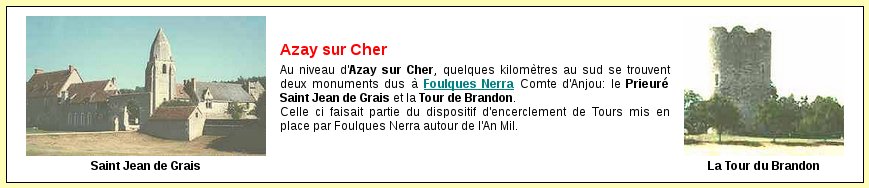 building
From the cloak of Martin to Hugh Capet and the Capetians. After naming the chapels and Aachen (see
above), the cape would name Hugues Capet, the chosen king, (940-996) and the Capetians, his descendants. Merovingians, Carolingians, Robertians and Capetians used Martin's image and popularity to their advantage. In his 2019 article, Lucien-Jean Bord recalls this statement by Jean Favier : "The Capetians do not forget that their ancestor was nicknamed Capet because, master of Tours, he had custody of St. Martin's cope. The spiritual center of the kingdom is not Saint-Denis, it is Saint-Martin de Tours." Châteauneuf was then "The royal enclave of Saint-Martin de Tours", as titled in a article by Jacques Boussard in 1959. There was, however, following the takeover of Foulques Nerra in 996 and more from 1044 onwards a "short duration of Angevin power, which rapidly crumbled from the death of Geoffroy Martel [son of Foulques Nerra]in 1060" according to John Attaway's article in 1990 titled "Did the collegiate church of Saint-Martin of Tours remain a true royal enclave in the eleventh century ?".


Cape-Banner. On the left, early 20th century images showing Clovis with the cope of St. Martin held up as a banner + four other images :  1 1
 2 2
 3 3
 4 (link).
+ a modern 4 (link).
+ a modern  illustration of the cape ["Martinian Letter" 2007-1].
At right, excerpt from an educational document by Roselyne Lebourgeois. Hugues Capet died in 996, two years after the completion of the Perpet basilica. illustration of the cape ["Martinian Letter" 2007-1].
At right, excerpt from an educational document by Roselyne Lebourgeois. Hugues Capet died in 996, two years after the completion of the Perpet basilica.


Left engraving by Lacoste Aîné, text by Stanislas Bellanger [ LTa&m 1845], right painting by Jean-Paul Laurens [Musée d'Orsay, 1875, Wikipedia]
+  sketch
+ sketch
+  sketch (link) of Robert II who, though pious, remains cursed by the misfortune of his excommunication, when it was, in fact, only a threat with seven years of penance... sketch (link) of Robert II who, though pious, remains cursed by the misfortune of his excommunication, when it was, in fact, only a threat with seven years of penance...
|
 1
1 2
2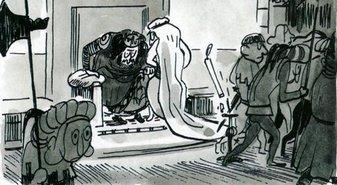
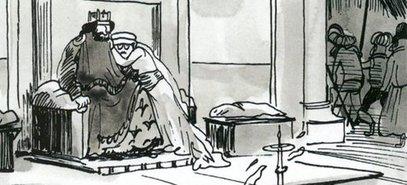
The treasurer Hervé de Buzançais. The construction of the
basilica - in fact it is a collegiate church - Romanesque of 1014 is attributed to Hervé de Tours (only his first name is certain), usually considered to be Hervé de Buzançais (presentation of the orthodoxievco.net website by Michel Laurencin), treasurer of the basilica which had just been destroyed by fire. Pierre Leveel in "Histoire de la Touraine" [CLD 1988] : "The character of Hervé de Tours (965 ? - 1022) dominated the clergy of his time, and by his spiritual life and by his practical achievements. The only certainty about his origins is that he belonged, according to Raoul Glaber, to a noble Frankish family: "As the lily and the rose are born amidst thorns, so he was born into the proudest family in the land." According to the Chronicon Turonense Magnum, Hervé was considered as the son of Sulpice de Buzançais, lord of Châtillon sur Indre. A more detailed study (Dom G. Oury, 1961) suggests that he belonged rather to the entourage of the counts of Blois, and that he was perhaps the uncle of Gilduin the "devil" of Saumur [then probably brother of Aénor de Doué]. Hervé made solid studies under Abbon, ecolâtre of Fleury (Saint Benoït on the Loire); attracted by the cloister, his close relations who had for him other ambitions, established him canon of Saint Martin of Tours. [...] Hervé had the collegiate church rebuilt from the ground the whole of Europe came to admire it."
In the Romanesque style, the new monument, twice as large as the first, reinforced Tours' role as a place of pilgrimage. After a new disaster in 1096 and a rapid aging, the basilica was rebuilt and extensively remodeled in the Plantagenet Gothic style in 1180. In this respect, it can be said that there were two distinct basilicas.


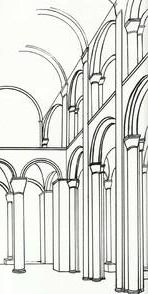

On the left, in 1014 Hervé de Buzançais had the burned basilica rebuilt in Romanesque style [sketch and Lobin stained glass of the basilica]. The cross of the crusader on the armor of the knight is anachronistic, the crusades did not start... In the center right, restitution of the Romanesque basilica by Hervé ["La basilique Saint-Martin de Tours", Charles lelong 1986]. This scene is found on a  vitrail from the church of Saint Martin le Beau. The Lobin workshop took other scenes from their stained glass windows in the basilica and used them on the stained glass windows in this church.
Right, axonometric view of part of the 11th-century chevet (Ta&m 2007]
+ vitrail from the church of Saint Martin le Beau. The Lobin workshop took other scenes from their stained glass windows in the basilica and used them on the stained glass windows in this church.
Right, axonometric view of part of the 11th-century chevet (Ta&m 2007]
+  plan and sections (sectional drawings) and plan and sections (sectional drawings) and  carved decoration ["La basilique Saint-Martin de Tours", Charles Lelong 1986]
+ carved decoration ["La basilique Saint-Martin de Tours", Charles Lelong 1986]
+  modillions of cornice of the Romanesque basilica (on display at the Saint Martin Museum) modillions of cornice of the Romanesque basilica (on display at the Saint Martin Museum)
|
1014-1180, a giant Romanesque basilica. The basilica built by Hervé was "a giant basilica, comparable in size to the
Cathedral of Santiago de Compostela (work from 1075 to 1211) or the basilica of Saint Sernin in Toulouse (works from 1076 to 1096) : total length 102 meters, nave with double aisles, 29 meters wide, transept of 55 meters, equipped with two absidioles on each arm ; ambulatory serving five radiating chapels ; facade framed by two towers, the treasure (clock) tower and the St. Nicholas tower, with in elevation two floors" ["The successive basilicas of St. Martin in Tours", expo SAT 1984]. It was believed to be the first building to have a choir surrounded by a deambulatory with radiating chapels, but Charles Lelong disputed this in a article from 1973, pushing back the date of the deambulatory to a reconstruction after the fire of 1096. With the staggered building of the transept towers as well, the Romanesque basilica has changed a great deal over its nearly two centuries of existence.


|

|
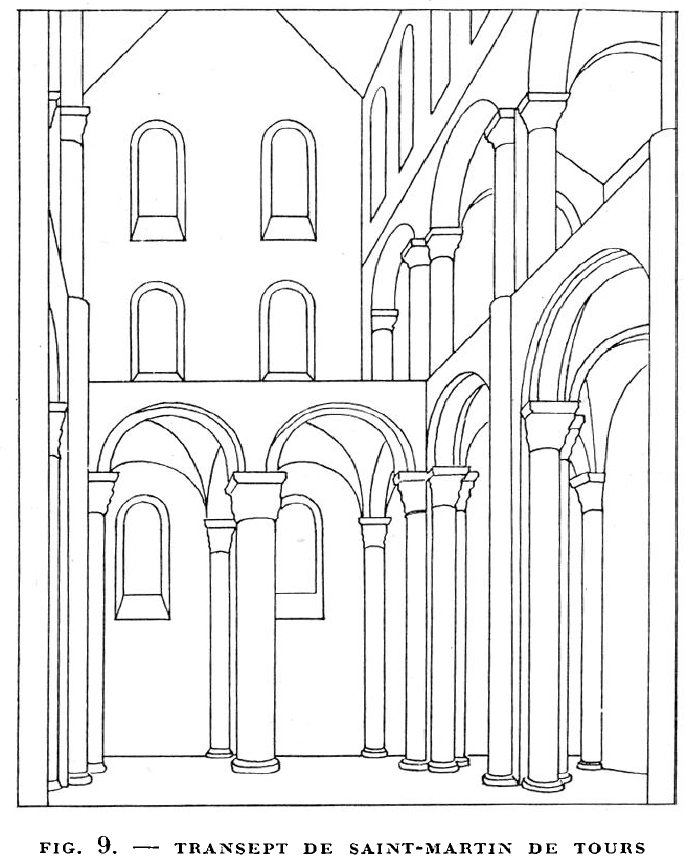
|
article by Frédéric Lesueur, 1949, titled "Saint-Martin de Tours and the Origins of Romanesque Art".
Left top, cross-section of the Romanesque basilica at the beginning of the eleventh century, with on gray line a comparison with the future, larger Gothic basilica +  comparison with the plans of the cathedrals of Orleans, Reims and Toulouse.
On the left below, cross-section of the Charlemagne Tower, whose construction was staged from the mid-11th century (the first two floors in Romanesque style) to the 13th (the upper Gothic).
In the center, restitution by Cossu-Delaunay 2020.
On the right, the Romanesque transept.
+ two other sketches : comparison with the plans of the cathedrals of Orleans, Reims and Toulouse.
On the left below, cross-section of the Charlemagne Tower, whose construction was staged from the mid-11th century (the first two floors in Romanesque style) to the 13th (the upper Gothic).
In the center, restitution by Cossu-Delaunay 2020.
On the right, the Romanesque transept.
+ two other sketches :
 1 eleventh-century elevation, compared with those of the cathedrals of Reims, Caen, Toulouse 1 eleventh-century elevation, compared with those of the cathedrals of Reims, Caen, Toulouse
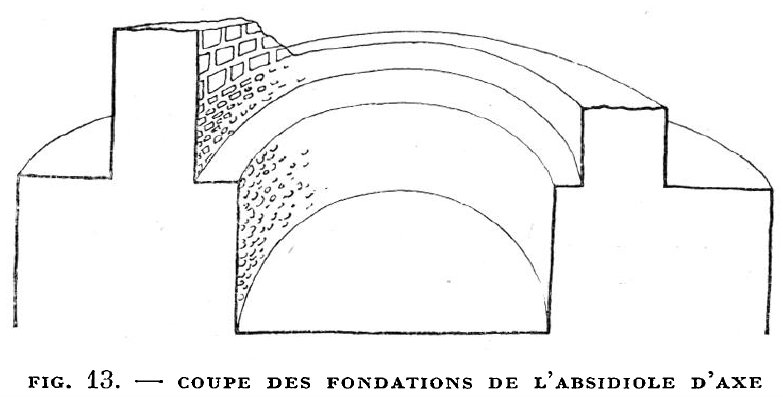 2 cross-section of the foundations of the axis apsidal chapel (still partly visible in the basement of the present basilica). 2 cross-section of the foundations of the axis apsidal chapel (still partly visible in the basement of the present basilica).
| ||
Tours and Water 1/6: Construction of the Eudes Bridge circa 1035. Before this bridge was built, Tours had experienced periods with and without a bridge. In a study titled "Antique bridges on the Loire" [Ta&m 2007], Jacques Seigne and Patrick Neury present three wooden bridges, two on Tours, one known as the Ile St. Jacques in the first century ( restitution), the other said to be on Aucard Island, in the fourth century, the third being 2km downstream at Fondettes, from the first century. The one of the 4th century (which Martin knew, the city being then closed in its enclosure) had replaced the two others (when the city was open). But since the end of the 5th century, there was no more bridge... The construction of a new structure by Eudes II of Blois, Count of Tours, was therefore an event, marked by a solemn restitution), the other said to be on Aucard Island, in the fourth century, the third being 2km downstream at Fondettes, from the first century. The one of the 4th century (which Martin knew, the city being then closed in its enclosure) had replaced the two others (when the city was open). But since the end of the 5th century, there was no more bridge... The construction of a new structure by Eudes II of Blois, Count of Tours, was therefore an event, marked by a solemn  charter ["Féodalités", Belin 2010].
+ study titled "The bridge built by Count Eudes II of Blois in 1034-1037" by Henri Galinié [Ta&m 2007]. We only have illustrations of the bridge from the 16th century and it is likely that there were several reconstructions following the terrible floods of the Loire. At that time it was made of stone and partially inhabited.
+ file 2004 "The Loire and Tours from the 12th to the 15th century" by Hélène Noizet, Nathalie Carcaud, Manuel Garcin. charter ["Féodalités", Belin 2010].
+ study titled "The bridge built by Count Eudes II of Blois in 1034-1037" by Henri Galinié [Ta&m 2007]. We only have illustrations of the bridge from the 16th century and it is likely that there were several reconstructions following the terrible floods of the Loire. At that time it was made of stone and partially inhabited.
+ file 2004 "The Loire and Tours from the 12th to the 15th century" by Hélène Noizet, Nathalie Carcaud, Manuel Garcin.
|


 engraving
 commentary
 1
1 2
2 3
3 4
4 panoramic view
 plank
plank restitution
 bridge bastille
1180, on the Romanesque, building of a Gothic basilica. In 1180, it is practically a new basilica, even larger, which replaces the old one built by Hervé and if we still call it "basilica of Hervé", it is because it remains on the same site, some parts have been preserved (including the tomb) and no one has associated his name with this passage of the
roman to gothic. In his book "La basilique Saint-Martin de Tours" (C. L. D. 1986) , Charles Lelong points out the resemblance to the Cathedral of Bourges built some fifteen years later : "For a long time, striking kinships have been noted with the chevet of the cathedral of Bourges (1195-2014), with the easily explicable difference of larger chapels in Tours. In addition to the overall plan, the pillars are very revealing of this filiation." +  page "The recovery of the twelfth century ["The successive basilicas of Saint-Martin in Tours", expo 1984]. + two diagrams :
  1 (geometric plan)
  2 (comparison with the so-called pilgrimage churches) ["La basilique Saint-Martin de Tours", Charles Lelong 1986]. Jean-Louis Chalmel recalls it thus in 1807 : "It had five naves, a transept finished by two towers and a double ambulatory around the apse, with five chapels. Inside, there were 110 meters... from the sunset to the sunrise... 55 meters from one end of the transept to the other... the choir, from the rood screen to the sanctuary, was 22 meters long..." [SAT 1907]. +
  cuts in the current street configuration + four illustrated articles by Charles Lelong, 1973-1975 : 1 (the transept) 2 (the nave) 3 (the ambulatory) 4 (the St. Nicholas tower). Additional documentation on these Romanesque and Gothic basilicas can be found in the chapter on the excavations hereafter.
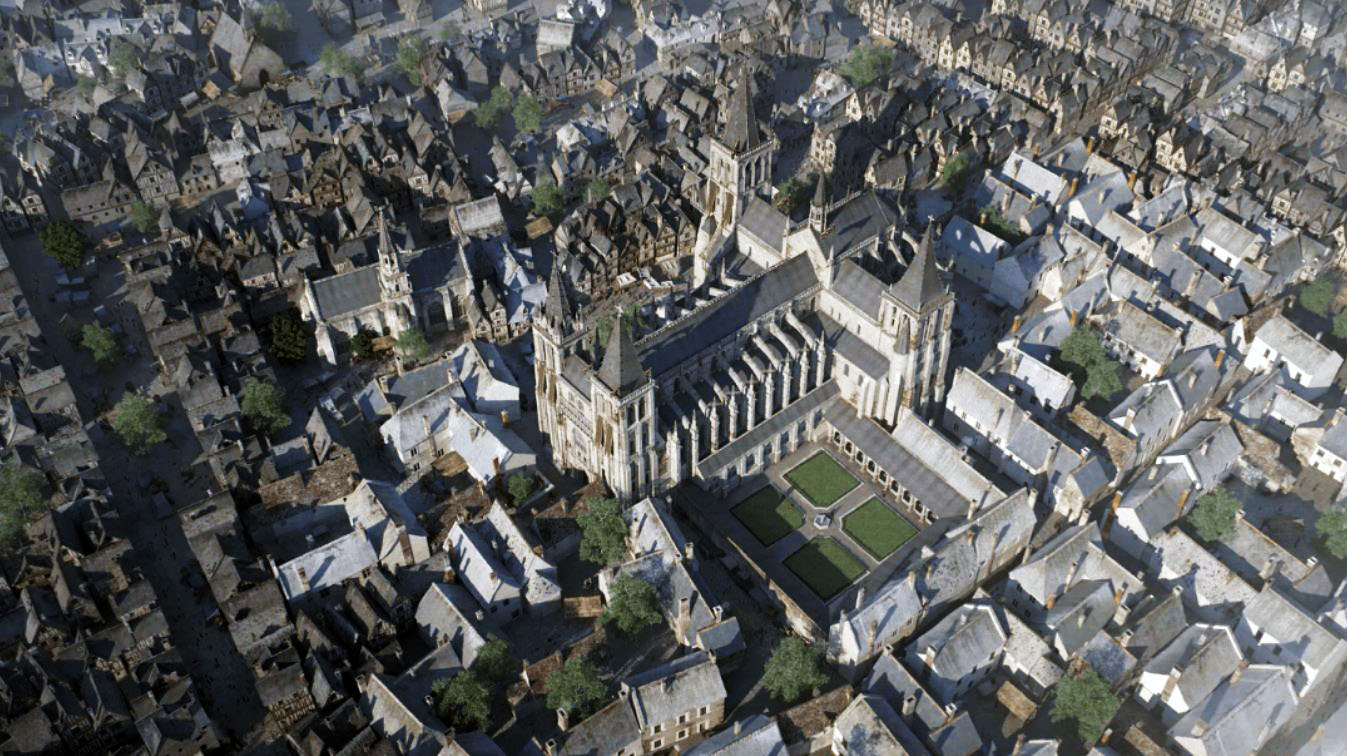
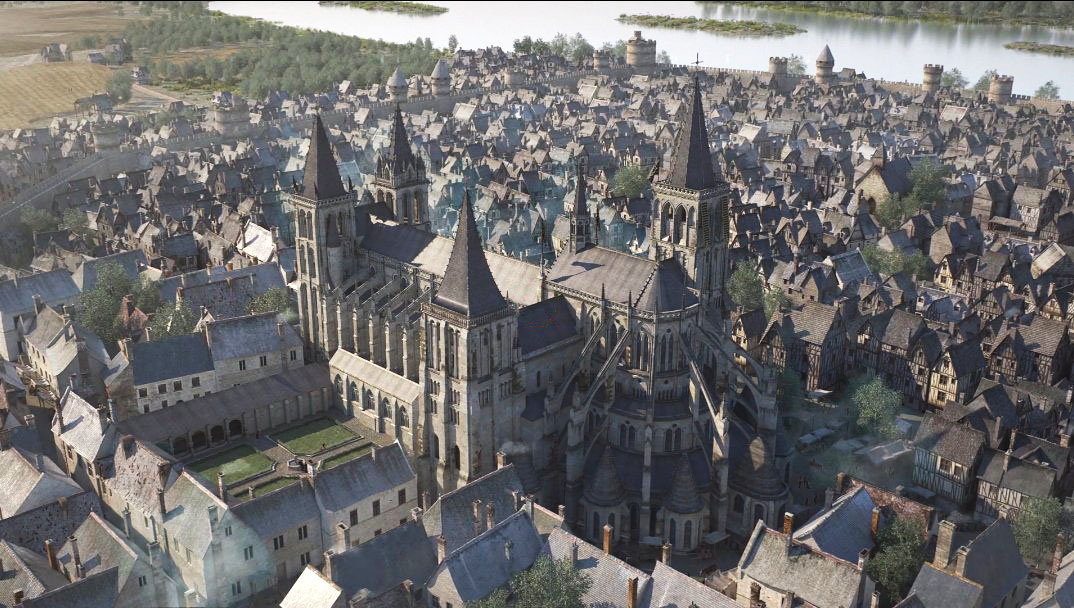
1997 and 2015-2020, two 3D restitutions of the Gothic basilica. Since 2015, a 3D model project of the collegiate church in its environment has been developing, Renaissance Virtuelle Saint Martin, ReViSMartin (links : 1 2 3) ). The eventual goal is, with a virtual reality headset, to "walk into the past of the 15th century." The two illustrations above and others below are from the video 2020 (9 mn 18 s) + seven others : 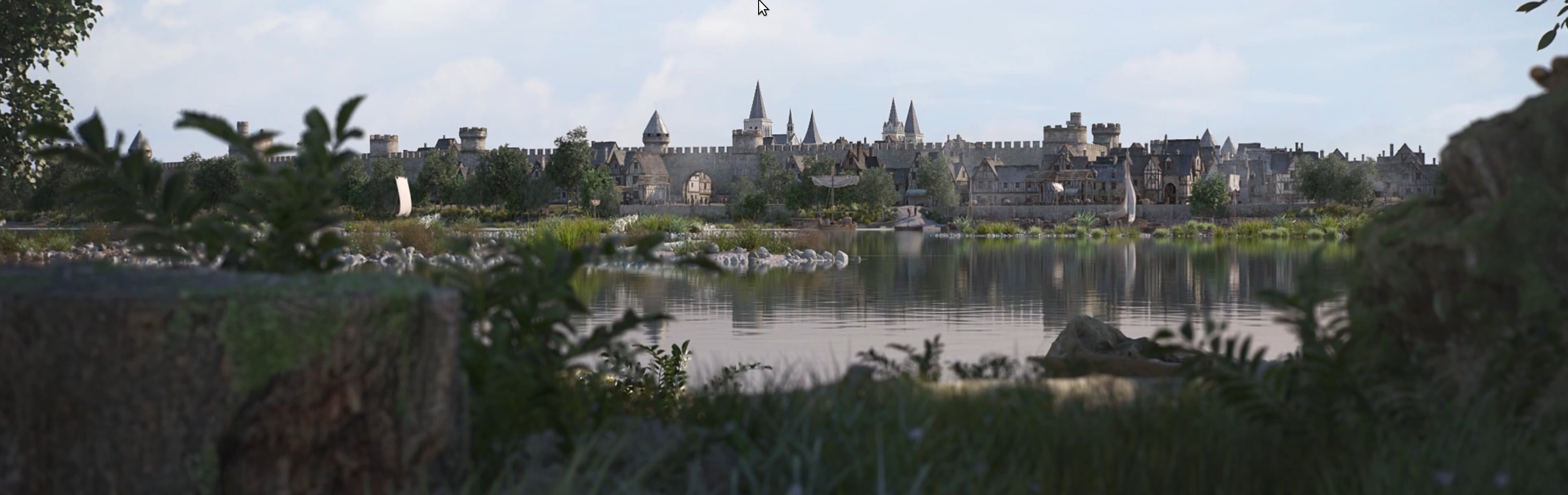 1. 1.
 2. 2.
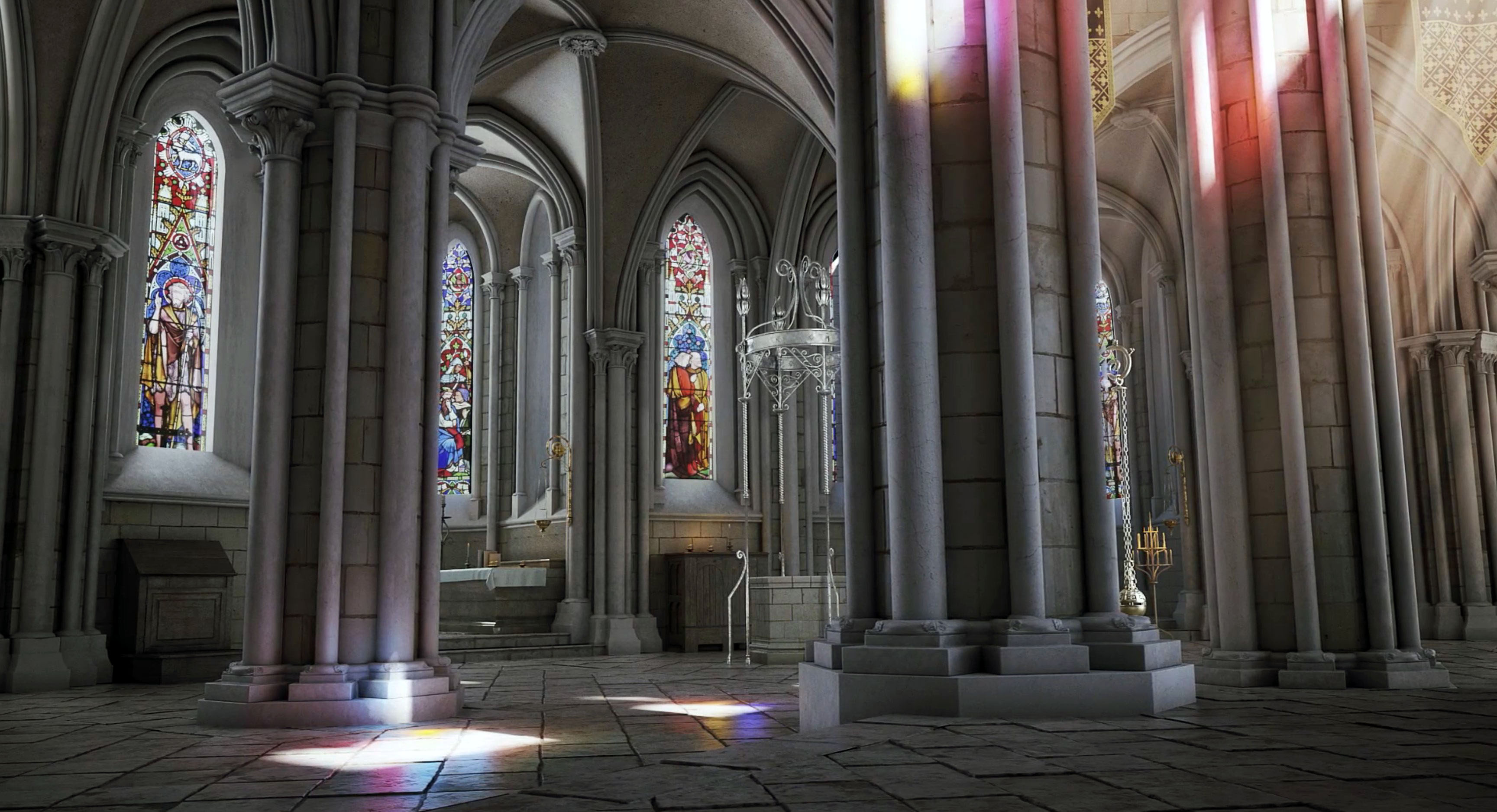 3. 3.
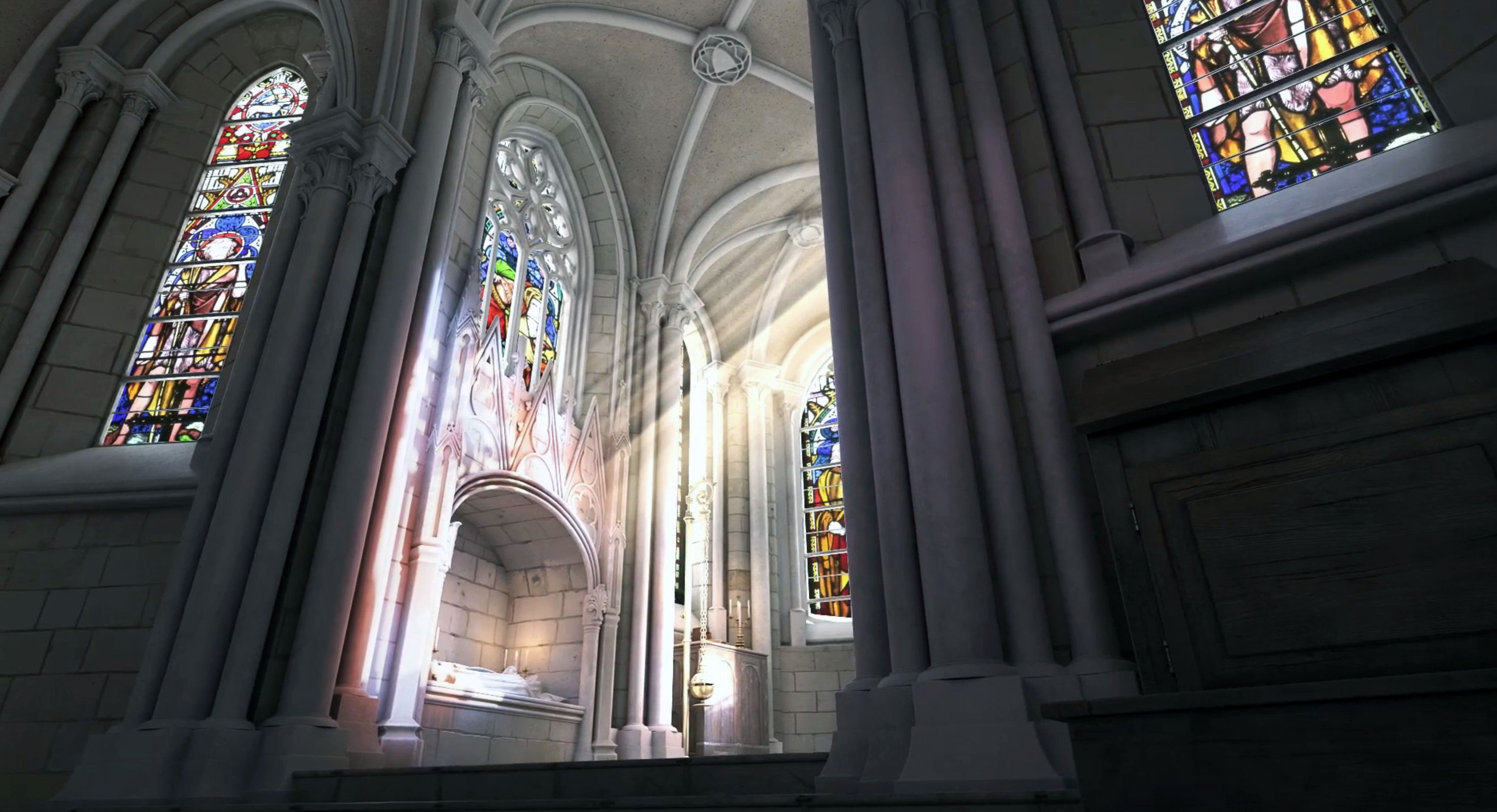 4 4
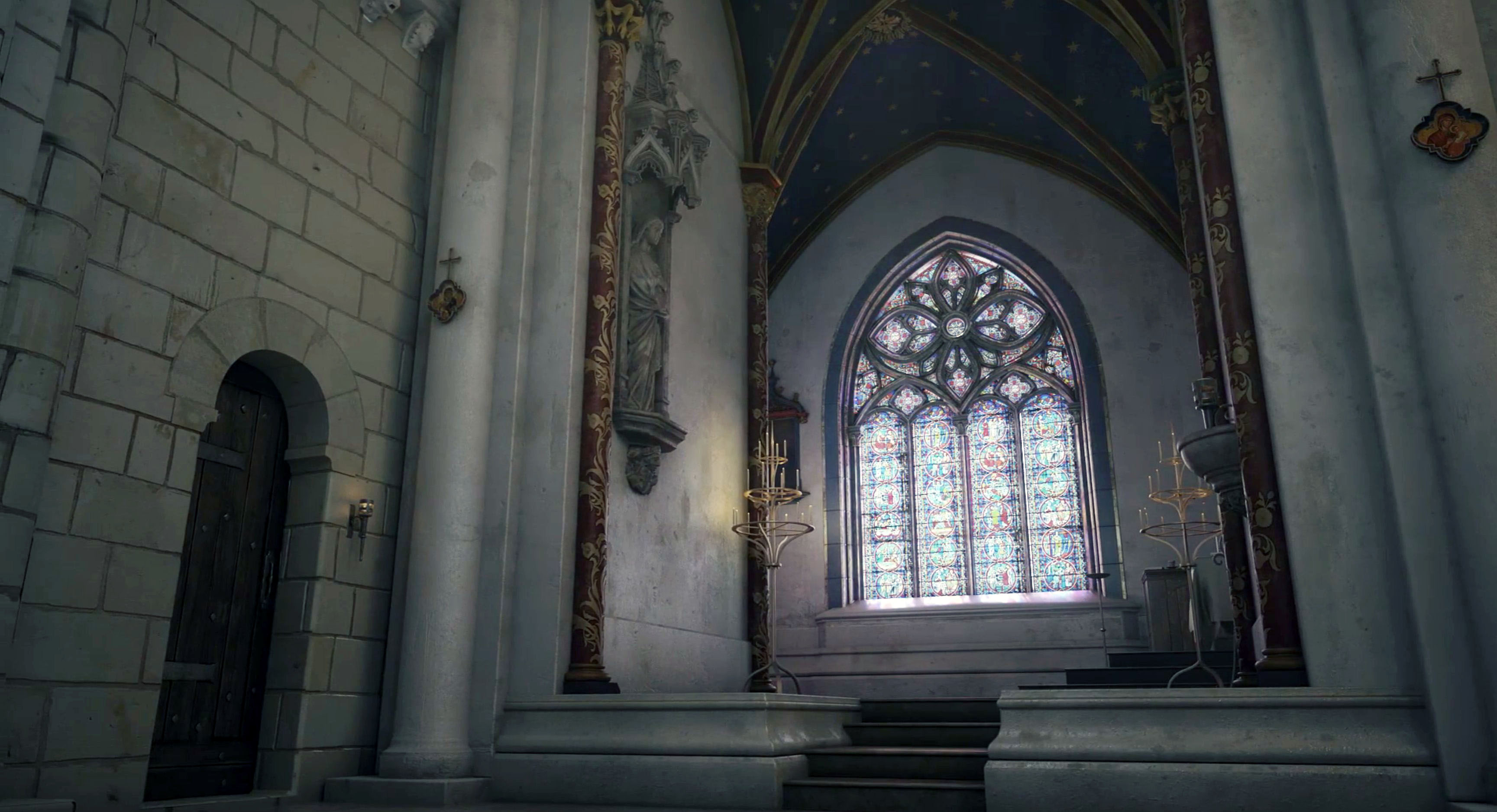 5 5
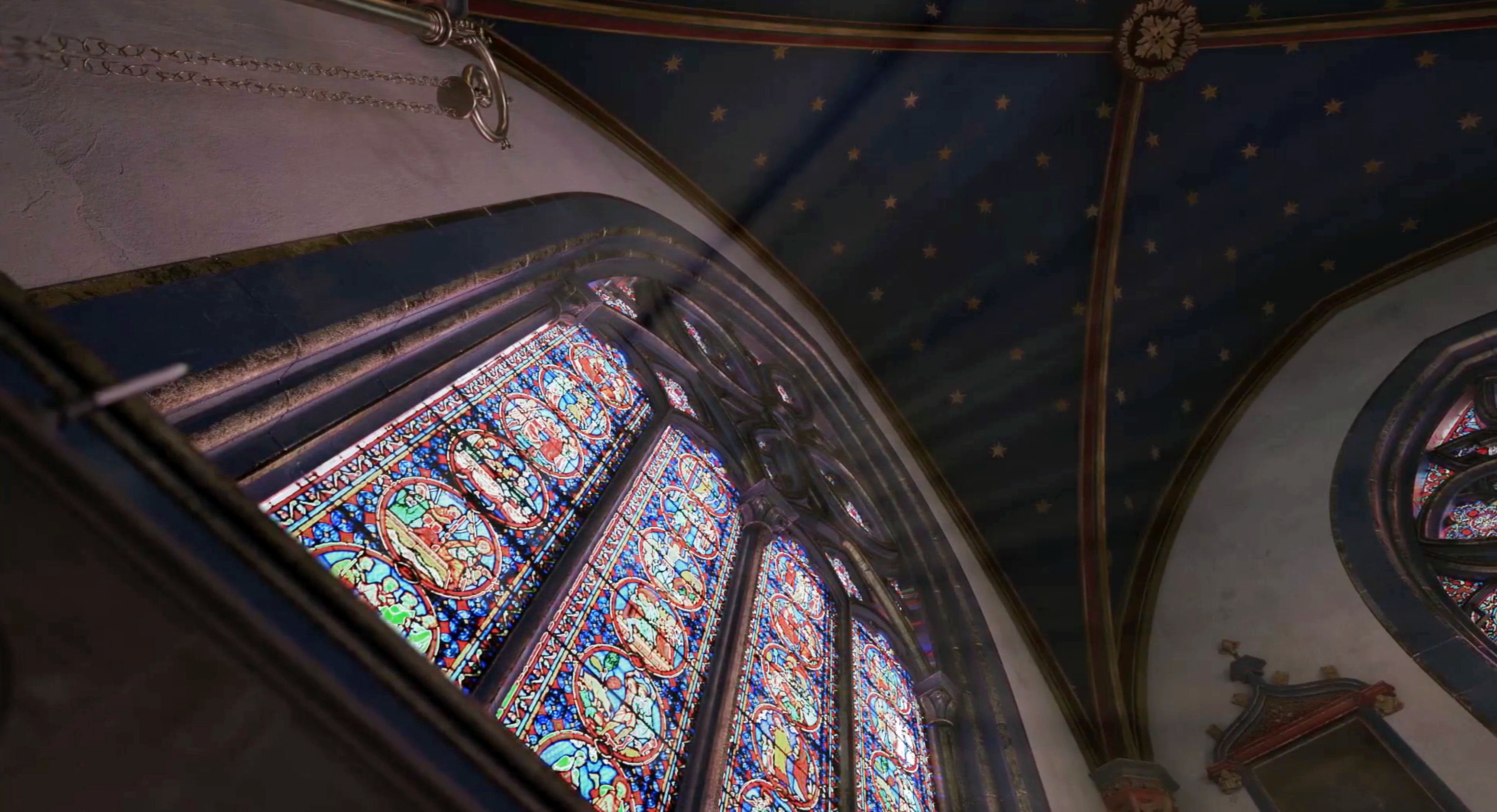 6 6
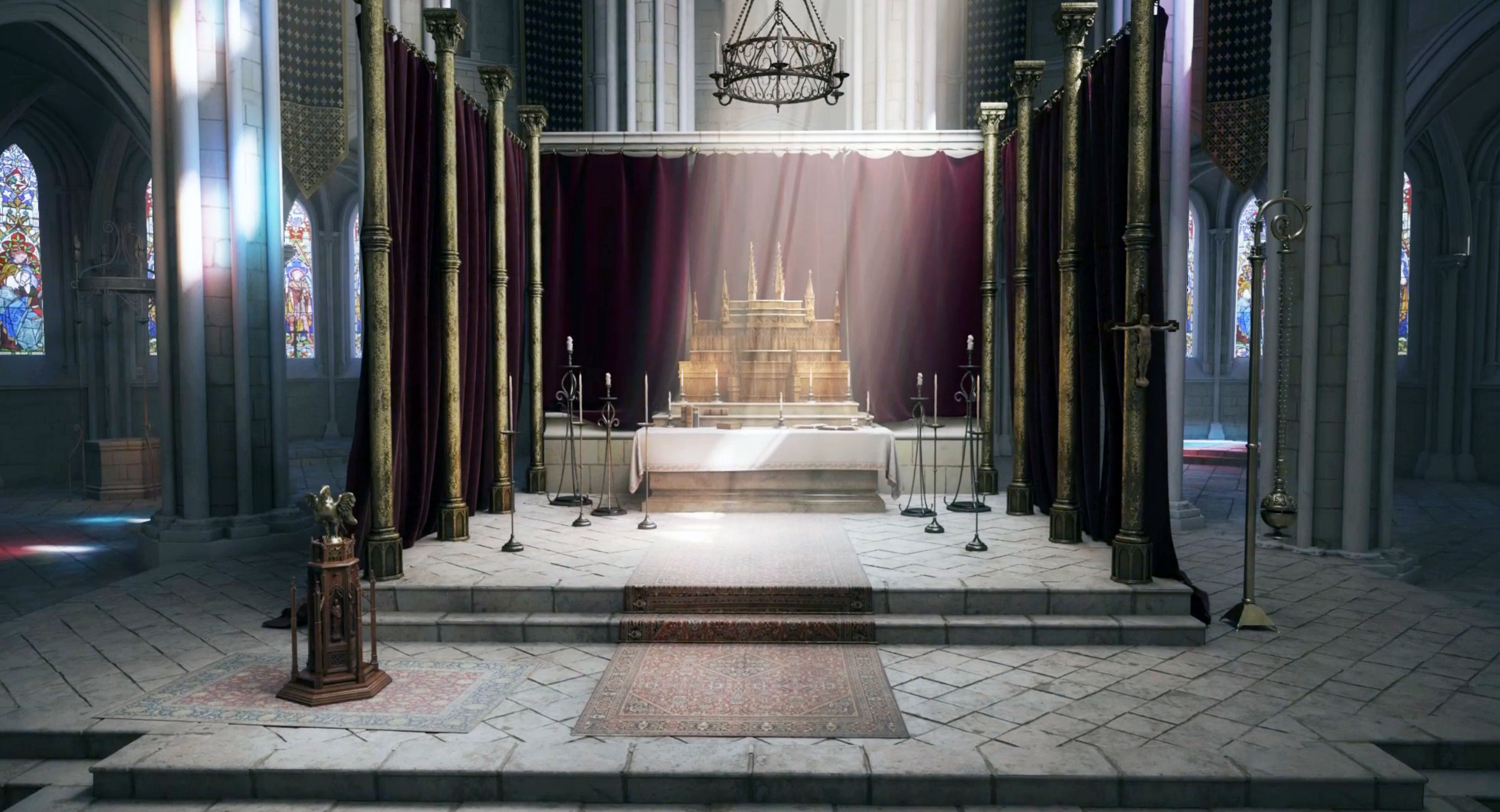 7.
The presence of the cloister completed in 1519 and that of the 1360 enclosure replaced around 1600, as well as the good condition showing that it is before the damage of 1562, date this model between 1520 and 1562, say 1550. We'll see hereafter more images of this rendering.
A first three-dimensional reconstruction had been made around 1997 by the workshop J.I.I.S.S.A. (Jonglerie Informatique, Images de Synthèse, Services en Architecture): 7.
The presence of the cloister completed in 1519 and that of the 1360 enclosure replaced around 1600, as well as the good condition showing that it is before the damage of 1562, date this model between 1520 and 1562, say 1550. We'll see hereafter more images of this rendering.
A first three-dimensional reconstruction had been made around 1997 by the workshop J.I.I.S.S.A. (Jonglerie Informatique, Images de Synthèse, Services en Architecture): 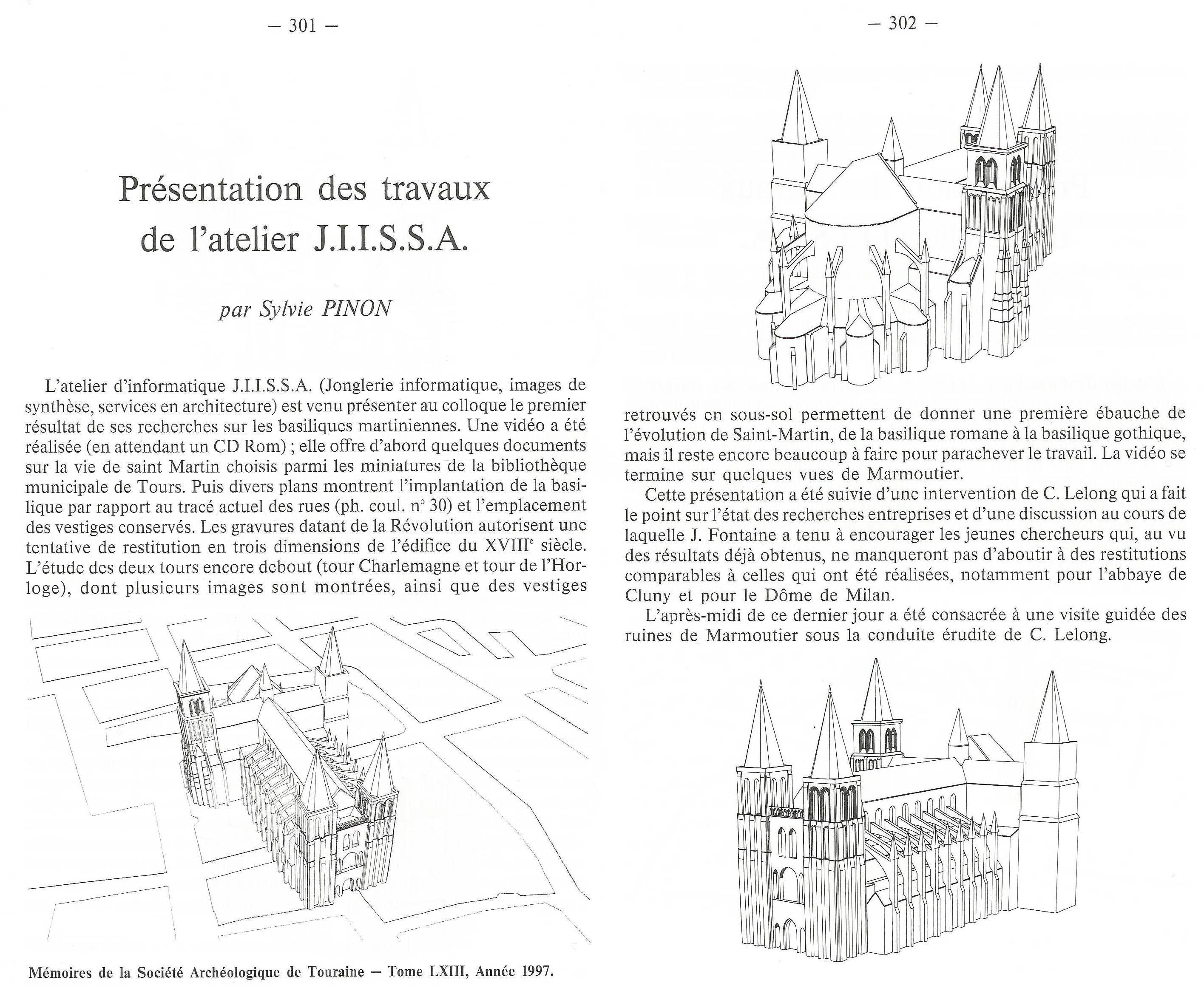 double page in the 1997 symposium SAT, presentation by Sylvie Pinon.
+ other rendition hereafter. double page in the 1997 symposium SAT, presentation by Sylvie Pinon.
+ other rendition hereafter.
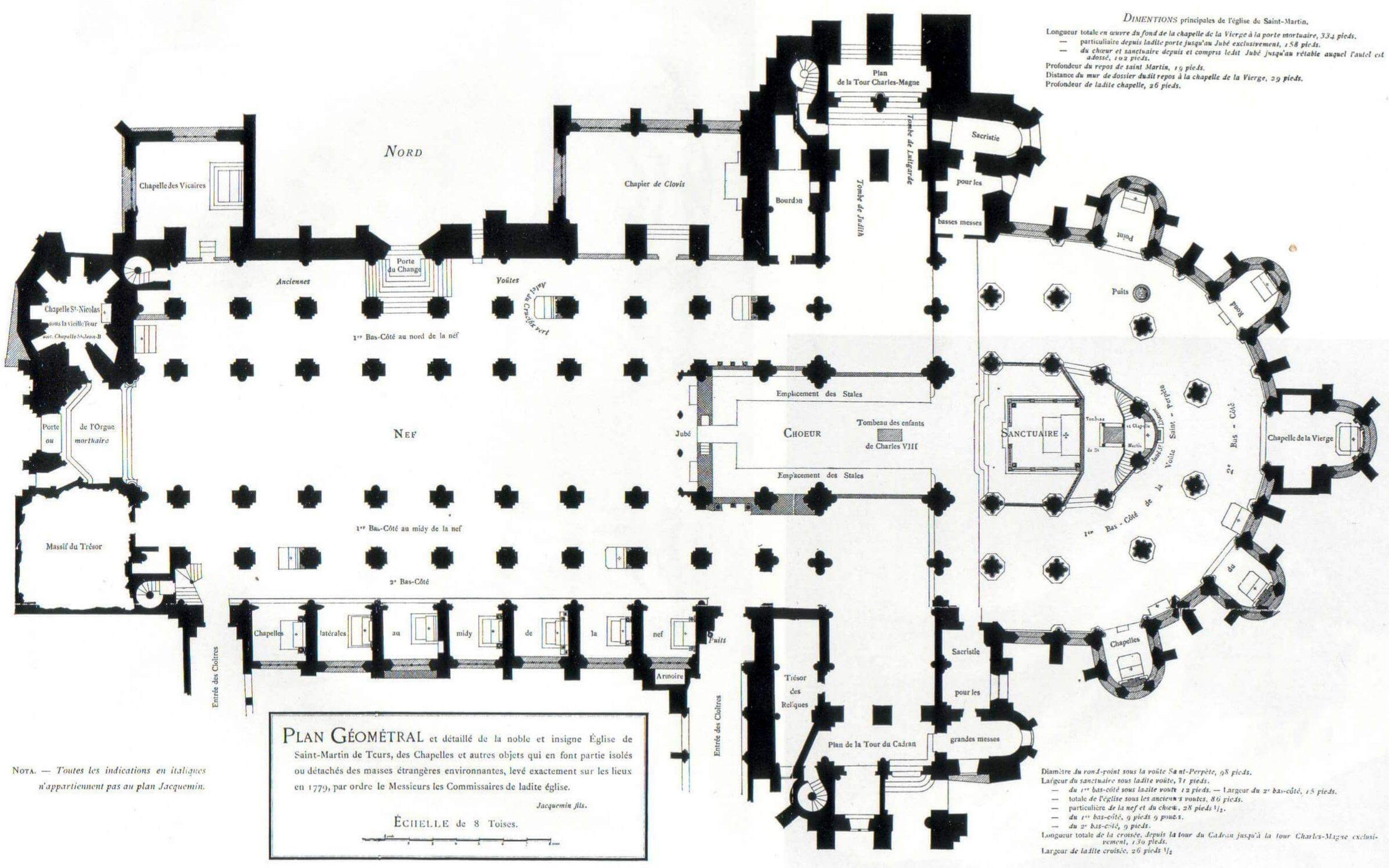 cutaway Jacquemin completed ReViSMartin).
The other illustrations are from the ReViSMartin project. Below right, the tapestries of the collegiate church, present from 1460 to 1790, are considered in the reconstruction of the choir + other cutaway Jacquemin completed ReViSMartin).
The other illustrations are from the ReViSMartin project. Below right, the tapestries of the collegiate church, present from 1460 to 1790, are considered in the reconstruction of the choir + other 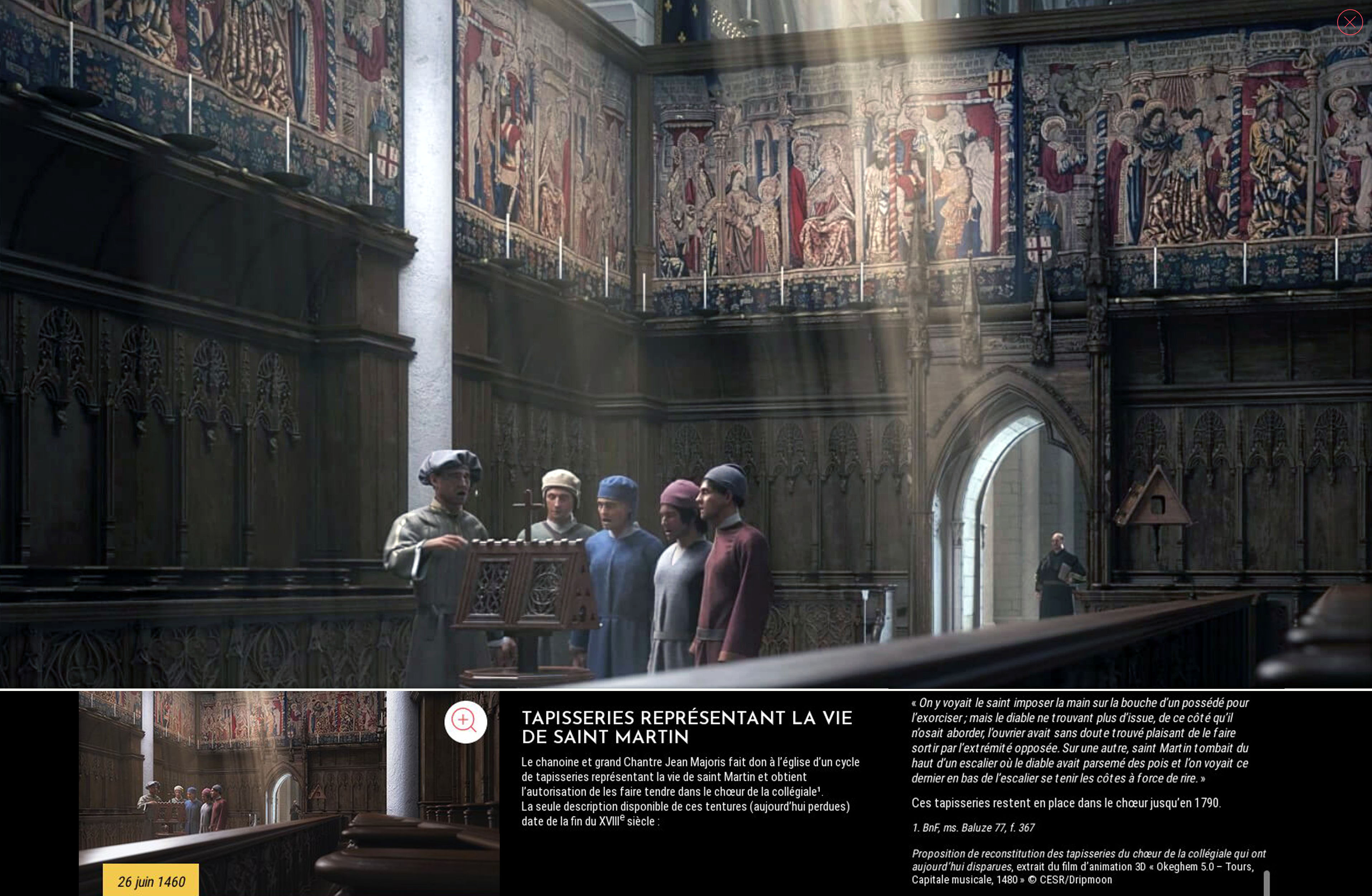 view commented on. view commented on.


Center, Treasurer Hervé in the actual Laloux Basilica. On the left and right, two stained glass windows from bay #8 of Tours Cathedral (on the transport of the body of Martin de Candes to Tours), probably from Hervé's Gothic basilica [flickr photos Philippe_28]. |
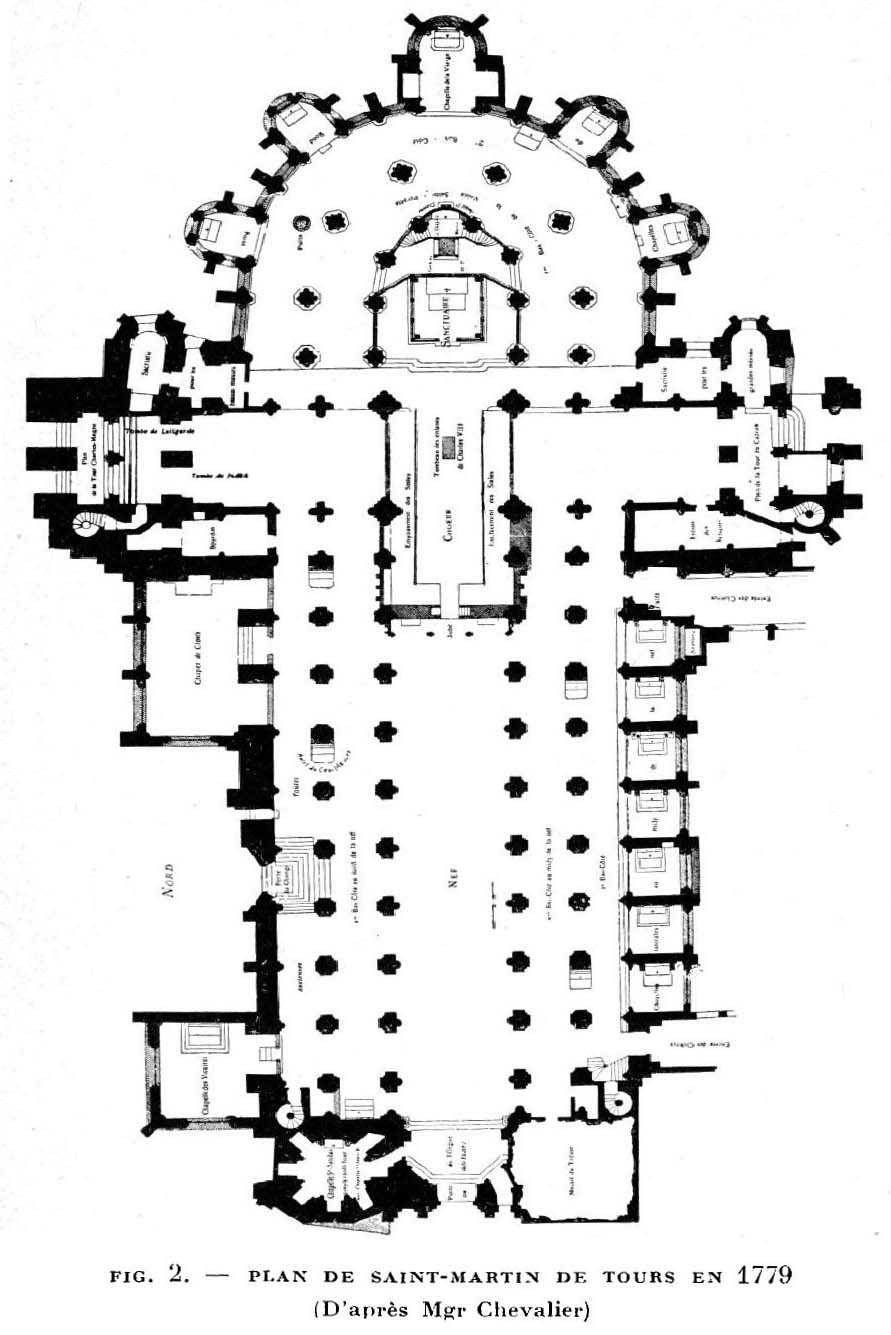
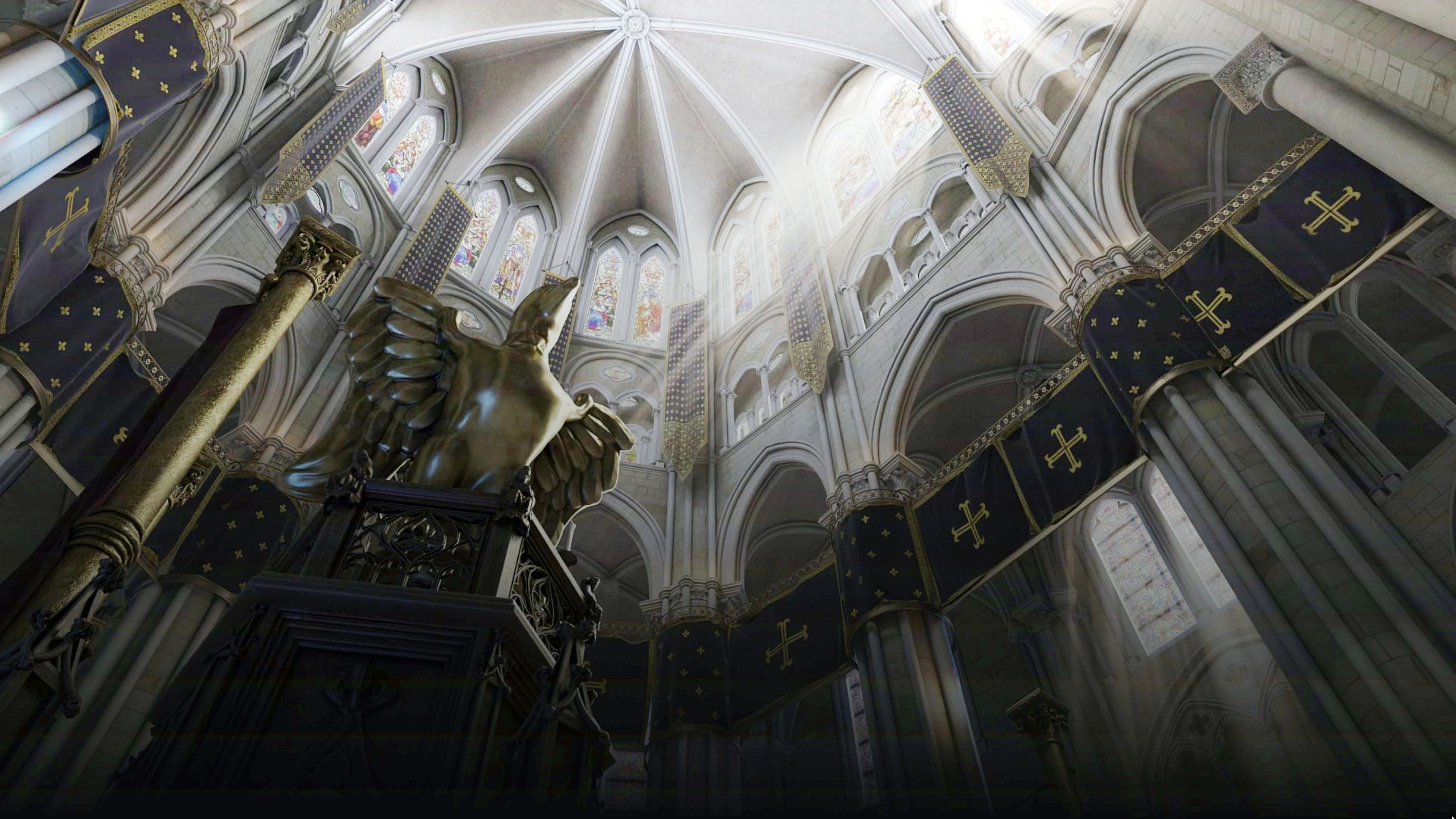

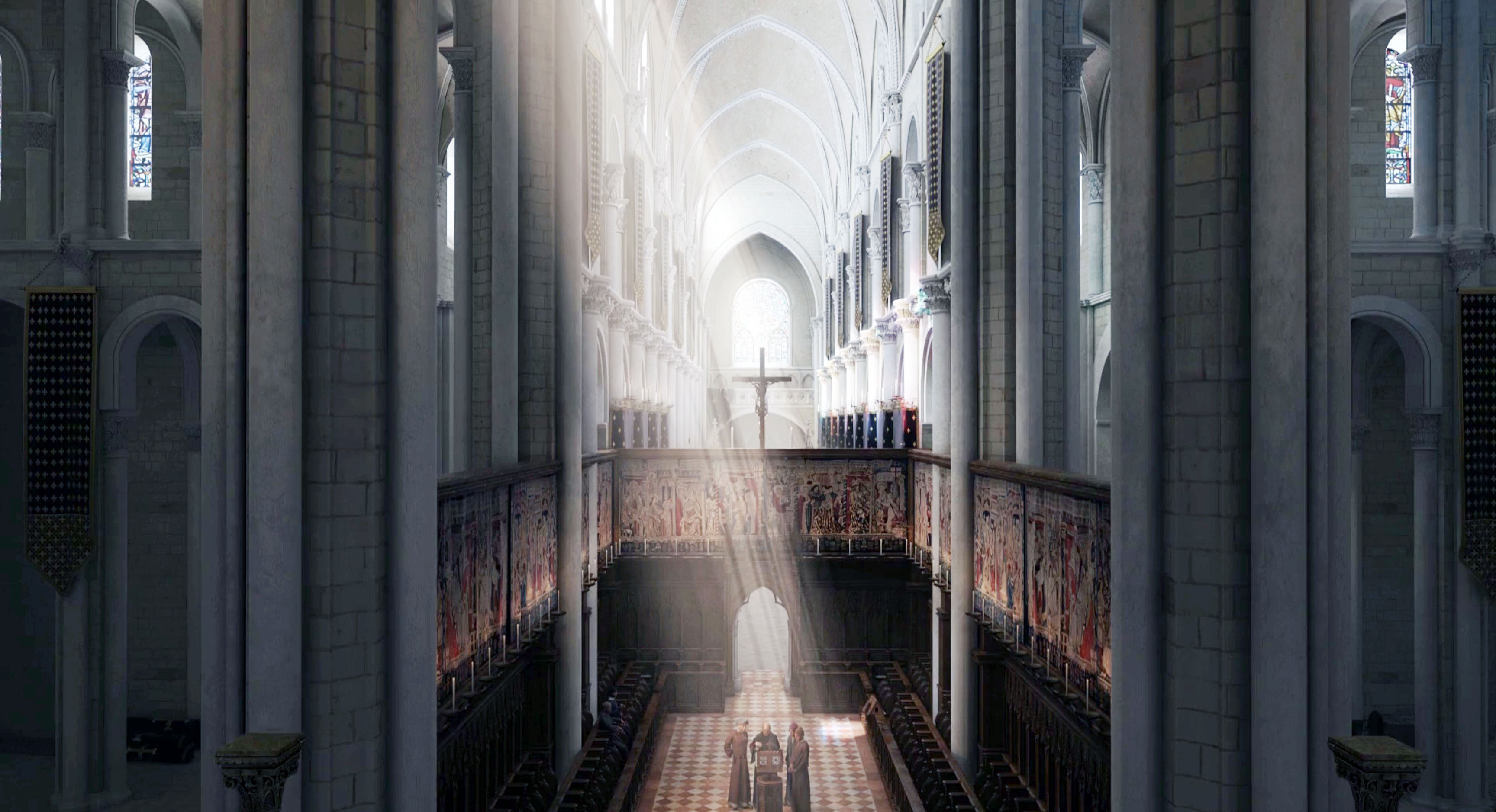
|

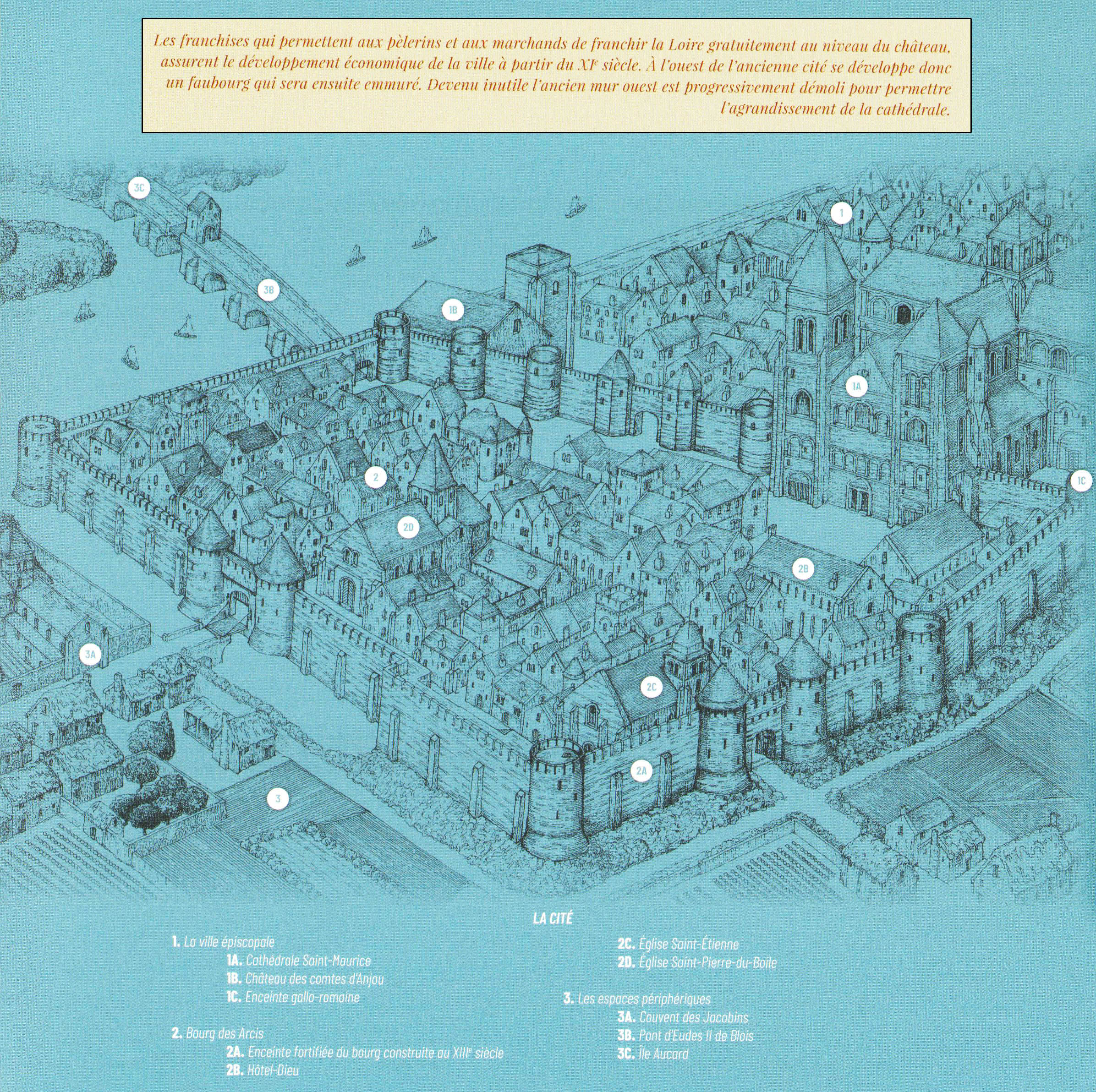
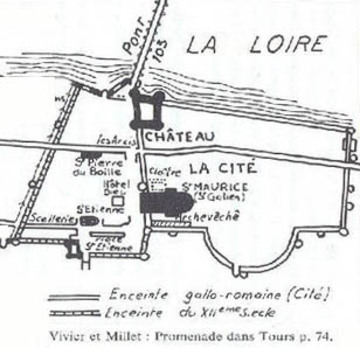
A decline in the cult of Martin in the middle of the 11th century. The Tourangeaux lived to the rhythm of the veneration of the patron saint of their city. Charles Lelong, in his 2000 book "Martin de Tours, vie et gloire posthume" : "If Fulbert of Chartres is to be believed, piety towards the most venerated saints of central Gaul (Martin, Denis, Hilaire) had singularly cooled. A "dearth of miracles" was witnessed in Tours. According to
Raoul Glaber [985-1047], when the treasurer Hervé "prayed to the lord to perform some miracle through St. Martin, the holy confessor appeared to him and told him that the miracles that were seen in the past would have to suffice. Still in the middle of the twelfth century, the canons complained "It rarely happens, in our times which are becoming more and more evil that God shows his power and works miracles..." They are reduced to celebrating those operated by the relics of Saints Fare and Agnes transported to Tours."
Berenger of Tours, a disturbing intellectual. Born in Tours, appointed
ecollector of the chapter of Saint Martin in 1030, Berenger of Tours (998-1088) was a theologian, a pupil of the prestigious Fulbert de Chartres (960-1028). Unlike his master, he had a teaching that was highly contested by the bishops to the point of being considered heretical by several councils. His independent spirit gave pride of place to reason, as this quotation testifies: "Without doubt, one must make use of sacred authorities when necessary, although one cannot deny, without absurdity, this obvious fact, that it is infinitely superior to make use of reason to discover the truth". In this, he was a precursor to Pierre Abelard (1079-1142), who made headlines half a century later. He was a high-flying intellectual at a time when there were few of them, a testament to the cultural role of Châteauneuf. His words on reason even place him as a precursor to René Descartes (1596-1650), born and raised in southern Touraine. About Berenger, one can also read this page from the Cosmovisions website.
+  extract from Hélène Noizet's 2007 book "La fabrique de la ville" (link), about Berenger and his end of life at Saint Cosme Priory.


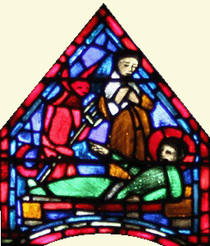
Three intellectuals who left their mark on their time: Fulbert of Chartres, Berenger of Tours, and Abelard of Paris, each with a book in hand or under his elbow [19th century engraving, engraving by Hendrik Hondius the Elder 1602, Bibliothèque Sainte Geneviève Paris, 1846 engraving by Oleszezinski after a drawing by Guilleminot]. At right, stained glass window from Chartres Cathedral showing Fulbert on his deathbed pointing to a demon, representing heresy, pushing Berenger off his pitchfork [link]. Peter Abelard, driven by another demon, had fallen in love with Heloise (1092-1164), an orphan student and later abbess of the Paraclete (see above).
|
1072-1085 Raoul, an archbishop rejected by the Saint Martin chapter. Eugène Giraudet ("History of the city of Tours" 1873) : "Raoul had just been appointed bishop of Tours his election strongly opposed by the suffragan bishops, was denounced to the Pope, as tainted with capture of suffrages he was accused of
real simony and of another even more shameful crime. The pope Alexander II condemned the bishop-elect, without even hearing him, and forbade him any function of his ministry. Soon the archbishop of Tours went to Rome, to the new pontiff, Gregory VII [elected in 1073], who welcomed him with benevolence, lifted the interdict issued against him by his predecessor, and urged him to return to his episcopal city. Raoul resumed his functions, to the great joy of the inhabitants only, the canons of Saint Martin denied his power, by damning him with gross insults."
The primate of Aquitaine excommunicates Archbishop Raoul! "The Count of Anjou,
Foulques le Réchin, the Monks of Marmoutier and the suffragan bishops supported the Chapter's rebellion with their authority. For his part, Amat, primate of Aquitaine, excommunicated the Archbishop ; but having seen the care and affection with which the secular clergy and the people surrounded him, he changed his feelings toward him and eventually brought the suffragan bishops to share his way of thinking. The canons of Saint Martin, more tenacious, refused to return the honors to the primate of Aquitaine; he complained about it to the council of Issoudun and obtained that the anathema was launched against them. Around the same time another excommunication reached the monks of Marmoutier who had refused to admit, in their church, the Archbishop of Tours and his clergy."
1096, Pope Urban II moved to Tours and attempted to settle the conflict. In 1088, the French
Urbain II succeeded the Italians Gregory VII and Victor III to the papal throne. In Tours Archbishop Raoul II succeeded Raoul I in the same spirit as his predecessor. At the beginning of March 1096, Urban II comes to Tours. He had been preaching for three months (appeal of Clermont, November 27, 1095) the first crusade and comes to consecrate the high altar and the abbey of Marmoutier (article by René Crozet "The journey of Urban II in France (1095-1096)" 1937). Eugène Giraudet shows that it also deals with the internal affairs of the archbishopric of Tours : "On March 3, 1096, Pope Urban II came to Marmoutier to end these disputes which seemed to be perpetuated between the canons of the cathedral and the monks of Marmoutier ; for this purpose, says the anonymous monk, on Sunday, March 9, Urban, accompanied by a large number of cardinals, archbishops and bishops, went to a platform prepared on the shore of the Loire and there, delivering a speech in the presence of a huge crowd, rushed from all sides, he highlighted the virtues and conduct of the religious, and condemned the detestable processes of their opponents, the canons of St. Mauritius [cathedral of Tours]. Finally, the pope, after proclaiming the innocence of the monks and anathematizing their enemies, declared that no one could excommunicate them. A few days later, Urban II decided by a bulle dated March 14, that in the future the church of St. Martin would recognize as its direct ruler only the supreme pontiff, and the king by his ordinary judge he declared, moreover, that the religious were not to receive anyone processionally, with the exception of the pope and the king the archbishop of Tours could only claim this right once in his life. This formal order did not prevent the archbishops of Tours from continuing to claim their rights, during the following centuries, over the chapter of Saint Martin." ... We shall see that they eventually obtained satisfaction in the 16th century.
+ Link to the chapter "Martinopolis" in Hélène Noizet's 2007 book "La fabrique de la ville" dealing with the relationship between the Chapter and the Archbishopric, before, during and after the intervention of Urban II. Let us add that after the great speech of the pope in Marmoutier, several lords committed themselves in the Crusade by taking the cross from the hands of the Pontiff. A council was held in Tours from 16 to 23 March 1096. The Count of Anjou, Foulques le Réchin, despite his former excommunication, received the golden rose there.


Urbanus II traveling and preaching, miniature from the "Roman of Godfrey of Bouillon" [14th century, BnF, Wikipedia] and Lobin stained glass window of the present basilica.

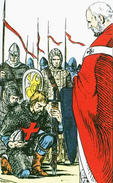
March 1096, Urban II preached the first crusade at Marmoutier [LTh&m 1855]. He did not come to Tours to settle canons' problems but as part of his grand media tour to unleash a holy war (a notion initiated by St. Augustine, who wanted Priscillian dead...). On the right, the great ones of the kingdom, ceasing their internal wars, bow down. The poor, weary of famines and epidemics, will also flare up for this promised land. Case by Milo Manara
+ two plates [Histoire de France en bandes dessinées, Larousse 1977, texts by Jacques Bastian] :
 1 1
 2.
+ 2.
+  map of Urban II's 1095-1096 journey mobilizing Christendom against the occupation of holy places by the Muslims, followers of Mahomet (570-632) ["Feudalities", Belin 2010].
Speaking of crusades, let us note that a count of Anjou and Touraine, Foulques V, became king of Jerusalem in 1129/1131, which had little effect on Touraine life. map of Urban II's 1095-1096 journey mobilizing Christendom against the occupation of holy places by the Muslims, followers of Mahomet (570-632) ["Feudalities", Belin 2010].
Speaking of crusades, let us note that a count of Anjou and Touraine, Foulques V, became king of Jerusalem in 1129/1131, which had little effect on Touraine life.
|
The end of Urban II's stay in Tours was fateful. Eugene Giraudet : "Urbain II, during his stay in Tours, presided over a synod, in the church of Saint Martin, which was attended by more than fifty bishops. The ecclesiastical annals are silent on the decisions that were adopted there. This solemnity was hardly over when, through the imprudence of a cleric, a violent fire broke out in the recently rebuilt basilica and caused the ruin of part of the church and the cloister."
From 1079 to 1118 a temporary Angevin domination. In a
article from 1990 titled "Did the collegiate church of Saint-Martin in Tours remain a true royal enclave in the eleventh century ?", John Attaway concludes in these terms "If there is no document to formally prove that between 987 and 1118 the king was no longer truly an abbot in the sense that he exercised no power, neither is there any document to attest that the Count of Anjou considered himself the legitimate or only recognized holder of the abbatiate... However, everything seems to indicate that there was a shift in the abbatial powers in the hands of the counts of Anjou from 1044 on. This can be explained, not only by the hold of Tours, but also by the relationship between the count Geoffroy Martel and the king Henri I. The king, supported by the Angevins during his struggle against the counts of Blois, is said to have rewarded Geoffroy by giving up all investitures in Tours to him, and by facilitating the marriage of his daughter-in-law Agnès with the emperor Henri III. But the Angevin coinage of Tours remains the most telling testimony to the short duration of Angevin power, which crumbled quite rapidly from the death of Geoffroy Martel (1060); and it is precisely in the following decade that the rise of the bourgeois class took place in Châteauneuf. It would only be around 1092 at the earliest and 1118 at the latest that either Philippe I (date of his marriage to Bertrade), either Louis VI, would have attempted to reclaim the former rights of their lineage, which had been alienated. While the Angevin takeover is, in a sense, foreshadowed by the violation of the cloister of Saint-Martin by Count Foulques Nerra in 996, the Capetian recovery falls no less into the category of a self-restitution of rights. The example of Saint-Martin of Tours thus highlights one of the characteristics of the first feudal age : the possibility of a significant gap between a state of law and a state of fact."
1079-1217 a city in strong development This new building revived the activity of the city. Bernard Chevalier, in his book "Tours ville royale 1356-1520" (CLD 1983) writes that "what best allows us to follow this progression of settlement is the creation over the centuries of the fifteen parishes that the city had in the 14th century. Three are surely very old although we cannot specify the date of their erection, eleven appear in less than 150 years, in the fourteenth century, from 1079 to 1217, and the last, a simple altar in a collegiate church, in the fourteenth century. There are nine around Saint Martin, four near the Cité, but only two in the center. There, in fact, the population is less dense and the wasteland abundant this is why the
mendicant orders had no trouble housing their convents there surrounded by very beautiful enclosures."
At the same time, the cult of saints in general and of Martin in particular experienced "a remarkable rise throughout Christendom, under the effect of the expansion of Benedictine monasticism and the "peace of God" movement, which favored the development of pilgrimages and the cult of relics. One of the manifestations of this development was the multiplication of libelli, small collections containing biographical accounts and various writings related to a local saint" [Marek Walczak,
Catalogue 2016].


The tomb in the center of Châteauneuf. From 1014 to 1360, Hervé's basilica stood in the center of the Châteauneuf / Martinopole enclosure [ Ta&m 2007].
On the left is Martin's tomb, the basilica's first attraction, according to a 1516 engraving ["The Life and Miracles of Bishop Saint Martin," BmT].
At right, miracle of "the young girl from Lisieux" in front of the tomb [embroidery from the Musée de Cluny in Paris, after a 15th century painting by Bartholomew of Eyck, link].
|
1122, violent conflict between bourgeois and canons of Châteauneuf. Eugène Giraudet : "The inhabitants of Châteauneuf sought to shake off the tyrannical yoke of the Chapter of Saint Martin, they went ahead of the inhabitants of the old town in the conquest of their communal liberties. From the beginning of the 12th century, the struggles broke out and, in spite of the threats of excommunication, the inhabitants formed in 1122, a sort of local magistracy, independent, composed of ten jurors chosen by them and from their ranks, who took the direction of their interests. Immediately war was declared between the canons and the burghers of Châteauneuf; the latter, with arms in hand, energetically supported their cause; during the melee, a fire set by the combatants destroyed the church of Saint Martin and caused considerable damage to the town. Calm was restored on both sides, for a few years only ; but from then on, the burghers and canons lived in continuous hostilities."
A revival of the cult of Martin in the twelfth and thirteenth centuries : "The pilgrimage did not die despite competition from those of Compostela or the Holy Land. [...] One sees various establishments sending to Tours beggars to raise their churches : the nuns of Sainte Fare, the abbot of Sainte Ouverte d'Orléans it is thus that there was still a considerable contest of people. Great people went there :
Suger, shortly before his death, the cardinal of Pavia, Adalbert of Prague, who was driven out of his diocese and came on foot from Mainz. On occasion, popes visit the basilica and Marmoutier : Urban II in 1096, Pascal II in 1107
[ vitrail Lobin of the basilica],
Calixtus II in 1119, Innocent II in 1130
[
vitrail Lobin of the basilica],
Calixtus II in 1119, Innocent II in 1130
[ vitrail Lobin of the basilica],,
Alexander III in 1163
[
vitrail Lobin of the basilica],,
Alexander III in 1163
[ vitrail Lobin of the basilica],.
King Philip Augustus of France and Richard the Lionheart take the pilgrim's staff at Saint Martin before leaving for the crusade. Saint Louis will be received there in 1227, 1261, 1270 and, at his death, will recommend to his son the cult of Saint Martin" Lelong also cites collections of miracles, poems, legendary stories, a fantastic genealogy. "This is the time of many Martinian figurations in miniature, stained glass, sculpture : let it suffice to cite the portal of the south facade of Chartres around 1220, that of the abbey of Marmoutier shortly thereafter or the cenotaph of Dagobert in Saint-Denis around 1263."
vitrail Lobin of the basilica],.
King Philip Augustus of France and Richard the Lionheart take the pilgrim's staff at Saint Martin before leaving for the crusade. Saint Louis will be received there in 1227, 1261, 1270 and, at his death, will recommend to his son the cult of Saint Martin" Lelong also cites collections of miracles, poems, legendary stories, a fantastic genealogy. "This is the time of many Martinian figurations in miniature, stained glass, sculpture : let it suffice to cite the portal of the south facade of Chartres around 1220, that of the abbey of Marmoutier shortly thereafter or the cenotaph of Dagobert in Saint-Denis around 1263."
1162, Tours ephemeral papal residence. Eugene Giraudet: "In 1162, the pope
Alexander III, persecuted by Frederic Barbarossa, sought refuge in Tours he made a solemn entry there, on St. Michael's Day. During his stay, which lasted several months, a general council, held in the cathedral church, brought a considerable influx of ecclesiastics. 17 cardinals, 124 bishops, 414 abbots and an even greater number of priests, flocked from all countries ; which earned Tours the nickname of "second Rome"" (this is the reuse of a nickname, already reported, used several centuries earlier in some other circumstances). "The high cost of food and rents became so great that the king Louis VII, informed of the excessive price of all things, issued an ordinance so that the most expensive rents did not amount to more than 6 livres this sum was at the same time to serve as a basis for fixing approximately the prices of other objects."


To the left, a sculpted head from the Romanesque basilica of Saint Martin, dated 1035-1040 (+  article by Charles Lelong 1988). On the right, three sculptures from the facade of Marmoutier Abbey circa 1220-1230 found during archaeological excavations by Charles Lelong. The figure on the left could be an elected official, the one on the right a deacon. There were probably similar ones in the Gothic basilica of Saint Martin erected a few years earlier [illustrations Catalogue 2016].
+ other photos of carved heads found at Marmoutier [Lelong 1989] : article by Charles Lelong 1988). On the right, three sculptures from the facade of Marmoutier Abbey circa 1220-1230 found during archaeological excavations by Charles Lelong. The figure on the left could be an elected official, the one on the right a deacon. There were probably similar ones in the Gothic basilica of Saint Martin erected a few years earlier [illustrations Catalogue 2016].
+ other photos of carved heads found at Marmoutier [Lelong 1989] :
 1 (a bishop) 1 (a bishop)
 2 (an elected official, a deacon, a monk and an elected woman) 2 (an elected official, a deacon, a monk and an elected woman)
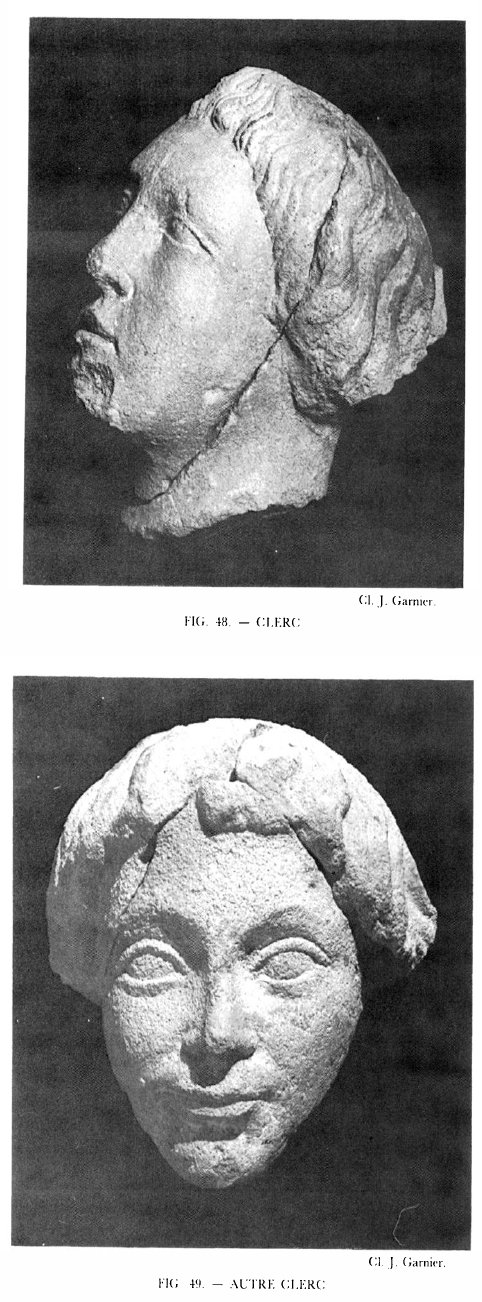 3 (two clerics) 3 (two clerics)
 4 (one demon, one damned, one damned monk)
+ 4 (one demon, one damned, one damned monk)
+ 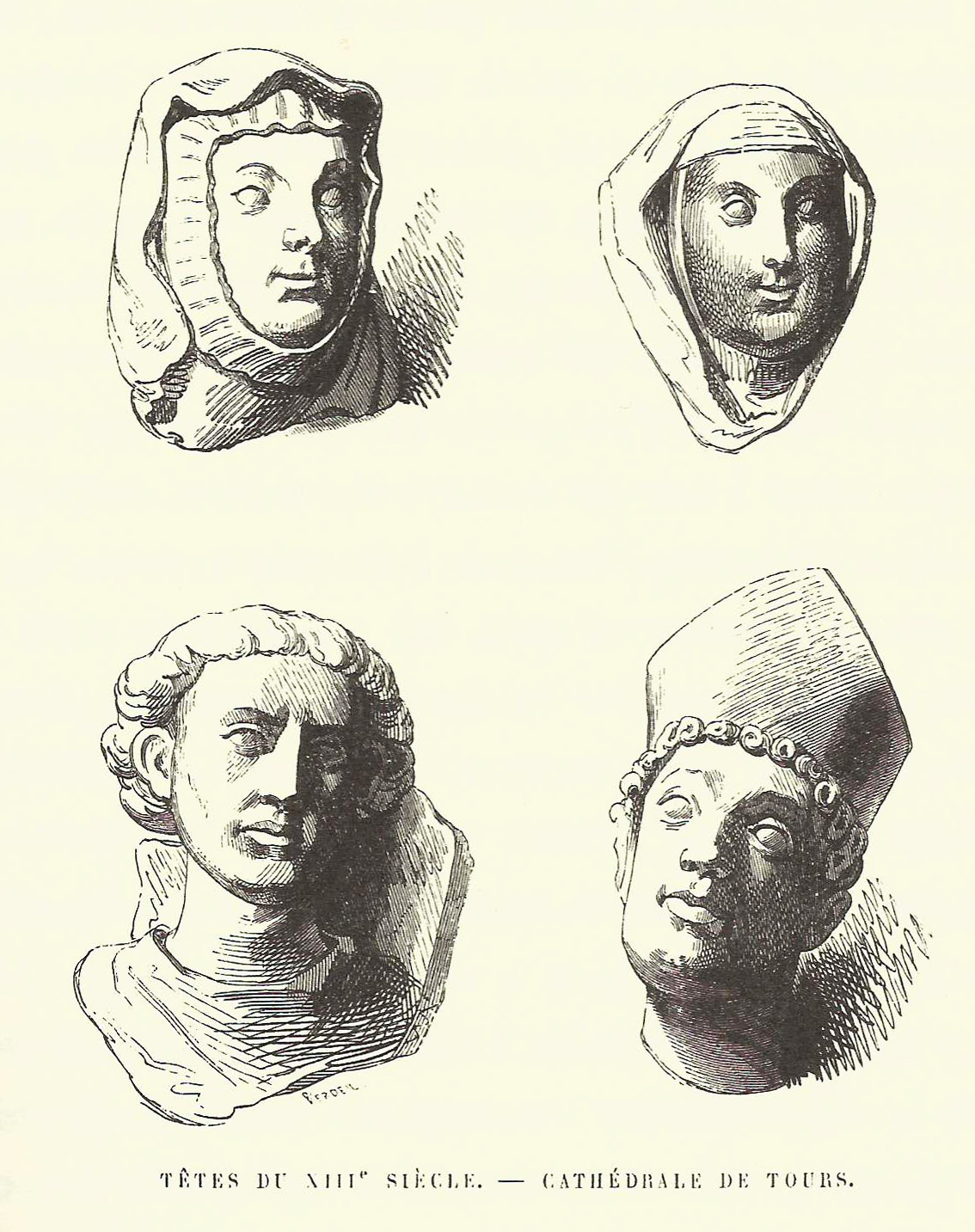 drawings of 13th century heads in Tours Cathedral [LTh&m 1855]. drawings of 13th century heads in Tours Cathedral [LTh&m 1855].


To the left the Council of Tours in September 1162 [ LTa&m 1845]. On the right, in 1177, Pope Alexander III and the Germanic Roman Emperor Barbarossa meet in Ancona to sign the Peace of Venice [Girolamo Gamberato (1550-1628), Palazzo Ducale in Venice]. One can imagine similar pageantry around Alexander III in Tours.
|
The magnificence of the Tourangeaux and Tourangelles. Probably at the beginning of the second half of the twelfth century, Jean, a monk of Marmoutier depicts the urban landscape of Touraine with a flattering pen, reported by Christiane Deluz in the 1995 bulletin of the
SAT : "To the city of Tours, the proximity of Châteauneuf brings much. Its citizens are illustrious and come forward dressed in purple and adorned with gold, silver, vair and petit-gris and all the wealth of the world's glory... Their houses, almost all of them with towers, equipped with tusks, rise up to the sky. The richness of various dishes continually adorns their table... Joyful and magnificent, hospitable, they honor God and the poor. They have built for their patron, the blessed Martin, and for the other saints churches with a magnificent apparatus and vaults... We consider the people of Touraine to be men of unfailing fidelity, modest, affable, learned in letters, sure of their word, persevering in their work, benevolent but very hard on their enemies, strong in arms, reputed for their ardor in combat and warlike work, without jactance in prosperity or dejection in adversity... As for the women, I must confess the truth, their beauty is so great and so great the number of beautiful that it seems hardly believable. In truth, compared to them, all the others seem ugly. Their beauty is adorned and somehow enhanced by their precious clothes. Looking at them, the eyes are delighted and the flesh trembles, agitated by passion." One is reassured by the conclusion of this brave monk John, who seems so far from Martin : "But so that so many goods of nature, such a perfect work, are not spoiled by vice, they enclose the treasure of their beauty in the love of chastity, like a rose clothed in a lily."
|

 extract
The depravity of the clergy. In his "History of the city of Tours" of 1873, Eugène Giraudet quotes the same passage to the glory of the Tourangeaux, adding : "The writers of the thirteenth century have transmitted to us a quite different picture of the mores of their time, which marked, for Catholicism and for the social state of the Middle Ages, the culminating point after which there remained only to descend. The conduct of the clergy was far from being edifying; for in the midst of the many abuses introduced into ecclesiastical mores, discipline had finally disappeared. The learned authors of "L'histoire littéraire de la France" attribute this moral stultification to the profound ignorance of the priests, most of whom could hardly read, to the vicious habits of the schools and to the long journeys of the crusaders. This general depravity, which is still demonstrated to us by the numerous ordinances of St. Louis, gave rise to extravagant and scandalous practices or ceremonies, such as the
Festival of the Fools, of the Innocents, and of the Donkeys. [...]Forgetting the principles of Christianity, the monks of St. Martin's, St. Venant's, Marmoutier, St. Julian's etc. lent themselves to the mores of their time they had serfs like laymen, bought landed property or rents, and received men or women as gifts in the same way as cattle. The abbey of Marmoutier and that of Saint Martin owned more land than the high barons of the kingdom and had more wealth in gold and gems than the king's lands were worth. It is curious to note that it was the abbeys that kept the last serfs of Touraine in servitude (1294)."

Fool's Day, engraving by Pieter Van der Heyden, in 1559, after Peter Brueghel.
+  miniature depicting two scenes of charivari [early 14th century, Master of the Roman de Fauvel]. miniature depicting two scenes of charivari [early 14th century, Master of the Roman de Fauvel].
|


The majestic prelate that Martin never was. We have already seen that in his time the mitre and the crosier did not exist ( here-before), we have especially seen that Martin lived as an ascetic monk (cf here-before the  image of the actor in the 2016 Arte TV movie) , criticized by his fellow bishops for his miserable outfits unworthy of a bishop. So how is it that he is often depicted in luxurious clothes, with precious stones and golden insignia ? In his book Verriere 2018, Jacques Verriere attempts a image of the actor in the 2016 Arte TV movie) , criticized by his fellow bishops for his miserable outfits unworthy of a bishop. So how is it that he is often depicted in luxurious clothes, with precious stones and golden insignia ? In his book Verriere 2018, Jacques Verriere attempts a  explanation. Could it be from the Albigensian revolts (1209-1229) to fight against the simplicity and asceticism of heretics too close to Martin ? The first illustration that follows, would show that this very generalized trend would be earlier.
1) Pontifical for the use of Mainz, before the year one thousand, the Archbishop of Mainz in prayer before Martin [BnF, Maupoix 2018]
+ explanation. Could it be from the Albigensian revolts (1209-1229) to fight against the simplicity and asceticism of heretics too close to Martin ? The first illustration that follows, would show that this very generalized trend would be earlier.
1) Pontifical for the use of Mainz, before the year one thousand, the Archbishop of Mainz in prayer before Martin [BnF, Maupoix 2018]
+  miniature of a sacramentary from Mont Saint Michel circa 1065 [New York, The Pierpont Morgan Library, link].
2) Stained glass window from Chartres Cathedral, 13th century (Martin resurrects a child).
3) statue from the church in Marmagne in Saône et Loire [flickr Odile Cognard]
4) Stained glass window from the church of Thilouze, Lobin workshop 1872 [Gallery 2018]
5) painting of Touraine origin from Tours Cathedral, Chapel of Saint Michael (Martin preaching at Marmoutier) [Maupoix 2018].
6) Statue from the Church of St. Martin of Aosta in Italy [Semur 2015]. miniature of a sacramentary from Mont Saint Michel circa 1065 [New York, The Pierpont Morgan Library, link].
2) Stained glass window from Chartres Cathedral, 13th century (Martin resurrects a child).
3) statue from the church in Marmagne in Saône et Loire [flickr Odile Cognard]
4) Stained glass window from the church of Thilouze, Lobin workshop 1872 [Gallery 2018]
5) painting of Touraine origin from Tours Cathedral, Chapel of Saint Michael (Martin preaching at Marmoutier) [Maupoix 2018].
6) Statue from the Church of St. Martin of Aosta in Italy [Semur 2015].
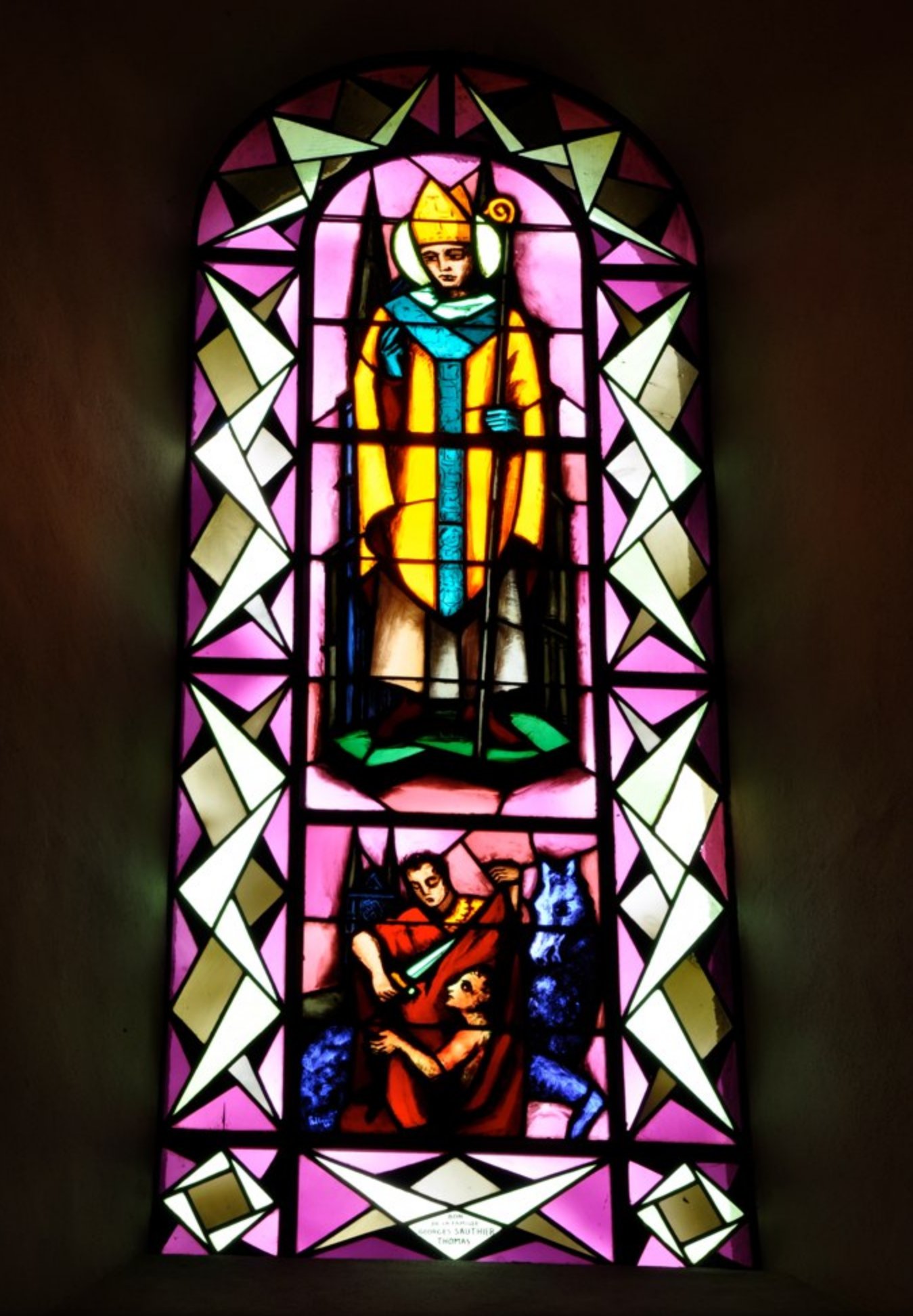 vitrail by Paul Monnier [1946, church of Vollèges in Switzerland [flickr Jean-Louis Pitteloud]. And on this vitrail by Paul Monnier [1946, church of Vollèges in Switzerland [flickr Jean-Louis Pitteloud]. And on this 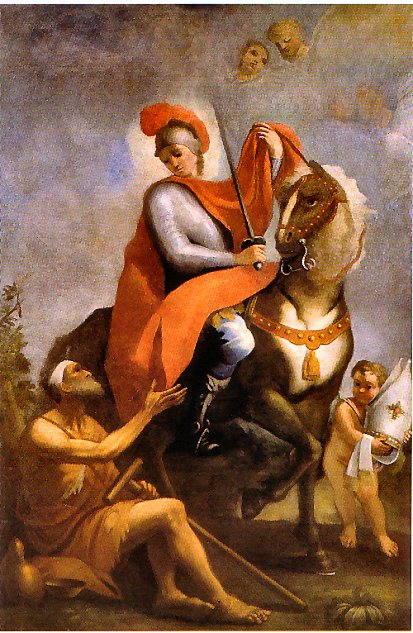 table by Giosuè Carducci an angel evokes the fate of the sharing soldier (link).
Conversely, the bishop is recognized as Martin when associated with the arms of a soldier, as in this table by Giosuè Carducci an angel evokes the fate of the sharing soldier (link).
Conversely, the bishop is recognized as Martin when associated with the arms of a soldier, as in this 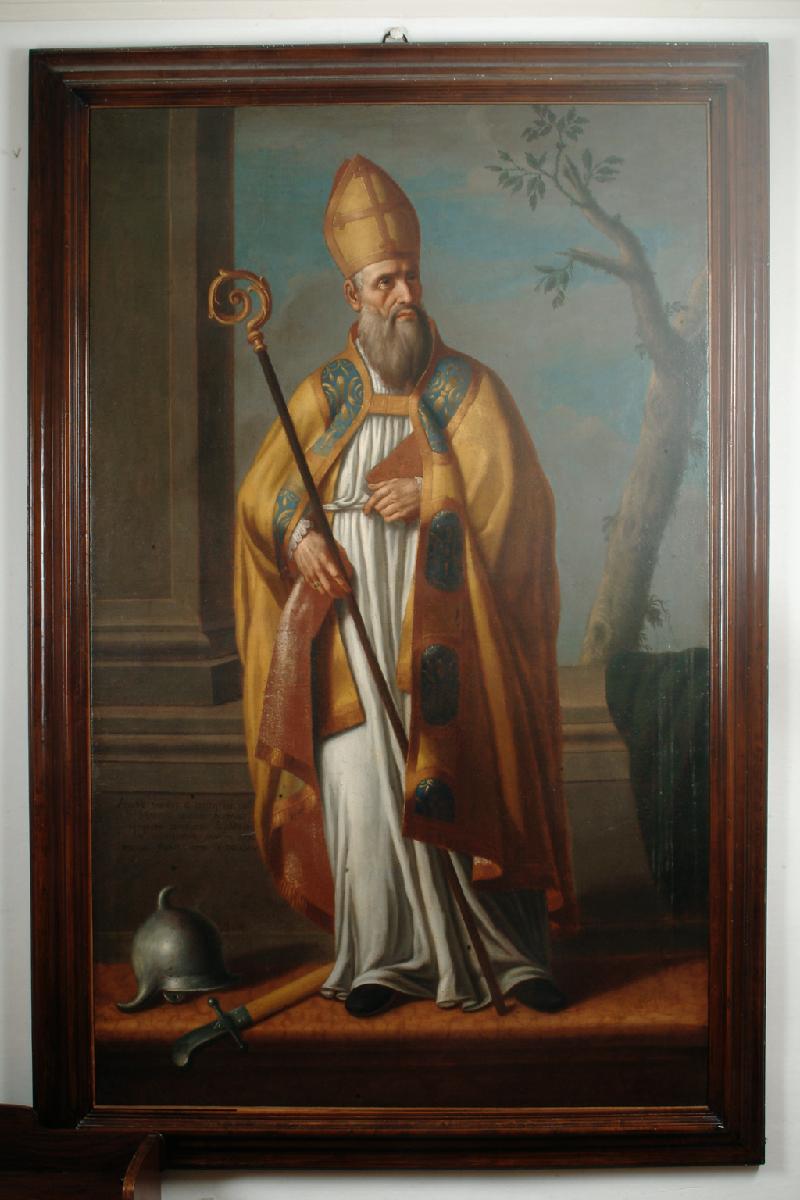 table by Giuseppe Menegoni [1814, link]. table by Giuseppe Menegoni [1814, link].
|
 1
1 2
2 3
3 4
4 5
5 6
6 7
7 8
8 9
9 10
10 11
11 12
12 13
13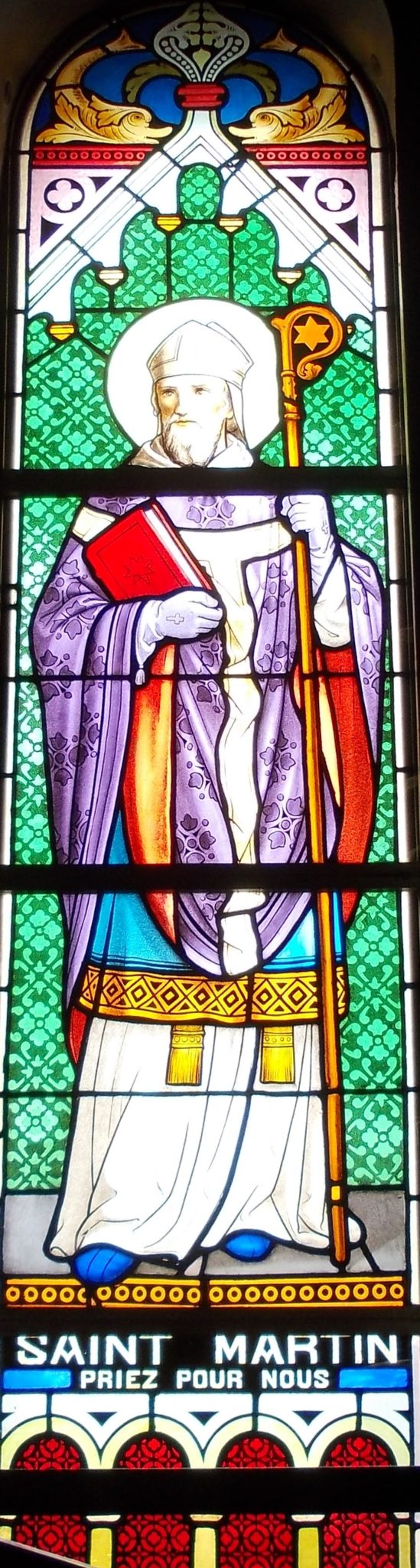 14
14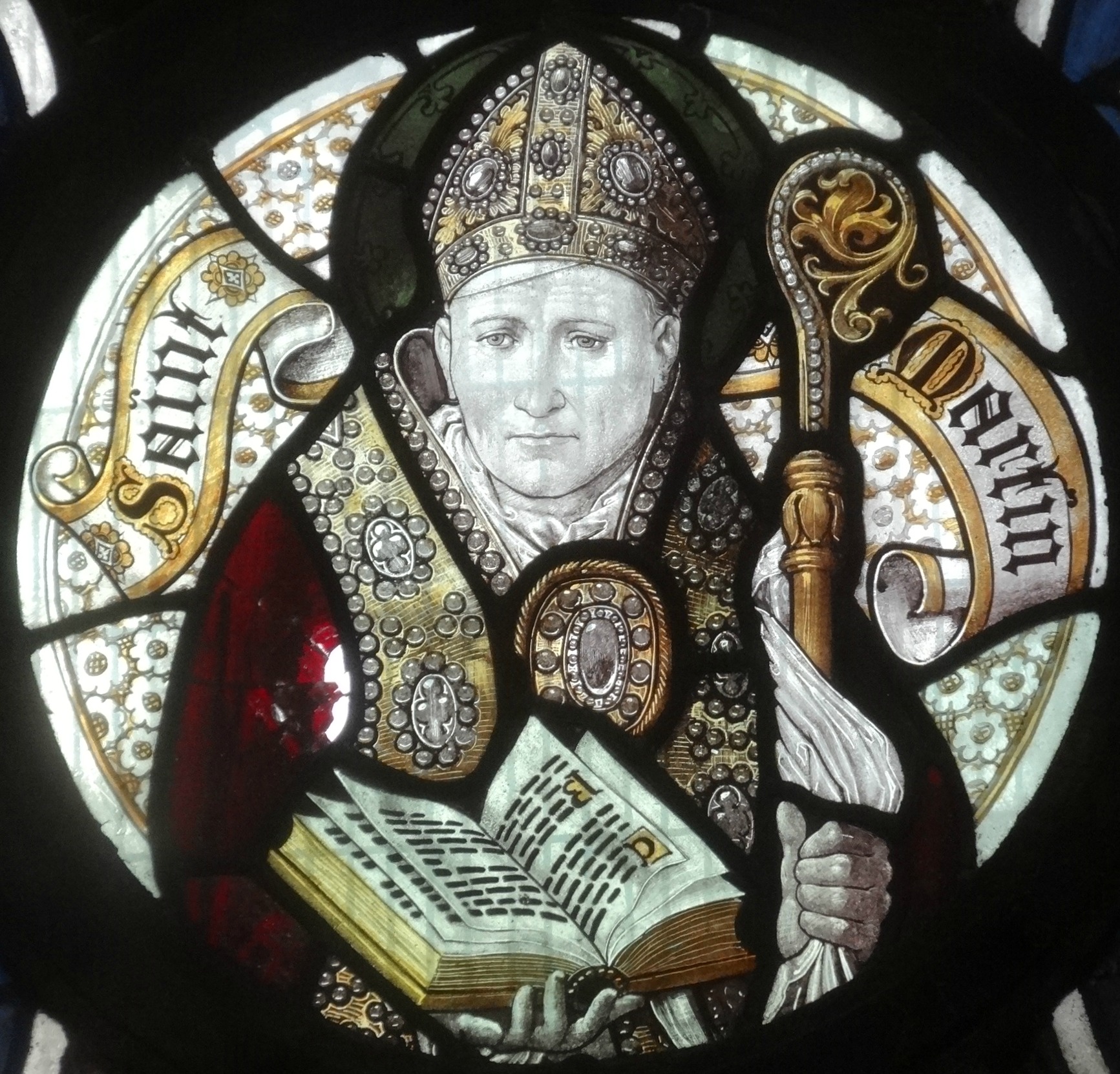 15
15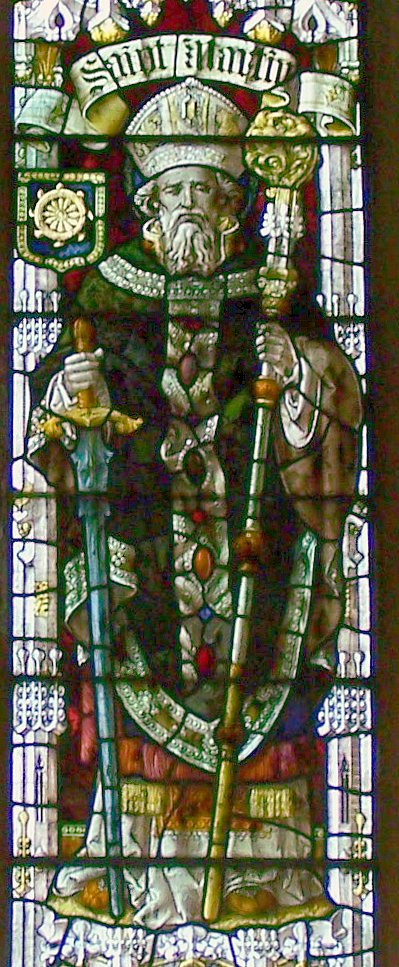 16
16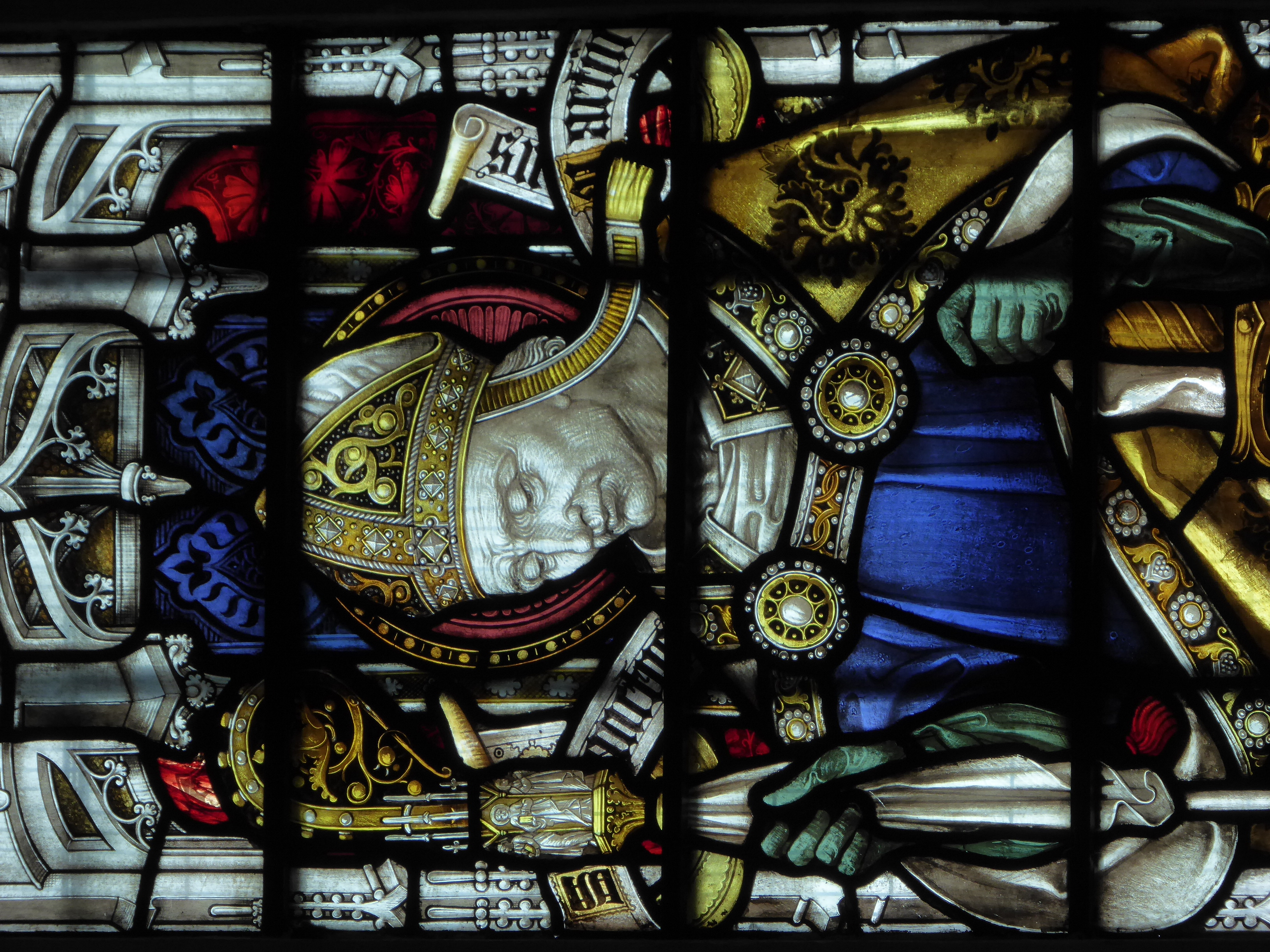 17
17 1
1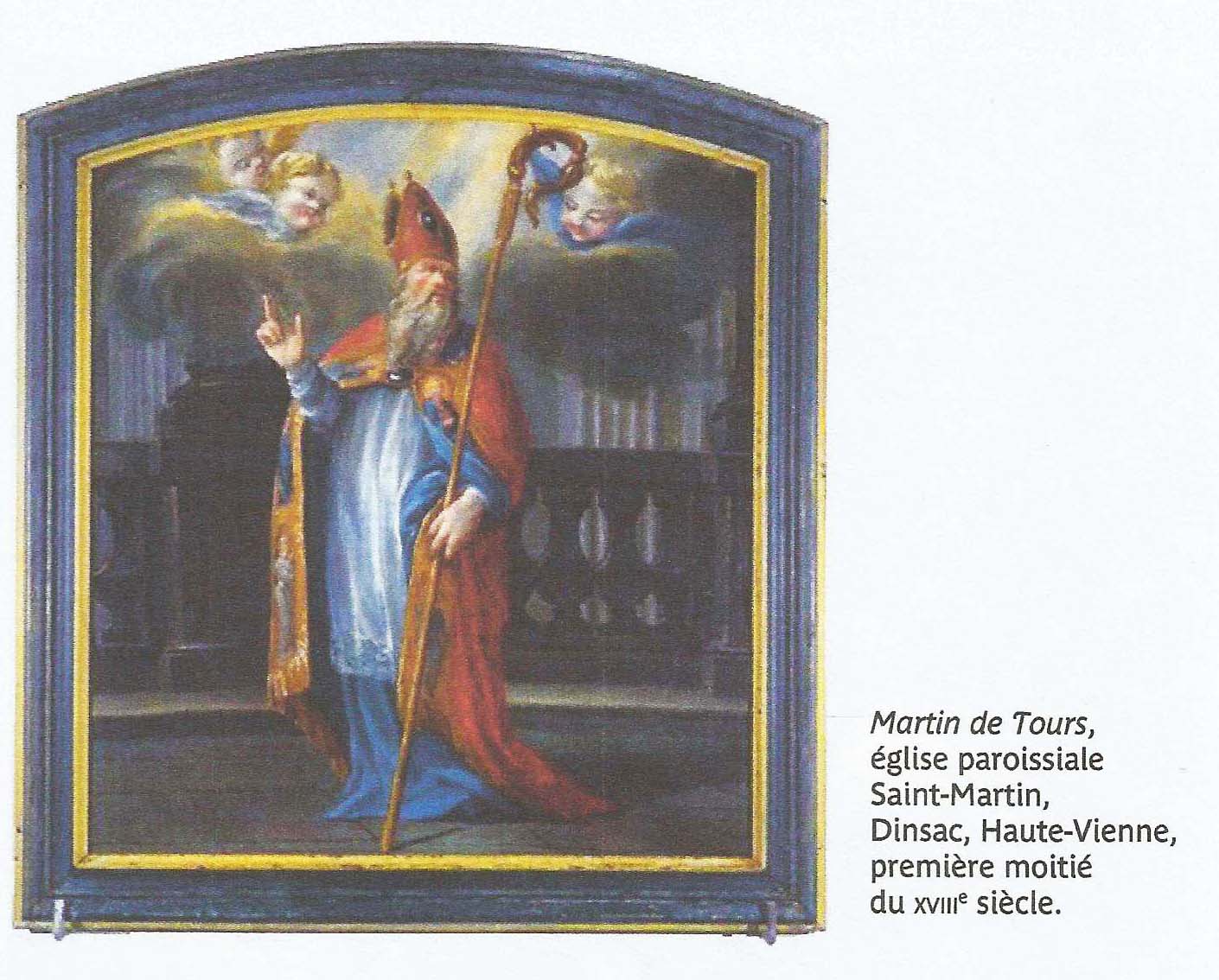 2
2 tableau
 1
1 2
2 3
3 4
4 link
link 5
5 6
6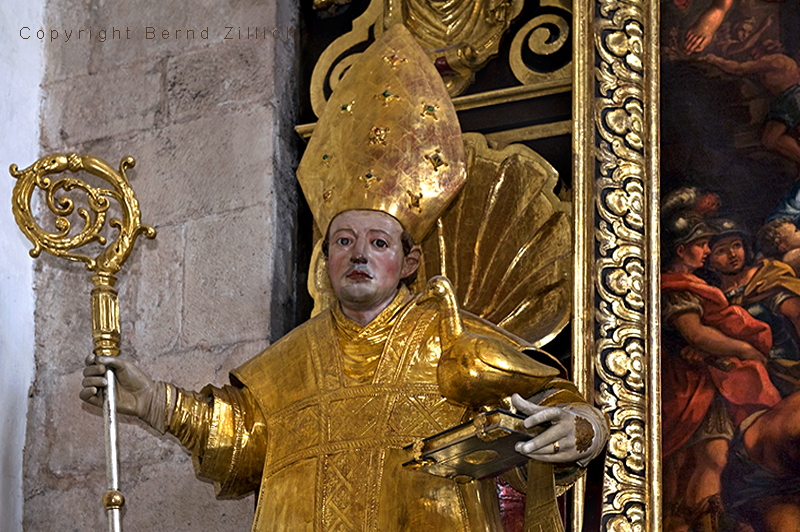 7
7 8
8 altar
altar set
set zoom
zoomIn 1151,
Henri II Plantagenet inherits the county of Anjou to which Touraine is attached. A year later, in Poitiers, he married Alienor of Aquitaine, Duchess of Aquitaine, former Queen of France separated from her husband Louis VII. In 1154, Henry II became king of England. Touraine was no longer directly dependent on the kingdom of France, it was English, in a vast kingdom that stretched from Scotland to the Basque Country. Until 1205, for 54 years. Chinon was one of their favorite residences. Pierre Leveel in "Histoire de la Touraine" [CLD 1988] : "Henry Plantagenet's great works in Touraine were ordered in the first half of his reign, a period during which he showed poise, in spite of mood swings and some terrible tantrums. In Chinon, he had the bridge over the Vienne completed[...]In Tours, Henry was cautious, because the Martinian shrine was under the direct, and quite vigilant, protection of the king of France[Philip Augustus visited in 1180]On the other hand, it is certain that as count of Touraine, he wanted to strengthen his hold on the Château de Tours". He also expanded the boundaries of the City after 1150, raising ramparts further west (area 1 on this  plan by Guignolet 1984).


The Plantagenet Empire circa 1190. and the kingdom of France at the advent of Philip Augustus in 1180 and his death in 1223 (link).
|
An enlightened prince.

At Chinon, the chapel of the Martinian queen Radegonde, daughter-in-law of Clovis, conceals an exceptional fresco, discovered in 1964, showing the Plantagenet royal family hunting. It dates from the late 12th or early 13th century. Henry II is certainly in the lead, followed possibly by his daughter Joan, his wife Eleanor, and his sons Richard Heart of Lyon, holding a falcon, and John without a land [link to a study on the site "Les portes du temps" with this remark by Michel Garcia "the mural deliberately depicts the dramatic moment when the queen takes leave of her lands and her children, and emphasizes the affection and admiration that the latter have for her"]. +  analysis by Florian Mazel ["Féodalités", Belin 2010]. analysis by Florian Mazel ["Féodalités", Belin 2010].

Henri and Alienor, from the tender dance of lovers, under the gallantry of the courtesy love (highly prized at the court of Alienor, links :1, 2), to the violent domestic scene [illustration by Maurice Pouzet, in the book "Henri II Plantagenet" (1976) and box from volume 6 of the comic strip "Aliénor, la légende noire", shown below] + the  half panel half panel

Alienor and Poitiers Stained glass window by Auguste Steinhel 1879 in the Poitiers City Hall (links : 1 2 3). Eleanor of Aquitaine married Henry in 1152 in Poitiers, and there, in 1199, she confirmed before the echevins the charter of the commune.
+  zoom back of the stained glass window [ph. Augustin Audouin]. zoom back of the stained glass window [ph. Augustin Audouin].
|
As Giraudet indicates, forgetting the queen who took an active part in the government, the couple Henry - Eleanor was initially effective and appreciated. Gradually, with the wear and tear of power, the departure, falling out, conflict and death of a valuable advisor,
Thomas Becket, the arrival of a mistress, Rosemonde Clifford, and dissension between their children, the couple were torn apart. Supported by the mother, the children rebelled against the father, who reconciled with them and imprisoned Eleanor. All this weakens the English kingdom and allows the young king of France Philippe Auguste to undertake a reconquest which will be victorious. Henry II, finally defeated by his sons, dies in Chinon in 1189, Richard I Lionheart succeeds him until 1199, then John without Land, while Eleanor, having regained an important political role, dies in 1204.


Thomas Becket, Archbishop of Canterbury, blessed by Martin, early version in a German psautier illumination circa 1225 [New York, The Pierpont Morgan Library, link], second version in a painting by the Perugino circa 1498 [link].

The Fréteval Interview. On July 22, 1170, near the château de Fréteval in the Vendôme region, the meeting of the two spouses of Eleanor of Aquitaine, Henry II king of England and Louis VII king of France, was held in the presence of Thomas Becket, archbishop representing the pope, who was then angry with Henry and exiled in France [Louis Gouffault's workshop of Orleans 1933, Fréteval church]. This interview, in a place later named "le pré aux traitres", ends without the "baiser de la paix", a supreme commitment at the time.Thomas Becket would be assassinated a few months later, on December 29, 1170. +  article 2013 La NR.
+ page Nhuan DoDuc of stained glass windows on Thomas sanctified. article 2013 La NR.
+ page Nhuan DoDuc of stained glass windows on Thomas sanctified.
1189: Touraine last battlefield of Henry II Plantagenet. Above, just after the capture of Tours, near Ballan (15 km southwest of Tours) +  plank [sixth and final volume of "Alienor, the Black Legend" in the series "The Queens of Blood", script by Arnaud Delalande and Simona Mogavino, drawing by Carlos Gomez, Delcourt 2017]. plank [sixth and final volume of "Alienor, the Black Legend" in the series "The Queens of Blood", script by Arnaud Delalande and Simona Mogavino, drawing by Carlos Gomez, Delcourt 2017].
 Shortly thereafter, following their victory at the battle of Azay le Rideau, between Tours and Chinon, the royal residence, Richard the Lionhearted, son of the vanquished, and Philip Augustus congratulate each other in front of, presumably, the clergy of Tours +
  board [History of France in comics, text Pierre Castex, drawing Raphaël Marcello, Larousse 1979] board [History of France in comics, text Pierre Castex, drawing Raphaël Marcello, Larousse 1979]

1190: in the cathedral of Tours, Richard the Lionheart takes the bumblebee and the scarf before leaving on crusade [ LTa&m 1845]. At the same time, a pilgrim knight, among others, took the drone in the basilica before leaving for Palestine, Jean de Brienne. He became king of Jerusalem and then Latin emperor of Constantinople +  engraving LTh&m 1855. engraving LTh&m 1855.
|
 statuette
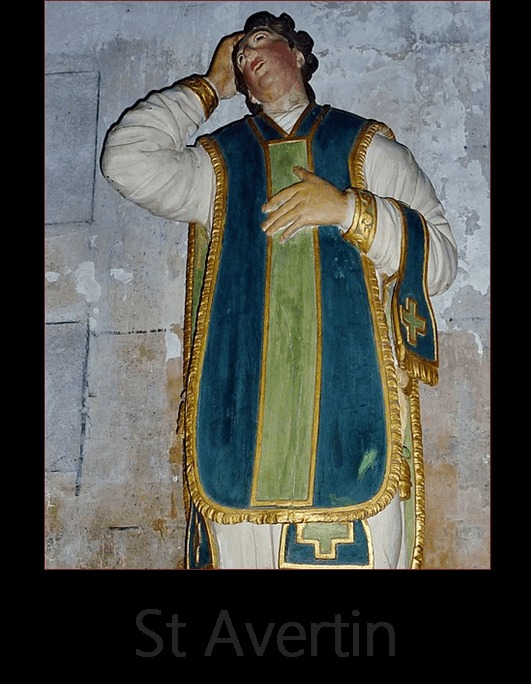 statuette
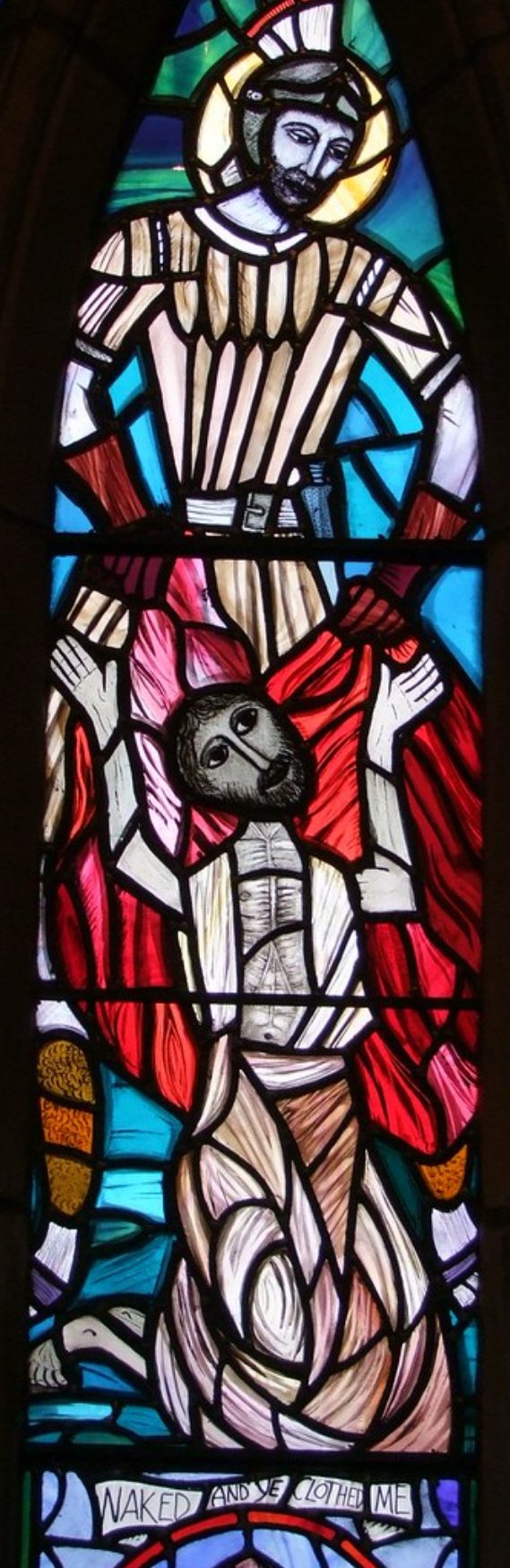 vitrail
At Tours, Richard the Lionheart embarked on the Third Crusade. After the death of King Henry on July 6, 1189 after 34 years and 8 months of reign,
Philippe Auguste, son of Louis VII, king of France since 1179, and his vassal the new king of England Richard I Lionheart agree for a status quo in Touraine, the capture of Tours by the king of France loses its effect, Tours and its basilica return to the English side. For thirteen years during which both leave in crusade, Richard deciding in the cathedral of Tours. Pierre Leveel : "The archbishop imposes on him the bourdon and the sash, insignia of his pilgrimage to Jerusalem this prelate, Barthélemy de Vendôme, had presided over the funeral of Henry of Plantagenet in the abbey of Fontevraud [next to Candes] he was an advisor to the Anglo-Angelan royal family." Richard then left for three years in the third crusade and then spent two years in captivity, with his mother Eleanor of Aquitaine painstakingly raising a large ransom. Upon his return, Richard took matters into his own hands, defeating Philip Augustus at the battle of Fréteval in the Perche (now Loir et Cher) and retaking Loches from him. He defeated him again in 1198 and died suddenly in 1199, hit by a crossbow arrow at the seat of Châlus in the Limousin. He was succeeded by his brother John the Landless.


Fontevraud a stone's throw from Candes. The abbaye de Fontevraud, is located on the commune of Fontevraud l'abbaye, bordering that of Candes Saint Martin. Coming from Candes on foot, crossing the woods, you arrive on the north side of the abbey with a perfect view (photo on the left).
In 1154 Henri and Eleanor entrusted their children Jeanne and Jean to this abbey, which regularly benefited from their largesse. In 1189, Henri was buried here, having died not far from Chinon. Eleanor then made it the family necropolis. There are the recumbents of Henry and Eleanor (pictured right), their son Richard the Lionhearted and their daughter-in-law Isabella of Angouleme (wife of John Lackland) +  photo of the four recumbents.
+ photo of the four recumbents.
+  view of the south of the abbey by Louis Boudan 1699
+ view of the south of the abbey by Louis Boudan 1699
+  view from the north somewhat later (link). view from the north somewhat later (link).
|
Incendies and degradations in Châteauneuf.... A page on the France Balade website tells the rest : "In 1202, Tours is controlled by
Arthur [nephew of Henry II]who is in conflict with John Lackland. Arthur went to lay siege to Mirebeau in Poitou, but was surprised on July 30 by an army led by John Lackland and William of the Rocks and was taken prisoner. Arthur was assassinated in Rouen in April 1203. Jean sans Terre was condemned by the Court of Peers of the kingdom of France, which pronounced the confiscation of his property. By March 1203 Guillaume des Roches rallied King Philip II Augustus of France with most of the Angevin and Poitevin lords. John Lackland's Lieutenant in Tours, Hamelin de Roorte, fled the city. During the summer and fall of 1203, the city changed hands several times, controlled by the supporters of John Lackland or those of Philip Augustus, Guillaume des Roches and Sulpice III of Amboise. Both parts of the city, the Cité and Châteauneuf suffered fires and depredations.
During this time Philip II Augustus seized Saumur and Loudun then established a strong garrison in Tours."
Then: "The fall of
Château-Gaillard in March 1204 decants the situation, Normandy is now controlled by the king of France who can then devote himself to Touraine, Anjou and Poitou. The army of Philip II Augustus is led by Guillaume des Roches and Aimery VII de Thouars. Philip Augustus and these two leaders had to lay siege to the places of Loches and Chinon, which were defended respectively by Girard d'Athée and Robert de Turneham. Only the advanced fort of Chinon Castle was conquered in late 1204. During the winter Guillaume des Roches remains in front of the castle of Chinon while Dreux de Mello continues the siege of Loches. Philip Augustus returned to Touraine in the spring of 1205 to witness the capture of Loches and then the castle of Chinon, which was then defended by Hubert du Bourg. The conquest of the whole of Touraine was then consummated. John without Land renounces this province during the truce of October 26, 1206, he also renounces Normandy, Brittany, Anjou and Maine". It was gradually from 1190 to 1204 that Philip Augustus went from being king of the Franks (rex Francorum) to king of France (rex Franciae), which can be considered as the birth of France.

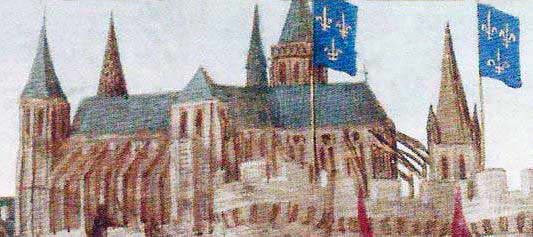
1203: the capture of Tours by Philip Augustus (southwest gate, the English garrison is defeated "Saint Simple"), 1460 miniature by the Tourangeau Jean Fouquet. This is the earliest known representation of the basilica +  an analysis by Henri Galinié in Ta&m 2007 ["Grandes chroniques de France" 1460, BnF]. Note : it is not known if this scene is the one of the capture of the city in 1189 or in 1203. For Pierre Leveel, in his "Histoire de la Touraine" of 1988, "it is rather the entrance of the dauphin Charles, future Charles VII, after the surrender of 1418". Climbing the ramparts with ladders shows that the capture was not easy, which would correspond to 1203... an analysis by Henri Galinié in Ta&m 2007 ["Grandes chroniques de France" 1460, BnF]. Note : it is not known if this scene is the one of the capture of the city in 1189 or in 1203. For Pierre Leveel, in his "Histoire de la Touraine" of 1988, "it is rather the entrance of the dauphin Charles, future Charles VII, after the surrender of 1418". Climbing the ramparts with ladders shows that the capture was not easy, which would correspond to 1203...
|
Let us linger on the recapture of Tours in 1203, told by Pierre Leveel in 1988 : "Philippe-Auguste came to attack Tours around Assumption 1203, and, after several days of fighting where the castle suffered great damage, the captain Brindinellis Cottereau made his surrender ; He was replaced in the name of the king of France by Geoffroy des Roches. but the Capetian garrison had, after Philip's departure for Normandy, to undergo the assault of John without Land, who seized the place as early as September 1, 1203, and gave it as captain-governor the famous
Girard d'Athée, probably lord of Athée sur Cher. This one entrusted the guard of the castle of Tours to Guillaume le Batillé his best lieutenant, who had the defensive apparatus restored. The conquest of the Touraine places by Philippe-Auguste required another two years of efforts." Tours returned to the kingdom of France without further fighting in 1205, after the captures of Loches and Chinon. Girard d'Athée was the last Tourangeau lord to defend the Plantagenets' cause. Taken prisoner at the siege of Loches, he obtained his release by paying a ransom, went to England with his family and was the governor of the castles of Gloucester and Bristol. According to Pierre Leveel, it appears that in Tours the battles were concentrated on the castle of Tours, in the center, more than on the ramparts of Châteauneuf, to the west, and of the Cité, to the east. [LTh&m 1855]

Solid supporters of the king: the banneret knights of Touraine. The knights bannerets appeared under Philip Augustus. This title allowed army leaders to group their troops under their banners and arms. In the first class of "bannerets" appointed by Philip Augustus in 1213, the lords of Touraine were numerous :
Sulpice III of Amboise,
Pierre II Savary (lord of Montbazon and Colombiers (Villandry)),
Guillaume III of Pressigny [of Sainte-Maure],
Barthélemy de Bossay [de Grillemont],
Barthélemy II de l'Isle Bouchard,
Josselin de Champigny [de Blou],
Jean d'Alluyes (Lord of Chateau la Vallière),
Robert de Pernay,
Robert de Roche-Corbon [de Brenne],
Hugues de La Haye,
Hugues de Fontaines (lord of Rouziers),
Eschivard II Baron de Preuilly ("first baron of Touraine"),
Guillaume and Herbert Turpin de Semblancay,
Pierre Achard de Pommiers (near Chinon),
The lord of Saint Michel sur Loire,
Hugues Ridel lord of Azay (le Rideau),
Guillaume lord of Azay sur Cher,
Dreux de Mello, Governor of Loches,
Josselin II of Champchevrier.
+  fight during a tournament between knights
+ fight during a tournament between knights
+  coat of arms of the banneret knights [LTh&m 1855].
+ five images of bannered knights : coat of arms of the banneret knights [LTh&m 1855].
+ five images of bannered knights :
 1 (link, 1 (link,
 variant) variant)
 2 [Felix Emmanuel Philippoteaux] 2 [Felix Emmanuel Philippoteaux]
 3 3
 4 4
 5. 5.
|
Misery and renewal in the city of Châteauneuf. In his 1986 book on "La basilique Saint Martin de Tours", Charles Lelong estimates that it "escaped the fires that ravaged Châteauneuf in 1188 and also in 1202 [...]As a result of fierce fighting between the English and Philip-Augustus, "the city of Tours, this city so famous, so rich and so populated, was reduced to such a degree of misfortune that one encountered only misery and pain there" [quote from a letter addressed in 1222 by the chapter of the cathedral to the bishop of Rennes]. Especially, the chapter of Saint-Martin and the burghers of Châteauneuf had paid dearly for their loyalty to the king of France. [...]but it is true that the Collegiate Church, while struggling with serious financial difficulties, rose quite quickly. Philip Augustus, like his predecessors, placed great value on St. Martin's, appointed his natural son
Pierre Charlot as treasurer (1217-1231); he was succeeded by Archambaud, possibly of the Bourbon family, and then Philippe de Castille, son of Ferdinand III, king of Castile and Leon in 1215, the collegiate church was granted some of the property confiscated from the Plantagenets' followers. So great characters, powerful relationships and renewed resources."

| 
|

| |
| |||
 photo
photo


St. Louis and St. Martin reunited, symbols of the close relationship between the French monarchy and the Abbey of St. Martin (link). At left, Louis and Martin in armor, stained glass window in the chapel of Radley College in England [flickr Rex Harris].
In the center, Louis in 1227, with his mother Blanche of Castile, in the basilica (Louis IX returned there in 1261 and 1270)
On the right, Martin bishop and Louis king, stained glass window from the church of Thilouze, in Touraine, also from the Lobin workshop.
Below, Louis IX king and saint / sanctus Ludovicus Rex in the current basilica.
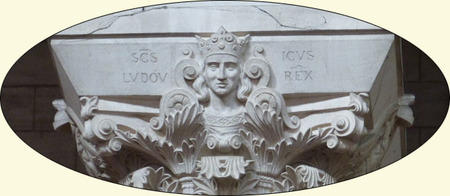
|
The treasurers of St. Martin's Chapter. Jacques Boussard, in a
article from 1961 in the "Revue d'histoire de l'Église de France" presents the office of treasurer, let us remember that Hervé built the basilica in 1014 : "It is increasingly evident that the treasurer is a great personage and that this office leads its holders to greater honors, that is, to the episcopate: Henri of France [future bishop of Beauvais and then Rheims], Renaud de Mouzon, Rotrou du Perche [future bishop of Châlons en Champagne], no doubt Robert de Mehun [future bishop of Le Puy], finally Pierre Charlot [future bishop of Noyon], become bishops after a brief stint at St. Martin. Above all, it is visible that, during the long reign of Philip Augustus, the king considered the office of treasurer to be a family possession that he reserved for his close relatives. It was certainly a lucrative and honorary office with which cadets of the royal family or its allies were endowed, while waiting for them to be promoted to episcopal seats, always located in the royal domain and reserved for the king's collation since time immemorial. Unfortunately, the state of the documentation does not always allow us to grasp the relationship which surely existed between the king and the treasurer, but each time we can have a certainty, we note that this relationship is close. After Pierre Charlot come Archambaud, who is not otherwise known to us, but who bears a name common in the Bourbon family, Philippe de Castille and Raoul. [...] Simon de Brion, or de Brie, or de Brienne, Raoul's successor, is better known to us. He became chancellor of France, cardinal and pope under the name of Martin IV, in 1281; the name of Martin which he took to exercise the sovereign pontificate, was chosen by him in remembrance of his passage in the Touraine abbey. His successor in the office of treasurer was Simon de Nesle [future bishop of Noyon and then of Beauvais], who was to become bishop of Beauvais. At the end of the thirteenth century, the dignity of treasurer was so appreciated that Philippe le Bel conferred it on his cousin Philippe, son of the king of Majorca, aged only sixteen or seventeen, who was to retain it until his death in 1341."
+ Link to the chapter "The Treasurer of Saint-Martin in the Twelfth Century, the Interface between the Count, the King, and the Burghers" from Hélène Noizet's 2007 book "La fabrique de la ville".
Commune of Tours 2/5: bourgeois revolts against the authority of the chapter.
Cossu-Delaunay 2020: "Master of the city, Philip Augustus exercised his castellany through the action of a provost later replaced by a bailiff. Assisted by sergeants, he exercised the roles of judge, investigator, tax collector and market inspector in the name of the king. But this authority was strongly contested by the other châtelains, who relied on tradition and ancient texts to claim feudal rights over this or that part of the public space. Also the king had to deal with the bishop, the treasurer of Saint Martin and the abbot of Saint Julien. He succeeded, however, in extending his domination over the rural areas, reinforcing the leading role of the urban center where his trusted men were gathered. Via the authority of a captain, the Capetians ensure the defense of the city."
And it is then that the bourgeois of Châteauneuf want a share of the power.
Guy-Marie Oury, in his article "L'église de Tours au XIIIème siècle" ("Histoire religieuse de la Touraine", 1975) : "After a succession of fruitless efforts, revolts, and conflicts, the town of Châteauneuf found itself in the second part of the thirteenth century completely subject to the chapter and administered by its officers the insurrections of 1212 and 1231 only succeeded in reducing the independence of the town to nothing ; the new disputes that arose in 1247 and 1260 did not change the situation; the long struggle for municipal franchises and the control of pilgrimage revenues illustrated in a peremptory manner the power of the chapter whose king bore the title of Abbot. Deprived of the organizations which served to prepare their attempts at emancipation, the burghers thought of taking advantage of the Confrérie Saint-Eloi, a pious association whose avowed goals were religious; in 1305 the conspirators proclaimed the re-establishment of the municipality and rose up with an armed force;Philippe le Bel condemned them to a heavy fine which they did not seem to have been able to pay because it was so heavy; the municipal history of Tours did not start again until 1356 thanks to the war with England, and a project of a common enclosure for the two sister cities"
1267, appearance of the burghers of Tours. About a century before this reunion, around 1360, under common ramparts of the twin cities of the Episcopal City and Châteauneuf, it is in 1267 that a writing mentions the "bourgeois de Tours" uniting under the same term the bourgeois citéens (of the city) and the bourgeois of Châteauneuf. Bernard Chevalier in his "Histoire de Tours" (1985) points this out by estimating that henceforth "there is already a single Tourangeau patrician".
Start in Commune 1/5,
continued in 3/5
4/5
5/5.
|

 Martin IV, a Touraine pope in the turmoil of the late 13th century Born around 1215 in Andrezel, in the Brie region, Simon de Brion de Chapteuil (or Simon de Brie), of minor nobility, received solid studies in Tours and began a brilliant career that led him to be archdeacon and treasurer in Rouen, from 1248 to 1255. He returned to Tours in 1256 and became treasurer of the chapter of St Martin, a distant successor of Hervé de Buzançais. In 1260, the king of France Louis IX (Saint Louis) appointed him chancellor of France and in December 1261, the pope Urban IV, a Frenchman from Troyes, appointed him cardinal. He became papal ambassador in various matters, until his election to the supreme Catholic magistracy in 1281. Inspired by Martin of Tours, he took the name of Martin IV. The period was troubled, his election was difficult, obtained by the strong support of Charles I of Anjou, king of Naples and Sicily, whose supporter he would become, attracting the adversity of the Italian clergy. He was a pope who never set foot in Rome during his pontificate. After the setbacks of Charles of Anjou with the Sicilian Vespers in March 1282, the situation became tense, he was seen as a partisan pope abusing excommunications, trying in vain to preach a crusade against King Peter III of Aragon, an adversary of Charles of Anjou. He died in 1285, three months after the Angevin. Martin IV launched the canonization of St. Louis. Trivia: Popes Martin II and Martin III were actually called Marin I and Marin II ; there was a Martin I (pope from 649 to 653) and a Martin V (from 1417 to 1431), also in honor of Martin of Tours.


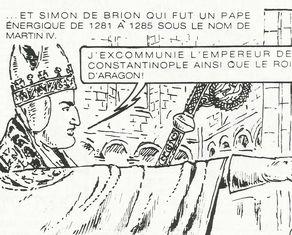
 plank
plank engraving
The ten councils of Tours are listed on this
page of Wikipedia. Reflecting the cultic importance of the city, they took place in 461, 567, 813, 1050, 1096, 1163, 1236, 1282, 1510 and 1583. Eugène Giraudet has different dates, the 5th, 6th and 7th being dated 1233, 1239 and 1282. The one of 1233 (or 1236?) saw the Church interfering in the life of every household [Eugene Giraudet] : "In order to facilitate the execution of the will of the dying, the wills will be delivered within ten days of death into the hands of the bishop or archdeacon of the place" and "Bigamists are infamous, civilly dead, and condemned to be publicly whipped, then exposed to the pilori". It must have been worse for the trigames... We are not out of these prohibitions, polygamy and polyandry are still forbidden in most countries. +  double-page spread where Eugene Giraudet lays out other prohibitions, especially against Jews.
The dean, treasurer and other dignitaries of the chapter. Along with the treasurer, the dean is the other important figure in the chapter. Both are appointed by the king of France who, remember, is lay abbot of Saint Martin, but only really acts through these two appointments. While the treasurer may not be a priest, the dean necessarily is. Among the second-ranking dignitaries, the first two are joined by four others, the
chanter, the ecollector, the sub-dean, and the a chaplain, making up the group of six priors. "This is followed by the chambrier, the abbot of Cormery, the prior of St. Como, and, in a lesser degree of dignity, the senechal, the sousécôlatre, the Chévecier, the soupletier, the sous-chantre and a few others. Let us also place in this elite group the prevosts, managers or rather farmers of the chapter's property. [...] In total, we can estimate that the chapter of Saint Martin counts at least one hundred and sixty clerics [...] to which is added all the service personnel. It is thus truly a people who are concentrated in the "cloister", this district which forms a small walled city in the heart of Châteauneuf de Saint Martin." [Bernard Chevalier, 1997 colloquium]. This organization of the chapter did not vary much from the thirteenth century until 1790. Hélène Noizet makes an analysis of it in her book "La fabrique de la ville" (2007, page)
+ three excerpts :
 1 (the dean, with list)
 2 (the treasurer, with list)
 3 (their reports)
 4 (the schoolmaster).
The
Tours general states of 1308 are convened by the king of France Philippe IV the Fair. In the affair of the Templars, he obtains from the delegates a declaration vindicating him against the pope Clement V, in case the latter tries to defend these religious-soldiers who depend on his authority.


To eliminate the Templars, Philip the Fair set up an intense propaganda operation. Shortly after the Estates General in Tours in May 1308, some of the most important Templar dignitaries were imprisoned in Chinon, in the Coudray tower, where they left graffiti [left illustration + 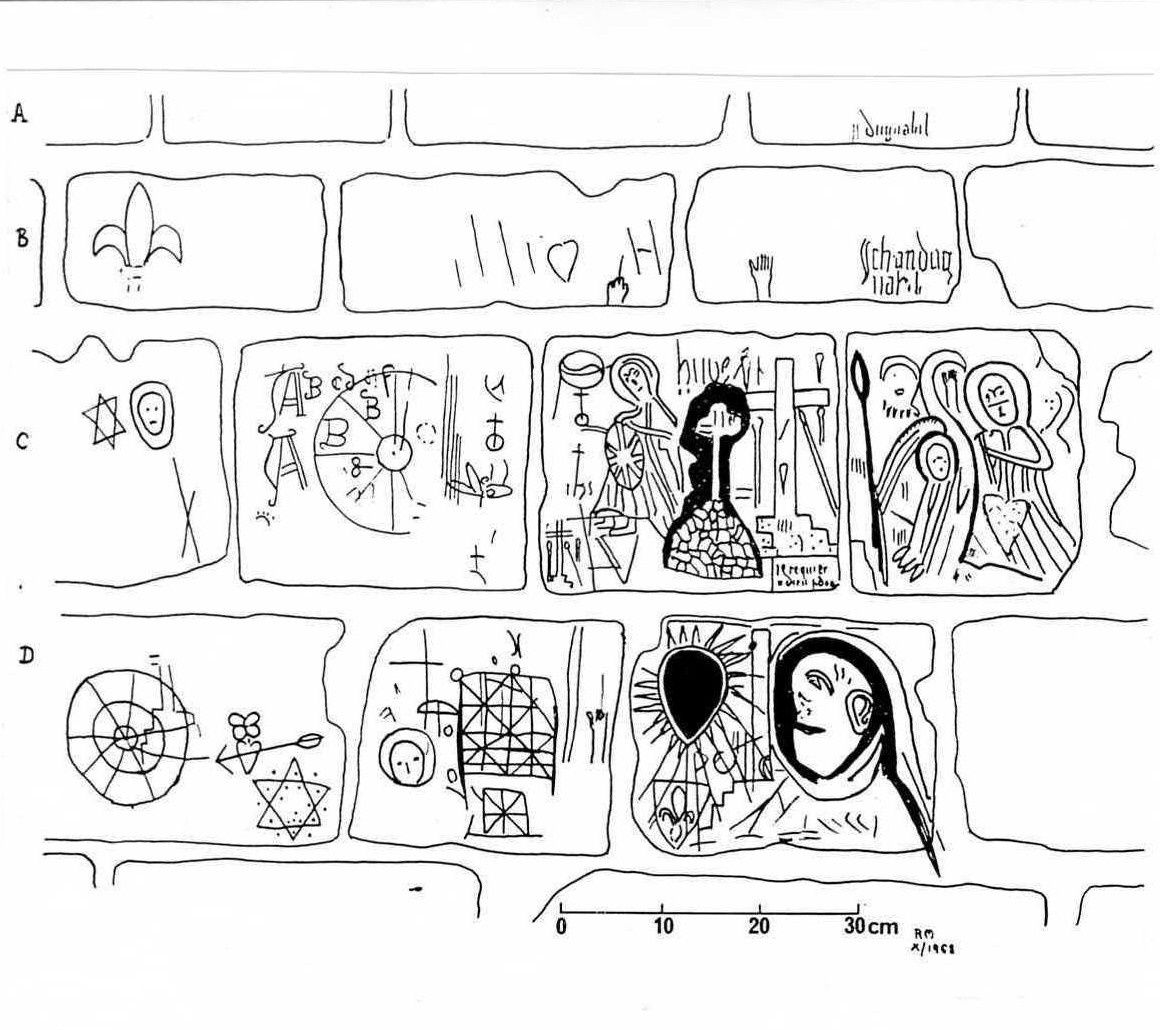 relevé by Raymond Mauny 1973, link].
Three years later, in 1311, the Council of Vienna was held, where Clement V (tiar), Philip the Fair (crown), and the accused (Templar red cross) confronted each other [pictured right, miniature of the Master of Boucicaut, BnF]. relevé by Raymond Mauny 1973, link].
Three years later, in 1311, the Council of Vienna was held, where Clement V (tiar), Philip the Fair (crown), and the accused (Templar red cross) confronted each other [pictured right, miniature of the Master of Boucicaut, BnF].
|
|
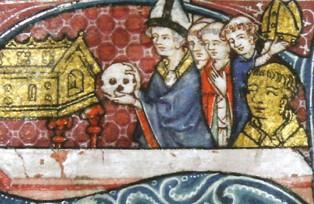

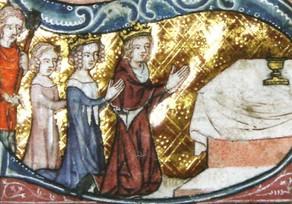
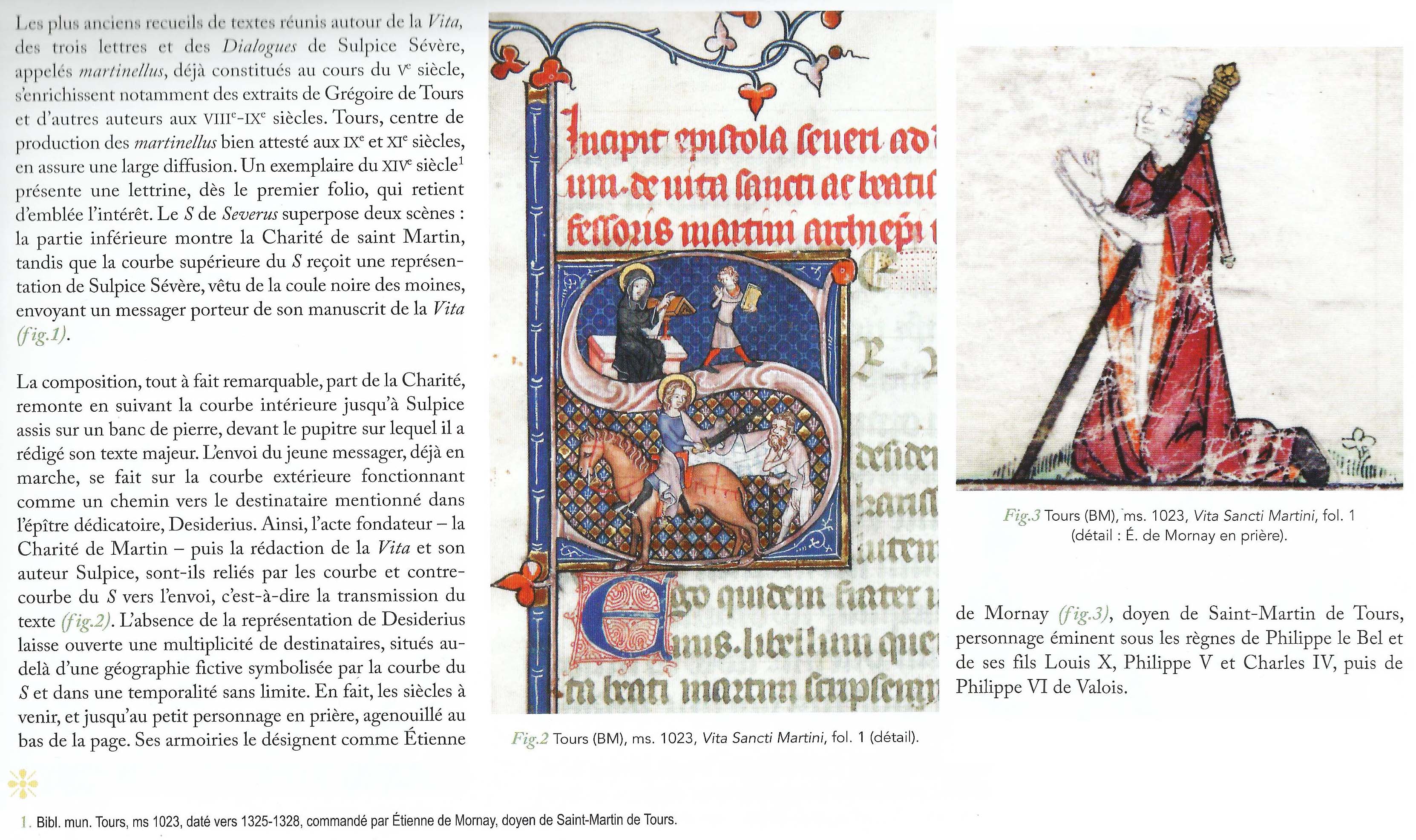 lettrine
 text
text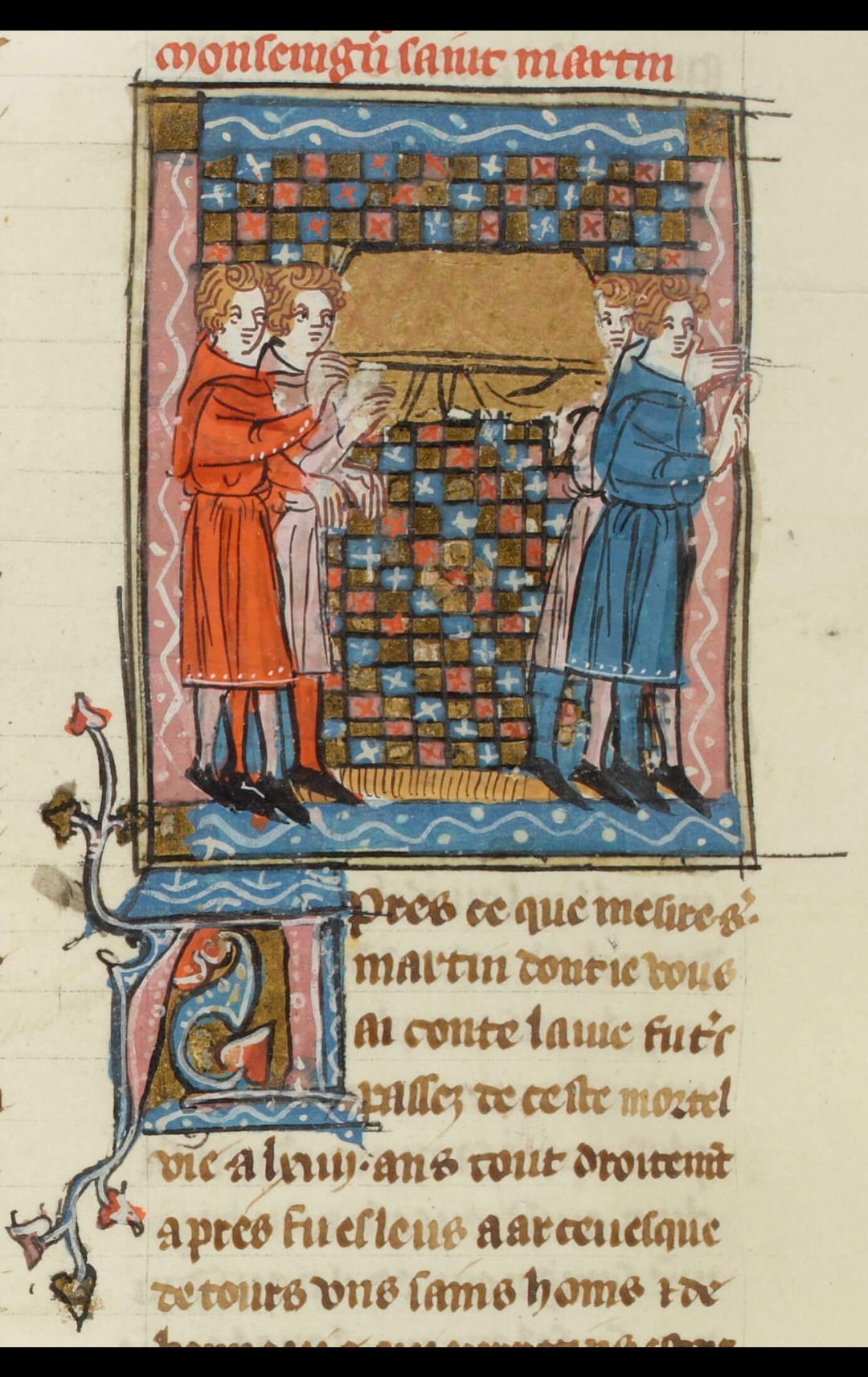 miniature
 text
text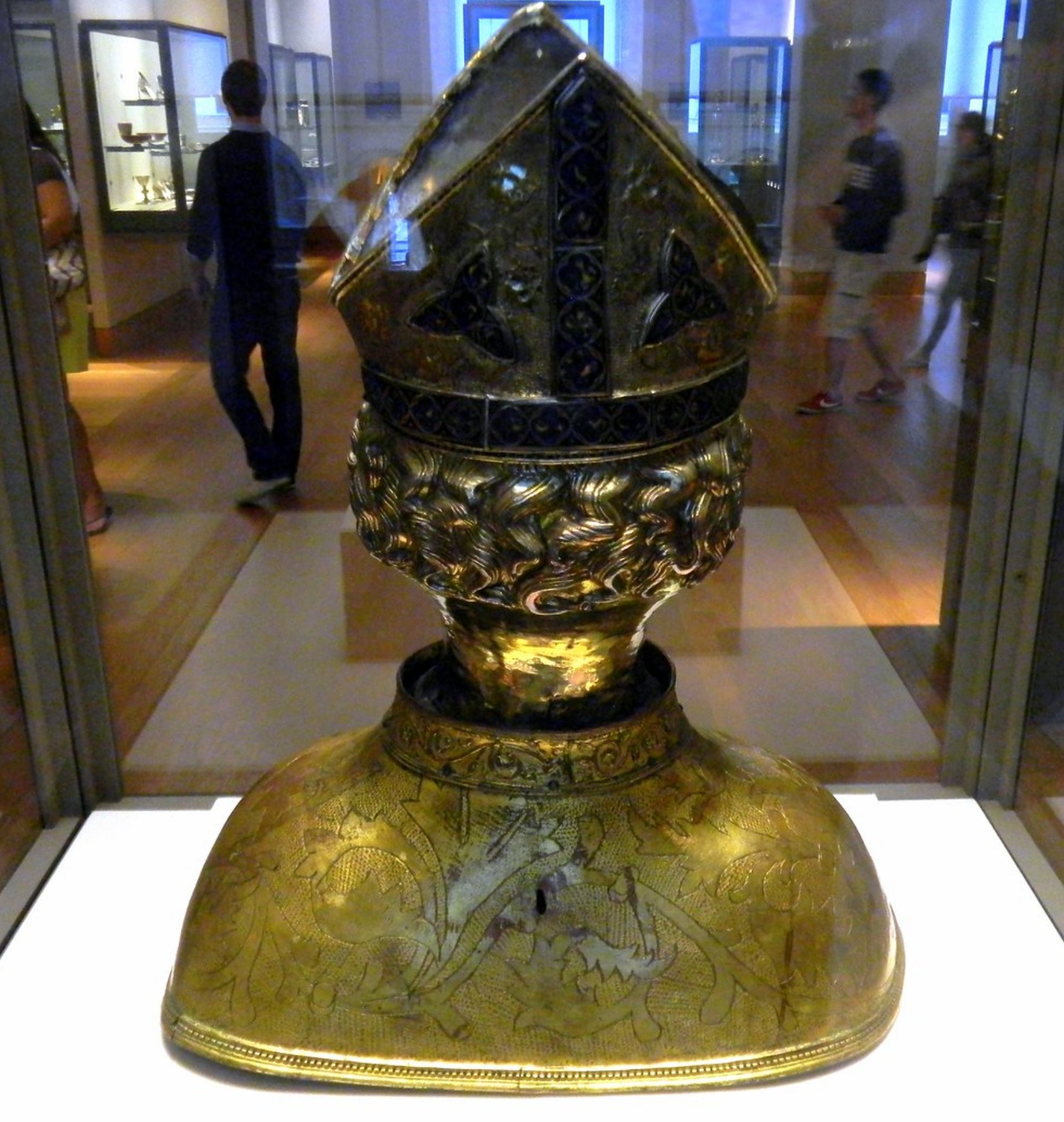
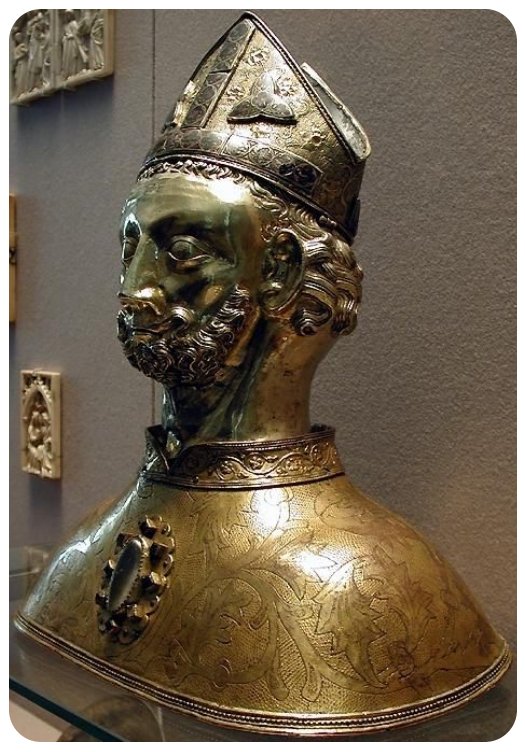
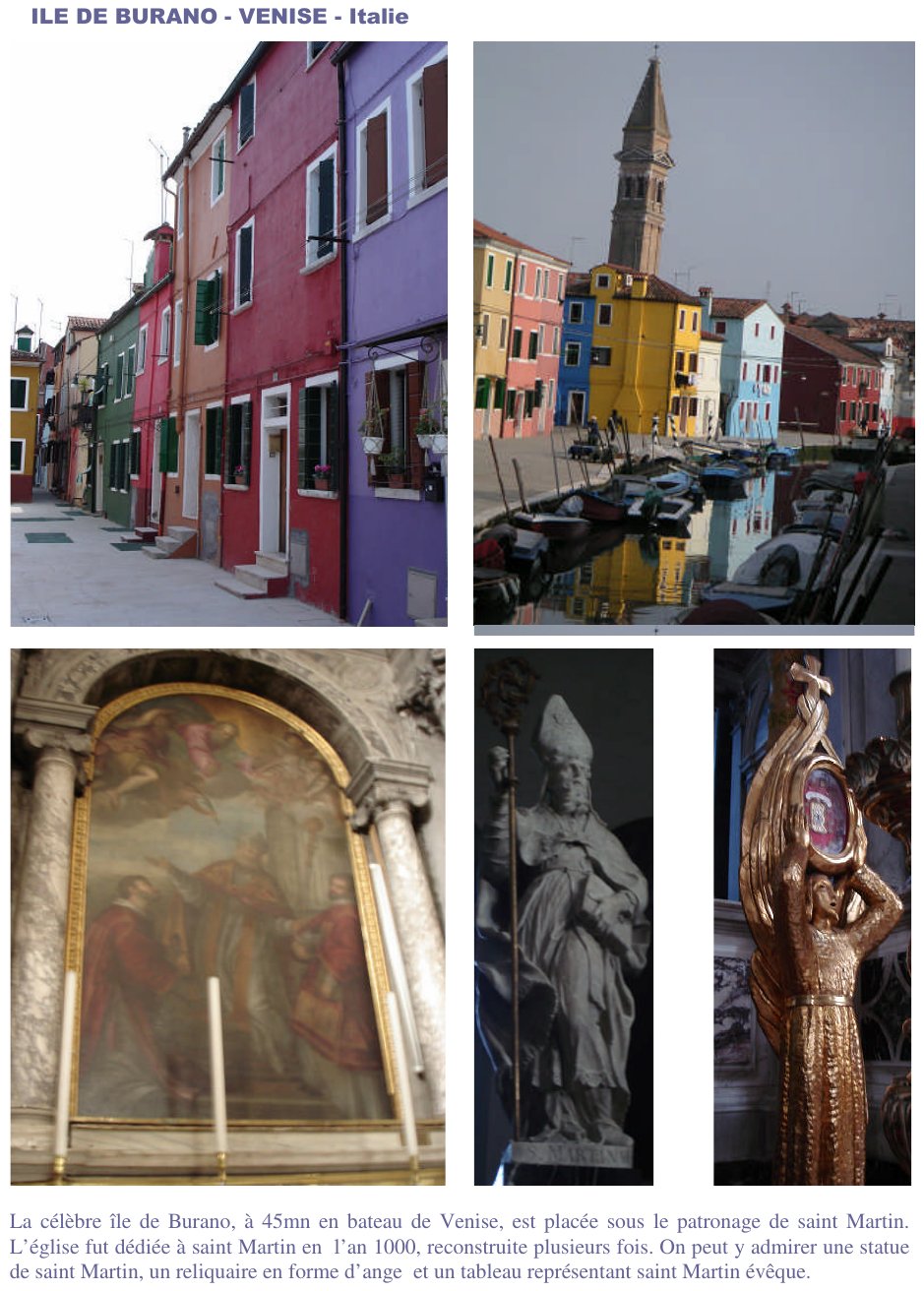 2
2 3
3 4
4 5
5 1
1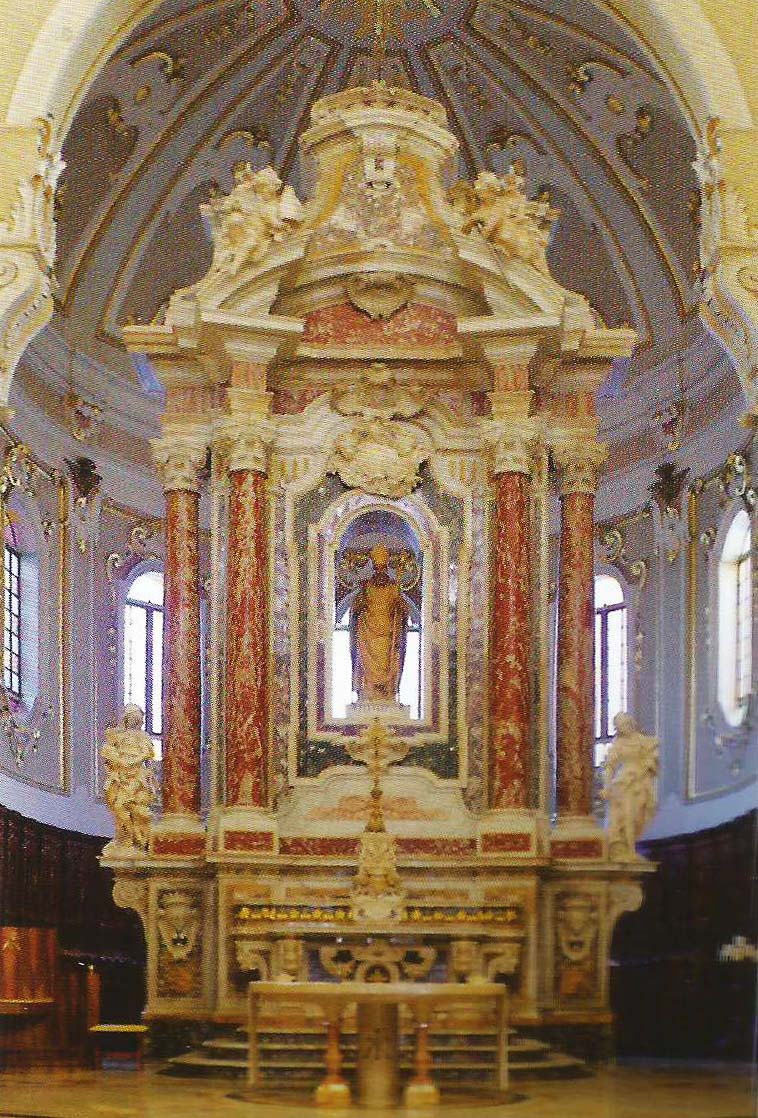 2
2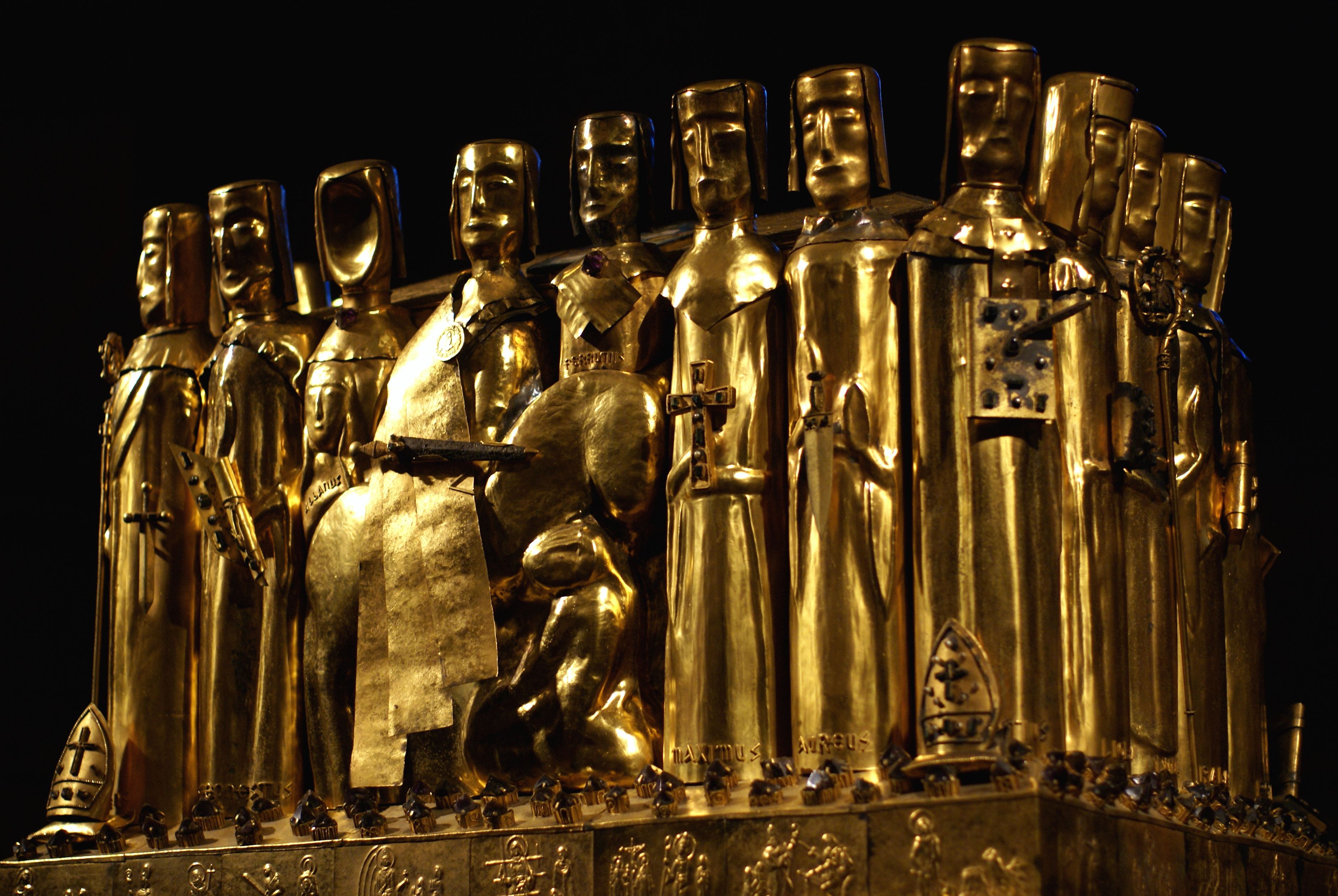 6
6 6
6Chinon 1321, the fear of lepers and Jews A theory of poisoning wells appeared in 1319, with Jews being accused of spreading leprosy. It reappeared in 1321 in the Dauphiné, and in Chinon where 160 Jews were burned alive. Yves Souben [
 article 2020 La NR] : "In May 1321, the king of France, Philippe V le Long, made a stopover in Chinon. The era, that of the accursed kings, is troubled. Upon his arrival, the rumor mounts: lepers, with the complicity of the Jews, would poison the wells. The king fled and the anti-Jewish massacres across the country began. On August 27, 160 Jews from Touraine, Poitou and Anjou were brought to Chinon to be burned alive. Among them were eight inhabitants of the city. The pyre was set up on an island in the Vienne River, far from the wooden houses. The inhabitants of the Jewish quarter are expelled."
This hostility of the Catholics towards the Jews is ancient and more or less aggressive, depending on the period. For example, Gregory of Tours relates that an archdeacon, Leonaste, lost his healing obtained in front of the tomb of Saint Martin because of a Jewish healer,
article 2020 La NR] : "In May 1321, the king of France, Philippe V le Long, made a stopover in Chinon. The era, that of the accursed kings, is troubled. Upon his arrival, the rumor mounts: lepers, with the complicity of the Jews, would poison the wells. The king fled and the anti-Jewish massacres across the country began. On August 27, 160 Jews from Touraine, Poitou and Anjou were brought to Chinon to be burned alive. Among them were eight inhabitants of the city. The pyre was set up on an island in the Vienne River, far from the wooden houses. The inhabitants of the Jewish quarter are expelled."
This hostility of the Catholics towards the Jews is ancient and more or less aggressive, depending on the period. For example, Gregory of Tours relates that an archdeacon, Leonaste, lost his healing obtained in front of the tomb of Saint Martin because of a Jewish healer, 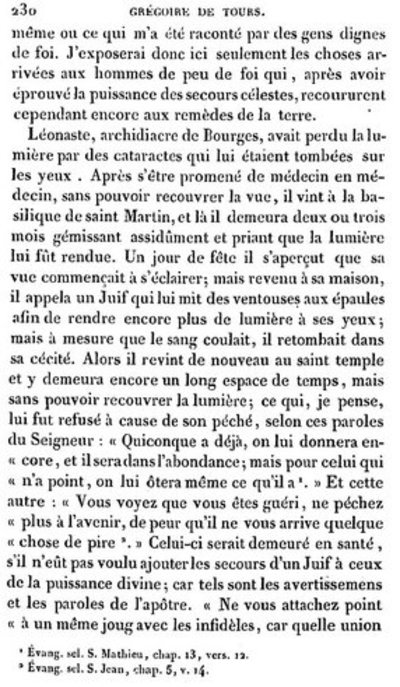 story,
  vitrail Lobin of the basilica).


To the left two lepers are denied entry into a city [ Vincent of Beauvais, 14th century]. At right illustration by Emile Schweitzer 1894 depicting the massacre of the Jewish inhabitants of the city of Strasbourg in 1349. These are illustrations of the page "Fear of the Lepers of 1321" and the page "Accusation of Poisoning Wells against the Jews"
+ on Strasbourg 1349, two tables :
 1 [Eugène Beyer, Musée historqiue de Strasbourg, link] 1 [Eugène Beyer, Musée historqiue de Strasbourg, link]
 2 [Frédéric Théodore Lix, ca. 1870, Alsatian Museum] 2 [Frédéric Théodore Lix, ca. 1870, Alsatian Museum]
|
1346-1348 : flood, famine and Black Death. Let's continue with the plague to focus on the
Black Death episode of 1347-1352. Eugène Giraudet treats the subject in the 1st volume of his "History of the city of Tours" (1873, link), with a preamble dearth : "It fell so abundantly with rain, in 1346, that the Loire and Cher overflowed, ruined all the crops. The magistrates of the city, in spite of the so high price of the grain, saw themselves in the necessity of ordering considerable purchases they forced in addition the convents of Marmoutier, Grandmont, etc., to come to the assistance of the inhabitants by giving wheat and other edibles. Then, as if heaven and earth, say the chronicles, had conspired against France to ruin it from top to bottom, a horrible pestilence (black plague) strangely afflicted the population (1348). The epidemic reached Tours, while long processions, leaving the Poitou invaded by the disease, arrived in pilgrimage to put themselves under the protection of the tomb of St. Martin."


The plague. On the left, the plague in Tours in the background the cathedral with its two unfinished towers [ LTa&m 1845].
At right, painting by Louis Duveau, 1849, "The Plague of Elliant" [Musée des Beaux-Arts de Quimper]. Elliant, a Breton commune, was ravaged by a plague epidemic in 1349 or the 15th century. A mother carries the bodies of her nine children to the cemetery, the father who has gone mad follows her (from traditional song).
+  table says the plague of Asdod on the plague of Justinian at Constantinope in 541 [Nicolas Poussin 1631, The Louvre]
+ table says the plague of Asdod on the plague of Justinian at Constantinope in 541 [Nicolas Poussin 1631, The Louvre]
+  miniature on the Black Plague of Tournai in 1349. miniature on the Black Plague of Tournai in 1349.
|
Widespread containment. "To drive out the plague, great fires were lit in the narrow, unpaved streets and in the squares, which at that time were covered with all the filth a considerable quantity of green laurel, chamomile, and incense were thrown into these fires. The bailiff had the gates of Tours and Châteuneuf guarded, and no stranger was allowed to enter these two cities. The silence of our annals leaves us uncertain about the numerical results of the mortality produced by the plague[30 to 50% of the European population in five years, according to the
page Wikipedia] ; we do know, however, from a charter of 1357, that Touraine was less afflicted than the other regions in general. Calm and abundance returned in 1352. [...]But the pestilential plague reappeared a few years later (1362)". These words of Giraudet are transcribed in March 2020, during the containment of covid-19, 672 years later...
After the famine and the plague, would come the Hundred Years War. Bernard Chevalier believes that these calamities caused "a century of demographic low water, of which it may be said, in particular, from the state of the military forces established about 1450, that it reduces the population of the whole agglomeration from about 15,000 or more inhabitants about 1320 to 7,000 or 8,000 a hundred years later. Conjectural figures, but they can be validly taken as orders of magnitude."
The inquisition was rampant in Tours. In his "History of the City of Tours" (1873), Eugene Giraudet indicates that "The most formidable of the jurisdictions was that of the courts of the
inquisition created by the Papacy, to stop the progress of heresy and deliver to the flames those who were convinced of it, from the powerful bishop to the humblest monk of a convent. The Dominicans or Jacobins after having begun by burning the condemned writings, burned their authors. [...] One could still see, a few years ago, in the immense vaults of the Dominicans or Jacobins, located near the Place Foire le Roi, many debris of torture devices, intended for the torture of those who had incurred the terrible justice of this court. These terrible instruments were reserved for men; as for women, they were content to bury them alive". J.-M. Vidal, in a article from 1902 deals with the case of the trial of Hervé de Trevalloet (Brittany being attached to the archbishopric of Tours) in a "case of bewitchment at the tribunal of inquisition of Tours" in 1335-1337.

The easel, one of the torture instruments of the inquisition (link). The demons Martin battles have a hard life...
Evolution of the city of Tours 4/7: the unification of the two cities into a single commune.
At the end of this dark period, the City and Châteauneuf were finally able to be reunited under the same enclosure, which was logically preceded by the creation of a common government.
|
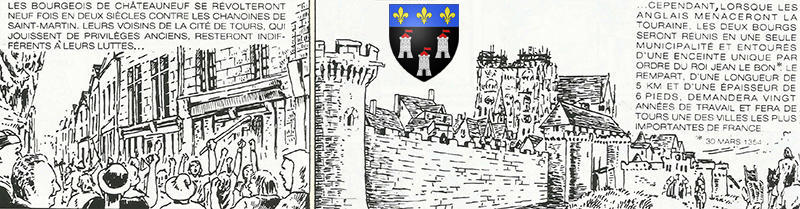
 plank
plank|
Commune of Tours 3/5: 1355, a royal ordinance unites the two Touraine cities. The ordinance promulgated in Beauvais by the king John II the Good, on March 30, made definitive the reunion of the city of Châteauneuf with the ancient city of Tours, also known as the metropolis (through its episcopal organizational functions). In addition to the construction of a common wall, the ordinance defined the rules of governance of the new city, with a municipal government, composed of six elected burghers, responsible for managing a municipal armed force, the road system, justice, public entertainment... and of course, collecting the taxes that would allow for these functions. It will be necessary to wait another century for a mayor to be appointed.
Starts in Commune 1/5,
2/5,
suites in 4/5,
5/5.
|
|
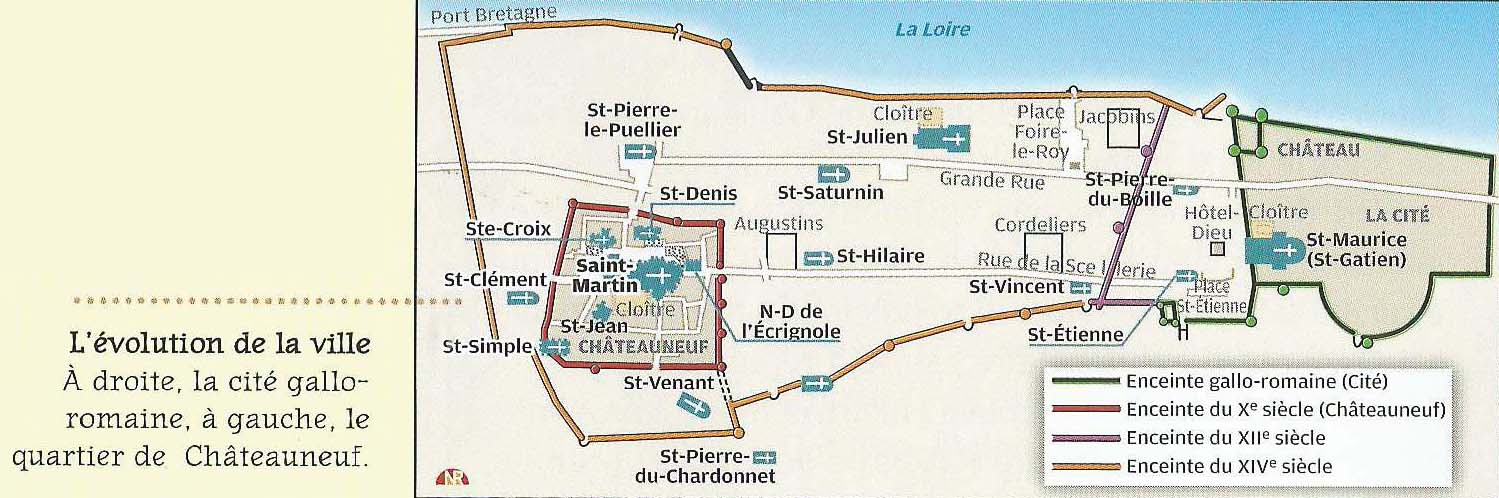
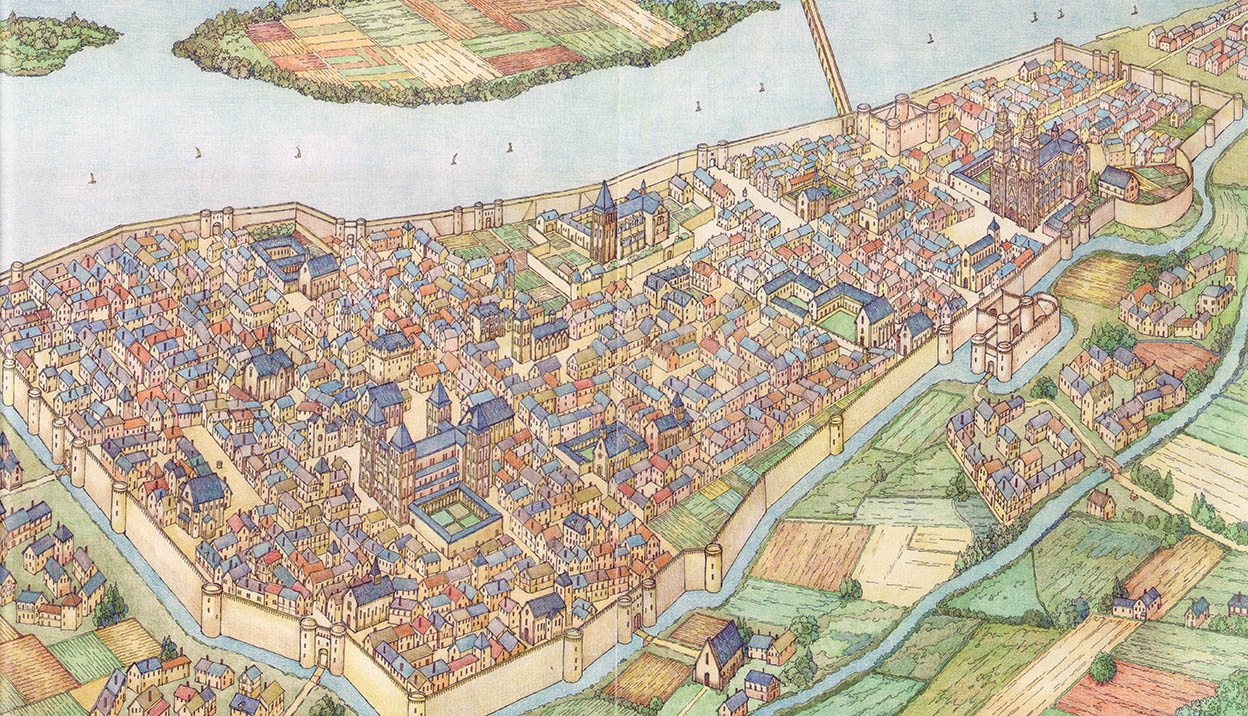
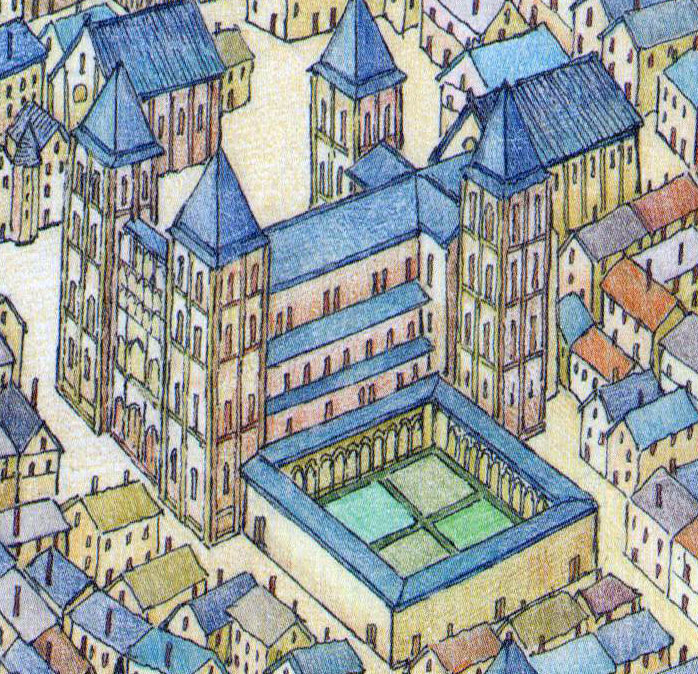 1
1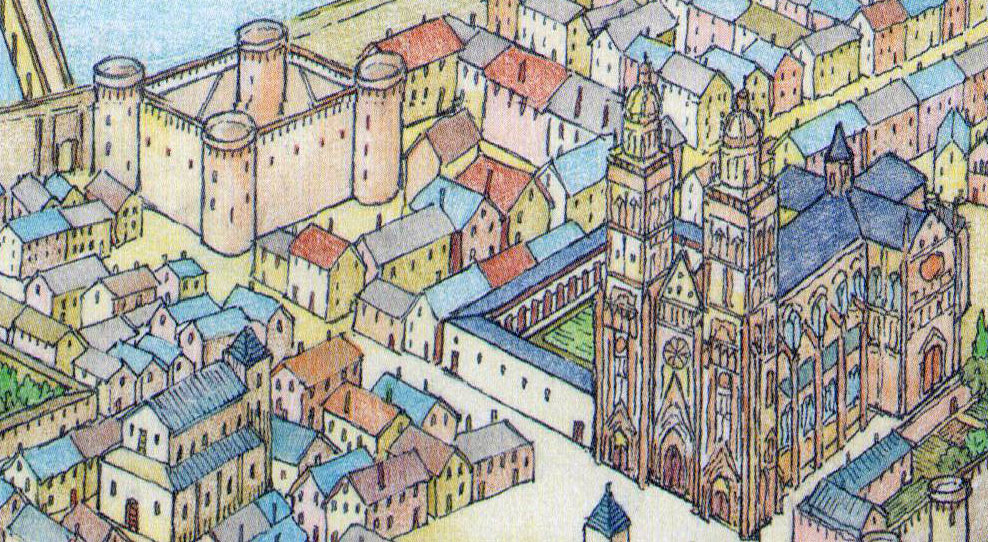 2
2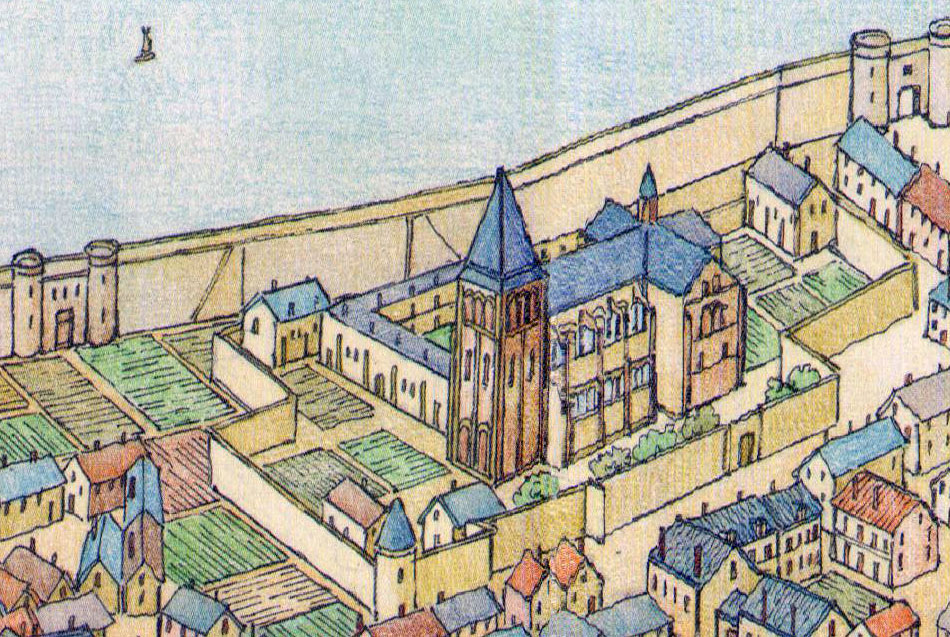 3
3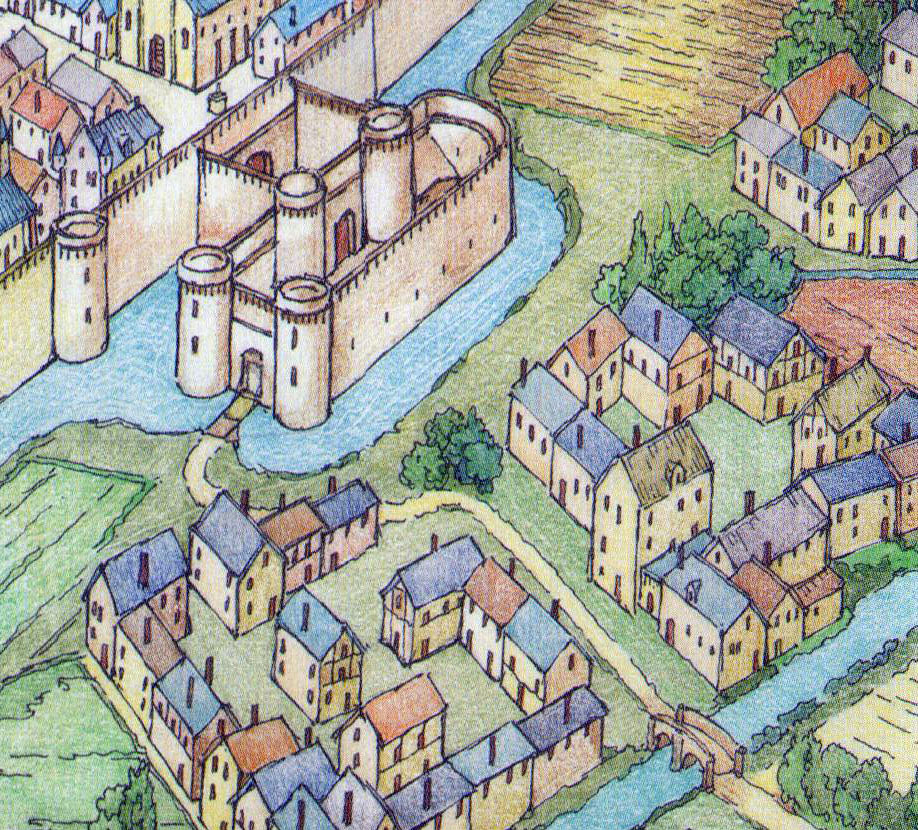 4
4 plan
plan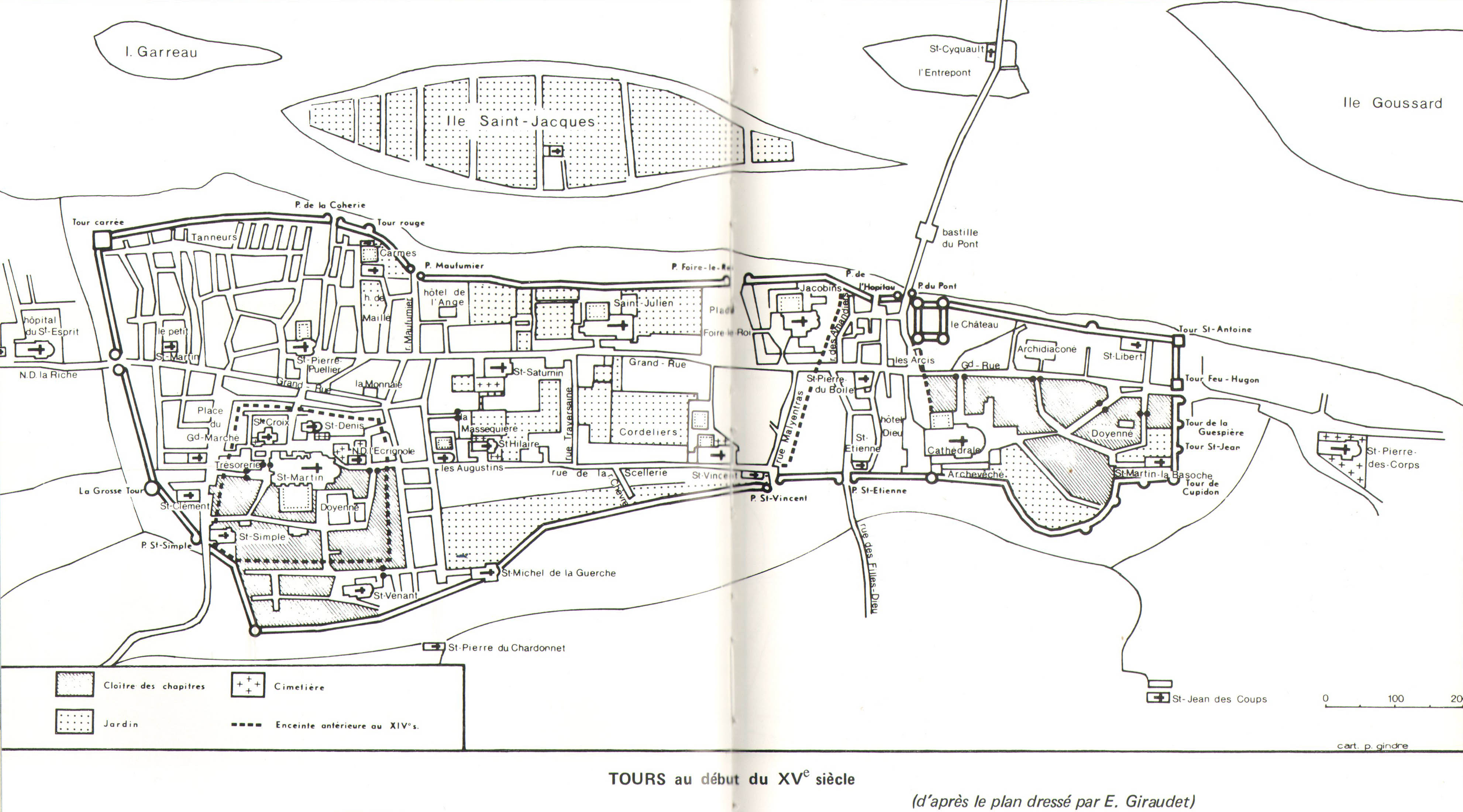 plan
planTouraine during the Hundred Years War. The
Hundred Years' War was a conflict interspersed with truces of varying length, opposing, from 1337 to 1453, France to England. Southern Touraine was occupied by the English, while in 1369 Gascons failed to seize Tours thanks to the protection of fellow soldiers of Bertrand Du Guesclin. Then the Turon country was ravaged, especially by armed bands linked to the English troops. Pierre Audin, in his book "La Touraine durant la guerre de cent ans" (2019, link) : "It was from Touraine that everything started, that the troops gathered to fight against the mercenary bands in the pay of the English... King Charles VII of France was between Berry and Touraine, the last square of his power. He wanted to abandon everything, discouraged to fight against the Plantagenets... Imagine the Touraine lords, tossed around and vassals of both. They changed sides, had their goods confiscated by the king who gave them back to them when they came closer to him....".


Bertrand Du Guesclin against the English and the Great Companies. On the left, he won the Battle of Cocherel, in Normandy, in May 1364, allowing King Charles V, son of John II the Good who died in captivity in London, to be crowned in Reims ["Jean de Grailly surrenders to Bertrand Du Guesclin," Charles-Philippe Larivière, Battle Gallery at Versailles]. Charles V was Duke of Touraine (title succeeding that of Count) from September 1363 to April 1364.
On the right, a few years later, he delivered Preuilly sur Claise, in southern Touraine [Jean Galland 19th century, Hôtel de ville de Preuilly sur Claise].


Miniatures from the Chronicles of Jehan Froissart. : the Battle of Auray, near Nantes, in September 1364, and a sacking by Grandes Compagnies.
+ three plates on the battle of Cocherel on May 16, 1634 :
 1 1
 2 (drawing below) 2 (drawing below)
 3
And a 3
And a  plank on the Great Companies
[The History of France in Comics, text Jean Castex, drawing Julio Ribera, Larousse 1977]. plank on the Great Companies
[The History of France in Comics, text Jean Castex, drawing Julio Ribera, Larousse 1977].
|
Worse than the English: the Great Companies. François-Christian Semur in "Abbayes de Touraine" (Geste Editions 2011) :"In 1356, the
Black Prince arrived in Touraine which fell prey to enemy troops. The defeat of the French king, near Poitiers, created disarray among the French. Enemy soldiers pillaged, ravaged the country and took possession of fortresses and abbeys. The latter were easy prey. At least five important abbeys in Touraine, after having been plundered and their occupants massacred, served as hideouts for the enemy bands. The latter brought terror to the whole region. The population terraced. The villages and towns tried to protect themselves by building ramparts in haste. However, insecurity persisted with the ravages of the English, Breton, Gascon and French "routiers"[this is what was called the Grandes Compagnies] who thought only of "rapine". A climate of anarchy and insecurity, associated with misery, manifested itself in daily life through numerous acts of violence until the end of the fourteenth century. The first half of the 15th century was even more terrifying for Touraine. Indeed, the poorly paid troops, "paid" themselves on the inhabitant, stole, looted, raped, captured and demanded substantial ransoms." The abbey of Saint Paul de Cormery was thus pillaged and served as a hideout for the routiers +  story by Bernard Briais ["Historical anecdotes from Touraine" 2015].
In 1408 / 1409, King Charles VI mad him in residence in Tours for 7 months. The
Charles VI, nicknamed first "the beloved" and then "the madman" or "the madman", because of his intermittent states of insanity, which could last for several weeks, reigned over warring France from 1380 to 1422. Eugene Giraudet ("History of the city of Tours" 1873) : "Charles VI, having fallen back into his state of insanity, was removed from his palace by the orders of the queen Isabeau of Bavaria, unbeknownst to even the officers of his house and the burghers of Paris, and then taken to Tours, where Isabeau and a few lords kept him locked up for the month of November 1408. During his stay within our walls, the queen presided over a royal council with the aim of forcing the Duke of Burgundy John the Fearless to make amends for his crime and banished him from the court. Informed of the conditions imposed on him, John the Fearless dispatched the Count of Hainaut to Tours to intercede in his favor with the king this negotiation not having succeeded, Jean de Montaigu, Grand Master of the King's Household, then interceded with such skill, that he obtained a new decision more favorable to the duke. The Parisians, distressed to see themselves deprived for so long of their sovereign, charged the prevost of the merchants of Paris Jean Jouvenel des Ursins and several notable burghers to go to Tours, in order to beg the king to return to his capital. Charles VI welcomed these envoys very well and promised them to come back soon at their wish. The return of the monarch, however, did not take place until the following May, but did not bring back tranquility, for the two rival factions of Orleans and Burgundy began again a more passionate and violent struggle than ever..

Mad Charles VI and Isabeau of Bavaria in 1420 at the Treaty of Troyes, with their son, future king of France, Charles VII then 17 years old, on the right [Chronicles of John Froissard 1472, British Library, Wikipedia]. This treaty provided that, having become his son-in-law, King Henry V of England would succeed Charles VI... One can imagine a somewhat similar scene in Tours when Charles and Isabeau welcomed the provost of the merchants of Paris.
|
In 1417 / 1418, the Burgundians occupied Tours for a year. Protected by its ramparts, Tours was less exposed than the countryside, as Bernard Chevalier recounts in "Histoire de Tours" [Privat 1985] : "In major political affairs, Tours adhered to this policy of prudent neutrality, combined with deference to those of its masters who exercised regal power there, both dukes and kings. Did the city accept with ease the crushing fiscal pressure exerted by Charles V at the end of his reign? It is unlikely, but it did not take part in the urban insurrection movement of 1382 that affected its neighbor Orléans. In the same way, she kept as much as possible away from the war of the princes. Burgundian in principle from 1409 to 1413, then Armagnac without any conviction. But the situation degrades more and more; unceasingly the people of war pass and repass under its walls, sowing the ruin. In 1415, the war resumed with England,
Henri V resumed the methodical conquest of Normandy. The weight of the countries, the widespread insecurity make one doubt the wisdom of this policy of abstention and trust in the royal government. Behold, on November 2, 1417, the Duke of Burgundy [John the Fearless] shows up at the city gates a strong party opens the gates to him and Tours then finds itself in rebellion against its rightful master, the dauphin Charles [future Charles VII], duke of Touraine, who retook it after a month-long siege from November 26 to December 28, 1418." The Tourangeaux surrendered without bloodshed. On the Hundred Years War in Tours, one may consult Bernard Chevalier's two-part article in 1974 : 1 2 ; the author believes that the city was a "fearsome stronghold."
+ the book "La domination bourguignonne à Tours", 1877, by Joseph Delaville le Roulx, 71 pages [Gallica].
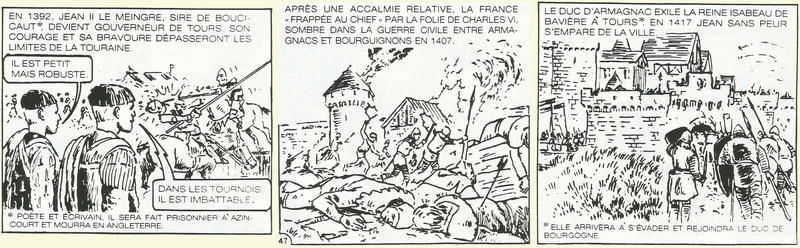
[ Couillard - Tanter 1986 + the  plank] plank]
|
1417, the queen of France Isabeau of Bavaria prisoner in Tours. Eugène Giraudet gives details on the reasons that led the Burgundians to occupy Tours : the presence of the queen. "The Duke of Armagnac, whose power had succeeded that of the Duke of Burgundy John the Fearless, exiled Queen Isabeau to Tours. The conduct of the dauphin Charles her son, who openly despised her and did not even let her see the end of his captivity, increased to such an extent the irritation and discontent of the queen, that she did not hesitate to secretly ally with John the Fearless, until then her enemy. The duke of Burgundy, foreseeing the benefit he can draw from such an alliance, accepts it with eagerness." And so he went to deliver Isabeau : "The queen pretexted, one morning, to go to make her devotions in the abbey of Marmoutier. Jean, who was waiting for her two leagues from Tours, sent part of his escort to ambush near the convent, in order to facilitate her escape. Hardly the queen is entered in the church, that the captain of the guards of the duke penetrates there with his soldiers the guards and the officers of the queen, surprised and frightened, take the escape Isabeau takes advantage of the disorder and escapes by one of the windows of the sacristy."
April and May 1429, the two passages of Joan of Arc in Tours. Then, and particularly from 1425 to 1429 when the kingdom of France sank into anarchy, "the city faced and assumed its defense alone. It strengthens its walls, builds new towers, mounts a vigilant guard, obtains at a high price [with the participation of the treasurer of Saint-Martin...]the departure of the neighboring royal troops, much more formidable to friends than effective against the enemy and even tries to set up a kind of provincial militia with for only sure ally the sire of Bueil [
Jean V de Bueil] who wars on the border of the Loir. responding to the appeal of its beleaguered neighbor, it gives Orléans moral support and material aid, favorably welcomes Jeanne d'Arc, who nevertheless does not stay more than a few days in its walls and rejoices highly at the announcement of its success. Confidence and boldness return." +  article by Mikerynos in 2017 "Jeanne d'Arc in Tours (link) (the designated location of Joan's place of residence corresponds to the study by Louis de Grandmaison in 1929).
+ The book "Jeanne d'Arc à Tours", 1909, by Canon H. Boissonnot, 83 pages [Gallica]. This work estimates that Jeanne stayed in Tours from March 30 to April 25, 1429, it seems that it was a little shorter (arrival on April 5 ?). Before returning there from May 12 to 25.
article by Mikerynos in 2017 "Jeanne d'Arc in Tours (link) (the designated location of Joan's place of residence corresponds to the study by Louis de Grandmaison in 1929).
+ The book "Jeanne d'Arc à Tours", 1909, by Canon H. Boissonnot, 83 pages [Gallica]. This work estimates that Jeanne stayed in Tours from March 30 to April 25, 1429, it seems that it was a little shorter (arrival on April 5 ?). Before returning there from May 12 to 25.


LTa&m 1845
+  vitrail by Lucien-Léopold Lobin 1881 in the church of St. Etienne in Chinon (link)
+ twenty-one illustrations about this meeting : vitrail by Lucien-Léopold Lobin 1881 in the church of St. Etienne in Chinon (link)
+ twenty-one illustrations about this meeting :
 1 (with explanations] 1 (with explanations]
 2 (period text, with miniature of a book of poems by Martial of Auvergne] 2 (period text, with miniature of a book of poems by Martial of Auvergne]
 3 [fresco in the basilica of Domremy, 3 [fresco in the basilica of Domremy,  plan larger] plan larger]
 4 [LTh&m 1855] 4 [LTh&m 1855]
 5 5
 6 6
 7 7
 8 8
 9 [Frédéric Lix circa 1890] 9 [Frédéric Lix circa 1890]
 10 [St. Joan of Arc Church in Lunéville in Lorraine, link) 10 [St. Joan of Arc Church in Lunéville in Lorraine, link)
 11 11
 12 12
 13 13
 14 (Rouen Wax Museum) 14 (Rouen Wax Museum)
 15 15
 16 16
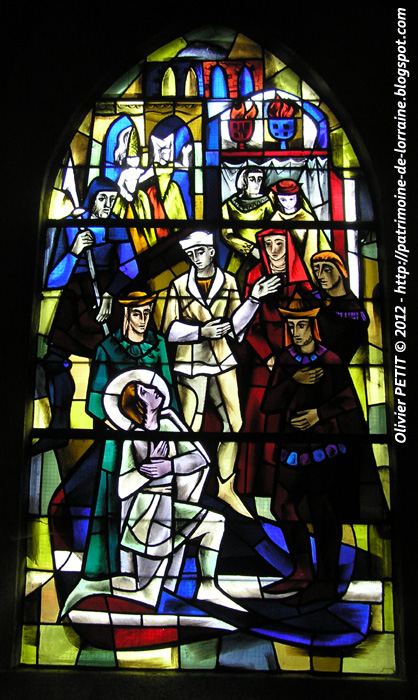 17 (Domremy church) 17 (Domremy church)
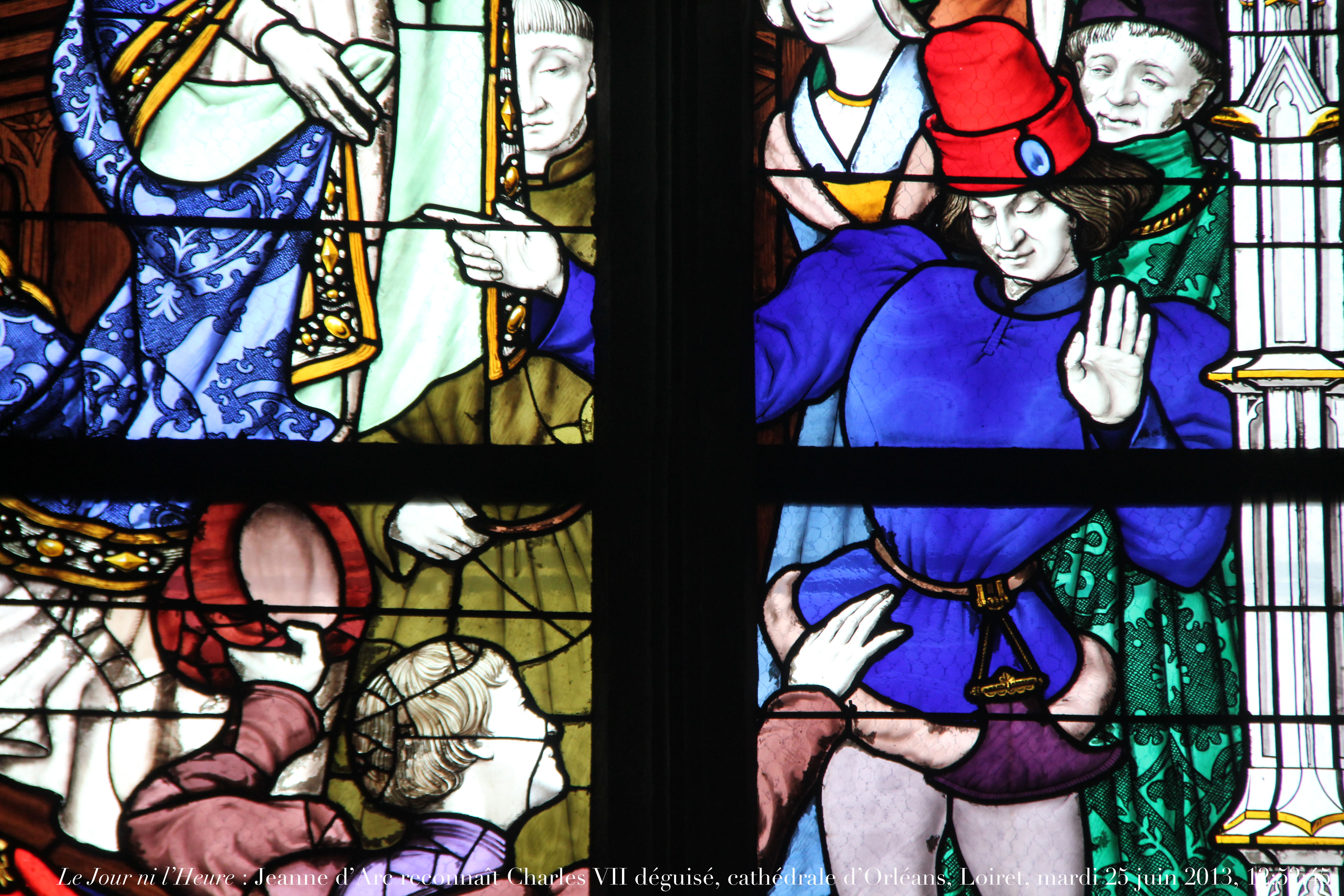 18 (Orleans cathedral, flickr Renaud Camus) 18 (Orleans cathedral, flickr Renaud Camus)
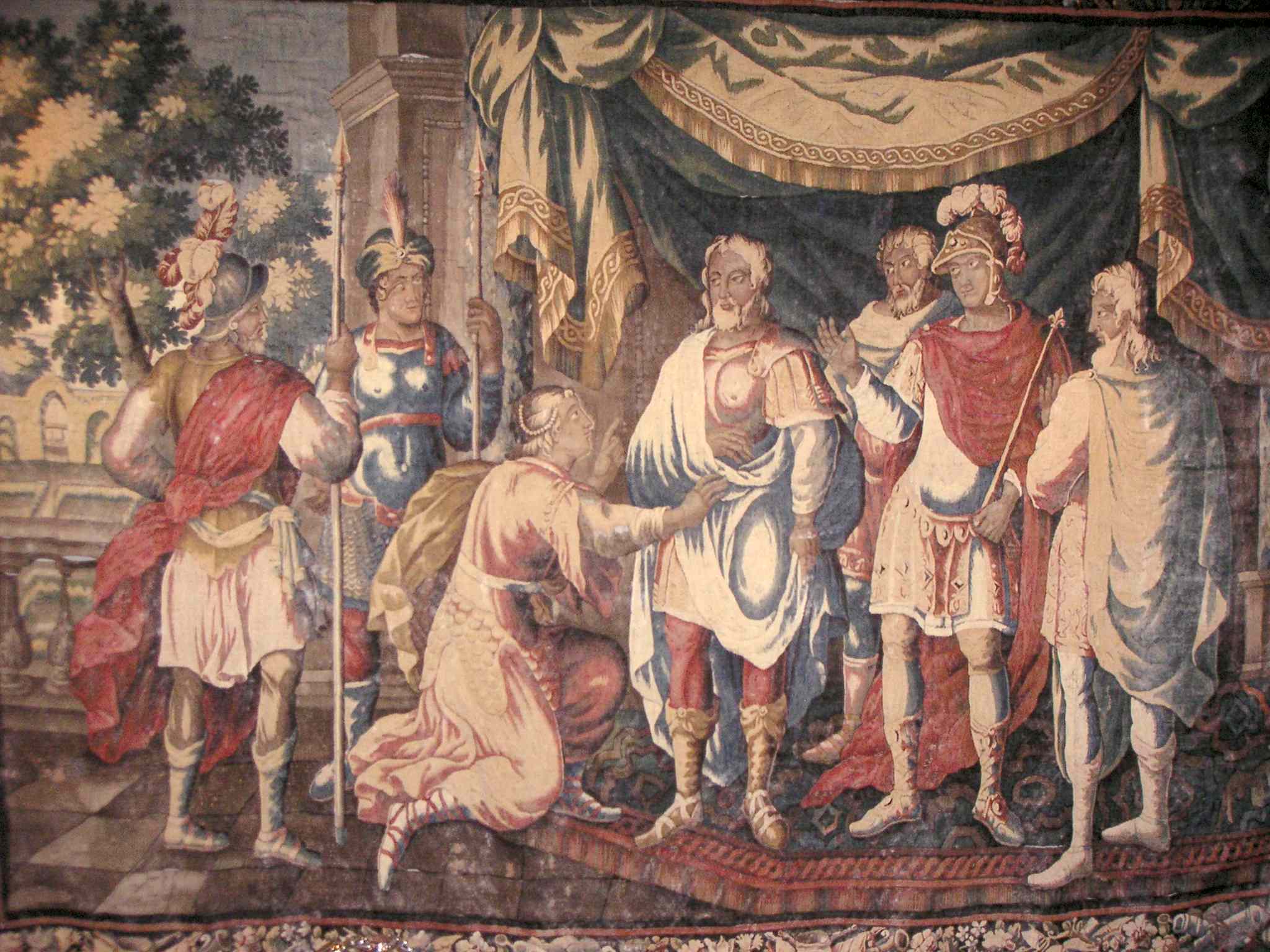 19 (Aubusson tapestry at the castle of Chinon, 2nd half of the 17th century, Wikipedia) 19 (Aubusson tapestry at the castle of Chinon, 2nd half of the 17th century, Wikipedia)
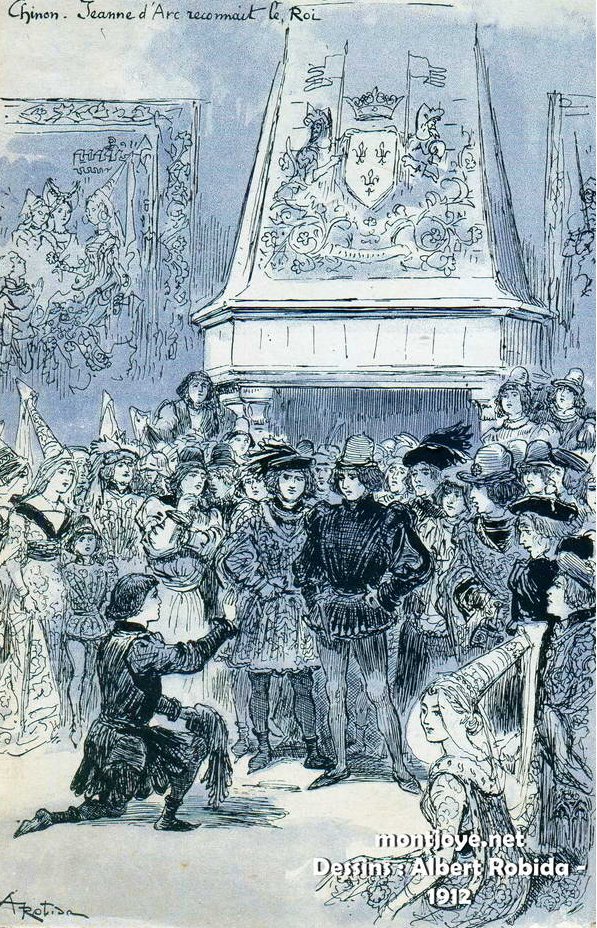 20 (Robida 1912)
+ 20 (Robida 1912)
+  engraving of the meeting place [Robida 1892]. engraving of the meeting place [Robida 1892].
|
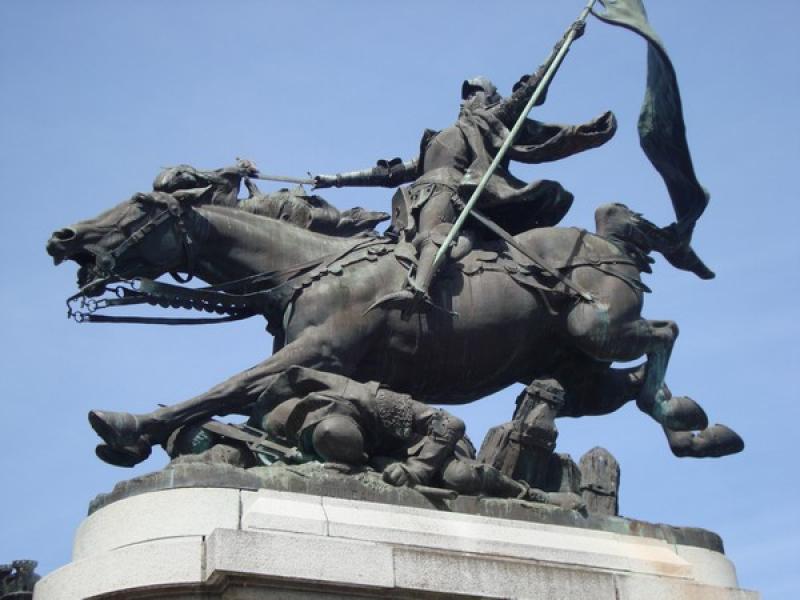 statue of Joan at Chinon [Jules Roulleau 1893,
  article La NR 2016].
 fresco monumental (3.50 m x 4.20 m) by Nicolas Greschny (1950) depicting the two saints in the church of Les Issards, also in Ariège (link).
Rarer, a double fresco monumental (3.50 m x 4.20 m) by Nicolas Greschny (1950) depicting the two saints in the church of Les Issards, also in Ariège (link).
Rarer, a double  vitrail with Joan in armor and Martin in his prelate's habit [St. Martin's Church in Noeux les Mines in northern France, link]. vitrail with Joan in armor and Martin in his prelate's habit [St. Martin's Church in Noeux les Mines in northern France, link].
|

The Pucelle de Domrémy meditates before Martin's tomb [
Fagot, Mestrallet - d'Esme 1996].

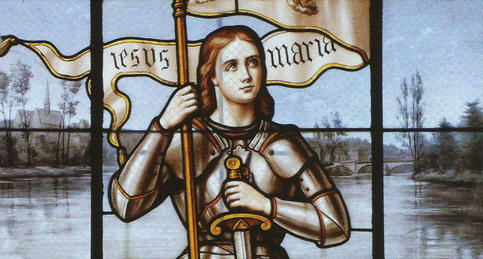
Jeanne in her Touraine armor on the banks of the Loire [St. Peter's Church in
Saint Avertin in Touraine, Julien Fournier 1894, Geneste 2018]. +  photo (link). The armorers of Tours were renowned and Colas de Montbazon, one of them having a foothold on the "grande rue", was commissioned to make the armor of the king's protégée, while a man named Heuves Polnoir prepared her banner (link). +
  photos from a page on the site "A Look at Tours".
+ two illustrated pages from Bernard Briais' 2015 book "Historical anecdotes from Touraine" about Jehanne's two Touraine stops :
photos from a page on the site "A Look at Tours".
+ two illustrated pages from Bernard Briais' 2015 book "Historical anecdotes from Touraine" about Jehanne's two Touraine stops :
 1 (the armor)
 2 (the standard).
+
2 (the standard).
+  commemorative plaque at 15 rue Paul-Louis Courier and another
 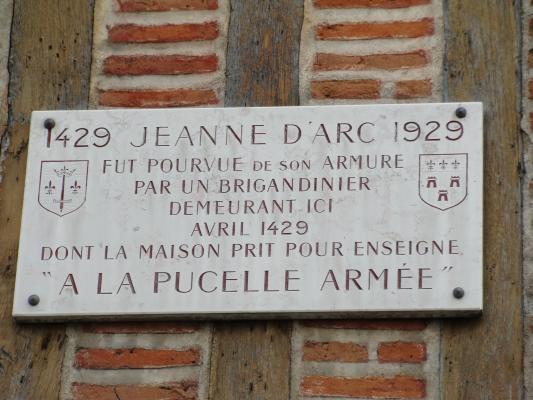 plaque at 39 rue Colbert
+ chapter Wikipedia "Jehanne in Tours".
plaque at 39 rue Colbert
+ chapter Wikipedia "Jehanne in Tours".
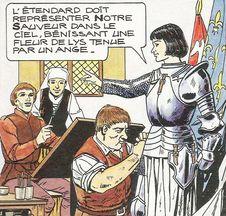

On the left, Jeanne tries on her combat gear at an armory in Tours [
Nikto - Kline 1987]
+ the two boards :
 1
1
 2.
In the center, after delivering Orleans, she returns to Tours, cheered by the population [Guignolet 1984].
+ the
2.
In the center, after delivering Orleans, she returns to Tours, cheered by the population [Guignolet 1984].
+ the  plank.
On the right, Joan welcomes Charles VII, coming from Chinon, within the walls of the City, by Reuillois [1st painting of the triptych on Joan in the City Council Chamber, Tours City Hall] + the other 2 paintings [Wikimedia] :
plank.
On the right, Joan welcomes Charles VII, coming from Chinon, within the walls of the City, by Reuillois [1st painting of the triptych on Joan in the City Council Chamber, Tours City Hall] + the other 2 paintings [Wikimedia] :
 1
1
 2.
In Tours in 1929, the celebrations of the 500th anniversary of his death had a special glow, as shown in these three pages and 5 photos ["Mémoire en images, Tours", Brigitte Lucas 1993] :
2.
In Tours in 1929, the celebrations of the 500th anniversary of his death had a special glow, as shown in these three pages and 5 photos ["Mémoire en images, Tours", Brigitte Lucas 1993] :
 1
1
 2
2
 3
+
3
+ 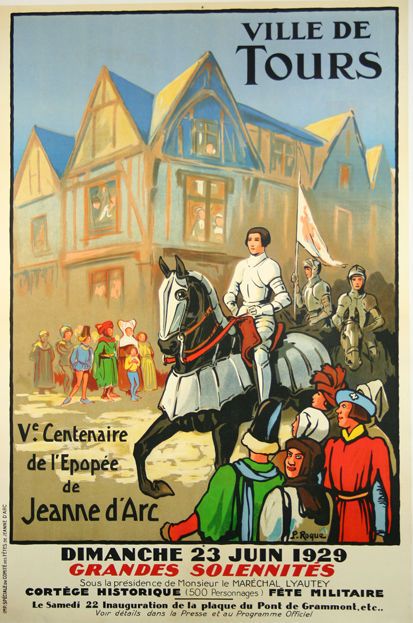 poster [P. Roque 1929].
+
poster [P. Roque 1929].
+  Stained Glass circa 1860 by the Lobin workshop in the church of St. Madeleine in Montargis, showing Jeanne's entry into that city [flickr Sokleine].
Saint Martin, prayer and mystery. "On hearing the news of Joan's arrest and captivity (May 1430), the dismayed Tourangeaux ordered public prayers in all the churches, and a procession, composed of all the orders of the clergy, went to the foot of Saint Martin's tomb, in order to obtain his intercession in favor of this heroine who had just saved France" [Eugène Giraudet, 1873]. The Hundred Years' War, which began in 1337, did not end until 1453 with the
trève de Tours signed at the castle of Montils lès Tours, now Plessis lès Tours. It was then that King Charles VII often came to this castle and to Tours. Giraudet also reports on February 21, 1444 a reception in Tours "full of enthusiasm" of Charles I of Orleans, after 25 years of captivity in England. "The city body had a mystery entitled : "The miracles of Monseigneur saint Martin" performed in his honor and gave him 6 large pikes, 12 large carp and 3 lampreys."
Religious power in sharp decline. Already, around 1379, according to Eugène Giraudet, the clergy had lost the right to elect the archbishop to the king. The seizure of municipal power by a bourgeois democracy was of course to the detriment of the archbishop and the chapter of Saint-Martin. Bernard Chevalier : "Their weight decreased in the urban ensemble. on the level of the exercise of power first, to the very extent that the royal court of bailliage took more and more ascendancy. On the level of the moral authority also. The archbishops who succeeded one another from the middle of the fourteenth century to the fifteenth were all or almost all prestigious men, but they were absentees. The
Great Western Schism [with two competing popes], from 1378, marks a date, indeed in their recruitment. Gone is the too brief time of scholars of rather modest origin here comes that of great servants of the curia of Avignon or the court of the king of France. [...]The canons of the two great chapters, although still recruited outside the city in their great majority, are keen to participate in a management that implies for them participation in military and pecuniary charges. But they are affected by the vertiginous fall of their land incomes laminated by the war. [...] Marmoutier, which was looted by the roaders in 1360, is a community reduced to about twenty monks instead of 80 and whose abbot at any time leaves the ranks to come and take refuge in the hotel he owns in Tours. The abbey of Saint Julien is no better off and takes no part in the common life, except by lending its cloister to municipal assemblies."
+ a  image of tapestry circa 1520 showing two very distracted women during mass celebrated by...Saint Martin [Saint Martin de Montpezat de Quercy church, "Renaissances", Belin 2013].
The innocent children's demons and Martin. Eugène Giraudet (1873) :"On the day of the Feast of the Innocents, the children of the city went to occupy the cathedral and the church of Saint Martin, the place of the canons, and there chose a bishop from among themselves, whom they dressed in religious costumes put on backwards, and then chanted some sort of psalms, after having provided themselves with glasses made of orange skins or walnut shells. These terrible children had the fantasy, in 1423, to choose a dog as a bishop, whom they capped with a mitre and committed, while celebrating their usual ceremonies, all sorts of excesses. The canons having lodged a complaint, this custom was abolished by a ruling of the parliament, sitting in Poitiers, on December 16, 1423."
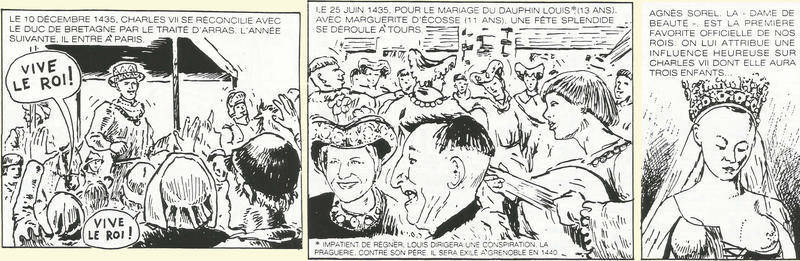
After the victories of Joan of Arc and her coronation at Reims in 1429, Charles VII became "the victorious [ Couillard - Tanter 1986 + the  plank]. The last box, featuring Agnès Sorel, is inspired by a famous plank]. The last box, featuring Agnès Sorel, is inspired by a famous 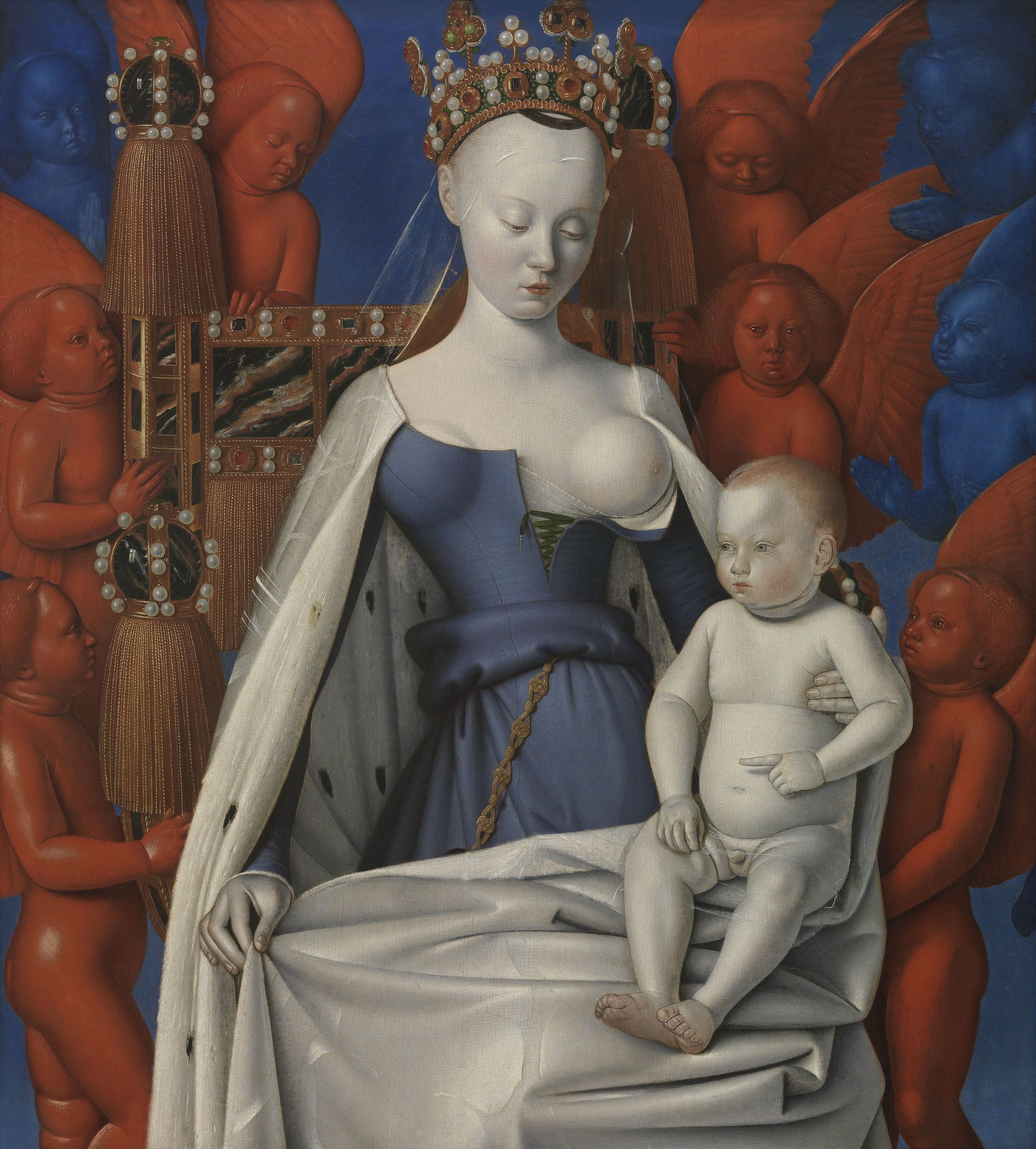 chart by Jean Fouquet [Royal Museum of Fine Arts in Antwerp] (which Fouquet also made a famous chart by Jean Fouquet [Royal Museum of Fine Arts in Antwerp] (which Fouquet also made a famous 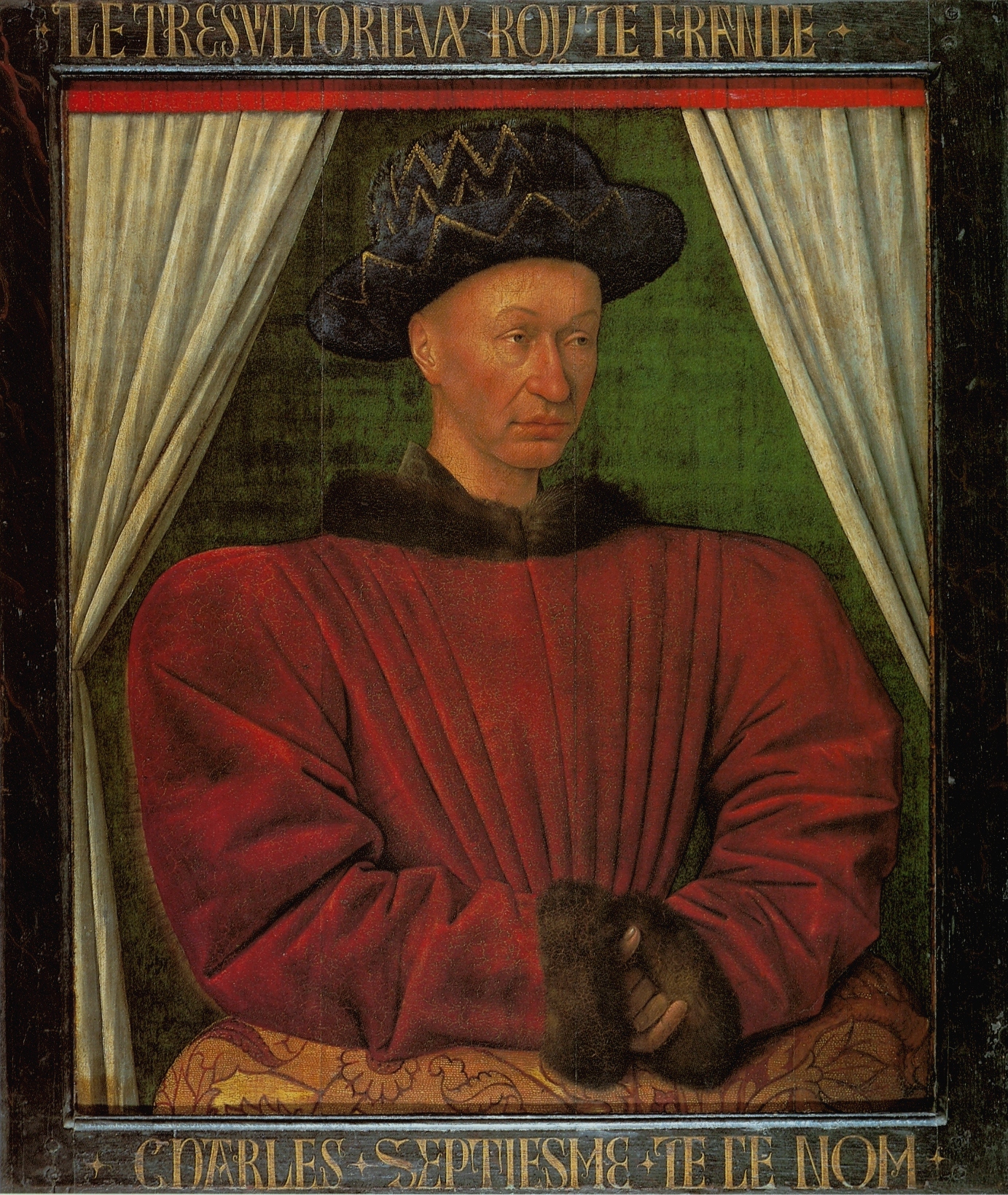 portrait of Charles VII, Louvre Museum).
+ portrait of Charles VII, Louvre Museum).
+  vitrail by the Lobin workshop 1881 depicting Agnès Sorel [Château de Fontenailles]
+ page by Roland Narboux on the "dame of Beauty".
Charles VII installed his mistress in Touraine, in Loches. The dauphin Louis, the future Louis XI, could not stand this relationship. For other reasons as well, he lived in permanent conflict with his father. vitrail by the Lobin workshop 1881 depicting Agnès Sorel [Château de Fontenailles]
+ page by Roland Narboux on the "dame of Beauty".
Charles VII installed his mistress in Touraine, in Loches. The dauphin Louis, the future Louis XI, could not stand this relationship. For other reasons as well, he lived in permanent conflict with his father.
1436, Charles VII and his court attend, in Orleans, the rehearsal of a mystery (play) + two boards :  1 1
 2 [series "Jhen", volume 6 "The Lily and the Ogre", script by Jacques Martin, drawing by Jean Pleyers]. These two plates feature King Charles VII, his barely 15-year-old concubine Agnes Sorel (their first night of love), the queen Marie d'Anjou and her mother Yolande of Aragon, the 13-year-old Dauphin, future Louis XI (already with sighthounds), the marshal and constable Gilles de Rais and the hero Jhen. 2 [series "Jhen", volume 6 "The Lily and the Ogre", script by Jacques Martin, drawing by Jean Pleyers]. These two plates feature King Charles VII, his barely 15-year-old concubine Agnes Sorel (their first night of love), the queen Marie d'Anjou and her mother Yolande of Aragon, the 13-year-old Dauphin, future Louis XI (already with sighthounds), the marshal and constable Gilles de Rais and the hero Jhen.
|
The revival of the pilgrimage of Saint Martin. For Charles Lelong in his 2000 study, from the 13th to the 15th century : "Martin regained his place as protector of the entire city, patron saint of the monarchy and revered saint throughout the West. Locally, his cult suffered from the rise of that of St. Gatien : in 1356, the city escaped by miracle from the Black Prince but by the assistance of the two saints. Since 1354, a common enclosure unites Châteauneuf and the City, the city being placed in 1385 under a unique government where the canons have little part. In 1481, the basilica lost its right of asylum. However, Saint Martin kept the primacy in the services, even in the cathedral. In the basilica, the great families founded chapels to receive their burials. Bastien François rebuilt the famous wing of the cloister between 1508 and 1509 the
jube was rebuilt. In 1420, a tapestry illustrating the life of Saint Martin was purchased. Pilgrimage was encouraged by indulgences granted by popes Nicolas IV in 1289, Boniface VIII in 1299, John XXII in 1323. Francesco Florio (1477) and Jerome Muntzer (1495) have left us valuable accounts of their passage. In 1495, Martin Briçonnet [canon, son of Jean first mayor of Tours in 1462]offered on behalf of his mother Jeanne Berthelot a manuscript on parchment containing the account of the miracles, intended to be placed near the shrine to be consulted by the faithful and pilgrims. [...]But their generosity was surpassed by that of Louis XI, who considered St. Martin to be the special patron saint of the kingdom "which we have always and very often claimed in all our affairs."


1448, Charles VII created the francs-archers. By an ordinance written at the castle of Montils (now Plessis) lès (next to) Tours, King Charles VII created militias of archers soldiers (bow, crossbow...) for local self-defense and to multiply throughout the kingdom of France armed men who could serve him. Their effectiveness was criticized. [illumination from the book "Les vigiles de Charles VII" by Martial of Auvergne, 1484, BnF]
|
 double-page spread
1436, the Tourangeaux celebrate the marriage of the dauphin Louis and Princess Marguerite of Scotland. Both children of kings, they were 6 and 5 years old when their marriage was pronounced in 1428, then 14 and 13 on June 24, 1436 when the marriage was celebrated in the Château de Tours and in the city.
On the left the arrival in Tours of the bride. On the right the newlyweds in the streets of Tours, in front of a street performance [LTh&m 1855]
+  engraving by Claude Chastillon, 1645, of the castle and the (uncertain) location of the adjoining chapel (noted A) where the wedding was celebrated (link). engraving by Claude Chastillon, 1645, of the castle and the (uncertain) location of the adjoining chapel (noted A) where the wedding was celebrated (link).
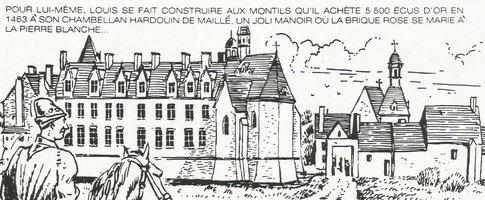
Louis XI in his castle of Montils, renamed Plessis lès Tours [ Couillard - Tanter 1986 + two plates :  1 1  2] [image from "History of France for the Elementary School" S.U.D.E.L.].
+ two portraits of Louis XI by Jean Fouquet (link) : 2] [image from "History of France for the Elementary School" S.U.D.E.L.].
+ two portraits of Louis XI by Jean Fouquet (link) :
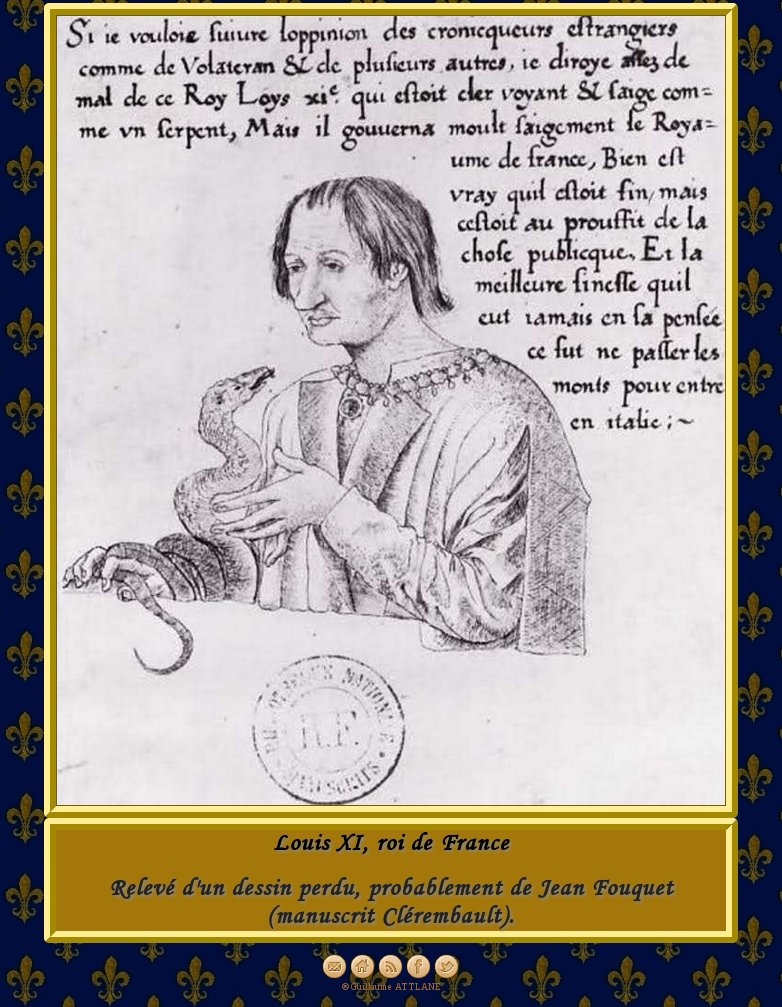 1 1
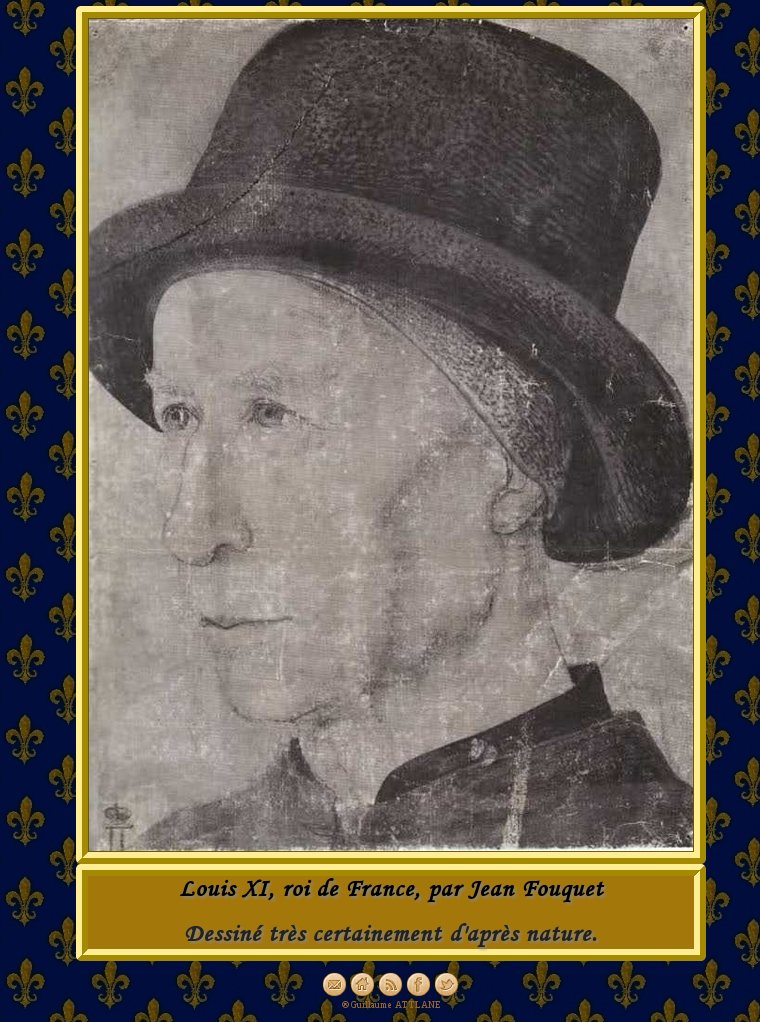 2. 2.


On the left one of three watercolors by François-Roger de Gaignières 1699 depicting the castle when it was a royal residence [BnF]
+ the other two :
 1 northern facade now gone 1 northern facade now gone
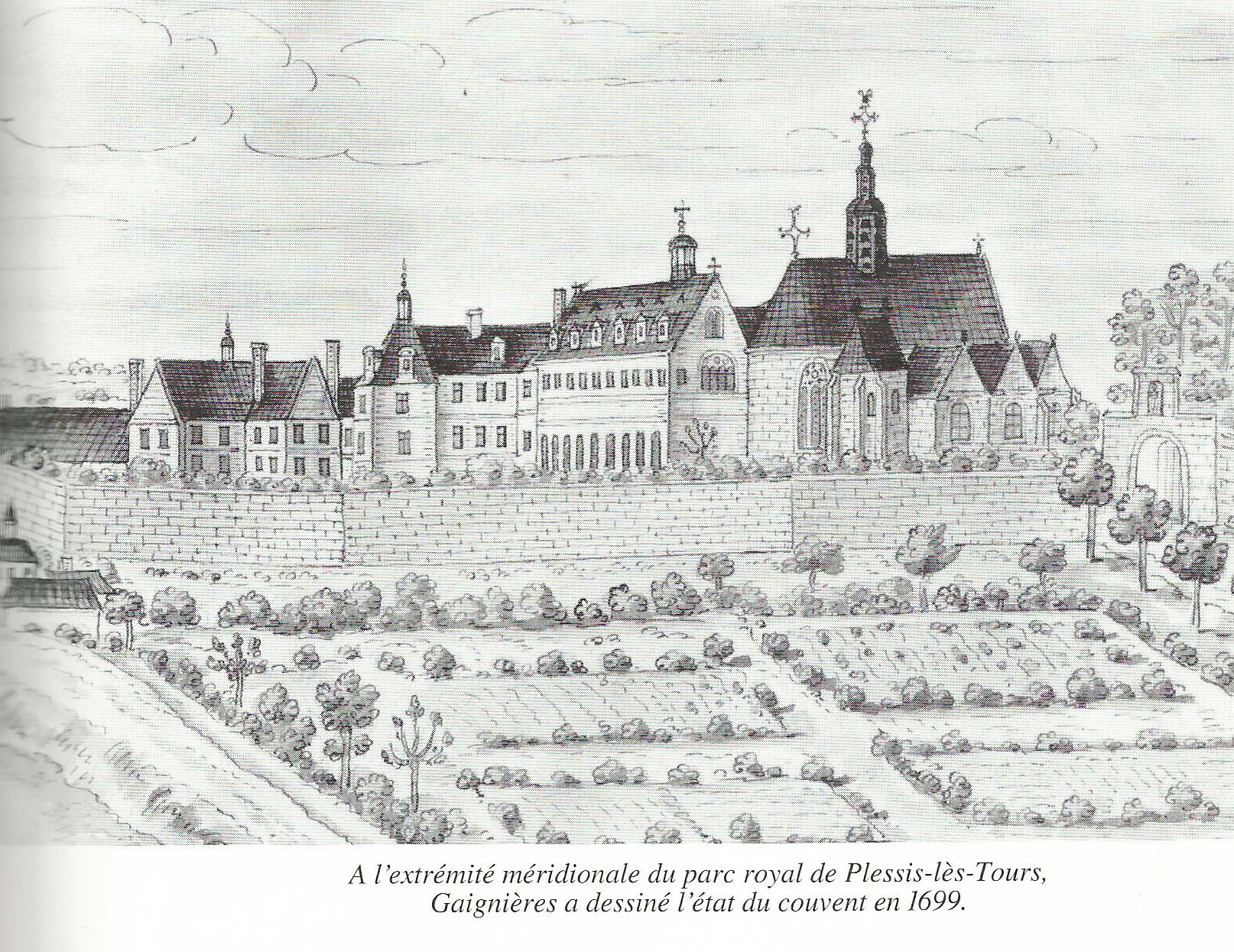 2 [Leveel 1994]
+ 2 [Leveel 1994]
+ 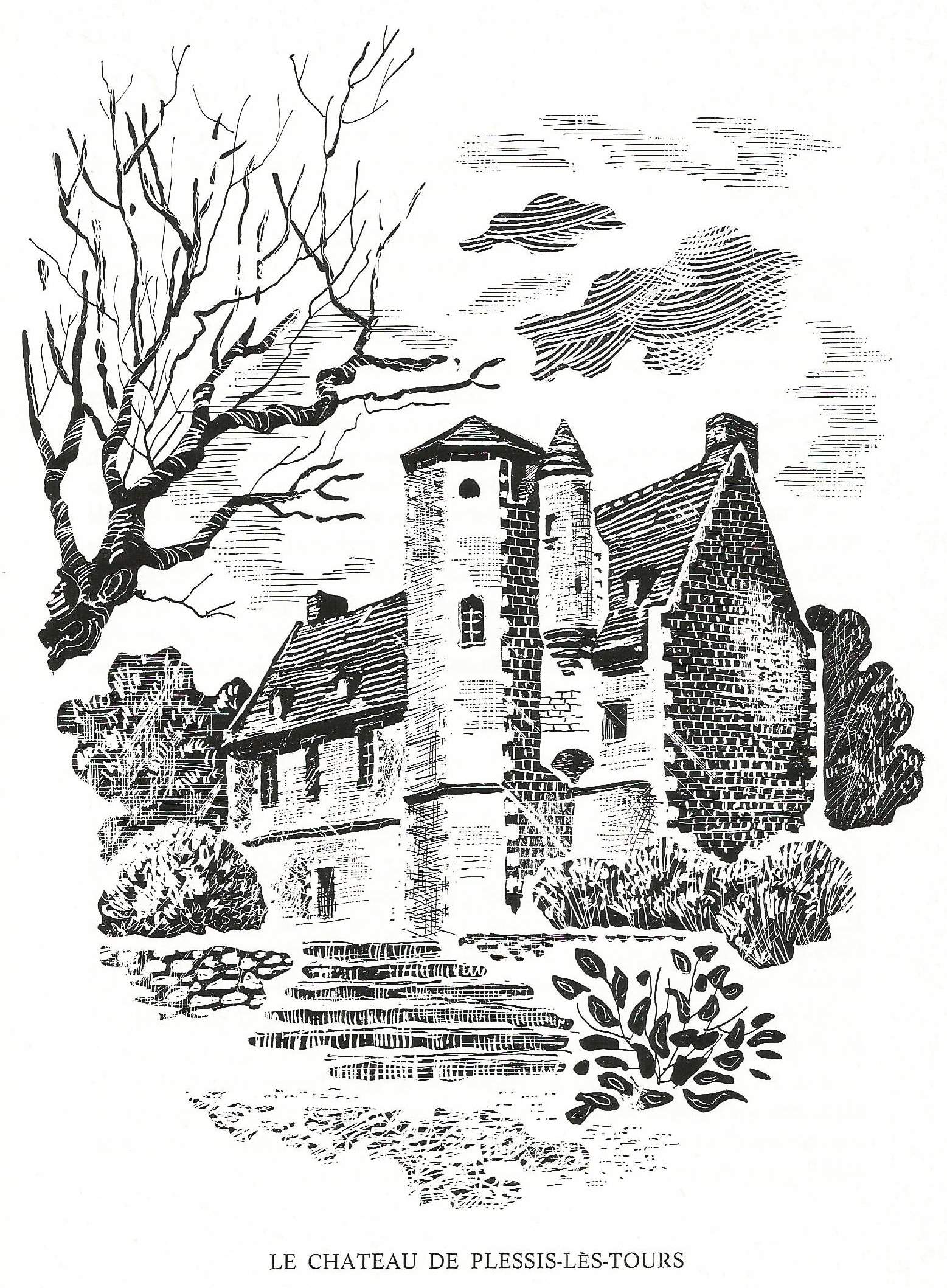 engraving Oury - Pons 1977
+ four engravings by LTa&m 1845 : engraving Oury - Pons 1977
+ four engravings by LTa&m 1845 :
 1 1
 2 2
 3 3
 4
+ two engravings by LTh&m 1855 : 4
+ two engravings by LTh&m 1855 :
 1 1
 2
+ two other engravings : 2
+ two other engravings :
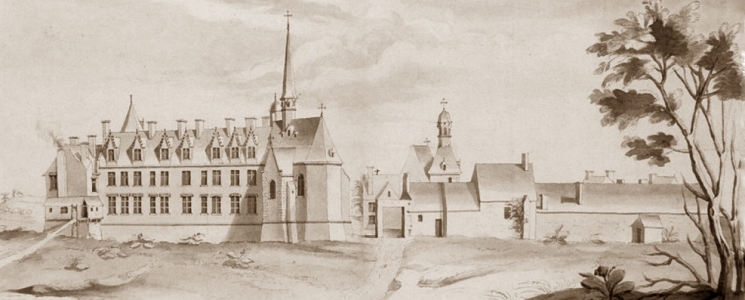 1 1
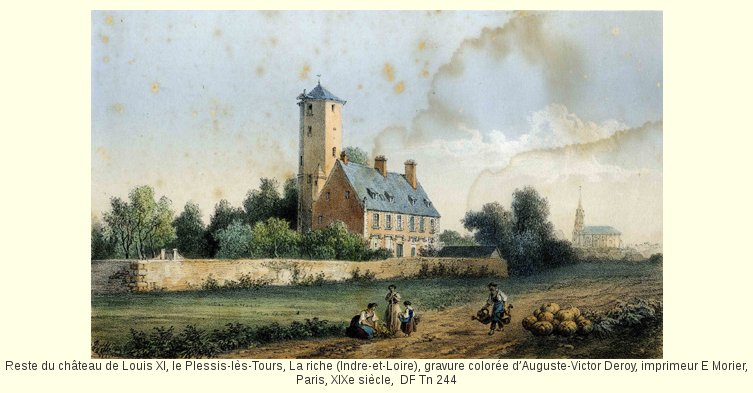 2 [SAT]
+ 2 [SAT]
+  watercolor of Picart le Doux 1941.
Center, 2017 photo [Wikipedia].
In 2016, the Tours City Council, owner of the Château du Plessis and little aware of its heritage value, wanted to sell it, without success ( watercolor of Picart le Doux 1941.
Center, 2017 photo [Wikipedia].
In 2016, the Tours City Council, owner of the Château du Plessis and little aware of its heritage value, wanted to sell it, without success ( article La NR 2016). article La NR 2016).
|
 tableau
 postcardLouis XI, who ruled France from 1461 to 1483, made Tours the capital of his kingdom, considering himself a citizen of Tours, living in the nearby castle of Plessis. He boosted the city's economic activity, particularly by introducing the silk industry (
 story, link,
  article Fasc. NR 2011).
Louis XI, despite megalomaniac excesses (
article Fasc. NR 2011).
Louis XI, despite megalomaniac excesses ( story from a page next door about Touraine megalomaniacs), was very attached to his capital and had great ambitions for it. He gave it a great economic, industrial, cultural, and urbanistic impetus to such an extent that Bernard Chevalier wonders: Did Louis XI create Tours ? Here is his answer : ""The pithy formula is too abrupt to be entirely accurate and neglects what had been started by Charles VII. Rare, indeed, are the advances encouraged by the son that did not have their starting point in the initiatives of the father. The king of Plessis created Tours only to the extent that this city, still mediocre at his advent, became, but not suddenly, a well-equipped urban center, a center of art and industry, an agglomeration worthy of holding its rank, next to Paris whose star had momentarily faded, to Lyon which was growing, to Toulouse, Rouen and Montpellier.
The king saw even better. He imagined his capital on the model of these Italian cities whose brightness seduced him so much, producers of weapons and prestigious silks, masters of the great trade. A strong ambition that often opposed him to the local notables who were unable to conceive of any other fortune for it than that of the draping cities of the past. A dream perhaps, but shared by a few middle-class people less constrained than the others and sensitive to the attraction of big business, ready to play the big game on the sea or in the banking offices. Could they be the Borromeos or the Medici of a Florence or a Milan of the Loire Valley? No, they failed and could not succeed. At least, thanks to them, the reign of Louis XI was in Tours the reign of great undertakings and excessive hopes."
+ file Louis XI of about ten pages (12 MB) from the April 1983 municipal newsletter "Tours Informations", with articles by Pierre Leveel, Bernard Chevalier and Véronique Moreau-Mitgen
+
story from a page next door about Touraine megalomaniacs), was very attached to his capital and had great ambitions for it. He gave it a great economic, industrial, cultural, and urbanistic impetus to such an extent that Bernard Chevalier wonders: Did Louis XI create Tours ? Here is his answer : ""The pithy formula is too abrupt to be entirely accurate and neglects what had been started by Charles VII. Rare, indeed, are the advances encouraged by the son that did not have their starting point in the initiatives of the father. The king of Plessis created Tours only to the extent that this city, still mediocre at his advent, became, but not suddenly, a well-equipped urban center, a center of art and industry, an agglomeration worthy of holding its rank, next to Paris whose star had momentarily faded, to Lyon which was growing, to Toulouse, Rouen and Montpellier.
The king saw even better. He imagined his capital on the model of these Italian cities whose brightness seduced him so much, producers of weapons and prestigious silks, masters of the great trade. A strong ambition that often opposed him to the local notables who were unable to conceive of any other fortune for it than that of the draping cities of the past. A dream perhaps, but shared by a few middle-class people less constrained than the others and sensitive to the attraction of big business, ready to play the big game on the sea or in the banking offices. Could they be the Borromeos or the Medici of a Florence or a Milan of the Loire Valley? No, they failed and could not succeed. At least, thanks to them, the reign of Louis XI was in Tours the reign of great undertakings and excessive hopes."
+ file Louis XI of about ten pages (12 MB) from the April 1983 municipal newsletter "Tours Informations", with articles by Pierre Leveel, Bernard Chevalier and Véronique Moreau-Mitgen
+  passage from the book Cossu-Delaunay 2020 "Major urbanistic upheavals".
The tributes of the king citizen of Tours to Martin. He also honored the ancient bishop, patron saint of his city. Already, in 1433, his father Charles VII, who raised a Saint Martin's chapel in Chinon in 1440-1450 [Bruno Dufau,
Collective 2019], had expressed the hope that Saint Martin would help with the "recovery of the kingdom and its other affairs". Louis XI made St. Martin "the special guardian of our kingdom who had helped our predecessors so much" and, in 1481, he granted further favors so that this saint would contribute "to the maintenance and preservation of the kingdom... to its agreement, peace and union". Bernard Chevalier in a 1997 study titled "Saint-Martin in the fourteenth and fifteenth centuries and the cult of the saint" tells "From 1468, his personal devotion is growing... He comes to hear Mass at Saint-Martin and pray at length before each of his departures. In any case he was always present before his protector thanks to the solid silver statue placed in 1466 in front of the shrine and which represents him in orant clothed in the aumusse of canons. He made considerable gifts to the saint almost always in ex-voto for a victory : the image of a city all in silver offered in 1472, that of the castle of Plessis enriched with gems, a sumptuous lamp given in 1480, finally and above all the famous solid silver grid placed around the shrine in 1478. This was the execution of a vow made on the occasion of a victory over the Flemish during the war of conquest in Artois. Lavish expenditure : it cost the public finances 72,846 livres tournois, or approximately 2% of the annual amount of the size." What would Martin have thought?

1468, Charles the Bold forced Louis XI to sign the Treaty of Peronne [Job1905, Wikipedia]
+ ten other illustrations :
 1 1
 2 2
 3 3
 4 (link) 4 (link)
 5 5
 6 (1969) 6 (1969)
 7 7
 8 8
 9 (1875) 9 (1875)
 10 [elementary textbook circa 1970, link].
1470, Louis XI presided over a assembly of notables in Tours that denounced the Treaty of Péronne, exacerbating the conflict with the duke of Burgundy. The states general of 1468 had previously been held in Tours, notably refusing the dismemberment of Normandy.
Without war, with treaties, Louis XI united eleven provinces to France : 10 [elementary textbook circa 1970, link].
1470, Louis XI presided over a assembly of notables in Tours that denounced the Treaty of Péronne, exacerbating the conflict with the duke of Burgundy. The states general of 1468 had previously been held in Tours, notably refusing the dismemberment of Normandy.
Without war, with treaties, Louis XI united eleven provinces to France :  presentation (link), presentation (link),  map. map.

1477 in the basilica, Louis XI learns of the death of Charles the Bold. "Kneeling, in the attitude of profound recollection, the king gives all the signs of the most fervent piety. Suddenly one of the lords of the court approaches and addresses to him in a low voice a few words his face, usually severe, just now full of compunction, lights up and becomes radiant he straightens up with pride, he cannot contain his joy and lets it burst. Louis XI has just learned that the most intractable of his enemies is no longer : Charles the Bold is dead !" [ LTh&m 1855].
+  commented miniature of Louis XI and his enemies, the Great Ones of the Realm ["Les renaissances", Philippe Hamon, Belin 2013].
In the center, Louis XI as a young man with his family at Le Plessis, leaving mass, with his second wife, Charlotte of Savoy, and their son, the future Charles VIII [collection H. J. Vinkhuizen].
On the right, elderly Louis XI, both cautious (link) and sad-looking (link)
+ another commented miniature of Louis XI and his enemies, the Great Ones of the Realm ["Les renaissances", Philippe Hamon, Belin 2013].
In the center, Louis XI as a young man with his family at Le Plessis, leaving mass, with his second wife, Charlotte of Savoy, and their son, the future Charles VIII [collection H. J. Vinkhuizen].
On the right, elderly Louis XI, both cautious (link) and sad-looking (link)
+ another  portrait. portrait.
|
1483, the Calabrian Francis of Paola settled in Tours. Just as the people of Tours had called the holy man Martin in 371, Louis XI, eleven centuries later, called to him the holy man
François de Paule (1416-1507). He came from Calabria, had traveled through Italy and France, meeting in Rome with Pope Sixtus IV (+  drawing by Charles Mellin, MBAT] and gaining his support for his order of Minims. He had been warmly welcomed at the château du Plessis. It was in a much more selfish way, to help his Majesty overcome the disease. In the absence of a miracle, Louis XI received relief for the few months he had left to live. Francis of Paola would then remain in Tours for 24 years, until his death, revered by the court and the people of Touraine who affectionately nicknamed him "the good man". He advised the regent Anne de Beaujeu and then kings Charles VIII and Louis XII and developed, with royal support, his Order of Minims, multiplying the convent of the Minimes, including the convent of La Riche, next to Le Plessis (pictured below), which would house the saint's tomb. While there is an undeniable convergence in their settlement in Tours, Francis of Paola does not seem to have had any particular attention for Martin of Tours.

Francis de Paule's arrival at Le Plessis [ Jacques Dumont, known as the Roman, 1730, MBAT, link]


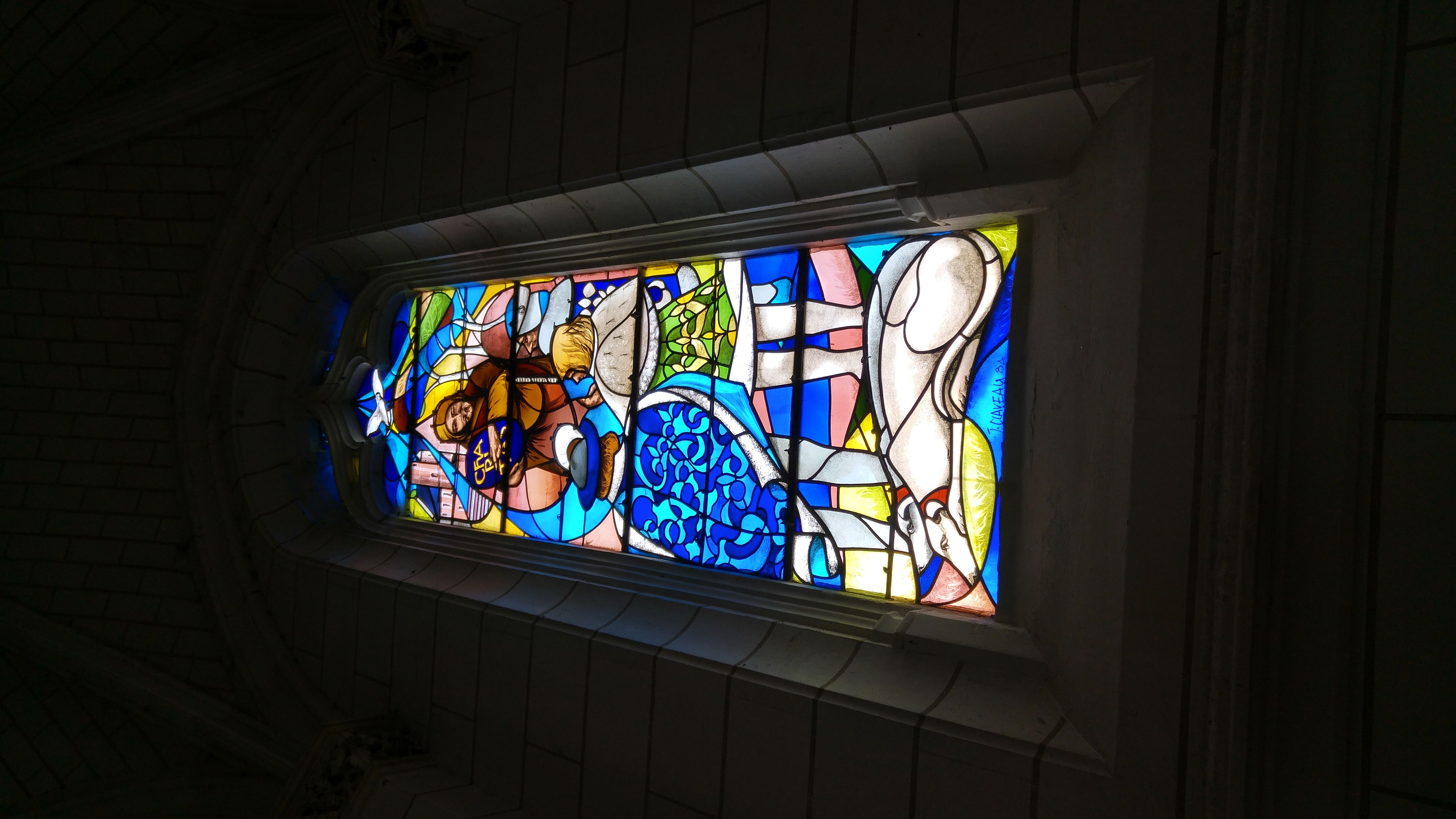
At left, another arrival at the Plessis [ Nicolas Gosse, 1843, Château de Loches]. + four other illustrations of Louis and François' meeting:
 1 1
 2 [Emile Keller, 1880] 2 [Emile Keller, 1880]
 3 3
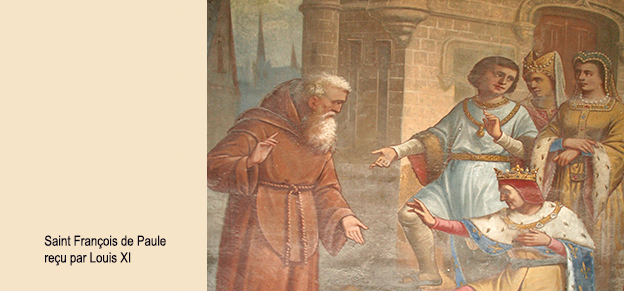 4
+ 4
+ 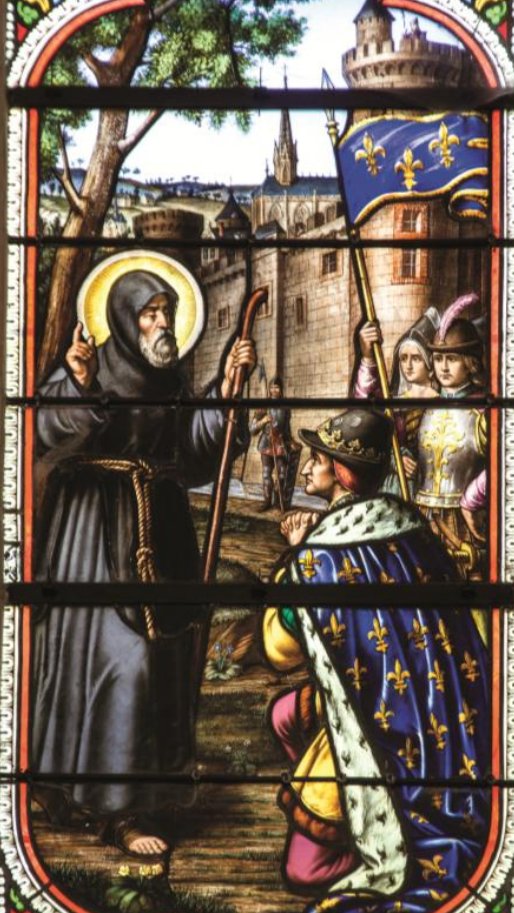 vitrail of the church of Mettray in Touraine [Julien Fournier 1878]
+ vitrail of the church of Mettray in Touraine [Julien Fournier 1878]
+  image of the saint at the king's bedside. image of the saint at the king's bedside.
hereafter.

[Captions from "Magazine de la Touraine" #41 (1992), engravings by LTa&m 1845].
+ 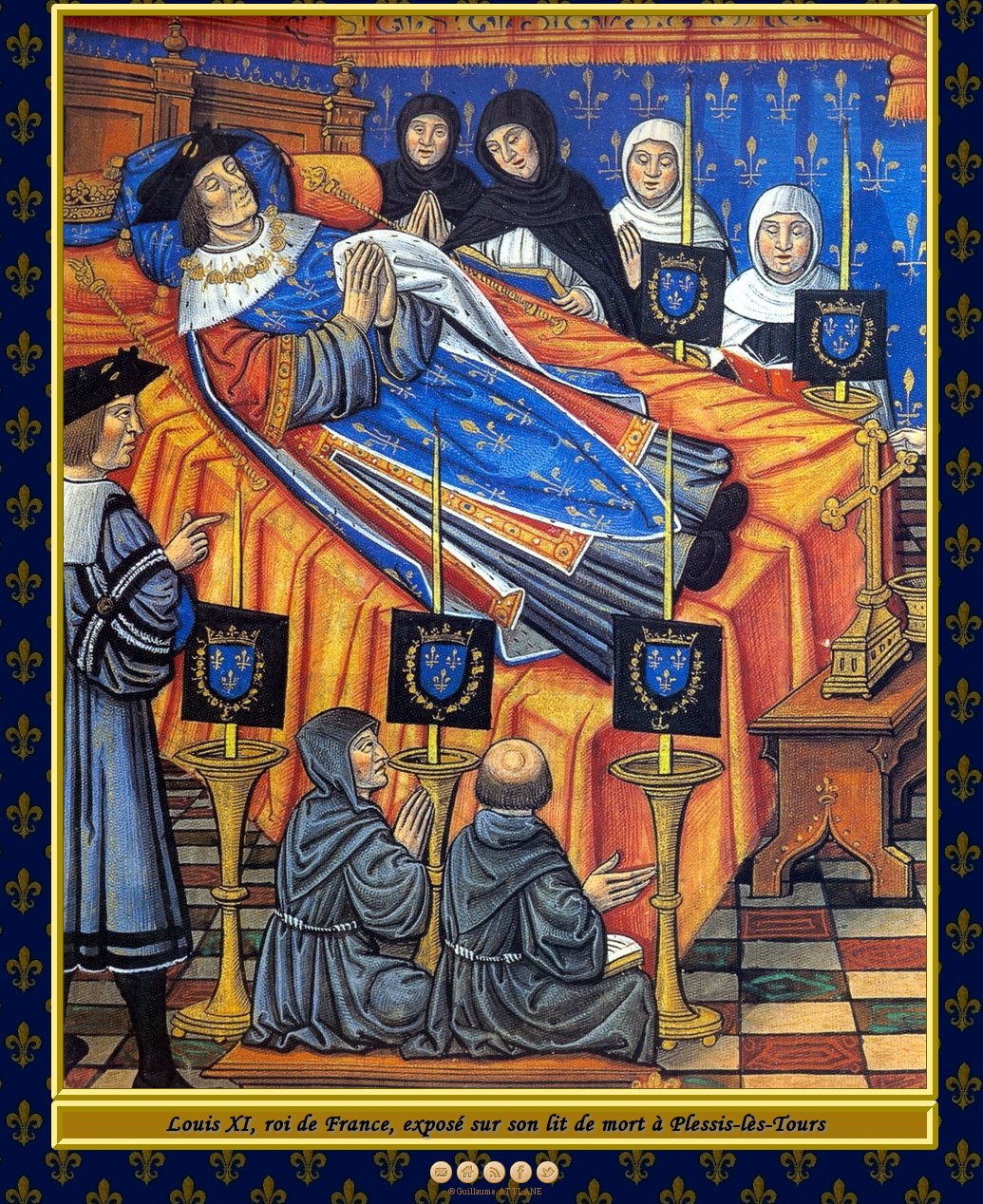 miniature "Louis XI exposed on his deathbed". miniature "Louis XI exposed on his deathbed".
|
 photo
photo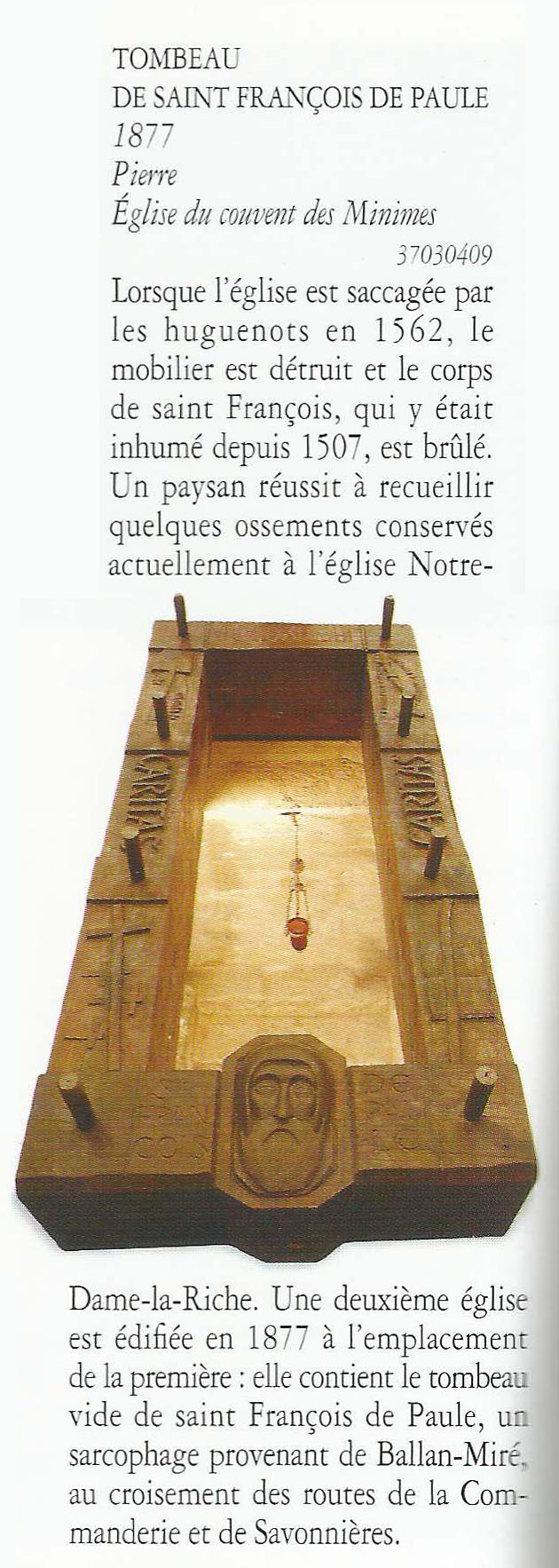 photo
photo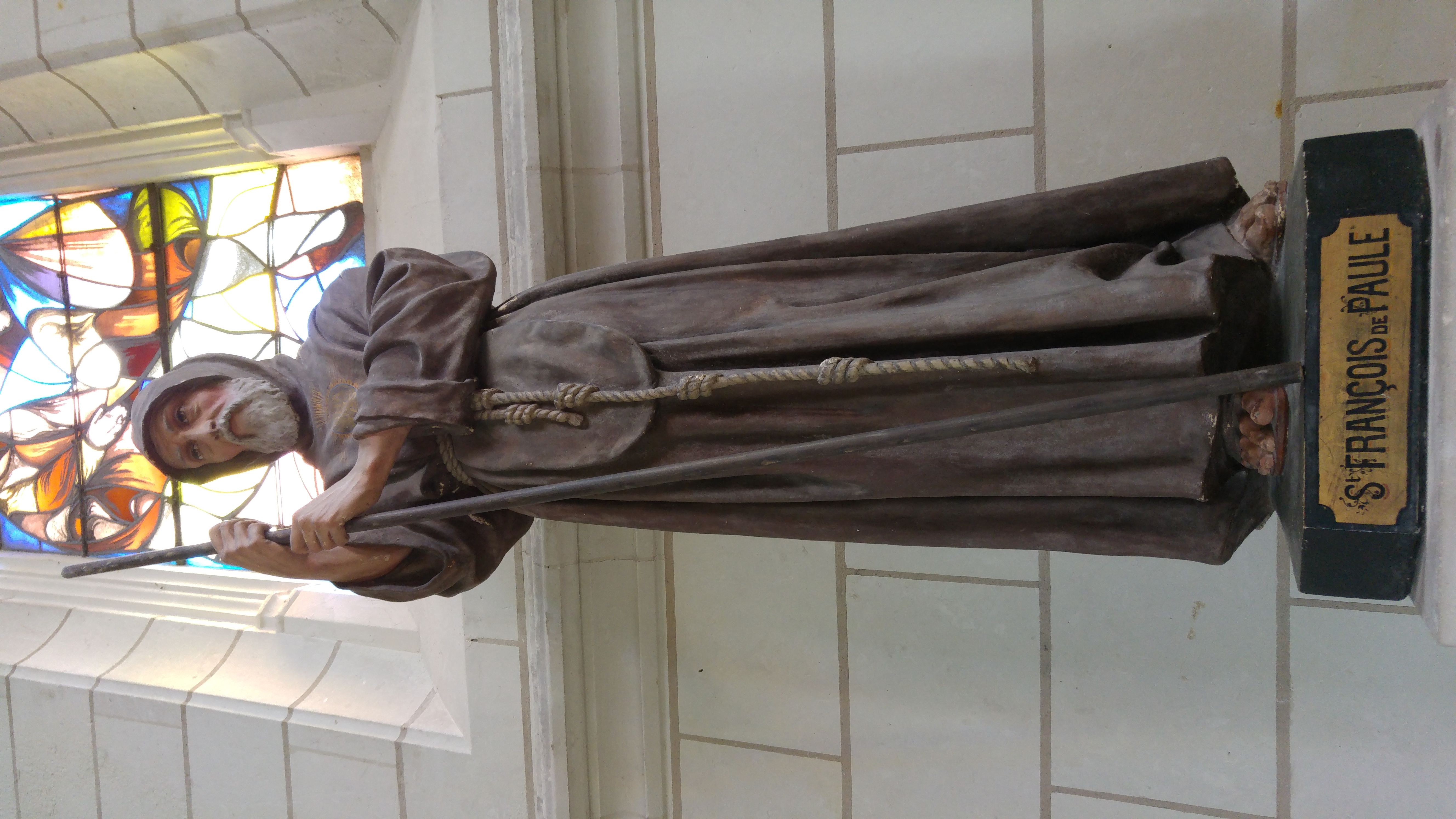 statue
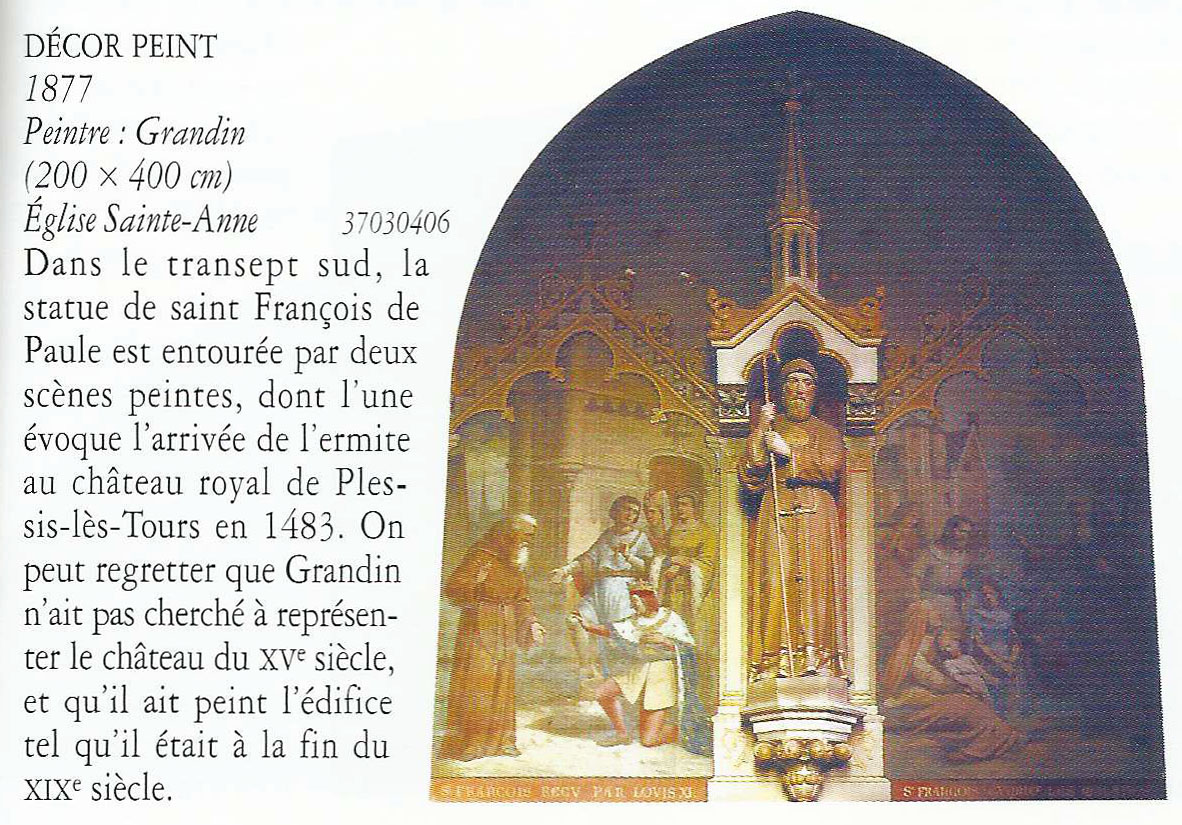 statue
 photo
photo recto
recto verso
versoThe funeral of Louis XI in the basilica of Saint Martin. Eugène Giraudet (1873) :"At the news of his death, on August 31, 1483, the chapter of Saint Martin had all the bells rung for three days at the end of this time, the canons went with great pomp to fetch the body of the king and brought it back to their church, where they celebrated his funeral. From there, following the express recommendation of the king, they took his mortal remains to the church of Notre Dame de Clery, where he himself had, during his lifetime, had his tomb prepared".
The basilica in all its beauty. In the
Catalogue 2016, Emeline Marot believes that the collegiate church reached its full maturity with also "the construction by Louis XI of a chapel to the north of the nave" and the splendor of the tomb "At the end of the fifteenth century, when Jean de Ockeghem acceded to the office of treasurer, the collegiate church thus presents an almost definitive plan and organization, a complex composition of masonry belonging to different centuries."


To the left, Louis XI praying to his favorite saint, Martin [tomb of Louis XI in the nave of Notre Dame de Cléry, Michel Bourdin (1565-1645), Wikipedia].
+ a 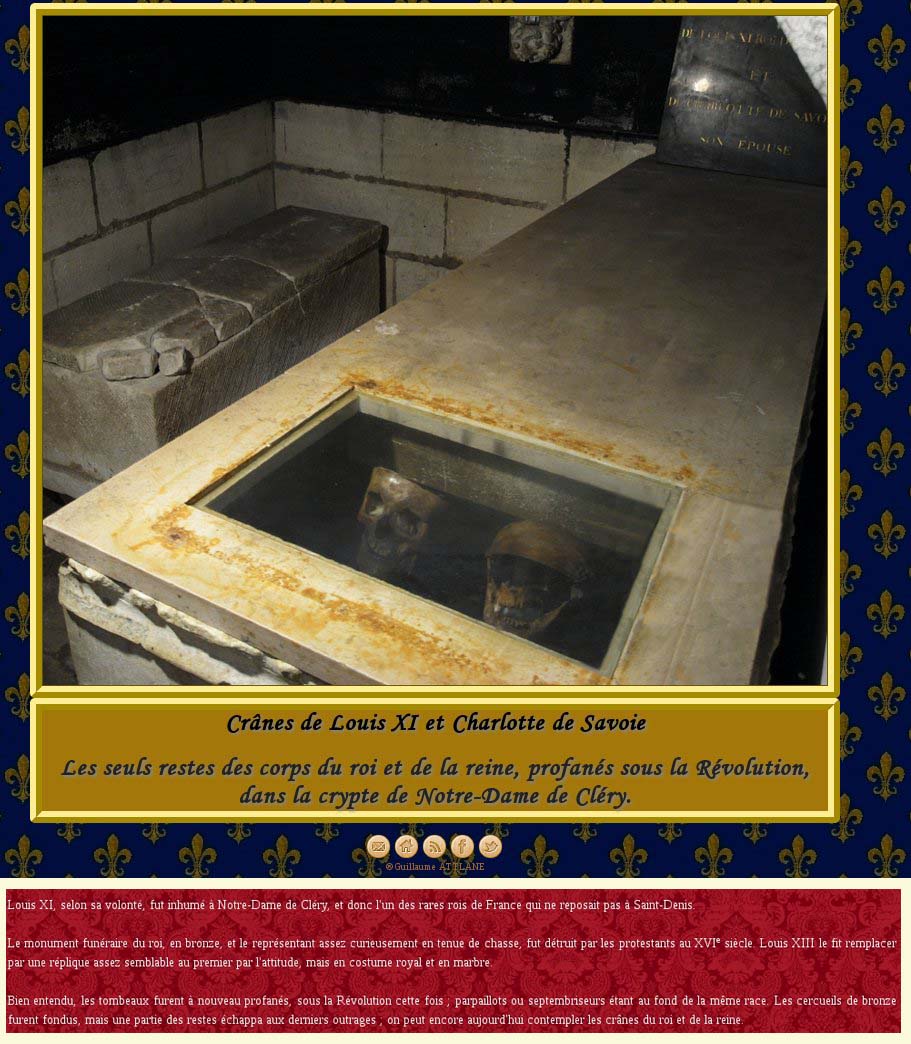 photo of Louis XI (yes, a photo...) (link).
Au center "Tours at the time of Louis XI" by Sylvain Livernet 1983 (drawings Alain Ferchaud). + four excerpts: photo of Louis XI (yes, a photo...) (link).
Au center "Tours at the time of Louis XI" by Sylvain Livernet 1983 (drawings Alain Ferchaud). + four excerpts: 1 (gates and towers of Tours 1 (gates and towers of Tours  2 (religious monuments). 2 (religious monuments).  3 (the king's castle in Plessis lès Tours, west of the city) 3 (the king's castle in Plessis lès Tours, west of the city)  4 (the entrance to the castle, Alain Ferchaud drawing). On the right inscription in the basement of the current Laloux basilica. 4 (the entrance to the castle, Alain Ferchaud drawing). On the right inscription in the basement of the current Laloux basilica.
|
Commune of Tours 4/5: 1462, the good city of Tours has its first mayor, Jean Briçonnet. Gradually a secular power is formed in Tours, which becomes a good city benefiting from privileges and protections granted by the king of France, matched in return by obligations including tax. Bernard Chevalier ["History of Tours" 1985] : "In 1356, at the same time that the city had received permission from King John to fortify itself, it had obtained from him the right to tax itself and to hold general assemblies of inhabitants responsible for electing those in charge of the common defense. Starting point of the conquest of administrative autonomy." Then : "From 1389 the custom is fixed to elect only two elected officials, both lay, and from then on is established a costume which will take the place of statute [...]The last step remained to be taken, the one that led from the community of organized inhabitants to the body of constituted city. it was crossed in 1462, but under pressure from Louis XI, who forced the Tourangeaux, who did not ask for so much, to adopt the statutes of La Rochelle, that is to say, a regime close to the "establishments of Rouen" : at the head of the city a mayor appointed annually by the king on a list of three candidates and a college elected for life of 24 aldermen and 75 peers and advisers, that is to say, one hundred members with the mayor. In execution of these new statutes, on October 8, 1462, Jean Briçonnet the elder, elected of the aids in Tours, was invested for the first time with the office of mayor." Three powers were then organized and disputed : the Archbishopric, the Saint Martin chapter and the city body (an  example of conflict in 1603 is recounted by Eugene Giraudet in his "History of the city of Tours", link). + article by Bernard Chevalier 1995 "Civic religion in good cities : its scope and limits. The case of Tours", presenting the role of the "corps de ville"
+ three-page article on the mayors and town halls of Tours ["Tours Informations" February 1988] : example of conflict in 1603 is recounted by Eugene Giraudet in his "History of the city of Tours", link). + article by Bernard Chevalier 1995 "Civic religion in good cities : its scope and limits. The case of Tours", presenting the role of the "corps de ville"
+ three-page article on the mayors and town halls of Tours ["Tours Informations" February 1988] :
 1 1
 2 2
 3
+ the list of mayors.
Starts in Commune 1/5,
2/5,
3/5,
continued in 5/5. 3
+ the list of mayors.
Starts in Commune 1/5,
2/5,
3/5,
continued in 5/5.
|


Photos taken from four postcards commented on by Donat Gilbert ["Tours à la belle époque" 1973]. 1) The hotel of Jean Briçonnet, 11 rue de Châteauneuf (+  photo].
2) The White Cross Inn, Place de Châteauneuf, welcoming pilgrims to Saint Martin (+ photo].
2) The White Cross Inn, Place de Châteauneuf, welcoming pilgrims to Saint Martin (+  photo, link).
3) The house of Tristan l'Hermite, rue Briçonnet (+ photo, link).
3) The house of Tristan l'Hermite, rue Briçonnet (+  photo). photo).
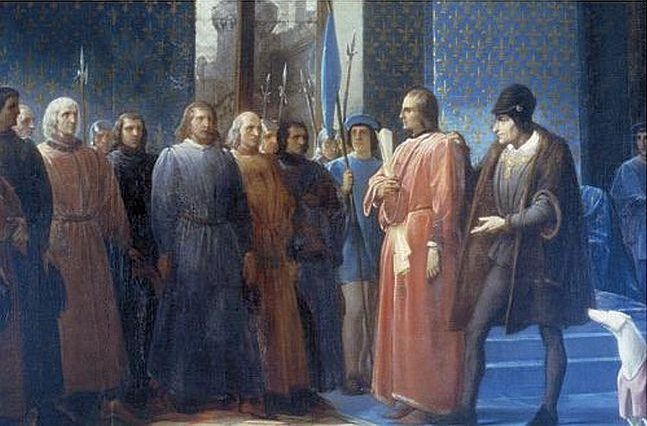
Louis XI addressing burghers, here those of Angers, in 1474, during the presentation of the communal charter [painting by Jules Dauban 1901, in the town hall of Angers].
He appointed Guillaume de Cerisay as the city's first mayor.
+  story of how Louis XI relied on the burghers of Angers to take over Anjou (link). story of how Louis XI relied on the burghers of Angers to take over Anjou (link).
|
 1
1 2
2 3
3 1
1 2
2 3
3 4
4 5
5 photo
photo photo
photo degradation
 explanation
 article
Our ancestors the bourgeois of Tours. Under Francis I, the
Ordinance of Villers-Cotterêts of August 1539 imposed on parish priests a maintenance of baptismal registers that was not really implemented throughout France until about 1600, with some parishes being more prompt. The earliest registers in Touraine, predating even the ordinance, are those of Saint Jean Saint Germain (1506) and Thilouze (1516) [workshop of 59 pages on genealogy in Touraine]. However, it is possible to go back to an earlier period by studying the preserved notarial registers of the city of Tours, which allows one to go back to 1462. Nearly 17,700 acts from the 15th to the 17th century are thus presented (link with search engine). This concerns the burghers and artisans who passed through notaries. Genealogical researches thus make it possible to go up in this world of the Touraine bourgeoisie. As an example, here are the breakthroughs I made in my ancestry, shared by many Tourangeaux or not, knowing it or not:
(P.-S. : also Jean de Beaune, mayor of Tours in 1472, from the family of Beaune, father of Jacques)
- Amable Morinet, president in the election of Tours, who died around 1667. His descent tree Pierre Dutremblay, his maternal grandfather, a master silk cloth worker, who died about 1615 with about 30 deeds including this one on June 9, 1587 : "Ratification of the marriage contract between Philippe Dardembourg, goldsmith (Nantes, parish of Saint-Nicolas) on the one hand and Marie Guymier, passed before Bodin and Préau, royal notaries in Nantes on May 13, 1587 by Estienne Moreau and Pierre Dutremblay, merchants master workers in silk sheets in Tours, Barbe Moreau, widow of Louis Demaciot dit Debien, master worker in silk sheets, André Millard, master tailor in Tours, François Besnard, master goldsmith in Tours, and Suzanne Guymier daughter. The Moreau's are uncle and aunt of the future, Dutremblay is first cousin, Millard brother-in-law, Besnard cousin and Suzanne Guymier sister of the future." The most interesting branch is that of the Guymier (for example Jean the Elder, who died around 1490, a writer and sworn bookseller) which allows one to trace back to burghers of Paris (such as Pierre, a maker and dealer of playing cards).
- Guillaume Chereau or Chevreau, merchant who died around 1590, with limited ancestry, concerned with his father and relatives by about twenty acts. For example on August 4, 1628 : "Discharge to Jacques Marchays, bourgeois of Tours, adjudicator of the closerie Le Marteau in Saint-Avertin, by Pierre Lopin, bourgeois merchant of Tours (parish Saint-Saturnin), having charge of Jacques, François, Raphaël, Claude and Marguerite Chereau, Catherine Chereau their sister, heirs of Jehan Sterpin, prebendal canon of the Church of Tours, their uncle."
- Marc Moreau, master silk cloth worker, married around 1580. His descent tree allows us to trace, in a noncertain way, 5 generations. His maternal grandfather, Hélye Chouyn was a master knifemaker to the king in Tours, having worked in 1510/1511 on the Beaune-Semblançay fountain (illustrations above), as one of the six "maîtres de l'oeuvre.
His paternal grandfather Jean (2) Moreau was, in his youth, valet to King Louis XI, having introduced to him François de Paule, to whose canonization he bore witness. The latter's father, Jean (1) Moreau, alternately apothecary, valet to the king and parvenu merchant having had run-ins with Philippe de Commynes, chambellan and friend of Louis XI, who recounts in his writings his misadventures about a merchant galley (galley) in the port of Marseille. This Jean's father (1), Guyon Moreau, who died around 1480, was, at an advanced age, apothecary to King Louis XI, looking after the health of his greyhounds, among other things.


Louis XI, considered a universal aragon, with two of his greyhounds and Philippe de Commynes. [History of France in Comics, Larousse 1979, text Jean Ollivier, drawing Eduardo Coelho] + three plates on the end of reign :
 1 1
 2 2
 3. 3.
|
The Four Feasts of Saint Martin.
Jean-Louis Chalmel (1756-1829) (quoted by Sylvain Livernet in "Tours in the time of Louis XI" 1983):"The church of Saint-Martin celebrated four feasts in honor of its patron each year: the first, that of the saint's death, on November 11, was common to the entire Roman Church. It was customary for kings and great lords to present to the offering coins of Saint Martin or gold or silver vessels marked with his particular corner. The second feast was to commemorate the deliverance of Tours when it was first besieged in 841 [correction: the last time, on May 12, 903]by the Normans (Feast of the Grant [every May 12]). The feast of the Reversion perpetuated the memory of the time when the shrine of Saint Martin was brought back from Auxerre in 887. Finally, the feast of the Ordination of Saint-Martin was celebrated on July 4.". Sylvain Livernet continues : "While respecting the presence of the shrine of Saint-Martin, while continuing to help and frequent it, Louis XI sought to bring about a harmonious development of the city. His successors completed his work by building an urban fabric between the two poles of Touraine piety, basilica and cathedral."
After Louis XI, Charles Lelong continues his analysis "
Charles VIII, still a dauphin, was received as abbot in 1484 and then in 1493 it was in the basilica that he had his children who died in infancy buried in a famous tomb, preserved today in the cathedral. He had solemn prayers addressed to St. Martin during the Italian wars as did Louis XII and François I". This royal period brings marked prosperity to the city of Martin. In "Tours, ville royale" (1983), Bernard Chevalier estimates that, from 1450 to 1520, its population "would have increased from 9,000 to 12,000 souls and that of the agglomeration from 10,500 to 16,000.[...]It is in sum with a wise slowness that the new capital has risen to this honorable rank which places it in the kingdom immediately after Paris, Rouen, Lyon and Toulouse by the number of its inhabitants."


1) To the left, once in the Basilica of Saint Martin, now in the cathedral, the tomb of Charles Orland (Italian influence : Orlando, Roland) and Charles, grandsons of Louis XI, children of Charles VIII and Anne of Brittany, who died at 3 years (measles) and 1 month (link). Commissioned by Anne in 1499, it is the result of a collaboration between French (workshop Michel Colombe, probably Guillaume Regnault) and Italians (Giròlamo Paciarotto known as Jérôme Pacherot).
+ two engravings :
 1 [LTh&m 1855] 1 [LTh&m 1855]
 2 [Robida 1892]
+ oage Wikimedia
+ other page dedicated
+ 2 [Robida 1892]
+ oage Wikimedia
+ other page dedicated
+  portrait of Charles-Orland by Jean Hey [1494, Musée du Louvre, Wikipedia].
2) In the center, in the vanished basilica, the tomb of Jean II le Meingre (1364-1421), known as Boucicaut, marshal of France, governor of Genoa, who died a captive in England, after having been taken prisoner in 1415 at the battle of Azincourt
+ portrait of Charles-Orland by Jean Hey [1494, Musée du Louvre, Wikipedia].
2) In the center, in the vanished basilica, the tomb of Jean II le Meingre (1364-1421), known as Boucicaut, marshal of France, governor of Genoa, who died a captive in England, after having been taken prisoner in 1415 at the battle of Azincourt
+  vitrail Lobin of the present basilica showing his burial in 1421. + also in the basilica, in his family chapel, the vitrail Lobin of the present basilica showing his burial in 1421. + also in the basilica, in his family chapel, the  tomb of his father Jean I le Meingre (1310-1367), a marshal of France who fought the Great Companies of brigands during the Hundred Years War. John I had a brother Geoffroy bishop of Laon from 1363 to 1370. tomb of his father Jean I le Meingre (1310-1367), a marshal of France who fought the Great Companies of brigands during the Hundred Years War. John I had a brother Geoffroy bishop of Laon from 1363 to 1370.
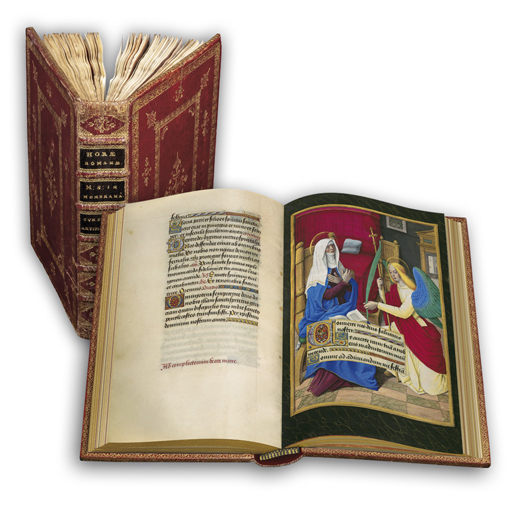
On the left, the book enlightened by Jean Poyer "Les heures Briçonnet" commissioned by Guillaume Briçonnet in 1485 (facsimile 2020, link).
In the center, Thomas Bohier (1460-1524), mayor of Tours in 1497, financier to kings Charles VIII to Francis I, had married Katherine Briçonnet (1494-1526) [G. Mercier & Ch. Sylvain, 1878], daughter of Guillaume. It was she who oversaw the construction of the château de Chenonceau from 1513 to 1521. On the right, Diane de Poitiers, favorite of King Henry II, added the gallery bridge in 1547 (photo by Marc Jauneaud).
|
 photo
photo genealogical tree
 tree
tree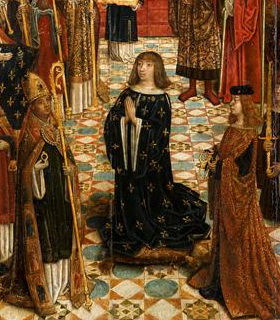
1500, Tours capital of the arts. At the end of the 15th century, Tours, a political and cultural capital, attracted the greatest artists,
Michel Colombe (1430-1515) for sculpture, Jean Fouquet (1420-1481) and Jean Bourdichon (1457-1521) for painting and illumination and Jean de Ockeghem for music, we return to this in the next paragraph. In 2012, the exhibition "Tours 1500, Capital of the Arts"
( catalog cover, by Jean Bourdichon
+ press kit) wanted to "restore the importance of Tours at the time of the pre-French Renaissance," when the city "concentrated all the factors of an unprecedented artistic bloom."
catalog cover, by Jean Bourdichon
+ press kit) wanted to "restore the importance of Tours at the time of the pre-French Renaissance," when the city "concentrated all the factors of an unprecedented artistic bloom."
Succeeding Louis XI, his son
Charles VIII, still under the regency of his older sister Anne de Beaujeu, was married to Anne, duchess of Brittany at the château de Langeais, near Tours in 1491. He then made a triumphal entry into Tours. As an adult, he left his father's residence to settle in the château d'Amboise. Except for passing through, the kings of France would no longer come to Tours, which began a slow and long decline. It is the same for the Saint Martin basilica, its chapter and its monks, even if they keep an important heritage. The cult of Martin also loses its prestige, the pilgrims are less numerous. Charles VIII allows the inhabitants to depend less on the religious : "The drafting of the coutume of Touraine produced such a great change in the state of morals and customs, by freeing the people from the despotism and arbitrariness of the judges, was one of the greatest benefits brought to our country, by Charles VIII" [Eugène Giraudet, 1873].

The marriage of Charles VIII and Anne of Brittany on December 6, 1491 at Langeais was encouraged by François de Paule. Photo of the reenactment in a room of the castle with wax figures. The spouses, aged 21 and 14, are small on the left. Below, in Tours, we toast to the health of the newlyweds! [ Couillard - Tanter 1986] + the  plank. plank.
|

|
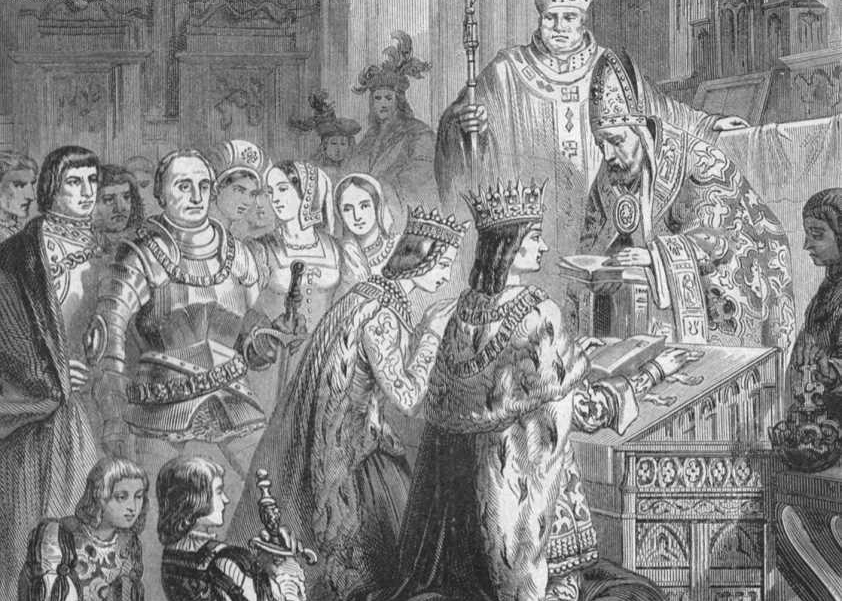 1 1
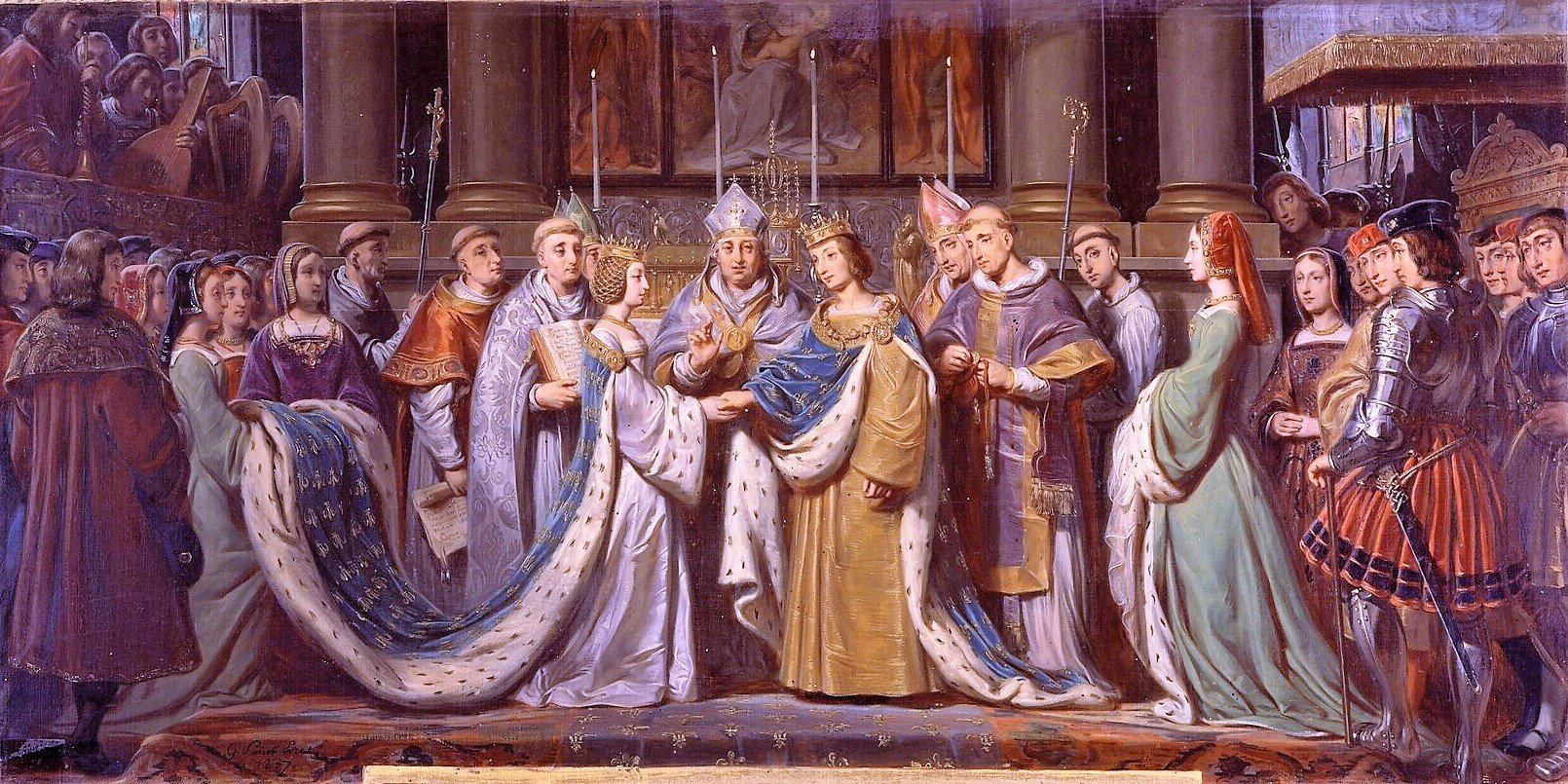 2 [Gillot Saint-Evre] 2 [Gillot Saint-Evre]
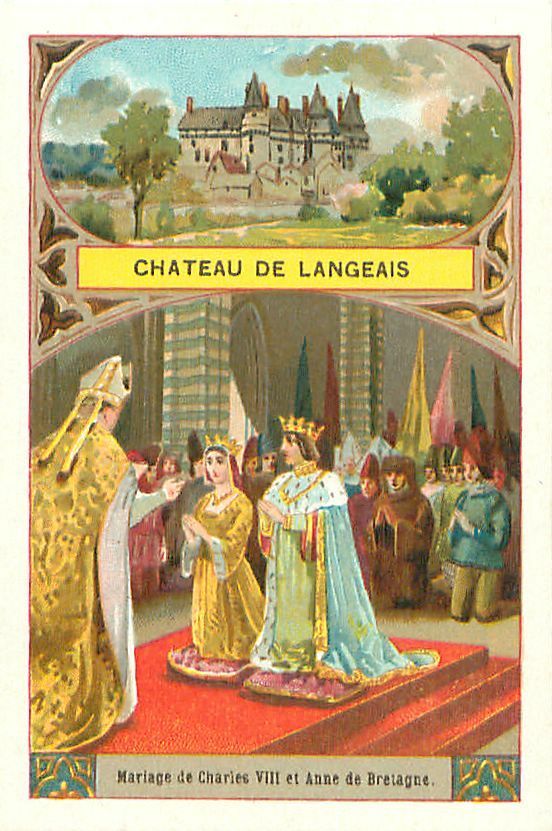 3 3
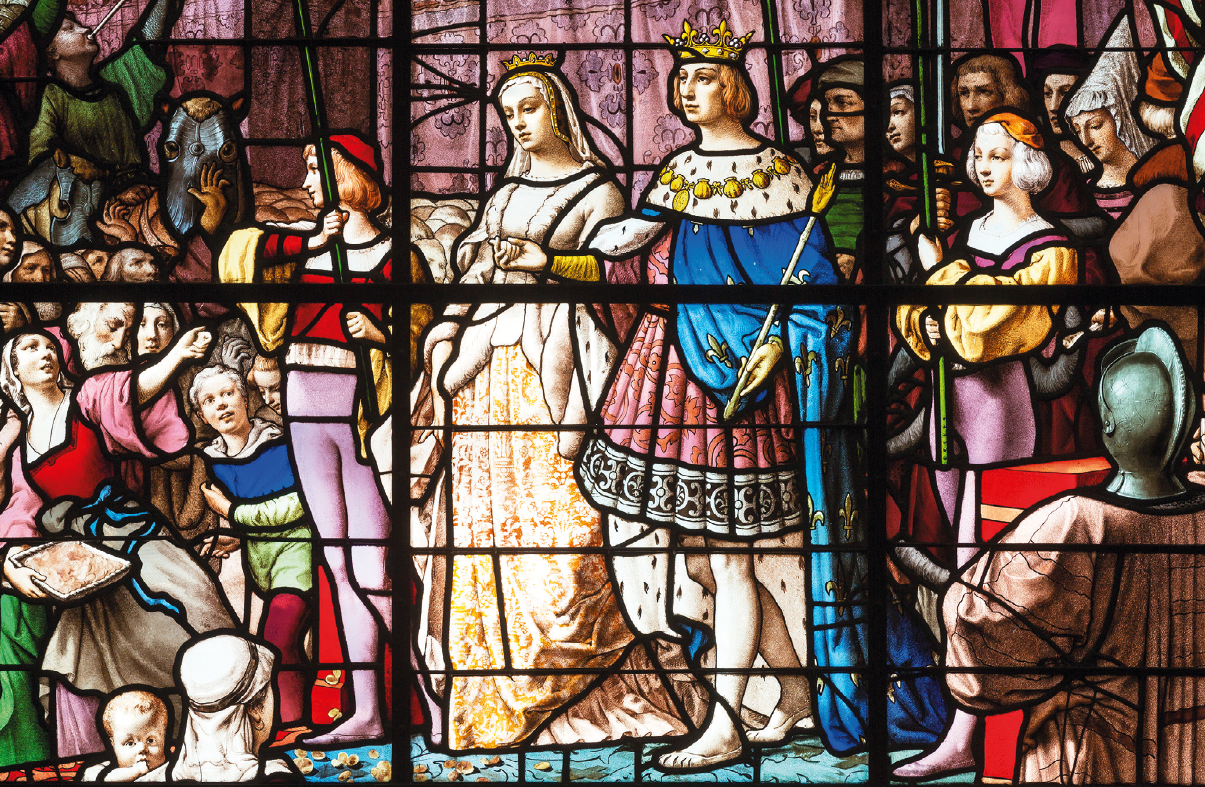 4 [stained glass window of the town hall of Vannes, 1885, link] 4 [stained glass window of the town hall of Vannes, 1885, link]
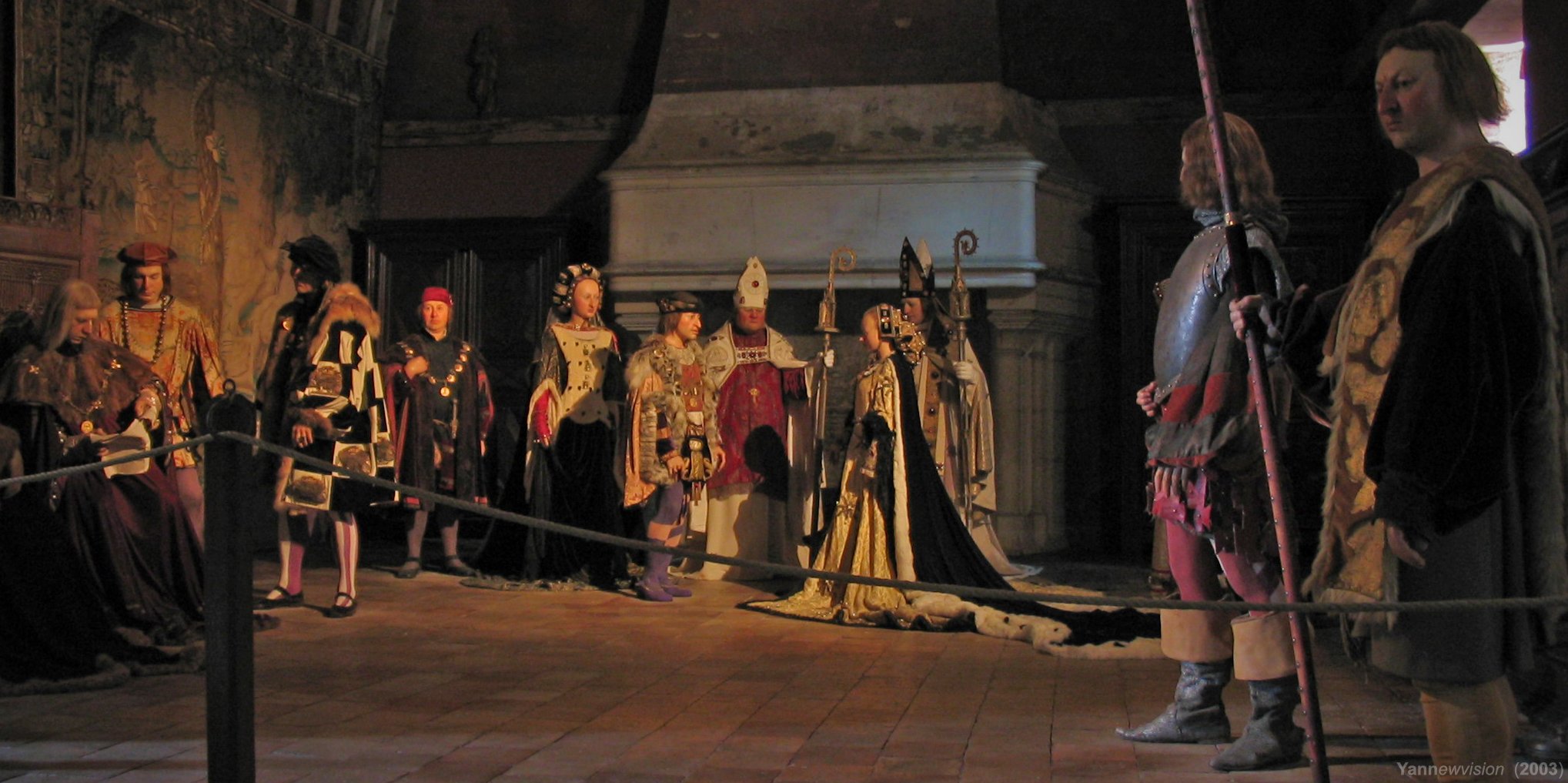 5 [flickr Yannewvision 2003]
+ 5 [flickr Yannewvision 2003]
+  engraving of the castle of Langeais in LTa&m 1845. engraving of the castle of Langeais in LTa&m 1845.
|
 analysis
Music and Jean de Ockeghem. Who says feast, who says mass says music. For the clergy and for the people. If one hardly has testimonies in this direction before the Middle Ages, the notated manuscripts become numerous from the XIth century. Yossi Maurey and Agostino Mageo have studied "the musical influence of Saint Martin in the late Middle Ages" in a lengthy article in the
Catalogue 2016.
Among the 50 surviving works by Jean de Ockeghem / Johannes Ockeghem (1420-1497), there are 14 masses with content (both sacred and secular in origin), 10 motets, and 20 songs.
This native of the vicinity of Mons in Belgium was treasurer of the Abbey of St. Martin between 1456 and 1459, and from 1465 until his death he bore the title of "maistre de la chapelle de chant du roy." + article "Latin liturgical repertories for St. Martin (6th-10th century)" by Jean-François Goudenne, 2012, with excerpts from sacramentaries from the twelfth to the fifteenth centuries. Note that the number 2007-3 of the "Lettre Martinienne" presents on its pages 12-18 the "Vespers of St. Martin" by Claudio Monteverdi and on its pages 19-21 the oratorio "The Cloak of Sharing" premiered in 1999 by Gérard Venant (and  presentation in LM 2007-1).
+ The page "Music and Church Musicians in the Department of Indre et Loire around 1790
".
presentation in LM 2007-1).
+ The page "Music and Church Musicians in the Department of Indre et Loire around 1790
".


On the left a score, the first ones appeared in the 11th century. In the center , presumed portrait of Jean de Ockeghem. At right, illumination by Etienne Collaut, "Chantres au lutrin" 1537, Ockeghem possibly the central figure with gray hair and glasses [ BnF, link] + other  view (link) + view (link) +  image from a breviary of Saint Martin of Tours, 13th century
+ image from a breviary of Saint Martin of Tours, 13th century
+  double-page spread of the Maupoix 2018 with analysis of sung and illustrated prayers from an early fifteenth-century manuscript from the Abbey of St. Martin des Champs in Paris [Mazarine Library, Paris]
+ press kit "Cubiculum musicae Ockeghem" 2015.
+ double-page spread of the Maupoix 2018 with analysis of sung and illustrated prayers from an early fifteenth-century manuscript from the Abbey of St. Martin des Champs in Paris [Mazarine Library, Paris]
+ press kit "Cubiculum musicae Ockeghem" 2015.
+ 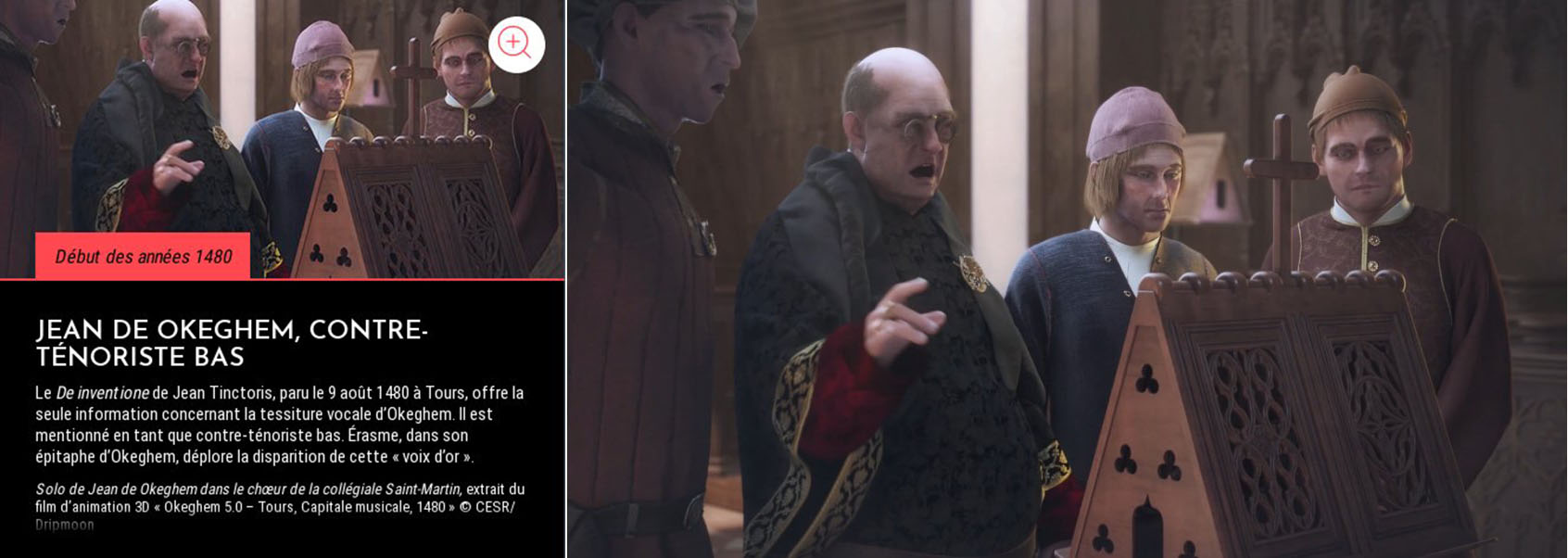 illustration from the video of the ReViSMartin 2020 project presented hereabove (see also the "making of").
+ two Touraine manuscripts with music notes (link) : illustration from the video of the ReViSMartin 2020 project presented hereabove (see also the "making of").
+ two Touraine manuscripts with music notes (link) :
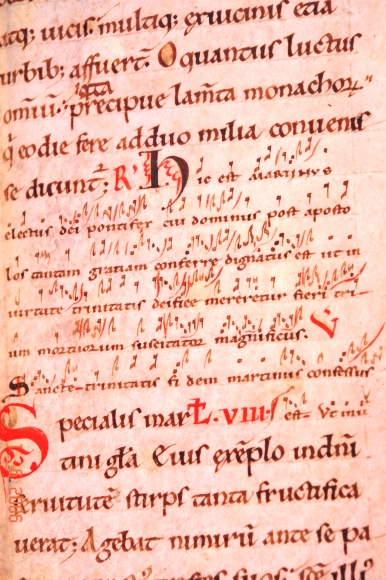 1 [Marmoutier breviary, 2nd half 11th century, Arch. Dep. 37] 1 [Marmoutier breviary, 2nd half 11th century, Arch. Dep. 37]
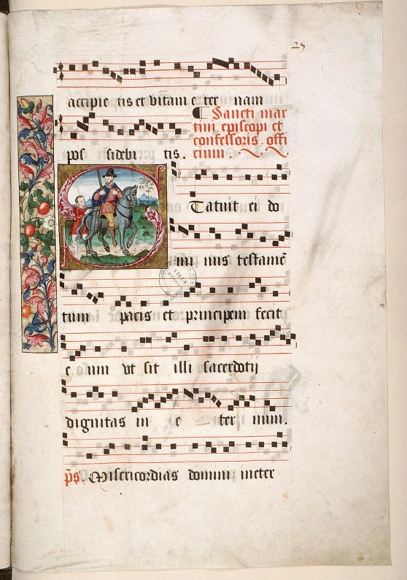 2 [festive gradual of Notre Dame la Riche, 16th, B. M. Amiens]. 2 [festive gradual of Notre Dame la Riche, 16th, B. M. Amiens].

["Visages e la Touraine", Pierre Leveel, Jacques-Marie Rougé, Emile Dacier, Jacques Guignard 1948] 
The assembly of Tours, meeting in 1506, proclaimed Louis XII "father of the people" [Michel Martin Drolling, painting on the ceiling of a room in the Campana Gallery of the Louvre Museum + 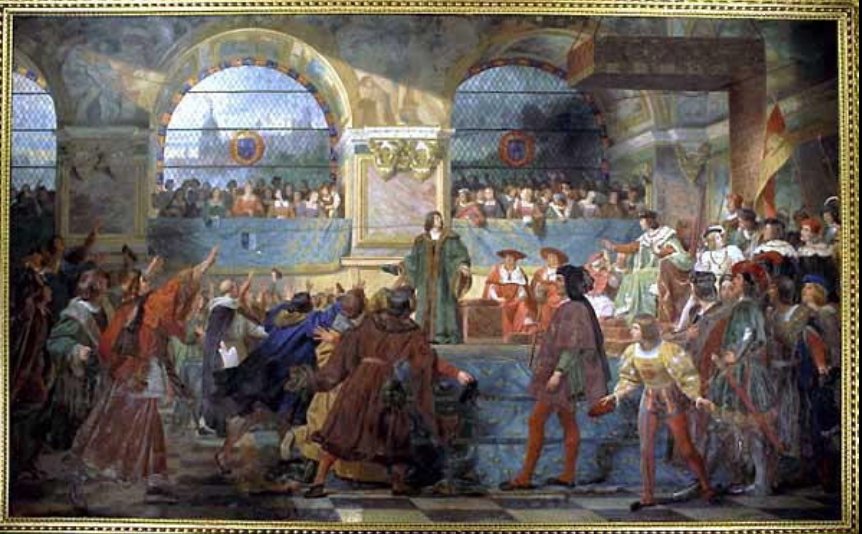 tableau (P.-S.)]
+ two engravings of this meeting : tableau (P.-S.)]
+ two engravings of this meeting :
 1 [LTh&m 1855] 1 [LTh&m 1855]
 2.
The Estates General of 1484 had been convened by the regent Anne de Beaujeu in Tours after the death of Louis XI on August 30, 1483 and during the minority of Charles VIII. Sixteen years earlier, Louis XI had convened in Tours the States General of 1468. These were the only two times this assembly met in the city of Martin. 2.
The Estates General of 1484 had been convened by the regent Anne de Beaujeu in Tours after the death of Louis XI on August 30, 1483 and during the minority of Charles VIII. Sixteen years earlier, Louis XI had convened in Tours the States General of 1468. These were the only two times this assembly met in the city of Martin.
|
Early in 1501,
Louis XII, successor to Charles VIII on the throne of France and in bed with Anne of Brittany, secretly decided to marry his daughter Claude to François d'Angoulême, a cousin (in the 4th degree) who had become Duke of Valois and his future successor Francois I, against the advice of Anne of Brittany, who planned to unite him with Charles of Habsburg. His illness, in 1505, precipitated things. The assembly of notables met in Tours to cancel the Treaty of Blois, which had promised Claude of France to Charles of Austria, and "beg" the king to marry Claude to Francis. On the occasion of the betrothal, all the notabilities of France are gathered in Tours to attend the blessing of the powerful cardinal of Amboise. "General processions took place for eight consecutive days and rejoicings of all kinds (tournaments, bonfires, etc.) worthily celebrated this event which ensured the integrity and independence of the territory of France" [Giraudet, 1873].

The double queen Anne of Brittany first wife of King Charles VIII and then wife of King Louis XII, in application of the agreement signed at her first marriage. At left, her portrait, in front of an illuminated book, by Jean Bourdichon ["The Great Hours of Anne of Brittany", BnF]
+ from the same Bourdichon  miniature of Louis XII and his patron saints (without Martin...).
On the right, she attends the engagement of 12-year-old François d'Angoulême, the future François I, and Claude de France, age 7, daughter of Louis XII, on March 21, 1506 at the castle of Plessis lès Tours [Jean d'Auton, Chroniques de Louis XII enluminées par Guillaume Leroy, Lyon, c. 1507. BnF]. Present are three cardinals and the mothers, Anne of Brittany on the left (hostile to this union...), with her crown, and Louise of Savoy on the right ; above, crowned, Louis XII. Ten years later, on August 21, 1516, Tours welcomed Francis I in a sumptuous : miniature of Louis XII and his patron saints (without Martin...).
On the right, she attends the engagement of 12-year-old François d'Angoulême, the future François I, and Claude de France, age 7, daughter of Louis XII, on March 21, 1506 at the castle of Plessis lès Tours [Jean d'Auton, Chroniques de Louis XII enluminées par Guillaume Leroy, Lyon, c. 1507. BnF]. Present are three cardinals and the mothers, Anne of Brittany on the left (hostile to this union...), with her crown, and Louise of Savoy on the right ; above, crowned, Louis XII. Ten years later, on August 21, 1516, Tours welcomed Francis I in a sumptuous :  double-page spread by Hervé Chirault and Aude Lévrier ["Secret Guide to Tours and its Surroundings", 2019] double-page spread by Hervé Chirault and Aude Lévrier ["Secret Guide to Tours and its Surroundings", 2019]
Francis I at age 5 and 20 and the death of Francis of Paola [ Nikto -Kline 1987] + the three plates on the saint's life in Touraine :
 1 1
 2 2
 3.
On Francois de Paule, see here-before and here-after. 3.
On Francois de Paule, see here-before and here-after.
|

The Saint Martin Basilica of Hervé, rebuilt in 1180, in the Middle Ages. On the right, excerpt from the view below. 
Gravure by Claes Jansz Visscher 1625, anotated, Eudes Bridge at left [Ta&m 2007]
+ two complements of this map :
 1 1
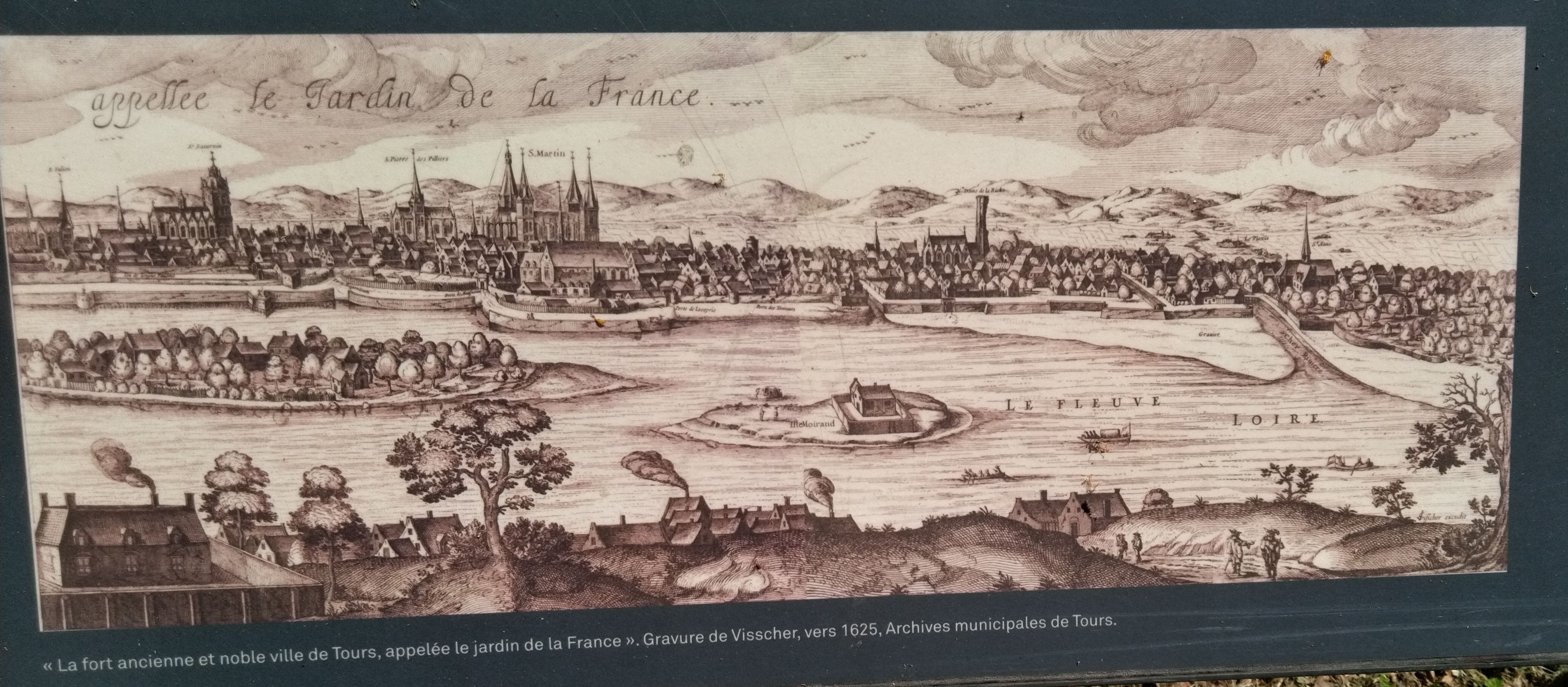 2
+ a 2
+ a  view analog made by Jean Yves Barrier in 1970. view analog made by Jean Yves Barrier in 1970.

The Good City. After 1360, a single enclosure unites Saint Gatien Cathedral (center left) (on its right the Château de Tours, link) and Saint Martin's Basilica (center right) (on its left the church of St. Pierre le Puellier and high bell tower) [engraving by Joris Hoefnagel, "Tours, the garden of France", 1561]
+  variant [Jacques Chereau the Younger, 1688, MBAT]
+ variant [Jacques Chereau the Younger, 1688, MBAT]
+  repeat in a drawing by Joel Tanter, 1986
+ article by Henri Galinié on the merger of the two cities into one [Ta&m 2007]. repeat in a drawing by Joel Tanter, 1986
+ article by Henri Galinié on the merger of the two cities into one [Ta&m 2007].
|
 plan-drawing
 gross shot
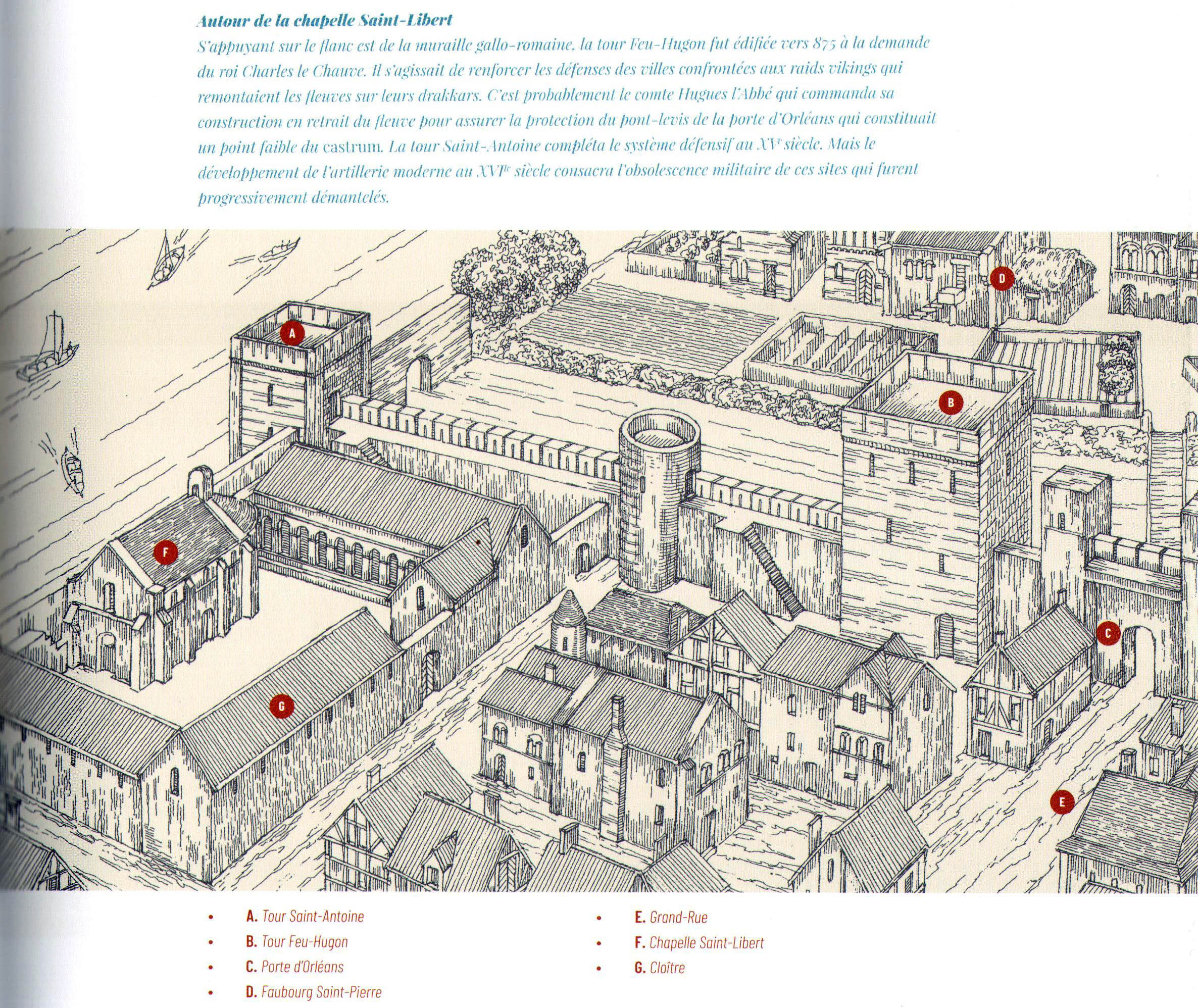 restitution
The Touraine Renaissance. In his "History of Tours" (1985), Bernard Chevalier shows how much the Touraine businessmen and "their cousins who entered the Church," foremost among whom was Guillaume Briçonnet, "acclimated in France the idea of adorning the facade of buildings" in the Italian fashion. "How we wish we could still enjoy these masterpieces ! The facade of the
Hôtel Gouin executed around 1520 for René Gardette and narrowly saved in 1940, that of the hôtel Babou are still there happily to give us an idea."And also the door of the chapter treasurer and the cloister Saint Martin. "After all it is not without reason that the first Renaissance in France can be given as tourangelle." Tours was still a medium-sized city in the kingdom (about 24,000 inhabitants according to Bernard Chevalier, circa 1520), as shown in this  map of the urban framework in 1538 ["Les renaissances", Belin 2013]. In Tours buildings bear the mark of the Renaissance (below +
  plank of Guignolet 1984) and in Touraine, renowned castles were built (+
  plank of Guignolet 1984).


Renaissance buildings in Tours. On the left is the Hôtel Gouin, built by Tours mayor Nicolas Gaudin and his wife Louise Briçonnet, in its current state [Wikipedia].
+ presentation ["Tours, guide de l'étranger", 1844]
+ three engravings :
 1 [Clarey-Martineau 1841] 1 [Clarey-Martineau 1841]
 2 [LTh&m 1855] 2 [LTh&m 1855]
 3 [Robida 1892]
+ in its 3 [Robida 1892]
+ in its  deplorable state of 1940 after the great fire ["La Touraine dans la guerre" C.L.D. La NR 1985].
+ deplorable state of 1940 after the great fire ["La Touraine dans la guerre" C.L.D. La NR 1985].
+ 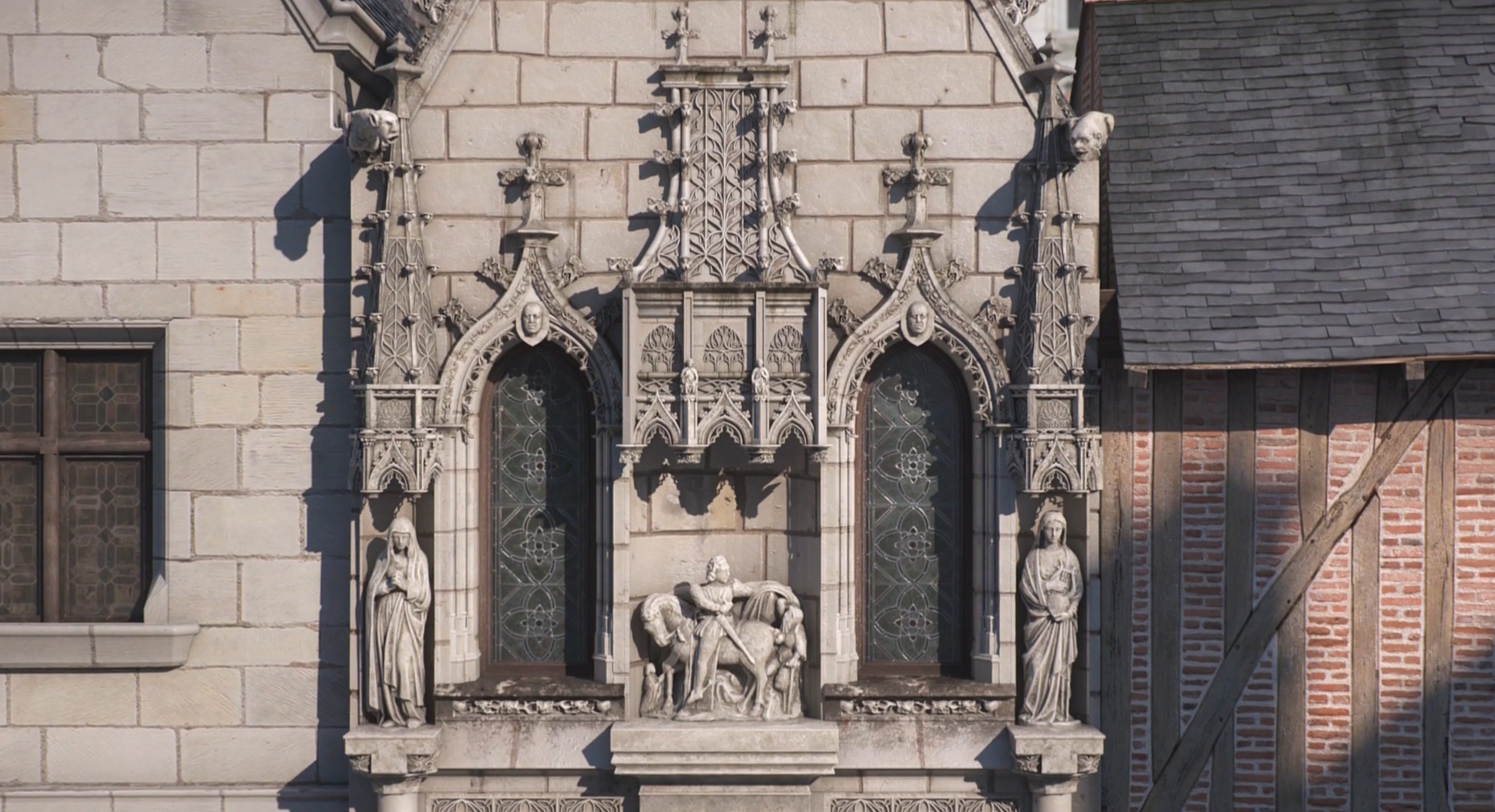 re-creation, with the statues gone, in the ReViSMartin 2020 project.
P.-S. : also the hotel of Guillaume Cottereau, mayor, and his wife Marie Quétier, niece, granddaughter and grandniece of mayors (interior courtyard : re-creation, with the statues gone, in the ReViSMartin 2020 project.
P.-S. : also the hotel of Guillaume Cottereau, mayor, and his wife Marie Quétier, niece, granddaughter and grandniece of mayors (interior courtyard : 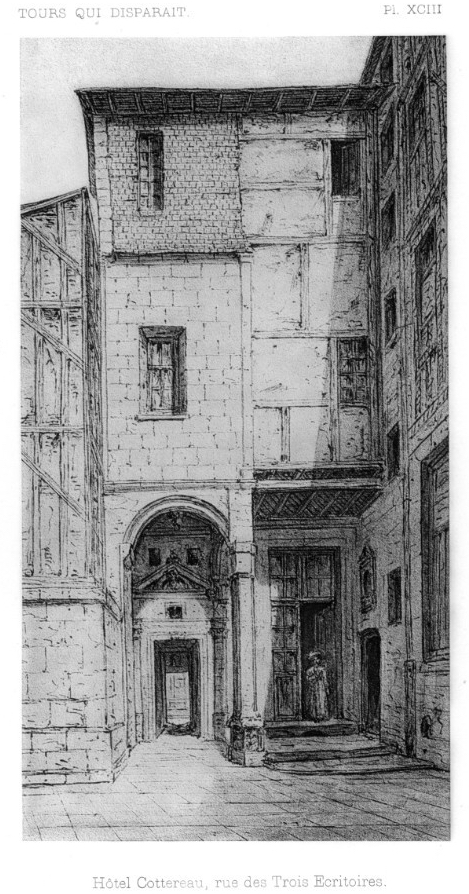 drawing by Gatian de Clérambault 1912 and drawing by Gatian de Clérambault 1912 and 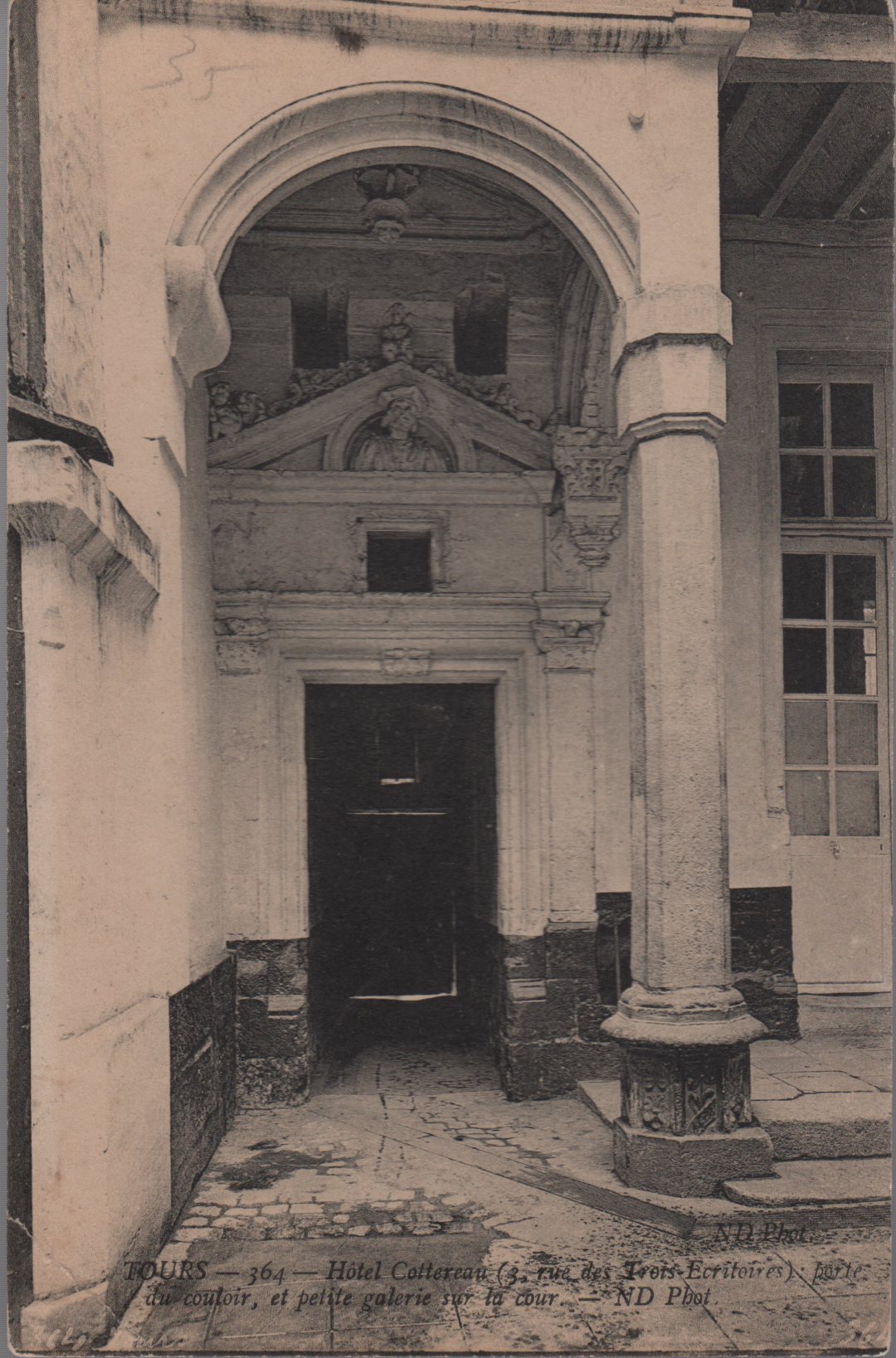 postcard). postcard).
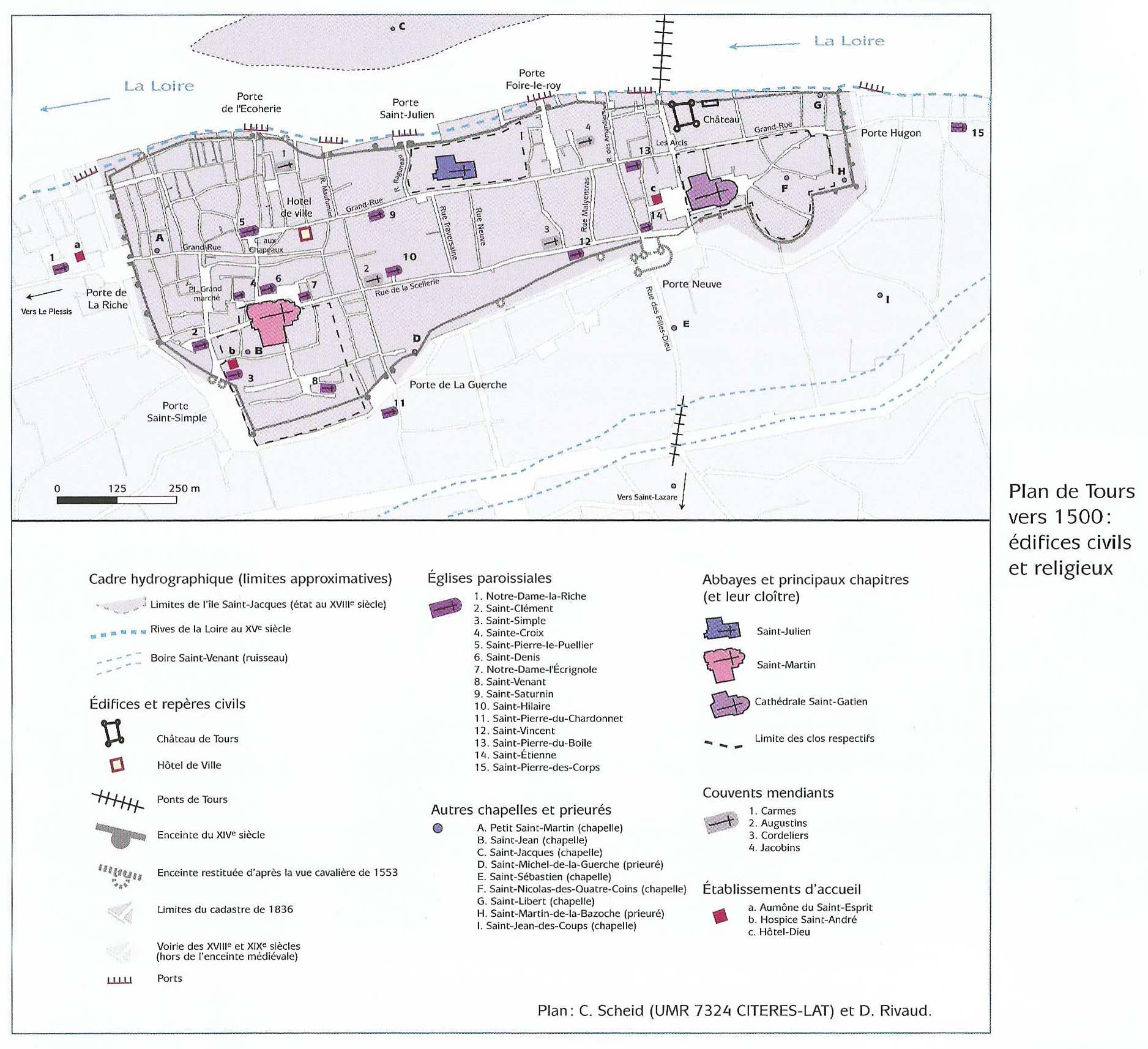 1 civil and religious buildings 1 civil and religious buildings
 2 hotels and housing estates in the Renaissance 1445-1550. 2 hotels and housing estates in the Renaissance 1445-1550.
 photo and its caption speaking of "masterpiece" ["Centre for Advanced Renaissance Studies" in Tours, 1982, site].
About the cloister, see below. photo and its caption speaking of "masterpiece" ["Centre for Advanced Renaissance Studies" in Tours, 1982, site].
About the cloister, see below.
|
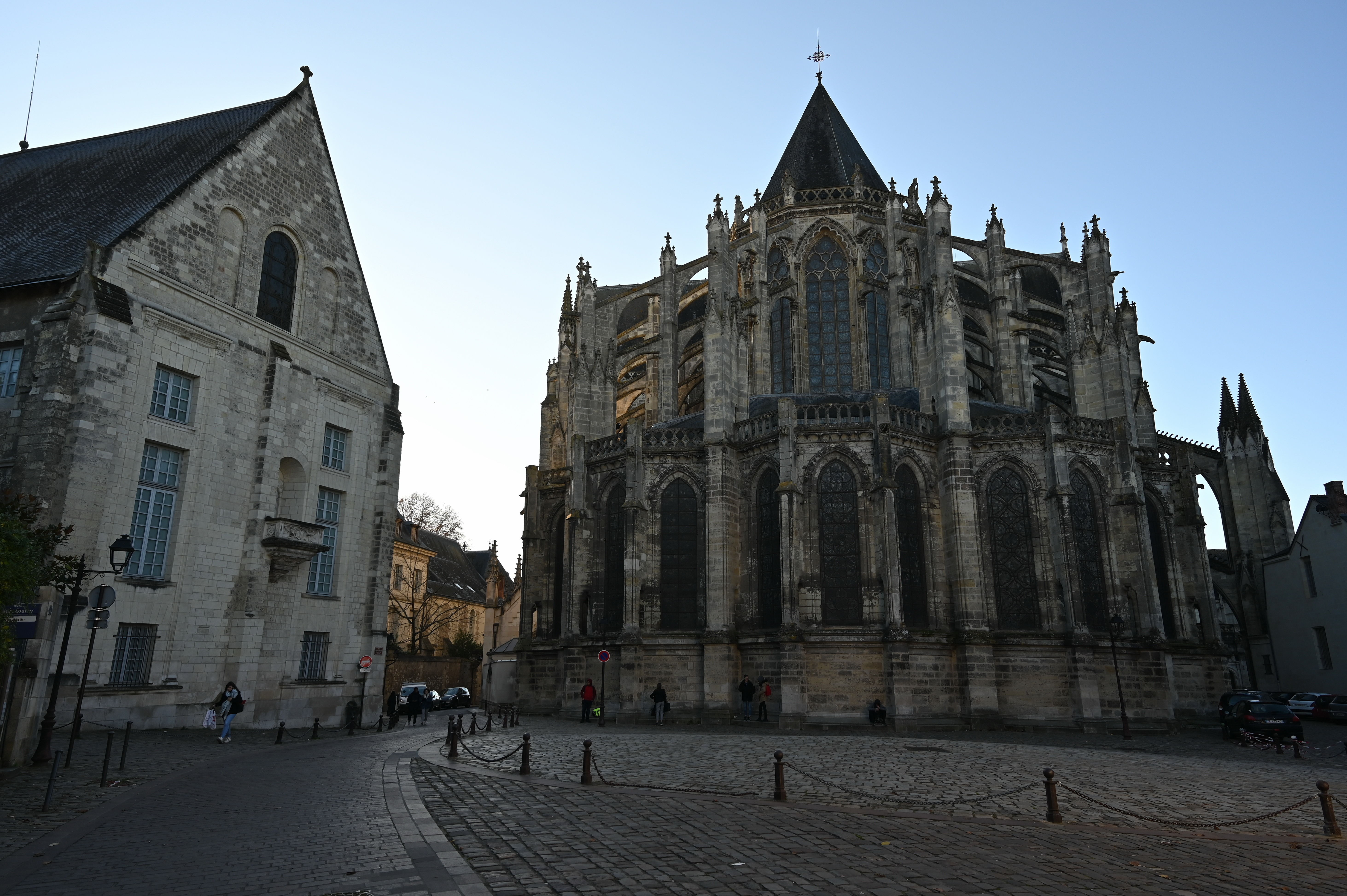 photo
photo plan
plan postcard
 1
1 2
2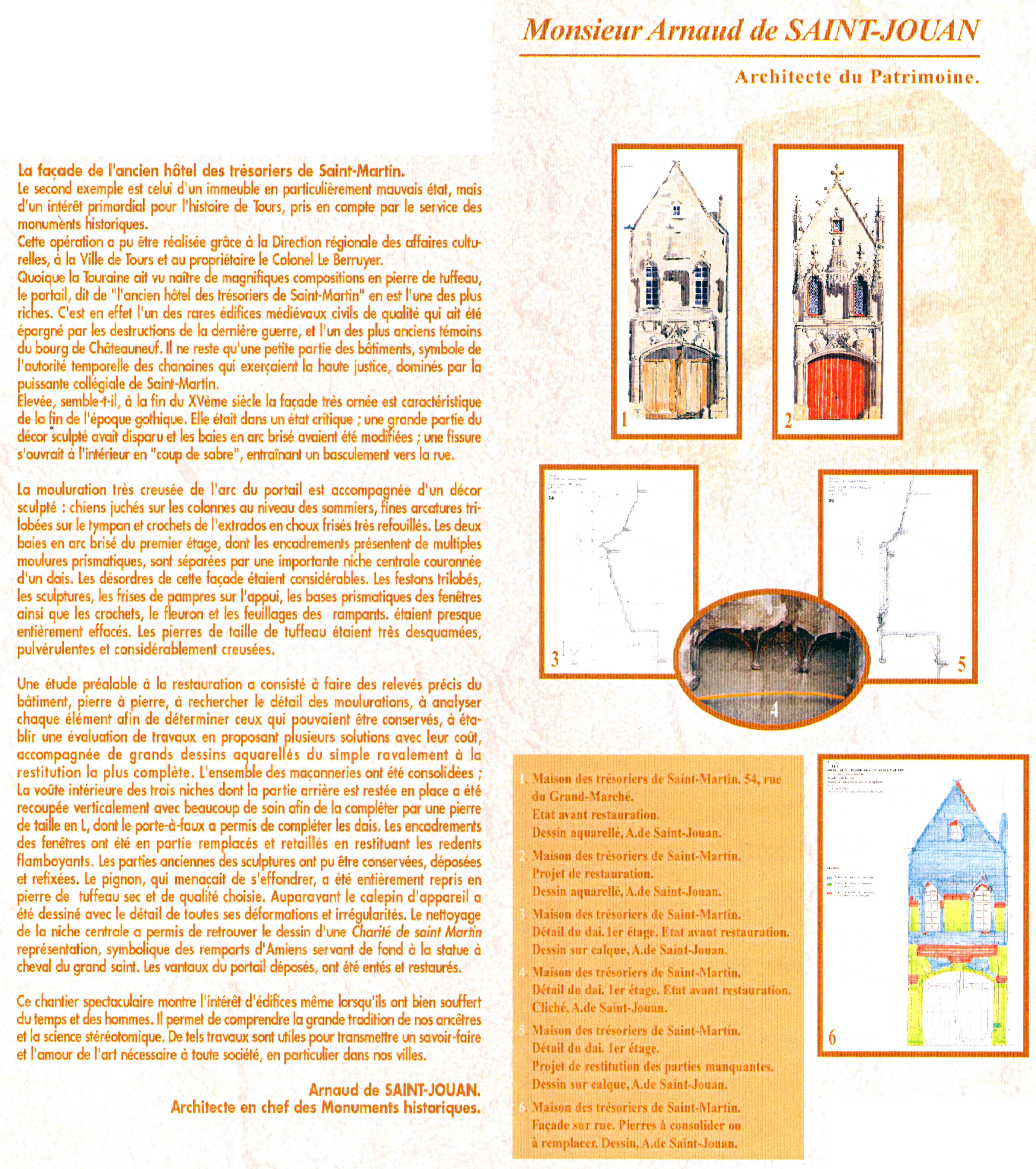 illustrated account
1522, on the orders of François I, soldiers seized the silver grid ! It takes a lot of money to wage war and the fabulous silver grid of Martin's tomb, offered by Louis XI, was too tempting... Albert Robida ["La Touraine" 1892] tells : "Francois I, who was preparing an expedition to Italy, remembered having often admired the solid silver grille surrounding the tomb. What a king had given in a fit of magnificence, a king in days of trouble could take back. The grille was removed manu militari. The monks struggled and locked themselves in, but the archers forced the door open; moreover, the executioner walked behind them to accentuate the constraint. The gate was transmuted into cash, but the money of St. Martin did not bring luck to the king who was going to Pavia, and was taken there in a field that was part of an estate once given to the chapter of St. Martin by Charlemagne. " After his
defeat at Pavia and the long imprisonment that followed, Francis I performed a sort of honorable amends at Tours.
An illustrious Tourangeau hanged on the gallows of Montfaucon ! But the affair of the silver gate had other twists and turns, as Albert Robida recounts: "A part of this money had, moreover, been embezzled in passing by the queen mother[
Louise of Savoy], which led to the loss of the superintendent of finance, Jacques de Beaune-Semblançay, the one Francis I called his father as a sign of special affection, an illustrious Tourangeau[mayor of Tours in 1498]of whom there remains as a memory in the city of Tours a portion of his hotel on rue Saint-François, and a charming fountain on place du Grand-Marché[presented at the end of the previous chapter]. Semblançay perished victim of Louise de Savoie accused of concussions, unable to present the receipts justifying that the queen mother had made him steal, he was condemned and ruthlessly led to the Martin de Beaune-Semblançay, had been, in 1519, the first archbishop of Tours appointed by the king (Francis I) by virtue of the concordat of Bologna signed with the pope Leon X.


To the left, Francis I, king from 1515 to 1547, repenting (?) for taking the silver grid [Lobin stained glass window in the present basilica].
Buttes-Chaumont) [engraving Firmin Maillard, link]
+ the same gallows on a 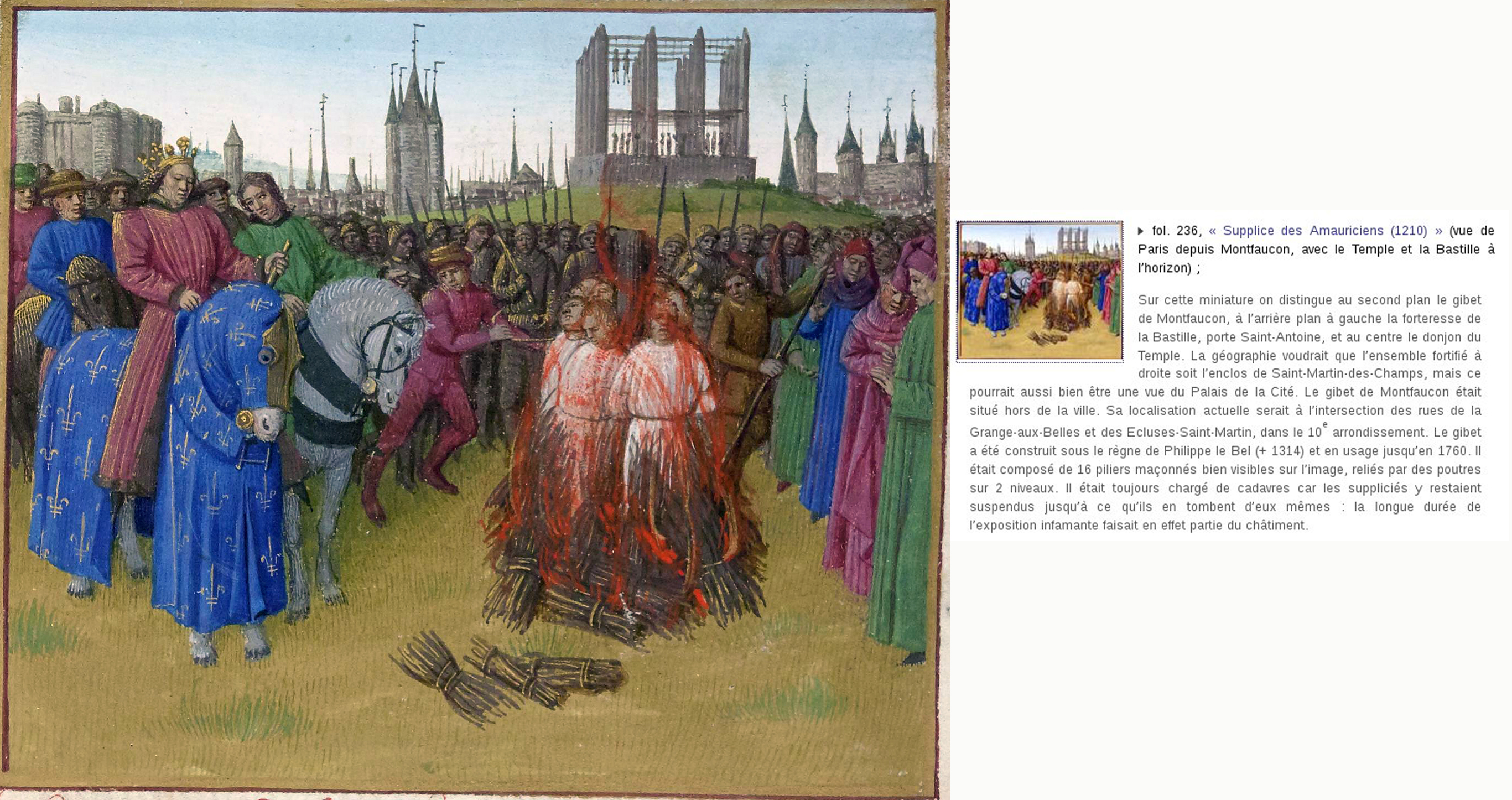 miniature by Jean Fouquet ["Grandes chroniques de France" 1460, BnF, link]. miniature by Jean Fouquet ["Grandes chroniques de France" 1460, BnF, link].
|
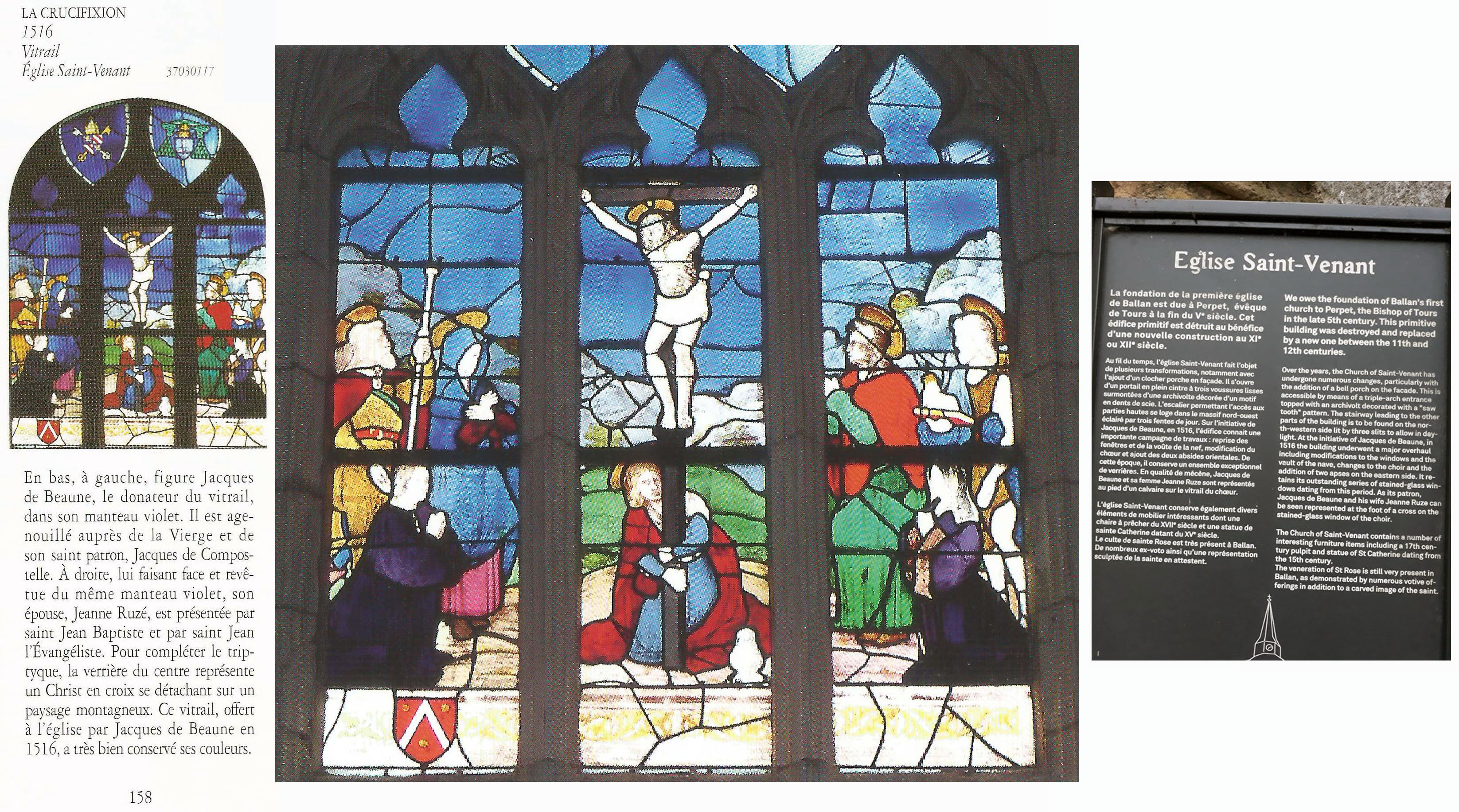 vitrail
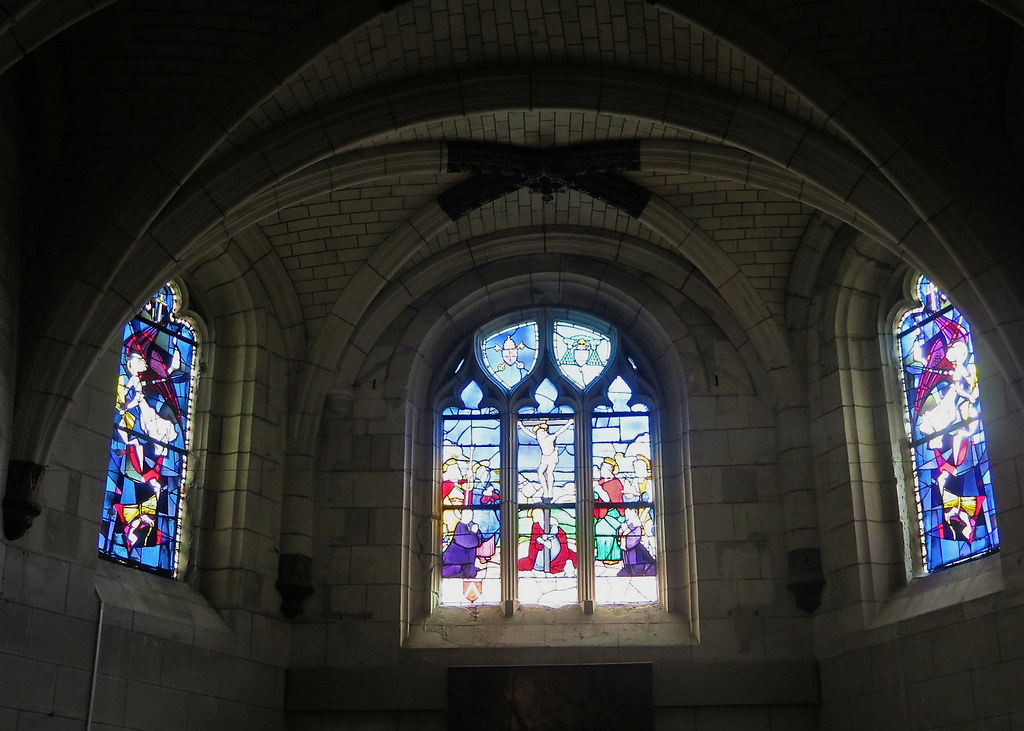 overview
 engraving
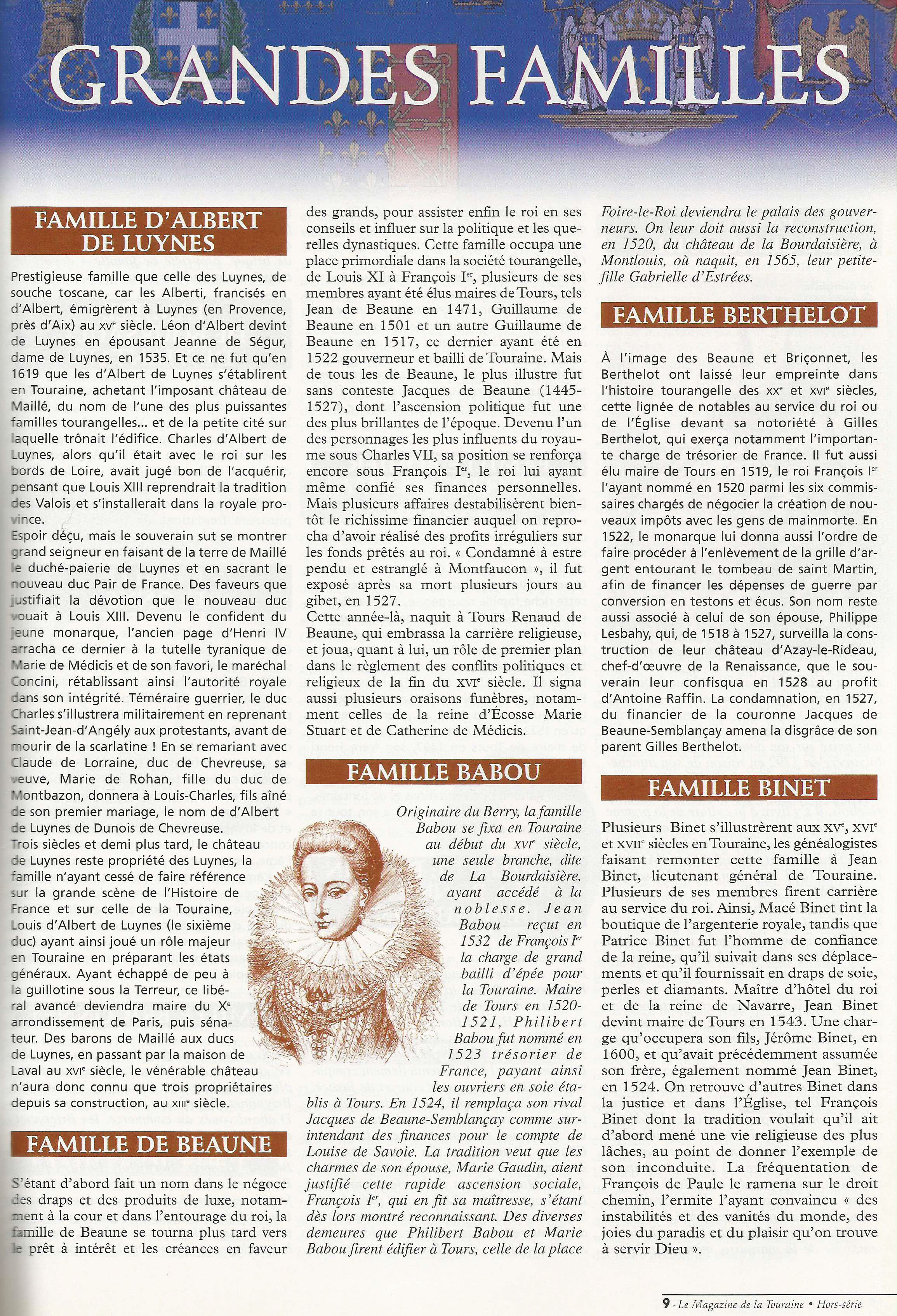 article
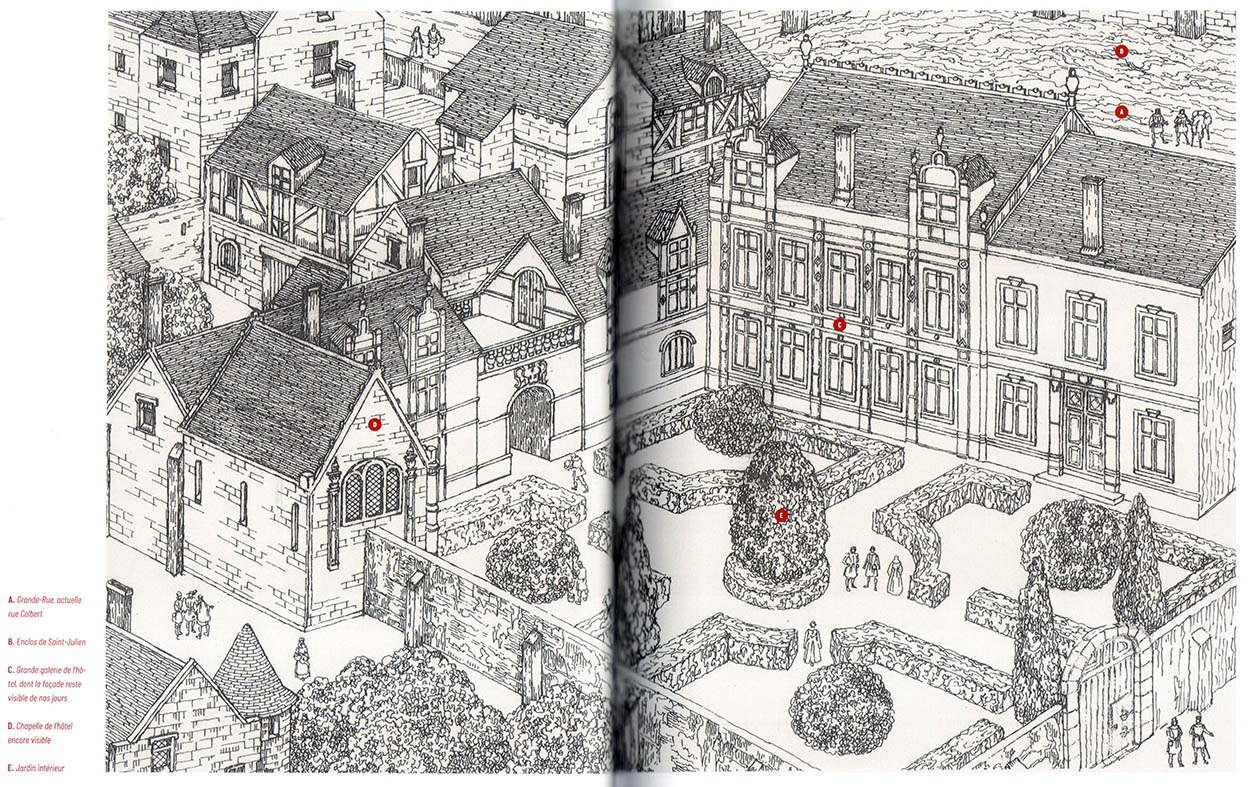 restitution
 engraving
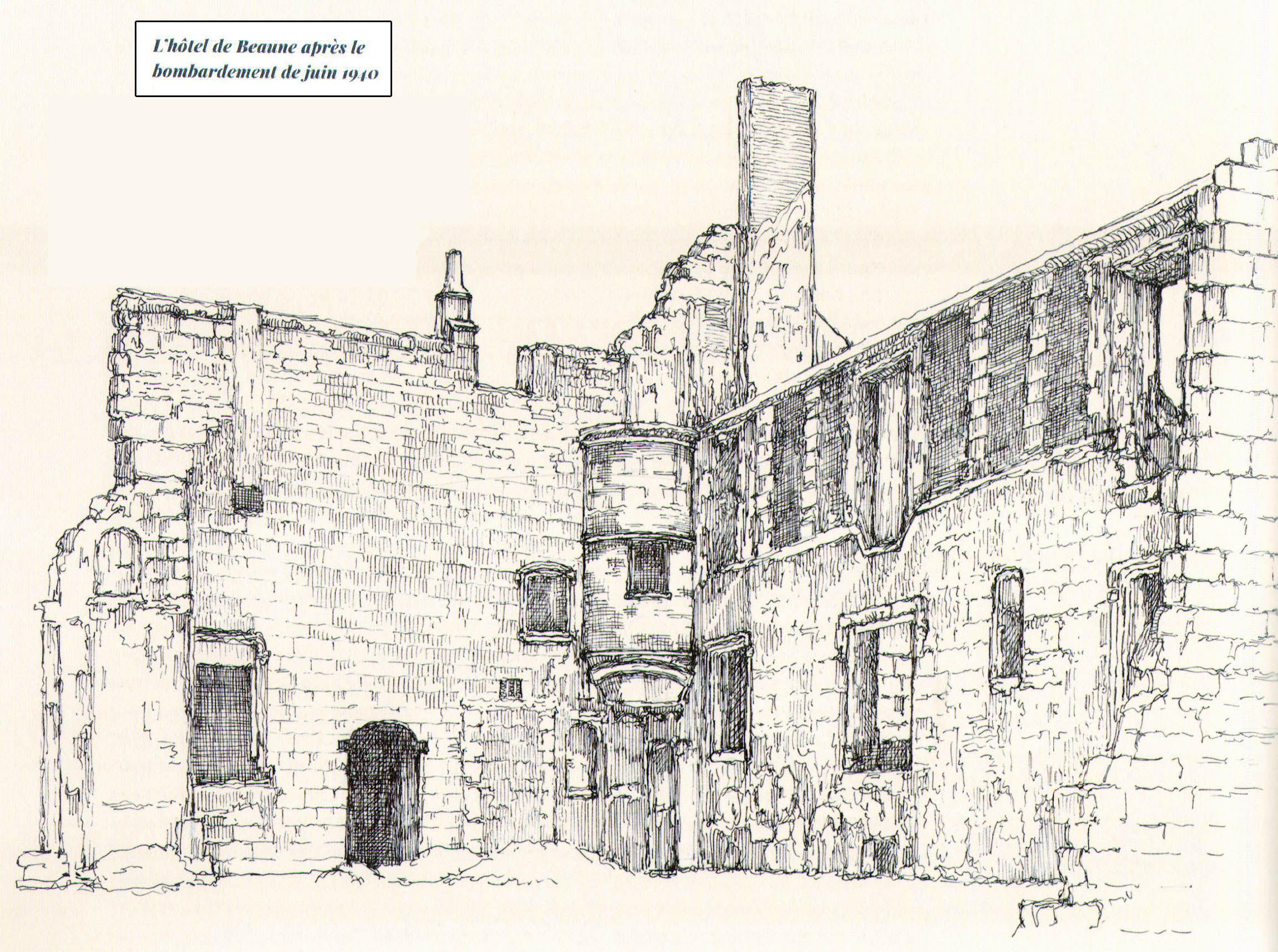 drawing
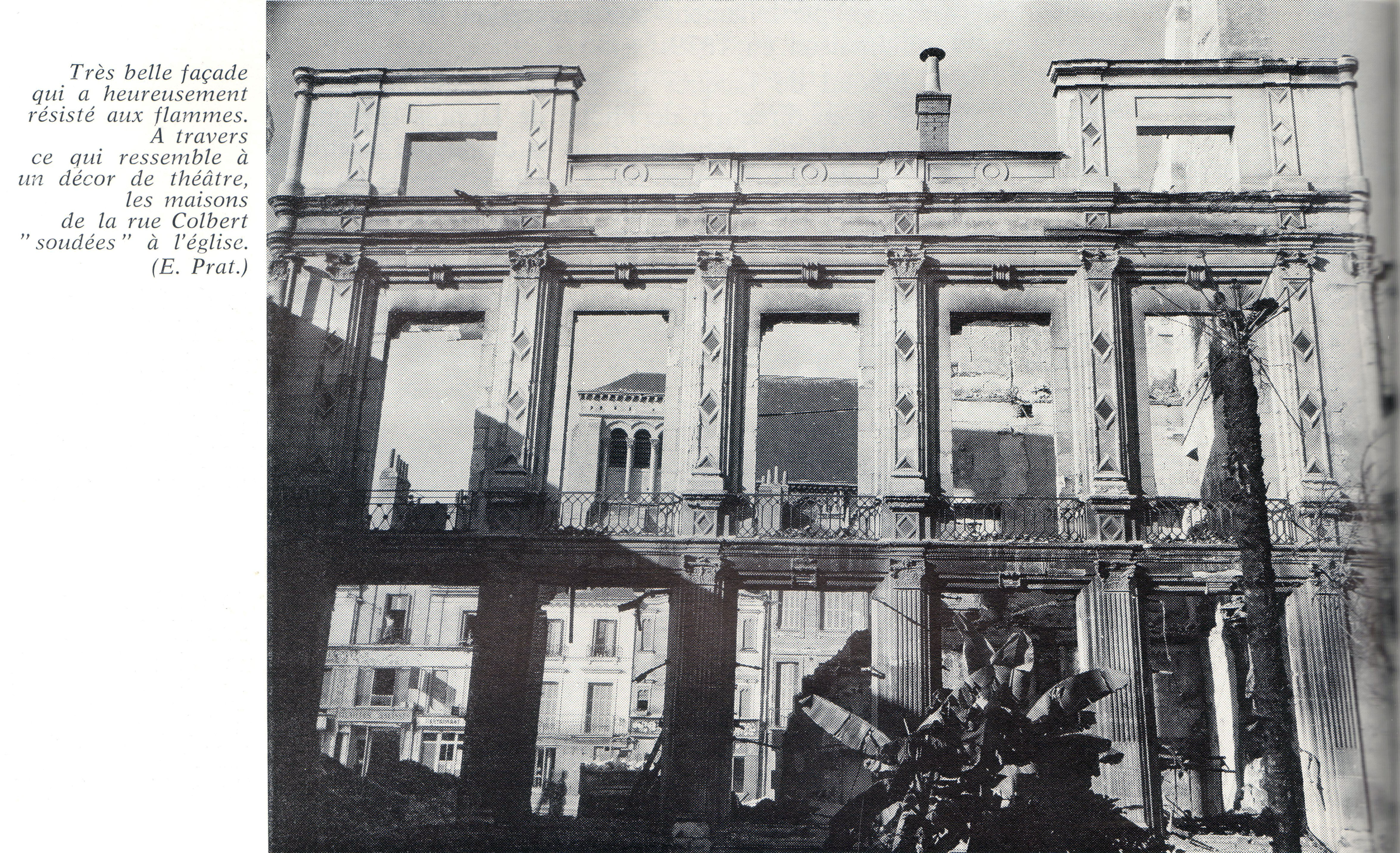 photo
photo photo
photo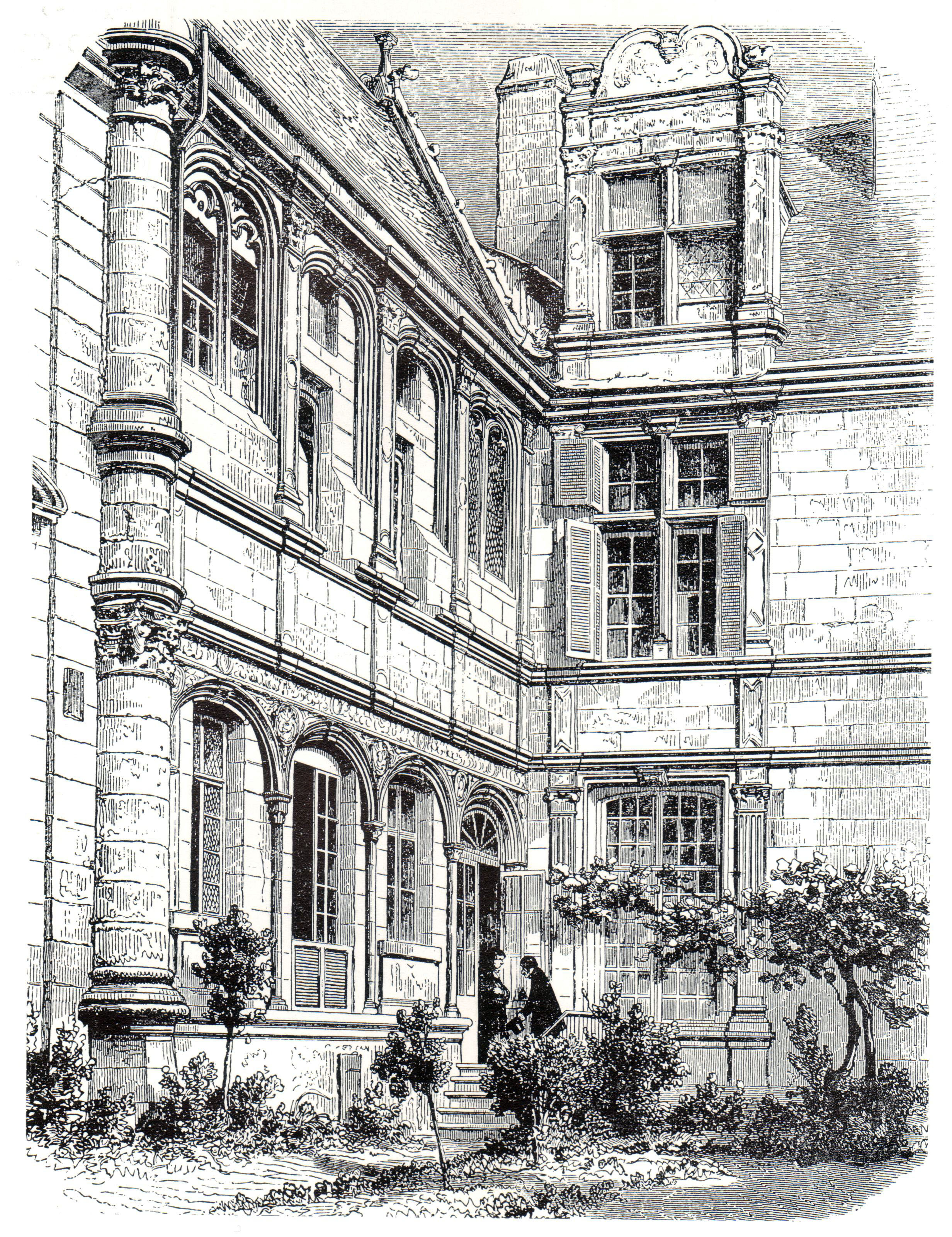 drawing
 photo
photo photo
photo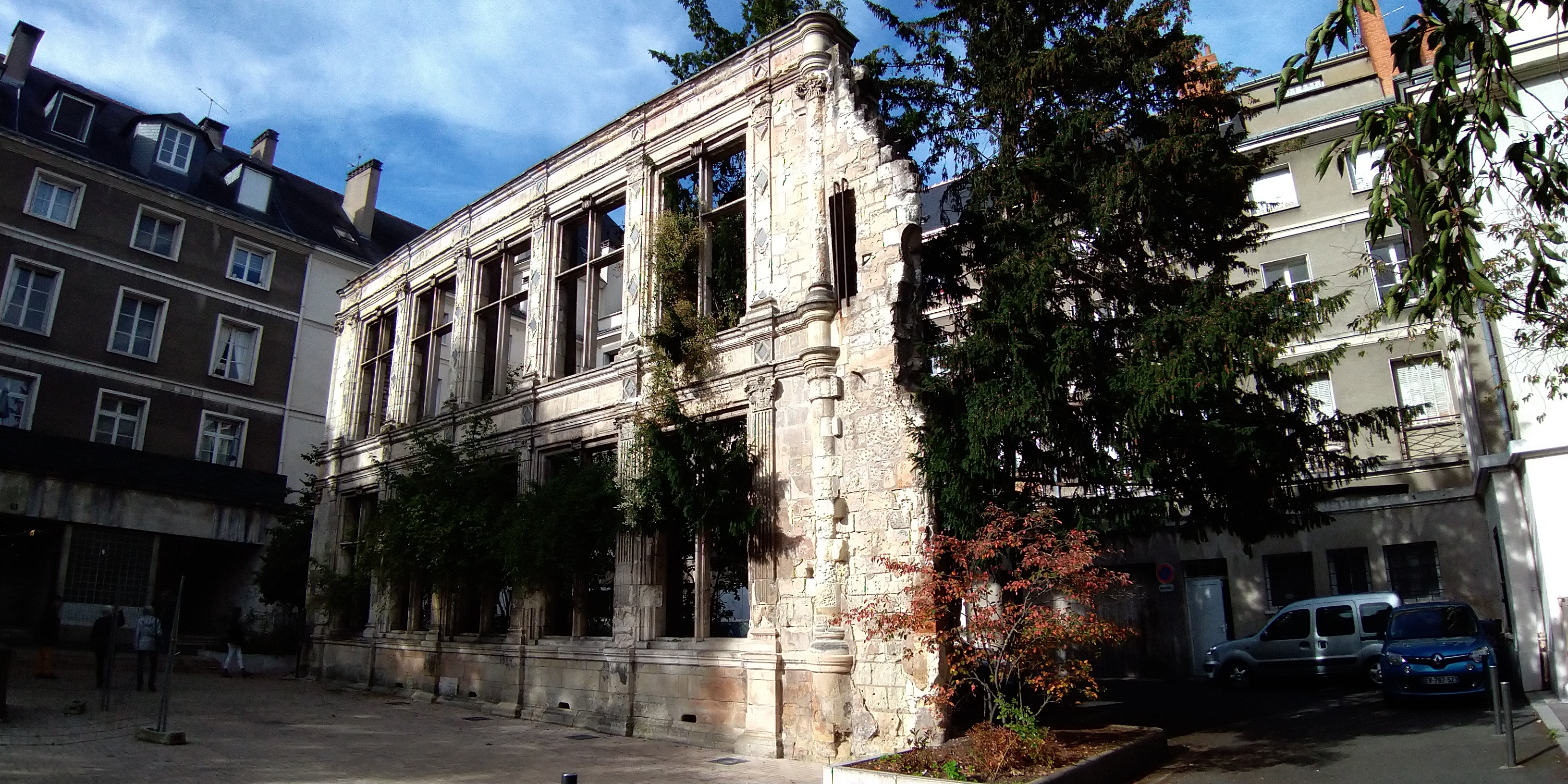 photo
photo photo
photo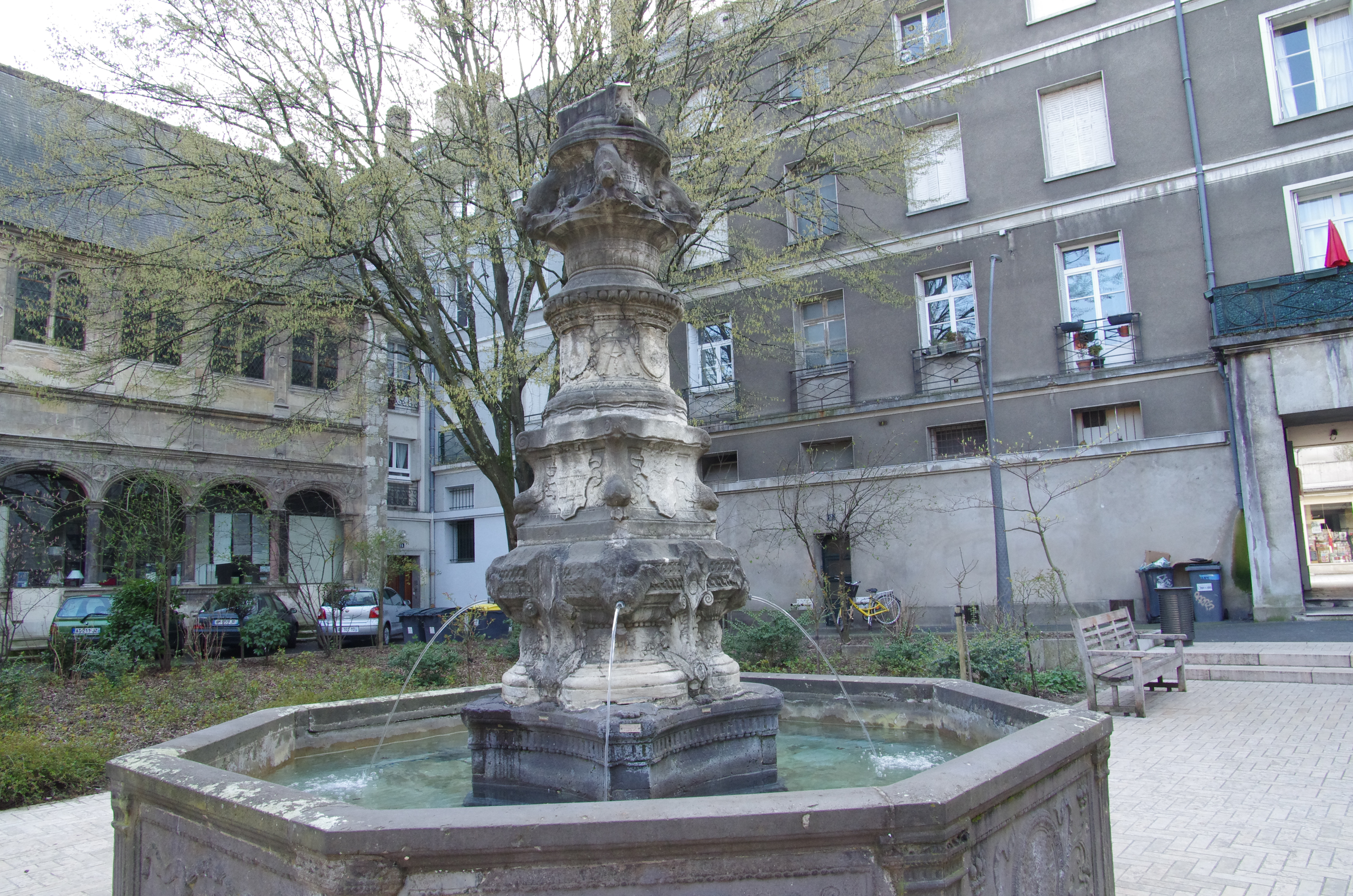 photo
photo1538, the canons of Saint Martin's mobilize against the brigands. Eugène Giraudet in his "History of the city of Tours" (1873), following the Italian campaign of Francis I in 1536-1538 : "This new war demanded sacrifices all the heavier from the inhabitants of the city of Tours, that they had at the same time to suffice for the safety of their city, unceasingly threatened by the undertakings of the bands of plunderers and to the pecuniary requirements of the king, whose treasury was always empty. These adventurers took advantage of the war and repeated the ravages of past times. The town of
Saint Epain and the castle of Montgoger [+  engraving of LTa&m 1845], fallen into their power, secretly solicited the intervention of the city corps of Tours this appeal succeeded two companies of harquebusiers and artillerymen went in haste in pursuit of these "unliving people" and drove them back into Poitou, after a struggle of little importance. On their return from this expedition, these companies received the congratulations of the échevins a reward of 30 sols was given to the sergeant Martin Bresche and a sum of 10 livres to the treasurer of Saint Martin (Claude de Longvy), who had kindly lent the canons' artillery."
Francis I: a bad king? Yes.... In interrogative form,
Frank Ferrand asks the question in a book and then article in L'Express in 2015 and answers it rather positively. Locally for the city of Tours and Touraine, there is no doubt, his reign was very bad, we have just seen the reasons. But the following period, although less involving his successors, was even more tragic... Before tackling it, let us pause to evaluate the important ecclesiastical heritage of Tours, from the year 1000 to the Revolution, and what remains of it.
Martin himself created links between Tours, Marmoutier, then a monastery, and the churches of Touraine. Over the centuries, these links were transformed and developed, with subordinate links generating conflicts and independence, and then eventual rapprochements. While approaching an overview of the satellite religious communities, we will present those which were closest to Tours and which were among the richest at certain times. We will begin with Saint Martin de Tours and Marmoutier, which often lived in harmony, sometimes in conflict, especially in the eleventh century for the priory of Saint Cosme, as will be explained in the next chapter. The two establishments were also in conflict with the archbishop of Tours and his clergy, in a very prolonged way over several centuries for Saint Martin (here in several of the following chapters), in a shorter but very acute way for Marmoutier, see two chapters later the arrival of Pope Urban II in 1096.
The landed wealth of the Saint Martin chapter. In the
study "The Canons of Saint-Martin of Tours and the Vikings"), Hélène Noizet estimates that Martin's body left the basilica from 871 to 877 and not 885 as commonly believed. She shows that the canons were able to take advantage of the situation to acquire important properties in Eastern France in order to protect the shrine in case of new invasions. This represented about a quarter of the abbey's land. They kept this property until the Revolution. Since Charlemagne, the chapter also owned important real estate in Germany, Belgium and Italy. At the end of the 13th century, they were still numerous in Italy. There were even some in Egypt, in Alexandria. In addition, there were bonds of brotherhood between the Martinian religious communities.
The possessions of the abbey of Saint Martin de Tours in the tenth century in the middle Loire and in eastern France. Hélène Noizet has made an in-depth study of the possessions of the abbey of Saint Martin de Tours in the ninth and tenth centuries, most of which were preserved until the Revolution. She shows that "the San Martin economic space was set up as a network of possessions articulated according to the river axes, particularly the Loire and its tributaries such as the Vienne. The integration of this network of
villae into the Loire hydrographic system is particularly striking: we have tried to understand the functioning of the landed system of Saint-Martin in relation to the Loire system, which has led us to ask the question of the chapter's supply. Thus, it seems to us that the canons had maintained direct, not indirect, contact with their possessions," unlike other great abbeys such as Saint Germain des Prés. "The Tourange canons thus remained close to the ideal of autarky."
Four articles by Hélène Noizet, from 2001 and 2008 :
1
2
3
4
+ link. Also available is the article by Philippe Depreux 2005 titled "The prebend of the ecolatrix and the management of the property of Saint-Martin of Tours in the ninth century" ; extract : "Saint-Martin of Tours offers a magnificent example of a seigniory spread over large parts of the Carolingian empire (thus, one of the first favors granted by Charlemagne after the conquest of the Lombard kingdom was, in July 774, the donation to Saint-Martin of Tours of fiscal property on Lake Garda)" +  article by Hélène Noizet "The provisioning of the Saint Martin Monastery" [Ta&m 2007].
 
Maps from Hélène Noizet's study cited above, showing the possessions of the Saint Martin chapter in Touraine and eastern France. There was also Saint Yrieix in the Limousin, Moutier-Roseille in the Marche (article)... And in Tours even Saint Venant, Saint Pierre le Puellier, Saint Eloi.
+  expanded map of the "possessions of St. Martin in the Loire watershed in the xth century." expanded map of the "possessions of St. Martin in the Loire watershed in the xth century."
|
St. Martin's Black Sign. In 1793, the revolutionaries burned the chapter's library. Irreparable loss, containing three main
cartulars, collections of charters, titles, deeds, named black (pre-1132), red and white pancards. Scholars tried to reconstitute them, at best. Thus, Emile Mabille, in 1866, wrote the book "La pancarte noire de Saint Martin de Tours, brûlée en 1793, restituée d'après les textes imprimés et manuscrits", 238 pages in the Gallica scan. Example (page 150) :"March 30, 1096. Bull of Pope Urban II, which appeases the existing dispute between the canons of Saint-Martin and the religious of Cormery. He orders that, according to the canonical decrees, the abbots
of Cormery will come to take the pastoral staff at the tomb of Saint-Martin, with the consent and by express permission of the dean and canons."
In the following chapters, we will return to the wealth of Saint Martin's Chapter, particularly on these three occasions :
1 its treasurers,
2 its deans,
3 his opulence. This one knew several strong annoyances, until the last one, during the revolution. If a new basilica returned almost a century later, the abbey and its chapter ended there their long history.
Marmoutier Abbey 2/3, created by Martin in 372 (see Marmoutier 1/3), was first a monastery, an appendix of the Saint Martin de Tours Abbey until 982, geographically located on the caves where Martin had lived. The history of these caves is complex due to the lack of ancient descriptions, to the many changes due to landslides and reconstructions, and to the addition of more or less true legends. If one can credit the accuracy of the designation of the cave of the rest of Saint Martin, as we have seen,
one cannot believe in those of the cave of Saint Gatien (cf. first chapter) and that of the seven sleepers (box below) and one doubts that Saint Brice and Saint Patrick spent many nights in the caves with their name.


The troglodytic habitat of Martin and his followers. On the left, cross-section in the fourth century [Lelong 1989]. In the center, drawing of the caves in 1749 [Honoré Cassas, MBAT]
+ (P.-S.) 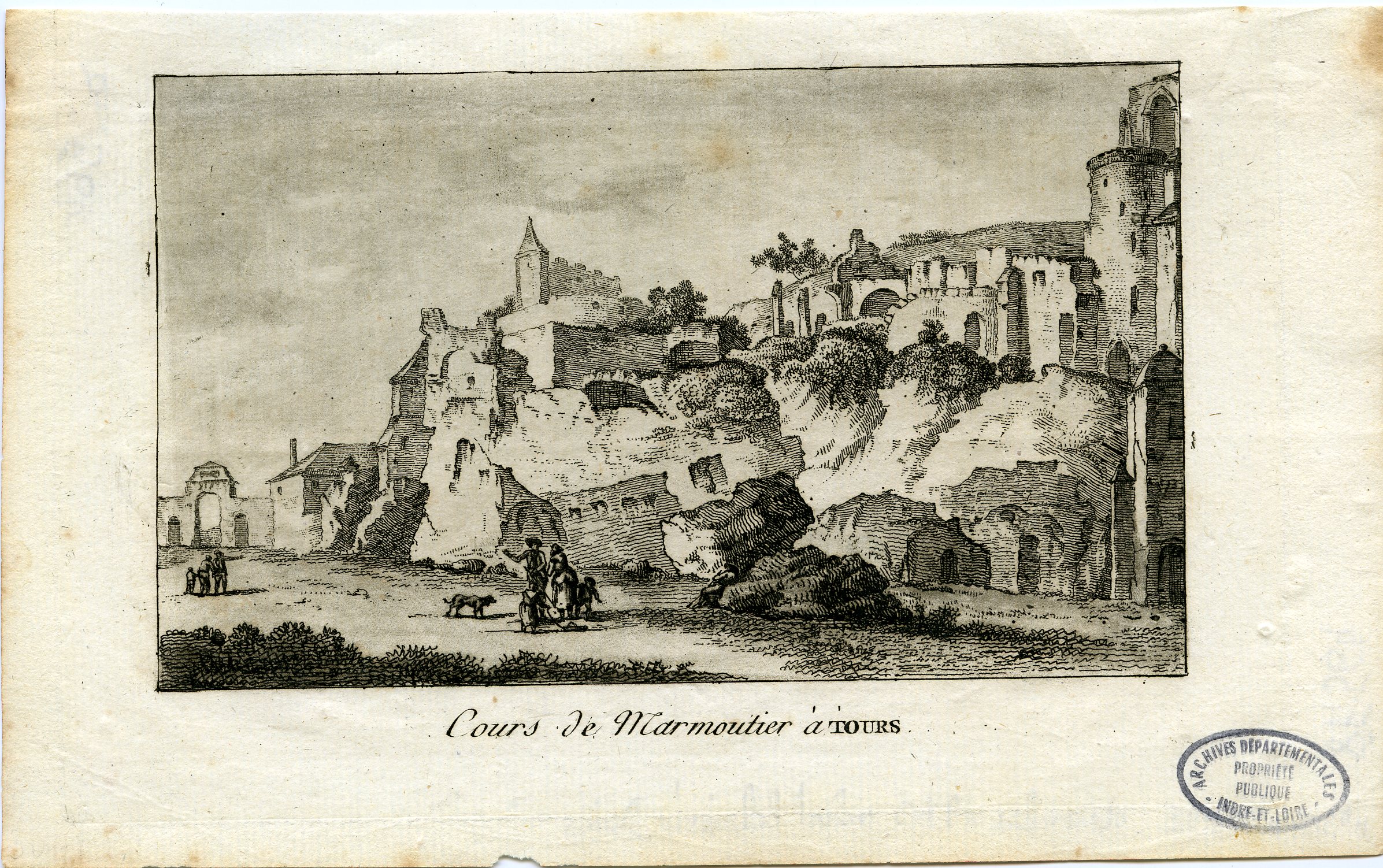 drawing 19th century [archives dep. 37].
On the right, the "miraculous fountain dug by Saint Martin", buried by a landslide in 1985 [explanations Pierre Audin 1997]
+ two postcards : drawing 19th century [archives dep. 37].
On the right, the "miraculous fountain dug by Saint Martin", buried by a landslide in 1985 [explanations Pierre Audin 1997]
+ two postcards :
 1 1
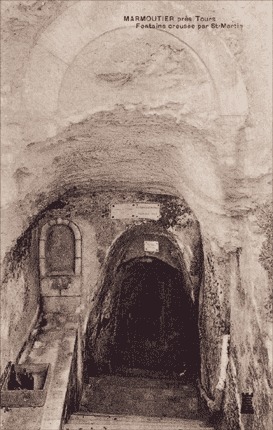 2.
St. Patrick's Grotto / Patrice, 2.
St. Patrick's Grotto / Patrice,  photo.
And photo.
And 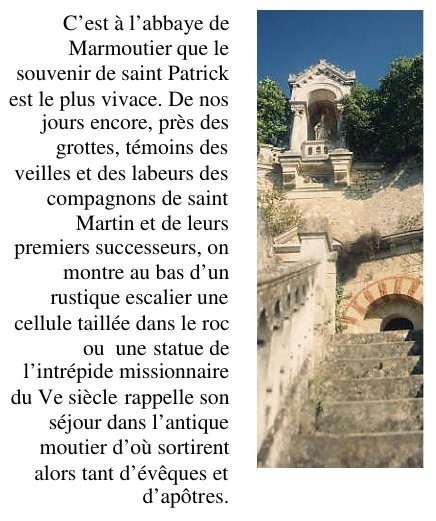 explanations from LM 2006-1.
St. Brice's Grotto next to Martin's, explanations from LM 2006-1.
St. Brice's Grotto next to Martin's, 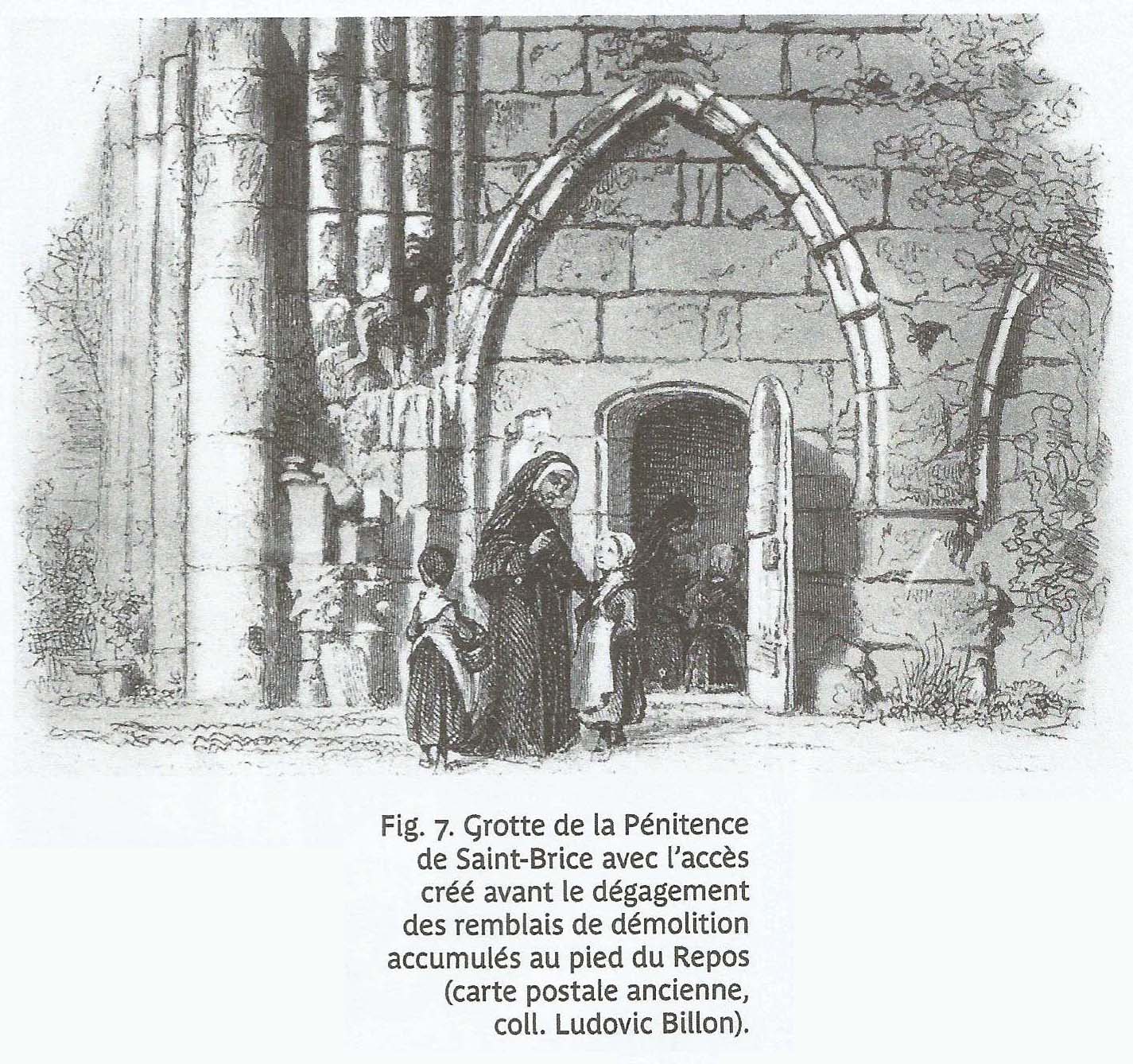 photo [Collective 2019]. photo [Collective 2019].


Furnished caves. At left, the baptistry in 1911 designed by Sabine Baring-Gould (link)
+ 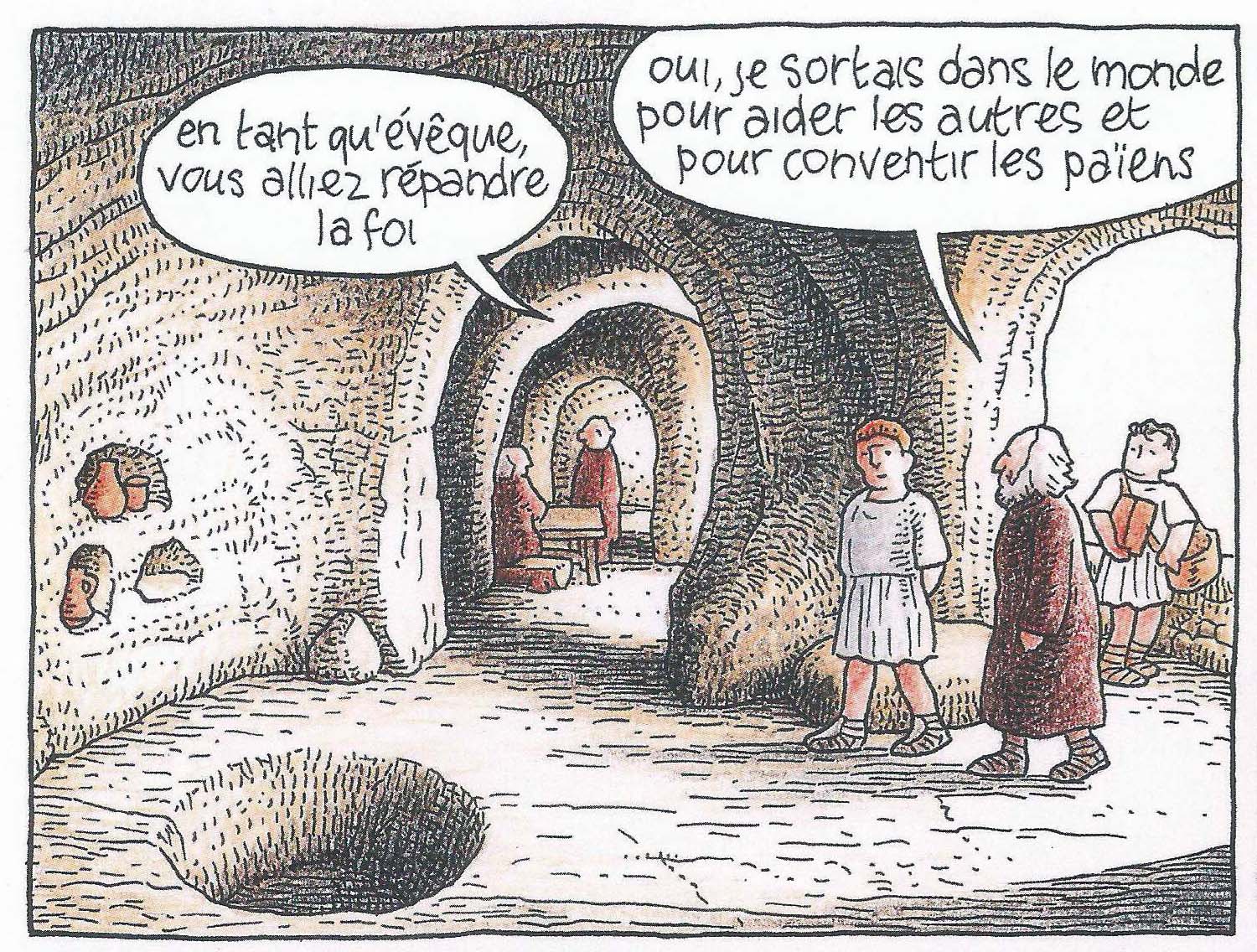 case from BD Utrecht 2016 inspired by this drawing
+ case from BD Utrecht 2016 inspired by this drawing
+ 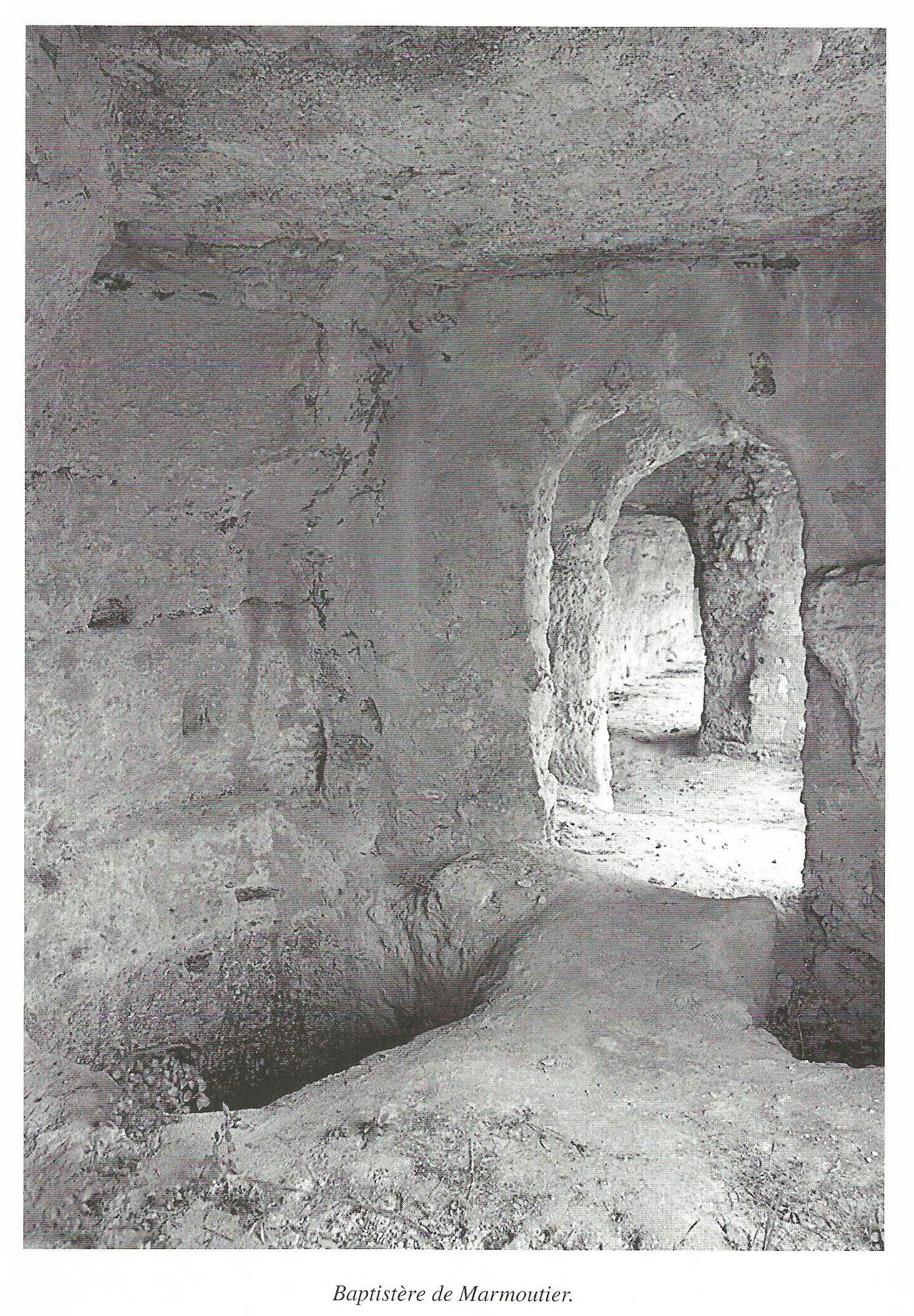 photo [" Saint Martin de Tours, XVI Centenary" 1996]. In the center the caves on a postcard of the early twentieth century (on the right the bell tower)
+ two other cards : photo [" Saint Martin de Tours, XVI Centenary" 1996]. In the center the caves on a postcard of the early twentieth century (on the right the bell tower)
+ two other cards :
 1 1
 2.
On the right, on another postcard, the entrance to the cave-chapel of the seven sleepers (in the background the bell tower)
+ 2.
On the right, on another postcard, the entrance to the cave-chapel of the seven sleepers (in the background the bell tower)
+ 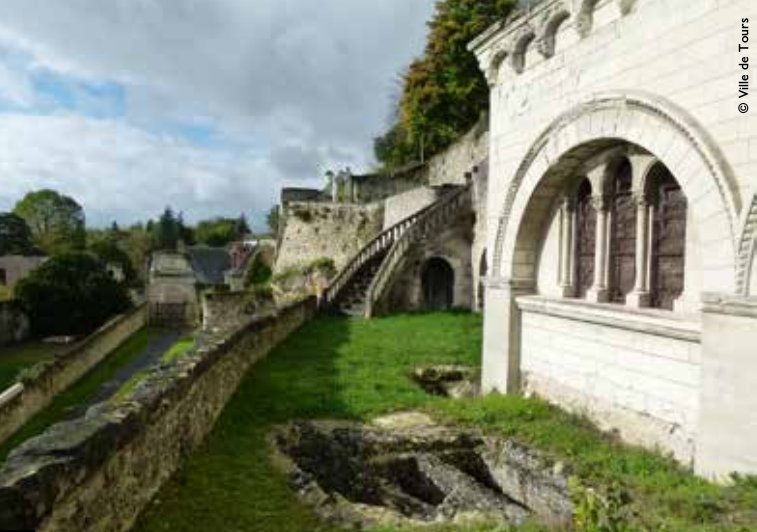 photo 2014 of the terrace. photo 2014 of the terrace.


Marmoutier currently. On the left, the portal of the crosier, with a sculpture in its pediment (+ 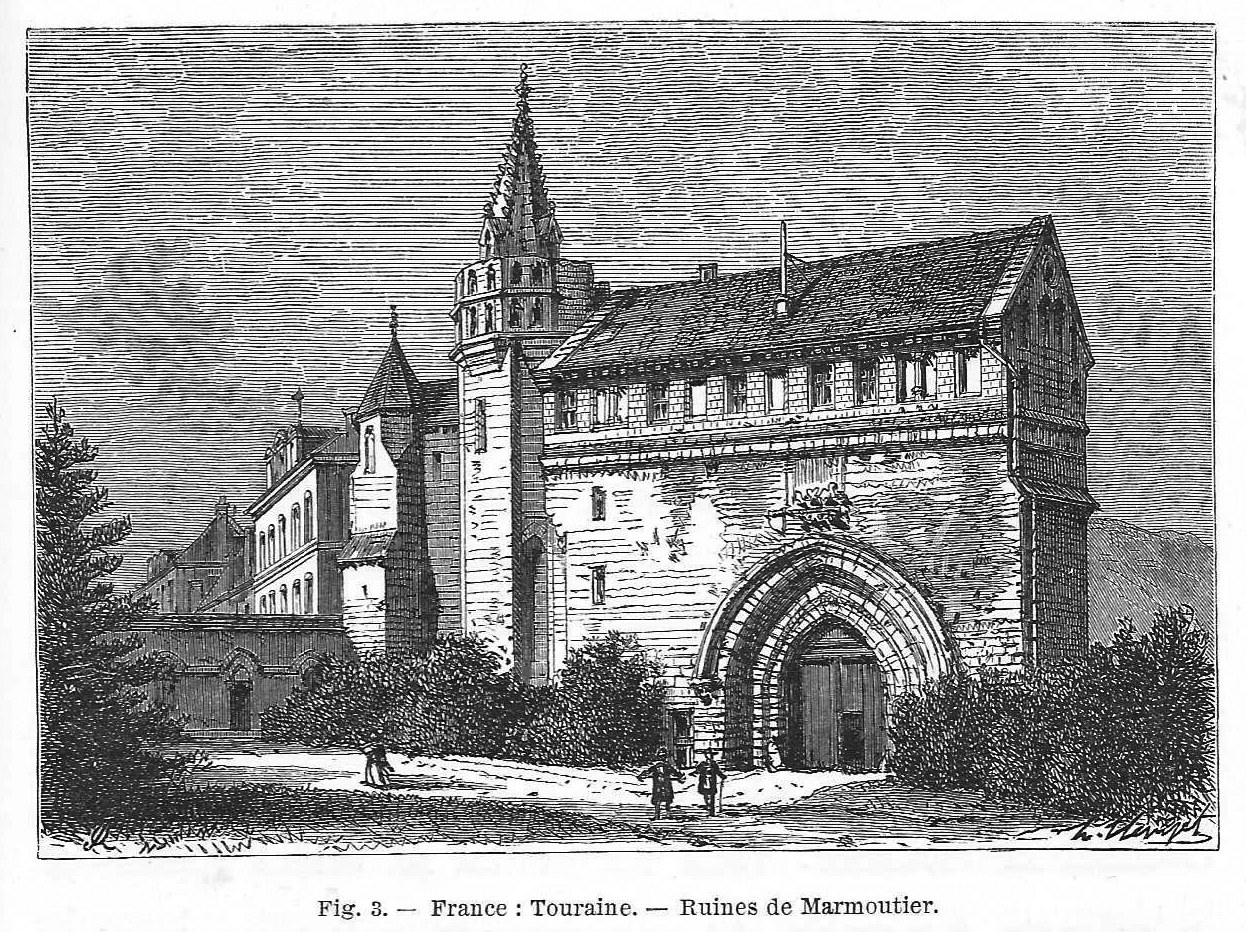 engraving Lecoy 1881
+ engraving Lecoy 1881
+  description by Charles Lelong 1989
+ three postcards : description by Charles Lelong 1989
+ three postcards :
 1 1
 2 2
 3)
+ (P.-S.) 3)
+ (P.-S.) 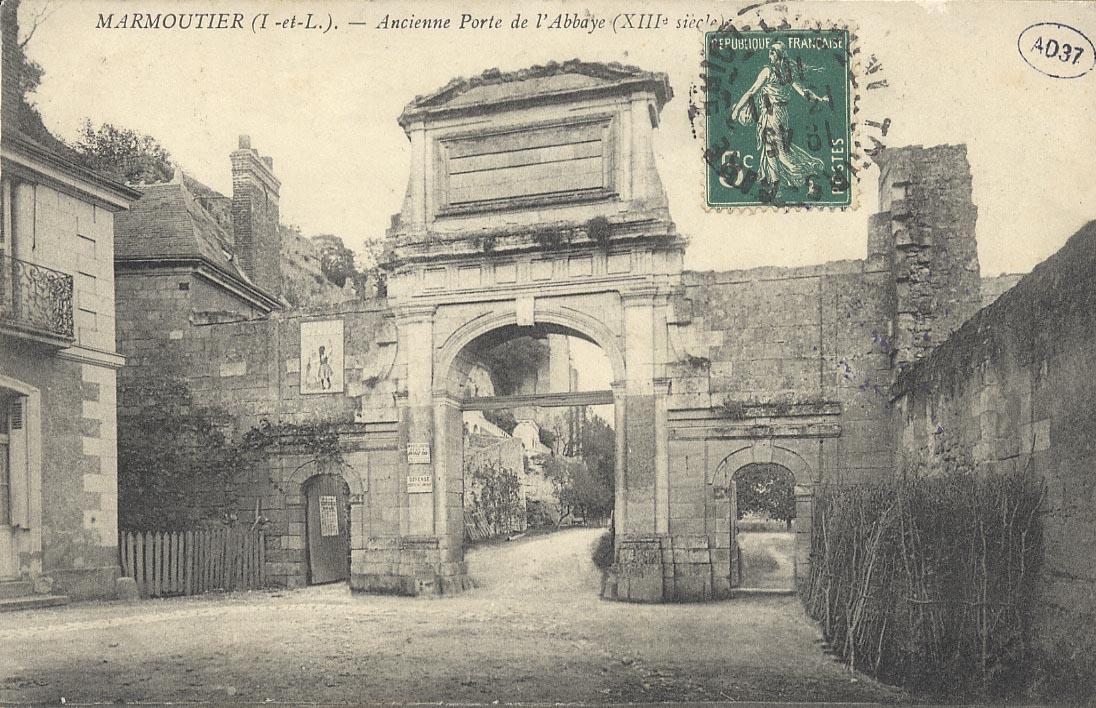 postcard of the old 13th century gate.
In the center, the caves and the bell tower (photos from 2016)
(+ postcard of the old 13th century gate.
In the center, the caves and the bell tower (photos from 2016)
(+  photo of the same location)
On the right, view from above with the crook portal and the private school Marmoutier Institution in the foreground, the caves, the bell tower and the excavation shed of the abbey church in the background.
+ other photo of the same location)
On the right, view from above with the crook portal and the private school Marmoutier Institution in the foreground, the caves, the bell tower and the excavation shed of the abbey church in the background.
+ other  view from the sky [late 20th century postcard]. view from the sky [late 20th century postcard].
municipal 2014 brochure featuring a hike from the basilica to Marmoutier.
|
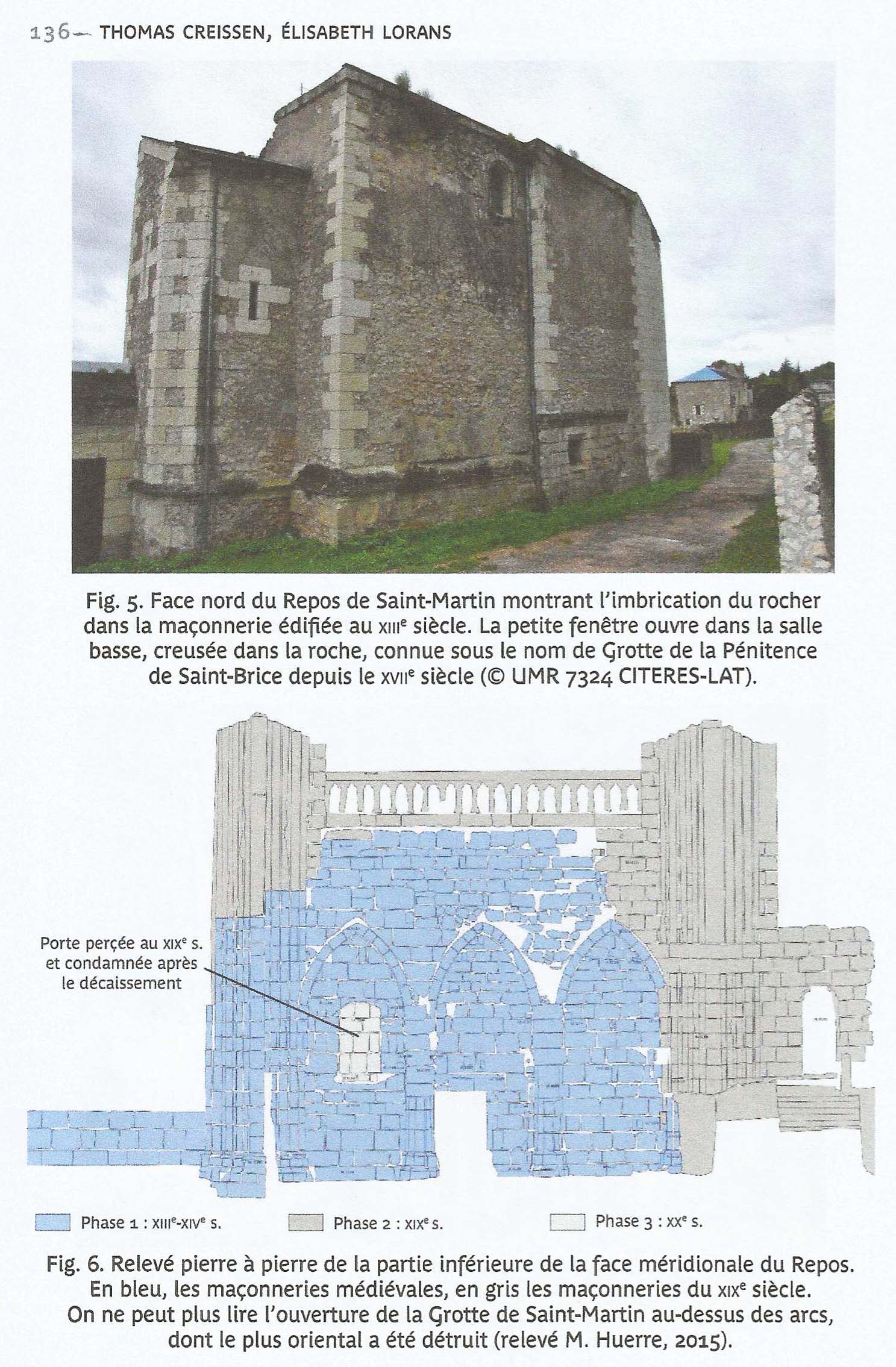 structure
 1
1 2
2 3
3 4
4 5
5 6
6 extract
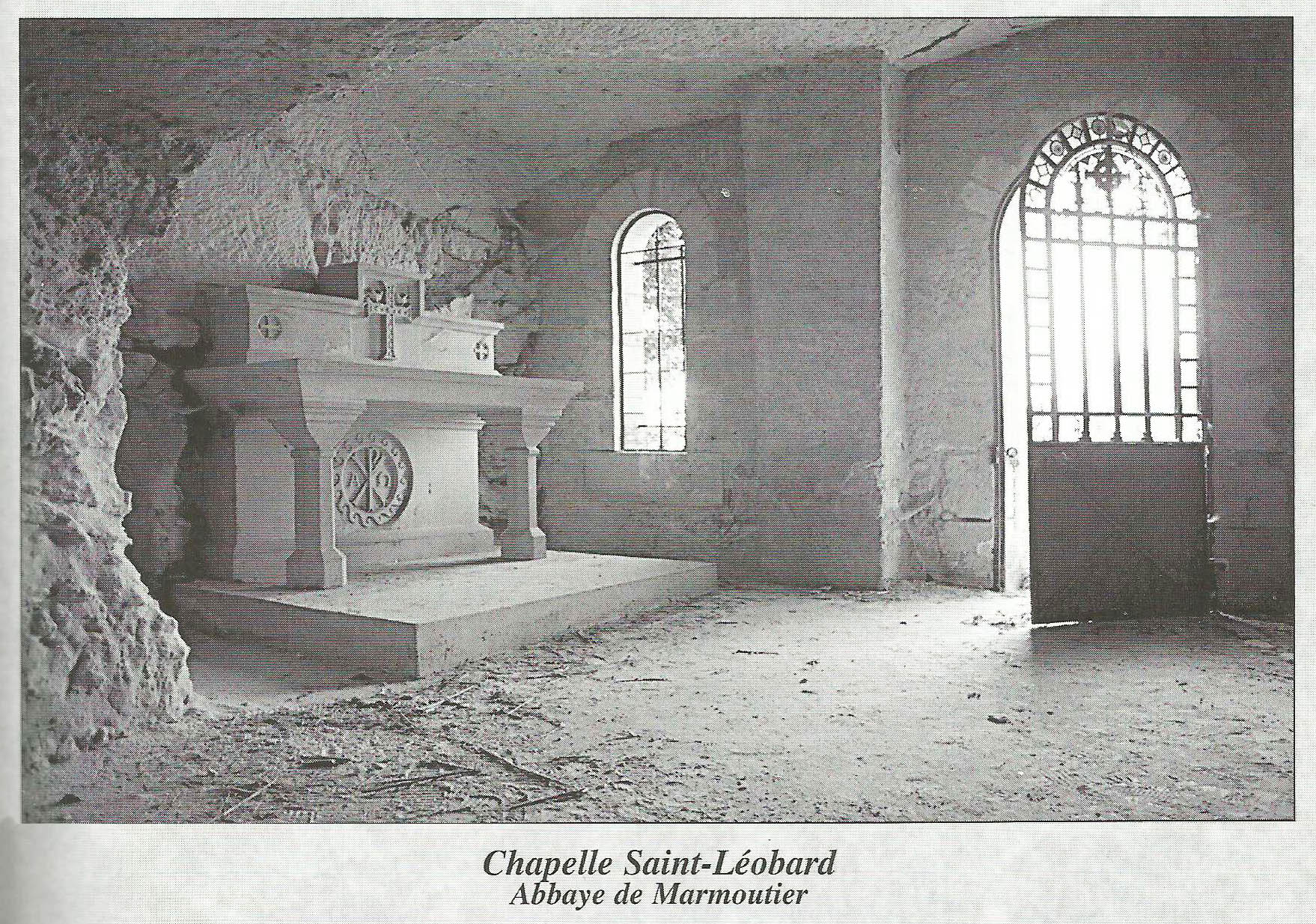 photo
photo
 enlightenment
 1
1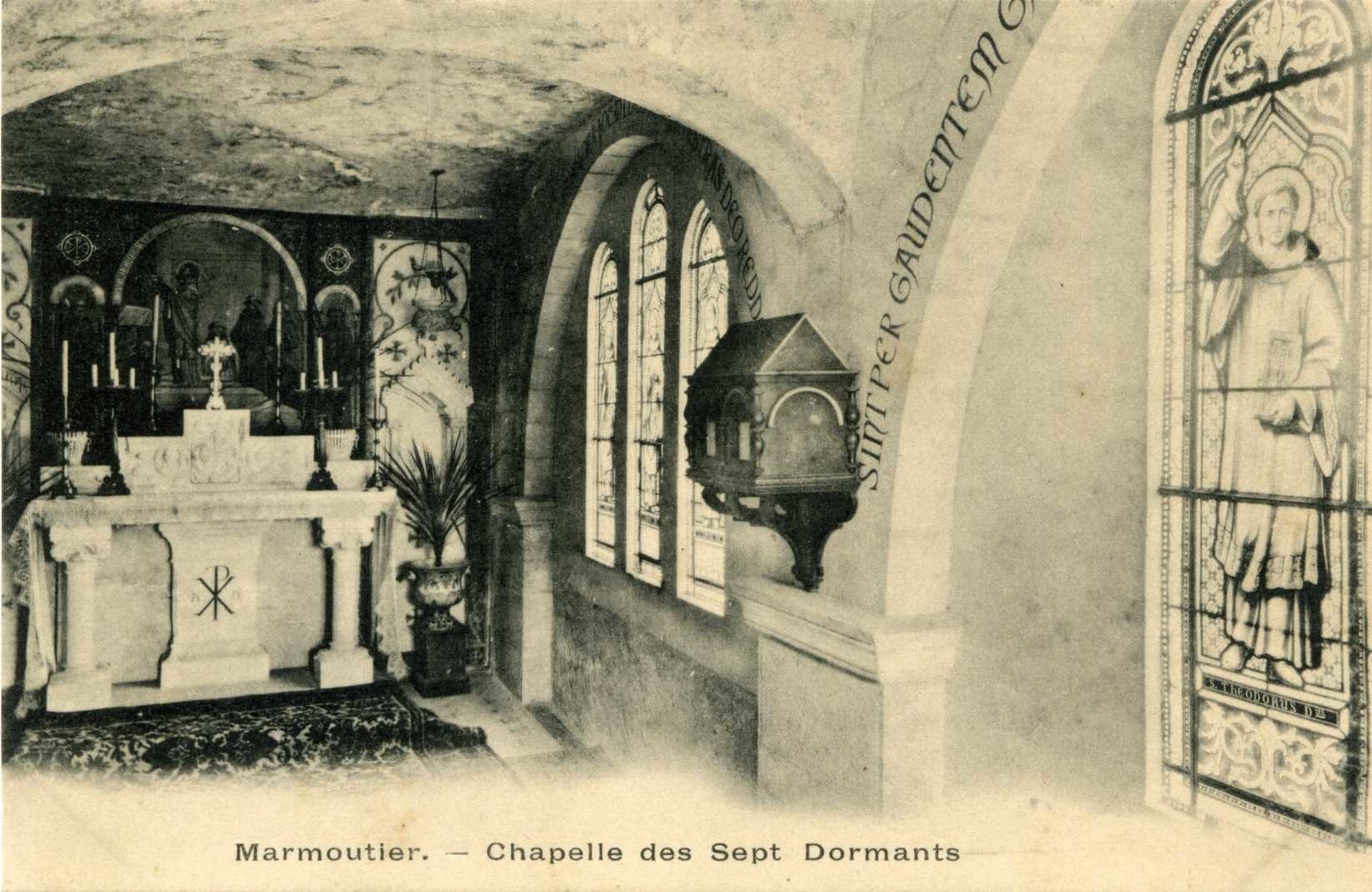 2
2 photo
photo 1
1 2
2 3
3In its early years, and to a lesser degree beyond the year 1000, Marmoutier was a center of religious formation through which many bishops and evangelists passed. We have reviewed those known, first
here in Gaul and there outside Gaul.
The Year One Thousand Impetus In 982, King
Lothaire donated the monastery of Marmoutier to the Count of Blois Eudes I. Adopting the Cluniac order around the year 1000, supported by the Capetians and the Plantagenets, it became independent of the Saint Martin de Tours abbey and spread, creating monasteries and priories north of the Loire, from Brittany to Champagne, also in England and Ireland. In the central Middle Ages, it was prosperous and considered the "Cluny of the West", according to an expression used in 2019 by Bruno Judic. 21 priories were under his dependence in the diocese of Tours. One example is the abbey of Saint Savin sur Gartempe, in the Poitou region near Touraine, established around the year 800 by Baidilus, a palatine cleric at the court of Charlemagne, abbot of Marmoutier. Relying on the discovery of two corpses, he claims that they are the remains of two fifth-century martyrs, Savin and Cyprian, of whom no writings had previously spoken. And their lives as saints are invented to provoke an artificial cult [ extract from the booklet on this abbey, written by Emmanuelle Jeannin, 2017]. In the book "La fabrique de la ville" by Hélène Noizet 2007, one can consult the page titled "Marmoutier and Châteauneuf from the end of the xth century to the middle of the XIIth century".

To the left, the woman-Loire pictured on the Rougemont hillside: her knees, head, one shoulder and two breasts protrude... To the right a model reconstituting, seen from the south, the abbey in its most beautiful expansion,or almost (see below the Gaignières plan).
|
 1
1 2
2 location
 article
 table
tableA luxury that fascinated. After the momentum of the year one thousand and several centuries of prosperity, comes a slow decline and then a revival. Charles Lelong, in his 2000 book "The abbey of Marmoutier, which had sunk into mediocrity, was integrated into the
order of Saint-Maur by Richelieu in 1637 and devotion to St. Martin experienced a brilliant revival."...
as evidenced by Martin Marteau in 1661:
"If we consider the ample and superb abbey of Marmoutier, we shall be forced to confess with truth that it is one of the greatest wonders of the world. Also it is so renowned for its splendor, magnificent buildings, beautiful location and great wealth, that it bears the name of the greatest monastery in France."
Charles Lelong : "On the eve of the revolution, the abbey had great allure, to the point that one came there as much by curiosity as by piety. [...]All were ecstatic at the magnificence of the place." A traveler estimated that "the general ensemble offered rather the aspect of a palace than of a monastery". The  list of the priories and dependencies of the abbey is impressive (link).
A luxury that irritated. Bastien Chérault, in
Collective 2019 shows us the other side of the coin : "At the time of the Revolution, for the population of Touraine, the abbey was part of this infinite number of convents of men of different orders who were very rich
[see for example the page of presentation of Jules-Paul de Lionne, appointed abbot of Marmoutier in 1665].
Their revenues were even used for purposes quite contrary to those for which they were intended. Accounts, often anticlerical, evoke the eccentric lifestyle of the monks of Marmoutier, their tables are sumptuously served, they play cards and billiards. Thus the Benedictines of Marmoutier were, in the eyes of the Revolution, like all the French clergy, and in the same way as the absolute State, in the field of sumptuous and privileged orders. The subsistence crises of the late 1780s amplify this negative vision." Arrives the Revolution, the community disappears (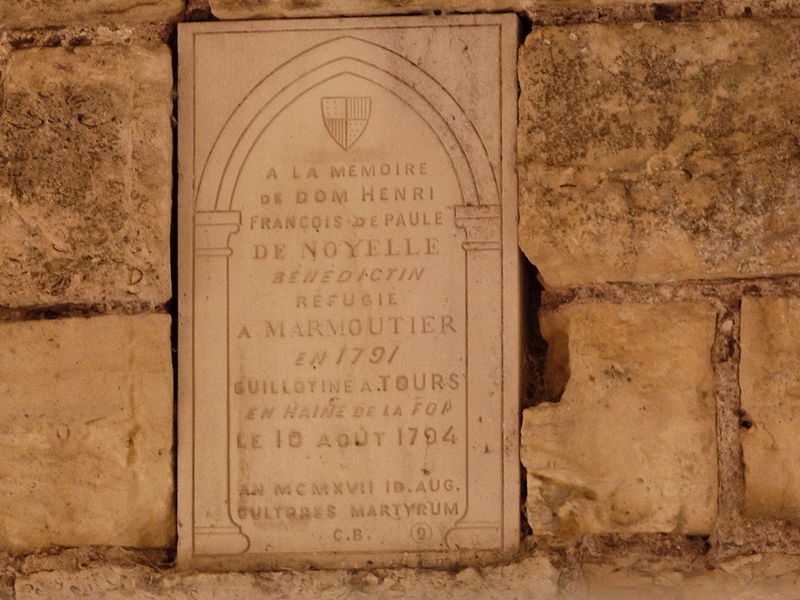 photo of a tombstone), the buildings are largely destroyed...

|


| ||
François-Alexandre Pernot, 1852 [St. Martin's Rectorate], the crozier gate is in front, the abbey church is in the background just to the right of the tall bell tower, still existing with a lower steeple.
At top right, watercolor by Louis Boudan from the early 18th century, view from the east showing the importance of the abbey [collection Gaignières, BnF].
Bottom right, view from the west / front, sketch by A. D. Morillon Aîné in 1802 when the abbey still had beautiful ruins [SAT]
+ another  sketch of Morillon, seen from the east/behind (to the right the grotto of rest) [Illustrations from the Catalog 2016].
+ (P.-S.) : five illustrations of the ruins [archives dep. 37] : sketch of Morillon, seen from the east/behind (to the right the grotto of rest) [Illustrations from the Catalog 2016].
+ (P.-S.) : five illustrations of the ruins [archives dep. 37] :
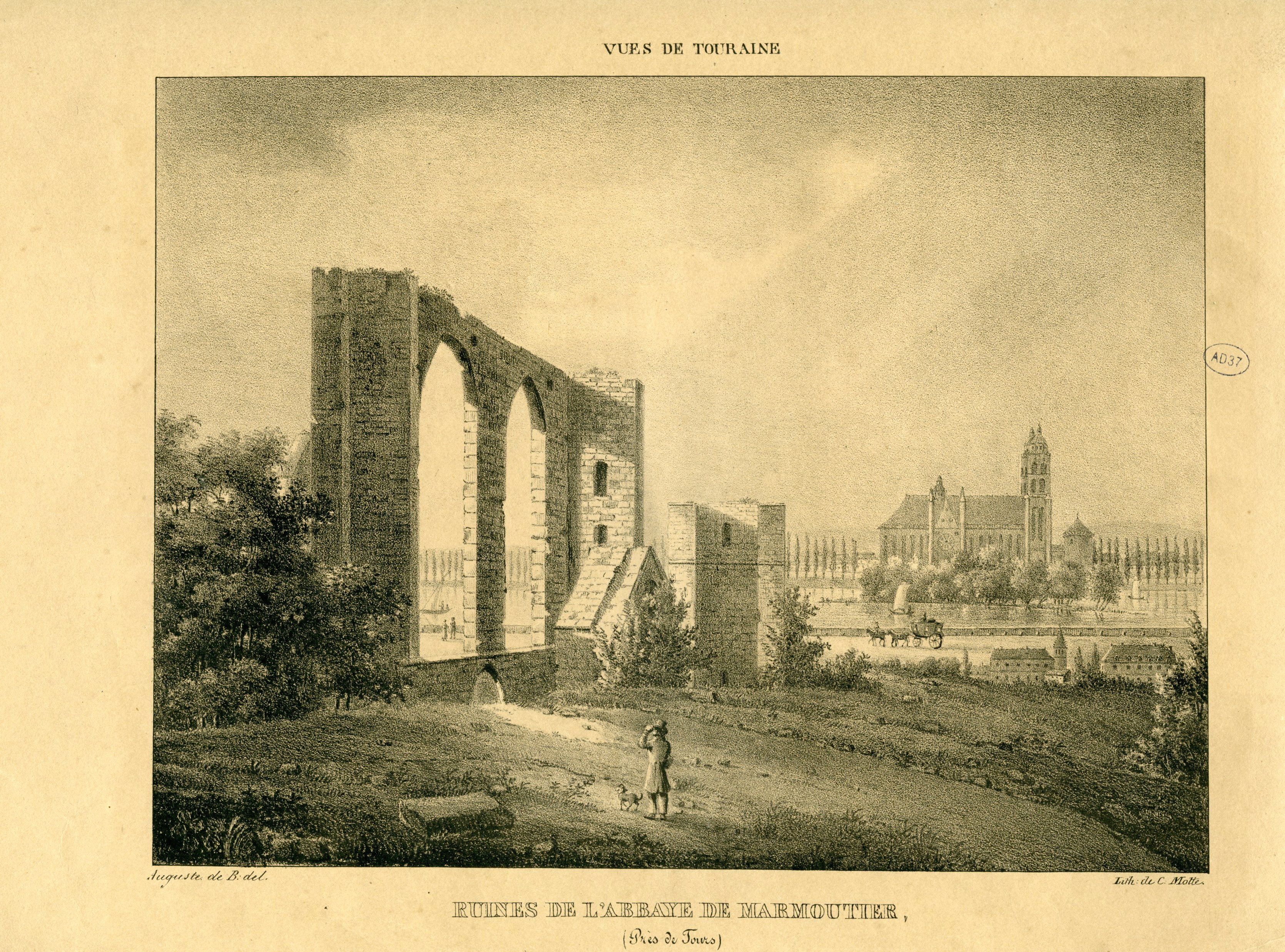 1 1
 2 2
 3 [Constant Bourgeois] 3 [Constant Bourgeois]
 4 4
 5
+ page of recent photos by Lionel Francès. 5
+ page of recent photos by Lionel Francès.


Left, view from the sky, from the west, in 2018, with the imposing bell tower in the center background. At right, photo from La NR 2011 with a panel featuring the above painting at lower right, from where the artist painted it. Behind the panel, to the left of the shed where the abbey church stood, stands the grotto of the "repose of St. Martin" already shown.
+  plans of the site in the late tenth century, late twelfth and early fourteenth centuries, showing in particular the integration of the grotto of the Rest with the collegiate church [Collective 2019].
+ short video INA presentation of the ruins. plans of the site in the late tenth century, late twelfth and early fourteenth centuries, showing in particular the integration of the grotto of the Rest with the collegiate church [Collective 2019].
+ short video INA presentation of the ruins.


Left, drawing of the entrance to the abbey church of Marmoutier in 1781 (the ruins of which are under the shed in the front photo), with the still existing bell tower (with a lower roof) on the left [Thomas Pringot, SAT, Catalog 2016].
At center, the same view taken by Charles Lelong in his book "L'abbaye de Marmoutier" (C.L.D. 1989).
On the right, from the same book, photo of a remnant of the eleventh-century crypt of this abbey church
+  general view of the crypt under the shed [Catalogue 2016] general view of the crypt under the shed [Catalogue 2016]

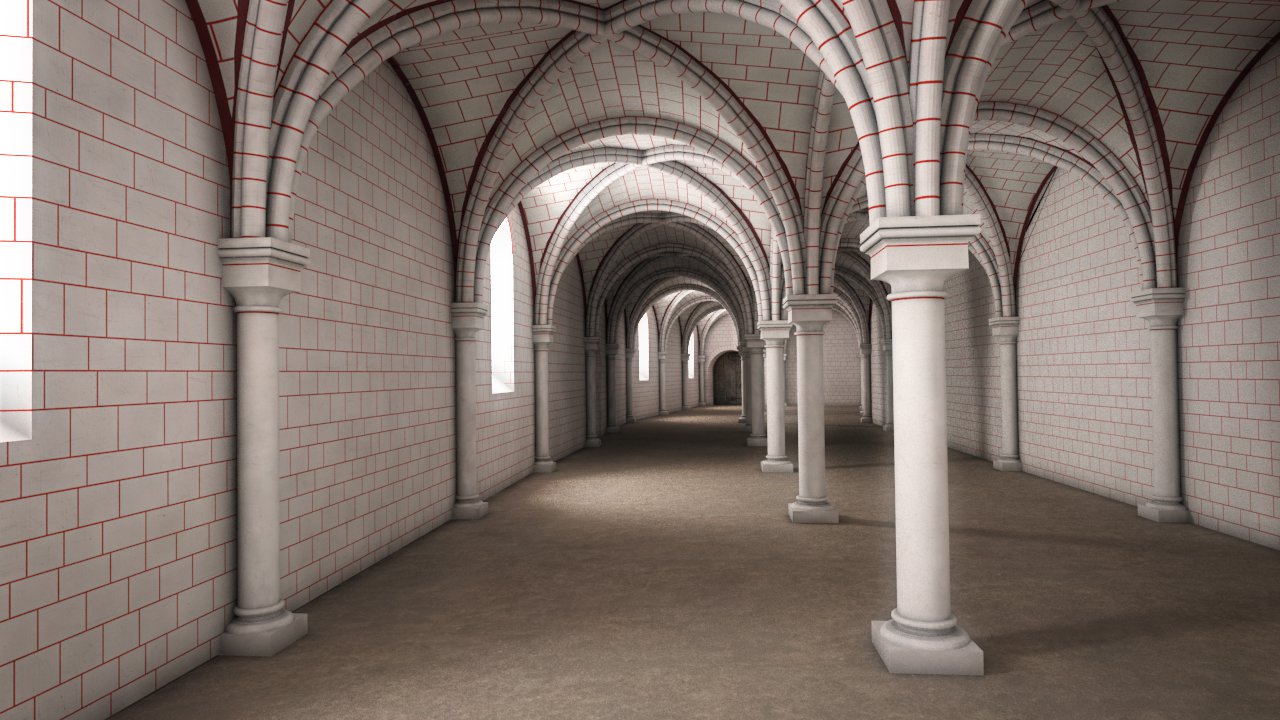
On the left, an excerpt from the reconstruction already shown to be compared with an excerpt from the sky view already shown at the bottom left, the tall bell tower is the only surviving, but shortened building. The large abbey church is replaced by the shed covering the remains. In front of it, the dormitories, infirmary and other structures for housing the monks and welcoming pilgrims have disappeared to make way for greenery. In the center and on the right, two 3D restitutions (link) : 1 the church crypt
2 the ground floor of the hostelry (guest house).
Five pages from Charles Lelong's 1989 book "L'abbaye de Marmoutier" :
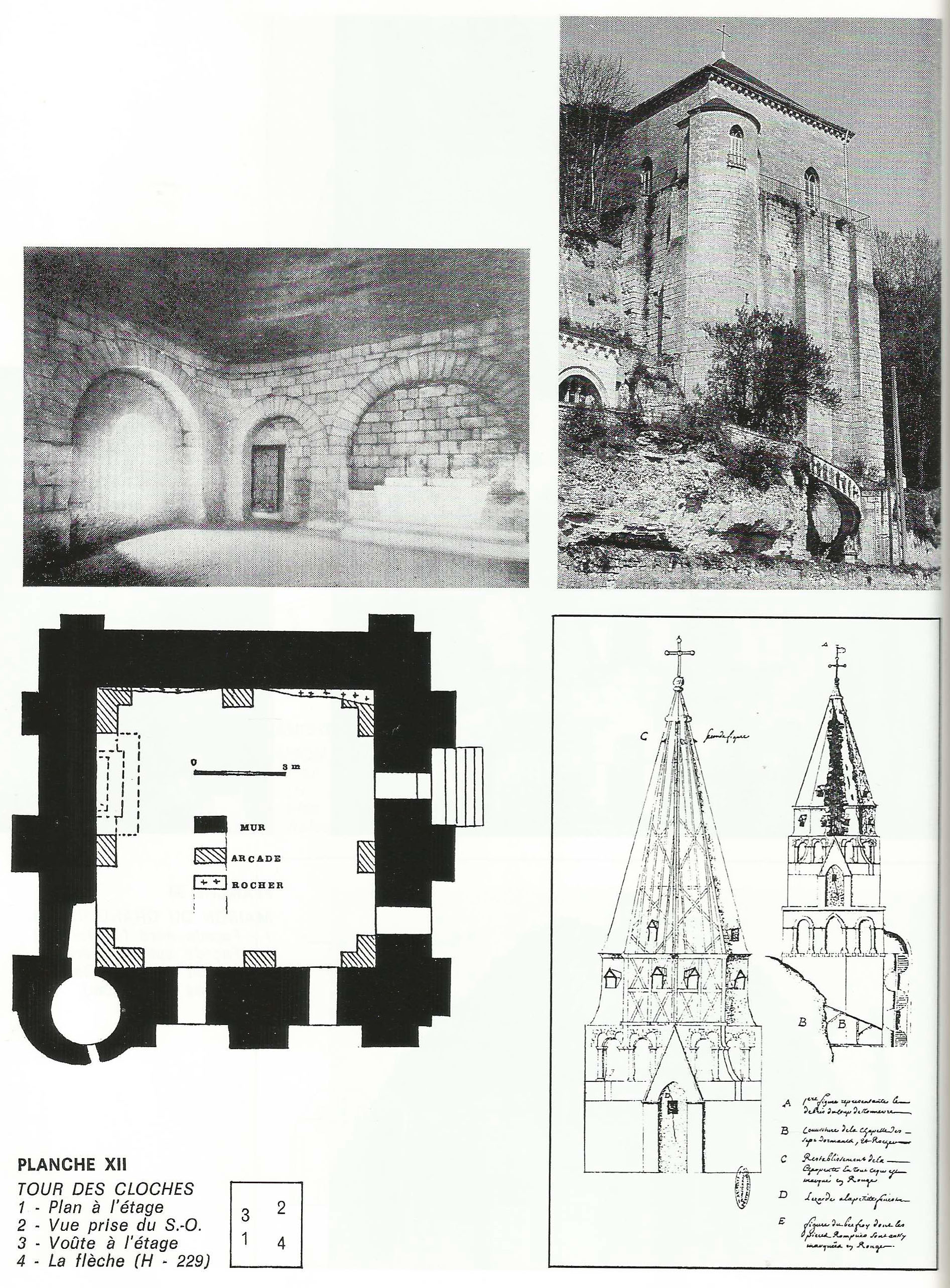 1 Bell Tower 1 Bell Tower
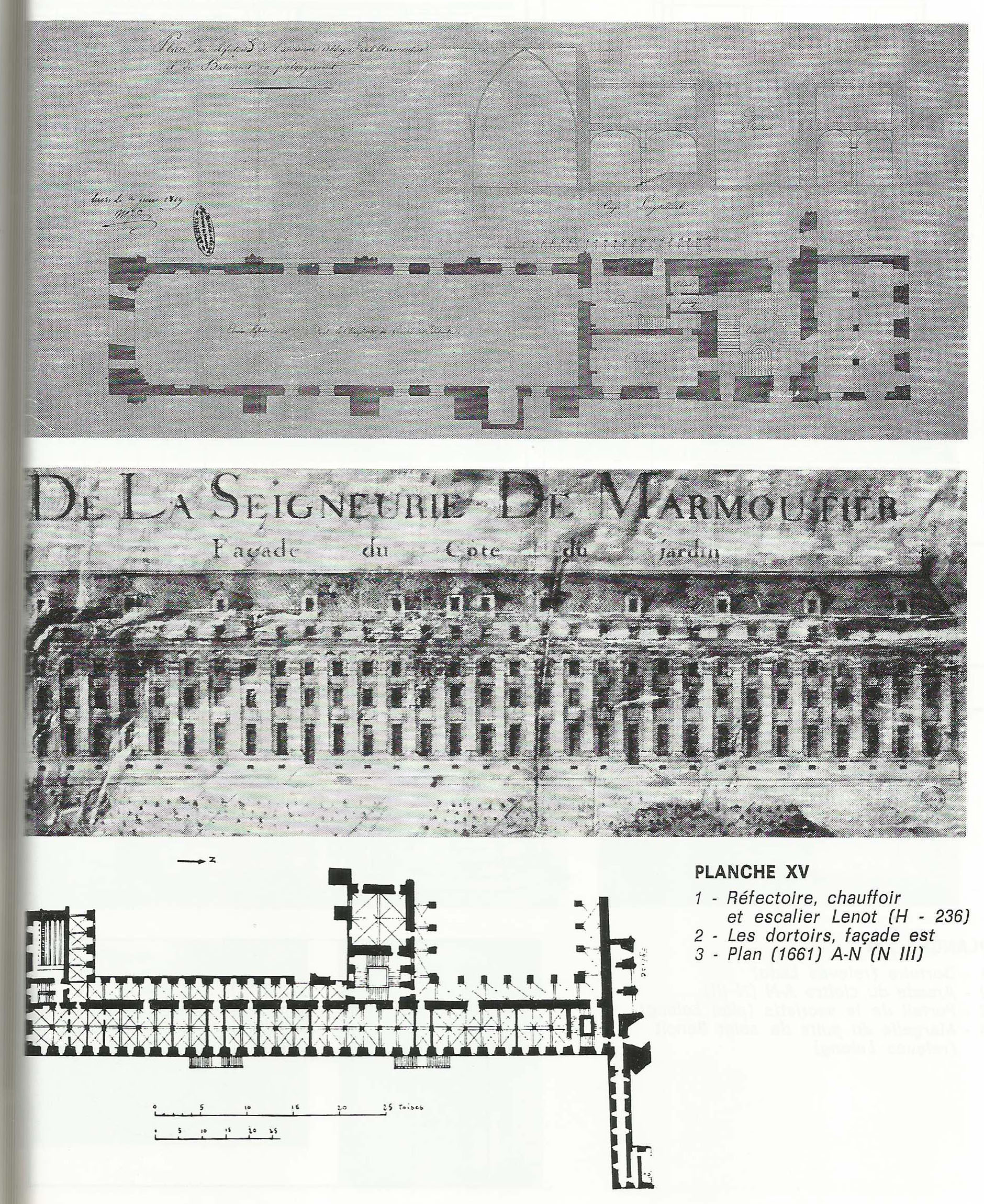 2 refectory and dormitory 2 refectory and dormitory
 3 house of the high prior 3 house of the high prior
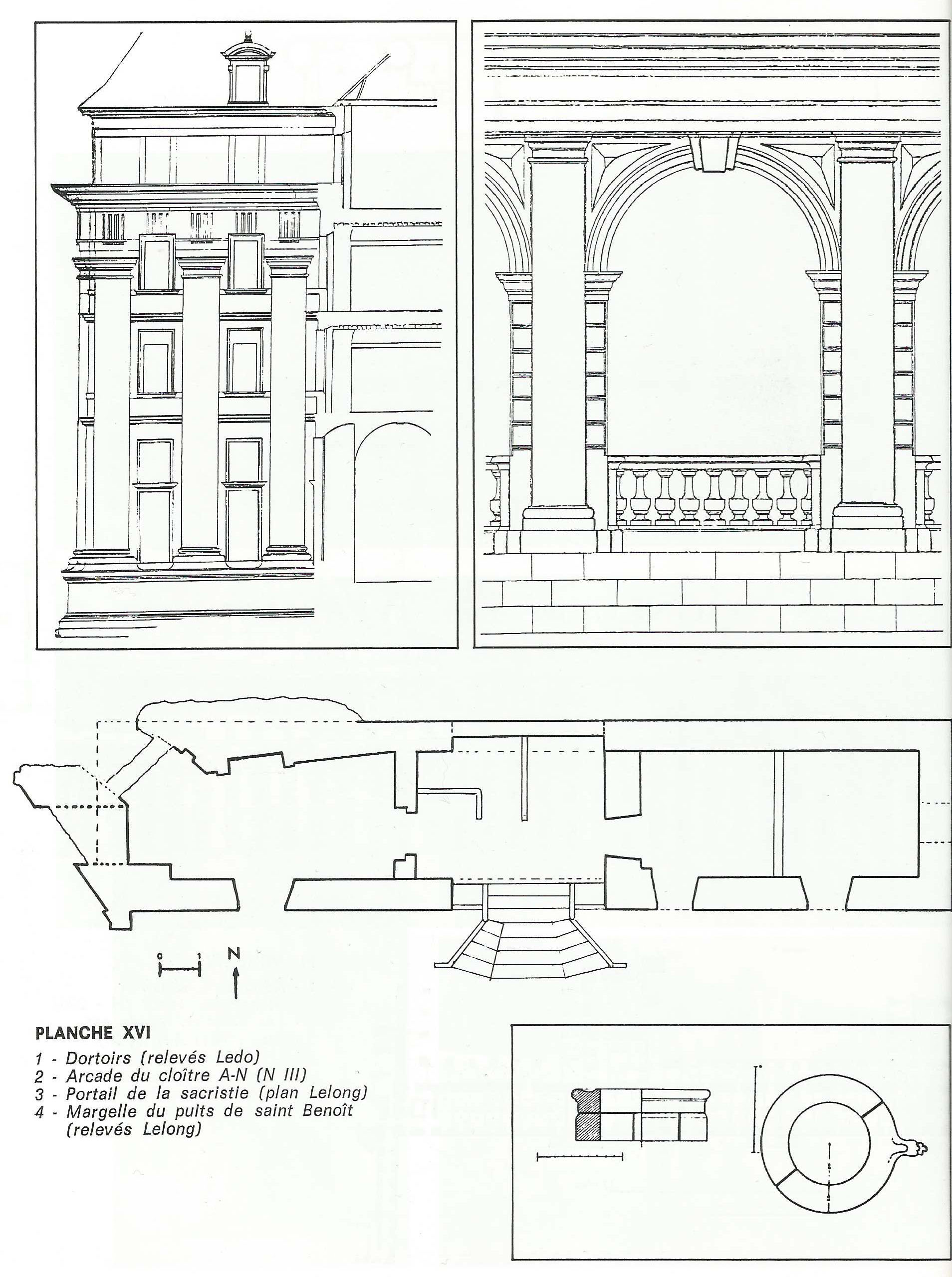 4 dormitories and sacristy (noted as "common room", code Z, in the monasticon) 4 dormitories and sacristy (noted as "common room", code Z, in the monasticon)
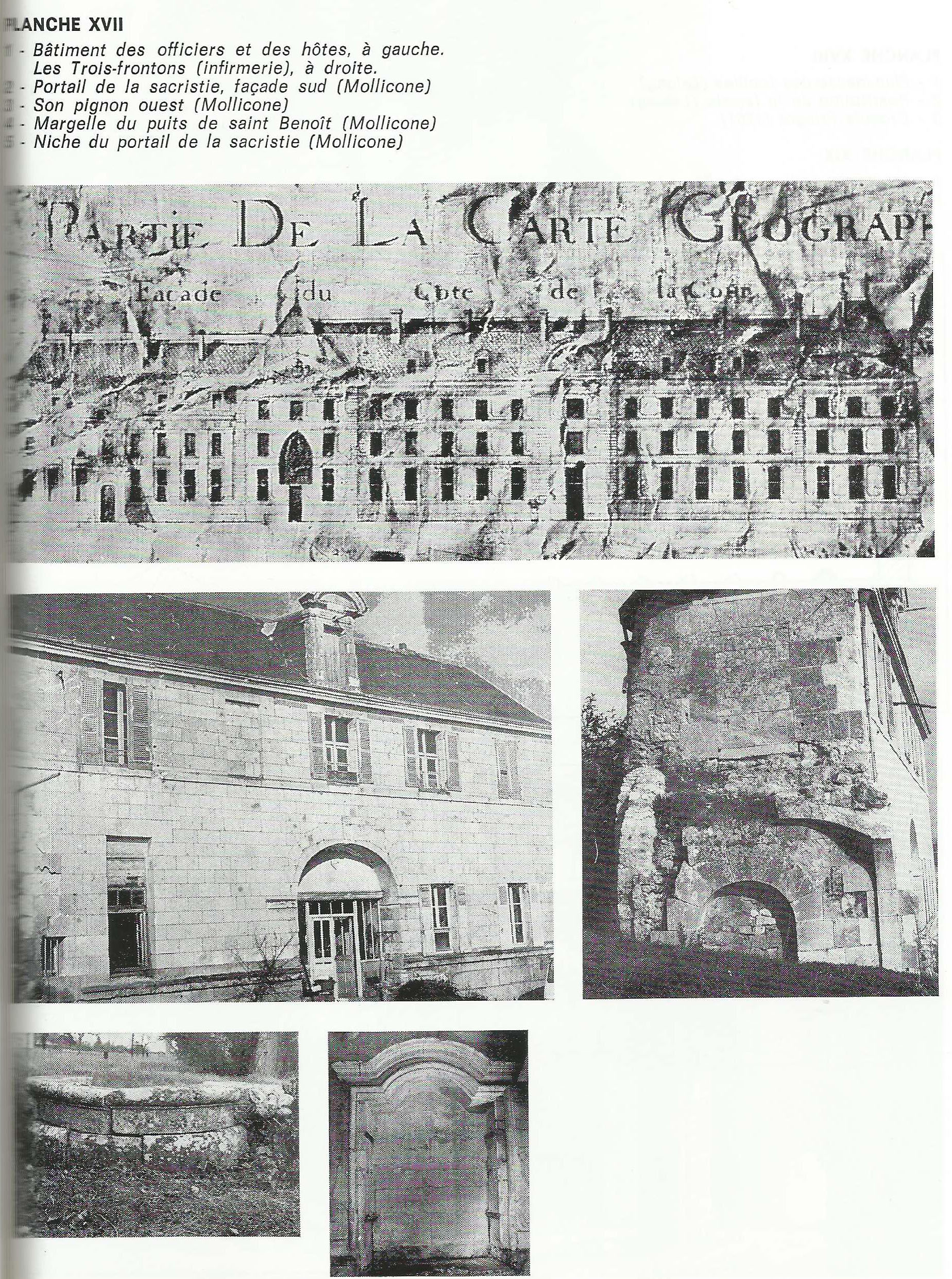 5 guest quarters and sacristy.
See also Marmoutier 1/3 and 3/3.. 5 guest quarters and sacristy.
See also Marmoutier 1/3 and 3/3..
| |||
 1
1 2
2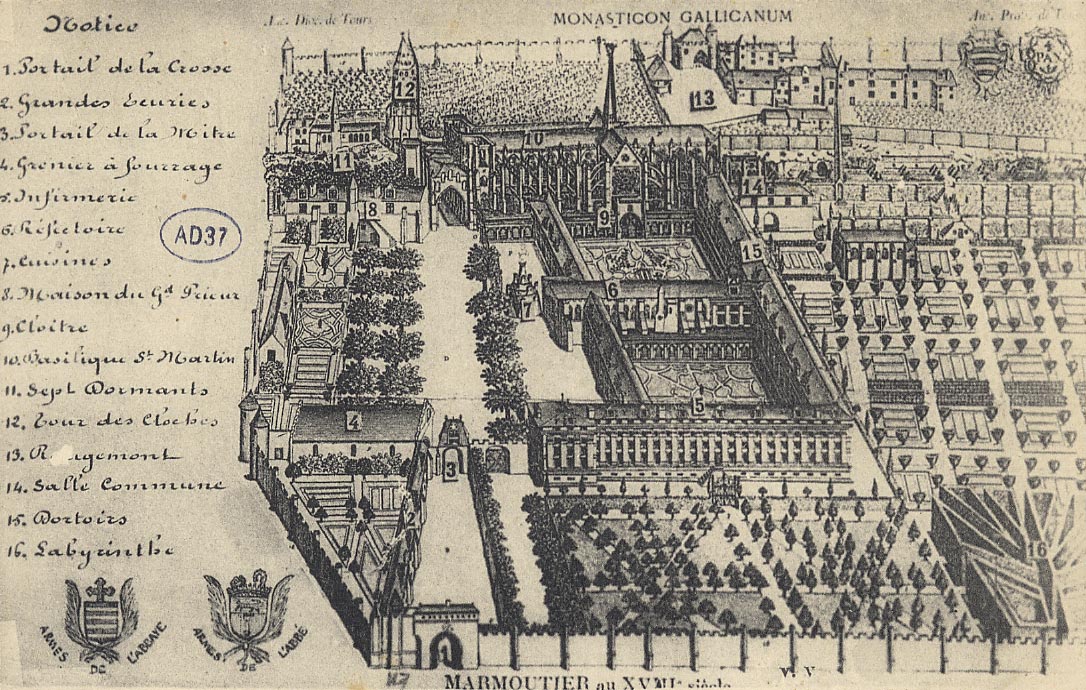 play
play 3
3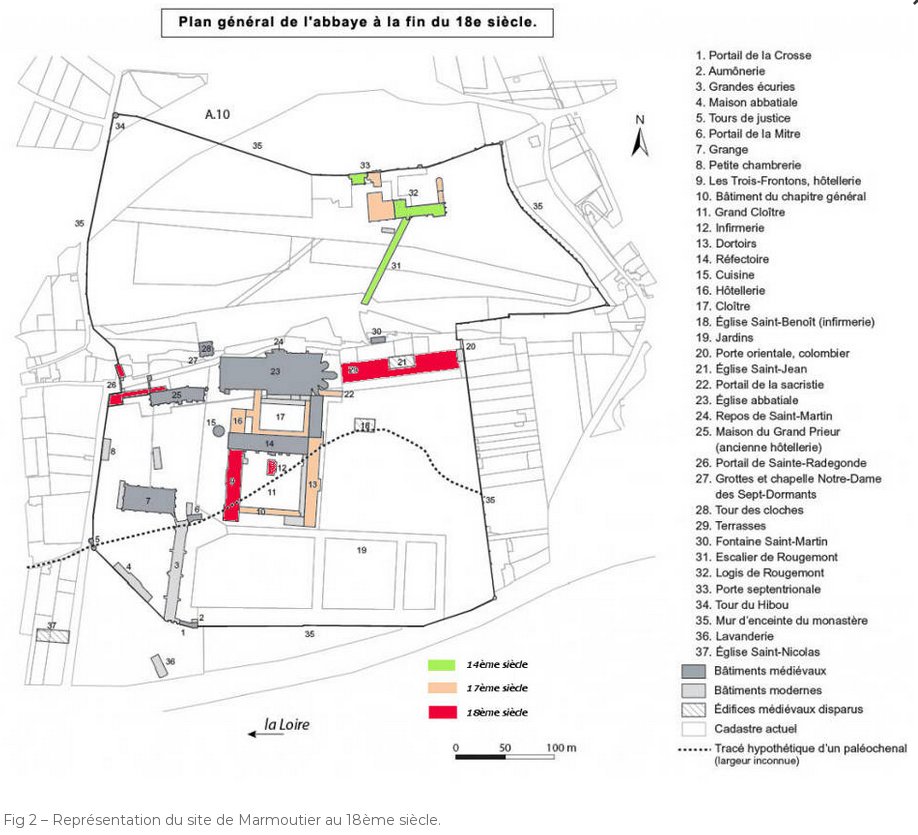 4
4 5
5 photo
photo plan
plan Tableau
 Lithograph
 Stained glass
 1
1 2
2 3
3 4
4 5
5 6
6 7
7 1
1 2
2 3
3 4
4 Painting
 Watercolors
At Tours or nearby, abbeys (priory for Saint Cosme) were created, often in addition to Saint Martin or Marmoutier, being able to take their independence later. Those presented here were prosperous for a long time. Only Saint Julien, situated in the middle of the two mother abbeys, has kept its church in good condition. If we stick to the religious buildings in the same area, this page also presents the church of Saint Pierre le Puellier (
here-before), the convent of the Minimes (here-before), the chapel of Petit Saint Martin (here-after), and, here-after, the church of Saint Saturnin, the convent of the feuillants, and the church of Saint Clément.
The abbey of Saint Paul de Cormery, located about 20 kms southeast of Tours, on the right bank of the Indre River, was created in 791 by Ithier, abbot of Saint Martin, predecessor of Alcuin. Believing that there was a laxity in the way of life at Saint Martin's and that he could not remedy it, he left with a small number of monks to settle in this place of penitence named "coeur mary" and then Cormery. Alcuin then obtained privileges for the new abbey which, while remaining attached to its mother house of Saint Martin, developed on its own. It prospered despite destruction by the Normans and by armed bands during the Hundred Years' War. It acquired important real estate in Touraine (17 priories) and elsewhere. From 1519, the abbey was headed by a secular abbot, or even a layman, the first being Denis Briçonnet, bishop of Saint Malo, son of Cardinal Guillaume Briçonnet. Plundered during the Hundred Years War [story by Bernard Briais in "Historical anecdotes from Touraine" 2015], destroyed during the Revolution, beautiful ruins remain.
+  Extract from Hélène Noizet's 2007 book "La fabrique de la ville" (link) on the strained relationship of Cormery Abbey and the Saint Martin chapter in the late 11th century. + book "Cartulaire de Cormery précédé de l'histoire de l'abbaye et de la ville de Cormery" by Jean-Jacques Bourassé [SAT 1861, 450 pages]
+ study 2015 "Architectural and Heritage Enhancement" [58 illustrated pages].
Extract from Hélène Noizet's 2007 book "La fabrique de la ville" (link) on the strained relationship of Cormery Abbey and the Saint Martin chapter in the late 11th century. + book "Cartulaire de Cormery précédé de l'histoire de l'abbaye et de la ville de Cormery" by Jean-Jacques Bourassé [SAT 1861, 450 pages]
+ study 2015 "Architectural and Heritage Enhancement" [58 illustrated pages].


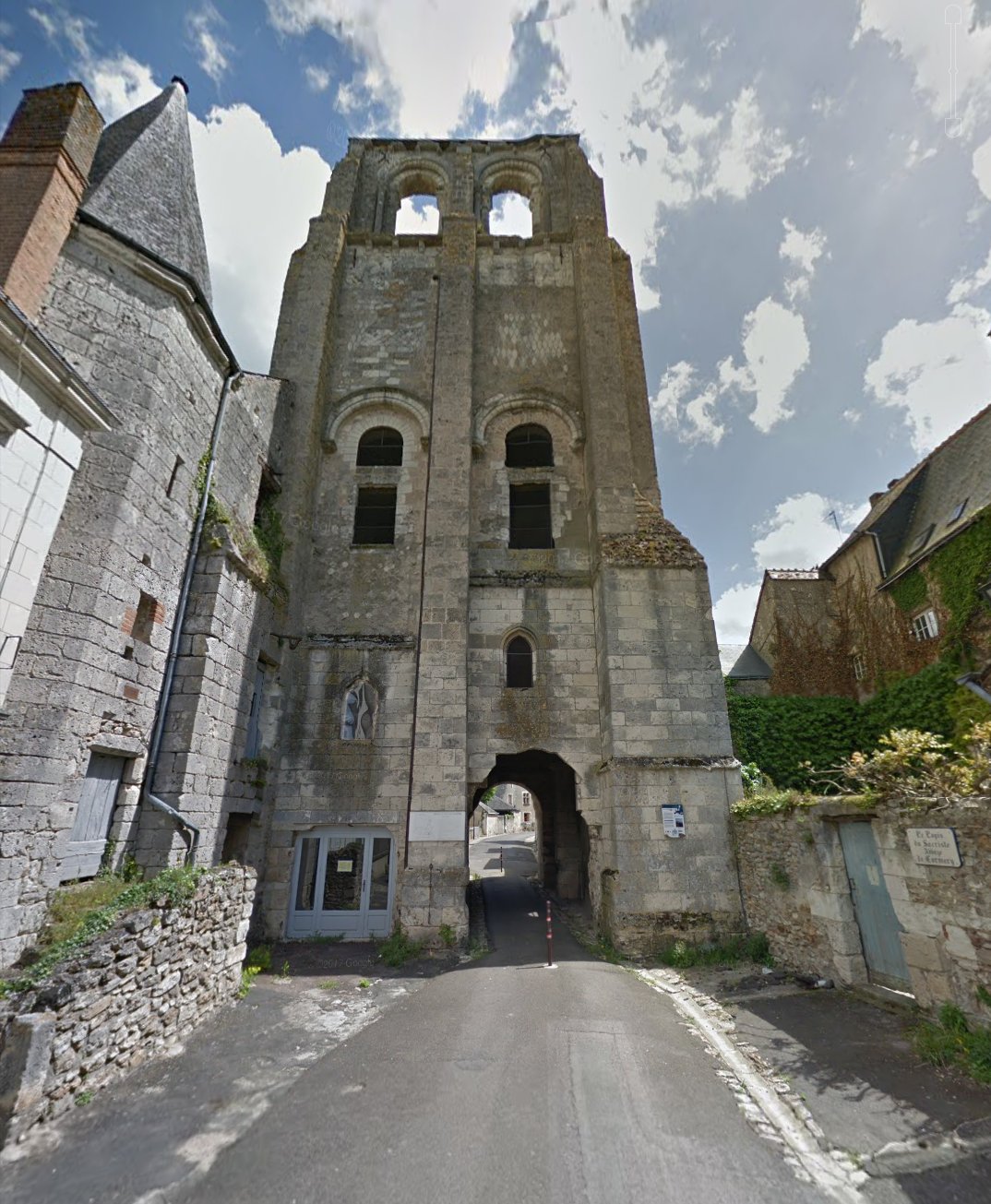
From left to right: model of Cormery Abbey, Denis Briçonnet, Saint Martin de Tours (in green) and possessions of the abbey (in red), its Saint Paul tower, which has strong resemblances to the Charlemagne tower in Tours. + list of abbots
+ three engravings :
 1 [1819, "Visages of Touraine" 1948] 1 [1819, "Visages of Touraine" 1948]
 2 [LTa&m 1845] 2 [LTa&m 1845]
 3 [LTh&m 1855]
+ 3 [LTh&m 1855]
+  postcard
+ postcard
+  plan in 1674
+ plan in 1674
+  view in the Monasticon Gallicanum
+ other view in the Monasticon Gallicanum
+ other 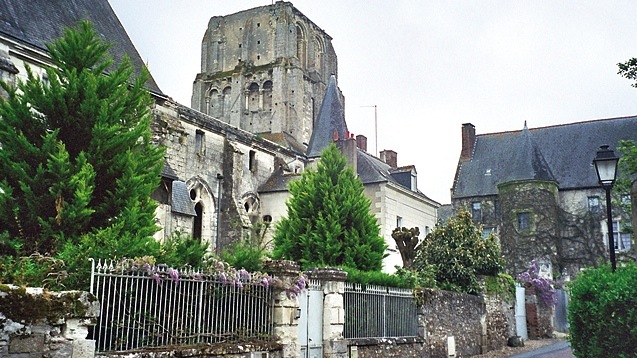 photo.
+ page about the history of Cormery and its abbey.
+ site of restoration, animation and tours "Les amis d'Alcuin" (with photo.
+ page about the history of Cormery and its abbey.
+ site of restoration, animation and tours "Les amis d'Alcuin" (with 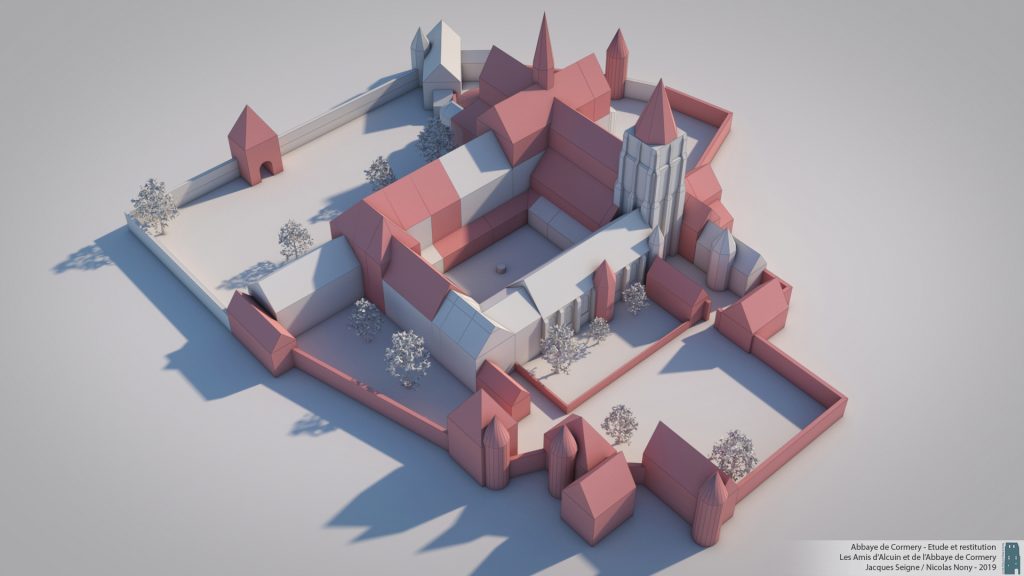 3D model).
+ excerpts from article "The Churches of Cormery" 1908 by Octave Bobeau, four illustrations : 3D model).
+ excerpts from article "The Churches of Cormery" 1908 by Octave Bobeau, four illustrations :
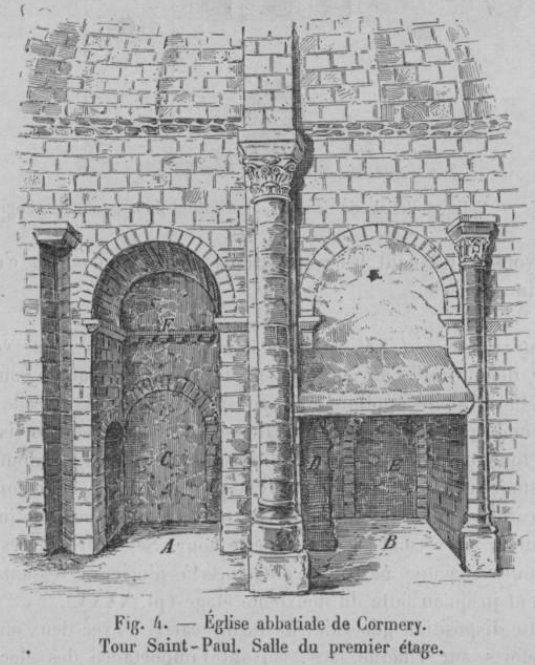 1 second floor tower room 1 second floor tower room
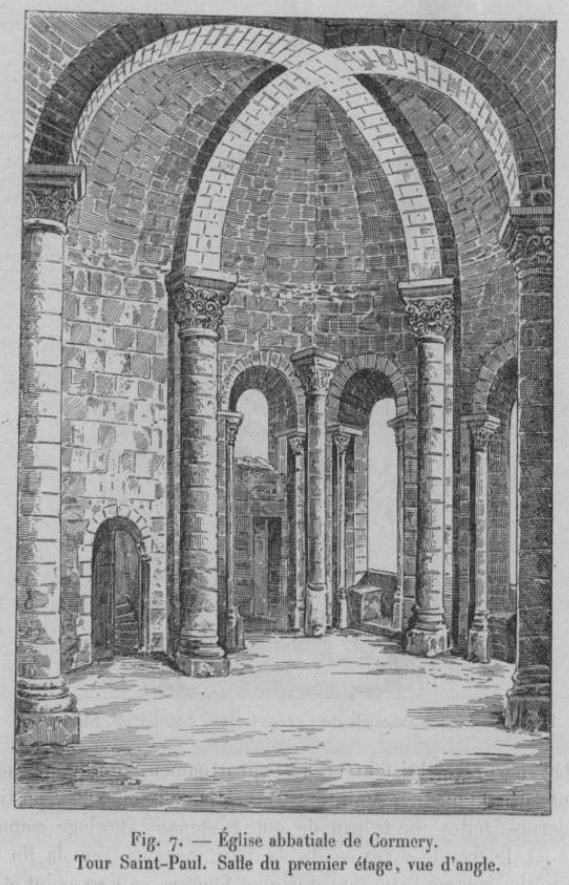 2 same, corner view 2 same, corner view
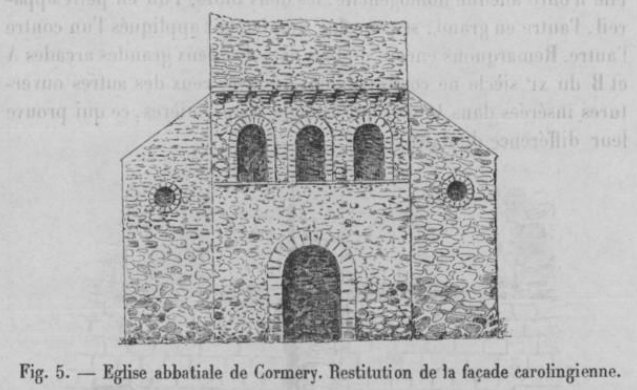 3 rendering of the Carolingian facade 3 rendering of the Carolingian facade
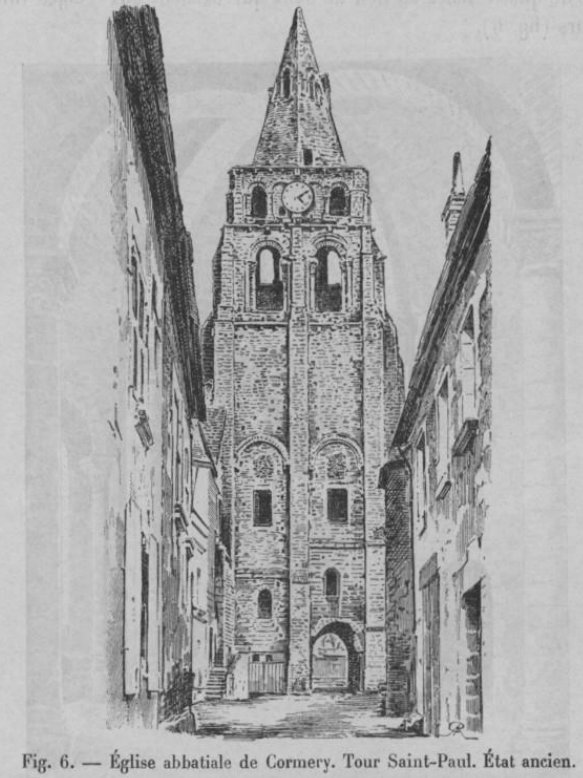 4 ancient condition of the tower. 4 ancient condition of the tower.

Cormery Abbey in the Gaignières Collection 1699 


The famous monk macaroons! At left, lithograph by A. Noël 1819 ["Visages de la Touraine" 1948]. On the right, photo of the cloister and refectory. In the center a macaron of Cormery, not to be missed if you come to see the ruins. As the  page on the Cormery City Hall website (link) states, "It is often admitted that this button, " navel of the world " was created in 781 in our abbey at Cormery"
+ page on the Cormery City Hall website (link) states, "It is often admitted that this button, " navel of the world " was created in 781 in our abbey at Cormery"
+  poster for sale
+ poster for sale
+  presentation [Mag. Touraine 1988 No. 26] (these macaroons are available in Tours at Grocery Dejault, 74 Rue Giraudeau). presentation [Mag. Touraine 1988 No. 26] (these macaroons are available in Tours at Grocery Dejault, 74 Rue Giraudeau).
|
 signature
 The Beaumont Abbey of Nuns has been located about 1 km south of Châteauneuf since its creation in 1002 by Treasurer Hervé, who 12 years later completed the Romanesque Basilica of Saint Martin. An accompanying text for the exhibition held July 1-31, 1995 at the Quartier Beaumont (link) shows much older origins in a place very close to Martin's tomb : "About 550 Ingeltrude, granddaughter of Clovis, had a chapel built near the tomb of Saint Martin, then one of the most important spiritual sites in Christendom: Notre-Dame de l'Ecrignole ('the best' or 'the principal'). She housed her retreat with some pious women in a nearby building. The community thus created only grew over time, devoting itself to prayer and the singing of the Divine Office according to the rule of Saint Benedict. At the end of the tenth century, however, a huge fire destroyed the Basilica of Saint Martin and the Ecrignole. With the news of this disaster the gifts, coming from all Christendom, flooded for the restoration of the holy place. Hervé de Buzançais, in charge of the reconstruction, took particular care of Notre-Dame de l'Ecrignole and soon realized that the new monastery was too small for the nuns. He therefore obtained from King Robert the Pious the creation of an abbey on one of his lands, on the site of the chapel of Notre-Dame des Miracles, intended to accommodate the nuns, who did not really settle there until 1007. By letters patent, the king had ordered that, in exchange for prayers for the kingdom, Sainte-Marie de Beaumont be built with his own money, later endowing it with goods and privileges, including that of being under the sole authority of the king and the canons of Saint-Martin. The first abbess, Hersende, received her crosier, the blessing and the holy oils from the canons of the basilica. When she died, the crosier was placed on the tomb of Saint Martin, a sign of the abbey's allegiance to the basilica. In addition to the considerable gifts and privileges granted by the king, there were numerous donations from all the nobility of the time. The generosity of the great men of the kingdom thus enabled the abbey to live off its own resources from the eleventh century onward." +
  extract from the book "La fabrique de la ville", Hélène Noizet 2007 (link), explaining the creation of the abbey by the treasurer Hervé's desire to make room for the new basilica and move out bulky neighbors...


1699 engraving in the collection of François-Roger de Gaignières (the draftsman located the Cher to the north when it is to the south), drawing by R. Parfait and what remains of the abbey, the abbess's dwelling, a late building from 1786, also called "pavillon de Condé"with in modillon a female head (photo Michel Sigrist)
+  engraving [Oury - Pons 1977]. engraving [Oury - Pons 1977].
|
In 1602, after various incidents, the pope
Clement VI decided that Beaumont was no longer under the jurisdiction of St. Martin's but under the archdiocese. "The prosperity of the abbey, however, did not suffer from these quarrels. Once these intrigues were settled, Sainte-Marie de Beaumont was at the same time liberated. Its gardens populated with exotic birds, its architectural ensemble make it one of the jewels of the region. [...]the density of the property she owns there, allows the abbey to exert a direct economic influence on the Touraine and the center of the kingdom. [...]In August 1784, the abbey was largely destroyed by fire. Its reconstruction is financed by the royal cassette (54,0000 pounds) and the commissary of abbeys (20,000 pounds). The work, carried out according to the plans of architects Bourgeois and Prudent, is completed two years later. [...]The nuns were dispersed in 1791 and Madame de Virieu retired with some nuns to the house of Tristan in Tours. The abbey, cut into five lots, was sold for 65,000 pounds to stone merchants; the buildings, with the exception of the abbey dwelling, were razed; the gardens were soon nothing more than a vast wasteland: the Revolution had had its way with nearly 800 years of prosperity. It will now take 123 years before, bought by the state to build a barracks, Beaumont comes back to life and finally finds its place in the heart of the city". Only the abbey house remains. The abbey had 12 priories. One of its last abbesses, from 1733 to 1772, Henriette-Louise de Bourbon-Condé (1703-1772), known as "Mademoiselle de Vermandois" granddaughter of Louis XIV and Mme de Montespan, sister of the first minister Duke of Bourbon-Condé, had refused to marry her cousin Louis XV ( story by Guy-Marie Oury, Oury - Pons 1977). Archaeological excavations are underway (
 article from France-Bleu Touraine in 2019). In the diocese of Tours, six priories depended on the Abbey of Beaumont (Avon, Ballan, Chezelles, Le Liège, Saché and Theneuil).
Saint Cosme Priory object of dispute between the canons of Saint Martin and those of Marmoutier. François-Christian Semur in his Semur 2015 : "Located in the suburbs of Tours, in La Riche, the remains of the prestigious Saint-Cosme priory are coiled in a setting that is both green and flowery. Originally, the relics of two saints from Syria, Saint Cosme and Saint Damien [two brothers], had been brought from Auvergne, probably by Saint Gregory, bishop of Tours. These relics were first placed near the Basilica of Saint-Martin where their cult was so successful that it was decided to build an oratory a few kilometers downstream from Tours. Also, it was at the very beginning of the year 1000 that the treasurer of Saint-Martin, Hervé, had the first sanctuary built[
article from France-Bleu Touraine in 2019). In the diocese of Tours, six priories depended on the Abbey of Beaumont (Avon, Ballan, Chezelles, Le Liège, Saché and Theneuil).
Saint Cosme Priory object of dispute between the canons of Saint Martin and those of Marmoutier. François-Christian Semur in his Semur 2015 : "Located in the suburbs of Tours, in La Riche, the remains of the prestigious Saint-Cosme priory are coiled in a setting that is both green and flowery. Originally, the relics of two saints from Syria, Saint Cosme and Saint Damien [two brothers], had been brought from Auvergne, probably by Saint Gregory, bishop of Tours. These relics were first placed near the Basilica of Saint-Martin where their cult was so successful that it was decided to build an oratory a few kilometers downstream from Tours. Also, it was at the very beginning of the year 1000 that the treasurer of Saint-Martin, Hervé, had the first sanctuary built[ plan before and after, Catalogue 2016]. At the end of the same eleventh century, probably in 1092, the oratory was replaced by a beautiful Romanesque chapel. Then, in the twelfth century, will be built the refectory of the canons. [...] In fact, the good treasurer Hervé had established an agreement with the Benedictines of the powerful neighboring abbey of Marmoutier. The "conditional donation" of the priory provided that the monastery of Marmoutier was to maintain twelve monks to perform divine service there without interruption, while recognizing the supremacy of the chapter of Saint-Martin over this priory for which the cens would be paid to the cellarer. This agreement was more like a lease than a donation. However, after a few years of presence at Saint-Cosme, this last contractual obligation ceased to be respected. [...]The nobles of the country arbitrated the fratricidal conflict in favor of the canons of Saint-Martin, who took the place of the monks of Marmoutier." They made it a retreat house "almost like the earthly paradise itself," according to Bruno Dufay in an article in the Catalogue 2016.
A prototype ambulatory. This same article shows, on a
 plan overlay, that, surprisingly, the priory is a reduction of the Gothic collegiate church of St. Martin. The ambulatory of St Cosme is now dated 1130/1140, earlier than that of the Gothic basilica, around 1180. This supports a hypothesis put forward by Robert Ranjard in 1955, in a article dealing with the two ambulatories (which he wrongly imagined to be very much earlier) "the church of St. Cosme was, if not as a draft, at least as a test of the new plan projected for the collegiate church. It was a way of mastering an architectural figure that was still not widespread.
+
plan overlay, that, surprisingly, the priory is a reduction of the Gothic collegiate church of St. Martin. The ambulatory of St Cosme is now dated 1130/1140, earlier than that of the Gothic basilica, around 1180. This supports a hypothesis put forward by Robert Ranjard in 1955, in a article dealing with the two ambulatories (which he wrongly imagined to be very much earlier) "the church of St. Cosme was, if not as a draft, at least as a test of the new plan projected for the collegiate church. It was a way of mastering an architectural figure that was still not widespread.
+  extract from Hélène Noizet's 2007 book "La fabrique de la ville" (link), on the 1092 occupation of St. Cosme by Canons Regular.
+
extract from Hélène Noizet's 2007 book "La fabrique de la ville" (link), on the 1092 occupation of St. Cosme by Canons Regular.
+  engraving of a canon of Saint Cosme.
The fame of this priory is much later, it is due to the fact that from 1565 to his death in 1585, the poet Pierre de Ronsard was its prior.
+ inventory 2020 [DRAC]
+ press kit 2015 [Department 37] (Ronsard excerpt below).
engraving of a canon of Saint Cosme.
The fame of this priory is much later, it is due to the fact that from 1565 to his death in 1585, the poet Pierre de Ronsard was its prior.
+ inventory 2020 [DRAC]
+ press kit 2015 [Department 37] (Ronsard excerpt below).
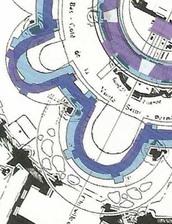


The Saint Cosme priory in La Riche: a scale model of the Gothic Saint Martin basilica. On the left excerpt from the overlay plan showing two chapels (out of three) accessible by an ambulatory [ Catalogue 2016 "Martin de Tours, la cité rayonnante", text by Bruno Dufay], photos from the dedicated page of the Patrimoine Histoire website]. In the center what remains of the two chapels (with the central chapel in the foreground, as on the plan) and on the right what remains of the ambulatory.
+ three photos of the central chapel :
 1 1
 2 [photo Daniele Wauquier] 2 [photo Daniele Wauquier]
 3
+ 3
+  engraving [Oury - Pons 1977]. engraving [Oury - Pons 1977].
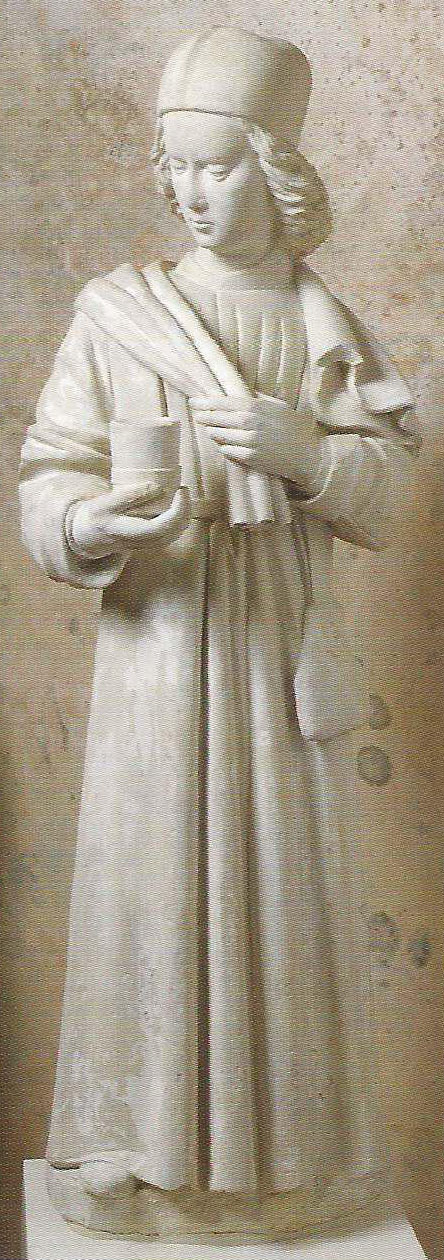
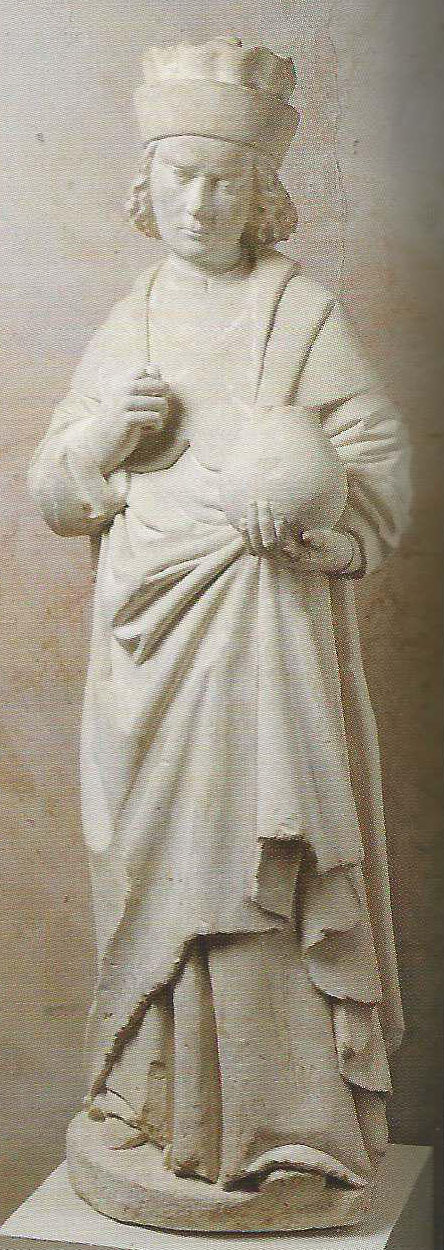
About the year 1500, two statues from the priory and other sculptures from Tours and Touraine at the same time. On the left Cosme and his brother Damien, 15th century (or even 16th century) works from the priory, acquired by the SAT in 1876. They returned to the priory in 2009. The two saints are dressed in their long robes as physician-physicians.
Then a young man's head found in 1862 in the demolitions of the Rue Banchereau in Tours, kept by the SAT and deposited at the MBAT in 2009.
Next (probably) is a stone and alabaster St. Magdalene from the church of St. Saturnin in Limeray, Touraine, possibly originally from a nearby church or abbey.
Second to last, a statue of St. John from Loché sur Indrois, stored in the Louvre Museum.
To the right, the Virgin and Child, attributed to the Tourangeau Michel Colombe comes from the Château de la Carte in Ballan-Miré, near Tours and is held in a private collection in Paris.


To the left, modeling of the priory in 1220 (the ambulatory and chapels above can be seen) +  image in 1580, when Ronsard lived there [link Hundred Million Pixels website]
+ study "The 3D restitutions of the Saint-Cosme priory " by Bruno Dufay and Pascal Mora 2013
+ complement 2017
+ image in 1580, when Ronsard lived there [link Hundred Million Pixels website]
+ study "The 3D restitutions of the Saint-Cosme priory " by Bruno Dufay and Pascal Mora 2013
+ complement 2017
+  model by Arnaud de Saint-Jouan and Jean-Baptiste Bellon [Level 1994].
In the center, capital of the former refectory (photo Michel Sigrist).
On the right, Ronsard at St Cosme [Guignolet 1984]
+ the model by Arnaud de Saint-Jouan and Jean-Baptiste Bellon [Level 1994].
In the center, capital of the former refectory (photo Michel Sigrist).
On the right, Ronsard at St Cosme [Guignolet 1984]
+ the  plank
+ plank
+ 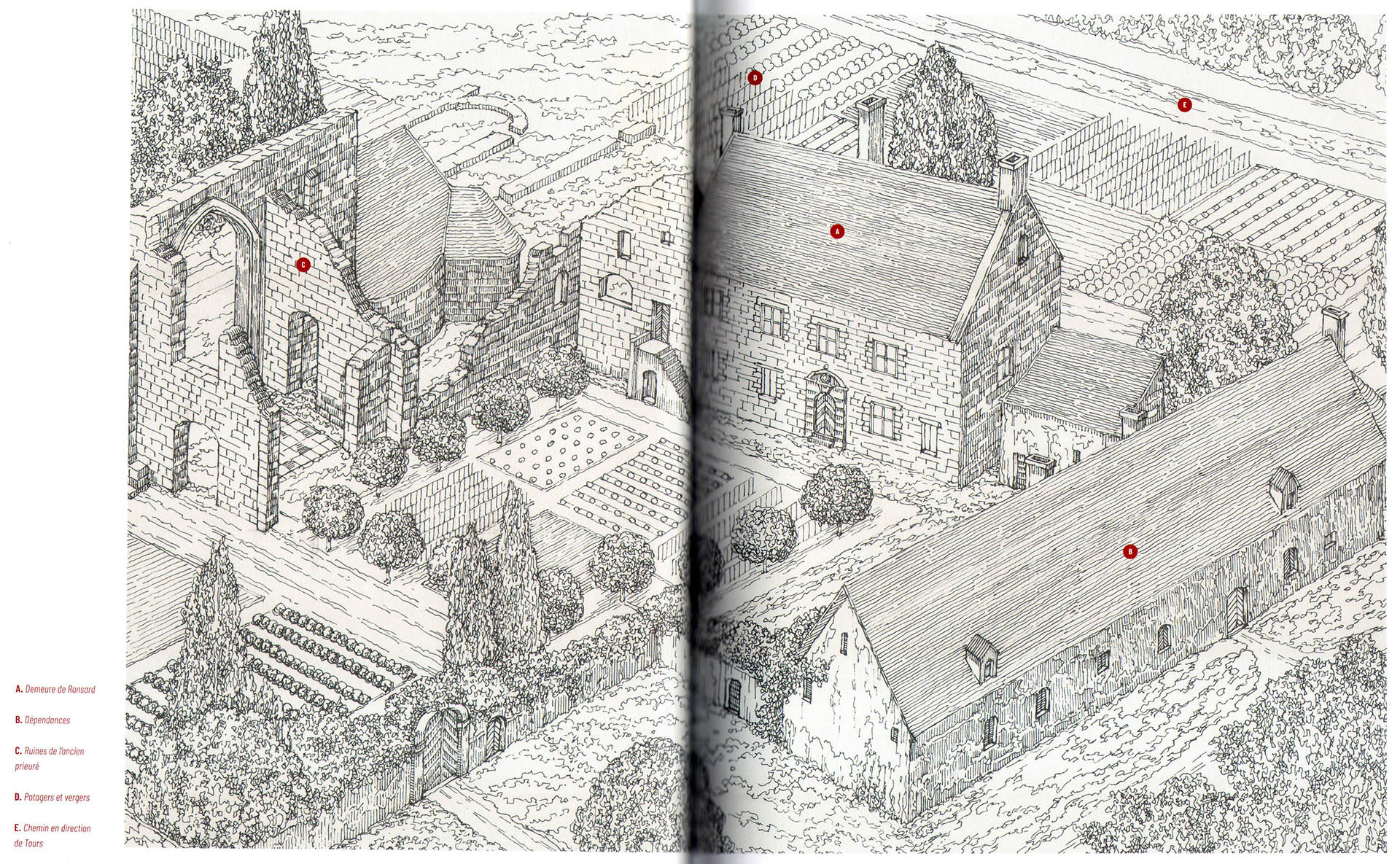 restitution of Cossu-Delaunay 2020 in Ronsard's time
+ two engravings : restitution of Cossu-Delaunay 2020 in Ronsard's time
+ two engravings :
 1 [LTa&m 1845] 1 [LTa&m 1845]
 2 [LTh&m 1855]
+ 2 [LTh&m 1855]
+  watercolor by Picart le Doux 1941
+ watercolor by Picart le Doux 1941
+  photo recent with foreground of famous Pierre de Ronsard roses (page from the Strolls and Heritage website) (+ page from the Heritage-History website).
+ photo recent with foreground of famous Pierre de Ronsard roses (page from the Strolls and Heritage website) (+ page from the Heritage-History website).
+  extract from a brochure presenting the priory
+ the site of the priory. extract from a brochure presenting the priory
+ the site of the priory.
|
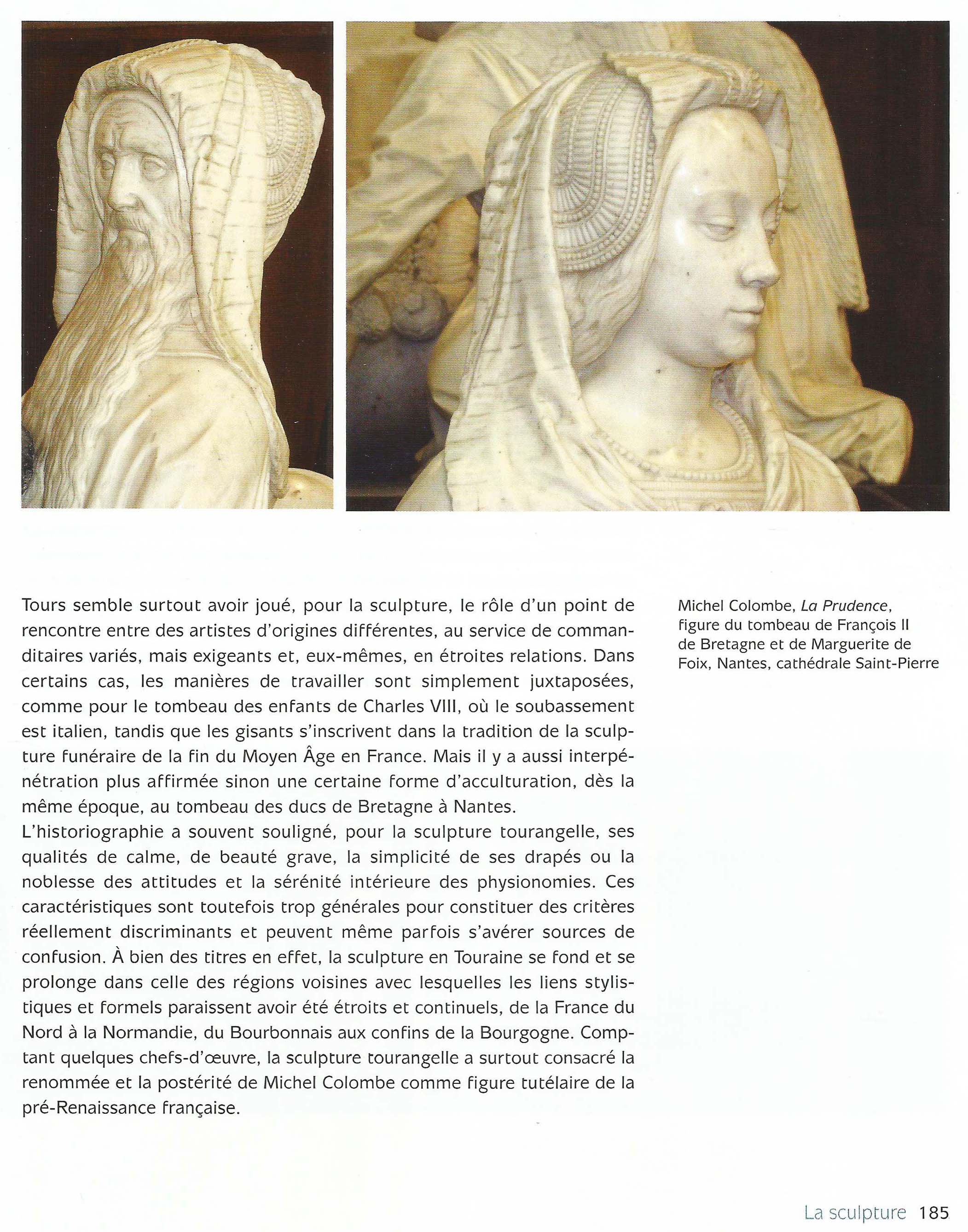 pageSaint Julien Abbey was established by the Frankish king Clovis in 508 during his triumph in the city of Tours. At first it was just an oratory halfway between the Saint Martin basilica and the cathedral. This place of welcome grew until Gregory of Tours transformed it into a Benedictine abbey around 575. After the damage suffered during the Norman raids, the Archbishop of Tours Théotolon, former dean of Saint Martin, built the first abbey church there in 931 and Odon, then abbot of Cluny, became the first abbot of Saint Julien. The still existing Romanesque bell tower-porch dates from the end of the 11th century. After destruction by a storm in 1224, a new church, in Gothic style, was built in 1243, completed around 1300. The abbey was then prosperous; behind the enclosure of its fortified wall it resembled a small town. 22 priories in the diocese of Tours were under its authority, as well as the beautiful church of Saint Saturnin in Tours (illustrated below). The chapter house (
 photo) served in the Middle Ages for secular purposes. Two chapels were added in the sixteenth century, including one dedicated to St. Martin. After the Huguenot plunder of 1562, it is the slow decadence. From 1589 to 1594, at the end of the reign of Henry III and the beginning of that of Henry IV, the Parliament of Paris sat there (+
  text with photo when the chapter house was a kind of workshop and storage room, "Tours Pittoresque" 1899]. In 1790, the four remaining monks were dispersed and the abbey disused. In 1840, it was listed on the first national list of Historic Monuments by Prosper Mérimée, then inspector of Historic Monuments. Bought by the city of Tours, then by the State, it was saved and became a parish church in 1859. In 1940 and 1944, it was severely damaged, losing all its stained glass windows. The state owner took charge of the repairs. + article by Henri Guerlin in 1921 on the church + article by Charles Lelong in 1974 "The bell tower-porch of Saint-Julien de Tours and the Romanesque remains of the abbey".
Henri Galinié [in
Ta&m 2007 page 411] attributes great importance to this abbey in the development of the city of Tours : "Finally and above all, the renovation of the monastery of St. Julien surrounded by a vast landed domain, between Cité and St. Martin, appears to have been a decision fraught with consequences for centuries. We do not know on which heritage of the previous centuries this land was established, this remains a question, but we note that a new situation was then created, based on traditional values, which was left as a heritage for the following centuries, an obstacle separating Cité and Châteauneuf for a long time. Even today, the poor service of this central sector stems from decisions a thousand years old, carried for centuries by a powerful institution within local society, the monastery of Saint-Julien." + article by Henri Galinié "Téotolon dean of St. Martin's and then bishop".
+  map of the "Fiefs, parish and enclosure of Saint-Julien in Tours in the eighteenth century" ["The city's factory" Hélène Noizet 2007 + page titled "Monks and laity of Saint-Julien (940-1114)"]

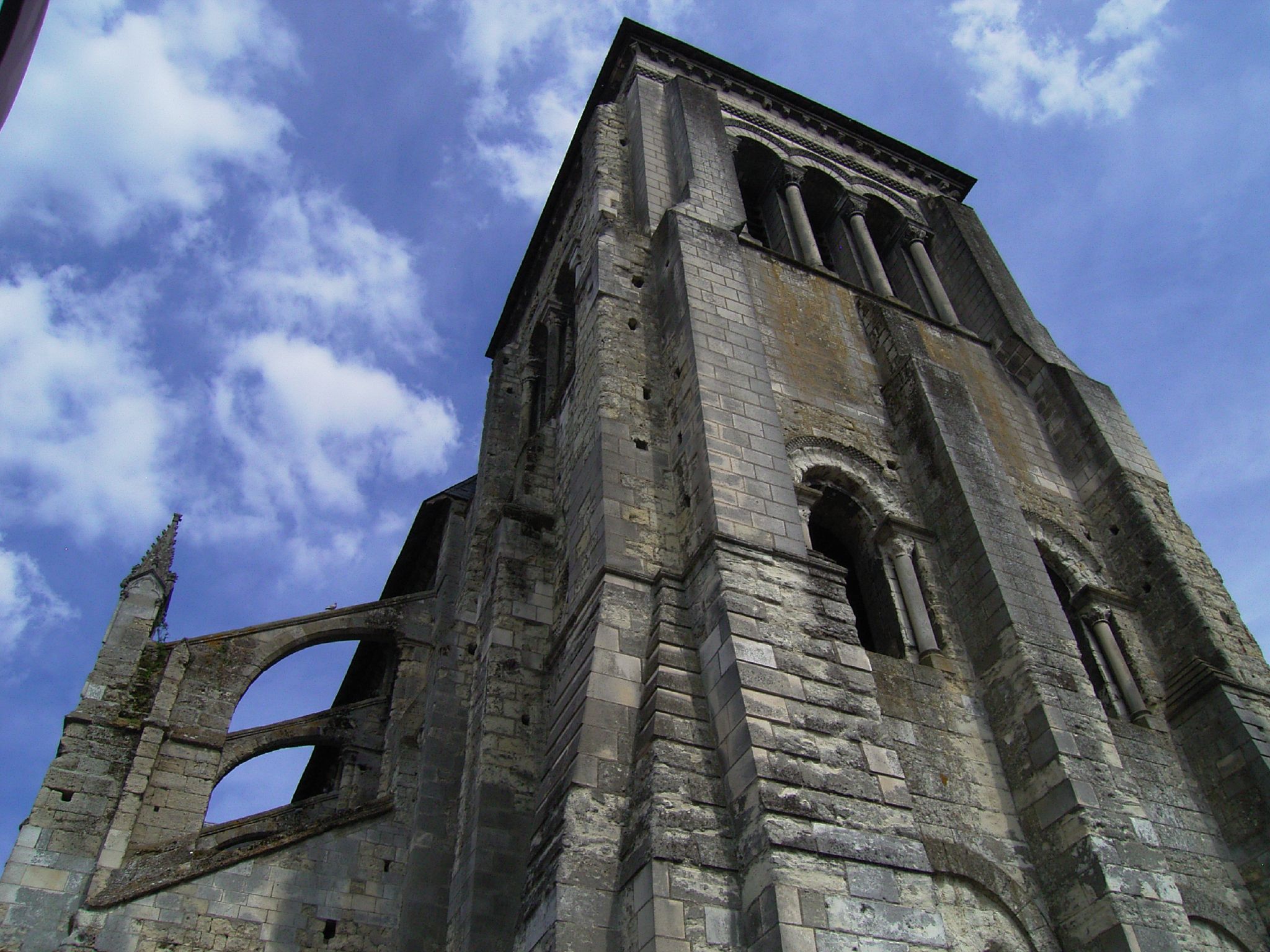

The abbey in the 17th century, as seen from the north, in the Monasticon Gallicanum
+ 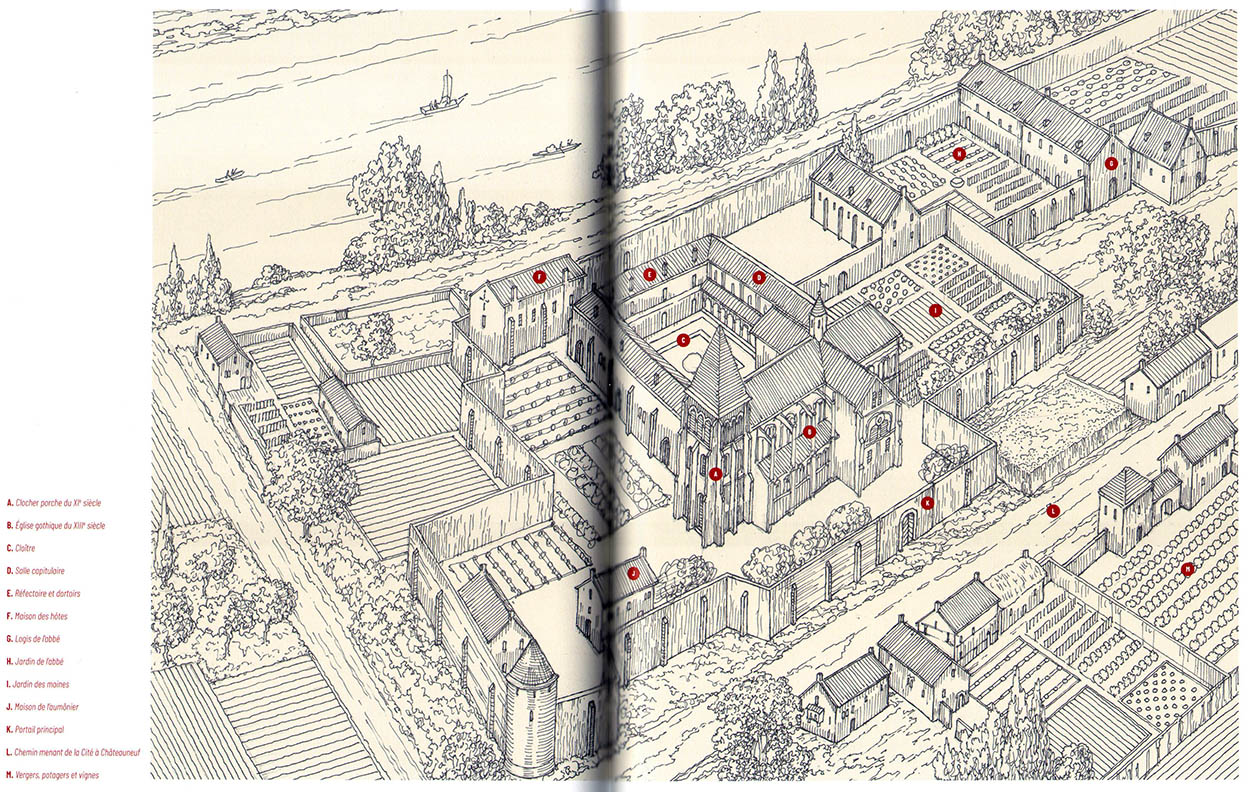 restitution by Cossu-Delaunay 2020.
In the center, the Romanesque bell tower-porch which has similarities with the Charlemagne tower and the Saint Paul tower of Cormery [flickr Tomoyoshi].
On the right, view from the north [from a video (5'50") with drone] (on the left the chapter house)
+ restitution by Cossu-Delaunay 2020.
In the center, the Romanesque bell tower-porch which has similarities with the Charlemagne tower and the Saint Paul tower of Cormery [flickr Tomoyoshi].
On the right, view from the north [from a video (5'50") with drone] (on the left the chapter house)
+  view southeast
+ view southeast
+  plan 1761
+ plan 1761
+  cut 1849 (when the church was surrounded by houses)
+ cut 1849 (when the church was surrounded by houses)
+  engraving LTa&m 1845
+ two engravings LTh&m 1855 : engraving LTa&m 1845
+ two engravings LTh&m 1855 :
 1 1
 2.
+ 2.
+  drawing by William Turner depicting the abbey in 1833, transformed into a stagecoach depot.
+ municipal brochure featuring the church + drawing by William Turner depicting the abbey in 1833, transformed into a stagecoach depot.
+ municipal brochure featuring the church + 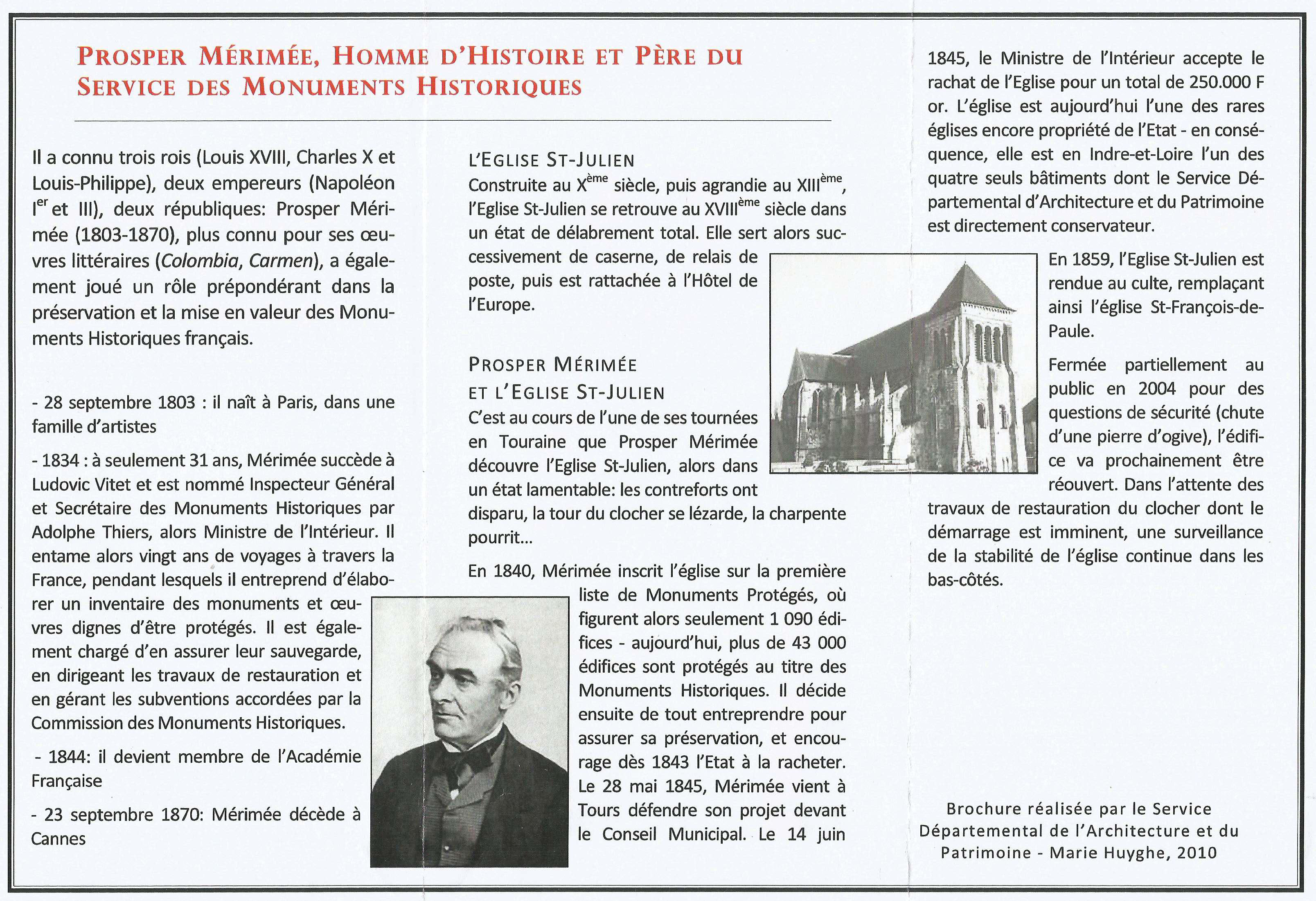 text on the church and Prosper Merimee (P.-S.). text on the church and Prosper Merimee (P.-S.).


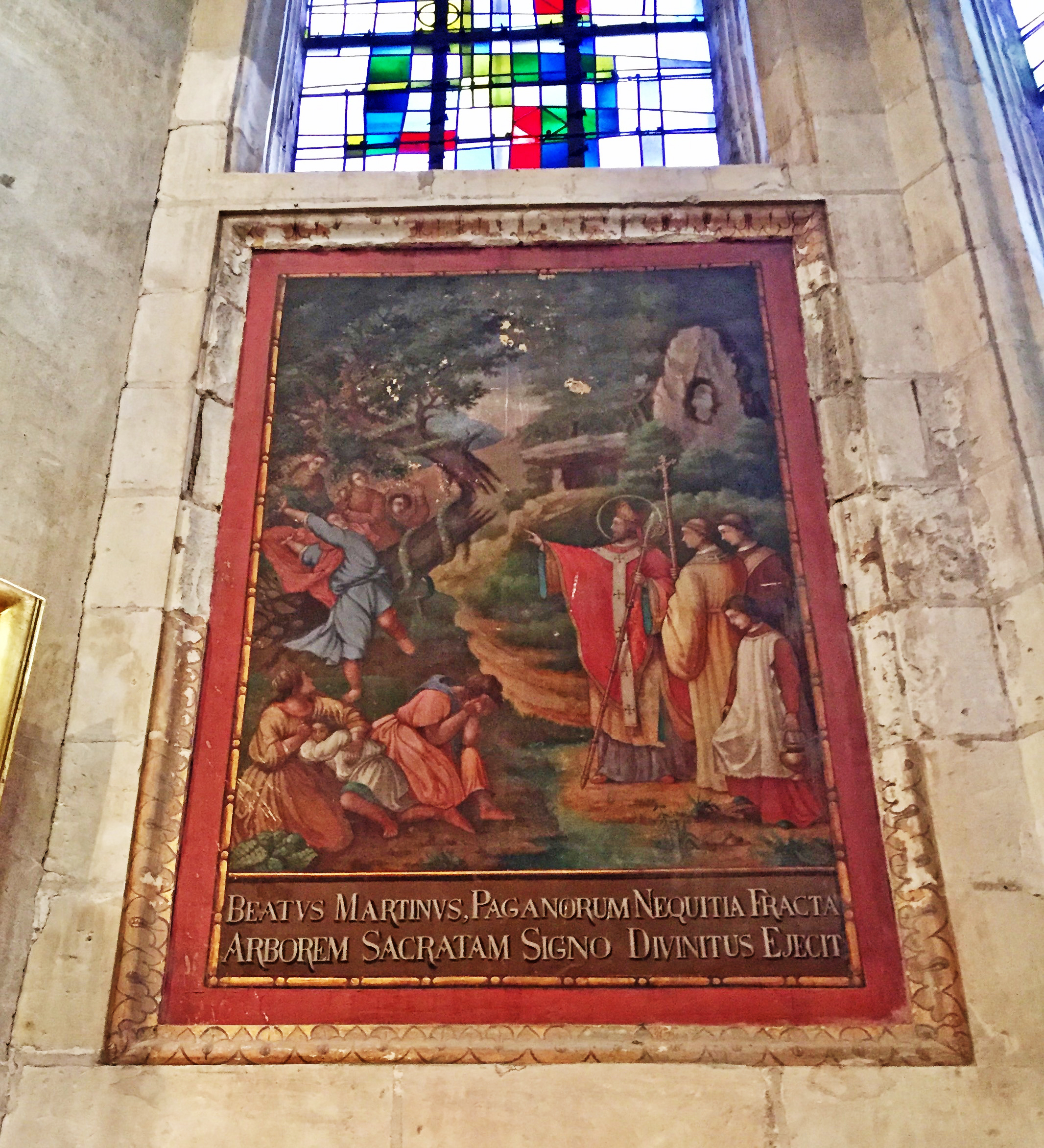
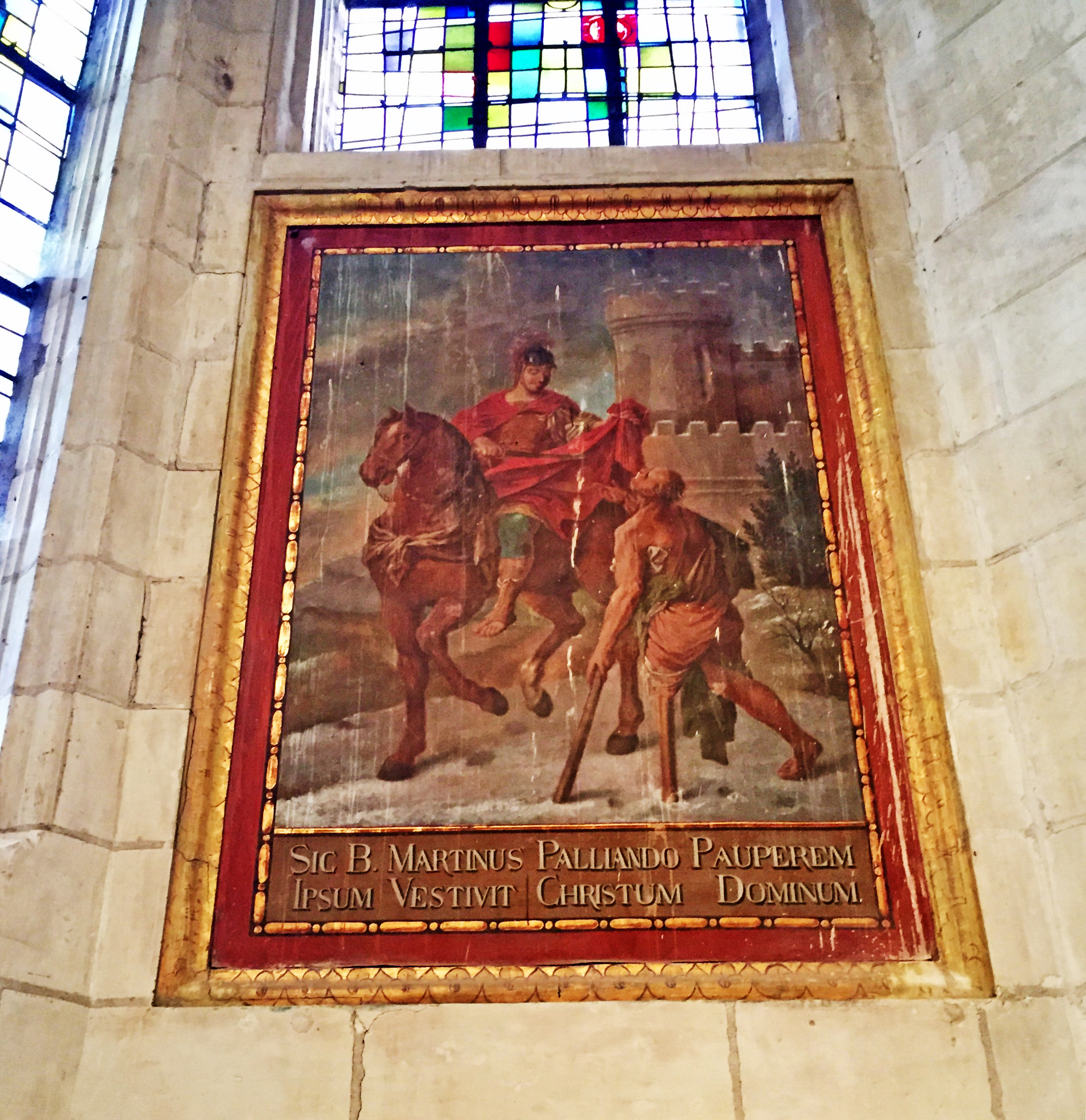

Martin and Francis of Paola in the Spotlight. The two adopted Touraine saints occupy the two chapels, each lit by a modern glass roof of Jacques le Chevalier, overlooking three ancient paintings, more or less restored. At left is the Martin stained glass window and an excerpt from the three paintings [link and flickr Logan Isaac].
Then, on the right, the Francis of Paola stained glass window and an excerpt from two of the three paintings, the second, with Louis XI, marked F. Wachsmut ( state before restoration, link)
+ state before restoration, link)
+  view of the altar with a glimpse of the last two restored paintings.
For a time, the church was dedicated to these two saints in conjunction with Julian (of Brioude, the Hospitaller or of Le Mans, or all three at once ?). view of the altar with a glimpse of the last two restored paintings.
For a time, the church was dedicated to these two saints in conjunction with Julian (of Brioude, the Hospitaller or of Le Mans, or all three at once ?).

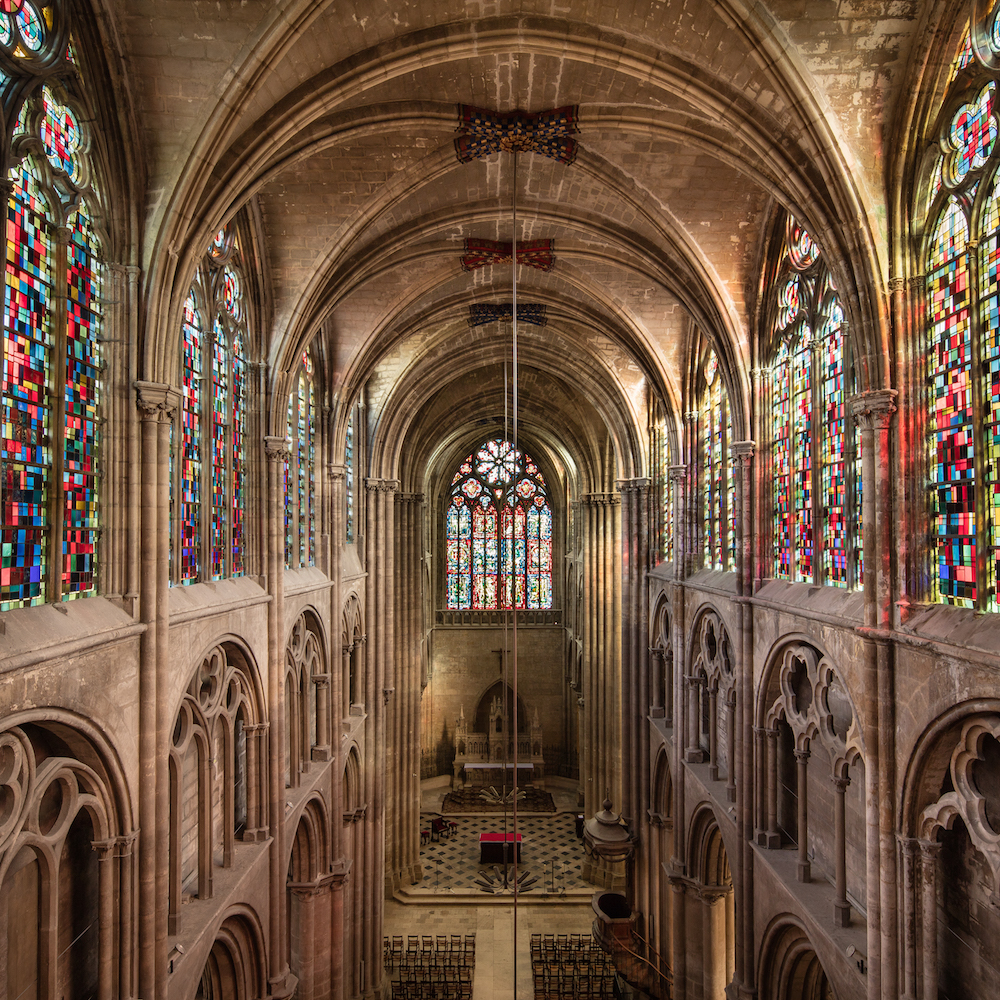

A church with a cultural focus. On the left is one of the capitals of the porch. They were carved and designed in the 19th century by Gustave Guérin, inspired by medieval art, installed during the 1960s restoration. In the center the nave, a view taken from a set of 12 photos presented on this page of the cathedral parish, to which the church is attached. It is, however, one of the few churches in France to be owned by the state. It is a venue for a variety of cultural events, such as, at right, on December 7 and 8, 2019, when the Jacques Ibert Vocal Ensemble performed Handel's Messiah for its 40th anniversary, with audience participation in the choirs as an encore.
+ very illustrated page about the church, including a review of the stained glass windows, all created around 1960, following the complete destruction of the windows in 1940.
|
The collegiate church of Candes: see
here-above. The Abbey of Ligugé: see here-above.


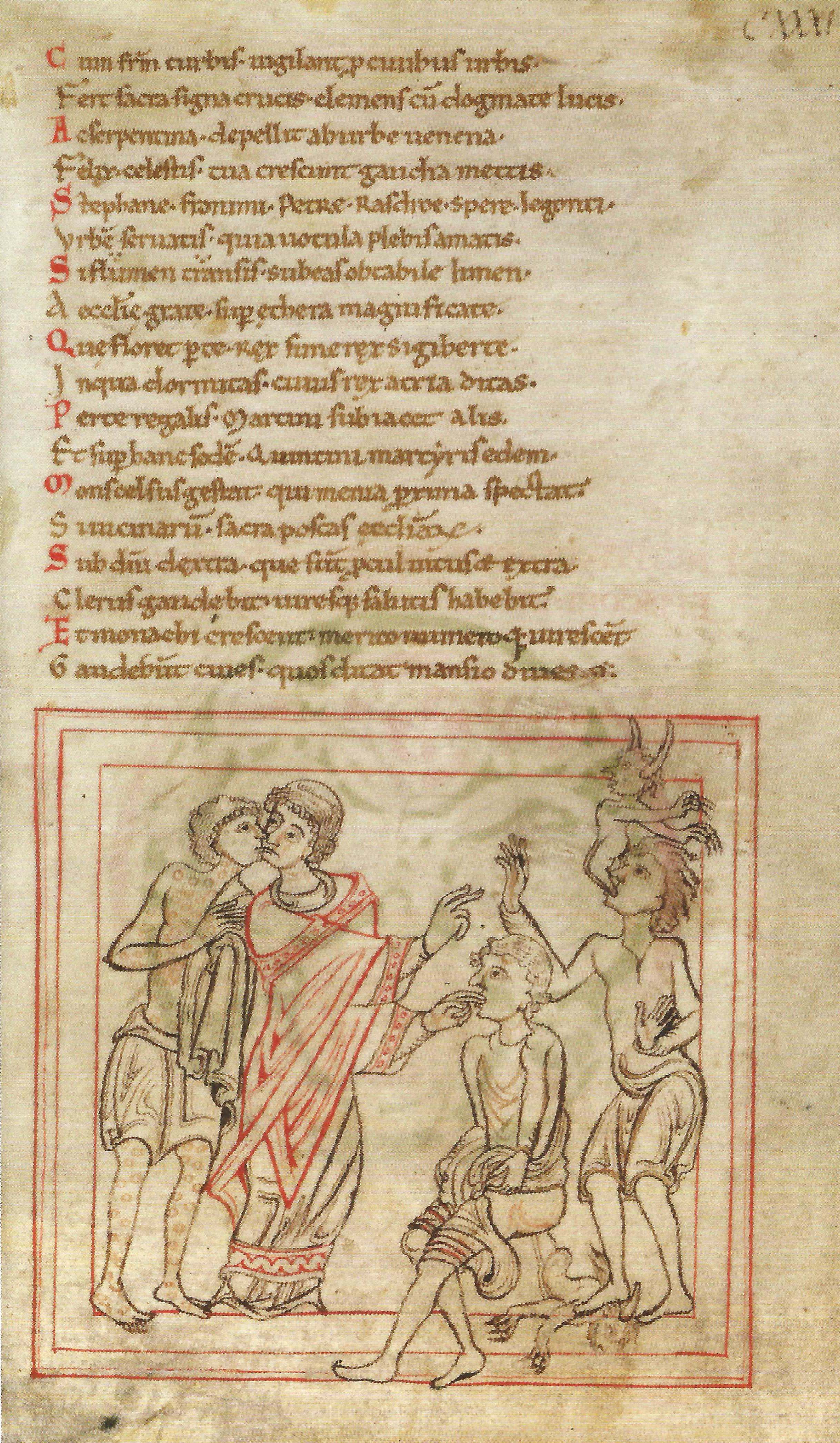
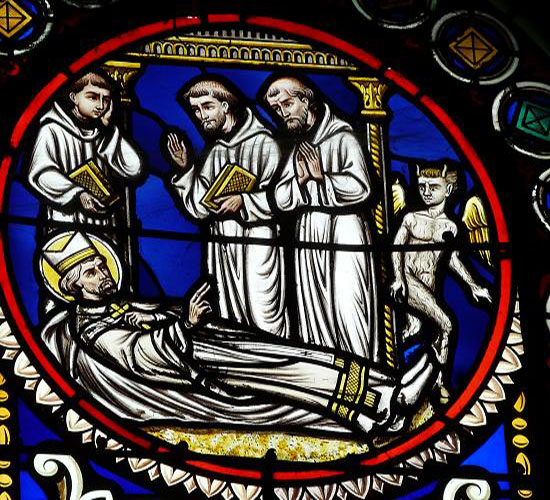


Medieval Martinian Demons. 1) elaborate painting on wood, 13th century [Barcelona Museum + 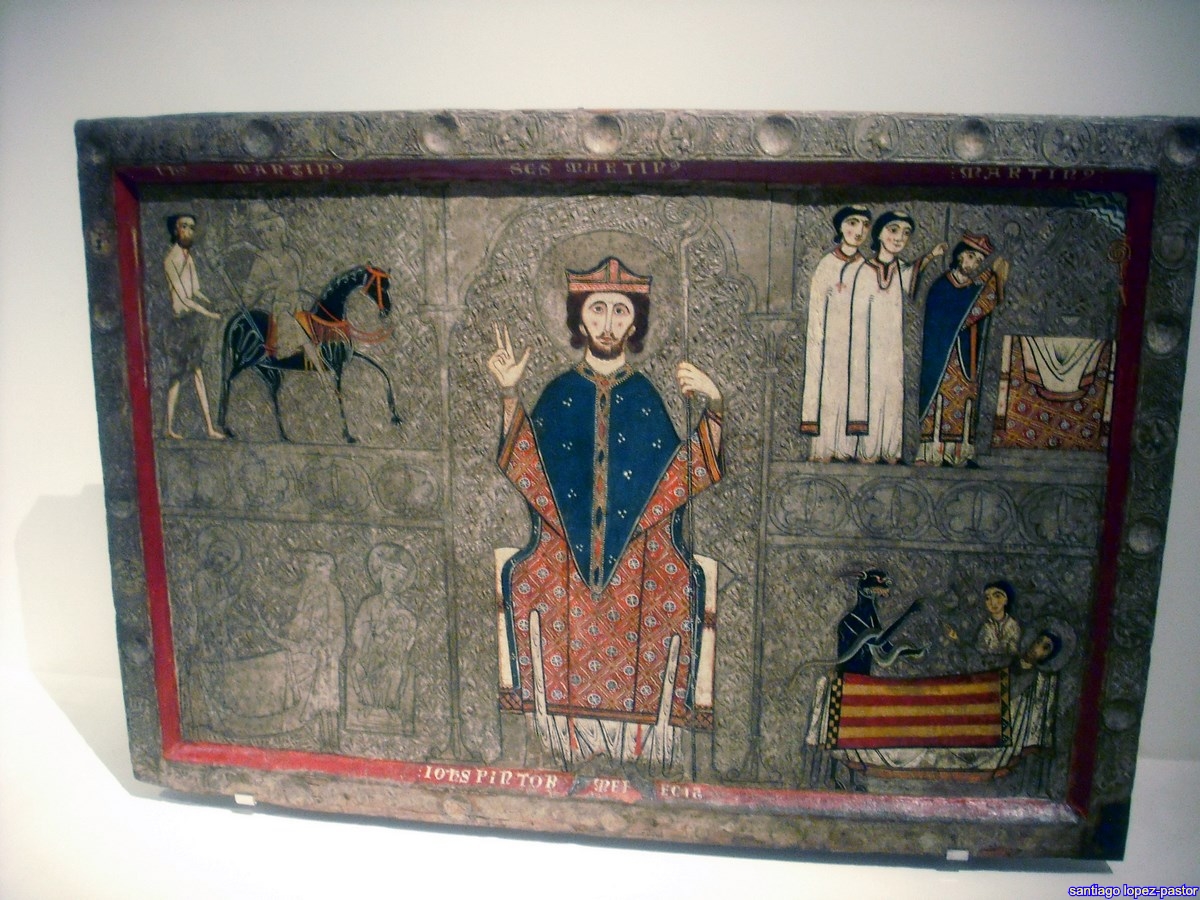 panel in its entirety, flickr santiago lopez-pastor + panel in its entirety, flickr santiago lopez-pastor + 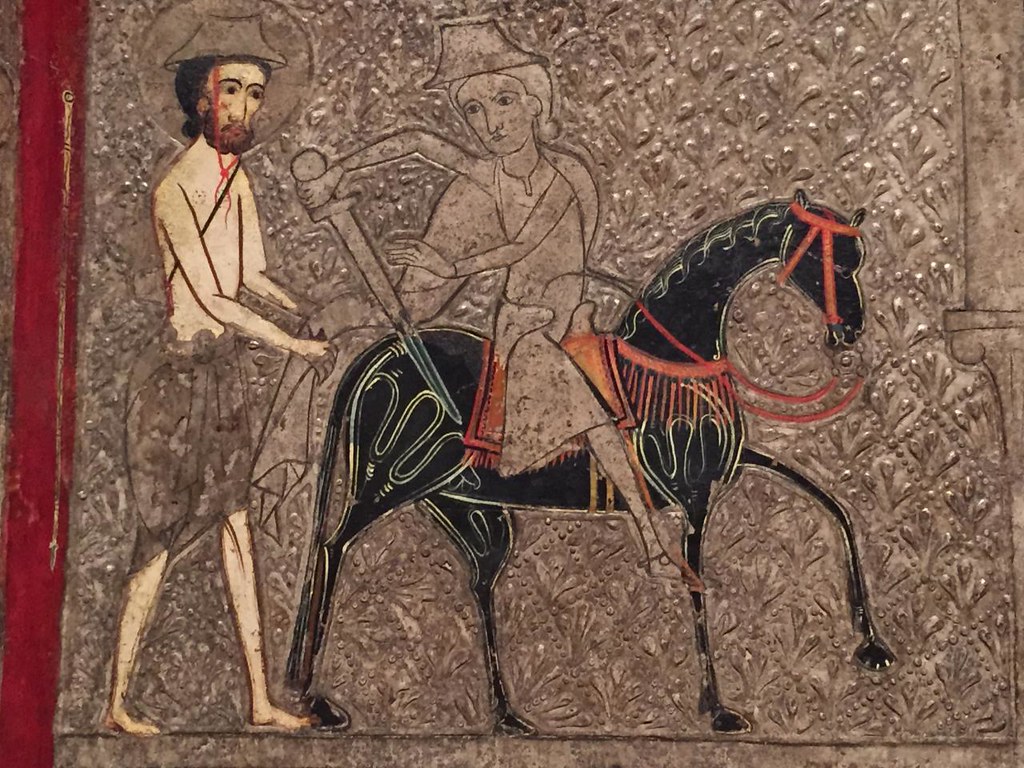 gros-plan of the sharing of the mantle, flickr balavenise].
2) Chartres Cathedral.
3) Derick Baegert, late 15th century [Westphalia Museum].
4) after 1102, Richer of Metz [Trier Library, [Catalog 2016].
8) BmT
9) Tours Cathedral, bay 4, 13th century.
10) Master Francis [Historial Mirror, Poitiers parchment 1460, BnF].
11) copperplate engraving by an anonymous person in the style of Jerome Bosch, between 1540 and 1570, published in Antwerp [univ. of Liege] ( gros-plan of the sharing of the mantle, flickr balavenise].
2) Chartres Cathedral.
3) Derick Baegert, late 15th century [Westphalia Museum].
4) after 1102, Richer of Metz [Trier Library, [Catalog 2016].
8) BmT
9) Tours Cathedral, bay 4, 13th century.
10) Master Francis [Historial Mirror, Poitiers parchment 1460, BnF].
11) copperplate engraving by an anonymous person in the style of Jerome Bosch, between 1540 and 1570, published in Antwerp [univ. of Liege] ( link)
[most of these images are from the Maupoix 2018, with a chapter "Saint Martin and the Devil"].
+ Martin resisting the devil on these three stained glass windows : link)
[most of these images are from the Maupoix 2018, with a chapter "Saint Martin and the Devil"].
+ Martin resisting the devil on these three stained glass windows :
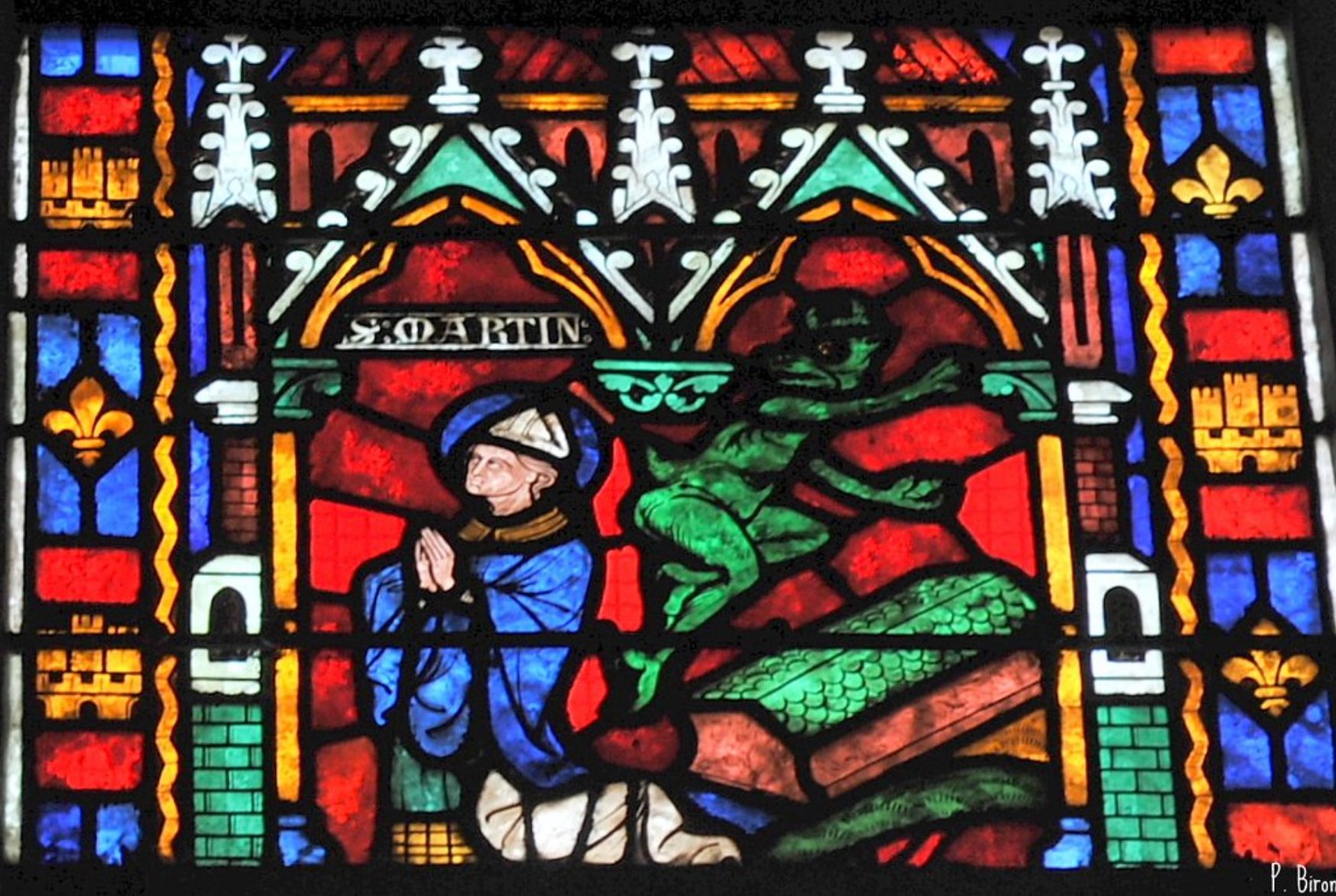 1 [St. Nicholas chapel of the cathedral of Evreux, flickr Philippe_28] 1 [St. Nicholas chapel of the cathedral of Evreux, flickr Philippe_28]
 2 [St Florentin in Yonne] 2 [St Florentin in Yonne]
 3 [Church of St. Martin the Great in York, Great Britain, 1437, flickr Lawrence OP].
Other illustrations about Martin and his demons : here-before. 3 [Church of St. Martin the Great in York, Great Britain, 1437, flickr Lawrence OP].
Other illustrations about Martin and his demons : here-before.
|


Trading streets in the early 16th century. On the left tailor, furrier, barber, hypocras seller, on the right a goldsmith-jewelry store, as there were in Tours ["Les renaissances", Belin 2013].
|
|


 postcard
 postcard
 1
1 2
2 3
3 4
4 5
5 recount
 Article


To the left, at the location of the present Plumereau Square (the house on the right no longer standing), Rue de Tours [LTa&m 1845]
+ three engravings of the same place :
 1 [Clarey-Martineau 1841] 1 [Clarey-Martineau 1841]
 2 [LTh&m 1855] 2 [LTh&m 1855]
 3 [Robida 1892]
+ 3 [Robida 1892]
+  postcard
+ postcard
+  photo 1927
+ photo 1927
+ 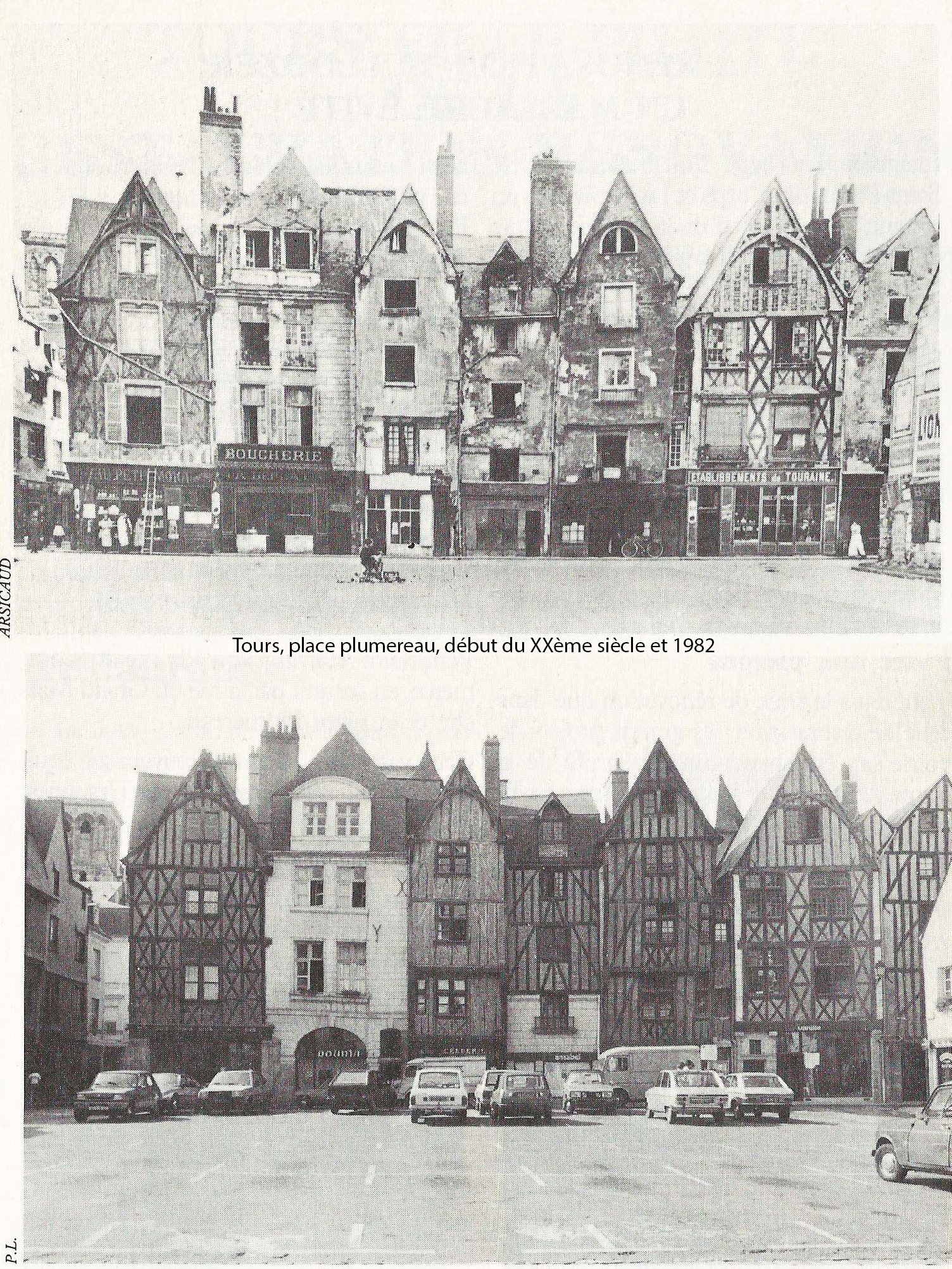 comparison of two photos early 20th and 1982 ["Tours information" Sept. 1982]
+ photo 1970 ["Tours" P. Leveel 1971]
+ comparison of two photos early 20th and 1982 ["Tours information" Sept. 1982]
+ photo 1970 ["Tours" P. Leveel 1971]
+  photo recent with middle house in foreground).
At right, solemn entry of a new bishop into the city + photo recent with middle house in foreground).
At right, solemn entry of a new bishop into the city +  engraving "First Dinner of an Archbishop of Tours" [LTa&m 1845]. engraving "First Dinner of an Archbishop of Tours" [LTa&m 1845].
Leonardo da Vinci in Touraine. The famous fresco The School of Athens by the Italian painter Raphael, created in 1508, is representative of the return to the sources of antiquity, characteristic of Renaissance humanism [Vatican Museum]. Standing in the center is Plato in the guise of Leonardo da Vinci. The author of the Mona Lisa would settle in Amboise in 1516 and die there three years later at age 64. This cultural ferment, of which Guillaume Budé is a symbol in France, will concern very little the Church and the chapter of Saint Martin. Berenger of Tours (see above) had no successor.
|
1525-1556, Protestantism takes hold in Tours. From the Renaissance onward, two currents of thought developed the
humanism, which remained confined to the cultural realm, and protestantism, which spilled over into the political realm. The second was to wreak havoc early in Tours with the first war of religion. Tours indeed became an important focus for the new ideas of Luther and then Calvin. They were received with fervor, leading to a rapid decline in devotion to St. Martin the basilica lost its luster.
Eugène Giraudet dates the first traces of Protestantism in Tours to 1525 ("commissioners sharply chastised some habitués of their church who seemed imbued with heretical sentiments"), to 1542 "a consistency and regularity that presaged great public calamities" and to 1544 "the first persecutions carried out in Tours against people of the new religion."
Bernard Chevalier ["History of Tours" 1985] :"It was in 1556, to the testimony of Theodore de Bèze, that the Reformed Church of Tours was instituted, one year after those of Paris, Poitiers, Angers, and Loudun, one year before those of Orleans, Sens, and Rouen. Instituting the church meant setting up a consistory of elders and laity deacons, gathering around them a community and placing at its head a minister duly trained in Calvin's theology to provide preaching and celebrate the Lord's Supper. This also meant a double break, from Roman idolatry certainly, but also from the free inspiration of Lutheran congregations. But the survivors of the First Reformation did not bow willingly to Calvinist discipline."
March 1560: the
conjuration of Amboise 25 kms from Tours, it was a tremendous thunderclap heralding a long period of civil wars. Protestant gentiles fomented a plot to seize the 15-year-old king Francois II, or at least separate him from the Guise, who held the regency. 500 conspirators from all parts of France (including burghers from Tours) converged first on Nantes, then, more numerous, on the royal residence. The rebels, quickly subdued (there were escapes...), were punished with extreme severity. The repression would have made 1200 to 1500 deaths. The Prince de Condé, who is shown in this picture as one of the spectators on the balcony, had refused to participate in the conspiracy. He who was designated by the conspirators as "the dumb captain", had waited in Orleans to reap the fruits of the plot.

The Amboise conjuration: preparation and denouement. Above and left, excerpts from the second volume of the comic book Catherine de Medici - La reine Maudite in the series "Les reines de sang", script by Arnaud Delalande and Simona Mogavino, drawing by Carlos Gomez, Delcourt 2019
+ five plates :
 1 1
 2 2
 3 3
 4 4
 5.
On the right, print by Jean Perissin and Jacques Tortorel, Protestants from Lyon
+ link
+ the same 5.
On the right, print by Jean Perissin and Jacques Tortorel, Protestants from Lyon
+ link
+ the same  image with the captions
+ other image with the captions
+ other  image captioned by the same authors
+ another image captioned by the same authors
+ another  engraving of the conjuration, with engraving of the conjuration, with  view of Amboise 1775 ["Visages de la Touraine" 1948
+ two views of Amboise [LTh&m 1855] : view of Amboise 1775 ["Visages de la Touraine" 1948
+ two views of Amboise [LTh&m 1855] :
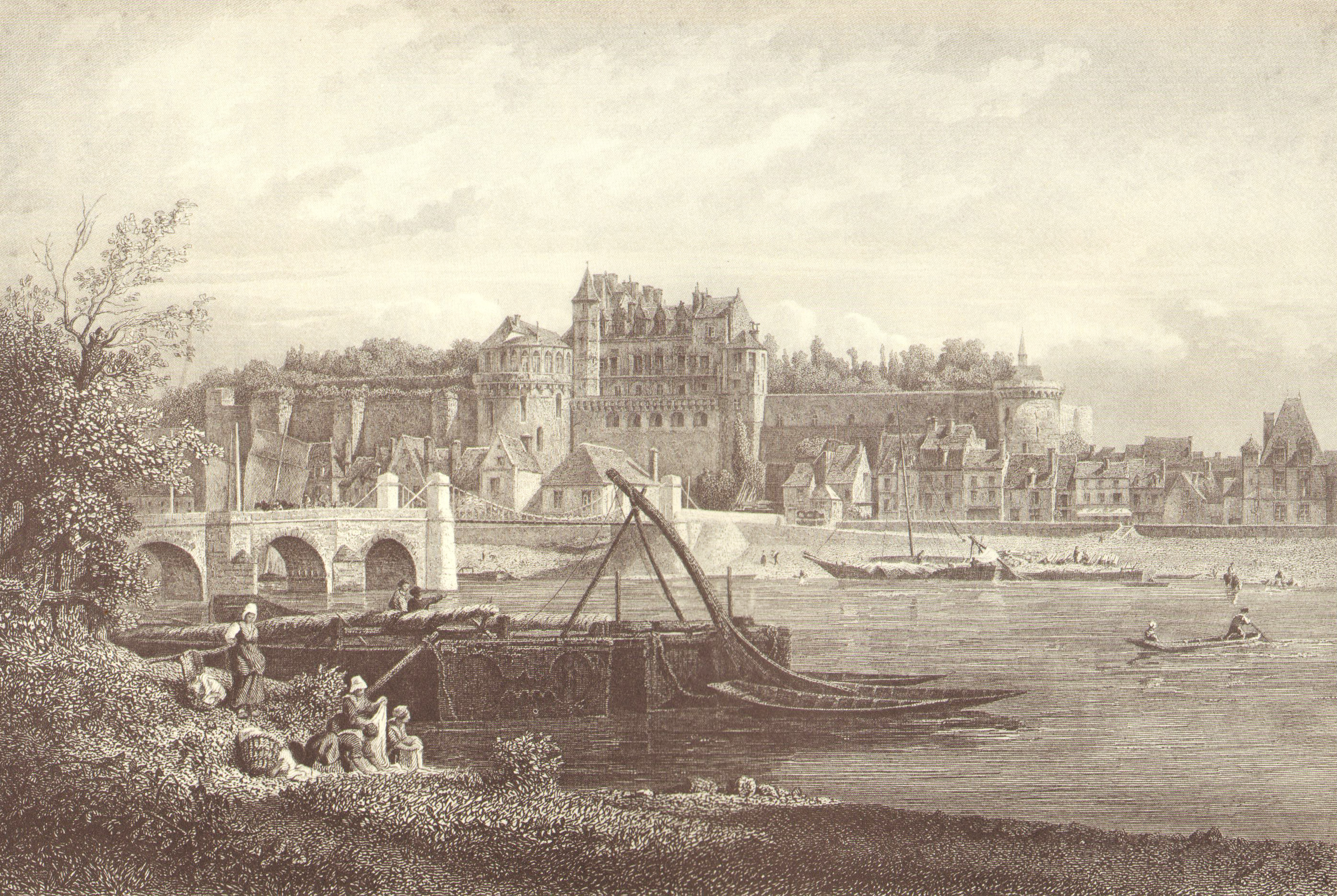 1 1
 2. 2.
|
Hundred days under the rule of the Huguenots. It is possible that the word
Huguenot that would come to refer to Protestants in the kingdom of France and Navarre came from the Tour Feu-Hugon, a tower in the eastern ramparts of Tours near which Protestants met. Bernard Chevalier, while Catherine de Medici had been in regency since the death in 1559 of her husband Henri II and that in 1560 of her eldest son François II, his other son Charles IX being then only 10 years old : "What happened in Tours in April 1562 was probably only an episode of the first religious war opened in March 1562 by the massacre of Vassy, but one would lose the meaning of it, if one wanted to see in it only the continuation of maneuvers mounted elsewhere. The general plan did consist in the uprising of all the good towns, which rallying to the prince of Condé[Louis I de Bourbon-Condé (1530-1569), uncle of the future Henry IV] insurgent, were to ensure the reversal of the regent and the success of the Reformation, but its execution depended on each of them." The capture of Orleans by the Prince of Conde was accompanied by the conquest of several nearby cities, including Tours, but also Blois, Loches, Chinon, Amboise, by his supporters. The treasures of the churches and abbeys, especially that of Saint-Martin de Tours, were seized and plundered, statues and tombs were broken.
The social branding of Touraine Protestantism. Eugène Giraudet "The most ardent propagators of this religious revolution were two Augustinian monks, named de Lépine and Gerbault their Calvinist doctrines preached in the midst of the public squares and the most frequented streets generally produced on the people an influence quite contrary to those they expected, and Protestantism propagated only among the people of the nobility and the bourgeoisie." This social differentiation underlies the subsequent events. +
article by Robert Sauzet 1989 "The Tourangeau Devout Milieu and the Beginnings of the Catholic Reformation (1560-1620".
1562, the April plunder. Charles Lelong ["La basilique Saint-Martin de Tours" 1986] gives details of the damage to the basilica : "By 1561 the Huguenots had made themselves masters of the city and had begun the pillage of the churches. On May 5, 1562 [correction: April 5, according to Giraudet and Chevalier, confirmation by the expression "century days", from April to July], they broke the chasses, the lamps, and everything locked up in the treasure of Saint-Martin on the 9th, the silver capital (the ciborium) was knocked down, and the tomb destroyed down to its foundation. Under the pretext of protecting the treasure, the prince of Condé ordered on May 11 the melting of all the precious objects which, transformed into ingots, would be placed under its safeguard in Orleans. [...]This inventory lasted at Saint Martin from May 15 to June 7 but turned to vandalism, the Huguenots breaking altars, violating tombs, destroying the small organs and part of the stained glass windows, striving above all to recover the precious metals : the great
crucifix of silver, the statue of Louis XI, the crosses, the altar ornaments and priestly vestments, all the reliquaries, which were melted down on May 25. [...]The furnaces had been installed in the great revestiary and on May 25 the relics were also burned there, the ashes of which were scattered behind the Dial Gate." The heritage of Saint Martin was destroyed, recalling the ancient times, 1200 years earlier, when Martin destroyed the Gallic heritage...
+ the book by Charles de Grandmaison "Procès-verbal of the plundering by the Huguenots of the relics and jewels of Saint-Martin de Tours in May and June 1562," 1863, 100 pages.
Why? Although he deplored the lucre, the affairism and the imposture of the Chapter, Jacques Verrière wonders:"It is difficult to understand the desecration of the tomb and the dispersion of the relics of Saint Martin, some of which were, by chance, recovered : were not the requirement of purification and the values of denial and evangelical simplicity put forward by the Reformed the very ones that Martin had defended throughout his life ? Not to mention, on the subject of grace, a theological proximity between Saint Martin and Martin Luther. But it is true that the Huguenots of Condé were rather inspired by John Calvin. The great basilica and the pilgrimage never really recovered from these dramatic events." [
Verry 2018]


Deliberate destruction of images, Protestant iconoclasm across Europe. In the 16th century, several Protestant religious leaders (mainly Ulrich Zwingli in Zurich and John Calvin in Geneva) urged the destruction of religious images, whose veneration they equated with idolatrous worship and thus fell under the rubric of paganism. On the left, an illustration of the life of Martin Luther (1483-1546) (a Martin...). In the center, Zurich summer 1524.
On the right, in April 1562, Huguenots ransack and profanent in the Cathedral of Saint Gatien [LTa&m 1845].
+  photo of a ransacked bas-relief in St. Martin's Cathedral in Utrecht.
+ two other illustrations : photo of a ransacked bas-relief in St. Martin's Cathedral in Utrecht.
+ two other illustrations :  1 (Hamburg, Frans Hogenberg 1566) 1 (Hamburg, Frans Hogenberg 1566)  2 ("Complaint of the Persecuted Idols", engraving by Erhard Schön 1530). 2 ("Complaint of the Persecuted Idols", engraving by Erhard Schön 1530).
|


 cover
cover1562, the July Massacre. Disrespect for heritage is a marker of deep intolerance. It can go as far as the massacre : Martin had refused it in the Priscillien affair, Tourangeaux committed it in this year of misfortunes. Bernard Chevalier : "This was dice then the turn of Catholics to hide to hear the mass. [...]But this war did not take the lightning pace that the Huguenots had expected. Everywhere, on the contrary, the Catholics regained the upper hand, the surprise over. At Tours, the
Marshal de Saint-André began a siege that raised the hopes of the Catholic majority. The Huguenots, despairing of being rescued, negotiated their surrender, in exchange for the right to leave the city. This was a false promise; immediately the lynching of the survivors who could be taken began. Soon those who were able to retreat were brought back to Tours to be put to death and their bodies thrown into the Loire by the hundreds. The Huguenot Hundred Days were succeeded by the Catholic Terror. The bloodless violence of the temple purifiers was answered by those of the purifiers of the people through massacre".


Tours, July 1562, the massacre of Protestants west of Tours in the suburbs La Riche, hundreds dead. "The people slit the throats of so many of these distraught men that the Loire River was stained with their blood" (period remarks by Jean de Serres). On the left, print by Jacques Tortorel and Jean Perrissin engravers [dimensions 36,5 cm x 49,2 cm, Musée Carnavalet].
There was no bridge over the Loire at this level, it is in fact a bridge over the Sainte Anne stream, which flows into the Loire, on the left.
+ the same 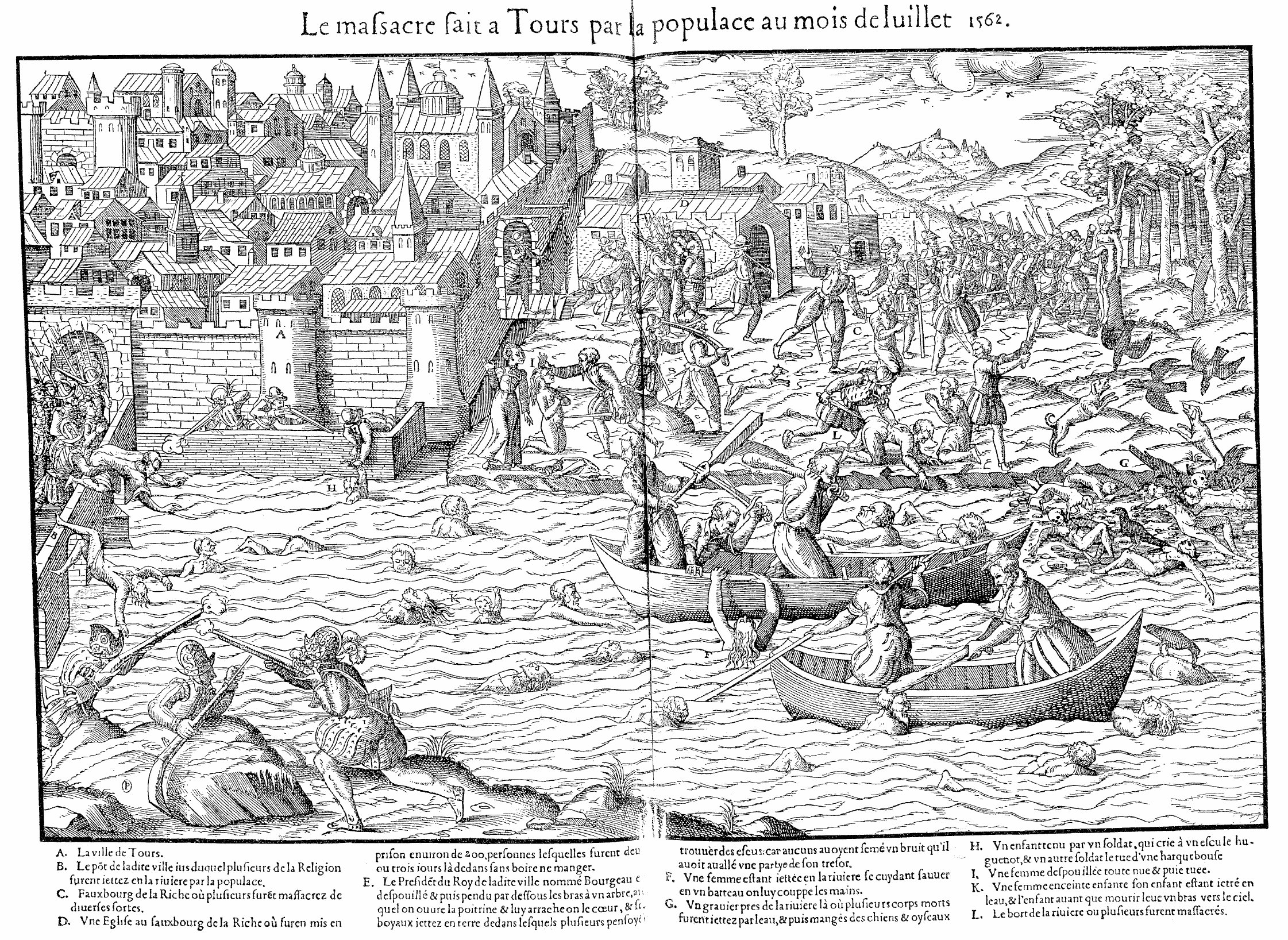 estamp with eleven captioned elements
+ the same estamp with eleven captioned elements
+ the same  estamp colored, left and right parts reversed [engraving by Frans Hoggenberg, Wikipedia]
+ the same estamp colored, left and right parts reversed [engraving by Frans Hoggenberg, Wikipedia]
+ the same 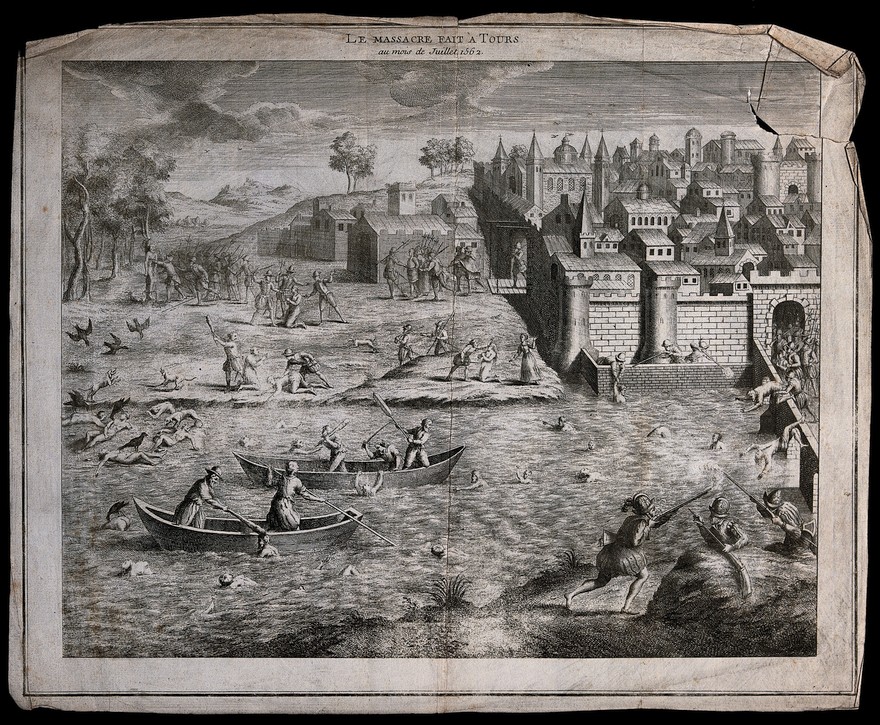 copy reversed, this time uncolored + (P.-S.) yet another copy reversed, this time uncolored + (P.-S.) yet another 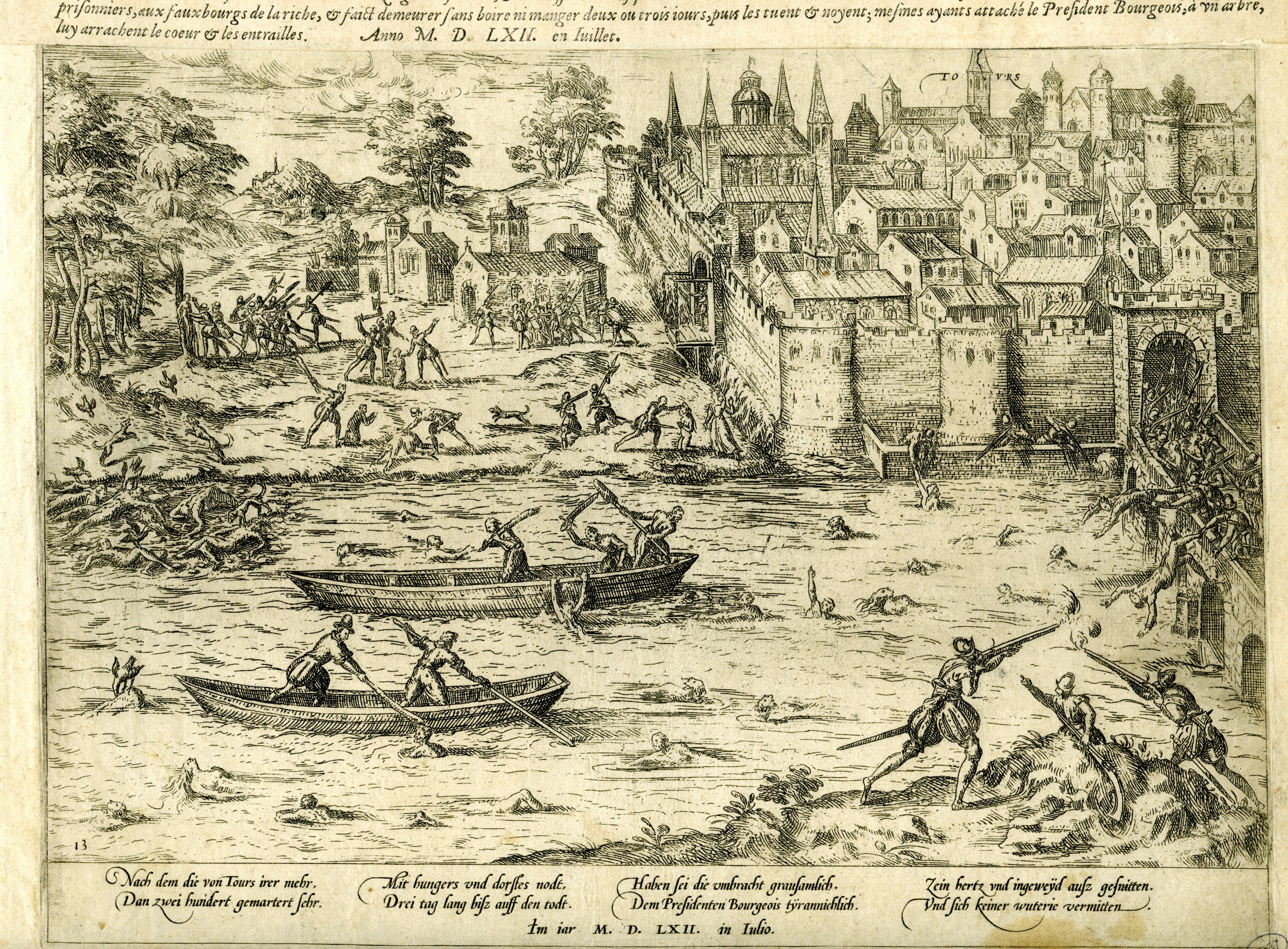 other [archives dép. 37]
and a commentary of four pages by Auguste Molinier 1886.
+ link.
On the right engraving of LTa&m 1845.
+ two portraits : other [archives dép. 37]
and a commentary of four pages by Auguste Molinier 1886.
+ link.
On the right engraving of LTa&m 1845.
+ two portraits :
 1 the Prince de Condé, Protestant uncle of Henry IV, probably at the heart of the Amboise Conjuring 1 the Prince de Condé, Protestant uncle of Henry IV, probably at the heart of the Amboise Conjuring
 2 the Marshal of Saint-Andre, a Catholic, who was unable to prevent the massacre.
+ page featuring other engravings of Protestant massacres throughout the kingdom of France (with another copy by Tortorel and Perrissin by Hoggenberg). 2 the Marshal of Saint-Andre, a Catholic, who was unable to prevent the massacre.
+ page featuring other engravings of Protestant massacres throughout the kingdom of France (with another copy by Tortorel and Perrissin by Hoggenberg).

Paris, August 24, 1572, the St. Bartholomew's Day Massacre. On the left, box from the comic strip Saint-Barthélémy, text by Eric Stalner and Pierre Boisserie, drawing by Eric Stalner, 3 volumes in 2016-2017
+ four plates (22 and 29 of volume 1, 7 and 8 of volume 2) :
 1 1
 2 2
 3 3
 4.
At right, period drawing by François Dubois, a Protestant survivor of the massacre who later took refuge in Geneva. Blood is everywhere. Here part of the painting, the whole is studied on this page of the site "History and Secrets [Museum of Lausanne, Wikipedia].
+ reprise of this painting in a 4.
At right, period drawing by François Dubois, a Protestant survivor of the massacre who later took refuge in Geneva. Blood is everywhere. Here part of the painting, the whole is studied on this page of the site "History and Secrets [Museum of Lausanne, Wikipedia].
+ reprise of this painting in a  page of the History of France in Comics, Larousse 1976, text by Christian Godard, drawing by Julio Ribera.
+ page of the History of France in Comics, Larousse 1976, text by Christian Godard, drawing by Julio Ribera.
+  map of other killings and battles of the Fourth War of Religion ["Les guerres de religion", Belin 2013]. In 1572, Tours and Touraine were among the areas of Catholic violence, but there were no mass killings, unlike in Orleans, Angers, and Saumur, on the outskirts of Touraine. In the latter city, there were at least 26 victims (link). map of other killings and battles of the Fourth War of Religion ["Les guerres de religion", Belin 2013]. In 1572, Tours and Touraine were among the areas of Catholic violence, but there were no mass killings, unlike in Orleans, Angers, and Saumur, on the outskirts of Touraine. In the latter city, there were at least 26 victims (link).
|
Seven more religious wars followed the first, from 1567 to 1598 (the
St. Bartholomew's Day Massacre dates from 1572), ending with the signing of the edict of Nantes. Bernard Chevalier shows that the Tourangeaux calmed down, despite new murders : "What helped to keep things more or less calm and to limit the number of Protestant victims to a few dozen was the distance from the theater of operations. During the civil wars that followed, after the terrible blow of 1562, the Protestant forces gathered in the southwest generally sought to join through Poitou and Berry their German allies who were arriving in Champagne. The alarm was only sounded in Tours when their runners reached Ligueil or Montrichard; it was hot in 1568 when Blois was taken after Orleans and Beaugency. However, there was never any fear of military revenge on the part of the Huguenots, but military measures had to be taken to avert the risk". Eugène Giraudet has a darker vision than Bernard Chevalier, listing frequent murders, not exceeding a dozen people each time, until the Saint Bartholomew's Day on August 24, 1572, which provoked the departure from Tours of many Calvinists, whose houses were pillaged by the Catholics.
1579, Martin and the Earthquake. Bernard Briais, in his book "Historical anecdotes from Touraine" [PB&CO 2015], tells of the earthquake of February 26, 1579 "In the city of Touraine, there was panic. In the streets, panicked people ran in all directions, barely clothed, just getting out of bed. Women in hair were dragging behind them crying children. Everywhere one heard only cries and lamentations. In the general mess, it was no longer clear to which saint to turn: some implored St. Martin, others St. Gatien ...; the women turned rather to the Virgin Mary ... [...] With the day and the end of the shaking, a glimmer of hope reappeared. However, one did not leave the churches and one did not stop praying. [...]The next day, to thank God for his great mercy, a solemn ceremony was held. [...]All the churches and parishes with the monasteries assembled in the great church of Saint Martin. From there, with the relics and bones of the saints, was made the procession out of the city." +
 double page of the "Guide secret de Tours" (Ed. Ouest-France 2019) "Telluric Scrape in Tours".
The drifts of the irrational. Seen from our time, the Middle Ages appear to be given over to irrational fears, to beliefs that can cause outbursts of violence. Whether it is for fantasized diableries or for the will to impose one's God, who nevertheless orders not to kill, these refusals of the difference and of living together set fire to all of Europe in the second half of the 16th century. Were the wars of religion large-scale witch hunts?

The Witch Hunt. Martin's demons were still rampant... Practicing black magic and witchcraft, women (mostly, some men as well) would gather at night in meetings called sabbats to meet the devil in person. The witches of Berry, in the country bordering Touraine, were particularly numerous and renowned. [painting by Francisco de Goya 1822, Prado Museum in Madrid, Wikipedia]. + page titled "Witchcraft and possession in Touraine in the 16th-17th centuries". Excerpt : "In the fifteenth and sixteenth centuries, it was a crime not to believe in magic and to maintain that witches and sorcerers should not be prosecuted and punished. When an inhabitant of Loches denounces his wife, as having dragged him to the Sabbath, one makes the trial this witch who is burned and the husband is not worried...". Some clerics had an aggravating role, such as in 1474 the monks of the Chartreuse du Liget, near Loches, who sent two women to the stake,  story by Bernard Briais in "Historical anecdotes of Touraine" 2015. story by Bernard Briais in "Historical anecdotes of Touraine" 2015.
|

March 23, 1589, session of the parliament of Tours in the great chapter house of Saint Julien Abbey [LTh&m 1855].
|
1589 to 1594: Tours provisional capital of the kingdom of France. Bernard Chevalier: "In 1585[beginning of the eighth and last war of religion], the Holy League forms in Paris around
Henri I de Guise to bar the way to the Huguenot pretender, Henri de Navarre[future Henri IV]. The latter advanced with his troops to Loudun and Ile-Bouchard to monitor the situation. In Blois, on December 23, 1588, Guise was assassinated and the League then entered into rebellion it quickly imposed itself in Orleans, Angers and Berry. Tours hesitated. But the king Henri III takes the lead. He made his entrance on March 6 a few days later the parliament of Paris followed him, at least those of its members who did not remain in the service of the league. The abbey Saint-Julien shelters its meetings. Soon the Chamber of Auditors and the Court of Aids arrived; the castle was used as a prison for the young Duke of Guise, the heir of the House, whom Henri III dragged after him. If the king chooses Tours as his provisional capital, it is because he considers himself safe there, not too far from Paris to take back, not far from the forces of Henri de Navarre. Between the two princes, the interview of reconciliation takes place at the Plessis, April 30, 1589, and both make a remarkable entry into the city". On May 8, 1589 took place the battle of the bridge of Tours, the leaguers failed to seize Tours (link).
+ article by François Caillou 2008 "The Rise and Fall of the League in Tours (1576-1589)"
+ article by Michel de Waele 1998 "From Paris to Tours : the identity crisis of Parisian magistrates from 1589 to 1594"
+ article by Sylvie Daubresse 2007 "Parisian parliamentarians in Tours facing the rebellion (late 1590-early 1591)"
+ article by Marco Penzi 2009 "Tours against Rome at the beginning of the reign of Henry IV"
Martin still patron of Tours and France. In his book
LTh&m 1855, Jean-Jacques Bourassé recalls that there was another reason for choosing Tours as the capital, quoting the opening speech of Attorney General De Faye at the first session of the new Tours parliament : "As for this city, to which the king is now transferring his parliament, it is the first seat of Christianity, where St. Martin established it and rooted it with a very great piety, even before our kings were Christians, and where everyone came on pilgrimage, as to Jerusalem. This holy Father was so revered there from the time he lived, that after his death, in recommendation of his memory, they began to count the first day of the year from the day of his death [Ah ? So we would not be in 2020 but in 1649...]. The very place where they carried his cope to say Mass was called a chapel, and from there came this holy word. Now God has caused to arise in the same place, as in another Noah's Ark, the king's good subjects who have never bowed the knee to Baal and have always remained steadfast in his obedience."


These four events took place while Tours was the capital of France : 1) On April 30, 1589, agreement between Henry III and the future Henry IV, here probably at the castle of Plessis lès Tours [anonymous tapestry]. 2) On August 1, 1589 at Saint-Cloud, murder of King Henry III by the Dominican Jacques Clément [ Frans Hogenberg, BnF, Wikipedia].
3) On August 15, 1591, after the murder of his father Henri I de Guise, Charles de Guise, 15, imprisoned in the château de Tours, makes a dramatic escape [engraving by François Pannemaker]
+  engraving by Lacoste Aîné "Flight of the Duke of Guise" in LTa&m 1845.
4) On March 22, 1594, Henry IV's entry into Paris [François Gérard, 1817, Battle Gallery of the Château de Versailles]. engraving by Lacoste Aîné "Flight of the Duke of Guise" in LTa&m 1845.
4) On March 22, 1594, Henry IV's entry into Paris [François Gérard, 1817, Battle Gallery of the Château de Versailles].


The instigator of the assassination of King Henry III, celebrated by Catholic leaguers, is executed in the public square in Tours On the left the image of the assassination of Henry III differs from the better known one shown above. It appears more in keeping with reality. + another 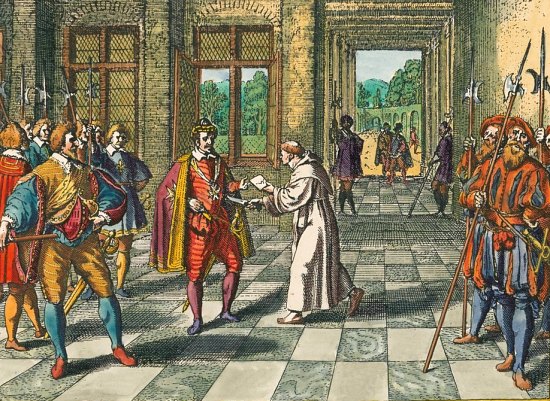 image of the assassination.
"The assassin was massacred on the spot, which gave rise to much speculation". "The League and the Duke of Mayenne, Rome and Spain, provocateurs and accomplices, showed indecent joy. The assassin was canonized[in fact, it was only considered by the pope Sixtus V]and his image placed on the altar !!!". What did the canons of St. Martin's think ? "Fr. Francois Bourgoing was the superior of the Jacobin convent from which Clement had emerged to perform his regicidal act. A strong supporter of the League, he was transferred to Tours by order of Henry IV. He was tried by the Parliament. The magistrates of Tours were convinced (not without reason) that Bourgoing had inspired the gesture of the fanatical monk. He was condemned to death and executed after suffering a terrible torture. [Comments from #41 of "Magazine de la Touraine" (1992), engravings by LTa&m 1845] image of the assassination.
"The assassin was massacred on the spot, which gave rise to much speculation". "The League and the Duke of Mayenne, Rome and Spain, provocateurs and accomplices, showed indecent joy. The assassin was canonized[in fact, it was only considered by the pope Sixtus V]and his image placed on the altar !!!". What did the canons of St. Martin's think ? "Fr. Francois Bourgoing was the superior of the Jacobin convent from which Clement had emerged to perform his regicidal act. A strong supporter of the League, he was transferred to Tours by order of Henry IV. He was tried by the Parliament. The magistrates of Tours were convinced (not without reason) that Bourgoing had inspired the gesture of the fanatical monk. He was condemned to death and executed after suffering a terrible torture. [Comments from #41 of "Magazine de la Touraine" (1992), engravings by LTa&m 1845]
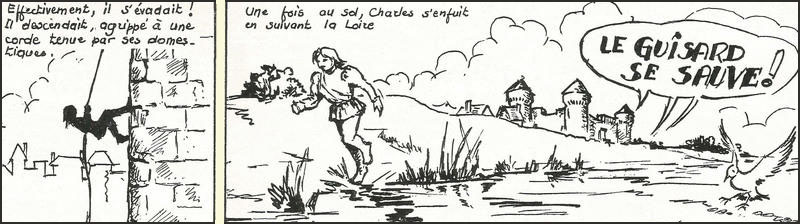
August 15, 1591, the escape of the young Duke of Guise (already illustrated above by Pannemaker) from the castle of Tours [ Guignolet 1984].
+ four plates on this episode:
 1 1
 2 2
 3 3
 4 4
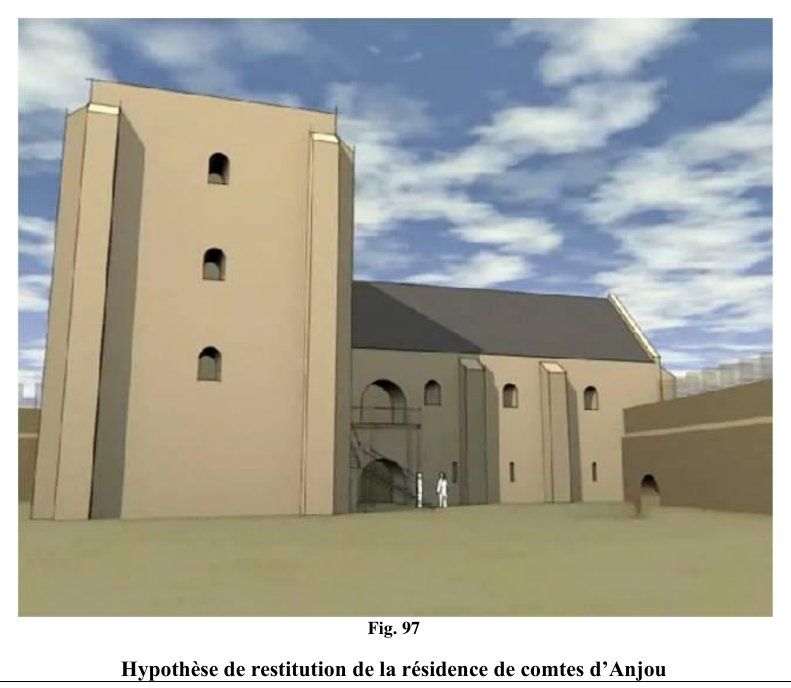
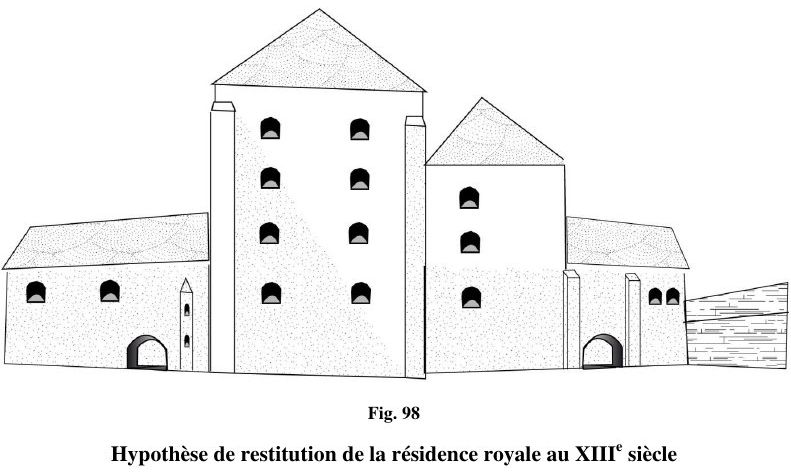
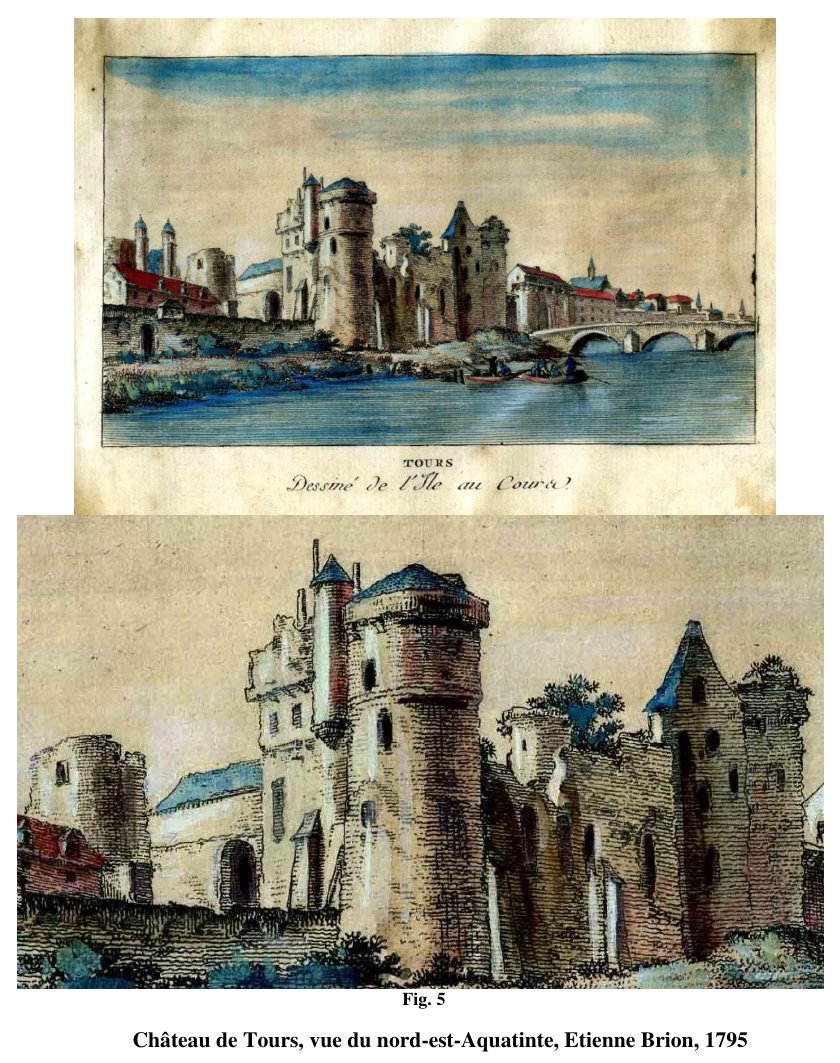
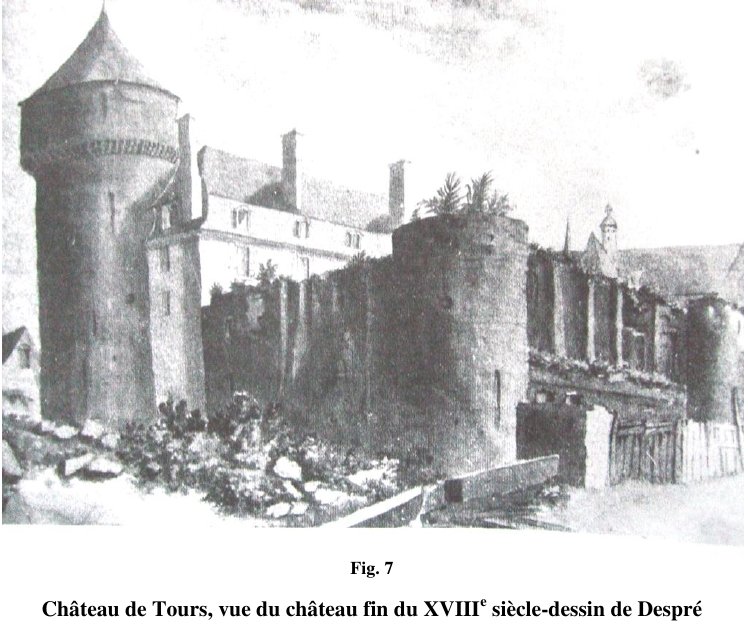
The successive castles of Tours : in the eleventh century (castle comtal), in the thirteenth century (unfortified royal castle), in 1795 (fortified royal castle built around 1280) (before the construction in the eighteenth century of the current wing connecting the towers of Guise and the dungeon) and in the eighteenth century (the same royal castle, transformed, before the removal of the towers and walls located on the right / west). Illustrations from Vassy Malatra's 2011 thesis, presented below.
|
 restitution
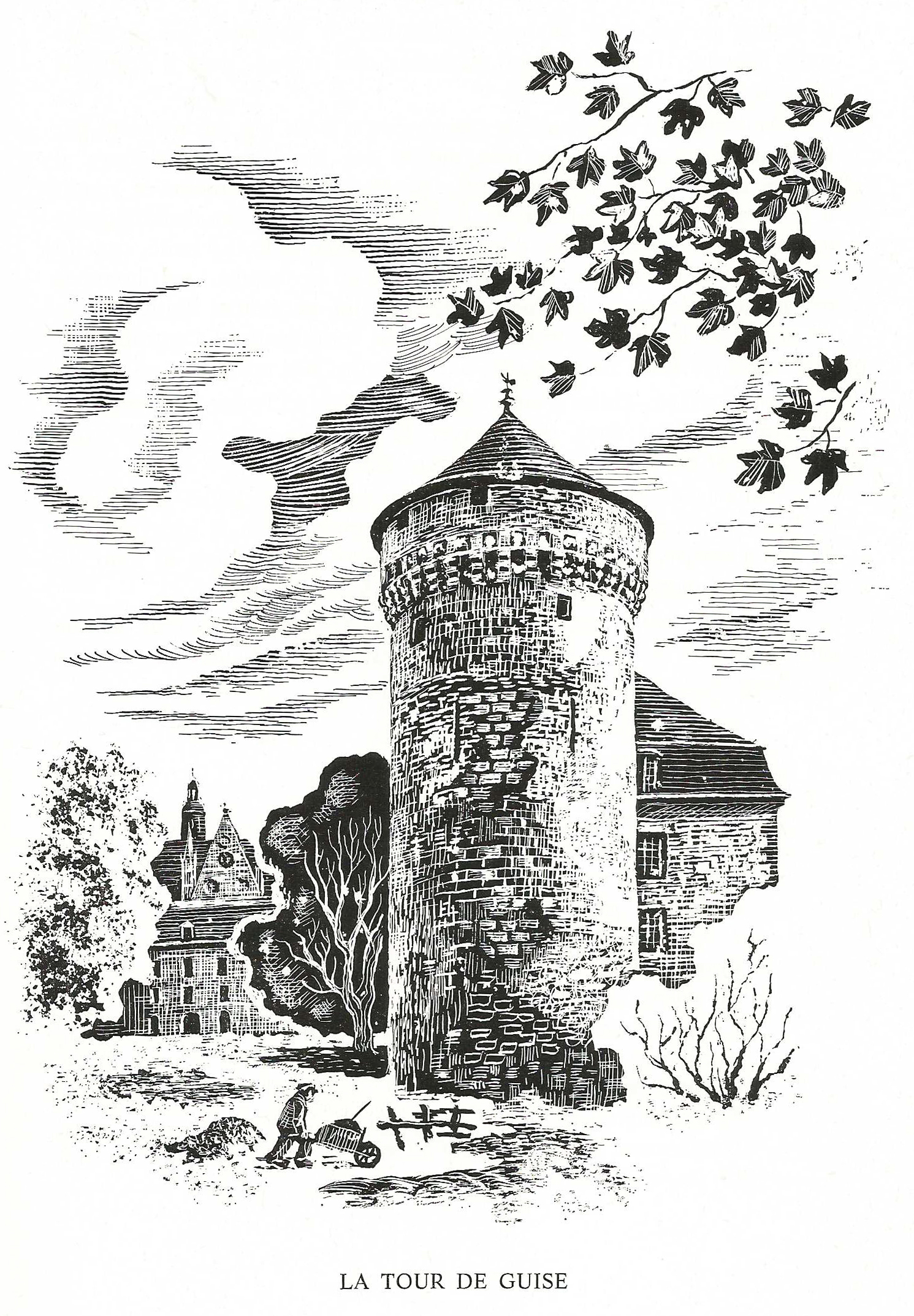 engraving
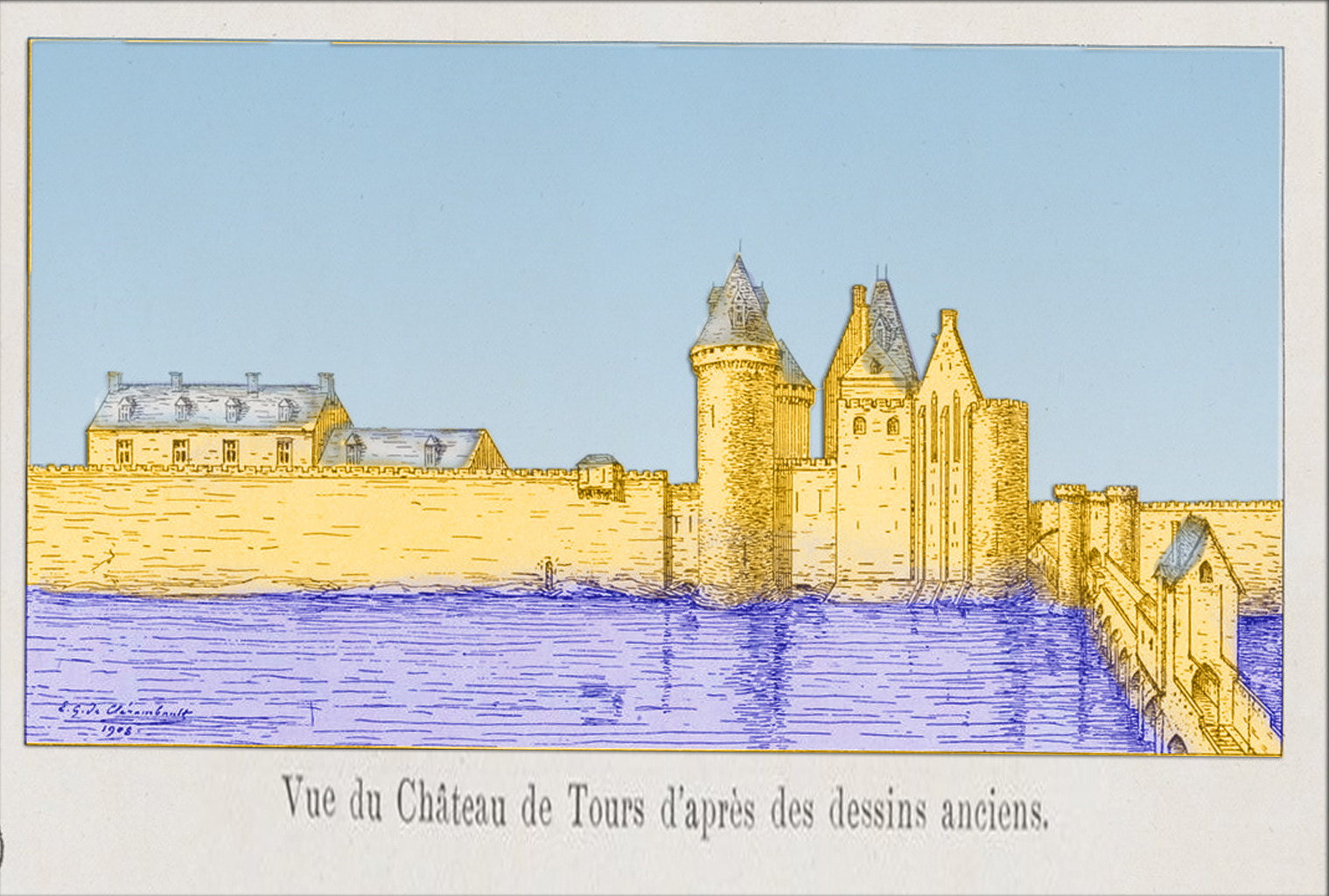 restitution
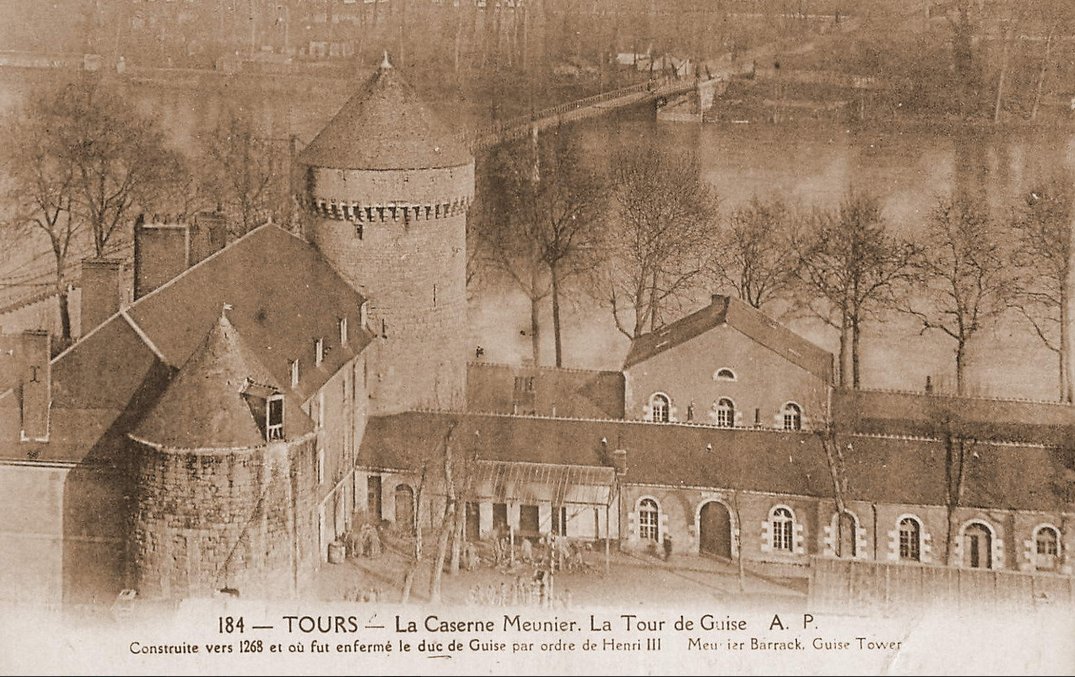 postcard
 1
1 2
2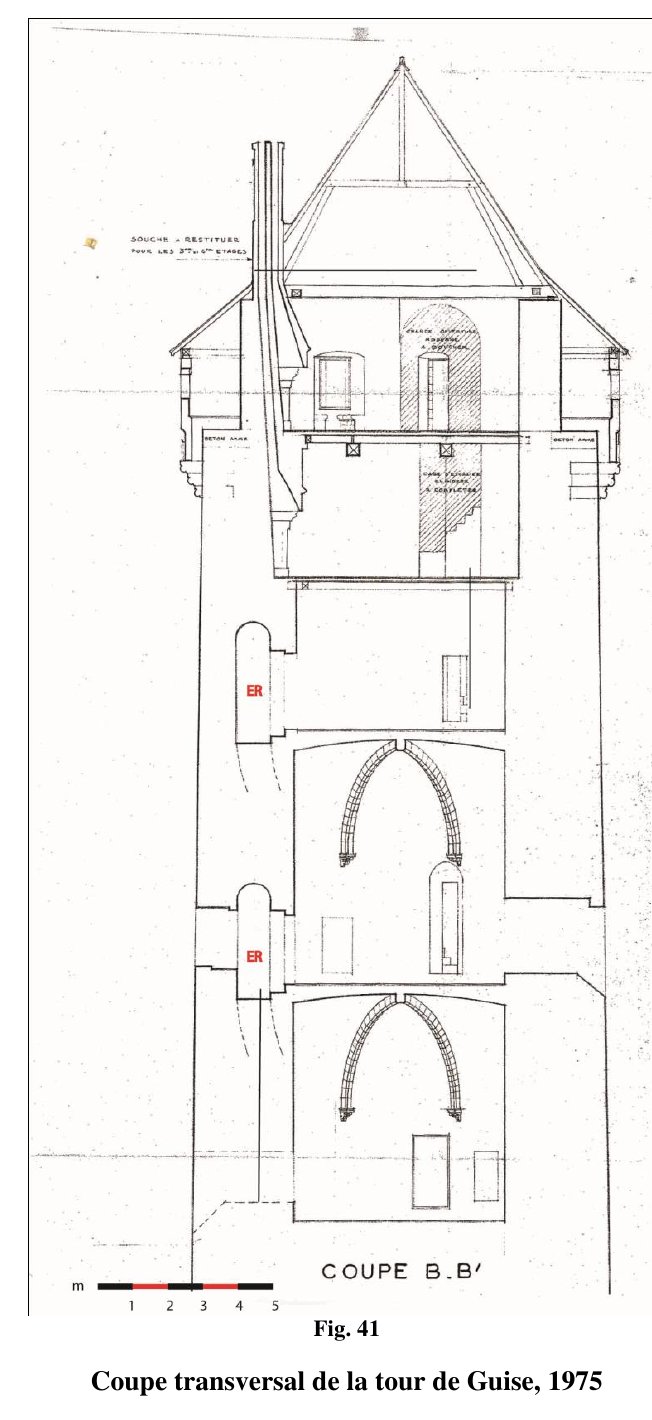 cut
cut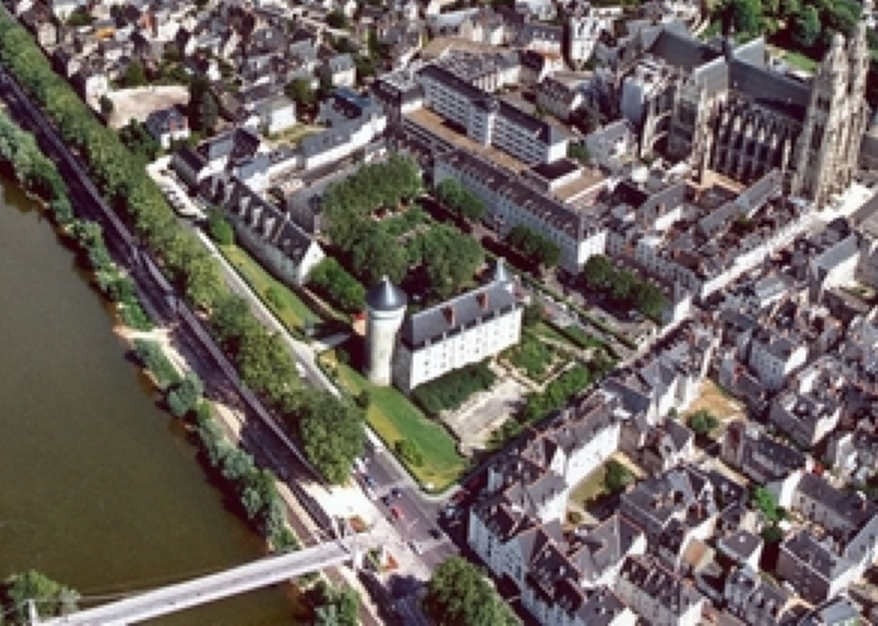 view
viewThe pope declared an enemy of the Church! Following this agreement, the first days of May 1589 were punctuated by severe skirmishes in and around Tours, until Henry IV's troops came to support those of Henry III and loosened the grip of the Protestant troops of the Duke
Charles de Mayenne. On August 1, 1589, Henri III was assassinated by Jacques Clément, the Protestant Henri de Navarre succeeded him as Henri IV. Tours solemnly welcomed him on November 21, 1589. He gathered in front of Martin's tomb.
The city was still divided, especially since the pope Gregory XIV confirmed the excommunication launched by his predecessor against the one who was then only the king of Navarre. The disturbances led by Catholic leaguers prompted the national parliament of Tours to declare (on August 5, 1591) the pope "an enemy of the church and falsifier of the rebels."
After more than five years, having become a Catholic, Henri IV succeeded in restoring peace. Tours found itself with a strengthened Catholic party, "zealous, with a spirit of fighting the heretic and crusading against the infidel," as Robert Sauzet writes in his article 1989 "The Tourangeau Devout Milieu and the Beginnings of the Catholic Reformation."
Thanks to Martin, Henri IV can be crowned king of France. Once in Paris, Henry IV wanted an official coronation, but Reims, the place where kings are crowned by the presence of a Holy Ampoule (Clovis', see
herefore), was still in the hands of his opponents. We'd have to find a back-up solution... Eugène Giraudet : "Informed that there was a second holy ampulla at Marmoutier, Henri IV came to Tours, on January 15, 1594 in order to negotiate with the monks to obtain the small vial (ampulla) that an angel had, it is said, once brought to Saint Martin. After laborious negotiations, the monks finally gave in and signed a deed before a notary, in which the governor of the city, the mayor, the aldermen and some notables acted as guarantors. On January 29, the precious relic, first deposited in St. Gatien's and then in St. Martin's, left our city by procession and was carried by the sacristan of Marmoutier, assisted by two monks. A cavalry escort accompanied him to Chartres, where the coronation took place on February 27. Henry IV showed his gratitude to the monks by offering the prior a gold ring enriched with a magnificent emerald. The king also showed his contentment to the mayor and his aldermen and granted them, as a perpetual gratuity and reward for their fidelity two muids of salt to be taken from the granary of Tours for their common provision. He recognized the attachment of the inhabitants by authorizing them to establish a university in Tours." "The university of Tours was put into oblivion as a result of the negligence of the inhabitants in pursuing the execution of the promise that had been made to them" [Stanislas Bellanger 1845]. The emerald ring was offered to Louis XVI in 1791, the holy bulb was broken by the revolutionaries in 1795, after having been stripped of its precious stones. Two years earlier, the holy bulb of Rheims, considered a "sacred rattle of fools," had also been destroyed in 1793 (some debris was recovered,  article, link)...
+ article by Pierre Gasnault 1982 "The Holy Bulb of Marmoutier".
(some debris have been recovered, article, link)... + article by Pierre Gasnault 1982 "La Sainte Ampoule de Marmoutier".
P.-S. :
article, link)...
+ article by Pierre Gasnault 1982 "The Holy Bulb of Marmoutier".
(some debris have been recovered, article, link)... + article by Pierre Gasnault 1982 "La Sainte Ampoule de Marmoutier".
P.-S. : 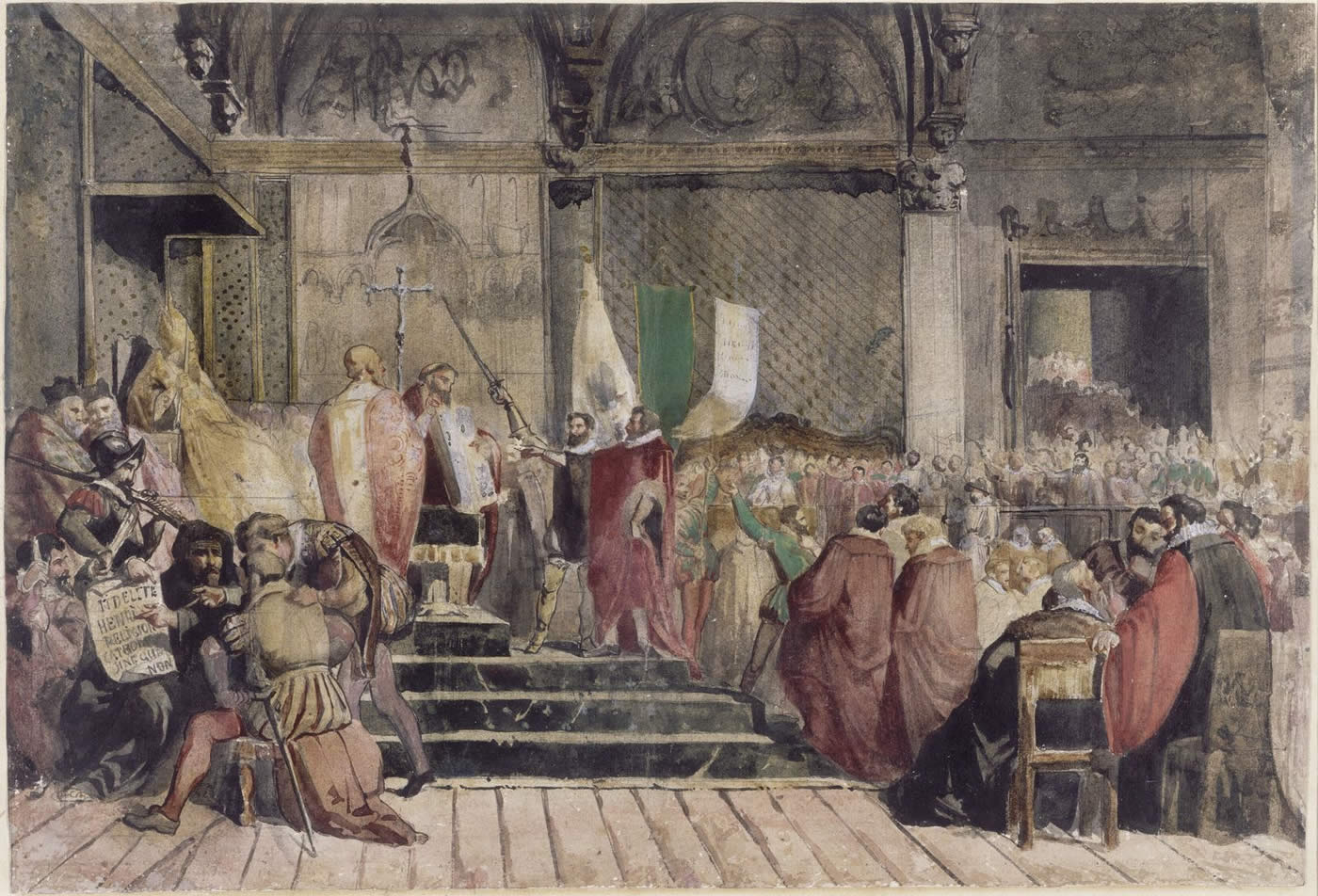 abjuration of Protestantism by Henry IV in 1593 before the prelate Renaud de Beaune (Jacques' grandson) (link).
February 27, 1594, the coronation of Henri IV at Chartres, with the Holy Ampulla of Martin ; but the dove, present for Clovis, is not back... [Desmarets, BnF]
+ the same  illustration with fourteen captioned individuals or groups. illustration with fourteen captioned individuals or groups.
|
Economic and demographic crisis. Legitimized by his coronation, Henri IV could then return to Paris, which became the capital again when, on March 22, 1594, the parliamentarians who had sat for five years in Tours, returned to Paris. Despite a prolonged reticence about the sincerity of his conversion to Catholicism, Henry IV obtained absolution from the pope
Clement VIII and had himself publicly received as abbot and honorary canon of the collegiate church of Saint Martin. A parallel can be drawn between Clovis and Henry IV both brought an era of peace through their conversion and this conversion was done each time under the patronage of Martin. It was time for this recovery because the balance sheet of the 16th century is bad, the finances are at their lowest. These events strongly weakened the local (and national) economy. The Protestant Touraine notables still alive often preferred to emigrate to Geneva or Germany. Added to this were the misdeeds of the plague, in 1583, 1587, 1589, 1595, 1597, and catastrophic harvests in 1583, 1589 and from 1595 to 1597. Bernard Chevalier estimates that the city's population fell from 24,000 to 8,000... which seems exaggerated (say 16,000 for 1600) and very provisional, since Wikipedia 2020 states that "the city experienced a demographic peak around the 16th century, with an estimated population of between 30,000 and 65,000 around 1600", population then falling, down to 20,240 in 1800, before a long rise. We will see later an estimate of 40,000 inhabitants in 1722. Wikipedia seems to make a mistake of a century, the number of 60,000 being provided by Eugène Giraudet without precise date. The maximum would rather be reached around 1700 for a population of about 45,000 people, the wars of Louis XIV, as we shall see, having caused a demographic decline.
Henri IV and Louis XIII: appeasement at last. In his
article "The Tomb of Saint Martin and the Wars of Religion" (1961), André Stegman, after describing the turmoil of the reign of Charles IX, shows the appeasement brought about by the reigns of Henry IV and his son Louis XIII : "The time of intolerance is past. One must count among the " good gestures " of the reign of Louis XIII the large indemnity (18,000 livres) given to the Calvinists at the end of a fair trial, in reparation for the destruction of their temple burned by malice. A riot on the occasion of a funeral had caused more serious disorders. The king proceeded to the arrest of thirty culprits; as the troubles were prolonged, he came in person to Tours. The temple was rebuilt only in 1631, in the Ville-aux-Dames (the Vallée-Bouju), although
the Reformed had wished for a place closer to Tours."
Henri IV and the melons of Tours. Let's end with Henri IV with these culinary words from Eugene Giraudet on the gourmet promoter of the
poule au pot : "A deliberation of the city body, from 1604, tells us that Tours and Langeais were forever indebted to Henri IV for their melons, of which this prince used to make his delights."
The title of this chapter gives the opportunity to make a table showing the times when Tours was the city where power was exercised (residence of the ruler, national assembly meeting, states general, assembly of notables, seat of government...), even though Paris may have kept the official title. Based in particular on the
page Wikipedia of the capitals of France :
| Period | Representative Sovereign or Ruler |
| 1444 à 1524 | Charles VII, Louis XI, Charles VIII, Louis XII, Francis I |
| 1589 à 1594 | Henri III, Henry IV |
| October 9 to December 8, 1870 | Leon Gambetta |
| June 10 to 13, 1940 | Albert Lebrun and Paul Reynaud |
The restored basilica. Returning to the basilica, Charles Lelong indicates how an attempt was made, in part, to repair the degradations from which it had suffered :"In 1577, an iron grate was placed around the place where the ashes had been scattered "over a space of about five feet square" and a parchment inscription, protected by a glass pane, recalled this profanation. [...] One applied as soon as one could, to restore the sanctuary, the sale of the woods of Cléré providing the necessary funds[...] At the end of these works, the high altar could be judged "extremely beautiful" but of a surprising austerity."
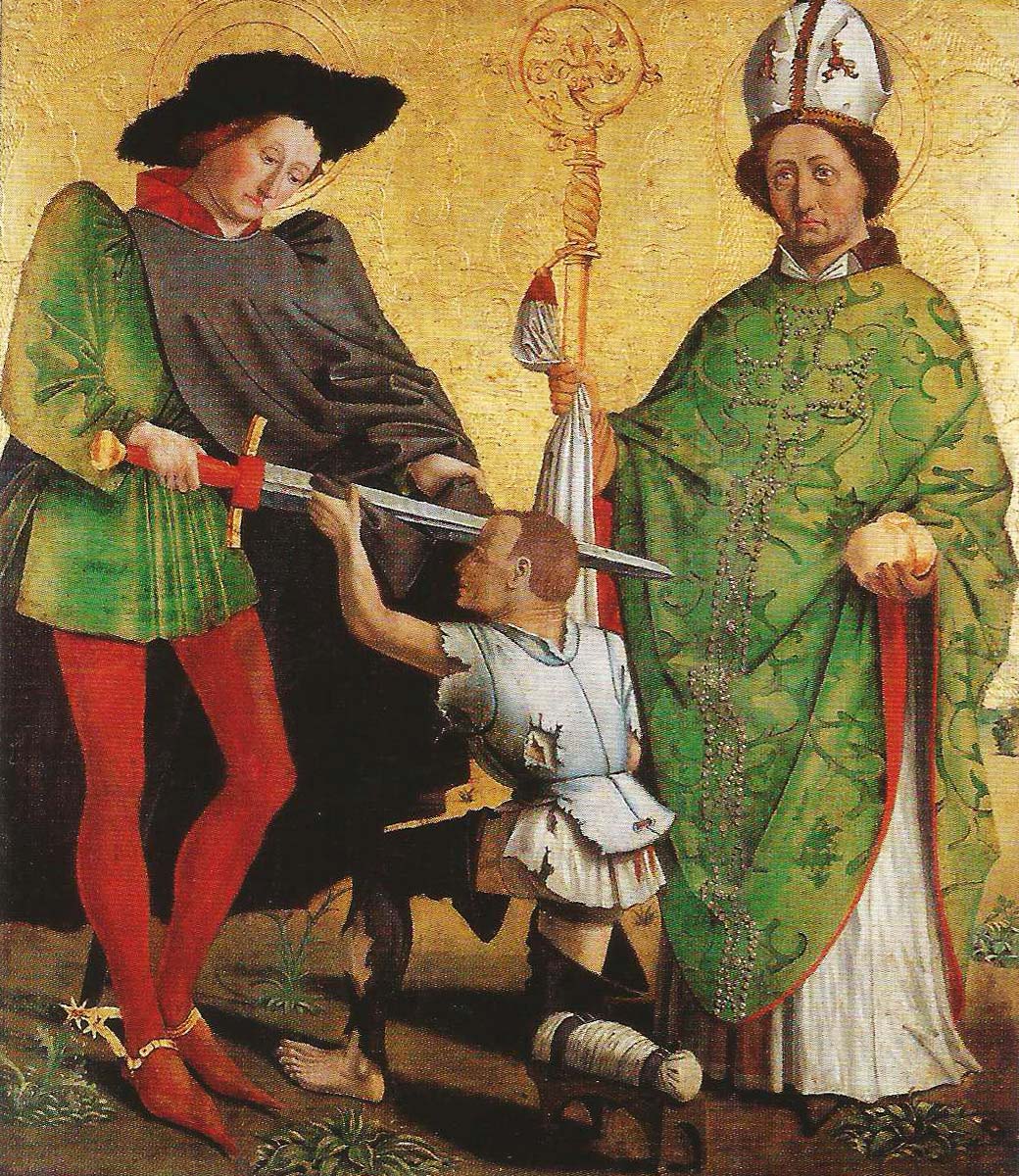
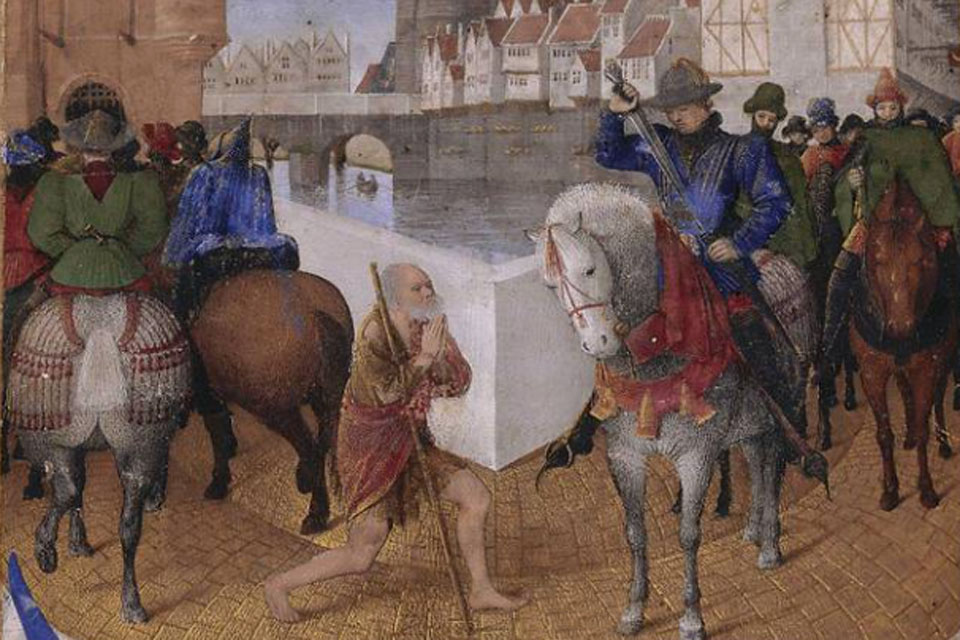


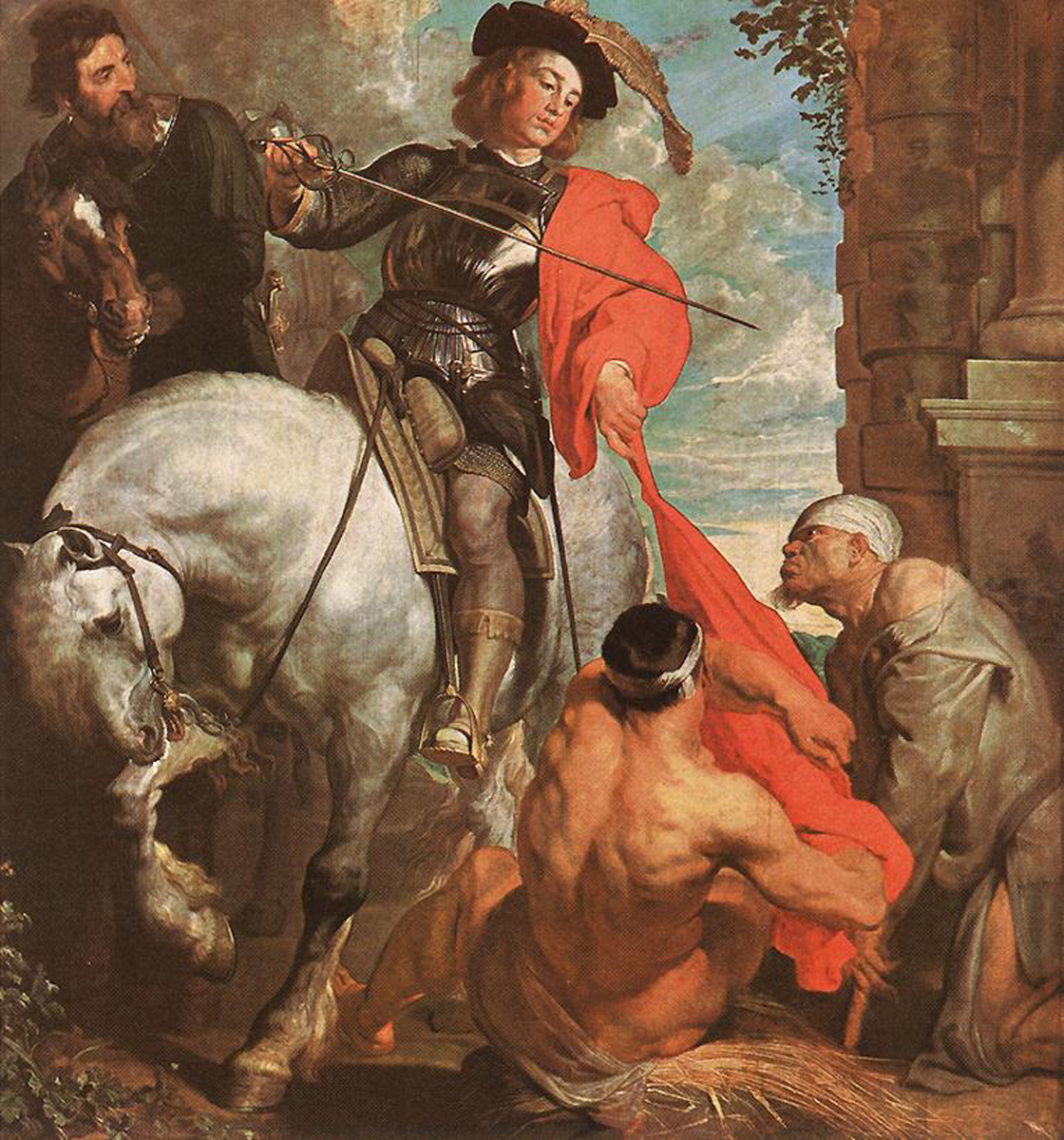


In the scene of the sharing of the cloak, while the poor man's clothes hardly vary over the centuries, the same is not true for Martin, who, from the 15th to the 17th century, dresses according to the latest fashion in clothing, to actualize Martin's message. From left to right : 1) Anonymous 15th (with St. Nicholas) [National Museum of South Australia in Adelaide] 2) Jean Fouquet circa 1460 ["Heures d'Etienne Chevalier", BnF]
(+  review commented on in Lecoy 1881
+ review commented on in Lecoy 1881
+  comment Wikipedia),
3) Louis Bréa 1475 [left pane of the Pieta of Cimiez, Franciscan monastery]
4) Jan Polack (or his workshop), ca. 1500 [Maastricht museum]
5) Jean Bourdichon circa 1505 [Great Hours of Anne of Brittany]
6) El Greco 1598, see box below
7) Anonymous XVIth [Basilica of the Holy Savior, Pavia in Italy]
8) Anonymous XVIIth [Saint Martin de Saint Martin le Beau church in Touraine]
9) Antoine Van Dyck 1618, see box below
10) Georges Lallemant circa 1630 [Musée du Petit Palais, Paris]
11) Jacques Van Oost le Vieux 1656 [Groeninge museum in Bruges]. comment Wikipedia),
3) Louis Bréa 1475 [left pane of the Pieta of Cimiez, Franciscan monastery]
4) Jan Polack (or his workshop), ca. 1500 [Maastricht museum]
5) Jean Bourdichon circa 1505 [Great Hours of Anne of Brittany]
6) El Greco 1598, see box below
7) Anonymous XVIth [Basilica of the Holy Savior, Pavia in Italy]
8) Anonymous XVIIth [Saint Martin de Saint Martin le Beau church in Touraine]
9) Antoine Van Dyck 1618, see box below
10) Georges Lallemant circa 1630 [Musée du Petit Palais, Paris]
11) Jacques Van Oost le Vieux 1656 [Groeninge museum in Bruges].
Verrière 2018] :
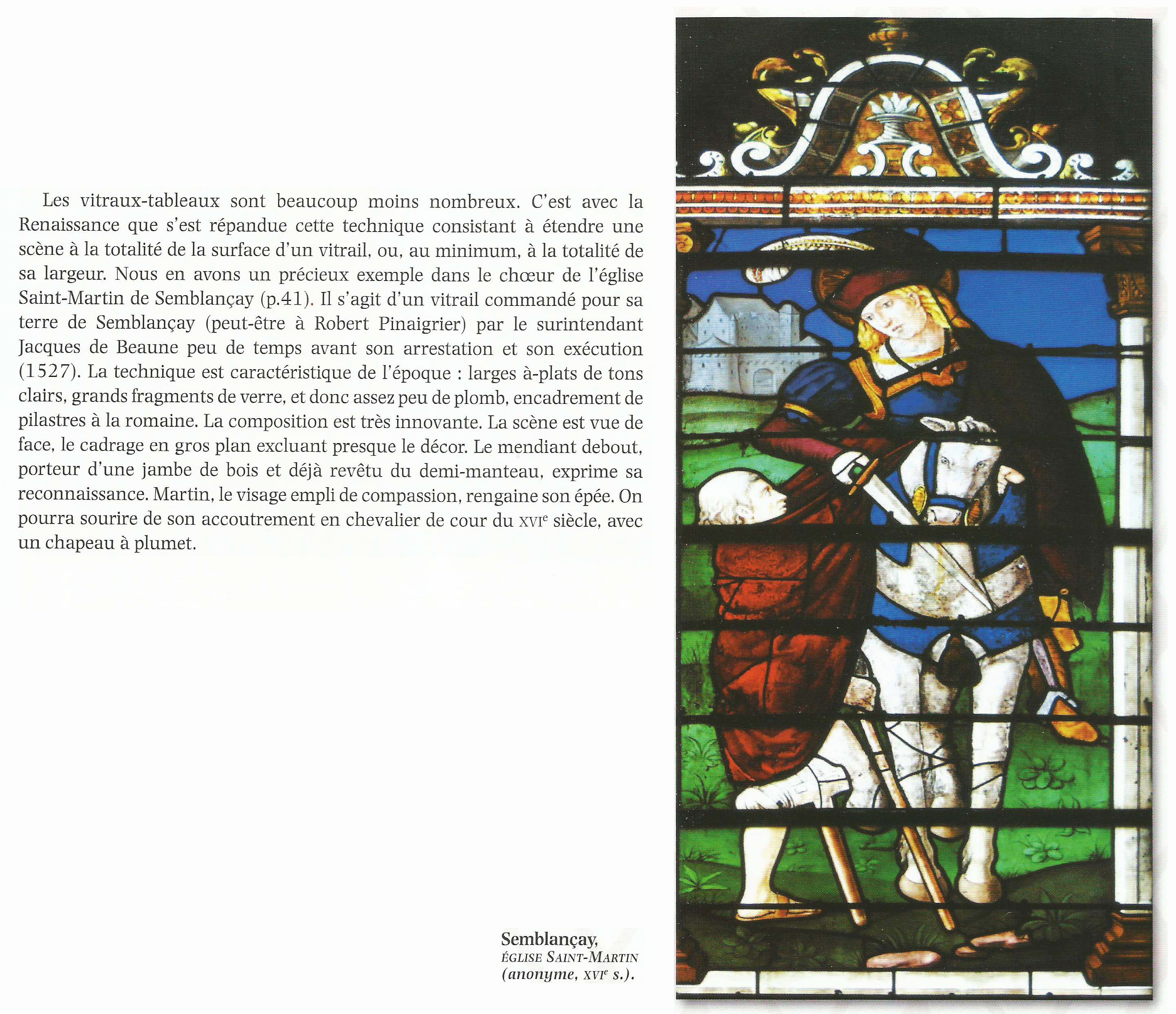 1 to Semblançay [anonymous 16th century] 1 to Semblançay [anonymous 16th century]
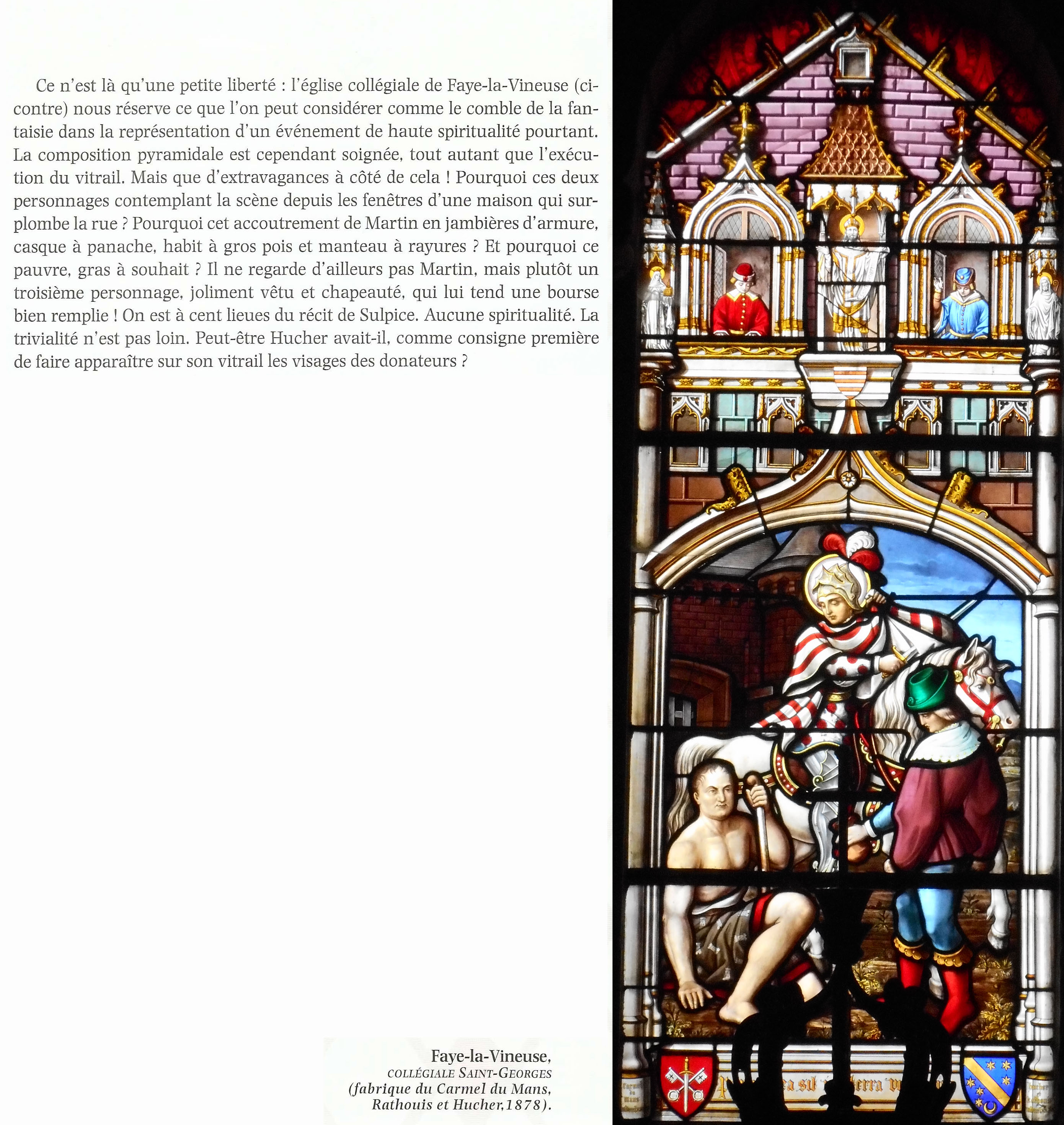 2 in Faye la Vineuse [Le Mans Carmel factory, Rathouis and Hucher 1878].
Of later workmanship, Martin is dressed as a prestigious Roman in these two English stained glass windows [flickr johnevigar] : 2 in Faye la Vineuse [Le Mans Carmel factory, Rathouis and Hucher 1878].
Of later workmanship, Martin is dressed as a prestigious Roman in these two English stained glass windows [flickr johnevigar] :
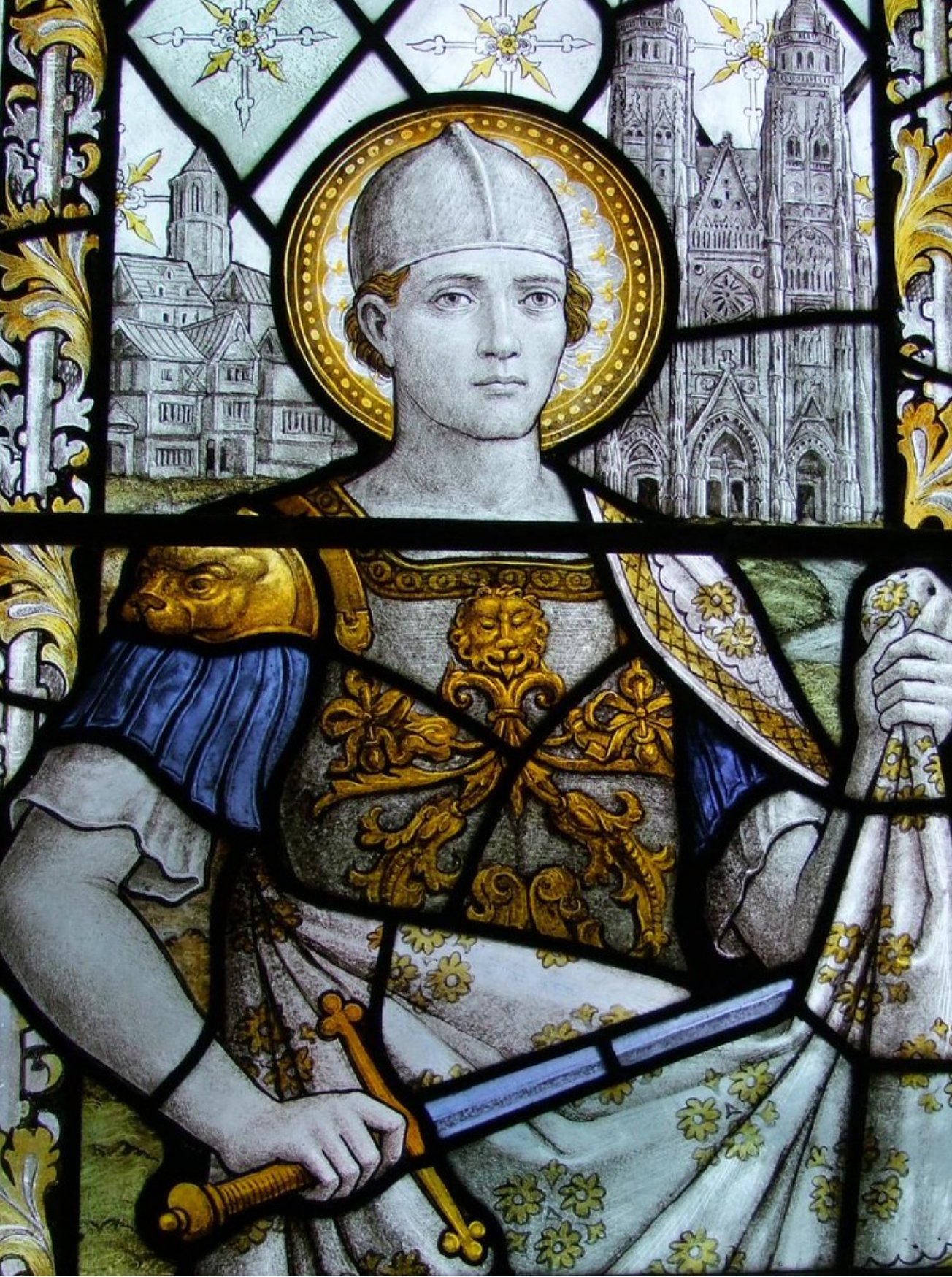 1 [St. Mary's Church in Edwardstone] 1 [St. Mary's Church in Edwardstone]
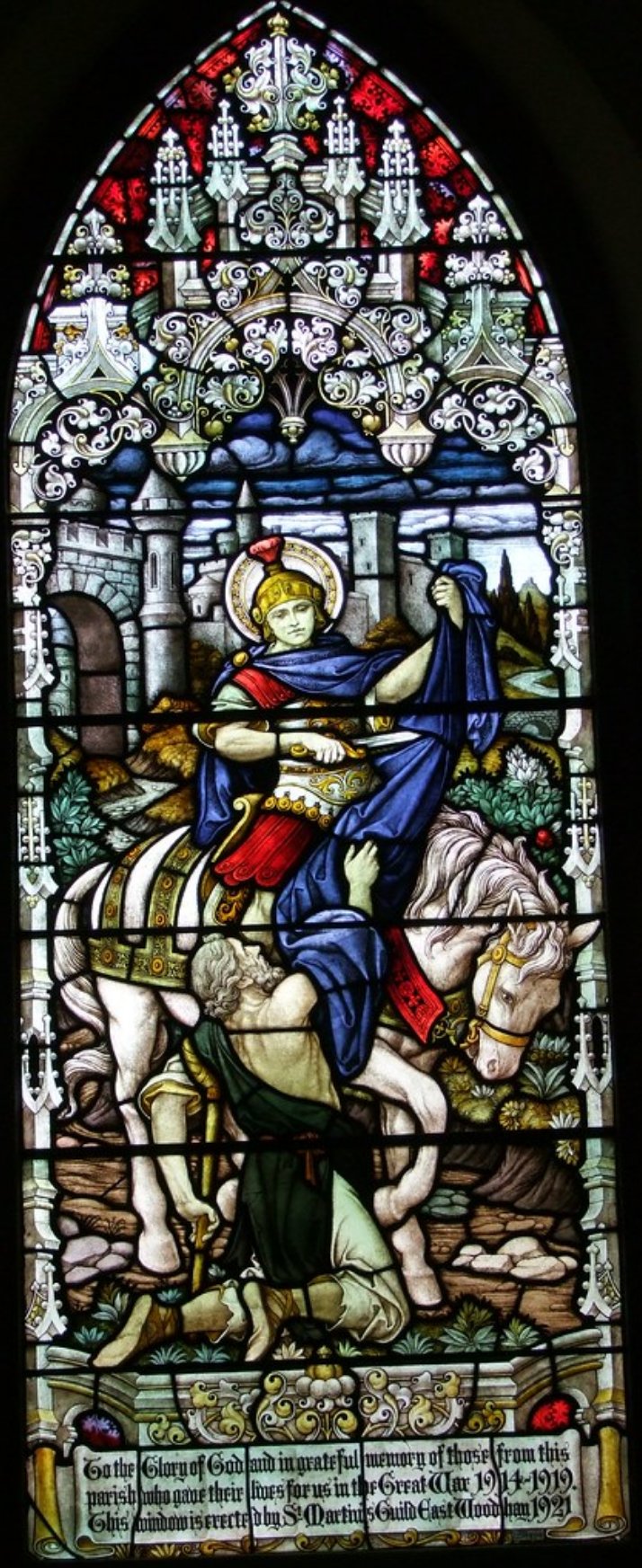 2 [East Woodhay]. 2 [East Woodhay].
|
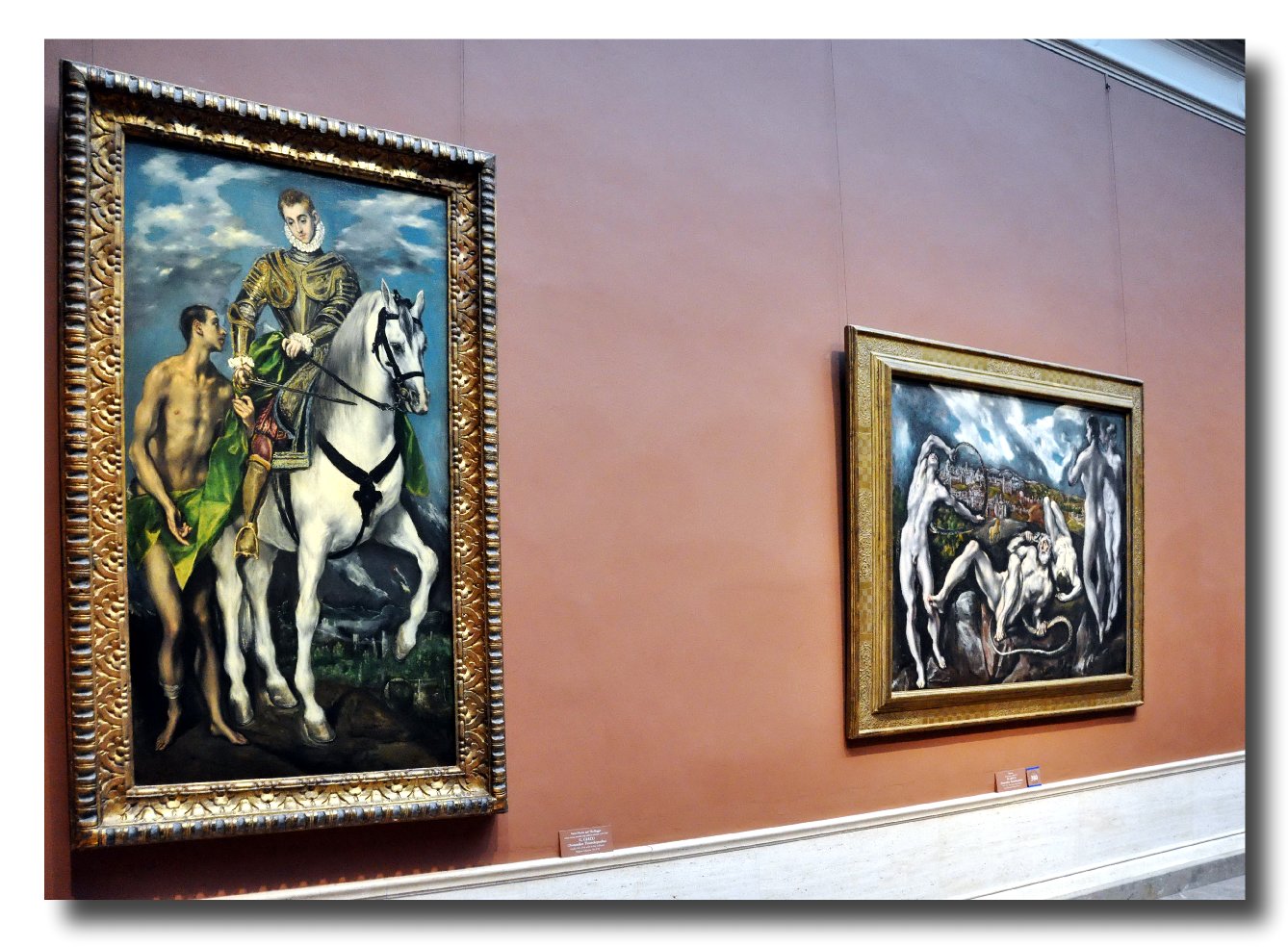 view
view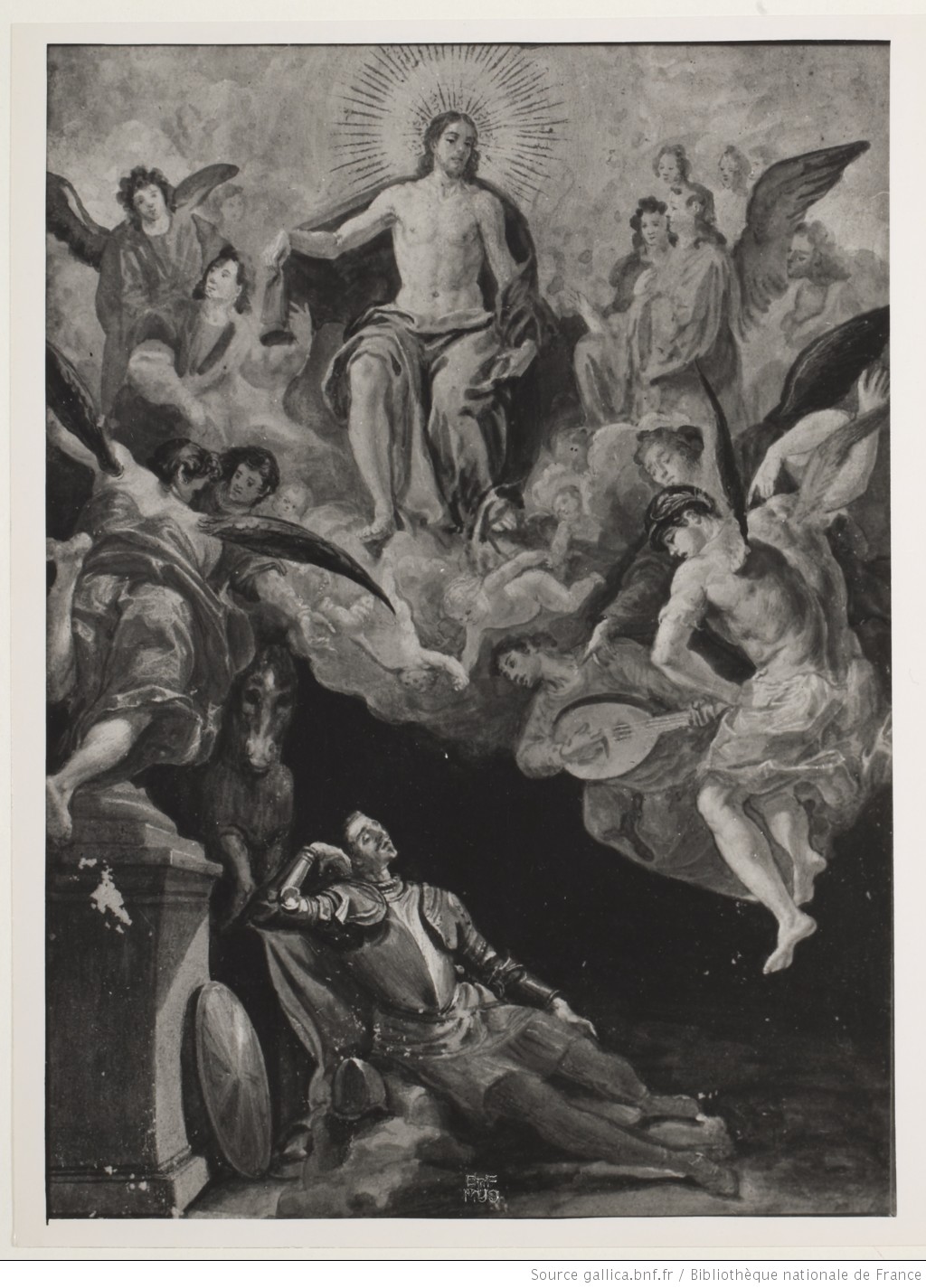 illustrated
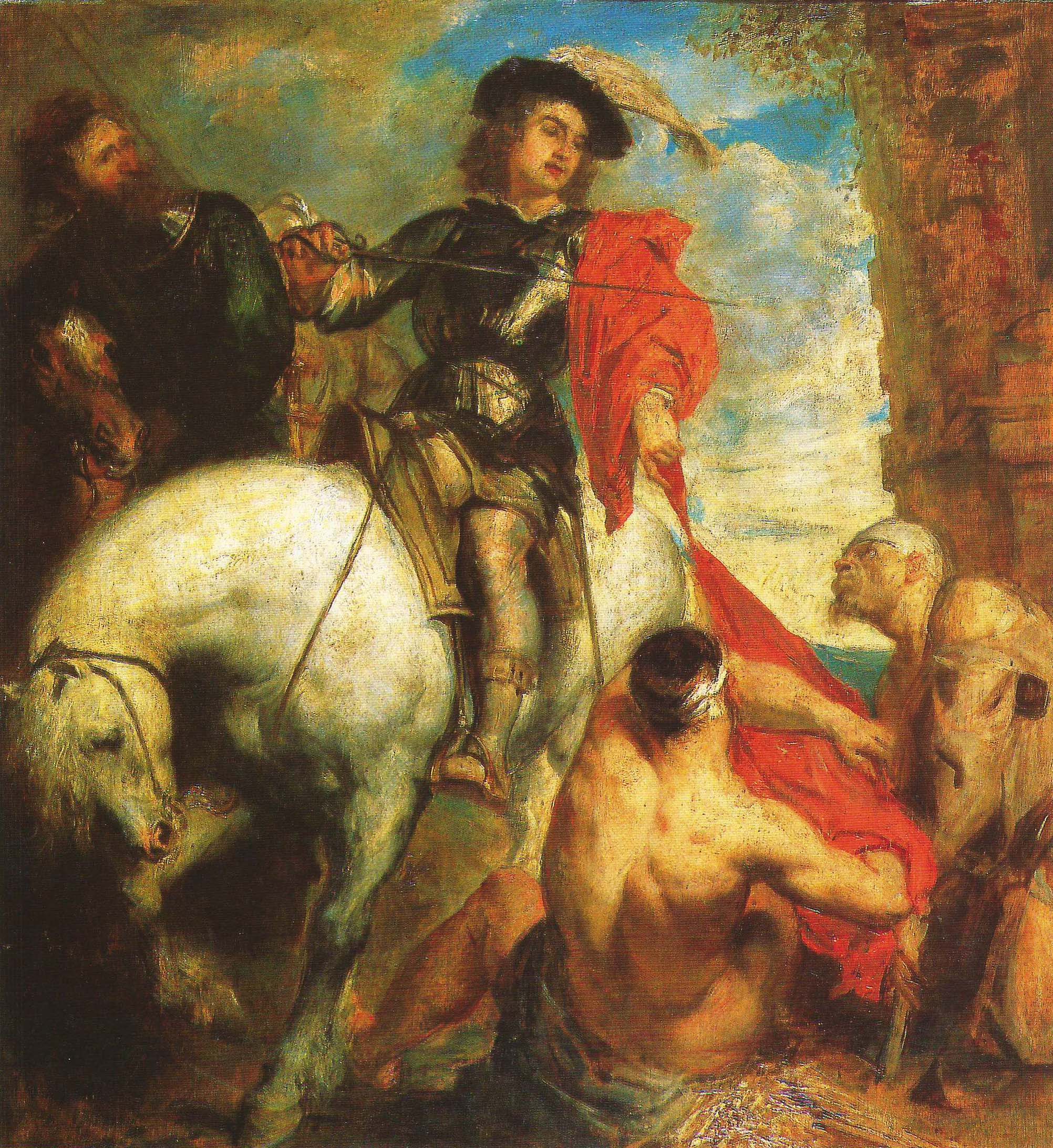 variant
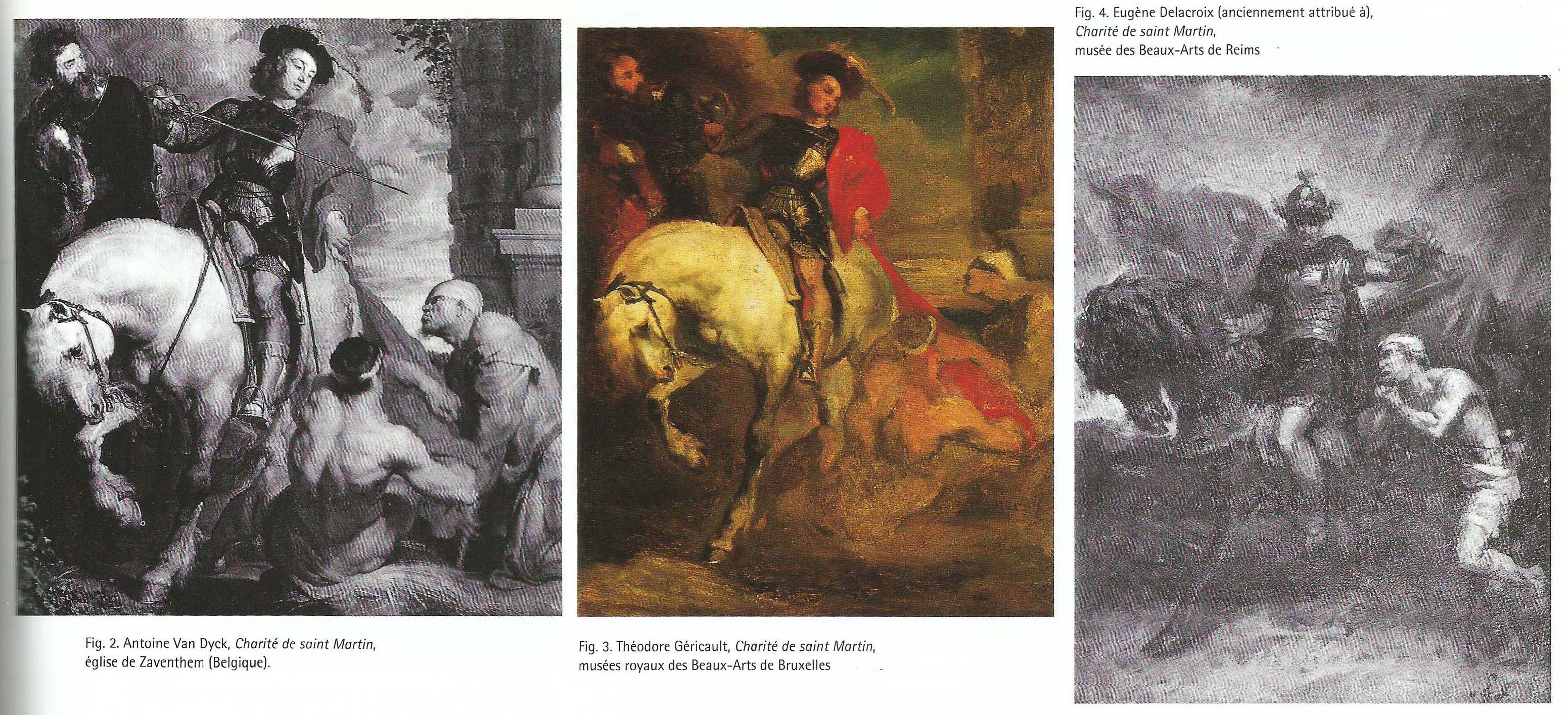 variants
 1
1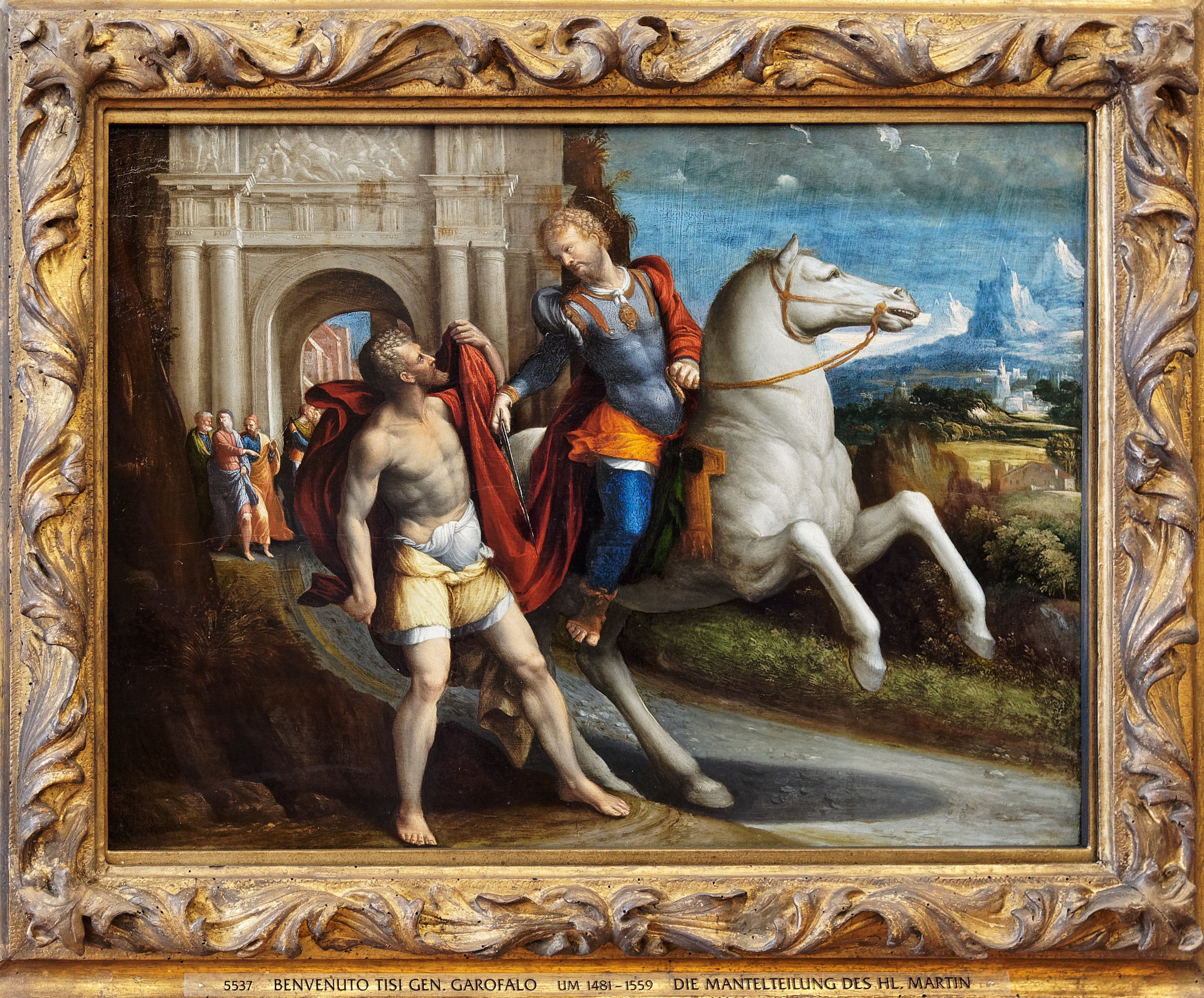 2
2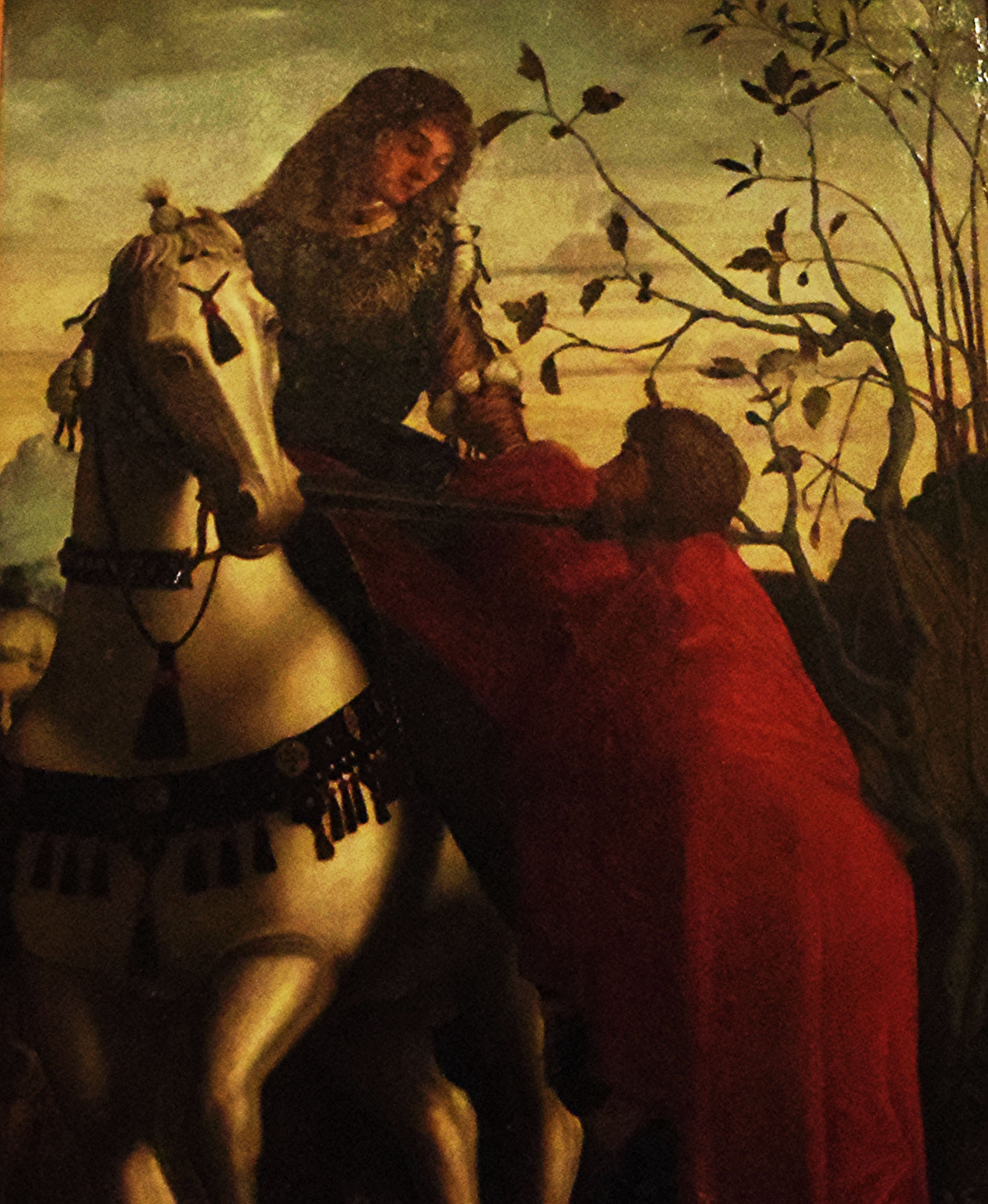 3
3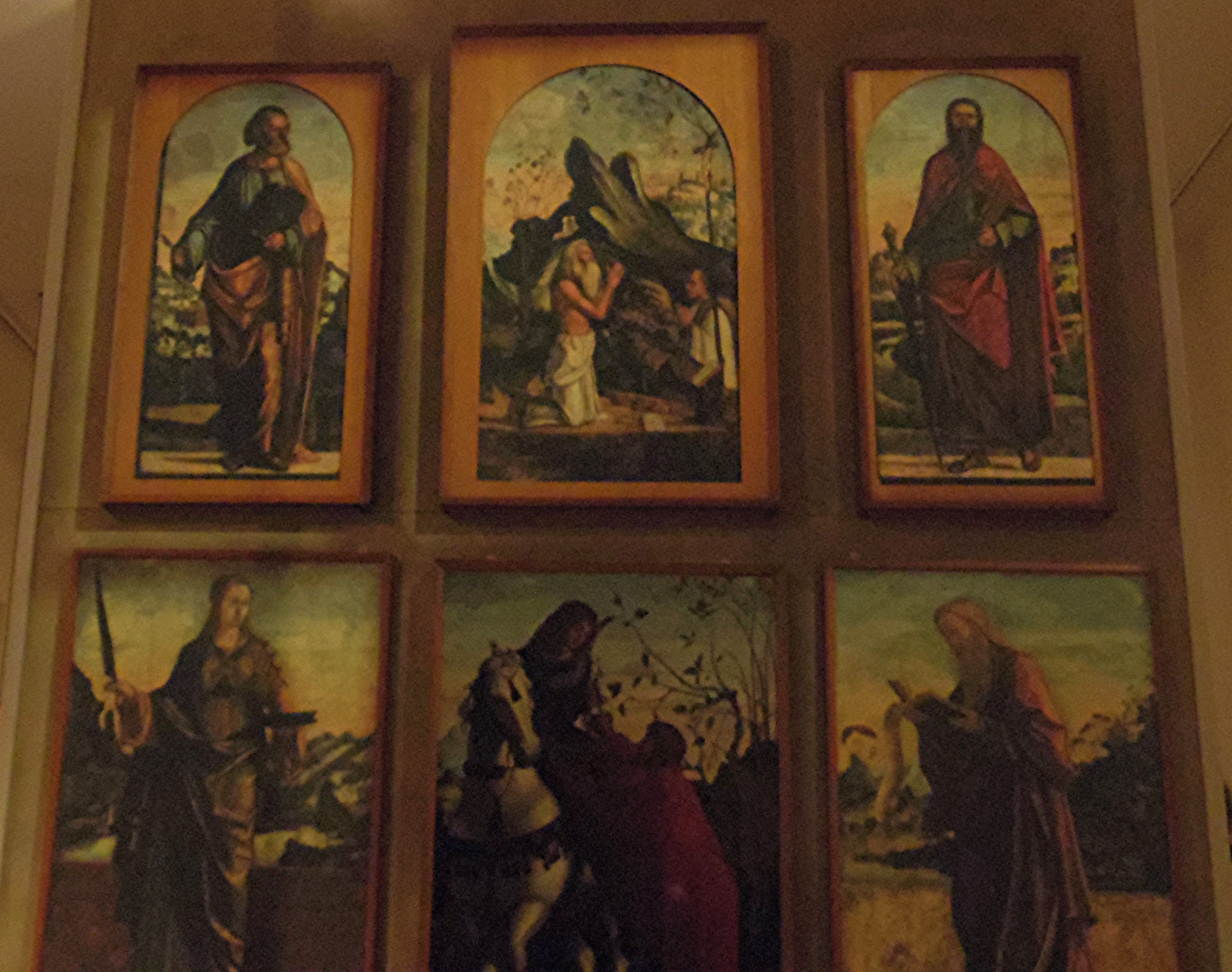 Polyptic
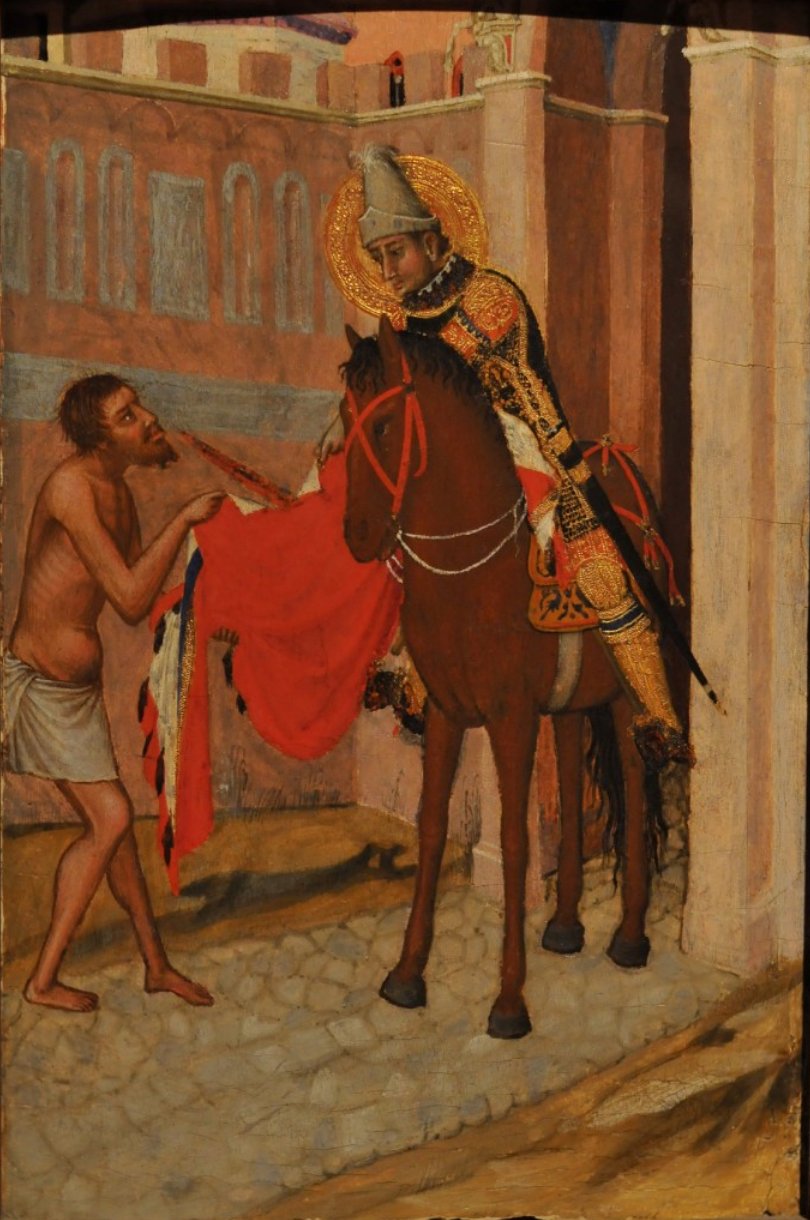 4
4 engraving
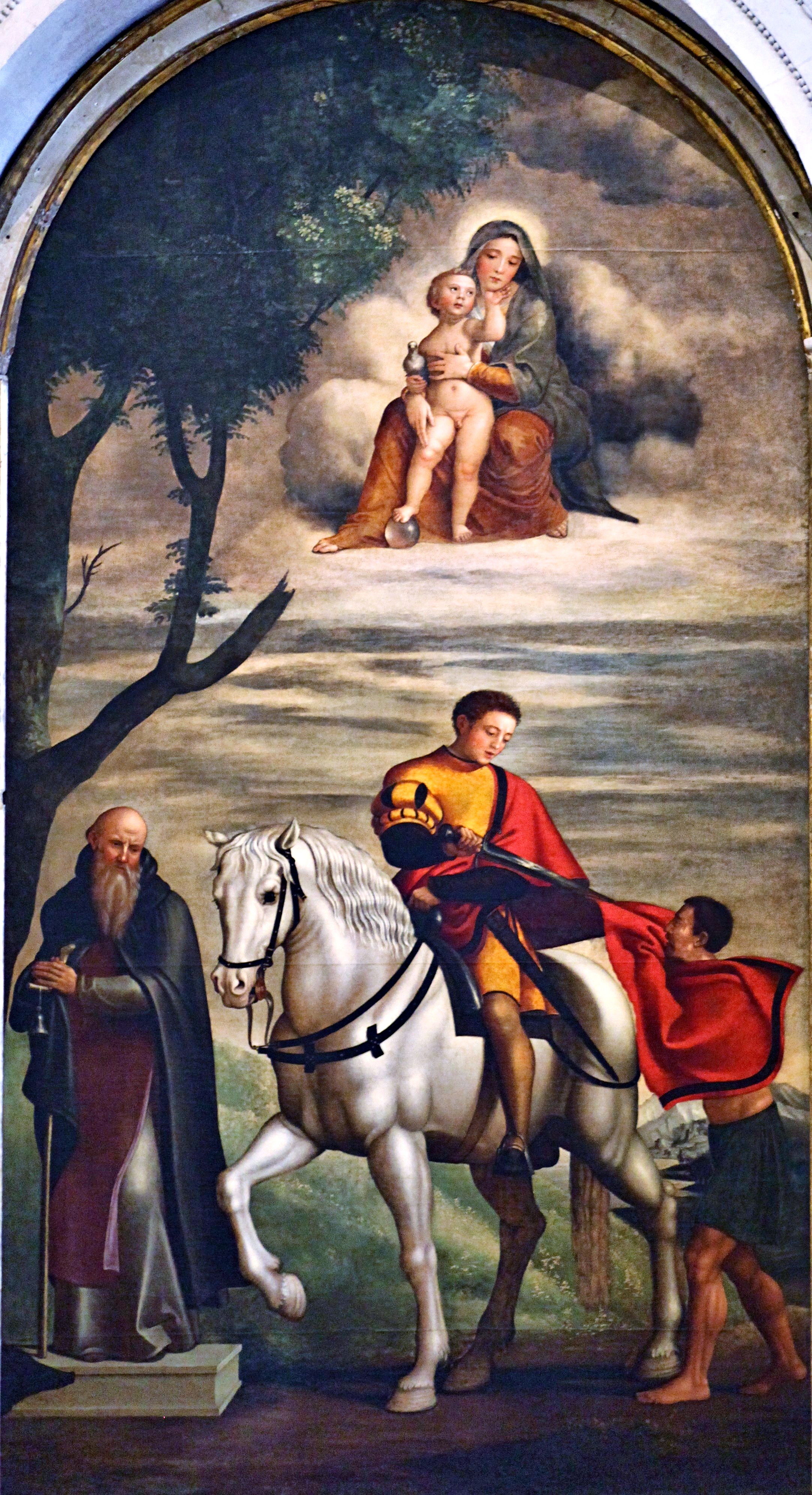 tableau
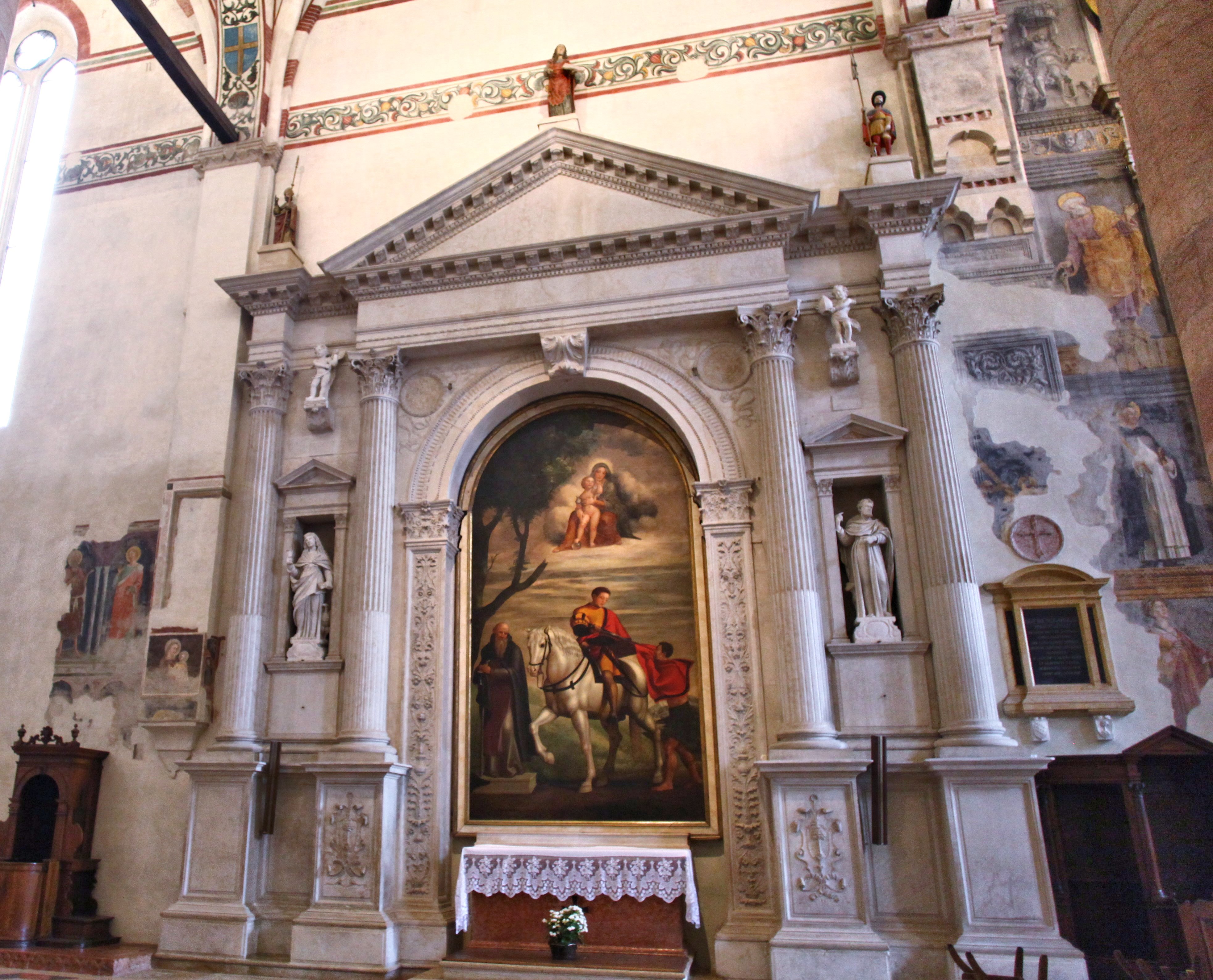 view
view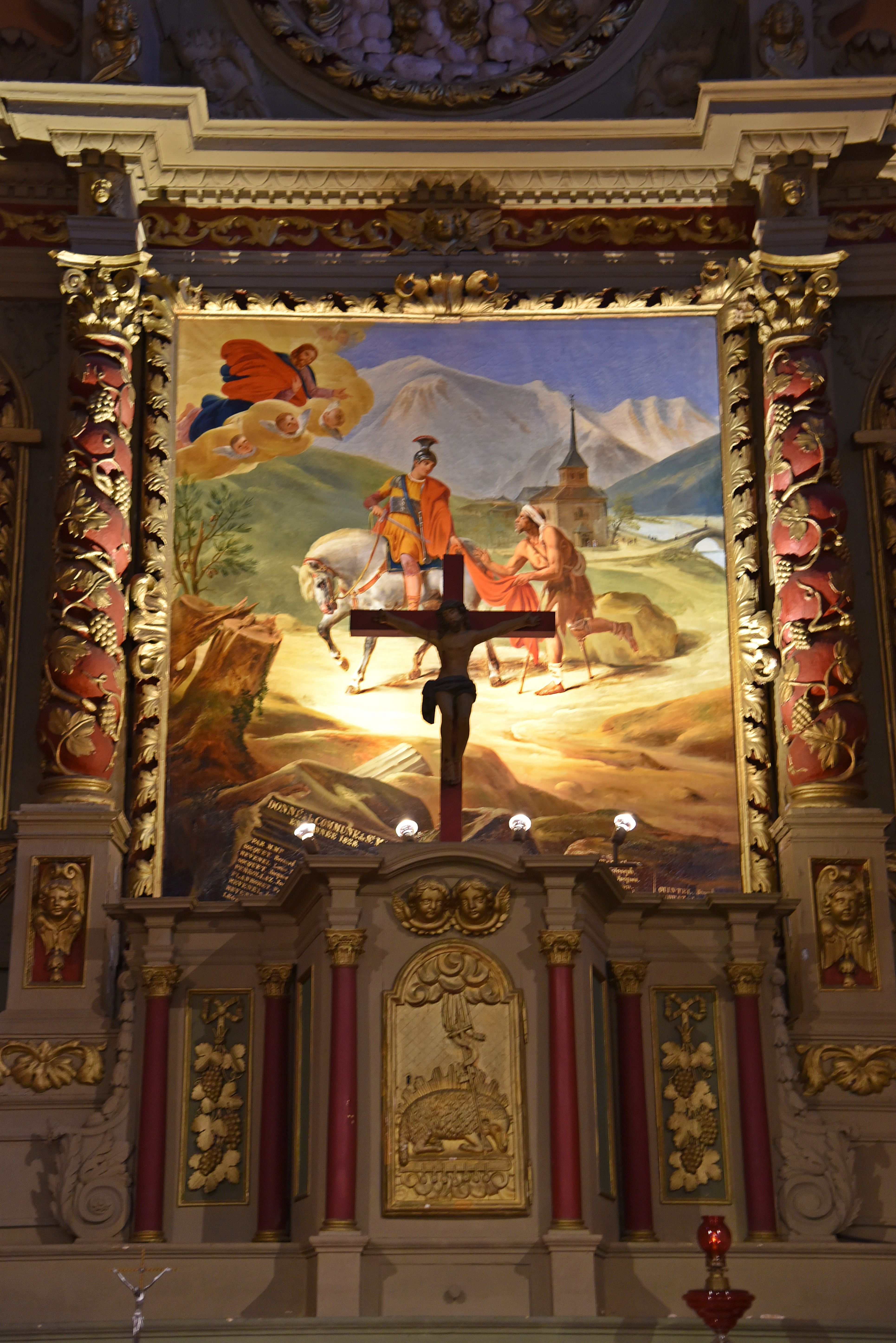 tableau
|
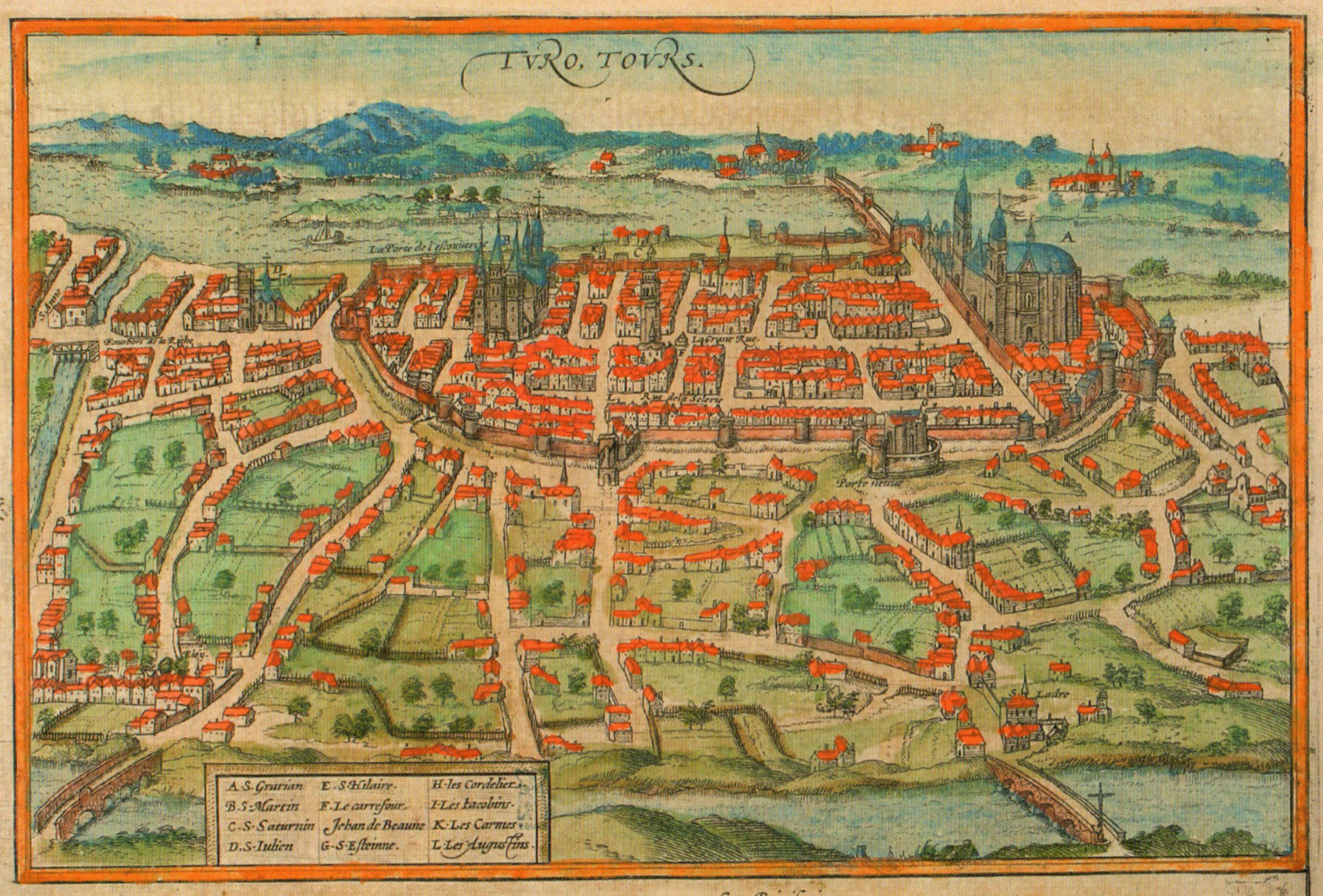
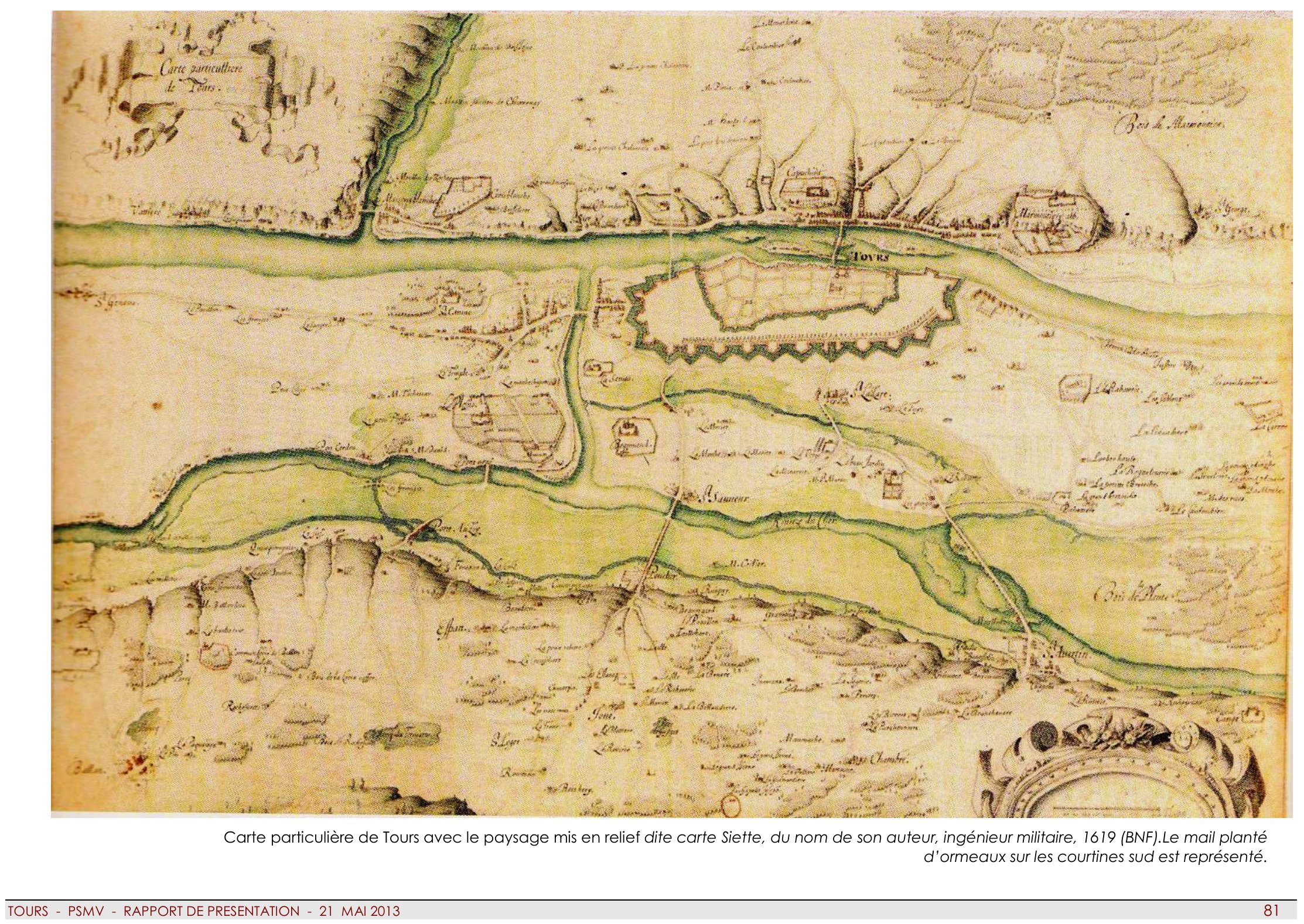
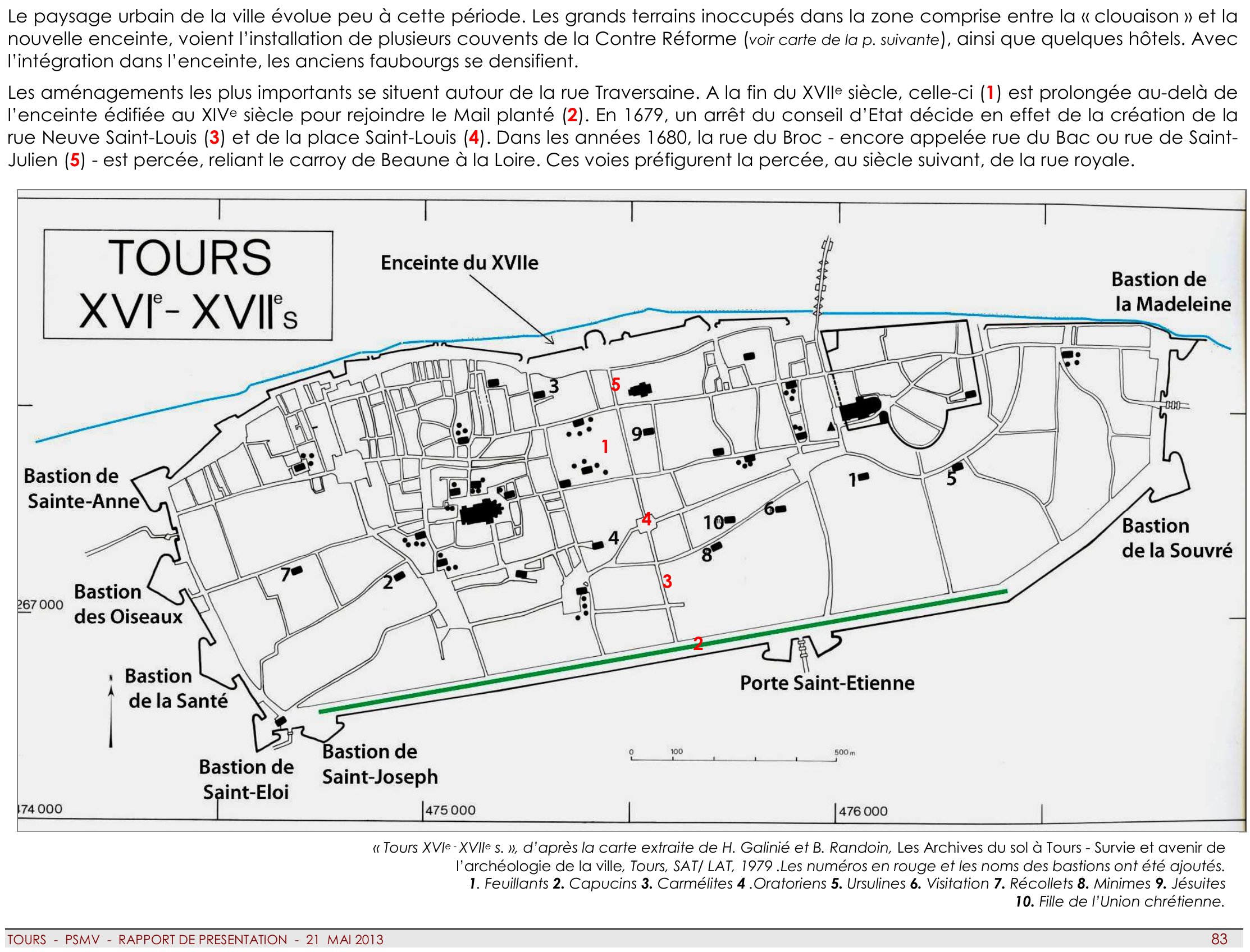 map
map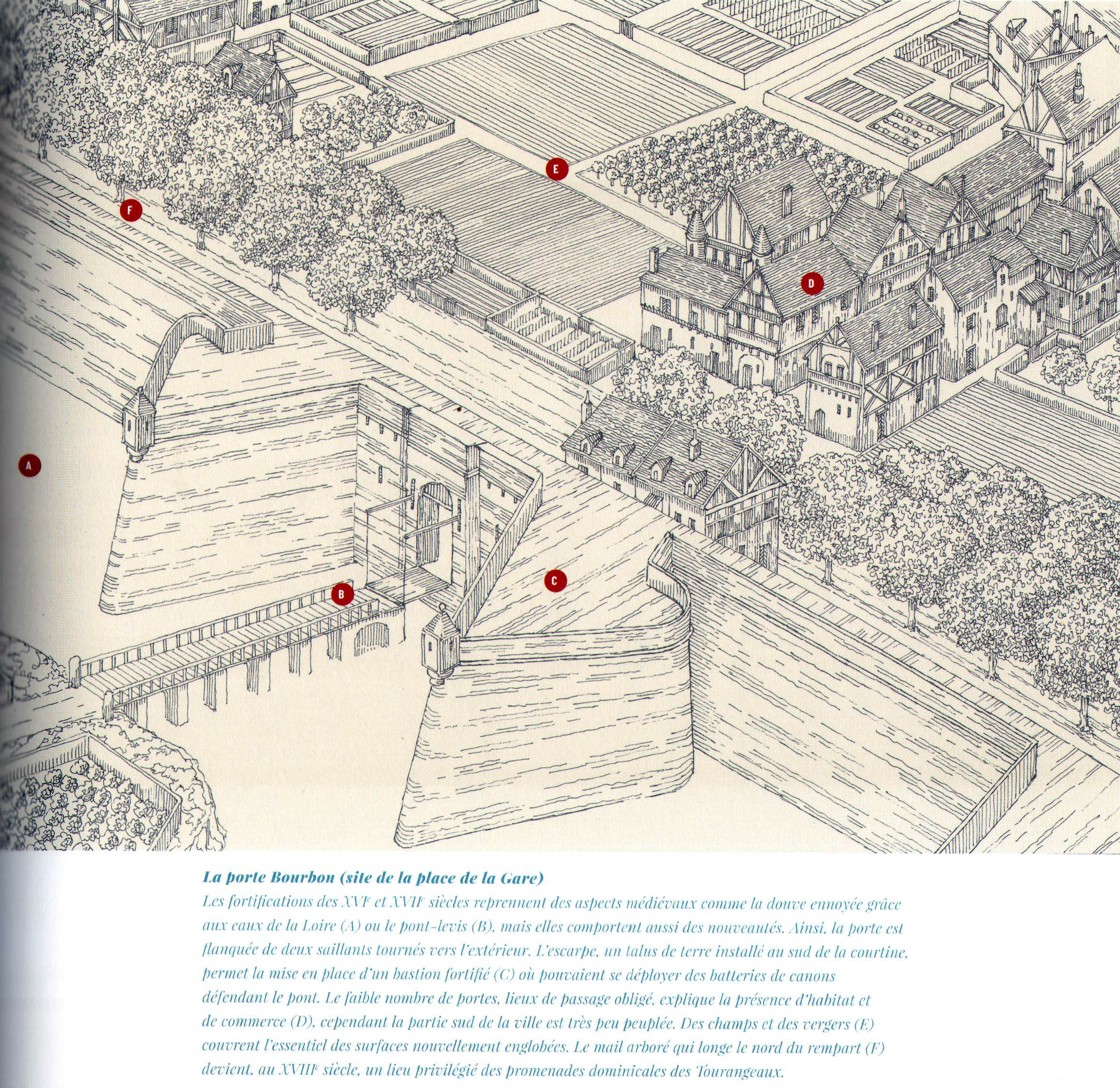 drawing
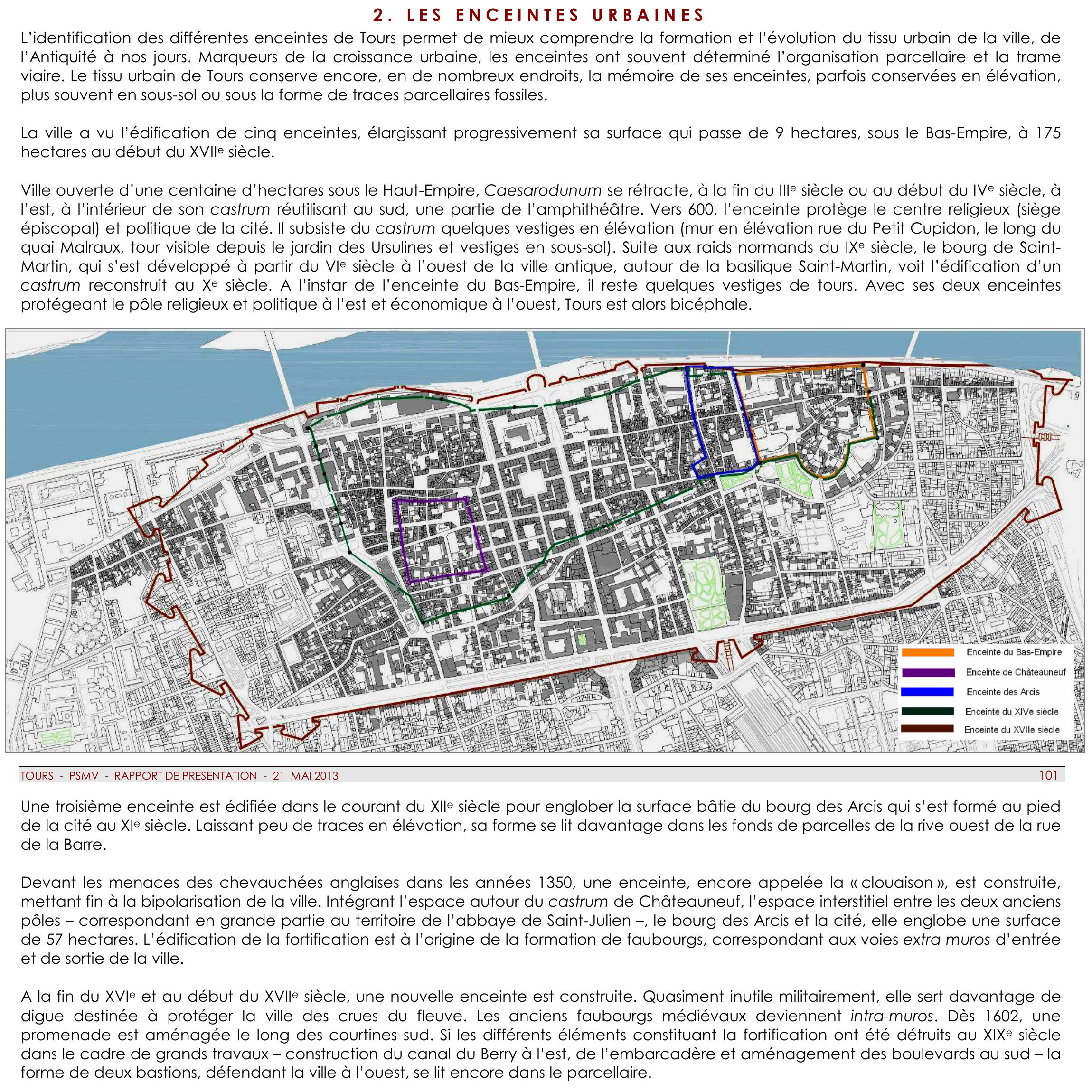 plan
plan

Original variants or plan of the same two maps by Arnoullet in 1553/1572 and Siette in 1619. At left, a close-up of the basilica of the "nobilissimae urbis Turonensis" + the  map in its entirety.
On the right, in 1619 [MBAT], the first general view of the city from the south in wide shot (the blue color is added) on the right Saint Pierre des Corps, on the left La Riche, on the top (North) the Loire, on the bottom the Cher, connected to the Loire by the ruau Sainte Anne, in the center, horizontal, the stream of the Archbishopric (or of the Archbishop) ; we distinguish in the upper right Rougemont and Marmoutier, left in the center the priory of Saint Cosme, below Le Plessis, castle of Louis XI, just below the couvent des Minimes, below further right the abbey of Beaumont nuns and names of neighborhoods such as (from left to right) Sanitas, Beaujardin, La Fuye, Rabatterie in what was then the varenne of Tours, now filled in and urbanized.
Below, close-up on the Plessis, Beaumont and Marmoutier. map in its entirety.
On the right, in 1619 [MBAT], the first general view of the city from the south in wide shot (the blue color is added) on the right Saint Pierre des Corps, on the left La Riche, on the top (North) the Loire, on the bottom the Cher, connected to the Loire by the ruau Sainte Anne, in the center, horizontal, the stream of the Archbishopric (or of the Archbishop) ; we distinguish in the upper right Rougemont and Marmoutier, left in the center the priory of Saint Cosme, below Le Plessis, castle of Louis XI, just below the couvent des Minimes, below further right the abbey of Beaumont nuns and names of neighborhoods such as (from left to right) Sanitas, Beaujardin, La Fuye, Rabatterie in what was then the varenne of Tours, now filled in and urbanized.
Below, close-up on the Plessis, Beaumont and Marmoutier.
|

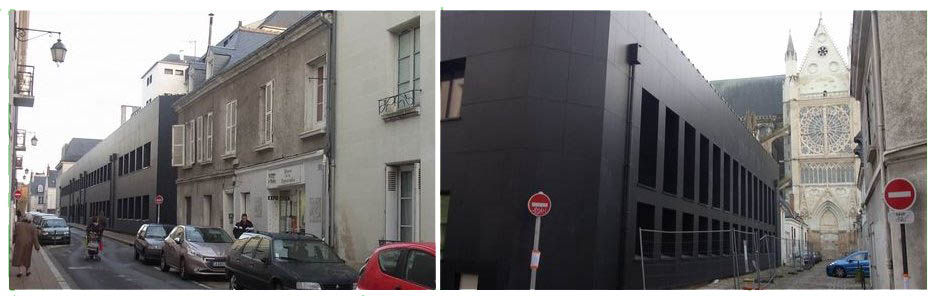 photos
 photo
photo 1
1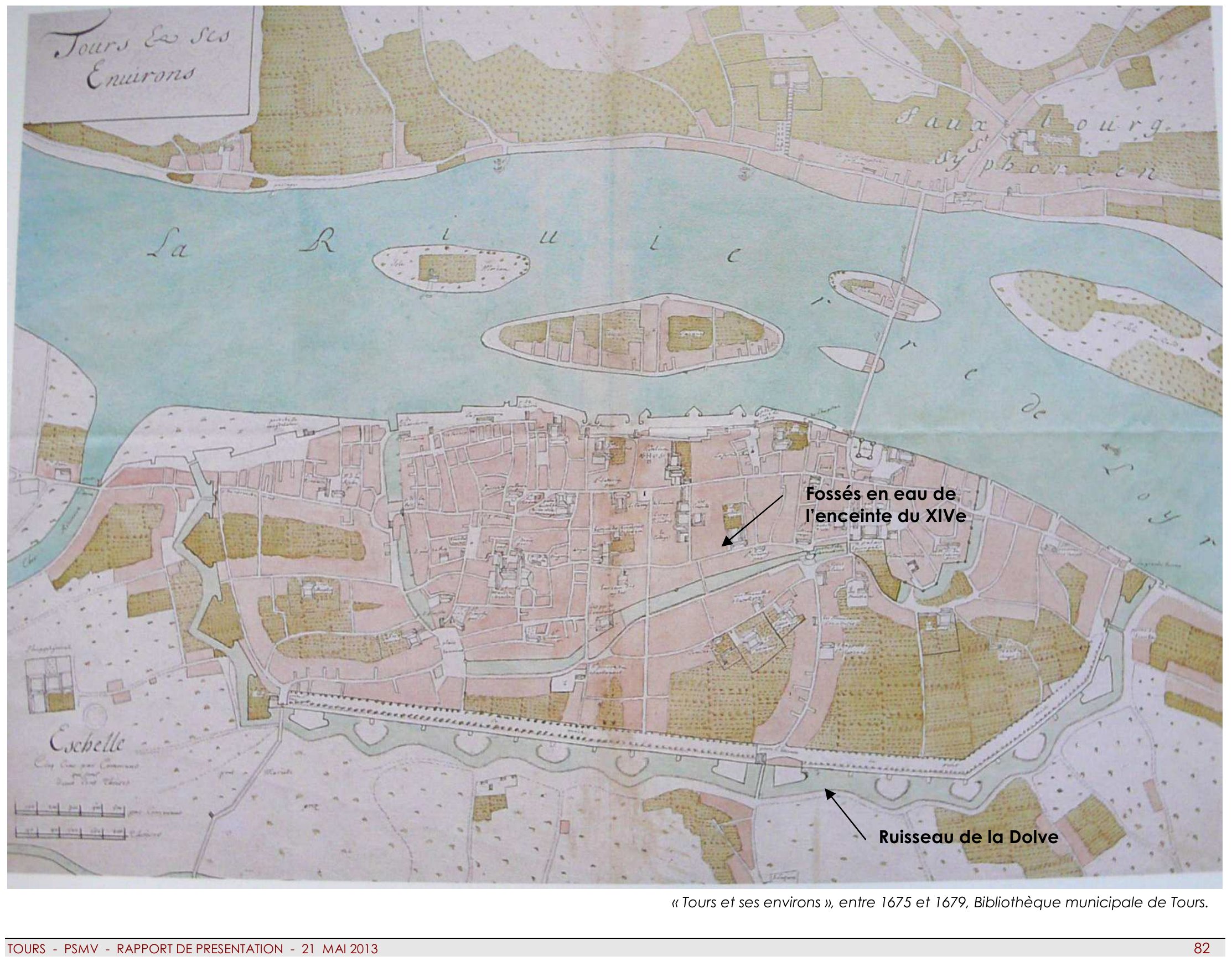 2
2 3
3 geometric survey
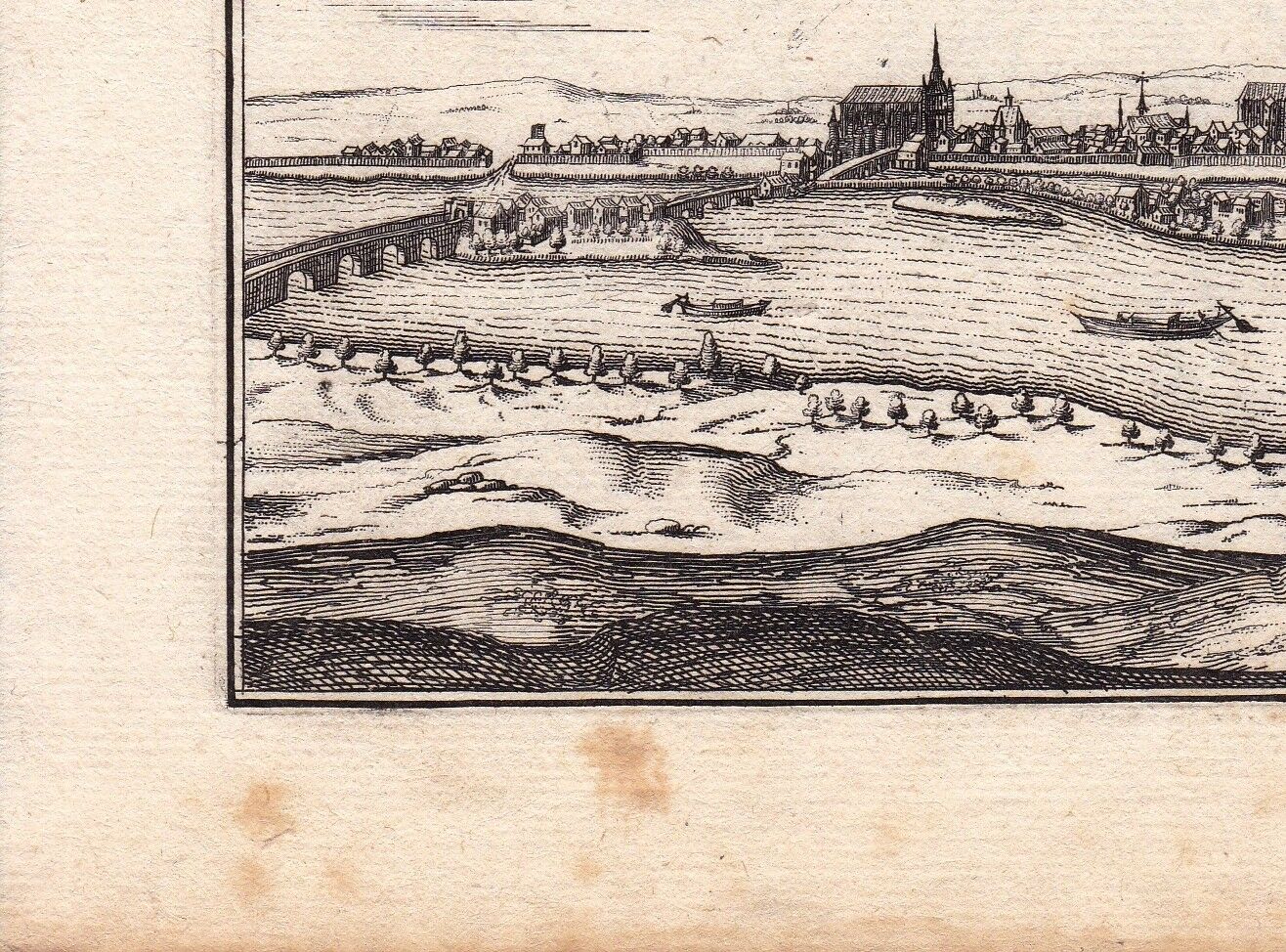 1
1 2
2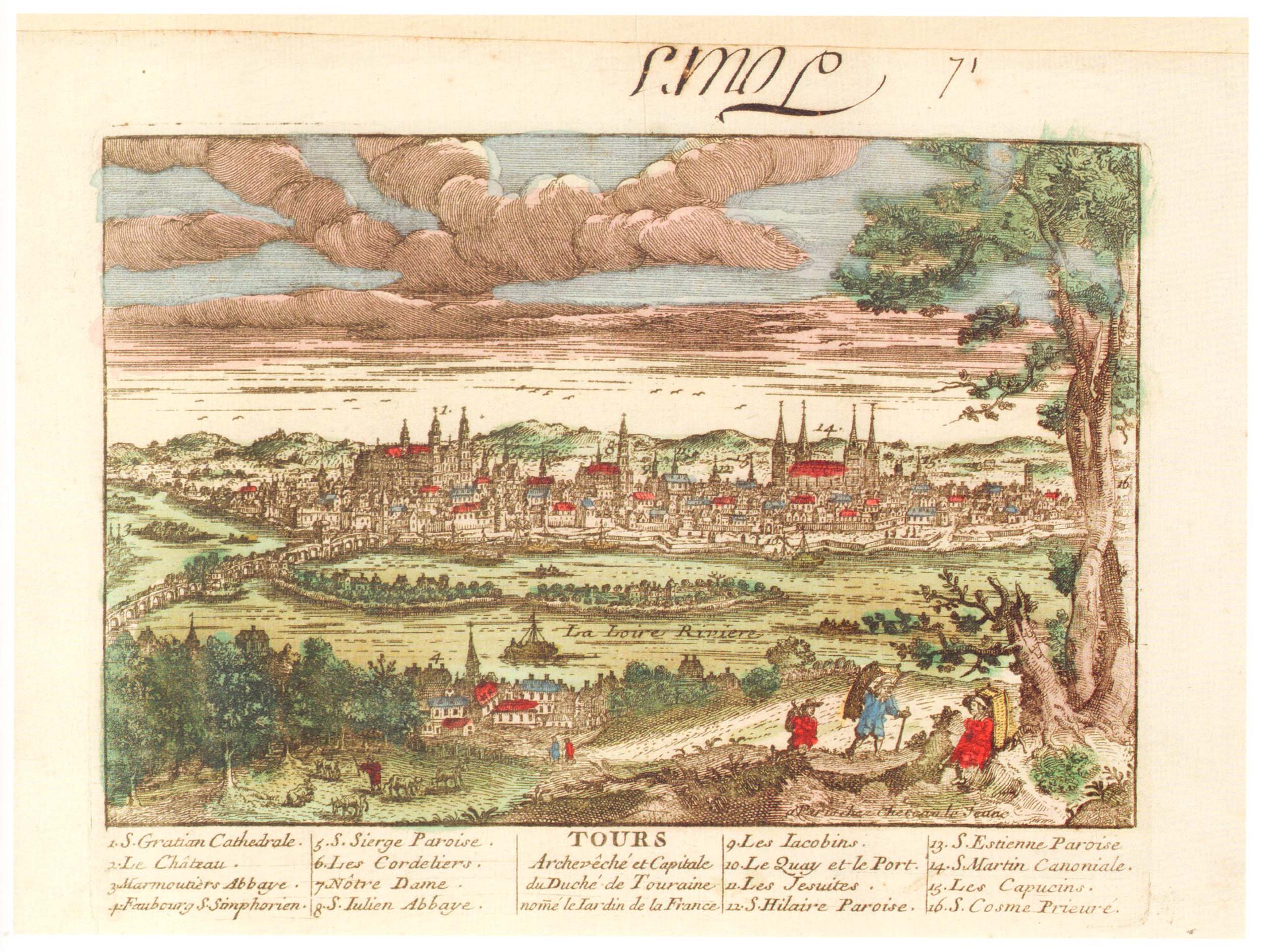 view
view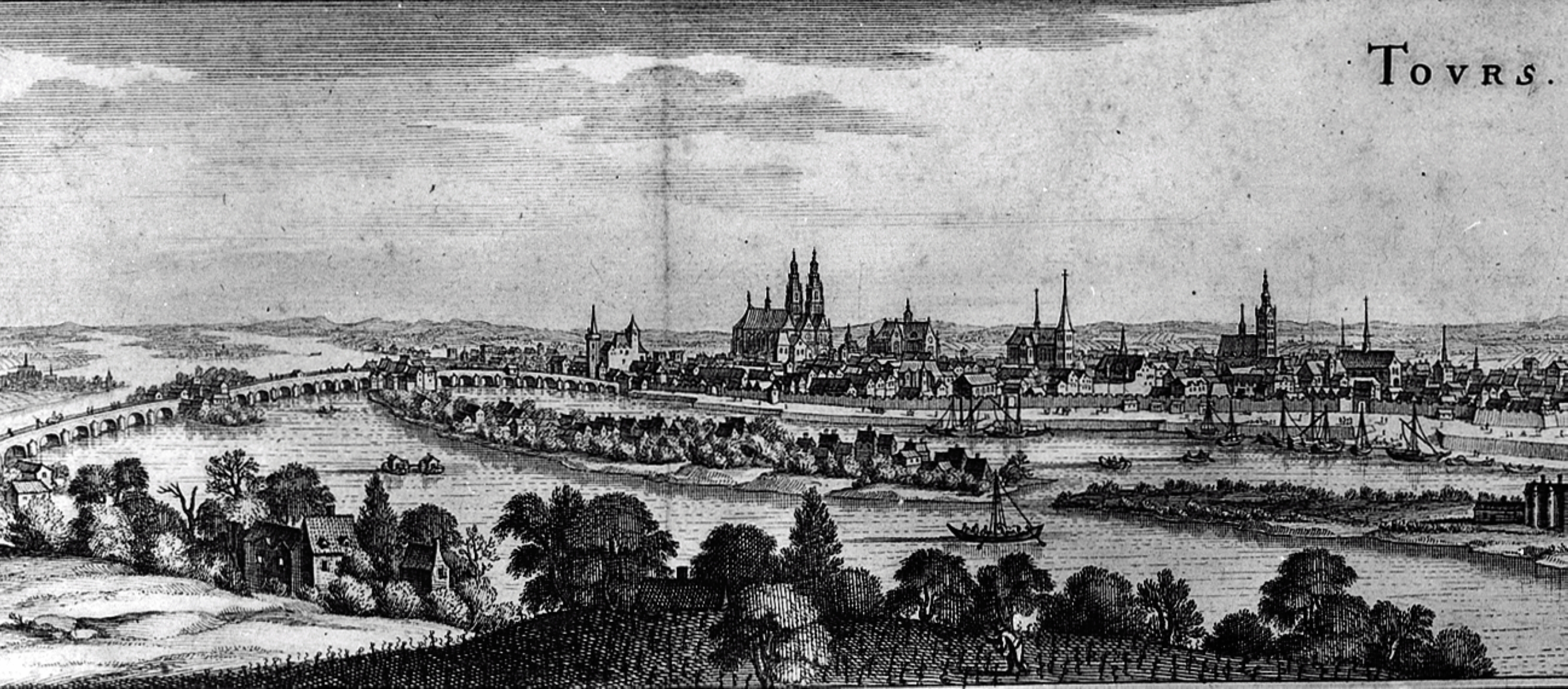 1
1 2
2 3
3 4
4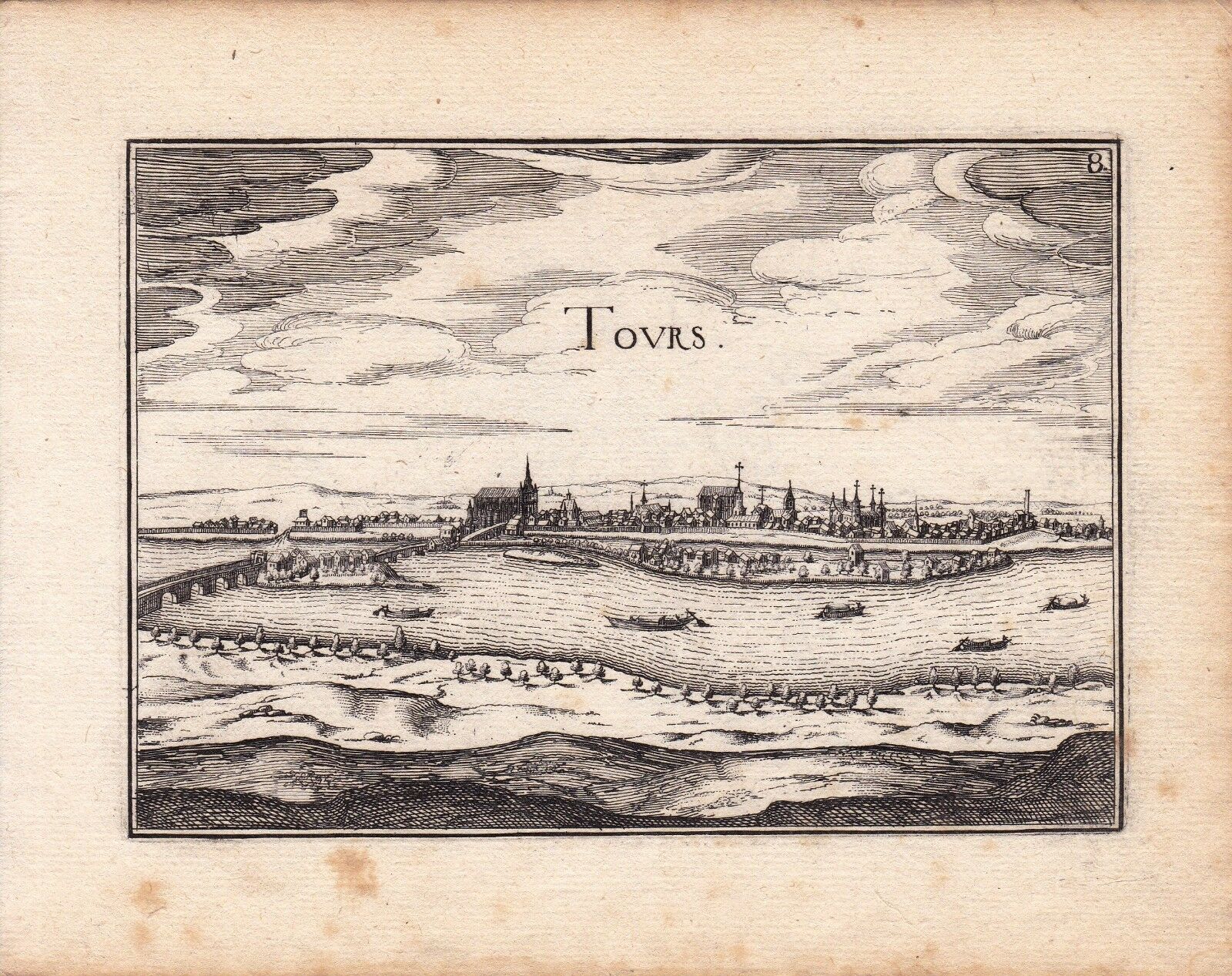
The reign of Louis XIV calamitous for the city of Tours.
Louis XIV proceeded in 1685 to the revocation of the Edict of Nantes causing a major exile of Protestants, particularly in Touraine. In her study of 1983 "Religion and Demography: The Protestants of Tours in the Seventeenth Century", Brigitte Maillard believes that this emigration due to religious persecution was aggravated by the economic crisis (+ another study by Didier Boisson in 2006). Eugène Giraudet in his "History of the city of Tours" (1873) draws up a statement of the situation a little before the end of the warlike reign of King Louis XIV : "The city of Tours is diminishing day by day, says the survey, the generality has been depopulated by a quarter of its inhabitants for thirty years the silk industry is almost entirely ruined the cloth industry has declined by three quarters the tannery is no happier, from 400 master tanners there are only 54 left. An even more lamentable fact attests to this decadence, it is the little consumption of the big cattle formerly the city consumed 90 oxen per week and at present, one hardly debits there 25". A certain prosperity happily returned thereafter, modest prosperity... Giraudet : "All branches of commerce and industry resumed a certain activity towards the middle of the 17th century, in spite of the epidemics, the famines and the heavy burdens imposed on the inhabitants". And it was the same throughout France, according to Joël Cornette, in an article in "L'Histoire" 2018 "The revolts of the "ice years" of the aging Sun King (years 1690-1710) were particularly important, with a sharp peak in 1693-1694 (the "years of misery" marked by a large-scale subsistence crisis) and a peak in 1709 (the "grand hyver")."
The great hyver of 1709 as seen by Guignolet 1984.
+ the  plank. plank.


Louis XIV, king from 1643 to 1715, stained glass window of the present basilica (Lobin workshop, Tours). In the center, the triumphal arch dedicated to Louis XIV, built in 1693 at the northern entrance to the city [Gallica] + 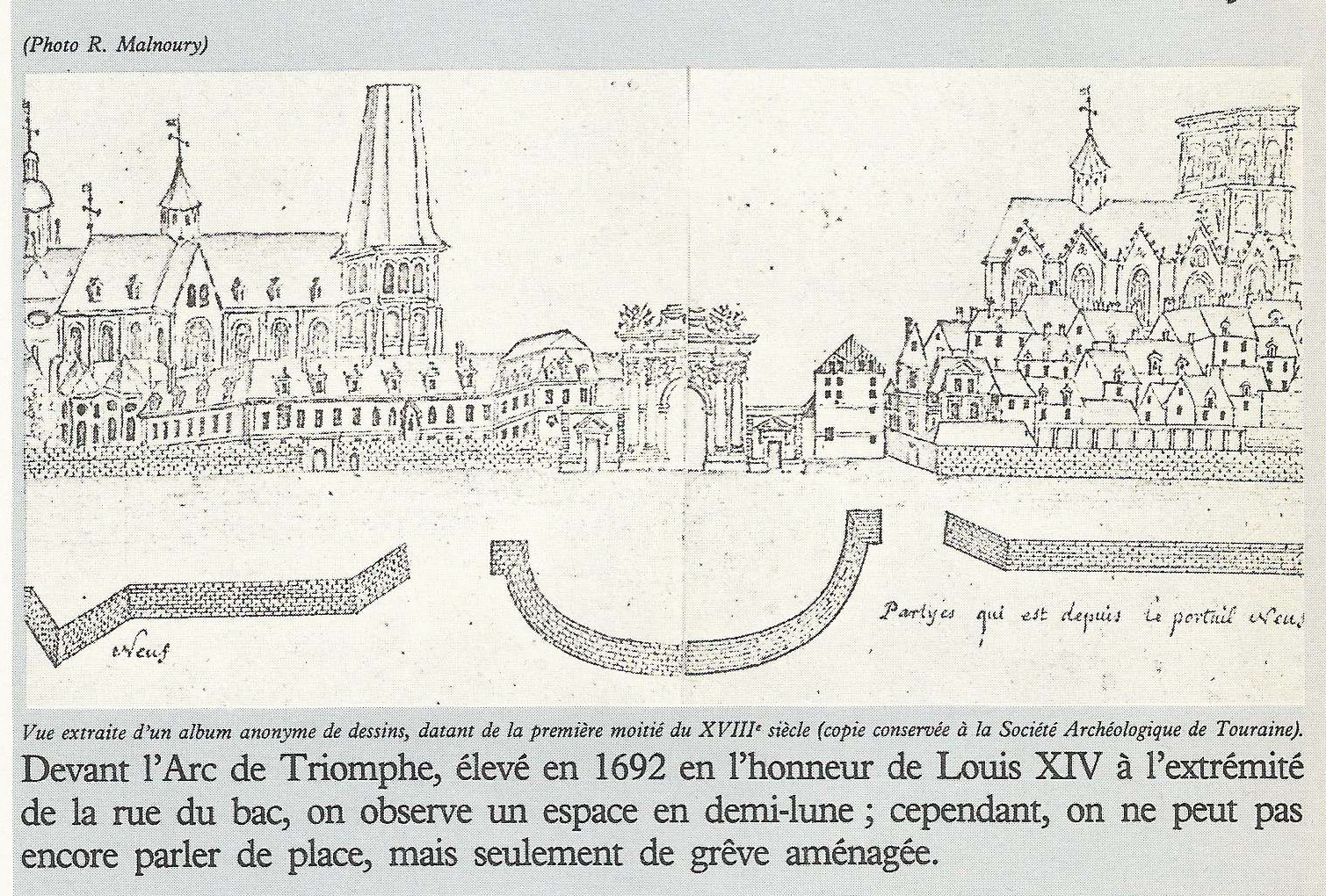 drawing of the arch in its environment ["Tours informations" February 1985].
It was taken up in (small) part taken up in the portal of the archbishopric
(two postcards : drawing of the arch in its environment ["Tours informations" February 1985].
It was taken up in (small) part taken up in the portal of the archbishopric
(two postcards :
 1 1
 2).
The sculpture over the building, depicting the Episcopal coat of arms and a Christian cross, was removed shortly before 1910, when the city took ownership of the site.
To the right, the 1701 portrait of the Sun King in full royal costume by Hyacinthe Rigaud, held at the Louvre Museum, had several replicas. The one held by the MBAT, from a doctor to the king, is particularly careful, made by the artist's workshop (link). 2).
The sculpture over the building, depicting the Episcopal coat of arms and a Christian cross, was removed shortly before 1910, when the city took ownership of the site.
To the right, the 1701 portrait of the Sun King in full royal costume by Hyacinthe Rigaud, held at the Louvre Museum, had several replicas. The one held by the MBAT, from a doctor to the king, is particularly careful, made by the artist's workshop (link).
|
 extracts
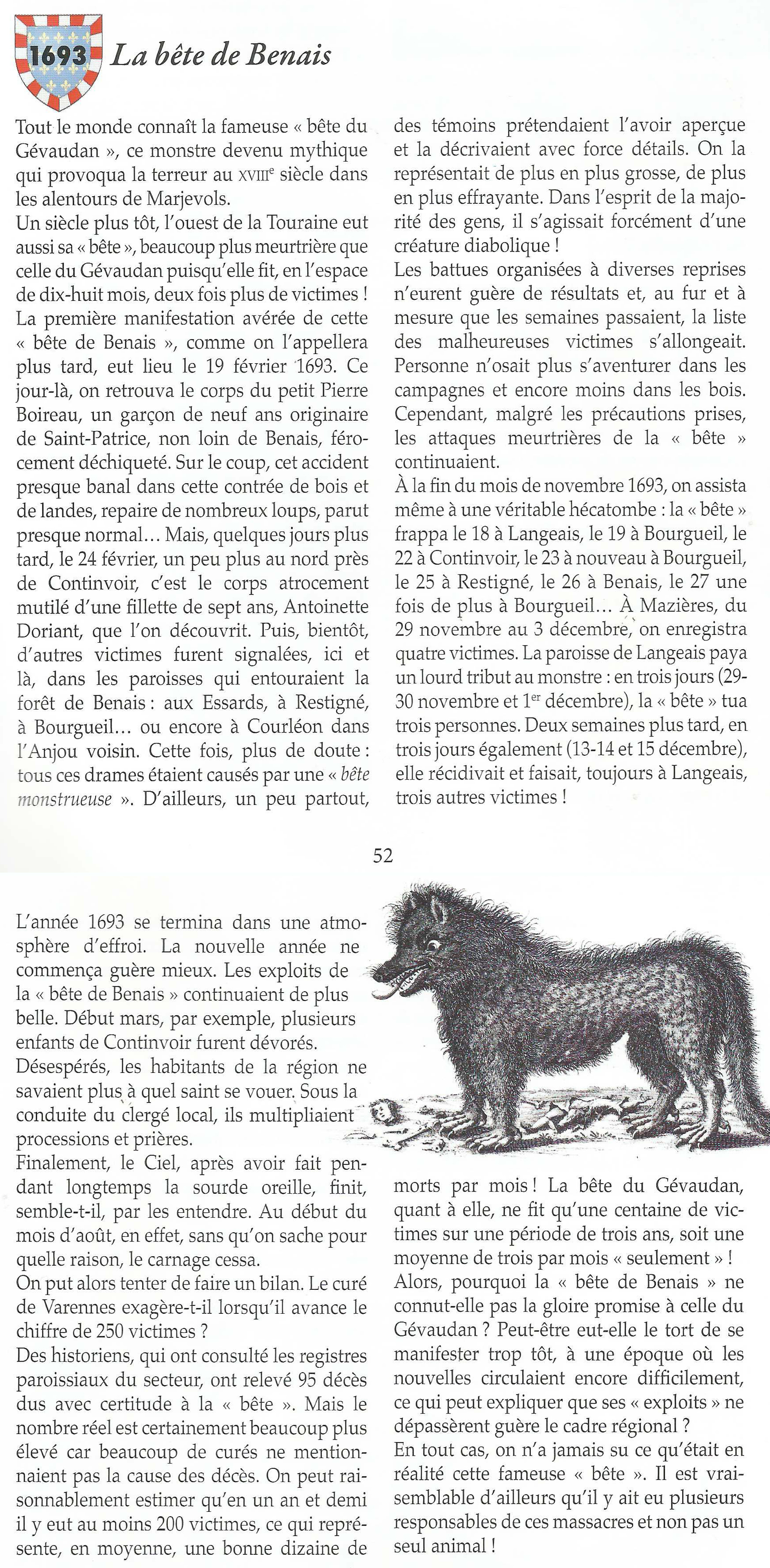 story
story episode
 anecdote
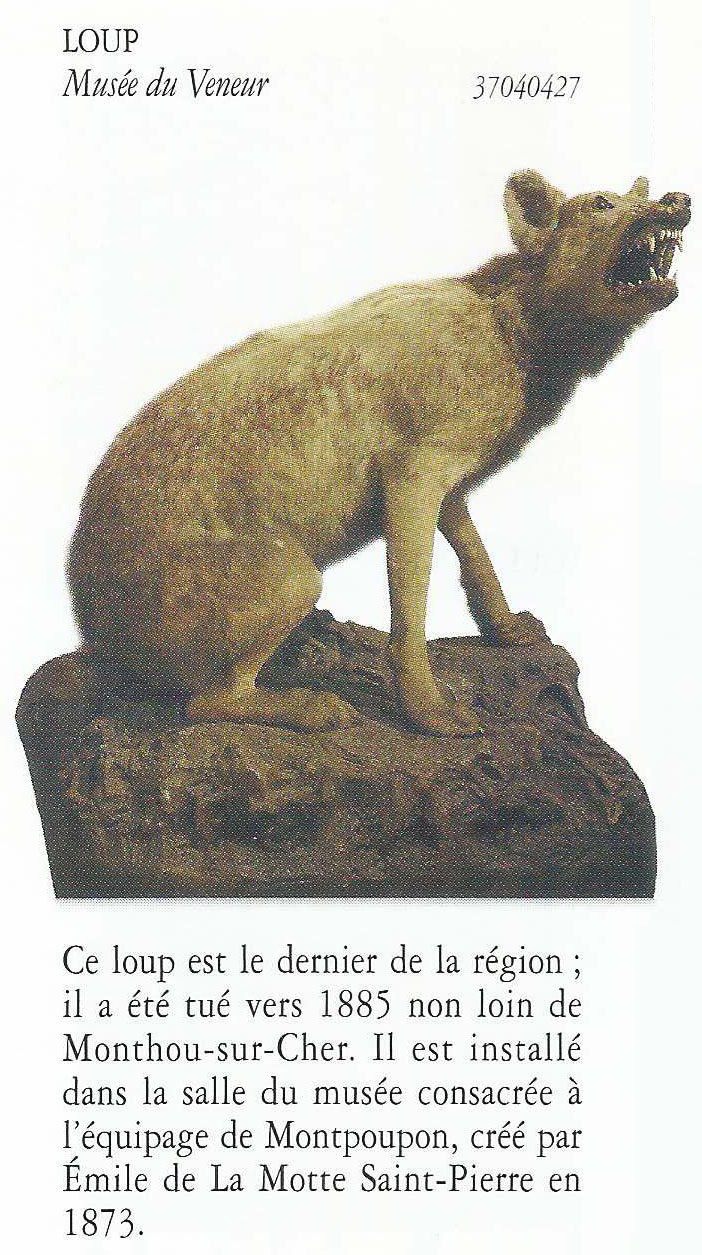 photo
photoWith Louis XV, a recovered prosperity. Throughout the 17th century, the cult of Martin remained alive, Tours remained a city of pilgrimage. Charles Lelong, in his book of 2000 : "In 1718, a traveler notes "that at all hours of the day, there is a great contest of the people" and another, in 1785, that thirty masses are celebrated every day." In 1738, when the shrine was opened (on the occasion of a gift from the collegiate church of Liège), "the people began to give public testimony of their piety towards these relics, for some presented their books and rosaries to be touched, others pieces of gold and silver cloth... or cut pieces of their clothes, their chests and their ribbons. Kings continued to be received at the basilica: Henri III in 1576, Henri IV in 1589, Louis XIII in 1614, Louis XIV in 1650 and 1652. A quantity of scholars in the seventeenth century focused on the history of the saint : the Carmelite
Martin Marteau (1660), Monsnyer (1663), Nicolas Gervaise (1699), dom Martène (ca. 1700)". However, as Eugene Giraudet says that after the arrival to the throne of Henry IV, first of the Bourbons : "the court moving less and less away from Paris, the historical importance of our city began to decline".
Tours and water 3/6: a flood-prone city, the basilica under water in 1733. The 1619 map above highlights, in blue, the watercourses: the Loire, Cher, in the middle the ruau / ruisseau de l'Archevêque or archbishop's stream ( photo Prosper Suzanne 1899, photo Prosper Suzanne 1899,  photo municipal archives 1934), connecting them on the left (west) the ruau Sainte Anne and, serving then as dives, the boire Saint Venant or ruisseau de la Dolve ( photo municipal archives 1934), connecting them on the left (west) the ruau Sainte Anne and, serving then as dives, the boire Saint Venant or ruisseau de la Dolve ( map Hélène Noizet 2007)
+ map Hélène Noizet 2007)
+  schematic of bridges, harbors and islands in 1619 [H. Noizet 2004].
+ schematic of bridges, harbors and islands in 1619 [H. Noizet 2004].
+  map of the "Developments and currents in the Loire in the early seventeenth century" ["La fabrique de la ville" H. Noizet 2007].
+ article by Pierre Audin 2013 "The varenne of Tours and its streams"
+ article by Bernard le Sueur "the status of the Cher River". map of the "Developments and currents in the Loire in the early seventeenth century" ["La fabrique de la ville" H. Noizet 2007].
+ article by Pierre Audin 2013 "The varenne of Tours and its streams"
+ article by Bernard le Sueur "the status of the Cher River".
Except for the ancient place Caesarodunum around the cathedral, the space between the Loire and the Cher was too often flooded, forming a huge lake. The history of Tours is thus punctuated by floods over the centuries, notably in 585, 820, 853, 1003, 1037, 1231, 1309, 1346, 1426, 1474, 1527, 1586, 1608, 1628, 1707, 1711, 1733, 1755, 1757, 1846, 1856, 1866. In 1733 : "The city of Tours saw itself about to be totally submerged there was in the church of Saint-Martin 8 feet of water it was in the cathedral at the height of the main altar ; the inhabitants were three days without food, and the Loire, which was already over the bridges, threatened the city of a whole ruin, if to preserve it one had not diverted the course of it, by making open the levee between Montlouis and the Ville-aux-Dames, what submerged at once this last borough, without being able to save neither inhabitants, nor cattle, nor effects." [link].
|
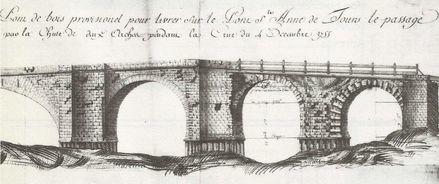
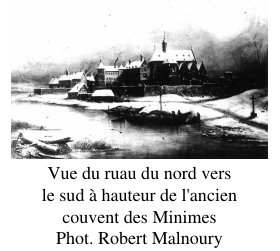
 1
1 2
2

 1
1 2
2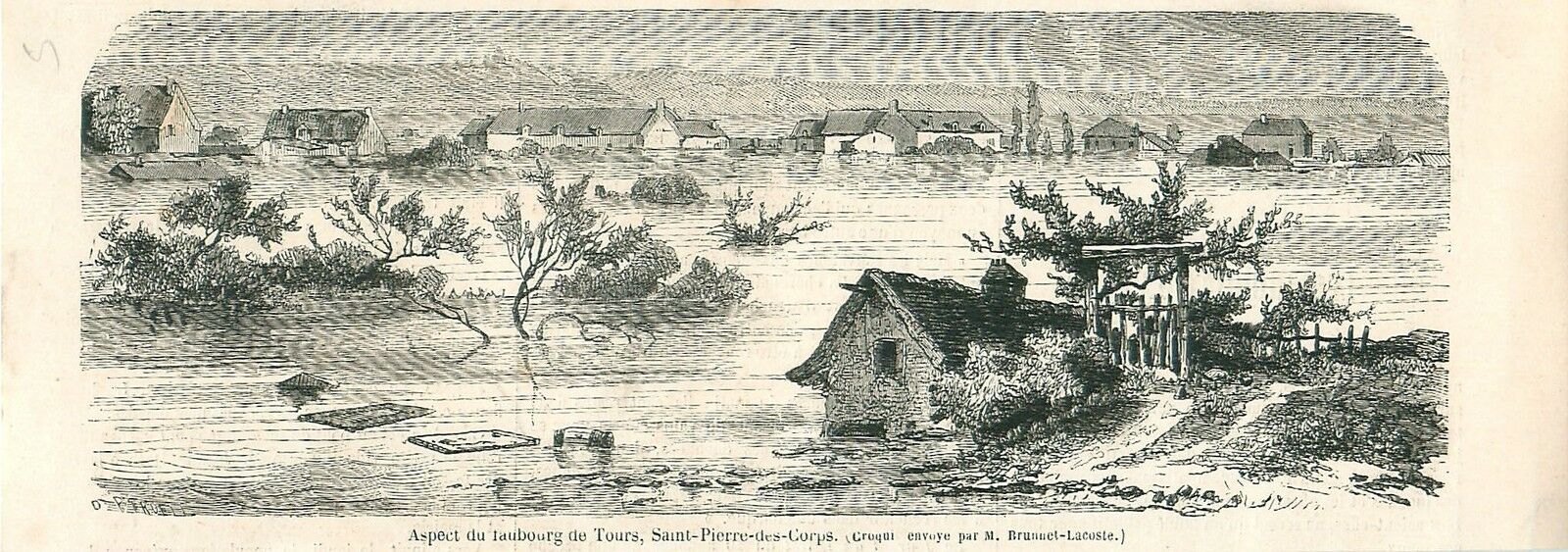

Tours, a beautiful and rich city, and the collegiate church of Saint Martin in 1722.
Jean-Aimar Piganiol de la Force, in his description of the cities of France (1722), depicts the city of Tours "This city is large, beautiful, rich, and one of the most considerable in France there are 138 streets, 4 chapters, 16 parishes, 9 convents, 8 communities of girls, 3 hospitals, and about 40,000 inhabitants. One enters Tours through 12 large gates and this city has 5 suburbs [...]the houses of the city are built of an extremely white stone, which gives them a beautiful appearance, and they are all covered with slates the streets are, in general, quite beautiful and 6 public fountains built in the different districts of the city contribute to maintain cleanliness. The chapter of Saint Gatien is composed of 193 benefactors [...] The collegiate church of Saint Martin is one of the largest in France, it is flanked by a large tower called the Charlemagne tower and on the south side by that of the Clock they can be seen from ten leagues around. The tomb of Saint Martin is the great altar; it is of black, white and marble, and is raised from the ground only about three feet. The chapter of Saint Martin has nearly 400 benefices[...]there are two other chapters in Tours, that of Saint Venant and that of Saint Pierre le Puellier, both of which are under the discipline of the chapter of Saint Martin. The chapters of these two collegiate churches, which are at the same time parish churches, each have 10 canons."

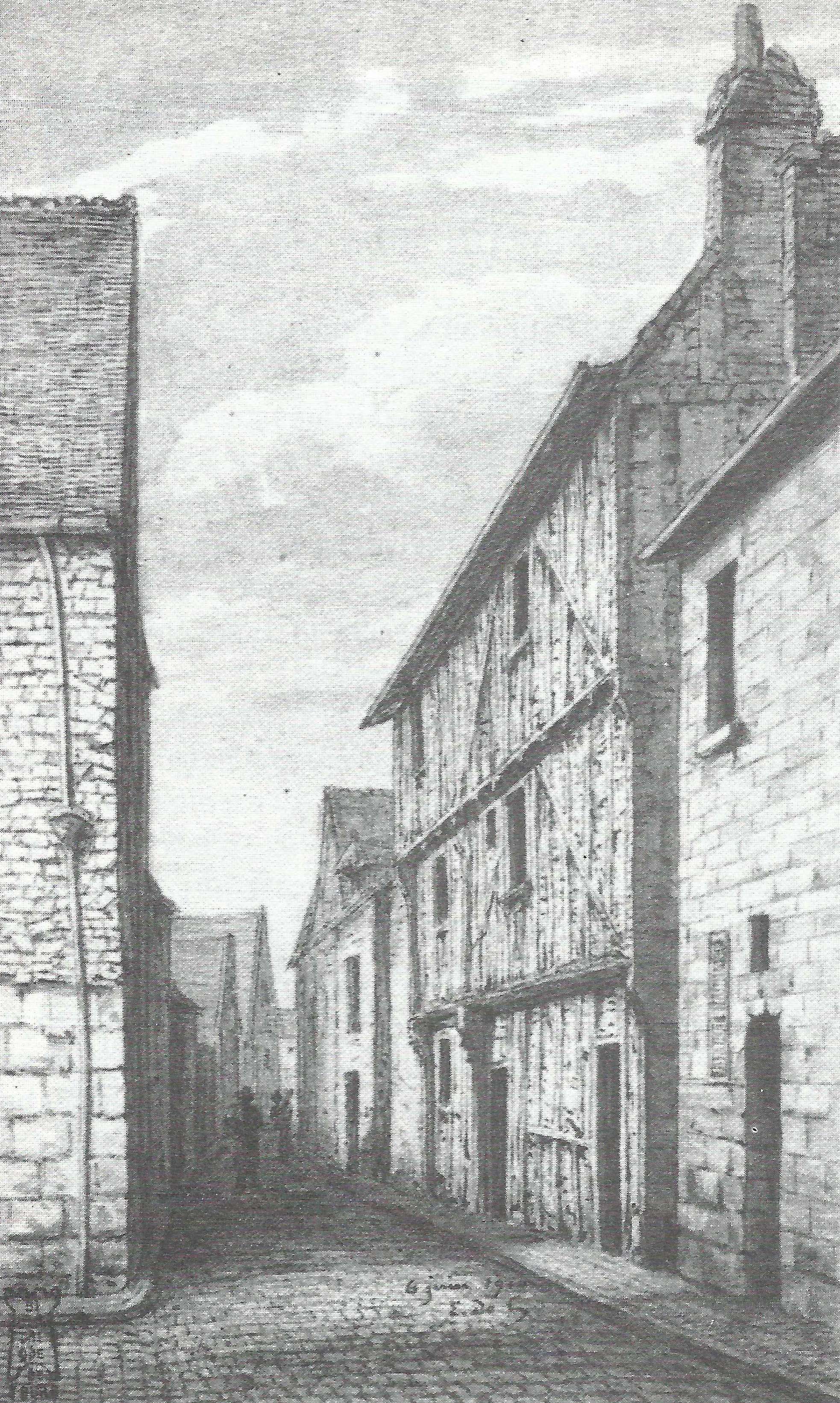


The drawn memory of the streets of Tours in 1912. Edouard Gatian de Clérambault published a collection of illustrations in 1912 "Tours disappearing"
+ the book in its entirety, about 260 pages including, at the end, 100 plates [Gallica] (an 1899 photo book, "Picturesque Tours," is shown below)
+ article Ta&m 2007 by Patrick Bourdeaux featuring Edouard Gatian de Clérambault. The three drawings above deal with the rue du Petit Saint Martin, located between Châteauneuf and the Loire. On the left at N°2 are two houses, from the end of the 16th century and the middle of the 16th century, with a vaulted cellar from the end of the 15th century between them. Like many other houses in Tours, they depended on the fief of the treasurer of Saint Martin. They no longer exist. Then, at n°7, a house from the 16th century. Then, at n°22, the chapel of Petit Saint Martin (drawing and photo on the right).
|
 1
1 2
2 3
3 4
4 5
5The opulence of the Saint Martin Chapter and the end of its independence. Christophe Maillard in the
Collective 2019 discusses "The identity of the Saint Martin de Tours chapter in the eighteenth century" "At the very beginning of the eighteenth century, the canons of Saint Martin flattered themselves that they governed themselves, depending immediately, according to the formula, only on the Holy See, an authority that was necessarily distant and passive. The collegiate church then had a financial power
commensurate with its immense land holdings extending over some fifteen of our departments, in the continuation of the achievements of the Carolingian period. The secular chapter was composed of about 230 benefices, including 43 canons, compared to 145 benefices for Saint Gatien Cathedral. Under the will of the archbishops, by judicial means, the Saint Martin Chapter will gradually fall under the control of the Saint Gatien Chapter, an operation finalized in 1535, as Eugène Giraudet indicates: "The ecclesiastical annals report to this same year a serious religious event, provoked as a result of a papal bull and a ruling of the Parliament. The ancient Chapter of Saint Martin, so famous until that date by its immunities, its privileges, its franchises, granted or confirmed by the papacy and all the sovereigns of France, became dependent and subjected to the jurisdiction of the Archbishop. The abbey of Marmoutier underwent, three years later, the same destiny the sponsoring abbot, the prince of Clermont Louis de Bourbon-Condé, 123rd abbot, having resigned, the title of abbot ended with him and, from then on, great priors obtained the spiritual and temporal jurisdiction of the abbey." The former abbot then became lieutenant general of the army, governor of Champagne, had a varied libertine life and ended up grand master of Freemasonry. The virtus of Martin had disappeared...
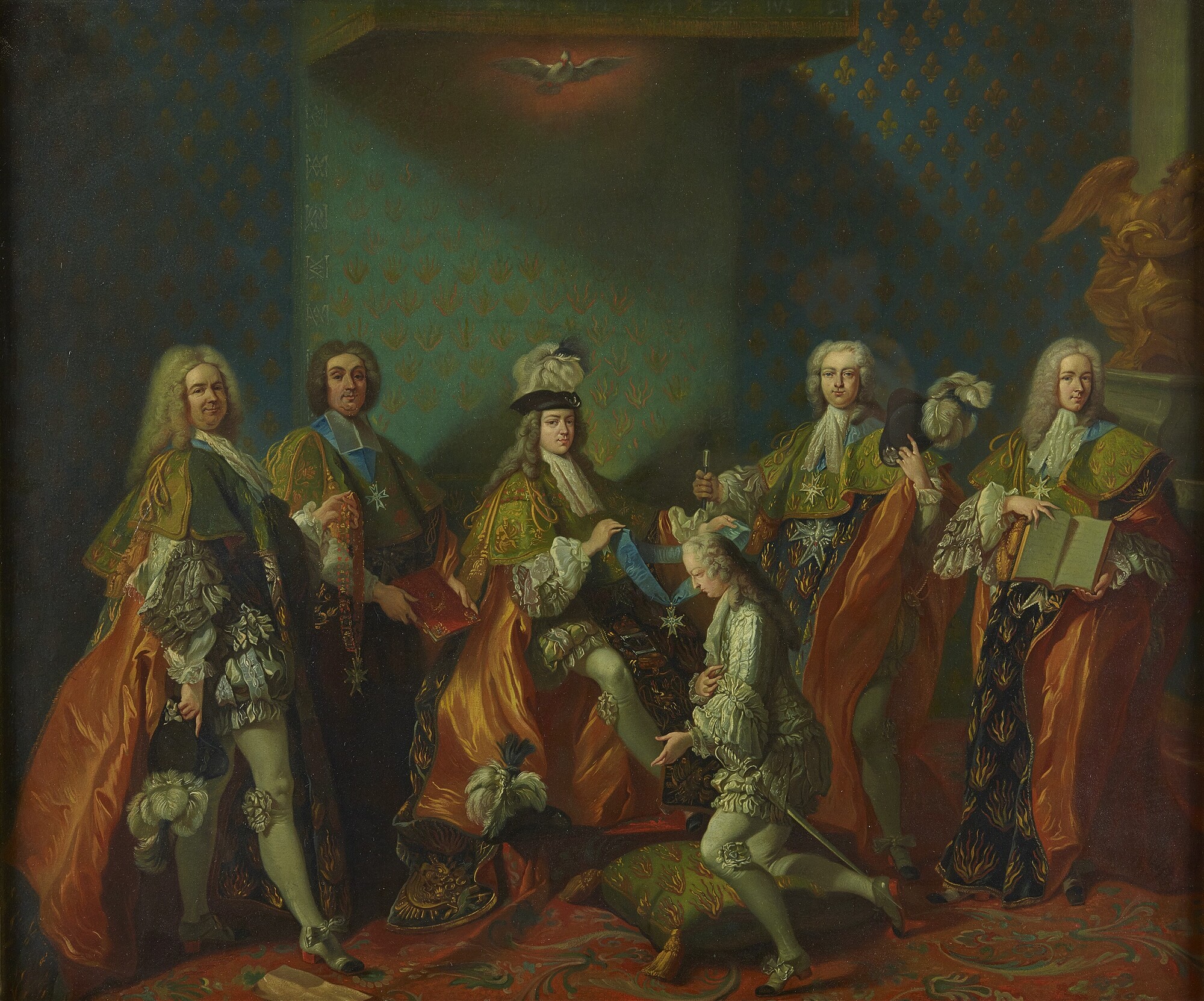

On June 3, 1724, King Louis XV presented the cord of the Order of the Holy Spirit to Louis de Bourbon-Condé, the last abbot of Marmoutier, in the chapel at Versailles [Jean-Baptiste Van Loo, Château de Versailles, Wikipedia].
On the right, Tours is the capital of one of the 37 generalities of the kingdom of France. Created as early as 1452, on a larger territory, this territorial division gained importance under Louis XIV, also becoming an intendance headed by a intendent ["Les rois absolus", Belin 2011]. The division by provinces remained (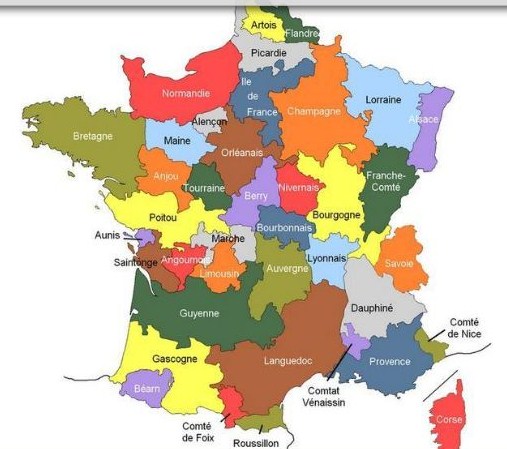 map). map).
|
The decline of municipal power. In the 18th century, how did the legislation on communal powers evolve ? Was it able to adapt to the times ? Jean-Jacques Bourassé answers in
LTh&m 1855 : "Since the promulgation of the edict of 1692, suppressing the electoral system, we find nothing but indecision, disorder, inconsequence or abuse of power in the legislation of municipal government. Louis XIV, surrounded by all the splendor of his greatness, did not take sufficiently into account the deep attachment of the cities to their immemorial franchises. The popular lever with which his predecessors had freed themselves from the yoke of the high aristocracy had had its day, and the royal power, exercising itself without control, could now abandon the democratic element whose powerful energy it had used to its advantage. But the future must expiate these errors of the policy ; and we saw until where the popular vengeances can go.". Relying on the counts of the time, Eugene Giraudet indicates that after having counted 60,000 souls (which appears too strong, perhaps 45,000 ?), the population passes to 26,000 in 1766, 20,210 in 1781, 19,660 in 1786, 21,800 in 1790.
What place for worship in the Age of Enlightenment? The privileges of canons, even if they have been trimmed, appear unjust. Christophe Maillard in the
Collective 2019 : "The canons are compared to "rats in the cheese" who take advantage of the goods that were once granted to them "thanks to the follies of our ayeux." By extension, they become the enemies of progress and enlightenment. [...]They are accused of parasitism and obscurantism." It is symptomatic that, in 1777, the visit of Monsieur, the king's brother (the future Louis XVIII, then 22 years old), with a passage in the basilica, is carried out discreetly. Well received by the town councillors, he avoids the crowd [ recit, link). In such a climate, fervor decreases, Christine Bousquet-Labouérie and Bruno Judic underline, in the Catalogue 2016, this clear weakening of the cult, which will explain the lack of resistance to the degradations of the revolt : "In the eighteenth century, pilgrimage to the tomb seems to be limited to the Touraine countryside. This radical decline of the pilgrimage is also the background of the financial difficulties of the canons who could no longer maintain the immense basilica inherited from the Middle Ages. It remains that the destruction of this monument responded to a political purpose: to eliminate the symbols of the monarchy and tyranny".


The Basilica of Saint Martin before the Revolution. On the left view from the south, 15th century model by Florent Pey (the cloister in the foreground, the Charlemagne Tower in the background on the right). Right view from the north, 18th century engraving [ BmT]
+ :other 3D renderings here-before
and this-following.
In the foreground the Charlemagne tower on the left and St Nicolas tower on the right. In the background, the dial tower on the left and the treasure (now clock) tower on the right +  variants. variants.
|
Tours and water 4/6: 1764, the manu militari evacuation of the island Saint Jacques to build the stone bridge. At that time, the population of Tours did not live only on the left bank of the Loire, behind the ramparts. On the right bank, the Saint Symphorien suburb
developed and an island, called Saint Jacques, sheltered 700 to 900 people, with houses and streets. This population, with bargemen, boatmen, stevedores, washerwomen, lived from the presence of the Loire and its river traffic. The construction of the stone bridge will upset everything. For the prestige of the city, it is one of the first flat bridges. The right bank being higher than the left bank, it is necessary to raise the latter (at the level of the current place Anatole France) by leveling the Saint Jacques island. In 1758, compensation was calculated and proposed to the owners, but many of them refused to evacuate because they were attached to their property and their island. After more than five years of procrastination the public authorities had to use force and in 1764 the army intervened with the baïonnette [link]. It will remain only an islet that men and the natural input of sand will enlarge over time. Its last owner, M, Simon, built a house on it, thus Simon Island was born (+  presentation, presentation,  photo taken from the Napoleon Bridge with the island on the left), smaller and further downstream than Saint Jacques Island. As for the new stone bridge, so named even today, it was named in 1918 Wilson Bridge in honor of Woodrow Wilson then president of the United States. photo taken from the Napoleon Bridge with the island on the left), smaller and further downstream than Saint Jacques Island. As for the new stone bridge, so named even today, it was named in 1918 Wilson Bridge in honor of Woodrow Wilson then president of the United States.
|


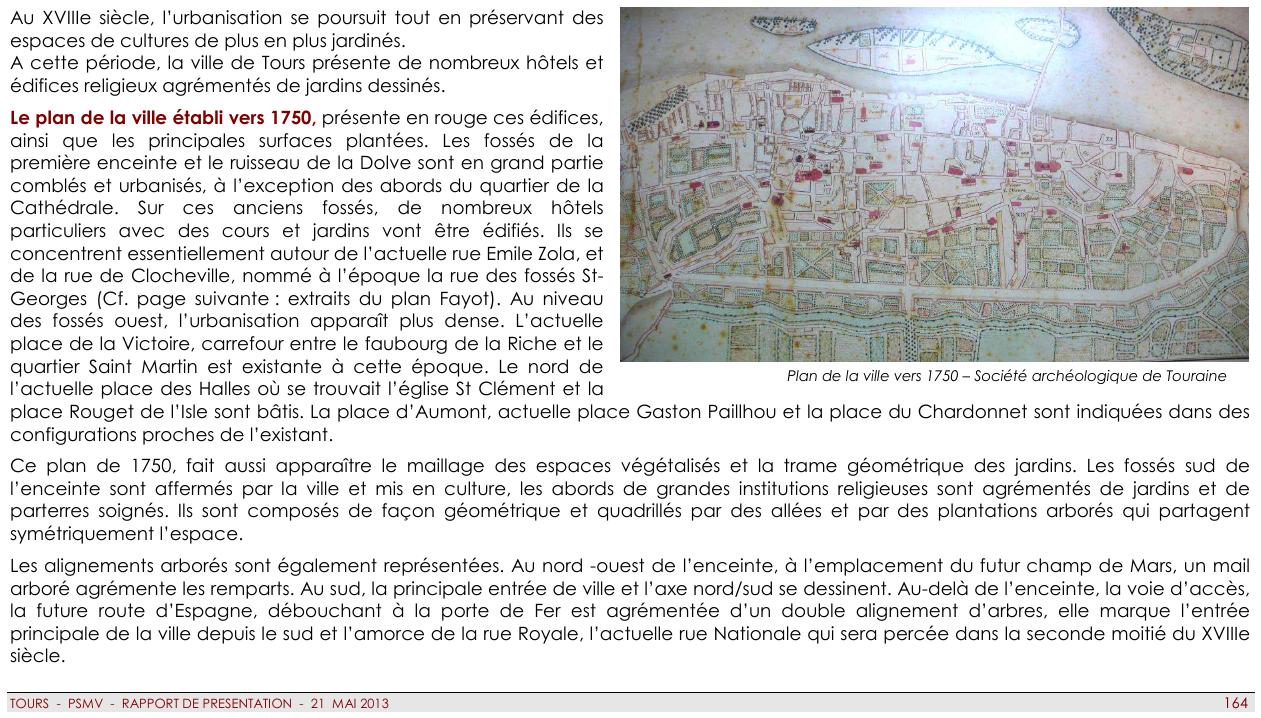 plan
plan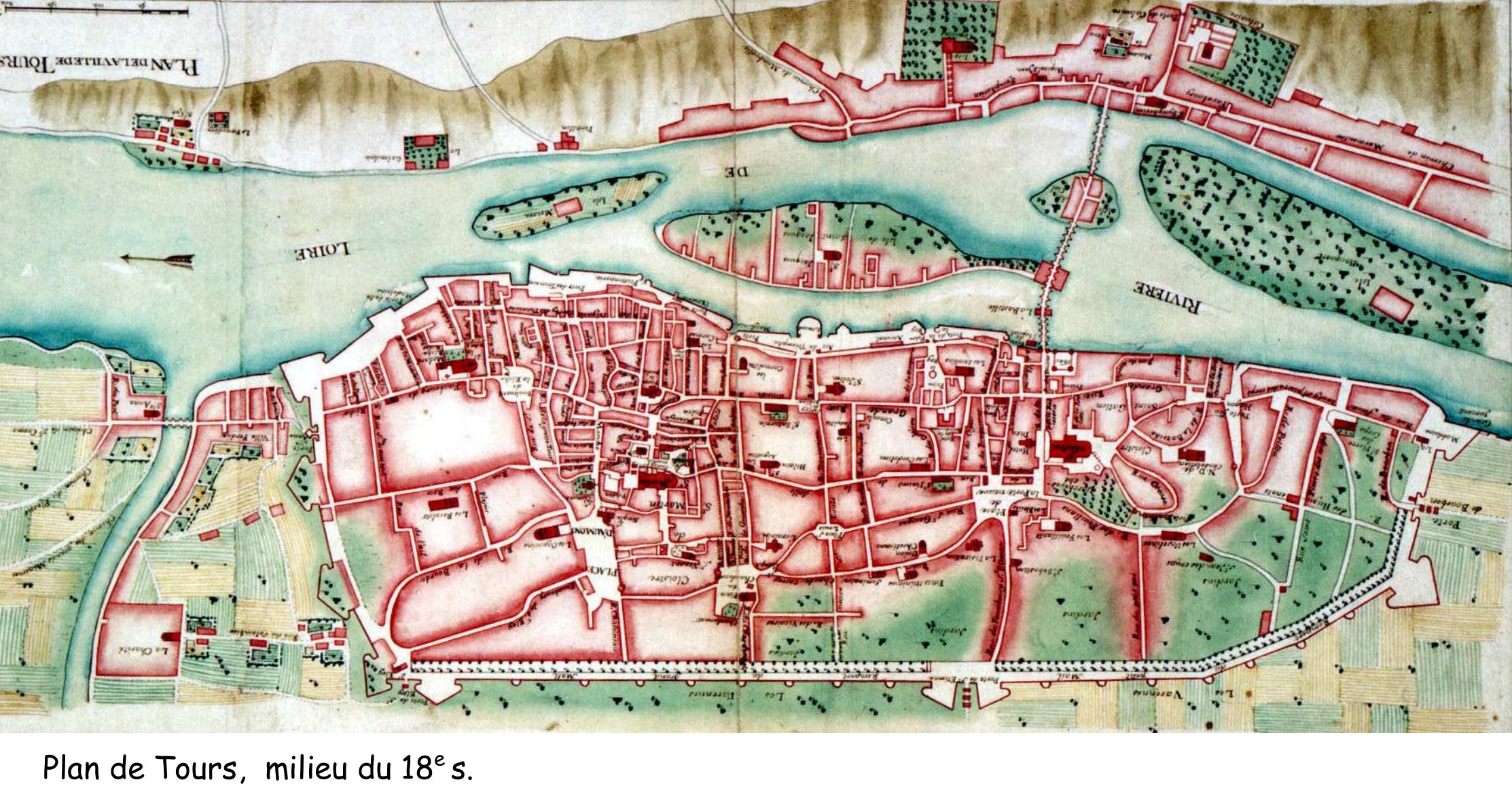 plan
plan overview
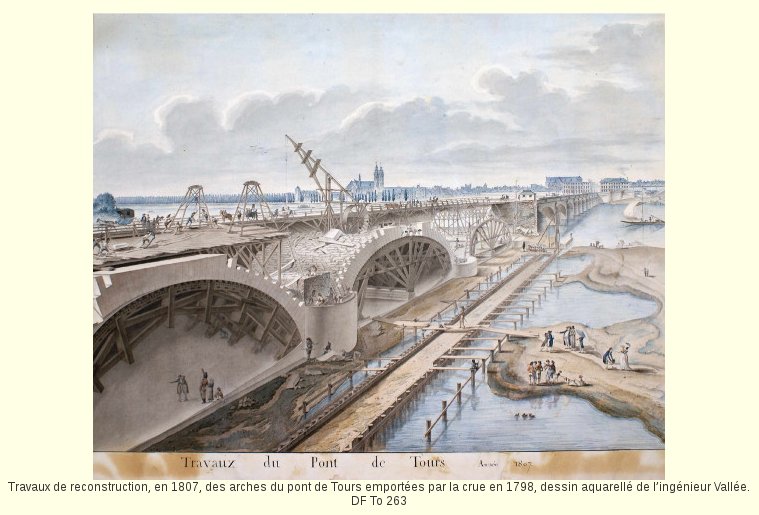 view
view
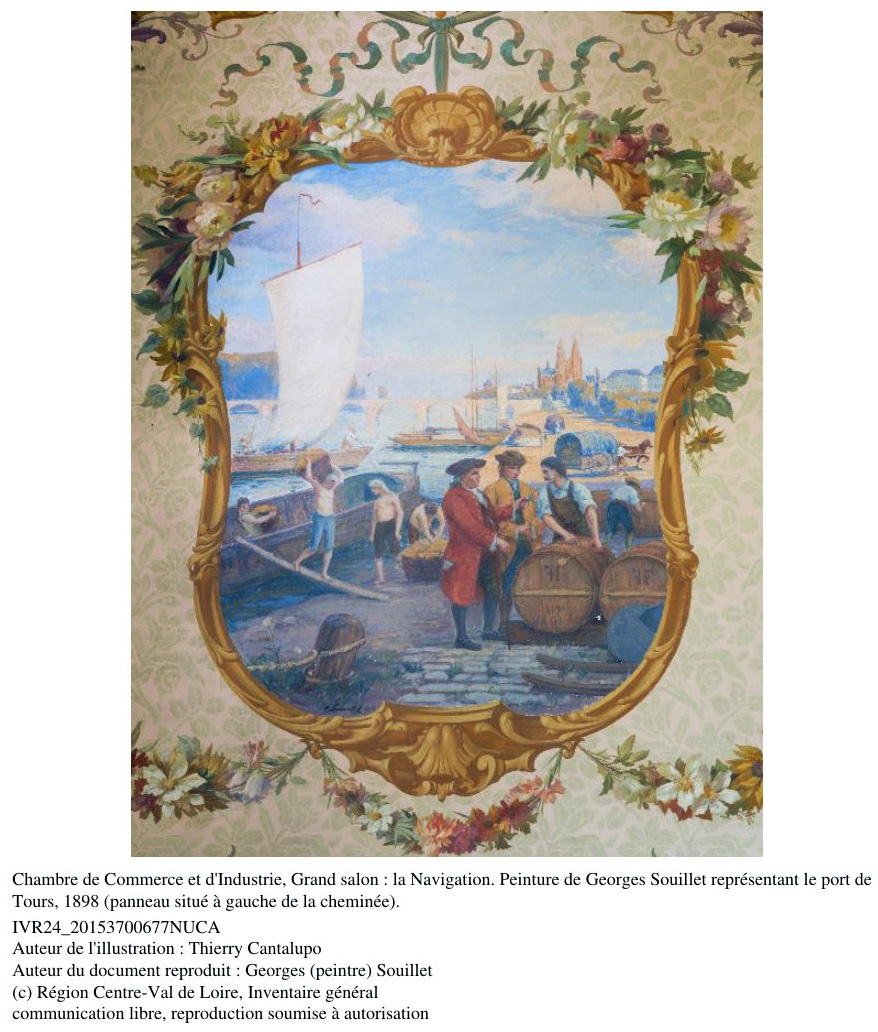
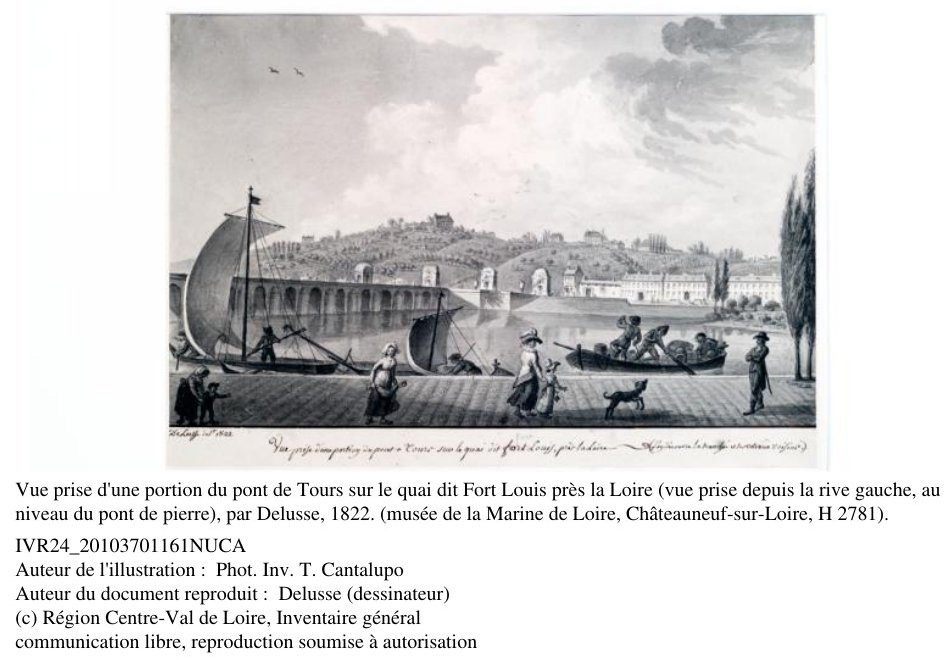
 photo
photo 1
1 2
2 photo
photo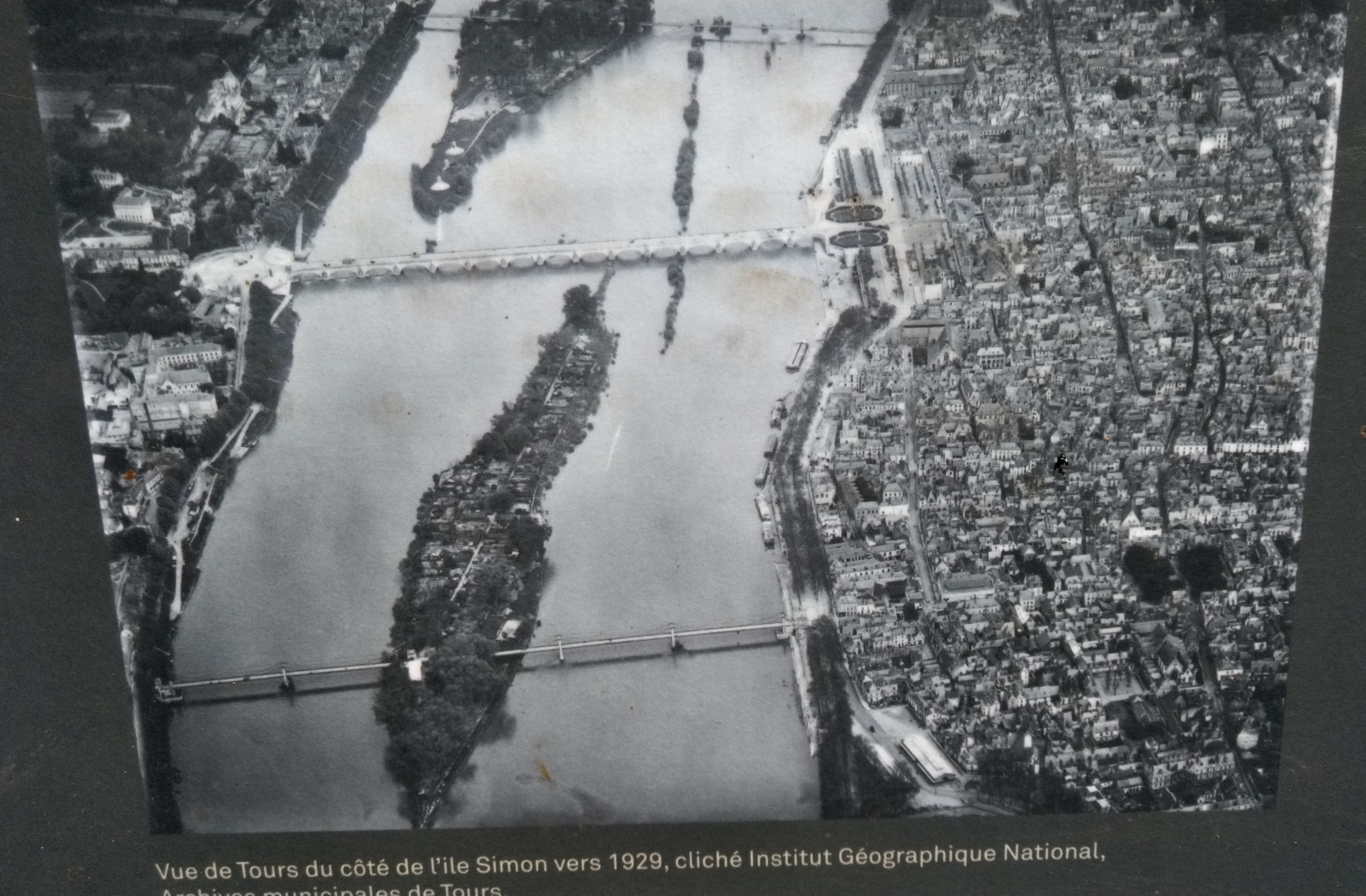 photo
photo
Tours in 1787, with the old Eudes Bridge and the new stone bridge. Painting by Charles-Antoine Rougeot given by Charles Henri d'Estaing, governor of Touraine from 1785 to January 1, 1791, to mayor of Tours from 1780 to 1790 Etienne Benoist de La Grandière (his page Wikipedia is dithyrambic...) [MBAT].
+ two views of Tours and its bell towers :
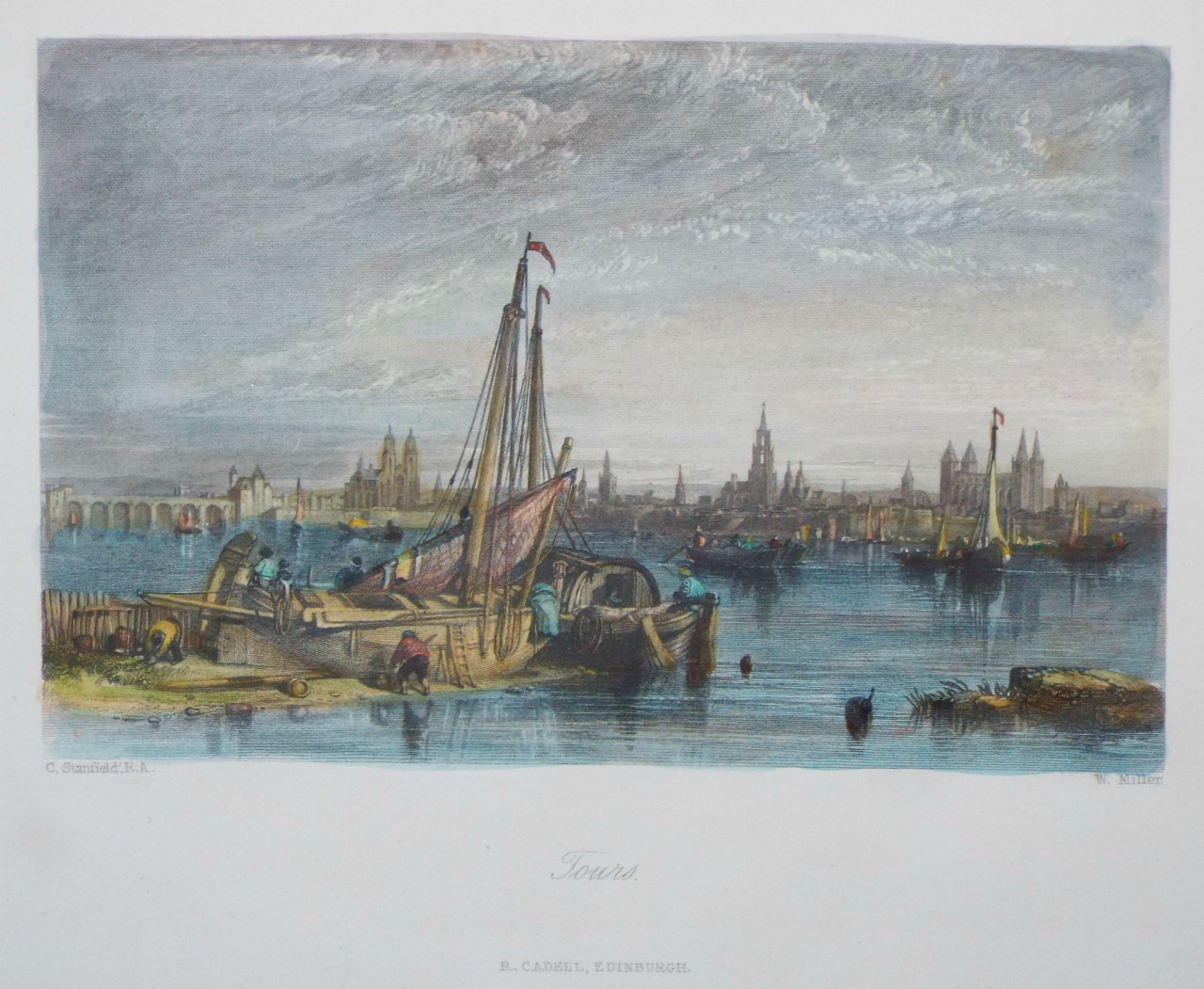 1 circa 1750 [C. Stanfield]. 1 circa 1750 [C. Stanfield].
 2 circa 1760. 2 circa 1760.

 1789, Tours just before the Revolution. Illustrations and comments from "Magazine de la Touraine" #30 (April 1989), feature "La Touraine avant la révolution".
On the right, after the cahiers de doléance, the Etats généraux are preparing...
1789, Tours just before the Revolution. Illustrations and comments from "Magazine de la Touraine" #30 (April 1989), feature "La Touraine avant la révolution".
On the right, after the cahiers de doléance, the Etats généraux are preparing...
|
 engraving
 postcard
 table
table photo
photo photo
photo|
Commune of Tours 5/5: growing tension between the municipality and the chapter. During the 1780s, conflicts increased between the commune of Tours and the canons of Saint Martin. In January 1785, they were told that ".
If the cloisters it is true were able to enjoy formerly particular privileges when they were totally sequestered from the society of the laity, inhabited by the canons alone and by the persons whom they allowed to have in their homes by the holy canons, the chapters can no longer claim these privileges since they indiscriminately admit laymen of any state and any sex into their houses. It is well known that the cloister of St. Martin contains perhaps six times as many laymen as members of their Church, so it is now given over to the customs of civil life and must contribute in full to the expenses of the municipality" (link). The City finally gave up and, in order to have peace, agreed with the intendant to remove the cloisters from the general project, not without criticizing the attitude of the canons.
Commune debuts 1/5,
2/5,
in 3/5,
4/5.
|
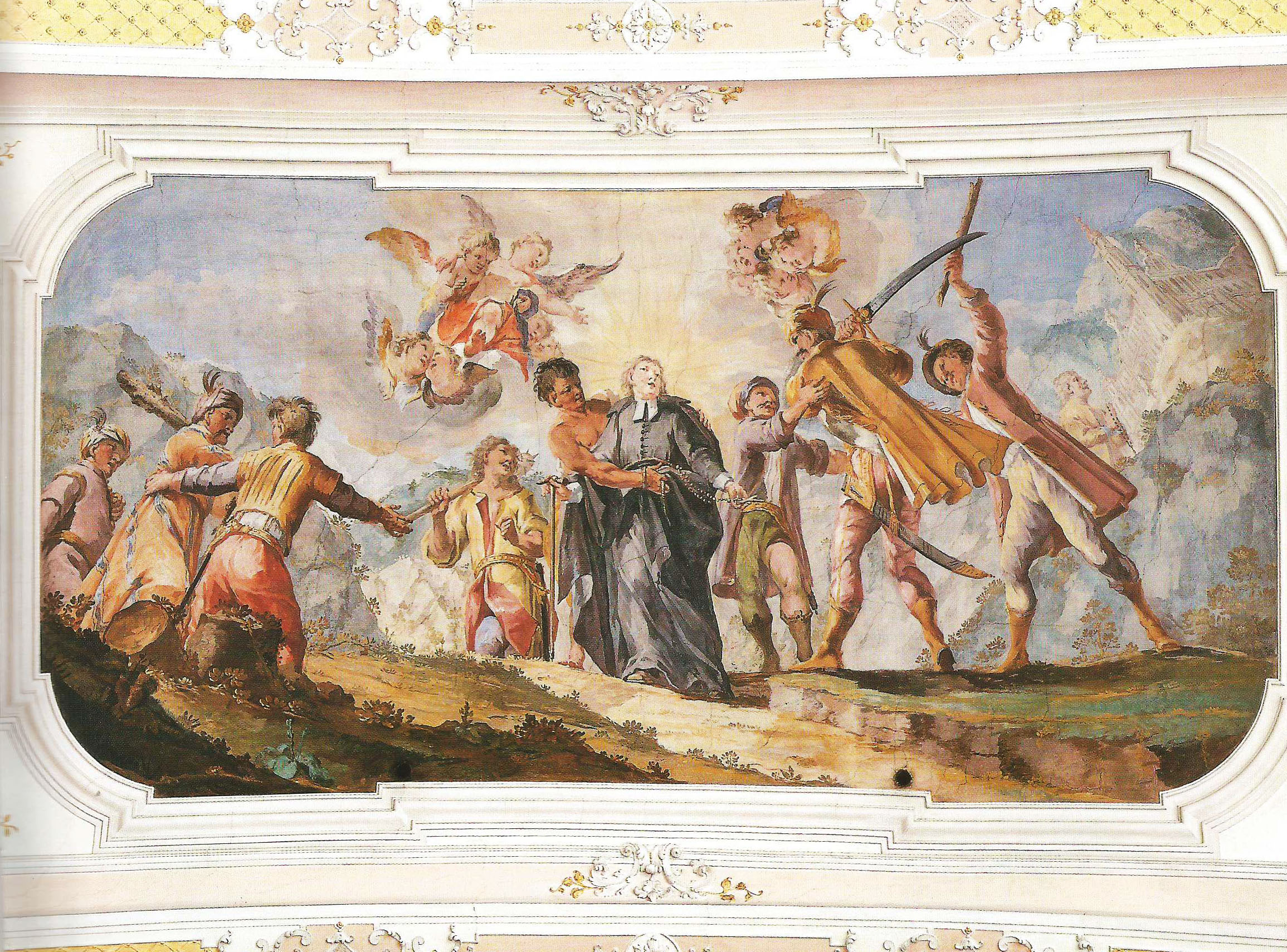
The clergyman Martin facing the new bagaudes. This painting by the German Matthäus Günther (1705-1788) [in the church of Garmisch-Partenkirchen, Lorincz 2001] was painted shortly before the French Revolution when revolt was already rumbling in the countryside. The episode of Martin being assaulted in the Alps by brigands is updated by a Martin transformed into a parish priest and the bagaude brigands (see here-before) turned into rioting peasants (the Tile Day in Grenoble preceded the painter's death by a few months). Martin had managed to get along with the bagaudes, some prelates tried to pact with the sans-culottes, few, like the abbé Grégoire, succeeded.
|
The considerable property of the clergy was dispersed... The wealth of the abbey of Saint Martin, acquired mainly under the Carolingians, lasted nine centuries, but everything has an end... Eugène Giraudet in his book "History of the city of Tours" of 1873 : "In November 1789, the National Assembly saved France from an ignominious bankruptcy by decreeing that all ecclesiastical property and revenues would be placed at the disposal of the nation, on the charge by it to provide for the expenses of worship and the maintenance of its ministers. One benefited from the immense goods of the clergy, estimated at approximately ten billion, by creating immediately bills which gave to the bearer an assignment on the price of these goods. The merchants of Tours protested against the issuance of this paper money called
assignat, which was, however, a valuable resource as long as good faith presided over its issue.. Charles Lelong notes a final mark of respect for the clergy in 1790 when "the municipality joins with the chapter in requesting an exemption during the suppression of religious orders "Saint Martin is the patron saint of the Nation. The apostle of the Gauls must not be indifferent to the representatives of the Nation". But the wheel turns ...
1790, King Louis XVI receives the ring of Marmoutier. Remember
this-before the beautiful ring with emerald offered by Henri IV to the abbey of Marmoutier in gratitude for services rendered for his coronation. Eugene Giraudet returns to this precious ring in July 1790, before the king Louis XVI, "A deputy from Tours, Mr. Bruley, having taken a knee, delivered a short address offering "this precious token of the inviolable attachment that the city of Tours has for his sacred person." The king testified his satisfaction and thanked, in kind terms, the deputies of Tours, put the ring on his finger and said, turning to those around him "I have never worn rings, but I will wear this one with great pleasure."
1791, a revolutionary bishop! Giraudet : "In October 1790, the
constituent assembly enjoined all the clergy of the kingdom to take an oath of fidelity to the constitution, under pain of being stripped of the functions that had devolved upon them. All priests who refused this order were outlawed and called "refractory priests", while those who submitted to it were scourged as "swearing priests" or swearers. The pope Pius VI banished them from the Church and declared marriages blessed by them void and pagan the children they would know baptized. From that moment on, most of the priests who had been content until then to remain on the defensive, conspired openly against the Revolution. Although the archbishop of Tours François de Conzié, an ex-deputy to the National Assembly, had left France to give his diocese the example of resistance, 44 priests and nuns submitted to the law." Thus was elected in 1791 the constitutional bishop Pierre Suzor
(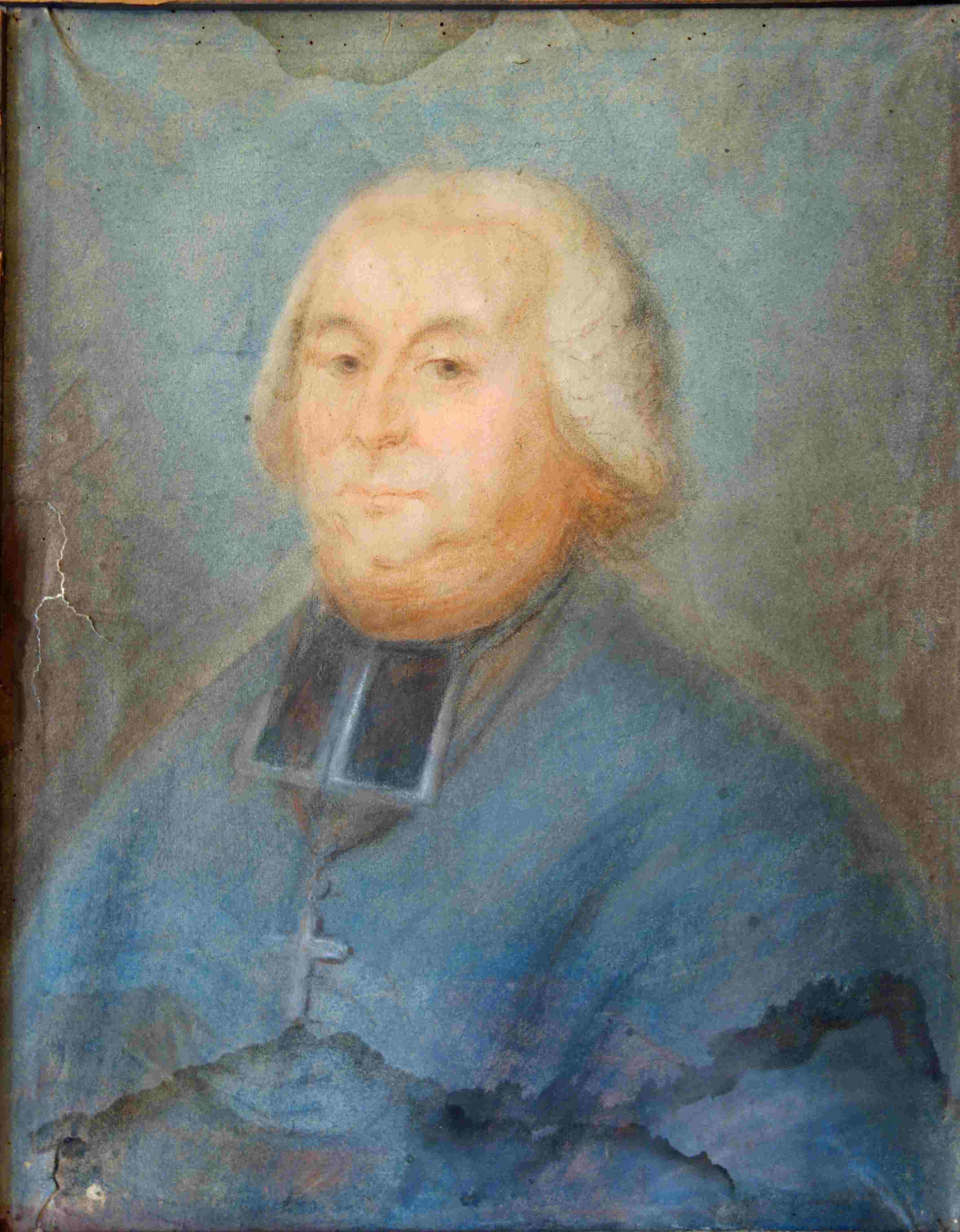 portrait SAT,
short
portrait SAT,
short 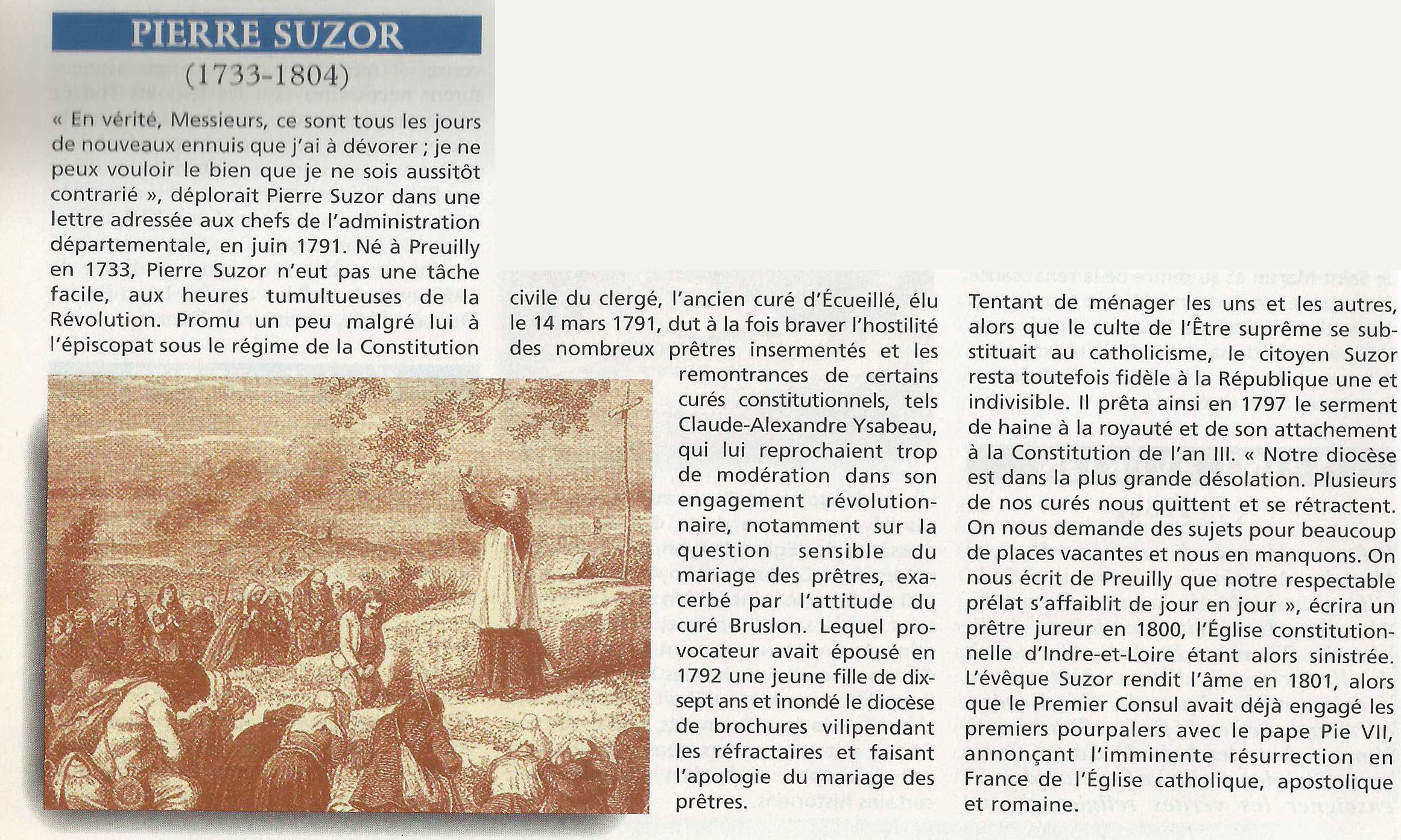 biography of the Mag. Touraine HS November 2000)
who exercised until 1794, then in 1797 in a diminished way without having the cathedral. Priests refusing to comply were persecuted (short
biography of the Mag. Touraine HS November 2000)
who exercised until 1794, then in 1797 in a diminished way without having the cathedral. Priests refusing to comply were persecuted (short  description in Nikto - Kline 1987).
1793, the Chinon Massacre. In Chinon, in western Touraine, near the
Vendean War, a plaque bears the following inscription "In memory of the 271 Vendéen prisoners massacred in Chinon on December 4, 1793." While Stanislas Bellanger wrote in 1845 that the execution was "ordered, it is said, by the members of the city's municipal administration," it appears from correspondence between the authorities in Chinon and Tours (link) that the surprise was complete, as the beginning of the prisoners' passage to Chinon had gone smoothly. Abruptly the head of the armed guard, an ultra-revolutionary Saumurois, Urbain Lepetit (link), ordered the killing. He justified himself by writing that he could not "contain the indignation of the soldiers any longer. Their righteous fury has been satisfied. Citizens, this operation was done to the repeated cries of Vive la République ! Of a multitude of citizens of your city, who had followed us. Let us also repeat: Long live the Republic! ". The leaders of Chinon and Touraine, horrified, referred to Paris. In these troubled times, Lepetit, a refugee in Normandy was long to be found. Once imprisoned, he benefited from a general amnesty...

The Chinon Massacre. The city of Tours was spared such dramas, but their echoes made an impression there... + three views of Chinon in LTh&m 1855 :
 1 1
 2 2
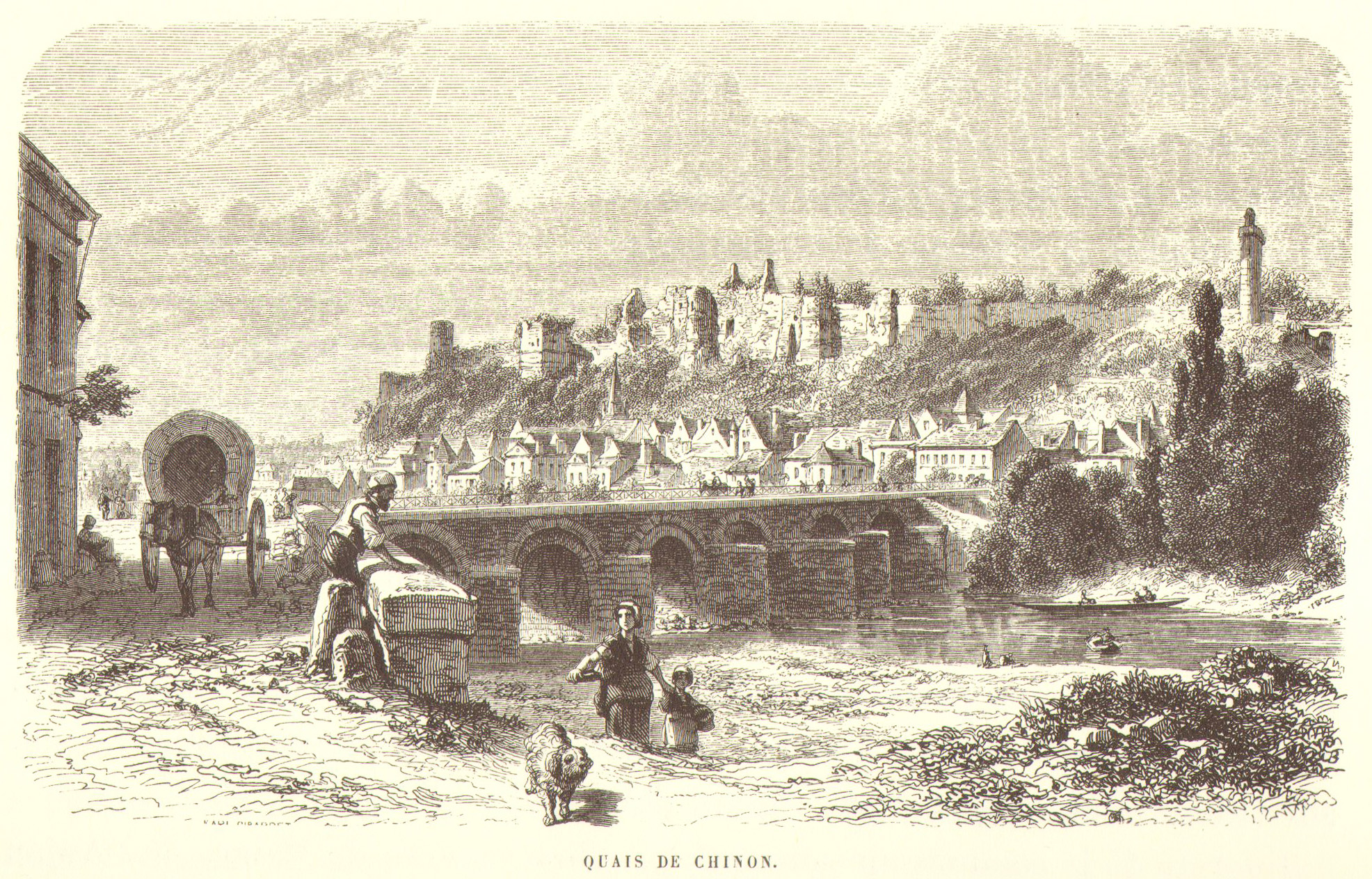 3
+ two more views of Chinon : 3
+ two more views of Chinon :
 1 [Edouard and Théodore Frère, LTa&m 1845] 1 [Edouard and Théodore Frère, LTa&m 1845]
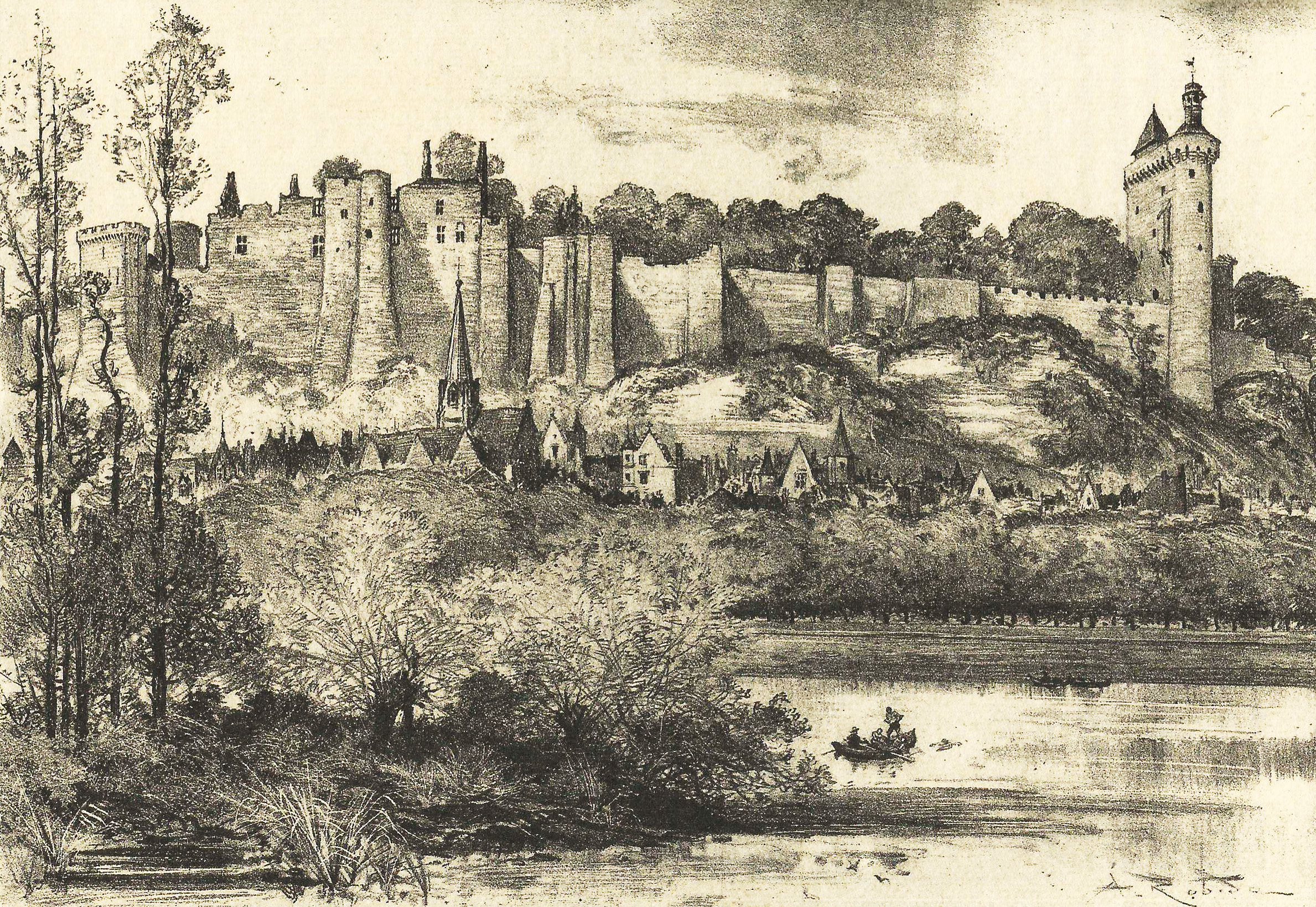 2 [Robida 1892].
+ the book "La révolution en Touraine" by Charles d'Angers, 1889, 86 pages [Gallica]. 2 [Robida 1892].
+ the book "La révolution en Touraine" by Charles d'Angers, 1889, 86 pages [Gallica].
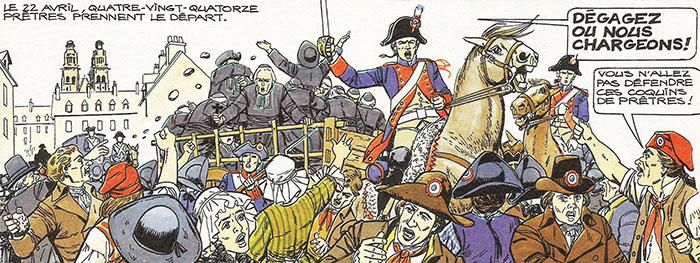
[ Nikto - Kline 1987] + the three plates of the episode titled "The White-Haired Deportees" telling the story of the deportation of elderly priests who left Tours for Guyana and ended their journey in Provins :
 1 1
 2 2
 3.
+ from the same album, the 3.
+ from the same album, the  story "The Guillotined Ploughman" showing the terrible impact of the revolution on a village in Touraine, Cussay. story "The Guillotined Ploughman" showing the terrible impact of the revolution on a village in Touraine, Cussay.
|



A short-sleeved, new-style priest, a carmagnole around a tree of liberty, a walking guillotine + the  list of the 22 guillotined of Touraine, province turned into department of Indre et Loire [illustrations from "Magazine de la Touraine" No. 49 (1994) file "La Touraine sous la terreur, except for the guillotine [Wikipedia] saved by Maurice Dufresne and displayed in his musée in Azay le Rideau]. As indicated in this page of Rene, it is the guillotine delivered in 1794 to the department of Indre et Loire, used until 1853.
+ a list of the 22 guillotined of Touraine, province turned into department of Indre et Loire [illustrations from "Magazine de la Touraine" No. 49 (1994) file "La Touraine sous la terreur, except for the guillotine [Wikipedia] saved by Maurice Dufresne and displayed in his musée in Azay le Rideau]. As indicated in this page of Rene, it is the guillotine delivered in 1794 to the department of Indre et Loire, used until 1853.
+ a  page from Guignolet 1984 about the revolution in Touraine, with volunteer enlistment and brigandage. page from Guignolet 1984 about the revolution in Touraine, with volunteer enlistment and brigandage.
|
1794, changes in worship. During the
Terror, a power of exception spreads over France. In October 1793, a General Committee of Revolutionary Surveillance is set up in Tours, with the participation of Allain Dupré, former organist of Saint Martin, among others. Prisons multiplied (often in convents) and filled up. Catholic worship is prohibited, the cathedral is transformed into a temple of the cult of reason. It is "to cut down forever the last head of the hydra of superstition and error in order to bring about the swift triumph of the cause of philosophy, reason, and freedom." The pagans so fought by Martin have regained power after fourteen centuries of energetic Christianity's dominance. They planted trees of freedom and danced around them in an ungodly fashion. The cult of reason was replaced by May 1794 with the cult of the supreme being. The new motto was "Freedom, equality or death" ( poster). The trials multiplied. The end of the Terror allowed the release of most of the prisoners in August 1794. The moderates regained power, Christianity was once again tolerated, and Tours emerged from this period with moderate use of the guillotine. Much less blood was shed in Touraine than during the Wars of Religion. In 1795, Allain Dupré, the ex-organist of Saint Martin, considered a terrorist, was disarmed with his companions. In June 1795, the constitutional bishop Suzor asked to repossess the cathedral of Saint Gatien. In vain, it was renamed "temple of the Eternal".
1788-1798, from chronic lack of maintenance of the basilica to its destruction. By the end of the 18th century, the 1180 monument was in a dilapidated state, with fragile foundations. It is often considered too large and obscure, having of interest only its chevet. Urgent maintenance measures were undertaken in 1788, but the revolutionary unrest put an end to them in the summer of 1789. Repairs were, however, made around January 1792. But the building began to deteriorate seriously when, in February 1794, the spires were razed and the bells were removed to be melted down. The roof was damaged and it rained under the vaults. Turned into a stable in 1794 and looted by the
sans-culottes. On November 2, 1797, the vaults of the choir collapsed, on November 5, the municipality ordered the demolition. According to the engineer Vallée, "This building presents as a whole only a shapeless mass, quite in opposition to the rules of art and good taste". What remains of the building is destroyed for the most part on November 10, 1798, the prefect Pommereul, appointed in 1800, removing the last vestiges in 1802 before tracing in the former nave a commercial artery, the rue Pommereul became rue Saint Martin in 1808 and rue des Halles in 1886.
This prefect François René Jean Pommereul was an authoritarian and combative administrator with regard to the clergy, and on this point he counted on a faithful ally, as anticlerical as himself, Balzac's father; his repeated quarrels with the episcopate of Tours led to his transfer in 1806 (link).
Of the destroyed basilica, only the Charlemagne Tower and the clock tower (formerly named the Treasure Tower), classified as "historic monument" in 1840, remain to this day.


Left, 1853 painting, twilight remembrance of the Gothic Saint Martin's Basilica [ François Alexandre Pernot, basilica rector] + three drawings: 1 (Merian 1650), 1 (Merian 1650),  2 (Dejolu 1822), 2 (Dejolu 1822),  3 (A. Borrel 1833). + a 3 (A. Borrel 1833). + a  plan of the entire basilica at the end of the eighteenth century, made in the early nineteenth [Gallica].
On the right, The collegiate church of Hervé before the great destruction in November 1798. One can easily recognize the clock tower, on the left, and the Charlemagne tower, on the right, the only remaining vestiges one can also see the Saint Nicolas tower, with its pointed bell tower [from Pinguet]
+ plan of the entire basilica at the end of the eighteenth century, made in the early nineteenth [Gallica].
On the right, The collegiate church of Hervé before the great destruction in November 1798. One can easily recognize the clock tower, on the left, and the Charlemagne tower, on the right, the only remaining vestiges one can also see the Saint Nicolas tower, with its pointed bell tower [from Pinguet]
+  comment from the Catalog 2016.
+ comment from the Catalog 2016.
+  drawing by Pinguet, 1798, commented by Charles Lelong [La NR 1975]
+ another drawing by Pinguet, 1798, commented by Charles Lelong [La NR 1975]
+ another  engraving of the ruins before demolition in 1798,
also in engraving of the ruins before demolition in 1798,
also in  variant LTh&m 1855. variant LTh&m 1855.
|
| ||


 story
story| educational file "Martinian high places and the revival of the Martinian cult in the nineteenth century" containing other preparatory drawings by the Lobin workshop
.
|
The sudden culmination of a long process. As Martin had destroyed the Gallic heritage, as the Huguenots had destroyed the Catholic heritage, the revolutionaries wanted to wipe out an ideology to impose their own. In addition to sacking monuments, they burned precious manuscripts, as Mark Mersiowsky shows in the introduction to a 2004
article on Saint Martin's Abbey and the Carolingians. This outpouring of violence is also understood by the very important place of religious buildings in the city center while religion is in decline throughout the eighteenth century. Thus, many parishes in Tours were suppressed well before the Revolution, with churches that, without being destroyed, were used for non-religious purposes and were able to live beyond the Revolution. We have already seen here before the case of the abbeys of Saint Paul de Cormery, Saint Julien, Beaumont and Marmoutier, we will see below, with illustrations, the case of the churches of St. Saturnin and St. Clement and the convent of Feuillants. All of them suffered greatly. Pierre Leveel in Level 1994 points out other buildings partially or totally destroyed on Tours and its close surroundings : the priory Sainte Anne lès Tours, the convent of the Jacobins, the convent of the Cordeliers, the convent Des Carmes, the convent of the Grands Minimes, the chapel of Saint Jean des Coups (at the location of the current Mirabeau Park), the church of the Jesuits. And this is not exhaustive (cf. in particular the article by Claire Mabire La Caille in 1981 "Evolution of the conventual enclosures of the mendicants in Tours")...

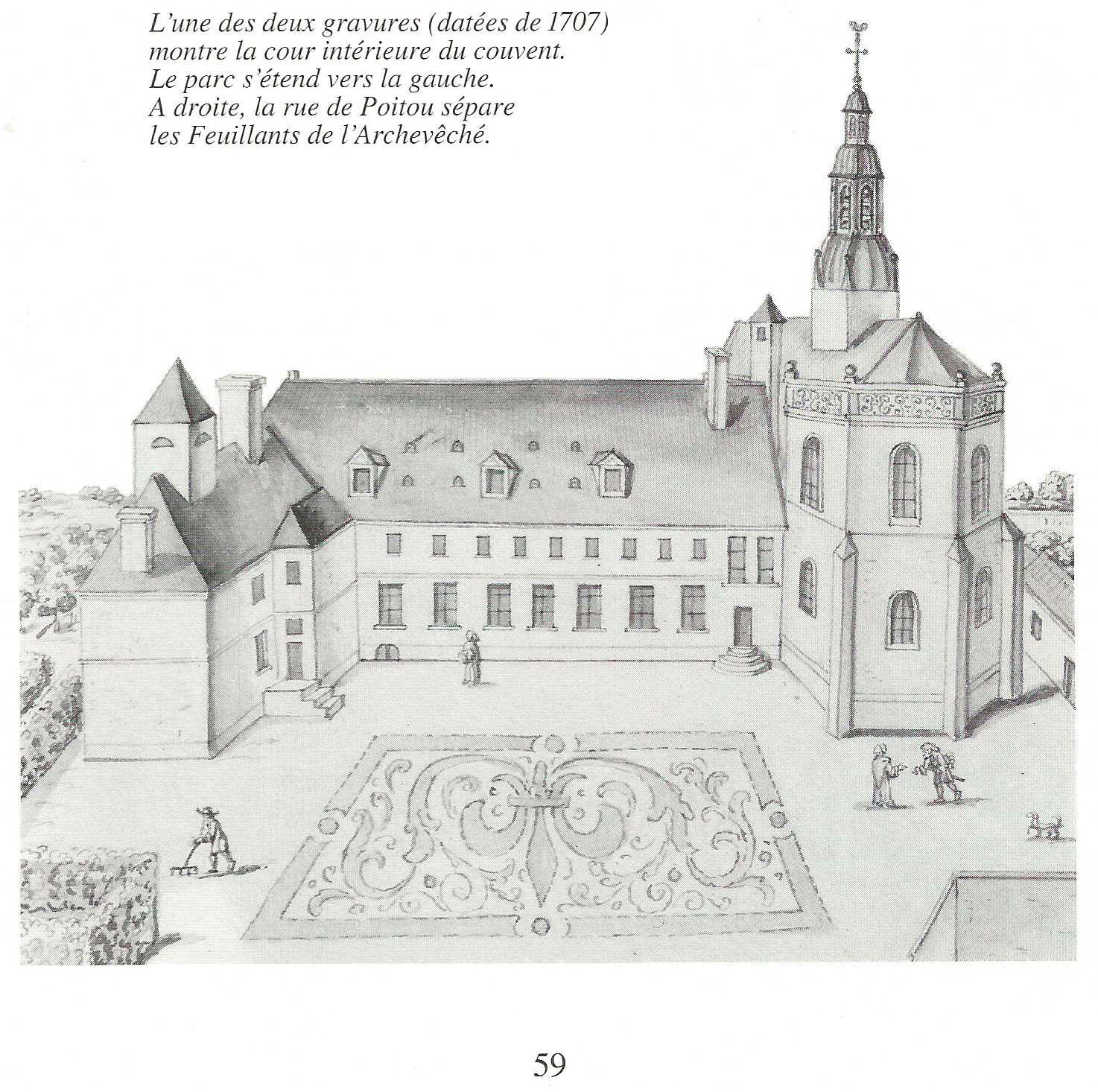

Revolution and removal of religious buildings in Tours, three emblematic examples.
|
 text/drawing
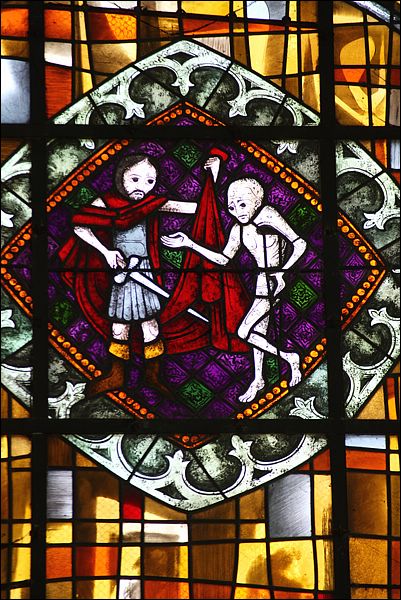 vitrail
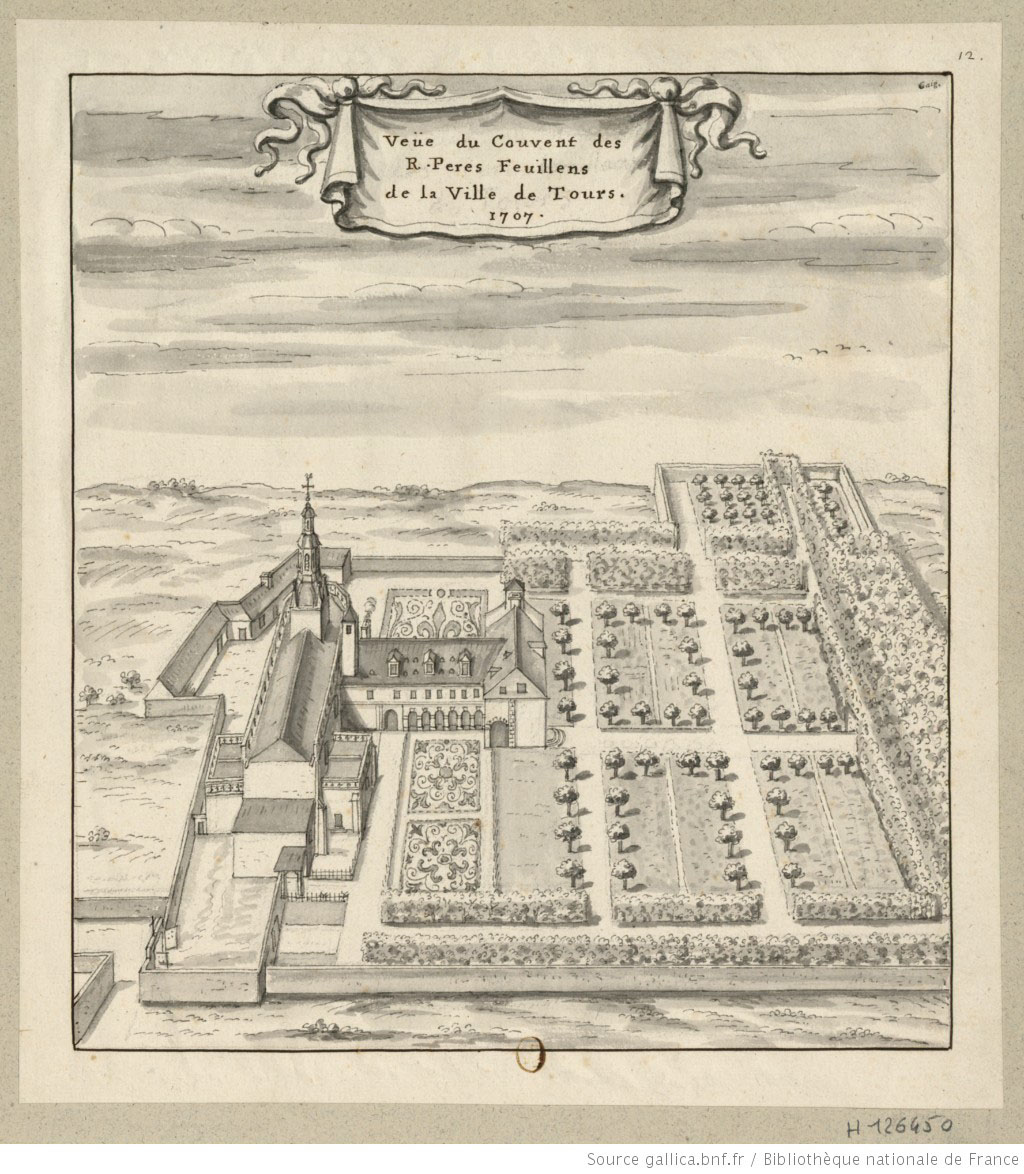 seen
seen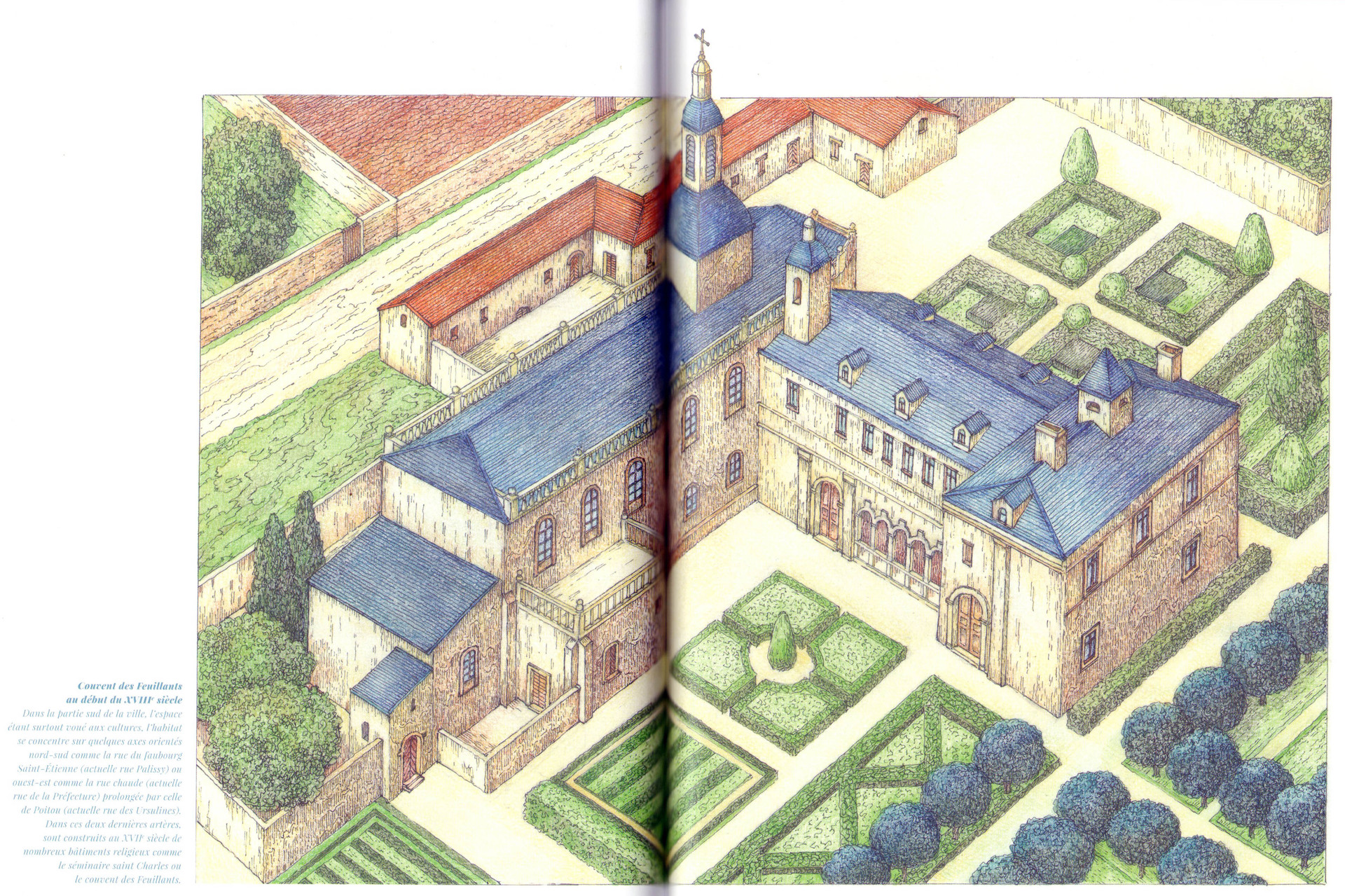 restoration
 estamp
 1
1 2
2 3
3 4
4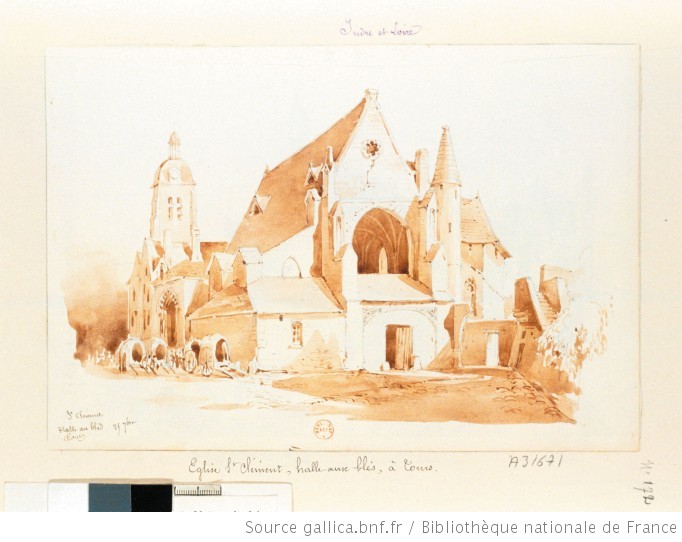 drawing
 watercolor
 photo
photo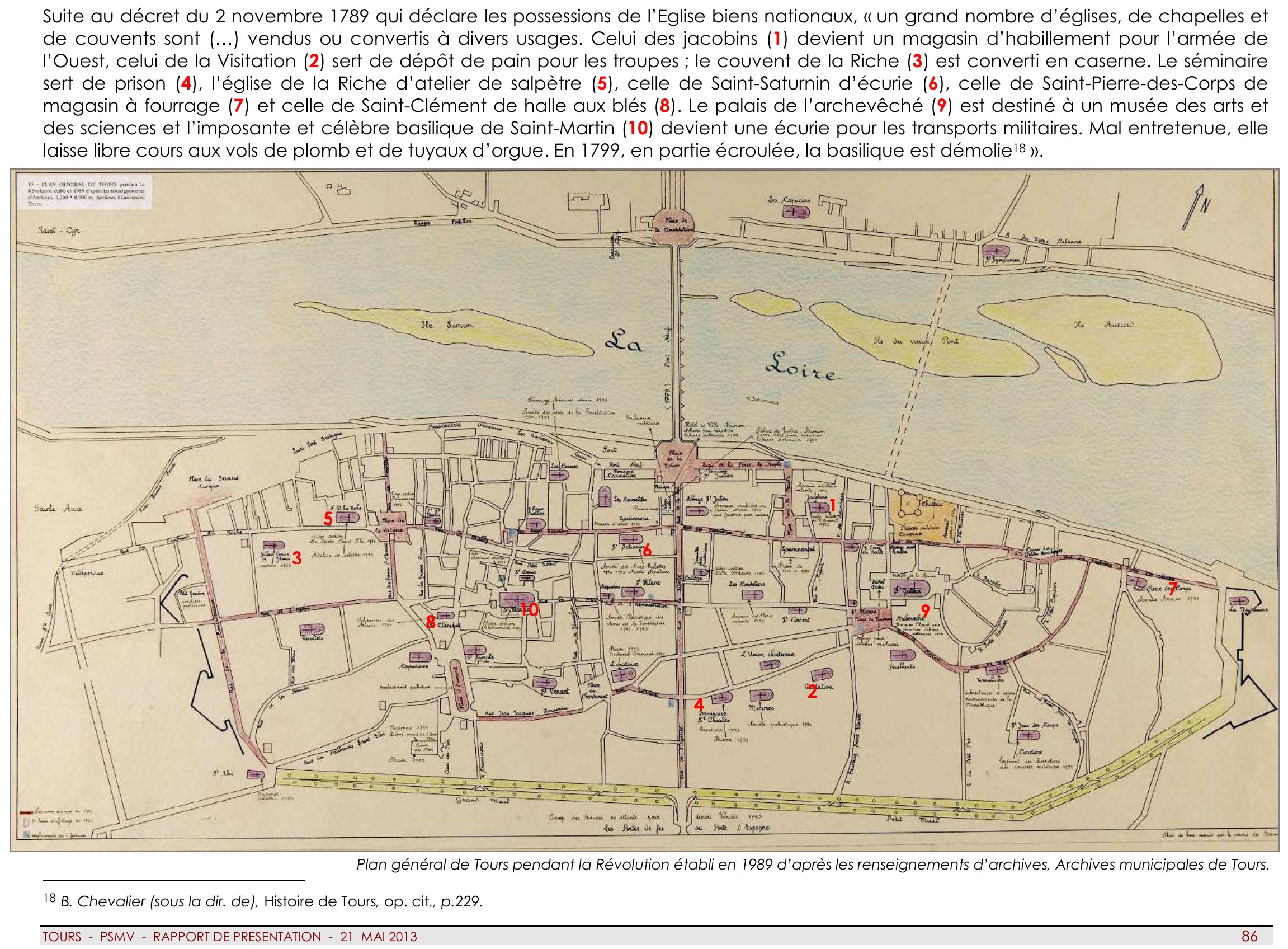 plan
planThe expulsion of religious. Beyond Tours, in Touraine as elsewhere, religious men and women were expelled from abbeys and priories. François-Christian Semur in "Abayes de Touraine" (2011) : "The conventual premises were ordered closed, declared national property and sold to the highest bidder. A good number of monasteries were thus dispersed in several lots, as in Villeloin and Cormery, so that today it seems difficult to find a coherence in the scattered ruins that remain. Some have completely disappeared or almost disappeared. Some cloister buildings have been, unfortunately, transformed into quarries by their greedy owners who sold the venerable stones. Several abbeys have found a new life, being transformed into elegant private properties. On three sites, the nuns or religious have reappropriated with courage the noble residences abandoned or assigned to agricultural purposes." In this turmoil what happened to the 65 canons of the chapter ? There were a dozen of them surviving in Tours in 1803, according to the assessment drawn up by Eugène Jarry in his
article "The Chapter of Saint Martin in the Seventeenth and Eighteenth Centuries" (1961). The author considered the old basilica to be nothing more than "a sort of archaic survival" deserving of "a little nostalgia, as one has for beautiful things that eventually wither."
A Republican priest for Saint Martin! In 1792, 194 priests or nuns who refused to take the "
civic oath" were locked up. Eugene Giraudet : "The voters of the district convened at the church of Saint Saturnin named replacements for the refractory priests and vicars. The former president of the Constitution Club, Ysabeau, was elected parish priest of Saint Martin and installed in the presence of the authorities, the bishop and the constitutional clergy." Ysabeau was then elected deputy to the National Convention and was one of the five Touraine deputies, against three, who voted for the death of Louis XVI. At the end of 1792, the basilica was used by two commissioners of the national assembly to gather civil servants and administrative bodies.
1797, the Mayor of Tours takes an oath of hatred to royalty. The book of "Les maires de Tours du XVème au XIXème siècle" (1987) of the Centre Généalogique de Touraine presents Pierre-Augustin Estevou, ephemeral mayor of Tours, from August 29 to September 12, 1797 (12 to 26 fructidor an V), four years after the death of Louis XVI on the scaffold : "Born in Tours on December 7, 1752, son of Joseph Estevou, salpêtrier du roi, and Madeleine Veyrat, he married on October 5, 1779 Françoise Thibault, whose father was a manufacturer and an uncle, Thomas Thibault, procureur au bailliage. He practiced the same trade as his father. His political activity coincided with the revolutionary period. Administrator at the Mint (1792), district commissioner (May 6, 1793), he was appointed on 22 Pluviose, Year V, to serve as public prosecutor at the Revolutionary Court. The former administrators of the city of Tours having been dismissed, on 12 fructidor year V, new members were designated, among whom "the citizen Estevou, salpêtrier, former member of the council and administrator of the hospice of Humanity". Elected mayor, he took an oath "of hatred to royalty and monarchy, attachment and fidelity to the Republic and to the constitution of the year II". The first measures he took consisted in repressing anarchy, reorganizing the offices, reinforcing the National Guard and reinstalling the old hospitaliers. Following the serious events of 9 thermidor year V, he decided to ban the meeting of all societies, to close cafés during disturbances, to make passports compulsory for all travelers, and to keep registers in the inns. On 26 fructidor year V, Pierre-Augustin Estevou was appointed secretary general of the administration and, not being able to hold several mandates, resigned as mayor of the city of Tours. Again a city councilor between 1803 and 1813, he died in La Chapelle sur Loire on April 18, 1814."
1799, the National Guard of Tours intervened to repel the Chouans. Eugene Giraudet indicates that the only thing of note in our fin de siècle local history was "the invasion of bands of royalists designated as
chouans. The Directoire of the department, informed of the invasion of several communes (Neuvy, Sonzay, etc.), called upon the National Guard of Tours, which rushed to respond and successfully repelled the Chouans."
1802, the re-establishment of Catholic worship. On May 18, 1802 (27 floreal year 10, it was still said at the time, with the
Republican calendar not ending until 1806), Archbishop Jean de Dieu Raymond de Boisgelin took office after an official vacancy of 11 years. Catholic worship was restored in the archdiocese of Tours, regardless of the fact that the constitutional bishop Pierre Suzor had died on April 13, 1801. At the welcoming ceremony, the general-prefect handed the keys of the cathedral to the archbishop with a patriotic address on the concordat concluded on July 15, 1801 by the first consul Napoleon Bonaparte and the pope Pius VII.
1808, Napoleon's regrets about the Saint Martin basilica. On August 12, 1808, Emperor Napoleon I came on an official visit to Tours. After passing under a triumphal arch, acclaimed by a jubilant crowd, he crossed the stone bridge. But, in the evening, the imperial couple did not participate, as planned, in the great ball. The next day, the emperor is said to have finally expressed the object of his displeasure "I have nothing to answer to those who destroyed the collegiate church of Saint Martin" ["Secret Guide to Tours and its Surroundings", 2019] (
Lecoy 1881, page 514, indicates confirmation of this "by inhabitants of Tours who had it from their parents, eyewitnesses").
The Napoleonic Wars permanently impoverished the city and its inhabitants.
In 1814, Tours became a "general depot for the wounded of the Grand Army" (page).
Before, during and after the Hundred Days, Tours kept the same mayor, from 1802 to 1815, Baron Paul Deslandes [+ his  speech at the inauguration of a portrait of the emperor in 1809), these reversals being the mark of a weary population. There followed, under the royalty of Louis XVIII from 1814 to 1824 and then of Charles X from 1824 to 1830, a severe criticism of political
Paul-Louis Courier, pamphleteer. The writer
Paul-Louis Courier (1772-1825) was able to translate this discontent into pamphlets, some of which are dated Tours. From the article 2015 by Shenandoah Davis :
"There came the Restoration of 1814. While deploring the manner in which it was carried out, Courier could not help but rejoice in it. So did many other sincere friends of liberty, who since ... He was about to savor the sweetness of a frankly constitutional regime, when the hundred days recalled the foreigners to France, and in their wake the royalist reaction of 1815. Nowhere was this reaction more violent than in the department of Indre-et-Loire where Courier had his properties. M. Bacot, prefect of Tours, had more than five hundred people arrested within a month, many of whom died in prison. Courier, indignant of these tyrannical measures, addressed a Petition to the two Chambers, in the name of the inhabitants of Luynes, a small village situated on the banks of the Loire. Minister Decazes, who was trying to build his power on the ruins of the two extreme parties, used this petition against the ultra-royalists. The persecutions ceased Courier was silent."

Probably the last live depiction of Herve's basilica. After 1794 and before the 1798 demolition, a traveling painter, perhaps Louis-François Cassas, produced this view of Tours. From left to right : the Cathedral of Saint Gatien, the Church of Saint Julien, the Church of Saint Saturnin, the Collegiate Church of Saint Martin [MBAT] +  analysis by Annie Gilet ["Drawings XVth-20th century The collection of the Museum of Tours," 2001].
Below, perhaps the first depiction of Tours without the basilica spires (or half-hidden on the right ? Voluntarily ?), a painting by Charles-Antoine Rougeot from 1797 [MBAT, link]. analysis by Annie Gilet ["Drawings XVth-20th century The collection of the Museum of Tours," 2001].
Below, perhaps the first depiction of Tours without the basilica spires (or half-hidden on the right ? Voluntarily ?), a painting by Charles-Antoine Rougeot from 1797 [MBAT, link].
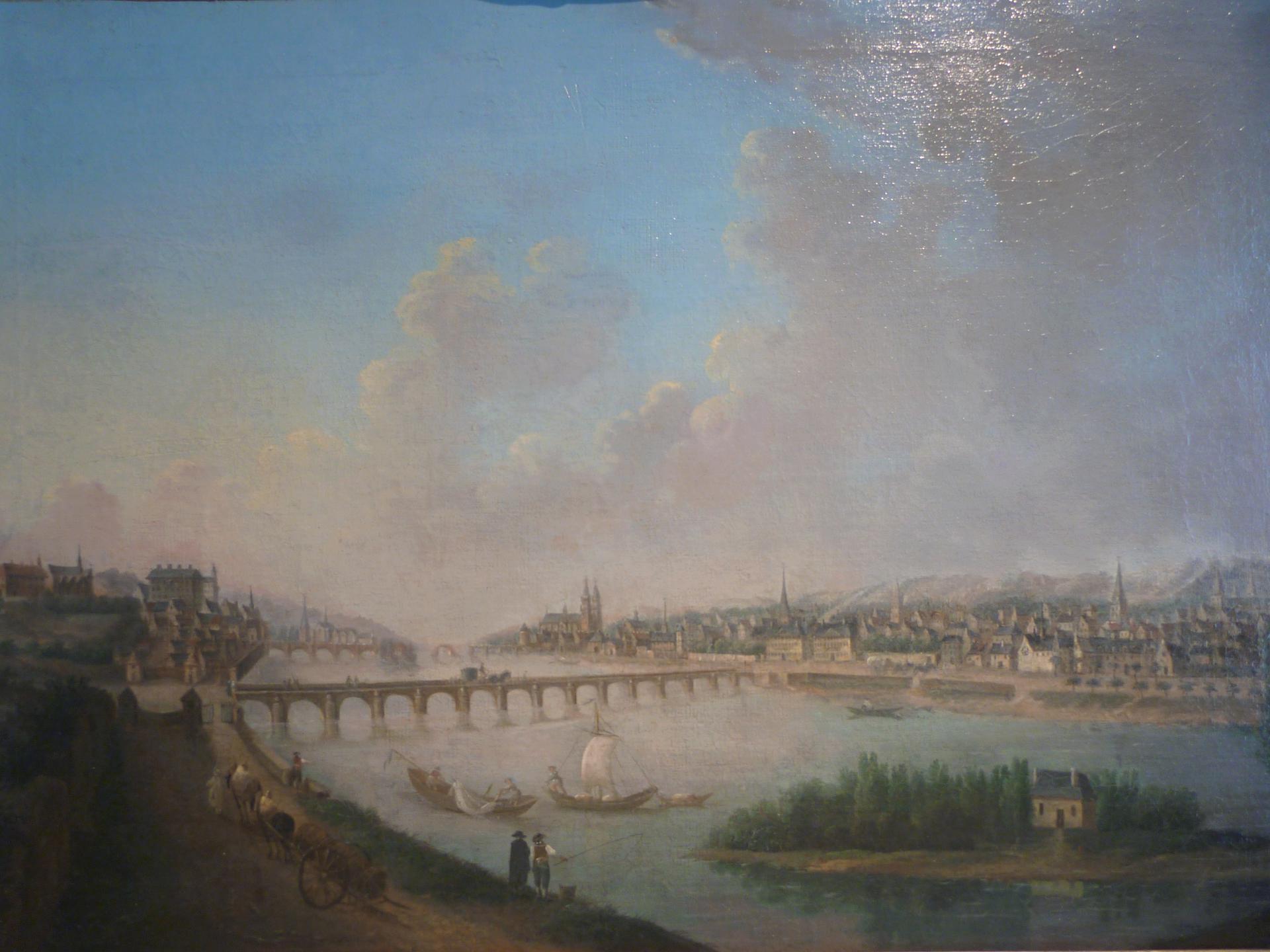
|
E) 1799-2020 THE BASILICA OF ARCHITECT LALOUX


The memory of the vanished basilica. These two engravings by Lacoste Aîné are from the book LTa&m 1845.
On the left, only the Charlemagne tower remains, and in the background the Clock tower, the rest of the basilqiue has disappeared.
On the right the basilica / collegiate church of Saint Martin, is reconstructed 48 years after its demolition, with in the foreground the Saint Nicolas tower on the left and the clock tower on the right. The resemblance is approximate, the memory fades, a nostalgia develops...
+ presentation of Catholic monuments in "Tours, guide de l'étranger" 1844 (including the cathedral, Charlemagne Tower, table of contents link).
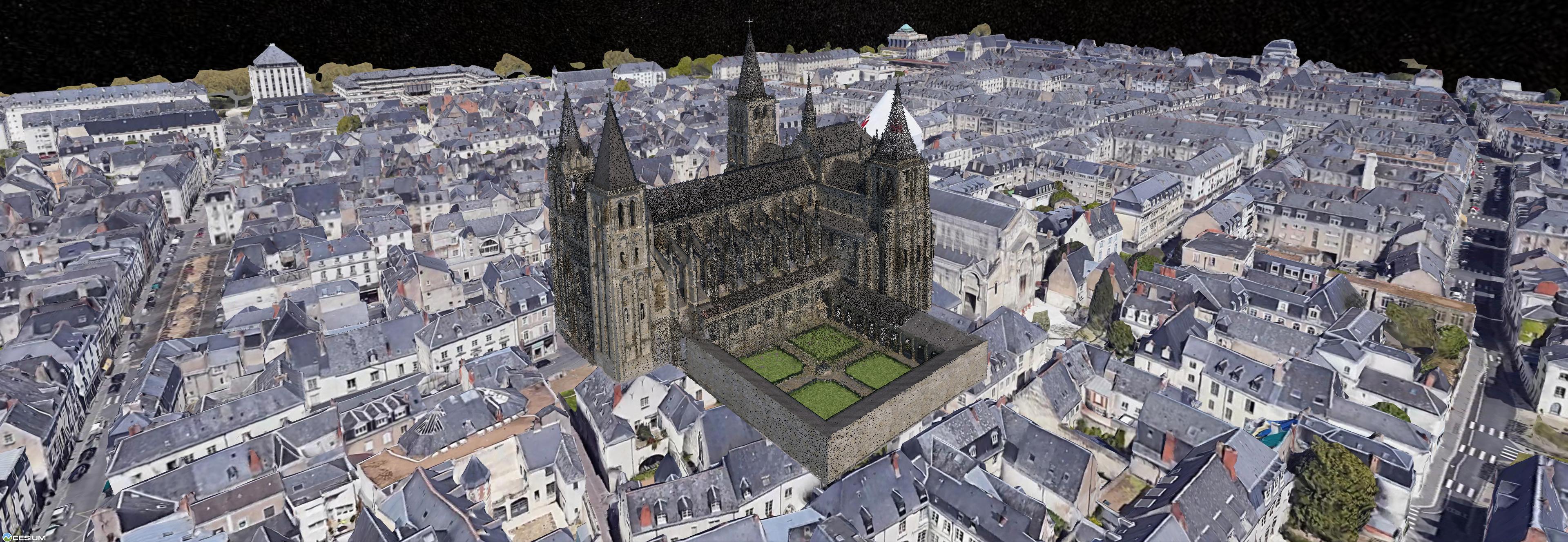
The 3D rendering of 2020. Nostalgia continued, with the desire for a faithful reconstruction. The ReViSMartin project, featured herefore, allows on this link a three-dimensional rotating view of the 16th-century collegiate church overlaid on the city of 2015 (when the dome of the current basilica was being repaired and hooded).
+ two other views :
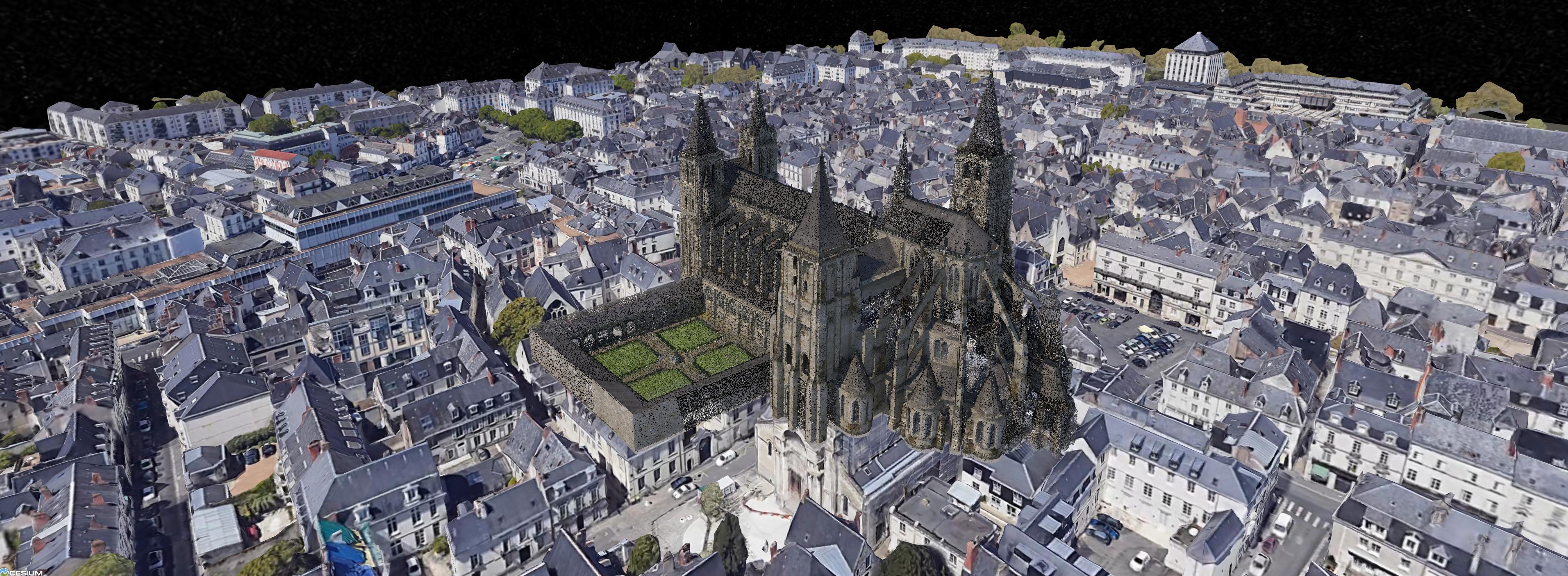 1 1
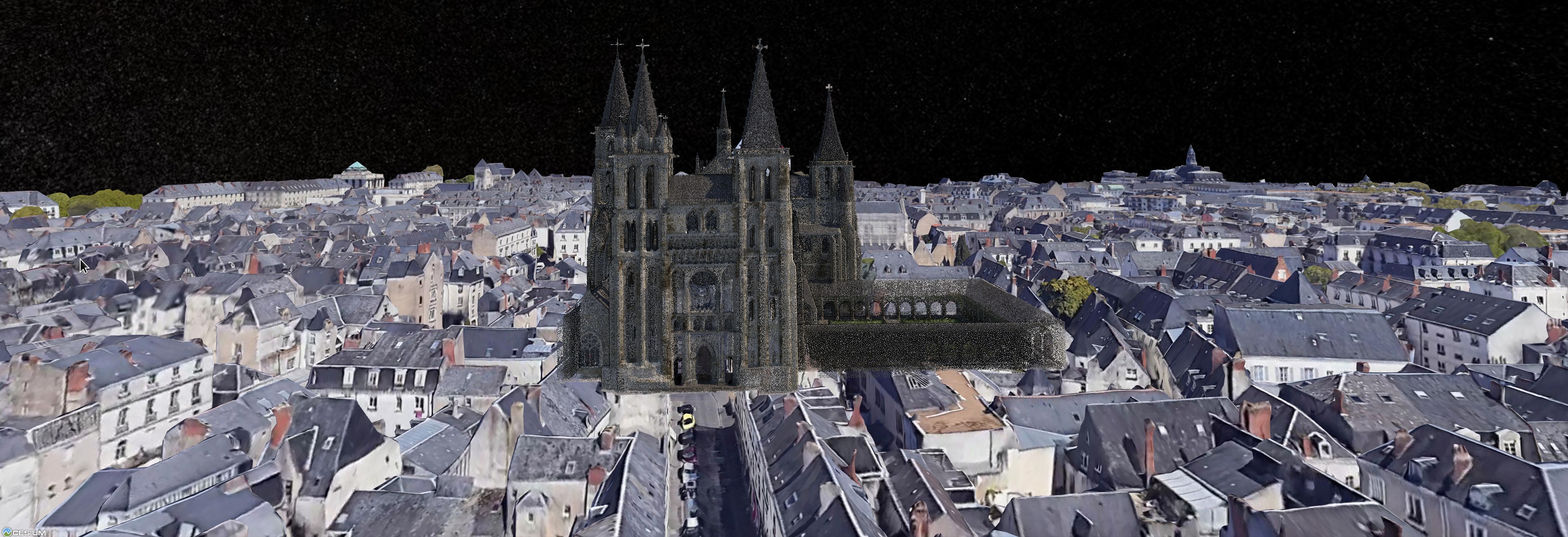 2.
+ the current traces of the Hervé Basilica pillars on Rue des Halles : 2.
+ the current traces of the Hervé Basilica pillars on Rue des Halles :  photo La NR 2017. photo La NR 2017.

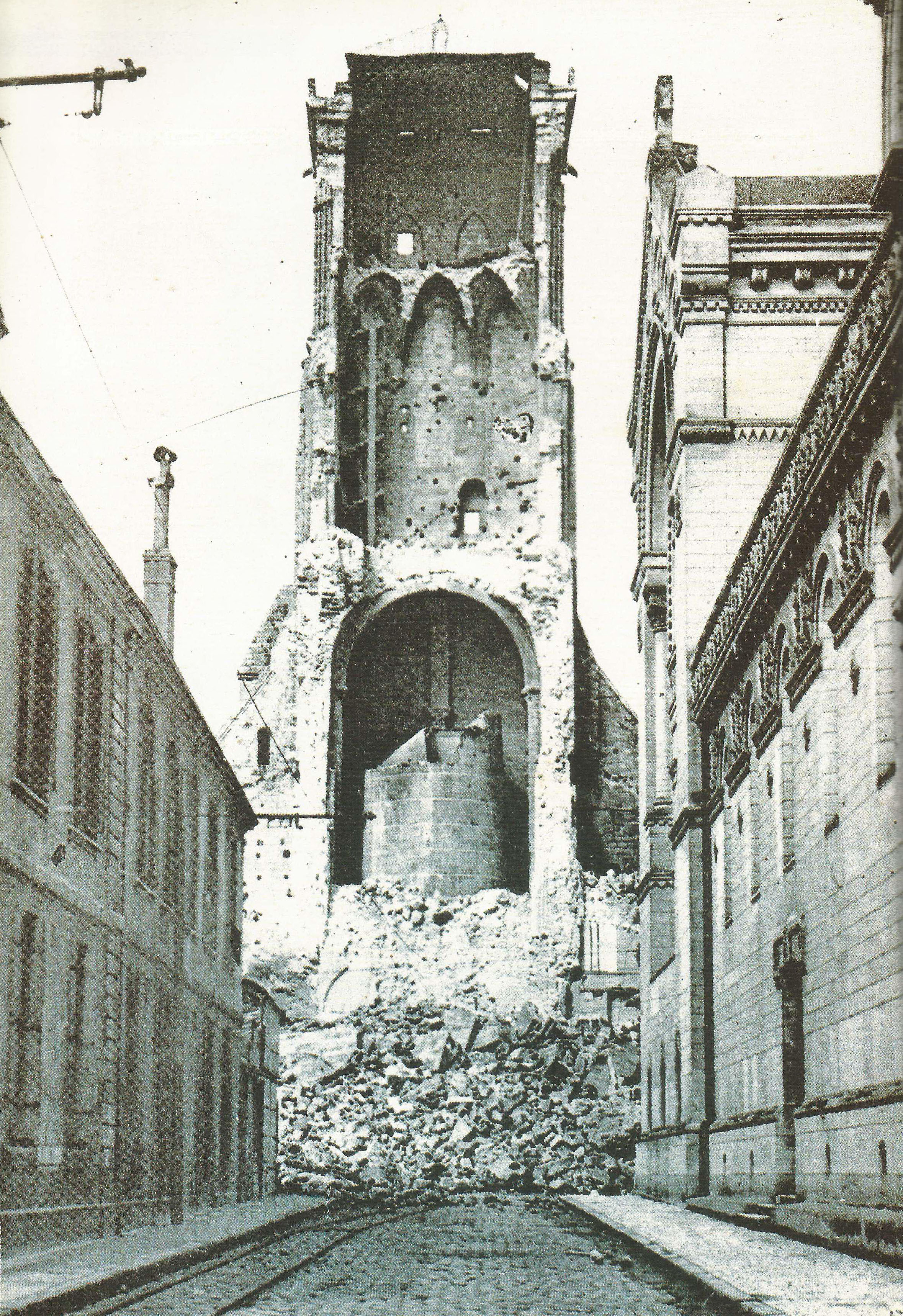


Here are the two main remains of Herve's basilica, to which we can add the cloister, below.


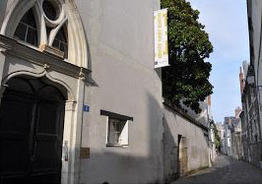
Left and center is the cloister, right is the Chapel of St. John.
|
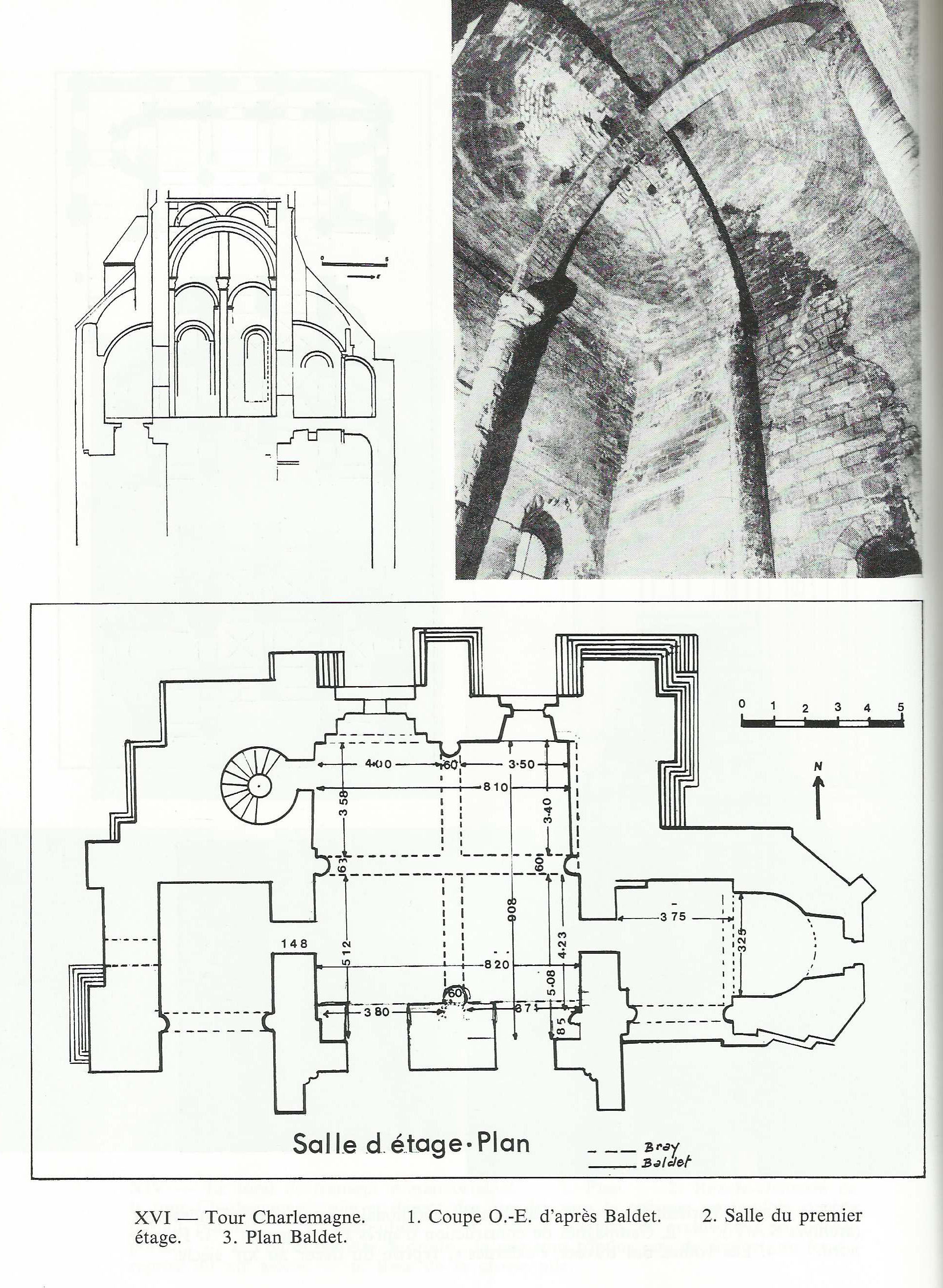 plan
plan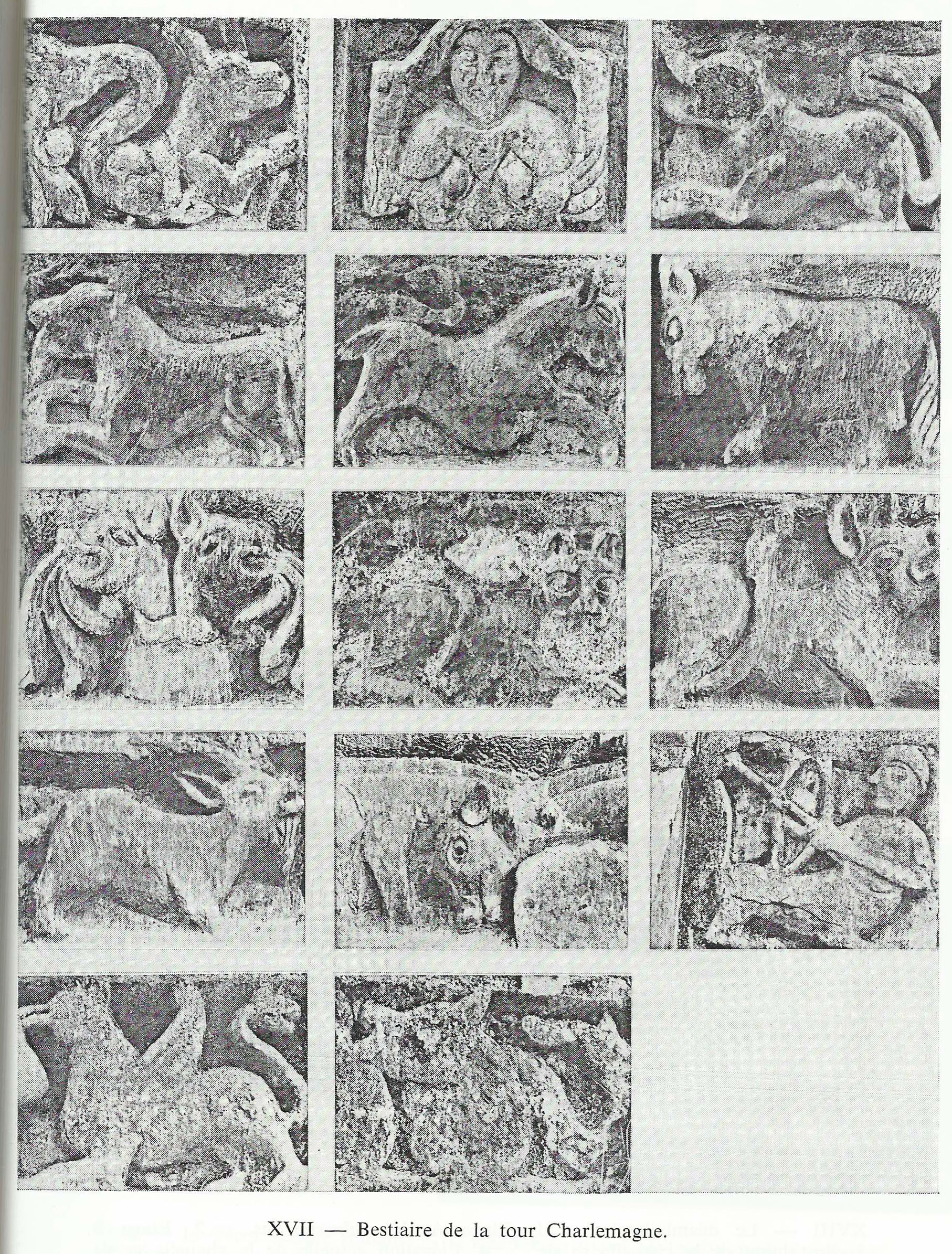 bestiary
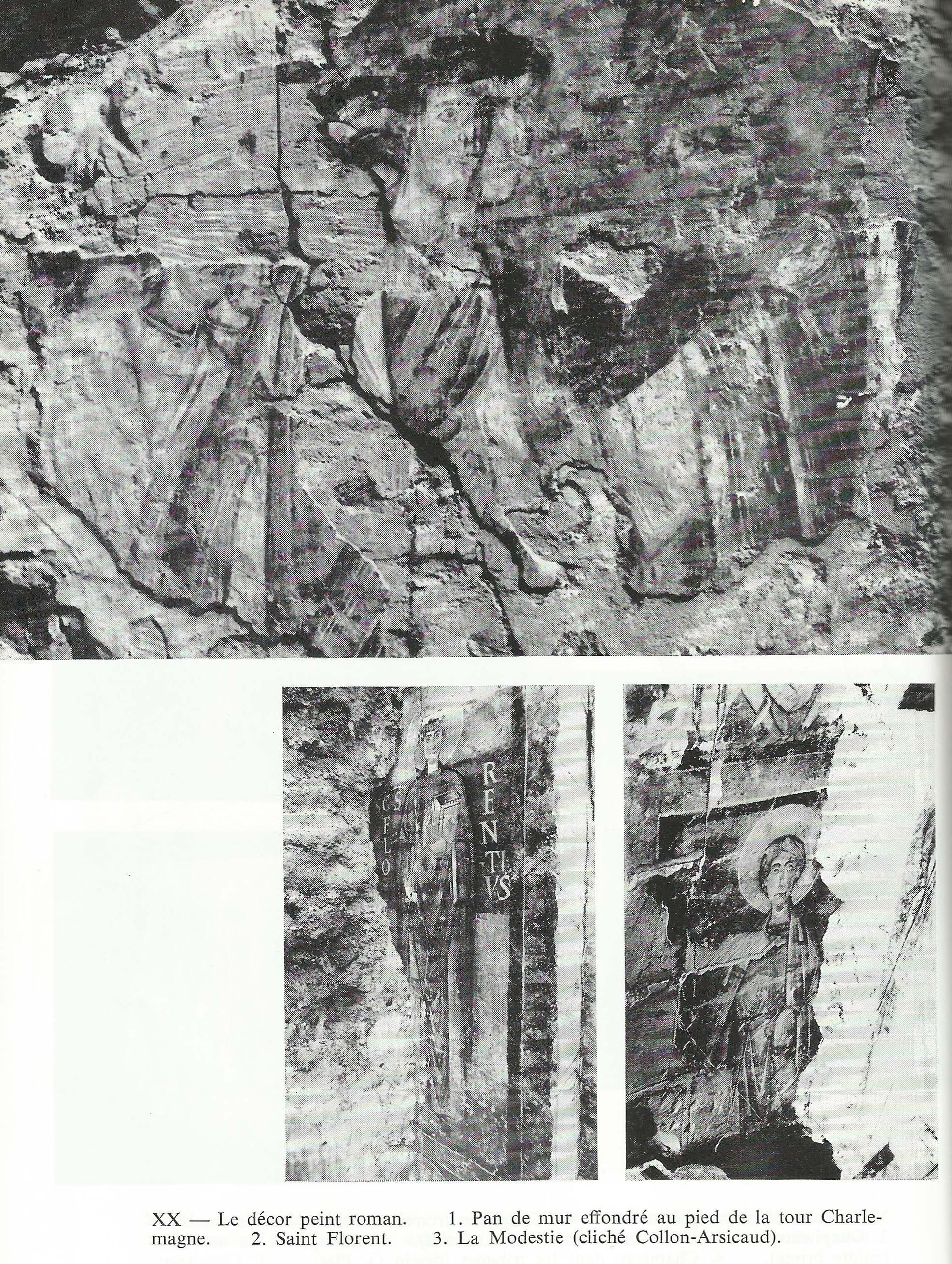 decor
decor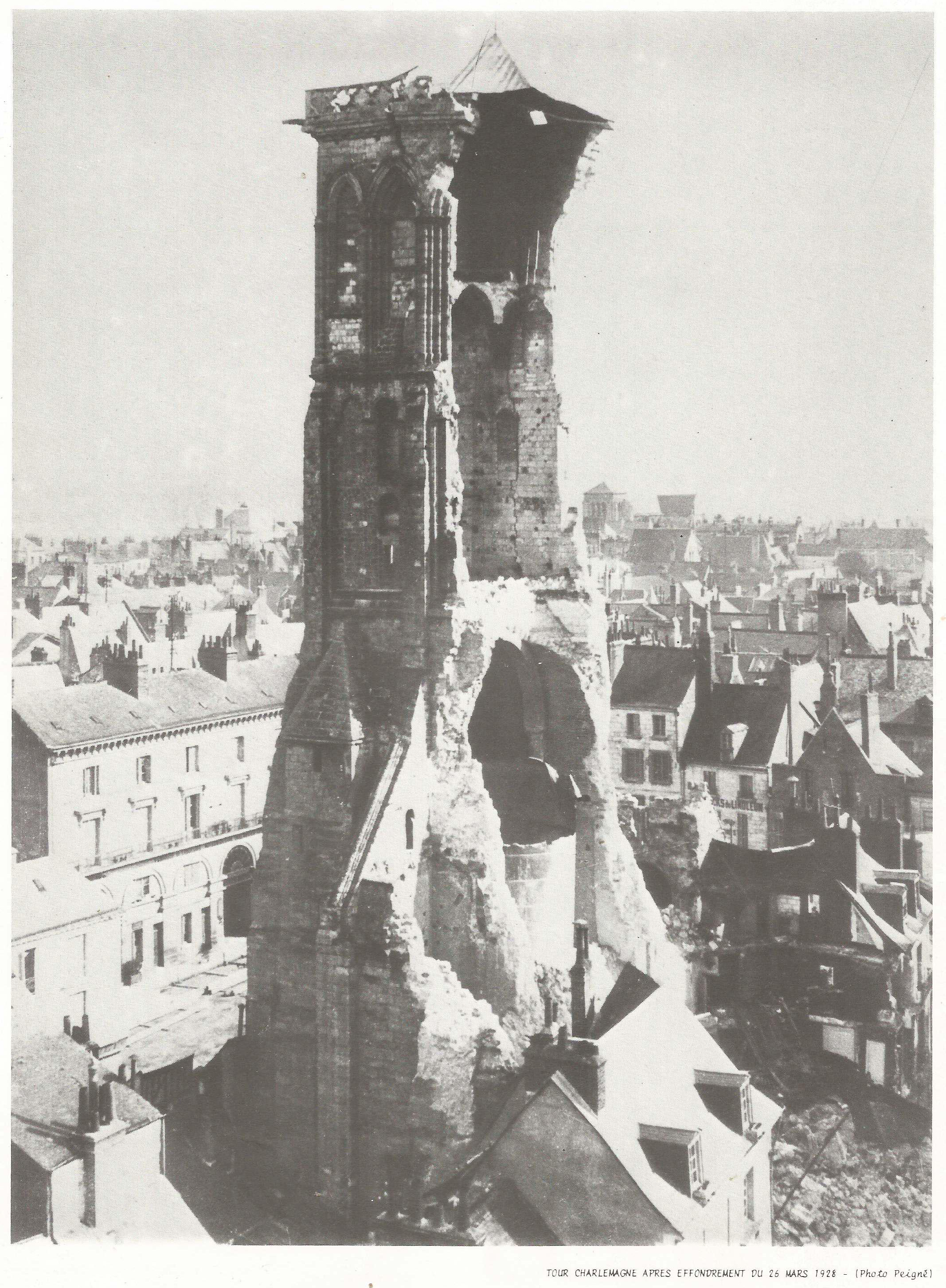 photo
photo report
 drawing
 drawing
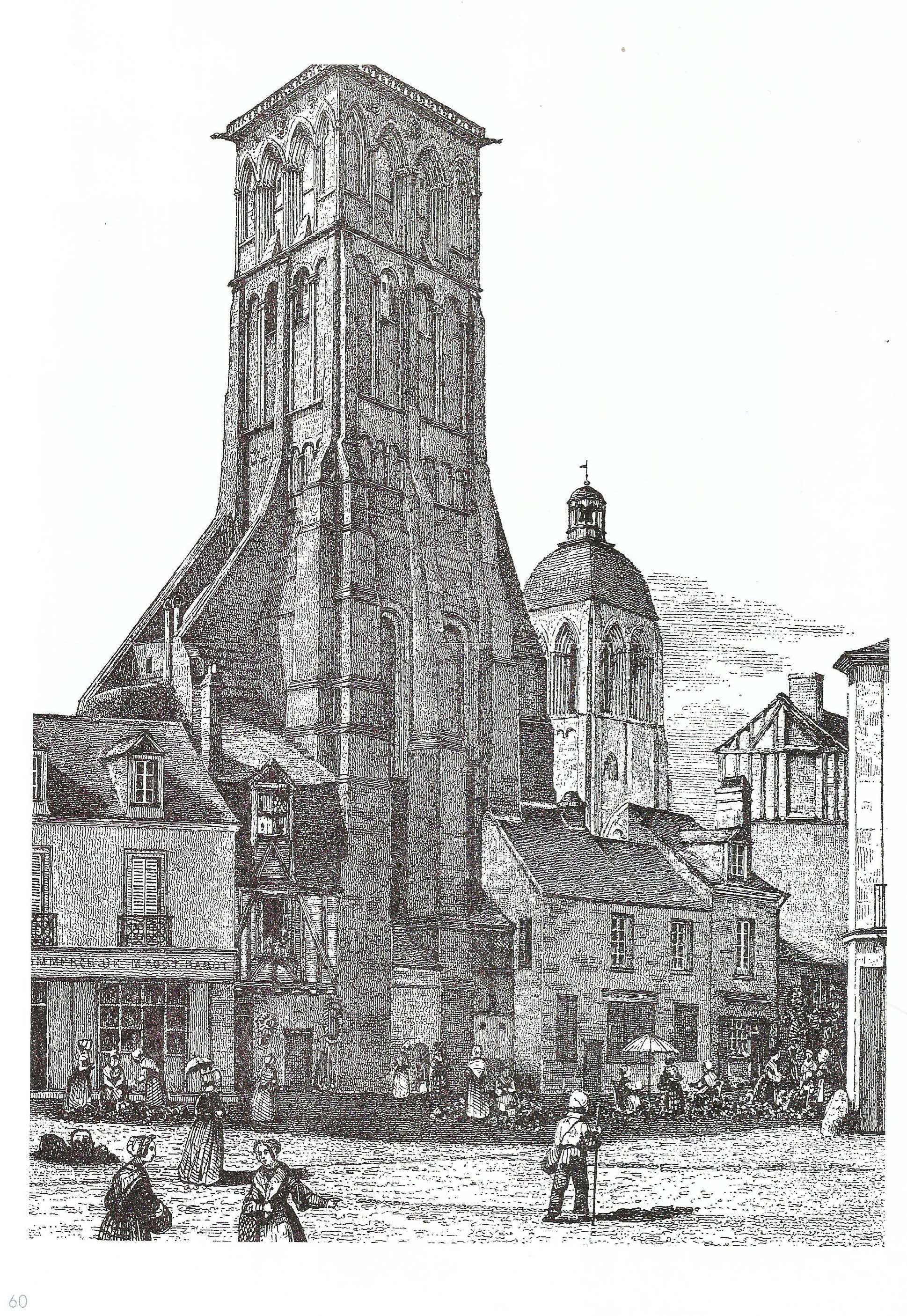 1
1 2
2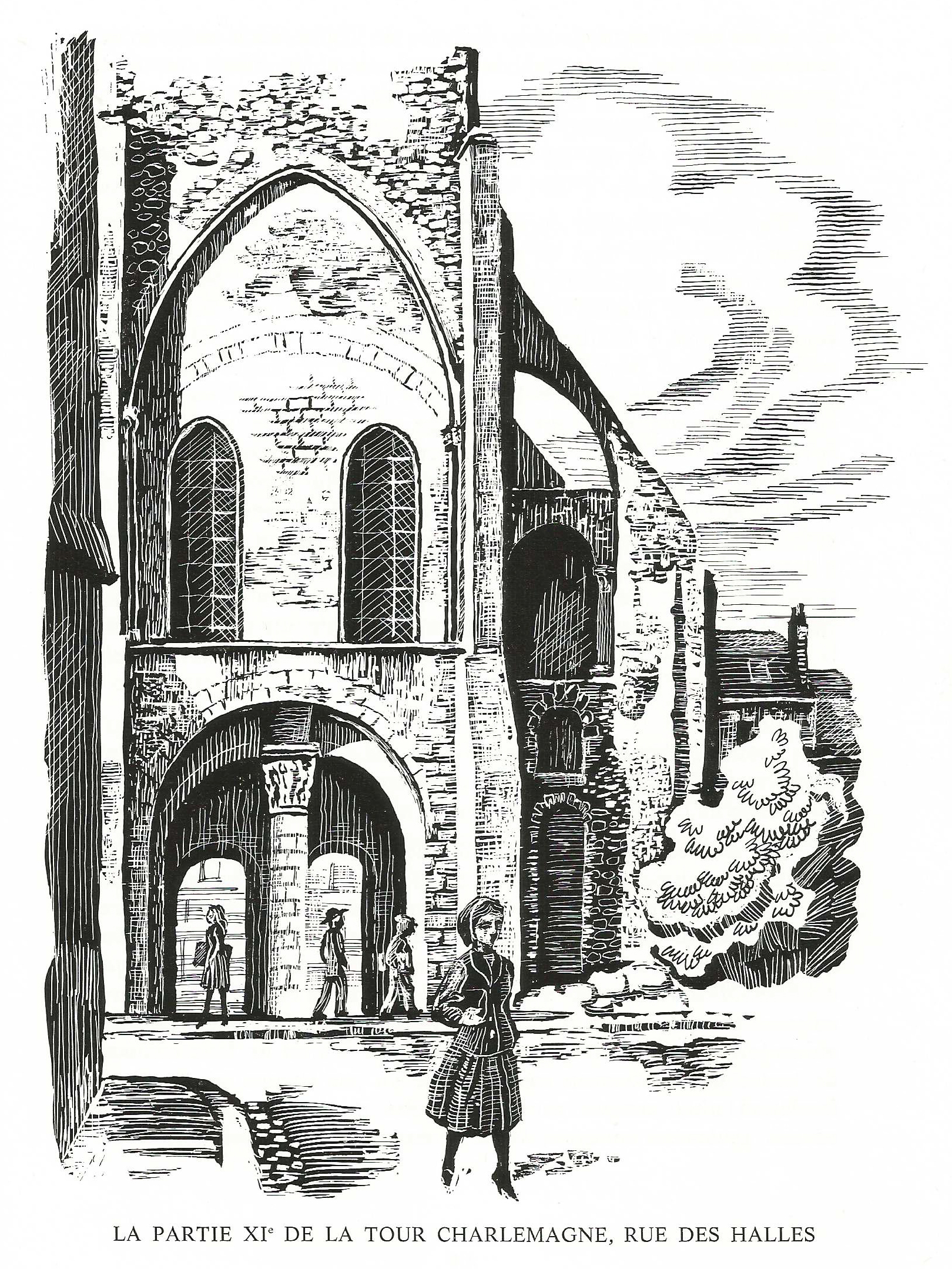 3
3 1
1 2
2 3
3 4
4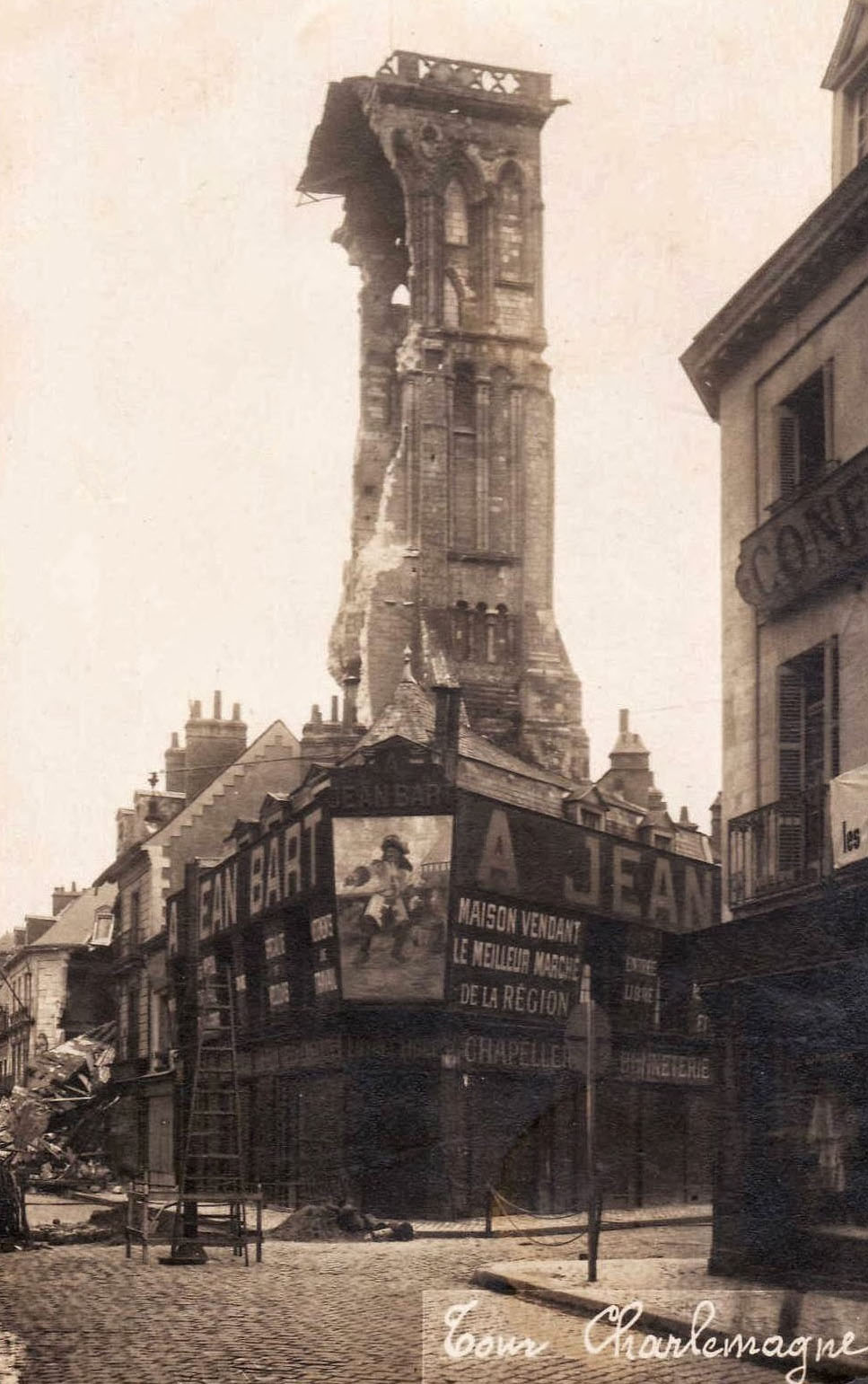 5
5 6
6 7
7 double-page spread
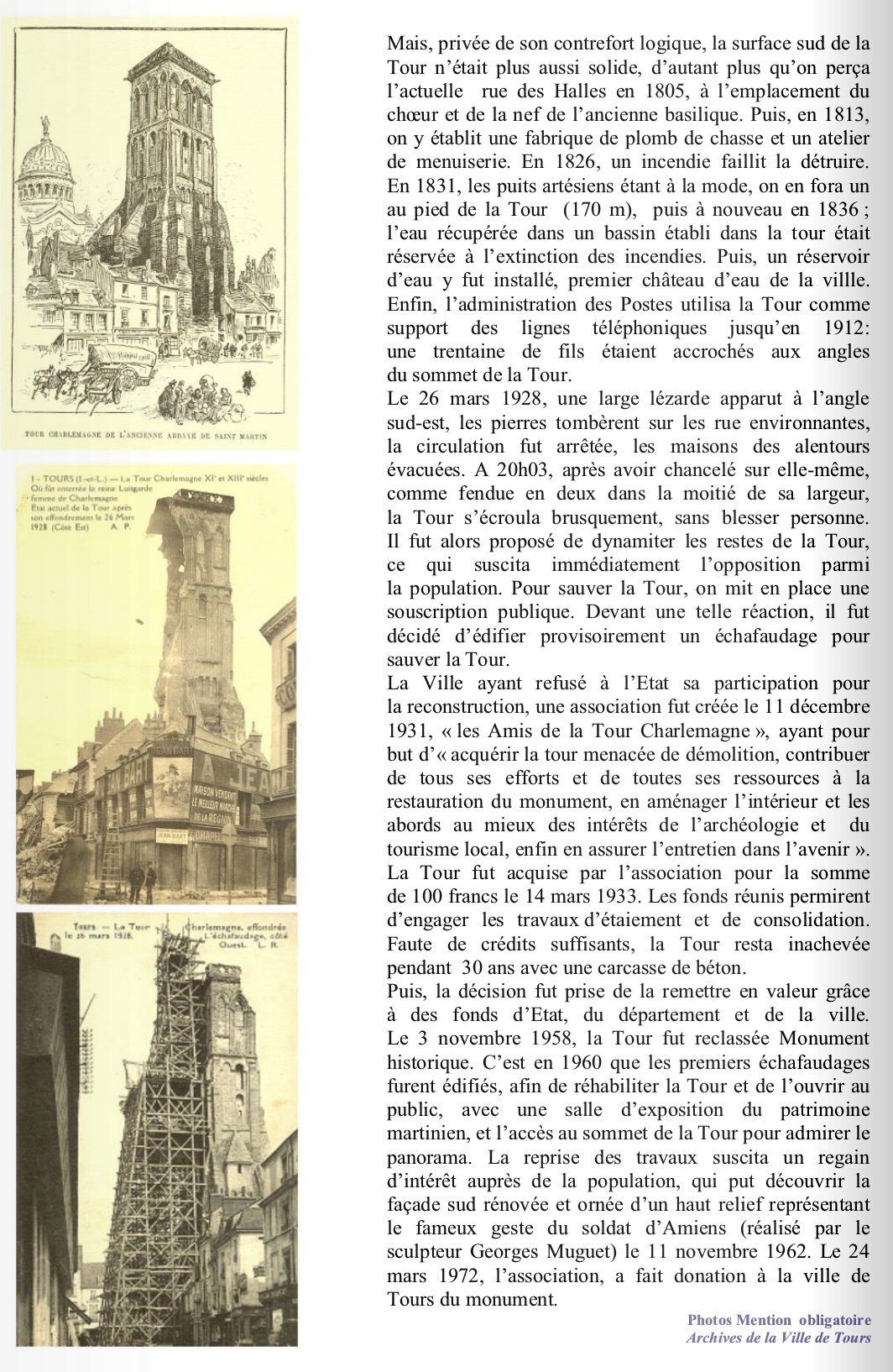 page
page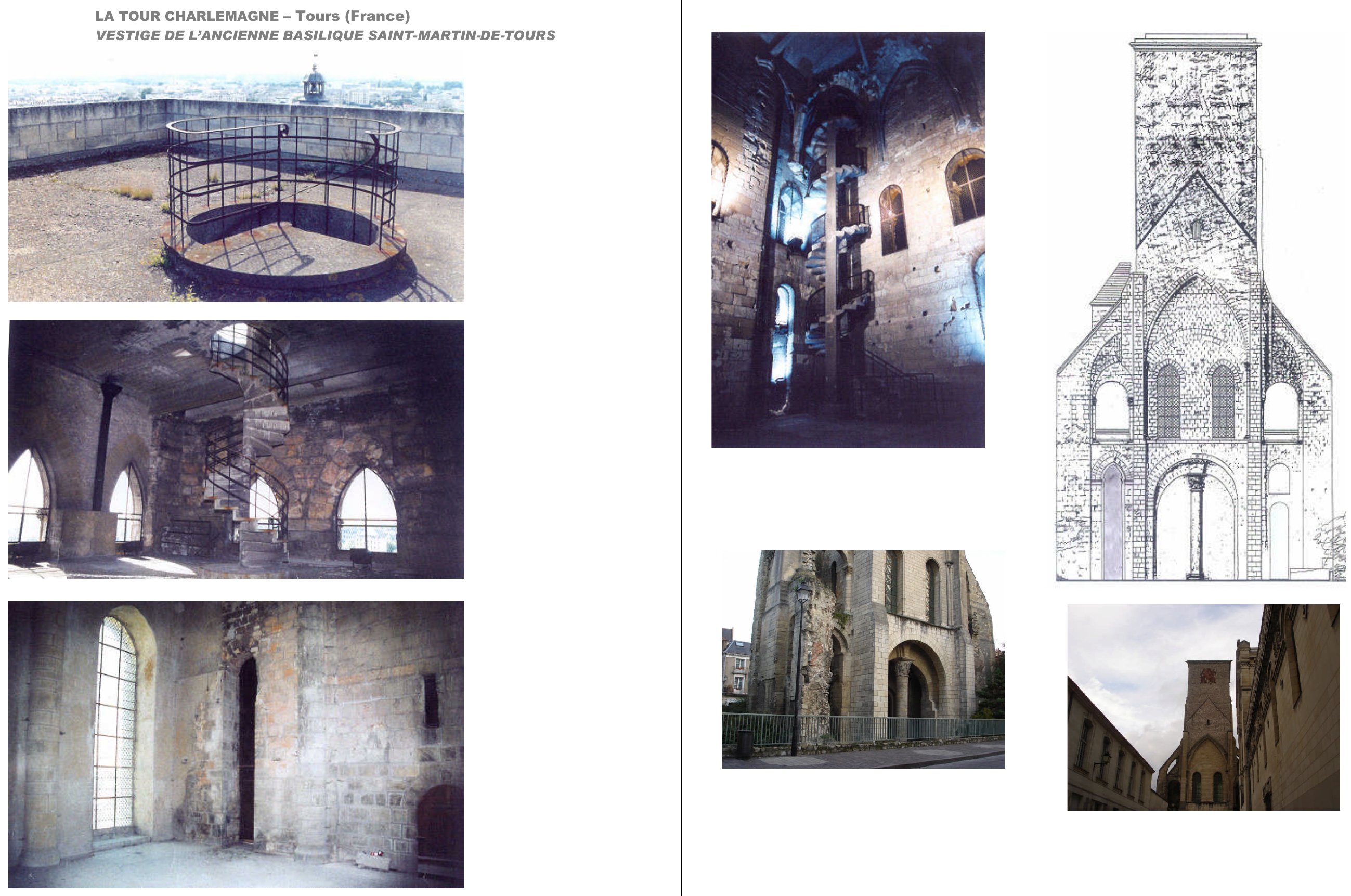 double-page
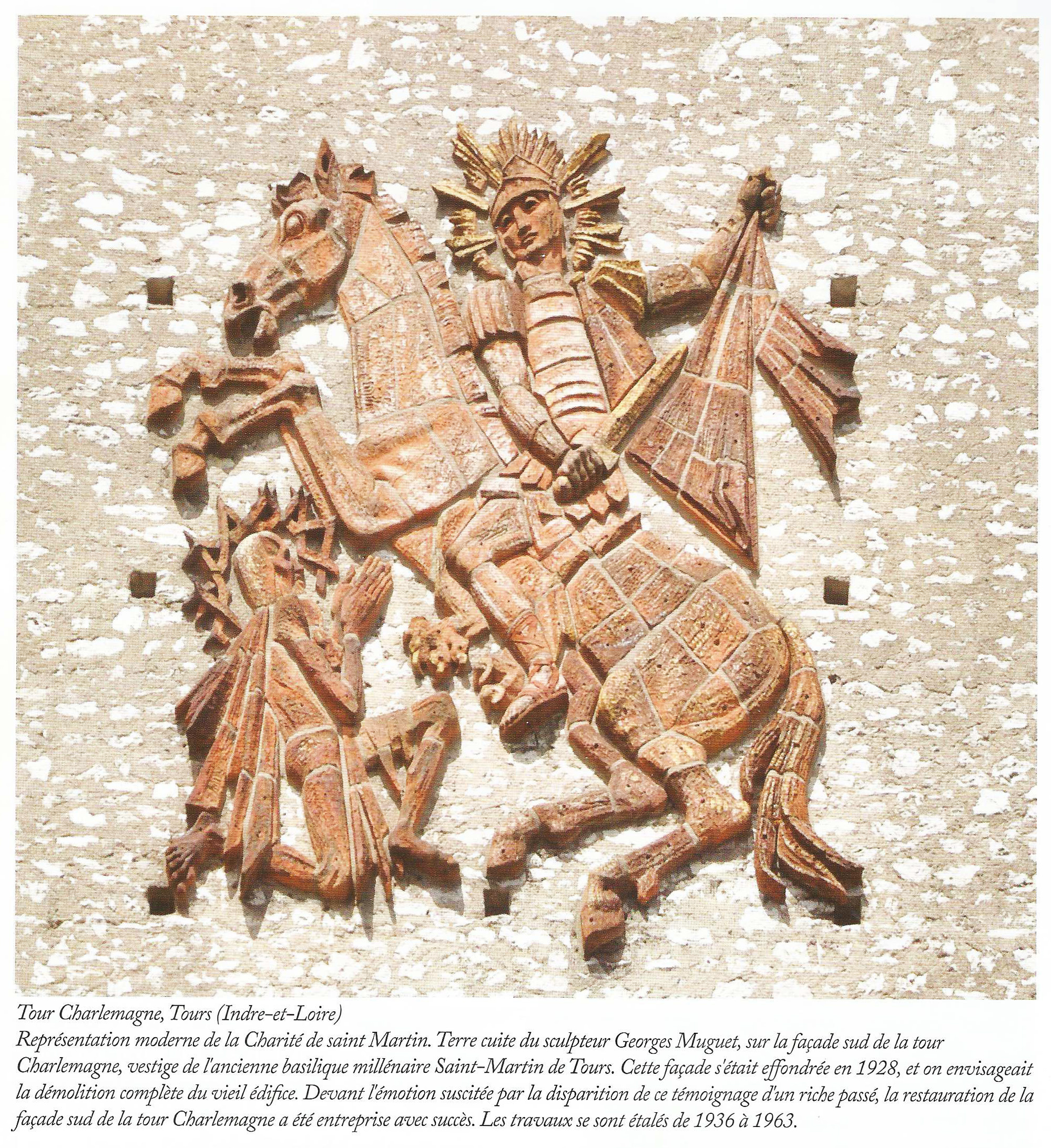 sculpture
 drawing
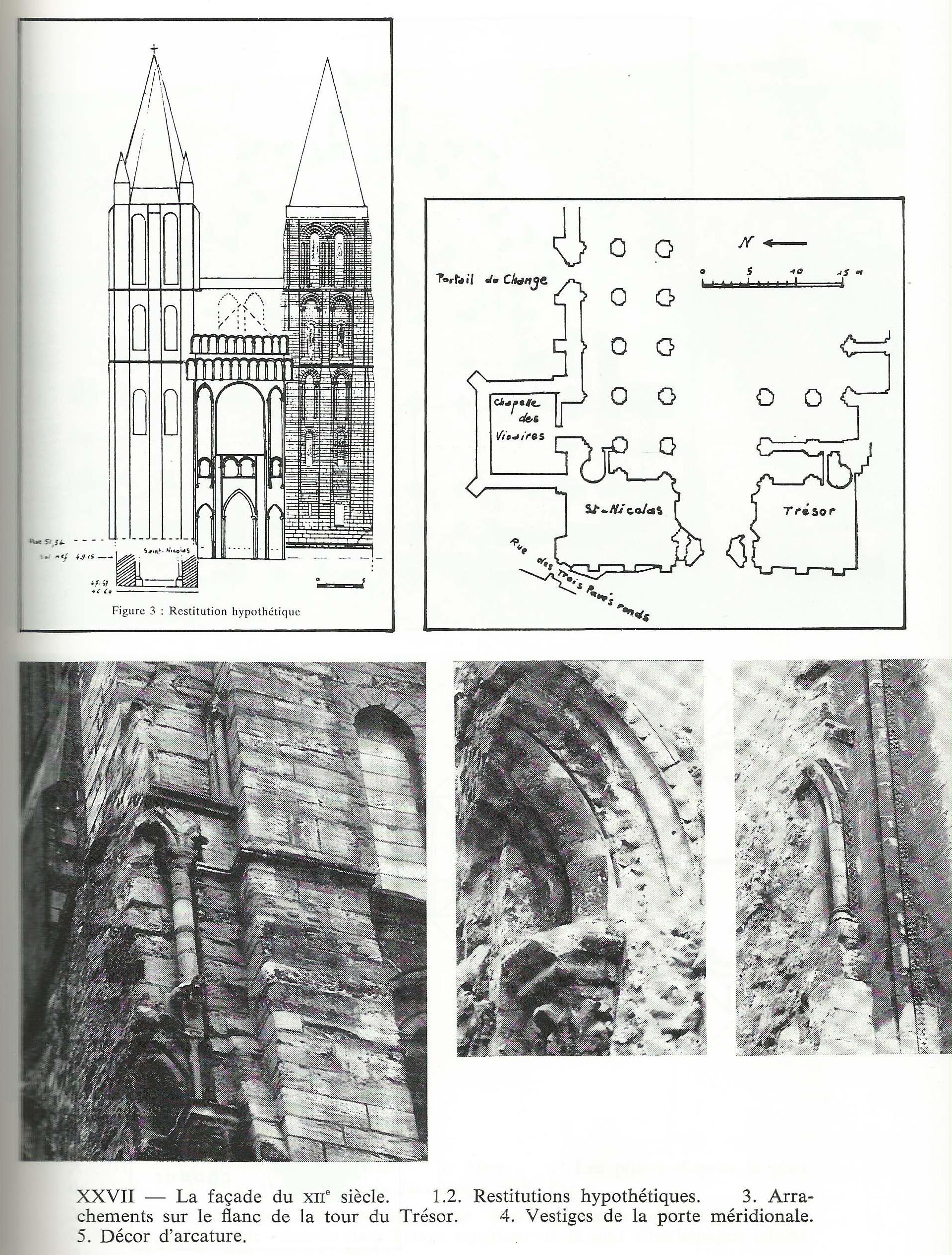 cut
cut Lithograph
 1
1 2
2 1
1 2
2 3
3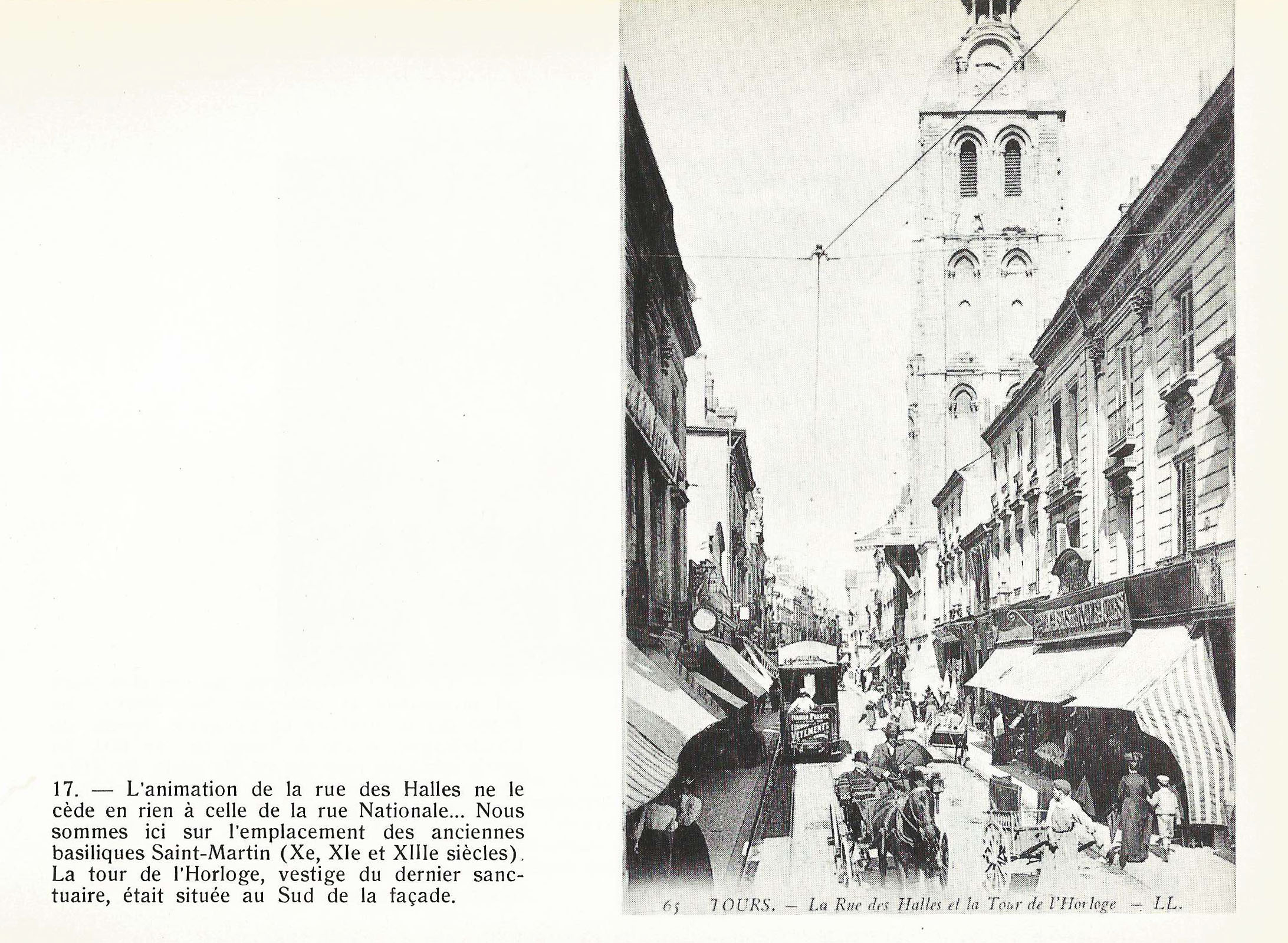 4
4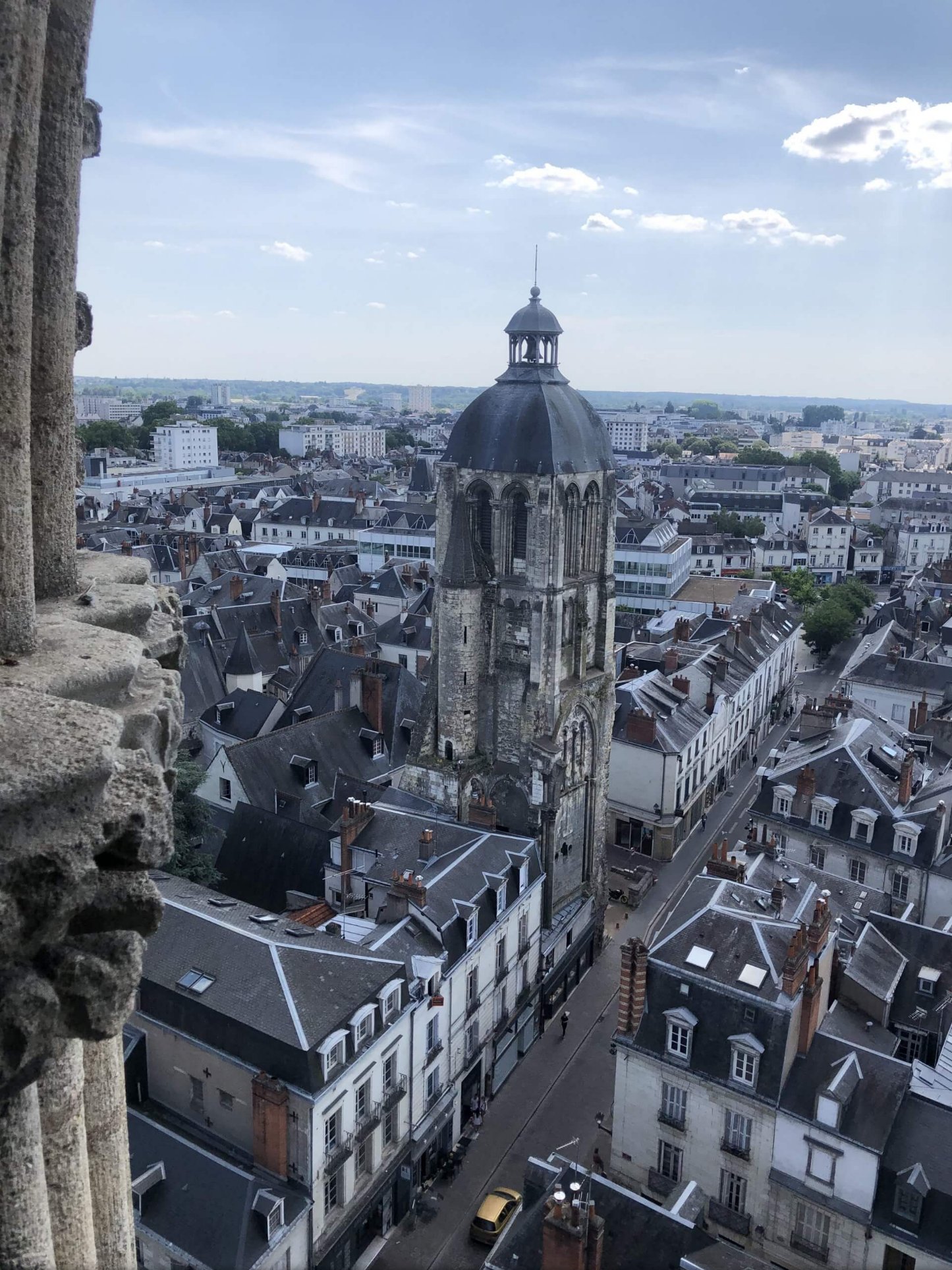 view
view 1
1 2
2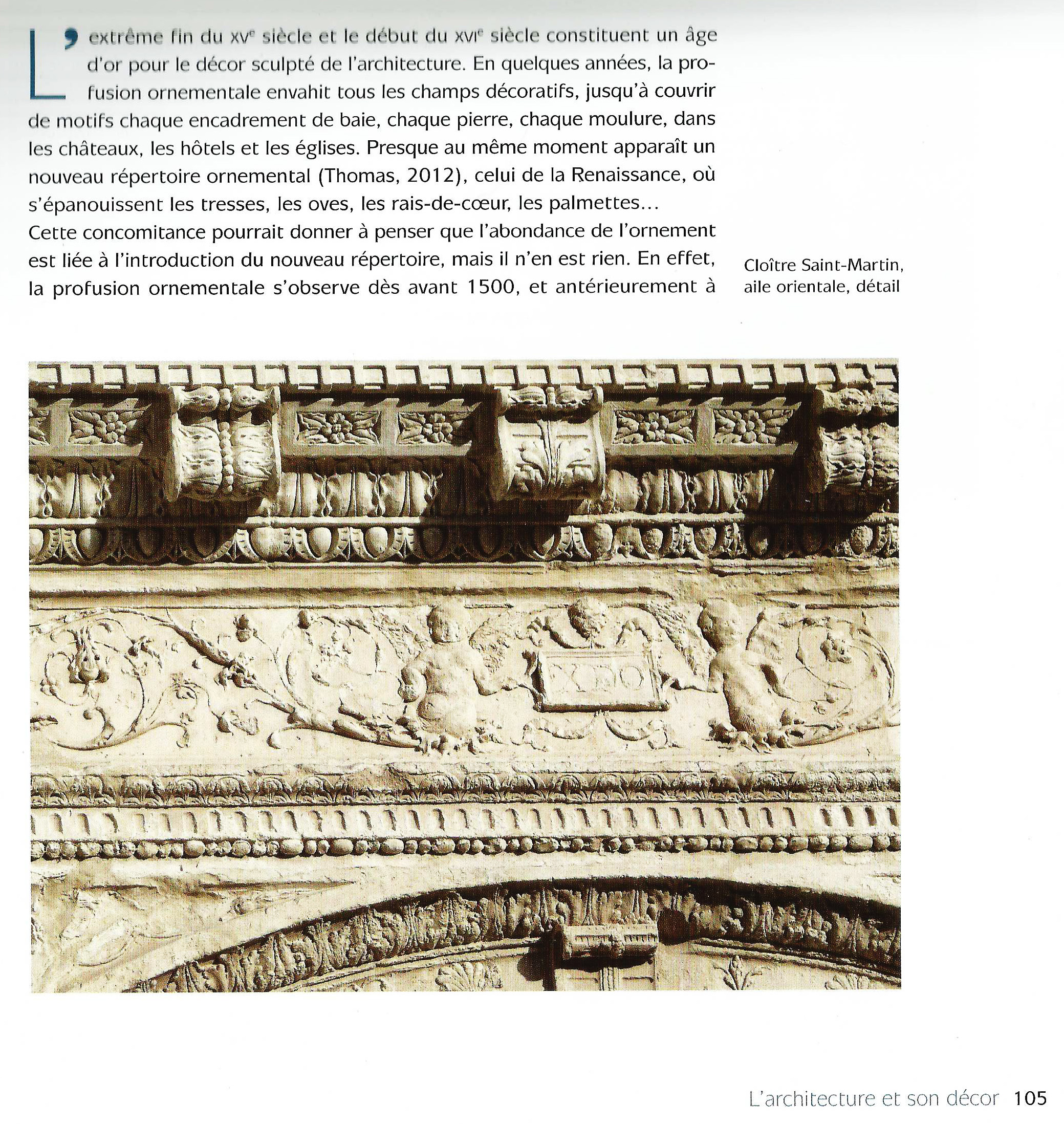 view
view text
text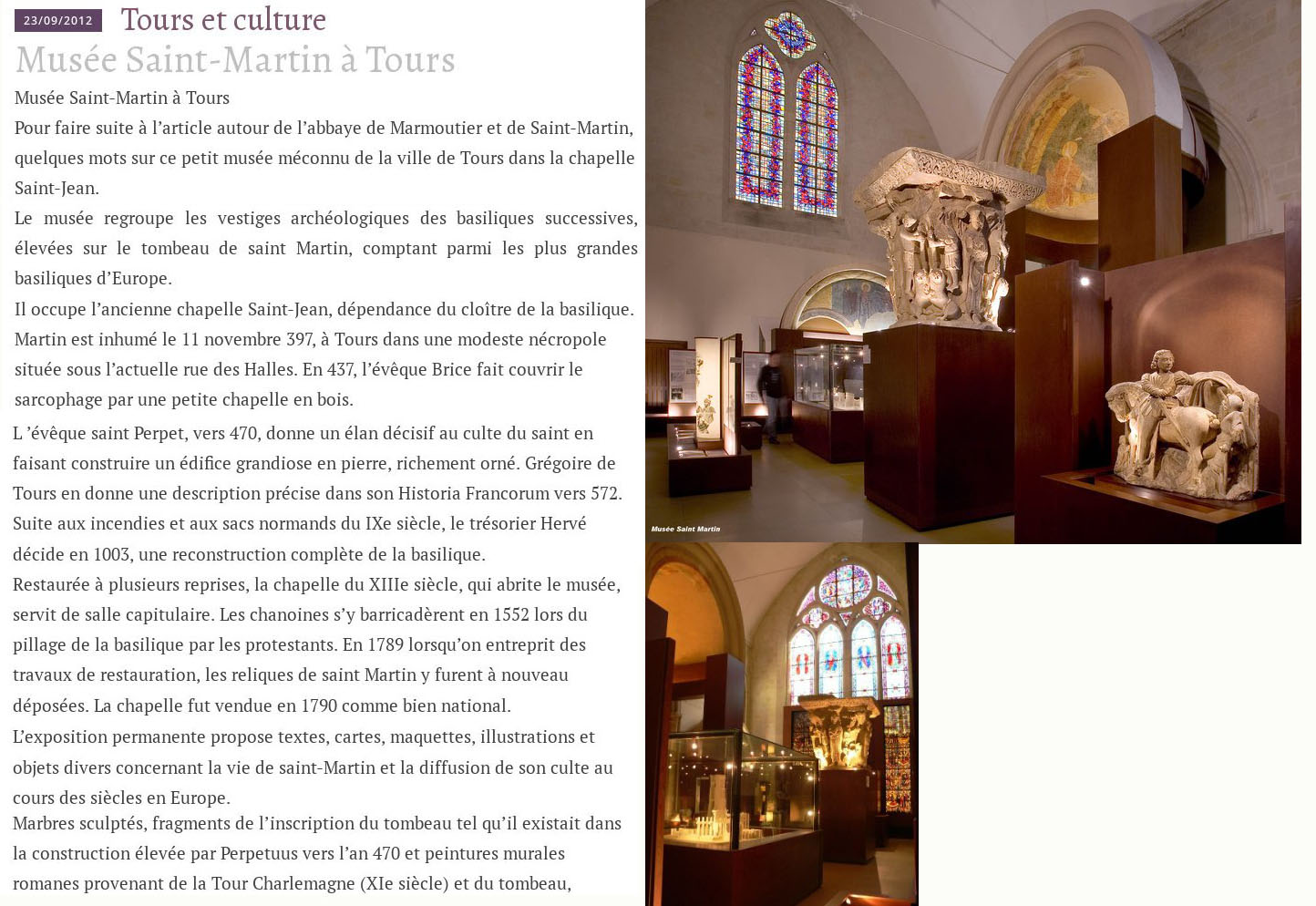 page
page 1
1 2
2 3
3 4
4 photo
photoTriple revolution. The change of century, from the eighteenth to the nineteenth, spread over several decades, caused three revolutions. We have just seen the first one, human and political, with the end, still provisional but in the long run definitive, of the royalty, and the second one, religious, with, the definitive end of the Saint Martin basilica initiated by the treasurer Hervé, the declared but very temporary end of the Catholic cult under papal sway, re-established from the beginning of the new century and above all the end of the quasi Catholic religious monopoly. In Tours, there was a third revolution, urbanistic, a 90-degree restructuring of the city, planned as early as 1756 (we'll see), begun with the removal of the Ile Saint Jacques in 1764 and the completion of the stone bridge in 1778 (we saw
here-before), and completed in 1828, as we'll see.
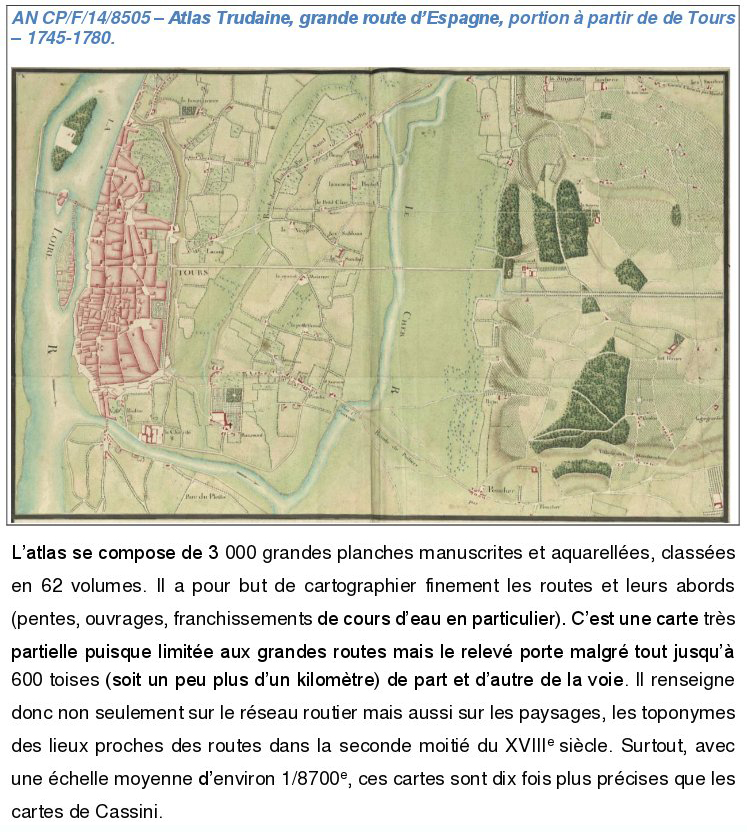
Text by François Coulaud, drawing by Alain Duchêne + the two plates titled "The Touraine Haussmann" : 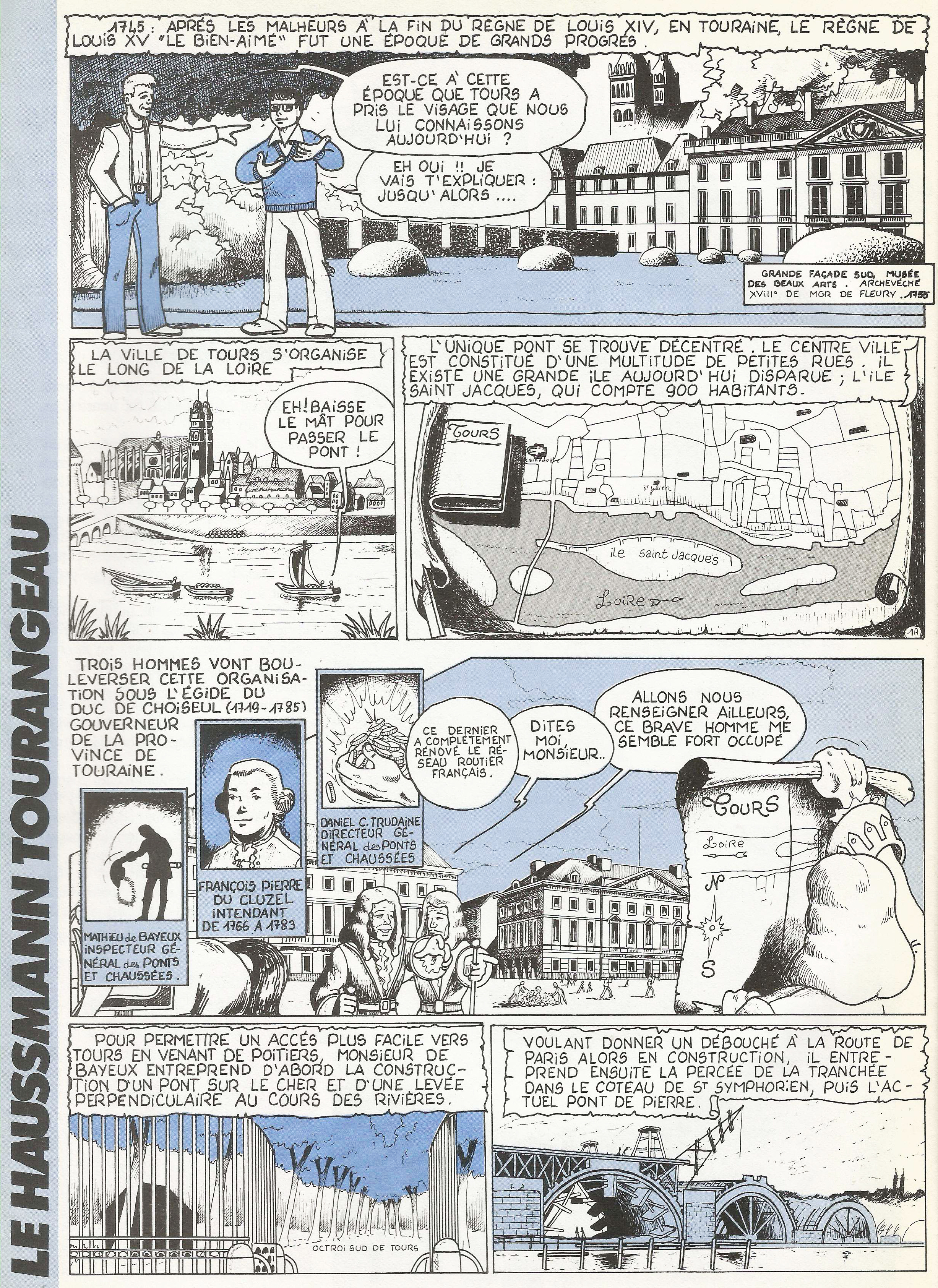 1 1
 2
["Tours Information" December 1985]. 2
["Tours Information" December 1985].
document of 73 pages on "Travel and Transportation in Indre et Loire" (2017).
|
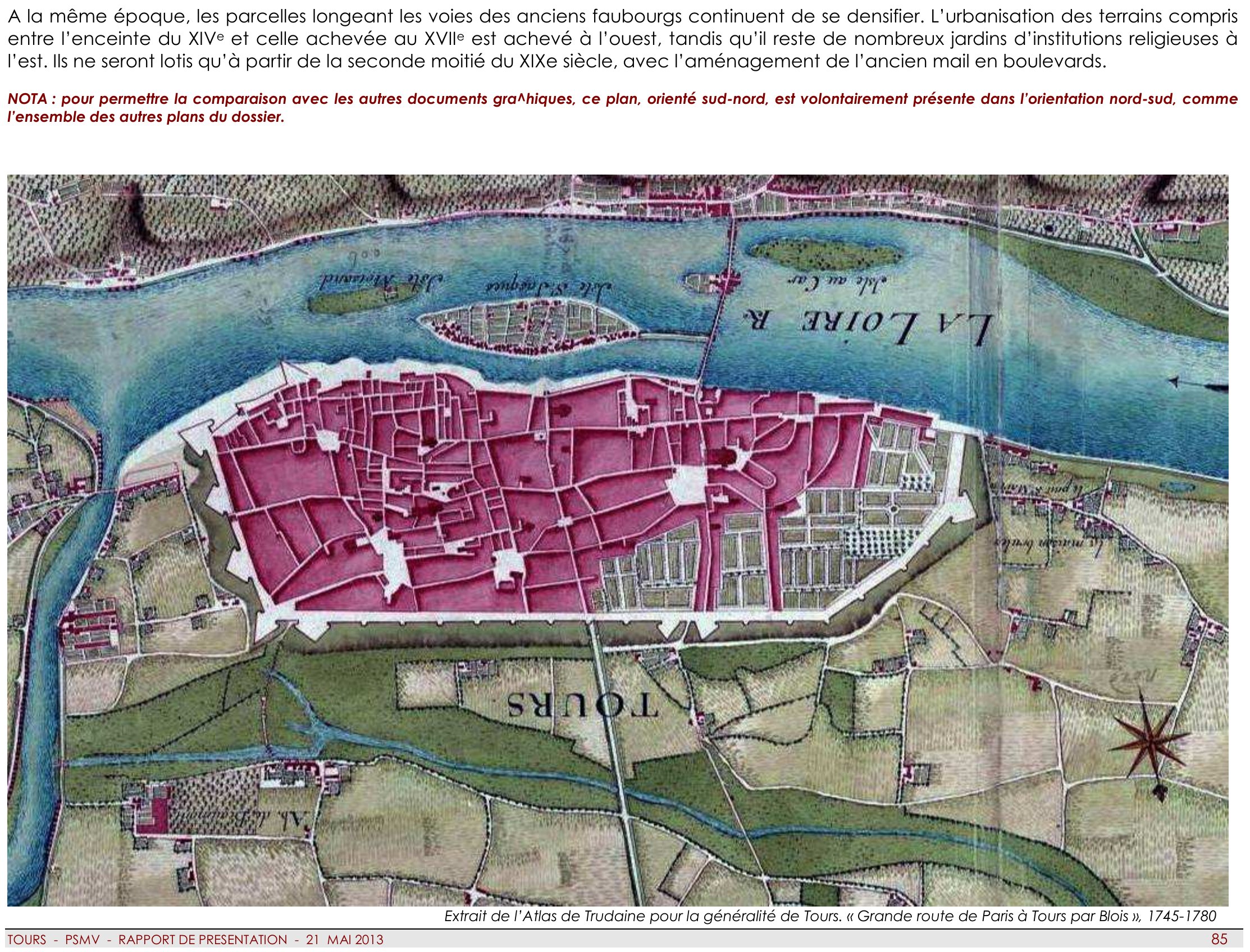 gros-plan
 page
page
Evolution of the city of Tours 5/7: 1778, abandonment of the East-West axis to adopt the North-South axis. Until then, the city had been built on the East-West axis linking the cathedral to the Saint Martin basilica via the Saint Julien church in the center. The idea of creating a new perpendicular axis dates back to 1750 and was accepted in 1760 by the city council. It was concretized in 1756 by the plan shown below on the left, made by the Ponts et Chaussées engineer Mathieu Bayeux. From top (North) to bottom (South), following this plan :
The old axis and the new one intersect at the level of the church Saint Julien. Facing the Loire, the northern entrance to Rue Nationale opened onto two imposing monuments, the museum (behind which is the church of Saint Julien) and the town hall, planned as early as 1766 on the plan below right, by Mathieu Bayeux and Jean Cadet de Limay.
François Pierre du Cluzel, intendant of the generality of Tours from 1766 to 1783 was actively involved in setting up this new structure.
The English traveler Arthur Young estimated in his 1792 book that the new entrance to Tours was magnificent, even though the Museum was not completed until 1828, the City Hall having been completed in 1786.
Honoré de Balzac was born on Rue Royale / Nationale in 1799 and considered it the "Queen of the Streets" [the Balzac route showing in Tours the places frequented by the writer).
Much later, the new basilica of Saint Martin, built by Laloux, will adopt the new axis, abandoning the old one that followed the basilicas of Armence, Perpet and Hervé.
|
 1
1 2
2 engraving
 engraving
 postcard
 1
1 2
2 3
3 4
4 5
5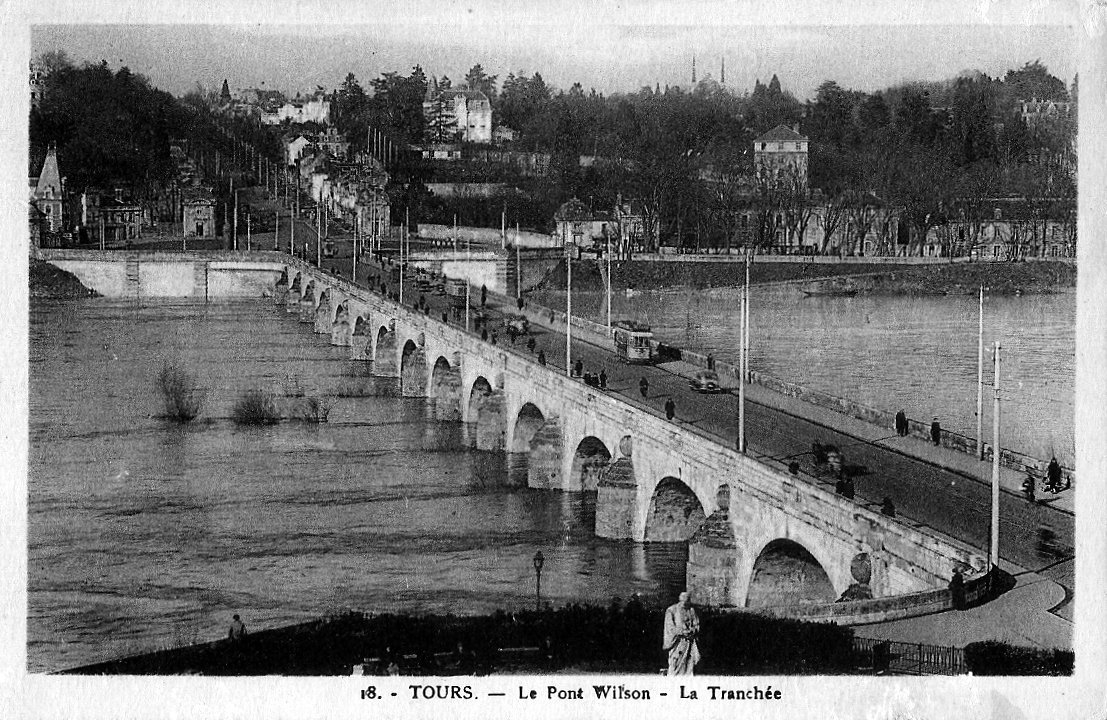 6
6 1
1 2
2 1
1 2
2 1
1 2
2 3
3 4
4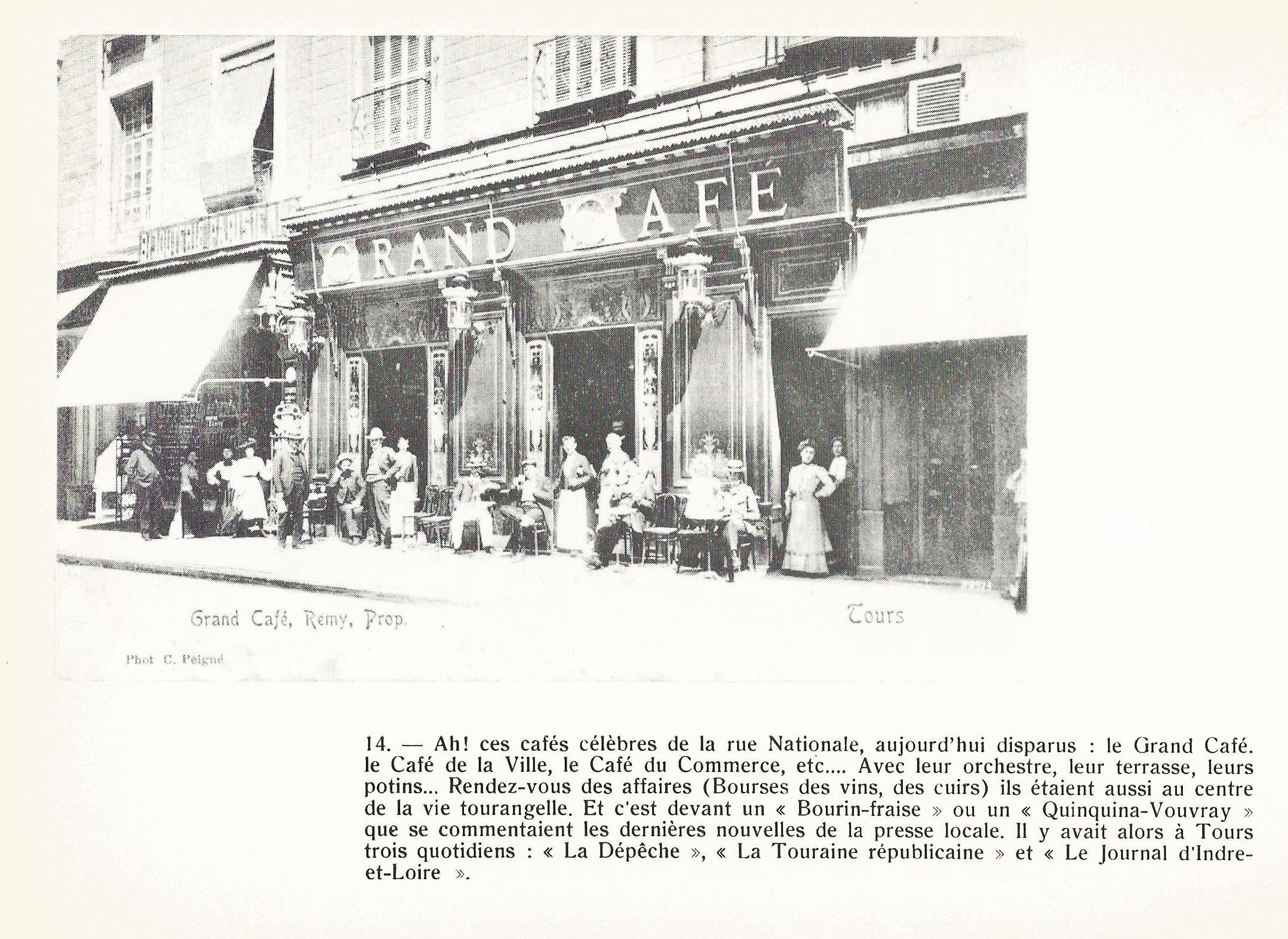 5
5 6
6 7
7 postcard
 1
1 2
2 3
3 4
4 5
5

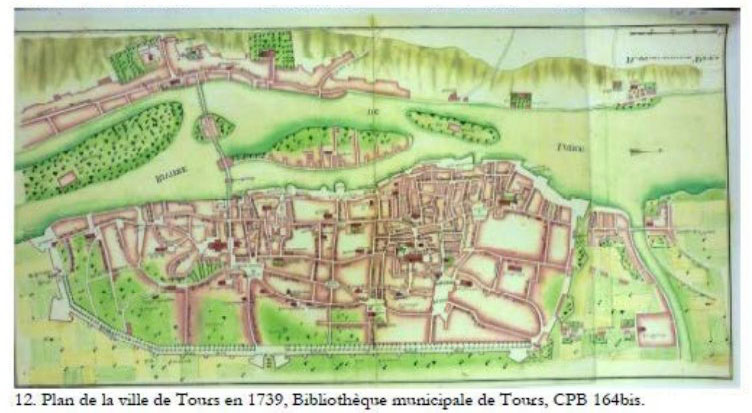 plan
plan engraving
 article
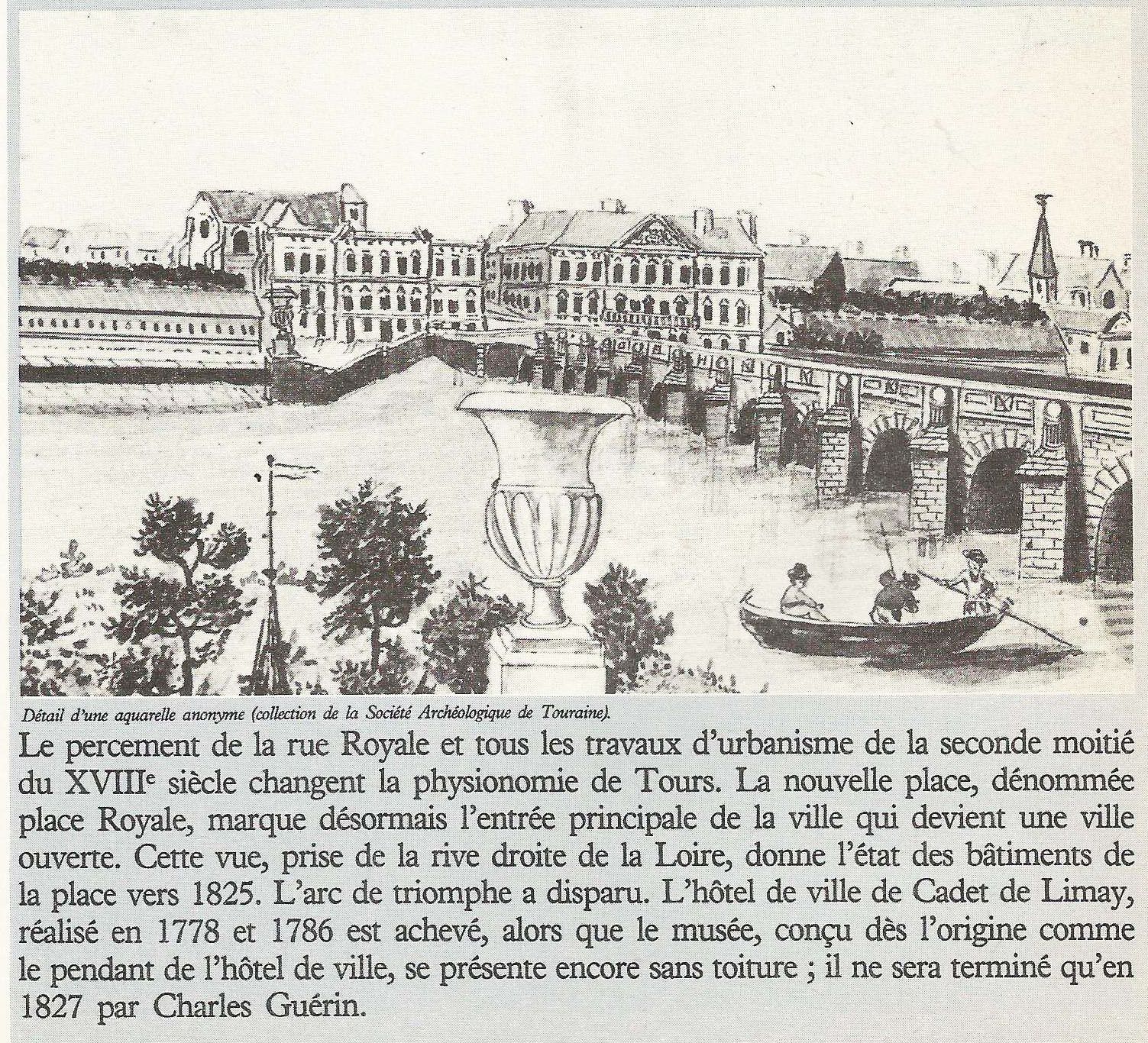 watercolor
 engraving
 1
1 2
2 3
3 4
4

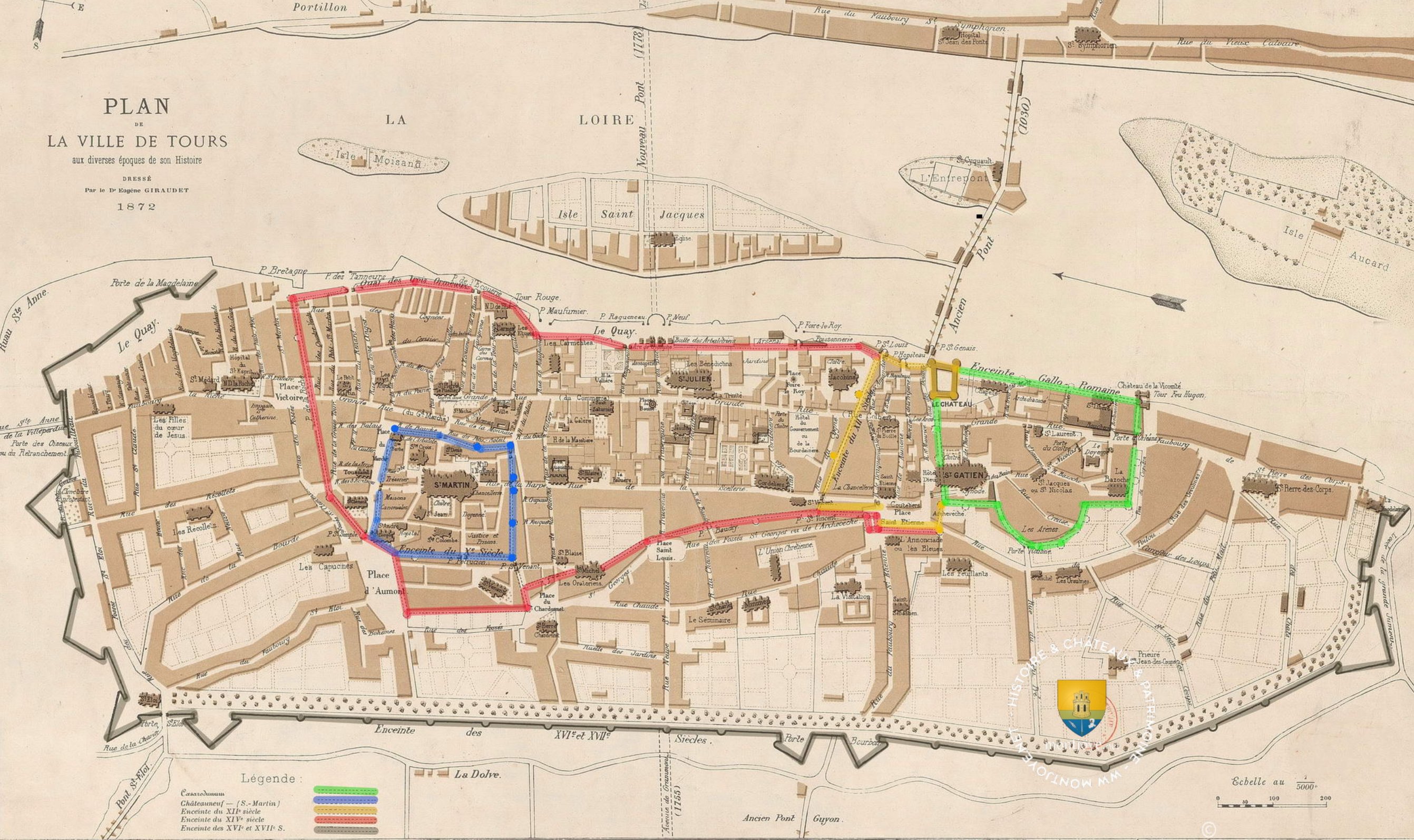
 map
map map
map map
map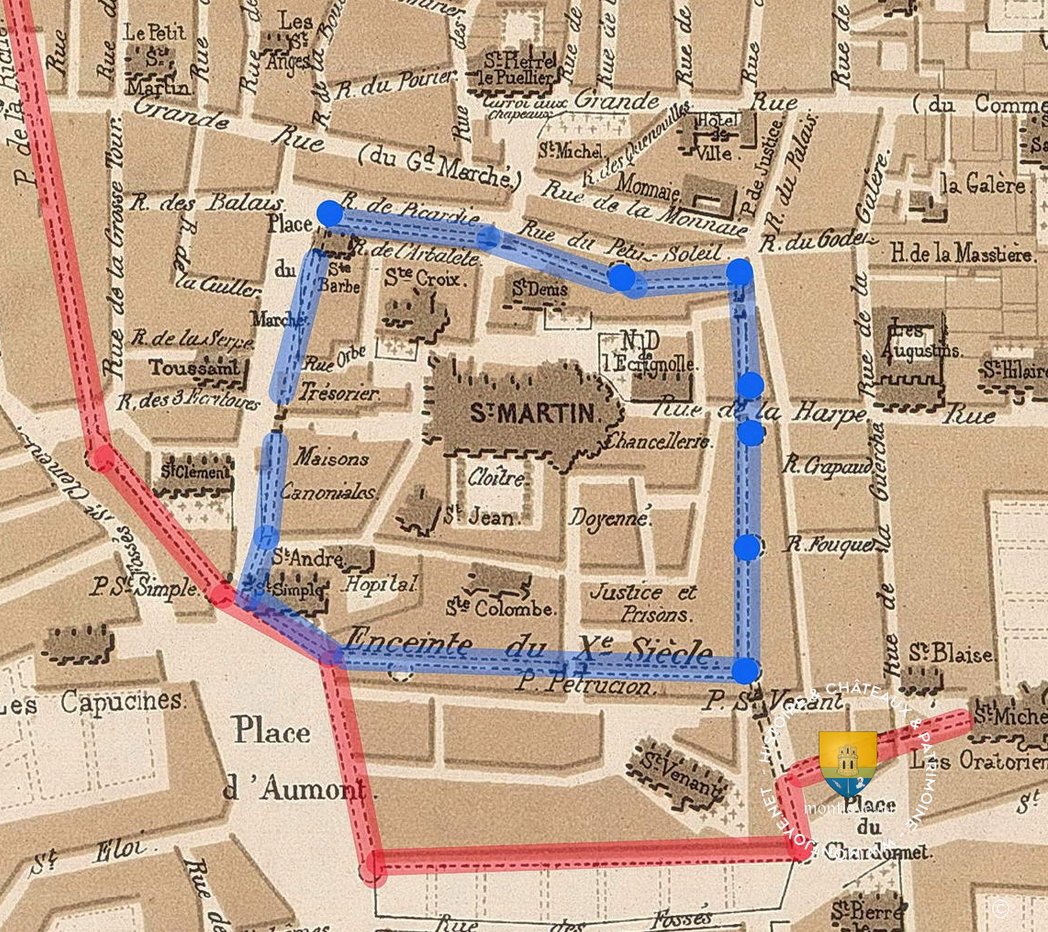 1
1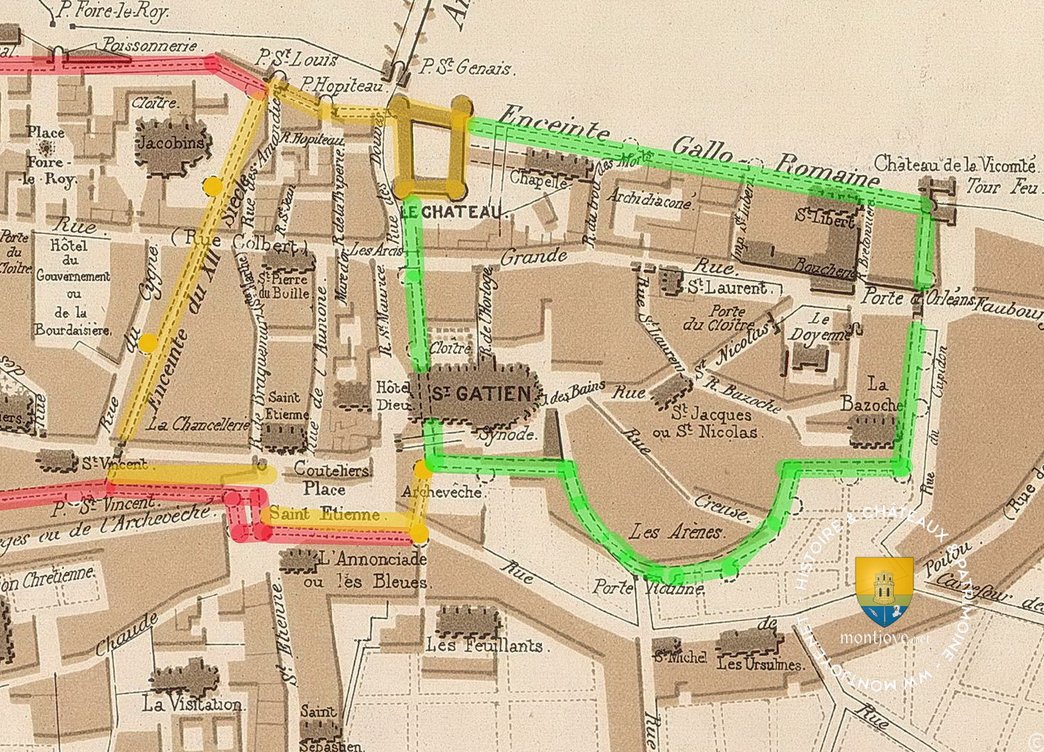 2
2A city closed on its ramparts and longer still on its octroi. The establishment of the new axis will be accompanied by new
octrois to filter the entry and exit of goods. Brigitte Lucas ["Mémoire en images, Tours" 1993,  page] : "In 1880, octroi accounted for two-thirds of municipal revenues. There were twelve customs barriers, so those of La Tranchée, Grammont, La Riche, etc., as well as at the goods station and at the entrance to the slaughterhouse. [...]The octroi barriers fell definitively in 1943." Thus, from the 3rd century for the core Caesarodunum until 1943, Tours was a closed city. Over 20 and a half centuries of history, it was an open city only during the first two and the last...

Tours, an image that mixes eras, from 1793 to 1828. As explained in this  analysis (link), this painting [MBAT] by Pierre-Antoine Demachy before his death in 1807 depicts Tours both in 1793, with the still-intact St. Martin's Basilica on the right, and in 1828, the date of completion of the museum in front of St. Julien's Church in the center. Between St Julien and St Martin, you can see the imposing bell tower of the church of St Saturnin and, to the right of St Martin, the thin bell tower of the church of St Clément. The old bridge, of Eudes, over the Loire is half destroyed, on the left, replaced by the stone bridge in the center, on the Paris-Bordeaux axis. + another analysis (link), this painting [MBAT] by Pierre-Antoine Demachy before his death in 1807 depicts Tours both in 1793, with the still-intact St. Martin's Basilica on the right, and in 1828, the date of completion of the museum in front of St. Julien's Church in the center. Between St Julien and St Martin, you can see the imposing bell tower of the church of St Saturnin and, to the right of St Martin, the thin bell tower of the church of St Clément. The old bridge, of Eudes, over the Loire is half destroyed, on the left, replaced by the stone bridge in the center, on the Paris-Bordeaux axis. + another  view of Tours, from the south, circa 1785, by Charles-Antoine Rougeot [MBAT]. view of Tours, from the south, circa 1785, by Charles-Antoine Rougeot [MBAT].
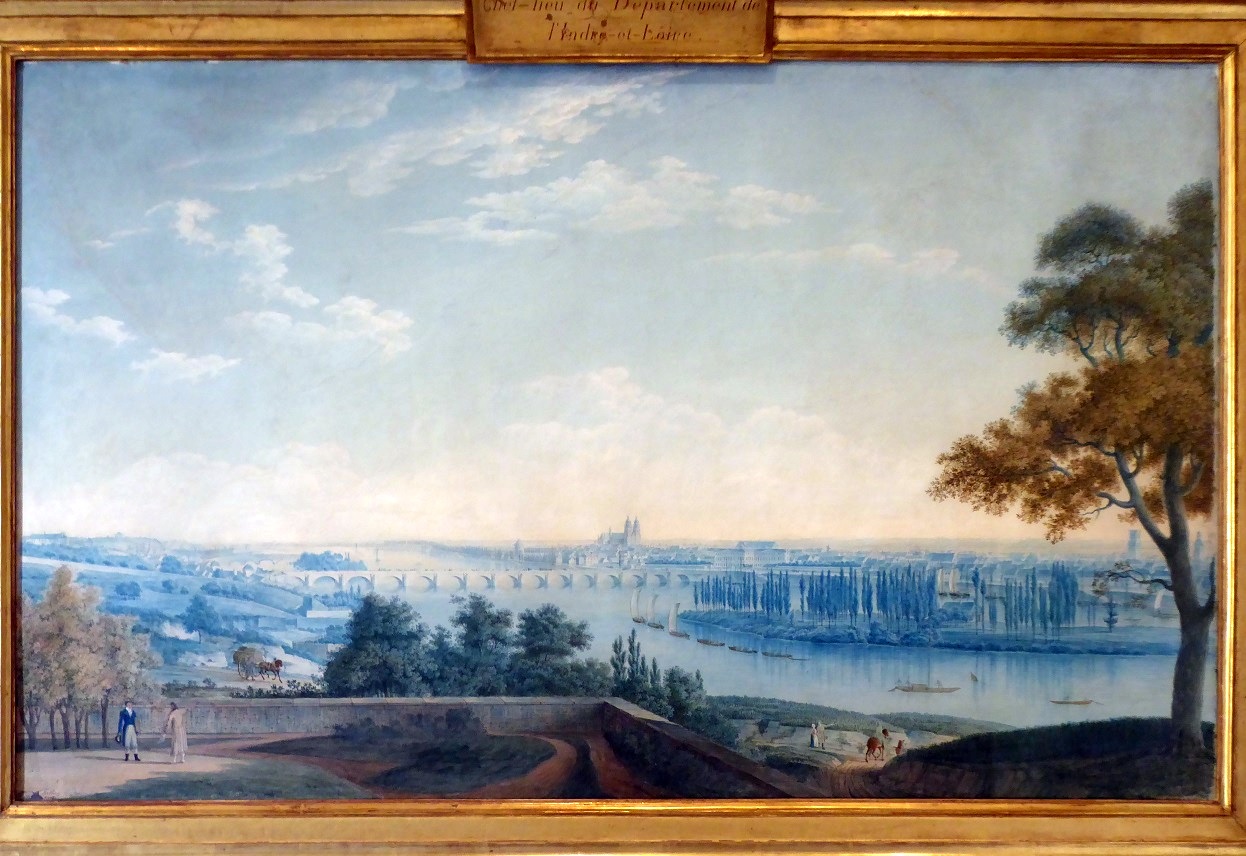
The disappearing steeples. Towers in 1810 by Antoine Ignace Melling, with the stone bridge, behind on the left a few remaining arches of the Eudes Bridge, on the right the two Charlemagne and clock towers, without a basilica [MBAT, "The Museum's collection" 2001]. Compared to the previous view, we note the disappearance of the five bell towers of the basilica (only two towers with shrunken roofs remain) and the absence of the bell towers of St Julien (shortened), St Saturnin (destroyed church), and out of frame St Clément (shortened before destruction). A tornado called Revolution had hit, sparing only the cathedral...
+ two maps of Tours :
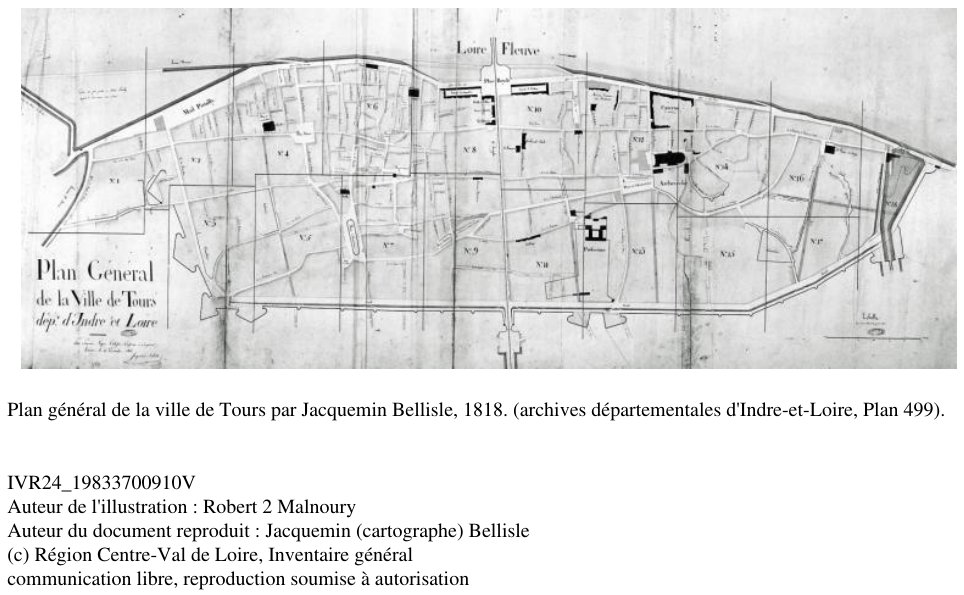 1 1818 [Jacquemin - Bellisle, arch. dep. 37] 1 1818 [Jacquemin - Bellisle, arch. dep. 37]
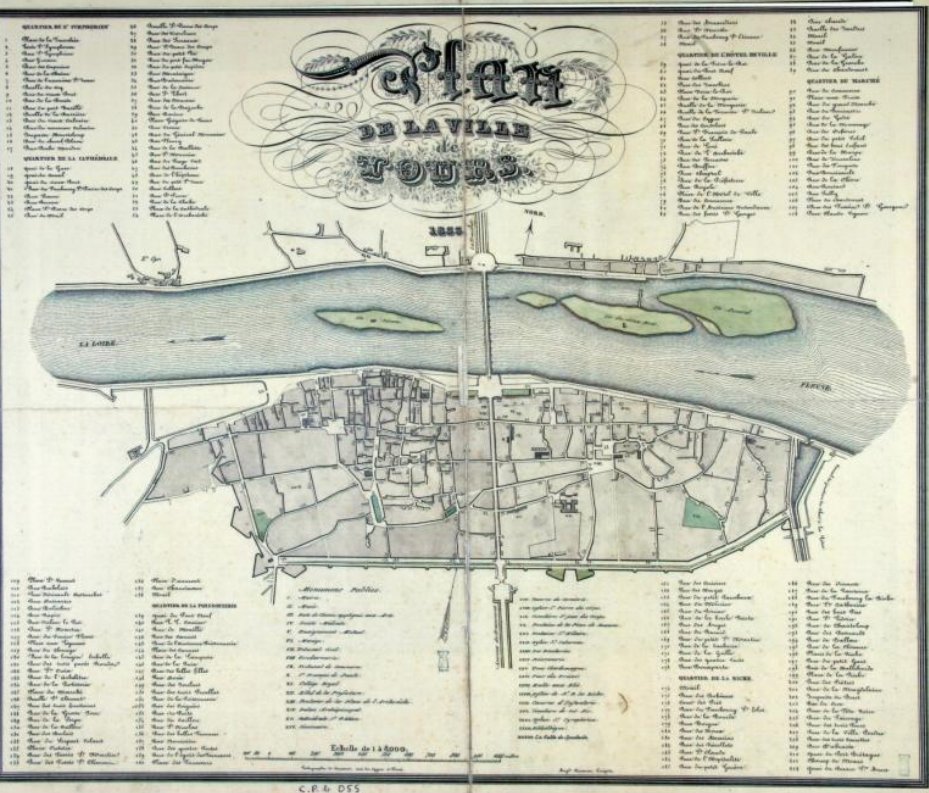 2 1833 [BmT]. 2 1833 [BmT].
|
Tours and Water 5/6: 1840, the golden age of river transportation, and 1856, the great flood. On the Loire in 1840, steamboats were alongside large and small sailing boats, a canal linking the Loire to the Cher had just been inaugurated, extending traffic, everything was going well, with a large population of bargemen and stevedores who lived off this traffic... The arrival of the railroad brought a sudden halt.
And three great floods were to strike the city. The raising of the left bank of the canal avoided the worst in 1846, it was insufficient in 1856, it was the catastrophe, only the hill of Caesar (site of Caesarodunum) escaped the waters : "Only the ancient city is surviving, on the edge of the raging river. The Loire and the Cher
lying in the same bed, form a lake 30 km long and 10 wide !" [Léon Cazeaux, "La Loire déchirée", Alexis Boddaert 1990]. Solidly heightened and reinforced in 1860, the left bank became a canal dyke, allowing to avoid a second disaster in 1866. What the Tourangeaux of the XXIst century have forgotten...
|


 view
view 1
1 2
2 3
3 1
1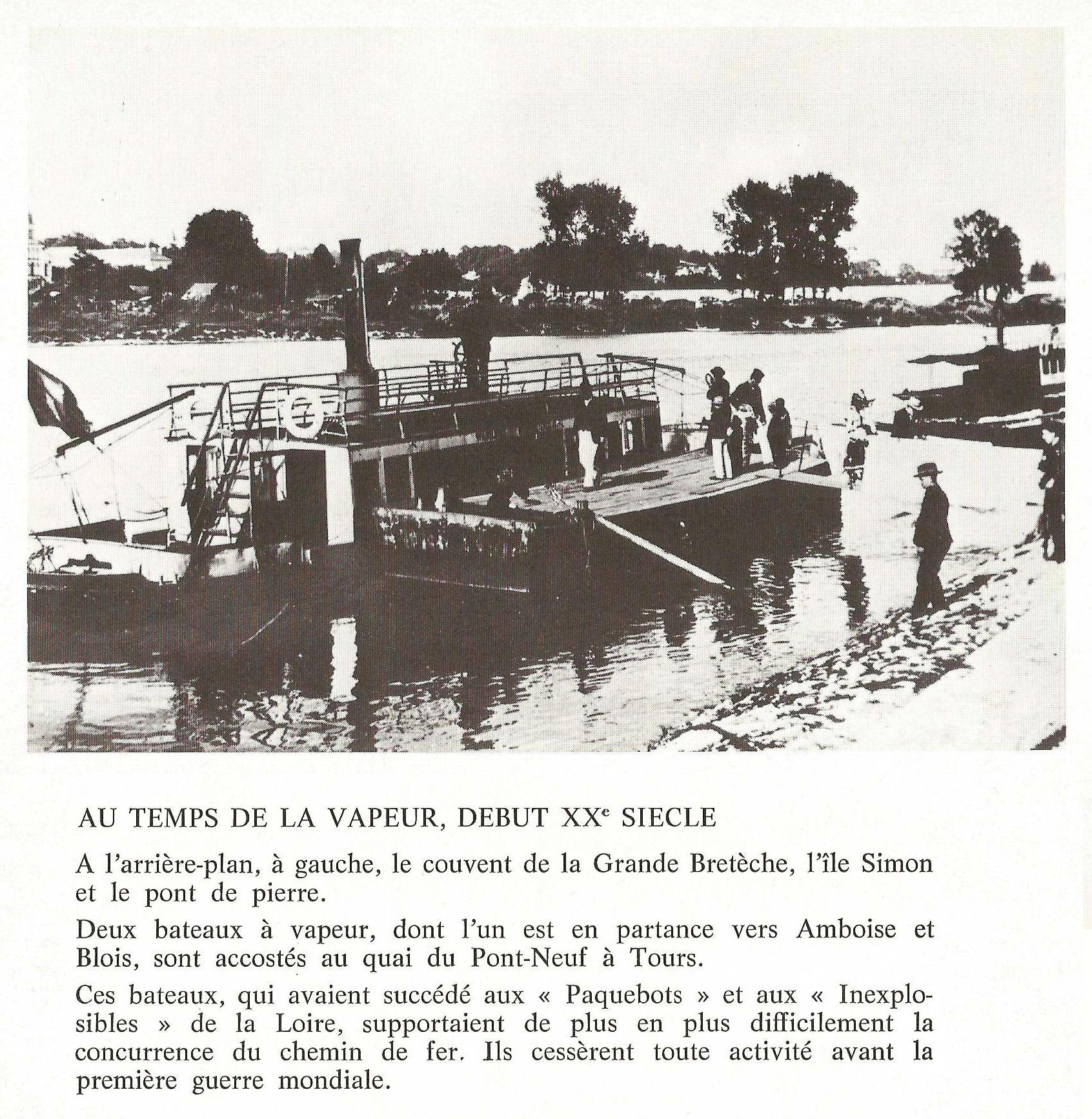 2
2 view
view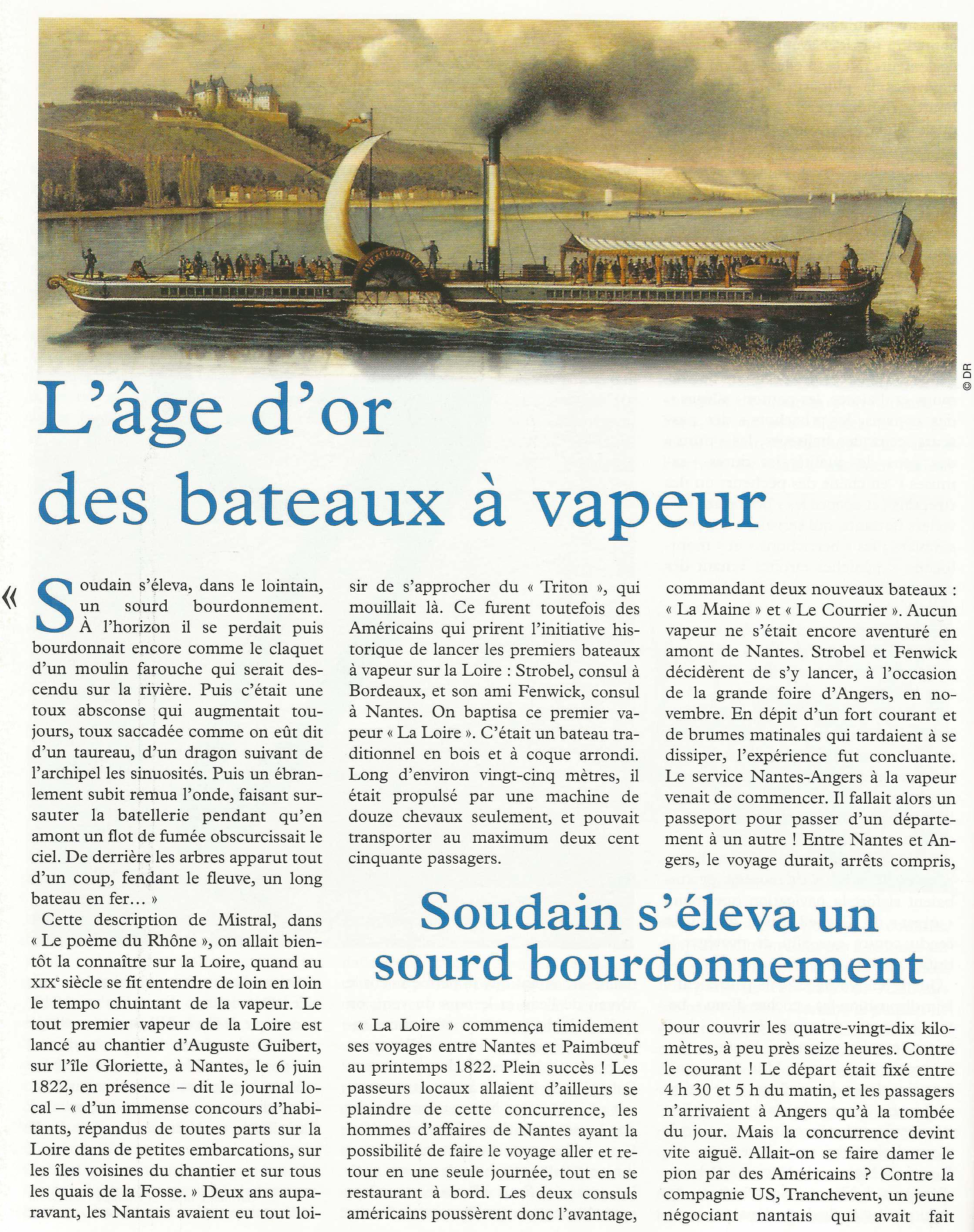 article
 double page
 1
1 2
2 page
page page
page postcard
 photo
photo double page
 aerial photo

 Article
 photo
photo 1
1 2
2 3
3 1
1 2
2 3
3 4
4

Tours in 1826, two watercolors by William Turner, precursor of impressionism.
Left view of the port of junction of the Cher-Loire Canal (left) to the Loire River (right) (link)
+ revived in  engraving by T. Jeavons 1832 (link)
+ another engraving by T. Jeavons 1832 (link)
+ another 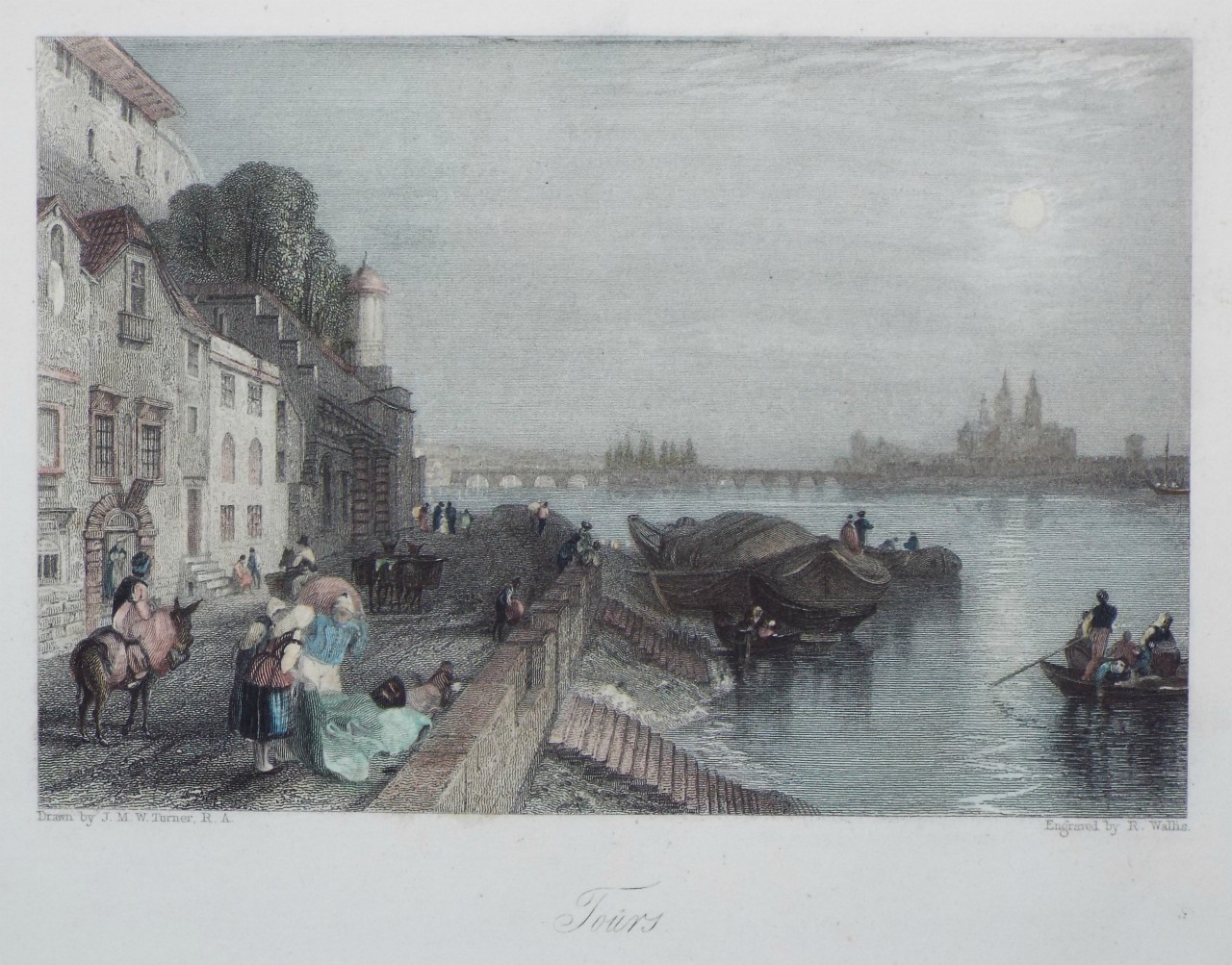 engraving after Turner.
At right, view of the city from the top of the Trench (link). engraving after Turner.
At right, view of the city from the top of the Trench (link).
|
1846: the new rise of Tours. The year 1846 can be considered decisive for the city of
Tours. It marks the arrival, on March 26, with the blessing of Archbishop François Morlot, of the railroad through the inauguration of the first station, called the embarcadère (also landing stage). Paris-Tours in only six hours ! The bastioned ramparts of 1600 are broken up and will disappear. Waterways are being abandoned in favor of rail and roadways. The Industrial Revolution arrives, emptying the countryside in favor of the cities. The center of the city moves south, near the new courthouse, near the pier. The demography, which had been stagnant for a long time, will now grow strongly:
27,000 inhabitants in 1789,
21,000 in 1793,
21,000 or so in 1822 (including 226 voters in 1820) and 1826 (addition in 1824 of part of the commune of Saint Pierre des Corps following the digging of a canal),
26,600 in 1837 (including 560 voters in 1844),
30,700 in 1846 (addition in 1845 of the commune of Saint Etienne Extra),
42,400 in 1866,
63,200 in 1896,
77,100 in 1926,
92,900 in 1962,
128,100 in 1968 (adding in 1964 the communes of Saint Symphorien and Sainte RadegondeJoué lès Tours), 140,600 in 1975, population never exceeded since (135,700 in 2017 for a metropolis of 293,100 inhabitants in 2016) [Giraudet, Chevalier, and Wikipedia data].

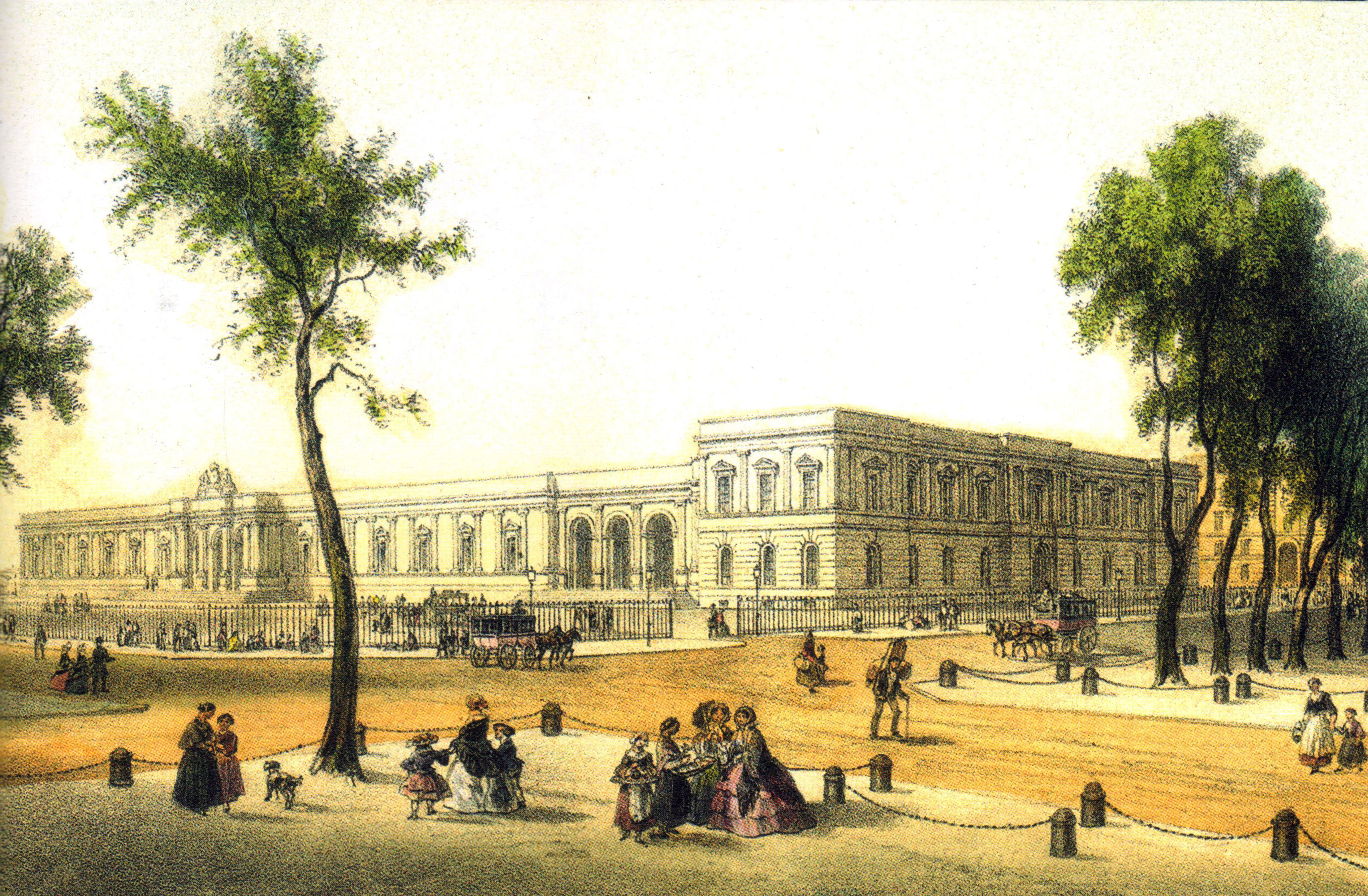
To the left, the Palais de Justice, the first building in the Palace Square, completed in 1843. The City Hall in symmetry to this square, will be inaugurated sixty years later, in 1904 [LTa&m 1845].
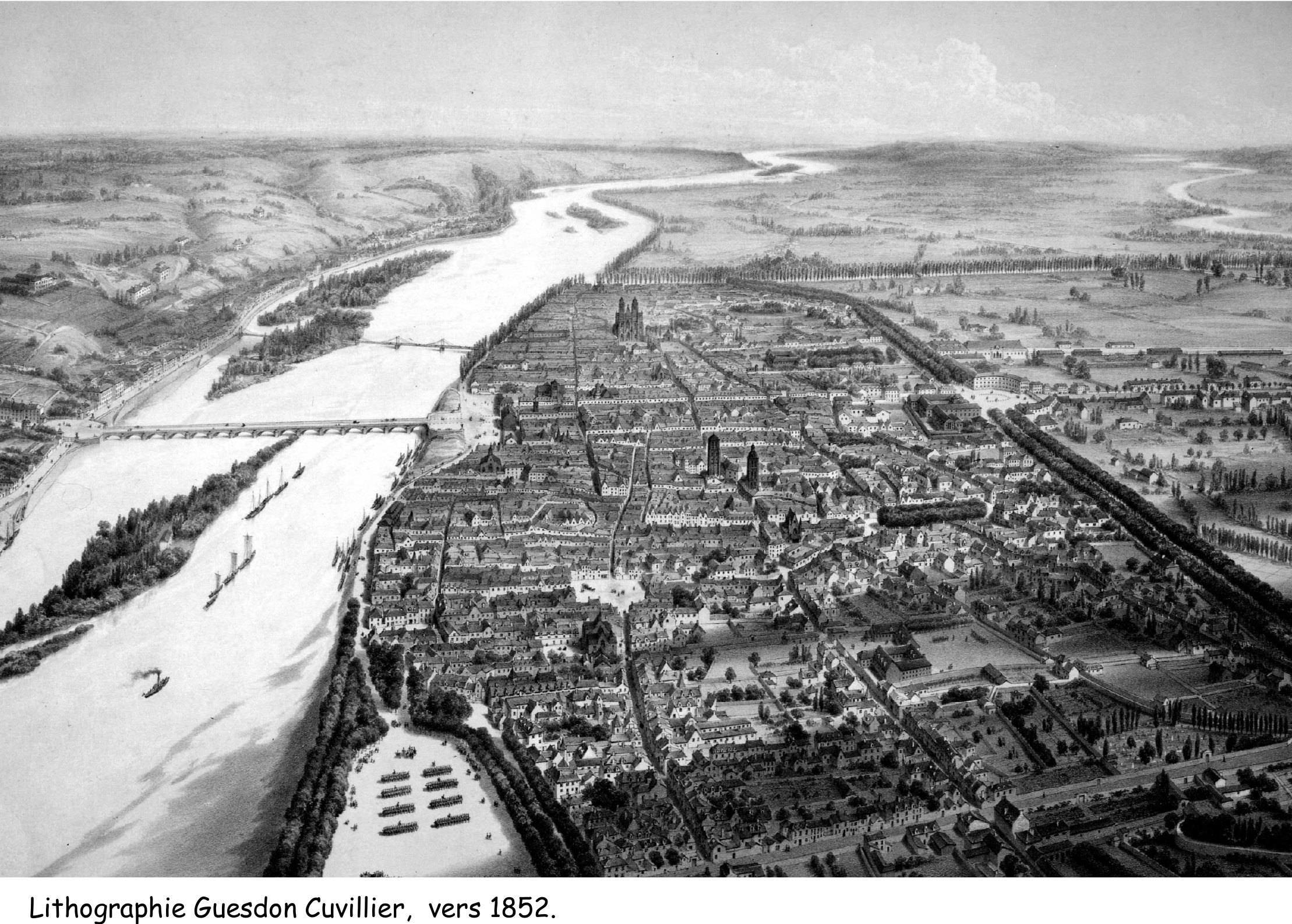
Towers without Saint Martin's Basilica. Balloon view of the west in 1847 [lithograph 1852, Robert Malnoury, SAT +  version colorized]. In the lower left corner, the Charlemagne and clock towers. At the top, from left to right, Rue Royale (now rue Nationale) as an extension of the Pont de Pierre. In the upper right corner, the Place du Palais.
On the right, the large mall where lived from 1838 to 1840 the chansonnier Pierre-Jean de Béranger (1780-1857). Nicknamed "L'ami du peuple", he was so well known that this portion of the mall was named "boulevard Béranger" during his lifetime (link)
+ version colorized]. In the lower left corner, the Charlemagne and clock towers. At the top, from left to right, Rue Royale (now rue Nationale) as an extension of the Pont de Pierre. In the upper right corner, the Place du Palais.
On the right, the large mall where lived from 1838 to 1840 the chansonnier Pierre-Jean de Béranger (1780-1857). Nicknamed "L'ami du peuple", he was so well known that this portion of the mall was named "boulevard Béranger" during his lifetime (link)
+ 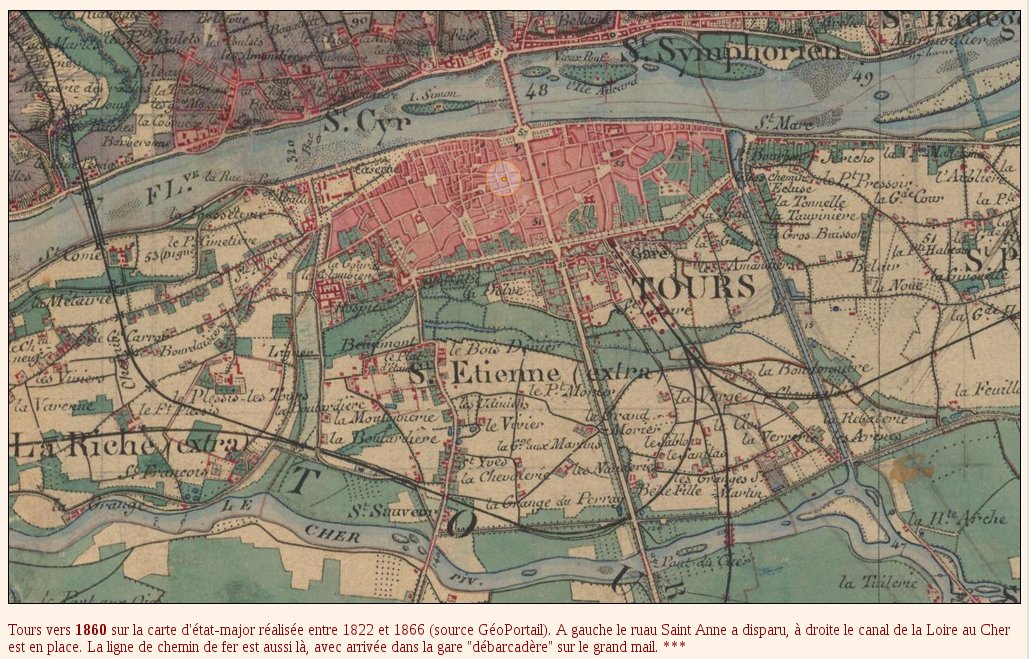 plan circa 1860
+ plan circa 1860
+  postcard of the flower market on bd Béranger
+ postcard of the flower market on bd Béranger
+  page with two other postcards [Brigitte Lucas 1993]. page with two other postcards [Brigitte Lucas 1993].
|
 1
1 2
2 3
3 4
4 photo
photo overview
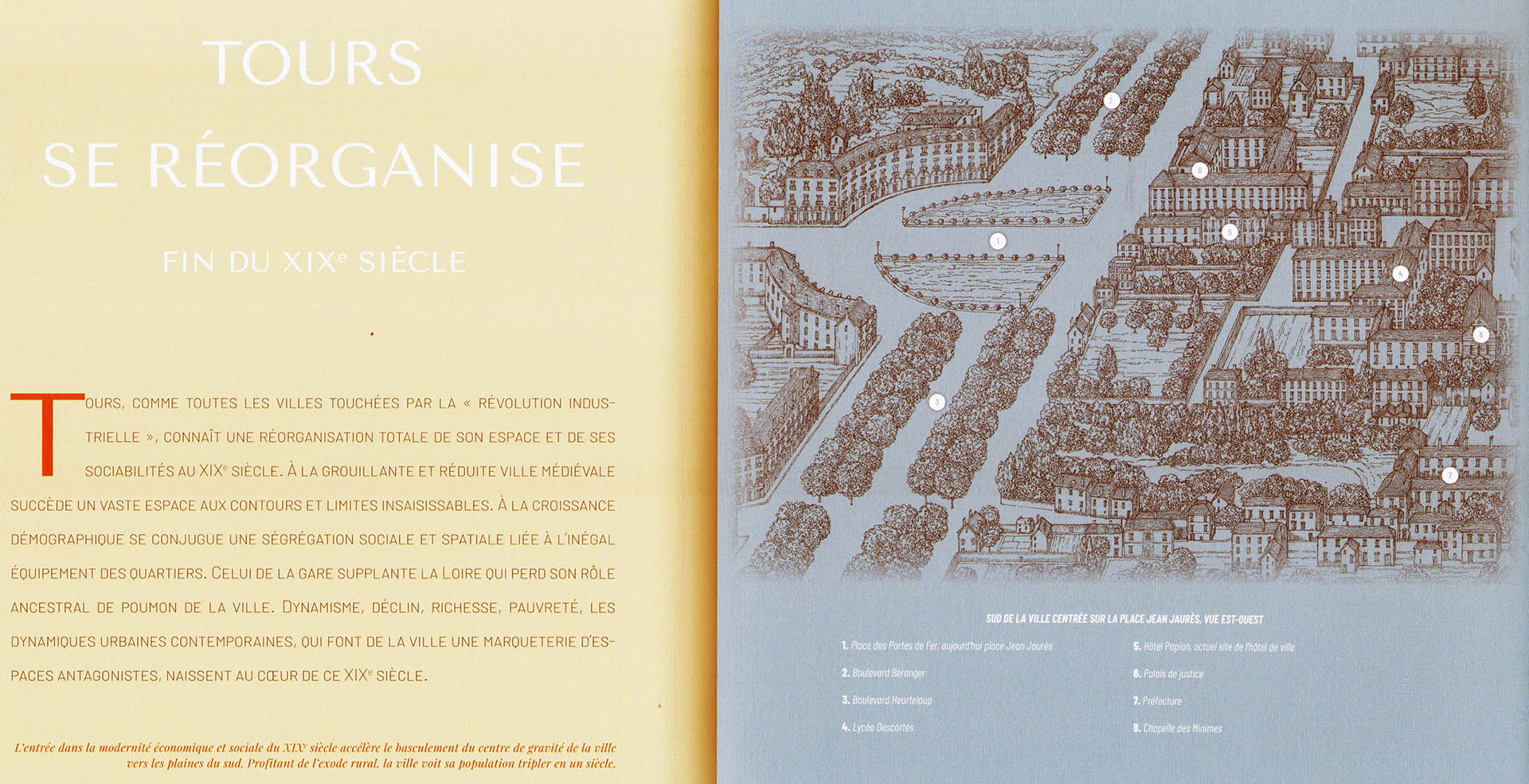 restitution
 1
1 2
2 3
3 4
4 engraving
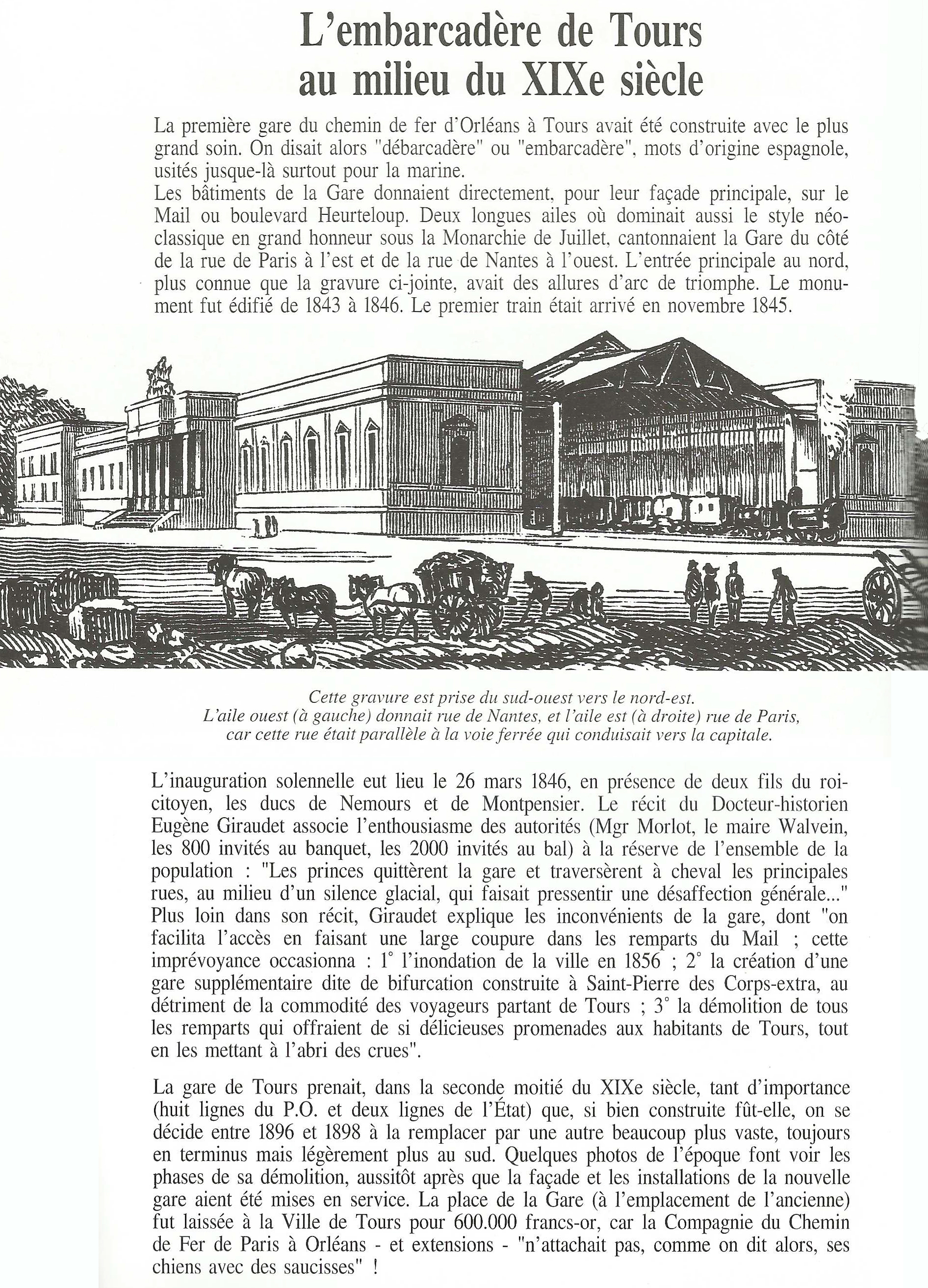 view
view postcard
 engraving
 overflight
Evolution of the city of Tours 6/7: a strong geographical and demographic expansion. Tours, after having modestly expanded eastward in 1824, biting into the commune of Saint Pierre des Corps, multiplied its area in 1845 (with correction in 1855) by encompassing the commune of Saint-Etienne Extra to the south, beyond even the Cher. The Place du Palais, whose creation we have just seen above in 1843, is no longer at the extreme south of the city and could later, in 1904, become its new center. This southern extension was extended in 1961 by taking the hillside from Grandmont to Saint Avertin. A large area was then subject to flooding by the Cher, but in the second half of the 20th century, new districts were filled in and inhabited:
Banks of the Cher (views :
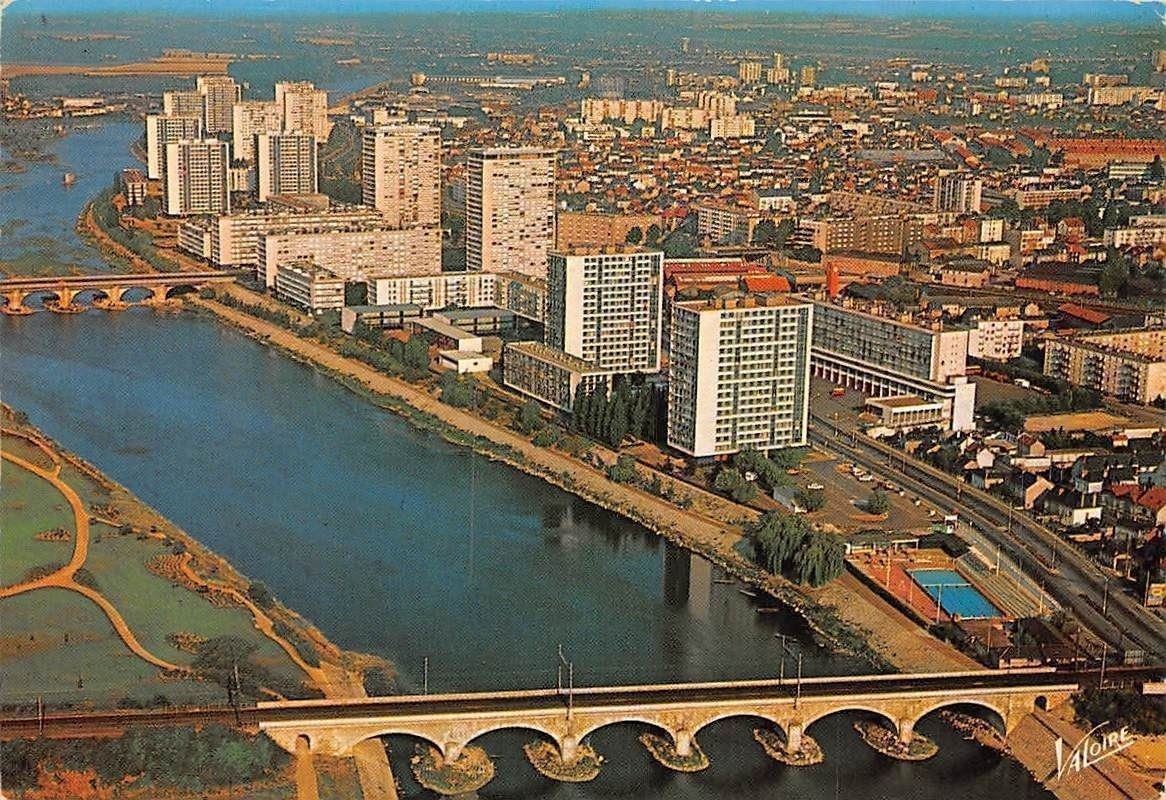 1 1
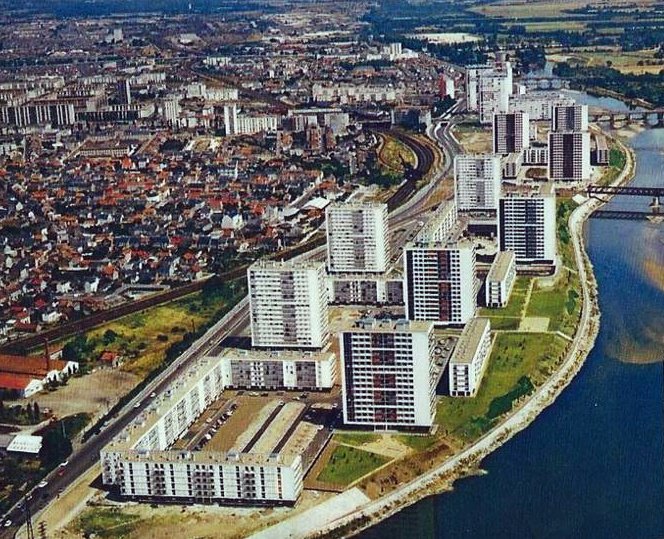 2),
Fountains ( 2),
Fountains (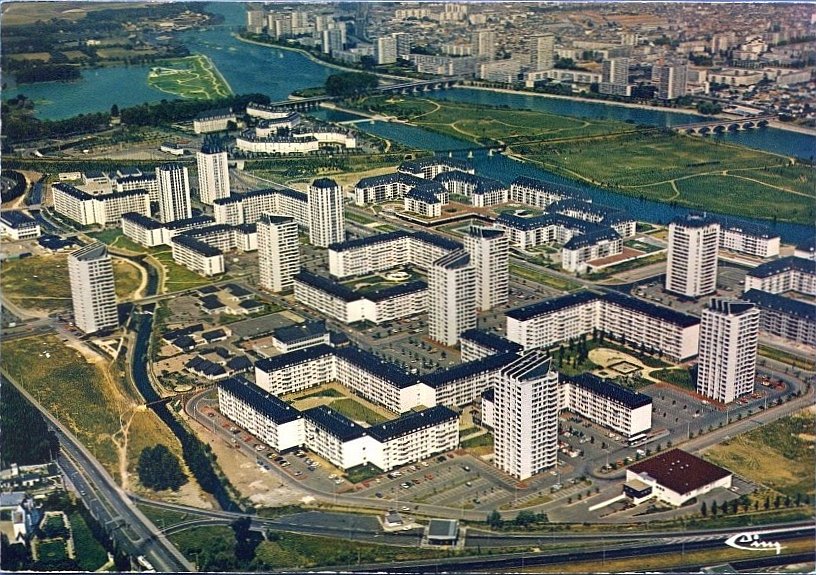 view),
Two Lions ( view),
Two Lions ( view).
In 1964, the city will expand widely on the north of the Loire with the attachment of Saint Symphorien and Saint Radegonde. view).
In 1964, the city will expand widely on the north of the Loire with the attachment of Saint Symphorien and Saint Radegonde.
|


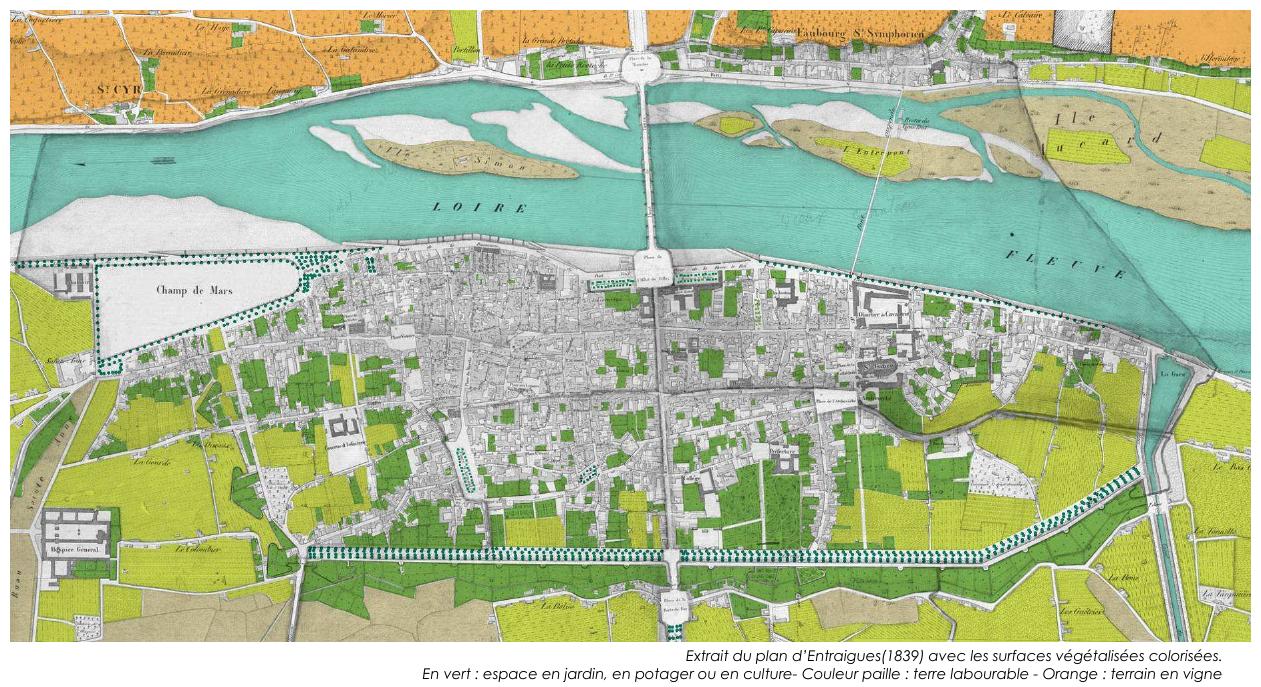 plan
plan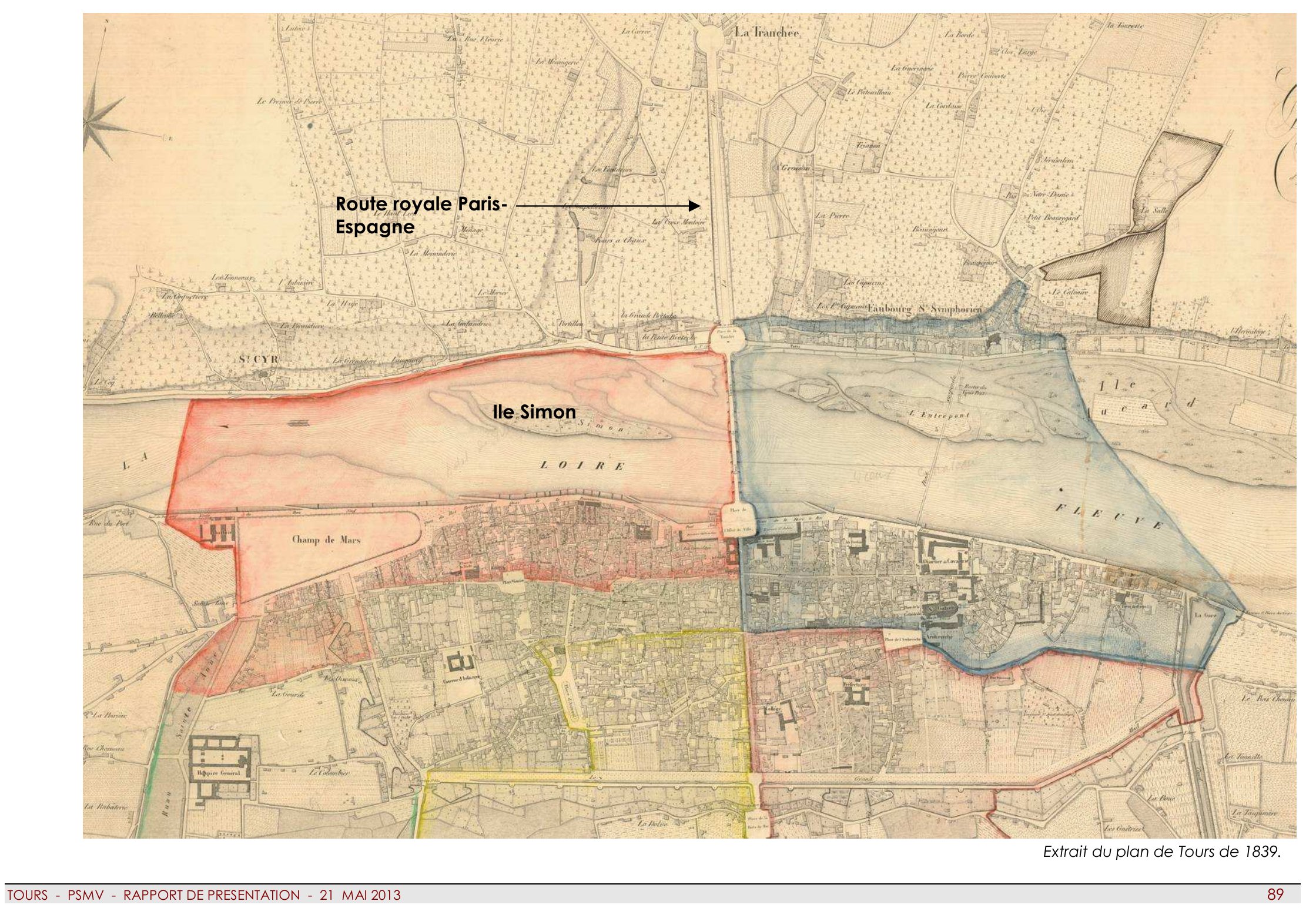 plan
plan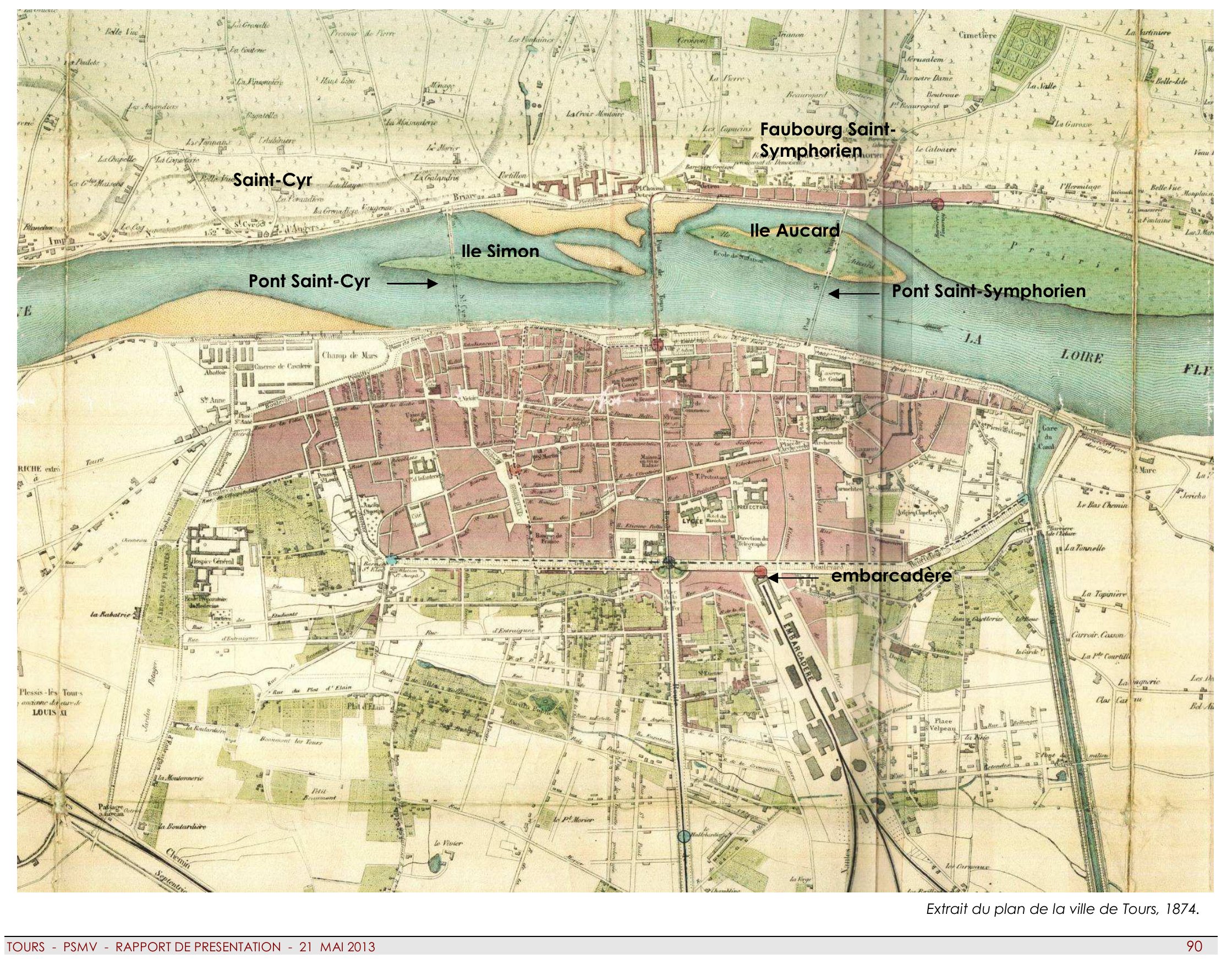 map
map agglomeration
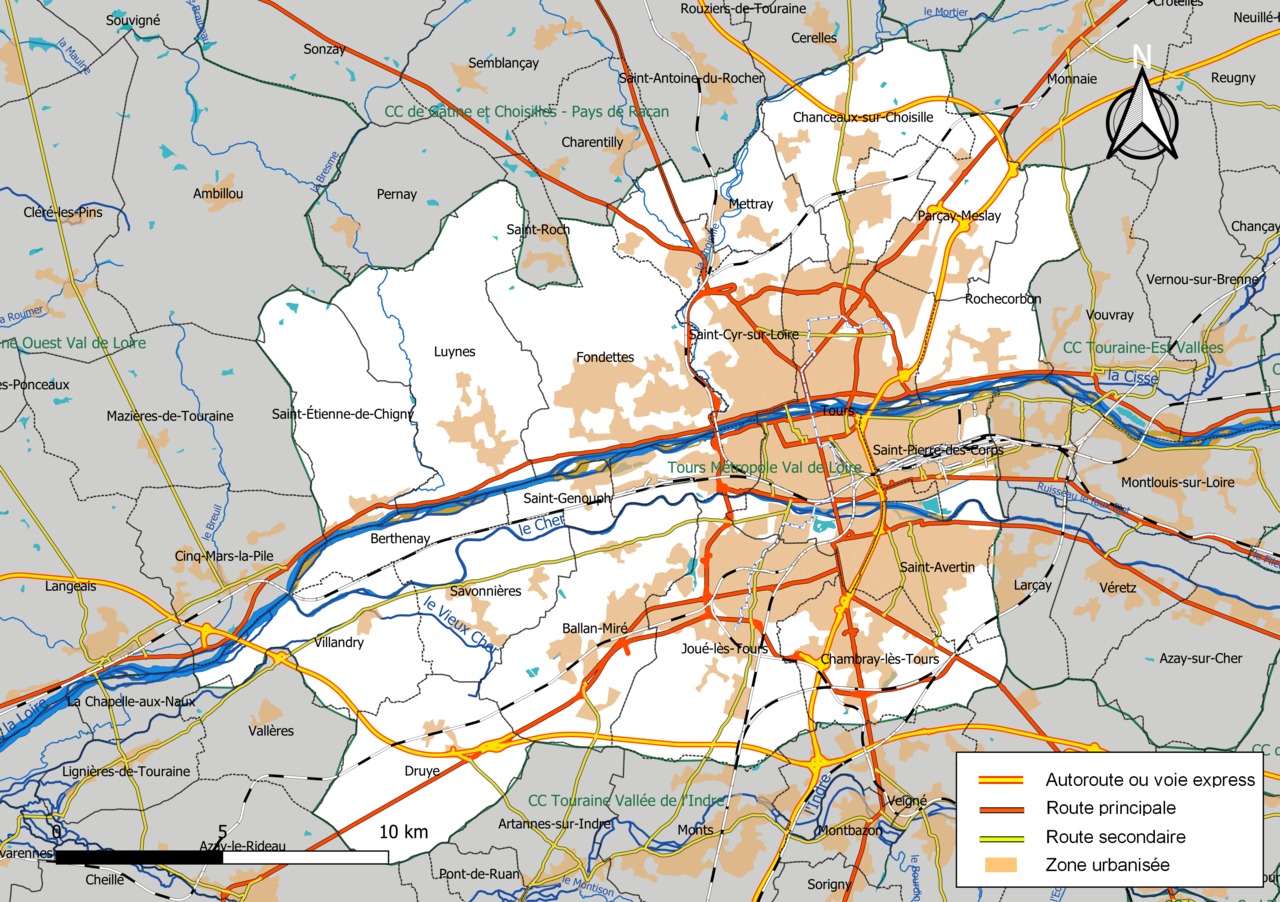 metropolis
 1
1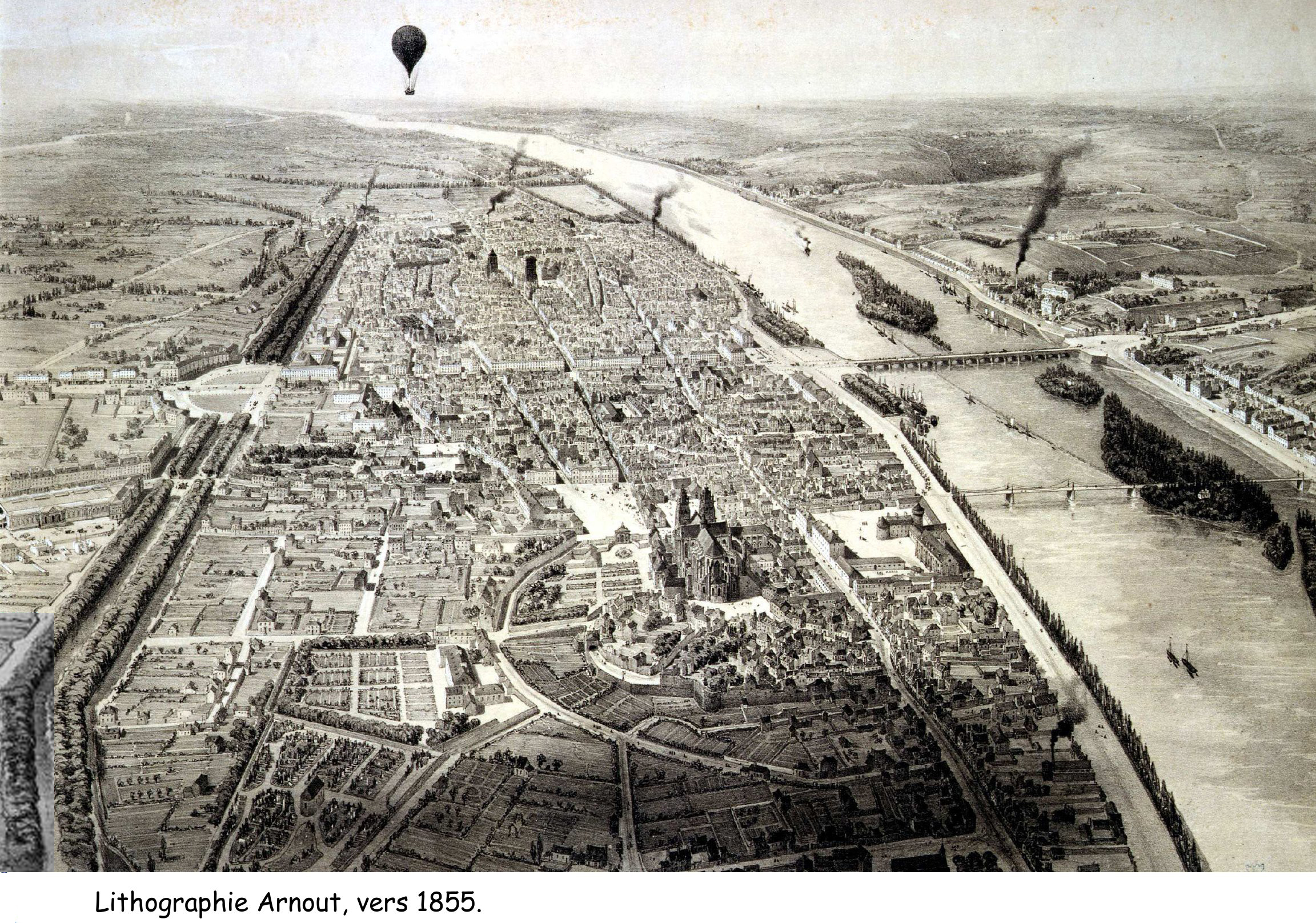 2
2 lithograph
 tableau
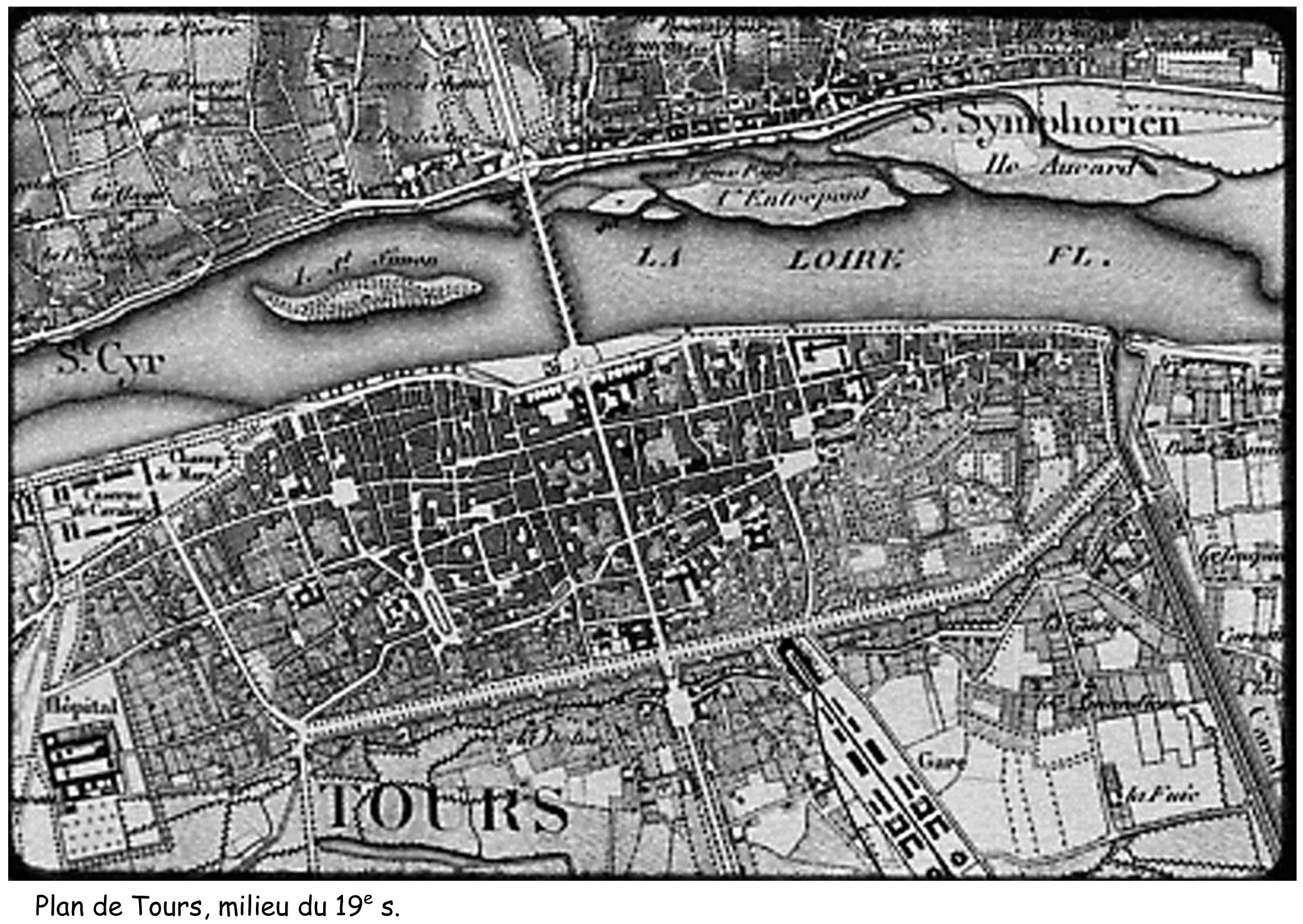 plan
plan 1
1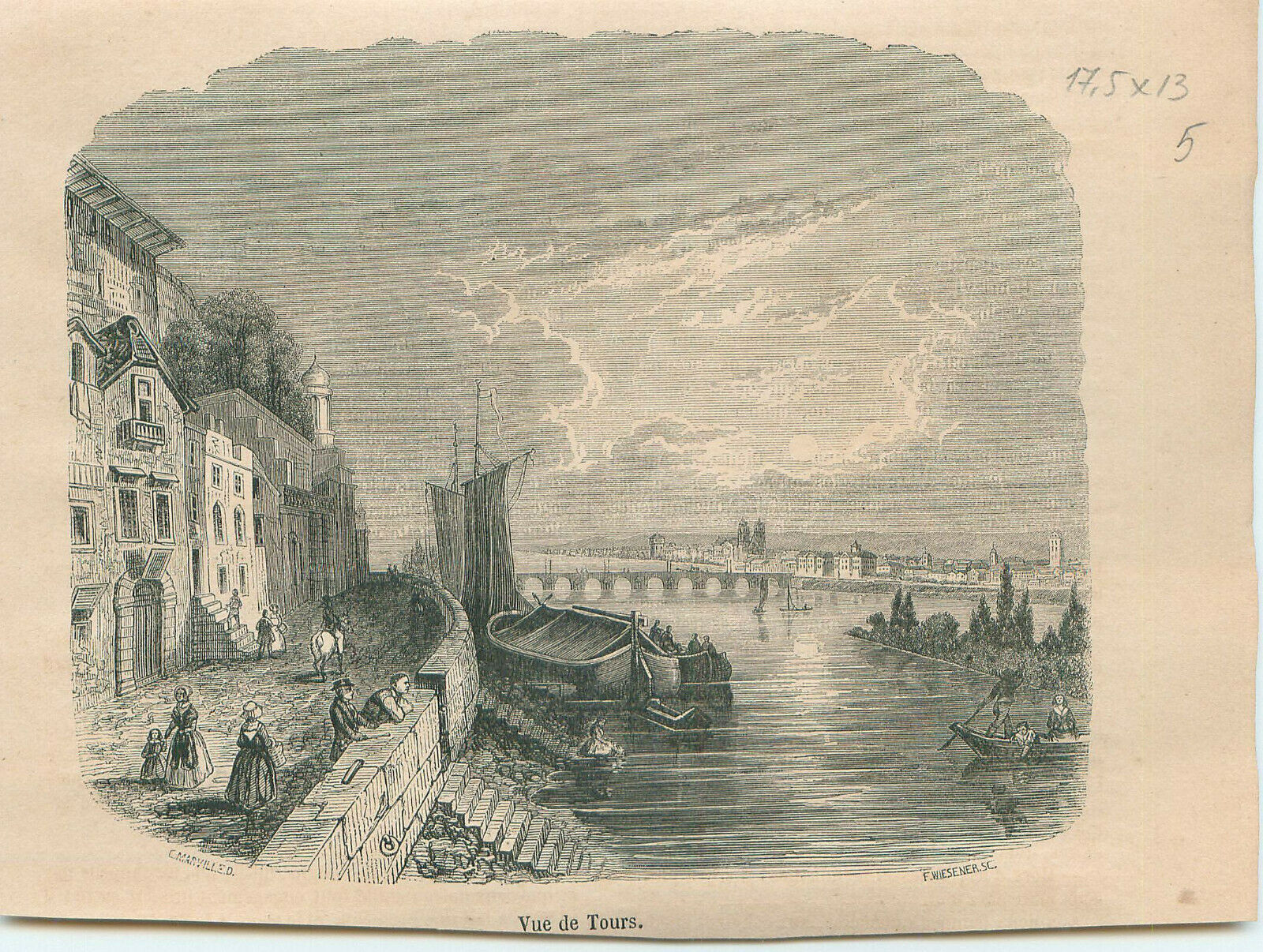 2
2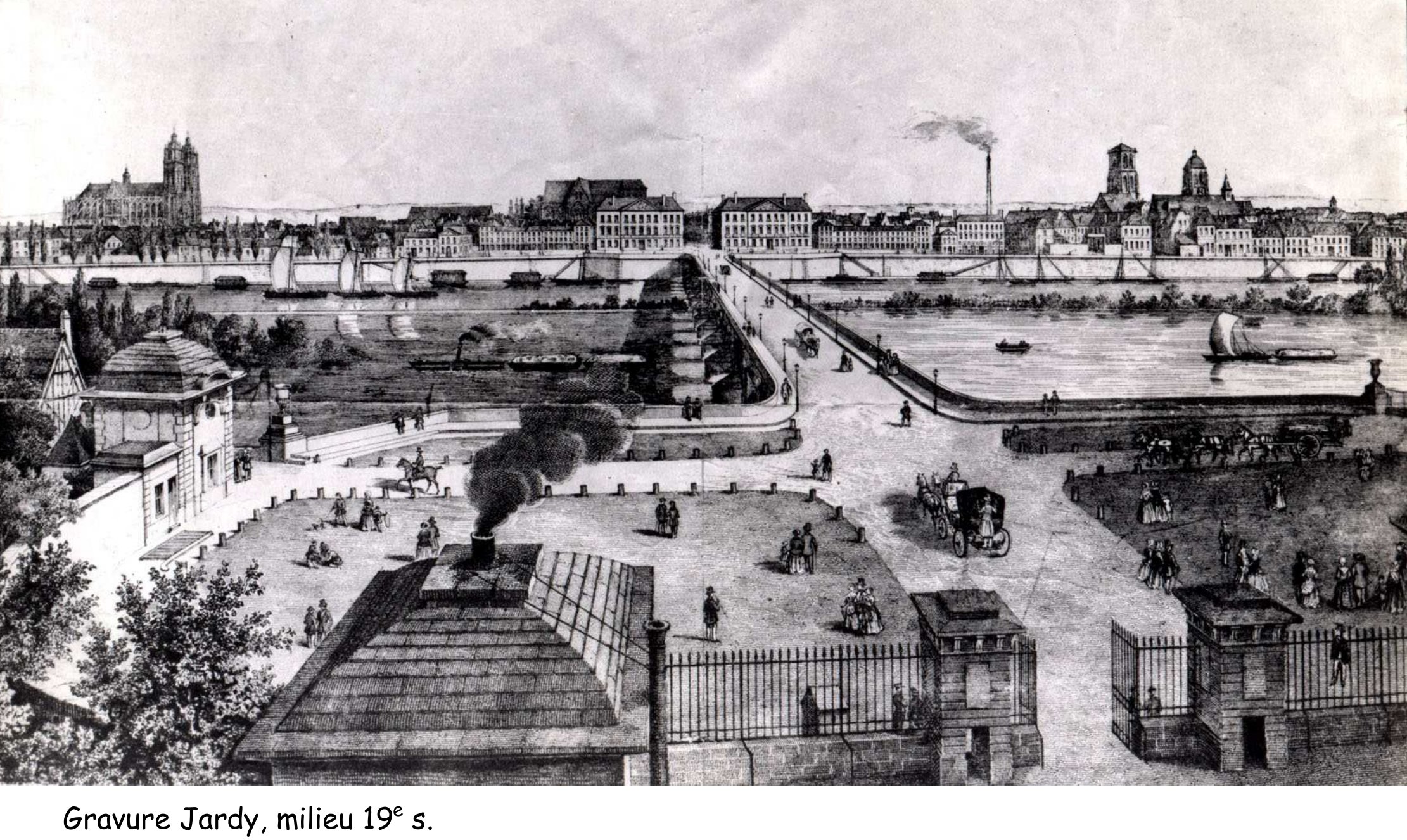 3
3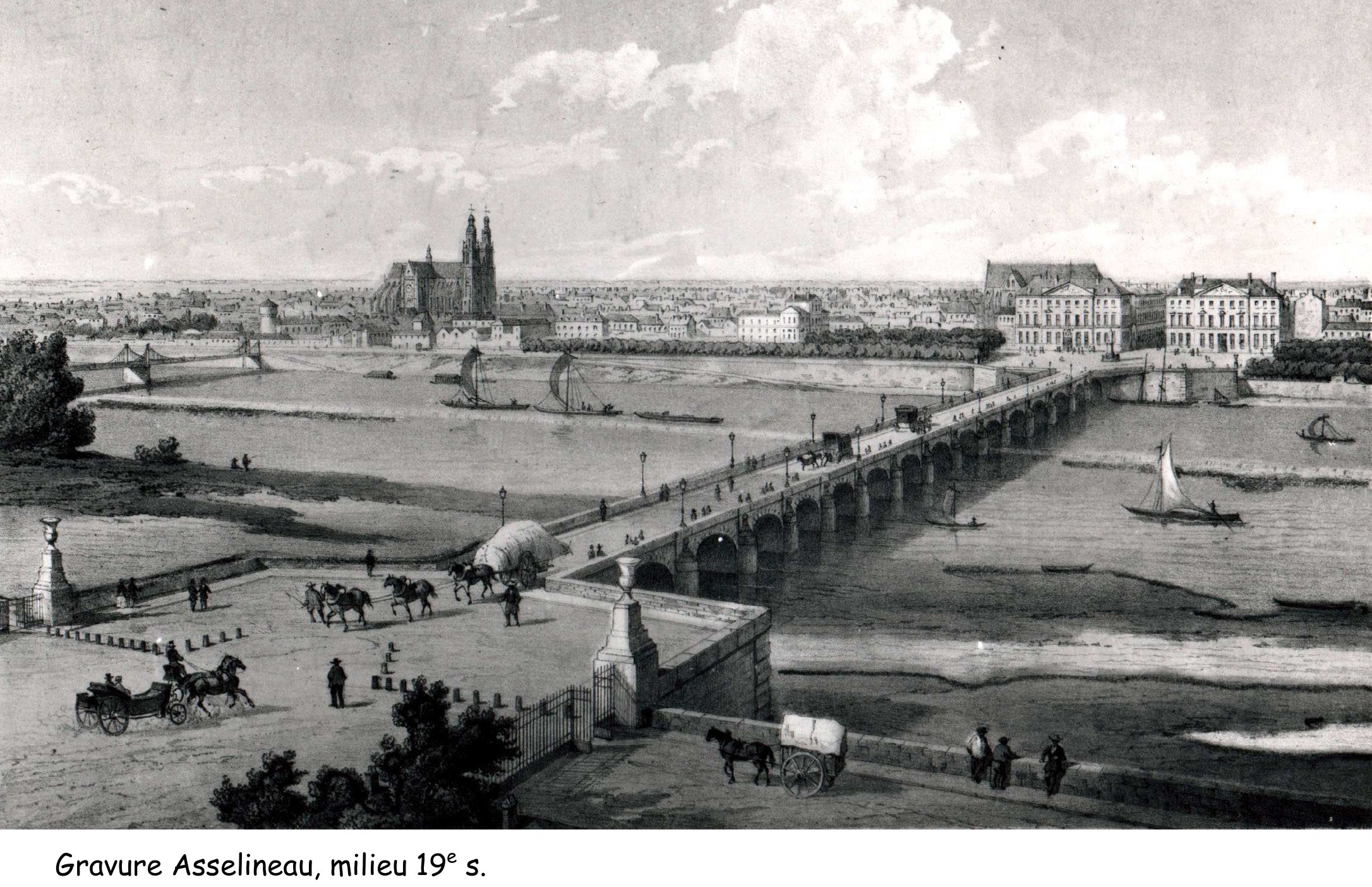 4
4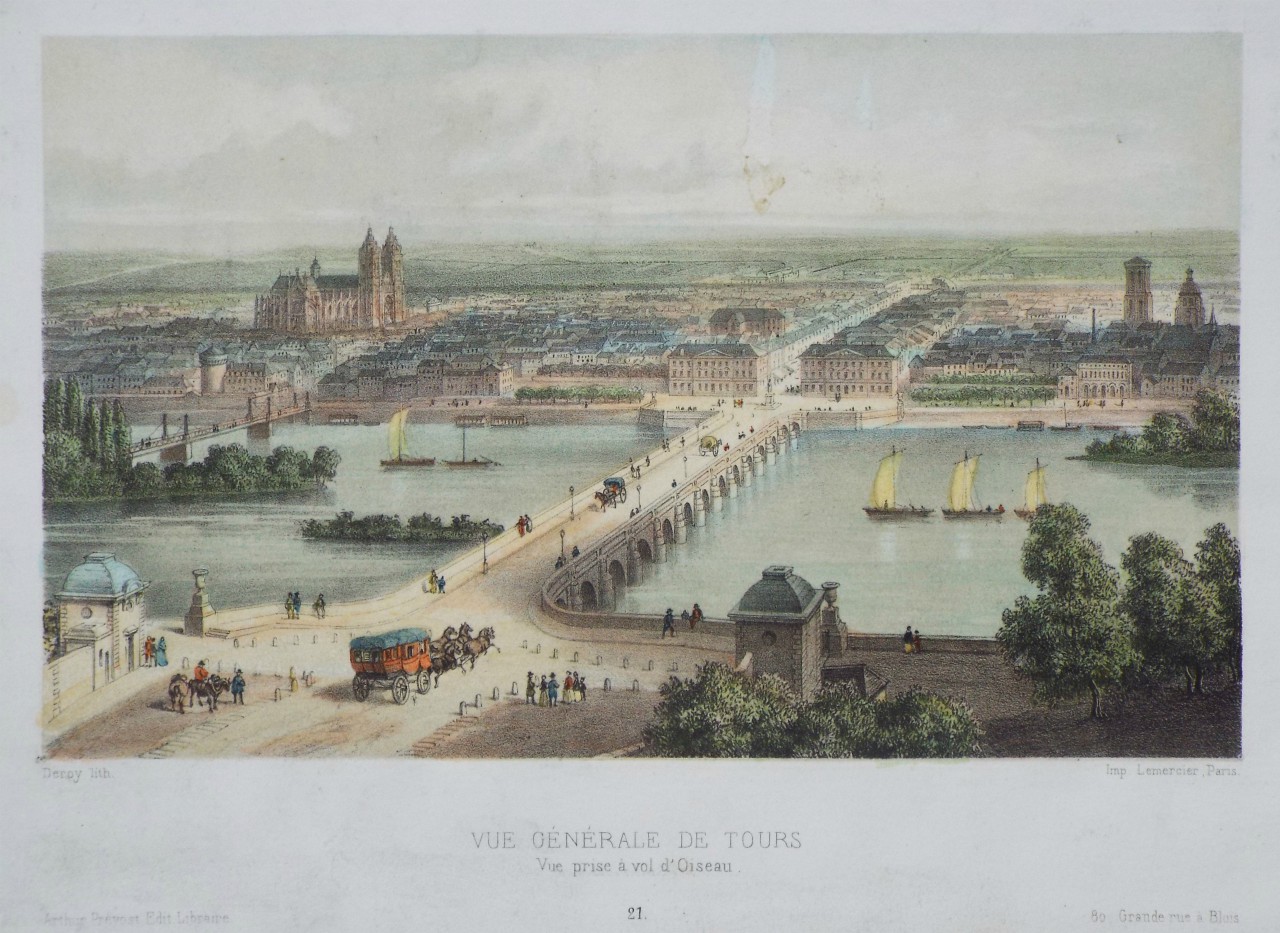 5
5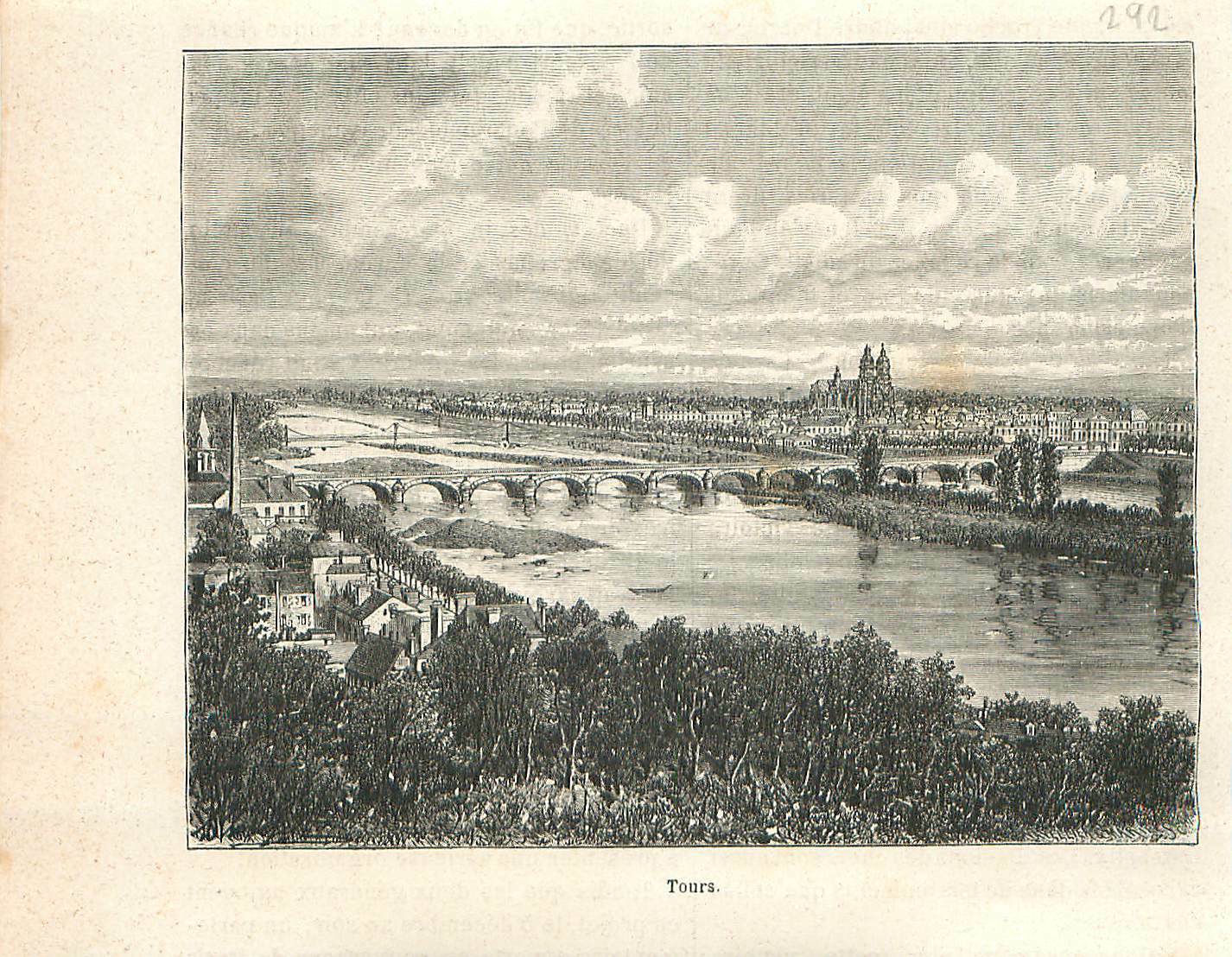 6
6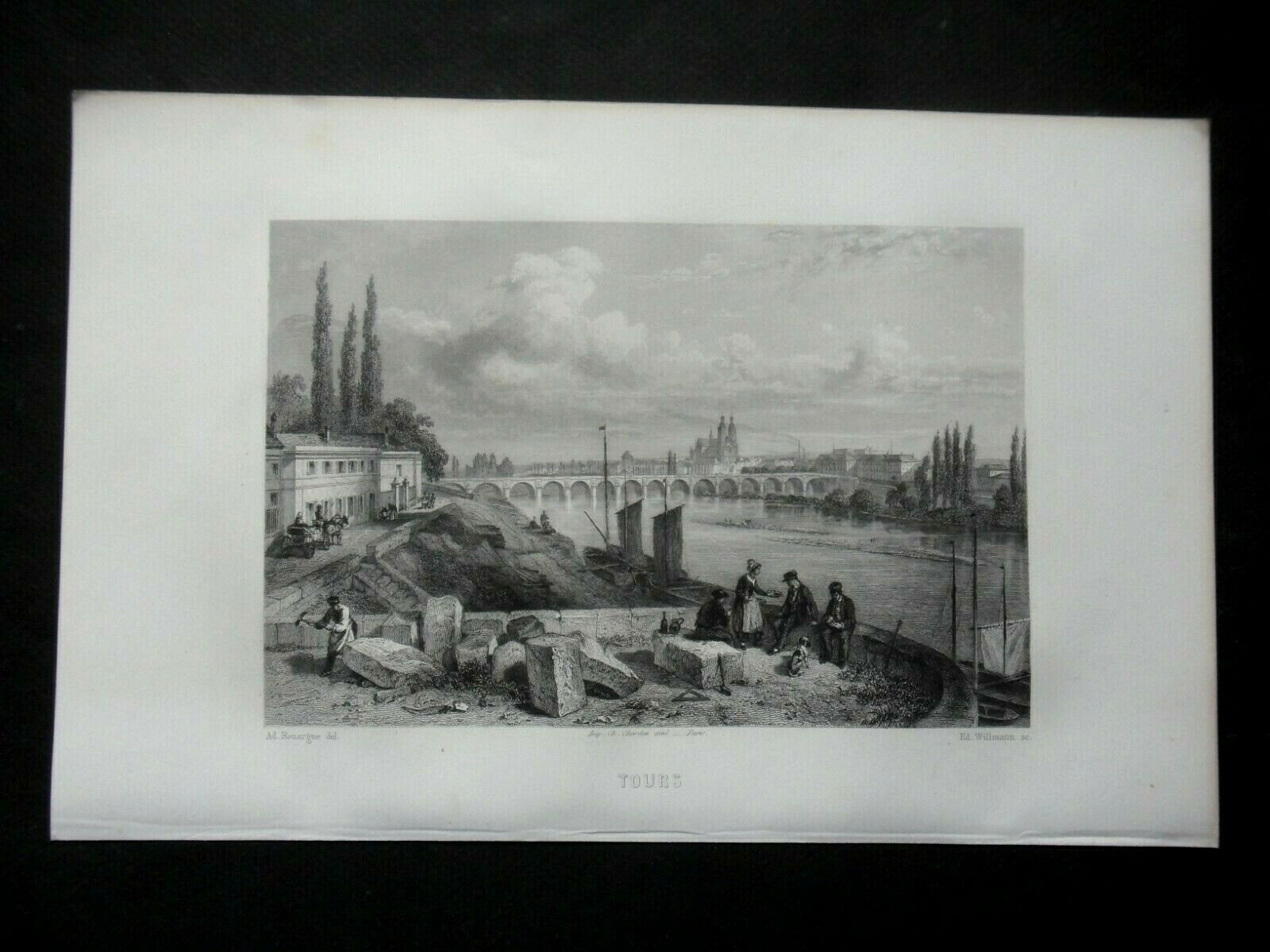 7
7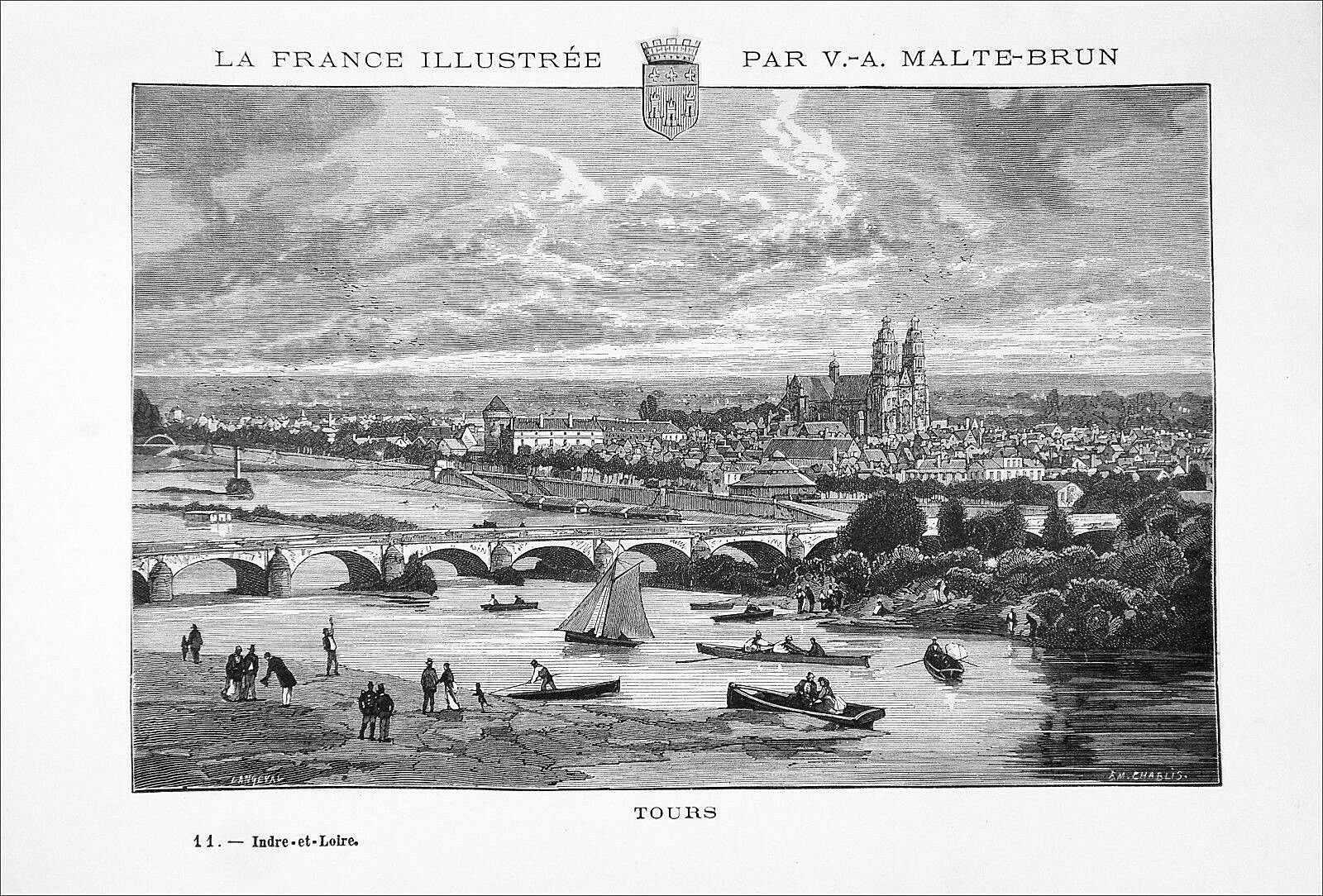 8
8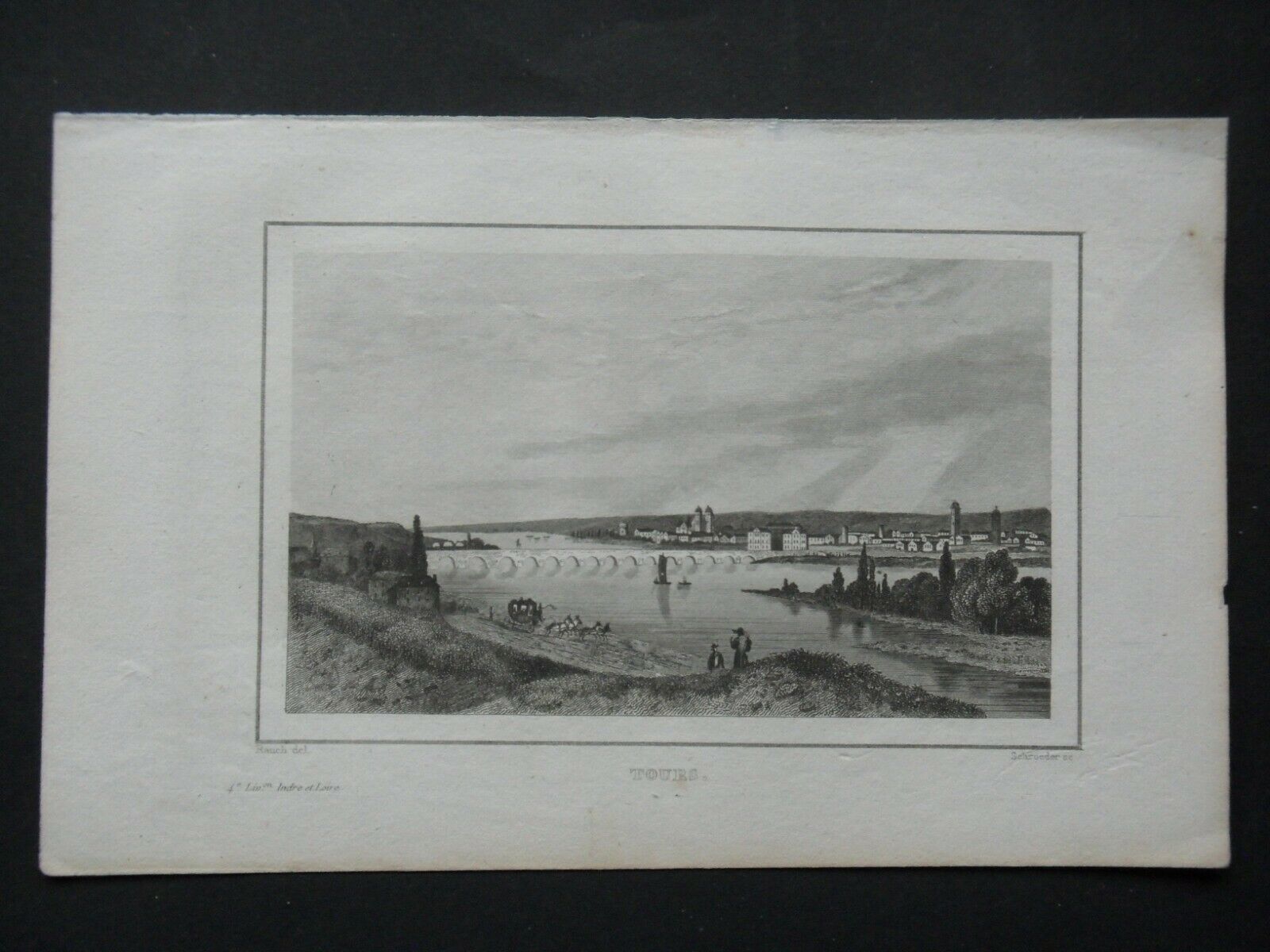 9
9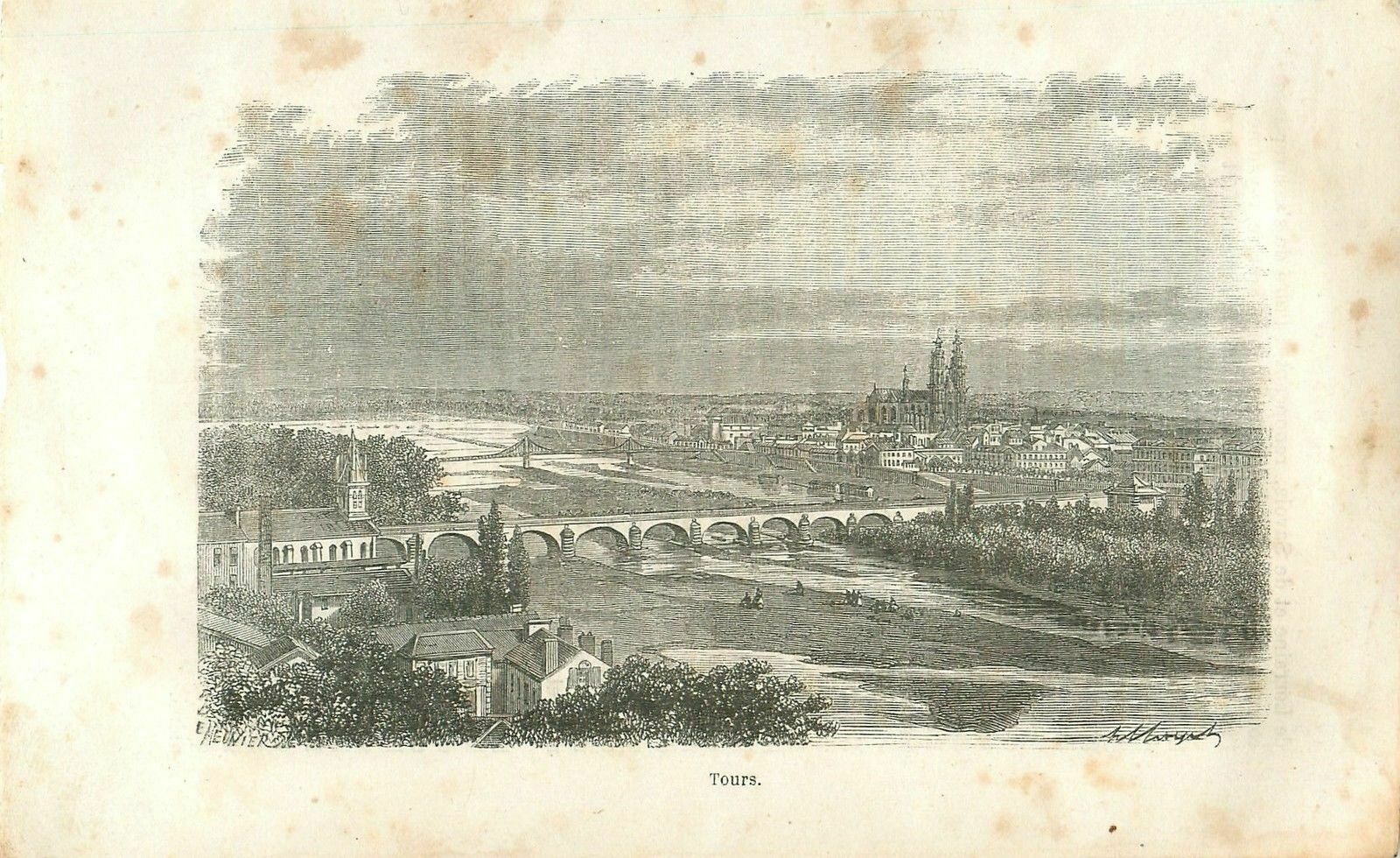 10
10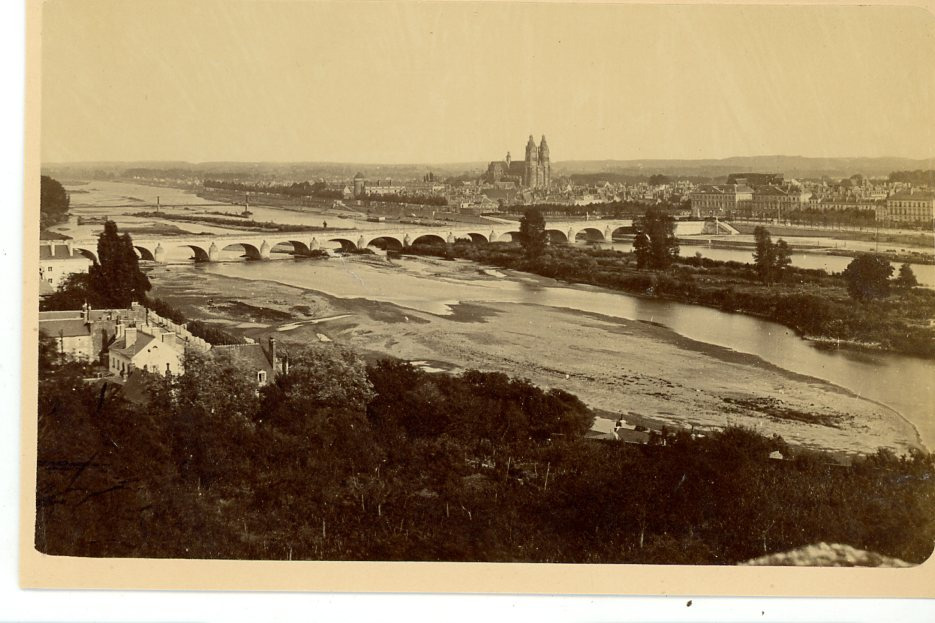 11
11 portrait
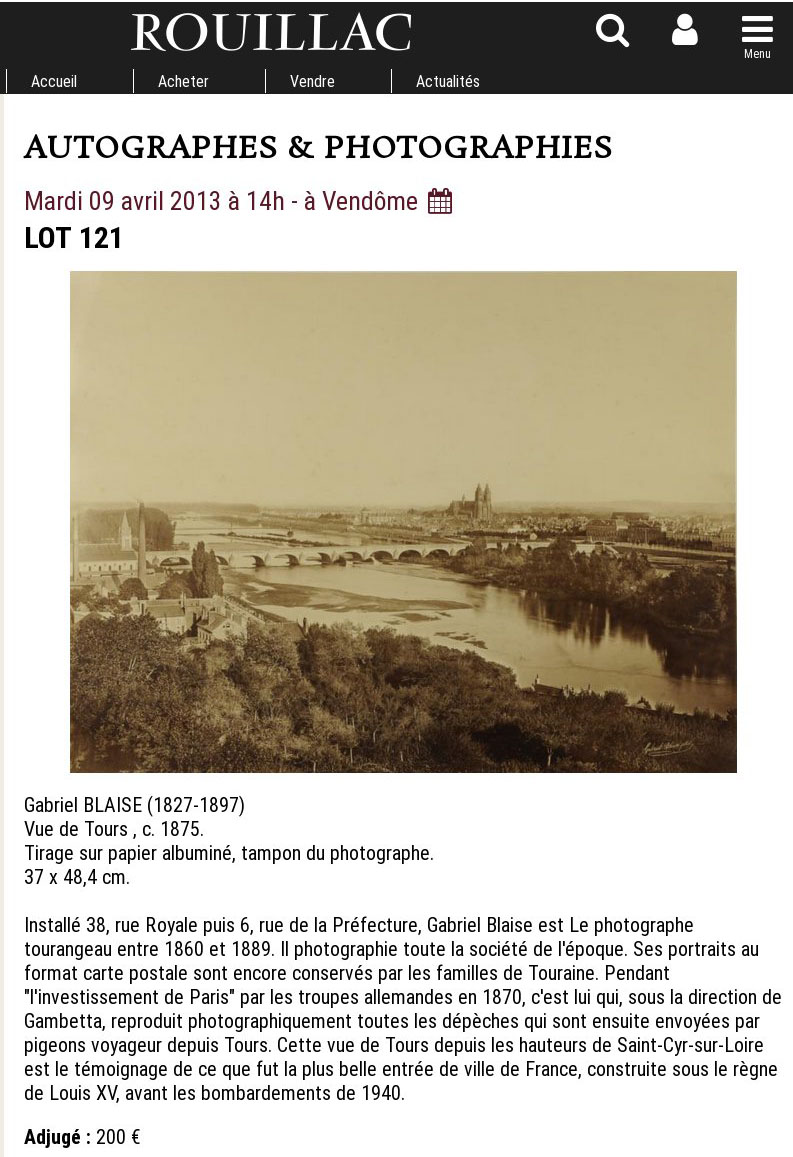 photo
photo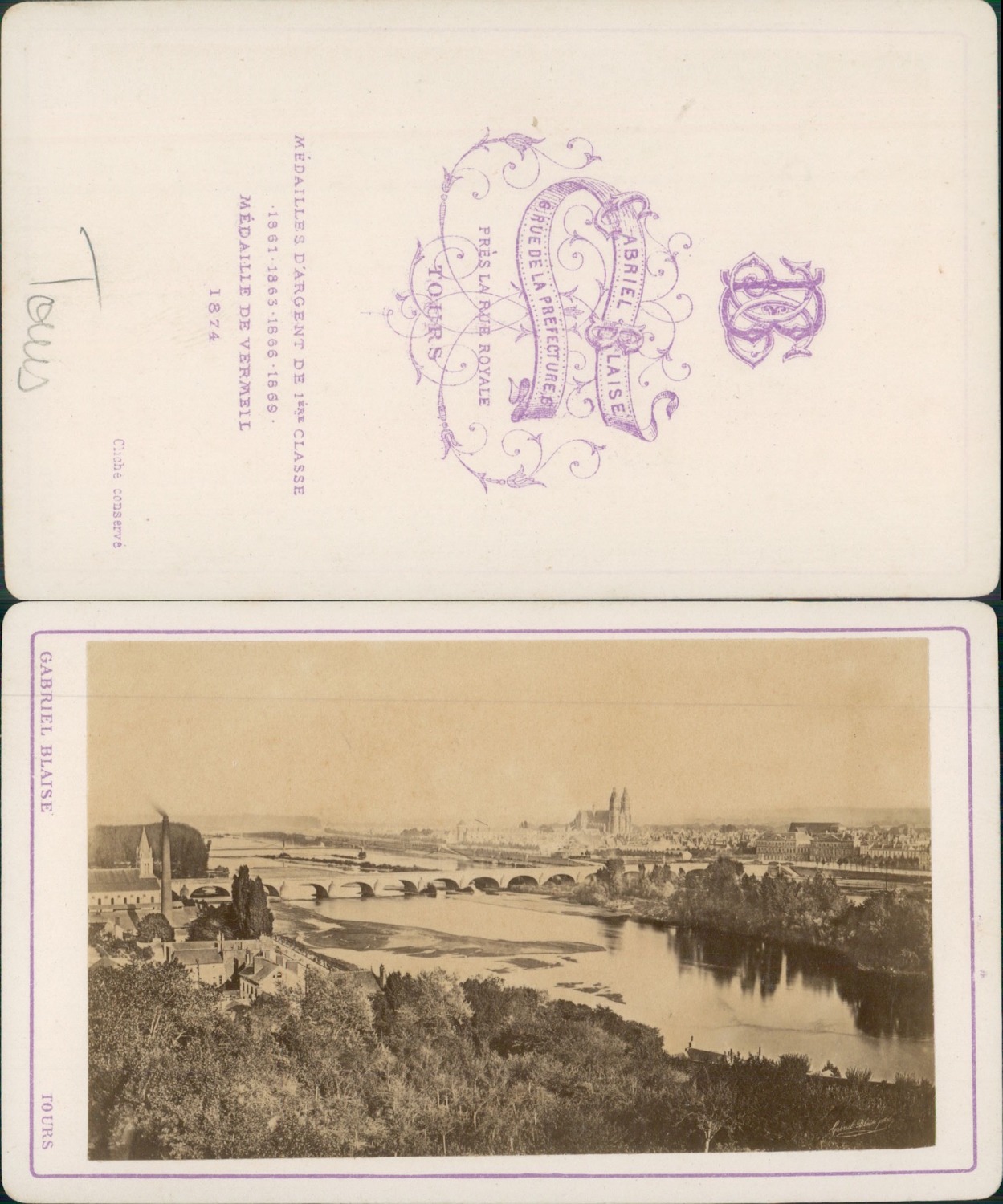


| establishment) Wikipedia / Wikimedia encyclopedia, recognizable by the yellow dot , are multiple.
On Martin of Tours, in addition to his Wikipedia page, there is the generic Martin page with its various references, the St. Martin page, including other saints named Martin, feasts, and municipalities
and the page on the Basilica of Saint Martin, including a list of its abbots and its page Wikimedia with photos and documents.
Two pages on St. Martin's Day celebrations :
1 in Flanders
2 in Germany.
| ||||||||
| page Wikipedia and in addition to its history and its list of historic monuments, we note
after Caesarodunum,
the 1 Gallo-Roman enclosures,
2 medieval
and 3 bastioned),
the d'Eudes, Wilson (stone) bridges
and of wire,
the neighborhoods of old Tours,
the neighborhoods of Tours
(map),
the Prébendes d'Oé and botanical gardens,
the list of maires,
the list of bishops and archbishops,
the archdiocese of Tours.
Geographic Expansion:
Tours Métropole Val de Loire,
the Touraine,
the list of counts of Tours
governing from the 6th to the 14th century the county of Touraine,
the departmental council of Indre et Loire,
the list of indre et Loire municipalities,
the list of Members of Parliament from Indre et Loire,
And finally : the Touraine,
and the Loire.
| ||||||||
here before, the coat of arms of Touraine and then the coats of arms and logos of the city of Tours, under royalty, under Napoleon I, from 1987 to 2015 and since 2015 :
1 (Martin)
2 (Louis XI)
3 (Tours castle)
+ educational file "Tours in Modern Times" (circa 2000).
|





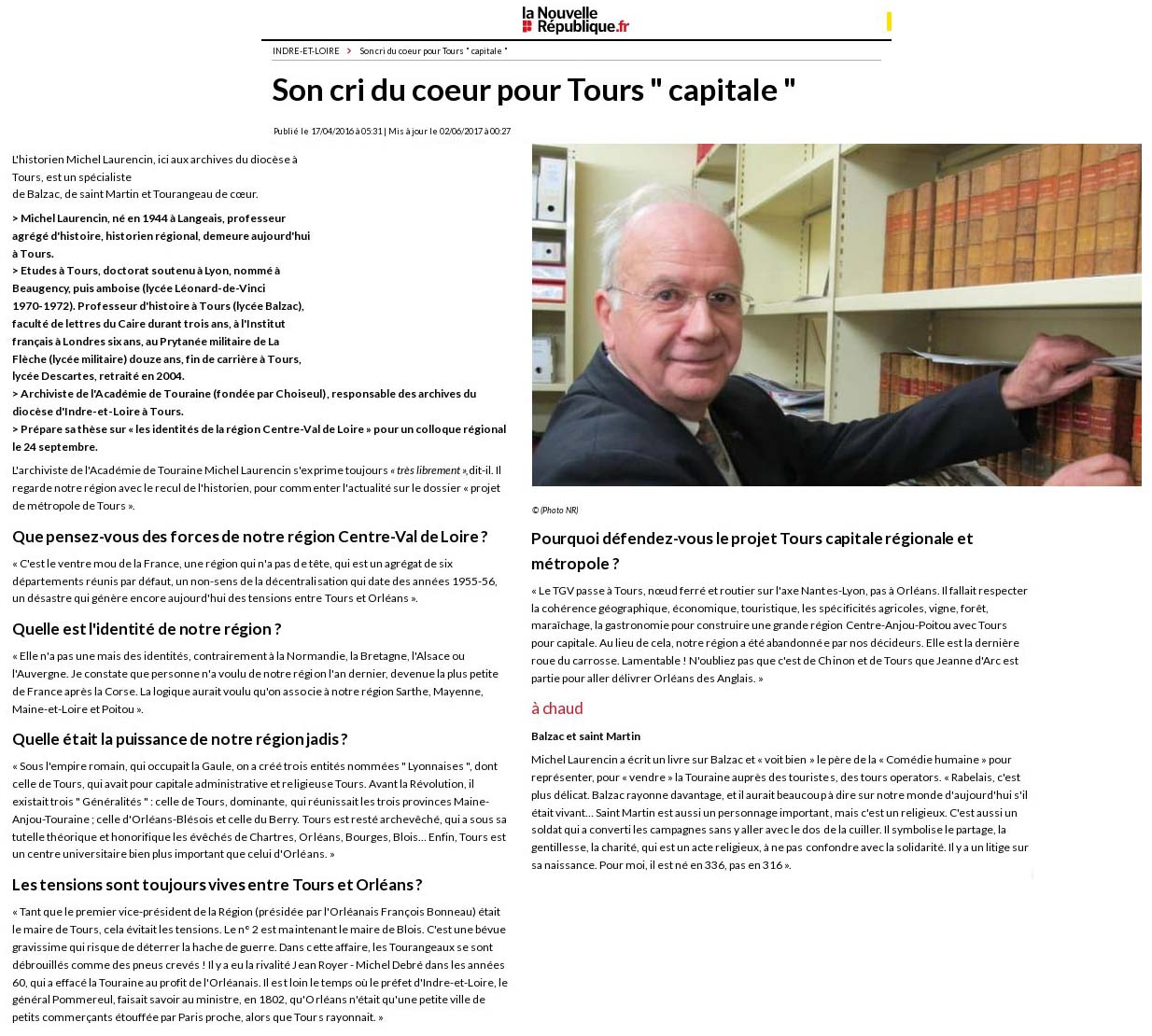 article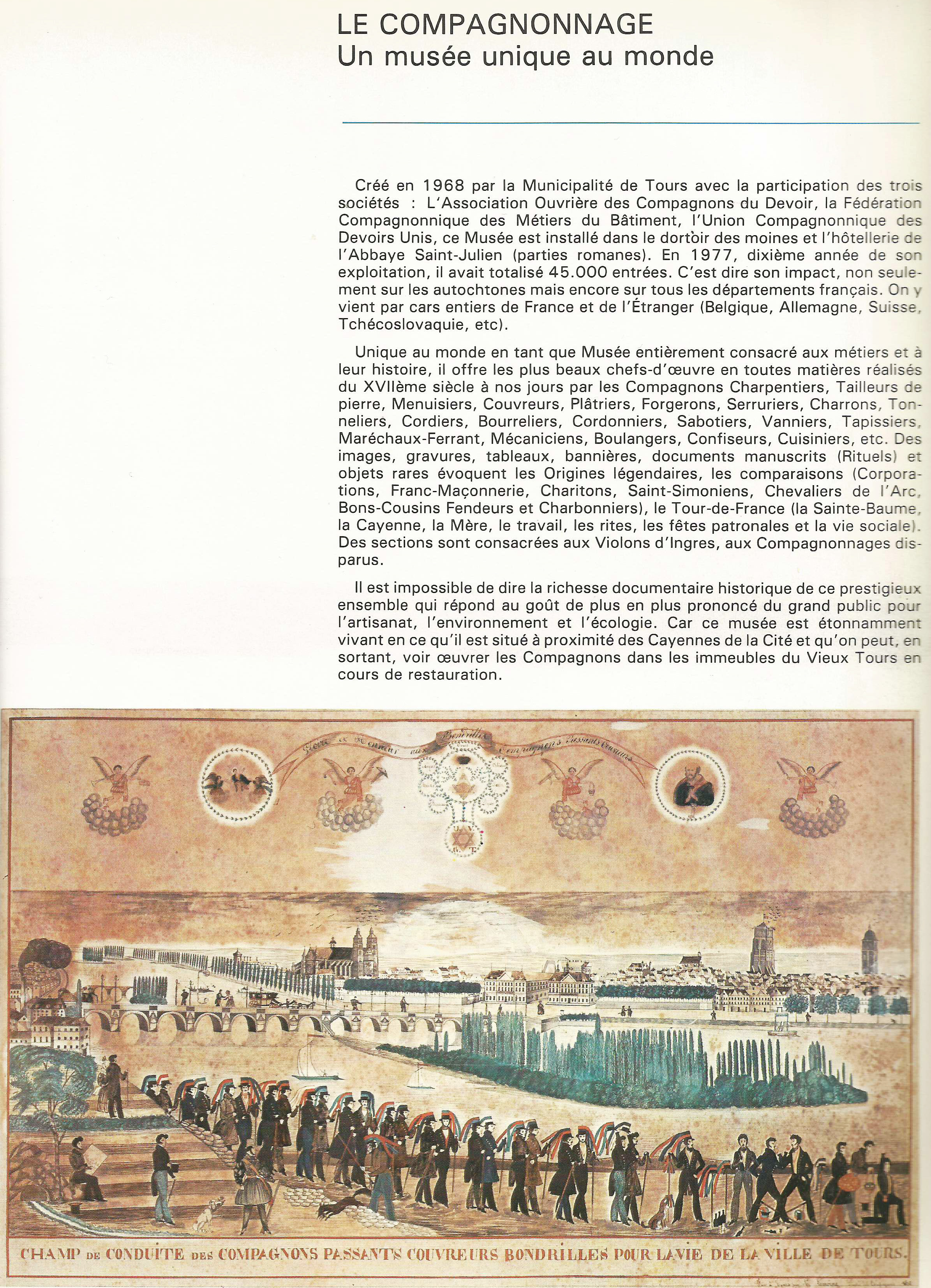
Companion and its endearing museum. At left, illustration from a 1978 municipal booklet showing a parade through Tours of journeyman roofers in 1838. Housed in the dormitory and hostelry of the monks of Saint Julien Abbey, the Musée du compagnonnage features collections of masterpieces of the compagnons du devoir as well as companionic attributes and archives. The compagnonnage refers to a traditional system of passing on knowledge and training in a trade, rooted in communities of journeymen, primarily those who perform a tour de France. In the labor world, this system was highly developed, until the birth of the trade unions in the 19th century. At right, statue of the Temple of the Demophiles in Tours + the site of the museum.
+  article Fasc. NR 2011. article Fasc. NR 2011.
|
From October 9 to December 8, 1870, Tours was the provisional capital of France. Paris is besieged by the Prussians, the
Paris Commune will soon install an insurrectionary government, from March 18 to May 28, 1871. A little before, in early October 1870, the government retreated to Tours and appointed a strong personality to lead the nation there, Léon Gambetta, then Minister of the Interior. He left Paris in a balloon to organize the national defense. Having become Minister of War, Gambetta, a proponent of a "guerre à outrance" tried to organize relief armies to liberate Paris. However, the counterattack struggled to be effective against the Prussians. After leaving Tours on December 8, Gambetta having resigned, the government of National Defense will resolve, on January 20, 1871, to ask the armistice to the Prussians, signed on January 28, Alsace and Lorraine become German.


Gambetta leaves Paris to reach Tours by balloon. The blockade locked down the capital, and it became almost impossible to leave. On October 7, 1870, Léon Gambetta crossed enemy lines by flying over them, landed near Beauvais, and reached Tours on October 9 [right, drawing by Alfred Le Petit].
+ the same scene in a  plank by Milo Manara [Larousse 1980] plank by Milo Manara [Larousse 1980]
|
 1
1 2
2 3
3 recounts
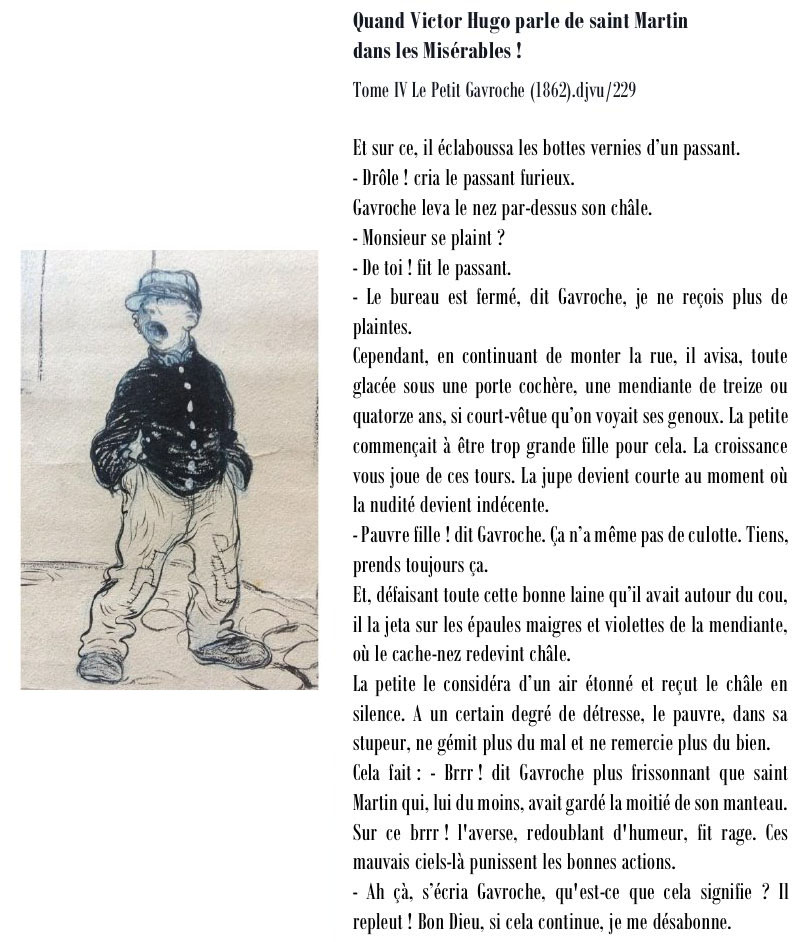 homage
1871: the Prussians move into Tours. For a month and a half, from January 19 to March 9, 1871, the city of Tours was occupied by Prussian troops. On February 4 the prince
Frédéric-Charles de Prusse settled there with his command. Michel Laurencin, at the 2016 Tours colloquium (video), explains that in such conditions, it is the image of the soldier Martin that the people of Tours invoke to bring back peace. He is the protector of the fatherland and beyond that the liberator of France. As early as August 1870, the Archbishop of Tours Joseph Hippolyte Guibert
[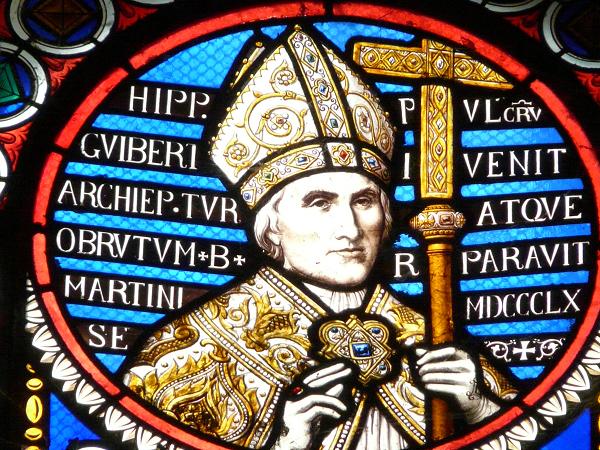 vitrail Lobin of the basilica]
had invited Tourangeaux to attend a mass every Wednesday to pray to Martin in the temporary chapel. Once the troops entered the city, Martin, soldier of Christ, was implored to remember his people and defend them. The place of prayer and supplication is the tomb found in 1860, resounding with hymns glorifying the fight for Christ and civilization, "Drive them all from our borders, keep France to us French." After the German withdrawal, in November 1872, the new archbishop Félix Pierre Fruchaud
[vitrail Lobin of the basilica]
believes that "Saint Martin was not only the father of the fatherland, he was often its savior." At the same time, the saint was also seen as the defender of Christianity in the face of paganism then compared to anti-clericalism and Franc-Masonry.
vitrail Lobin of the basilica]
had invited Tourangeaux to attend a mass every Wednesday to pray to Martin in the temporary chapel. Once the troops entered the city, Martin, soldier of Christ, was implored to remember his people and defend them. The place of prayer and supplication is the tomb found in 1860, resounding with hymns glorifying the fight for Christ and civilization, "Drive them all from our borders, keep France to us French." After the German withdrawal, in November 1872, the new archbishop Félix Pierre Fruchaud
[vitrail Lobin of the basilica]
believes that "Saint Martin was not only the father of the fatherland, he was often its savior." At the same time, the saint was also seen as the defender of Christianity in the face of paganism then compared to anti-clericalism and Franc-Masonry.


1870, the Descartes High School on the left, the Archbishop's Palace on the right, beautiful mansions and hotels in the city are occupied by government delegations, ministerial departments, and embassies [Le Magazine de la Touraine #38, 1991]. + two postcards of the high school : 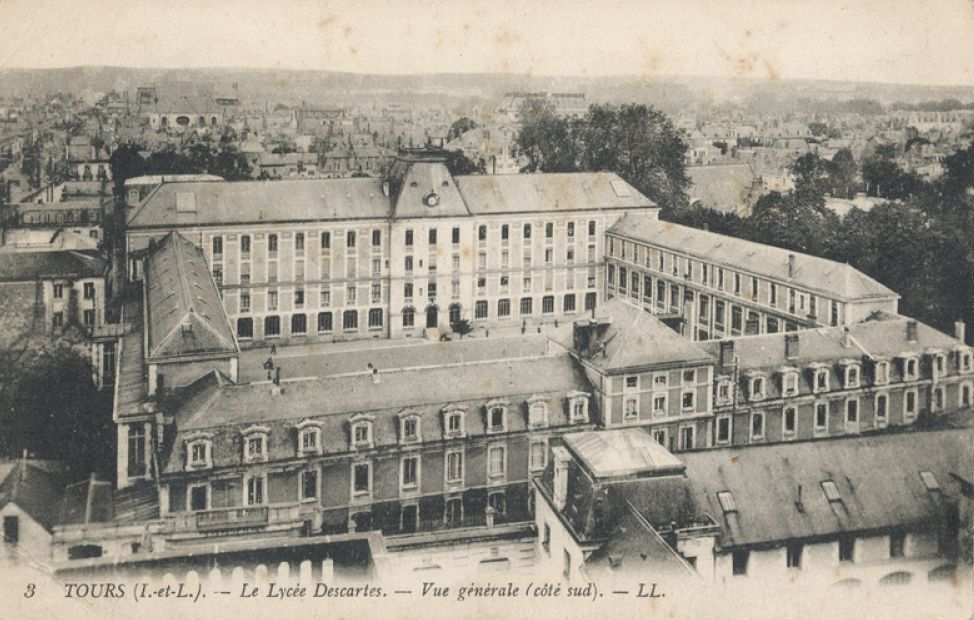 1 1
 2.
+ three drawings : 2.
+ three drawings :
 1 (Gambetta giving a speech) 1 (Gambetta giving a speech)
 2 (soldiers sitting on rue Royale, now rue Nationale) 2 (soldiers sitting on rue Royale, now rue Nationale)
 3 (Francs Tireurs soldiers marching past the courthouse) 3 (Francs Tireurs soldiers marching past the courthouse)


Left, October or November 1870, Italian soldiers from Garibaldi, Place Gaston Pailhou, in front of the since-destroyed Church of St. Clement. The Clock Tower and Charlemagne Tower are in the background [Ludovico Marchetti, University of Tours, "History of Tours", Privat 1985]. In the center, Prussian cavalrymen in the vanguard and hostile crowd on December 21, 1870 in front of the city hall (from 1786 to 1904) ["History of Touraine" Pierre Leveel, CLD 1988]. At right, early 1871, Grataloup Atlas map showing that Tours is on the edge of the occupied zone during this French-German war of 1870. + two pages from "History of Touraine", Pierre Audin 2016 :  1 1  2. 2.

January 19, 1871, Prussian troops cross the stone bridge and enter Tours (link) [The Illustrated London News]. On the right, a German soldier photographed by Blaise in Tours in 1871 [Archives municipales de Tours]. +  engraving of Prussian soldiers marching in front of the cathedral (link)
+ article by Francine Fellrath-Bacart 2013 "Tours and the Loire : a dazzling spectacle for Prussian officers"
+ engraving of Prussian soldiers marching in front of the cathedral (link)
+ article by Francine Fellrath-Bacart 2013 "Tours and the Loire : a dazzling spectacle for Prussian officers"
+  page of Tours secret," Hervé Cannet 2015, also showing that Prussians enjoyed this cultural passage in Touraine.
+ P.-S. : page of Tours secret," Hervé Cannet 2015, also showing that Prussians enjoyed this cultural passage in Touraine.
+ P.-S. :  double-page of "Tours Magazine" n°205 of March-April 2021. double-page of "Tours Magazine" n°205 of March-April 2021.


It was under the motto "Saint Martin Patron of France Pray For Us", inscribed on the reverse of their white banner that the royalist regiment of Pontifical Zouaves fought the Prussians in 1870 at the Battle of Loigny, north of Orleans, which marked France's final defeat on December 2, 1870 [left, painting by Charles Castellani (1838-1913), "Pontifical Zouaves at the Battle of Loigny," Army Museum in Paris, Wikipedia]. Links: 1 2 (the obverse of the banner was "Sacred Heart of Jesus, save France!", this joins the movement to create the basilica of the Sacred Heart in Paris). On the right, in the current basilica, the motto of the regiment was, for a time, taken up around the tomb, as shown in this postcard from the early 20th century.,
+ 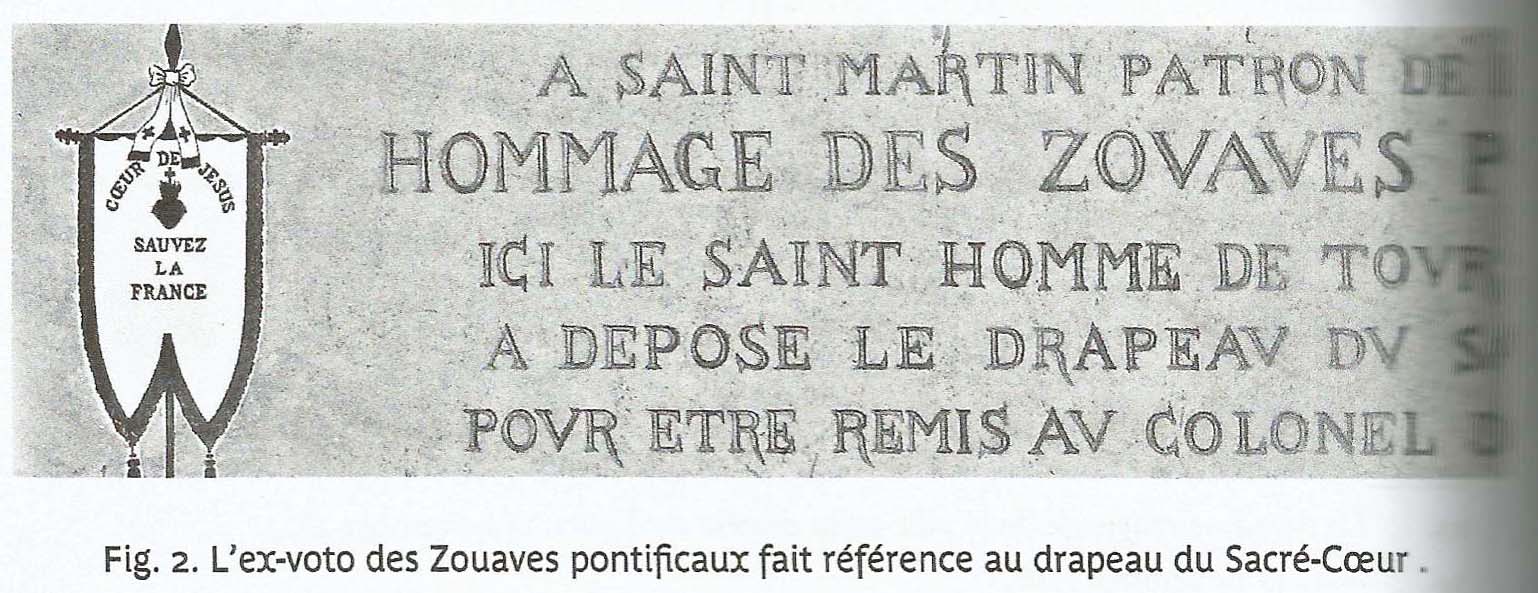 ex-voto of the Papal Zouaves in the actual basilica [Collective 2019] ex-voto of the Papal Zouaves in the actual basilica [Collective 2019]
|
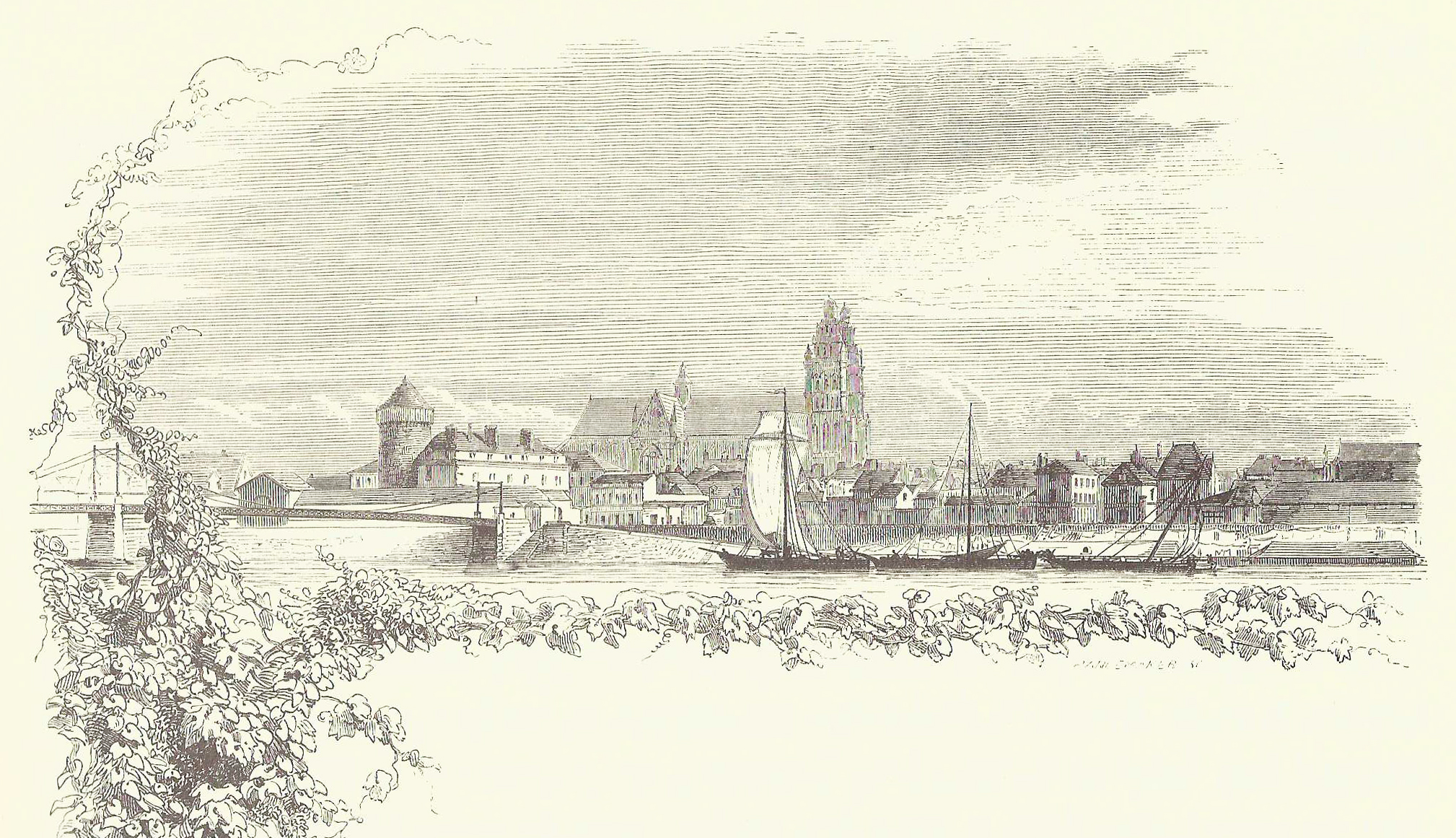 engraving
 1
1 2
2 3
3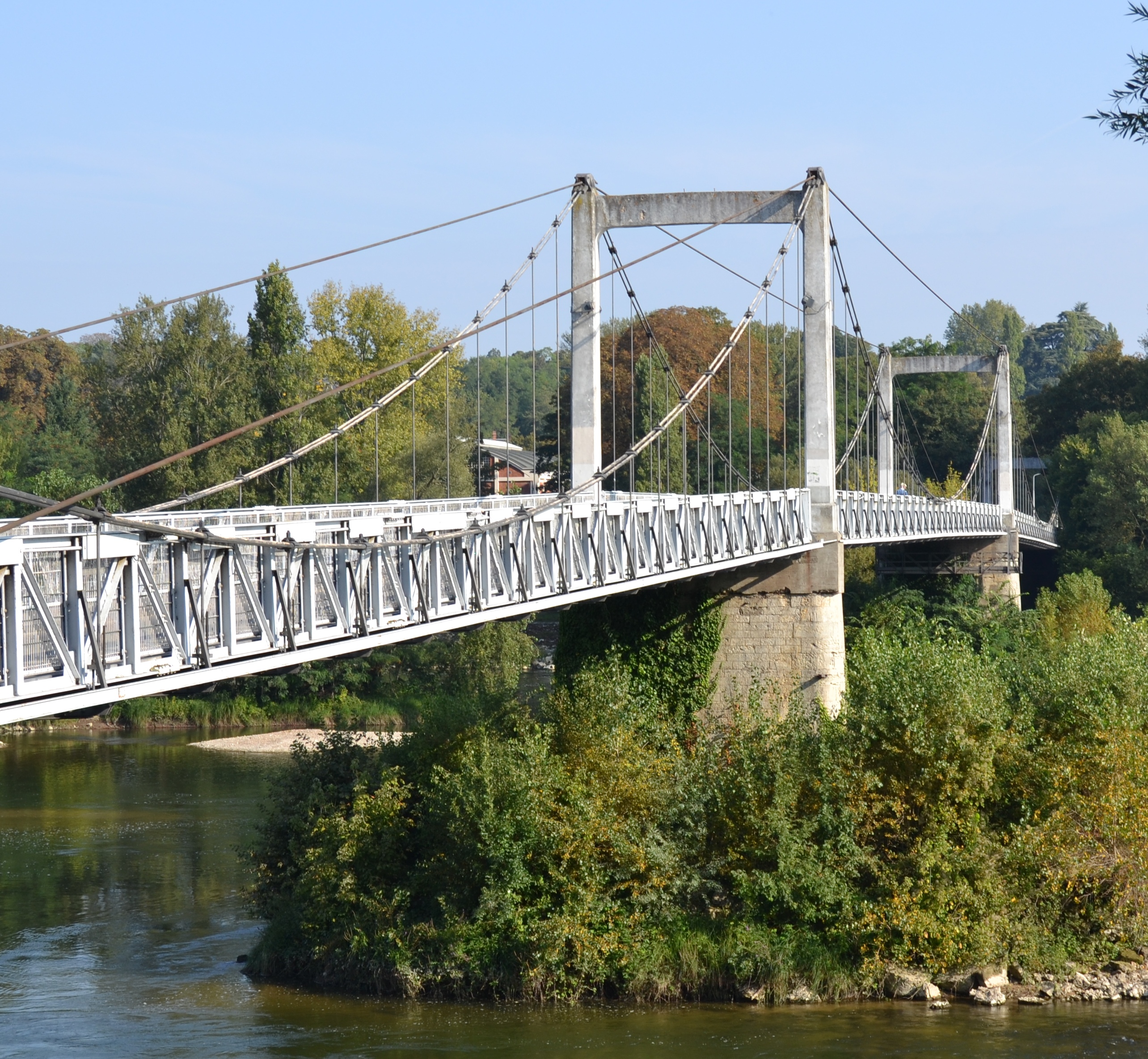 photo
photo table
table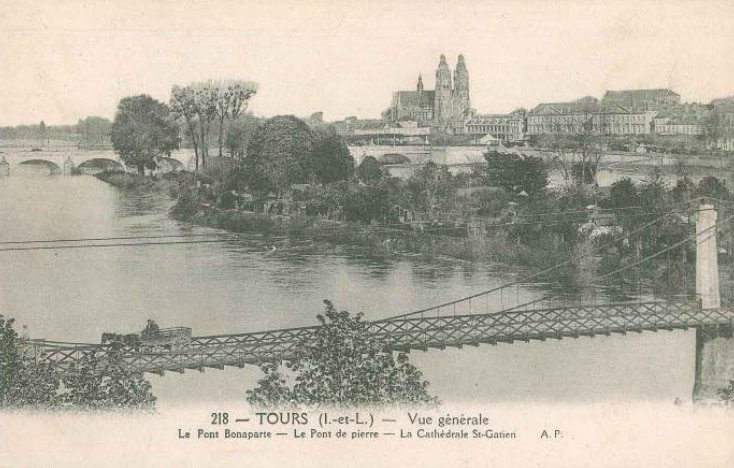 2
2Charles Lelong, in his 2000 work, shows that before anyone really bothered to rebuild a basilica, Martin's relics were the object of attention : "In November 1803, the architect of Tours, Cardinal de Boisgelin, had the relics saved in 1793 verified. They were enclosed in a reliquary placed on a temporary altar, erected in the cathedral under the invocation of Martin. In 1811, the archbishop Mgr de Barral bought the chapel of Saint-Jean, in the cloister of Saint-Martin and the cult was established there in 1819 by Mgr du Chilleau "since, he said, it is not given to me to raise the old building"." Michel Laurencin points out [in the
Catalogue 2016] in 1922 a book by the lawyer Jacquet Delahaye Avrouin entitled "Du rétablissement des églises en France à l'occasion de la réédification projetée de celle de Saint Martin de Tours". Lelong : "But it was not until the middle of the century that we witnessed a real revival : in 1849, the cholera epidemic determined Bishop Morlot to organize a procession of the relics through the streets of Tours and to put the saint's feast day back in honor. In 1853, a book by Abbot Dupuy appeared."
1860: Martin's tomb found! A strong impetus was given in 1854, by the constitution, under the impetus of
Léon Papin Dupont (1797-1876), of the "Commission de l'oeuvre de Saint-Martin" in charge of giving clothes to the poor and rediscovering the tomb in order to "revive the scattered stones of the Basilica and re-establish the cult of the thaumaturgist of the Gauls".. After land acquisitions, the remains of the tomb were found on December 14, 1860, according to the indications of a 1686 report discovered two weeks earlier by the Touraine archaeologist, Henry Lambron de Lignim, giving the description of the vault built by Perpet. This discovery gave a decisive impetus to the will to rebuild a basilica, a will very weakened by the quarrel already mentioned, before, two decades later, the most realistic solution was implemented with the success just described and illustrated... [+  story of this discovery by Canons Bataille and Vaucelle, 1925] In a
  page of his book "Vie et culte de Saint Martin" (2000), Charles Lelong shows the three successive locations of the tomb.

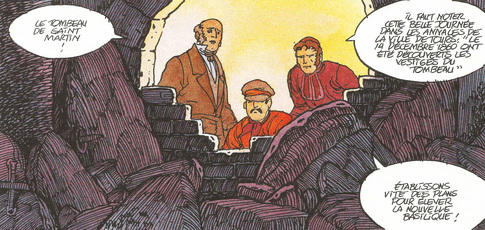
The discovery of the remains of the tomb on December 14, 1860. At left, stained glass window from the Lobin workshop in the present basilica [ Gallery 2018] + the  sketch. At right box from the comic book by Fagot, Mestrallet - d'Esme 1996 + two plates : sketch. At right box from the comic book by Fagot, Mestrallet - d'Esme 1996 + two plates :  1 1  2. 2.
study by May Vieillard-Troiekouroff titled "The Tomb of St. Martin Found in 1860" (1961), also tracing the history of the basilicas. Excerpt : "Plans are found : in addition to the plan of the old basilica, drawn up by Jacquemin in 1779, we find at a notary's office the plan drawn up at the time of the 1806 subdivision by Jacquemin fils, which shows. that the tomb of St. Martin is not under one of the new roadways, but in the cellar of a house." + Jacquemin plan of 1779 :  1 1  2 (document SAT)
+ the book "Notice on the tomb of St. Martin and on the discovery that was made of it on December 14", 1861, published by "La commission de l'oeuvre de Saint-Martin", 93 pages [Numelyo]. 2 (document SAT)
+ the book "Notice on the tomb of St. Martin and on the discovery that was made of it on December 14", 1861, published by "La commission de l'oeuvre de Saint-Martin", 93 pages [Numelyo].


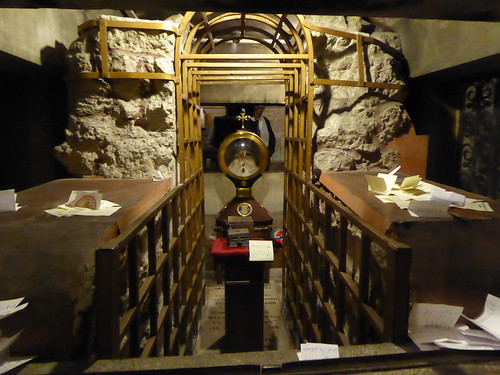
At left, view of the cellars in which the tomb was found in 1860 (link). In the center, the remains of this tomb [ Lecoy 1881]. It is the white parts of these buttresses that we find, intact, in the present tomb, on the right. One realizes there to what point the new basilica was positioned according to the site of the tomb of the preceding basilica.
|
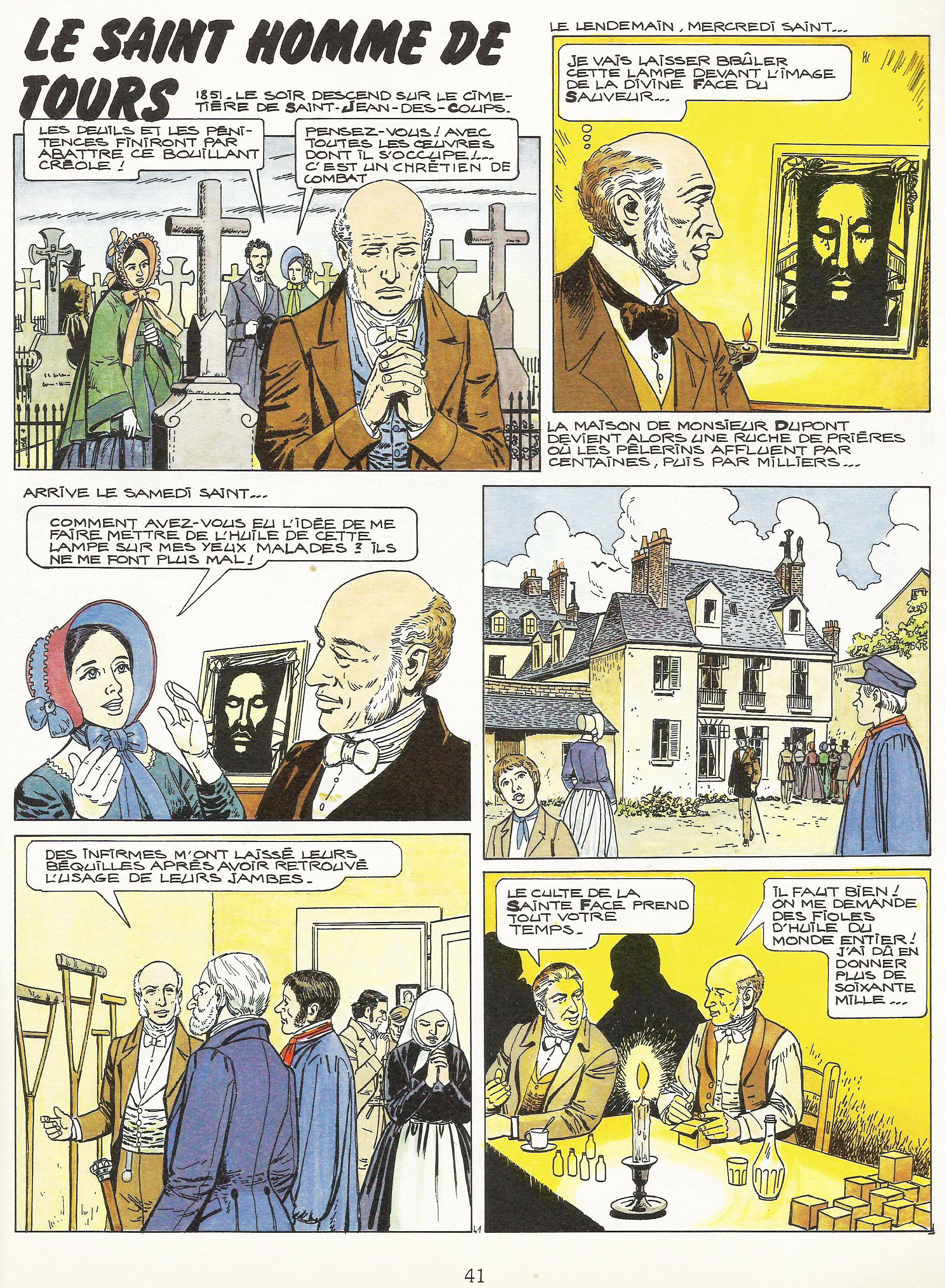 1
1 2
2 article
A long quarrel ensued. The controversy was lively and long between, on the one hand, the partisans of reconstruction according to Romanesque dimensions, led by Léon Papin Dupont, and, on the other hand, those advocating more modest dimensions, who finally won out under the impulse of Archbishop Meignan who wanted "to unite in the same love the Church and the French Republic". On the other side, according to Paul Wagret in "Histoire religieuse de la Touraine" (CLD 1975) "The rebuilding of the basilica of yesteryear would be a kind of reparation for the misdeeds of the unholy revolution it was necessary to bring the repentant crowds back to the feet of the apostle of the Gauls. Persuaded to fulfill a sacred mission, they go so far in their resistance to the bishop that the Pope himself must reprimand them.". This affair animated the city of Tours from 1860 to 1884, with a municipality that had changing opinions with each election
Paul Wagret "This "Dreyfus Affair of Touraine" divided the Catholics of the diocese mercilessly, and even further : the press of Paris, Rennes, Lyon bears witness to it" [Paul Wagret in "Religious History of Touraine", CLD 1975]. There was talk of "the war of the basilicas," both between traditionalist Catholics (one said
ultramontans) and Republicans and between clericals and anti-clericals. Of the latter, Armand Rivière (1822-1891), mayor of Tours from 1879 to 1882, was one of the most virulent, publishing in 1862 "The miracles of Saint Martin" (two photos :  1
1  2). + the chapter "La guerre civile de Tours" by Bernard Chevalier in his book "Histoire de Tours" (Privat 1885). Example of Armand Rivière's words : "You probably think that our society, and particularly our city of Tours, have more need of churches and convents, of relics and miracles of the saints, than of temples of industry and wonders of the arts ? [...]That spirits of the past still prostrate themselves before the relics of the past, is this a reason for men chosen by all, as the elite of the city, to follow in their footsteps and march in their wake ? Is it within the remit of a city council to listen to the panegyric of a thaumaturge and to do religious archaeology ?"
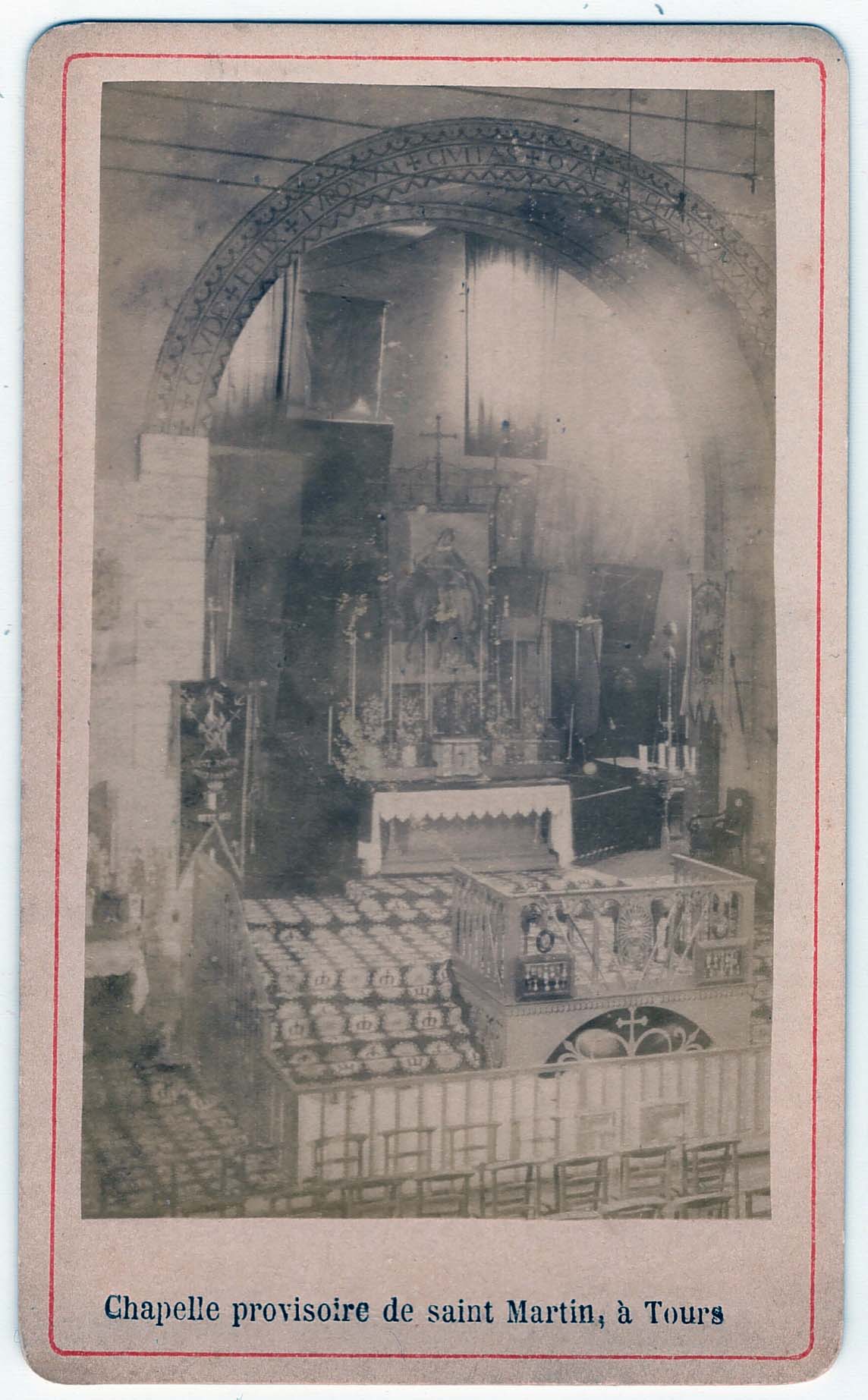

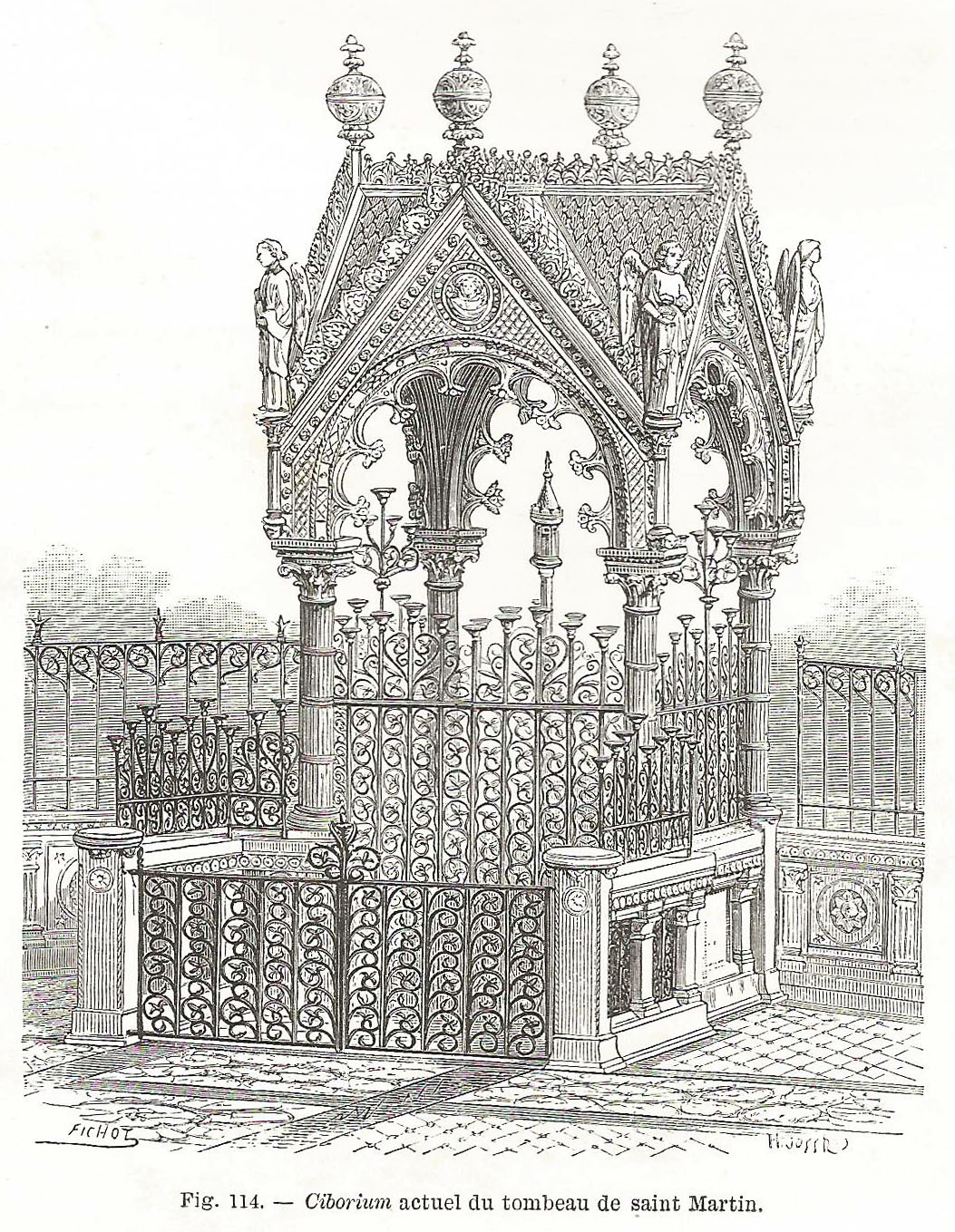
The provisional chapel, a place of devotion erected while awaiting the new basilica, had at least two configurations, as these two photos show. The first (with the dedication of Paulin de Périgueux that would be repeated on the pediment of the Laloux basilica) comes from a hardback image, the second from the book Le tombeau de Saint-Martin de Tours", 1922, by Jean-Martial Besse (+ critique of this work by Michel Andrieu in 1923).
At right, an engraving of the ciborium [Lecoy 1881.
This gilded copper work of art was made in 1664 by the Parisian silversmith Jean-Alexandre Chertier. It now sits on the high altar of the present basilica.
+  cardboard photo dated 1869 of the ciborium in the provisional chapel
+ its cardboard photo dated 1869 of the ciborium in the provisional chapel
+ its  back + back + 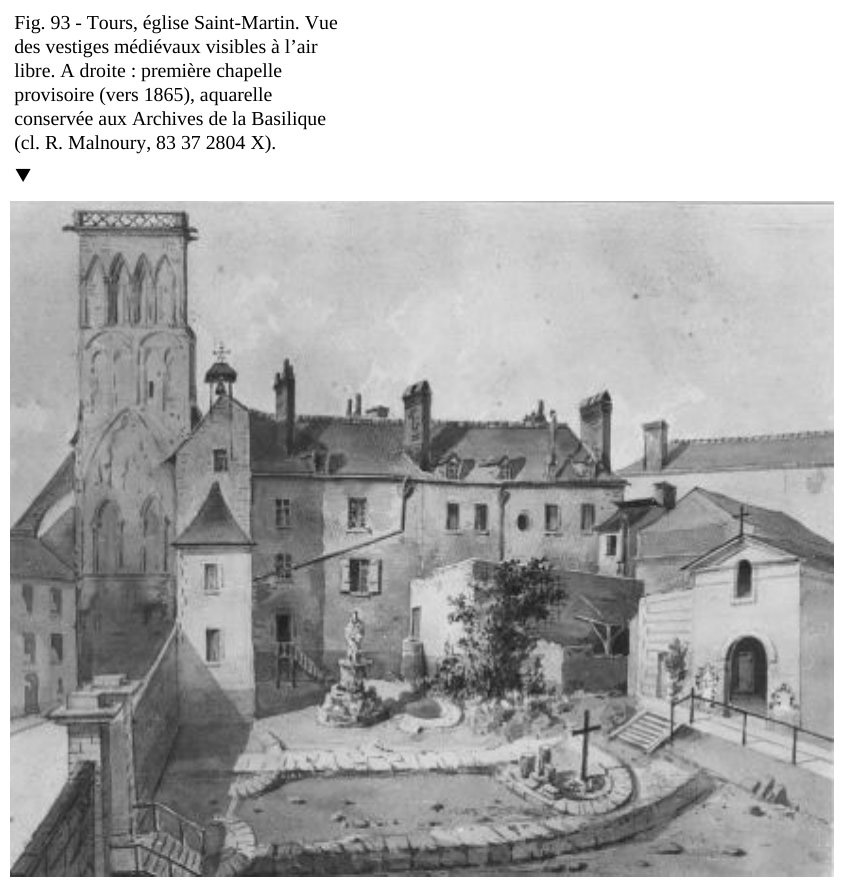 view from the exterior. view from the exterior.

From 1874 to 1886, many Tourangeaux believed that rue Saint Martin would be demolished to make way for a new basilica as large as the previous one [ Lecoy 1881]. And then the rue Saint Martin was renamed
rue des Halles...


The aborted 1874 project by architect Alphonse Baillargé, on the site of the old collegiate church. Above the interior. At left side view, from an engraving by Lecoy 1881, when this project was still credible.
On the right seen from behind, from a SAT document. This same  view in a wider shot in the book "Victor Laloux, son oeuvre tourangelle", with this comment : "Although hailed by the profession (a gold medal at the 1875 Paris Fine Arts Exhibition), Baillargé's project to completely reconfigure the market district around a grandiose neo-Romanesque basilica turned out to be too ambitious to finance and too destructive to win over the inhabitants.".
+ view in a wider shot in the book "Victor Laloux, son oeuvre tourangelle", with this comment : "Although hailed by the profession (a gold medal at the 1875 Paris Fine Arts Exhibition), Baillargé's project to completely reconfigure the market district around a grandiose neo-Romanesque basilica turned out to be too ambitious to finance and too destructive to win over the inhabitants.".
+ 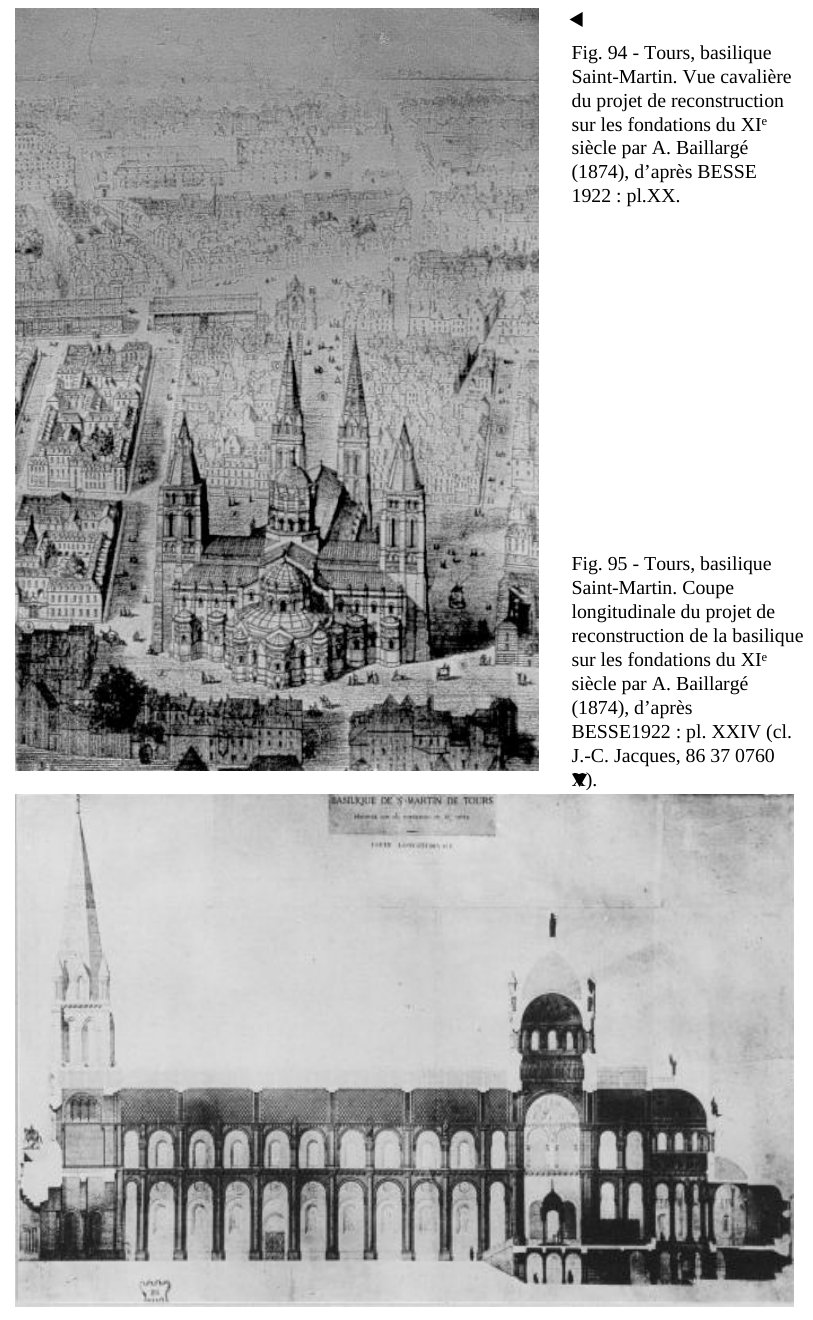 cuts longitudinal
+ the cuts longitudinal
+ the  one from No. 51 of "La France Illustrée" of 1875.
1874 and 1875 were also the years in which the basilica of the Sacred Heart of Montmartre in Paris was designed and began construction, which was also subject to great controversy.
Below, the Baillargé plan (the Charlemagne and Horloge towers remain in place, of course) ["Guide secret de Tours" 2019] and (P.-S.) close-up of a drawing by A. Deroy [archives dep. 37]. one from No. 51 of "La France Illustrée" of 1875.
1874 and 1875 were also the years in which the basilica of the Sacred Heart of Montmartre in Paris was designed and began construction, which was also subject to great controversy.
Below, the Baillargé plan (the Charlemagne and Horloge towers remain in place, of course) ["Guide secret de Tours" 2019] and (P.-S.) close-up of a drawing by A. Deroy [archives dep. 37].

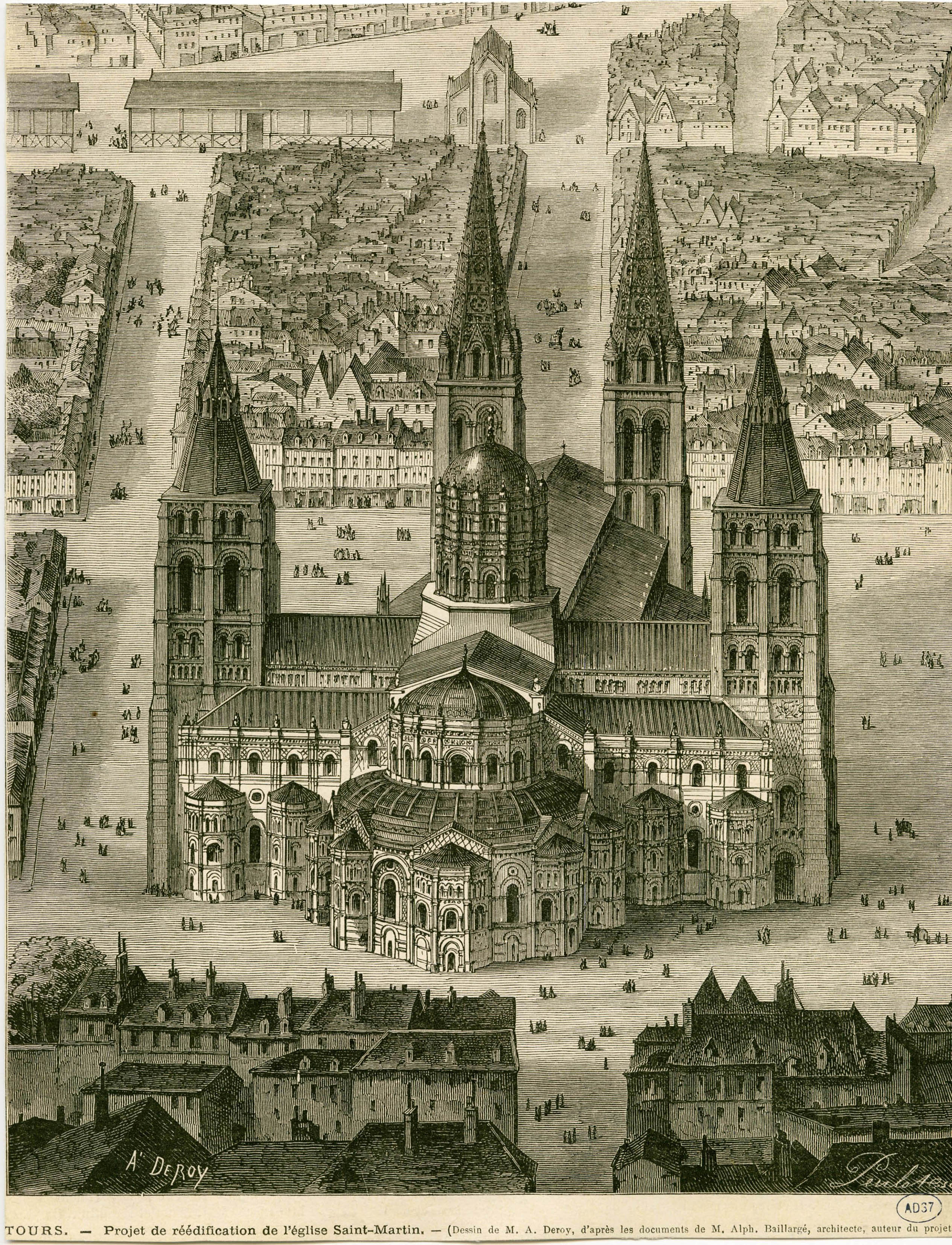
|


On the left the anticlericalism of Armand Rivière, mayor of Tours from 1879 to 1882. In the center the anti-clerical daily "L'électeur d'Indre et Loire" mocks the Catholic "processionnards", November 10, 1888 (link). At right anti-anticlerical cartoon by Achille Lemot, 1902, depicting Minister Law of 1905 on the separation of church and state, as an ogre.
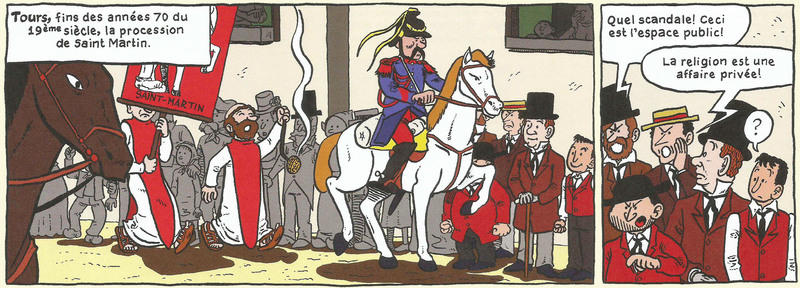
On the same anti-procession theme, Joshua Peeters in BD Utrecht 2016 + the 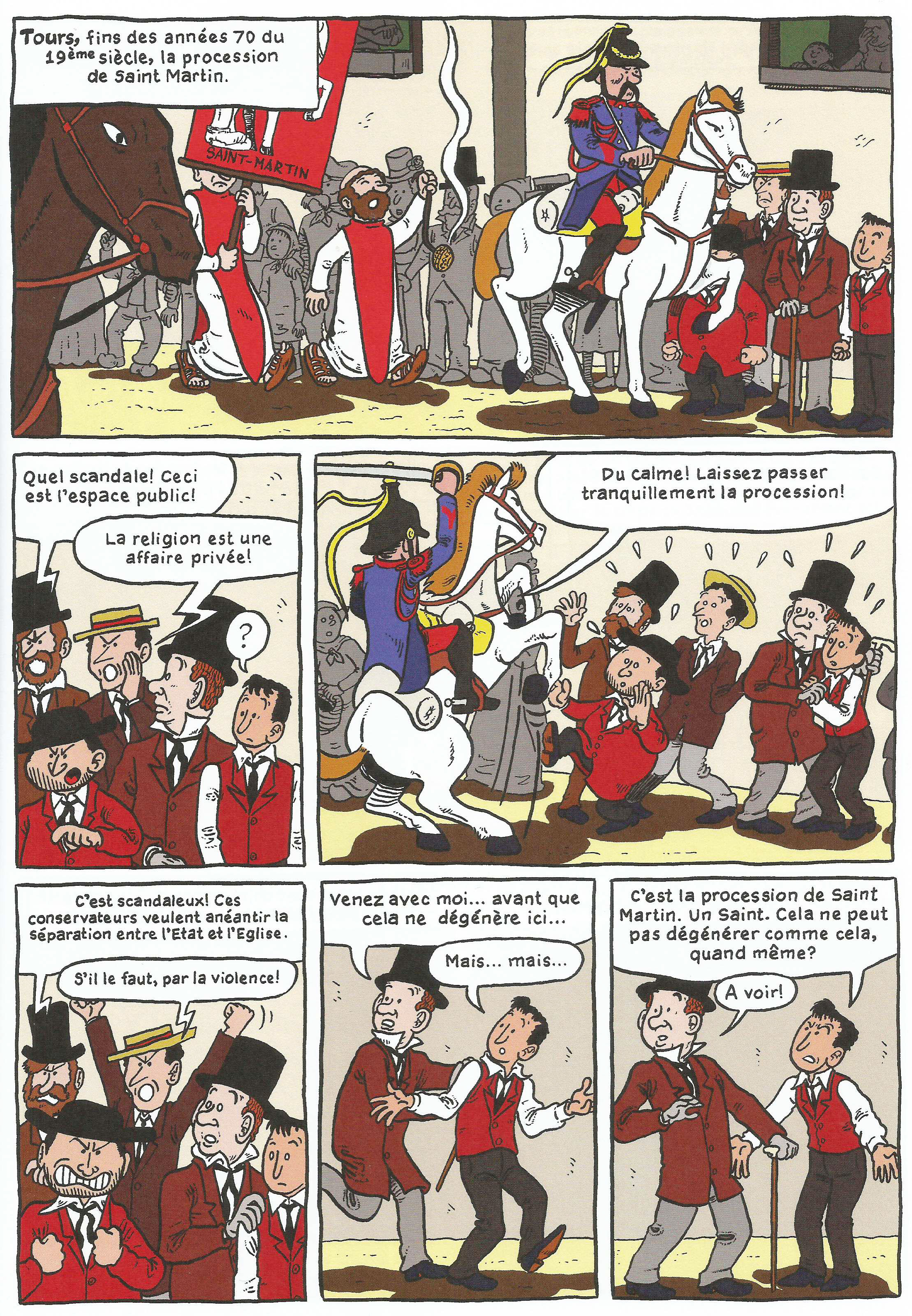 plank. As early as 1846, Tours experienced communist agitation around Auguste Blanqui (article The Rotating 2020). plank. As early as 1846, Tours experienced communist agitation around Auguste Blanqui (article The Rotating 2020).
|
The novel "
Mademoiselle Cloque" by René Boylesve, published after the battle in 1899, is another illustration of this conflict. Even knowing the real identities of the romanticized characters, the historical interest is limited and the old-fashioned writing is indicative of the time and of a closed Catholic milieu. It is true that he was subjected to many vexations. For example, wasn't naming Descartes (born in the south of Touraine) the street where the basilica is located a Cartesian provocation? Also, in 1886, debaptizing the rue saint Martin into rue des Halles...


"Mademoiselle Cloque" : 1911 edition (drawing Adolphe Gumery), drawing by René Boylesve (1898), CLD edition 1985 (drawing Marie-Thérèse Mabille) and an analysis work by Emile Gérard-Gailly (1931), revealing that Mademoiselle Cloque had existed and was called Mademoiselle Blacque, living near the basilica. The page Wikipedia takes up this summary : "Because Mademoiselle Cloque and the Count of Grenaille-Moncontour do not agree on the dimensions of a basilica under construction, the niece of one will not marry the son of the other !"
|
Charles Lelong, in 2000, wonders about the fervor of the cult of Martin : "The discovery of the tomb in 1860 had aroused a great surge of piety that did not cease to grow : the provisional chapel erected in 1863 attracted crowds, in 1885, there were more than 1000 ex-voto ; in 1874, Saint Martin was registered on the list of recommended pilgrimages : the same year, the procession counted six thousand people and twenty thousand in 1878. But the truth obliges to say that it is the political passions, the virulent anticlericalism of the time and the conflicts between conservative Catholics and liberal Catholics which explain the resounding character of certain festivals where the faithful rush from all the dioceses of France. It is significant that the nomination of Mgr Meignan, the government's candidate for the see of Tours in May 1884 provoked a sudden disaffection: "one notices the absence of foreign pilgrims and the small number of bishops, three in all", during the feast of Saint Martin. Revealing also, the fact that once the decision to build the small basilica, the "republican cottage", partisan sulkiness prevails."

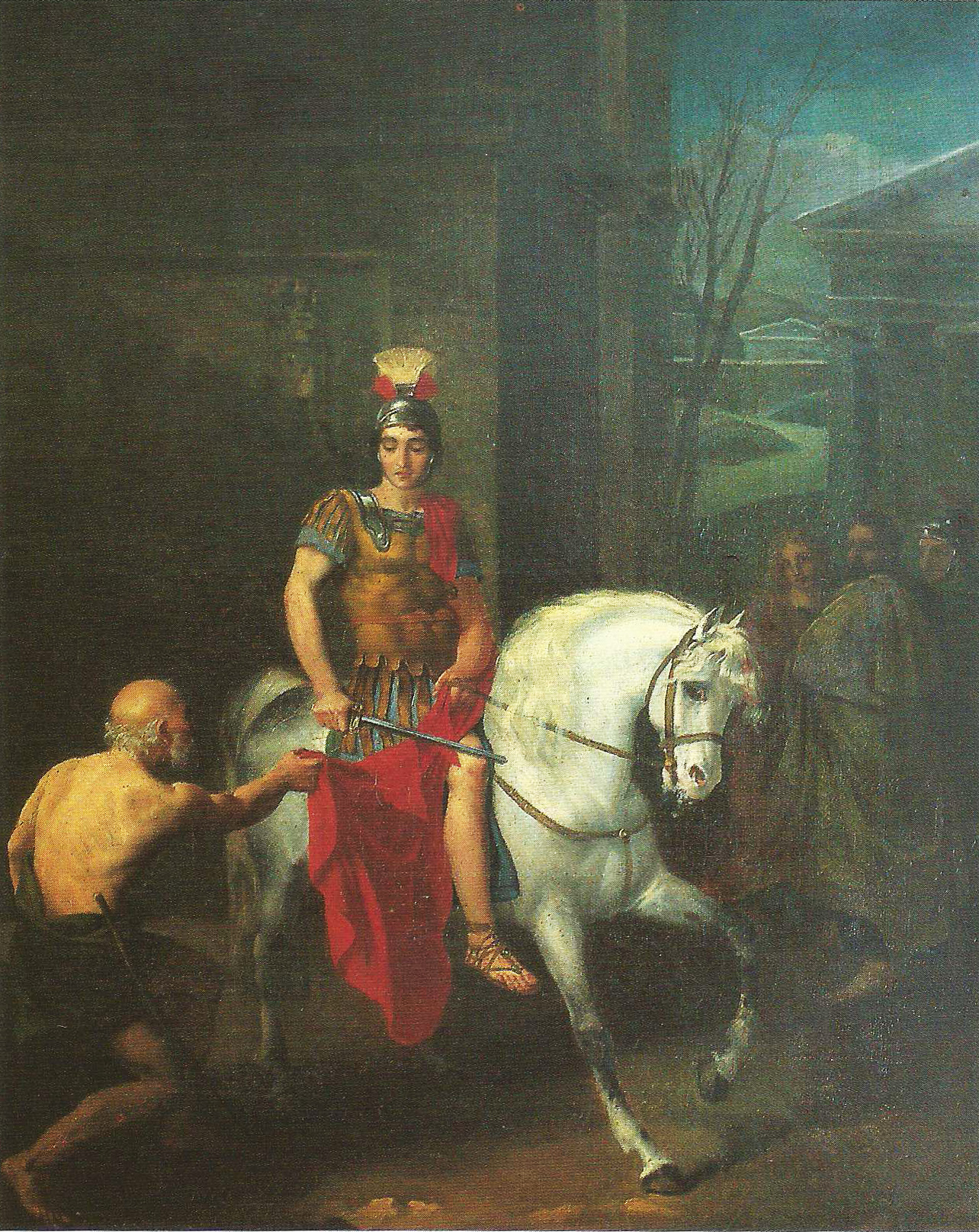
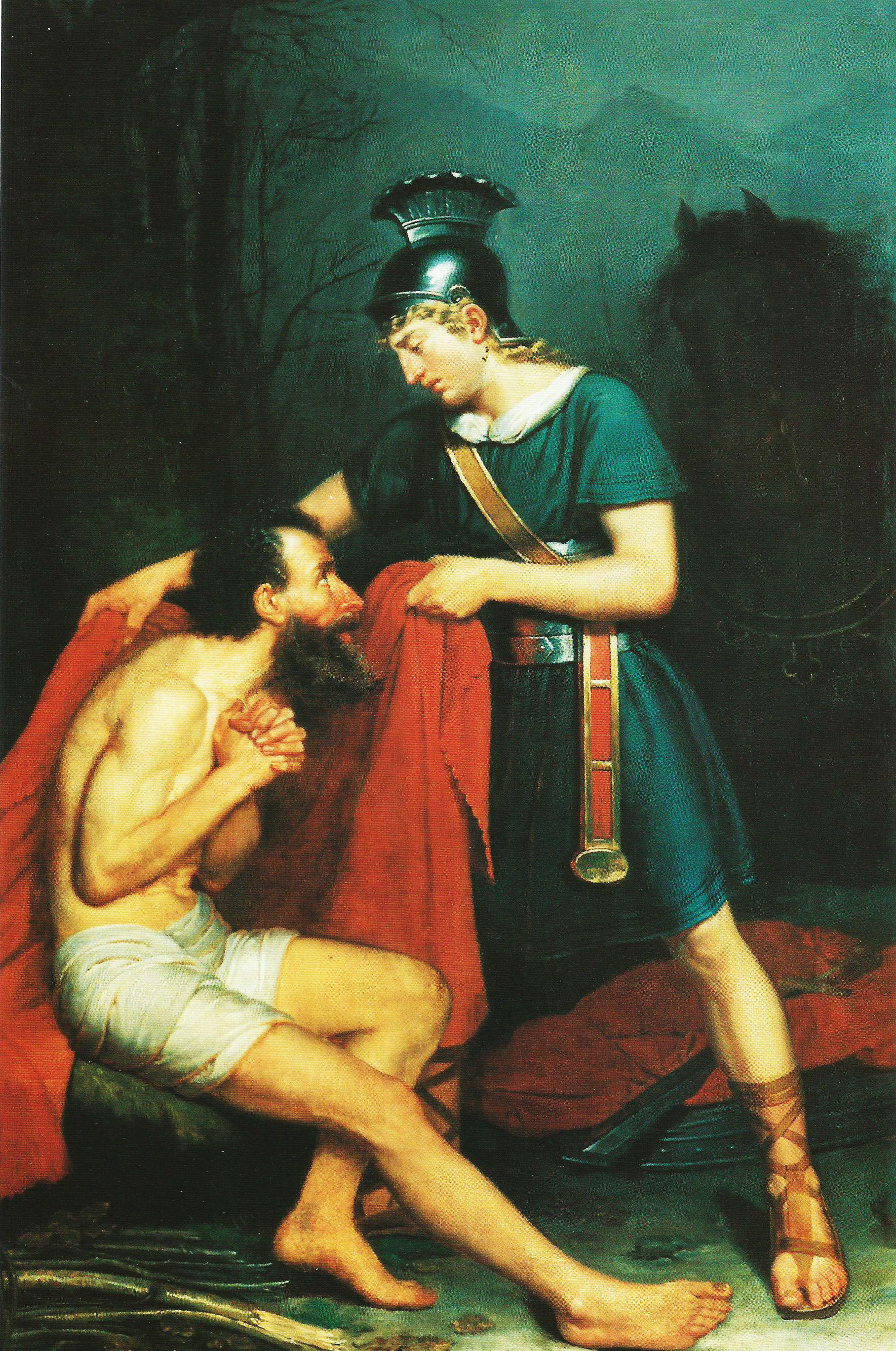
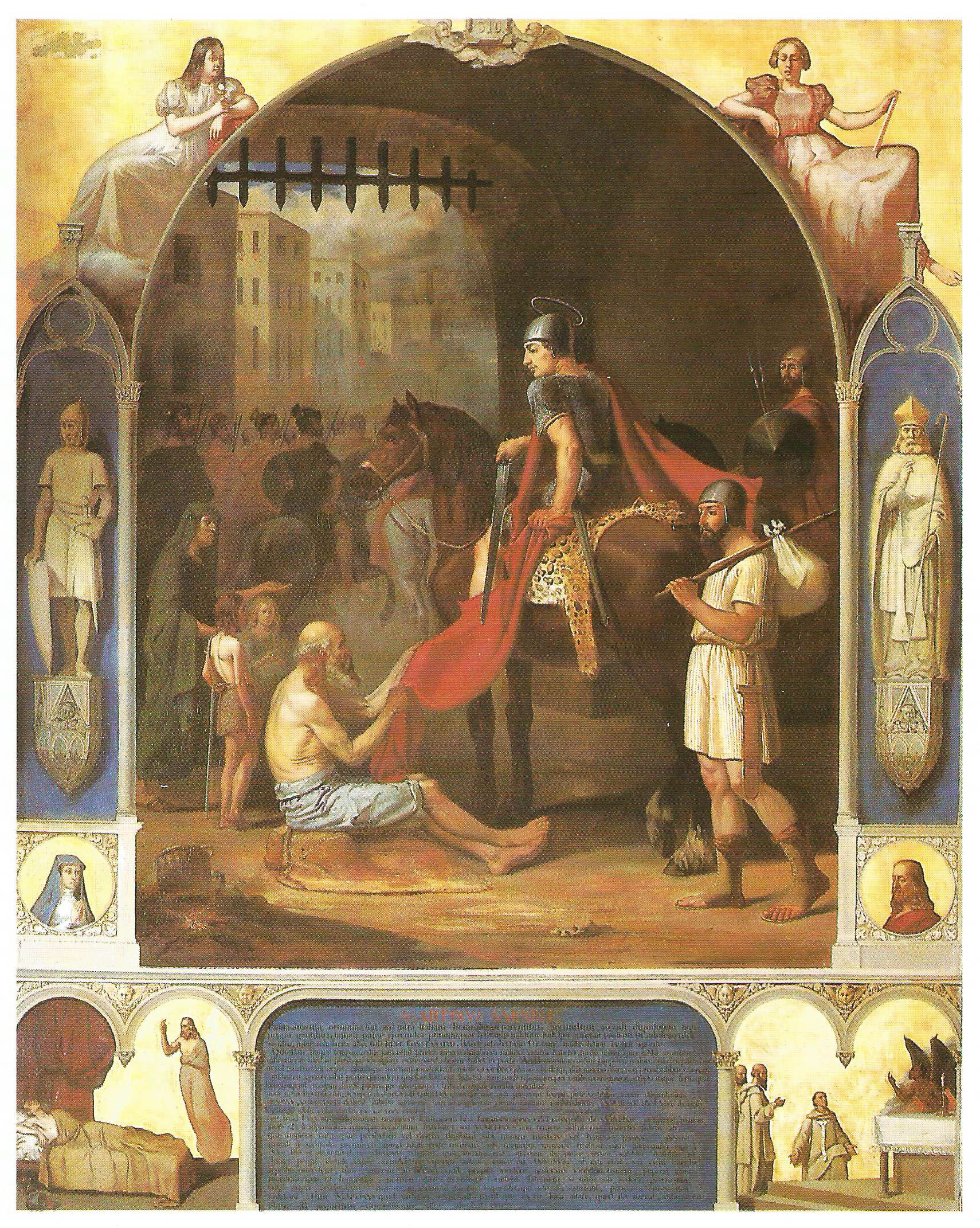
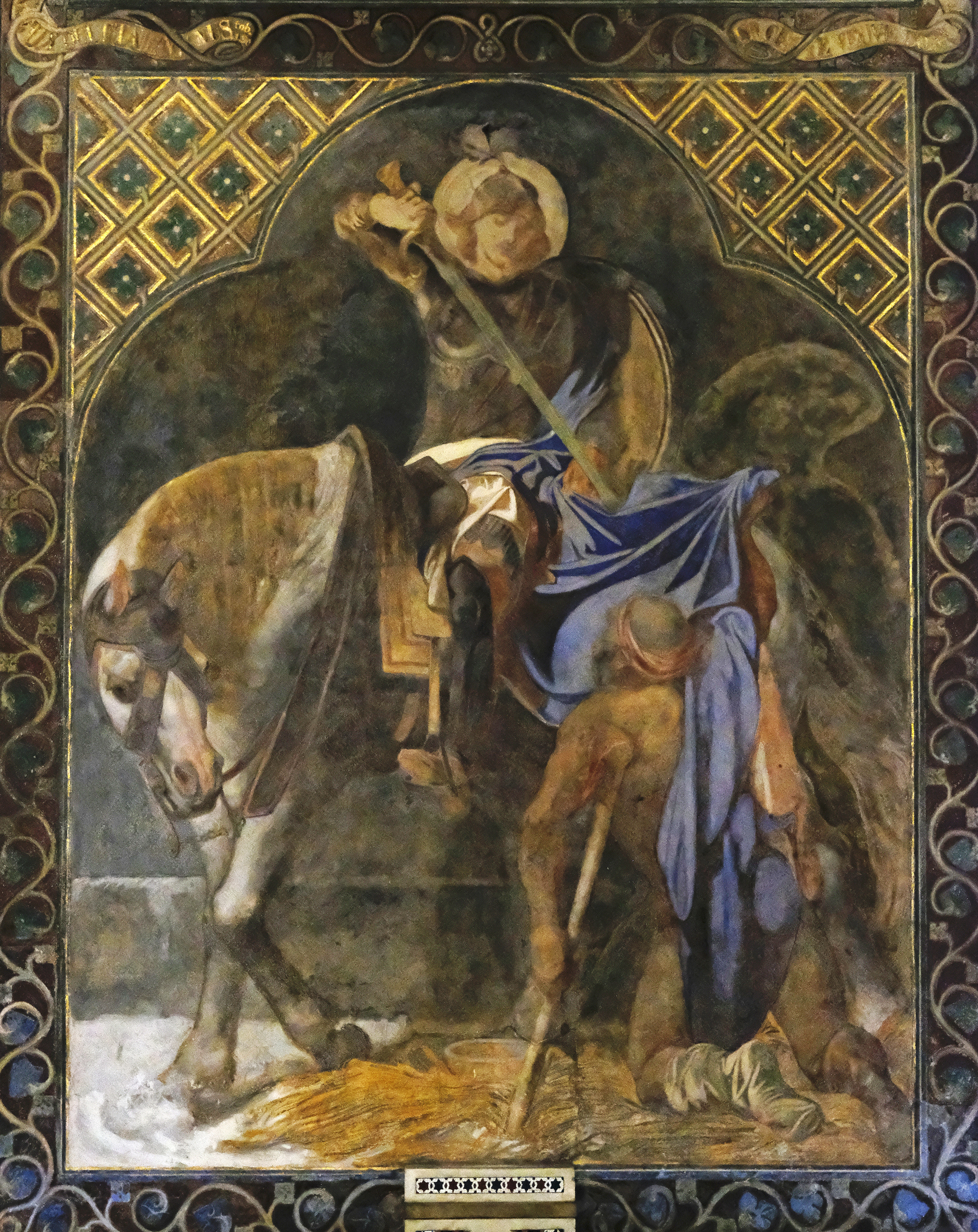
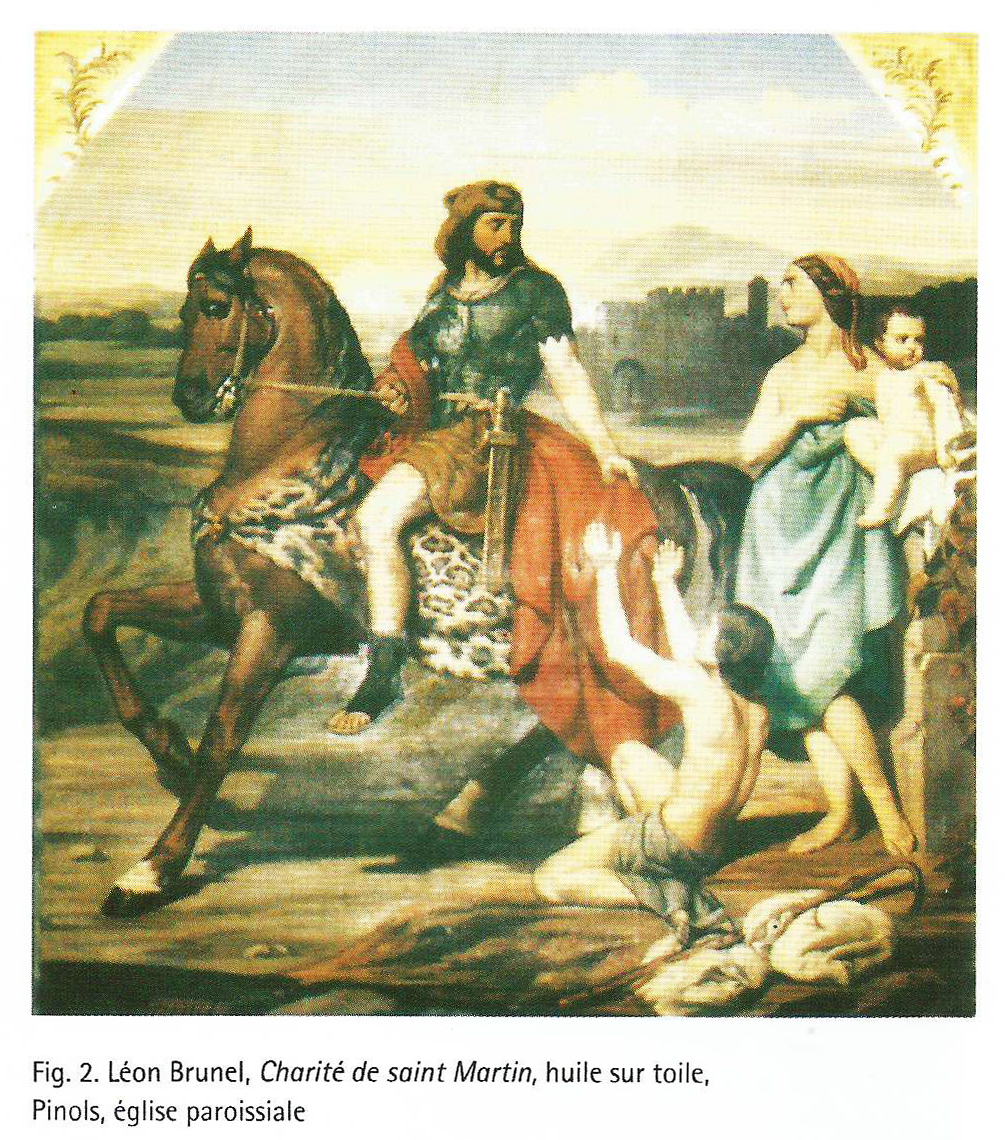
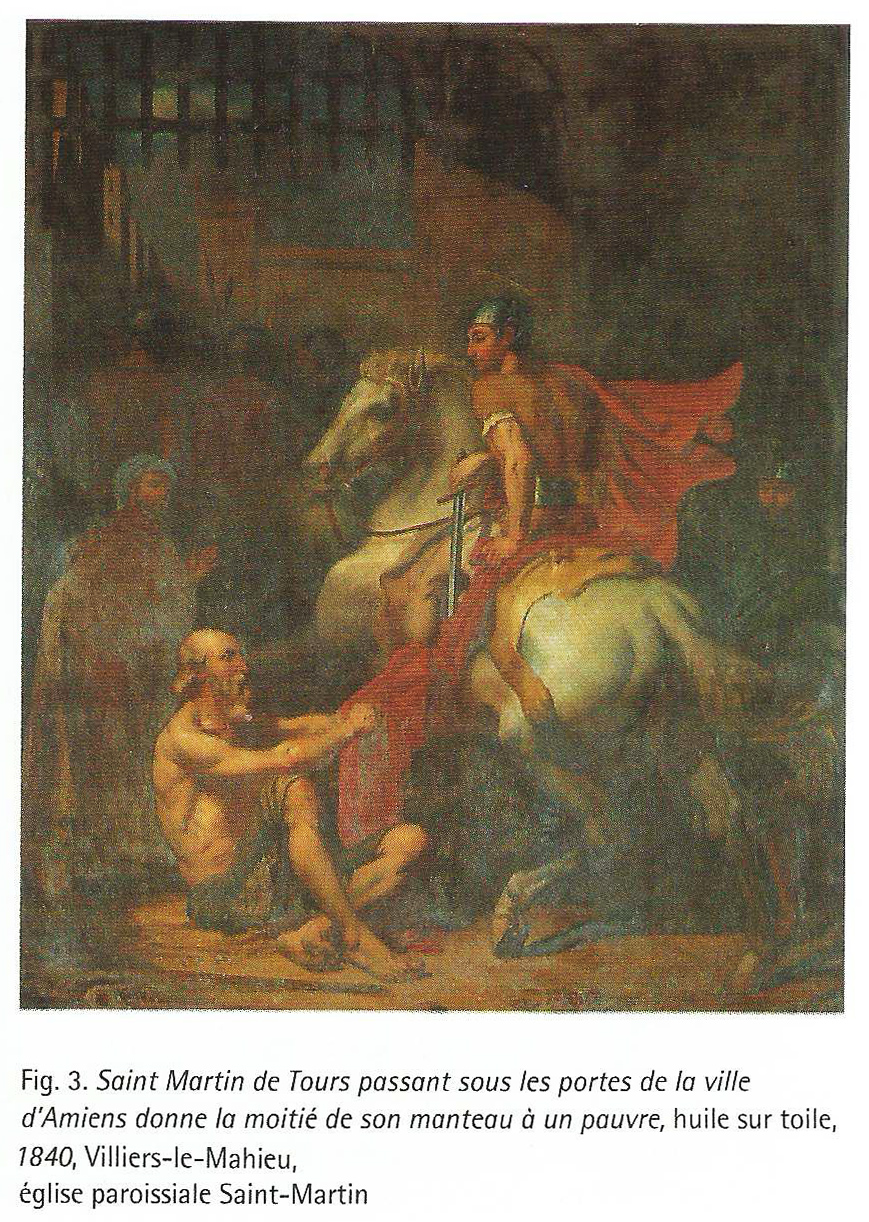
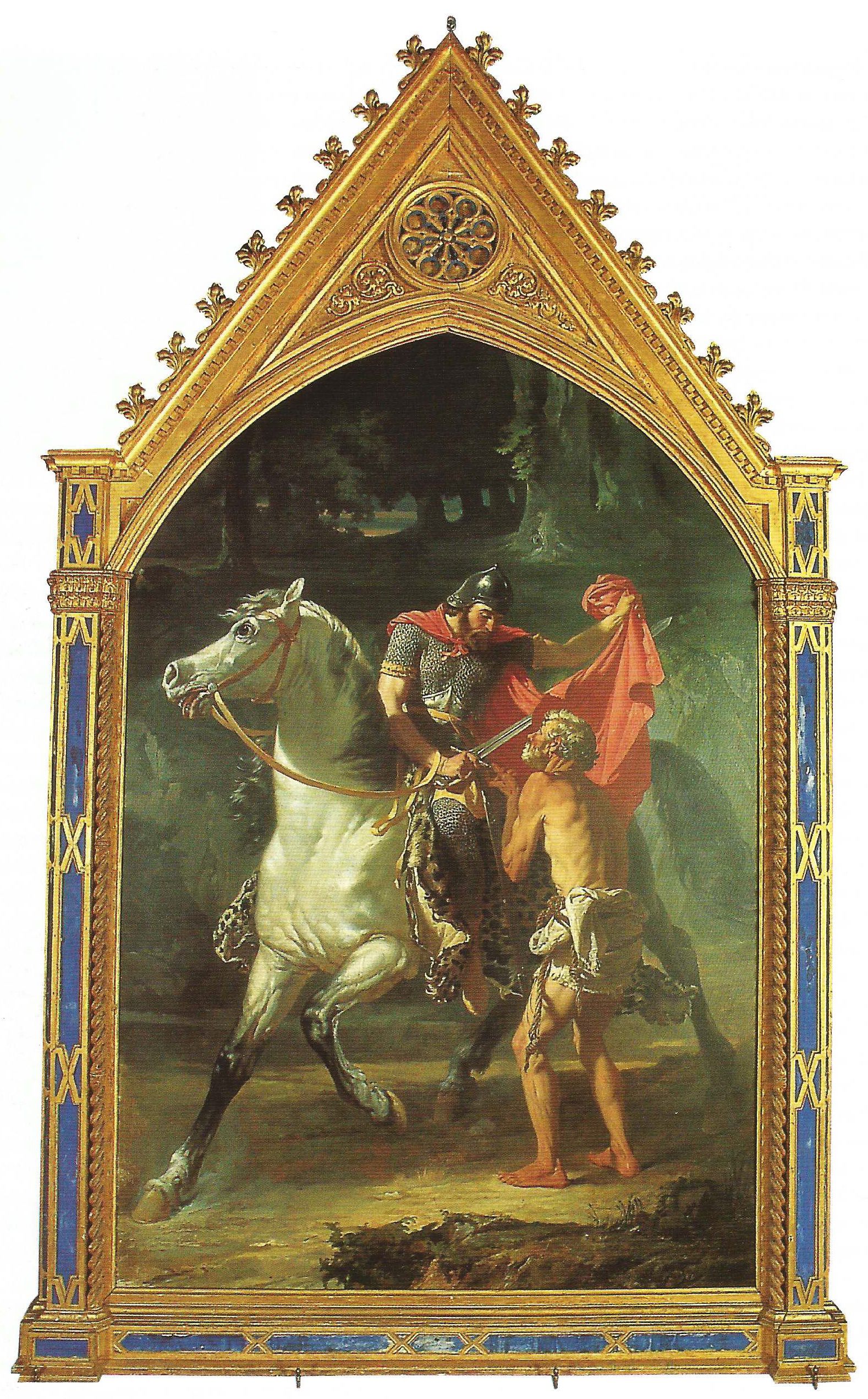


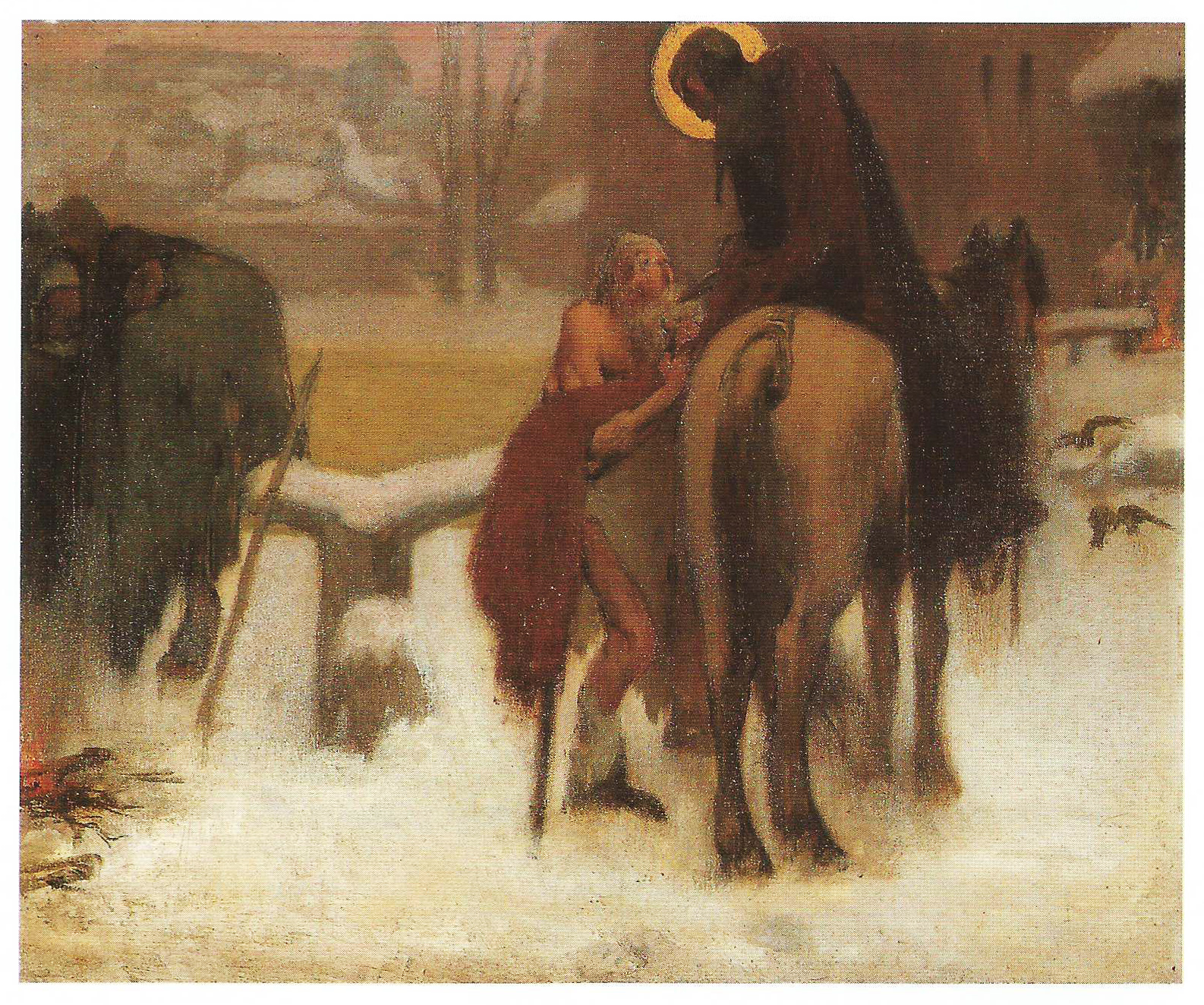
The nineteenth century version of sharing the mantle. Unlike previous centuries, the iconography is more respectful of the historical period being treated. Martin is a soldier in the Roman army. He is always accompanied by an invented horse, he usually wears a helmet and his cloak is often red. The interest shifts to the attitude of the poor man who is freezing cold. The present paintings were published in 1997 by the MBAT in the book "The Legend of Saint Martin in the 19th Century".
1) André-Joseph Bodem circa 1820, church of Seurre (Côte d'or)
2) Anonymous, first third of the 19th century, Saint Martin de Tours basilica
3) Claude-Noël Thévenin 1833, church of Donzenac (Corrèze)
4) Antoine Rivoulon 1837, collegiate church of Candes
5) Victor Louis Mottez circa 1845, church of Saint Germain l'Auxerrois in Paris + 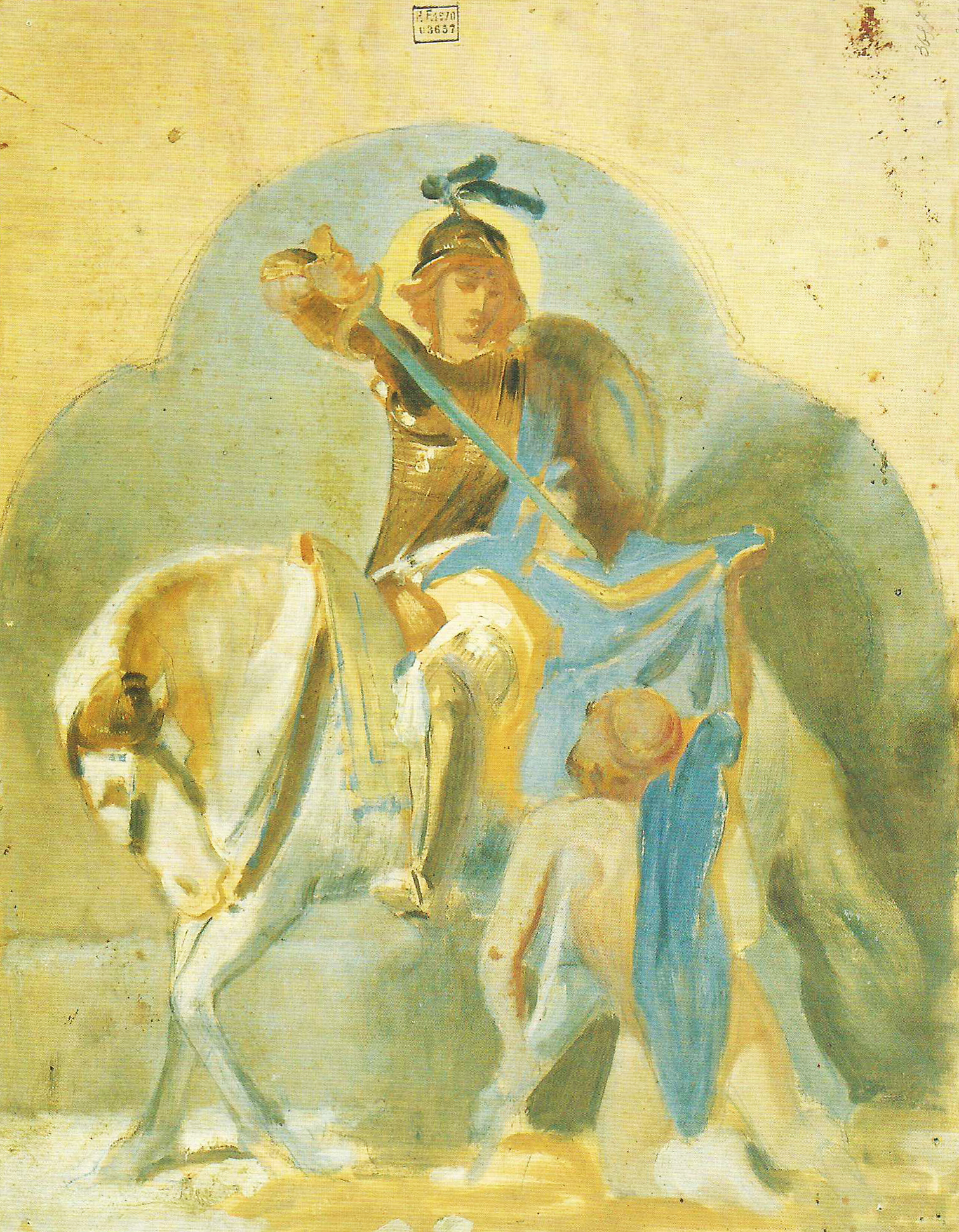 sketch
6) Léon Brunel, church of Pinols (Haute Loire)
7) Anonymous 1840, church of Villiers le Mahieu (Yvelines)
8) Evariste-Vital Luminais 1859, private collection
9) Ernest Michel 1873, Saint Nicolas des Champs church in Paris (+ sketch
6) Léon Brunel, church of Pinols (Haute Loire)
7) Anonymous 1840, church of Villiers le Mahieu (Yvelines)
8) Evariste-Vital Luminais 1859, private collection
9) Ernest Michel 1873, Saint Nicolas des Champs church in Paris (+ 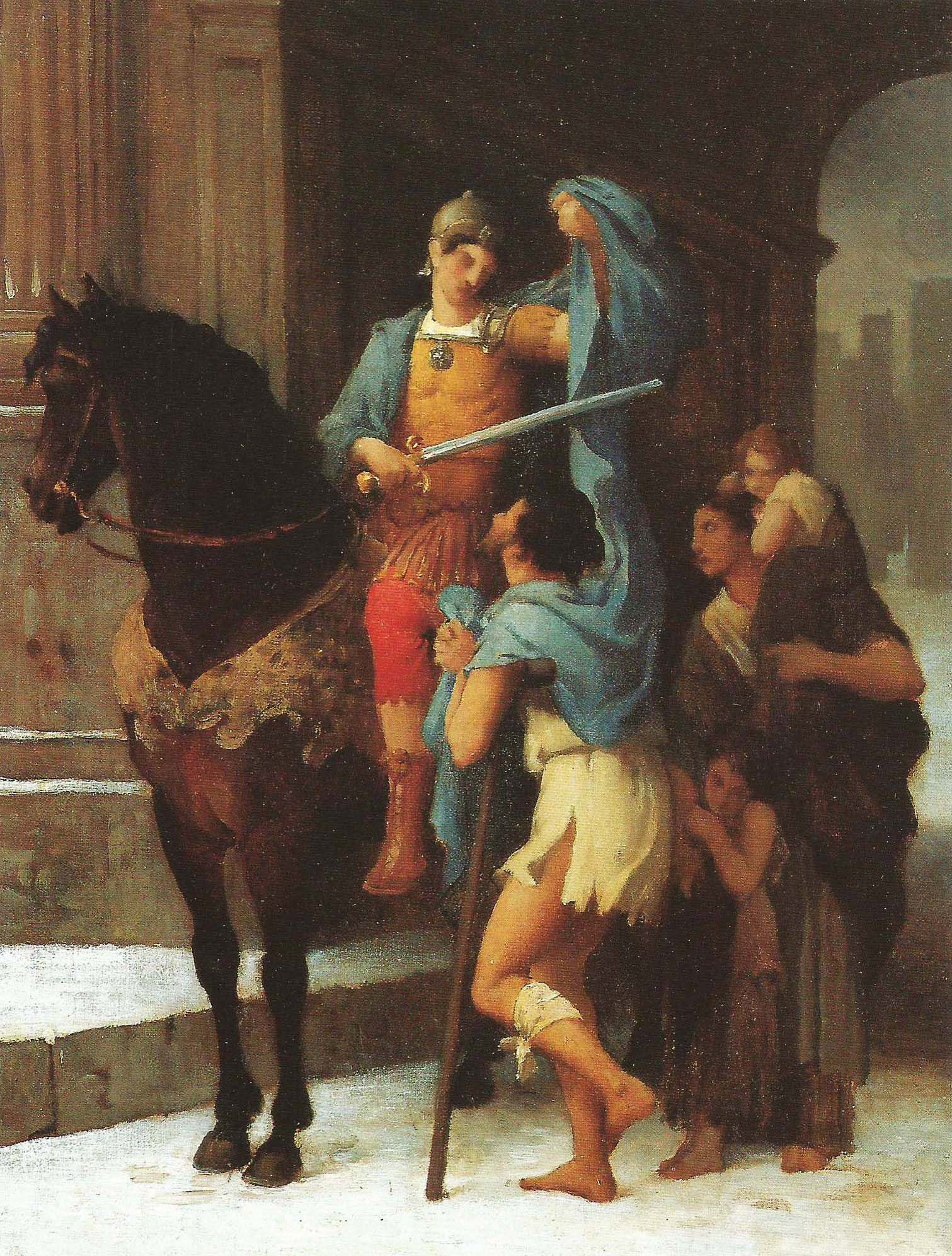 variant)
10) Gustave Moreau circa 1882, Gustave Moreau Museum in Paris
11) Louis Roger 1893, Ecole Supérieure des Beaux-Arts de Paris variant)
10) Gustave Moreau circa 1882, Gustave Moreau Museum in Paris
11) Louis Roger 1893, Ecole Supérieure des Beaux-Arts de Paris
 tableau already presented this-before by Jean-Victor Schnetz 1824, in the cathedral of Tours.
Let's add an example of restoration, tableau already presented this-before by Jean-Victor Schnetz 1824, in the cathedral of Tours.
Let's add an example of restoration, 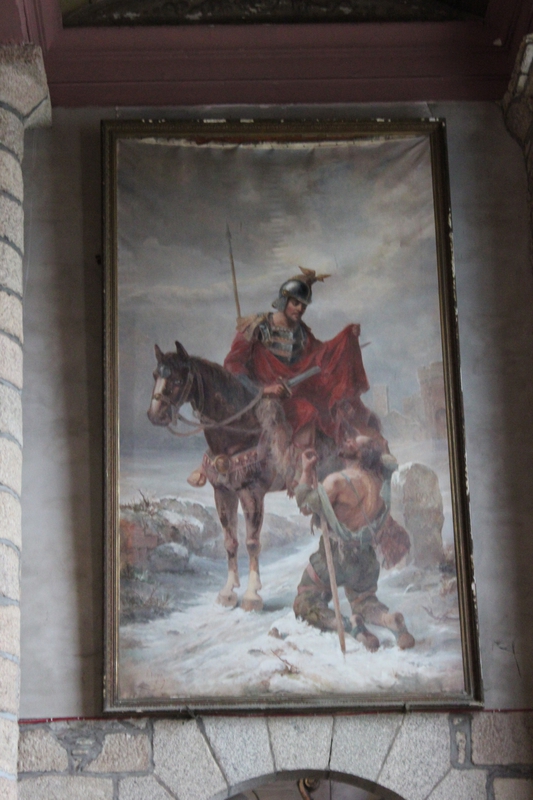 tableau from Edouard Puyo 1897 in the church of St. Martin de Morlaix ( tableau from Edouard Puyo 1897 in the church of St. Martin de Morlaix (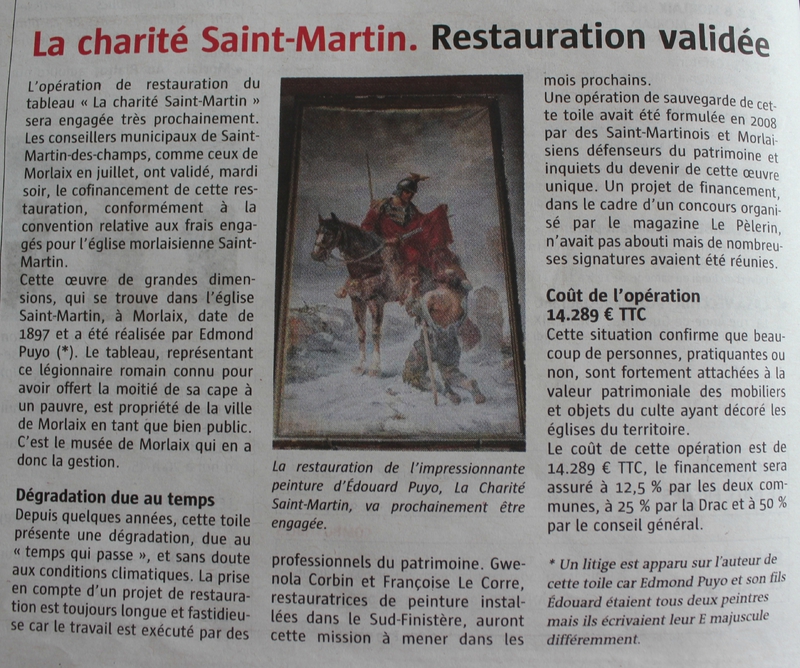 story "Le Télégramme" 2014, link).
And back to the 1997 book with a story "Le Télégramme" 2014, link).
And back to the 1997 book with a 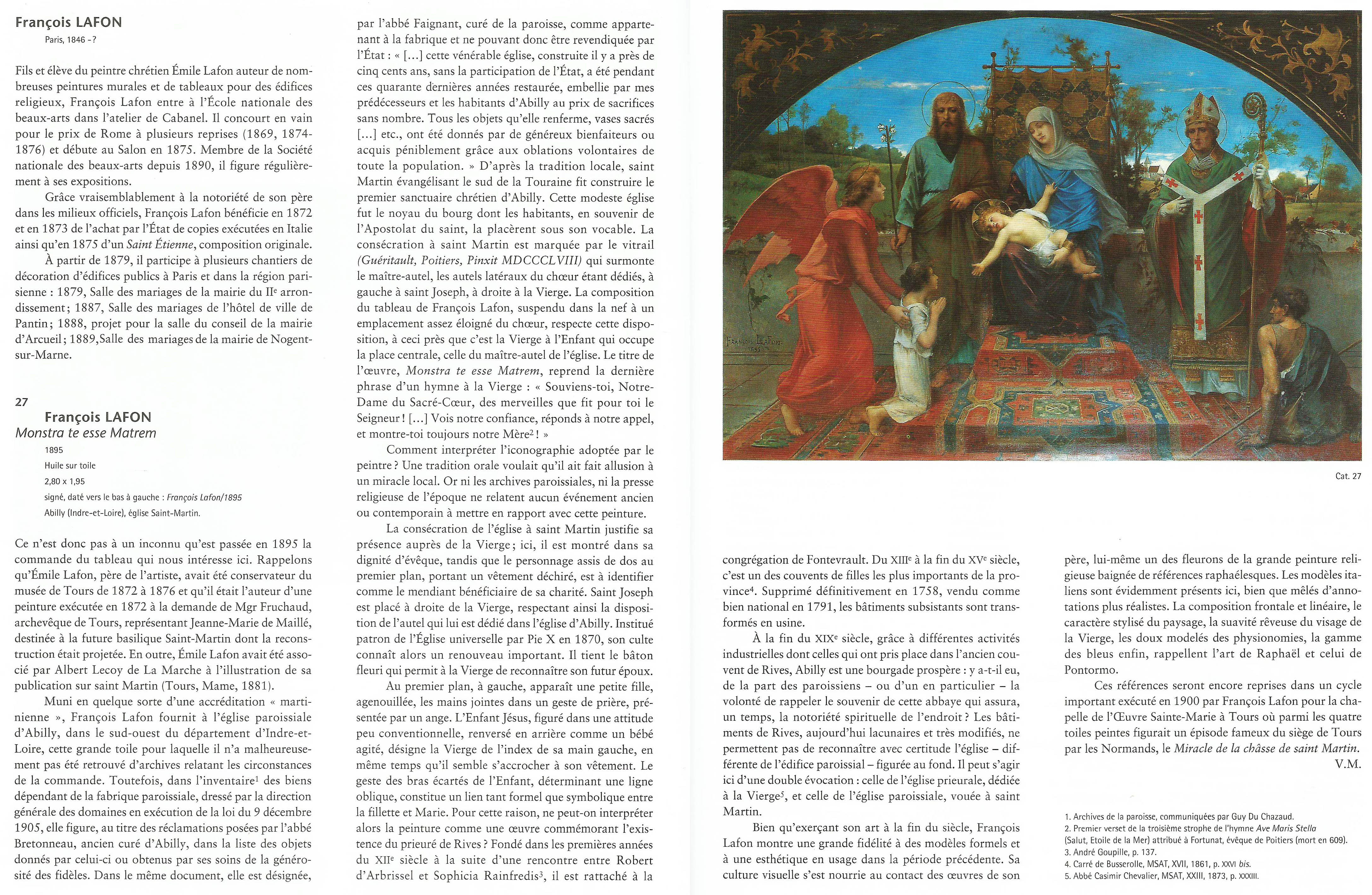 chart by François Lafon, son of Jacques-Emile Lafon, painted in 1895 for the church of St. Martin in Abilly in Touraine, with a rather enigmatic content (with the bishop and the beggar), analyzed by Véronique Moreau. chart by François Lafon, son of Jacques-Emile Lafon, painted in 1895 for the church of St. Martin in Abilly in Touraine, with a rather enigmatic content (with the bishop and the beggar), analyzed by Véronique Moreau.
|
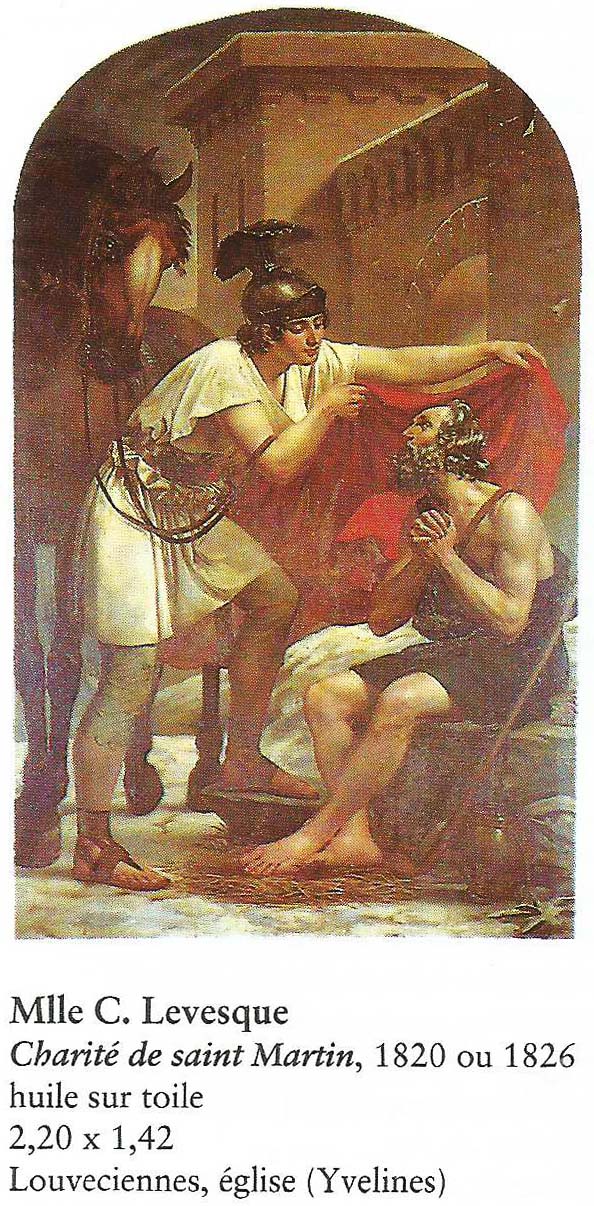 1
1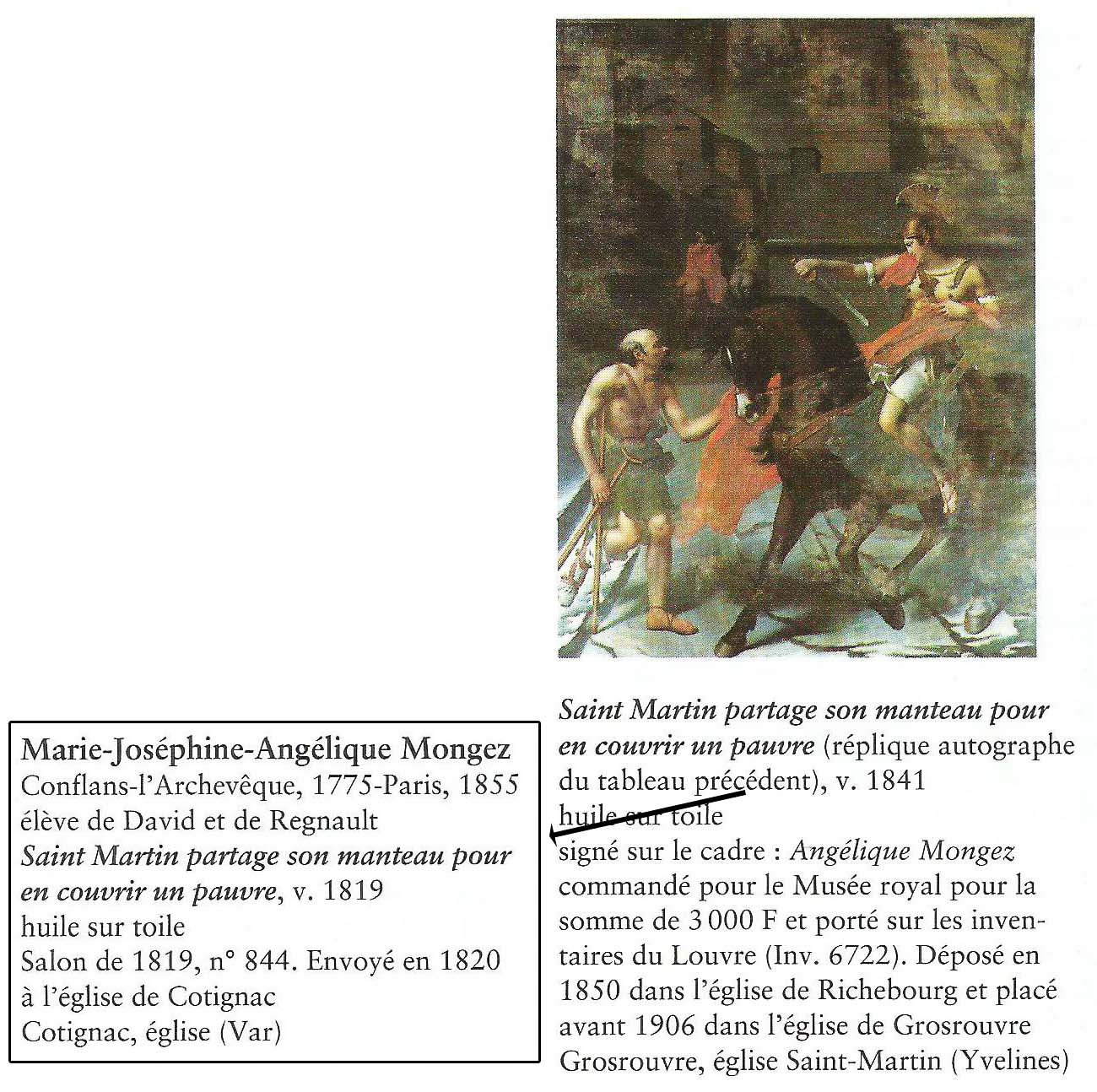 2
2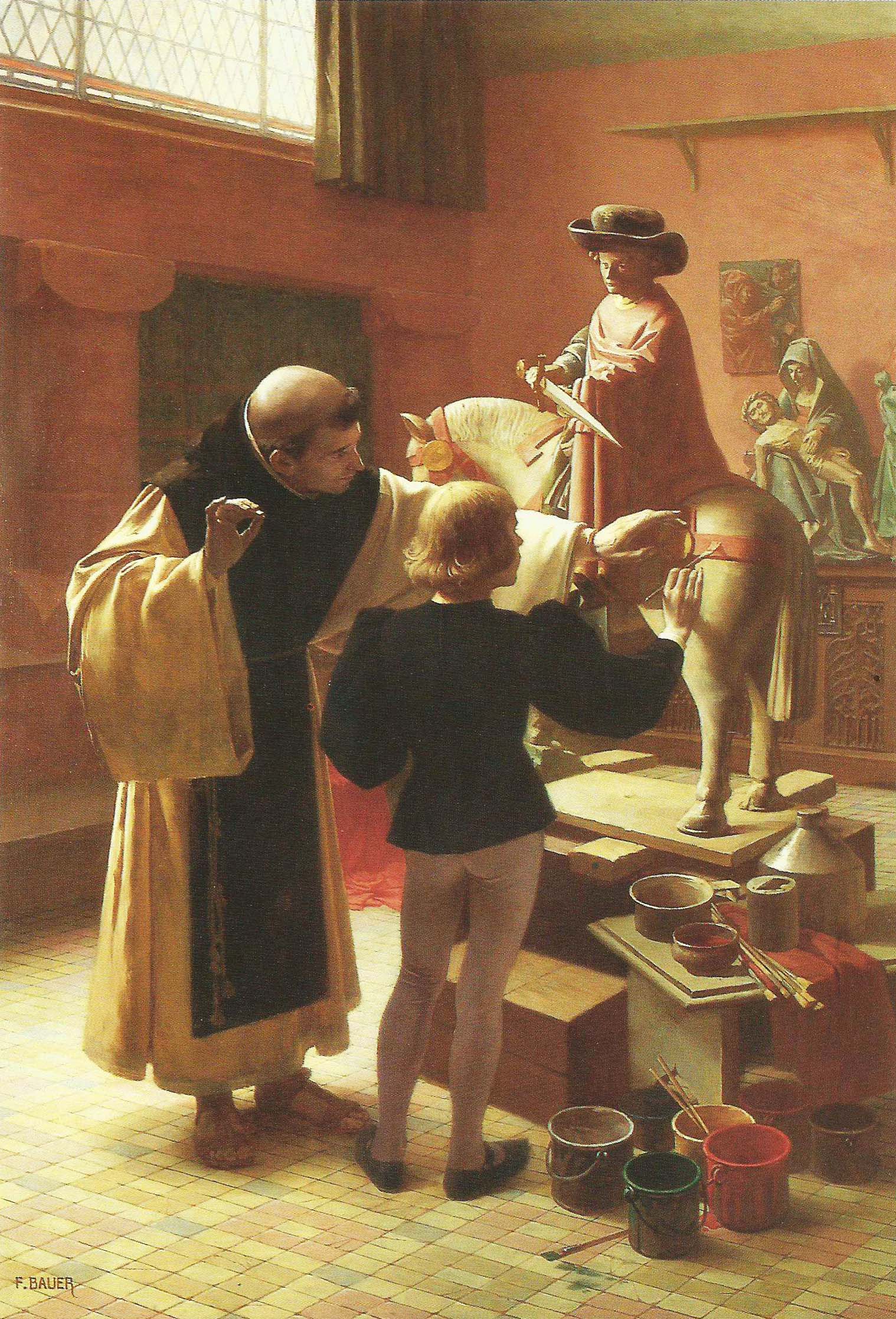 3
3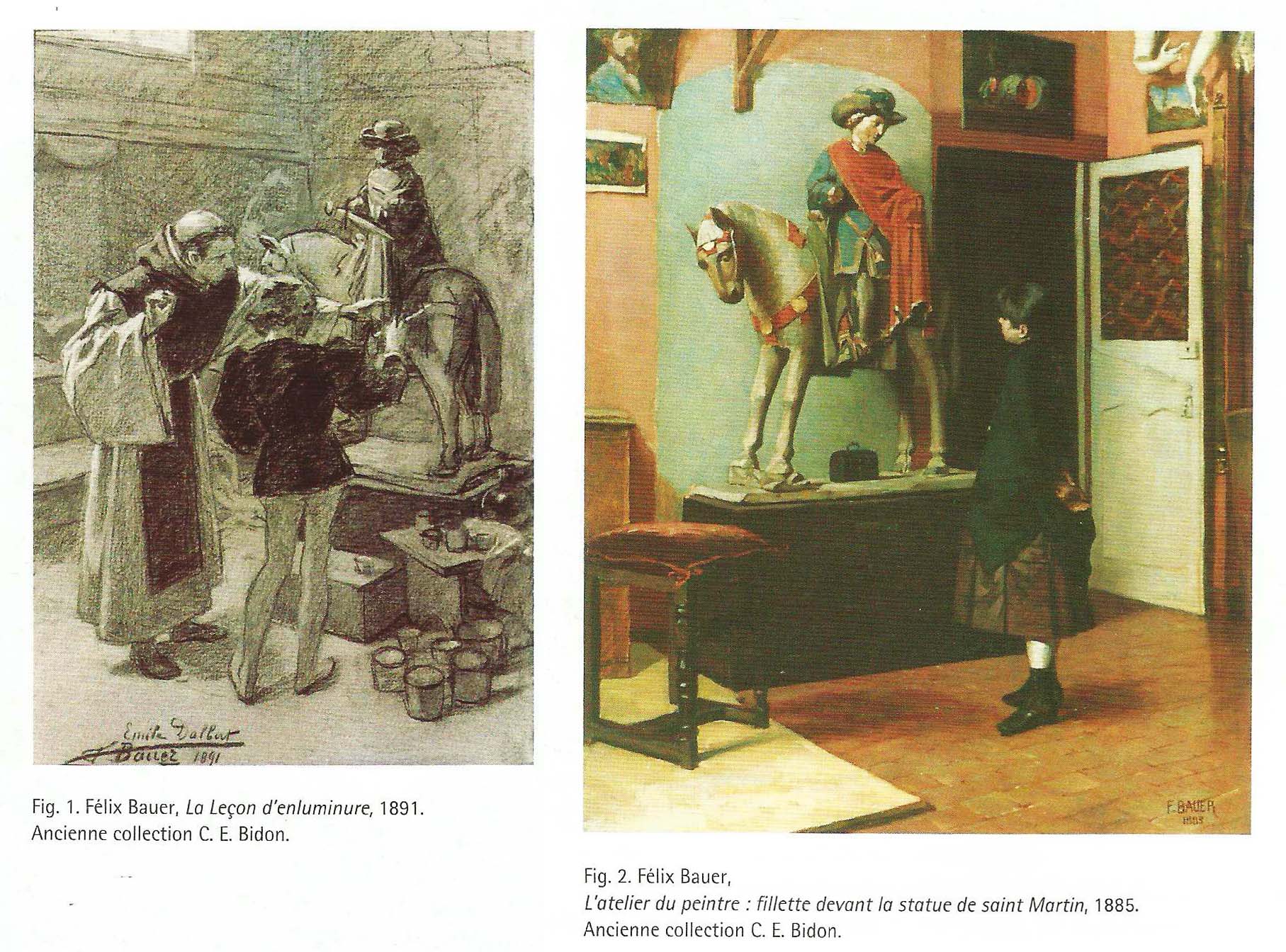 varieties
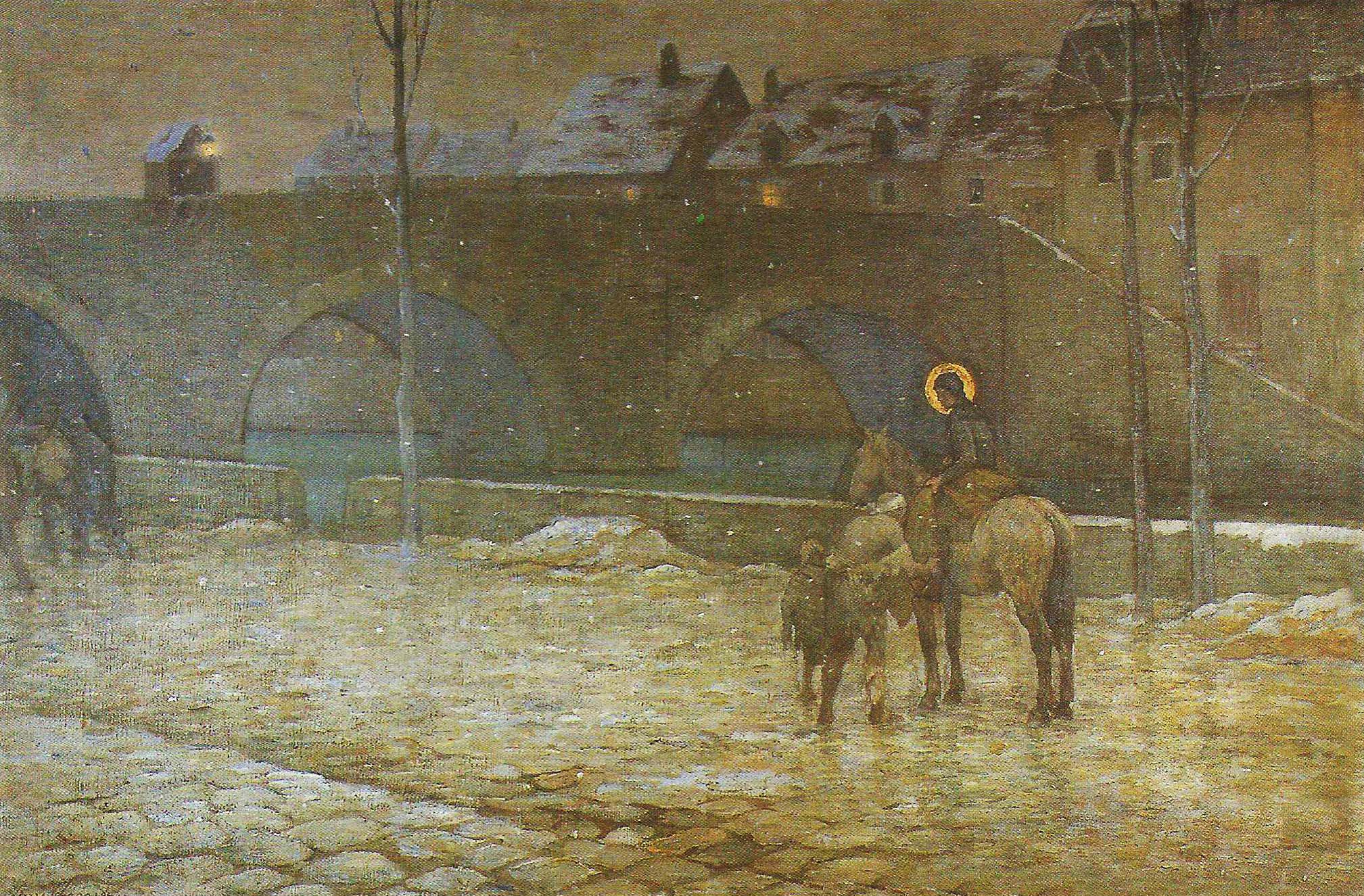 4
4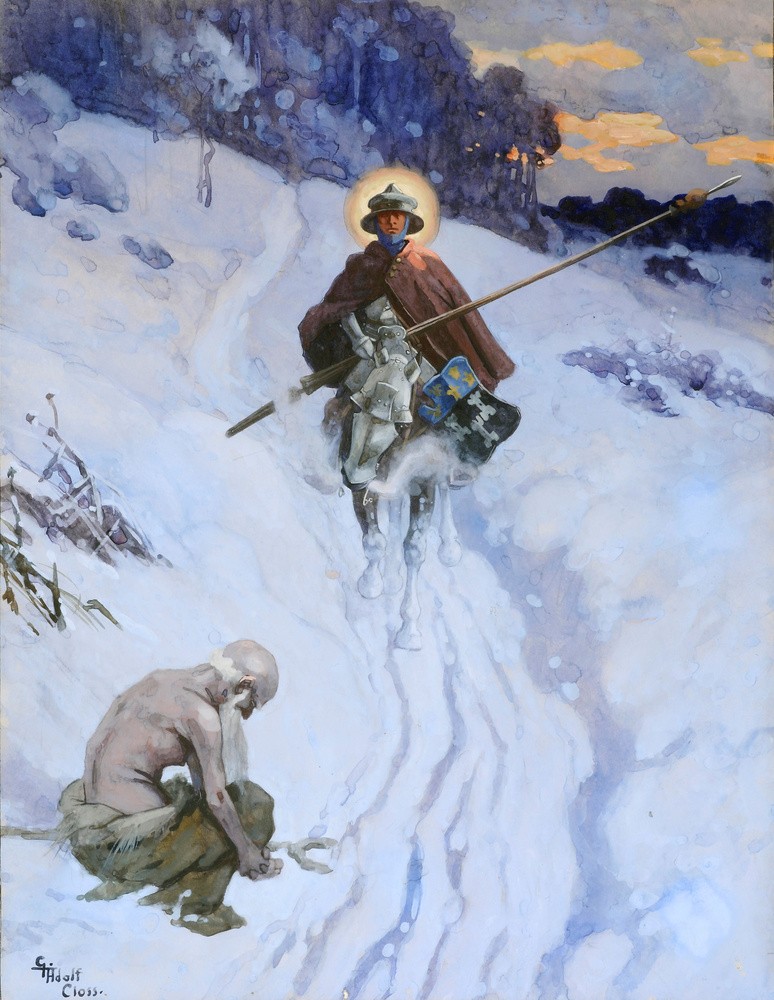 illustration
Tours, Marmoutier 3/3, Ligugé, Candes: a new religious impetus. After the destruction of the Revolution, from 1850 to 1905, under the initiative of the Congregation of the Sisters of the Sacred Heart, the site of Marmoutier (see Marmoutier
2/3) was partially restored and, in parallel with the fervor of the rediscovery of the tomb, pilgrimages resumed, and a tramway line even linked the site to Tours. Michel Laurencin provides details in the book "Saint Martin XVIème centenaire" (CLD 1996) and draws a parallel with Ligugé and Candes : "On June 29, 1847, the Superior General of the Sacred Heart, Mrs. Barat, completed the purchase of the former abbey of Marmoutier, alienated and largely destroyed during the Revolution. At the same time, on June 1, 1852, Bishop Pie, bishop of Poitiers, attentive to the restitution of the Martinian cult, bought the buildings and garden of the former monastery of Ligugé. [...] On November 14, 1858, the pilgrimage to Ligugé was accomplished, after those to Marmoutier in May and Candes in July of the same year. From May 10, 1860, the pilgrimage of Candes gathers six hundred pilgrims by special train from Tours to Varennes and then by omnibus to the church of the death of Saint Martin. [...] On November 14, 1858, in the homily he delivered at the cathedral, Bishop Pie, addressing Archbishop Guibert, Archbishop of Tours, passionately declared "I will do all that is in me to promote the re-establishment of a devotion that I regard as one of the powerful means of Christian regeneration of our time.".
In 18 photos, the procession from Tours to Marmoutier in 1897. In "Mémoire en images, Tours" (volume 1, Alan Sutton éditeur 1993), Brigitte Lucas delivers an exceptional reportage on this Martinian day of November 14, 1897, from Tours to Marmoutier (visit of its caves), on nine pages of 2 photos each : 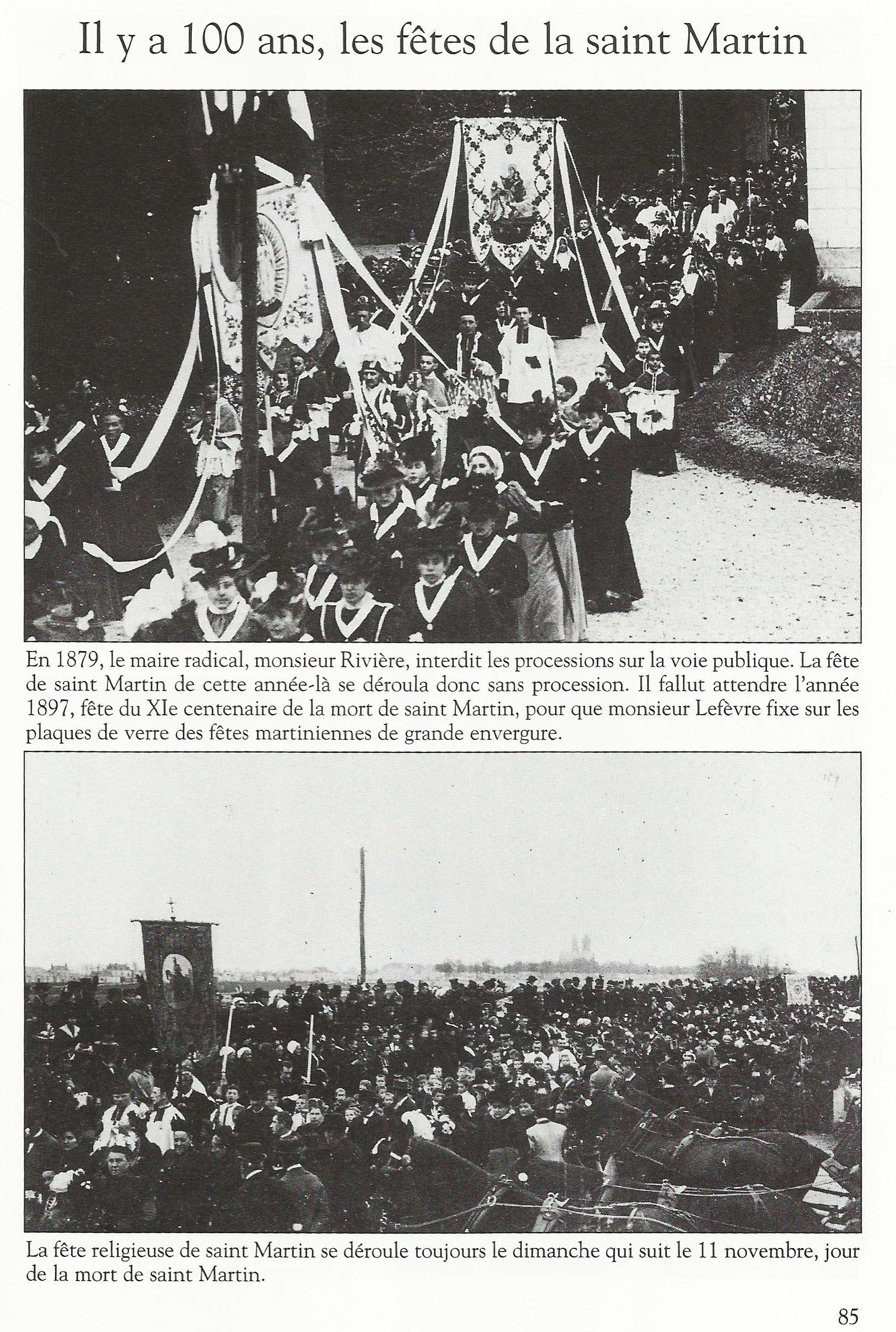 1 1
 2 2
 3 3
 4 4
 5 5
 6 6
 7 7
 8 8
 9.
See also Marmoutier
1/3
2/3. 9.
See also Marmoutier
1/3
2/3.
|

 photo
photo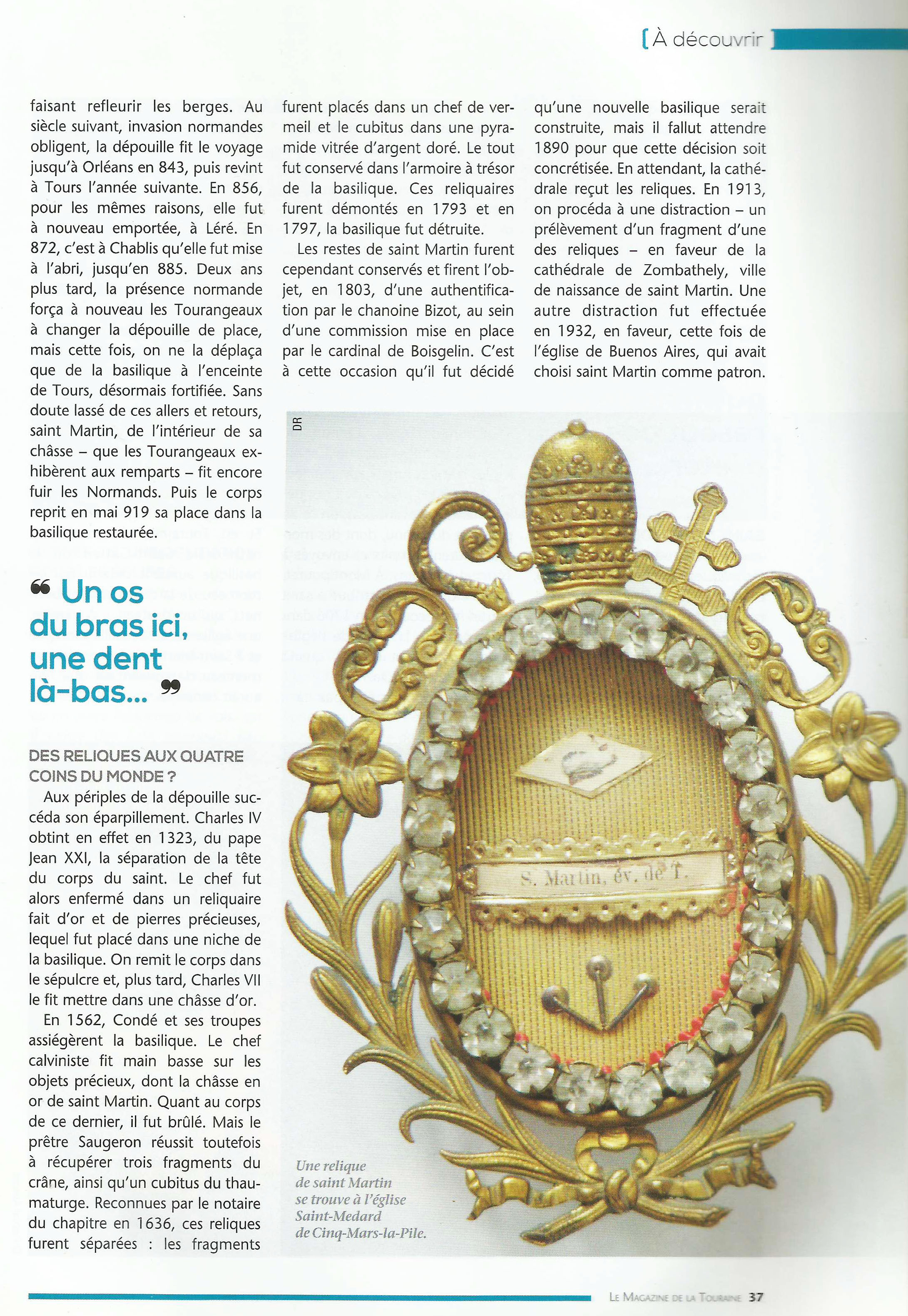 excerpt
In 1897, under the episcopate of
René François Renou, the 1500th anniversary of Martin's death was given exceptional pomp, in the presence of 22 prelates. Michel Laurencin : "The image of the monk-bishop was then the bearer of the fight against rationalism, scientism, detachment from religious precepts, triumphant secularism. Martin of Tours, the monk certainly, the bishop also, the thaumaturgist again, is above all the soldier, this "great national saint" as the archbishops like to describe him."
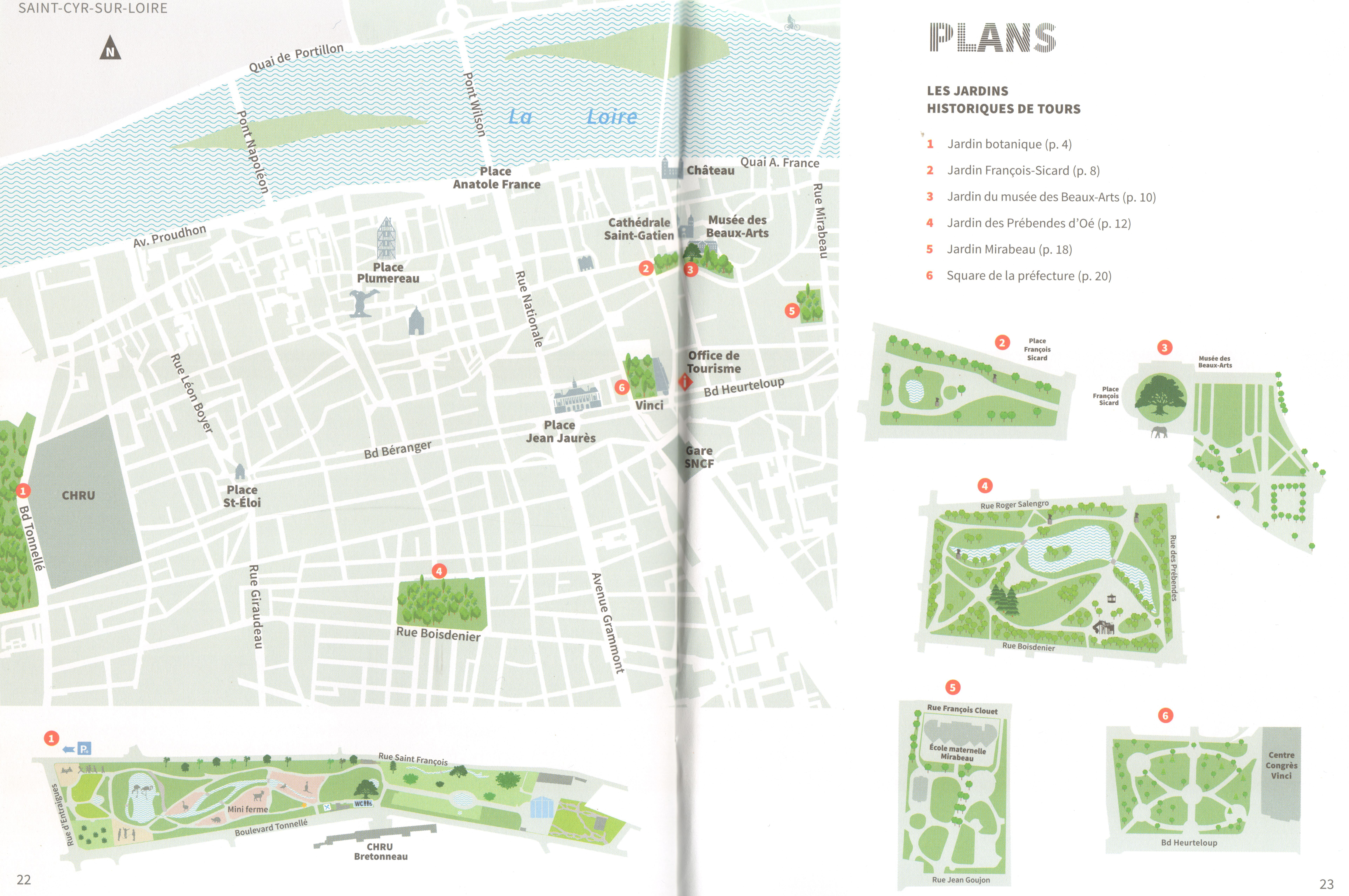
Left the spring 2004 of the rhododendrons at the Botanical Garden, center the Prebends Garden (and others) [ plaquette municipal "Historical Gardens" 2017], right, the fall 2003 of the ginkgo biloba donated in 1843 by Dr. Bretonneau at the Botanical Garden. It can be considered the most beautiful tree of this space in Europe (complements on the nearby page of the ginkgos of Tours).
|
 1
1 2
2 3
3 4
4 5
5
 Guillaume Meignan (1817-1896), archbishop of Tours from 1884 to 1896, put an end to the crisis, obtaining the Vatican's approval. He also oversaw the construction of the new basilica. He was appointed cardinal in 1893. Jacques Verrière presents him as "a reasonable man, concerned with peace and ready to compromise. He pleaded the irrelevance of a great basilica "which would remain unused four-fifths of the time almost every day of the year" and enjoined the war-mongers not to imitate the "Jews of Jerusalem, so proud of the material beauty of their temple, and so unambitious of pleasing God by their virtues." [...]The fever eventually subsided and Tourangeaux, Catholic or not, appropriated the new basilica." [Verriere 2018]. The design of the new basilica is the result of an intellectual journey that lasted about fifteen years, started by Jules Quicherat and completed by the will of Guillaume Meignan, with Casimir Chevalier and Victor Laloux as project managers.
The
article "Restitution of the Basilica of Saint-Martin de Tours" by Jules Quicherat, written by Charles de Grandmaison, dated 1869, begins thus : "The church built by St. Perpetus, on the tomb of St. Martin, was not only the most famous and the most frequented, but also the most magnificent of ancient Gaul. Built at the end of the 5th century, it was the source of astonishment and admiration for all those who saw it until the 10th century, when it was completely destroyed. Gregory of Tours speaks about it with a kind of enthusiasm and he gives us about it very precise indications, but at the same time very-incomplete, which only irritate the curiosity without satisfying it.".
Jules Quicherat (1814-1882) makes the best restitution of the Perpet basilica. Charles de Grandmaison explains that, following previous attempts, Jules Quicherat, "professor of archaeology at the Ecole des Chartes," has just made a restitution based first on Gregory's description and also on other testimonies. He then gives a precise description of Quicherat's work and the choices he made. "In his interesting and curious work,, Mr. Quicherat does not limit himself to rendering for us the ancient basilica of Saint Perpeto, he also makes us aware of its dependencies, such as the abbot's cell, the cloister, the austerity placed in front of the façade of the basilica, and several chapels". And to conclude : "It is permissible to say, without fear of being accused of exaggeration, that one finds in this restitution of the basilica of Saint-Martin the most profound archaeological science, united with a talent for interpreting and making texts speak that no critic of our time possesses to a higher degree than Mr. Quicherat".

1869, the "restitution of Jules Quicherat", here the four illustrations + the book in full (45 pages, Numelyo).
|
This restitution was the subject of another
study in a "Casimir Chevalier" colloquium in Tours on May 28, 2011, conducted by Jessica Basciano. She begins with this summary "He applied his knowledge of Christian archaeology, accumulated in Rome as in Tours, to a project for the basilica developed with Victor Laloux (1886-1925). This project made conscious reference to archaeological speculation about the 5th-century church that stood over Martin's tomb, especially that of Jules Quicherat. Although Laloux later transformed the project, the finished basilica reflects Chevalier's involvement." It also reads "The contribution of Casimir Chevalier to the construction of the Basilica of Saint-Martin in Tours by Victor Laloux demonstrates the growing synergy between archaeology and the Catholic Church in the second half of the nineteenth century. [...]The Archbishop of Tours, Mgr Meignan, supported a project for a church on the tomb of St. Martin that was based on an archaeological reconstruction of the church built on that tomb in 471. Chevalier and Laloux worked together on this project."

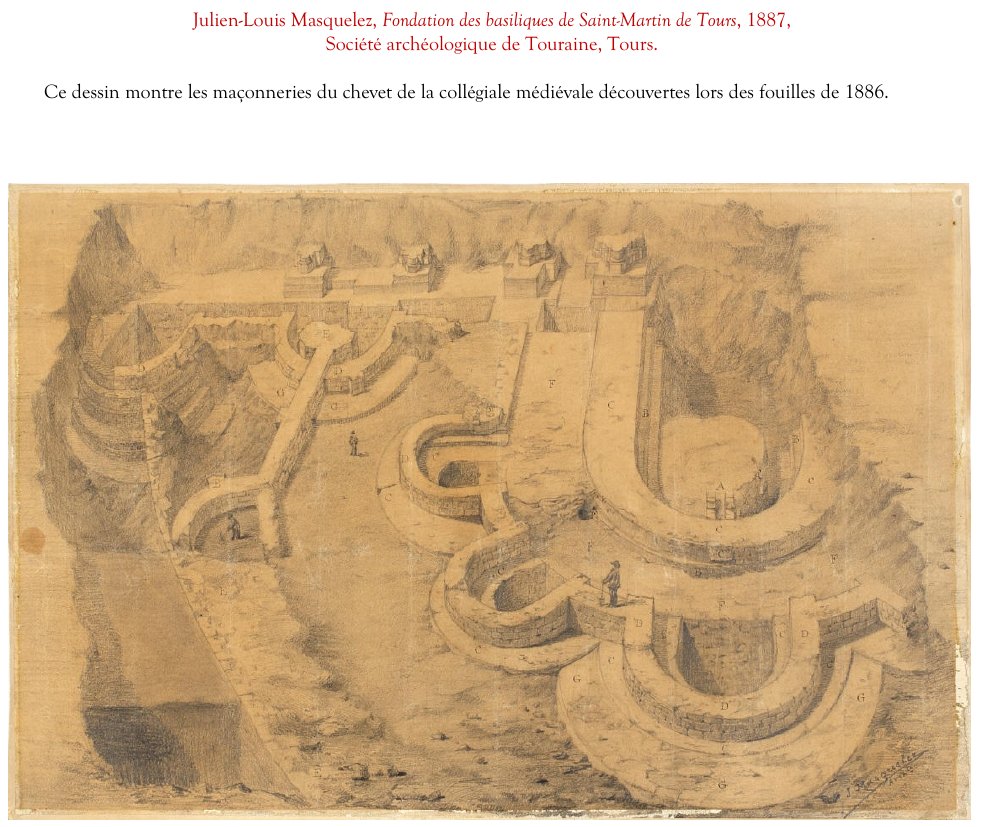
1886, the excavations, directed by Casimir Chevalier. Below, 1887, remains uncovered [Julien-Louis Masquelez, SAT, dossier educational 2016].
Rare elements of Perpet's basilica were found there. Hervé's was three meters lower than Laloux's, with Perpet's being even lower.
+ report by Henri Galinié of the 1979 to 1982 excavations at the Saint-Martin site [Ta&m 2007].
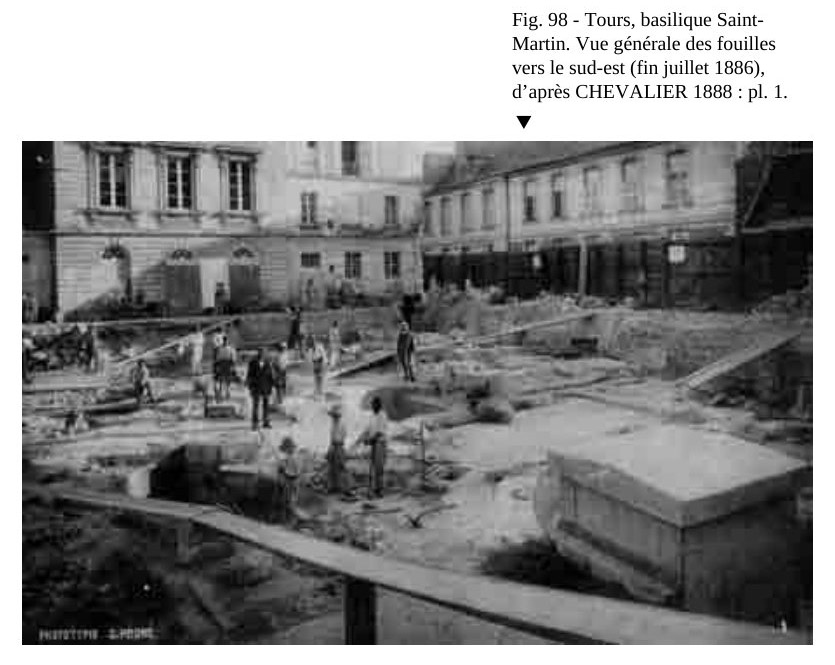

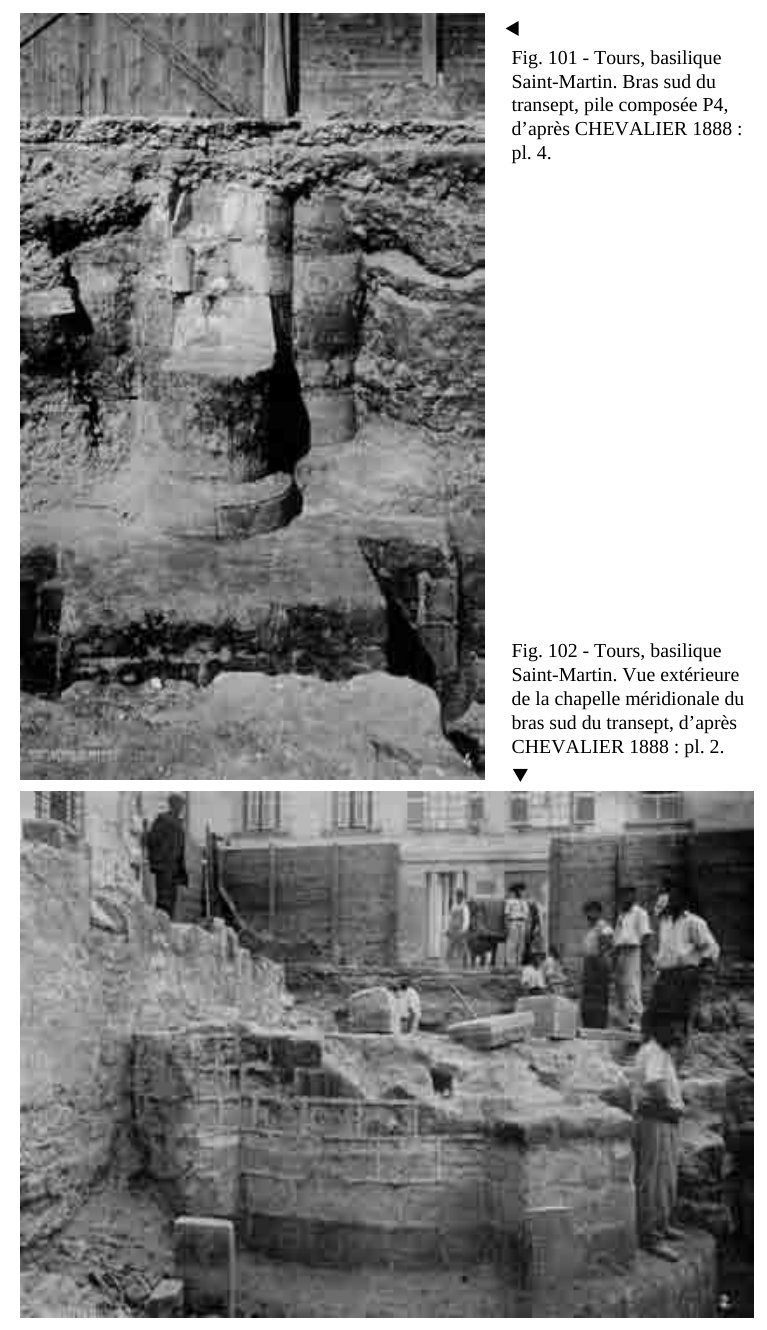
Photos of the excavations in 1886 [Casimir Chevalier] mainly from an excerpt ( text and photos) of Pierre Martin's 2010 dissertation for the University of Poitiers, titled "Les premiers chevets à déambulatoire et chapelles rayonnantes de la Loire Moyenne" (links : 1 2). Remains remain accessible in the basement of the current basilica :
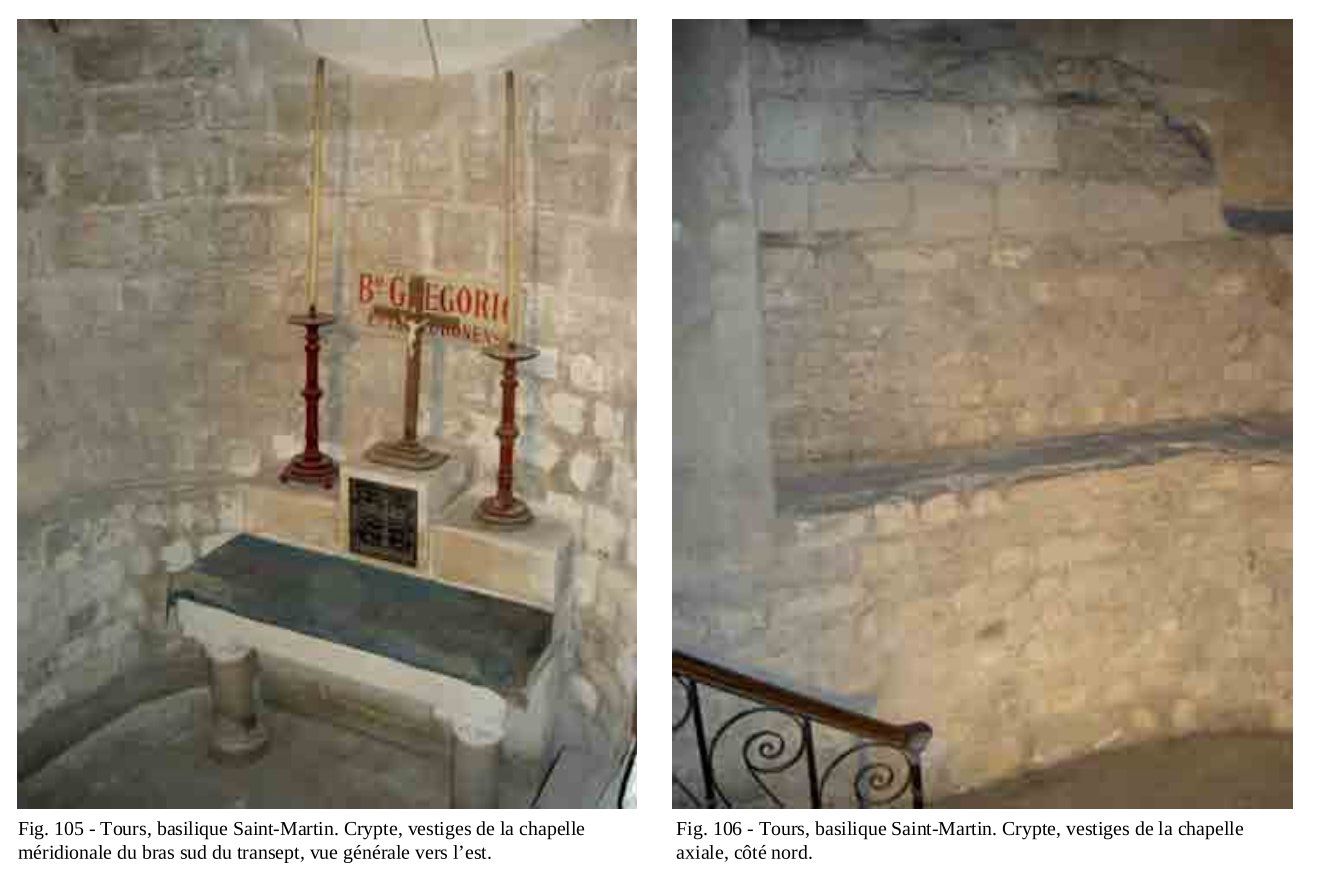 1 1
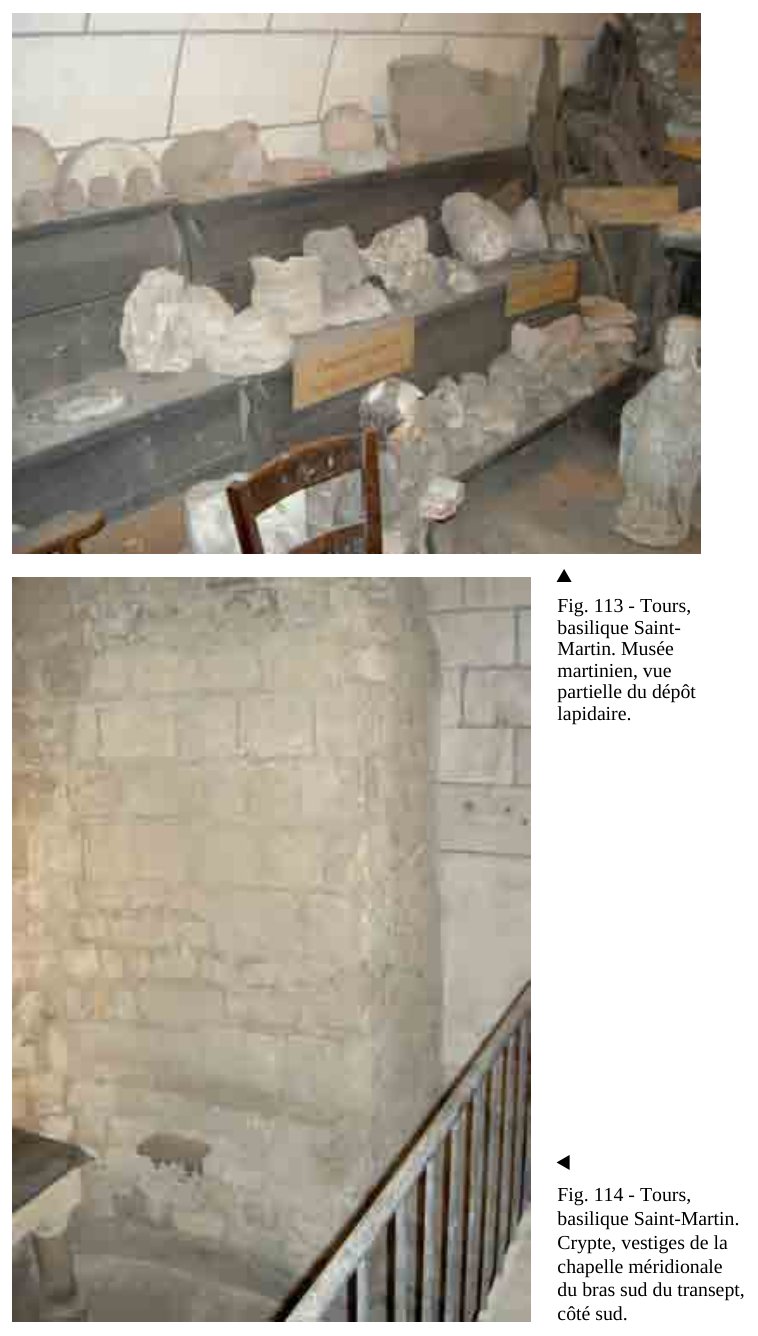 2
+ article 2013 by Pierre Martin "New proposals for dating the 11th century chevet"
+ 2
+ article 2013 by Pierre Martin "New proposals for dating the 11th century chevet"
+ 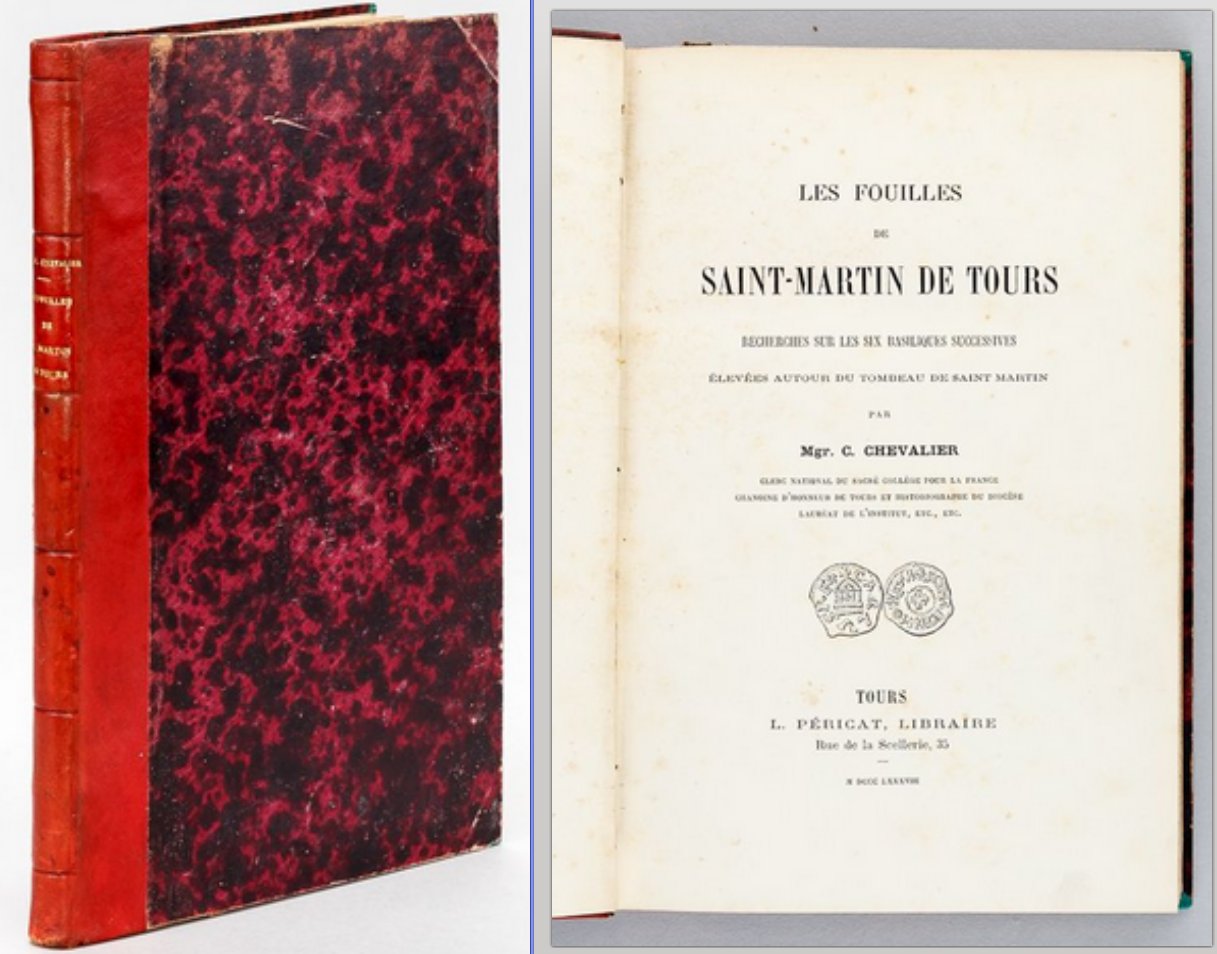 book by Casimir Chevalier on his excavations. book by Casimir Chevalier on his excavations.
|
Casimir Chevalier (1825-1893), a scholar of early Christian art, wanted to regenerate the Basilica of Perpet. Jessica Basciano then introduces Casimir Chevalier : "The most important of the scholar-priests in the group near Meignan was Mgr. Casimir Chevalier (1825-1893). During his training at the Grand Séminaire de Tours, Chevalier was captivated by the lectures of Abbé Jean-Jacques Bourassé (1813-1872), an archaeologist who wanted to make Christian archaeology widely accessible. When Chevalier became a priest, Bishop Morlot asked him to learn both the ecclesiastical and natural sciences, so that he could defend the Church on all terrains. Responding to his request, Chevalier published on geology, history, and archaeology. Chevalier was well prepared to help the archbishop realize the church on Martin's tomb in the Paleochristian style. [...]Chevalier's research enabled him to write, in 1878, a detailed description
of the early Christian basilicas of Rome. [...]As recently as October 1884, Chevalier had asked Victor Laloux
(1850-1937) to work with him on a project for the new Saint-Martin Basilica. He had met him at Chenonceau while he was the castle historian and Laloux was still a student, probably around 1869. [...]Laloux was an obvious choice for the position of architect of the Saint-Martin Basilica since he came from Tours, had won the prestigious Grand Prix de Rome, and Chevalier already knew him."
Michel Laurencin [
Catalogue 2016] shows that there was reluctance "A first prize of Rome does not give experience, nor the character of a freemason,[gives]the feeling of Christian architecture. It is perhaps a little for this reason that the plan of Mr. Laloux received the approval of the minister". As for Casimir Chevalier, he made some serious mistakes. For example, he believed that, following the excavations for which he was responsible, the Perpet basilica was the first building with an ambulatory with radiating chapels, which Charles Lelong, as we have seen, denied. The critique of his 1888 book "Les fouilles de Saint-Martin de Tours. Recherches sur les six basiliques successives élevées autour du tombeau de Saint-Martin" by Louis-Charles-Marie de Bodin Galembert shows that these misguidance were then taken seriously.
To the left, Casimir Chevalier + another  photo ;
a symposium was devoted to him in 2001, you can consult the interventions of Bernard Chevalier and Michel Laurencin : 1 2
In the center, Guillaume Meignan
+ photo ;
a symposium was devoted to him in 2001, you can consult the interventions of Bernard Chevalier and Michel Laurencin : 1 2
In the center, Guillaume Meignan
+  vitrail Lobin of the basilica vitrail Lobin of the basilica
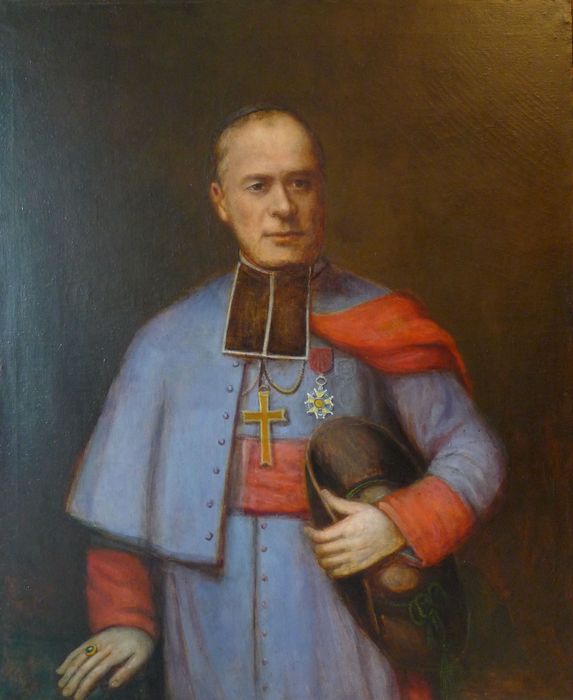 portrait in the church of Saint Julian (link).
On the right, Victor Laloux
+ the portrait in the church of Saint Julian (link).
On the right, Victor Laloux
+ the  photo entire [circa 1900 at his desk, Edouard Pourchet, "Victor Laloux, son oeuvre tourangelle" 2016]
+ photo entire [circa 1900 at his desk, Edouard Pourchet, "Victor Laloux, son oeuvre tourangelle" 2016]
+  portrait of Adolphe Déchenaud. portrait of Adolphe Déchenaud.
|
Jessica Basciano, continued : "In October 1884, Bishop Meignan asked Chevalier and Laloux to make a study " of a project for a chapel for St. Martin's, on the model of the Latin basilicas of the Vth-VIth century " Both in response sent to Meignan a letter, a written program, and " the sketches, such as we have discussed with you on several occasions, and such as you have deigned to approve ". The program presented is thus described : "We have applied ourselves to follow as exactly as possible the project of restitution of the basilica built by Saint Perpet in the Vth century, as it was exposed with so much penetration by Mr. Quicherat, the eminent professor of archaeology. [...]The sketches that accompanied Chevalier and Laloux's written program in October 1884 are lost. However, a corresponding plan signed by Laloux three months later, in January 1885, remains. Similar to Quicherat's plan, it depicts a basilica with a nave and aisles separated by columns, a crossing and implied transepts, and a semicircular apse set in a polygonal chevet. We also see the location of the tomb strongly marked by its relationship to a circle inscribed in the apse, whose circumference encroaches on the crossing. In Laloux's plan, the circle is formed by a light shaft opening onto the tomb and the crypt; in Quicherat's plan, it is formed by a colonnade between the tomb and the ambulatory, and by the balustrade between the tomb and the altar. In addition, the two basilicas face atriums.".


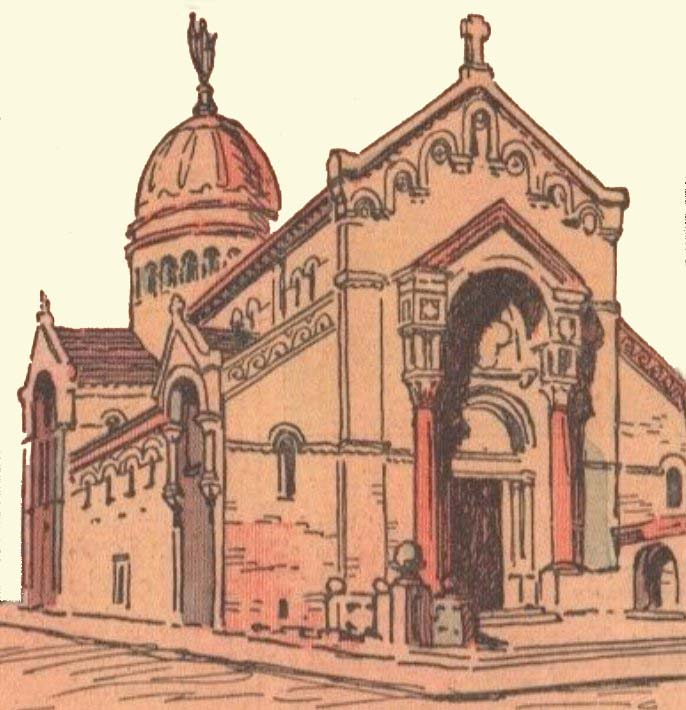
Quicherat's restitution (arranged by symmetry) in 1869, Laloux's plan in January 1885, and the final plan in 1886 [plans in resumptions of two pages from the book "Victor Laloux, son oeuvre tourangelle", Hugo Massire, Sutton 2019] +  unsuccessful project of bell tower-campanile [same origin] + unsuccessful project of bell tower-campanile [same origin] +  plan intermediate of February 1886 [colloquium C. Chevalier 2011, Jessica Basciano]
+ another plan intermediate of February 1886 [colloquium C. Chevalier 2011, Jessica Basciano]
+ another  plan intermediate [Catalogue 2016, Michel Laurencin]. On these plans, in place of the present forecourt, there is a "cloister or pilgrims' atrium" with chapel, janitor's lodge, staircase, salon and chaplain's study. And an exit from the east.... + a plan intermediate [Catalogue 2016, Michel Laurencin]. On these plans, in place of the present forecourt, there is a "cloister or pilgrims' atrium" with chapel, janitor's lodge, staircase, salon and chaplain's study. And an exit from the east.... + a  photo of the construction [Catalogue 2016].
At right, drawing of the Laloux Basilica from a photo of the construction [Catalogue 2016].
At right, drawing of the Laloux Basilica from a  poster for a JAC (Catholic Agricultural Youth) rally in 1935. poster for a JAC (Catholic Agricultural Youth) rally in 1935.
|
Victor Laloux (1850-1937), a young architect practiced in the restitution of ancient buildings. In the book "Victor Laloux, son oeuvre tourangelle", edited by Hugo Massire, published by Sutton in 2016, Caroline Soppelsa describes the conditions in which Victor Laloux deals with the project entrusted to him : "When between 1884 and 1886 Victor Laloux reflects on the form to be given to a basilica that must rise on the very foundations of the churches successively arranged over the centuries on the tomb of St. Martin, he chooses to discard the neo-Romanesque style of the projects of Guérin and Baillargé - tributes paid to the ancient collegiate church of the eleventh century, on the model of Saint Sernin of Toulouse - to favor a return to the origins of the place. In an attempt to recover the spirit of the first sanctuary of the fifth century, of which little was known at the time, the architect relied on the hypotheses of the archaeologists and historians of his time and mobilized the still vivid memories of the paleo-Christian, Byzantine and medieval churches that he had seen in Italy, Greece or the East during his stay at the Villa Medici (1879-1883). In doing so, he rediscovered the reflexes he had acquired for the exercise of restitution of ancient buildings, one of the famous "consignments" traditionally required of winners of the prize of Rome One can imagine the enthusiasm of the young architect who had won the recognition of his peers[in 1878] on a project for a cathedral and had been bathed in Latin culture for the previous five years. Both in the logic of its plan, the articulation of its volumes, the choice of its roofing or the vocabulary of its decorative program, the Basilica of Saint Martin is thus a reflection of the architectural culture of its author, a synthesis of scholarly references to masterpieces of the past, accumulated, mixed and reinterpreted with relish, in the eclectic and historicist taste of the time."
A partially thwarted project. Michel Laurencin [
Catalogue 2016] :"The Abbé Chevalier on several occasions contested the architecture chosen, too inspired for his taste by Romanesque Latin basilicas, to finally succeed in imposing a "Romano-Byzantine" building richly decorated with mosaics and supported by fourteen monolithic columns in red granite from the Vosges, with a framework decorated with caissons made by Pierre Fritel. The archaeologist that is Abbé Chevalier manages to make his demands to the architect." However, in a swing of the pendulum, compared to the plan of January 1885, Victor Laloux had to make corrections. Jessica Basciano : "During the winter of 1885-1886, Laloux reworked the project to meet the demands of the Committee of Inspectors General, and also to make the project less related to Quicherat's hypothetical reconstruction. Whereas in the January 1885 plan, the floor of the sanctuary and transepts is higher than the nave, in Laloux's revised February 1886 plan, the chevet is much lower. And instead of having a visual axis between the nave and the tomb, created by a staircase as wide as the nave that descends in front of the sanctuary, from the nave to the crypt, in the modified plan, the crypt is hidden. In addition, the walls between the aisle chapels are absent and the porch has become a narthex. Laloux also deviated from Quicherat's reconstruction by proposing arcades for the aisles and coupled clerestory windows instead of a tripartite elevation with a gallery. Finally, he deviated further by incorporating Byzantine motifs into the modified design, various motifs such as the hieratic figures in the chevet, as well as the conical dome. The consequence of these changes was that Chevalier distanced himself from the project"
Jessica Basciano begins her conclusion with "Laloux's plans evolved so that the finished building reflects less of Chevalier's knowledge of Christian archaeology and Quicherat's reconstruction than Laloux and Chevalier's original design. The finished building incorporates references to the Italian Romanesque churches that Laloux had seen as a boarder. The complete church nevertheless evokes the church of 471, with its basilica forms - especially the nave separated from the aisles by monolithic columns, the semicircular apse, the exposed framework, and the emphasis on the crossing - and also the preservation and representation of the remains of that ancient church in the crypt. [...] By evoking the basilica of the fifth century Chevalier was an effective support for the ideas of the archbishop who thus strongly attached to Martin and his successors, in an era when, according to the historian Augustin Thierry, the bishops " were the living rule "". Victor Laloux was also the architect in Paris of the
Orsay station, in Roubaix of the hôtel de ville and, in Tours, the hôtel de ville and the gare.
A political will to place itself in the continuity of Martin's apostolate. Jessica Basciano ends with this political analysis, against the background of the long quarrel that opposed Archbishop Meignan to those who wanted to rebuild a great collegiate church : "The archbishop was at odds with the members of the Work because of their insubordination and also because of their political views. The Work's project for the reconstruction of the eleventh-century basilica symbolized the restoration of an ideal Ancien Régime when church and state were unified. It offended the liberal attitude of Bishop Meignan, as well as Chevalier, that the Church was not the enemy of any political system, an attitude in line with that of
Leon XIII. Rather than rebuild the eleventh-century basilica, Meignan wanted to connote the historical era in which Martin lived. In his first pastoral letter as Archbishop of Tours, he had compared the 19th century to the 4th century, and himself to Saint Martin. Speaking of the latter, he wrote that "the weapons of his apostolate are still ours, and it can be said that his battles are also our battles. Idolatry, it is true, has changed form, and the idols have changed name; but is our century any less pagan? Wealth, voluptuousness, pride, ambition, false science are still gods too well served and much too honored ". By accepting the Paleo-Christian style for the church over Martin's tomb, Bishop Meignan linked post-revolutionary France more closely to pre-Christian Gaul and himself to Martin. Bishop Chevalier was the ideal person to help the archbishop realize his vision. Like him, he was on good terms with the republican government and his policies conformed to those of Leo XIII. In helping to
design of a basilica that drew on his knowledge of Christian archaeology and was influenced by Quicherat's hypothetical reconstruction, Chevalier helped reinforce the legitimacy of Archbishop Meignan's authority and his liberal policies."


The St. John's Baptistery in Poitiers is one of the oldest Christian monuments whose origin dates back to the second half of the 4th century, beginning of the 5th. It has been heavily remodeled over the centuries.
+  plan of evolution
+ plan of evolution
+  evolution in three states (link). One might also consult the page Wikipedia titled "Paleo-Christian architecture" (with a chapter "The baptisteries"). Is it likely that workers or architects were involved in both this construction in Poitiers and that of the Perpet basilica in Tours ? evolution in three states (link). One might also consult the page Wikipedia titled "Paleo-Christian architecture" (with a chapter "The baptisteries"). Is it likely that workers or architects were involved in both this construction in Poitiers and that of the Perpet basilica in Tours ?
|
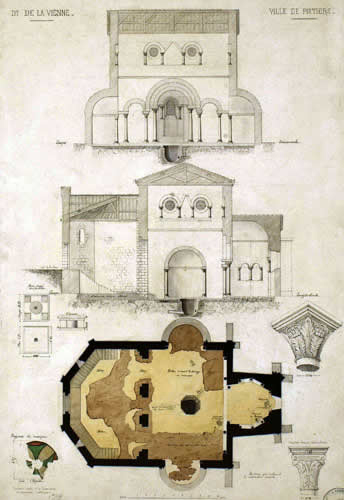
Contestation of Quicherat's restitution. In his
article "Results of the 1886 excavations at Saint-Martin de Tours," Charles de Grandmaison examines these remains, attributes some to the Perpet basilica, and refutes others. He concludes by expressing doubts about Quicherat's restitution : "Monsieur de Lasteyrie combats most of his hypotheses, some of which, indeed, seem rather hazardous. Would the eminent archaeologist have maintained them in the presence of the result of the excavations executed in 1886 ?". Yet, according to Jessica Basciano, Casimir Chevalier would have well taken into account some of the results of the excavations : "Chevalier was convinced that in the excavations of 1886, he had discovered the foundations of a chevet with an ambulatory and five apses datable to the fifth century [which turns out to be false]. Consequently, he no longer accepted the distribution of the chevet presented in Quicherat's reconstruction."


The Church of San Salvador in Brescia [Wikipedia], Lombardy, founded in 753, an example of Pre-Romanesque art that post-dates the construction of the Basilica of Perpet and predates its reconstructions following Viking devastation and fires. Compare with, on the right, the Laloux basilica.
|
Excavations that do not trace the building back to the fifth century. In a
study of 52 pages, dated 1891, titled "L'église Saint-Martin de Tours, étude critique sur l'histoire et la forme de ce monument du Vème au XIème siècle," Robert de Lasteyrie (1849-1921) takes up the various elements of restitution and excavations on the Perpet basilica. In his introduction, he expresses his respect for Jules Quicherat, "one of the masters of French scholarship," and Casimir Chevalier, "one of the most erudite priests of the diocese of Tours." Then he shows the ravages that struck the basilica, especially during the Norman invasions, and estimates that there were several "total reconstructions". This assertion appears criticizable that the Vikings plundered and burned the basilica, certainly, but it is less understandable that they knocked down all the walls, which were very thick. The author comes to wonder : "Were there then some traces of the basilica built by Saint Perpet ? How to admit it after the account that we have just made ?". And to answer : "We can thus affirm, without fear of error that all these successive restorations had to make disappear until the last stone of the basilica of the Vth century, well before the fire of 997 had necessitated the construction of a new building".
New objections to Quicherat's restitution. Robert de Lasteyrie consequently considers that the remains under the remains of the basilica of Hervé would not be those of the fifth-century basilica of Perpet (see the chapter on its decorations
therefore) but are later than the middle of the ninth century, corresponding to one of the reconstructions. He then criticizes precisely some of Quicherat's options "The hypotheses proposed by Quicherat for the nave of the church of Saint-Martin would raise still other objections, but I have said enough to prove how hazardous they were, and one will hardly be surprised, I think, if I now undertake to show that what he has written of the sanctuary is, on several points, even less acceptable." The author deduces that : "The basilica of Saint-Martin of Tours was thus an ordinary basilica with an apse on the model so known of the churches of Rome. To want to specify more would perhaps be rash. However, for. my demonstration to be quite complete, I must show how my conclusions can be reconciled with all the texts produced by Quicherat."
The conclusion is without appeal : "I firmly believe that one was mistaken about the plan of the church built by Saint Perpet, that one has consequently sought the remains where they are not, and that the unexpected consequences that one wanted to draw from the excavations of Saint-Martin for the history of Christian art are not justified at all." Thus, Quicherat's restitution and the remains of the decoration of the Perpet basilica cannot be considered authentic. Since the writings of Quicherat, Grandmaison, de Lasteyrie and others, no one has undertaken to make a new restitution of what was the most beautiful monument of Gaul. The criticism of Robert de Lasteyrie is however precise enough so that a computer restitution in three dimensions is proposed...
These late criticisms against the restitution which had initially guided Casimir Chevalier and Victor Laloux justify a posteriori that one moved away from the initial project, the essential being that the result is convincing...
1892, Tours both medieval and modern. Albert Robida, draftsman and writer, in his work "La Touraine" presented above, paints a portrait of Tours beginning thus : "Tours, the ancient metropolis of the province, the old Gallo-Roman city, adoptive homeland of the great St. Martin, who, from Roman legionary to Christian monk and then bishop of Tours, was the great converter of the Gauls and made by his virtues so gloriously resplendent the episcopal see ; Tours, in spite of the changes brought by the centuries, in spite of the great work of transformations brought by its prosperity, which gave it a so modern physiognomy on the surface, strikes nevertheless when one goes out of the large commercial ways or the elegant districts to sink in the heart of the old city, by its medieval character, by the sudden appearance, behind the youngest facades, of a very distant past stubbornly persisting and piercing through all the accumulated changes, despite the imposed masks, despite the undergone scrapings and the excessive modernizations." And Robida ends his chapter on Tours as he had begun it, with Martin : "On the ground where the great bishop rested, whose blue cope was the first standard of France, has just risen a beautiful Romanesque edifice in the form of a cross, bearing in the center, on Romanesque armatures, a dome surmounted by the statue of St. Martin."

View from the south, Laloux's basilica today, in the background on the left, the Charlemagne tower, a half-reconstructed remnant of the old basilica, in front of the square with the calvary (see end of this chapter) on the right [Google Earth April 2019] +  model of the 1886 project, without the statue on top
+ model of the 1886 project, without the statue on top
+ 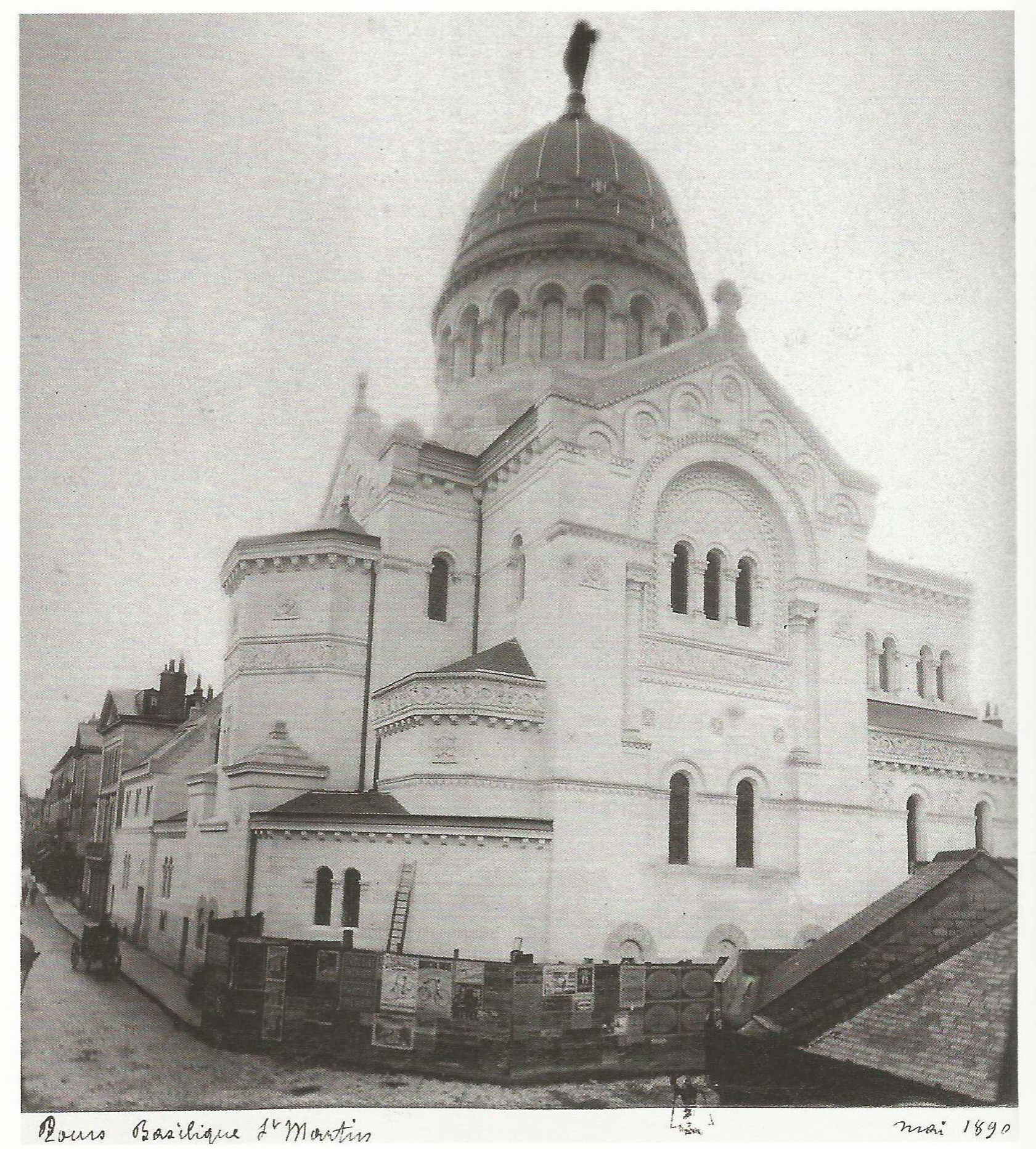 photo from May 1890 [BmT]
+ photo from May 1890 [BmT]
+  photo from 1910 (unfinished basilica, Charlemagne tower)
+ photo from 1910 (unfinished basilica, Charlemagne tower)
+ 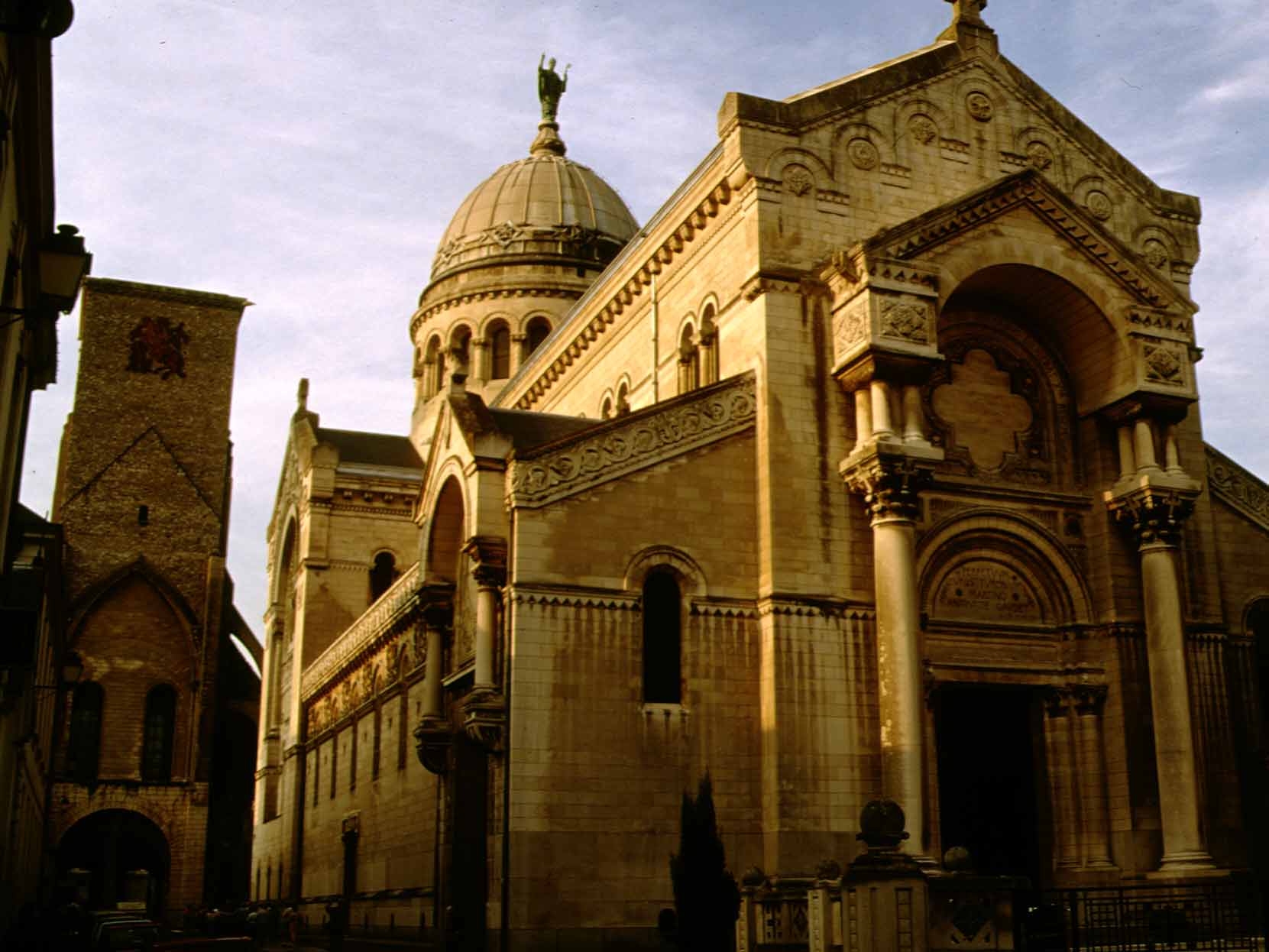 photo from around 1990
+ photo from around 1990
+ 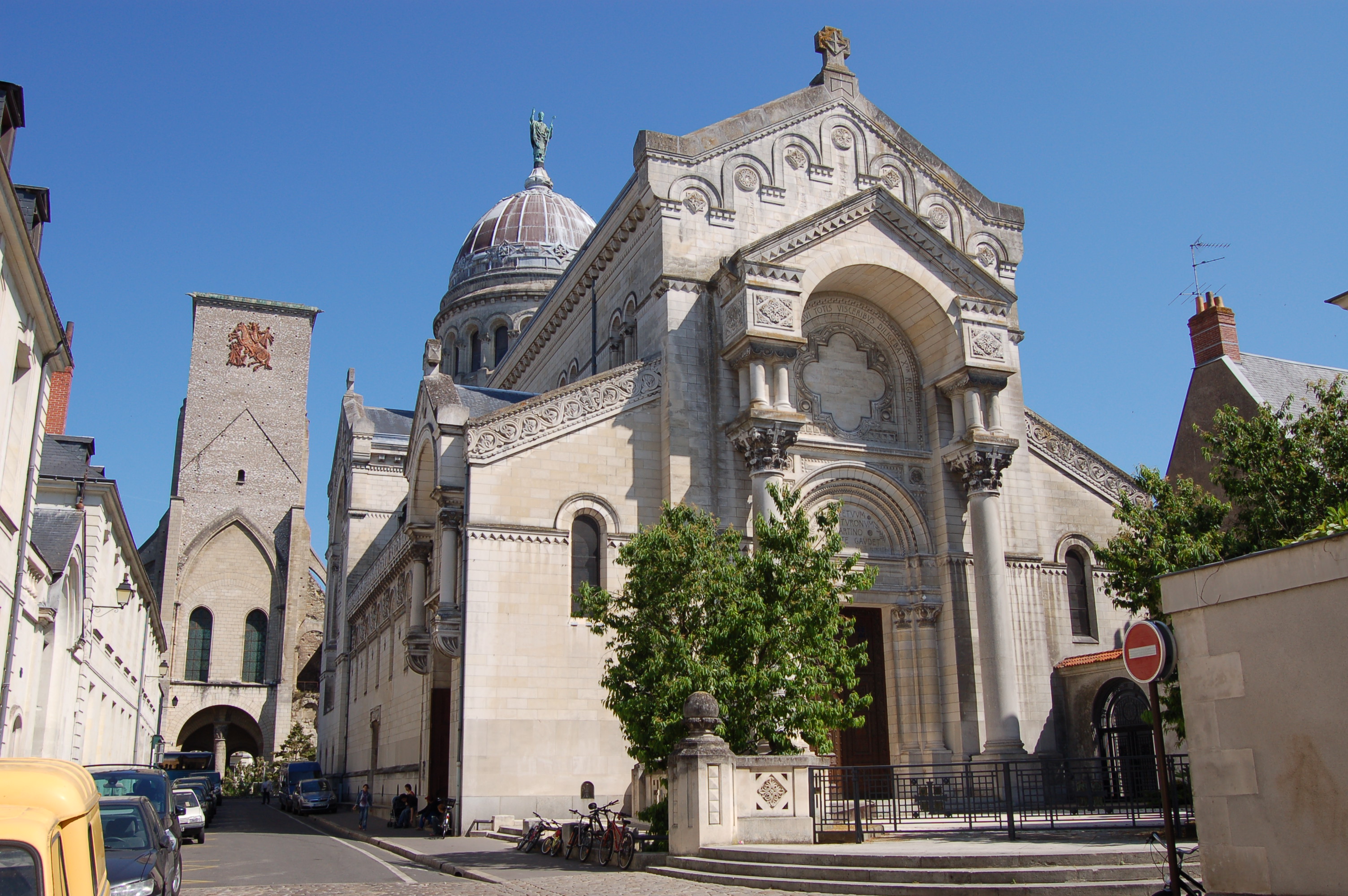 photo circa 2010
+ thirteen early 20th century postcards : photo circa 2010
+ thirteen early 20th century postcards :
 1 1
 2 2
 3 3
 4 4
 5 5
 6 6
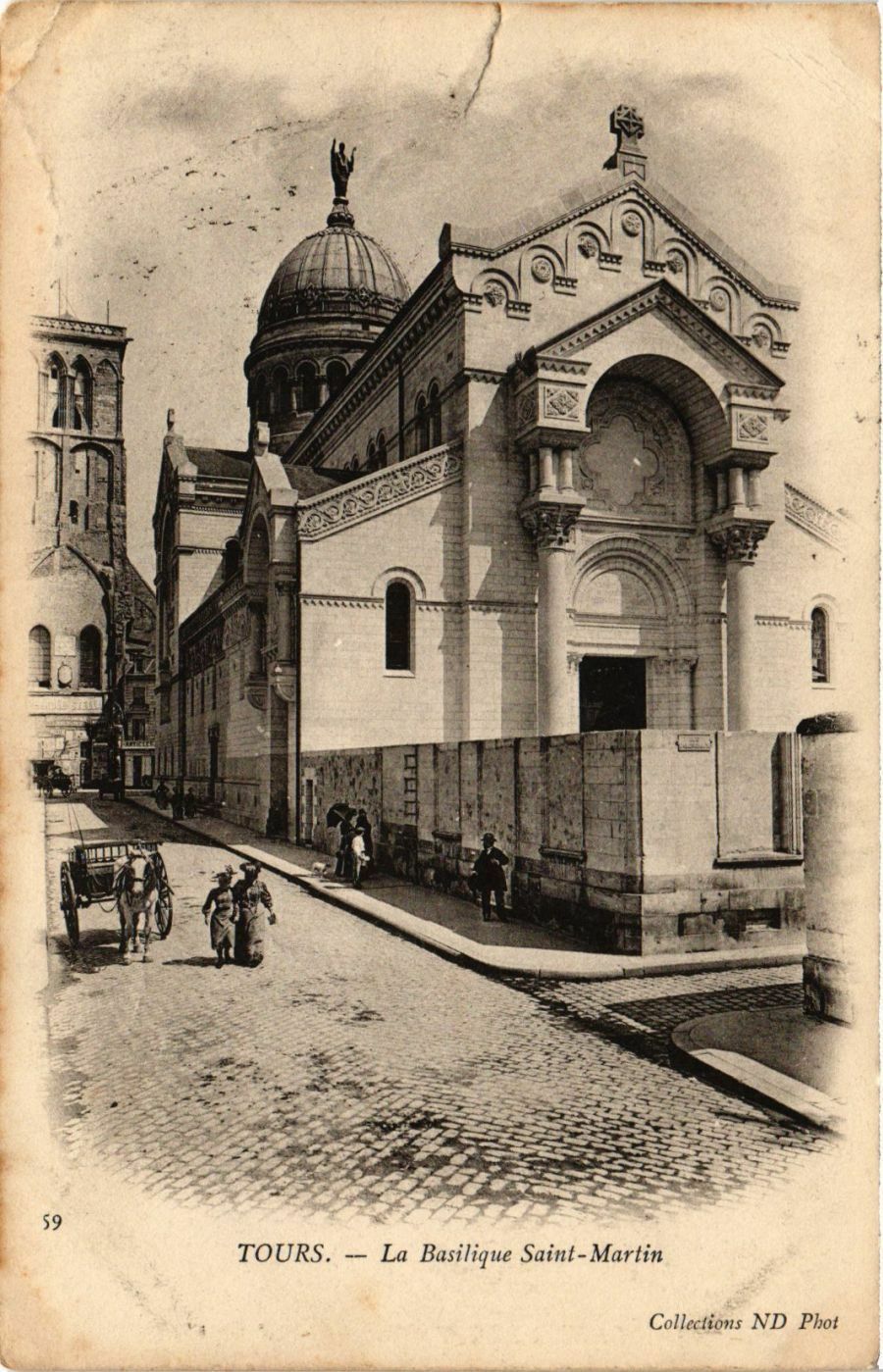 7 7
 8 8
 9 9
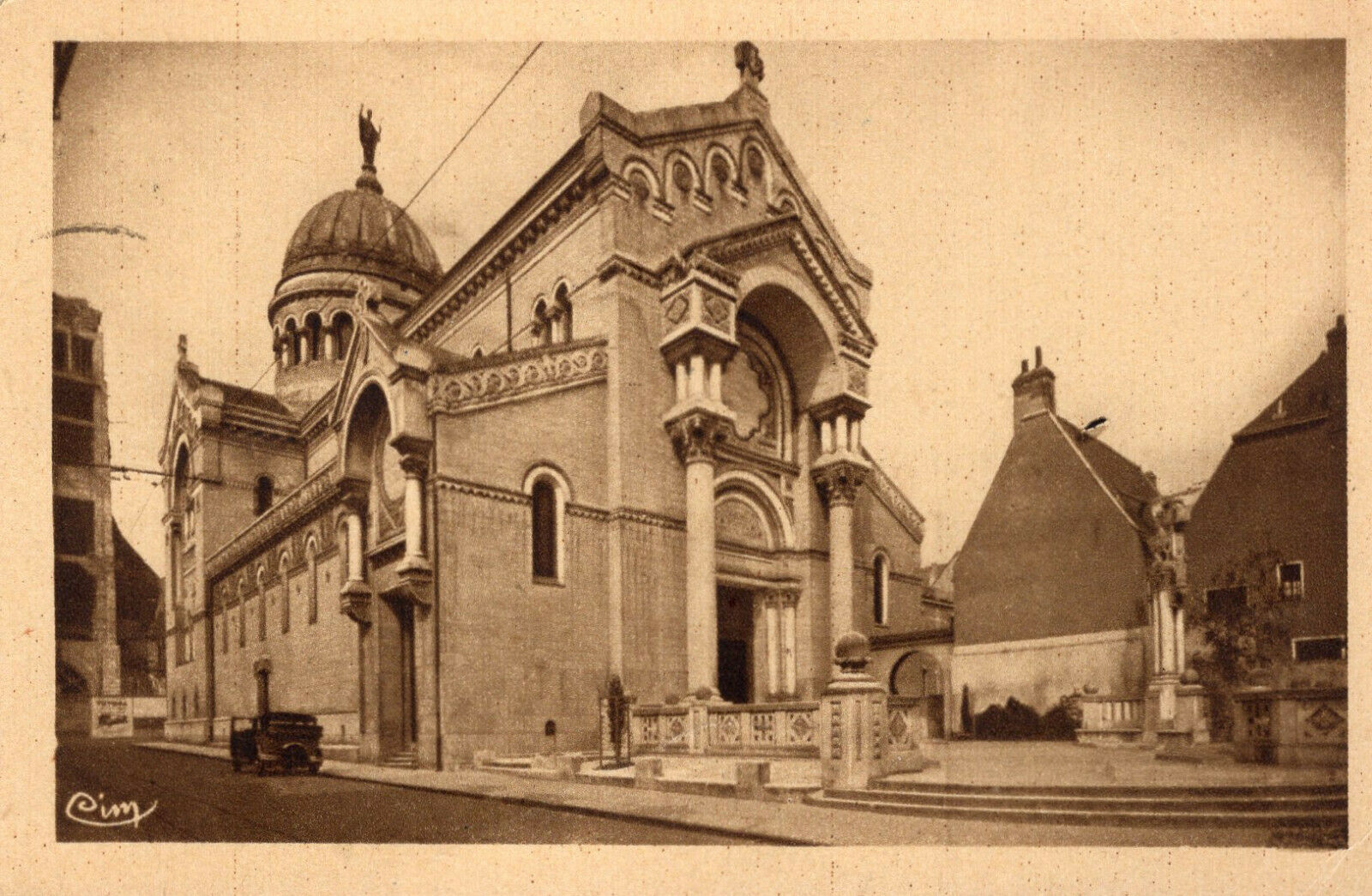 10 10
 11 11
 12 12
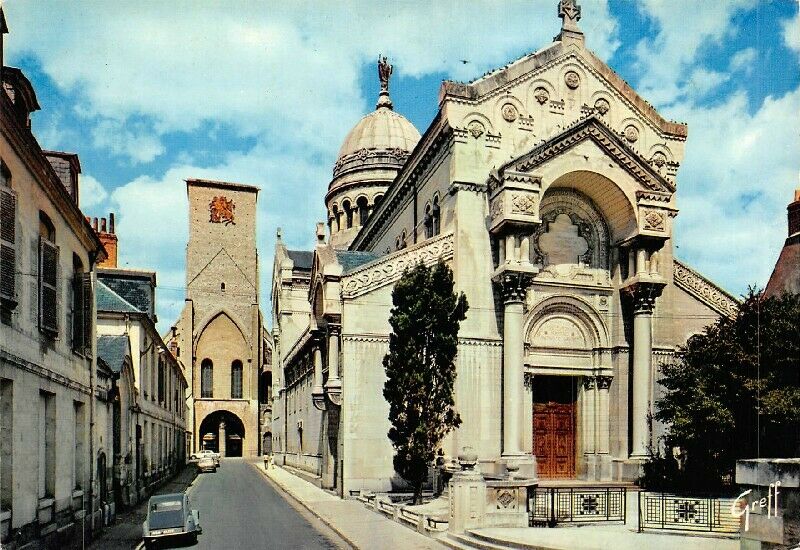 13
+ link other maps (site "A Look for Tours")
+ 13
+ link other maps (site "A Look for Tours")
+  view of North 2017 [flickr Nicolas Rittreau]
+ view of North 2017 [flickr Nicolas Rittreau]
+  extract from the "Guided Tour" flyer presenting the basilica on a map. extract from the "Guided Tour" flyer presenting the basilica on a map.
|
Work began in 1886, the crypt was inaugurated in 1889, the
basilica on November 11, 1892 (+ Chronique des fêtes, 1890, 123 pages, Gallica), the work was completed in several stages, in 1902 and 1925 for the most part, with the parvis completed in 1932 and the ironwork on the fence in 1938. The diagram below positions the four successive basilicas :
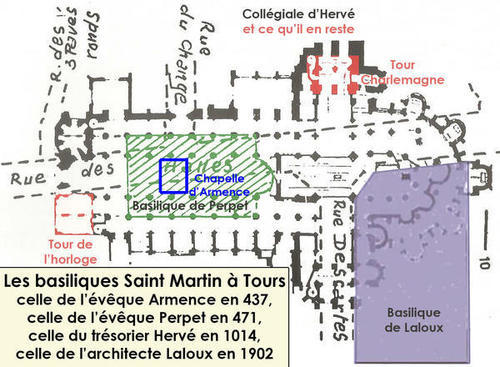
Overlay of a
 plan of the Perpet and Hervé basilicas [1984 expo catalog SAT), a plan of
basilicas of Hervé and Laloux [link] and a
plan of the basilicas of Armence (Brice), Perpet and Hervé.
The tomb is each time located at the altar level of the building. It was thus moved from the basilica of Armence to that of Perpet and then to that of Hervé (cf.
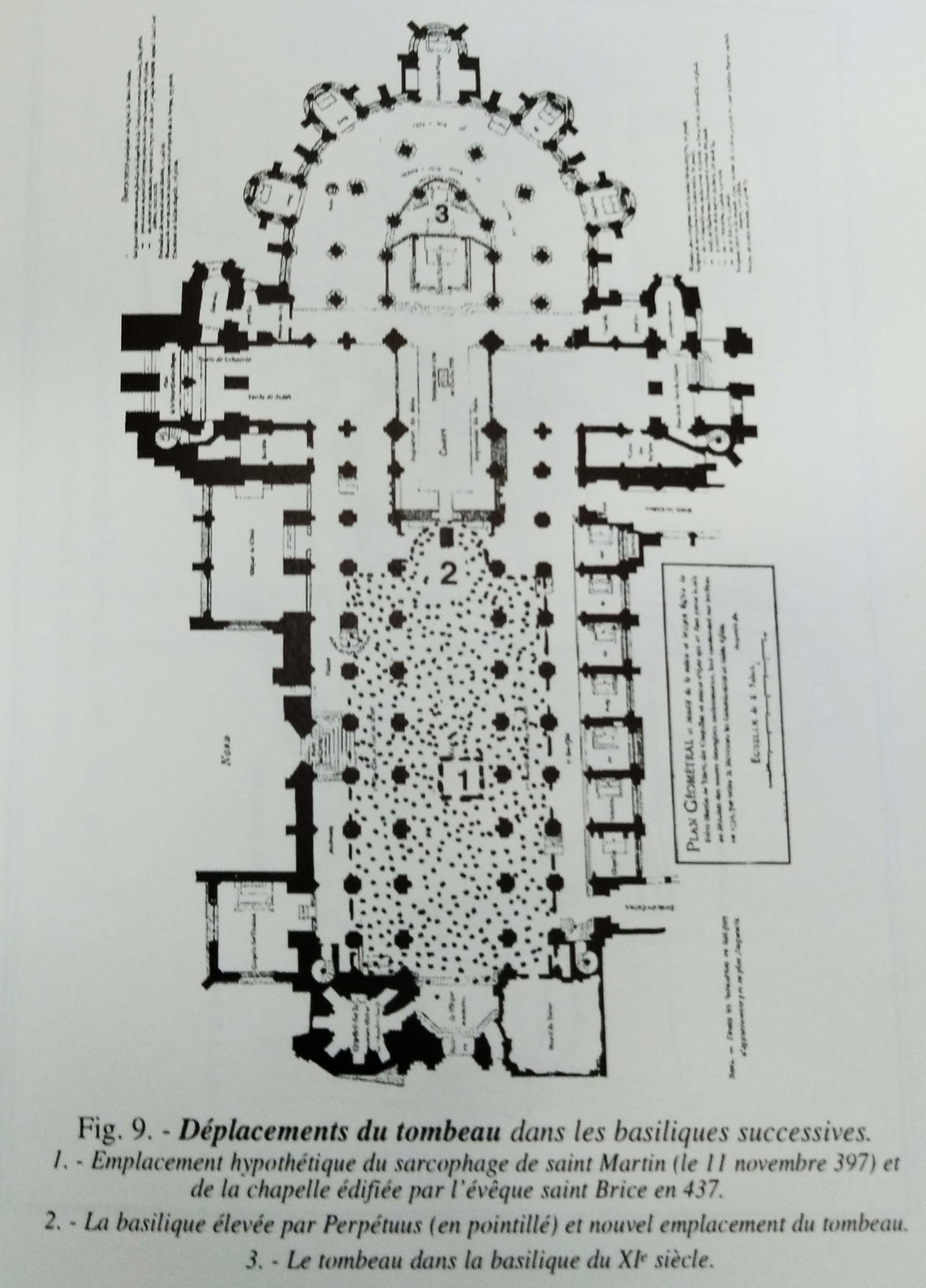 schematic Charles Lelong 2000), the position practically preserved from Hervé by Laloux.
Length - width - height of the Perpet basilica: 53 m, 20 m, 45 m the Hervé basilica: 56 m (the nef alone), 28 m (55 m for the transept). 48 and 50 m for the Charlemagne and Clock Towers ; the Laloux Basilica : 52 m, 26 m, 51 m
(to be compared, previously, with the dimensions of the cathedral of Tours , here and of the abbey church of Marmoutier, there).
schematic Charles Lelong 2000), the position practically preserved from Hervé by Laloux.
Length - width - height of the Perpet basilica: 53 m, 20 m, 45 m the Hervé basilica: 56 m (the nef alone), 28 m (55 m for the transept). 48 and 50 m for the Charlemagne and Clock Towers ; the Laloux Basilica : 52 m, 26 m, 51 m
(to be compared, previously, with the dimensions of the cathedral of Tours , here and of the abbey church of Marmoutier, there).
Fragile foundations? In the book "Victor Laloux, son oeuvre tourangelle", Caroline Soppelsa recalls the first difficulties in the construction : "Very quickly, the poor nature of the subsoil forces to review the foundation system. It is necessary to go down to 14 meters due to the presence of the water table and pump water relentlessly, unforeseen work that swallows up considerable sums". For this, while the foundation stone was laid on May 4, 1886, the actual construction did not begin until 1887. A article from 2006, signed Nicolas Mémeteau, presents the architecture of the monument and sounds an alarm : "The foundations of the basilica are in poor condition. Will it live as long as the medieval collegiate church ? We can doubt it... unless serious work is undertaken". What about now? The lightening of the dome, presented hereafter in the last chapter, is a step in the right direction, but shouldn't we take the initiative to reinforce the foundations?
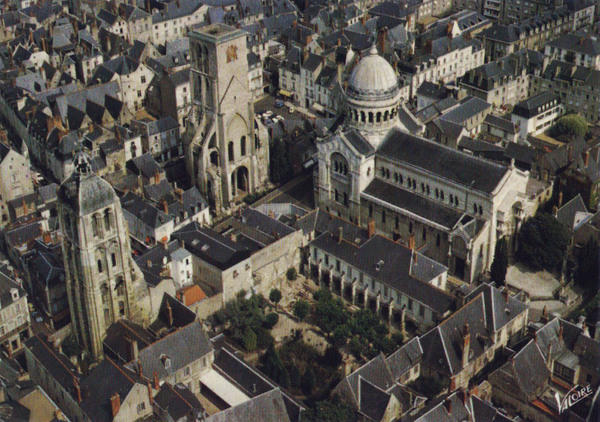
Postcard from the 2nd half of the 20th century with the Laloux Basilica (right), and the Charlemagne (center) and Clock (left) towers, remnants of the Hervé Basilica. In the foreground, center, the Saint Martin cloister, with private access. +  similar postcard.
+ similar postcard.
+ 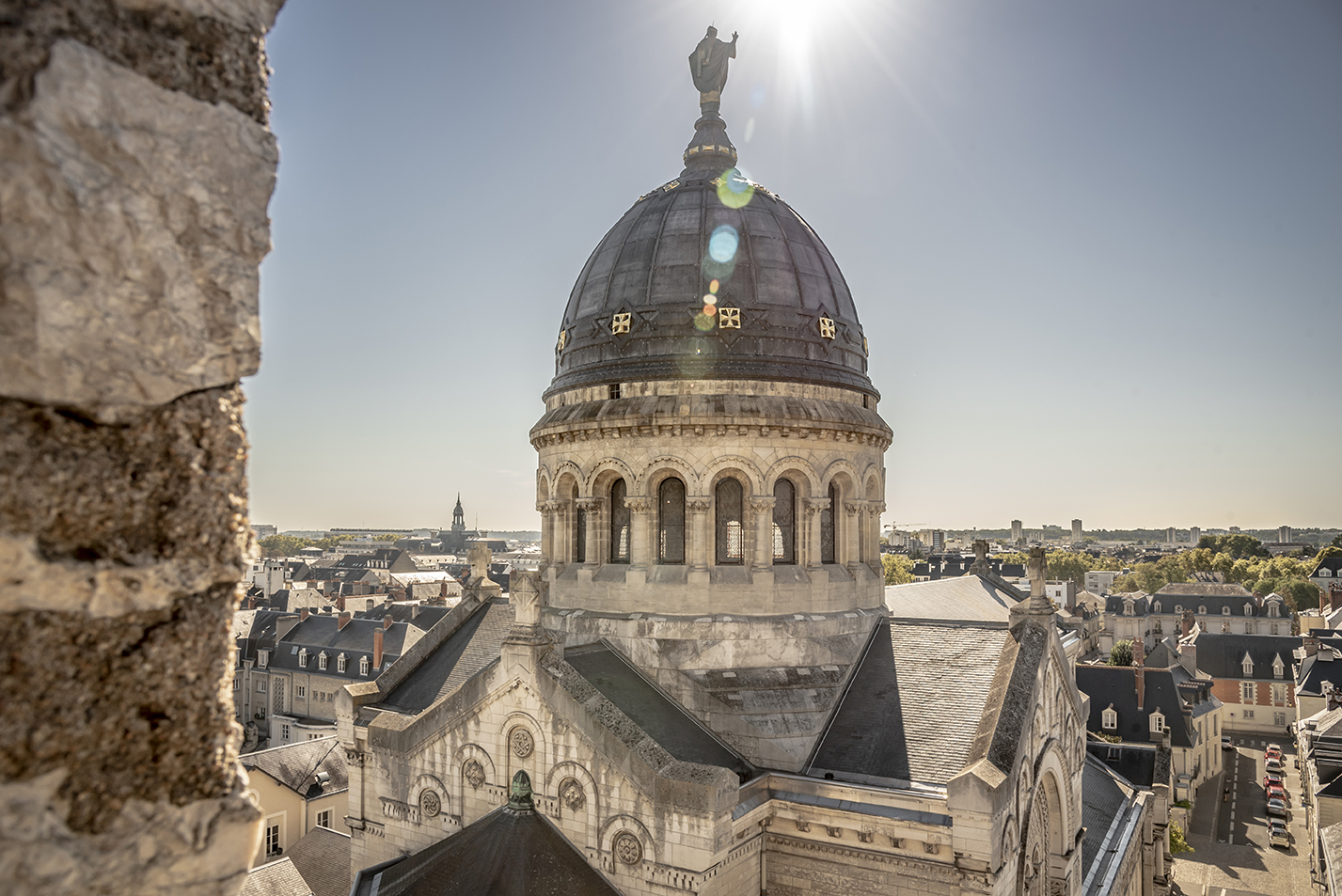 view taken from the Charlemagne Tower [city photo 2019]
+ view taken from the Charlemagne Tower [city photo 2019]
+ 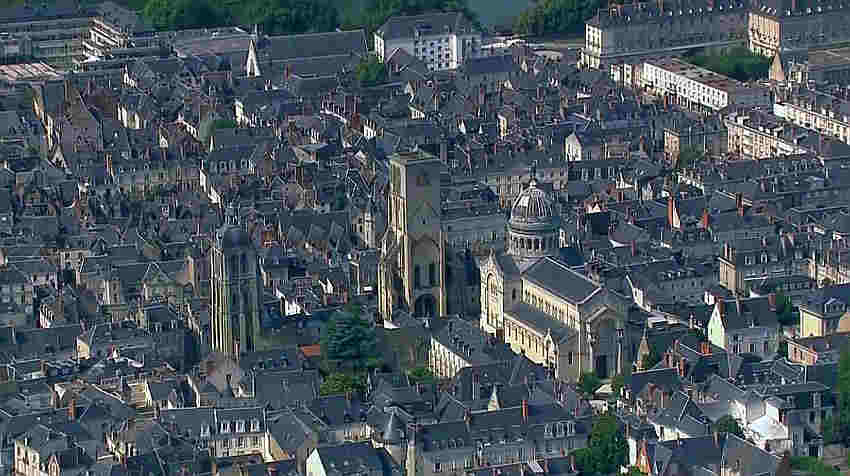 extended aerial photo (the Loire in the background)
+ extended aerial photo (the Loire in the background)
+ 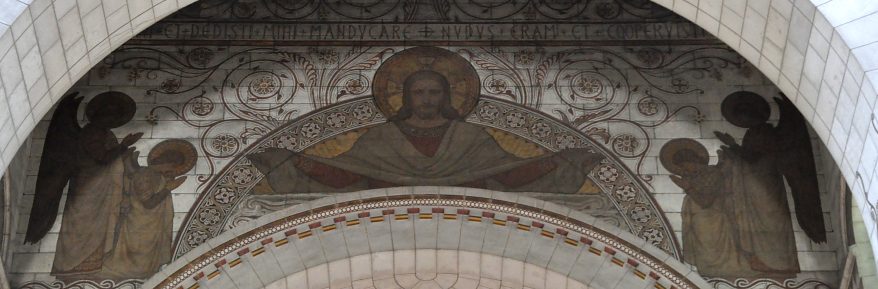 photo of the Sacred Heart mural on the pediment of the choir vault (link)
+ photos of the photo of the Sacred Heart mural on the pediment of the choir vault (link)
+ photos of the 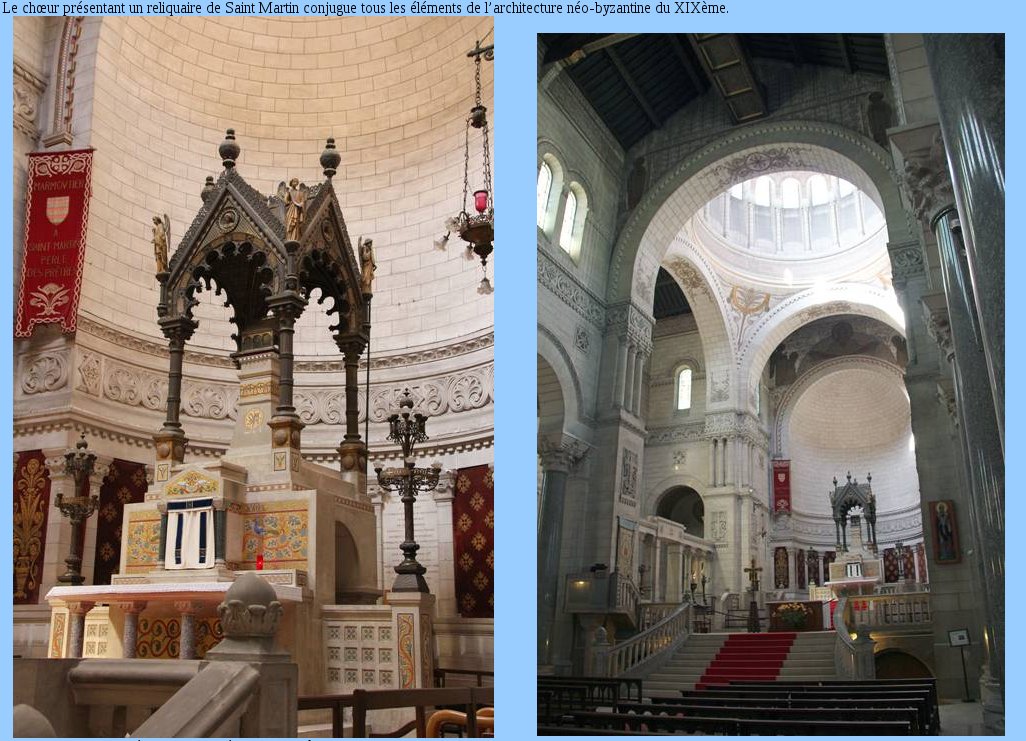 choir and the two choir and the two  chapels dedicated to Mary and Joseph (link)
+ chapels dedicated to Mary and Joseph (link)
+  photo 2011 of the nave [flickr Paco Barranco]. photo 2011 of the nave [flickr Paco Barranco].
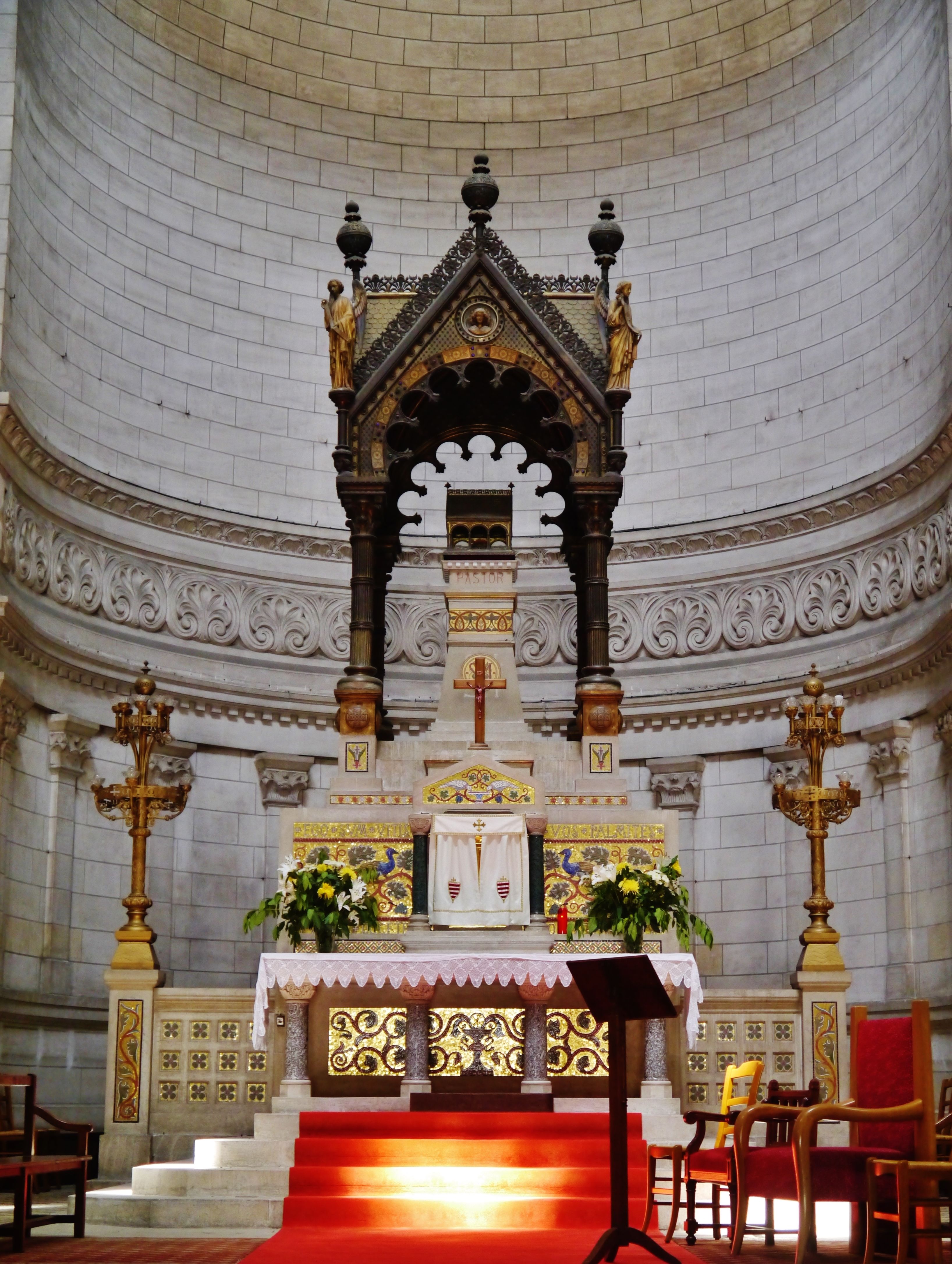

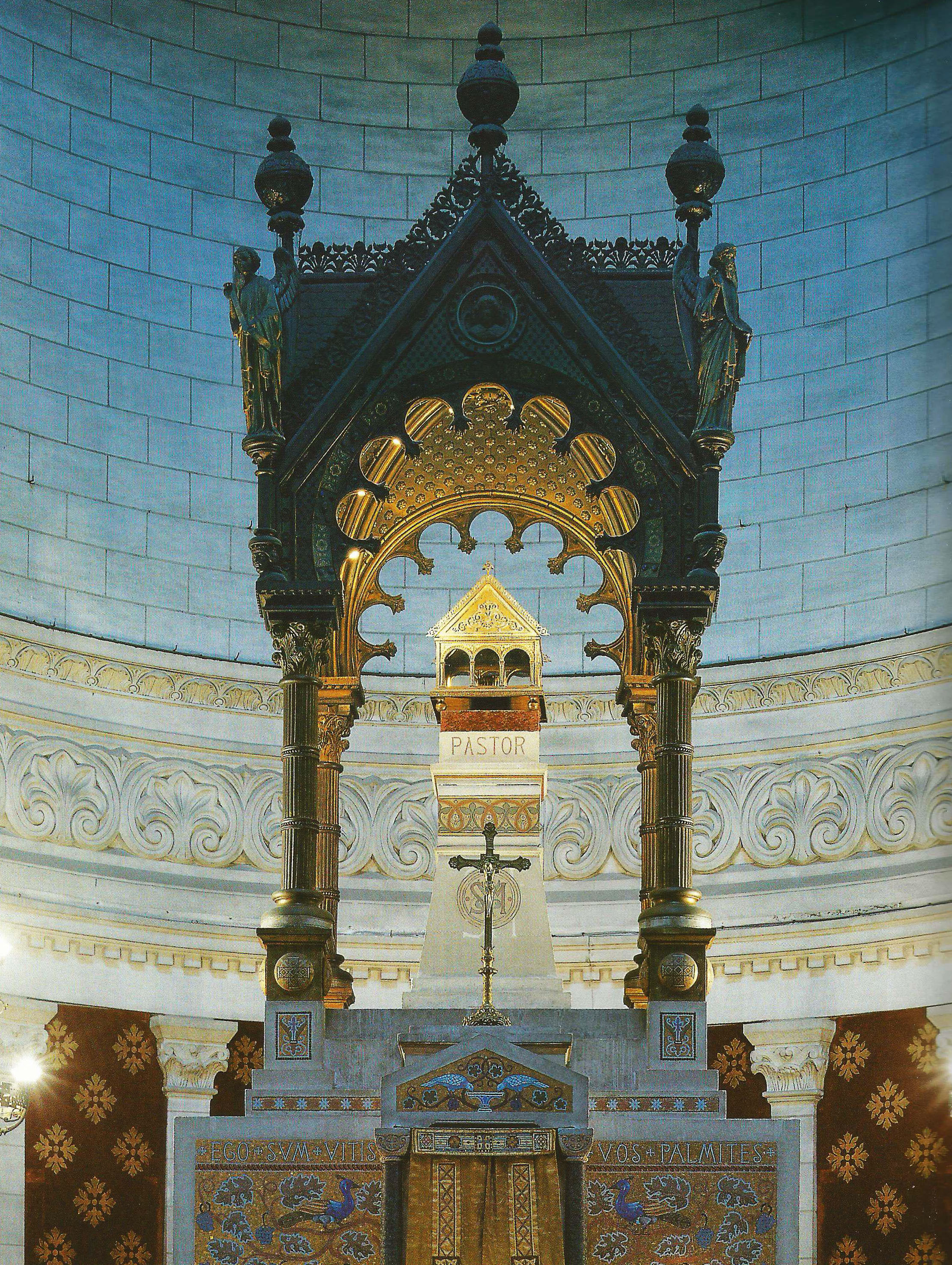
The altar master [Wikimedia and Lorincz 2001] adorned with peacocks and doves with the inscriptions "Pastor" ("Pastor") and "Ego sum vitis et vos palmites" ("I am the vine and you are the branches). It is surmounted by the 1664 ciborium, already featured here before.
+ 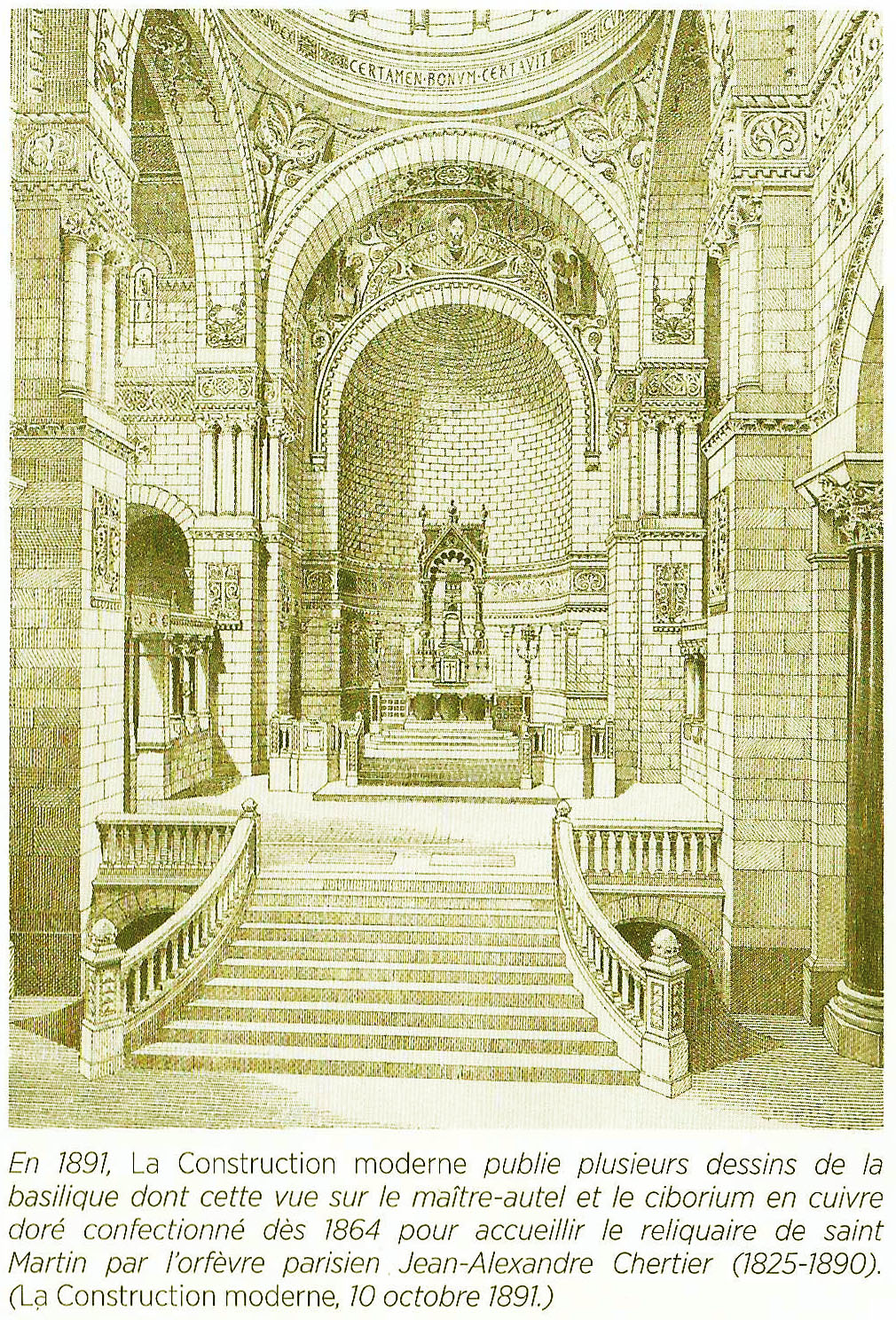 drawing of the high altar published in 1991, shortly before its realization ["Victor laloux, son oeuvre tourangelle" 2016]
+ drawing of the high altar published in 1991, shortly before its realization ["Victor laloux, son oeuvre tourangelle" 2016]
+ 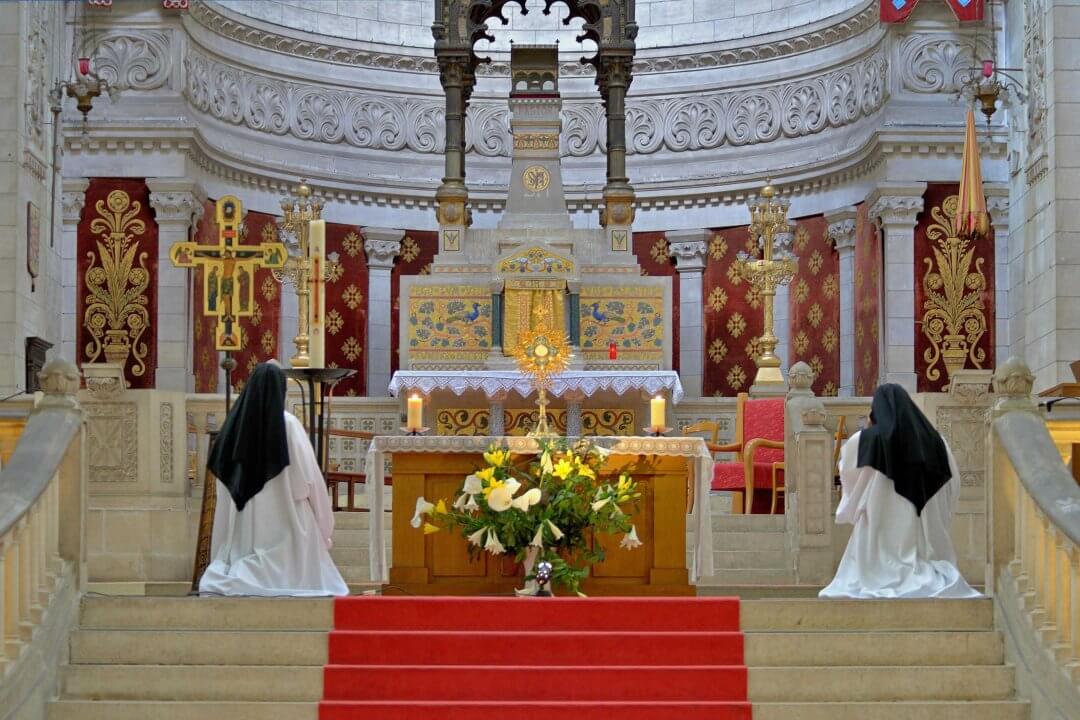 photo of the basilica's website. photo of the basilica's website.
|
The pediment of the Laloux basilica. We have seen that the construction of the new basilica was spread out for the most part from 1886 to 1925, between the 19th and 20th centuries, its superb collection of stained glass windows dating from around 1900. The pun Perpet - Perpet - Perpetuity already existed in the 5th century in the form Perpetuus / Perpetuum. Thus
Pauline of Perigueux sent this short dedication that was inscribed on the walls of the basilica of Perpet "Perpetuum urbs turonum Martino antistite gaudet", which means "The city of Tours enjoys Martin, its bishop, in perpetuity." or "The city of Tours rejoices forever to have Martin as its patron". This dedication was repeated on the pediment of Laloux's basilica. It is another testimony of the will to regenerate the Perpet basilica in the Laloux basilica. The latter is honored by this, because it is not just another cathedral, and there is a very beautiful one in Tours (named Saint Gatien... see here-above), it is a monument out of the ordinary, of a style both neo-Byzantine and pre-romanic, loaded with History...

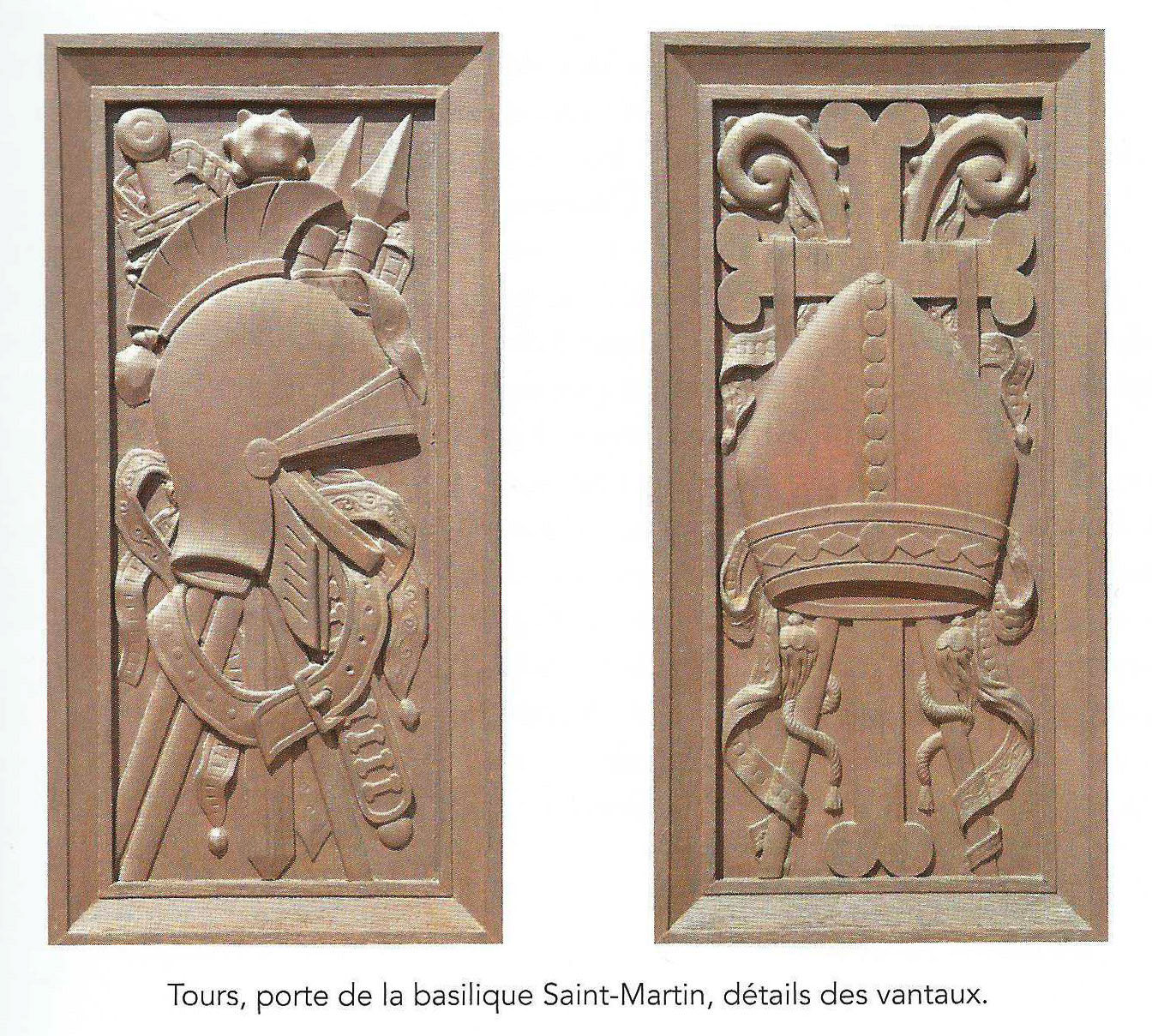
To the left, the pediment (with the dedication of Paulin of Perigueux) in the present-day Basilica of Saint Martin [Wikipedia] +  zoom back...
At center, detail of the leaves of the great door of the Soldier and Bishop Basilica [Maupoix 2018].
At right, external motif [Wikimedia] + the large zoom back...
At center, detail of the leaves of the great door of the Soldier and Bishop Basilica [Maupoix 2018].
At right, external motif [Wikimedia] + the large  door
+ the door
+ the  door on the side (usual passage to enter the basilica) and the façade on the Rue Descartes side. door on the side (usual passage to enter the basilica) and the façade on the Rue Descartes side.


The crypt (in the background the tomb), with the ex-voto on the walls. At right, the floor [Wikimedia], of Paleo-Christian inspiration (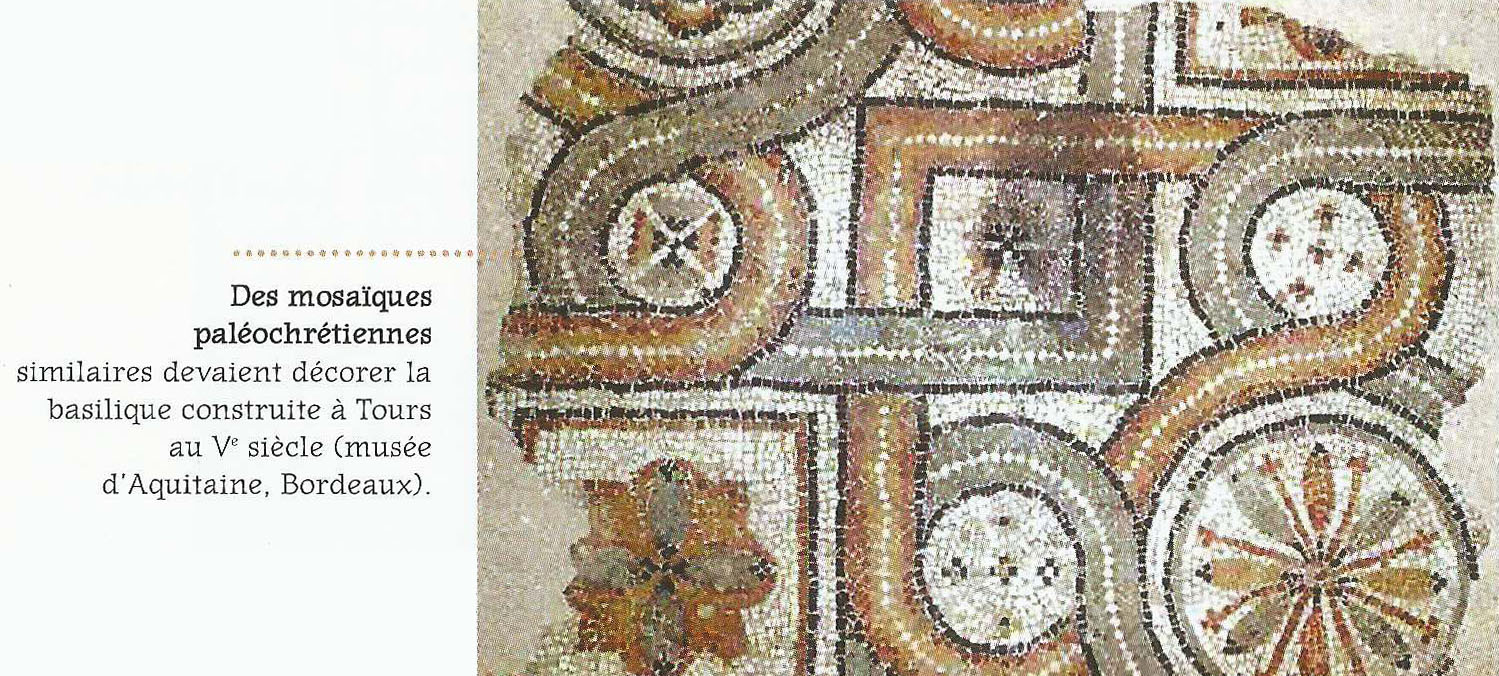 illustration Fasc. NR 2012)
+ illustration Fasc. NR 2012)
+ 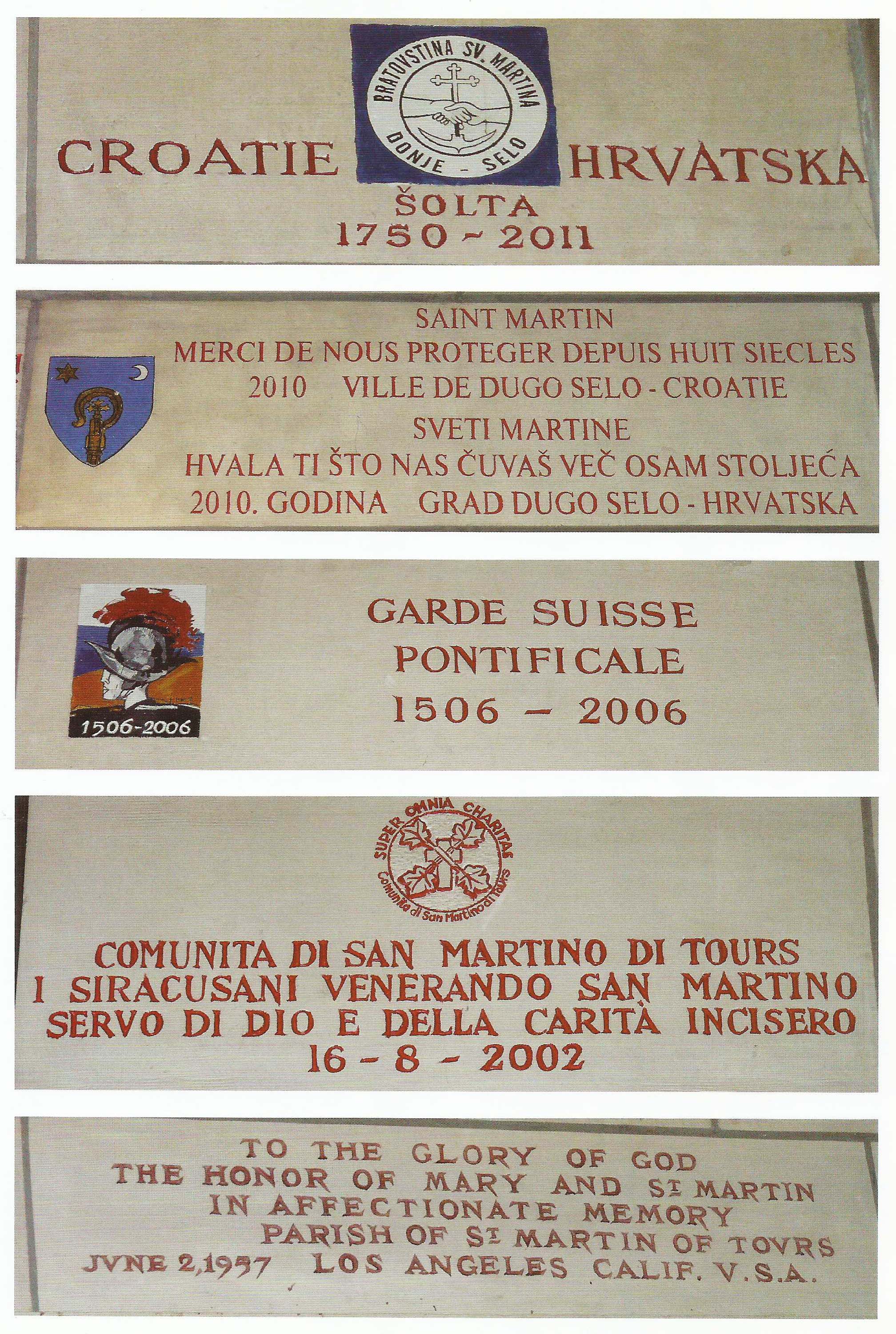 examples of ex-voto lining the crypt [Semur 2015].
Below, lighted opening [flickr Philippe Béènne]. examples of ex-voto lining the crypt [Semur 2015].
Below, lighted opening [flickr Philippe Béènne].
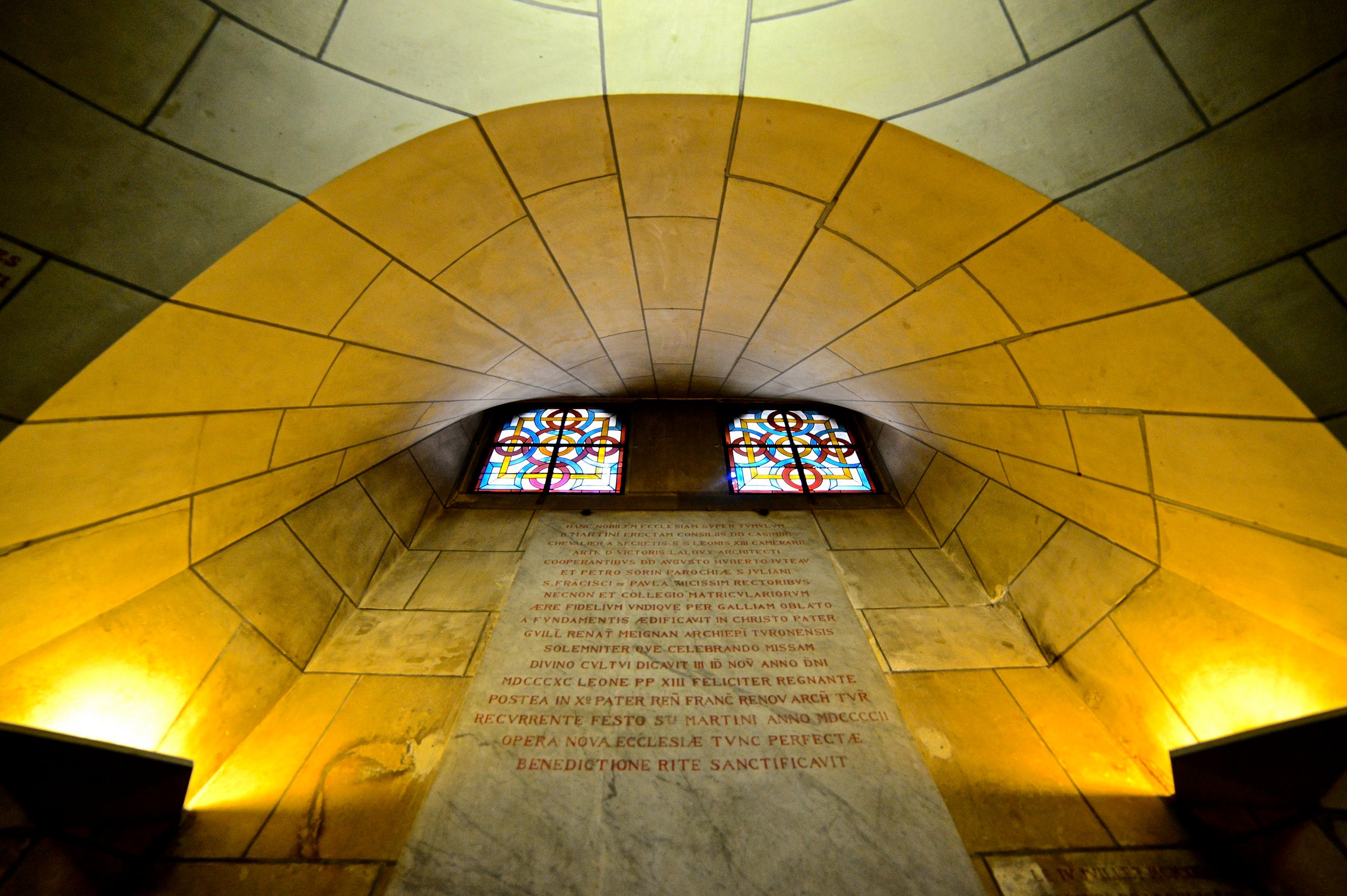
|
The tomb and relics of Martin 8/8. Let's not forget to go down into the crypt (if the door is closed, just push it open), that's where Martin's tomb is. Perpet's basilica had continued to live on through Hervé's (who took over some of its decorations), we have just seen how much of it is found in Laloux's... A strange atmosphere reigns in this place of recollection at the same time reduced and vast, underground and bathed of natural light in part, decorated with the multiple inscriptions of ex-votos charged with personal and collective histories.
|


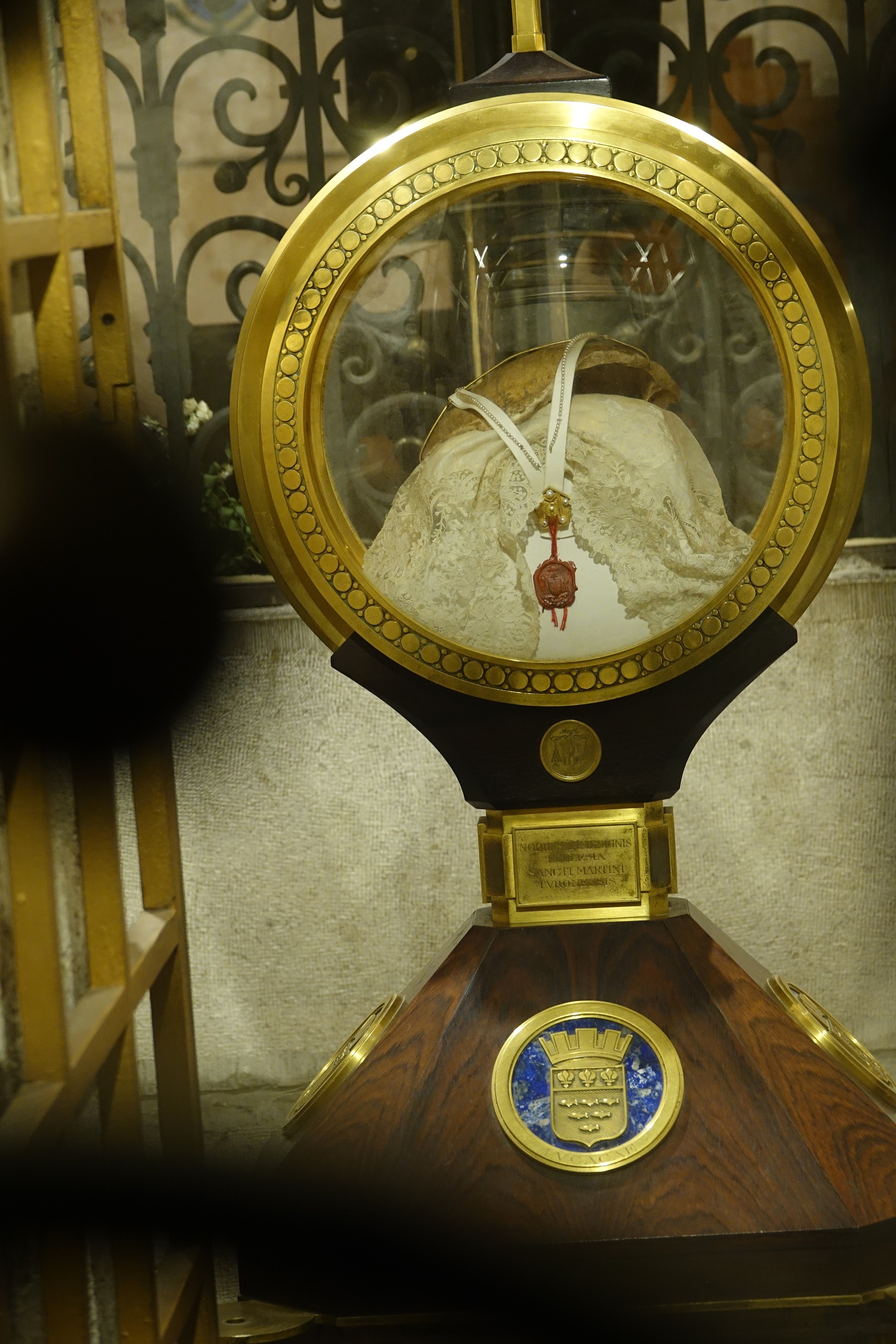
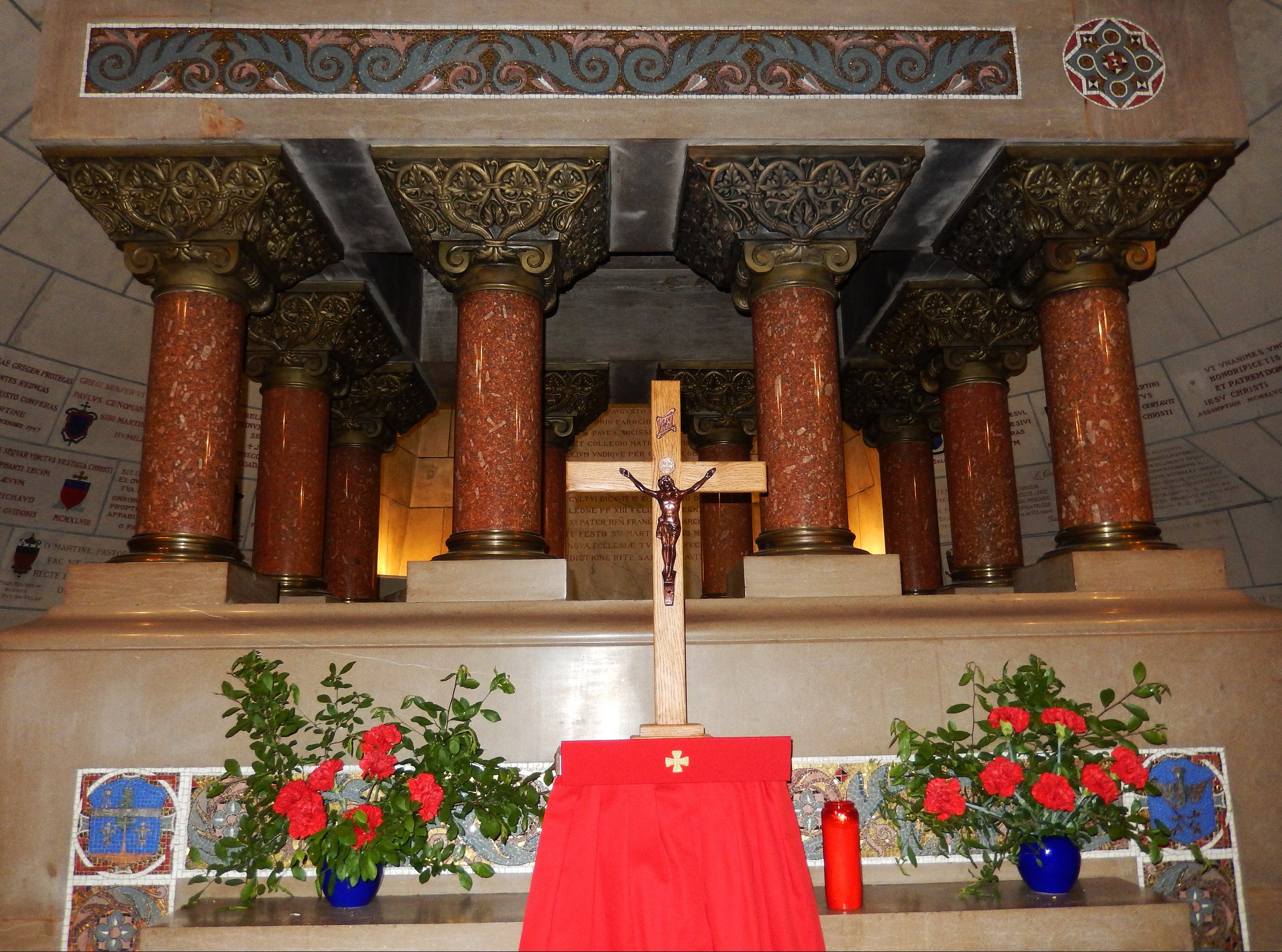 photo
photo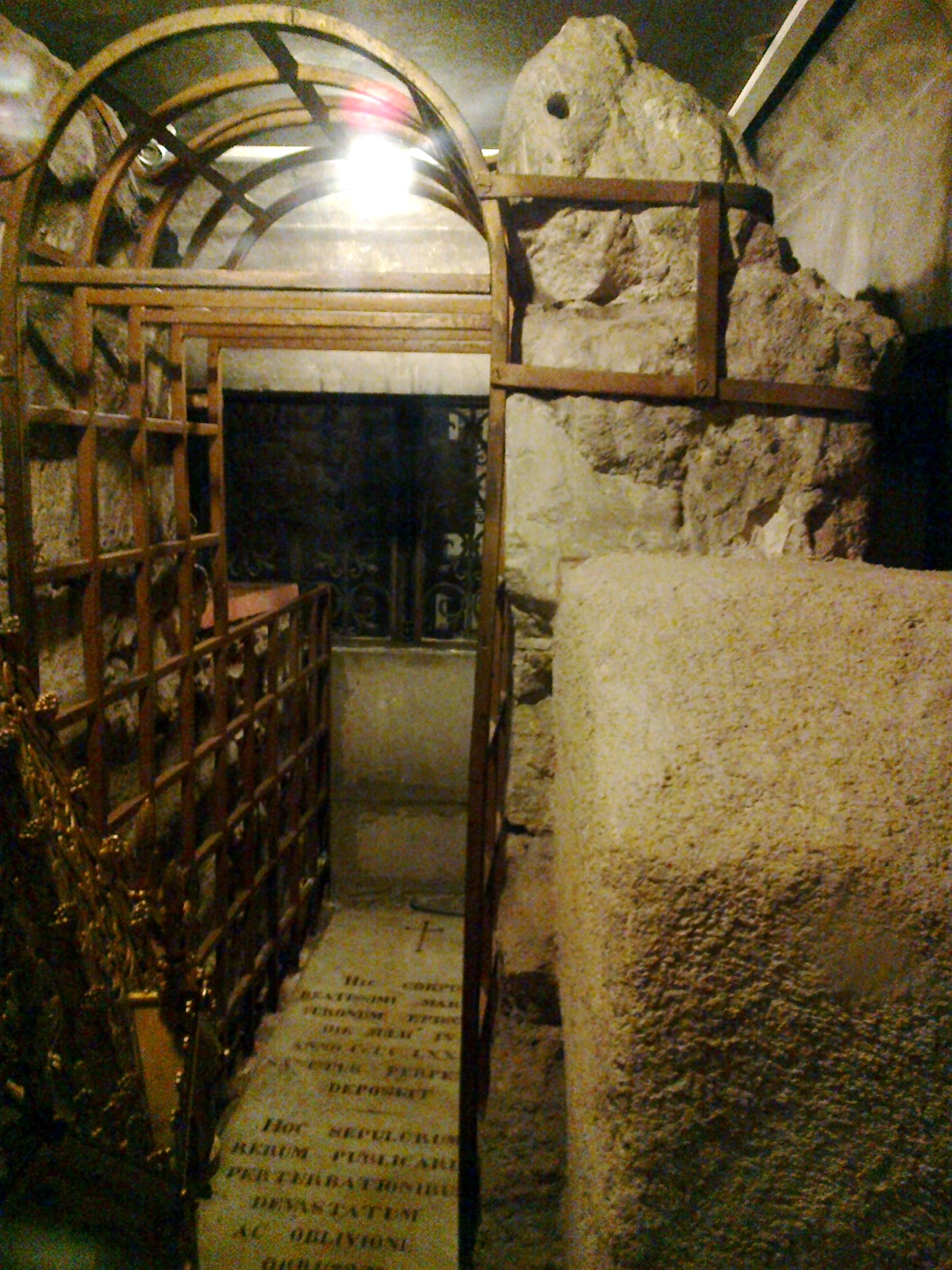 photo
photo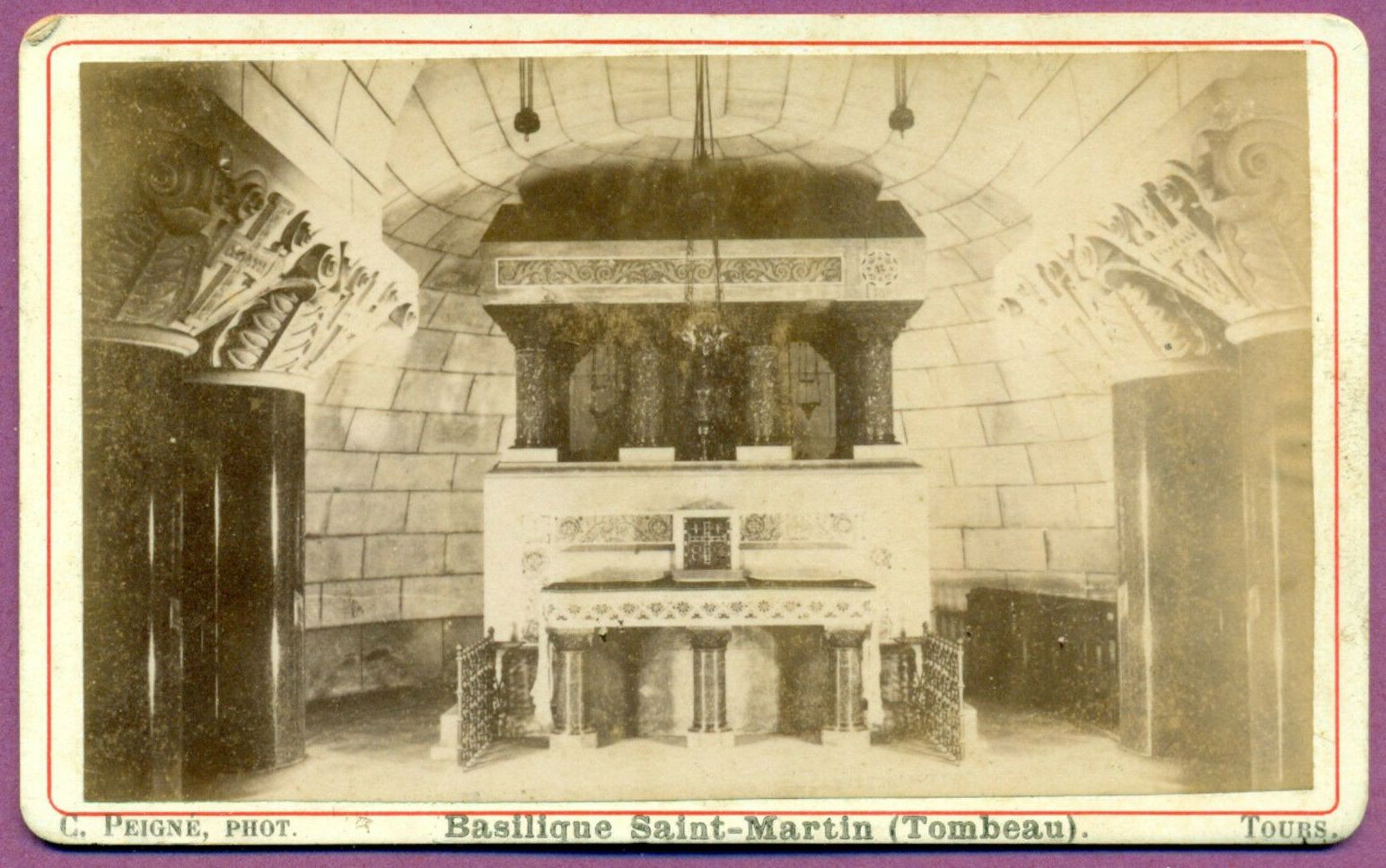 postcard
 postcard
 page
page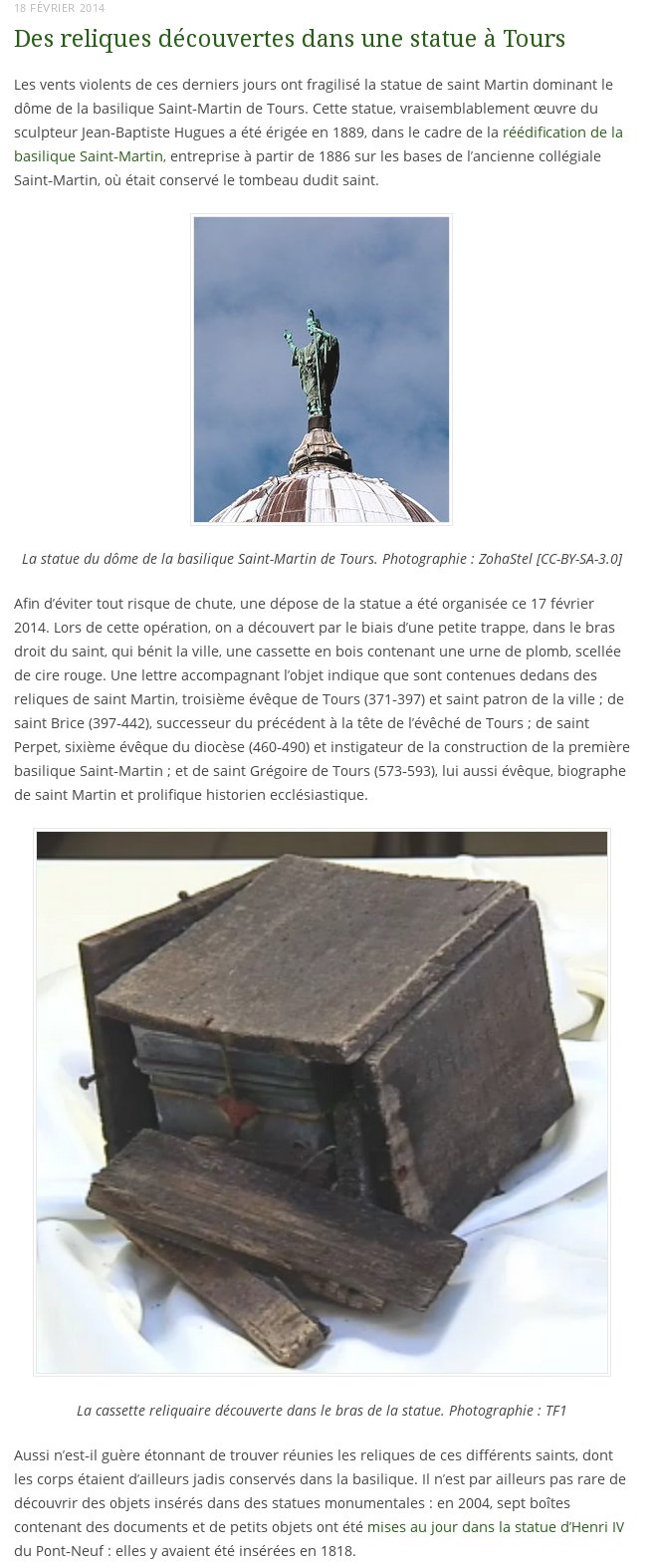 article
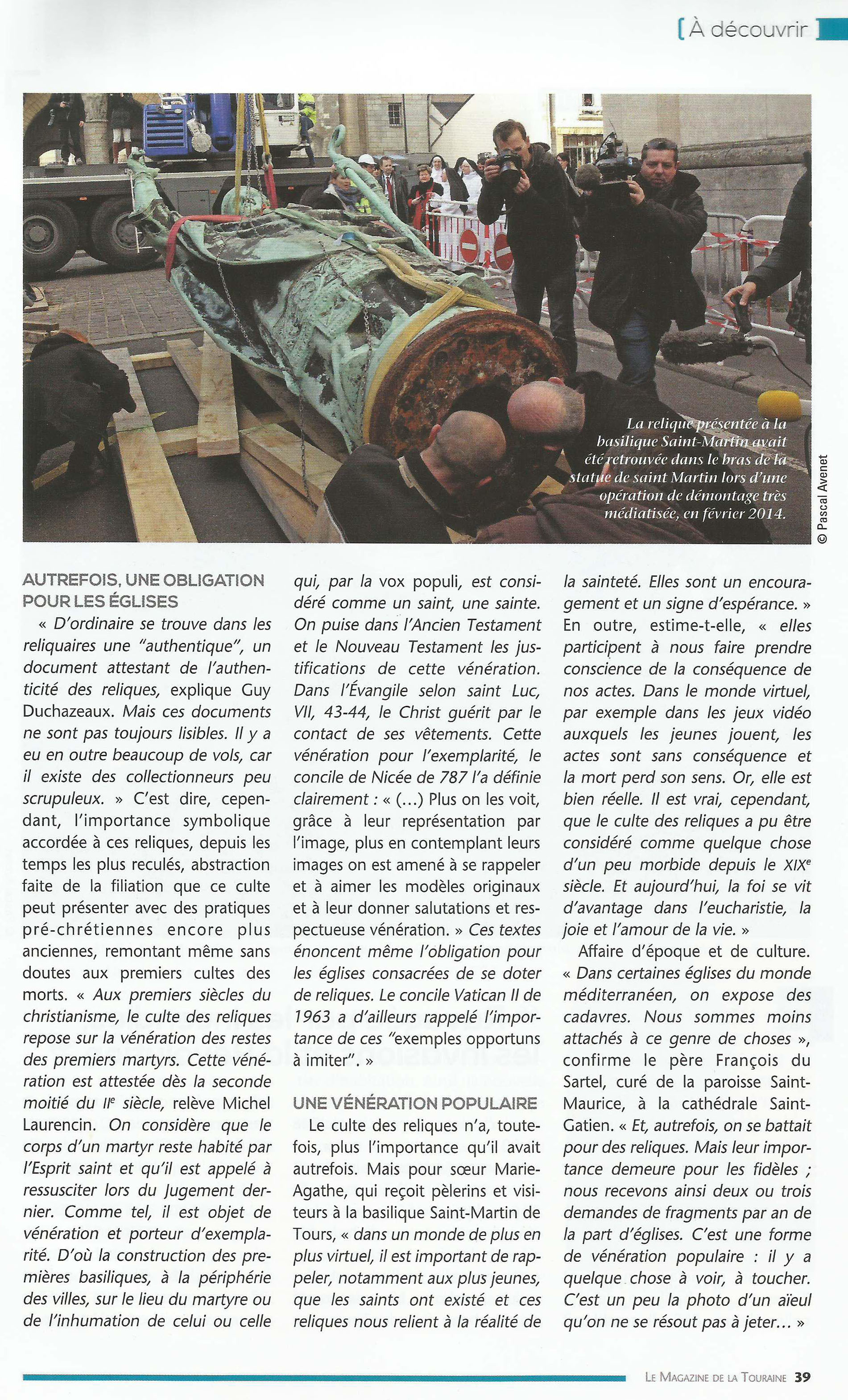 extract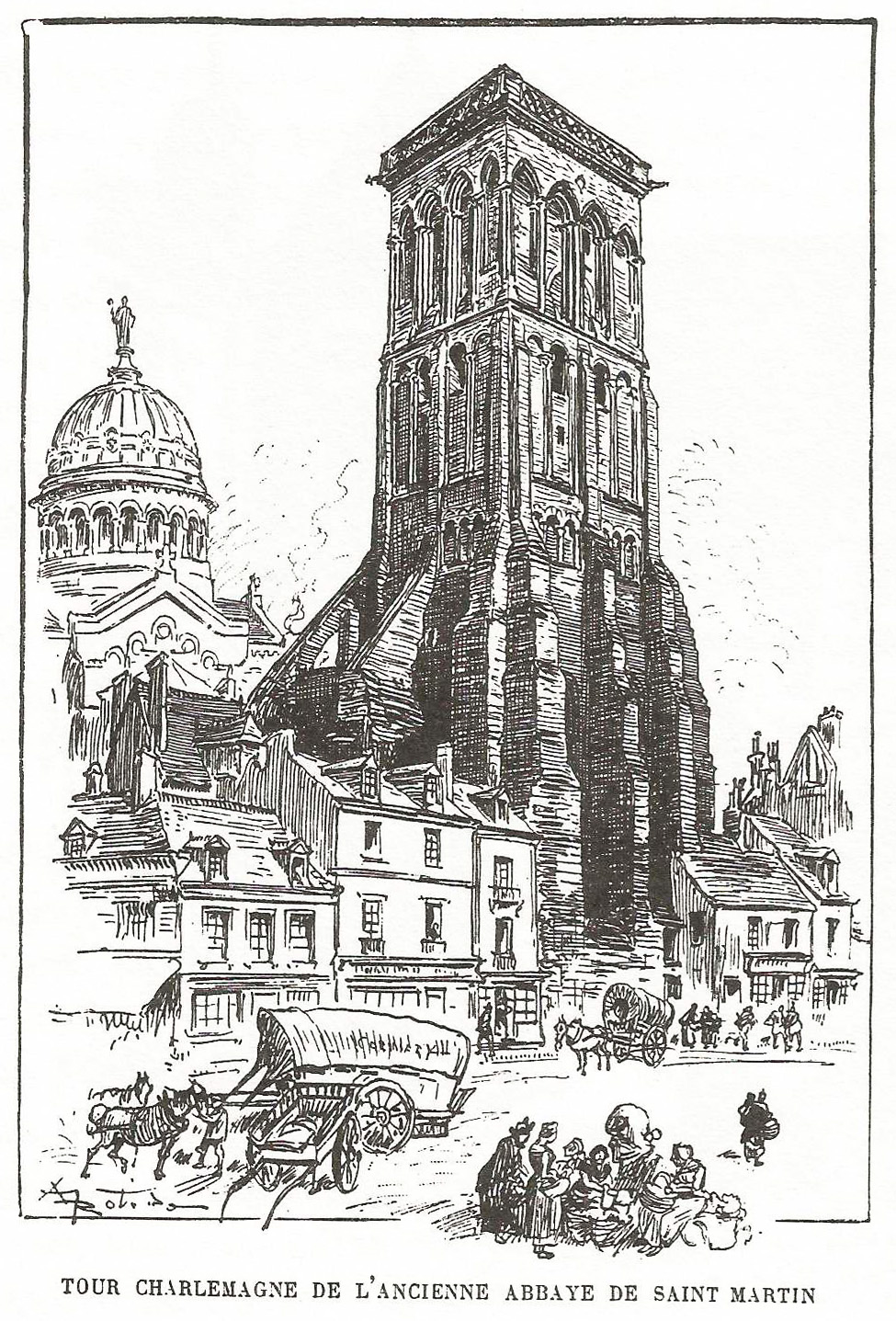
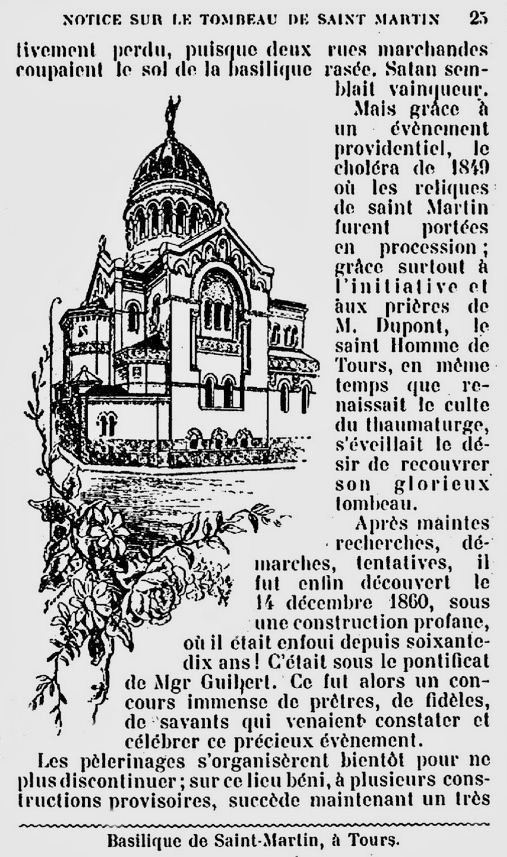
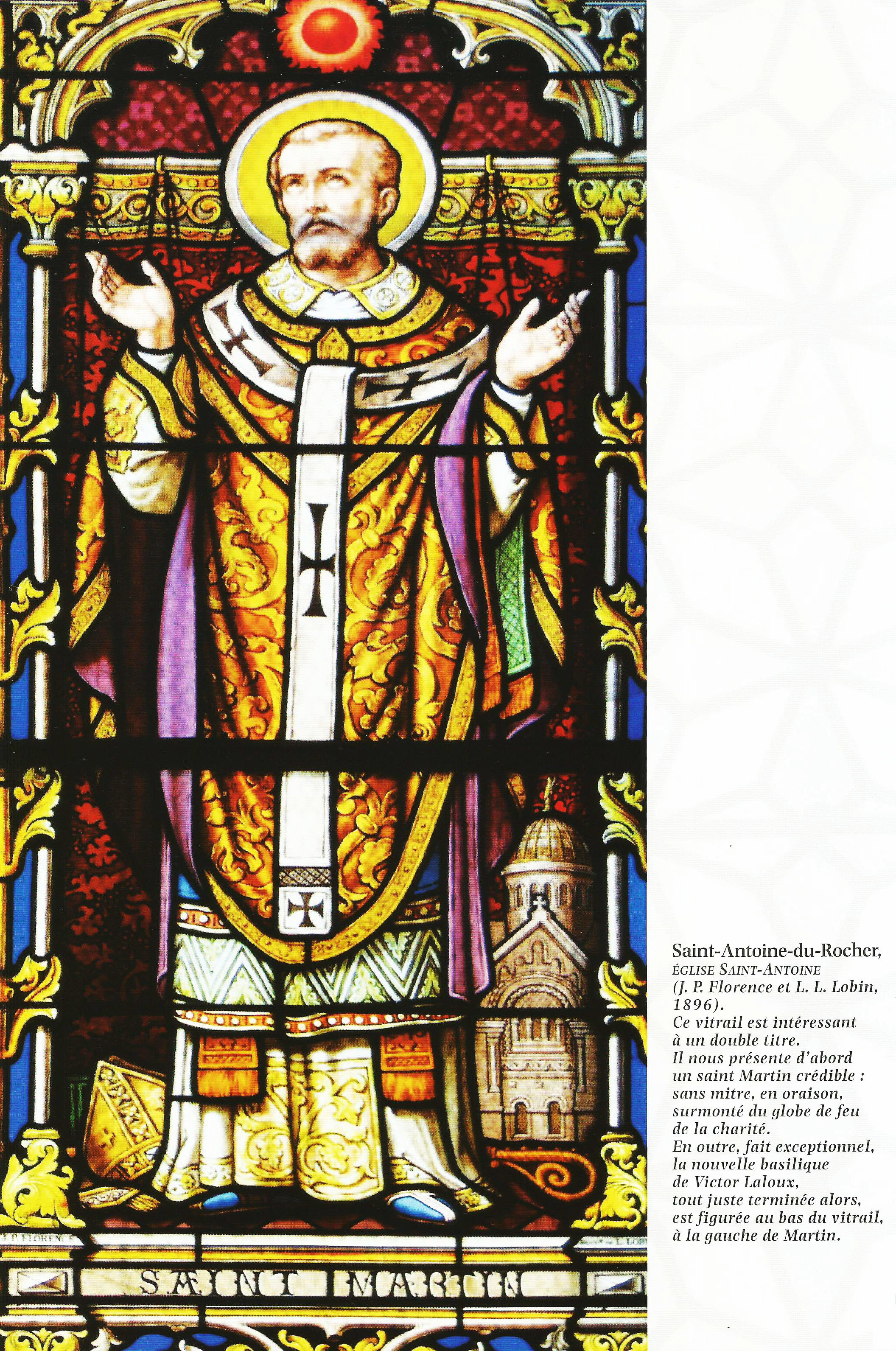
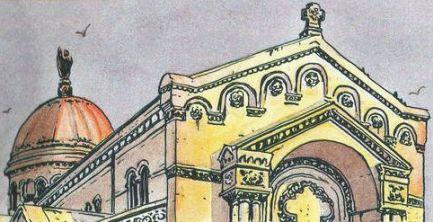
1) probably the first representation of the new basilica with its dome and statue. In 1892, Albert Robida published an imposing work "La Touraine" and its surroundings, with hundreds of engravings. One of them depicts the Charlemagne Tower, with the dome of the basilica inaugurated in 1890 in the background.
+  cover
+ the book in its entirety, 336 pages, Gallica
+ in 1891, before the end of construction, the newspaper "La construction moderne" had published a cover
+ the book in its entirety, 336 pages, Gallica
+ in 1891, before the end of construction, the newspaper "La construction moderne" had published a 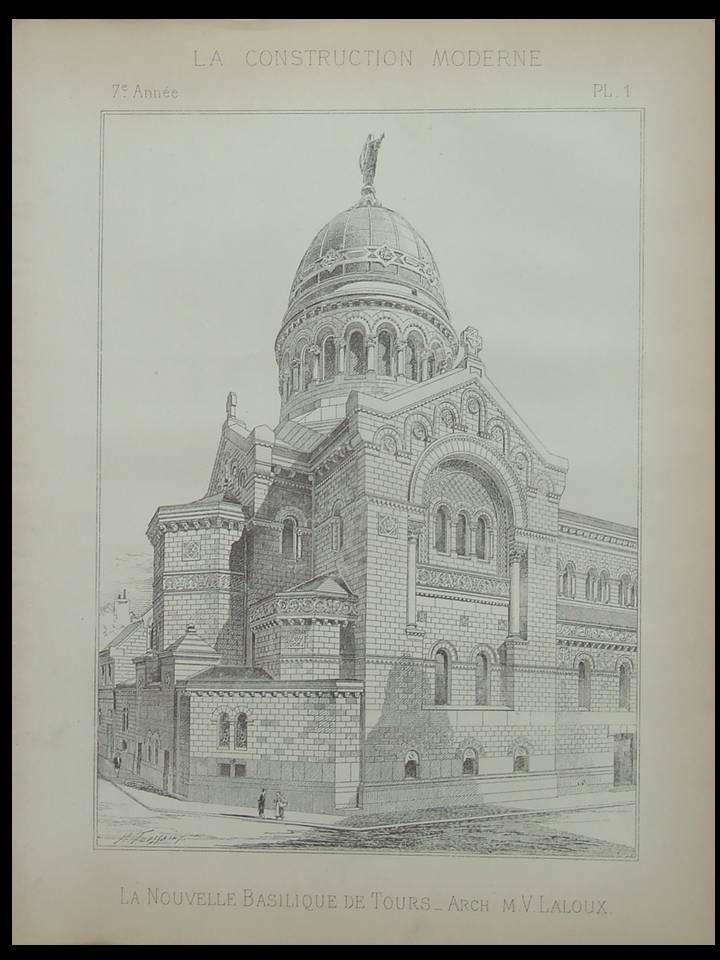 view of the future monument
+ view of the future monument
+ 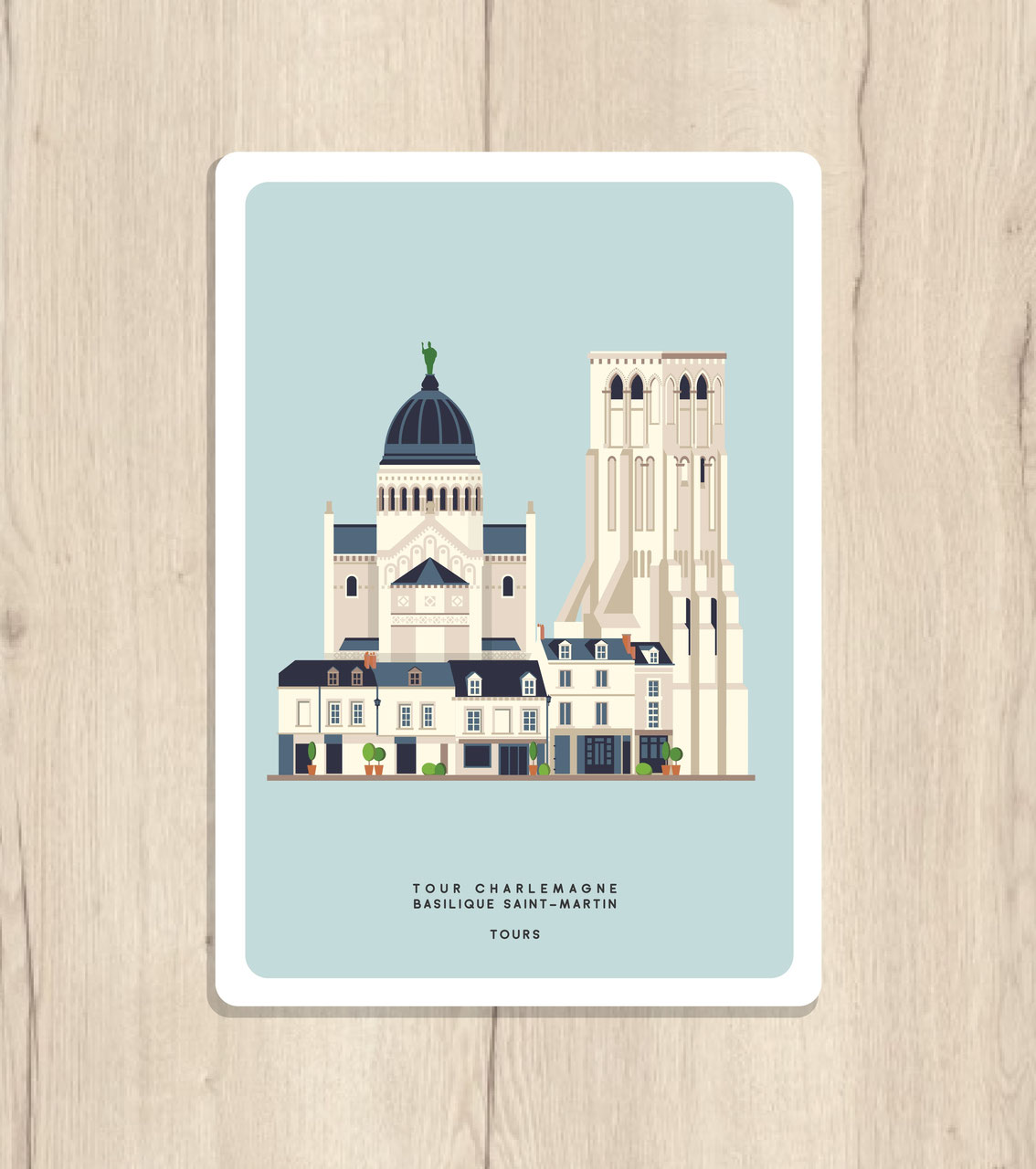 postcard drawn circa 2019 (link, points of sale). postcard drawn circa 2019 (link, points of sale).
Saint Antoine du Rocher, in Touraine, J.P. Florence and L.L. Lobin, Gallery 2018]
+ these two previously featured stained glass windows :
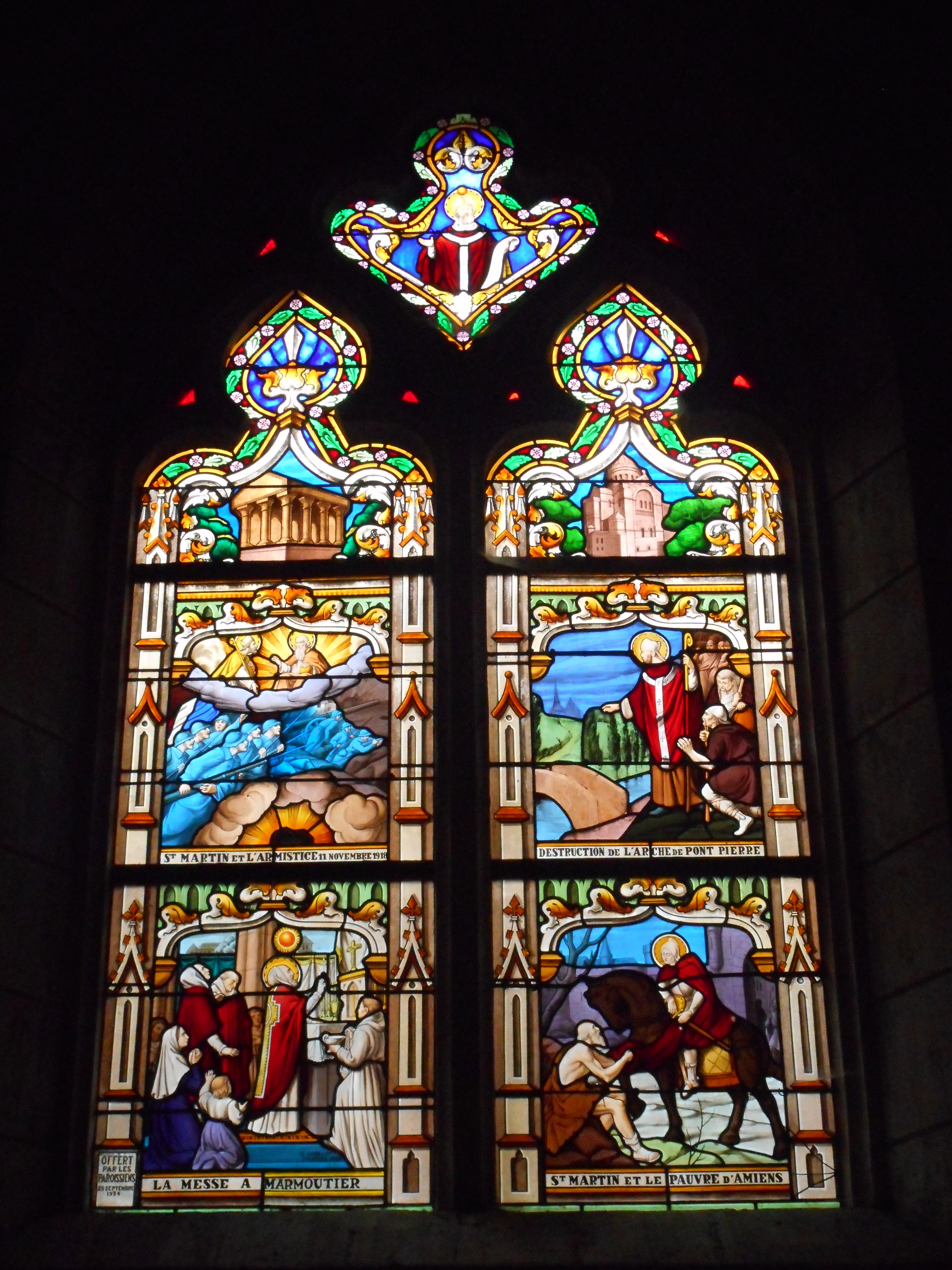 1 (Neuillé Pont Pierre) 1 (Neuillé Pont Pierre)
 2 (Maison-Alfort)
+ another 2 (Maison-Alfort)
+ another  stained glass depicting St. Martin and his Laloux Basilica, 1909 [St. Martin de Saint Martin du Lac church in Burgundy, flickr Odile Cognard].
4) A century later, perhaps the first depiction in a comic book, a box by Lorenzo d'Esme [Fagot, Mestrallet - d'Esme 1996].
+ stained glass depicting St. Martin and his Laloux Basilica, 1909 [St. Martin de Saint Martin du Lac church in Burgundy, flickr Odile Cognard].
4) A century later, perhaps the first depiction in a comic book, a box by Lorenzo d'Esme [Fagot, Mestrallet - d'Esme 1996].
+  drawing of catalog cover SAT 1997
+ drawing of catalog cover SAT 1997
+ 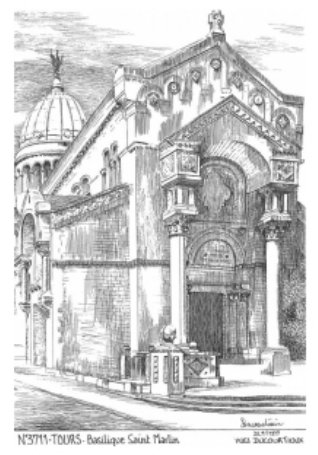 drawing in the Yves Ducourtioux collection (link). drawing in the Yves Ducourtioux collection (link).
|
 photo
photo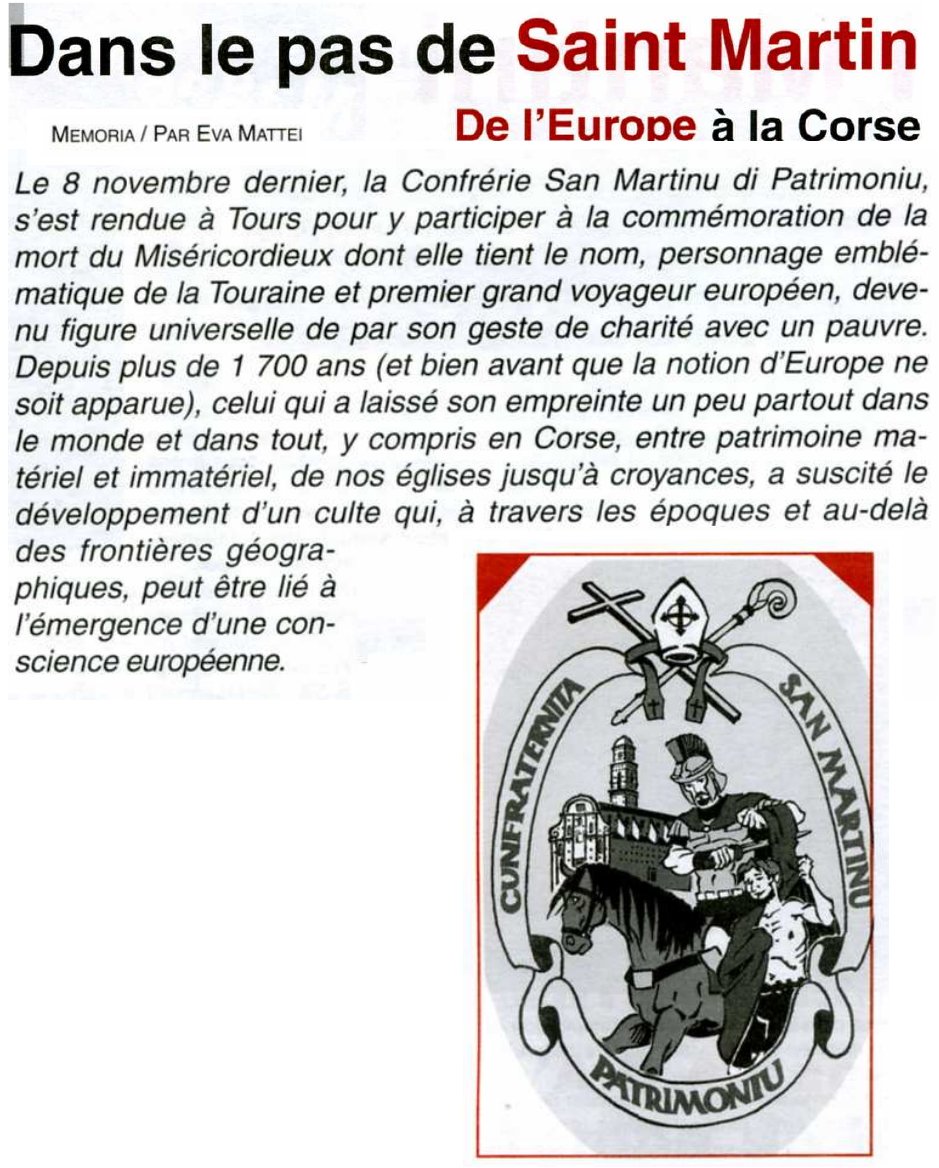 article
1925, the consecration. In 2019, there are 171
basilicas in France, all of which qualify as minor. There are 1802 in the world, 4 others are major, all in Rome. Victor Laloux's building was consecrated as a basilica on July 4, 1925, 23 years after its inauguration. The president of the French Republic holds the honorary title of canon (ad honores) of the basilica (a title awarded by Pope Francis on June 26, 2018 to Emmanuel Macron, reportage).
 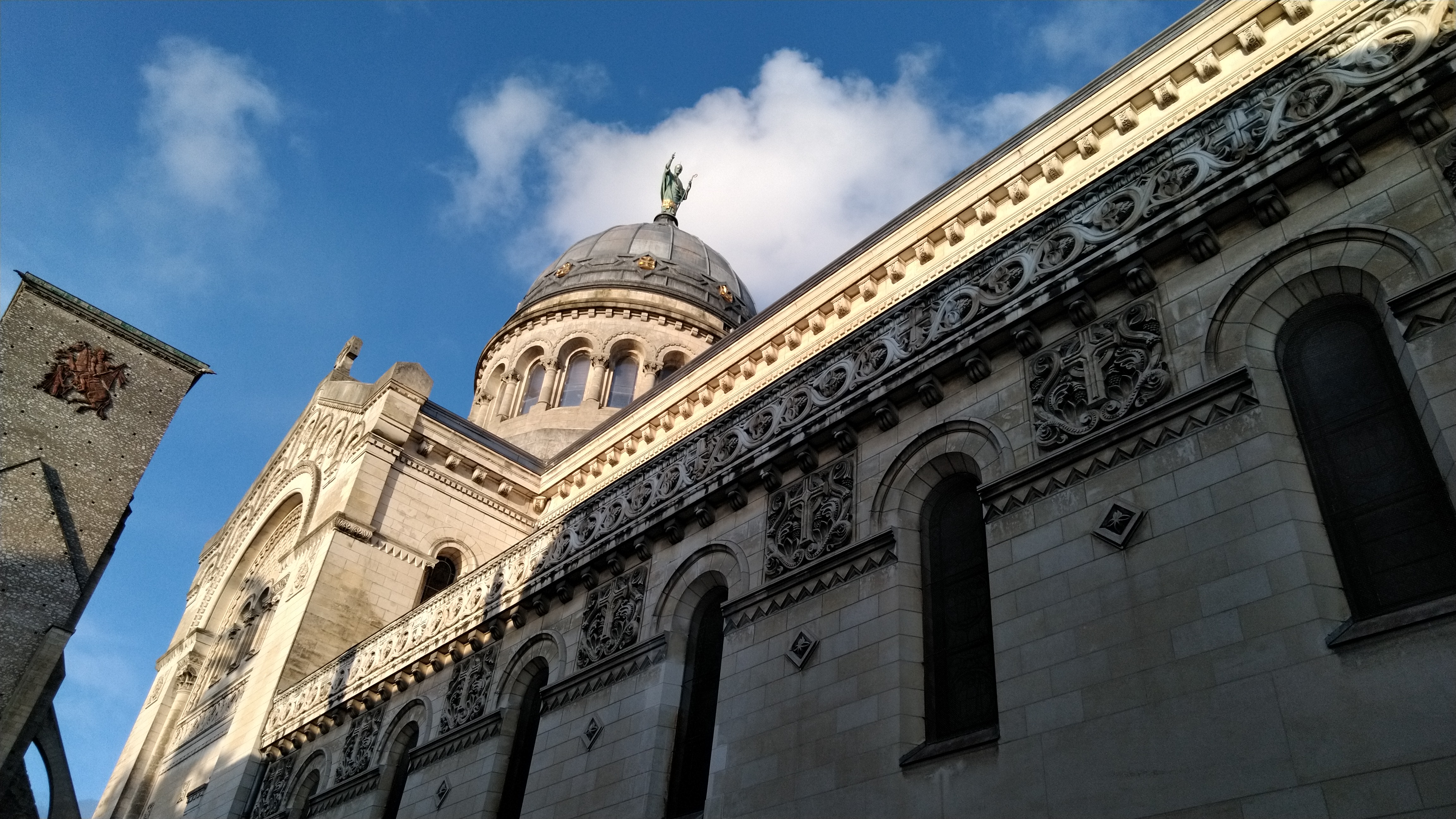
To the left, seen from the northeast from above, the basilica without a statue on the dome in 2015 ("The Remarkable Touraine," La NR 2015], then with statue in 2019. Right view from southwest from below.
+ two views of the Charlemagne Tower from the northwest :
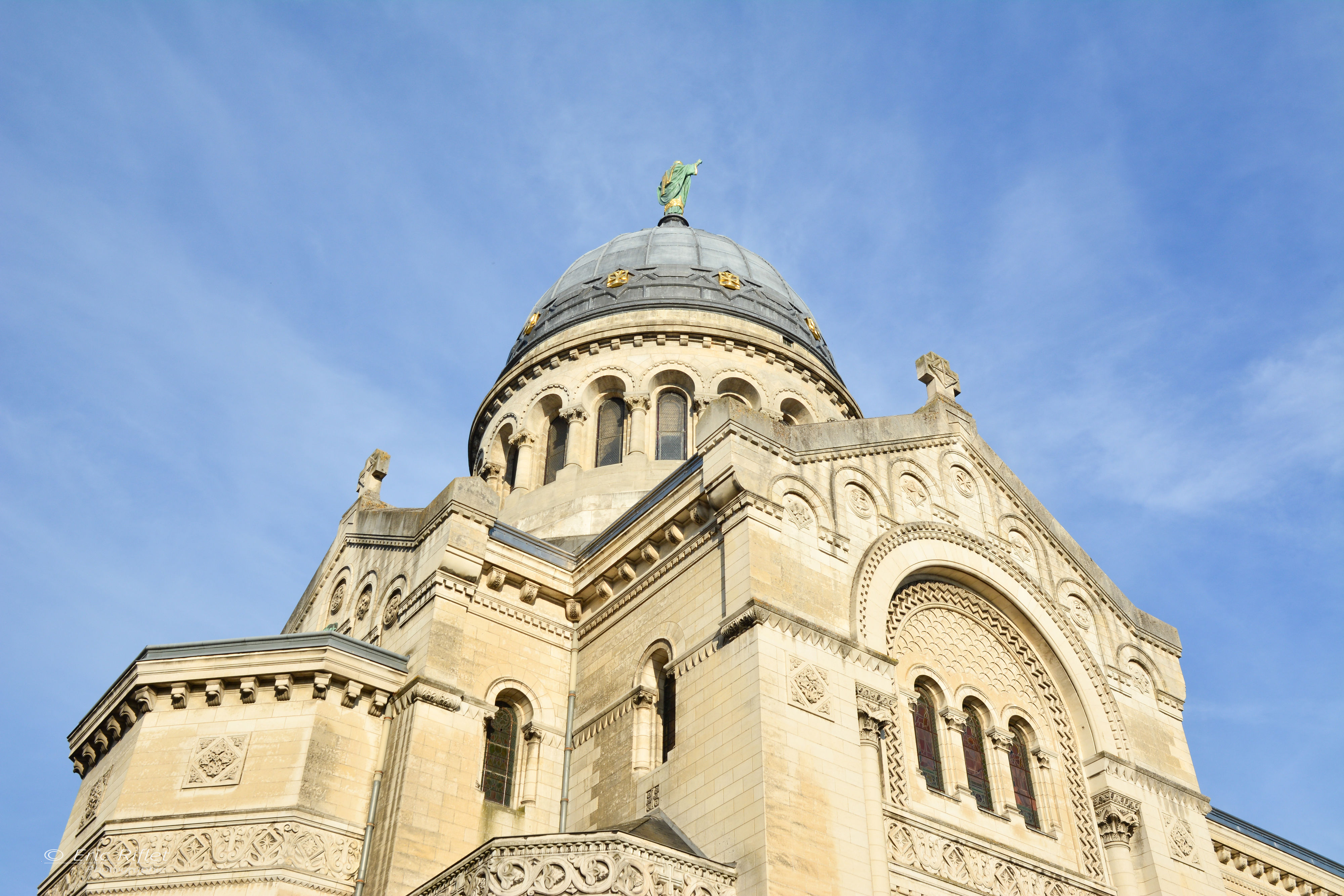 1 from below [flickr Eric Riflet] 1 from below [flickr Eric Riflet]
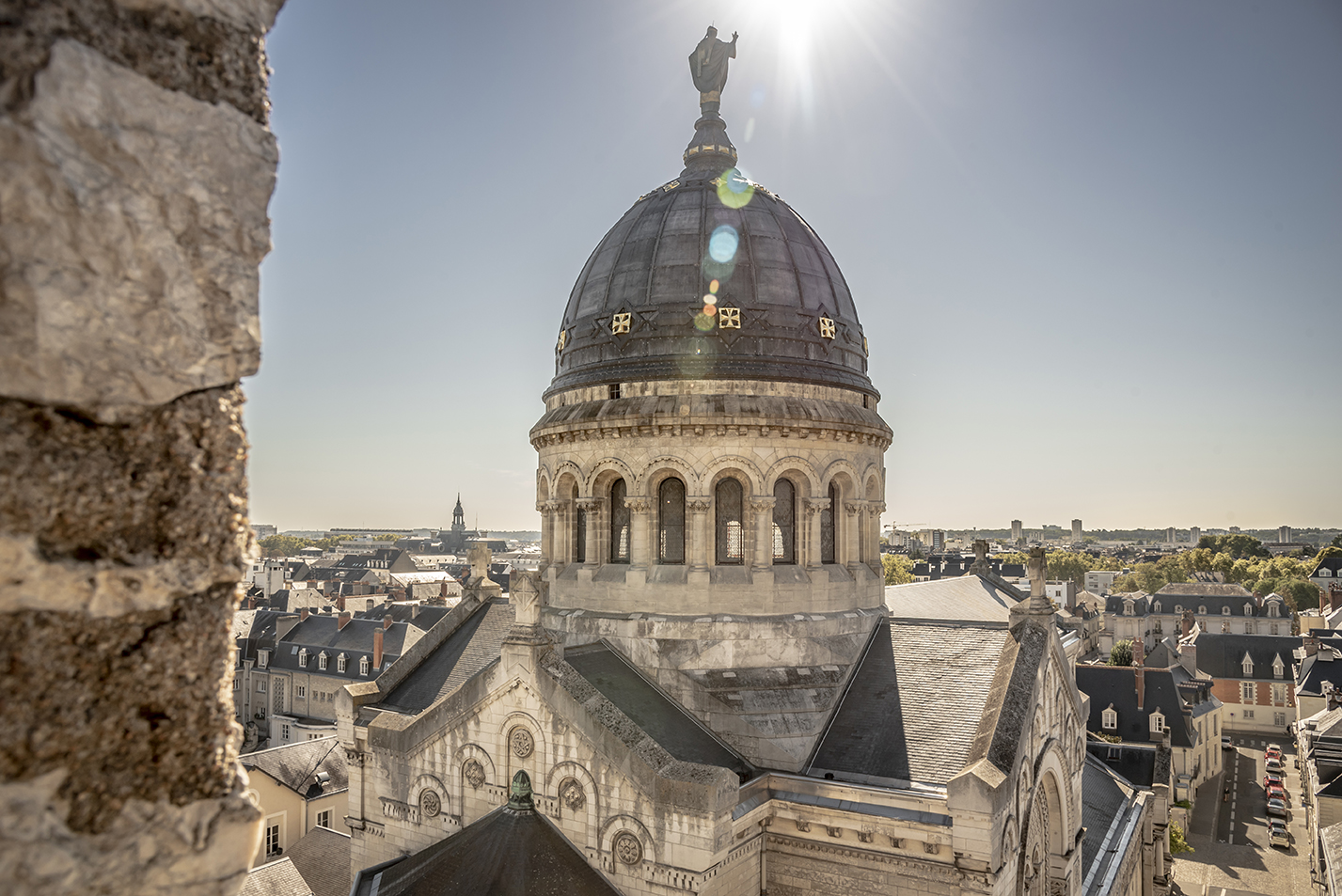 2 from above [tours.fr]. 2 from above [tours.fr].
   
The little-known basement of the basilica and its multiple remains. The section shown in the previous chapter shows only the crypt in the basement. Ot there is a vast basement under the entire surface of the basilica. There is a large fresco by Robert Lanz (left overview and central scene depicting Martin in Trier with Emperor Maximus +  detail). This work made in 1938 is here in place since 2011. This basement is mostly filled with various remains, including those found by Charles Lelong. One can also see, at a lower level, a section of wall from the apse of the collegiate church of Hervé (on which a study by Pierre Martin in 2013 asks questions). A few visits by reservation are made during the Saint Martin's Day celebrations in November. It is a place likely to host other works... + three other photos : detail). This work made in 1938 is here in place since 2011. This basement is mostly filled with various remains, including those found by Charles Lelong. One can also see, at a lower level, a section of wall from the apse of the collegiate church of Hervé (on which a study by Pierre Martin in 2013 asks questions). A few visits by reservation are made during the Saint Martin's Day celebrations in November. It is a place likely to host other works... + three other photos :
 1 1  2 2
 3 (wall of the former Herve Basilica)
+ 3 (wall of the former Herve Basilica)
+ 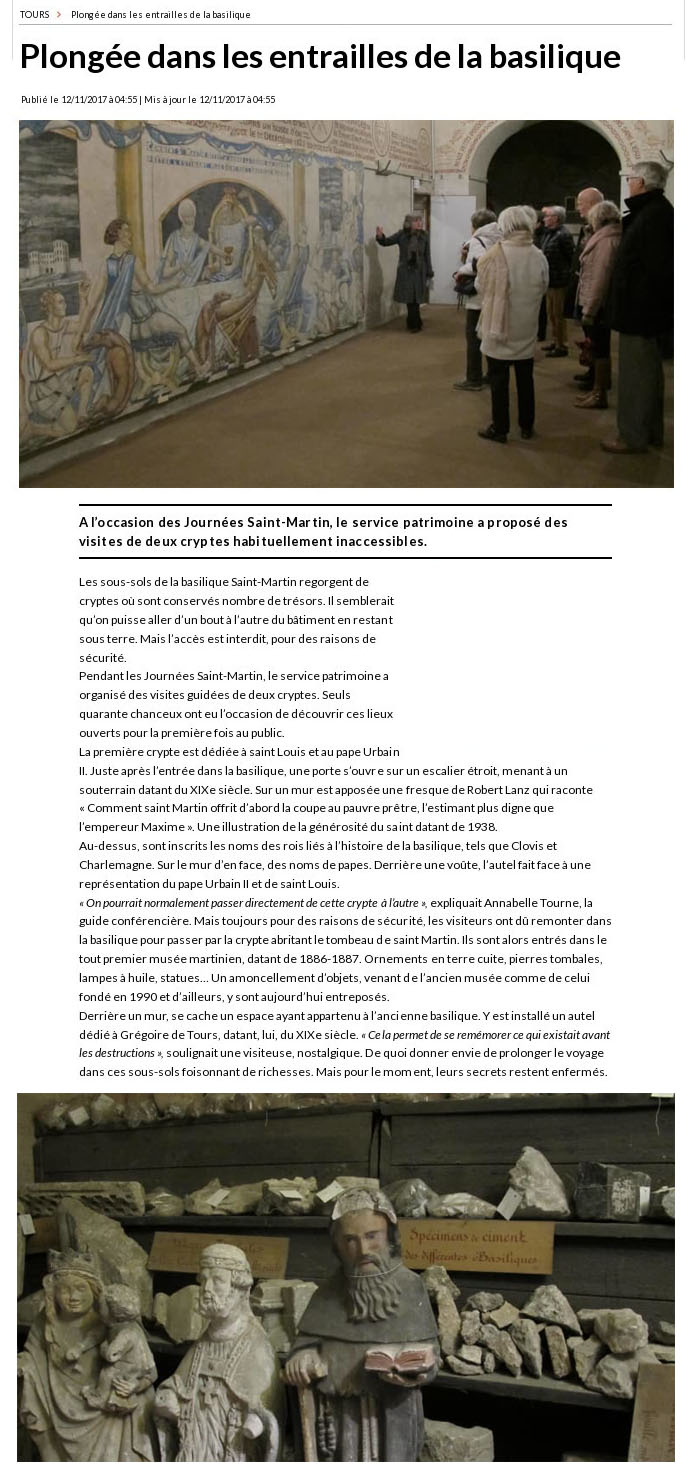 article from La NR 2017 with two photos. article from La NR 2017 with two photos.
|
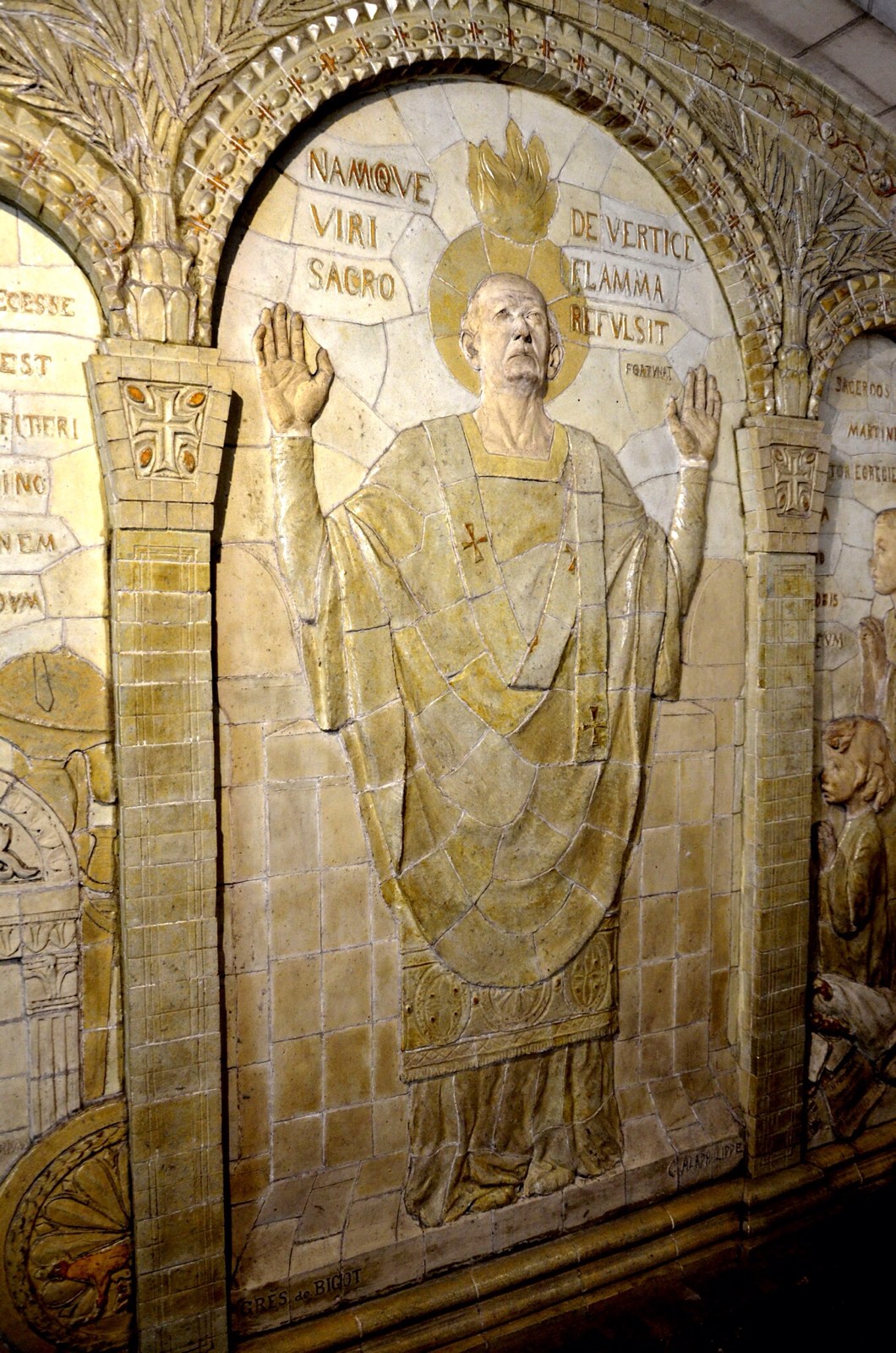
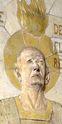
The Forgotten Martin of the Basilica. According to the page vdujardin; this beautiful and imposing fresco, 2.29 m high, is located "on the reverse side of the basilica's façade" and according to this page from the Mérimée database on the "bottom side East, south wall", with very limited access. This is a work by Camille Alaphilippe done in "bigot's progress" between 1905 and 1908 [flickr photo Hocusfocus55] (he also did "Les mystères douloureux", a statue in the Mirabeau garden in Tours, link).


 The great organs of the basilica : another story The great organs of the basilica : another story 
1902, 1956, 1977, 2013, 2017 are the dates of installation and major work of the organs of the basilica, so many water leaks and heat waves have caused damage (link). Do they play Brassens' tune "Pauvre Martin, pauvre misère" ? Or "A l'été de la Saint Martin" by Jean Ferrat... + 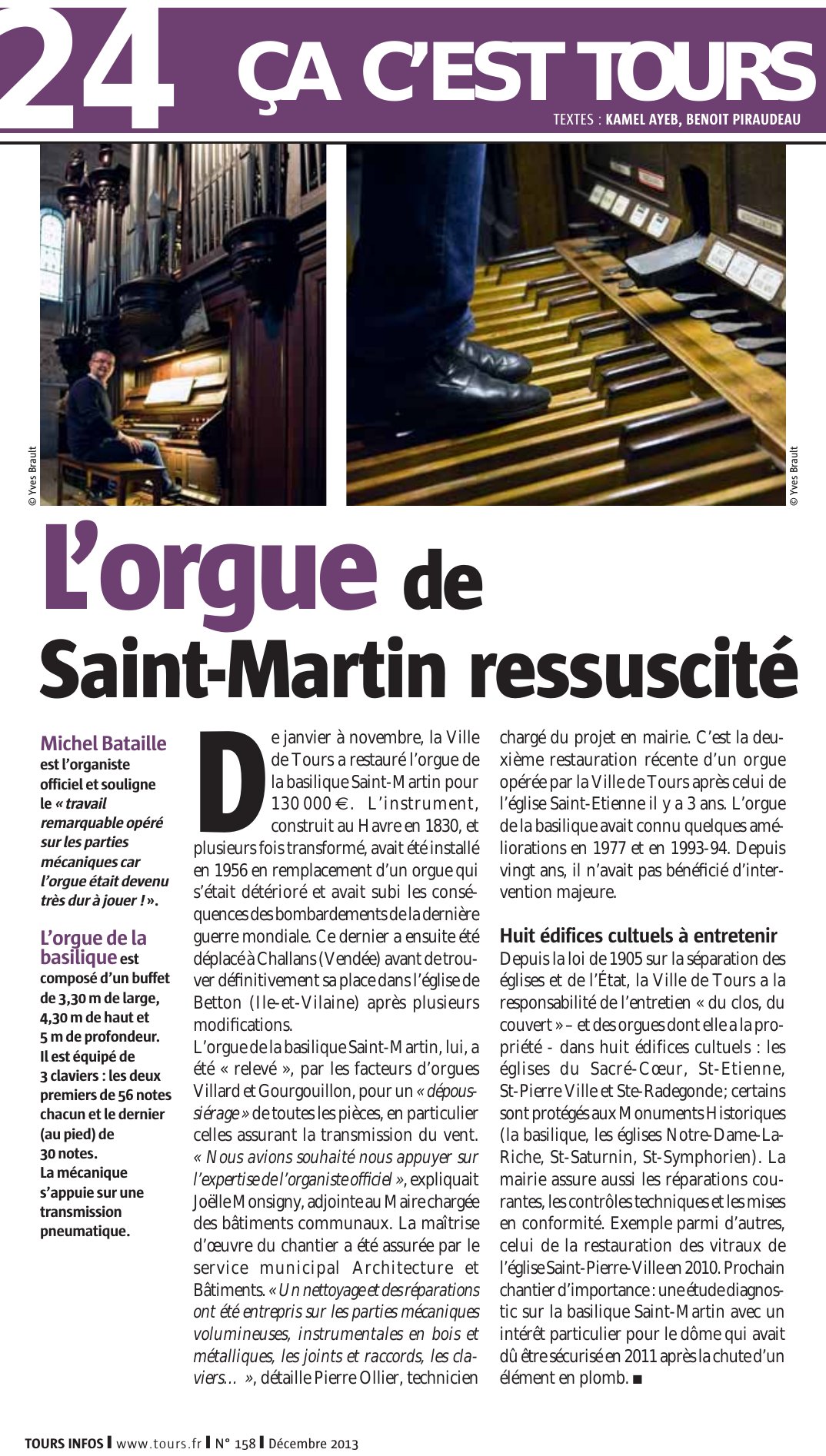 article 2013. article 2013.
|
1929, Martin, Perpet and Grégoire, the trio in the spotlight on the square of the basilica. Let's take an interest in the parvis that adjoins the current basilica. At its southeast corner, a tall concrete statue has been erected, called
calvary because of its vague cross shape. It represents the three most important prelates of Tours, all three canonized : on the left Gregory, 19th bishop, in the center Martin in the scene of the shared mantle, 2nd bishop, on the right, Perpet, 6th bishop. The two peacocks on the base echo those in mosaic on the altar. This is a 1929 work by the Touraine sculptor Henri Frédéric Varenne (1860-1933). Around 1922, it had been planned to place a statue of François Sicard (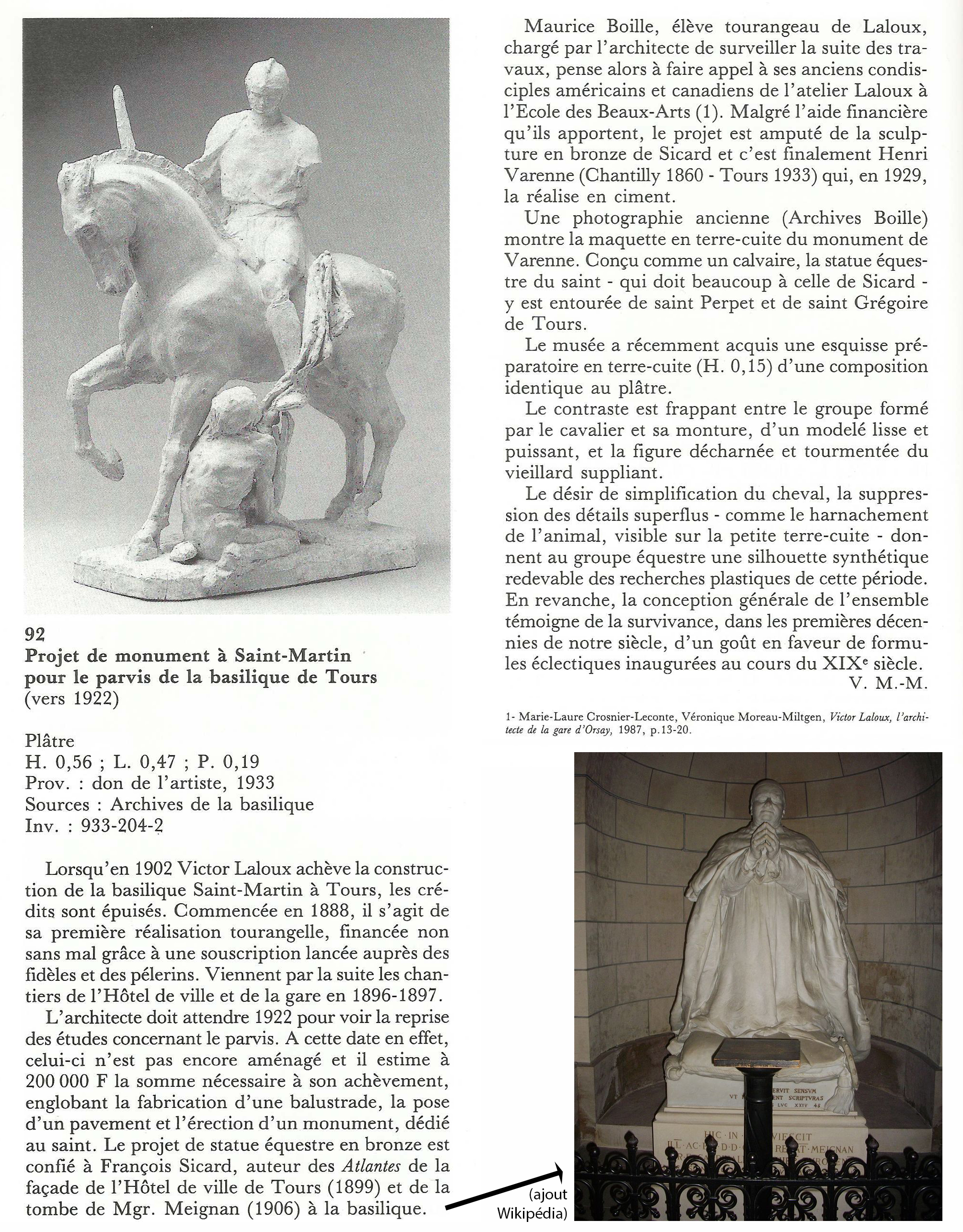 photo commented by
Véronique Moreau-Miltgen, "The sculptures come out of storage" 1988 MBAT).
On January 12, 2020, this small square was named "parvis John Paul II" (
photo commented by
Véronique Moreau-Miltgen, "The sculptures come out of storage" 1988 MBAT).
On January 12, 2020, this small square was named "parvis John Paul II" ( article France-Bleu Touraine).

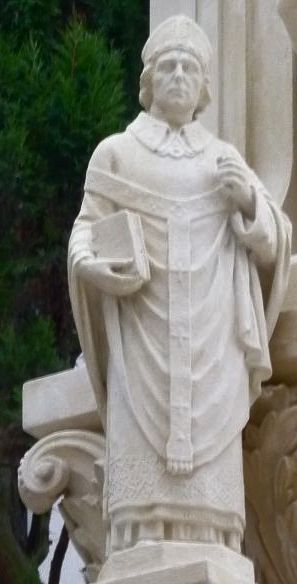

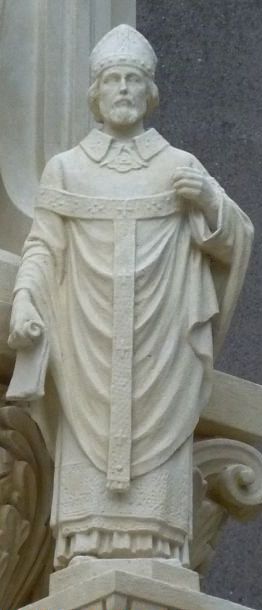
 view
view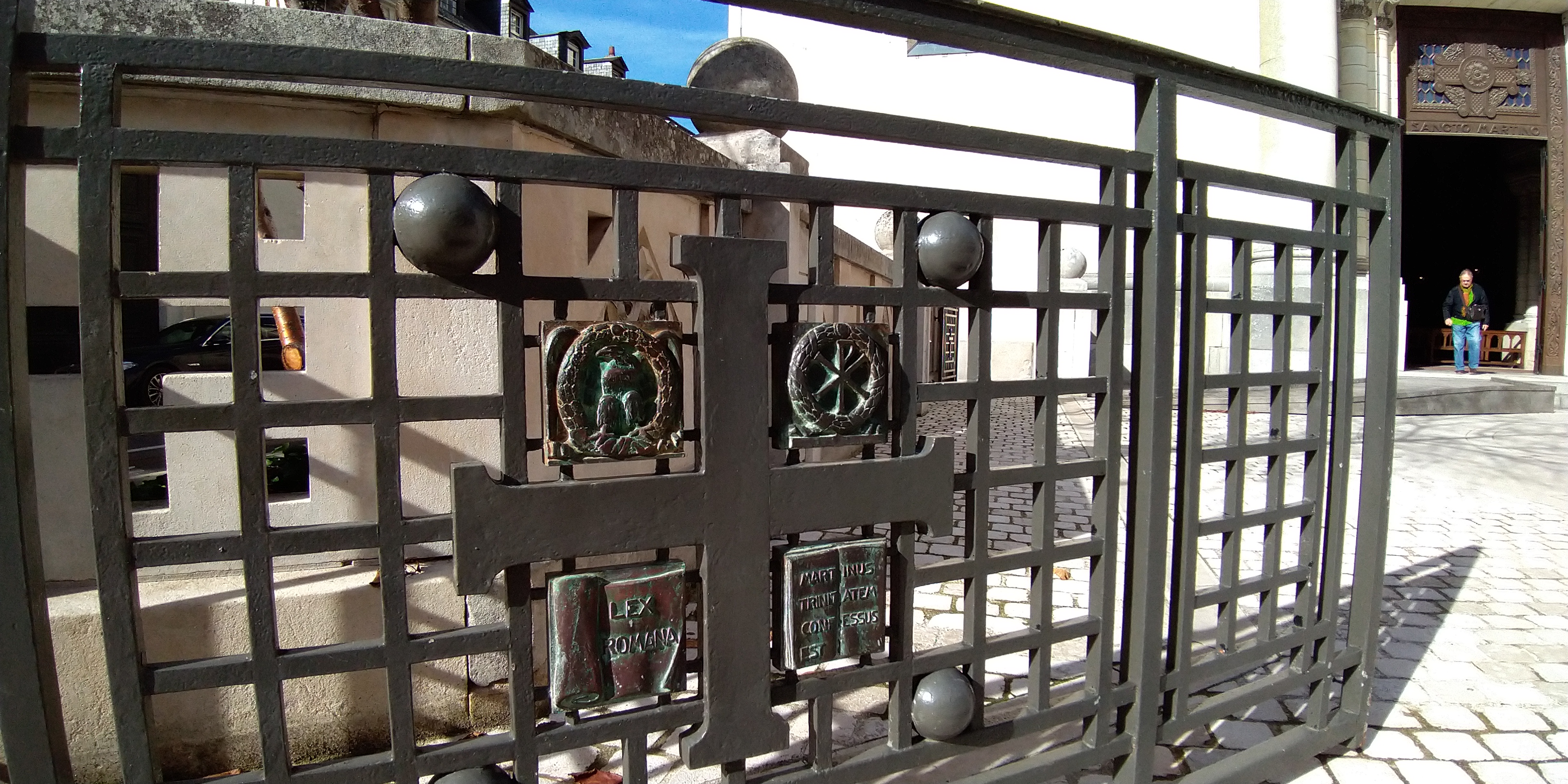 grille
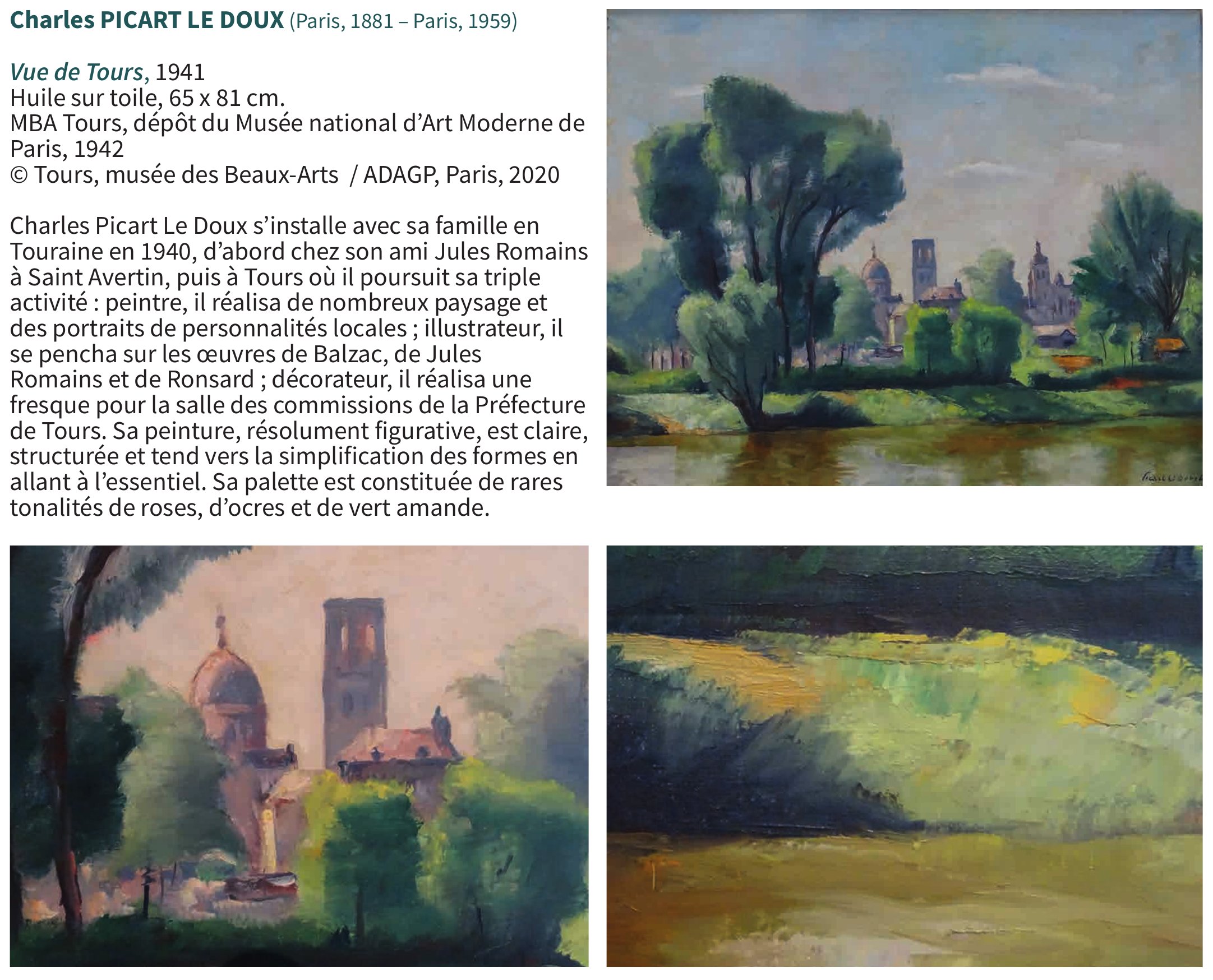

The dome of the new Basilica joins the old Charlemagne and clock towers in the Touraine landscape. On the left, "Vue de Tours," by Berthe Morisot 1892 (painted in the summer of 1887).
In the center "Vue de Tours 1941" by Charles Picart le Doux [MBAT 2020 expo catalog]
+ from the same catalog, another 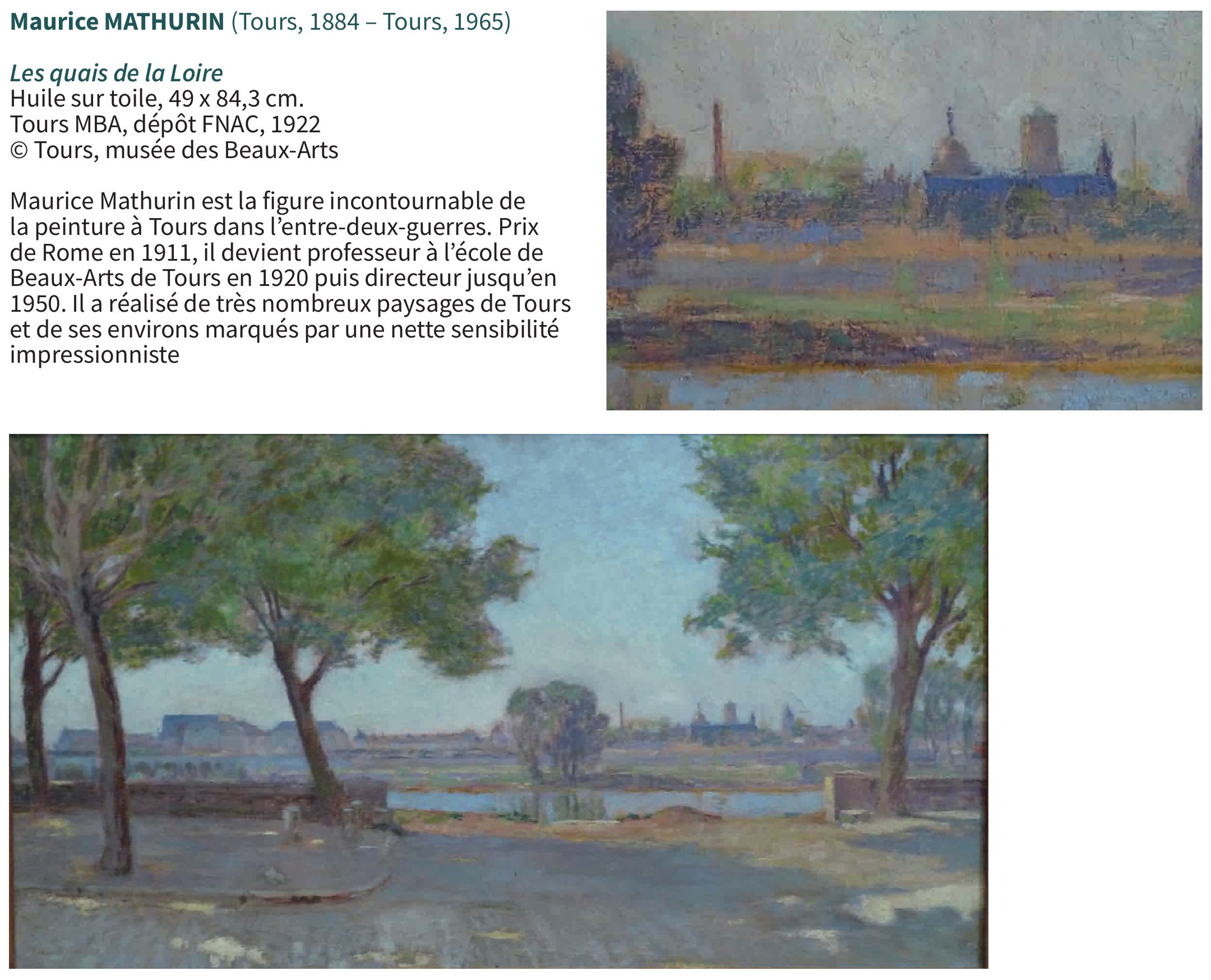 view analog, "Les quais de la Loire" by Maurice Mathurin 1922.
+ five views of Tours : view analog, "Les quais de la Loire" by Maurice Mathurin 1922.
+ five views of Tours :
 1 [LTh&m 1855] 1 [LTh&m 1855]
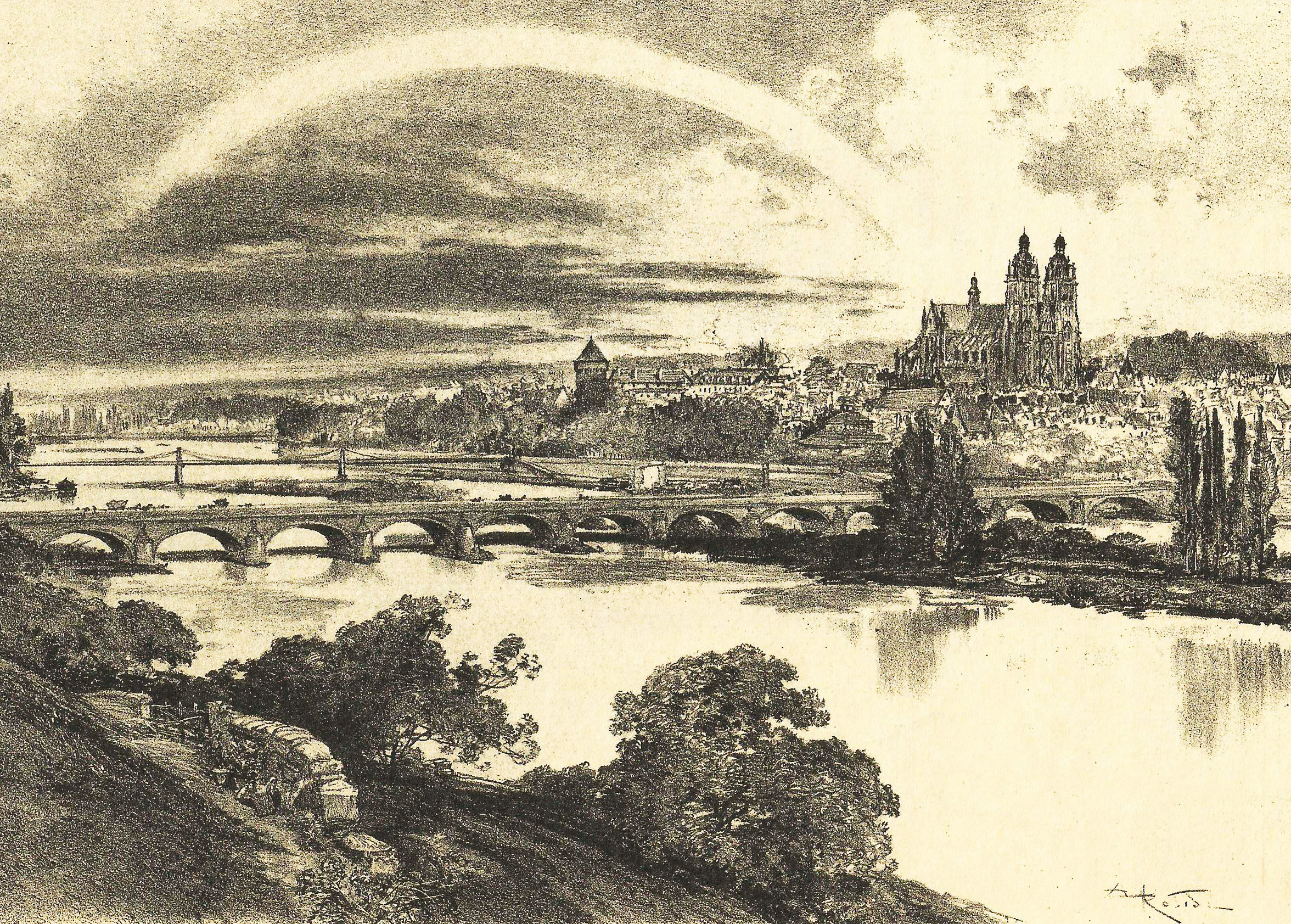 2 [Albert Robida 1892] 2 [Albert Robida 1892]
 3 ["La Touraine" by Maurice Bedel, 1935] 3 ["La Touraine" by Maurice Bedel, 1935]
 4 [aerial photo "Visages of Touraine" 1948] 4 [aerial photo "Visages of Touraine" 1948]
 5 (aerial view, 1920, the basilica at upper right).
+ 5 (aerial view, 1920, the basilica at upper right).
+ 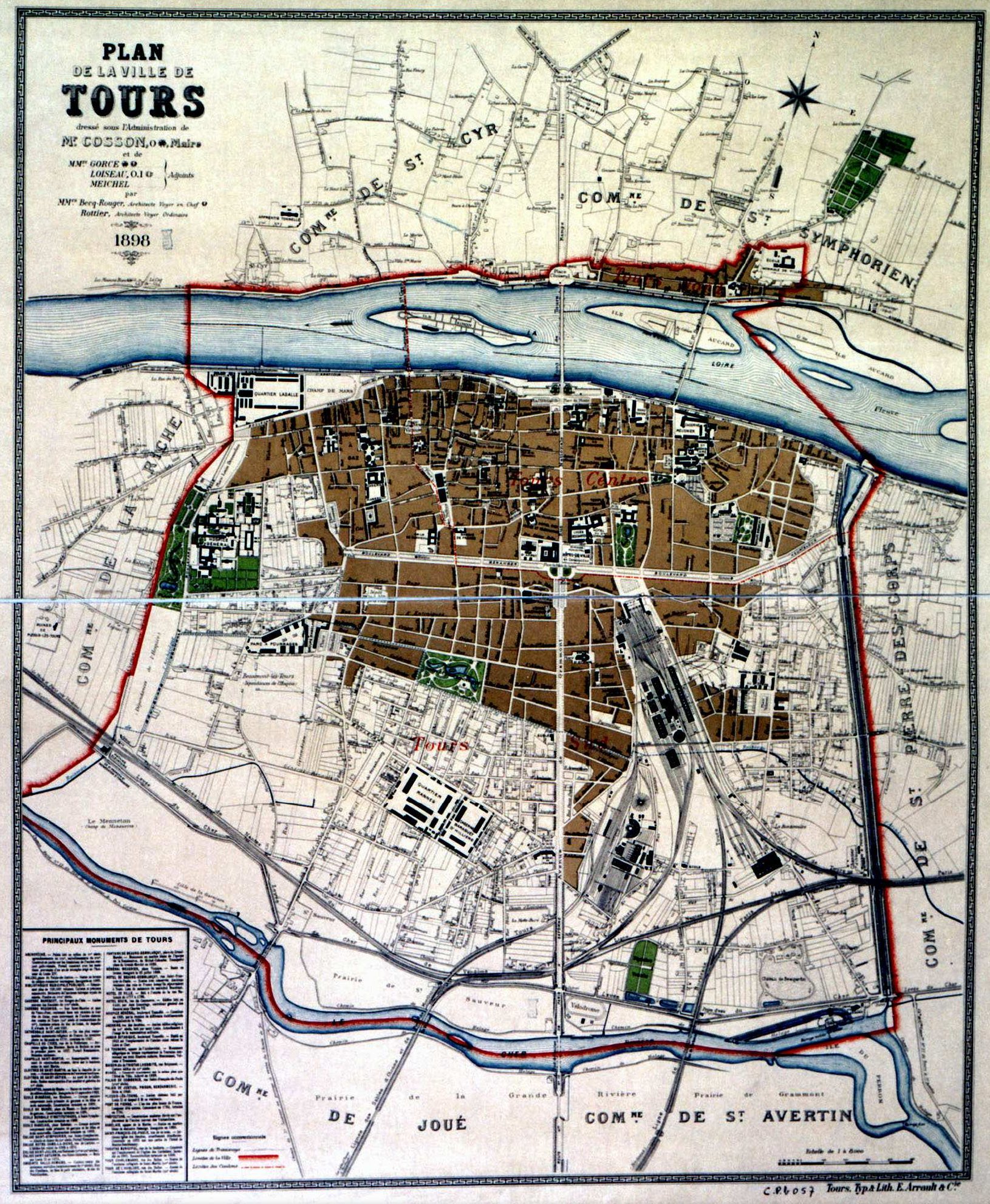 plan of 1898.
+ plan of 1898.
+  plan "monumental" circa 1900 with drawing of the basilica. plan "monumental" circa 1900 with drawing of the basilica.
|
 cover
cover
|

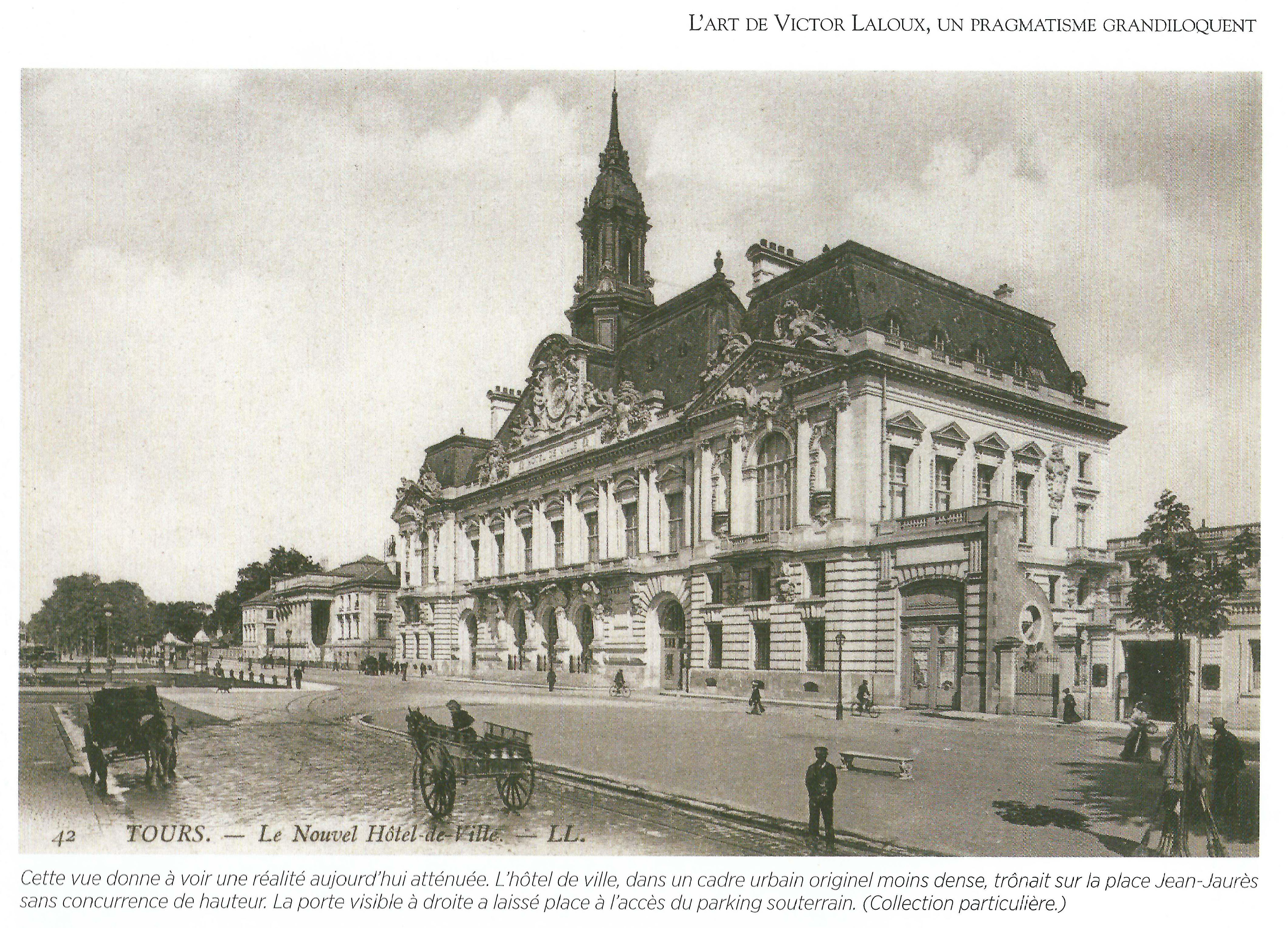

 1
1 2
2 1
1 2
2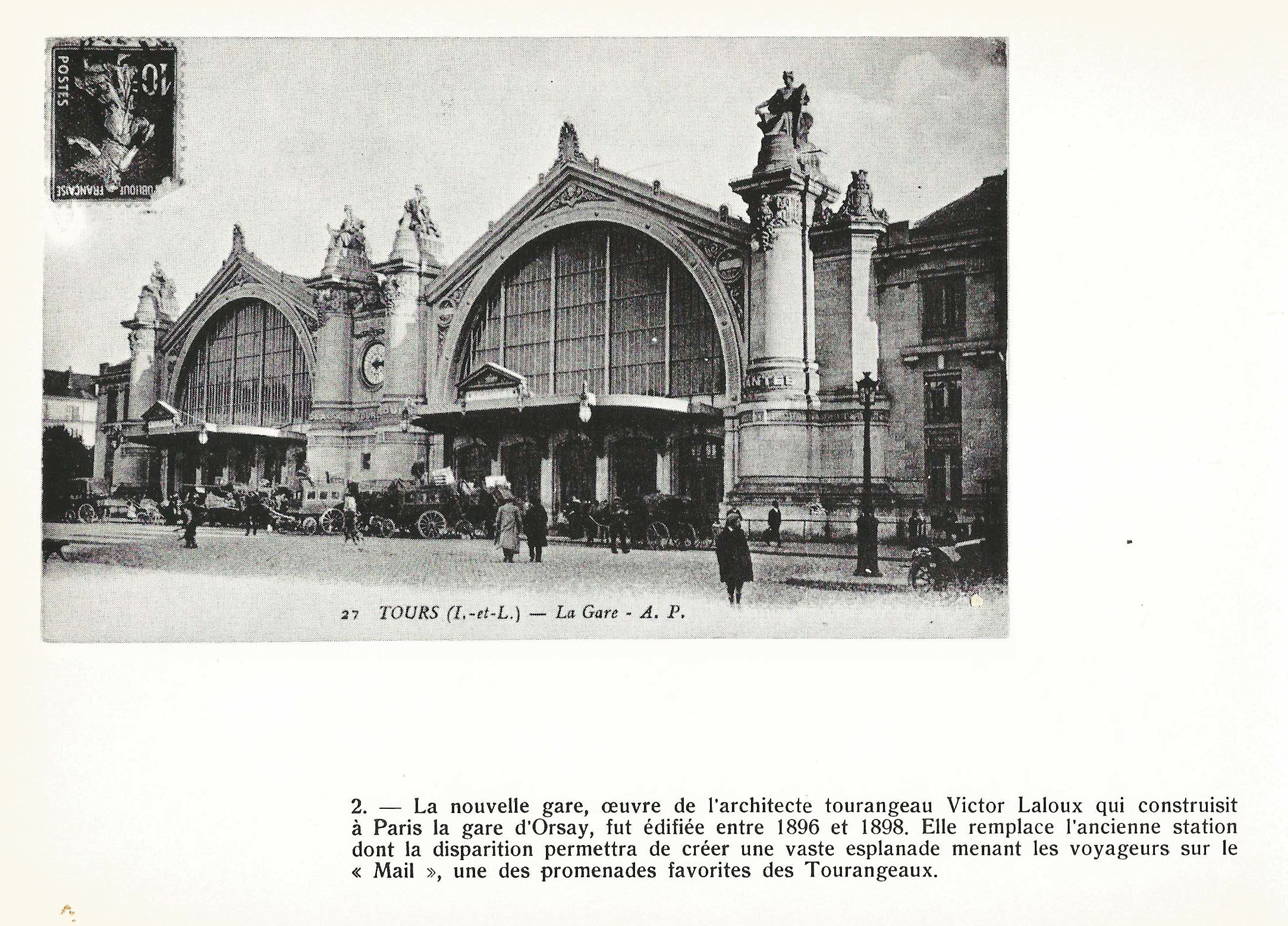 3
3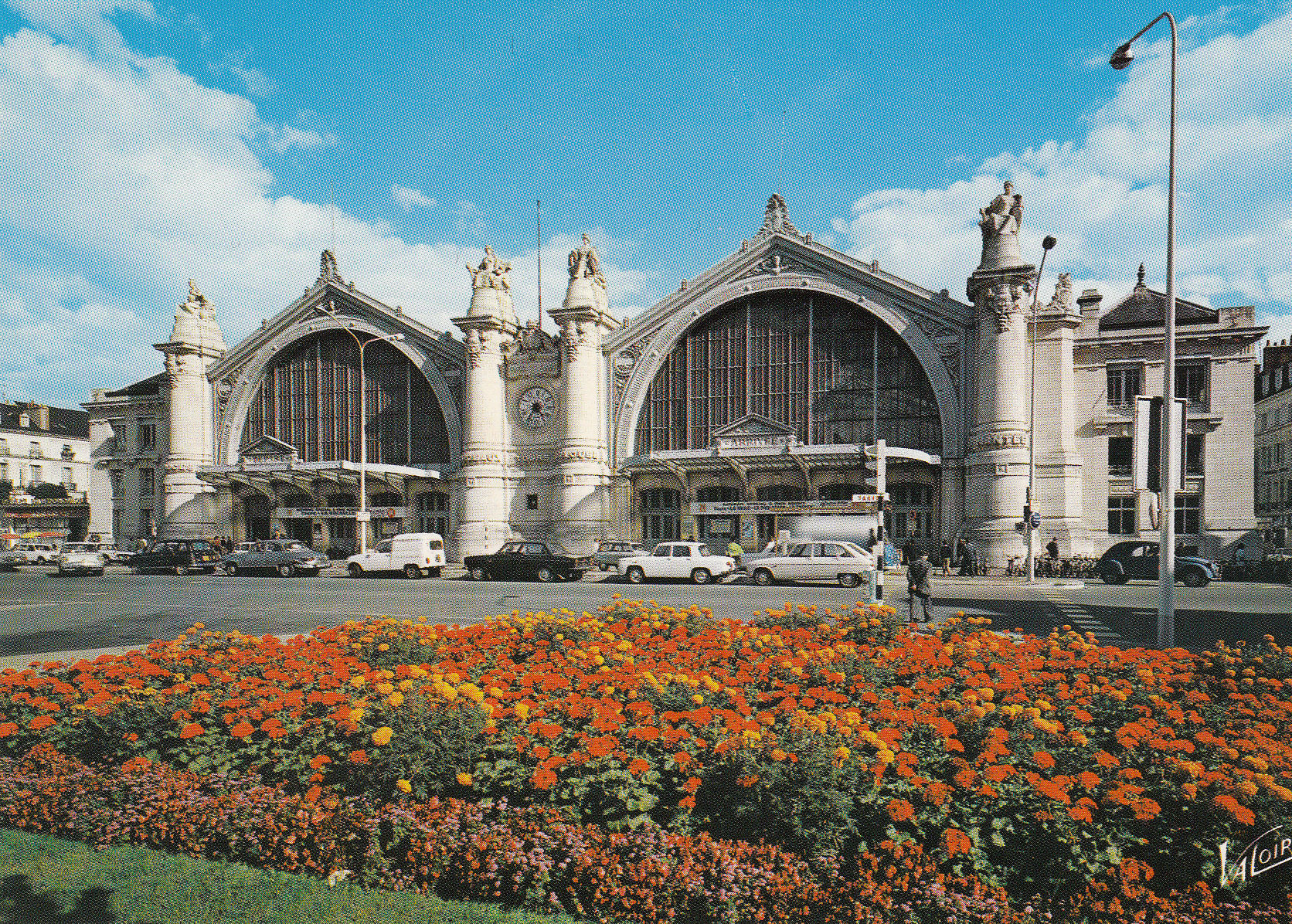 4
4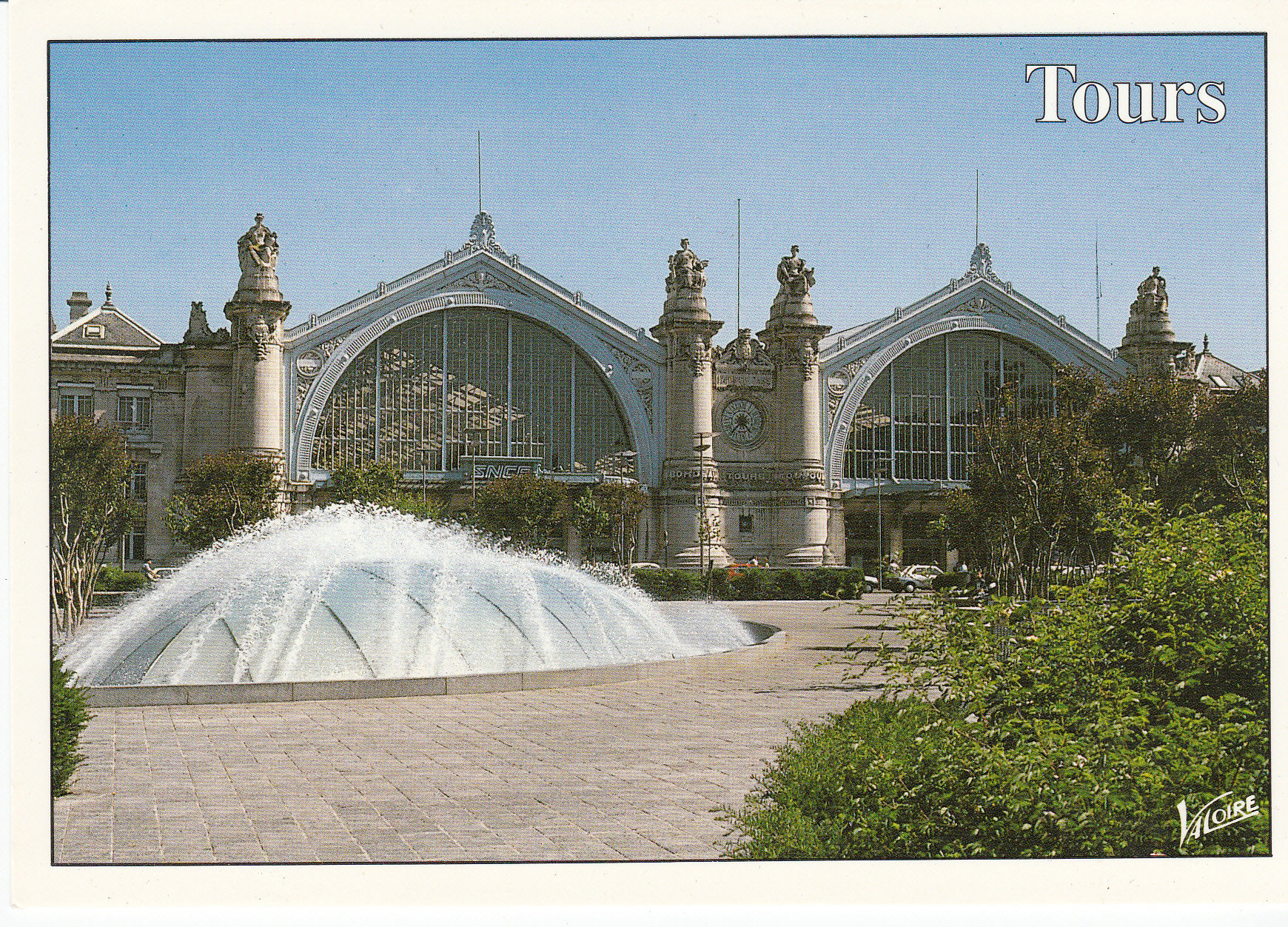 5
5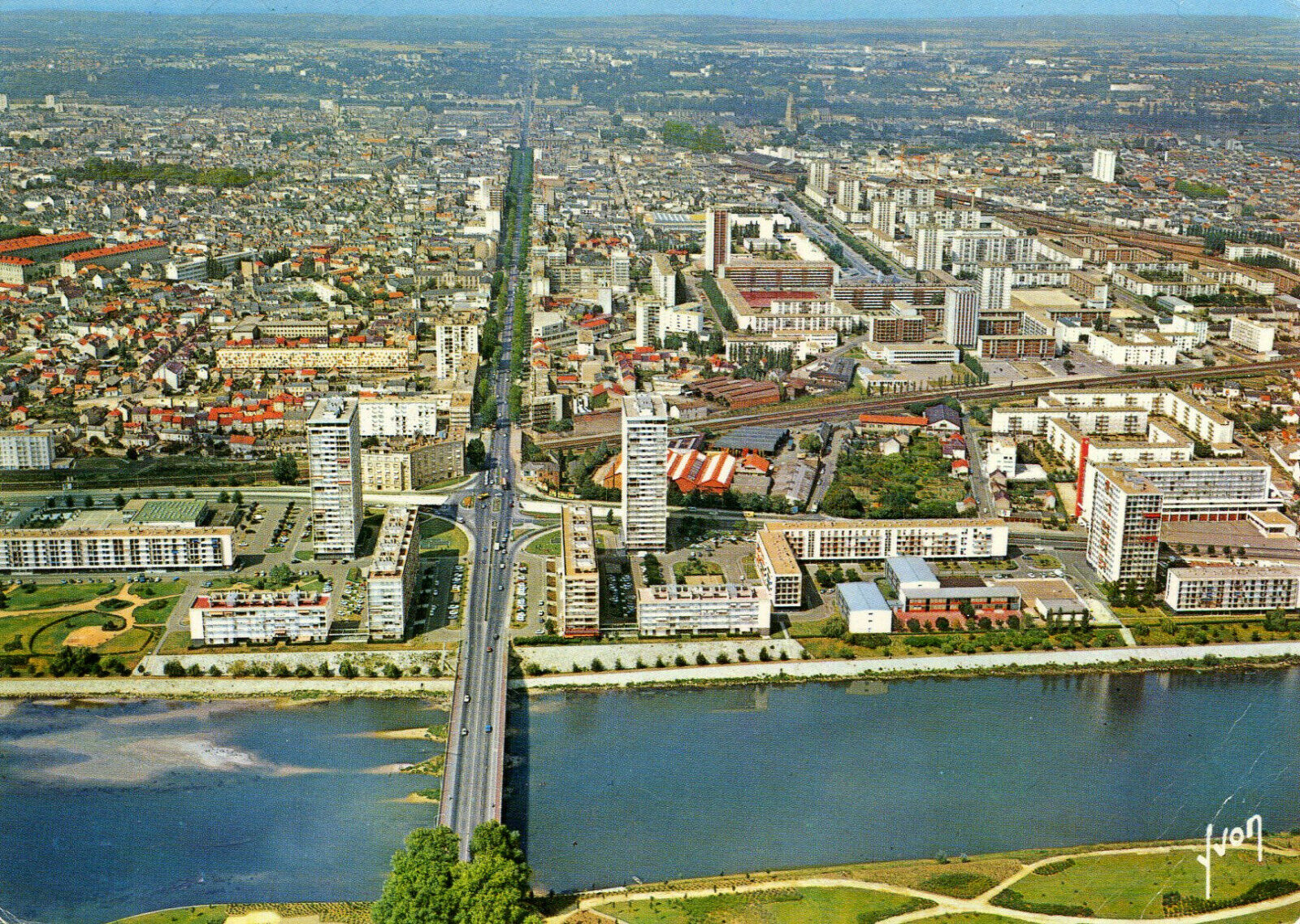 postcard
 view
view
Orleans Railway, then SNCF from January 1, 1938, the train was, along with the bus, the preferred means of transportation in Touraine in the first 60 years of the 20th century, later giving way to the automobile. On the left, a poster advertising to come by train to Tours. There were many others for Touraine, some signed Constant Duval, including these eleven there :
 1 1
 2 2
 3 3
 4 (Villandry 1923) 4 (Villandry 1923)
 5 (Amboise) 5 (Amboise)
 6 (Chenonceaux) 6 (Chenonceaux)
 7 (Loches) 7 (Loches)
 8 (Azay le Rideau) 8 (Azay le Rideau)
 9 (Chinon) 9 (Chinon)
 10 10
 11.
In the center, two postcards, one of a steam train at the Gizeux-Continvoir station (page on Touraine steam trains), the other of a autorail at the La Membrole sur Choisille station.
+ dissertation from 2008 "The territory of the railroad in the landscape of the Tours agglomeration (1832-1991)" by Jean-Marie Moine. 11.
In the center, two postcards, one of a steam train at the Gizeux-Continvoir station (page on Touraine steam trains), the other of a autorail at the La Membrole sur Choisille station.
+ dissertation from 2008 "The territory of the railroad in the landscape of the Tours agglomeration (1832-1991)" by Jean-Marie Moine.
|
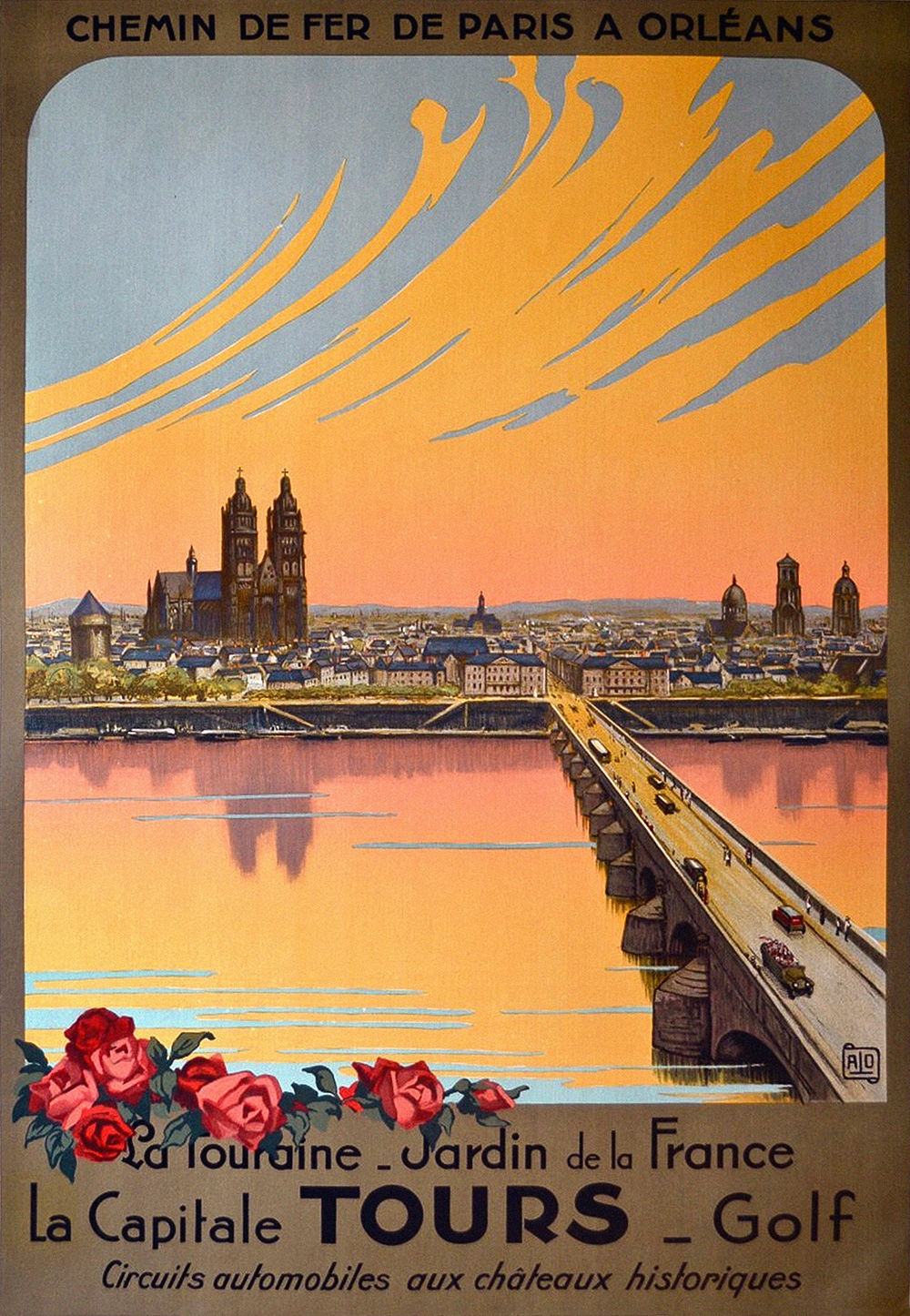
Tours without Martin ? Martin is less present in his city in the twentieth century than in the nineteenth, whether for its inhabitants or for its visitors. No more polemics, he is now part of the scenery, in his place, to the point of becoming transparent, a relic among others. Thus the
congress of Tours in 1920 (in the "room of the rides" adjoining the back of Saint Etienne church, destroyed in 1940,  photo), where the French Communist Party, and the Marxist activism of this party did not provoke any notable Martinian agitation. Is it because there was a convergent idea of sharing ? Thus Maurice Bedel, a neighbor of Poitou, in his 1935 book "La Touraine" presents the city and its inhabitants without mentioning its second bishop (except for the rue du petit saint Martin !), but not forgetting some of its continuators. Excerpts : "Tours is the smile of France. [...]It has the smiling grandeur of a lady in whom ten centuries of good manners blossom. [...-]Here, everything is fine culture. One crosses a scholar at each end of the street [...]We are in the very city of Saint Gregory, of this Gregory of Tours who was, in the 6th century, the first historian of a still young France. It was here that Alcuin opened a school of philosophy in the years when Charlemagne was instituting the government of minds it was the first in France it was in Tours that France began to learn wisdom. In Tours also wandered the young Rabelais, who came from the country of Chinon in streets that we still see as he knew them, he practiced the careful observation of people, the criticism of mores and customs other Tourangeaux have by the same sidewalks led the same train of curiosity with literary purpose, and among them Balzac, Courteline, Anatole France [+
  plank of Guignolet 1984 on Touraine writers]. Famous names in the history of our letters, radiant names, and who radiated on this city of high culture. [...]A city where one enters between a library and a museum housed in two Louis XVI palaces of the noblest appearance, a city where one is greeted from the outset by a Rabelais and a Descartes who, to be marble and mounted on pedestal, do not address the traveler any less the greeting of intelligence and reason, a city like that is a capital of the mind." These palaces will disappear in the turmoil of a second world conflict and what remained of this spirit between two wars?

National Street in the good old days. At the beginning of the 20th century, Rue Nationale continued to be the "Queen of streets", as Balzac had called it, making Tours a little Paris.
|
 map
map ancient photos
 1
1 2
2 3
3 variant
 4
4 5
5 variant
 1
1 2
2 1
1 2
2 3
3 4
4 5
5 6
6 7
7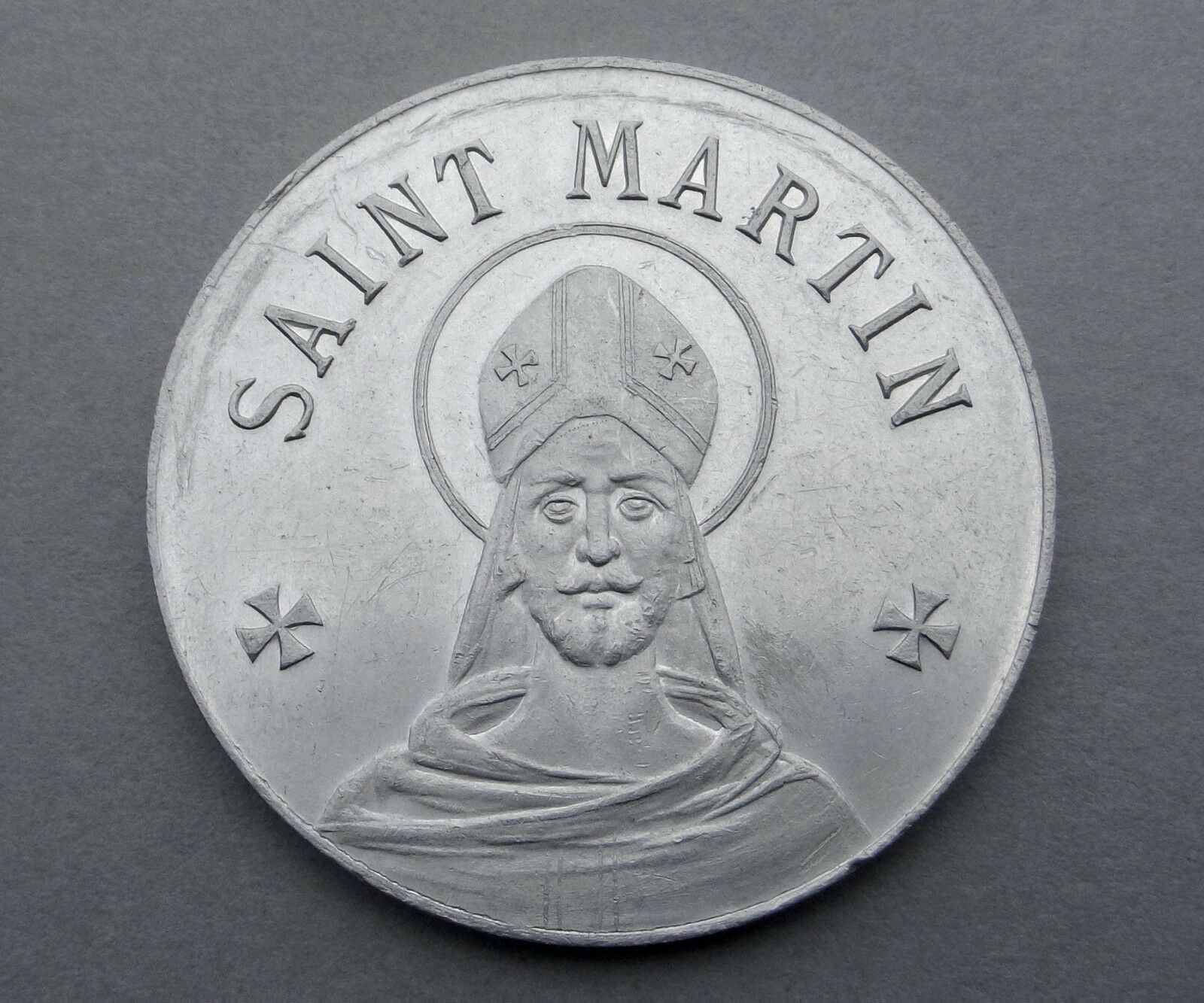 recto
recto verso
verso article
 photo
photo photo
photoCharles Lelong, in his book of 2000, notes all the same an evolution: "It is only from 1932 that the cult knows a new development. Bishop Gaillard and Canon Robin, rector of the basilica, imparted great brilliance to the traditional ceremonies of the 4th of July and the 11th of November. Thanks to their efforts, the Holy See authorized the return of the relics, which took place on November 30, 1941. Canon Sadoux, rector of Saint-Martin from 1946 to 1986, made a special effort to stimulate pilgrimages from abroad by creating a review, "Les annales martiniennes". Little by little, foreigners began to come to Tours. In 1959, the international congress of pilgrimage directors listed Saint-Martin among the high places of Christianity. The following year, anniversary of the discovery of the tomb and the foundation of Ligugé, is declared "Martinian year" we see a succession of ceremonies, exhibitions and conferences." Here we join the advances, presented
here-before, made by historians in the late twentieth century.


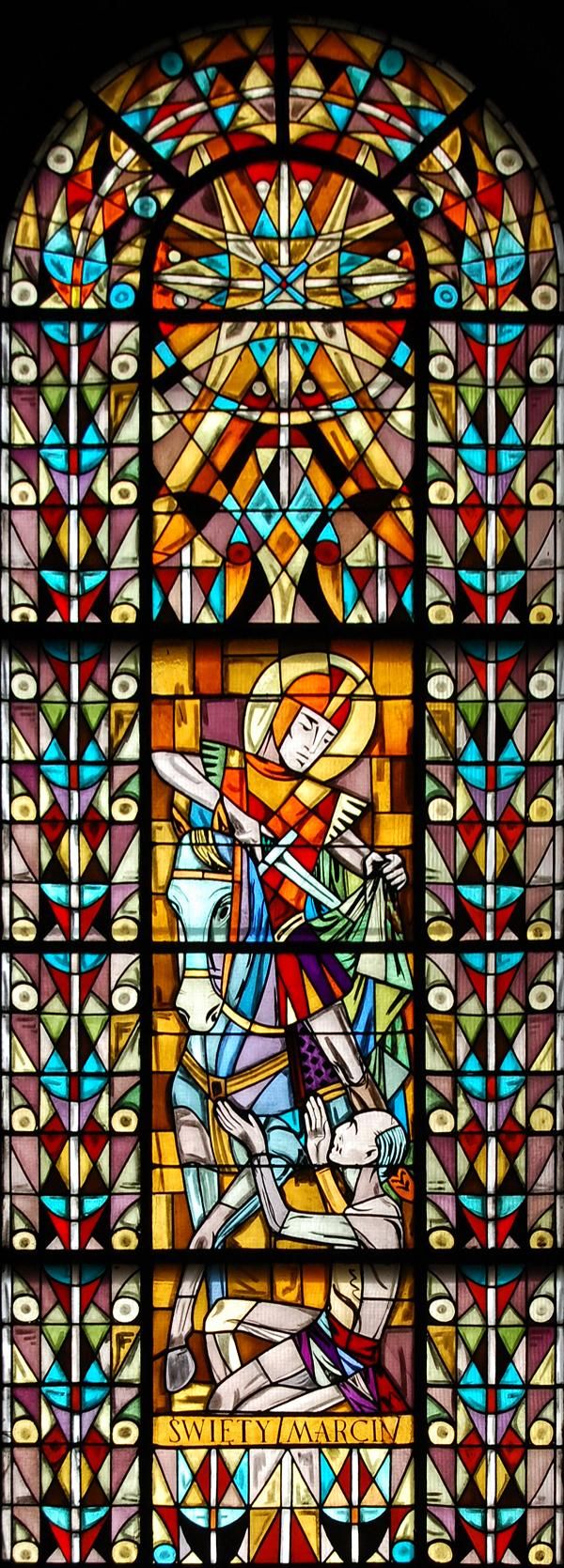

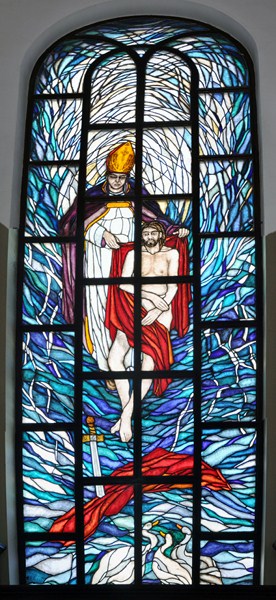
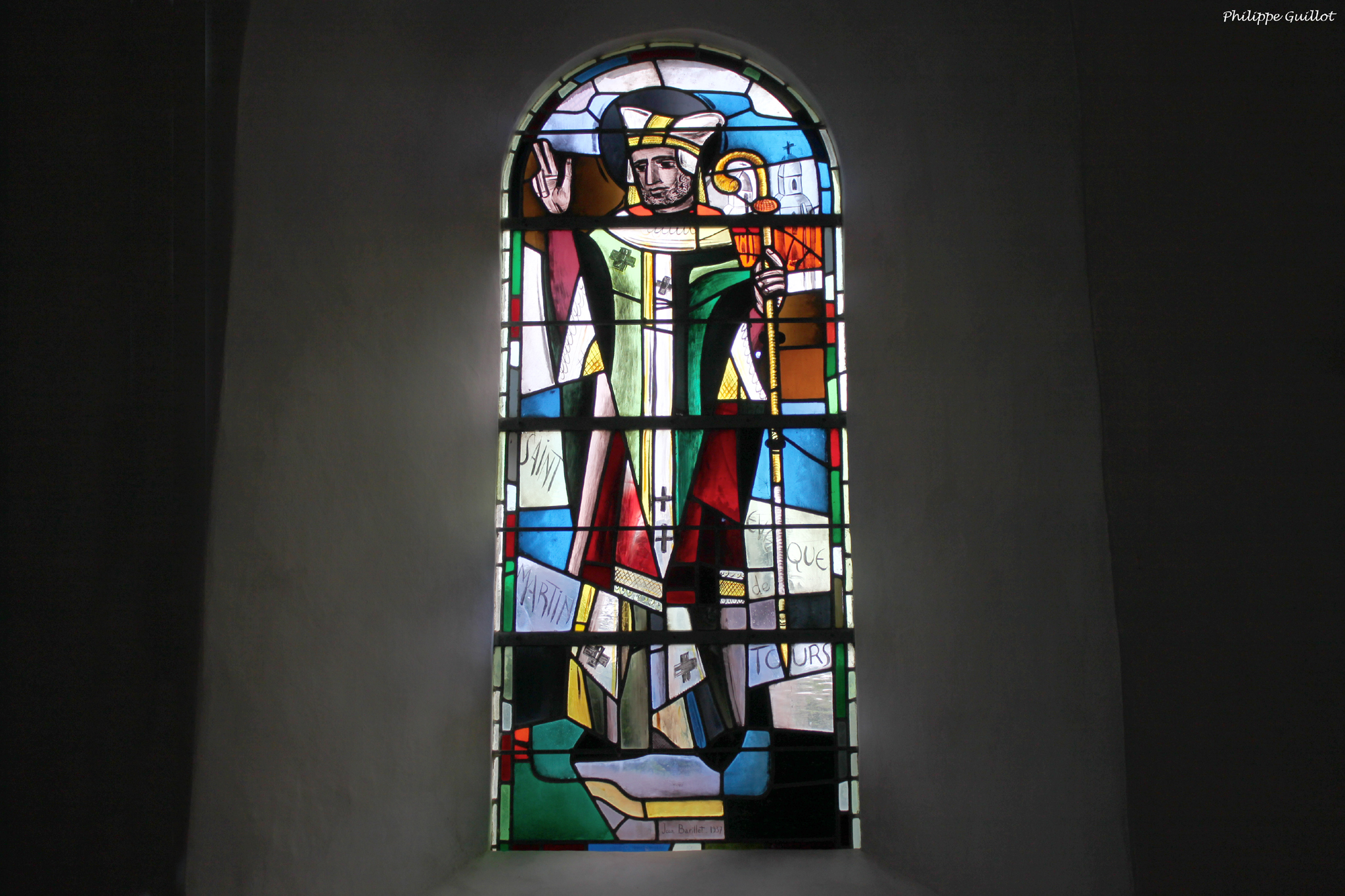
Twentieth Century Stained Glass. The art of stained glass is being renewed, as evidenced by the stained glass windows shown here. 1) Church Nativity of Our Lady in Ormoy (Haute Saône), the sharing of the mantle (link)
2) Saint Martin's Church in Saint Dié des Vosges, the fire globe by Jacques le Chevallier (link) + another  vitrail foundation of Marmoutier.
3) Saint Martin's Church in Barentin in Seine Maritime, made in 1947 by the Lorin workshop of Chartres, after drawings by Georges Mirianon. Baptism of Martin (link).
+ two other stained glass windows : vitrail foundation of Marmoutier.
3) Saint Martin's Church in Barentin in Seine Maritime, made in 1947 by the Lorin workshop of Chartres, after drawings by Georges Mirianon. Baptism of Martin (link).
+ two other stained glass windows :
 1 (baptism of Martin's mother). 1 (baptism of Martin's mother).
 2 (resurrected child)
4) Cathedral of Katowice in Poland (link)
5) Saint Martin's Church in Tony le Petit, canton of Fribourg in Switzerland, realized by Claude Sandoz in 1989. Fighting a demon and an evil tree (links : 1 2).
+ three other stained glass windows : 2 (resurrected child)
4) Cathedral of Katowice in Poland (link)
5) Saint Martin's Church in Tony le Petit, canton of Fribourg in Switzerland, realized by Claude Sandoz in 1989. Fighting a demon and an evil tree (links : 1 2).
+ three other stained glass windows :
 1 (mantle sharing) 1 (mantle sharing)
 2 (miracle of the birds) 2 (miracle of the birds)
 3 (summer of St. Martin).
6) Poland (link).
7) Eglise Saint Martin d'Omonville la Petite, in La Manche, stained glass window from the Barillet workshop in Paris, 1957 [flickr photo Philippe Guillot]. 3 (summer of St. Martin).
6) Poland (link).
7) Eglise Saint Martin d'Omonville la Petite, in La Manche, stained glass window from the Barillet workshop in Paris, 1957 [flickr photo Philippe Guillot].
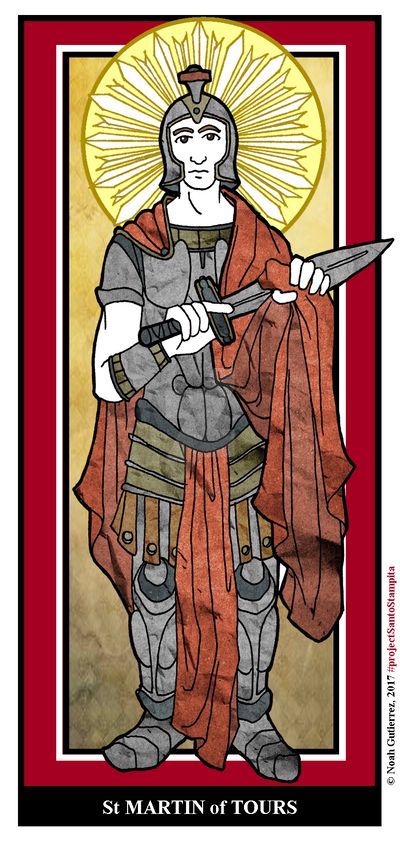 portrait japanese of Martin by the Filipino Nowitzki Tramonto (link)
and this portrait japanese of Martin by the Filipino Nowitzki Tramonto (link)
and this  tableau of the sharing of the mantle, with its tableau of the sharing of the mantle, with its  environment, in the church of Saint Pierre du Lac in Montigny le Bretonneux (Yvelines) (link). environment, in the church of Saint Pierre du Lac in Montigny le Bretonneux (Yvelines) (link).
|
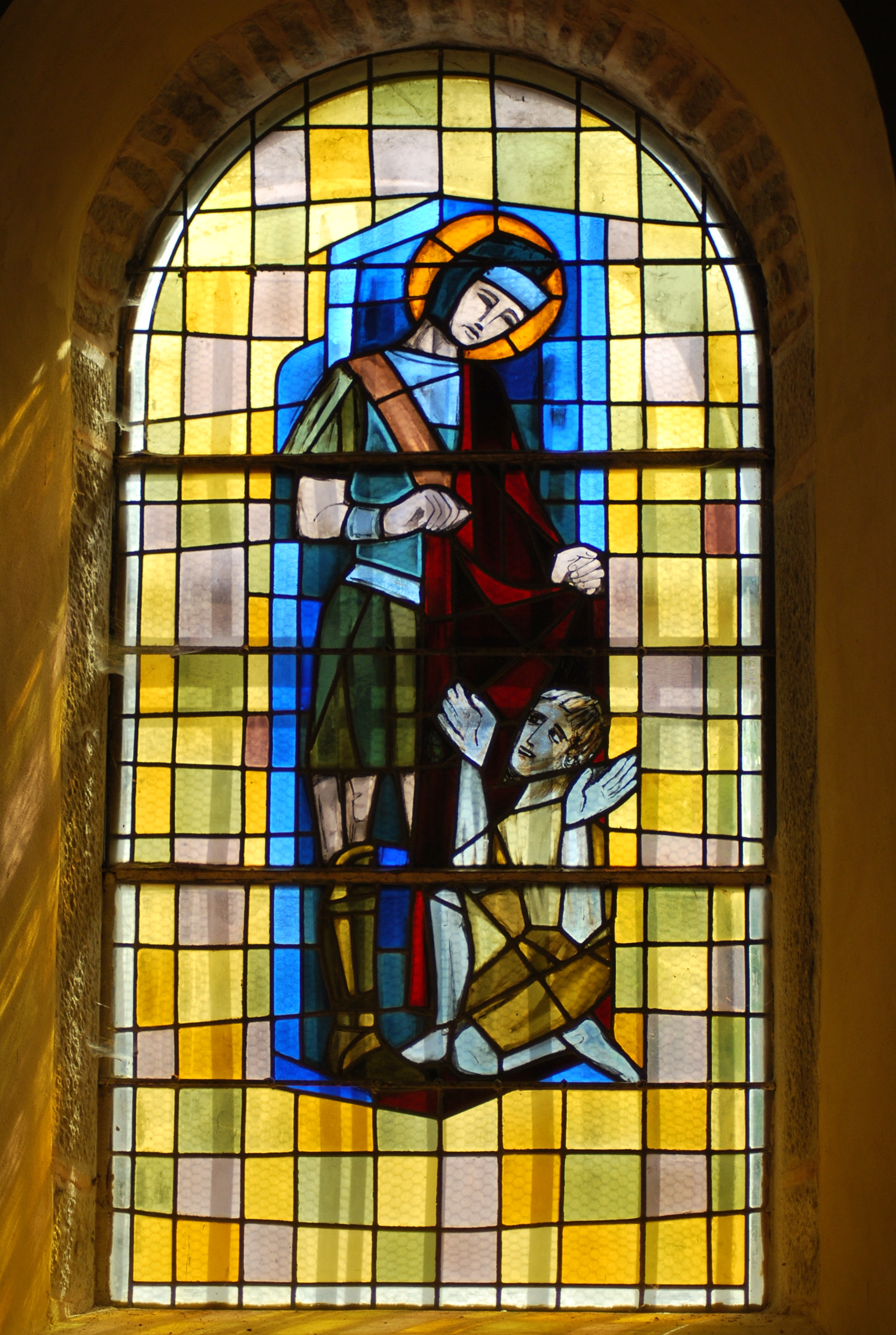 1
1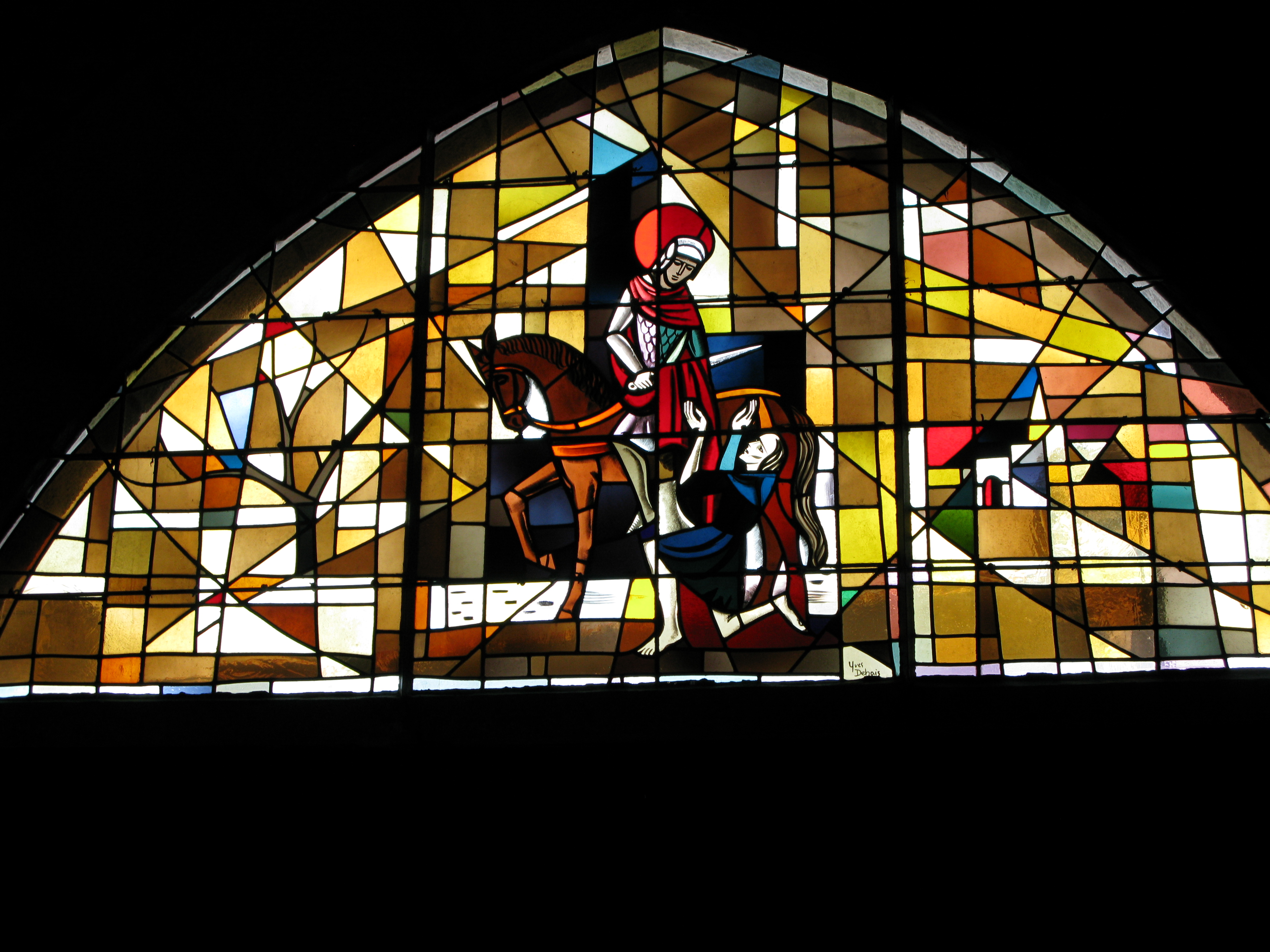 2
2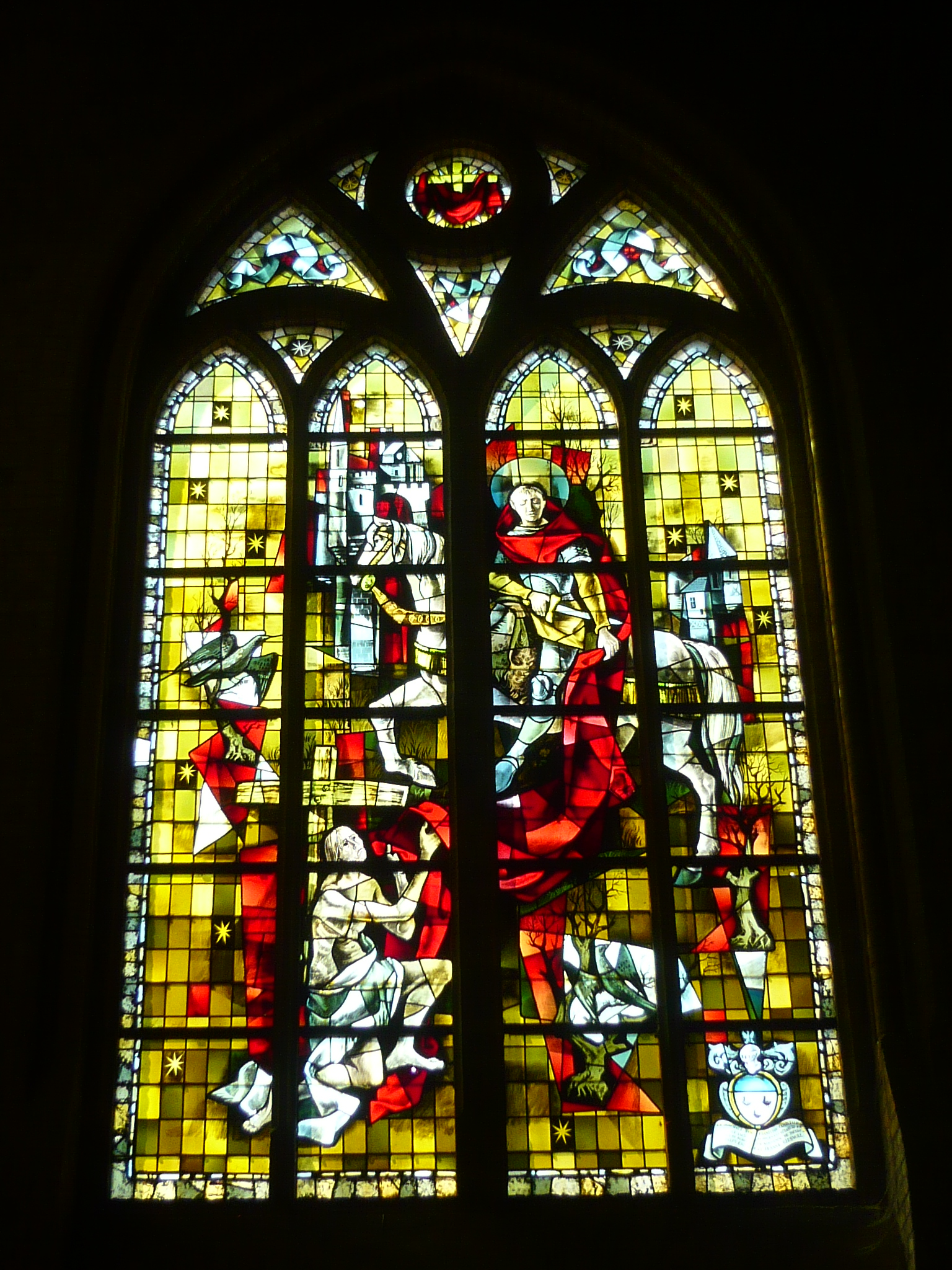 3
3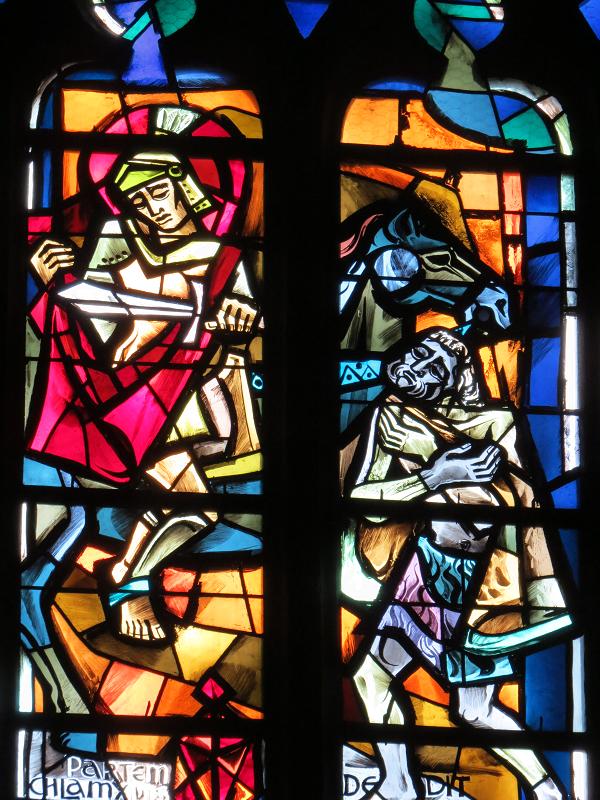 4
4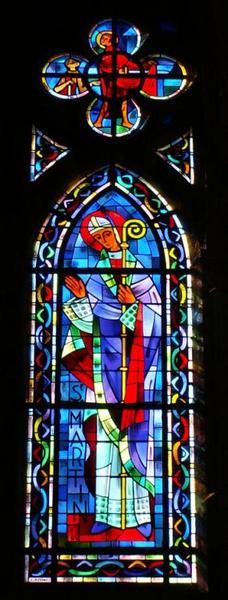 5
5 6
6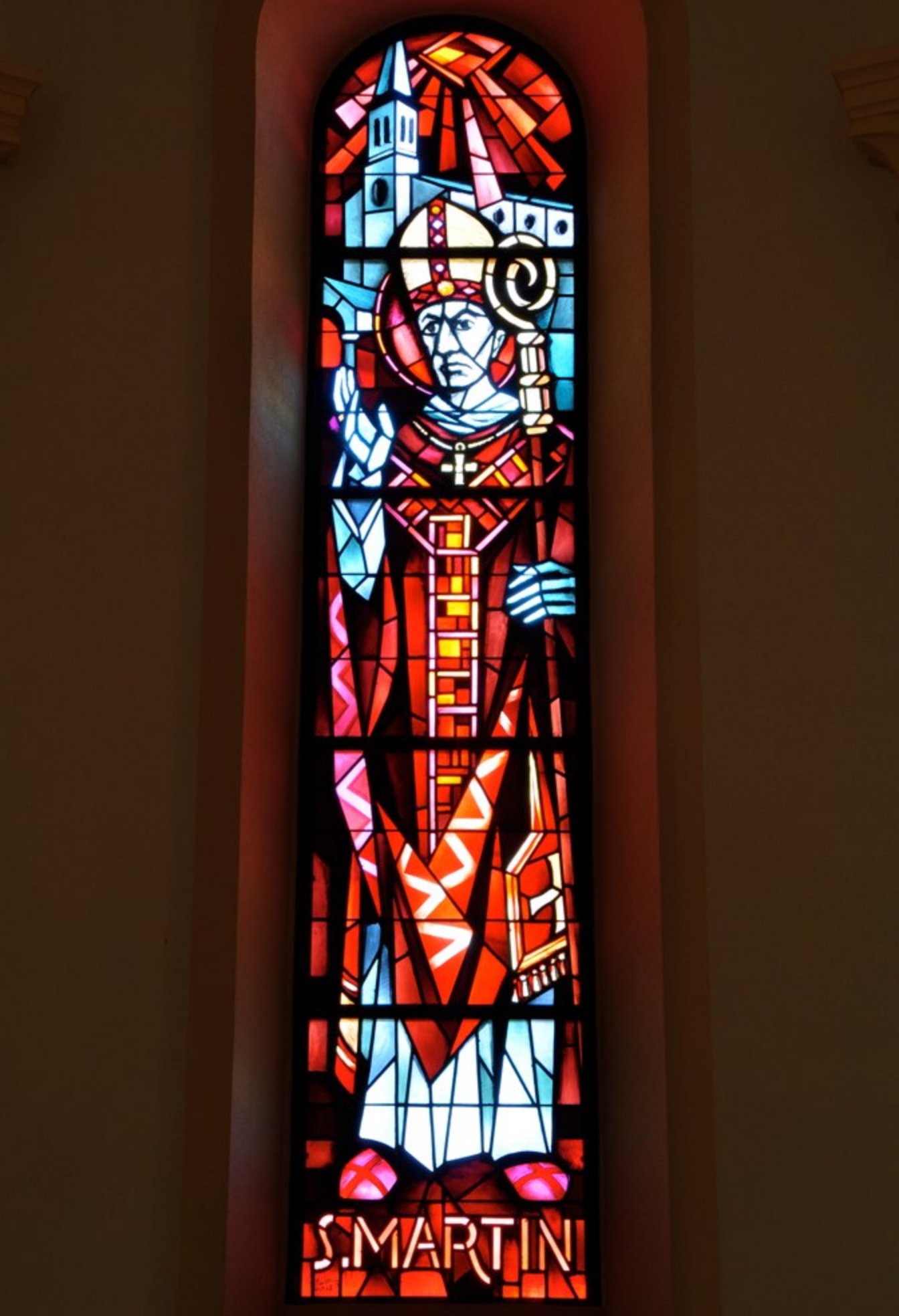 7
7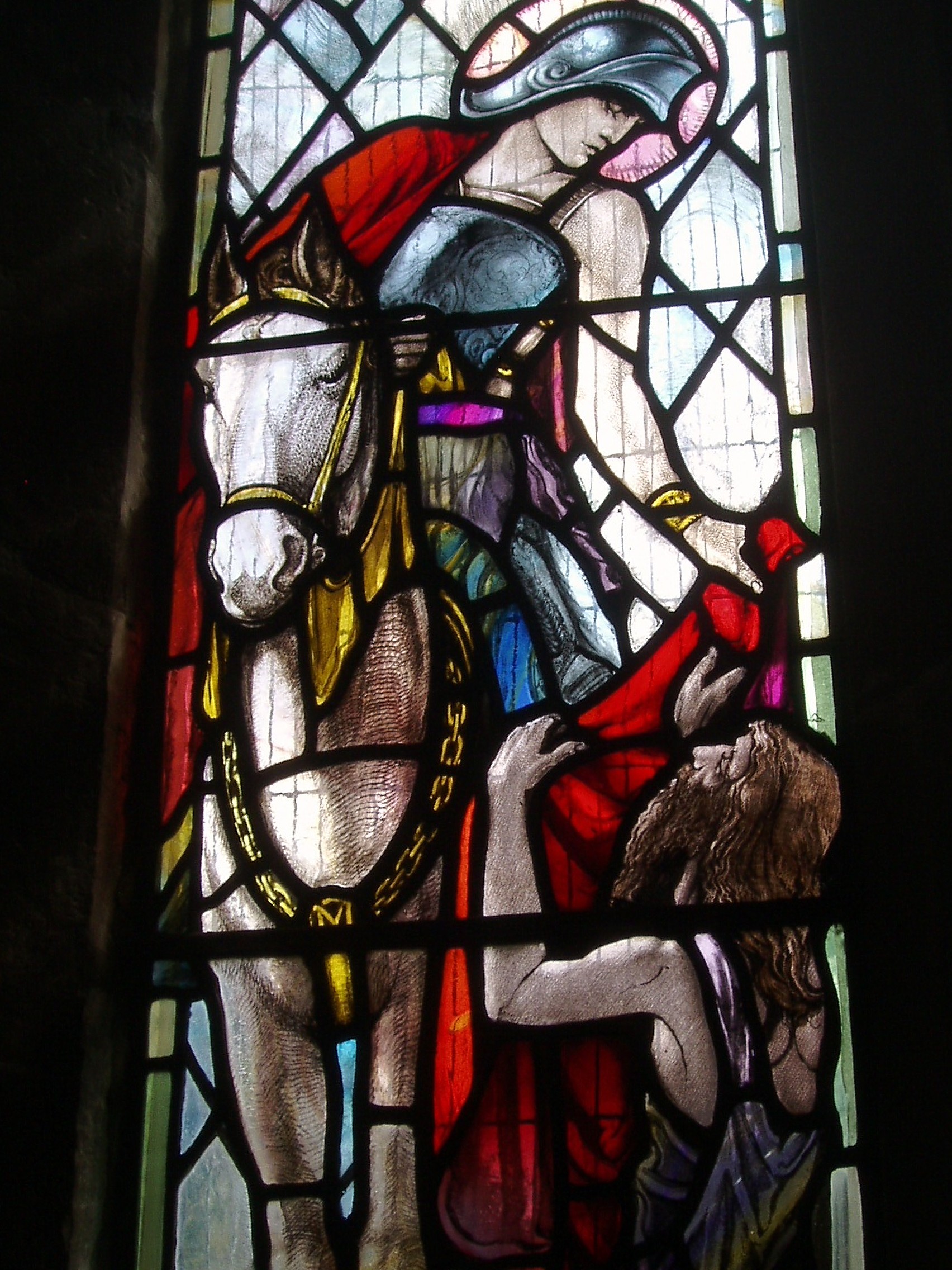 8
8 9
9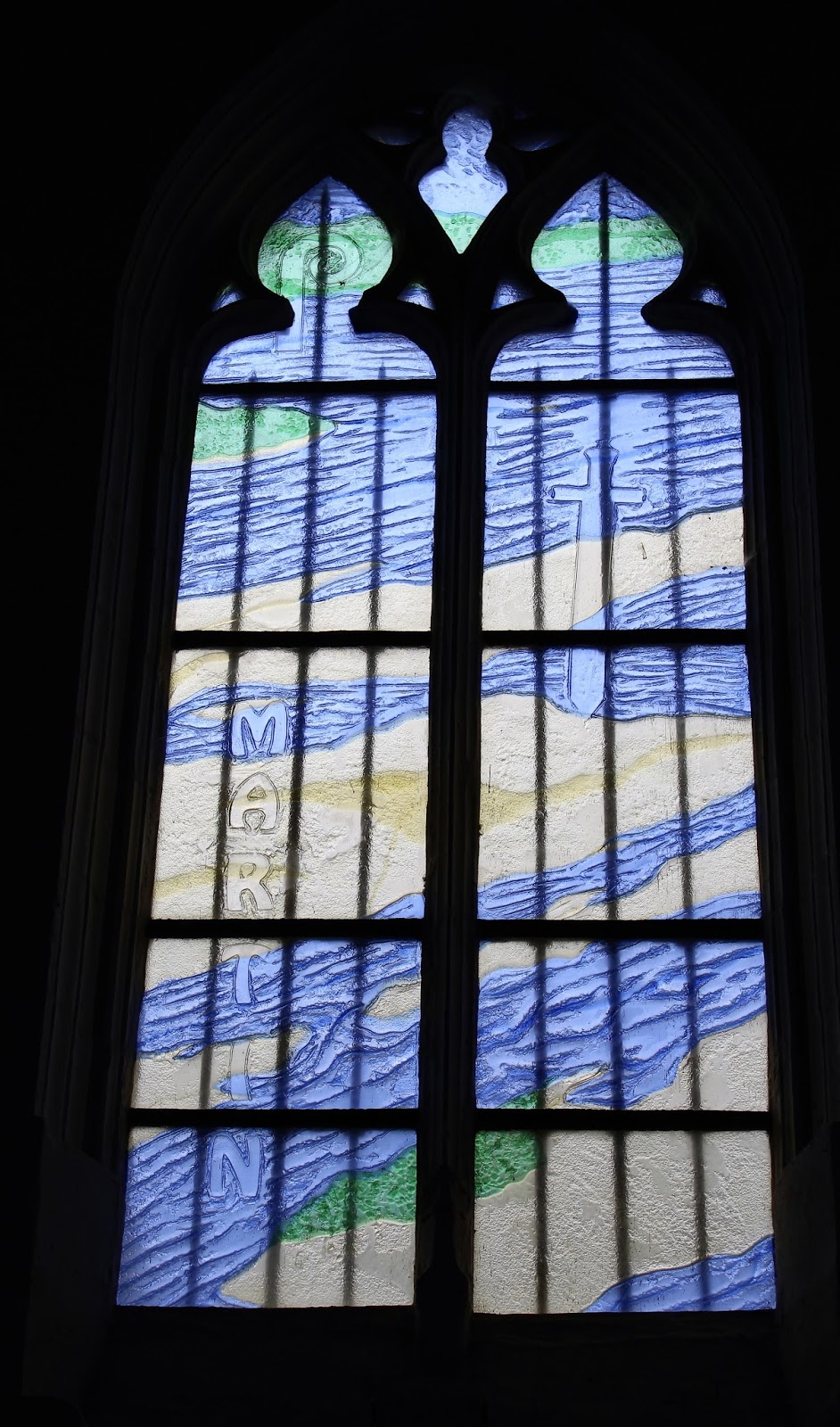 10
10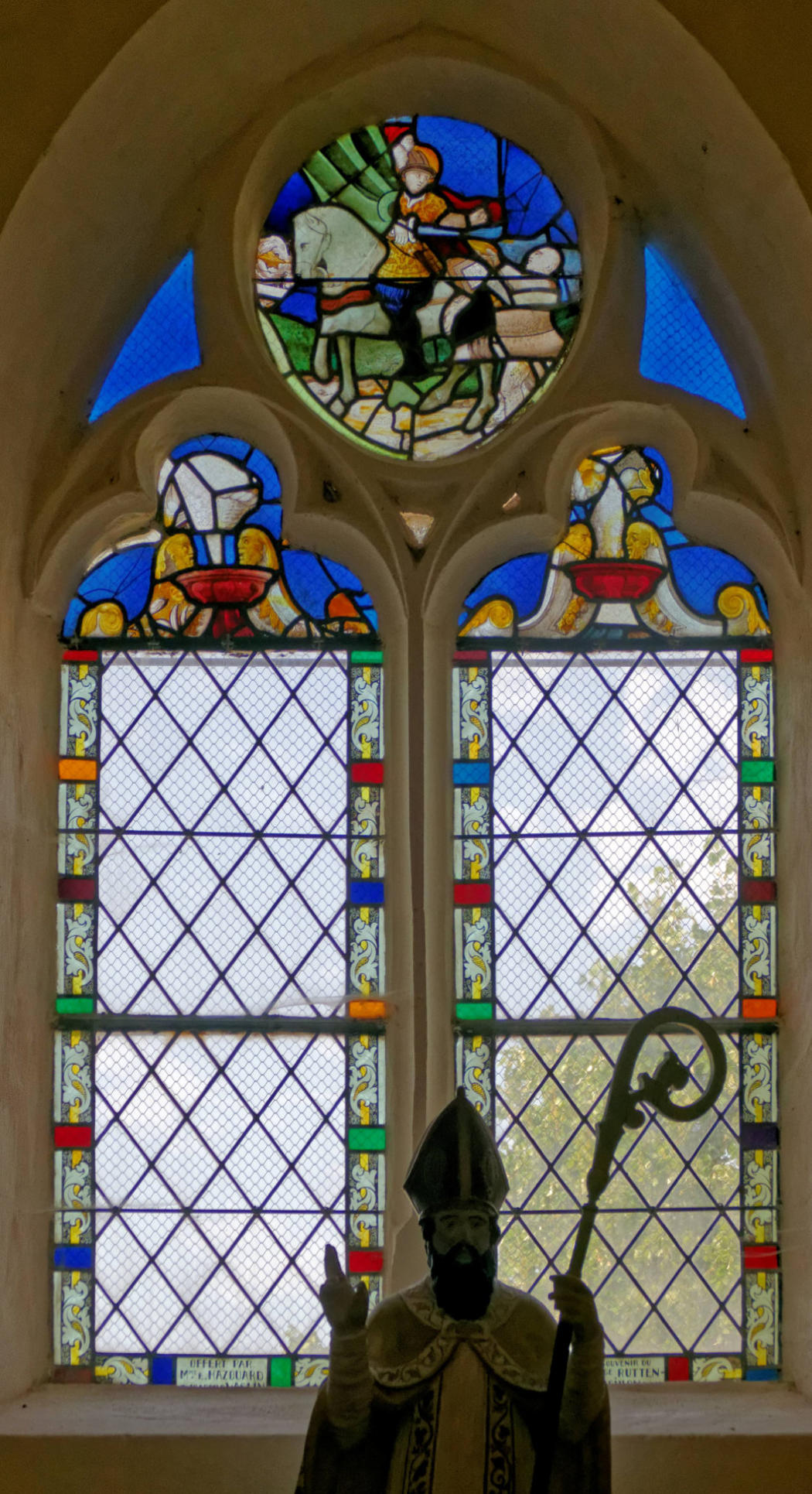 11
11 stained glass windows
Wikipedia: "A religious institution, Les Petits Clercs de Saint-Martin de Tours, was founded in the 1920s by the diocesan priest Canon Rutard. Seminarians from other French regions "rich" in vocation for the Tours diocese, they also provided daily religious service at the Basilica of Saint-Martin. As boarders, the Little Clerics of Saint-Martin received their schooling on the spot, and then attended various colleges in Tours (Saint-Grégoire College, Notre-Dame La Riche College). The institution, living in particular from the generosity of the people of Tours, settled in the shadow of the Basilica (3 rue Baleschoux) until 1970, when it disappeared. The Little Clerics of Saint Martin gave about 300 priests to the diocese of Tours". We will see later that from the year 2000, the Benedictine Sisters of the Sacred Heart will ensure the management of the basilica.
From Martin's cape to the blue of the French flag. It would be neither red nor white, Martin's cape / chape... Or it would have changed color over time... The
page Wikipedia on the French flag states that :"It is at the beginning of the reign of the Capetians that the cope of St. Martin is colored blue. Blue is thus intimately associated with the kings of France and appears very early in their fleurdelisé coat of arms, whose military use appears in the 12th century. Clothe the cope of St. Martin is the symbol of the legitimacy conferred by the Church to the king, especially at the time of the coronation." In this page, Guy Boulianne specifies "The cope of St. Martin is indicated by tradition as present at the famous battle of Poitiers in 732 when Charles Martel repelled the Saracens. Subsequently, it is reported in other battles in 838 before Tours as well as in 1043, 1066 and 1195. Without being too affirmative, the blue seems to have had in these distant times a sort of national character. ". Saint Martin is also referred to as the "protector of our armies" (link).
Unquestionably the patron saint of Tours. Martin is also considered the patron saint of France, even if Saint
Denis competes with him and even if it is not official (see page Wikipedia). For example in this page of the site "Herodotus". And on this other page from the same site "It was in reference to Saint Martin that in November 1918, at the instigation of General Foch, French negotiators are said to have chosen to set the date of the armistice on November 11 (preferably November 9 or 10)." This is belied by the facts [Tours Colloquium 2016, speech by Jacqueline Lalouette, reprinted in the Collective 2019]. In November 1916, on the 1600th anniversary of the birth of his illustrious predecessor, the Archbishop of Tours Albert Nègre considered Martin to be "the apostle of the Gauls for the fatherland, victory and peace." One abbot then goes so far as to compare the emperor William II to Attila... (+ postcard).
Earlier, in 1881, Albert Lecoy de la Marche called Martin "French saint par excellence" ( extract, Lecoy 1881).
Since then, Saint Martin has also become the patron saint of police officers (March 22, 1993, French Bishops' Conference). And, in 2018, the centenary of the armistice gave rise to a peaceful celebration, in the presence of Archbishop Aubertin, historian Michel Laurencin and the mayor of Maillé, a village in Touraine that was a martyr in the following war, in 1944 (links : 1 2)
extract, Lecoy 1881).
Since then, Saint Martin has also become the patron saint of police officers (March 22, 1993, French Bishops' Conference). And, in 2018, the centenary of the armistice gave rise to a peaceful celebration, in the presence of Archbishop Aubertin, historian Michel Laurencin and the mayor of Maillé, a village in Touraine that was a martyr in the following war, in 1944 (links : 1 2)
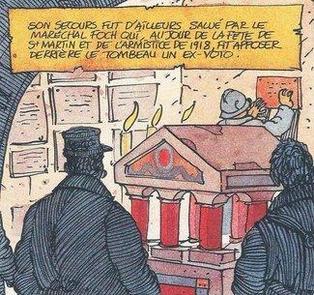
| 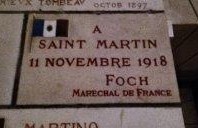
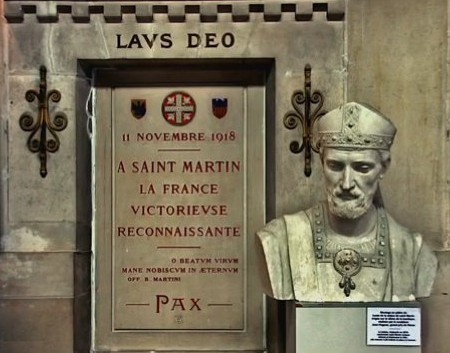
| 
| ||||||
Fagot, Mestrallet - d'Esme 1996 + the  plank Top center, the ex-voto, on the left of the tomb, bottom niche on the right of the nave dedicated to peace November 11, 2018. At right, Foch kneeling before Martin and Joan of Arc + plank Top center, the ex-voto, on the left of the tomb, bottom niche on the right of the nave dedicated to peace November 11, 2018. At right, Foch kneeling before Martin and Joan of Arc +  drawing of a hairless man praying to Martin [Diocesan Archives of Tours, Collective 2019]. In private schools in Tours in the early 1950s, students still sang this drawing of a hairless man praying to Martin [Diocesan Archives of Tours, Collective 2019]. In private schools in Tours in the early 1950s, students still sang this  canticle asking Martin : "Save France and keep it always !" (link with video and score). canticle asking Martin : "Save France and keep it always !" (link with video and score).
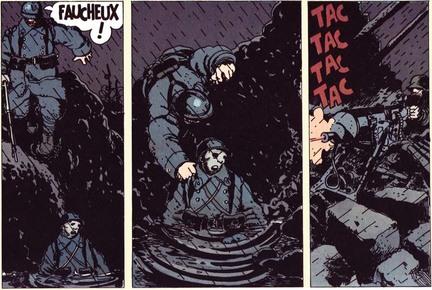
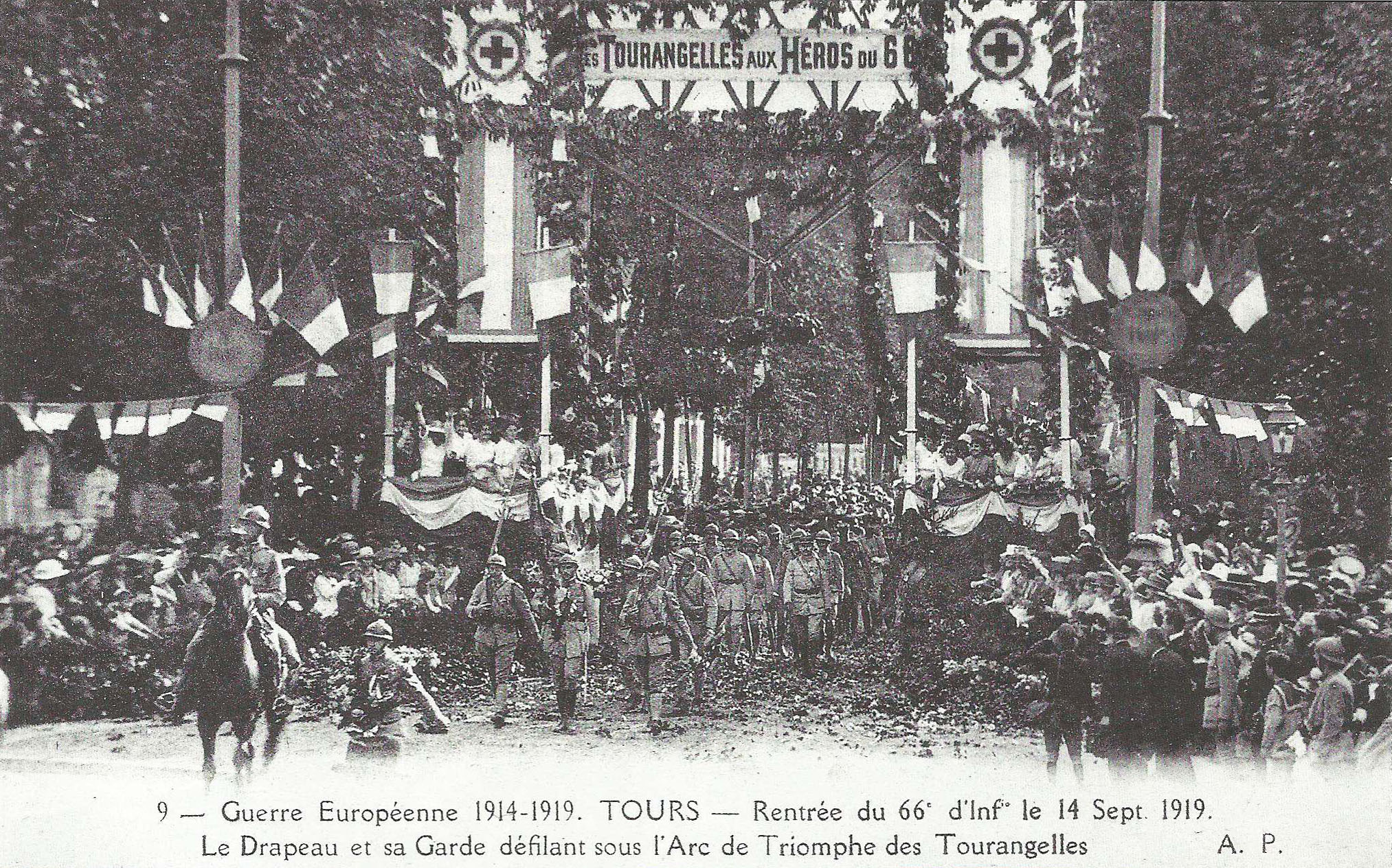
The Great Butchery. In Indre et Loire, 10,000 young men died in this war, including 1800 for the city of Tours. Boxes by Jacques Tardi from the album The shell hole" (1984)
+ the  plank
+ five plates by the same author in the album It was trench warfare (1993) : plank
+ five plates by the same author in the album It was trench warfare (1993) :
 1 1
 2 2
 3 3
 4 4
 5.
At right, postcard commemorating the September 14, 1919 parade. 5.
At right, postcard commemorating the September 14, 1919 parade.
| ||||||||
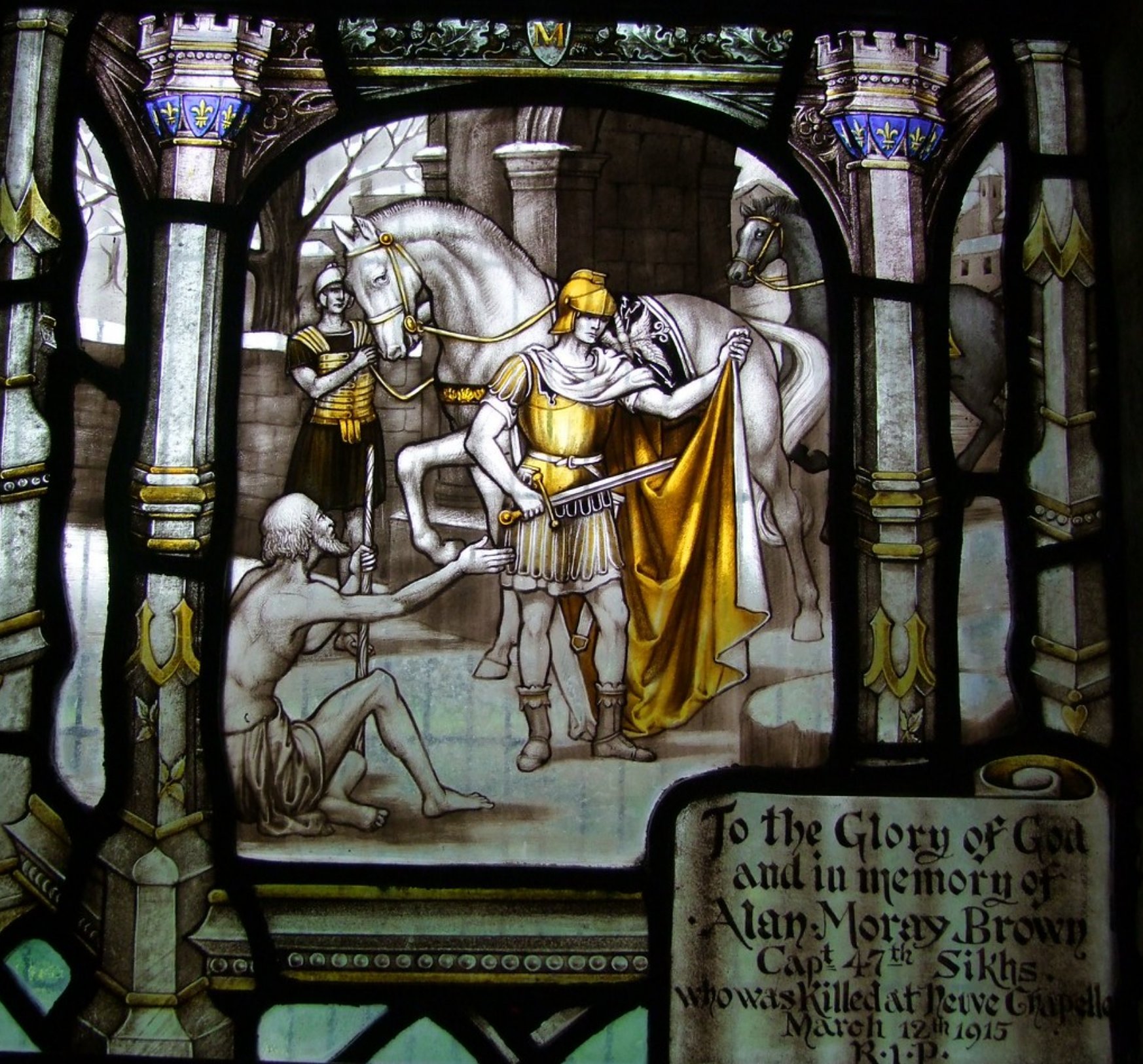 vitrail
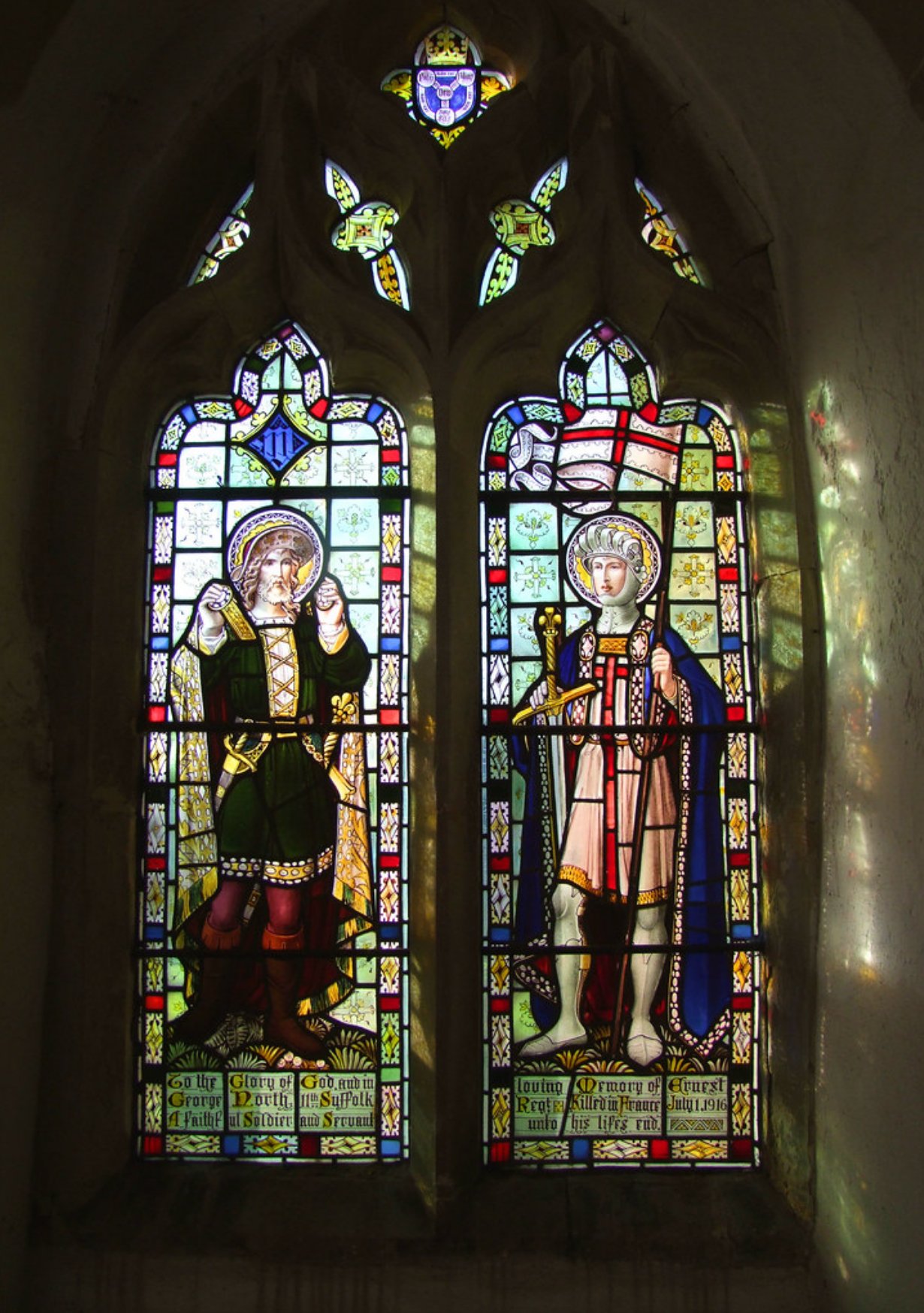 vitrail
 text
text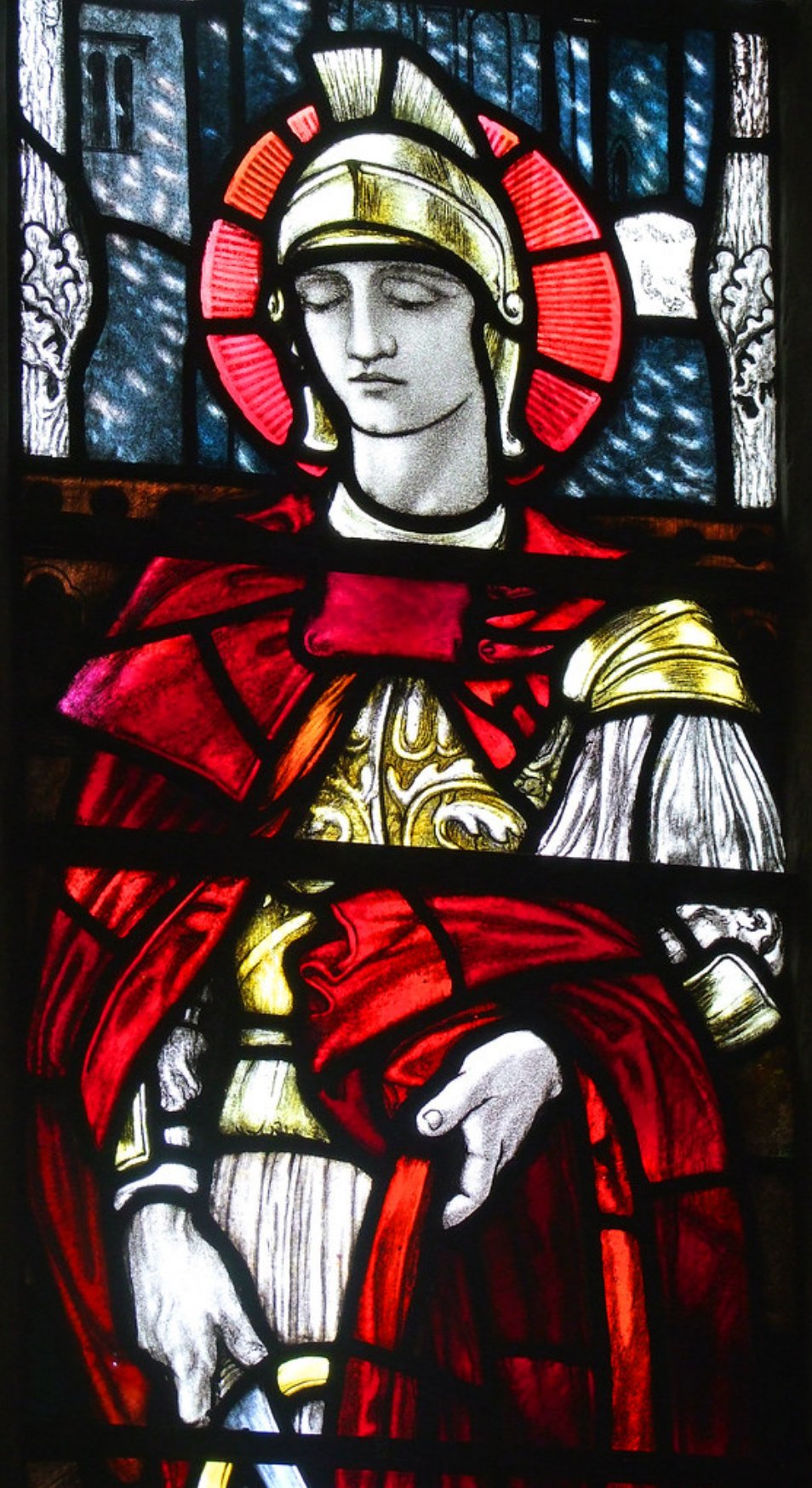 vitrail
 1
1 2
2 3
3 4
4 1
1 2
2 article
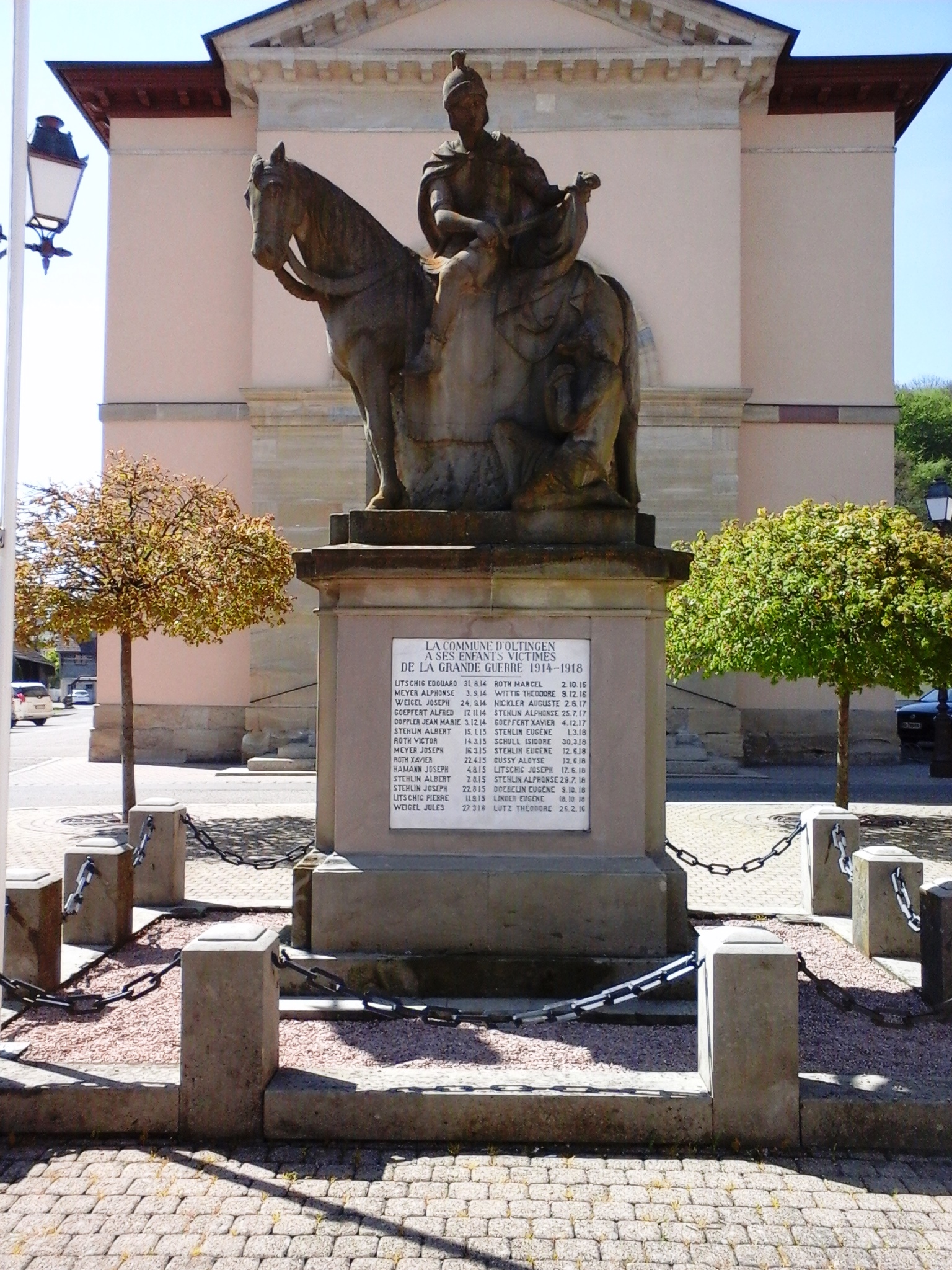 1
1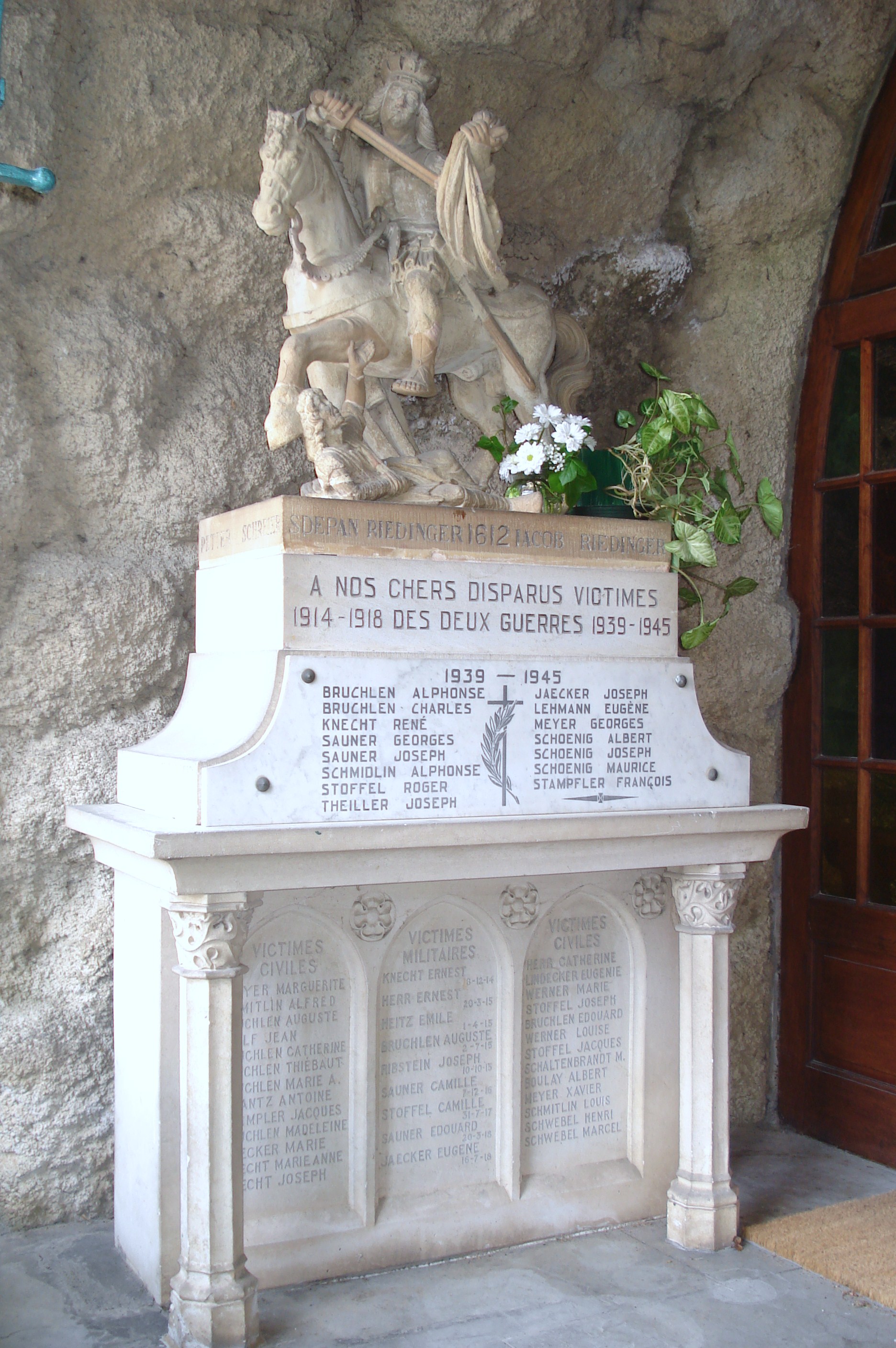 2
2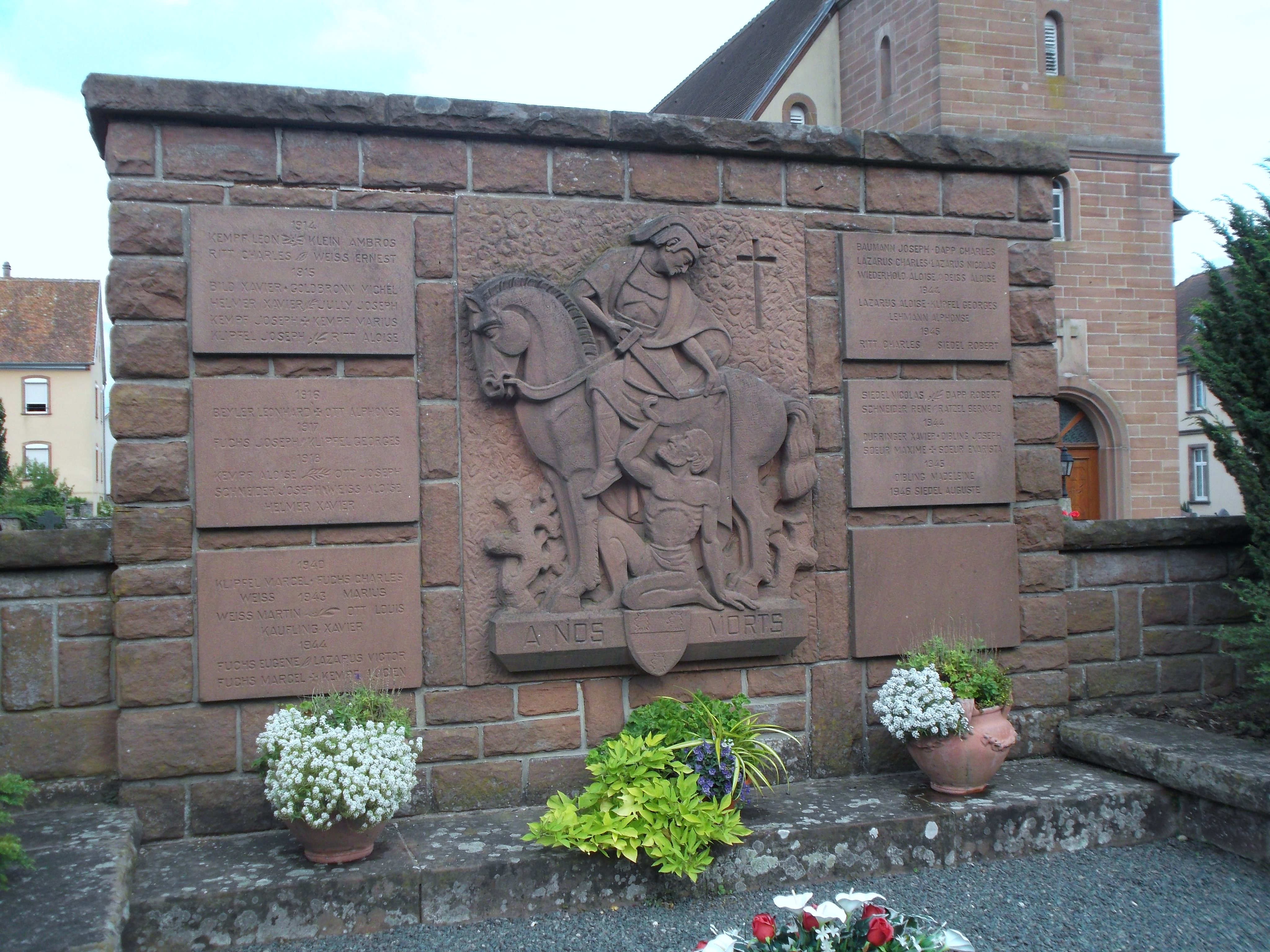 3
3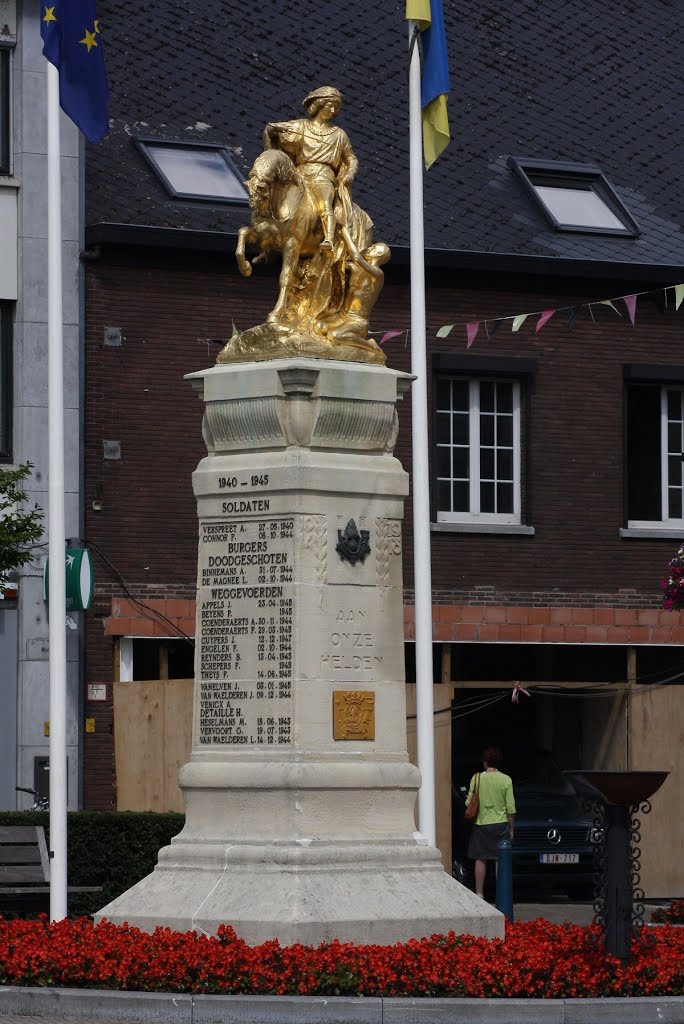 other
other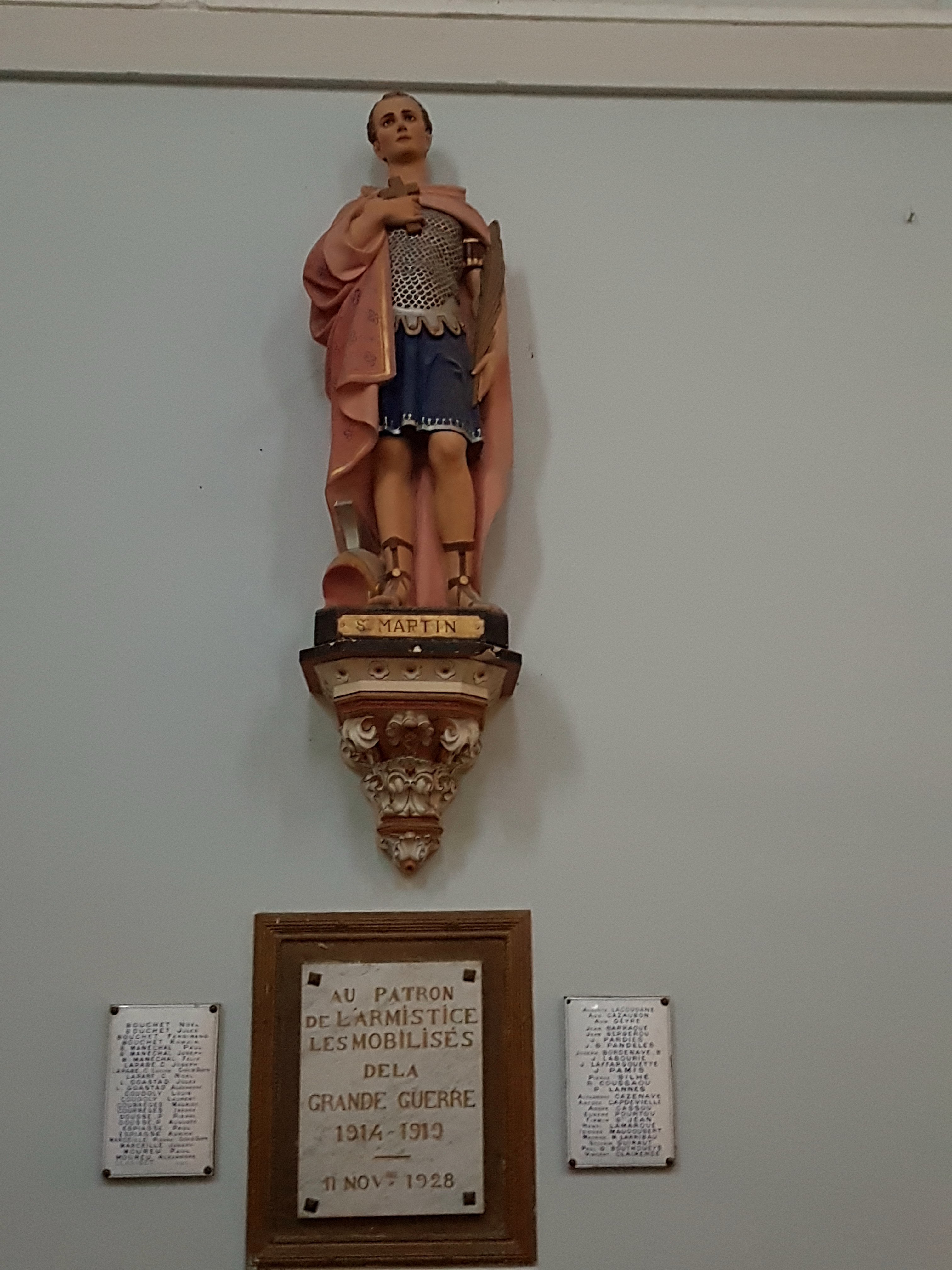 dedication
The Via sancti Martini, which follows in the footsteps of Martin on his journey when he went to Trier to meet the emperors, probably passes not far from
Dom-le-Mesnil, in the Ardennes, whose church is dedicated to Saint Martin. A article from the Pilgrim of November 5, 2018 provides details "It was from this small village that the last offensive of the First World War started, on the night of November 10 to 11, 1918, which would kill 99 French combatants, including Augustin Trébuchont, who died ten minutes before the Armistice. " The Germans occupied the commune of Vrigne-Meuse, explains Bruno Judic, president of the European Cultural Center Saint Martin de Tours [site], and the French that of Dom-le-Mesnil. At 11 a.m., the actual time of the Armistice signed that morning at 5:12 a.m. in the clearing of Rethondes, in the forest of Compiègne (Oise), the priest of Dom-le-Mesnil rang the bells of his church dedicated to St. Martin and intoned the Te Deum - the first one to be sung in our finally pacified country. ""
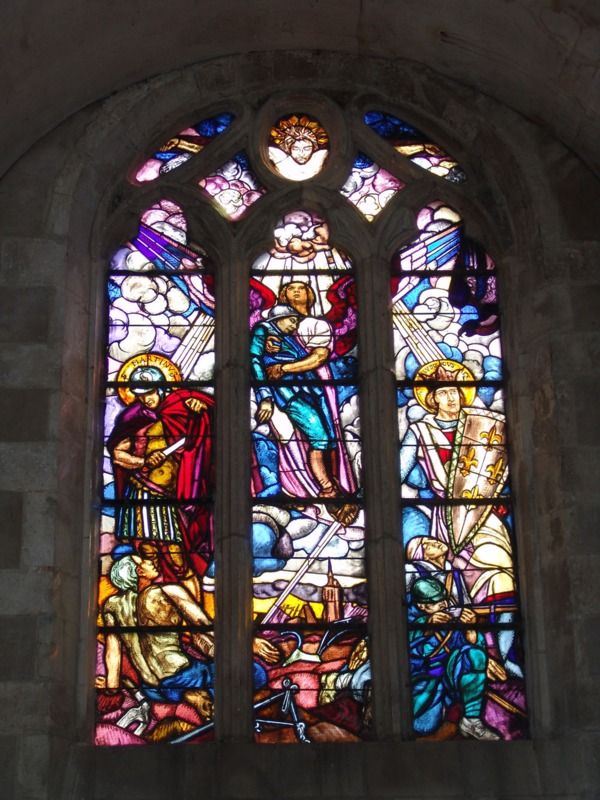
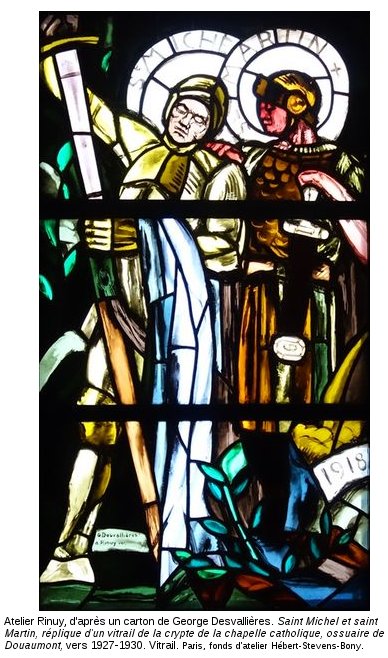
At left, Martin in the nimbus surmounts a troop of poilus emerging from the trenches and going on the assault [Lorin de Chartres workshop, church of Neuillé Pont Pierre in Touraine, link].
In the center left, stained glass window on Saint Martin (next to Saint Louis) and the Great War [Maurice Denis, church of Fère en Tardenois in Picardy, on the front line, link].
At center right, Michel the Archangel and Martin are depicted on a  vitrail 1930 from the crypt of the chapel of the ossuary of Douaumont [hébert-Stevens-Bony workshop after a cardboard by George Desvallières, link]
+ also dde Georges Desvallières, and again with Saint Michael, the legionnaire Martin in this vitrail 1930 from the crypt of the chapel of the ossuary of Douaumont [hébert-Stevens-Bony workshop after a cardboard by George Desvallières, link]
+ also dde Georges Desvallières, and again with Saint Michael, the legionnaire Martin in this  fresco, holds a branch announcing the Resurrection, like the plants reborn each spring ; at his feet, a "11 November 1918" banner [chapelle saint Yves, Paris XVème, link] (+ link to the page "The Stained Glass Windows of Remembrance")
+ fresco, holds a branch announcing the Resurrection, like the plants reborn each spring ; at his feet, a "11 November 1918" banner [chapelle saint Yves, Paris XVème, link] (+ link to the page "The Stained Glass Windows of Remembrance")
+ 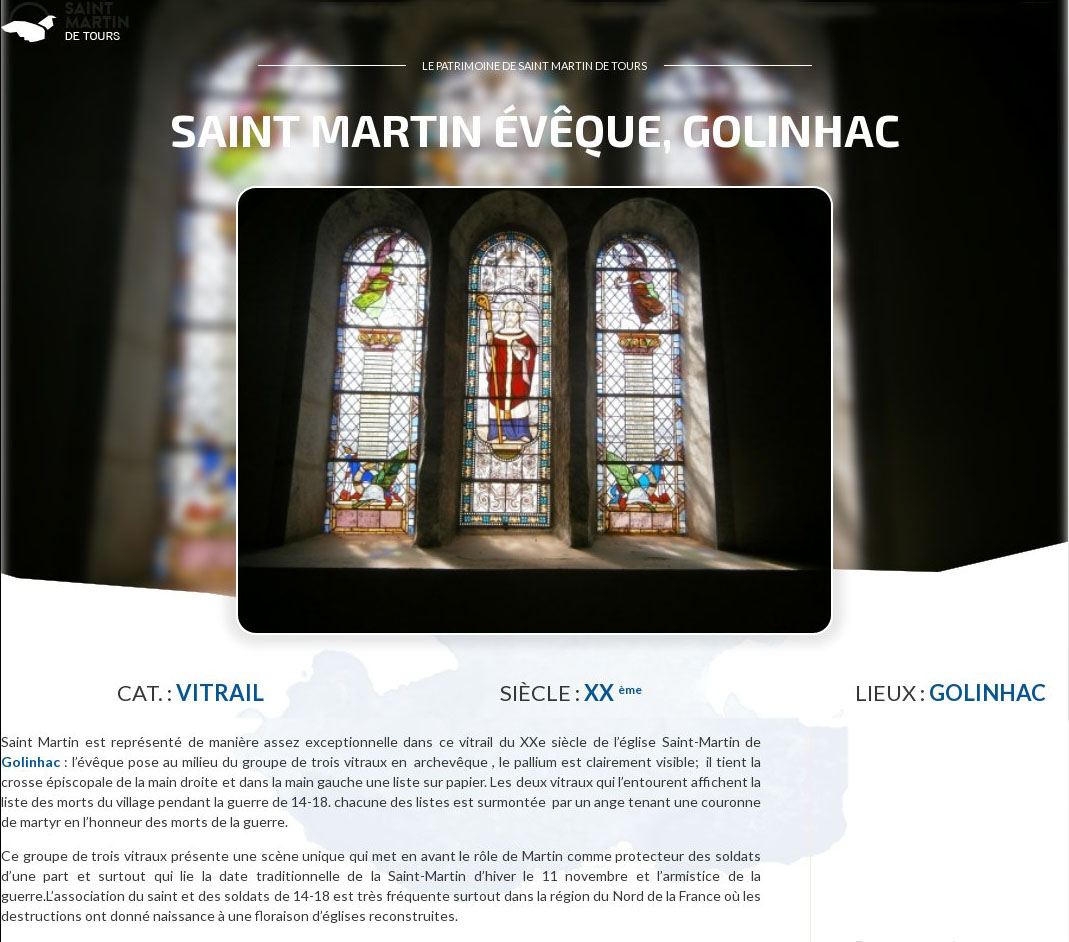 stained glass from the church of Golinhac in Aveyron (link)
+ stained glass from the church of Golinhac in Aveyron (link)
+ 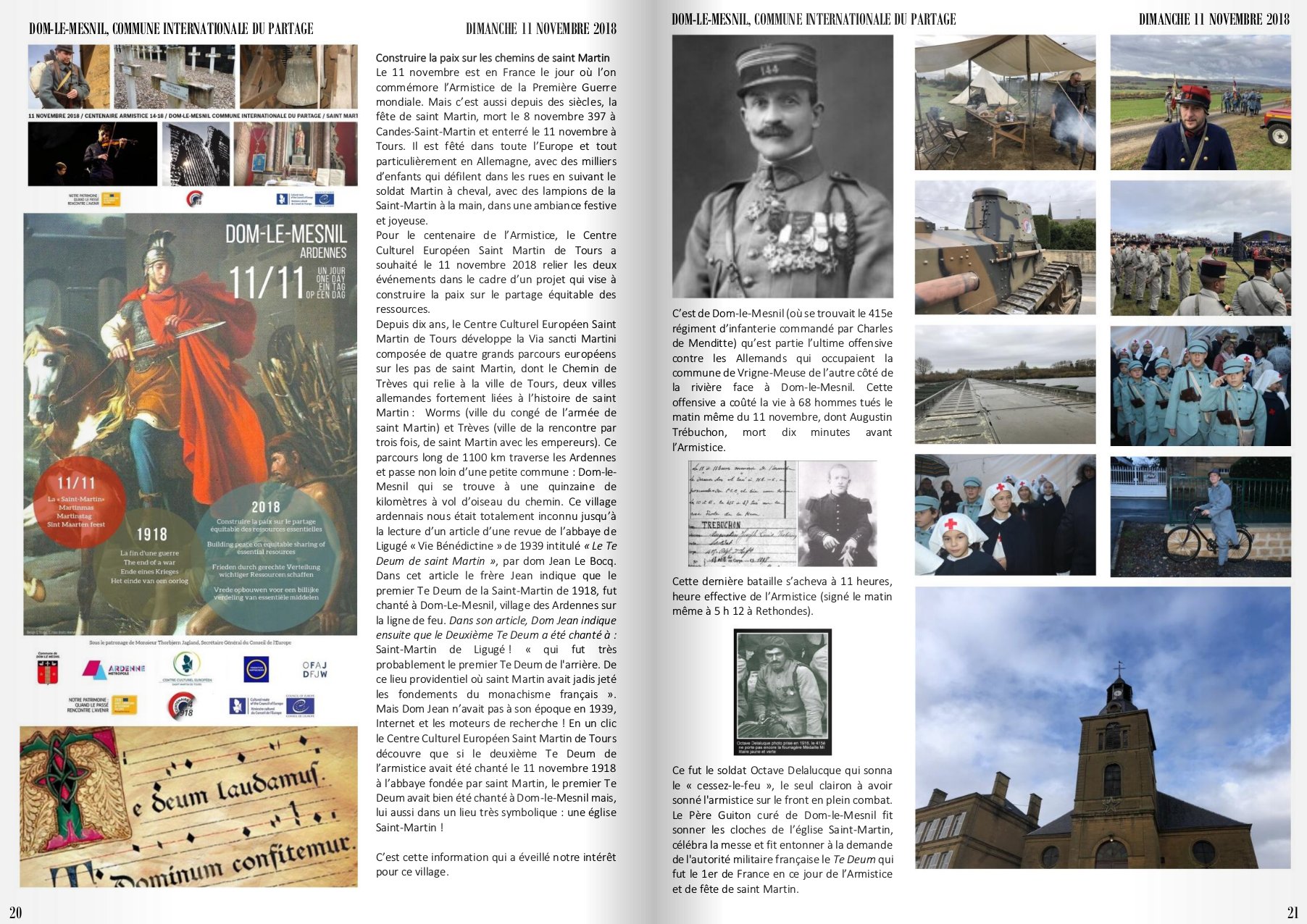 double-page spread from LM 2019 on the final hours of war in Dom le Mesnil in the Ardennes
+ double-page spread from LM 2019 on the final hours of war in Dom le Mesnil in the Ardennes
+ 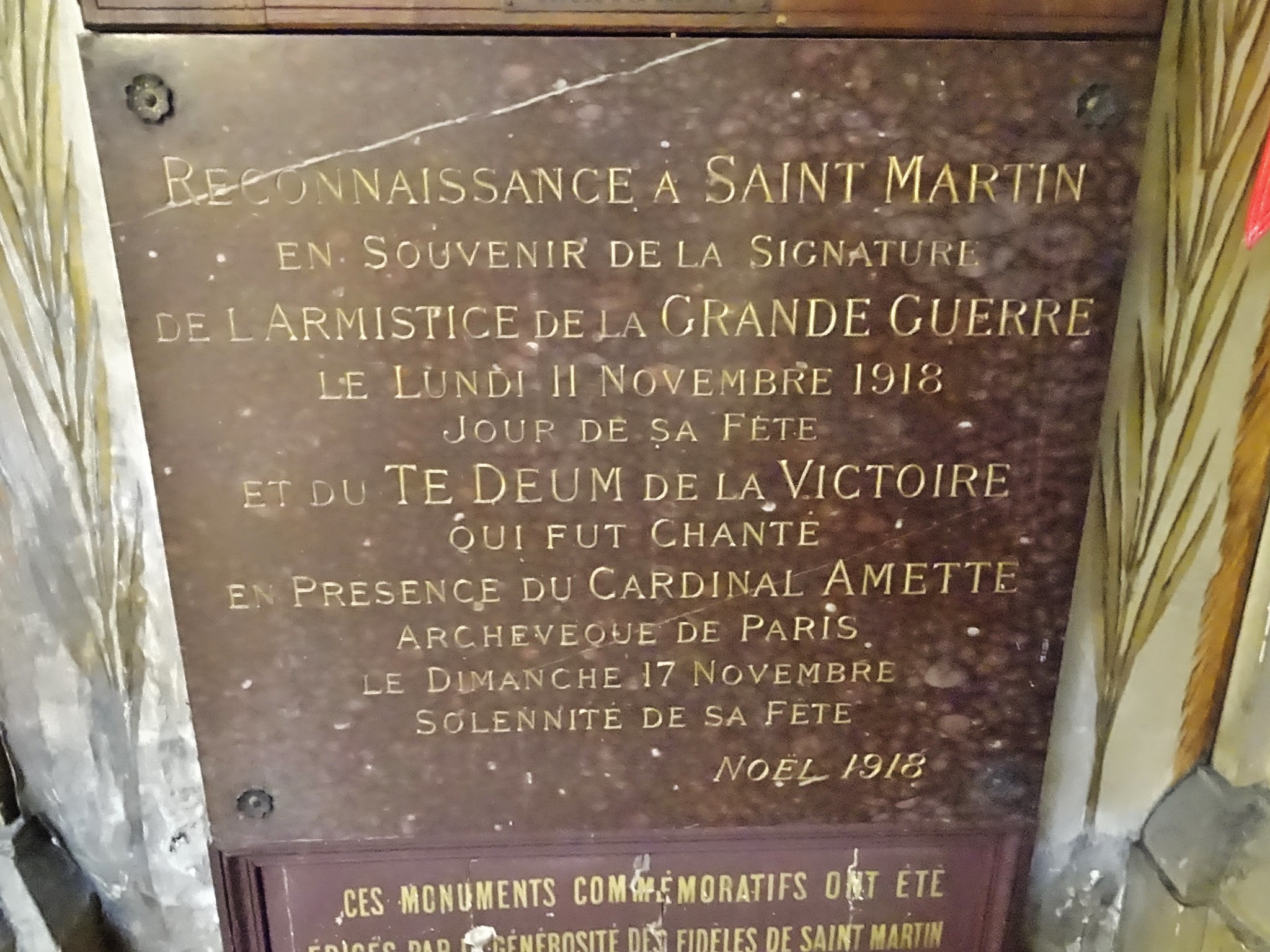 commemorative plaque associating Martin with the signing of the armistice at the Church of Notre Dame des Champs in Paris [flickr P.K.]. commemorative plaque associating Martin with the signing of the armistice at the Church of Notre Dame des Champs in Paris [flickr P.K.].
|
 photo
photo photo
photo 1
1 2
2 3
3
Tours capital of France from 10 to 13 June 1940. After the declaration of war on September 3, 1939 and the
drôle de guerre, the German offensive (blitzkrieg) of May 10, 1940 provokes the grand exode. Paris is about to be invaded by German troops, the government of Paul Reynaud retreats to Tours, before leaving for Bordeaux. The President of the Republic Albert Lebrun takes up residence at the Château de Cangé, the Senate occupies the Hôtel de Ville and the Château de la Plaine in Fondettes, the deputies are at the Grand Théâtre, and its president Edouard Herriot at the Château de Moncontour in Vouvray. Pétain stayed at the Château de Nitray in Athée sur Cher, General Charles de Gaulle, Under Secretary of State for War, at the Château de Beauvais in Azay sur Cher, etc. As in 1870, a little also in 1917, Tours became a "capital of withdrawal" [ article by Thierry Vivier, La NR 2016].


To the left, cyclist in exodus asking for directions after crossing the Loire ["La Touraine dans la guerre" Pierre Leveel, CLD 1985]. In the center, at the entrance to the Prefecture, the President of the Council Paul Reynaud is surrounded by General Maxime Weygand and Marshal Pétain ["History of Touraine", Pierre Audin 2016]. On the right, the Château de Cangé, in Saint Avertin, a commune bordering Tours, is an ephemeral Touraine Elysée palace ["Le château de Cangé", Michel Ramette 2012].
|
While the city of Tours and Touraine were geographically spared from the
First World War, the same was not true for the Second War. In June 1940 when German troops arrived, downtown Tours was ravaged by a huge fire for more than two days, destroying or severely damaging 550 buildings including nearly 200 historical monuments (on the 1938 list) and incunabula in the library. There was no water to fight the fire because of the destroyed arches of the stone bridge, breaking the pipes. The city was in the occupied zone, under German occupation, while southern Touraine was in free zone, under the Vichy regime of Marshal Philippe Pétain, separated by the demarcation line until March 1, 1943.

June 1940, Tours in Flames [painting on paper by Arlette Boisdet, "Secret Guide to Tours and its Surroundings", 2019]. On the left, the two "Louis XVI palaces" evoked by Maurice Bedel in 1935, on the right the basilica and the two towers. 


1940: the basilica fire goal. "The basilica seems to have served as a stopgap for the surging tide of stones" ["Tours cité meurtrie", text Jeannine Labussière, photos Elisabeth Prat, CLD 1991 + article by Alain Irlandes on these photos and others in the same context, Ta&m 2007]. +  photo of the northeast of the basilica ["Tours at the time of the provisional municipality", Boris Labidurie 1994] + two photos from the book "Tours under the bombs" : photo of the northeast of the basilica ["Tours at the time of the provisional municipality", Boris Labidurie 1994] + two photos from the book "Tours under the bombs" :  1 1  2 by Jonathan Largeaud (photos Jean Chauvin, Geste Editions 2010) with captions "Apocalyptic vision" and "In other, more ancient times, this landscape would have been taken as a biblical sign of rebirth". The author explains why, in those days when 64,000 of the 84,000 inhabitants fled the city as quickly as possible, including doctors and administrative staff, it is difficult to know the precise number of people killed. He uses the prefectural figure of about twenty people. 2 by Jonathan Largeaud (photos Jean Chauvin, Geste Editions 2010) with captions "Apocalyptic vision" and "In other, more ancient times, this landscape would have been taken as a biblical sign of rebirth". The author explains why, in those days when 64,000 of the 84,000 inhabitants fled the city as quickly as possible, including doctors and administrative staff, it is difficult to know the precise number of people killed. He uses the prefectural figure of about twenty people.
From June 21, 1940 to September 1, 1944, Tours lived under German occupation. The building on the right of the first photo was the city hall before it was transferred in 1904 to a new building designed by Victor Laloux. It had then become the municipal library, one of the first buildings ravaged by fire during German bombing from the opposite bank of the Loire. + other 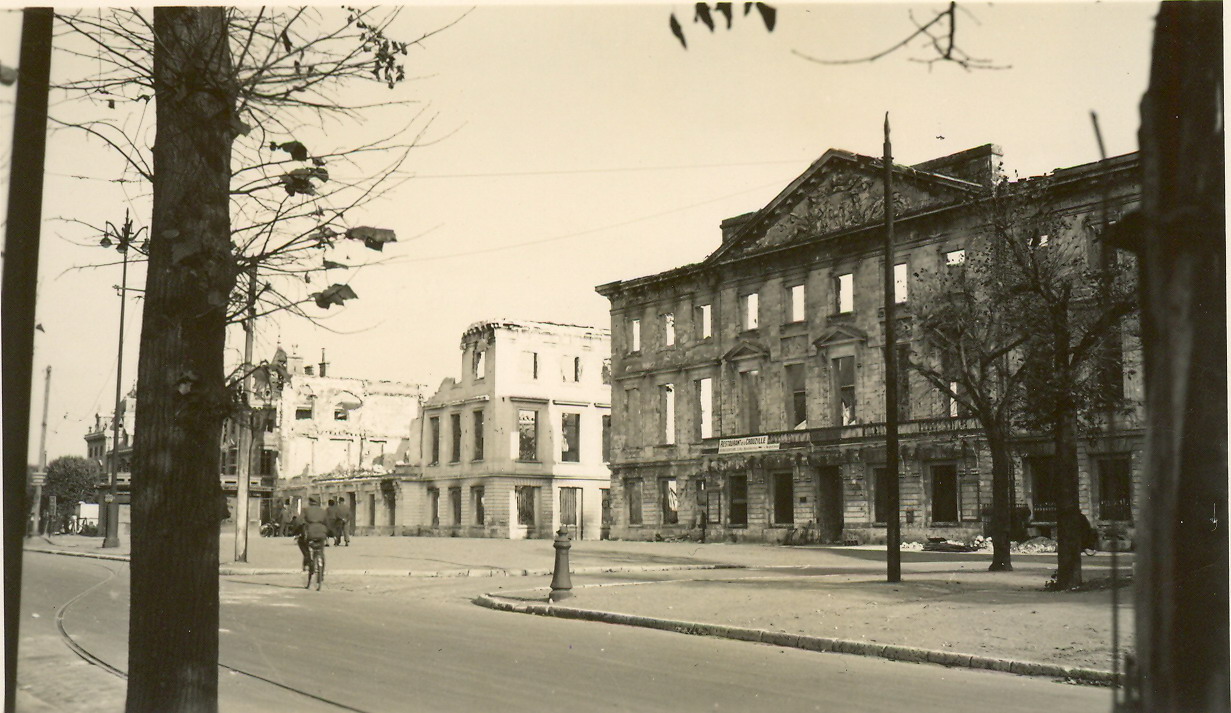 photo.
In the center the courthouse became the feldkommandantur ["Tours Memories of a City" 2013] and the command offices are decorated with the swastika ["Tours in Tours", Philippe de la Fuente 2005 + two plates : photo.
In the center the courthouse became the feldkommandantur ["Tours Memories of a City" 2013] and the command offices are decorated with the swastika ["Tours in Tours", Philippe de la Fuente 2005 + two plates :
 1 1
 2].
"Nearly all of the holdings are wiped out", including the entire SAT library and probably the shelves in the photo at right, according to Daniel Schweitz in his study on this fire. What documents about Martin, the basilica, Châteauneuf, Tours, and the Tourangeaux did we lose there? 2].
"Nearly all of the holdings are wiped out", including the entire SAT library and probably the shelves in the photo at right, according to Daniel Schweitz in his study on this fire. What documents about Martin, the basilica, Châteauneuf, Tours, and the Tourangeaux did we lose there?
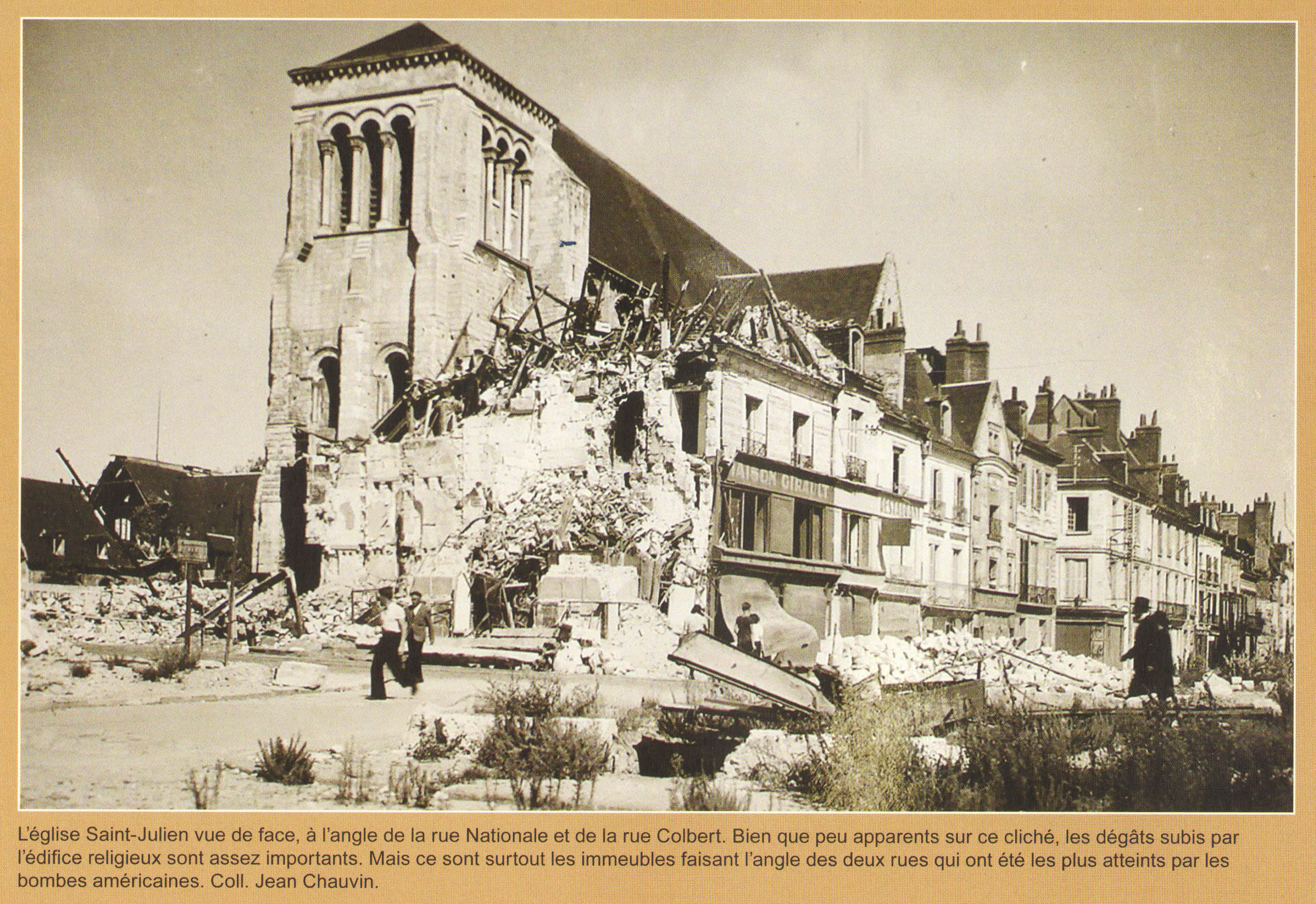
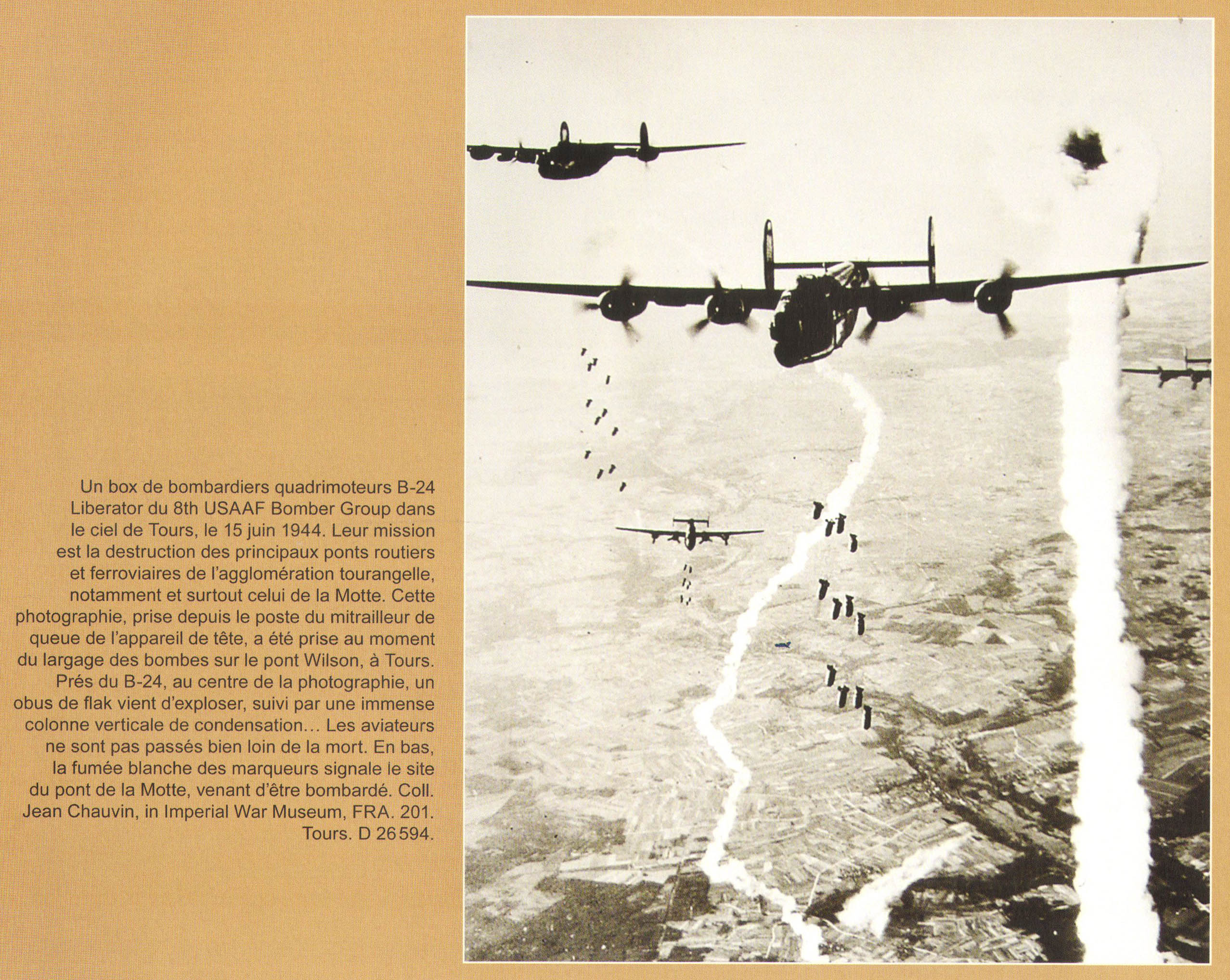
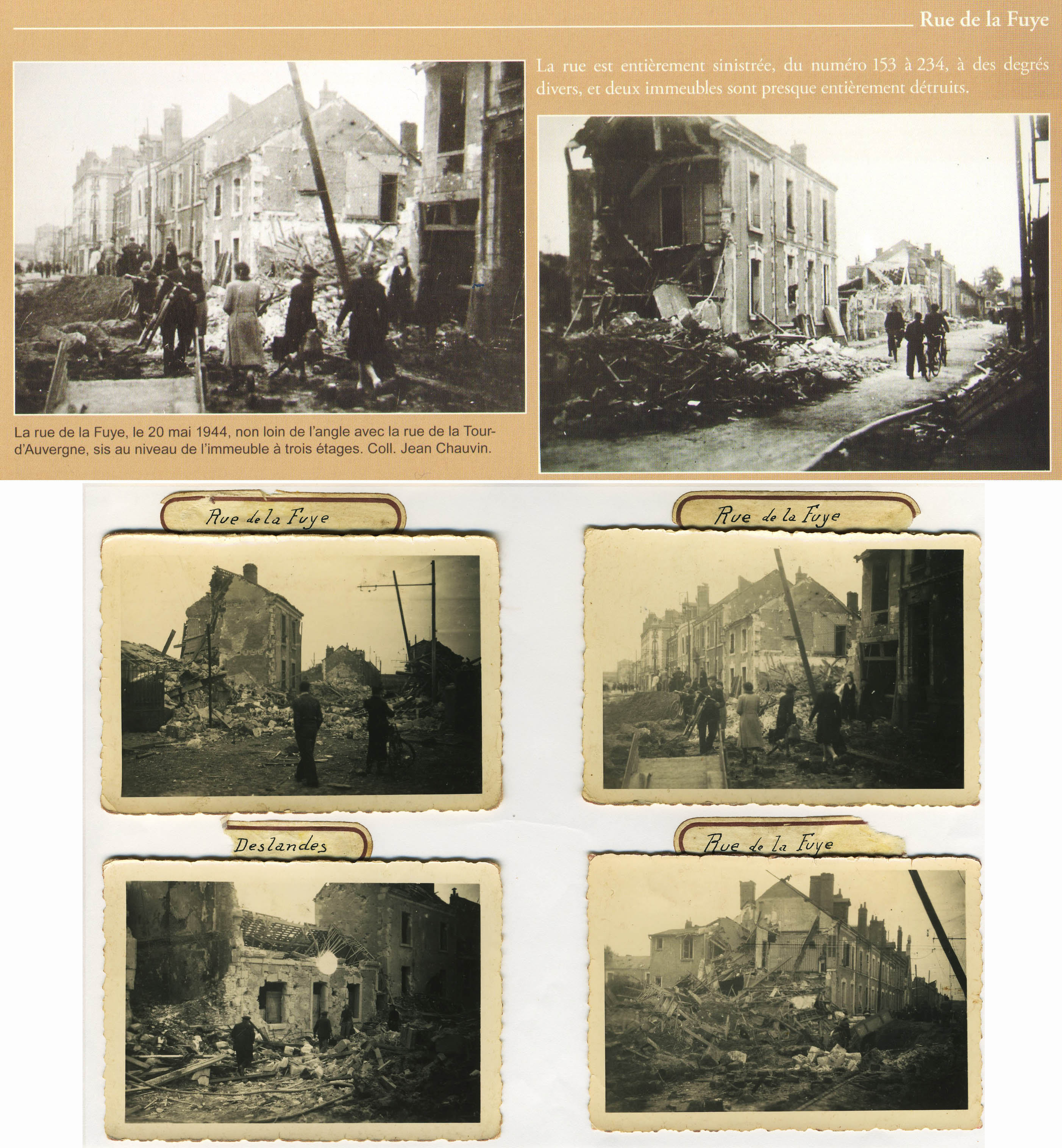
To the left, on June 15, 1944, bombers attempt to destroy Wilson Bridge, St. Julian's Church is hit +  report. Center, same day at the same location, photo taken from one of the planes. On the right, one of the many destructions of the bombing of May 20, 1944, rue de la Fuye in a neighborhood located between the railway stations of Tours and Saint Pierre des Corps. report. Center, same day at the same location, photo taken from one of the planes. On the right, one of the many destructions of the bombing of May 20, 1944, rue de la Fuye in a neighborhood located between the railway stations of Tours and Saint Pierre des Corps.

In the city center, the wait for reconstruction. At left, portfolio drawing by Ferdinand Dubreuil ["Tours 1940", Arrault 1941] showing the ruins of the 1940 fire. By 1944, the area had been cleared, especially for the streets, they were deserted pending a reconstruction program that would not begin until 1947.
+ two aerial views before the reconstruction [Municipal Archives] :
 1 1946 1 1946
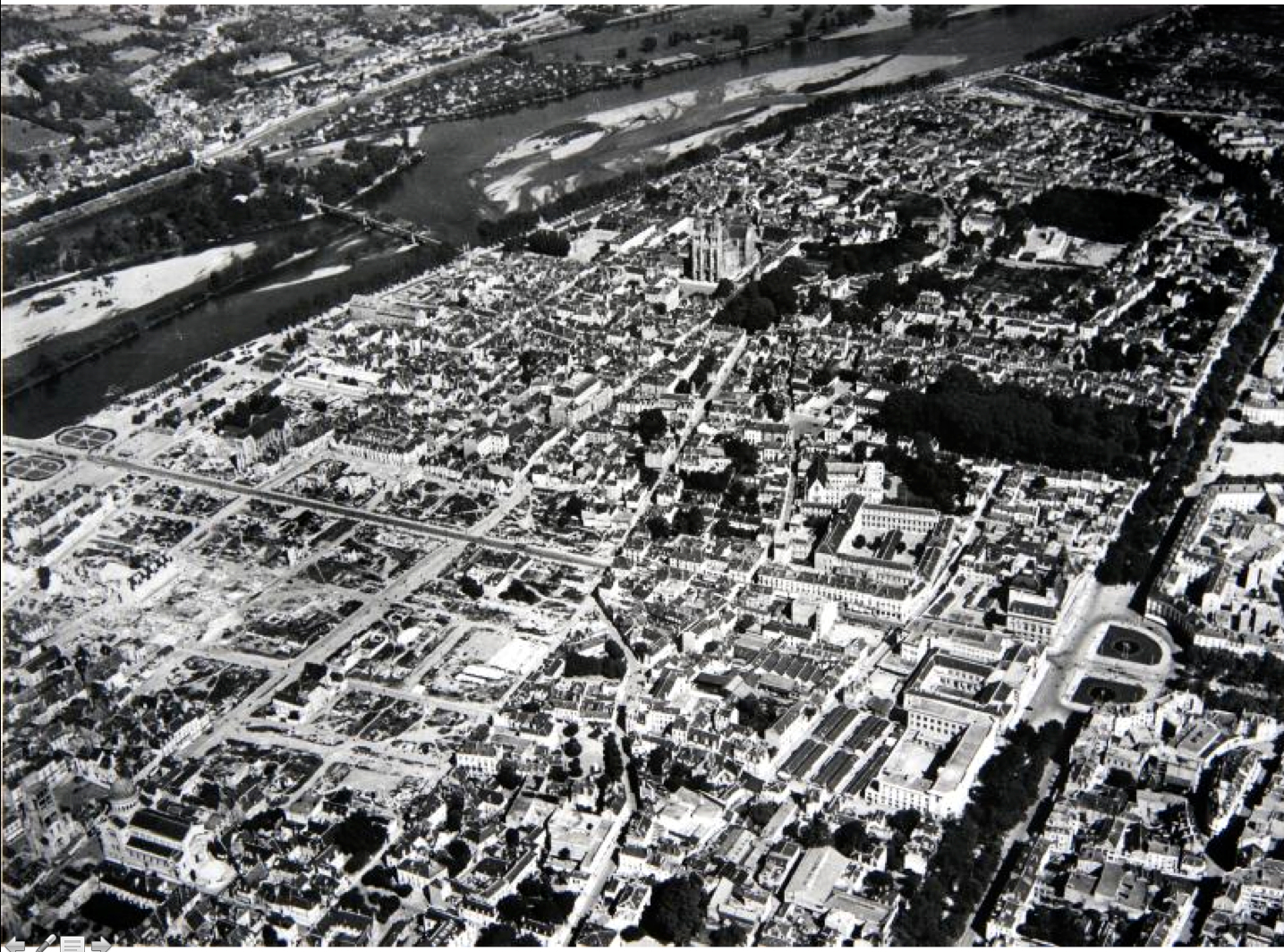 1 1948 (the basilica is at the bottom left).
+ 1 1948 (the basilica is at the bottom left).
+  photo of the rebuilding of the burned-out downtown in 1949 [City Archives]
+ photo of the rebuilding of the burned-out downtown in 1949 [City Archives]
+ 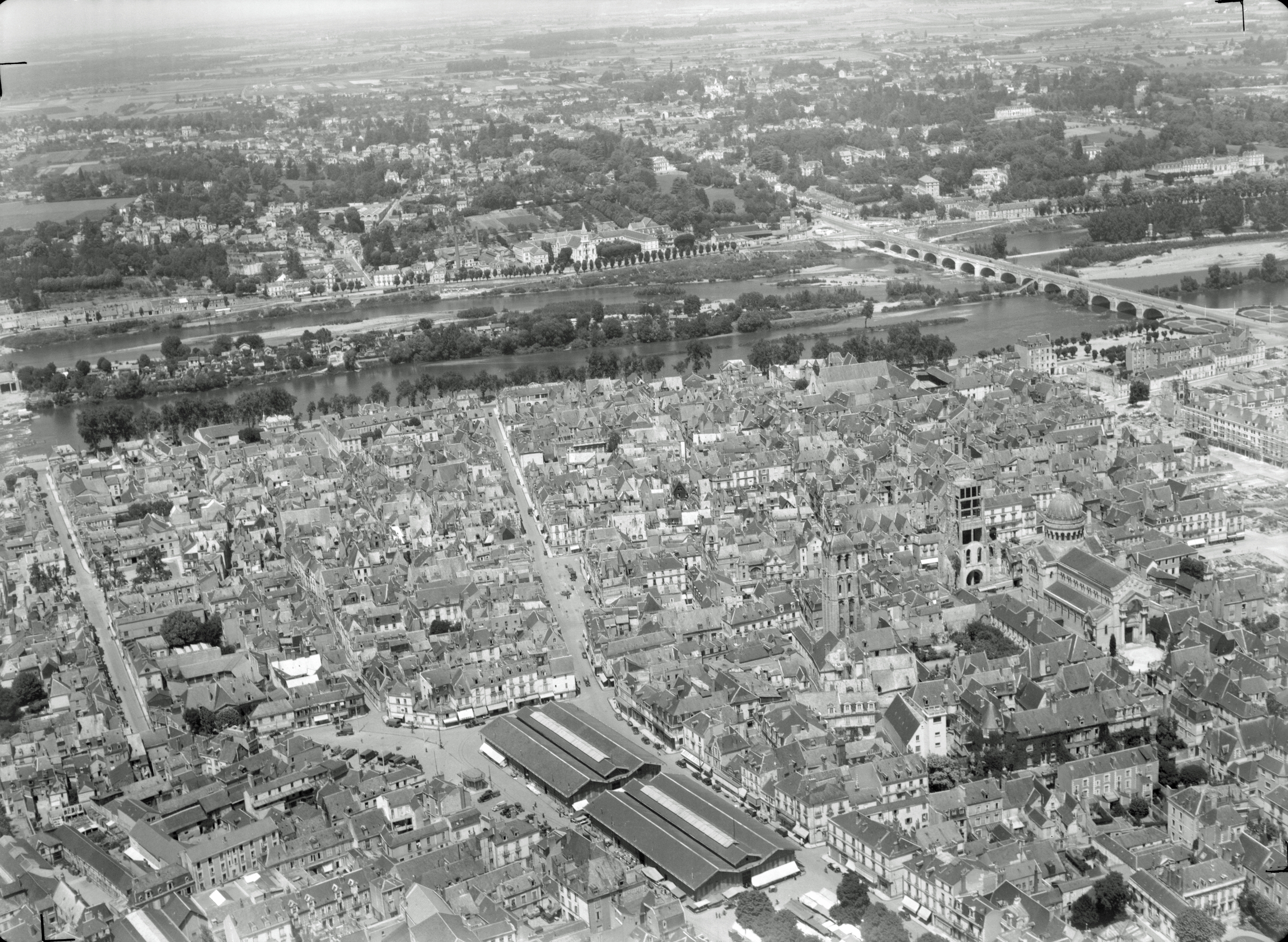 aerial view by Roger Henrard, 1949 (the Halles in the foreground, the Charlemagne Tower being rebuilt, on the right the burned-out Tours razed, not yet rebuilt)
+ aerial view by Roger Henrard, 1949 (the Halles in the foreground, the Charlemagne Tower being rebuilt, on the right the burned-out Tours razed, not yet rebuilt)
+  plan of dating the reconstruction sites, 1947-1962 by Myriam Guérid. plan of dating the reconstruction sites, 1947-1962 by Myriam Guérid.
Château de Beaujardin in Tours, who committed suicide a few years later ( illustrated story by Jonathan Largeaud).
Links :
1
2
3. illustrated story by Jonathan Largeaud).
Links :
1
2
3.

Exvoto of Marshals June, Leclerc and De Lattre de Tassigny [crypt of the basilica, photos of this  page from the Semur 2015] page from the Semur 2015]
|
 impact
 detail
 map
map map
mapThe time of reconstruction. After these allied bombings and the Maillé massacre, the Germans fled, Touraine was liberated from the north, the city of Tours on September 1, 1944. Then came the time of reconstruction, which was difficult and long in the midst of economic and financial difficulties. Beautiful projects were envisaged, but there was an urgent need to relocate and the finances were not good... It was necessary to choose and it was to rebuild as fast as possible, often to the detriment of the cultural heritage of the city. This is how almost nothing was saved from the old Martinopole / Châteauneuf.
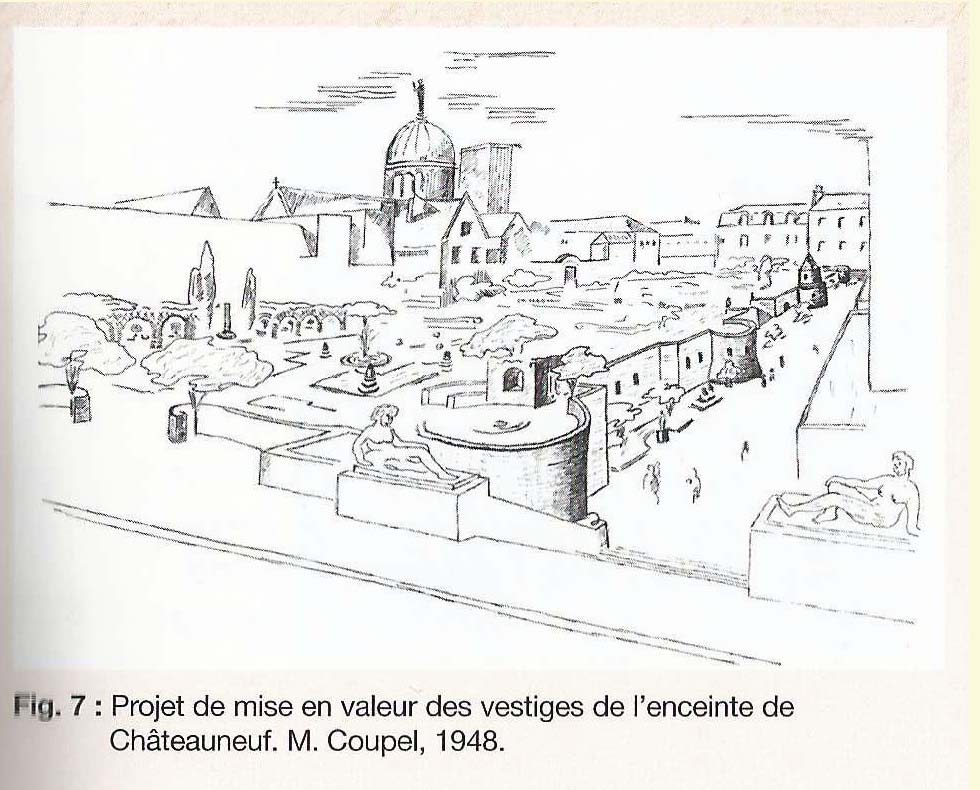
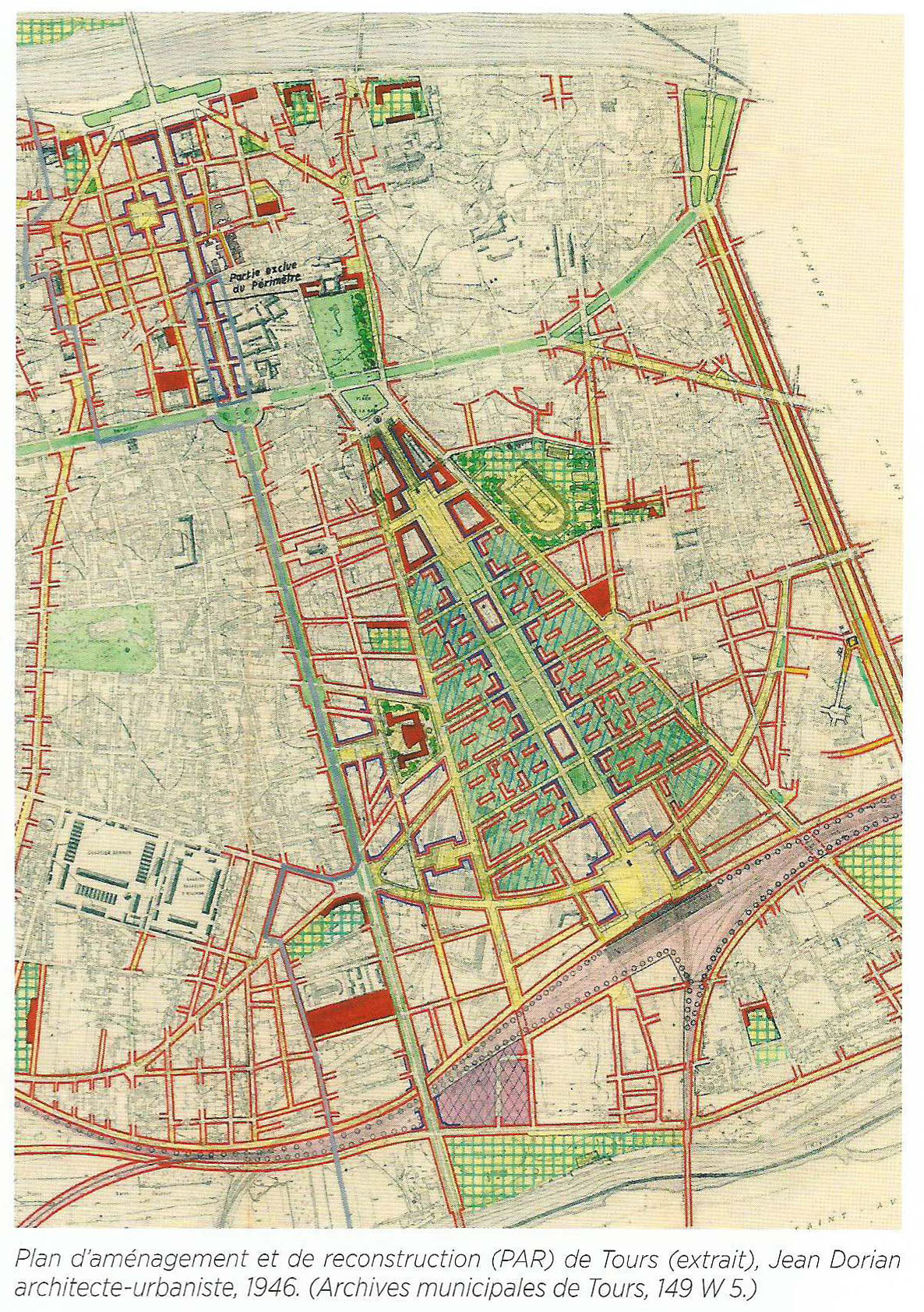
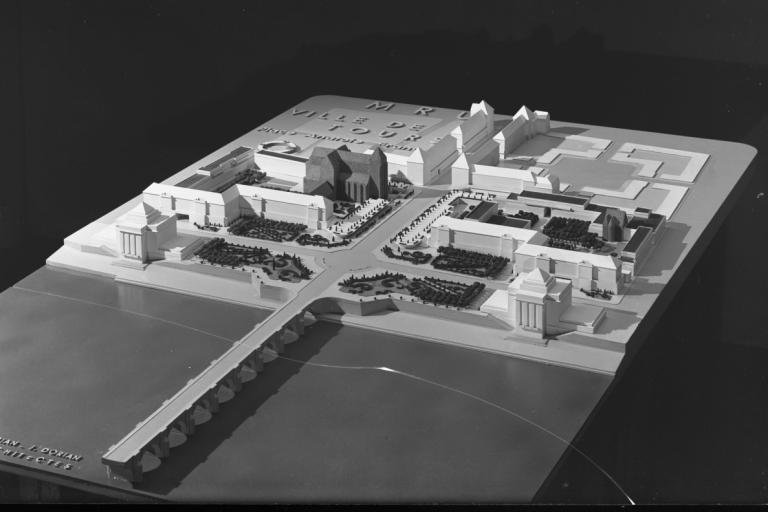
Three reconstruction projects. On the left is the Coupel project for the Châteauneuf ramparts [ Ta&m 2007], in the center is the Dorian project for the relocation of the railroad station [Laloux book 2016], on the right is the Patout project for the Upper National Street. Only the latter has been completed, for the most part, the other two have not had a start.
+ 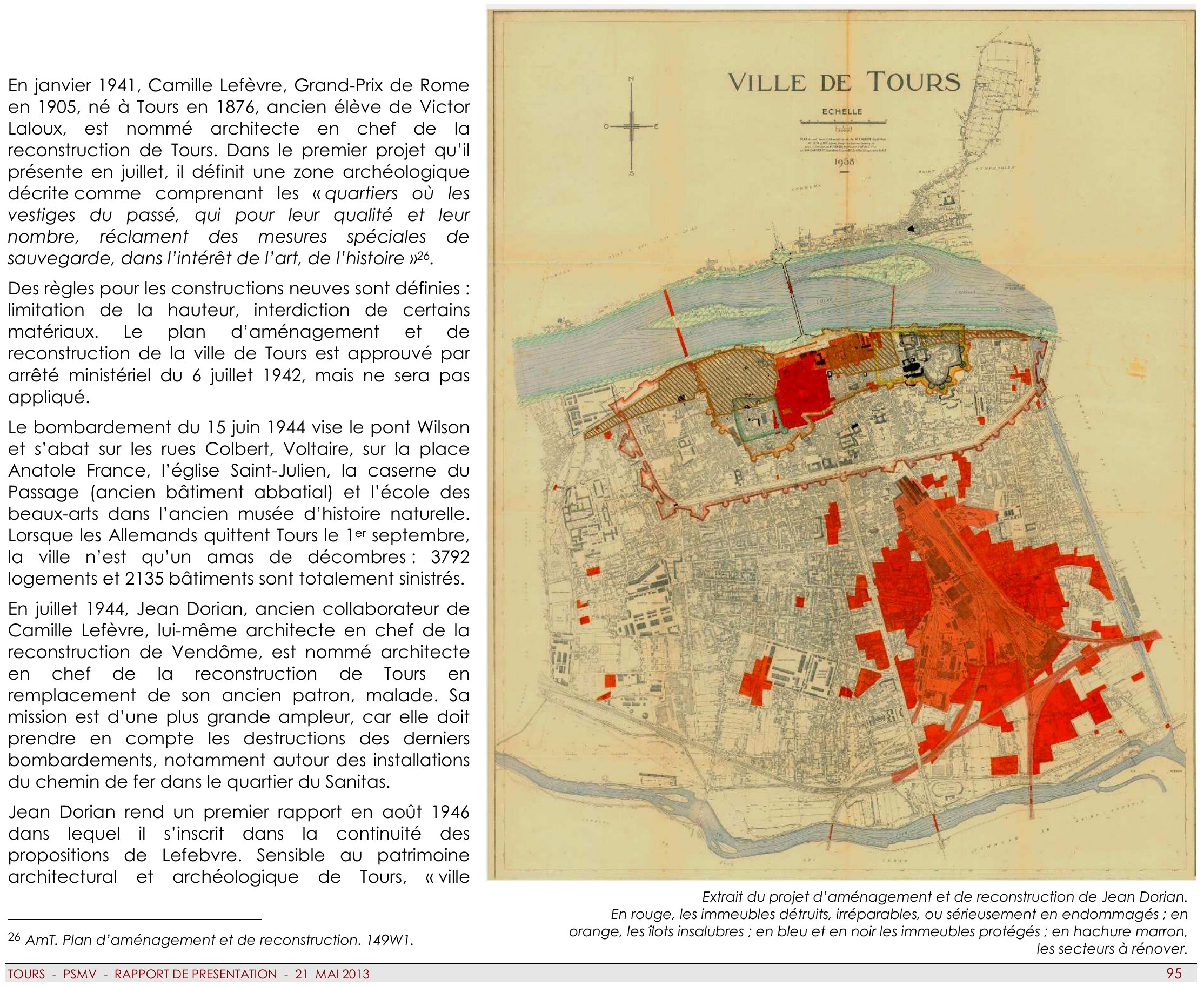 plan 1946 of areas to be rebuilt [PSMV Tours 2013]. plan 1946 of areas to be rebuilt [PSMV Tours 2013].
|
 vestige
 text
text plan
plan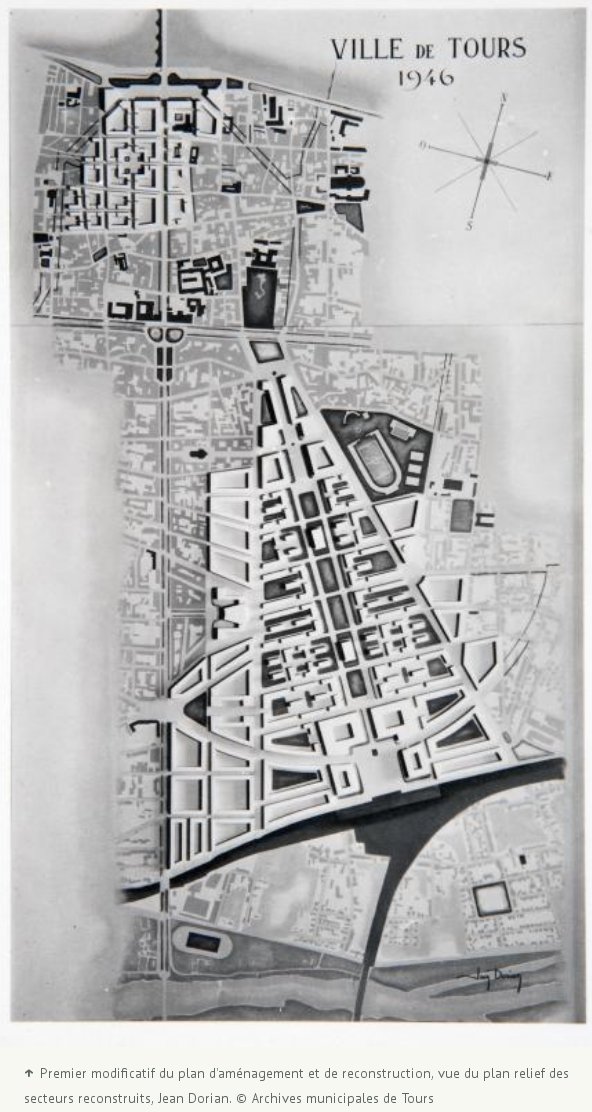 view
view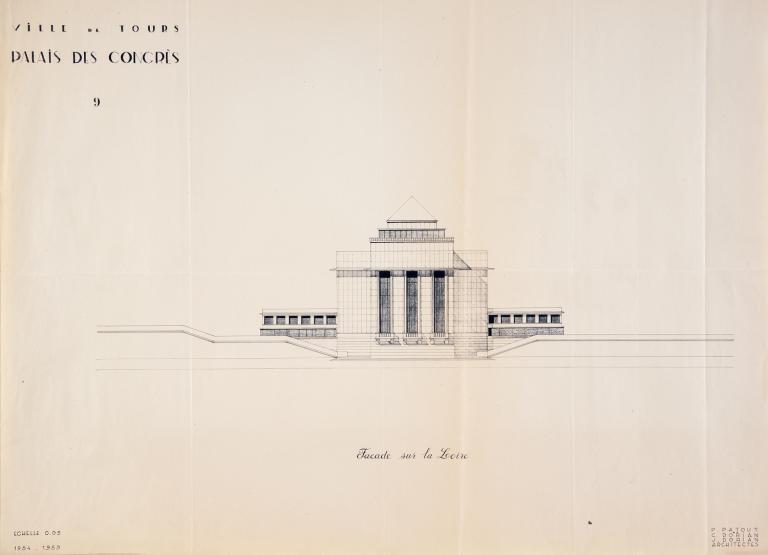 congress palace
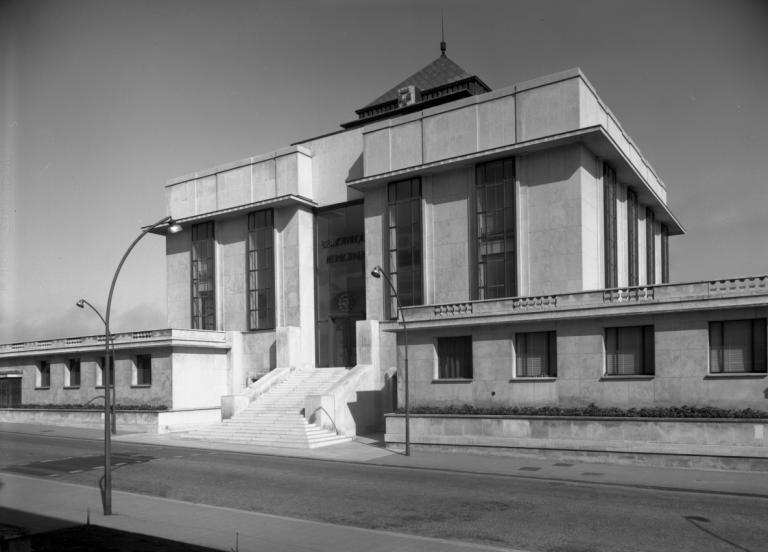 municipal library
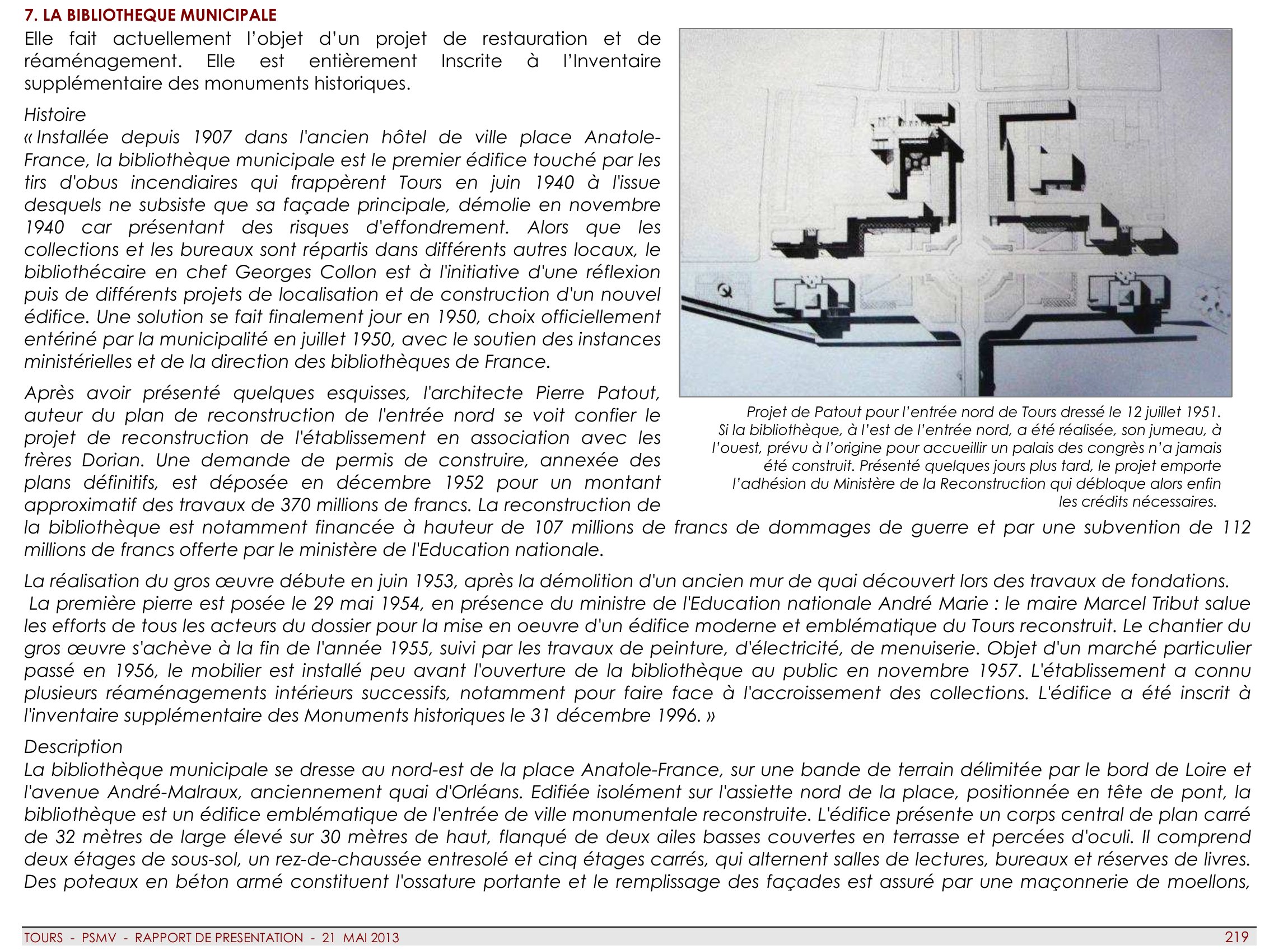 view
view photo
photo 1
1 1
1 double page
 photo
photo photo
photo article
 photo
photo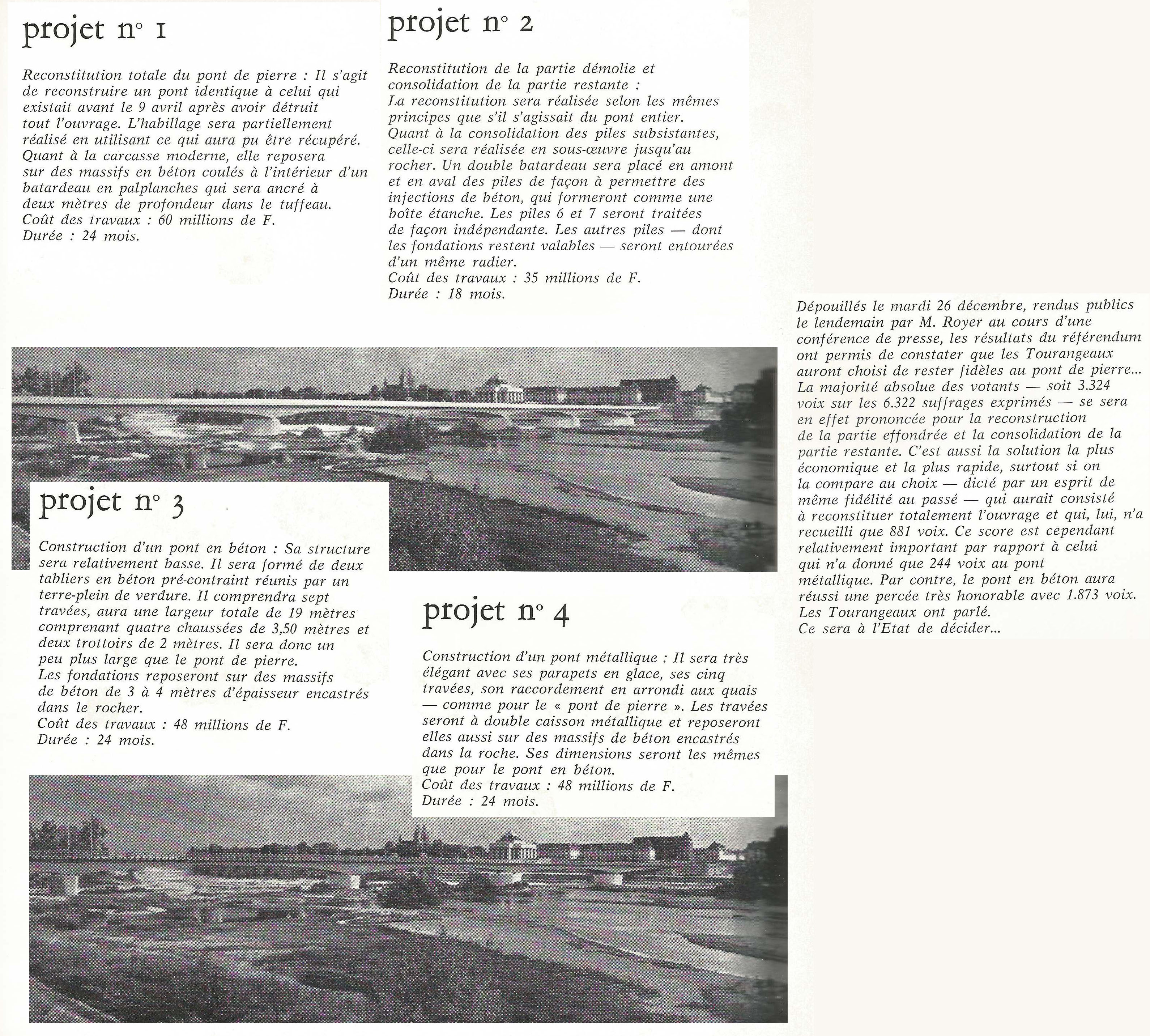 vote
vote 1
1 2
2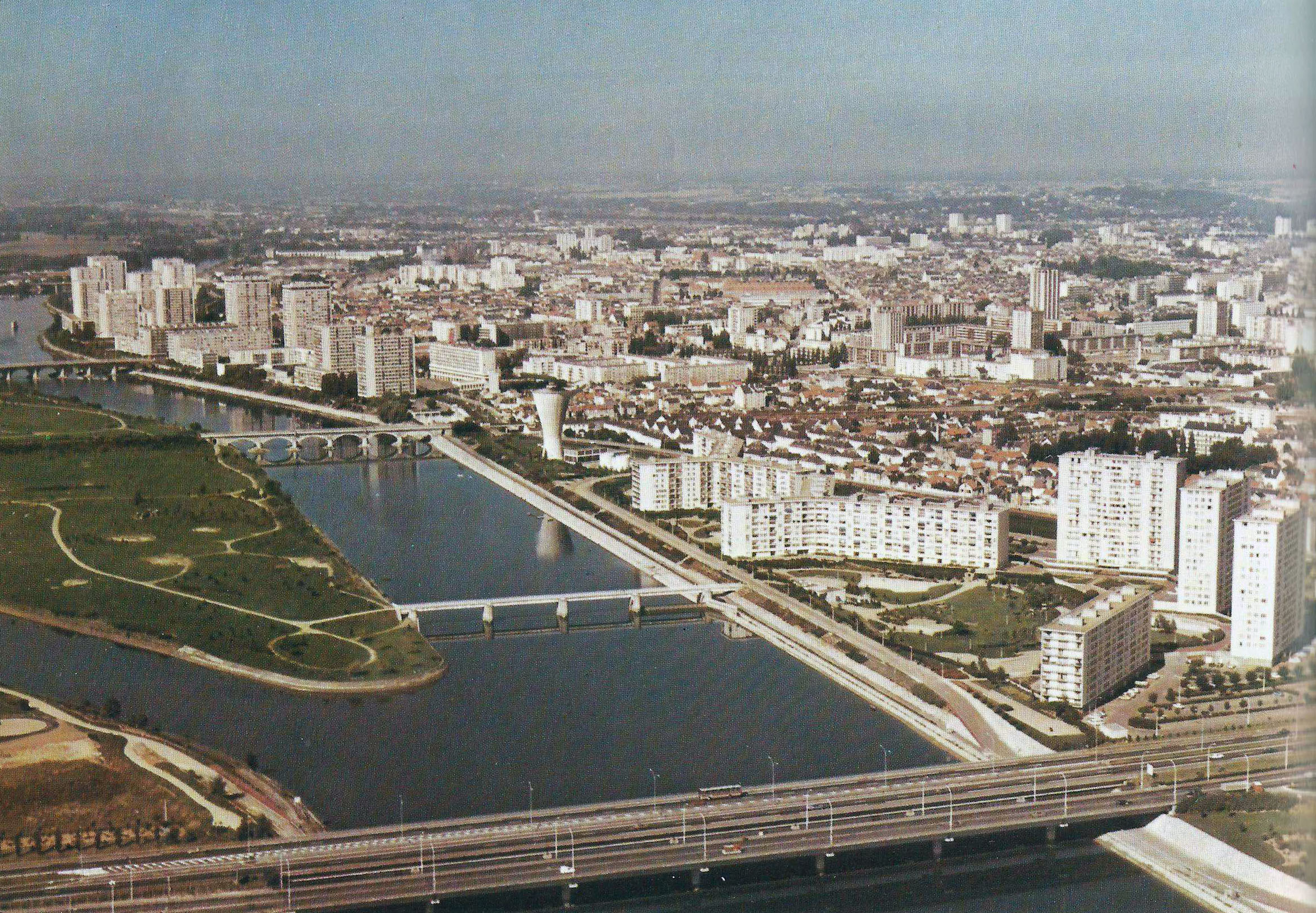
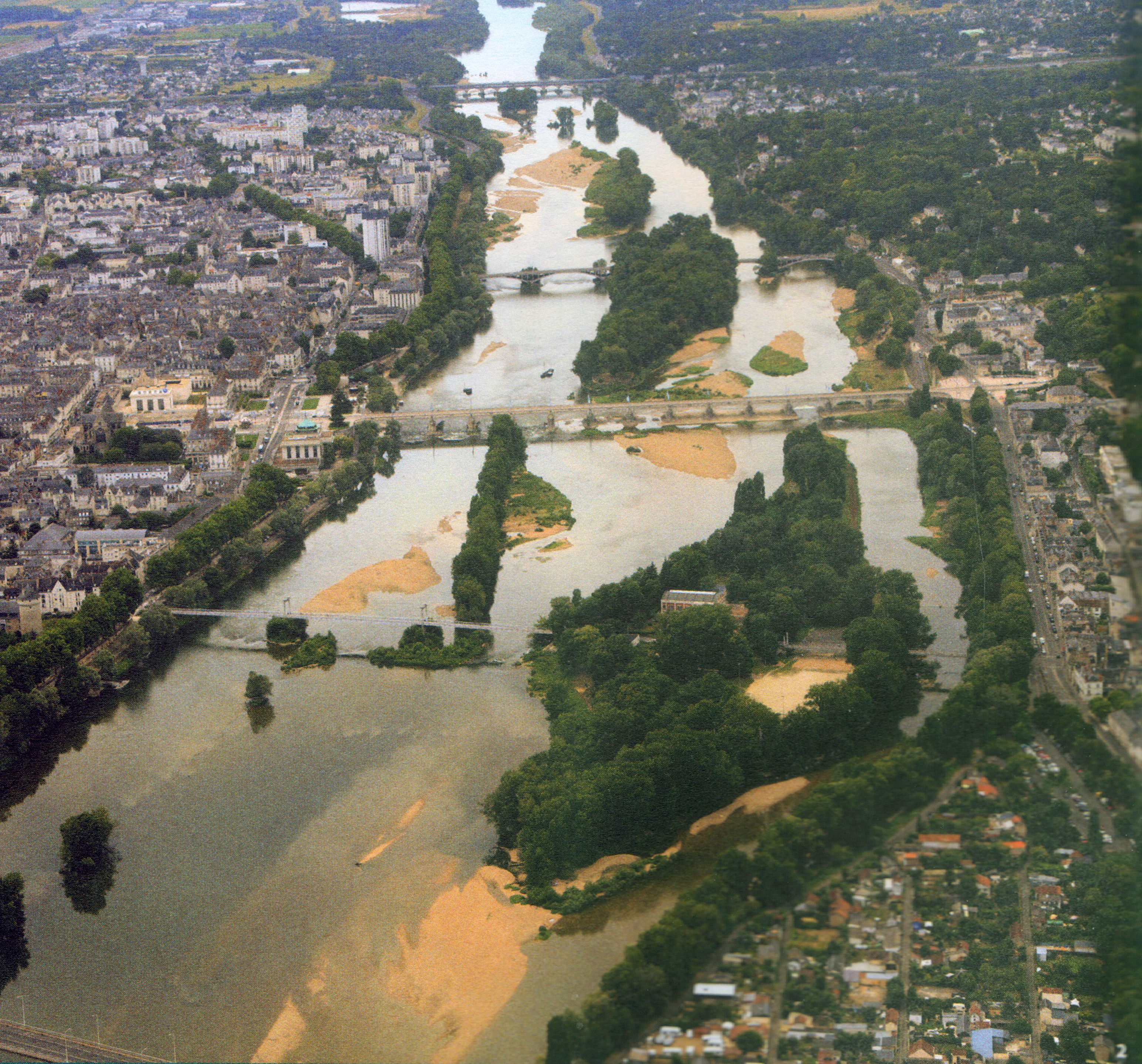
A city that has become too mineral between two rivers. On the left, south of the historic districts, the Rives du Cher district created, after filling in, in the 1970s [1978 municipal booklet]. On the right bank, the city appears very mineral and the A10 motorway below is a corridor of pollution. In the center aerial view of Tours extracted from the plaquette municipal "Parcours Tours" 2018 (+ depliant 2016 "laissez-vous conter Tours").
In this view, One can see, that, on the upper right, the town of Saint Cyr sur Loire is very green, as well as, on the lower right, the flooded gardens and enlarged sheds of the grande île Aucard (a fake island not to be confused with the neighboring île Aucard). On the left bank, there is very little greenery in the downtown area. Almost everything is mineral between the Loire and Cher, except mainly the boulevards of the grand mall and the historic gardens of the 19th century.
On the right, Tours Nord [booklet 1978] was built in a suburban area in the last years of the twentieth century (+ 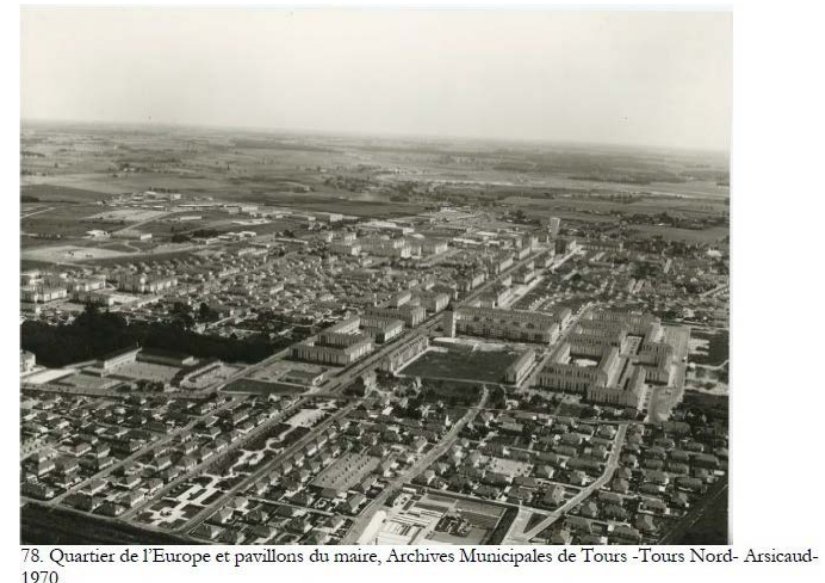 view aerial 1970, Archives minicipales) and is a victim of the appetites of developers in the 21st century. There mineralization is spreading... (+ view aerial 1970, Archives minicipales) and is a victim of the appetites of developers in the 21st century. There mineralization is spreading... (+ 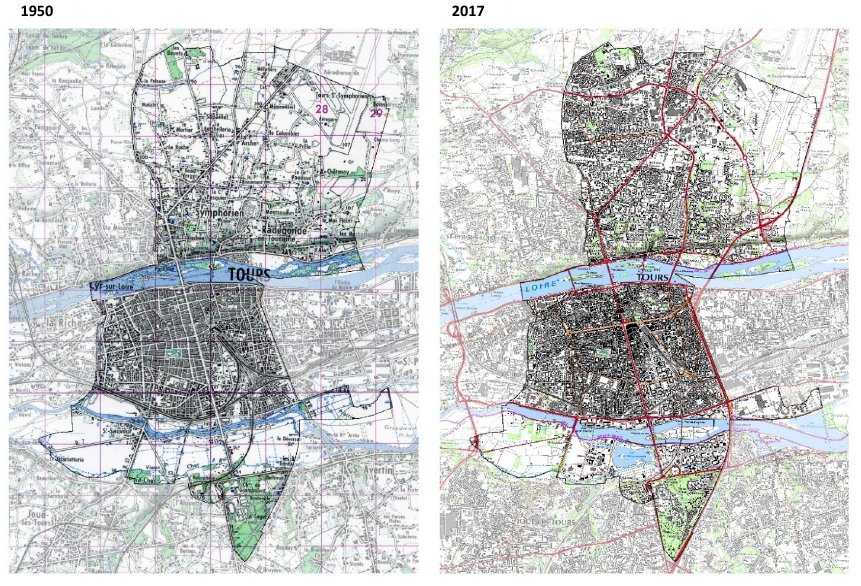 comparison 1950-2017, Tours PLU 2019) One could however densify by preserving heavily vegetated areas.
Fortunately the blue and green frames of the Loire and the Cher are there, like breathing lungs... comparison 1950-2017, Tours PLU 2019) One could however densify by preserving heavily vegetated areas.
Fortunately the blue and green frames of the Loire and the Cher are there, like breathing lungs...
|
 postcard
 1
1 2
2 photo
photoMartin, a message still contemporary. In the fourth basilica, now more than a hundred years old, witness with its three predecessors of multiple disasters overcome, facing the arrival of new calamities, a tomb and a pediment call for the perpetuity of the message. In the
 editorial of the 2015 special issue of the Mag. Touraine, Philippe Hadef emphasizes the inspiration to be drawn from Martin's journey. Nice edito, but once again we are in the hagiography, we forget some features of the character... To state them, making him less holy and more human, to transpose them too, doesn't it bring more relief to these lessons to be drawn?
Bruno Judic stated the essential in 2018 (link) : "The soldier's gesture shows that if we want to obtain peace, sharing is necessary. This is the great message of the paths of Saint Martin. For our planet to survive, we must share essential resources: water, land, air, food..."
editorial of the 2015 special issue of the Mag. Touraine, Philippe Hadef emphasizes the inspiration to be drawn from Martin's journey. Nice edito, but once again we are in the hagiography, we forget some features of the character... To state them, making him less holy and more human, to transpose them too, doesn't it bring more relief to these lessons to be drawn?
Bruno Judic stated the essential in 2018 (link) : "The soldier's gesture shows that if we want to obtain peace, sharing is necessary. This is the great message of the paths of Saint Martin. For our planet to survive, we must share essential resources: water, land, air, food..."
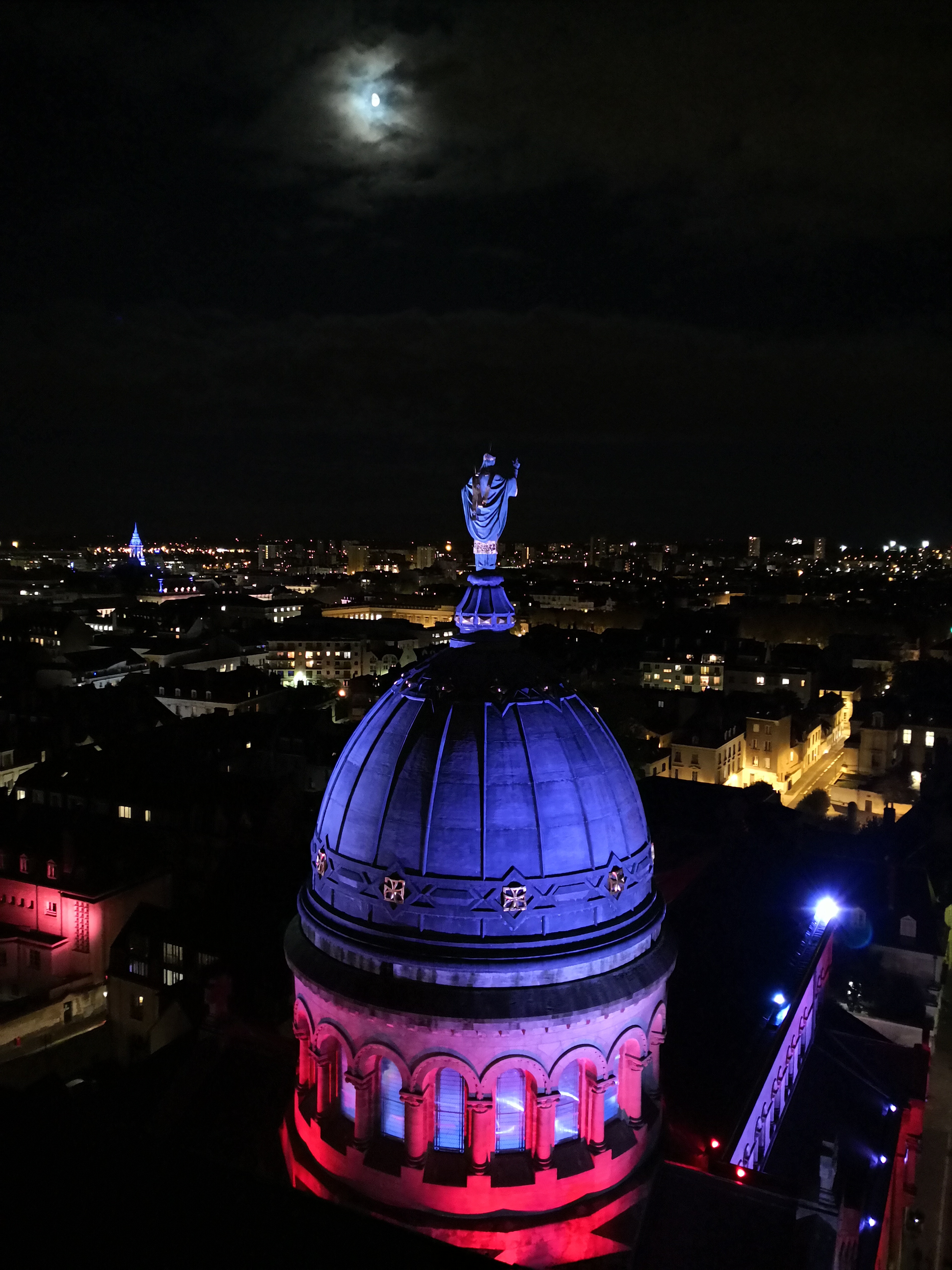

Is Martin watching over the city of Tours for life? Views from the top and bottom of the Charlemagne Tower + three more photos from November / December 2019 :  1 1
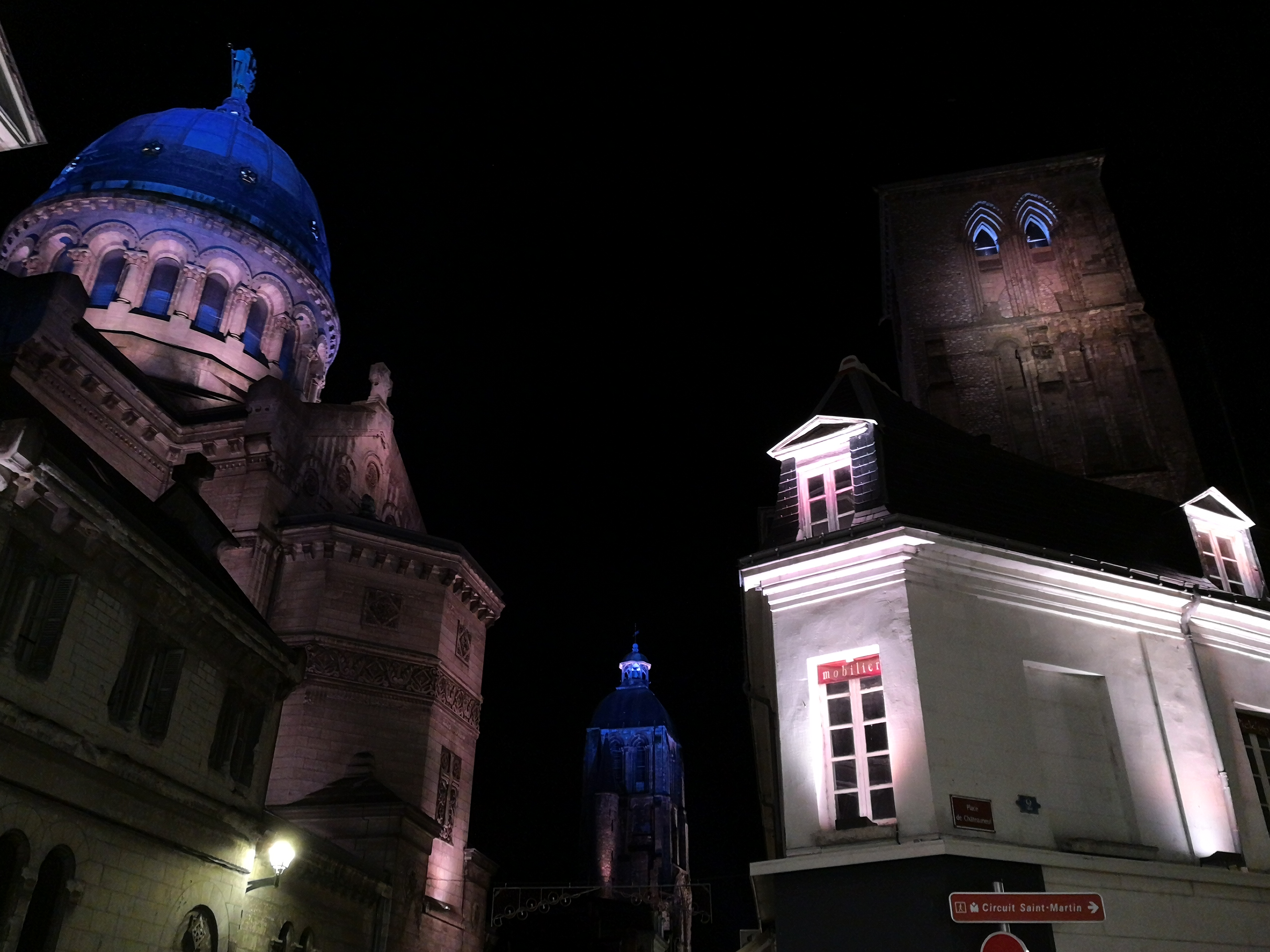 2 2
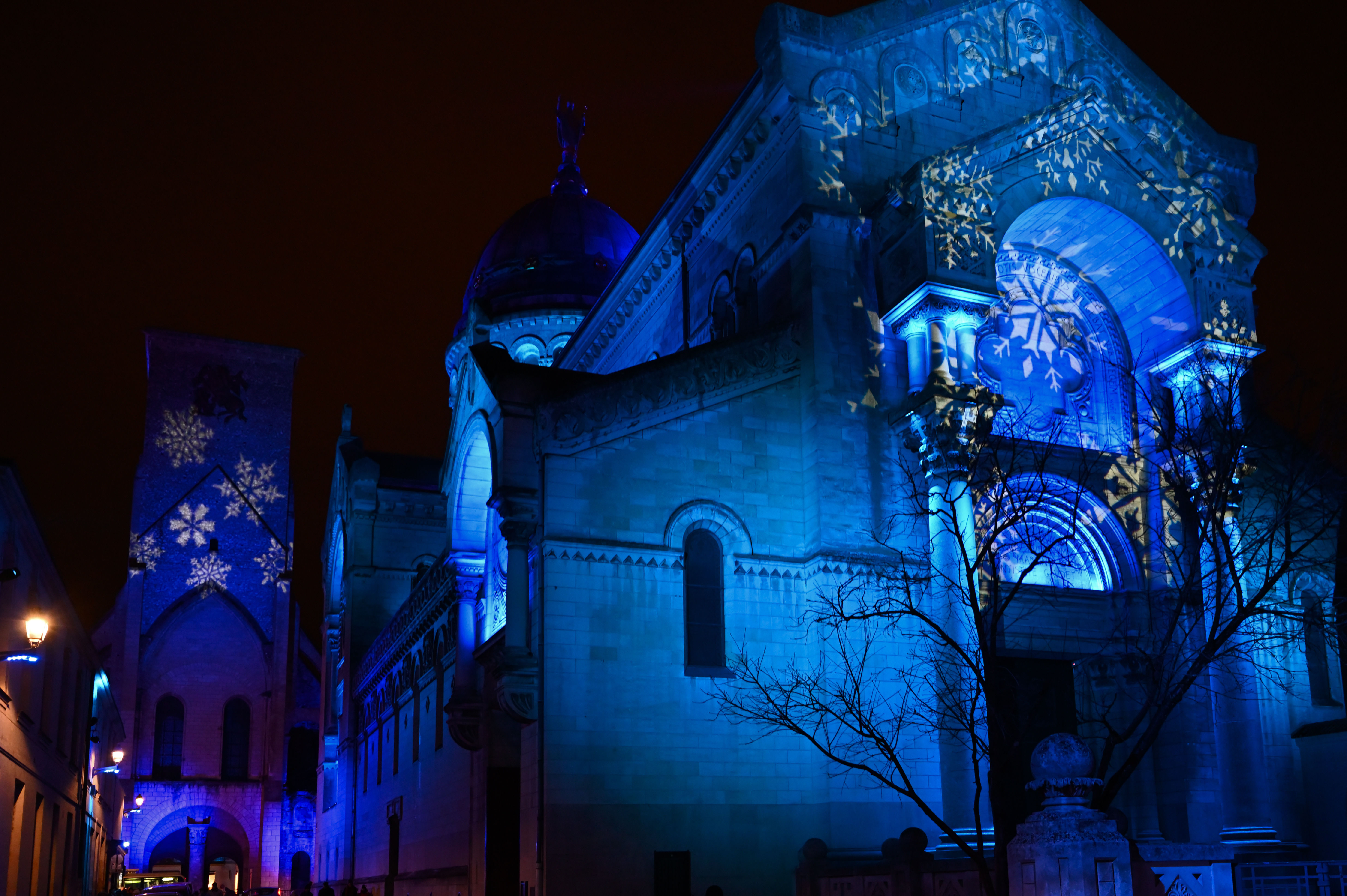 3
+ 3
+ 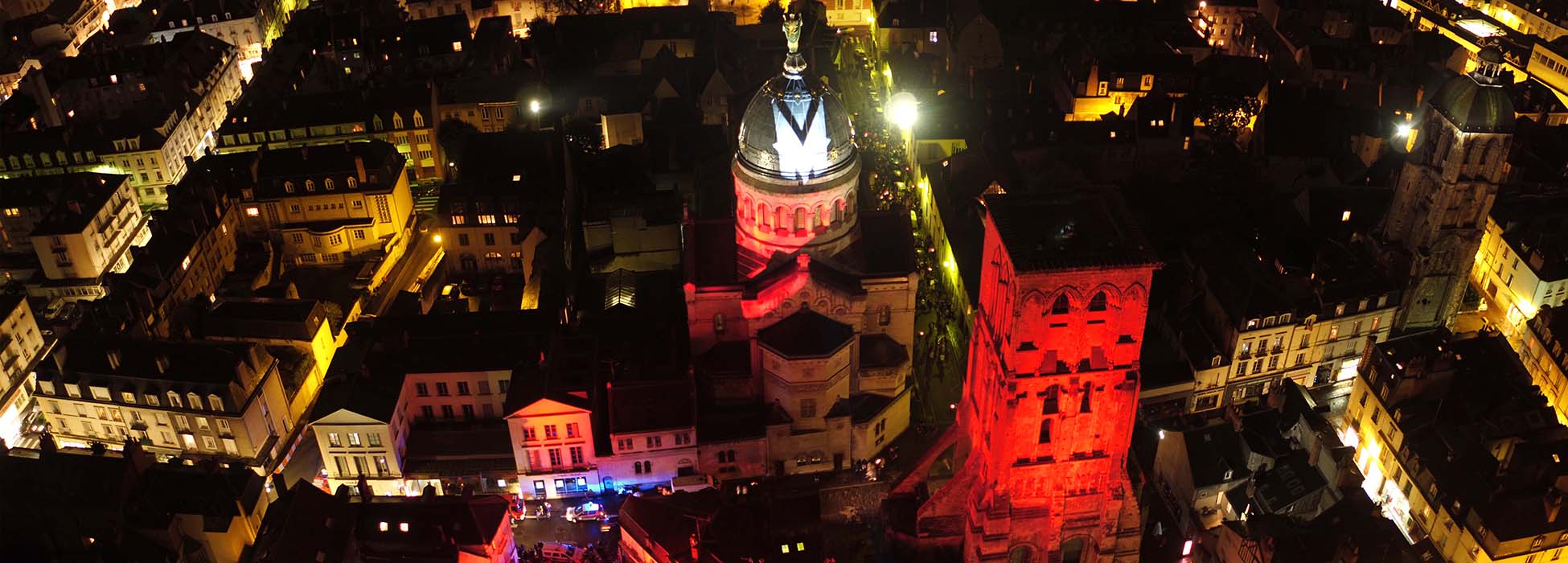 view from above (link).
+ view from above (link).
+ 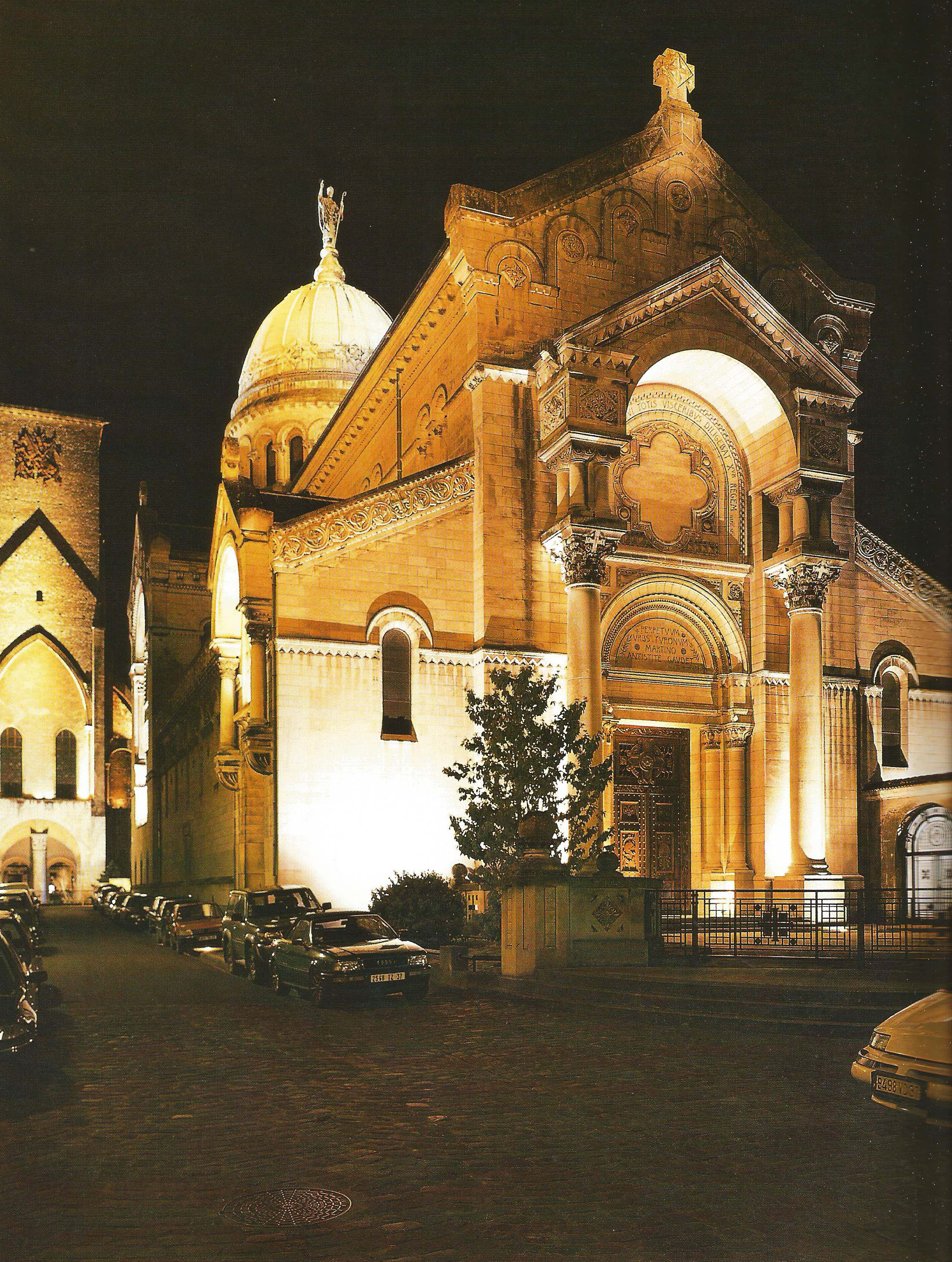 photo of the illuminated facade in the late 20th century [Lorincz 2001]
+ photo of the illuminated facade in the late 20th century [Lorincz 2001]
+  photo of the November 10, 2016 fireworks display (link).
+ photo of the November 10, 2016 fireworks display (link).
+ 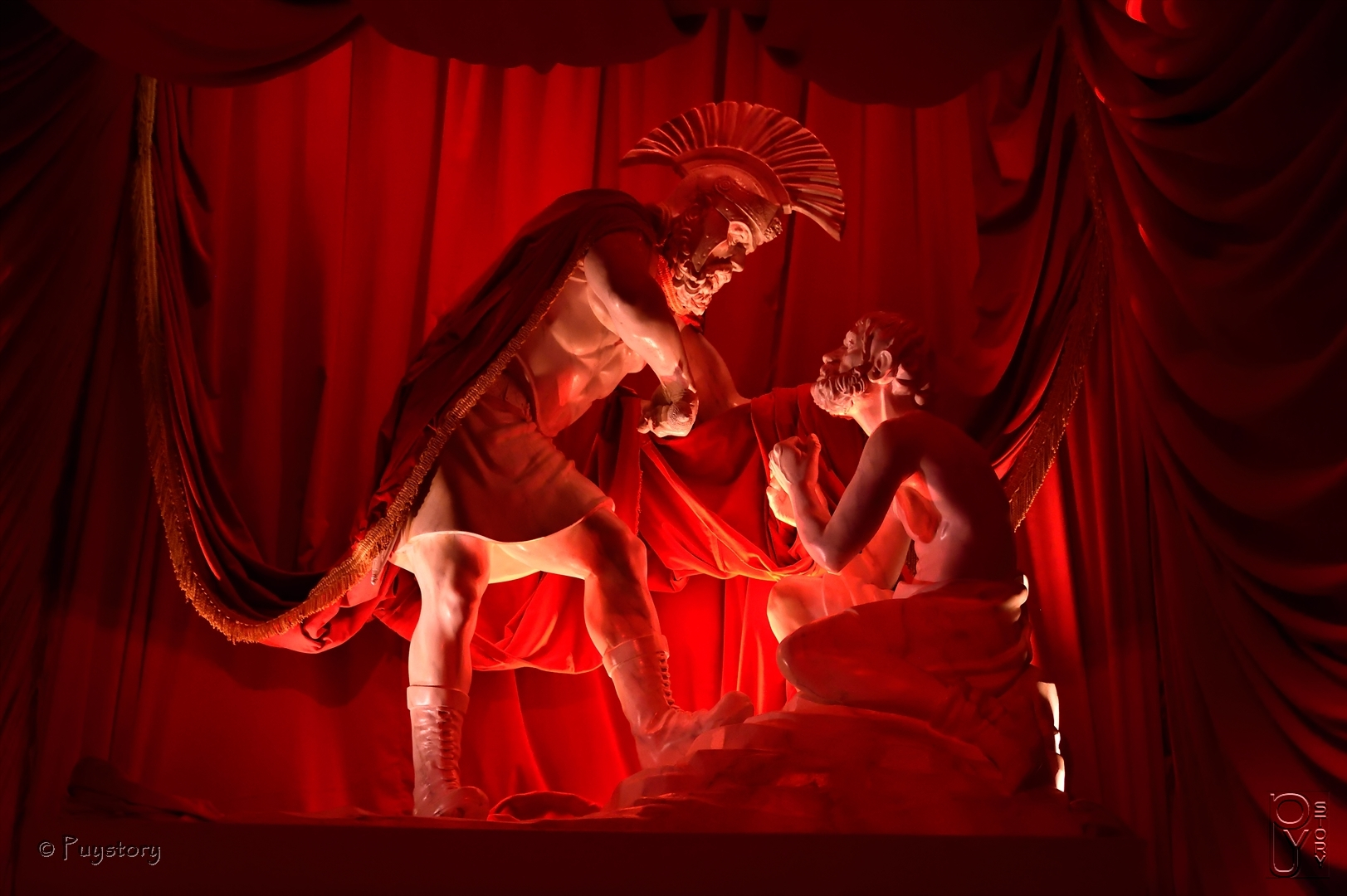 scene from the Puy du Fou 2020 show (link).
Reminder: Martin in the Tours Cathedral sound and light show in the first chapter, here-before. scene from the Puy du Fou 2020 show (link).
Reminder: Martin in the Tours Cathedral sound and light show in the first chapter, here-before.
|
The advent of a secular and European Martin? In 2006 / 2008, under the impetus of a European Cultural Center Saint Martin de Tours, based in Tours, chaired by Bruno Judic and animated by Antoine Selosse, the notion of "citizen sharing" replacing the more religious one of "charity", was promoted at the European level (notably through a link between Martinian cities,
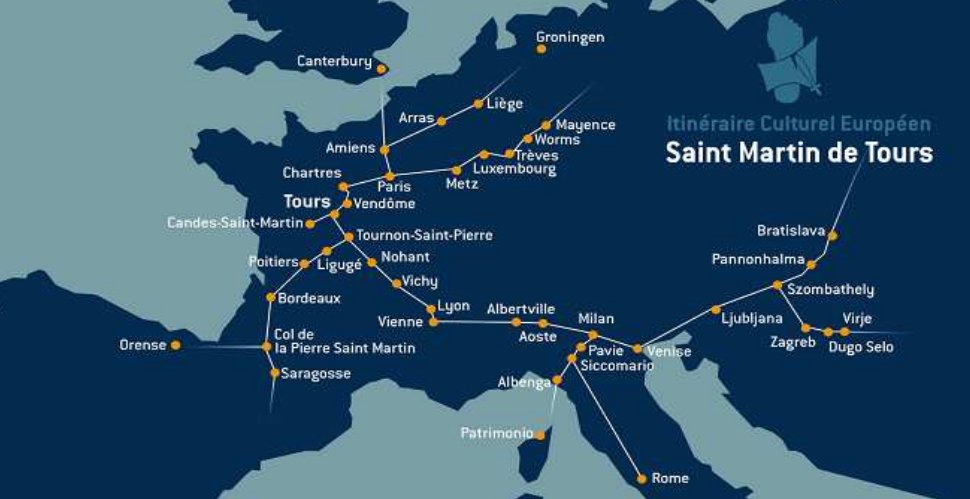 map).
There has been no really significant follow-up so far, but the foundations have been laid, and a desire for secular and European promotion has persisted over the years, which will perhaps be given a new impetus in the years to come. Rather than walking to Compostela for a fictitious Saint James without human thickness, is it not better to visit the Martinian sites of a historically true and important man whose weaknesses and strengths we know? Although deeply religious, he had defended secularism in the Priscillian affair and his successors at the bishopric of Tours had known how to make a pact with the Franks, allowing to soften a very rough time. And all these traces perpetuating the name of Martin over the centuries, the European genealogies are full of places, patronymics, Martinian first names, for that he is unique...
To learn more about this initiative supported by the European community, one should read issues of the "Lettre martinienne" mentioned below, especially the
2006-1 (
map).
There has been no really significant follow-up so far, but the foundations have been laid, and a desire for secular and European promotion has persisted over the years, which will perhaps be given a new impetus in the years to come. Rather than walking to Compostela for a fictitious Saint James without human thickness, is it not better to visit the Martinian sites of a historically true and important man whose weaknesses and strengths we know? Although deeply religious, he had defended secularism in the Priscillian affair and his successors at the bishopric of Tours had known how to make a pact with the Franks, allowing to soften a very rough time. And all these traces perpetuating the name of Martin over the centuries, the European genealogies are full of places, patronymics, Martinian first names, for that he is unique...
To learn more about this initiative supported by the European community, one should read issues of the "Lettre martinienne" mentioned below, especially the
2006-1 ( article),
2007-2 in full (preface by Jacques Fontaine),
2007-3,
2008-5 (launch of an annual citizen share award,
article),
2007-2 in full (preface by Jacques Fontaine),
2007-3,
2008-5 (launch of an annual citizen share award,  article,
 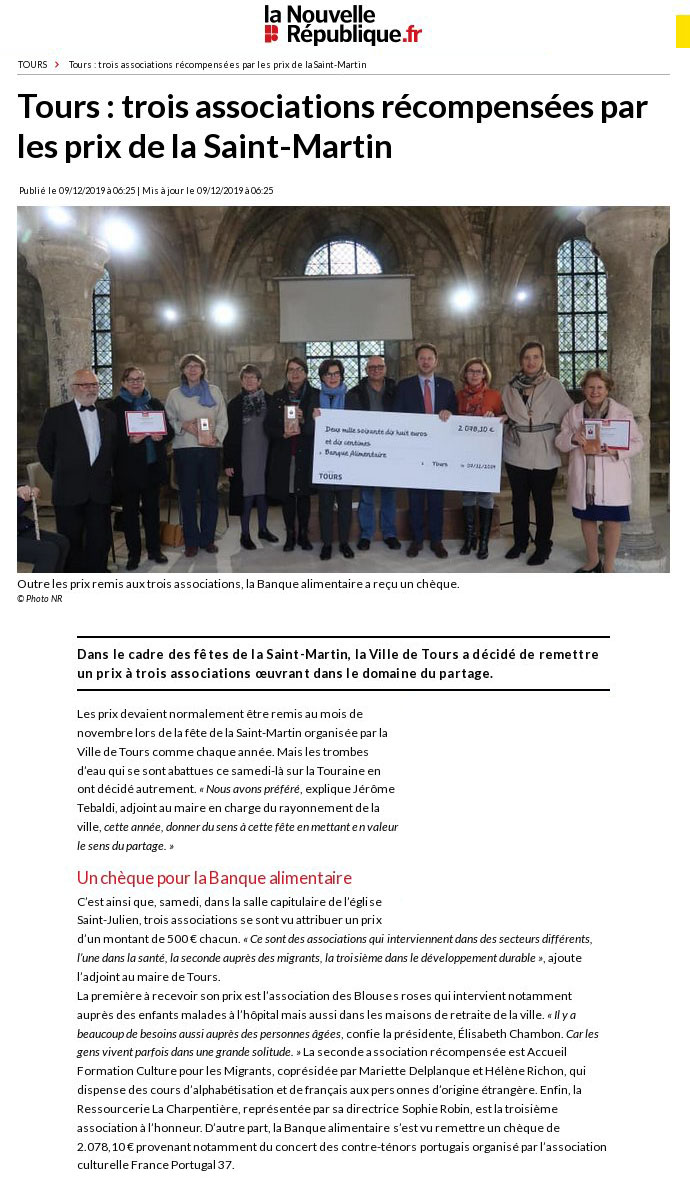 award in 2019, La NR). And the
  article introducing the Semur 2015.

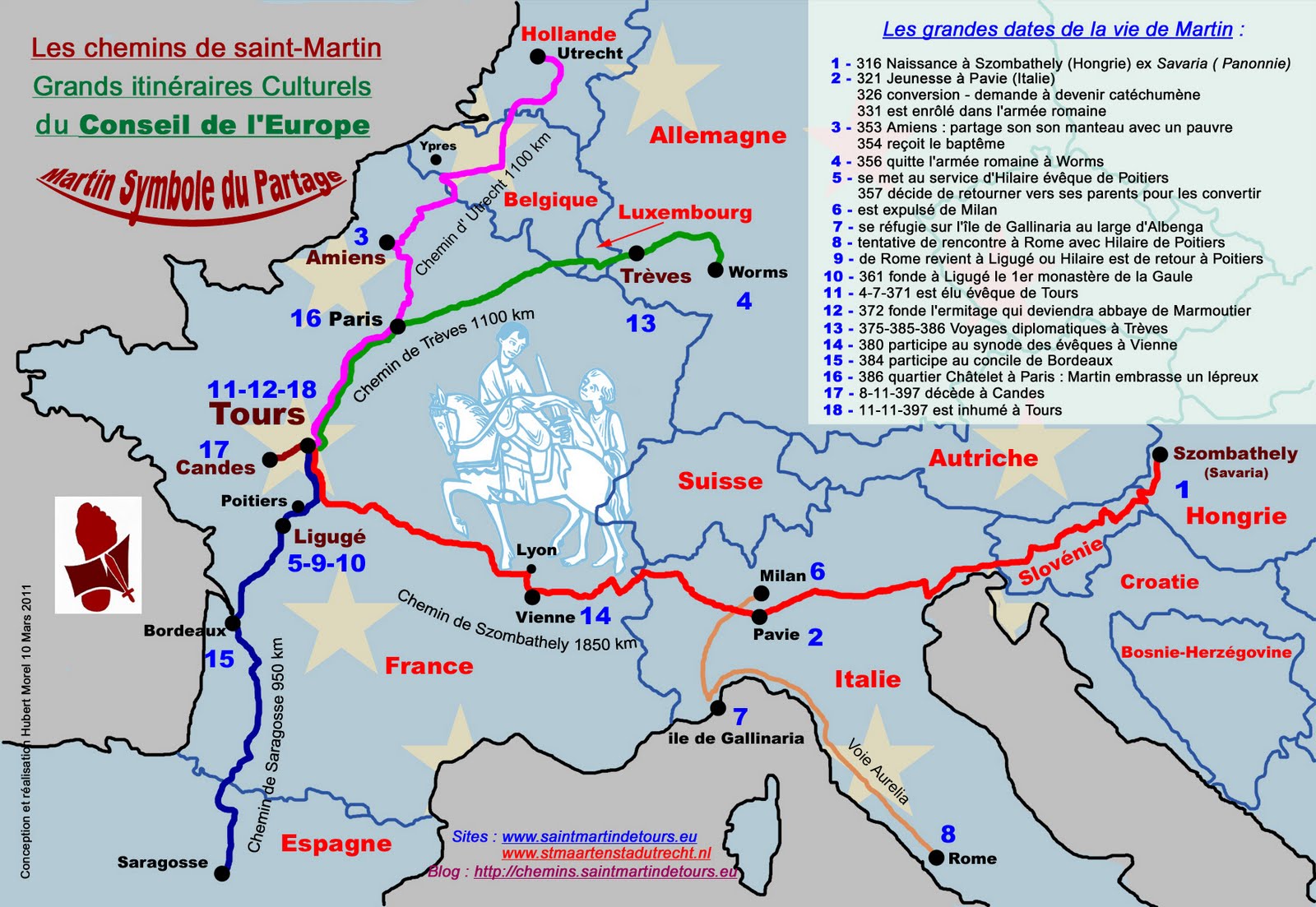


| ||
booklet of 88 pages from the Conseil Général d'Indre et Loire 1997 on the Tours - Vendôme route. There is also a "path of the Bishop of Tours", from Ligugé to Tours and Candes (link).
+  page from the Semur 2015 presenting the path from Vendôme to Tours.
+ document "The European Network of Saint Martin Cultural Centers".
+ link photo at right. page from the Semur 2015 presenting the path from Vendôme to Tours.
+ document "The European Network of Saint Martin Cultural Centers".
+ link photo at right.
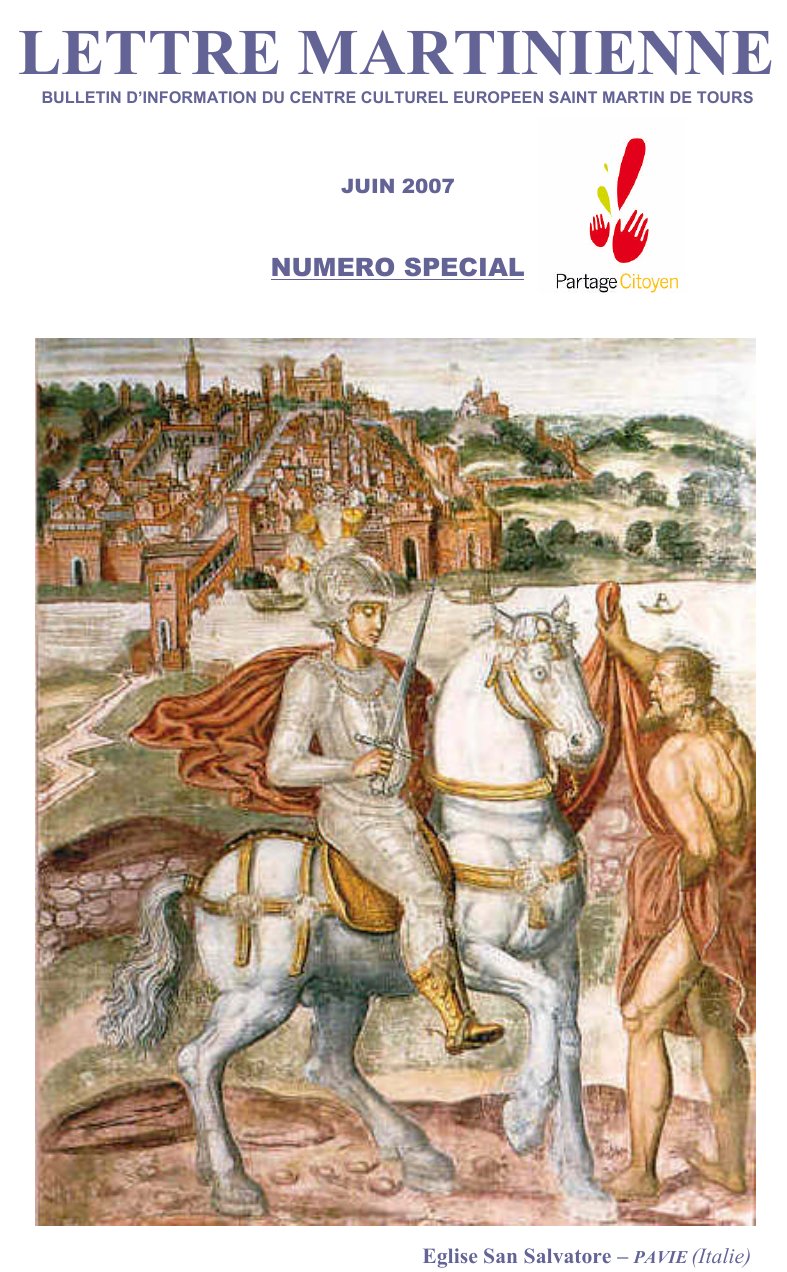

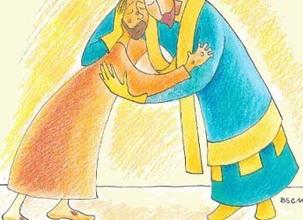
1) Cover of the "Martinian Letter" No. 2007-2 special "Citizen Sharing" 2) The community of the Benedictine Sisters of the Sacred Heart of Montmartre who, since 2000, have been managing the basilica, including welcoming the public and pilgrims.
(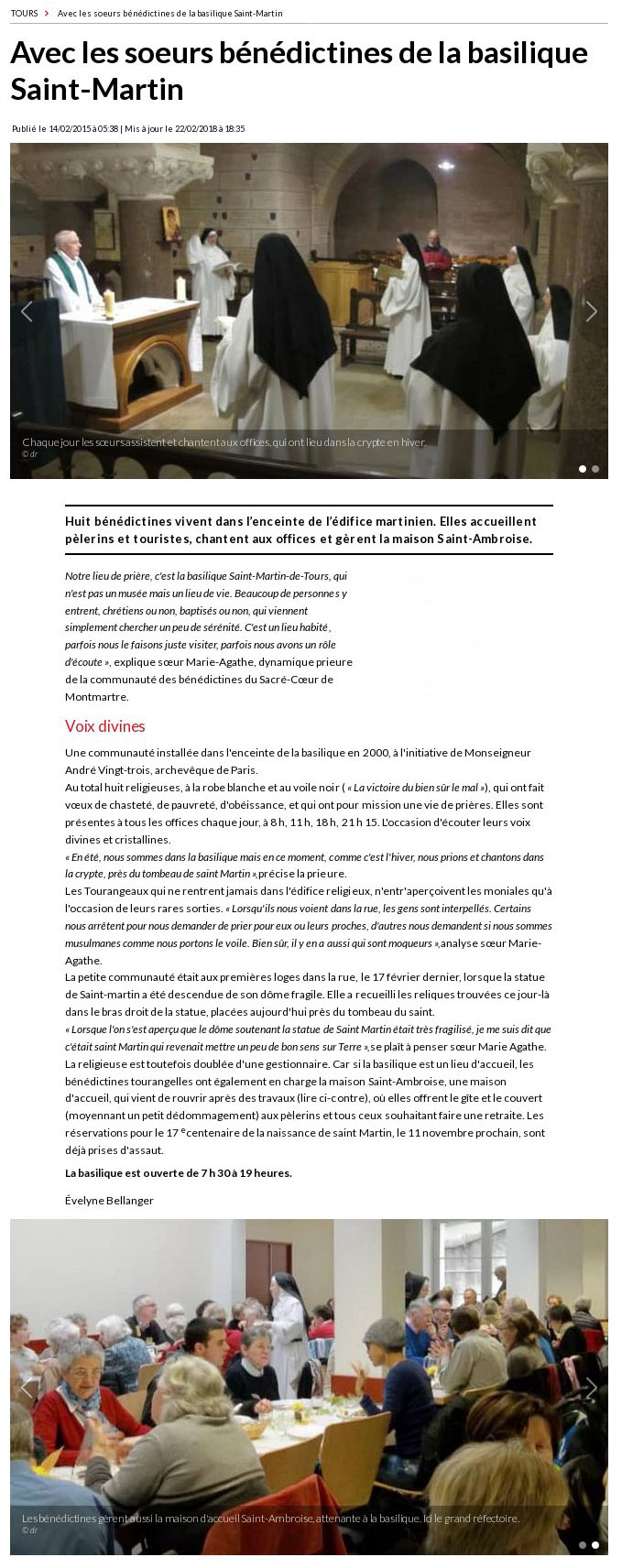 article 2015 La NR).
3) Then the logo of the official site of the basilica, regularly updated, gives all the practical information of access and accommodation ("the house of Saint Ambrose", 25 beds, a refectory for 110 meals, conference rooms, various accompaniments).
4) On the right, drawing accompanying "the Saint Martin line," a chain of watch, listening and solidarity. Visitors can purchase a book or object about Martin in the basilica. The site "World Heritage Saint Martin of Tours" (saint-martindetours.com) deals with the "Martinian heritage" and the "paths of Saint Martin."
+ a parish file on Martin
and a document of 24 pages by Bernard Wagner on the church of Sarralbe in Moselle and the life of Martin.
+ page on facebook.
+ as an example, an illustrated page of a nice pilgrimage to Tours, by residents of Villepreux les Clayes in Yvelines. article 2015 La NR).
3) Then the logo of the official site of the basilica, regularly updated, gives all the practical information of access and accommodation ("the house of Saint Ambrose", 25 beds, a refectory for 110 meals, conference rooms, various accompaniments).
4) On the right, drawing accompanying "the Saint Martin line," a chain of watch, listening and solidarity. Visitors can purchase a book or object about Martin in the basilica. The site "World Heritage Saint Martin of Tours" (saint-martindetours.com) deals with the "Martinian heritage" and the "paths of Saint Martin."
+ a parish file on Martin
and a document of 24 pages by Bernard Wagner on the church of Sarralbe in Moselle and the life of Martin.
+ page on facebook.
+ as an example, an illustrated page of a nice pilgrimage to Tours, by residents of Villepreux les Clayes in Yvelines.
| ||
1996, 2007, 2016: three popes honor Martin. To celebrate the 1700th anniversary of the saint's death, before
John Honored Archbishop of Tours paid tribute to his predecessor in 1997 with an illuminated  prayer [Semur 2015], Pope John Paul II paid his respects before the tomb on September 21, 1996 (link video). Visiting Tours for three days, he said, among other things, that "A society is judged by the way it looks at the wounded of life and the attitude it adopts toward them" (+
  page of the Semur 2015, in a chapter titled "The Flame of Remembrance Rekindled in Europe"). This visit, however, generated a lot of controversy. In its eight-page dossier, the Mag. Touraine No. 61, rounds it up in a
  page titled "Antipapists in the Street."
And a
page titled "Antipapists in the Street."
And a 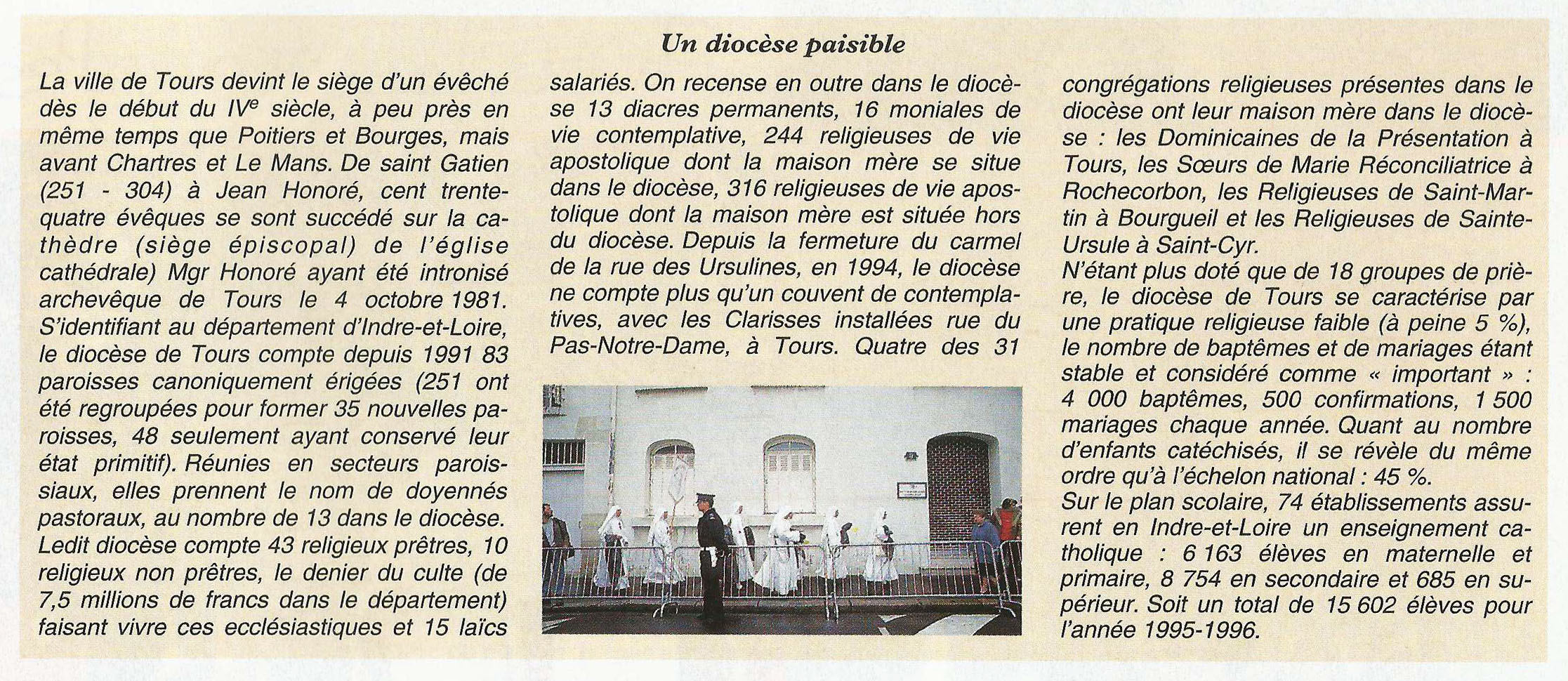 framed takes stock of the impact of the Catholic religion on the Tours diocese in 1995-1996.
In 2007, Pope Benedict XVI used Martin as an example : "May St. Martin help us to understand that it is only through sharing that we can respond to the great challenge of our time : that of building a world of peace and justice, in which every human being can live with dignity." (link). In 2016, the Pope Francis hosted the St. Martin community. He also released a
framed takes stock of the impact of the Catholic religion on the Tours diocese in 1995-1996.
In 2007, Pope Benedict XVI used Martin as an example : "May St. Martin help us to understand that it is only through sharing that we can respond to the great challenge of our time : that of building a world of peace and justice, in which every human being can live with dignity." (link). In 2016, the Pope Francis hosted the St. Martin community. He also released a 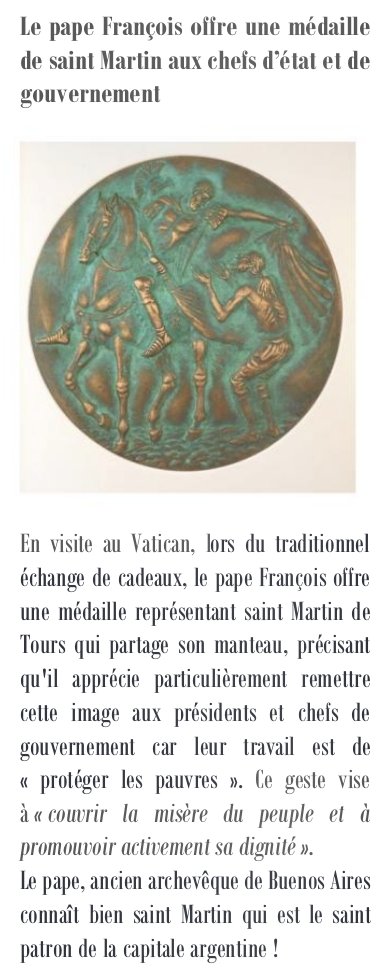 medaille in Martin's likeness, which he offers to heads of state.

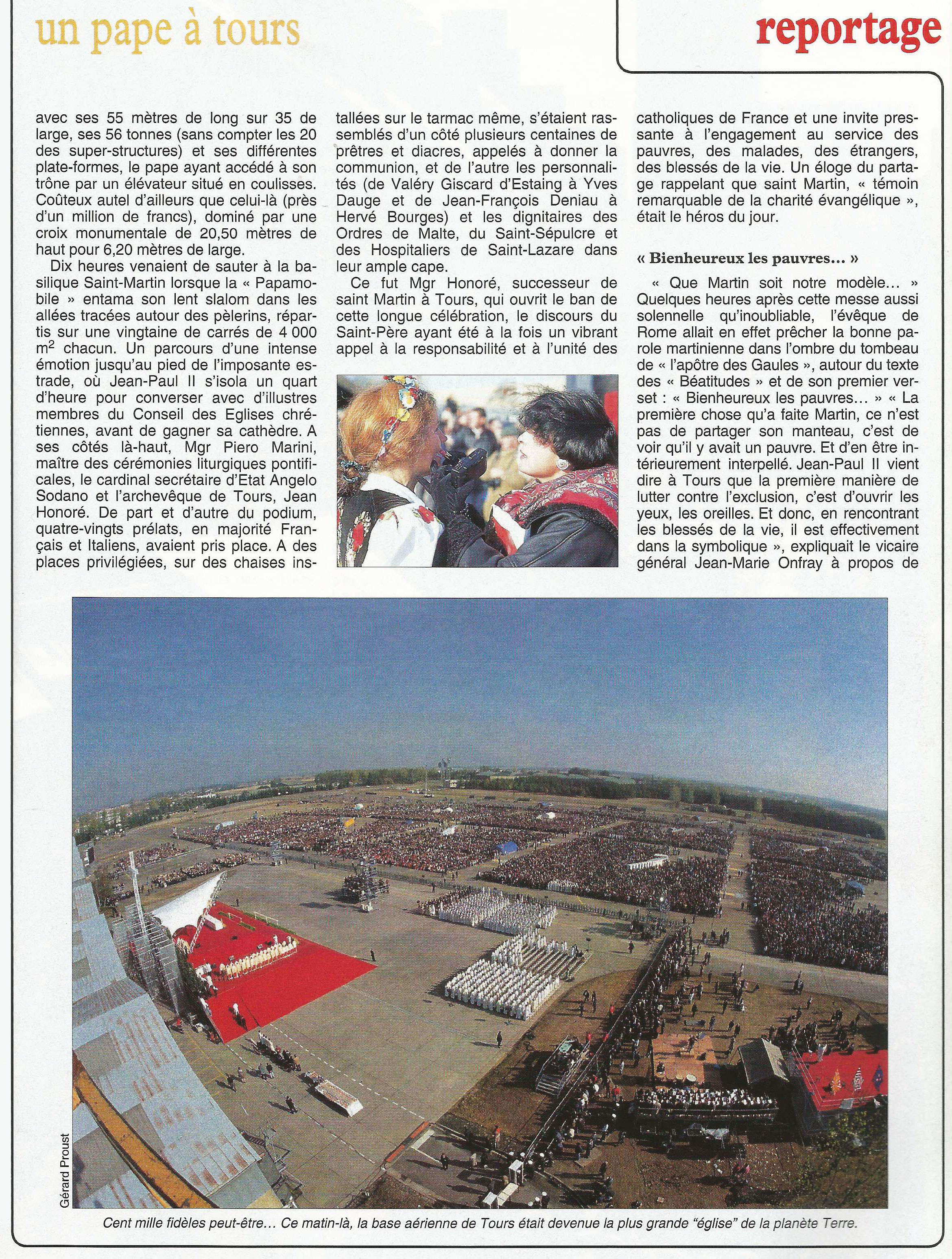
September 1996. Images made by the two great photographers of La NR [Mag. Touraine #61].
On the left, passing the papamobile on rue des Halles, in front of the Charlemagne Tower [Pierre Fitou].
On the right, giant gathering on the airfield [Gérard Proust].


Sept. 1996: John Paul II in front of the tomb of Martin January 2016 : the Saint Martin community meets with Pope Francis at the Vatican (link). |
Martin Christianity in the 21st Century. Building on the momentum of its founding in 1976 in Genoa, Italy, the "St. Martin Community" marks a revival of Catholic sanctified Martin worship across Europe. Its headquarters, first in
Candé sur Beuvron (near Blois), is currently located in the abbey of Notre-Dame d'Evron, bringing together in 2019 seven formators and about 100 seminarians. + link Wikipedia + the site of the community + 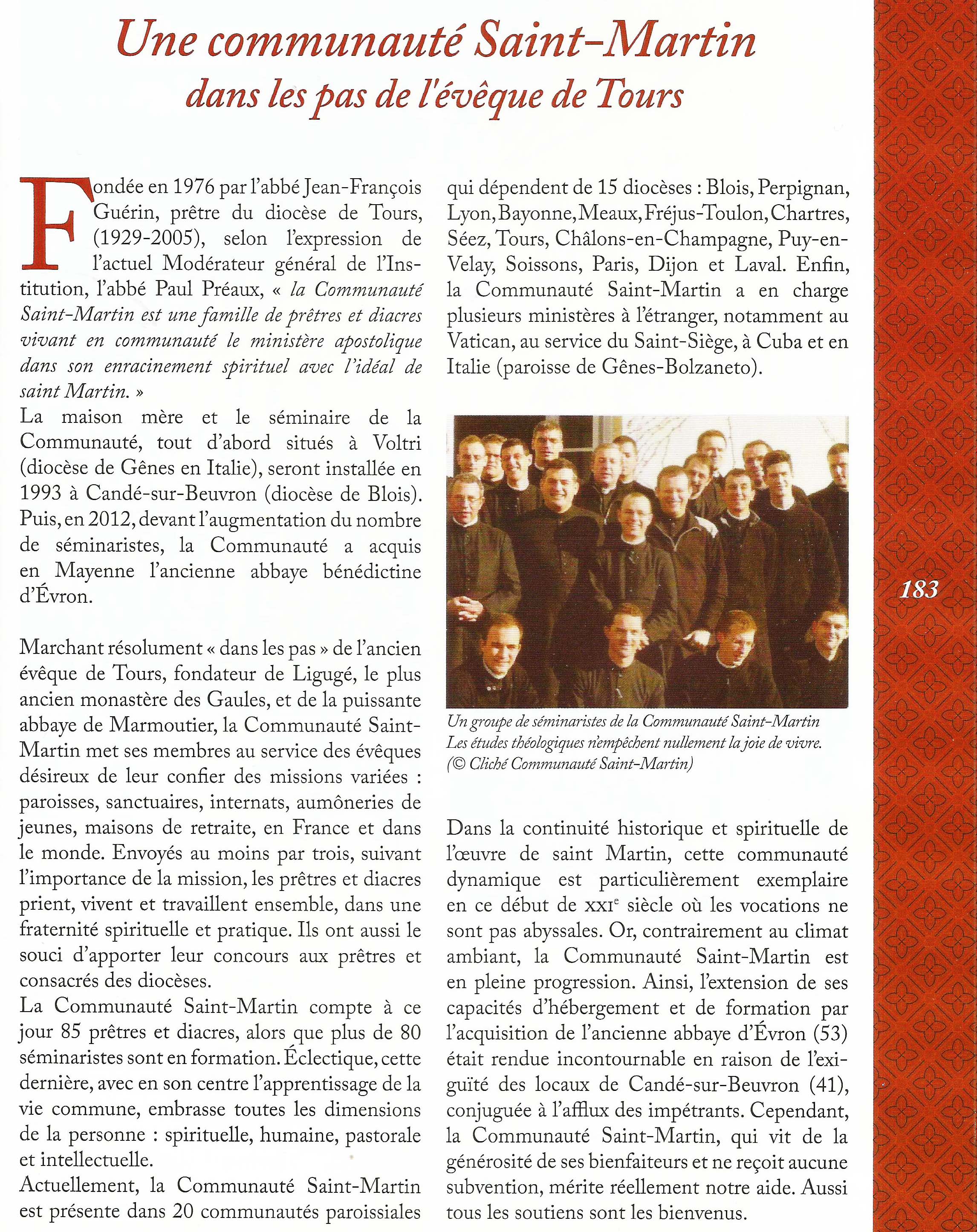 page of the Semur 2015.
|
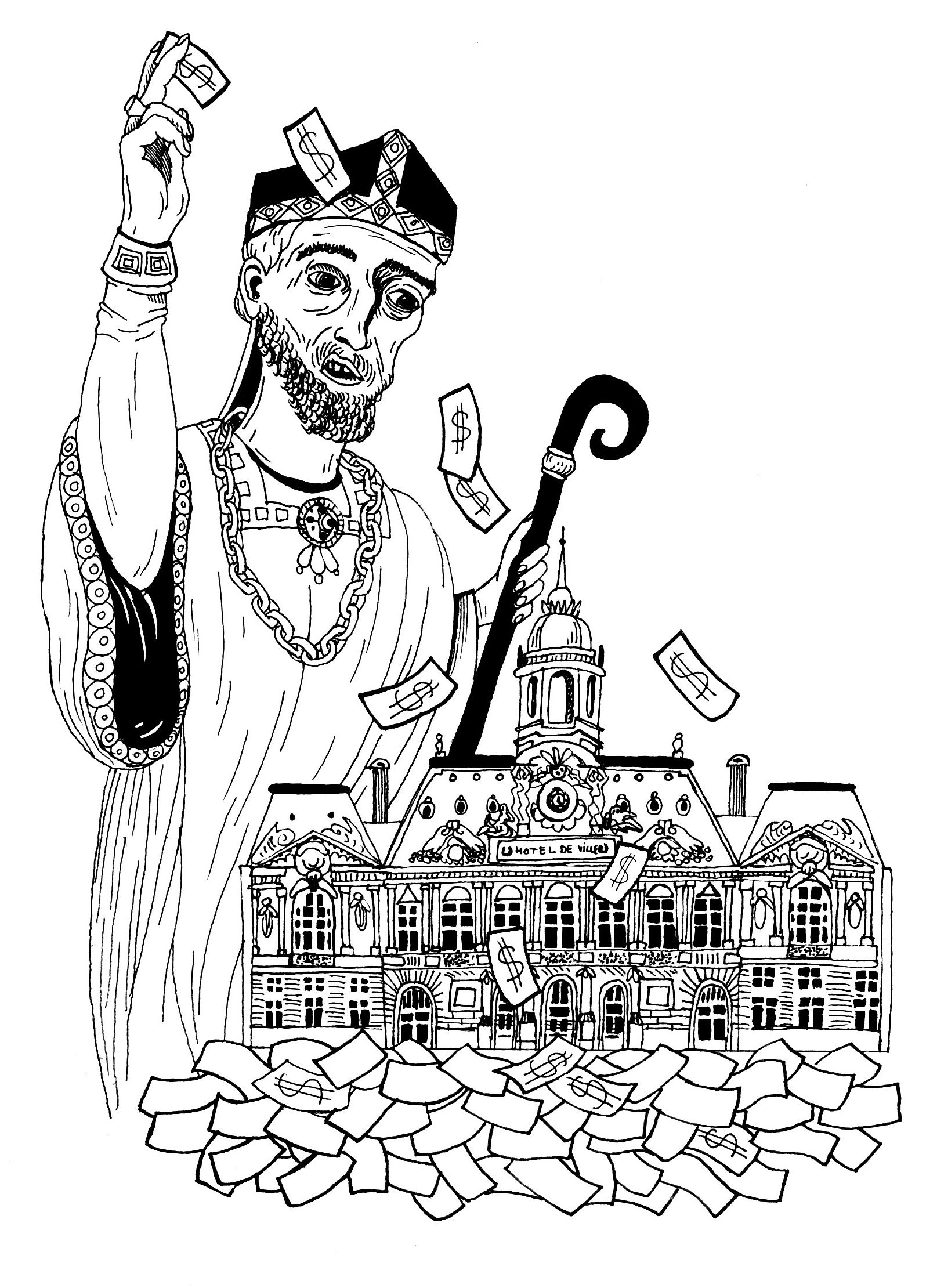
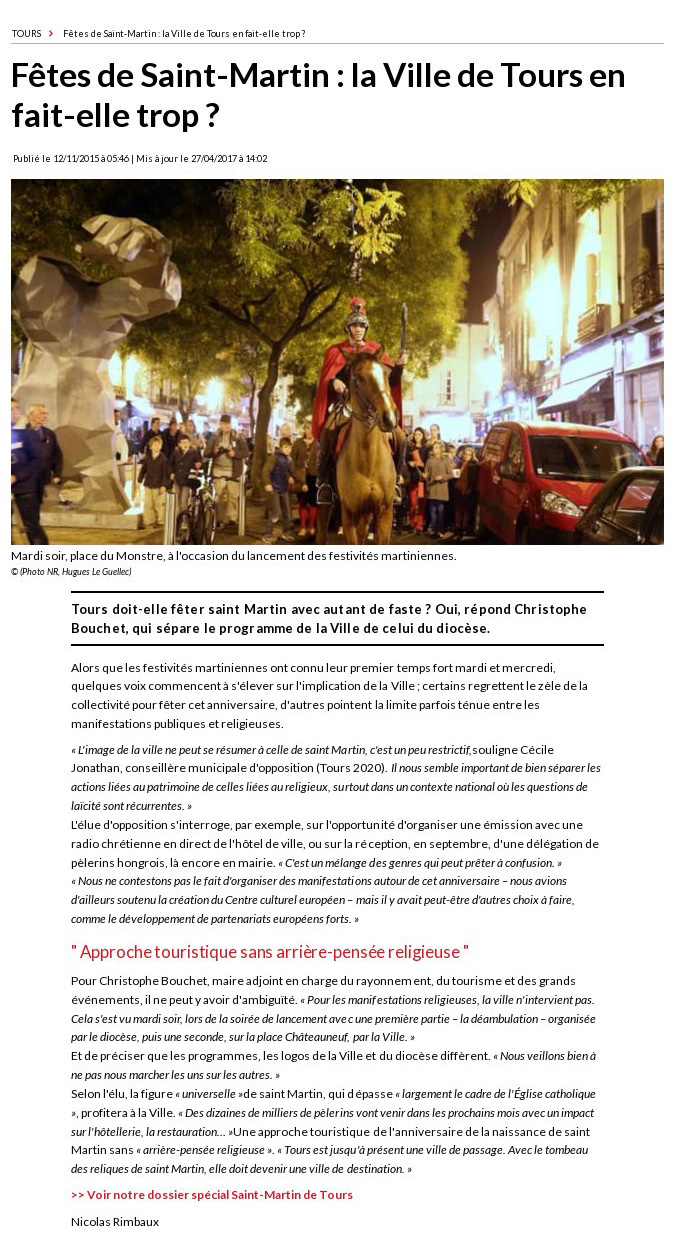 article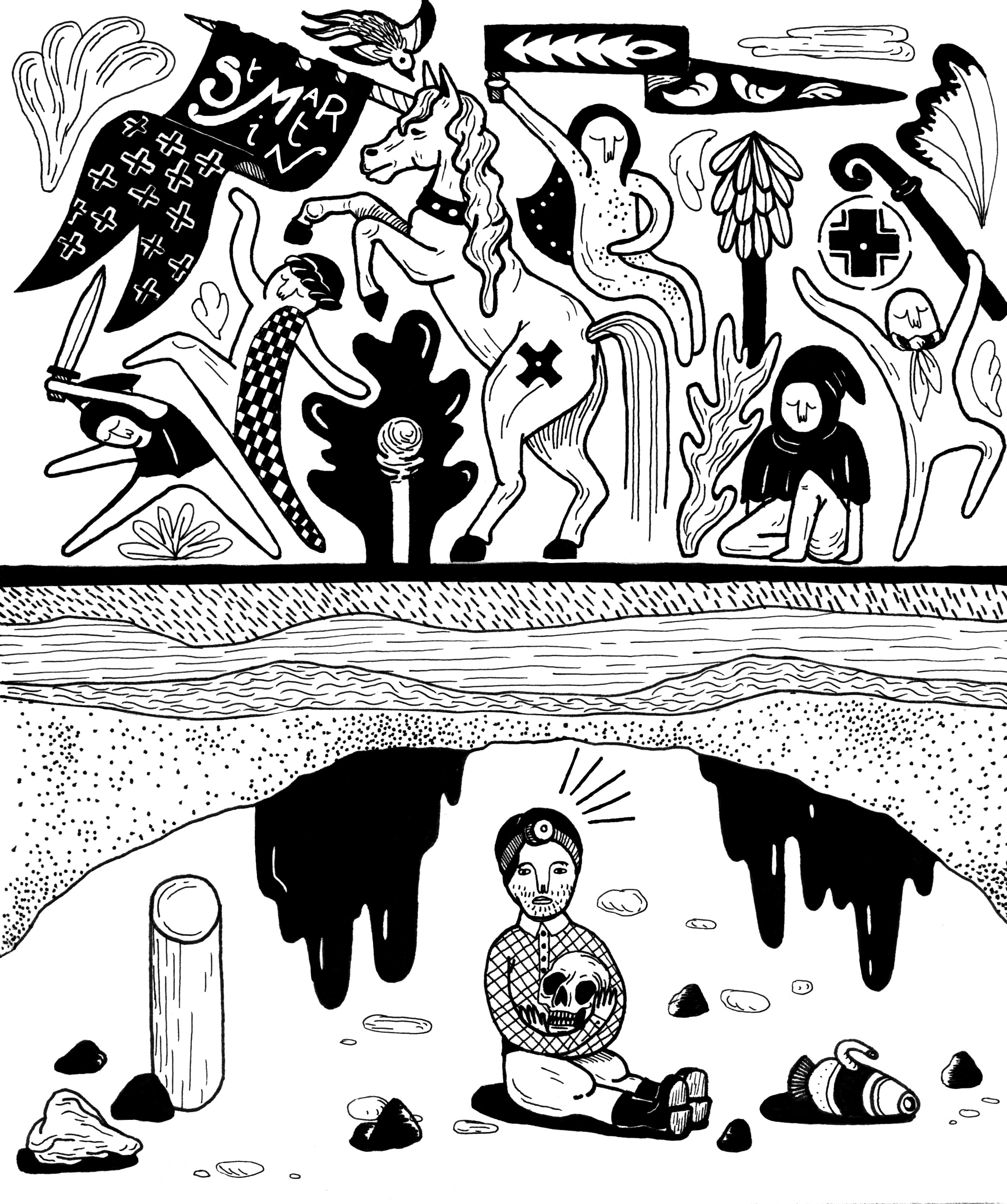
2016, a 1700th anniversary of Martin with controversy. This anniversary of Martin's birth was oddly preceded by the removal in 2014 of the statue over the dome of his basilica. It was threatening to fall down [
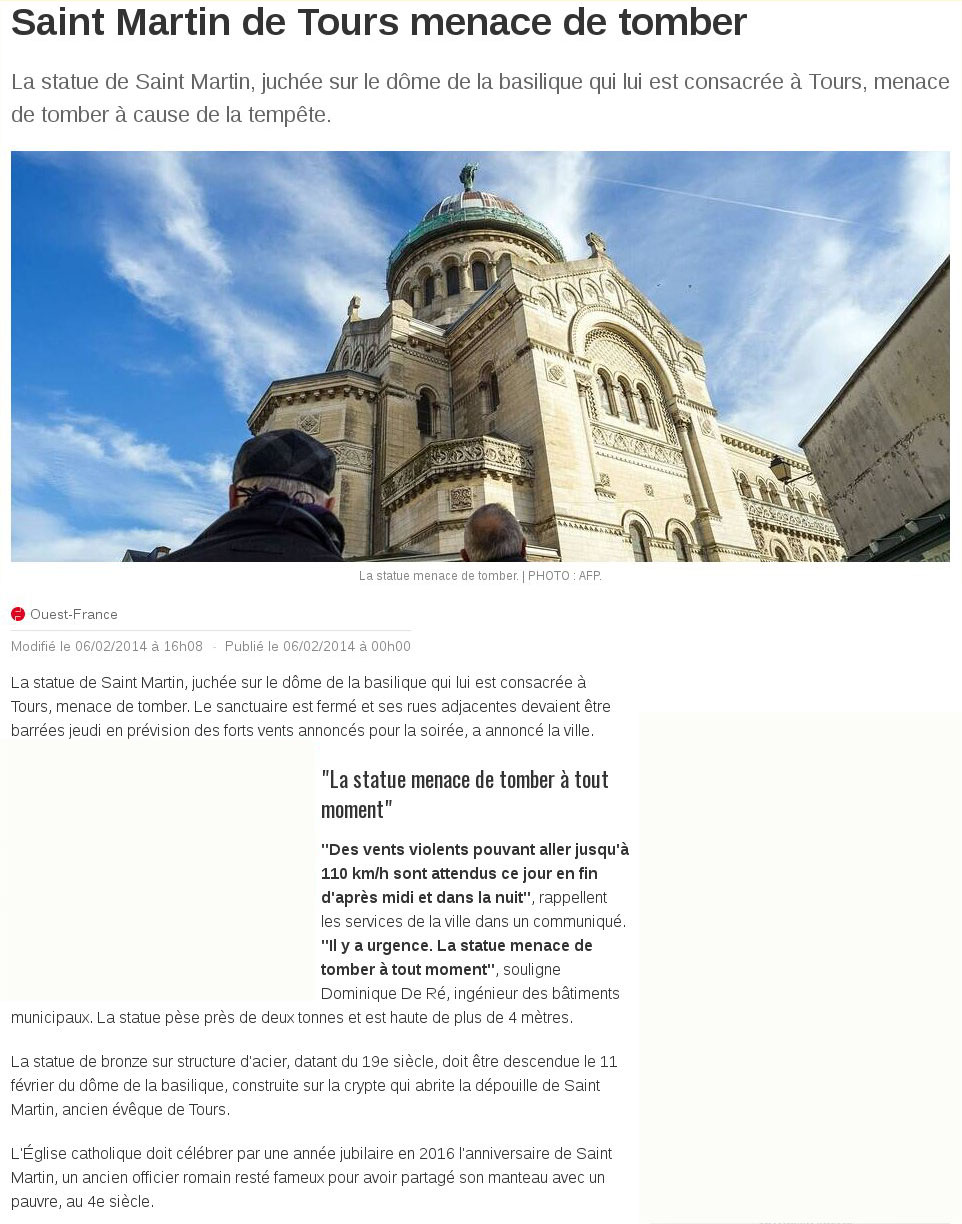 article "Ouest-France" and
 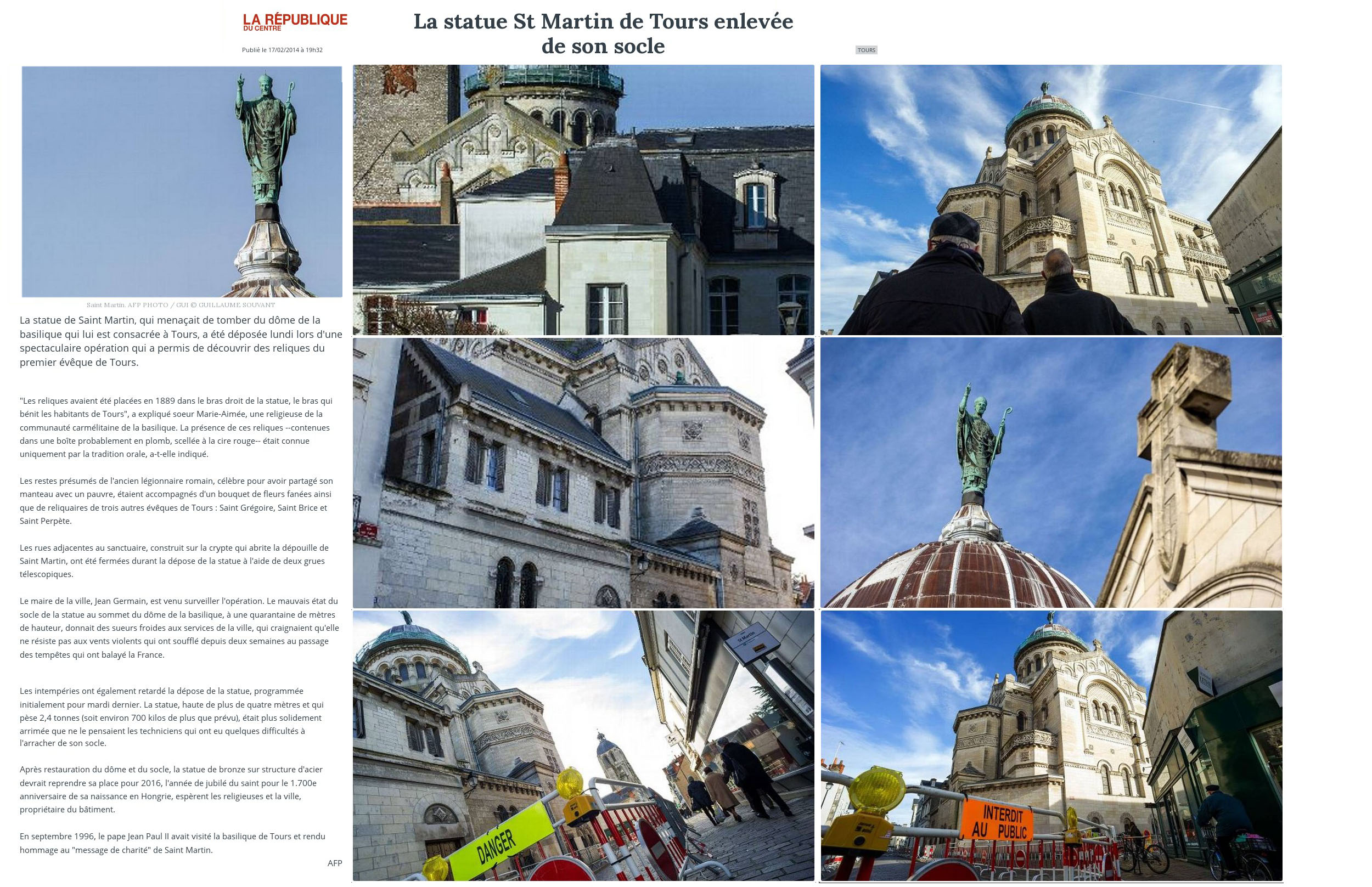 article "La République du Centre" of February 2014] and after financially significant work, especially on the dome (illustrations above) it came back looking dapper in October 2016 just before the anniversary. A portal from La NR reports on the many events that took place. Unlike historians who, as we have seen above, have been able to go beyond the Christian perimeter and not just proceed by hagiography, these various events have often been seen as limited to the sacred realm. As a result, the public money that was infused seemed to be used for religious purposes. It was however useful for the historians' conference, but who knew? Even La NR, although prolix on these events, did not devote an article to it. Ignored also in the grandiloquent municipal press kit. A city council debate echoed this rebuke (
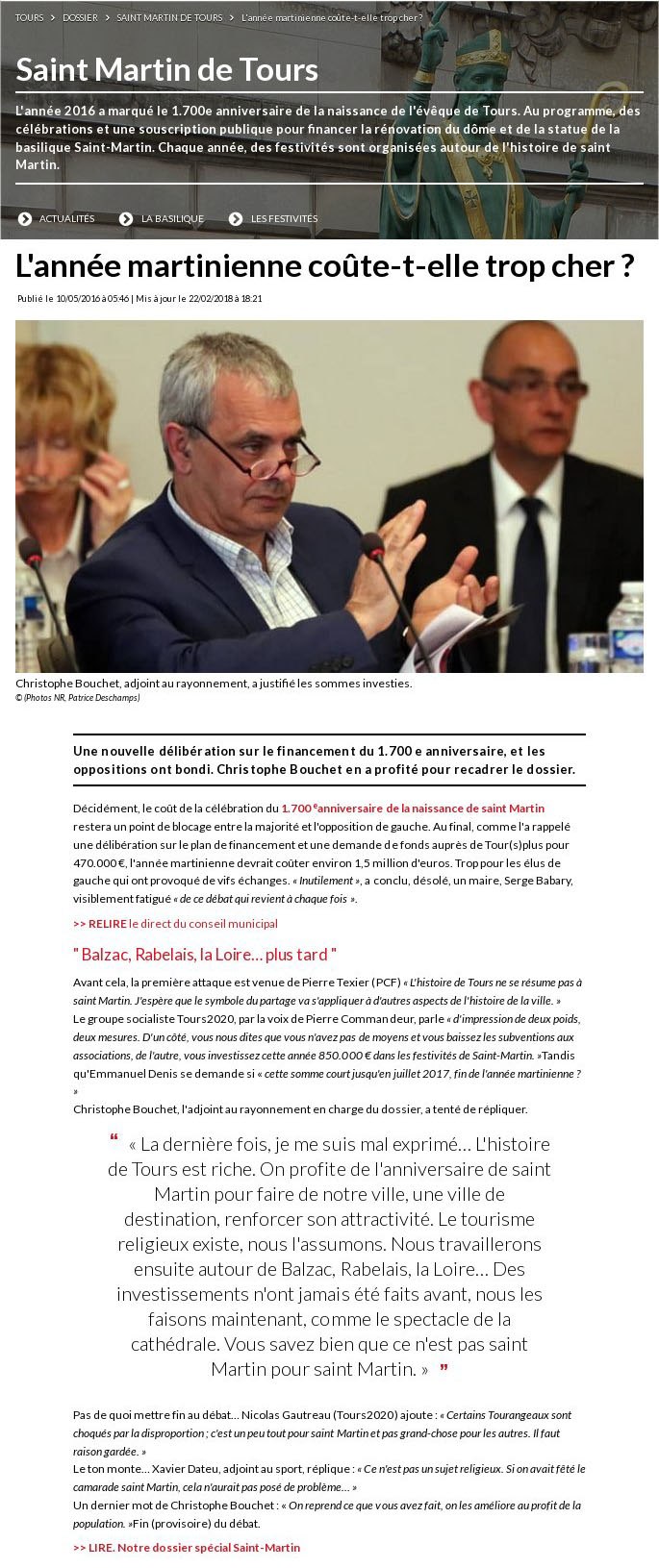 article from La NR). The site "La Rotative", published a page headlined "The nauseatingly lonely parade", talking about "inordinate budget for a flop"... (+ another article from this site) The "37 degrees" site published a article titled "The Martinian Year, a road paved with pitfalls". Excerpt "With too much desire to gather around the figure of Martin de Tours, by dint of distilling too much the label of the Martinian Year, the City Council ends up blurring the messages, reinforces the divisions and misses its objectives by failing to gather beyond the circles of the convinced." (+ other
  article).
Leaving the religious part to the believers, is it not possible for secular communities to celebrate the historical part of a saint ? It is done for Joan of Arc, it should be the same for Martin. Doesn't the present page prove that there really is a case to be made?
article).
Leaving the religious part to the believers, is it not possible for secular communities to celebrate the historical part of a saint ? It is done for Joan of Arc, it should be the same for Martin. Doesn't the present page prove that there really is a case to be made?


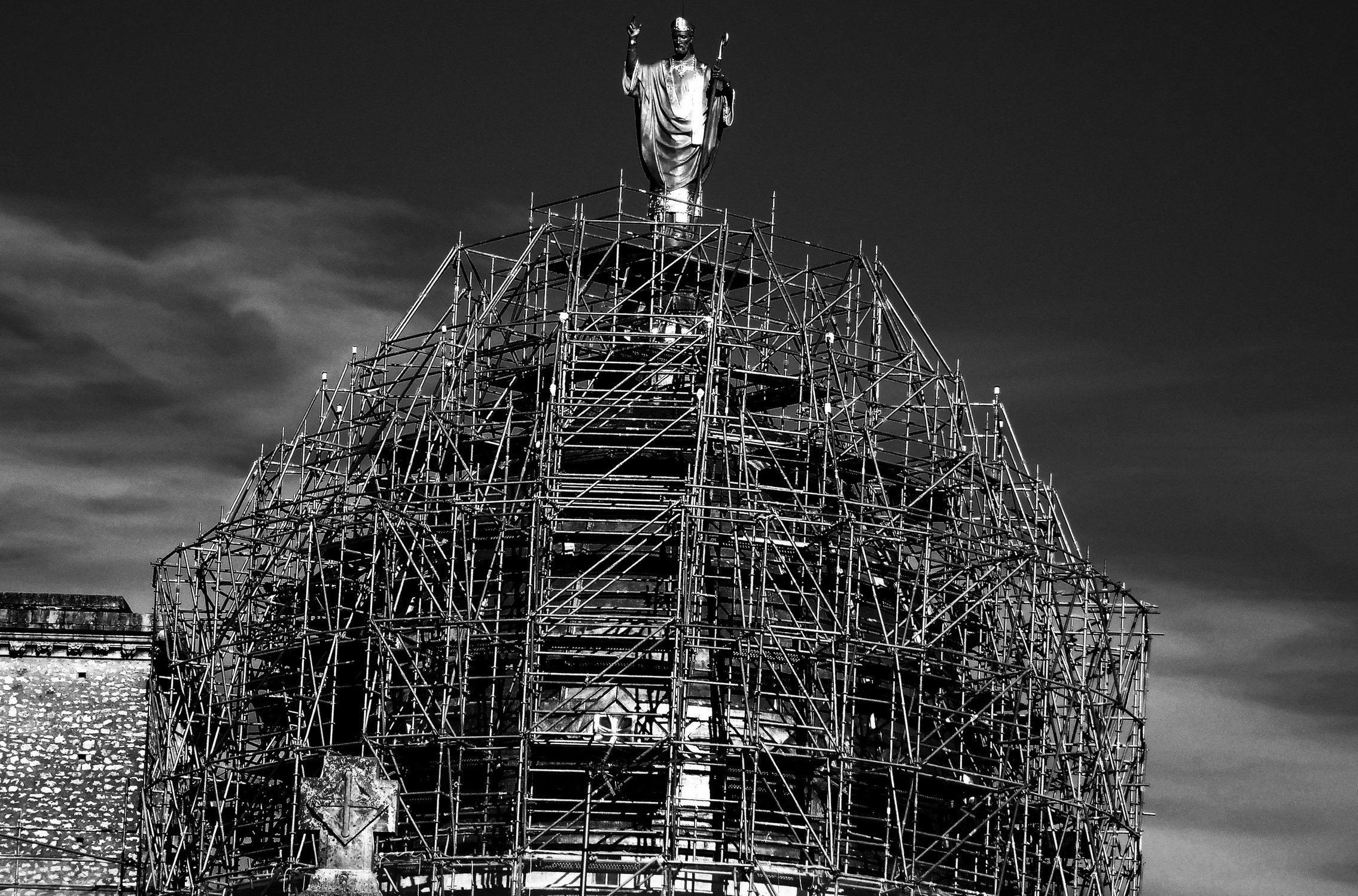
2016, maintenance of the new basilica A first phase of restoration work took place in 2014-2016. The dome, which was made of brick, was rebuilt in wood. The statue dominating the dome made by sculptor Jean-Baptiste Hugues was removed, restored and replaced [illustrations from the municipal magazine "Tours & moi" and then from flickr François Tomasi].
+ two articles from La NR about the dome work :  1 (before) 1 (before)  2 (after).
To the right and on this 2 (after).
To the right and on this 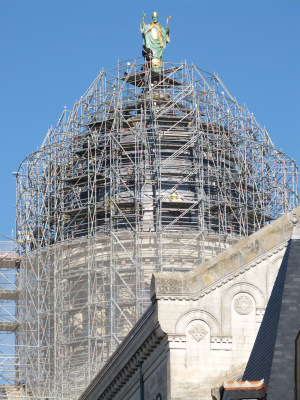 photo, the statue back on its dome (link). photo, the statue back on its dome (link).
   
On February 17, 2014, the statue of St. Martin's Basilica was lowered ["Secret Tours", Hervé Cannet, NR 2015 edition]. On October 15, 2016, it returns to its dome. Martin and his successor Bernard-Nicolas Aubertin, 137th bishop / archbishop of Tours, seem to greet each other, bless each other, dialogue ... [link, also showing the prior positioning of the relic box in the statue's arm, cf. here-before). Then Saint Martin parade organized by the neighborhood committee Sainte Radegonde (the Martinian queen turned abbess, cf. this-before) [link, with the resumption of an article from the NR also presenting a parade in the streets of Tours with 15 delegations from 12 countries]. On the right, in the commune of Saint Martin des Prés (Côtes d'Armor), two conferences and the presentation to the parish of a statue of Saint Martin [article from the Courrier Indépendant of November 9, 2016].
+ On Paris took place a Saint Martin procession on May 21, 2016, 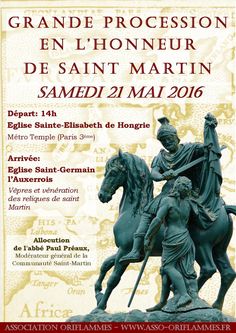 poster and poster and 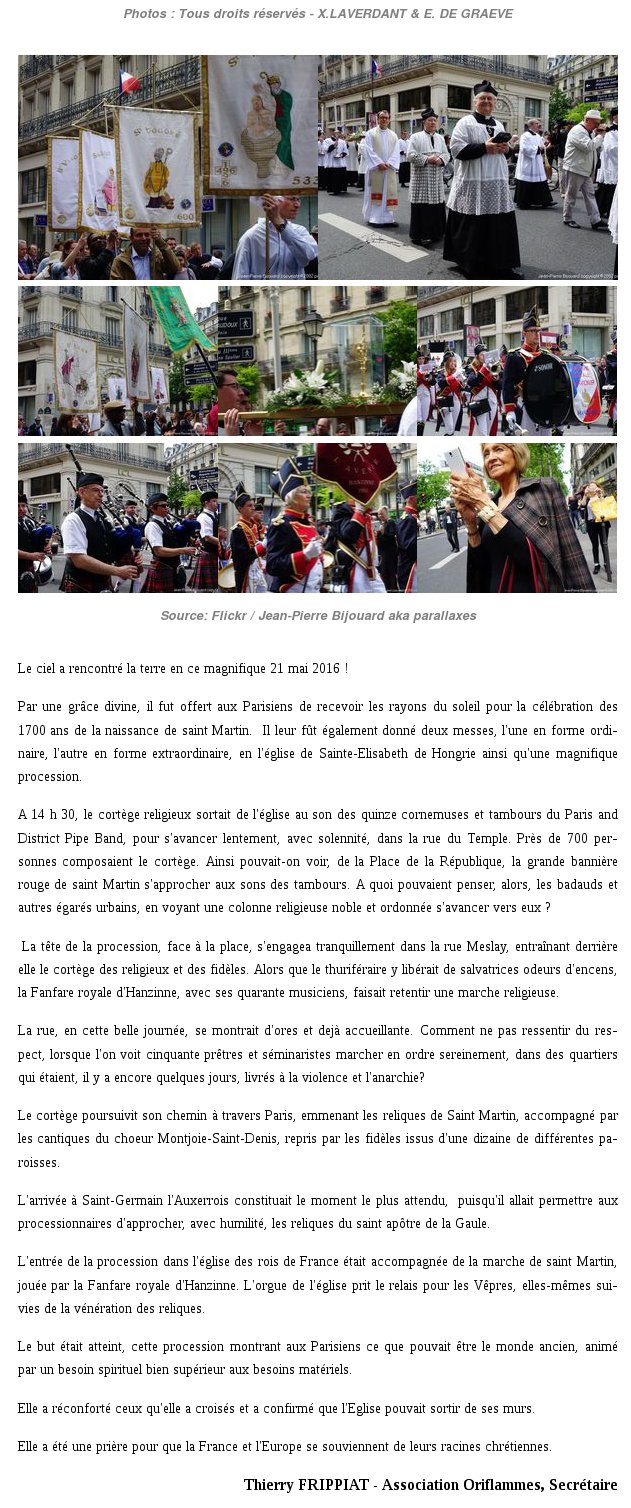 reportage, link. reportage, link.

2016, Hungary also celebrated the 1700th anniversary, here on the Budapest - Szombathely line, Martin's birthplace (link). + 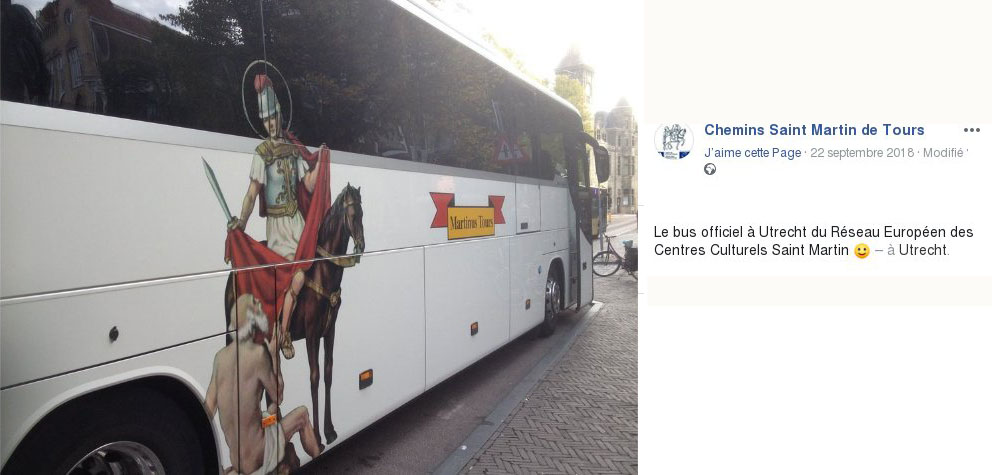 photo of an illustrated bus with the sharing of the coat, Utrecht 2018. photo of an illustrated bus with the sharing of the coat, Utrecht 2018.
|
2020, Archbishop appeals to Martin against coronavirus. On April 19, 2020, in the midst of a sanitary confinement, before a small audience, taking inspiration from the cholera epidemic of 1849, Archbishop
Vincent Jordy blessed the city of Tours and asked, through Martin, for "strength and consolation" against the pandemic of Covid-19. The demon is to Martin : "Vade retro Corona" (Leon Papin Dupont, who inspired the episcopal action on cholera, is the propagator of the expression "Vade retro Satana", source Wikipedia). The presence of the mayor of Tours, in electoral interlude and unfavorable ballot, caused some stir. The basilica is however property of the City Council ... While the secular authorities have too often played on fear to the detriment of freedom, giving hope was welcome. One could even regret the absence of the Prefect that Martin's virtus could have convinced of fraternity and solidarity, for example, to free the Tourangeaux from the ban on walking on the banks of the Loire and Cher rivers... + four articles from La NR :  1
1  2
2  3
3  4. + The municipal idea to turn Marmoutier into a "Futuripark" (
 presentation) and make a "escape game" (
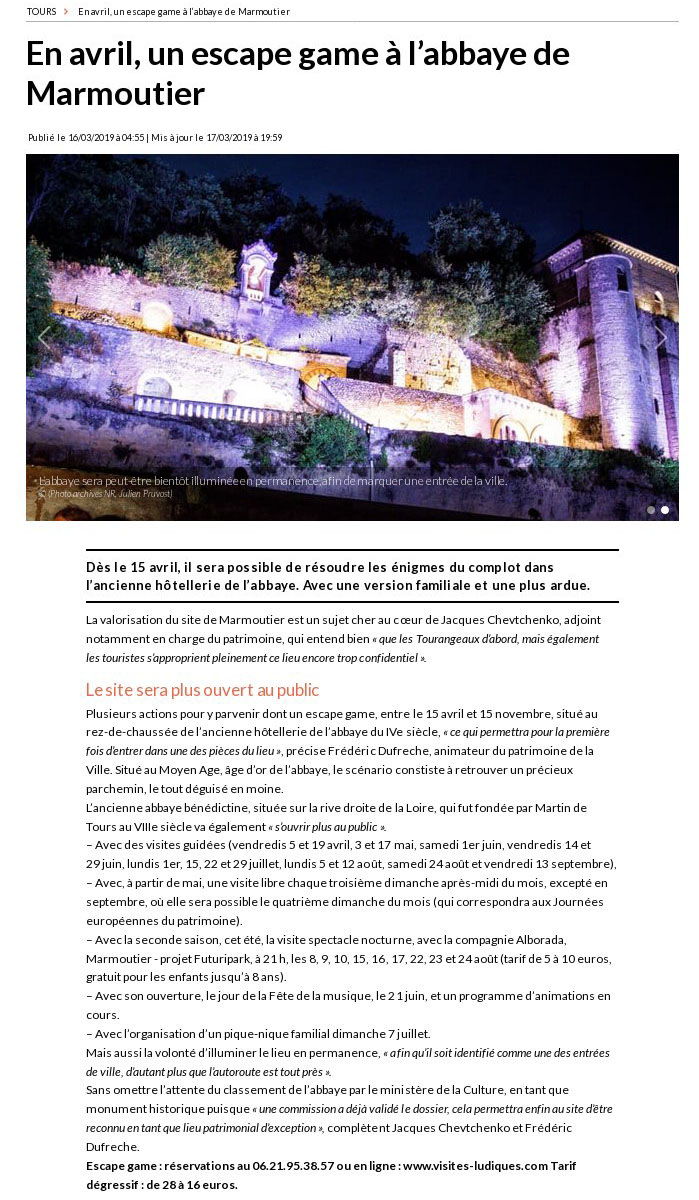 article La NR)...
Tours and water 6/6: the return of the flood risk between the Loire and Cher. Pandemics have returned, floods will return, better to apply the precept "To govern is to prevent". This is surely more effective than praying to Saint Martin... As Hervé Chirault and Aude Lévrier remind us in a  double-page spread [Guide secret de Tours et de ses environs", 2019], the Canal dike is essential. It alone had preserved in 1866 the center of Tours from the waters and had prevented the renewal of the 1856 flood. Without this dike, the disaster could happen again, and the double-page spread [Guide secret de Tours et de ses environs", 2019], the Canal dike is essential. It alone had preserved in 1866 the center of Tours from the waters and had prevented the renewal of the 1856 flood. Without this dike, the disaster could happen again, and the  map 2008 of the water heights then reached is alarming. However, in 2015, the prefectural and municipal authorities have quietly downgraded this structure separating the two municipalities of Tours and Saint Pierre des Corps, protecting the former from upstream flooding and the latter from downstream flooding. Until 2012, it was considered essential and in good condition. The association for the quality of life in the Touraine agglomeration, Aquavit, which denounces this reckless risk (dossier part 1), obtained in 2018 from the Administrative Court of Orleans that the dike cannot be pierced without a new procedure, contrary to the "making it transparent" that was planned at short notice in 2015. But what will the lessons of history be worth in the face of political irresponsibility and pressure from the very powerful real estate lobby ? The Saint Martin basilica must not be flooded, as the previous collegiate church was in 1733.
+ update on the risks of flooding, in 2015, on this page of the Aquavit website. map 2008 of the water heights then reached is alarming. However, in 2015, the prefectural and municipal authorities have quietly downgraded this structure separating the two municipalities of Tours and Saint Pierre des Corps, protecting the former from upstream flooding and the latter from downstream flooding. Until 2012, it was considered essential and in good condition. The association for the quality of life in the Touraine agglomeration, Aquavit, which denounces this reckless risk (dossier part 1), obtained in 2018 from the Administrative Court of Orleans that the dike cannot be pierced without a new procedure, contrary to the "making it transparent" that was planned at short notice in 2015. But what will the lessons of history be worth in the face of political irresponsibility and pressure from the very powerful real estate lobby ? The Saint Martin basilica must not be flooded, as the previous collegiate church was in 1733.
+ update on the risks of flooding, in 2015, on this page of the Aquavit website.
|
 article
 1
1 2
2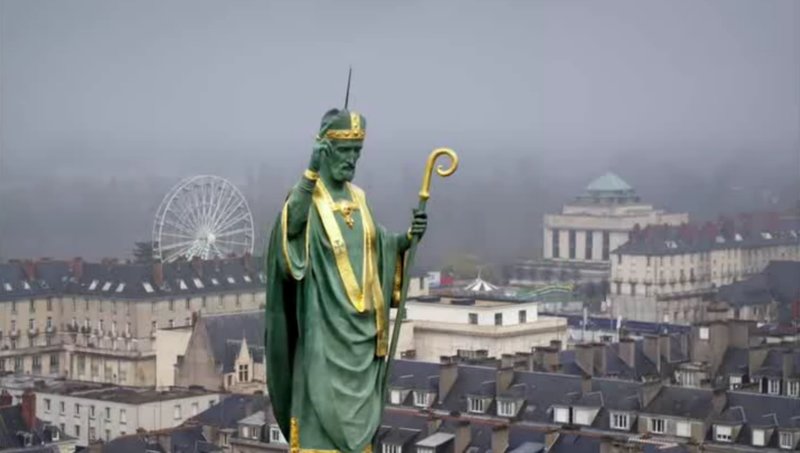
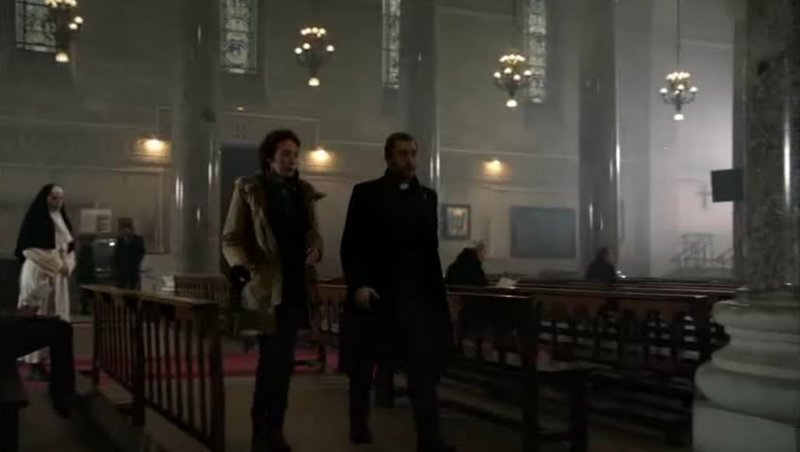
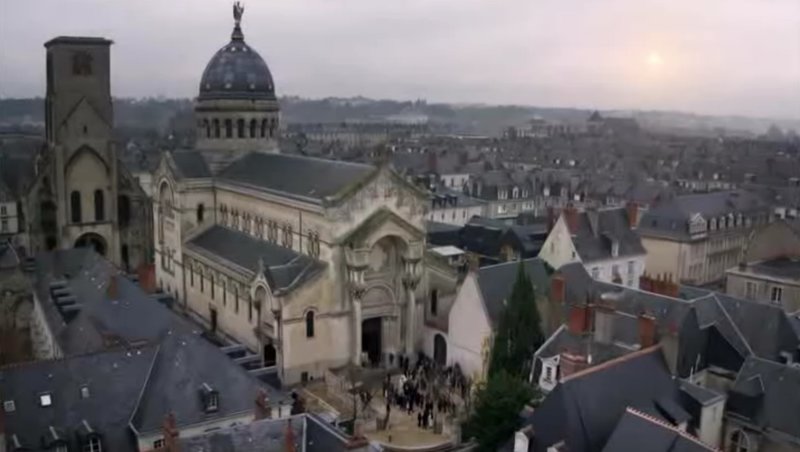
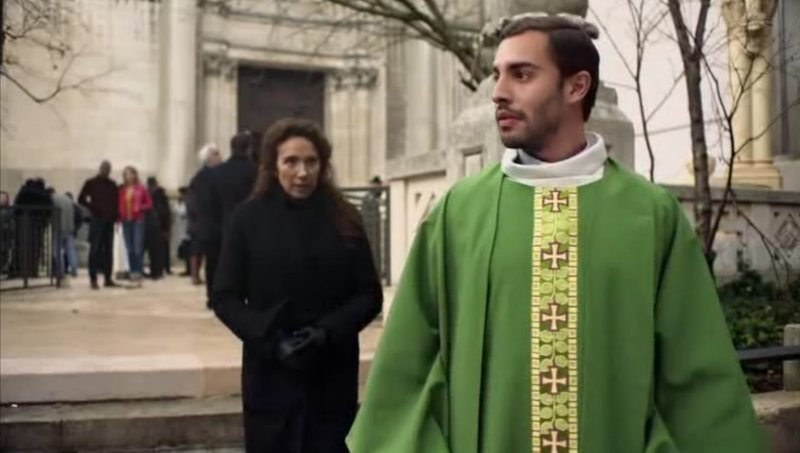
The Mysteries of the Basilica is a crime TV movie released on April 14, 2018 on FR3, off-series #14 of Murders at..., directed by François Guérin, set against the backdrop of a relic theft, starring Isabel Otero and Marwan Berreni (with the municipal library, green roof in the upper right of the first image, being transformed into a police station).
+ 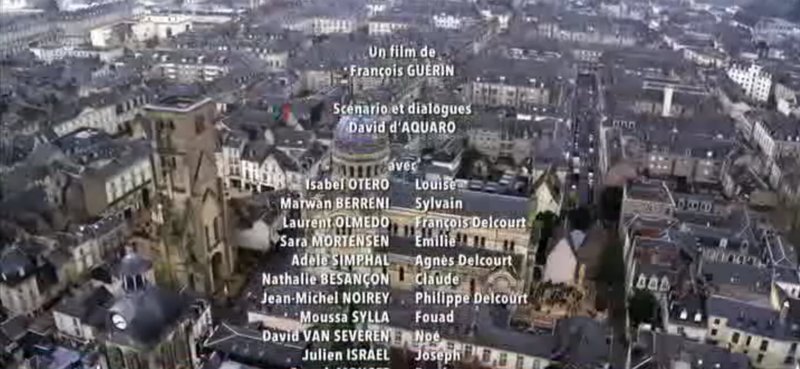 beginning of the end credits.
+ short clip video from the movie "Jo" (1971) where Louis de Funès, on a rainy day, shares his shower curtain in the manner of Martin sharing his cape. beginning of the end credits.
+ short clip video from the movie "Jo" (1971) where Louis de Funès, on a rainy day, shares his shower curtain in the manner of Martin sharing his cape.
|
In conclusion communal tourangelle, behind a successful municipal communication aimed at anesthetizing the contradictions, behind a standardized political staff that the population sanctions in vain (three mayors fired in six years and the new one starts badly) for lack of listening, too strong support to the concreters, high-standard expenses (the most expensive tramway in France per km in the cities of its category, denounced by the chamber of accounts, see next page and my
book 2014 "Tours megaloville", 258 pages, 40 MB, and here we go again for a 2nd line...) and rejection of nature in the city (see my book 2012 "Tours et ses arbres qu'on ne laisse pas grandir", 230 pages, 34 Mb), behind this landscape made of artifice and far from the citizen concerns found in other cities, I can only echo what has been aired along this page : regret that the city of Tours puts so little emphasis on its heritage. A Marmoutier not very accessible, a castle of the Plessis abandoned, the terraces of the Archevêché forbidden, the garden of the Hôtel de Beaune in sad condition, with the fountain of Beaune not repaired, the Top of the Rue Nationale enlaid with tower-hotels in defiance of the Unesco classification. Also the closing of the historial of Touraine, the Saint Martin museum, the gemmail museum. Also the probable felling of two of the four rows of plane trees on Béranger Boulevard (cf. page of the Aquavit), the Place du Palais which is likely to be upset (cf. page next door) without a local referendum (but with the assent of a public inquiry as usual arranged). And requests never listened to, such as the enlargement of the public garden of the Prefecture (cf. page next door), signage for the medieval "Grand rue", the greening of the Place de la Préfecture etc. A minimum was nevertheless maintained, with the continuation of the rehabilitation of the old districts begun in the 1960s and the maintenance of most of the buildings in place. Fortunately, in the absence of efficient political staff, this page shows that archaeologists, historians and scholars have been brilliant, thanks to them!
| Plan de Sauvagerde et de Mise en Valeur, created in 1973, established the rules for managing the central safeguarded sector. If it was of good effectiveness the first forty years (and a decade earlier, in other forms), the 2013 version marked strong drifts allowing to free itself from important past protections, in particular by no longer protecting the trees, which allowed, for example, to cut down the lime trees of the François Ier garden at the top of the Rue Nationale. More details on this next page. Moreover, the architects of the buildings of France are more and more accommodating (one of them even got hired in the metropolis), the administrative court of Orleans is more and more lax with respect to the constraints, which allows the realization of building sites contrary to several protections in force, such as the one of the Top of the National Street. The public inquiry file of the PSMV 2013 was accompanied by a beautiful documentation (440 pages, 126 MB) + documentation of the Local Urban Plan 2019 (267 pages, 56 MB).
|
Martinian conclusion, in addition to Martin's "nuanced historical assessment" (see
hereabove). Charles Lelong, in his "Vie et culte de Saint Martin", writes that Laloux's basilica, "conceived in a curious " Romano-Byzantine " style has been praised by some, denigrated by others". Here she is praised. For its curious style. For its beauty, mixing simplicity, elegance and decorative richness. For its dimensions, more human and warmer than those of a cathedral, within the limits of which Victor Laloux has taken admirable advantage, notably illustrated by the diffuse daylight around the tomb. Secondly, and this is the main purpose of this page, for what brings it closer to the 5th century basilica built by a Perpet who knew how to act for the perpetuity of an emblematic Martin... As if, by a temporal shortcut, the Romanesque and Gothic constructions having not existed, we were approaching a distant time, while benefiting from the achievements of the 19th century. Seventeen centuries have passed since Martin's election, a succession of misfortunes faced and overcome. The popular hermit always seems to show a path, that of sharing, and it doesn't matter that it is not only that of his God. Let's not forget those anonymous Tourangeaux who upset the established order by turning him into a bishop and driving out his too distant successor to elect his opposite, an Armence who tries to satisfy his voters by breaking with the previous policy. The problem is always present: how to change the destiny by an election or a revolt or a symbol such as a basilica?
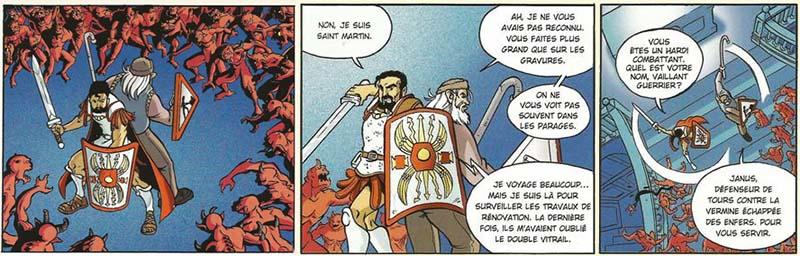
In the 21st century, Martin is still fighting his demons!? In his basilica!? Released in 2002 by "La comédie illustrée", the collective comic book album "Chacun son Tours" includes seven stories. The one by Ullcer, titled "The Secret of Janus," in 8 pages, presents a strange sequence (a miracle ?) in St. Martin's Basilica. + three plates:  1 1  2 2  3. Martin and humor would therefore not be incompatible. Did the Christian Roman soldier and the pagan French Gaul reconcile by fighting their common demons ? 3. Martin and humor would therefore not be incompatible. Did the Christian Roman soldier and the pagan French Gaul reconcile by fighting their common demons ?
|
Abbreviations. BmT :
Tours Municipal Library (site) ;
BnF : Bibliothèque nationale de France (site) ;
Mag. Touraine : The Touraine Magazine (site) ;
MBAT : Tours Fine Arts Museum (site and page of its press kits) ;
La NR : La Nouvelle République (site) ;
SAT : Société Archéologique de Touraine (site).
Maric - Frisano 1994, Proust - Martin, Froissard 1996, Fagot, Mestrallet - d'Esme 1996, Brunor - Bar 2009, Nikto - Kline 1987, BD Utrecht 2016 : see here-above.
Guignolet 1984, Couillard - Tanter 1986, LTa&m 1845, LTh&m 1855, Oury - Pons 1977, Leveel 1994, Cossu-Delaunay 2020 : see this-before.
Semur 2015, Catalogue 2016, Maupoix 2018, Collective 2019, Geneste 2018, Lorincz 2001, Verriere 2018, Fasc. NR 2012 : see hereabove.
Lecoy 1881 : see here-before,
Ta&m 2007 : see this-before.
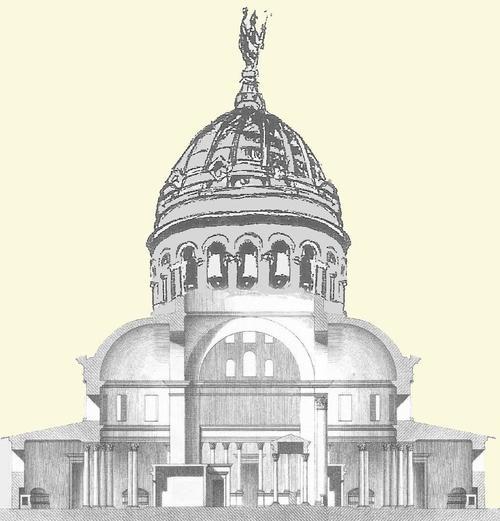

 2
2 10
10 2
2 6
6 22
22 25
25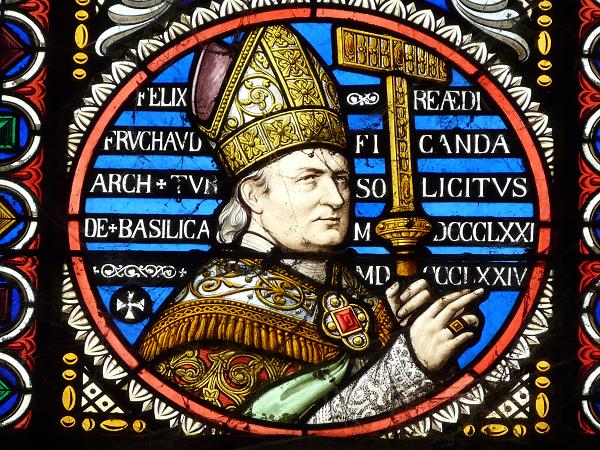 33
33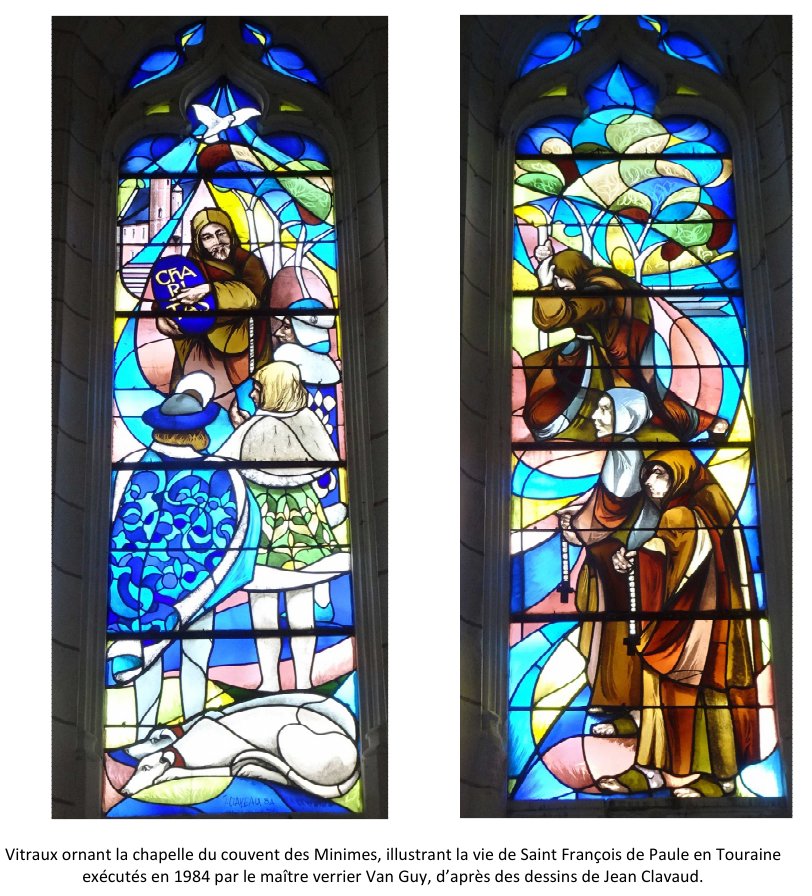 35
35 5
5 7
7 4
4 950
950 1360
1360 1500
1500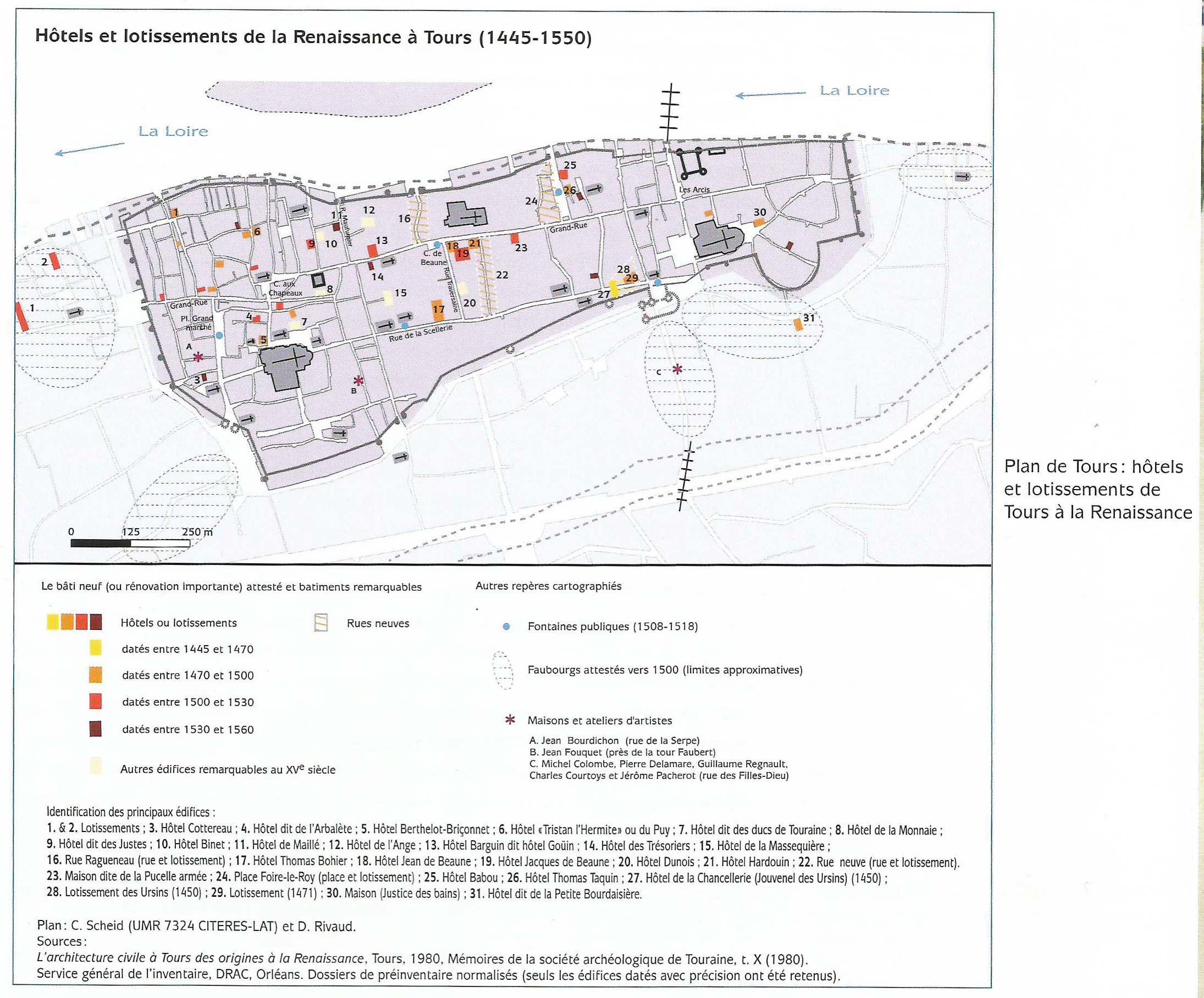 1550
1550 1572
1572 1572
1572 1634
1634 1657
1657 1679
1679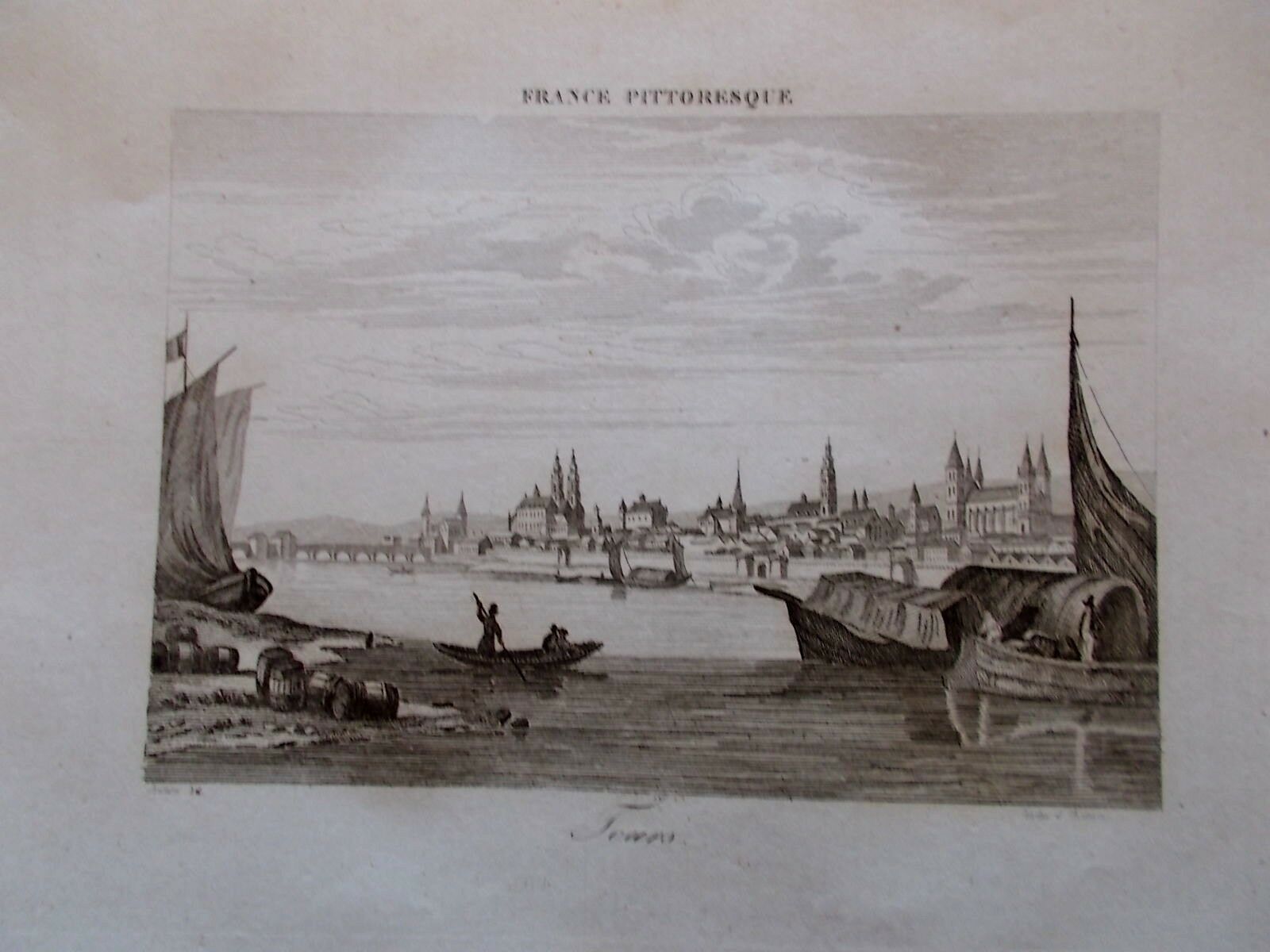 1760
1760 1833
1833 1872
1872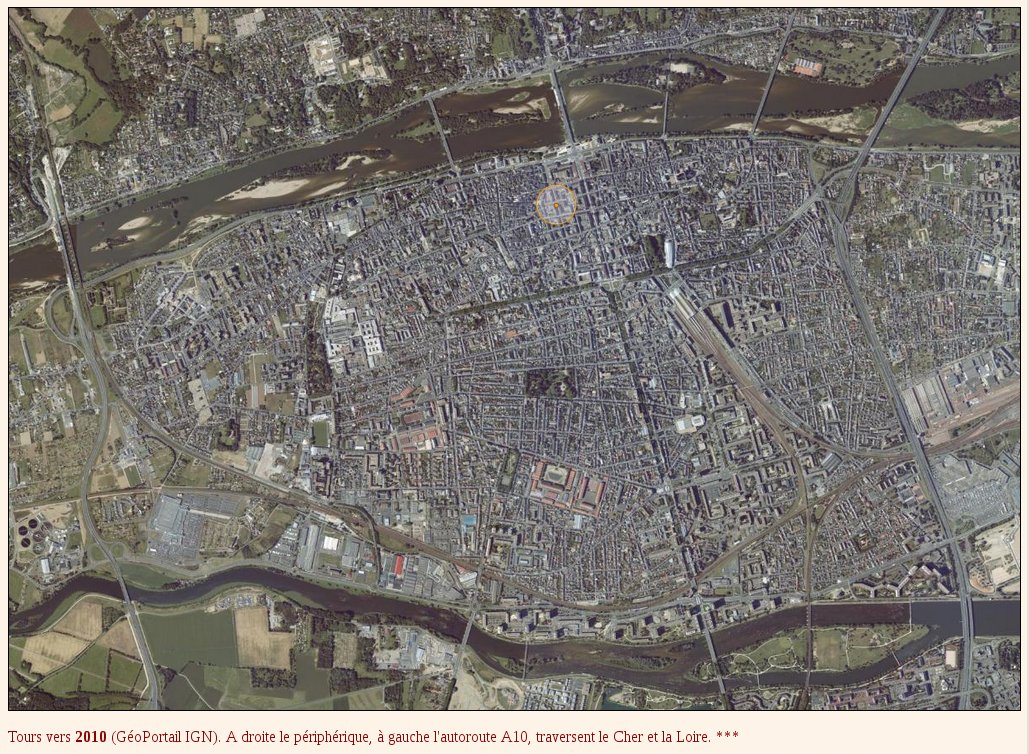 2010
2010 2018
2018
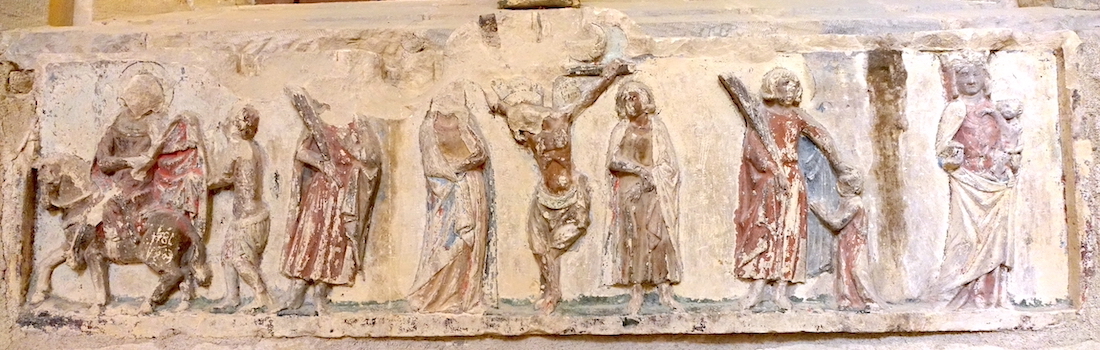


Alain Beyrand, Tours, December 2020 (alain (at) pressibus.org)
Page in Creative Commons
Short address of this page: pressibus.org/martin
This page was finalized on February 2, 2021 in this
file in pdf format (235 pages, 45 MB, firefox print).
La même page en français - Access to the home